


Abstract
Background: Heel pain, bunion pain, and other forms of foot pain syndromes are one of the more common reasons a patient visits a podiatrist. Numerous methods are currently available to attempt to achieve pain relief, including pharmaceuticals, magnets, heat, and electrical stimulation. A textile company developed Pain Checker socks (Pain Checker Health Wear, Cresskill, New Jersey), which contains a material that may counter the circuit of pain and oppose the effect, thereby stopping the conduction of pain. Methods: The purpose of this placebo-controlled, double-blind clinical trial was to evaluate the safety and efficacy of Pain Checker socks in the treatment of mild-to-moderate foot pain. Fifty patients were enrolled, half on active and half on placebo socks. The sub- jects were evaluated at baseline, 2, 4, and 6 weeks of treatment. Results: There was no statistically significant difference in disability, pain, or activity scales between treatment groups, although only 5% of the treatment group received no pain relief on visual analog scale during the trial, while 38% of the placebo group received no pain relief. Conclusion: Although there was no difference in pain relief, the Pain Checker socks were found to be safe and scored high in patient satisfaction. The unique fiber content and construction of the socks may have contributed to the placebo analgesia. (J Am Podiatr Med Assoc 98(4): 278-282, 2008)
Heel pain, bunion pain, and other foot pain syndromes are some of the more common reasons a patient visits a podiatric physician. Osteoarthritic pain, bursitis, and tendonitis are encountered daily by the podiatric physician.
Currently, numerous methods are available for achieving pain relief. One of the more popular approaches, pharmacologic management, has potential adverse effects. The use of opioids for nonmalignant long-term pain remains controversial due to the potential for tolerance to and physical dependence on these drugs [1]. Nerve blocks with local anesthetics and neurolytic agents are used for diagnostic, prognostic, therapeutic, and prophylactic purposes. Corticosteroid injections may effectively provide pain relief after other therapeutic modalities, such as physical therapy, change in shoes, stretching, and exercise physiology, have failed [2]. Owing to growing dissatisfaction with the chemical concept and its therapeutic treatment, other modalities are arising as alternative treatments. Nonmedical treatment of osteoarthritic pain includes exercise (range-of-motion and strengthening exercises), thermal modalities, weight loss, taping, and strapping [3]. The Chinese believe that imbalances in yin and yang can be corrected by using acupuncture, moxibustion (heat), and magnetic stones at specific anatomical sites. Electromagnetic healing has become part of a regimen of alternative/homeopathic medicine and is based on electromagnetic fields. Other therapies include meditation, herbal medicine, hypnosis, magnets, and nutraceuticals.
One of the first recorded assessments of bioelectricity was in 1868, when Julius Bernstein found that the action potential impulse was a disturbance in the ionic properties of the membrane that traveled along the nerve fiber or axon [4]. Although the impulse was not an electrical current, it could be measured electrically [4]. Lenz’s law regarding bioelectricity states that the induced electromotive force in any circuit is always in a direction to oppose the effect that produced it [5]. For example, when a current is decreasing, an electromotive force is induced in the opposite di- rection and opposes the decrease in current.
A conductive material has been developed and used in industry to control sparks generated from the body’s static electricity. This conductive material uses a conductive yarn that prevents shocks but does not affect the conduction of pain. Using Lenz’s law, if a fiber contained a material that could counter the circuit of pain and oppose the effect, one could theoretically stop the conductance of pain. Pain Checker (Pain Checker Health Wear, Cresskill, New Jersey) socks were developed to counter the “current of injury” involved in the conductance of pain along the sensory nerve fibers. Pain Checker socks have a unique combination of two conductive yarns that may have the potential to affect pain conduction. The conductive fibers of Pain Checker socks draw off static electricity from the body, which is already charged, so the person is quite safe. There are no shocks to the person wearing the socks because the conductive material does not provide electricity. The socks have unique properties (including softness and flexibility) that separate them from normal cushioned socks. They are not magnetic and are inactive by themselves. The socks become activated locally by the body’s own electricity. Pain Checker socks are not recommended for people who have an electrical device implanted in the body. In a survey of 56 people who were using the Pain Checker material for pain relief, more than 82% experienced 50% or more pain relief; 5% experienced no relief (Crystal Textiles, unpublished data, 2002). A small pilot study suggested that the average pain score was lower when the test sock was worn, but the sample size was too small to detect any statistical significance (Crystal Textiles, unpublished data, 2003). Neither the survey nor the small pilot study reported adverse events. The purpose of this clinical trial is to assess the safety and efficacy of Pain Checker socks in the treatment of mild-to-moderate foot pain.
Methods
This was a double-blind, placebo-controlled, randomized study of the safety and efficacy of Pain Checker socks on mild-to-moderate foot pain. Fifty evaluable patients 18 years or older with mild-to-moderate foot pain assessed as a visual analog scale score of less than 7 and meeting the inclusion and exclusion criteria were enrolled. Before any socks were dispensed, signed and dated informed consent forms, approved by the Western Institutional Review Board (Seattle, Washington), were obtained from each subject (or his or her legally acceptable representative) in accordance with Good Clinical Practice and local regulatory and legal requirements. We retained the completed informed consent forms as part of the study records, and a copy was given to the patient.
The following patients were excluded: those with known neurologic pain or sensory neuropathy; patients with an implanted electrical device in the body; pregnant women, nursing mothers, and women not practicing effective contraception; patients taking immunosuppressant drugs or with preexisting immunosuppressant disease (human immunodeficiency virus, cancer, rheumatoid arthritis, or systemic lupus erythematosus); patients with absent pedal pulses; those taking analgesic drugs who were unwilling to discontinue use for a 1-week washout period; patients with known dermatologic conditions, eg, psoriasis, eczema, Darier’s disease, and lichen planus; patients with signs of bacterial or fungal infection close to selected sites; patients who intend to start physical therapy during the study; those with a history of unreliable drug intake; those who anticipated the inability to cooperate with the study protocol, specifically including an unwillingness to refrain from using over-the-count- er analgesics during the study; patients with significant medical problems (eg, congestive heart failure, angina, hypertension, and diabetes mellitus); and those with heavy alcohol consumption or active intravenous drug abuse, which, in the opinion of the patient’s medical physician, precludes the patient’s entry into the study.
At baseline, a history form and a podiatric medical physical examination, including pedal pulses and clinical assessments of pain, were completed. The location and duration of foot pain were recorded. The patient answered questions about disability, pain, and limitation of activity. All of the questions were scored on a 4-point scale (0 = no pain, 1 = mild pain, 2 = moderate pain, and 3 = severe pain). The patient was then given 14 pairs of socks for the 6-week trial. The active and placebo socks looked identical; therefore, both the patient and the investigator were blinded. The patient was instructed to wash the socks in Woolite only, and Woolite was dispensed at that time. The patient was then told to wear the socks for 8 hours at night and to record the number of hours the socks were worn each day in a patient diary.
When the patient returned for the second visit (2 weeks of therapy), the investigator collected the diary and asked the same questions about pain, disability, and limitation of activity. The patient then returned in another 2 weeks (4 weeks of therapy), and again the diary was collected and the clinical assessment was completed. At the final visit (6 weeks of therapy), the diary was collected; questions about pain, disability, and limitation of activity were repeated; and a final question about the effectiveness of the socks was asked. A visual analog scale score was recorded at each visit.
The primary objective of this study was to evaluate the safety and efficacy of Pain Checker socks in the treatment of mild-to-moderate foot pain. The primary efficacy variable was the clinical response of pain relief based on the visual analog scale score.
Symptoms of mild and moderate foot pain, activity limitation, and disability were assessed clinically at all of the study visits. Clinical response was based on the visual analog scale score and the patient’s global assessment.
Cure
was defined as complete relief of pain, and
improvement
as a decrease in pain.
Failure
was defined as no pain relief or worsening of foot pain, with the need for pharmacologic intervention. A daily patient diary was used to assess compliance. All observed and volunteered adverse events, regardless of treatment group or suspected causal relationship to the socks, were recorded on the adverse event page(s) of the case report book. Adverse reactions, onset of illness during the study, and exacerbation of preexisting illness were recorded in the case report book.
Means and standard deviations were calculated for visual analog scale scores and for pain, disability, and activity scale scores. In the primary analysis, a univariate repeated-measures analysis of variance was conducted to determine whether the mean visual ana- log scale scores in the treatment and control groups differed across time. This analysis provided significance testing of the main effects for group and time and a test for the group
×
time interaction. In the event that the
F
test for the interaction was significant,
t
tests were used to determine the specific periods where mean visual analog scale scores differed by group. The level of significance for these
t
tests was adjusted using the Bonferroni approach. All of the procedures were performed with SAS version 9.1 (SAS Institute Inc, Cary, North Carolina).
Results
The demographic characteristics of the study population are given in
Table 1
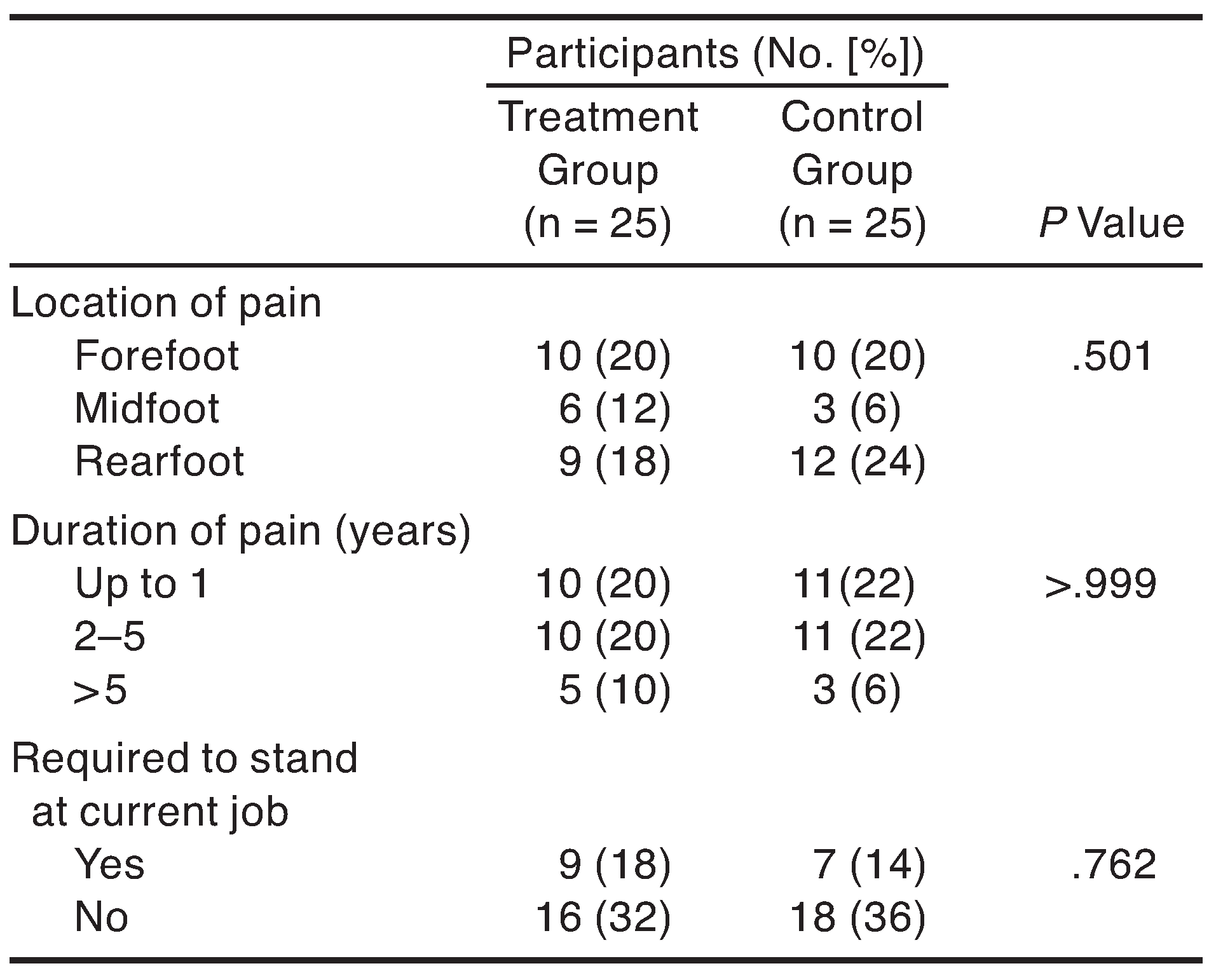
. This is primarily a midlife population, with most participants ranging from 36 to 64 years old. Females predominate, as do white patients. The location of pain, duration of pain, and cur- rent job standing requirements were not significantly different in the treatment and control groups (
Table 2
). Forefoot and heel pain predominate, and few patients had pain for more than 5 years.
Table 1.
Demographic Characteristics of the 50 Study Patients.
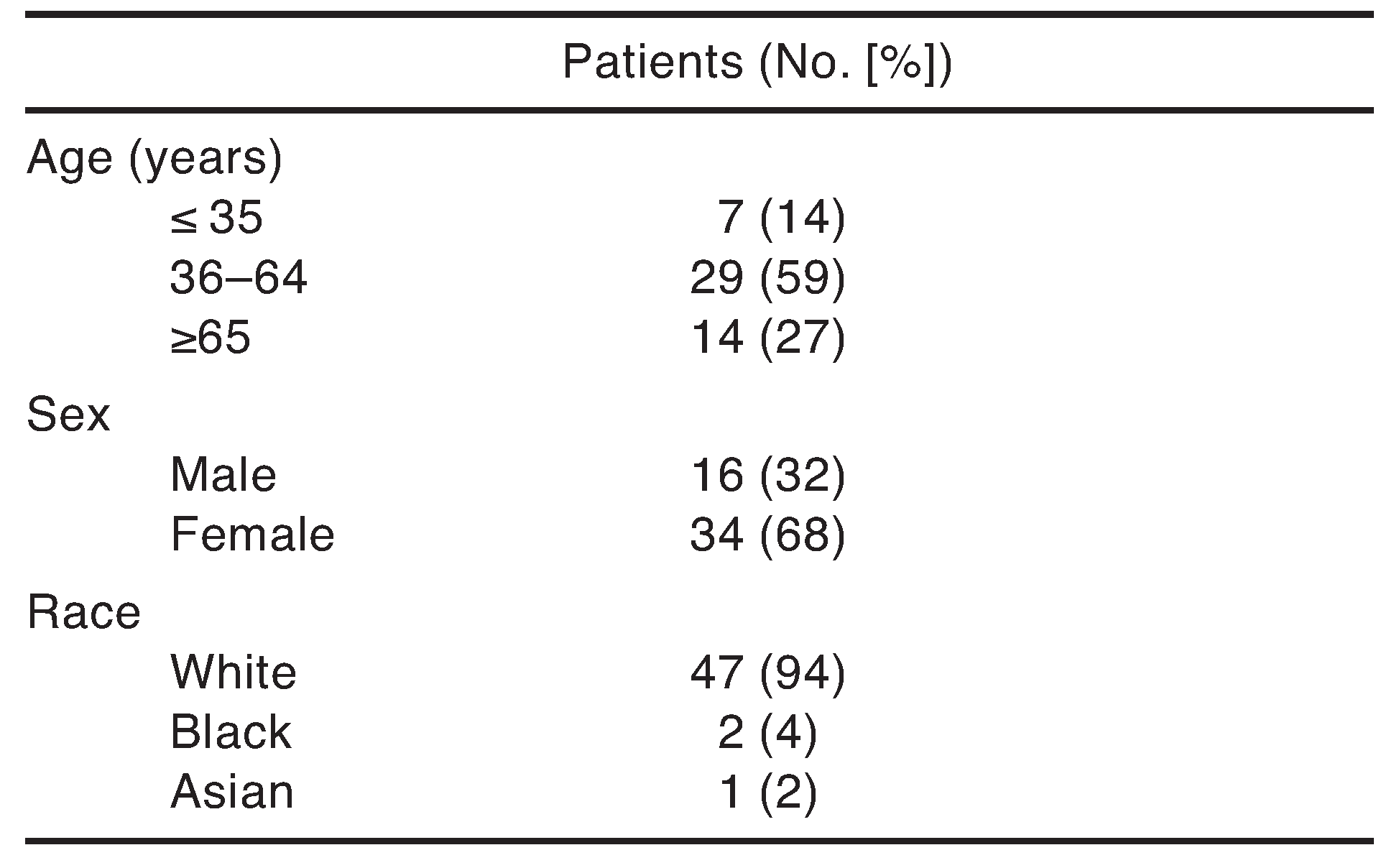
Table 2.
Pain Location, Pain Duration, and Job Standing Requirements in the Study Groups.
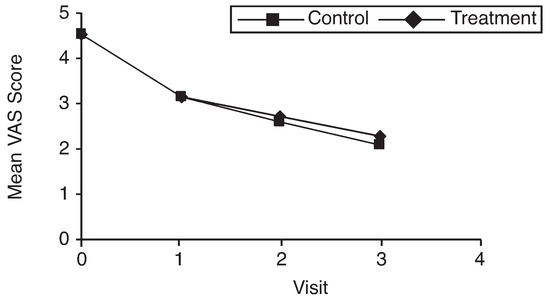
Visual analog scale scores ranged from 0 to 6.
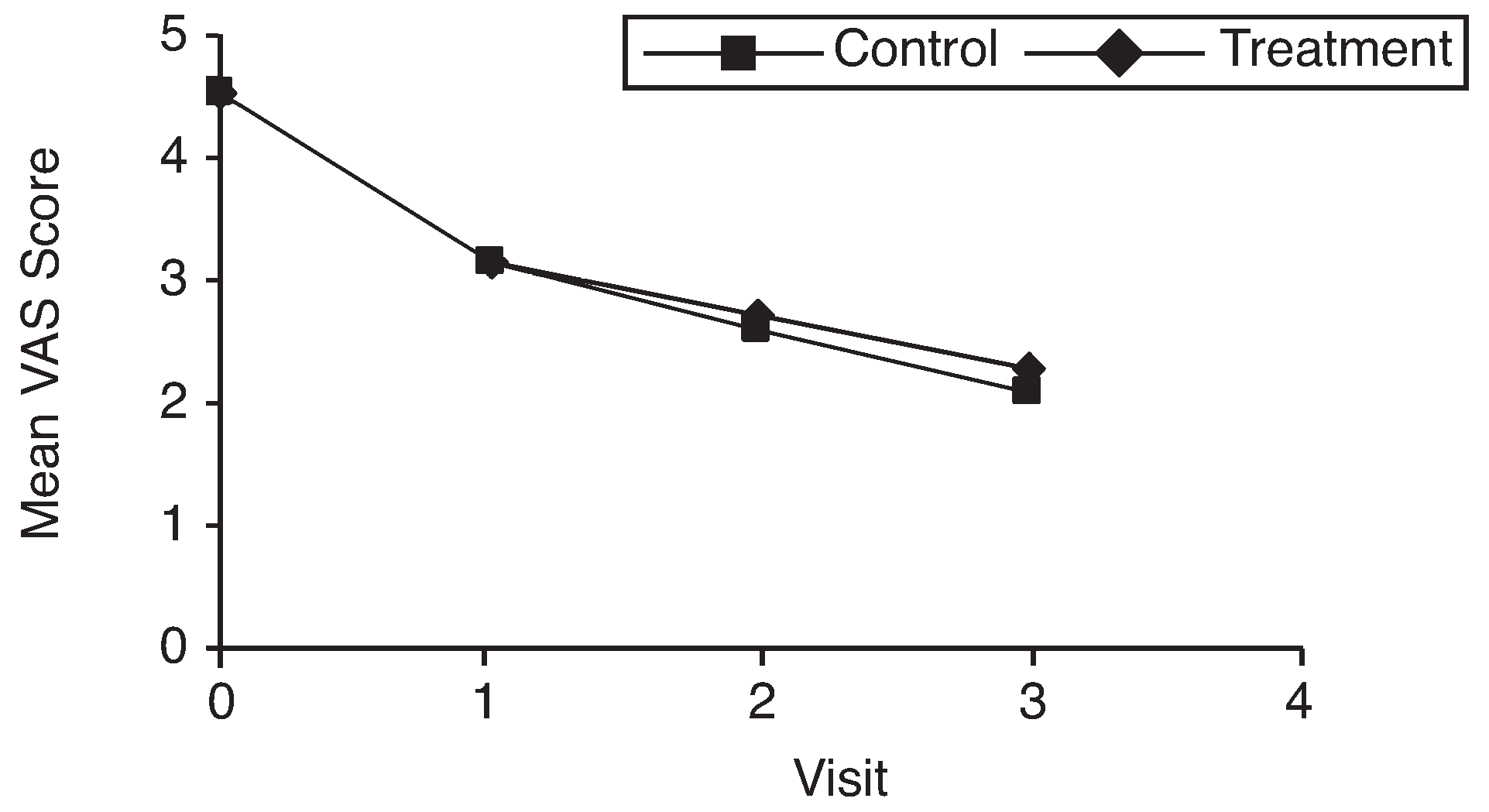
Figure 1
shows the mean visual analog scale scores for both groups during the 6-week trial. There is no evidence of an overall treatment effect (
F
1,43 = 0.31;
P
= .79). Although we observed a significant decrease in the visual analog scale score with time in the treatment and control groups (
F
3,129 = 7.89;
P
< .0001), there is no evidence that the decrease in the treatment group was different from that in the control group (
F
3,129 = 0.13;
P
= .9443).
Figure 1.
Mean visual analog scale (VAS) scores for both study groups during the 6-week trial. Abbreviation: VAS, visual analog scale.
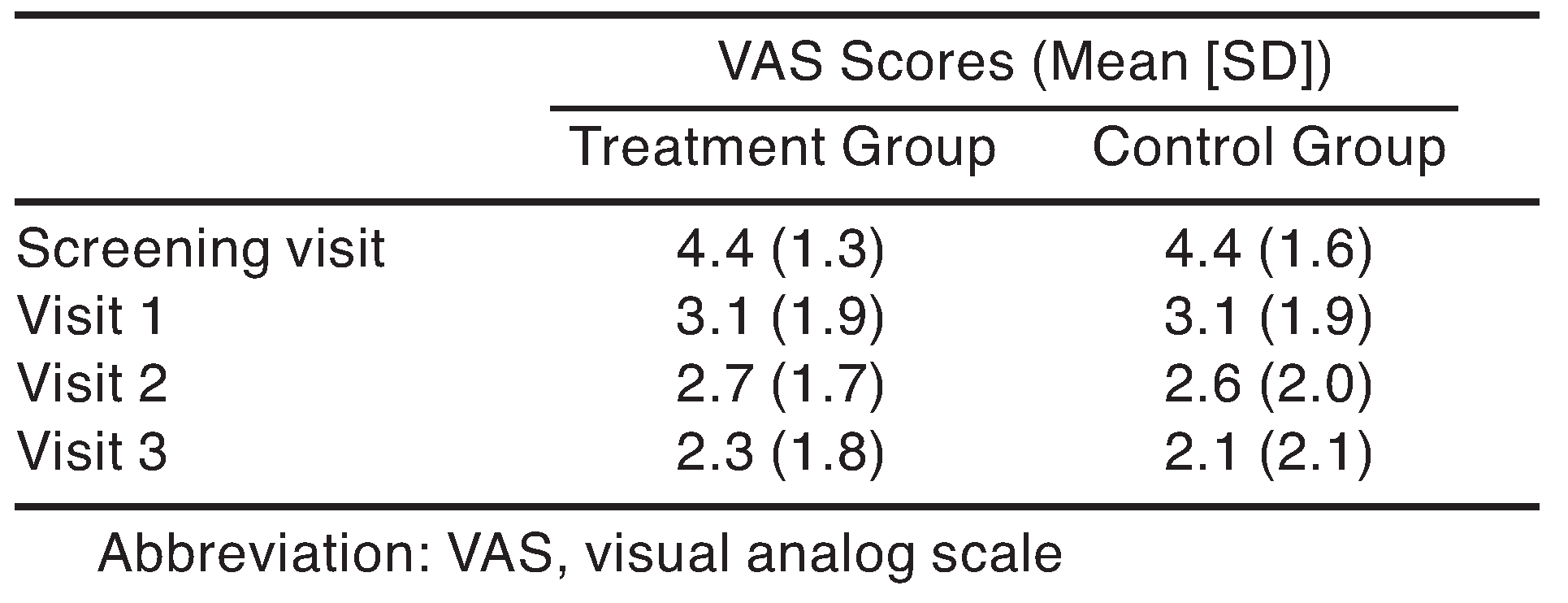
We observed a significant trend in time for all questions related to pain and activities, but this change in time effect did not differ by treatment (
Table 3
). For disability, the use of a cane, crutches, or a walker indoors or outdoors did not change with time; all of the other parameters did change with time but, again, did not differ by treatment. One of 22 patients in the treatment group (5%) had no pain relief and no change in the visual analog scale score through- out the trial, whereas nine of the 24 patients in the placebo group (38%) had no pain relief and no change in their visual analog scale score.
Table 3.
Mean Visual Analog Scale Scores in the Study Groups During the 6-Week Trial.
None of the patients used nonsteroidal anti-inflammatory drugs or any other pain relievers during the study. During the trial, no one reported an allergic reaction or any other problems associated with use of the socks. Compliance, as assessed by review of the patient diary, was 99%. Two patients did not wear the socks for one 8-hour period during the 6-week trial owing to hot summer weather conditions. All of the patients reported that the socks were warm and comfortable. There were no adverse reactions to the socks during the trial.
Discussion
When first approached by a textile company with a claim that they manufactured pain-relieving socks with minimal, if any, adverse effects, we were curious to say the least. To prove such a claim, however, we needed to design a double-blind placebo-controlled clinical trial that observed all of the tenets of sound clinical research. To decrease bias, the active and inactive socks must look identical, there must be an adequate sample size, and the study must be conducted for 6 weeks. Keeping this in mind, we designed just such a protocol. After the patients were enrolled and the study was implemented, with much anticipation, the statistician (S.G.) analyzed the data.
The results of this study did not show a statistically significant difference between the treatment and control groups in pain, activity, and disability scores. Both groups, however, showed a decrease across time in pain, disability, and activity scores. Active and inactive socks were found to be safe, and they scored high in patient satisfaction. The fiber content and the unique construction of the socks may have contributed to the high comfort level that patients reported.
Previous studies have shown that for pain trials, the placebo effect may have an impressive effect on the results. Evans [6] reported that in pain management studies that lasted for at least 1 year, only one-third of the patients in the treatment and placebo groups remained pain free. Kaptchuk et al [7] compared a sham device with an inert pill for persistent arm pain and found that pain decreased in both groups. Because 62% of the patients in the placebo group received some degree of pain relief, the placebo effect may have played a role in the results of the present trial. The unique structure and high comfort level of the sock itself may have contributed to placebo analgesia.
Considering the potential benefits of a pain-relieving fabric, we believe that further investigation is warranted. Future studies, such as crossover clinical trials and trials comparing Pain Checker socks with another active treatment (eg, lidocaine patches), seem warranted. Comparison trials will ascertain whether the socks can relieve pain compared with known pain relief therapies and decrease the effect of placebo analgesia.
Financial Disclosure
This trial was supported by Crystal Textiles, Cresskill, NJ, and supported in part by Pain Checker Health Wear Company, Cresskill, NJ.
Conflicts of Interest
None reported.
References
- ROWBOTHAM, M.C.; TWILLING, L.; DAVIES, P.S. Oral opioid therapy for chronic peripheral and central neuropathic pain. N Engl J Med 2003, 348, 1223. [Google Scholar] [CrossRef] [Scilit] [PubMed]
- GODFREY, R.G. A guide to the understanding and use of tricyclic antidepressants in the overall management of fibromyalgia and other chronic pain syndromes. Arch Intern Med 1996, 156, 1047. [Google Scholar] [CrossRef] [Scilit] [PubMed]
- BECKER, R.O. Cross Currents: Perils of Electropollution, the Promise of Electromedicine; Jeremy P Tarcher Publishing Inc: New York, 1990. [Google Scholar]
- BECKER, R.O.; SELDEN, G. The Body Electric; William Mor- row, New York, 1985. [Google Scholar]
- FOGIEL, M. Basic Electricity; Research & Education Association: Piscataway, NJ, 2002. [Google Scholar]
- EVANS, F.J. The placebo response in pain reduction. Adv Neurol 1974, 4, 289. [Google Scholar]
- KAPTCHUK, T.J.; STASON, W.B.; DAVIS, R.B. Sham devicevinert pill: randomized controlled trial of two placebo treatments. BMJ 2006, 332, 391. [Google Scholar] [CrossRef] [Scilit] [PubMed]
© 2024 American Podiatric Medical Association