


Abstract
Topical treatment of onychomycosis, in contrast to systemic oral therapy, allows the patient to apply medication directly to the affected area, thereby decreasing the potential for adverse events and drug interactions. Historically, several topical antifungal agents have been used in the treatment of onychomycosis; however, the evidence for their effectiveness is based on very limited data or anecdotal reports. Recently, the development of new, effective topical agents has renewed interest in this form of therapy. As clinical experience with newer topical agents expands, they may be found to be an effective option for the treatment of onychomycosis.
This article was supported by an unrestricted educational grant from Dermik Laboratories, Berwyn, Pennsylvania. Drs. Feder and Nace both received funding from Dermik Laboratories. Dr. Bodman has received monetary compensation for speaking engagements from Dermik Laboratories.
Onychomycosis is the most common disease of the nails,[1] accounting for approximately 30% of all nail infections.[2] It is estimated that this disease affects 2% to 13% of the general population,[3-7] with prevalence increasing with age. This fungal infection is caused by dermatophytes, nondermatophytic molds, or yeasts.[8-10] At least 80% of onychomycosis infections in temperate zones are caused by the dermatophytes Trichophyton rubrum and Trichophyton mentagrophytes.[9-11] Common nondermatophytic molds in North America include Scopulariopsis brevicaulis, Aspergillus flavus, and Fusarium species, which account for approximately 1.5% to 6.0% of fungal nail infections.[8,12] Yeasts are responsible for 5% to 17% of all cases of onychomycosis, primarily affecting the fingernails, with Candida albicans isolated in more than 70% of patients.[9,13]
Diagnosis
Clinically, onychomycosis is evident from hyperkeratosis of the nail bed, yellow to brownish discoloration of the nails, and separation of the nail from the nail bed (onycholysis).[14] Diagnosis of onychomycosis is especially likely if tinea pedis caused by T rubrum is present. Trichophyton rubrum often invades the distal nail bed, resulting in the development of distal subungual onychomycosis.[15]
Accurate diagnosis by clinical presentation alone is possible in only 40% to 57% of cases.[14,16] Direct microscopic examination, fungal culture, or both are required to confirm the diagnosis and to identify the infecting organism.[14,17,18] Direct microscopic examination for hyphal fragments is typically performed by preparing nail scrapings with potassium hydroxide (KOH).[14,19] Although direct microscopy cannot identify the specific causative pathogen, it can determine whether the hyphae are characteristic of dermatophytes.[17] The most accurate test (85% sensitive) for the detection of mycotic nail infections is a routine histopathologic examination with periodic acid–Schiff stain.[20] Fungal culture is required to identify the specific infecting organism; however, because more than 90% of onychomycosis infections are caused by dermatophytes, treatment is often initiated on the basis of a positive KOH result. Further research may determine whether sensitivity is enhanced by combining periodic acid–Schiff staining with fungal cultures.
Treatment Options: The Role of Topical Therapy
Treatments for onychomycosis range from minimal intervention or palliative care to systemic therapy or nail avulsion by surgical or chemical means. The choice of treatment modality may depend on several factors, including the presentation and severity of the disease, the medical condition and current patient medications, physician and patient preference, and the cost of therapy.[5] Because of the potential for drug interactions, use of systemic therapy may be inappropriate in patients receiving multiple medications, such as those with human immunodeficiency virus, patients with diabetes mellitus, and the elderly.[21-25] Topical therapy allows for direct application to the desired area and minimizes the chance of adverse systemic drug reactions that can be associated with use of oral antifungal agents.[9] This is also a good option for patients with mild-to-moderate disease and for those unwilling to take systemic medication.
Topical Antifungal Agents
Historically, several classes of topical antifungal medications have been used to treat onychomycosis, including polyenes (eg, nystatin); imidazoles (eg, clotrimazole, tioconazole, econazole, ketoconazole, miconazole, sulconazole, and oxiconazole), which have fungistatic properties in vitro; and allylamines/benzylamines (eg, naftifine, terbinafine, and butenafine), which have fungistatic and fungicidal properties in vitro.[26] Few well-designed clinical studies have evaluated the efficacy of these agents for the treatment of onychomycosis; therefore, most of the available data supporting their use are derived from small and poorly controlled studies.
In an effort to improve outcomes, topical agents have been combined with 20% to 40% urea ointment to soften the onycholytic nail plate, thereby facilitating debridement and antifungal penetration.[27-31] One of the most widely used antifungal–urea combinations evaluated in several small-scale trials is 1% bifonazole in combination with 40% urea ointment.[27,30-33] In one trial,[2728] patients with onychomycosis were treated with 40% urea–1% bifonazole cream once daily for 6 months. A “cure” was defined as normal nail growth throughout the 6- to 12-month follow-up period and negative culture findings. Cure rates of 81% for fingernails and 69% for toenails were achieved. In a study [30] evaluating the efficacy of bifonazole–urea application in 25 children (aged 1.8 to 15.0 years) with onychomycosis, bifonazole–urea use resulted in a 68% (17/25) therapeutic success rate (clinical cure and negative KOH and culture results), a 24% (6/25) improvement rate (important clinical changes, positive or negative KOH results, and negative culture results), and an 8% (2/25) failure rate (no clinical or mycologic [KOH/culture] changes or exacerbation of the process and positive KOH and culture results). In another study [31] evaluating 50 patients with onychomycosis, application of bifonazole–urea cream resulted in a 90% cure rate (negative culture results and negative clinical evaluation) 1 month after treatment. This response was maintained for 4 months after treatment. In a similar small-scale study [32] evaluating daily use of 40% urea–1% bifonazole paste in 22 patients with toenail onychomycosis, 63% of the nails were mycologically negative after 12 weeks of treatment, and 46% remained negative 24 weeks after initiating treatment. Adverse events observed in these trials included nail pain and dermatitis.[27,30,31] A 40% urea–1% bifonazole cream is commercially available in several countries outside of the United States.[34,35]
To date, two topical therapies have been approved for the treatment of onychomycosis in Europe: ciclopirox nail lacquer and amorolfine. Of these, only ciclopirox is approved for use in the United States. Ciclopirox nail lacquer 8% solution (Penlac, Dermik Laboratories, Berwyn, Pennsylvania) is a hydroxypyridone derivative that differs chemically and mechanistically from other marketed antifungal agents (including imidazoles and allylamines).[5 The mechanism of action of ciclopirox is thought to be related to the chelation of polyvalent cations (Fe+3 or Al+3). It is a broad-spectrum antifungal agent with activity against dermatophytes such as T rubrum and T mentagrophytes, Candida species, and some nondermatophyte molds. Ciclopirox was introduced in 1975 and was first approved approximately 10 years ago in France for the treatment of onychomycosis.[5]
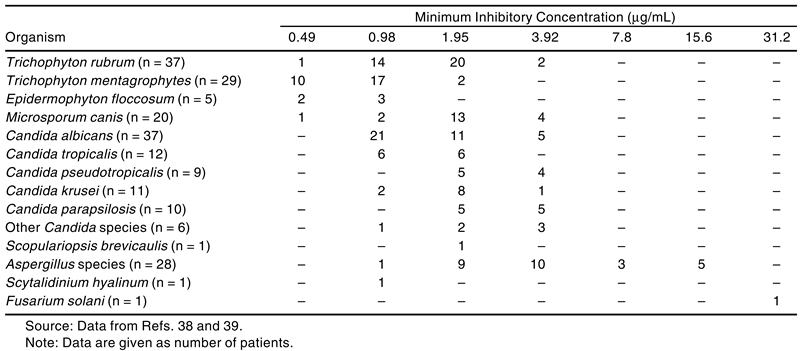
After repeated applications to the nail surface, ciclopirox has been detected in all layers of the nail plate and the skin below.[36,37] Figure 1 illustrates the penetration of C14-labeled ciclopirox in excised, mycotically involved toenails. As expected, the concentration of the topical agent was highest in the upper layers of the nail plate,[37] and at a depth of 0.4 mm, ciclopirox exceeded the minimum inhibitory concentrations for the most common fungal species associated with onychomycosis (Table 1).[38,39] Drug penetration of the nail varies, with more pronounced penetration observed in the damaged, friable areas of mycotic nails.[37]
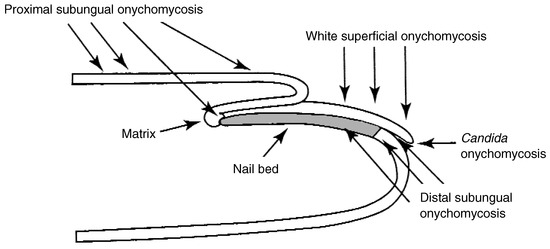
Figure 1.
Penetration of C14-labeled ciclopirox in excised, mycotically involved toenails after a single application of ciclopirox nail lacquer 8% solution. (Reprinted with permission from Del Rosso.15)
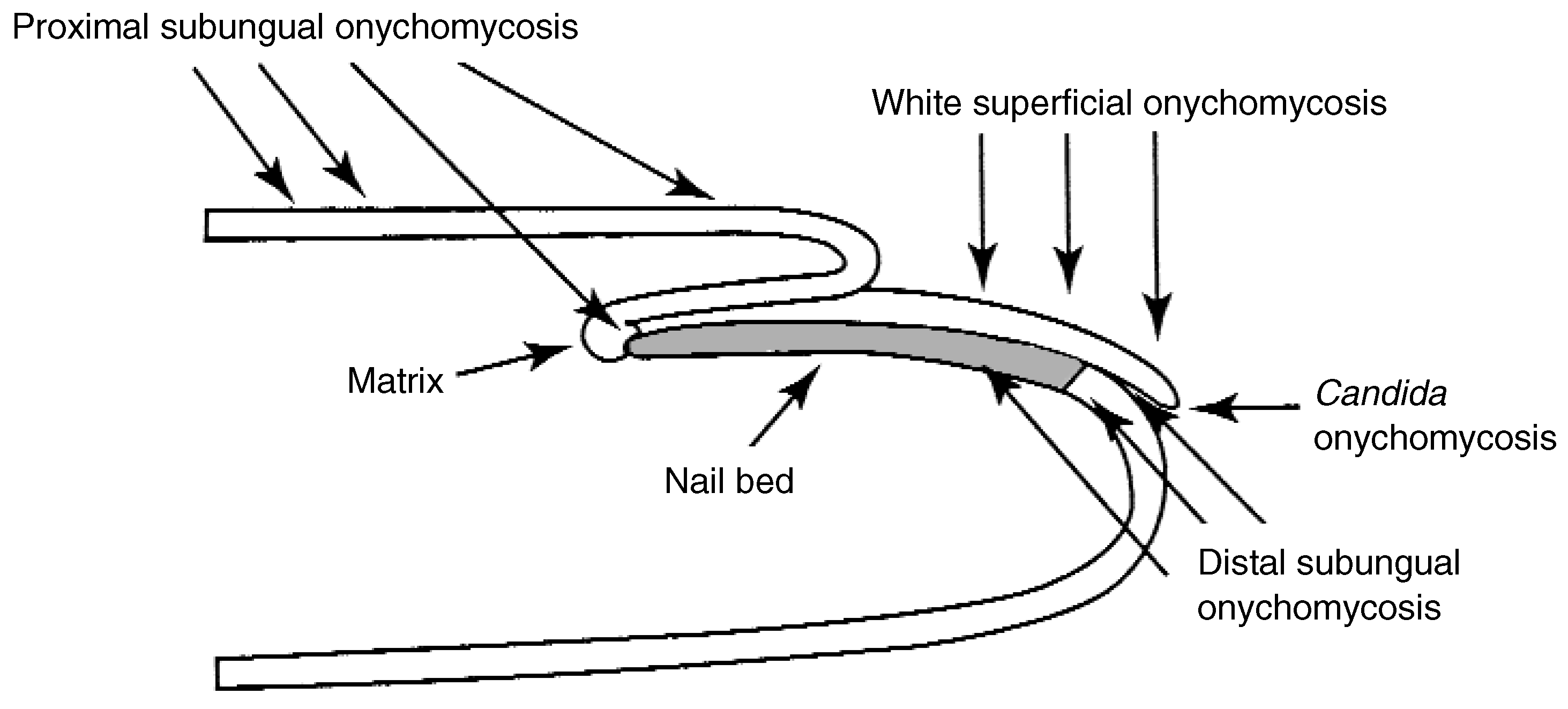

Table 1.
Antifungal Efficacy of Ciclopirox
The efficacy of ciclopirox in the treatment of onychomycosis of dermatophytic origin was recently demonstrated in two double-blind, vehicle-controlled US trials.[40] These studies of 460 patients with mild-to-moderate onychomycosis included 231 individuals receiving ciclopirox and 229 receiving vehicle only. Ciclopirox or vehicle control was applied to all toenails and affected fingernails (including approximately 5 mm of the surrounding skin) once daily for 48 weeks. Efficacy was determined on the basis of the results of fungal cultures and KOH microscopy of nail specimens, an investigator-assessed global evaluation score, and planimetric measurement of the involved area. The primary efficacy variable in the studies was treatment success, defined as simultaneous negative KOH and culture results and 10% or less area involvement of the target nail plate as determined by planimetry. The most common causative organism was T rubrum (96%). Treatment success was achieved in 6.5% (study 1) and 12% (study 2) of patients treated with ciclopirox, compared with less than 1% for those in the vehicle groups (P < .05 for both studies). Significantly more patients treated with ciclopirox nail lacquer had negative culture results (84% for both studies) compared with patients receiving vehicle (37% and 44%, respectively; P < .001). In addition, mycologic cure (defined as negative KOH and culture results) was achieved in 29% and 36% of patients treated with ciclopirox in each of the two studies, compared with 11% and 9% of patients receiving vehicle, respectively (P < .01 for both studies). Complete cure, defined as negative KOH and culture results and a global evaluation score of cleared, was achieved in 5.5% and 8.5% of patients treated with ciclopirox nail lacquer and 0.9% and 0% of patients receiving vehicle in study 1 and study 2, respectively. Statistically significant improvement for negative culture and mycologic cure was evident as early as week 12 of treatment and was maintained throughout the entire 48-week study. Efficacy was not related to the severity of nail disease: patients with 40% to 65% nail surface involvement demonstrated efficacy results similar to those with 20% to less than 40% nail involvement.[40] The results of these trials led to the approval of ciclopirox for the topical treatment of mild-to-moderate onychomycosis.[41]
The efficacy of ciclopirox nail lacquer has been verified in numerous international trials that included patients with a broader variety of causative organisms than the US pivotal trials, a wider range of treatment regimens (eg, alternate days or twice weekly), and a shorter duration of treatment (24 weeks versus 48 weeks in the United States).[40] The mycologic cure rates in these studies ranged from 47% to 86%.
Amorolfine, available as a nail lacquer in many countries, is a morpholine derivative structurally and chemically unrelated to other antifungal agents. Its primary mechanism of action is inhibition of the biosynthesis of ergosterol, a component of the fungal cell membrane. Amorolfine is fungistatic and fungicidal, with greatest efficacy against dermatophytes and more variable activity against yeast and molds.[42] Two multicenter studies evaluated the clinical efficacy of amorolfine therapy in patients with toenail or fingernail onychomycosis. Application of 5% amorolfine lacquer once or twice weekly for 6 months produced mycologic cure (negative culture results) and clinical cure (no symptoms or signs or residual, slight erythema or slight scaling) rates of approximately 45% to 50% 3 months after the end of treatment.[43]
Miscellaneous Topical Therapies
Various miscellaneous topical therapies that have been suggested but not approved by the US Food and Drug Administration for the treatment of onychomycosis are summarized in Table 2.[44-49] Evidence for the penetration and efficacy of these treatments is lacking; advocacy of their use is based primarily on anecdotal reports and small-scale studies.
Table 2.
Miscellaneous Topical Agents Suggested but Not Approved for the Treatment of Onychomycosis
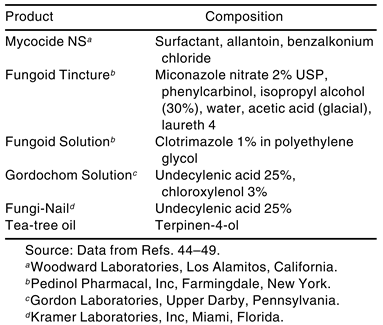
Mycocide NS (Woodward Laboratories, Los Alamitos, California) is a surfactant-based delivery system containing allantoin and benzalkonium chloride.[46] In a small, open-label study44] of 40 patients with toenail onychomycosis, patients underwent nail debridement followed by twice-daily application of 1 to 2 drops of Mycocide NS. After 10 months, patients experienced significant improvement in disease severity based on subjective investigator and patient evaluations (P < .05).
Fungoid Tincture (Pedinol Pharmacal, Inc, Farmingdale, New York), a nonprescription preparation not indicated for the treatment of onychomycosis, has been evaluated in only small-scale trials. Two clinical trials50,51] (vehicle-controlled) suggest that this product may have some activity in patients with distal subungual onychomycosis of the toes after 12 months of treatment. Both studies enrolled 20 patients each, with 10 patients each randomized to twice-daily treatment with Fungoid Tincture or vehicle for 12 months. Although a greater number of patients receiving Fungoid Tincture achieved negative results on KOH stain and culture and demonstrated clinical improvement (global assessment based on photographs) compared with those in the vehicle group, a statistical analysis was not conducted to determine the significance of these findings. Clinical improvement, assessed as the distance from the cuticle to the most proximal onychomycotic border and by percentage involvement, was either similar between treatment groups or actually higher in the vehicle group.
Tea-tree (Melaleuca alternifolia) oil, which contains the active ingredient terpinen-4-ol, also has been reported to have antifungal properties.[49,52] In one trial,[49] 117 patients with distal subungual onychomycosis were randomized to receive twice-daily applications of either 1% clotrimazole solution or 100% tea-tree oil for 6 months. Physicians defined clinical improvement as “full” or “partial” resolution of symptoms based on the appearance of the target nail (the nail with the greatest fungal burden at study entry) at the end of therapy. There was no significant difference between clotrimazole and tea-tree oil with respect to clinical improvement (61% and 60%, respectively) or negative culture results (11% and 18%, respectively).[49]
Future Directions
One of the most effective ways of improving clinical outcomes is to increase awareness of current onychomycosis management among patients and health-care professionals. Clinicians can play a key role in educating patients about the nature of the disease, proper techniques to prevent infection, and the prospects for cure with current treatment options.[17] Promptly identifying patients who may be at risk for developing more severe or less common types of onychomycosis is important. For example, patient populations with concomitant disease states, along with the general population, may experience recurrent fungal infections after successful initial treatment of onychomycosis.[17,21,53] Future controlled trials evaluating the role of prophylactic topical agents (eg, once-weekly ciclopirox) may demonstrate clinical benefit in preventing reinfection in these patients.[54]
In summary, there have been significant advances in topical therapeutic options for onychomycosis. Until recently, the use of topical agents was based on limited evidence—primarily, small studies and anecdotal reports. Despite this lack of confirmed efficacy, the demand for a nonsystemic treatment for onychomycosis fostered their use. More recently, however, new topical regimens have been developed with proven efficacy. Among these, ciclopirox nail lacquer is the only prescription topical therapy approved in the United States for the treatment of onychomycosis. The availability of an agent with proven nail penetration provides clinicians for the first time with an effective topical treatment option for patients with mild-to-moderate onychomycosis.
References
- Drake LA, Scher RK, Smith EB, et al: Effect of onychomycosis on quality of life. .J Am Acad Dermatol38::702. ,1998. .
- Baran R, Haneke E: “Fungal Nail Infection,” in Nail Surgery: A Text and Atlas, ed by EA Krull, EG Zook, R Baran, et al, p 183, Lippincott Williams & Wilkins, Philadelphia, 2001..
- Gupta AK, Jain HC, Lynde CW, et al: Prevalence and epidemiology of unsuspected onychomycosis in patients visiting dermatologists’ offices in Ontario, Canada: a multicenter survey of 2001 patients. .Int J Dermatol36::783. ,1997. .
- Elewski BE, Charif MA: Prevalence of onychomycosis in patients attending a dermatology clinic in northeastern Ohio for other conditions. .Arch Dermatol133::1172. ,1997. .
- Gupta AK: Management options in onychomycosis. .Am J Sports Med2::117. ,2000. .
- Roberts DT: Prevalence of dermatophyte onychomycosis in the United Kingdom: results of an omnibus survey. .Br J Dermatol126::23. ,1992. .
- Sais G, Juggla A, Peyri J: Prevalence of dermatophyte onychomycosis in Spain: a cross sectional study. .Br J Dermatol132::758. ,1995. .
- Denning DW, Evans EGV, Kibbler CC, et al: Fungal nail disease: a guide to good practice (report of a Working Group of the British Society for Medical Mycology). .BMJ311::1277. ,1995. .
- Elewski BE, Hay RJ: Update on the management of onychomycosis: highlights of the Third Annual International Summit on Cutaneous Antifungal Therapy. .Clin Infect Dis23::305. ,1996. .
- Midgley G, Moore MK, Cook JC, et al: Mycology of nail disorders. .J Am Acad Dermatol31::S68. ,1994. .
- Clayton YM: Clinical and mycological diagnostic aspects of onychomycosis and dermatomycosis. .Clin Exp Dermatol17::37. ,1997. .
- André J, Achten G: Onychomycosis. .Int J Dermatol26::481. ,1987. .
- Cohen JL, Scher RK, Pappert AS: “The Nail and Fungus Infections,” in Cutaneous Fungal Infections, ed by B Elewski, p 106, Igaku-Shoin Inc, New York, 1992..
- Trépanier EF, Amsden GW: Current issues in onychomycosis. .Ann Pharmacother32::204. ,1998. .
- Del Rosso JQ: Advances in the treatment of superficial fungal infections: focus on onychomycosis and dry tinea pedis. .J Am Osteopath Assoc97::339. ,1997. .
- Greer DL: Evolving role of nondermatophytes in onychomycosis. .Int J Dermatol34::521. ,1995. .
- Elewski BE: Onychomycosis: pathogenesis, diagnosis, and management. .Clin Microbiol Rev11::415. ,1998. .
- Weinberg JM, Koestenblatt EK: Comparison of diagnostic methods in the evaluation of onychomycosis. .Dermatol Online J [serial online]7::23G. ,2001. . Available at: http://dermatology.cdlib.org/DOJvol7num1/nails/abstracts/weinberg.html. Accessed January 24, 2003.
- Lagana FJ: Nondermatophytes: pathogen or distracter in onychomycosis. .Clin Podiatr Med Surg12::255. ,1995. .
- Lawry MA: Methods for diagnosing onychomycosis: a comparative study and review of the literature. .Arch Dermatol136::1112. ,2000. .
- Loveland LJ: Onychomycosis in HIV-positive patients. .Clin Podiatr Med Surg15::305. ,1998. .
- Katz HI: Systemic antifungal agents used to treat onychomycosis. .J Am Acad Dermatol38::S48. ,1998. .
- Katz HI: Drug interactions of the newer oral antifungal agents. .Br J Dermatol141::26. ,1999. .
- Katz HI: Possible drug interactions in oral treatment of onychomycosis. .JAPMA87::571. ,1997. .
- Katz HI, Gupta AK: Oral antifungal drug interactions. .Dermatol Clin15::535. ,1997. .
- Tom CM, Kane MP: Management of toenail onychomycosis. .Am J Health Syst Pharm56::865. ,1999. .
- Torres-Rodríguez JM, Madrenys N, Nicolás MC: Non-traumatic topical treatment of onychomycosis with urea associated with bifonazole. .Mycoses34::499. ,1991. .
- Syed TA, Ahmadpour OA, Ahmad SA, et al: Management of toenail onychomycosis with 2% butenafine and 20% urea cream: a placebo-controlled, double-blind study. .J Dermatol25::648. ,1998. .
- Fritsch H, Stettendorf S, Hegemann L: Ultrastructural changes in onychomycosis during the treatment with bifonazole/urea ointment. .Dermatology185::32. ,1992. .
- Bonifaz A, Ibarra G: Onychomycosis in children: treatment with bifonazole-urea. .Pediatr Dermatol17::310. ,2000. .
- Bonifaz A, Guzmán A, Garcia C, et al: Efficacy and safety of bifonazole urea in the two-phase treatment of onychomycosis. .Int J Dermatol34::500. ,1995. .
- Roberts DT, Hay RJ, Doherty VR, et al: Topical treatment of onychomycosis using bifonazole 1% urea/40% paste. .Ann N Y Acad Sci544::586. ,1988. .
- Hay RJ, Roberts DT, Doherty VR, et al: The topical treatment of onychomycosis using a new combined urea/imidazole preparation. .Clin Exp Dermatol13::164. ,1988. .
- Niewerth M, Korting HC: Management of onychomycoses. .Drugs58::283. ,1999. .
- Stettendorf S: “Topical Treatment of Onychomycosis with Bifonazole-Urea Ointment,” in Onychomycosis, ed by S Notting, HC Korting, p 102, Springer, Berlin, 1990..
- Bohn M, Kraemer KT: Dermatopharmacology of ciclopirox nail lacquer topical solution 8% in the treatment of onychomycosis. .J Am Acad Dermatol43: (suppl 4):S57. ,2000. .
- Penlac Nail Lacquer [product monograph], Dermik Laboratories Inc, Berwyn, PA, 2000..
- Markus A: “Hydroxy-pyridones: Outstanding Biological Properties,” in Hydroxy-pyridones as Antifungal Agents with Special Emphasis on Onychomycosis, ed by S Shuster, p 3, Springer-Verlag, Berlin, 1999..
- Dittmar W, Lohaus G: HOE 296, a new antimycotic compound with a broad antimicrobial spectrum. .Arzneim-Forsch23::670. ,1973. .
- Gupta AK, Fleckman P, Baran R: Ciclopirox nail lacquer topical solution 8% in the treatment of toenail onychomycosis. .J Am Acad Dermatol43::S70. ,2000. .
- Penlac Nail Lacquer [package insert], Dermik Laboratories Inc, Collegeville, PA, 2000..
- Haria M, Bryson HM: Amorolfine: a review of its pharmacological properties and therapeutic potential in the treatment of onychomycosis and other superficial fungal infections. .Drugs49::103. ,1995. .
- Zaug M, Bergstraesser M: Amorolfine in the treatment of onychomycoses and dermatomycoses. .Clin Exp Dermatol17::61. ,1992. .
- Wadhams PS, Griffith J, Nikravesh P, et al: Efficacy of a surfactant, allantoin, and benzalkonium chloride solution for onychomycosis: preliminary results of treatment with periodic debridement. .JAPMA89::124. ,1999. .
- Fungoid Tincture information. Available at: http://www.pedinol.com. Accessed August 14, 2001..
- Mycocide NS product information. Available at: http://www.woodwardlabs.com. Accessed August 15, 2001..
- PlanetRx information. Available at: http://planetrx.com. Accessed July 25, 2000..
- Physician’s Desk Reference, Medical Economics Co, Inc, Montvale, NJ, 2000..
- Buck DS, Nidorf DM, Addino JG: Comparison of two topical preparations for the treatment of onychomycosis: Melaleuca alternifolia (tea tree) oil and clotrimazole. .J Fam Pract38::601. ,1994. .
- Meyerson MS, Scher RK, Hochman LG, et al: Open-label study of the safety and efficacy of Fungoid® Tincture in patients with distal subungual onychomycosis of the toes. .Cutis49::359. ,1992. .
- Montana JB, Scher RK: A double-blind, vehicle-controlled study of the safety and efficacy of Fungoid Tincture® in patients with distal subungual onychomycosis of the toes. .Cutis53::313. ,1994. .
- Maruzella JC, Liguori L: The in vitro antifungal activity of essential oils. .J Am Pharm Assoc47::250. ,1958. .
- Tosti A, Piraccini BM, Stinchi C, et al: Relapses of onychomycosis after successful treatment with systemic antifungals: a three year follow-up. .Dermatology197::162. ,1998. .
- Gupta AK, Baran R: Ciclopirox nail lacquer solution 8% in the 21st century. .J Am Acad Dermatol43::S96. ,2000. .
© 2003 American Podiatric Medical Association