


Abstract
Despite the wide range of publication opportunities in podiatric medicine, little is known about how podiatric authors select journals in which to publish or their perceptions of journals currently available. To investigate these issues, a survey of publication patterns and perceptions of full- and part-time academic staff members at podiatric medical schools in Australia was undertaken. Most of the papers by Australian podiatric medical faculty members have been published in “local” journals, such as the Australasian Journal of Podiatric Medicine (38%) and the British Journal of Podiatry (17%). However, an increasing number of papers are being published in JAPMA (14%). In addition, a large proportion of papers have been published in a variety of journals that are not specific to podiatric medicine, particularly in the areas of biomechanics and diabetic medicine. The number of publications per faculty member was associated with the highest qualification obtained, academic rank, and the number of years of employment in higher education. The most important factors in selecting the journal in which to publish were the journal’s inclusion in MEDLINE, the perceived prestige of the journal, and the quality of the journal’s peer-review panel and editor.
Publication in scientific journals is of fundamental importance to the development of all health professions. Journals provide a vital forum for the dissemination of information and critical evaluation of new advances in theory or practice, and they also act as an archive of the profession’s continuing development. The first scientific journal, Journal de Scavans, was published in France in 1665; the first journal with a medical focus, Medical Essays and Observations, followed much later, in 1731. Scientific and medical publishing has since witnessed exponential growth: in 1840 an estimated 300 scientific journals existed, while today there are approximately 100,000 such journals, 20% of them with a biomedical focus. [1] There has also been a clear trend toward super-specialization as the medical literature becomes increasingly fragmented into more and more discrete disciplines. [2]
Podiatric medical literature has matured considerably from the humble beginnings of The Pedic Items, the first podiatry journal published in the United States, appearing in 1911, and The Chiropodist, the first edition of which was produced in the United Kingdom in 1914. [3] Today, a wide range of publishing opportunities exists within podiatric medicine. Published in the United States are JAPMA, the Journal of Foot and Ankle Surgery, Clinics in Podiatric Medicine and Surgery, and the orthopedic journal Foot and Ankle International. The United Kingdom has recently undergone a significant change in scholarly publication following the Camden Accord, which saw the two publications of rival podiatric medical associations merge. [4] Thus the British Journal of Podiatric Medicine and Surgery (published by the Podiatry Association of the United Kingdom) and the Journal of British Podiatric Medicine (published by the Society of Chiropodists and Podiatrists) now form a single journal, the British Journal of Podiatry, the first issue of which was released in 1998. In Australia, Australian Podiatrist recently merged with the New Zealand Journal of Podiatric Medicine to form the Australasian Journal of Podiatric Medicine. Finally, Churchill Livingstone produces four issues per year of The Foot, the “international journal of clinical foot science,” which publishes material of interest to podiatric physicians, prosthetists and orthotists, and foot orthopedists. The American College of Foot and Ankle Orthopedics and Medicine (ACFOAM) recently arranged to have members subscribe to this journal as ACFOAM’s official publication following the demise of The Lower Extremity in 1998.
Four of these journals—JAPMA, Foot and Ankle International, the Journal of Foot and Ankle Surgery, and Clinics in Podiatric Medicine and Surgery—are retrievable through the “gold standard” medical database, MEDLINE, widely considered the benchmark feature of a high-quality scientific publication. [5-7] There has also been a steady increase in the number of podiatric physicians publishing in journals focusing on diabetes, biomechanics, and physical therapy. [8]
The wide range of publishing opportunities in podiatric medicine requires authors to carefully consider where to submit their papers for publication. However, virtually nothing is known about the criteria that podiatric authors use to select a target journal for their scholarly work or how they perceive the relative prestige of the various publications now available. Therefore, the aim of this study was to investigate patterns of publication and perceptions of journal prestige by the podiatric medical faculty in Australia.
Methods
A survey instrument was developed and tested on a convenience sample of academic staff of the Division of Podiatry at the University of Western Sydney–Macarthur. After some minor modifications, approval for the study was obtained through the Faculty Ethics Review Committee (Human Subjects), and the survey was published on the department’s Web site. All full- and part-time podiatric medical faculty members in Australia were contacted by electronic mail and invited to take part in the study. The target population comprised 5 institutions and 30 staff members.
The survey instrument consisted of five sections. Section 1 requested demographic and professional data, including the institution at which the respondent was a staff member, the level of academic appointment, the number of years in university employment, and the highest qualification attained. In section 2, respondents were asked to indicate their perception of the relative importance of various factors influencing their decision to submit a scholarly publication to a journal. The list of factors was based on a similar study that evaluated criteria for selecting journals by medical faculty in the United States. [9] Three additional factors (inclusion in MEDLINE, “local” content and focus, and multidisciplinary readership) were also included. Respondents rated each of these factors on a scale from 1 (unimportant) to 5 (very important). Section 3 requested respondents to rate the relative prestige of seven currently available podiatric medical publications on a similar scale ranging from a score of 1 (very low prestige) to 5 (very high prestige). Respondents who were not sufficiently familiar with the journal to rate it could select “unsure” as their response. Section 4 asked respondents to list potential non–podiatric medical target journals for subsequent research paper submissions. Finally, section 5 requested respondents to attach an up-to-date list of their journal publications, including articles currently in press but excluding papers currently under review. All other publication types, such as textbooks, book chapters, abstracts, proceedings, grants proposals, course manuals, book reviews, letters to the editor, and articles in newsletters and magazines, were excluded. Where two or more subjects had coauthored a paper, the paper was counted as a publication for each respondent, but only a single publication in the overall analysis.
Statistical Analysis
Descriptive statistics and cross-tabulations were used to assess the sample characteristics, rates of publication, prestige ratings, and criteria ratings. Associations between respondent characteristics and publication rates were assessed with the use of the Pearson product moment correlation coefficient (r) for ratio data and the Spearman rank correlation coefficient (rs) for ordinal data. Data were analyzed with SPSS for Windows (SPSS, Chicago, IL).
Results
Response Rate
A response rate of 90% (n = 27) was obtained following two reminder e-mail messages over a 4-month period (November 1999 through February 2000). Of the three nonrespondents, one reported difficulty in accessing the Web page, and two offered no reasons for their lack of response.
Sample Characteristics
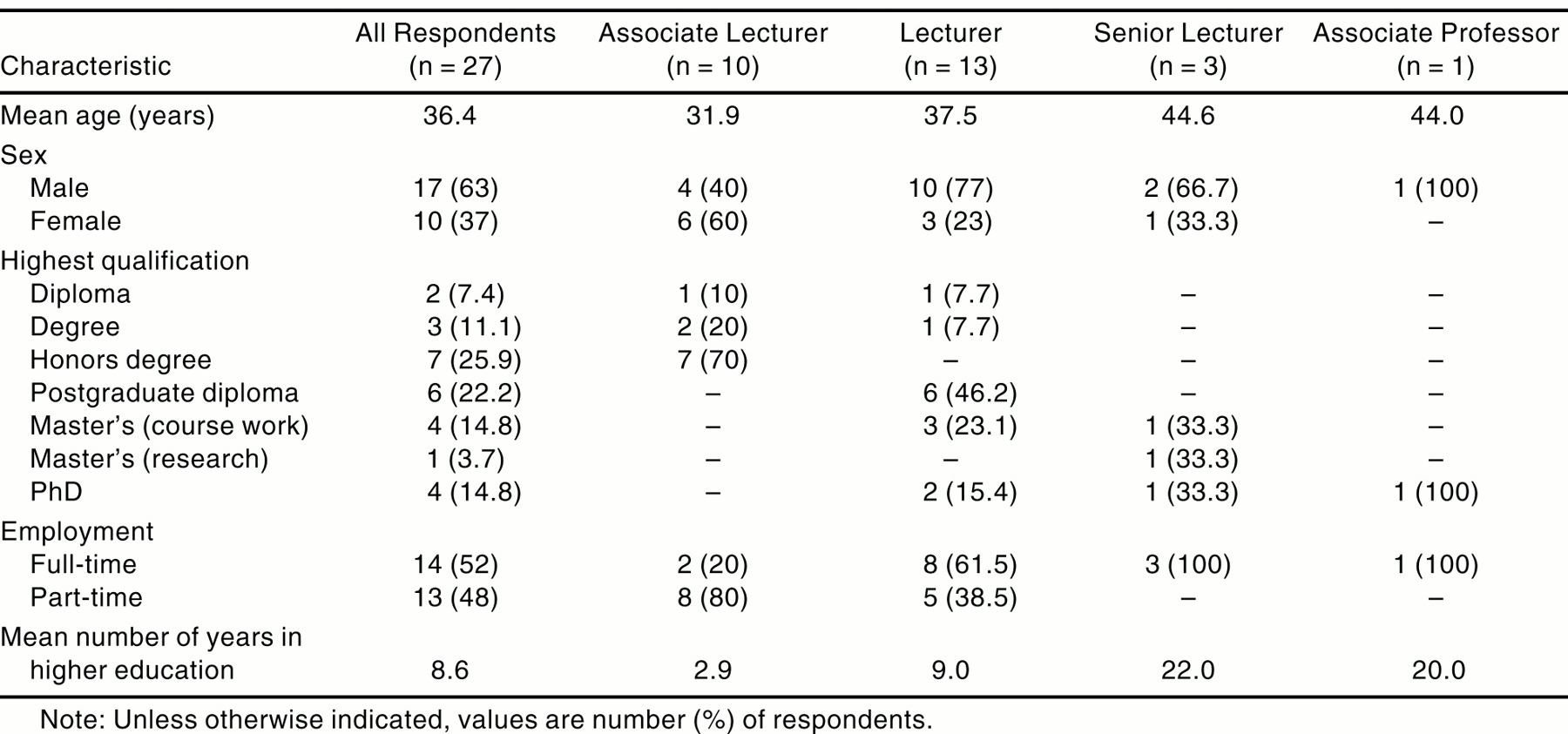
Sample characteristics tabulated by academic rank are summarized in Table 1. Most faculty members are employed at the lecturer level (48%, n = 13), followed by associate lecturer (37%, n = 10), senior lecturer (11%, n = 3), and associate professor (3.7%, n = 1). There are currently no Australian podiatric medical faculty members employed at the level of professor. Approximately half of the faculty members are currently employed full time (52%, n = 14), and half part time (48%, n = 13). The average number of years in university employment is 8.6 (range, 1 to 35). Two faculty members have obtained a diploma as their highest qualification, three a bachelor’s degree, seven a bachelor’s degree with honors, six a postgraduate diploma, four a master’s by course work, one a master’s by research, and four a PhD.

Table 1.
Sample Characteristics Tabulated by Academic Rank
Publication Patterns
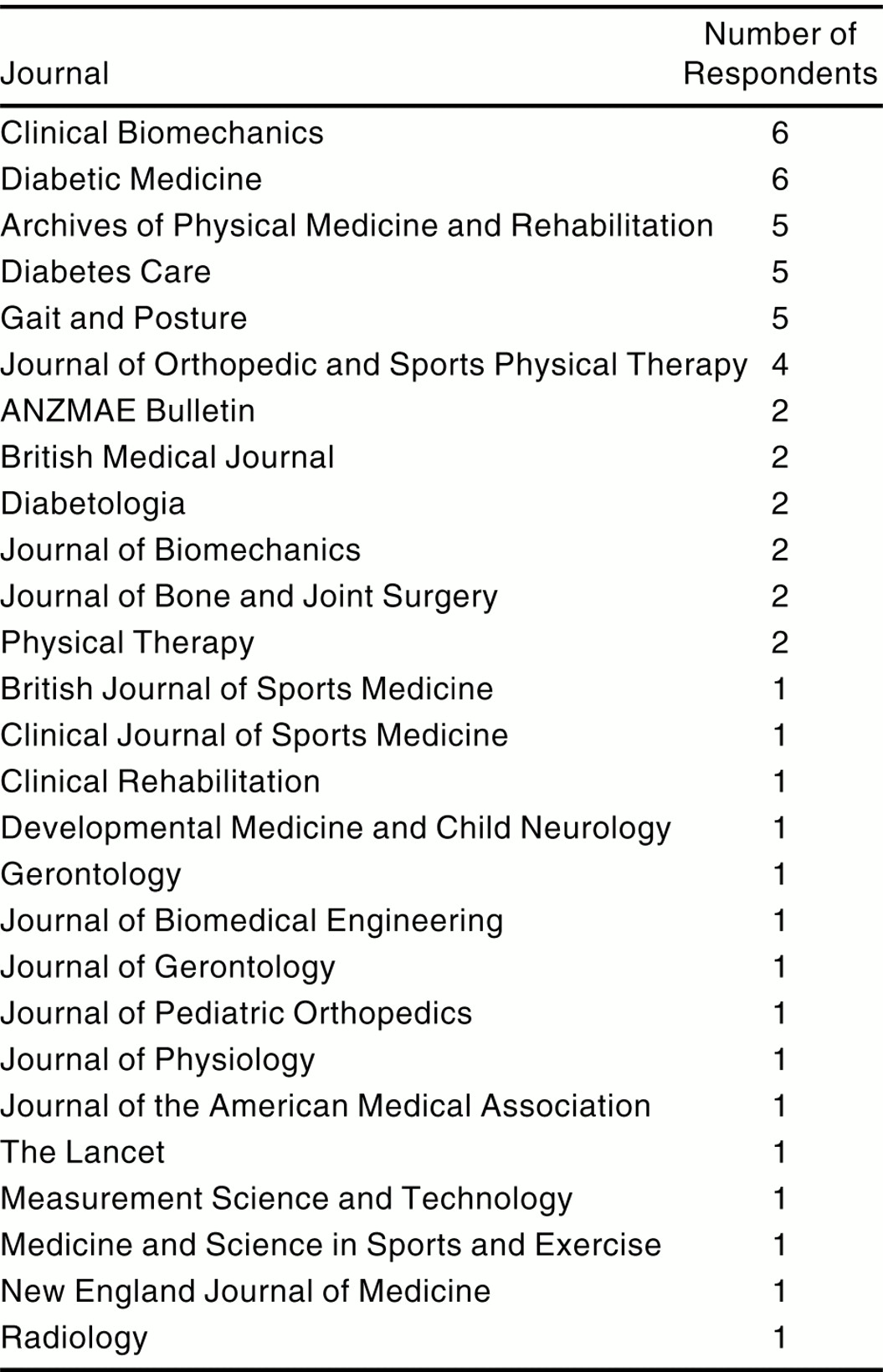
A summary of the publications of the current Australian podiatric medical faculty is shown in Figure 1. For the sake of simplicity, papers published in Australian Podiatrist and the New Zealand Journal of Podiatric Medicine were grouped under the Australasian Journal of Podiatric Medicine, and papers published in The Chiropodist and the Journal of British Podiatric Medicine were grouped under the British Journal of Podiatry. The current podiatric medical faculty has been responsible for the publication of 139 journal articles with an average of 5.1 (range, 0 to 22; median, 2) articles per respondent. The number of publications per respondent per year ranged from 0 to 3.7, with an average of 0.7 (range, 0 to 3.7; median, 0.4). Ten respondents (37%) had not published any papers. The majority of papers have been published in the “local” journal, the Australasian Journal of Podiatric Medicine (38%), followed by the British Journal of Podiatry (17%), JAPMA (14%), The Foot (9%), and Foot and Ankle International (2%). One respondent had published a paper in the Journal of Foot and Ankle Surgery; however, no respondents had published any papers in Clinics in Podiatric Medicine and Surgery. The Australian podiatric medical faculty has also published papers in a wide range of non–podiatric medical journals (19%). These journals are listed in Table 2. Table 3 shows the non–podiatric medical journals Australian podiatric medical faculty would consider submitting papers to in the future.
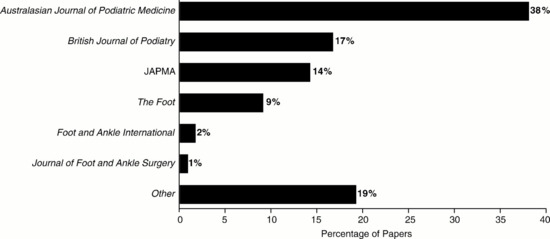
Figure 1.
Publications of the Australian podiatric medical faculty by journal.
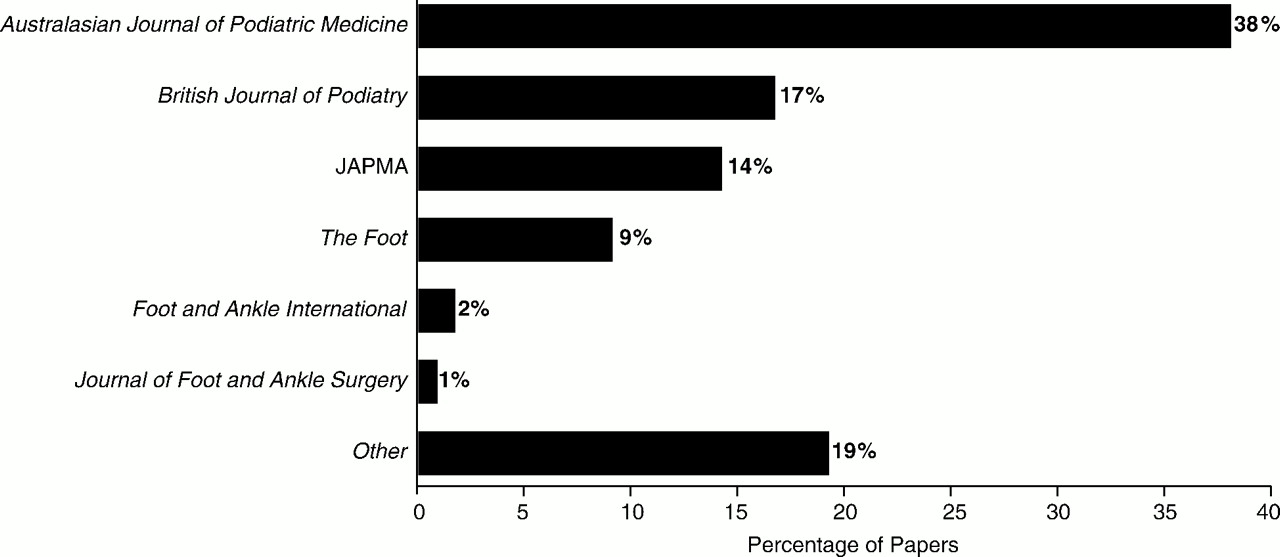
Table 2.
Non–Podiatric Medical Journals in Which Australian Podiatric Medical Faculty Have Published
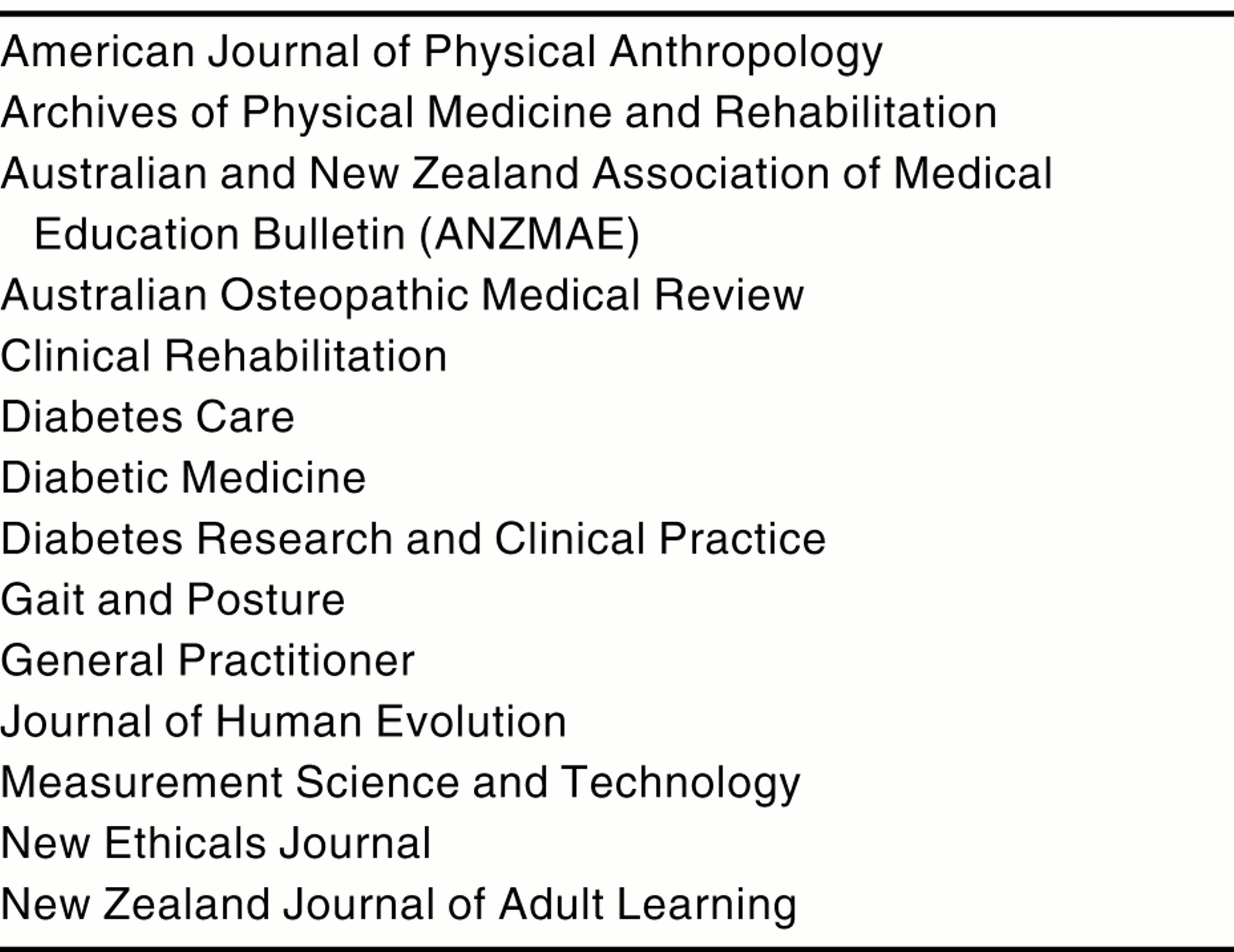
Table 3.
Non–Podiatric Medical Journals in Which Australian Podiatric Medical Faculty Would Consider Publishing Papers
The number of papers published per respondent was positively associated with the highest qualification obtained (rs = 0.63, P < .01), the number of years in higher education (r = 0.58, P < .01), and academic rank (rs = 0.49, P < .01), but not with age, employment (part- or full-time), or place of employment.
Criteria for Selecting a Journal
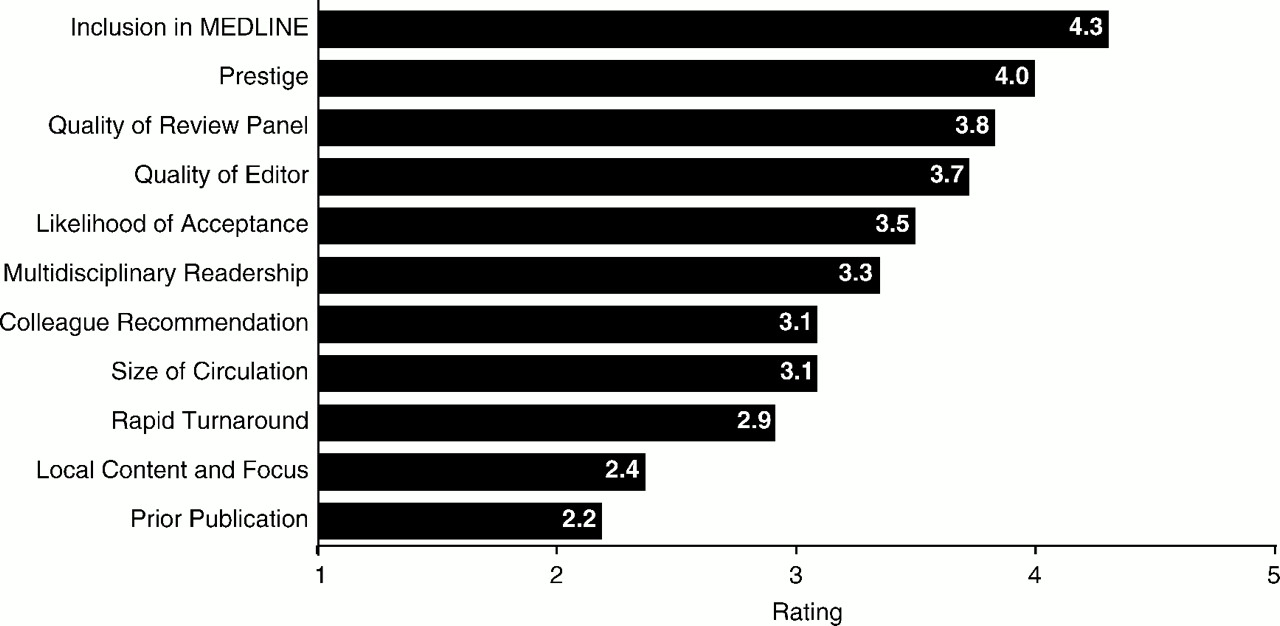
The relative importance of various factors in choosing a target journal, expressed as mean values in rank order, is shown in Figure 2. The most important factor was inclusion in MEDLINE (median, 4; mean, 4.3), followed by the perceived prestige of the journal (median, 4; mean, 4.0), the quality of the peer-review panel (median, 4; mean, 3.8), the quality of the editor (median, 4; mean, 3.7), the likelihood of manuscript acceptance (median, 3; mean, 3.5), a multidisciplinary readership (median, 4; mean, 3.3), colleague recommendations (median, 3; mean, 3.1), size of circulation (median, 3; mean, 3.1), rapid turnaround (median, 3; mean, 2.9), local content and focus (median, 2; mean, 2.4), and having had a prior publication in the journal (median, 3; mean, 2.2).
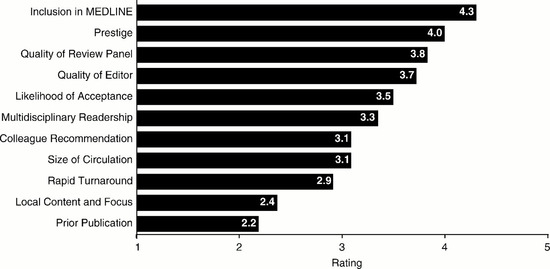
Figure 2.
Ratings of criteria for selecting a journal in which to publish.
The rating of likelihood of acceptance was negatively associated with the number of papers published (rs = –0.61, P < .01), and the rating of colleagues’ recommendation was negatively associated with age (rs = –0.40, P < .05) and number of papers published (rs = –0.46, P < .05).
Perceived Prestige of Podiatric Medical Journals
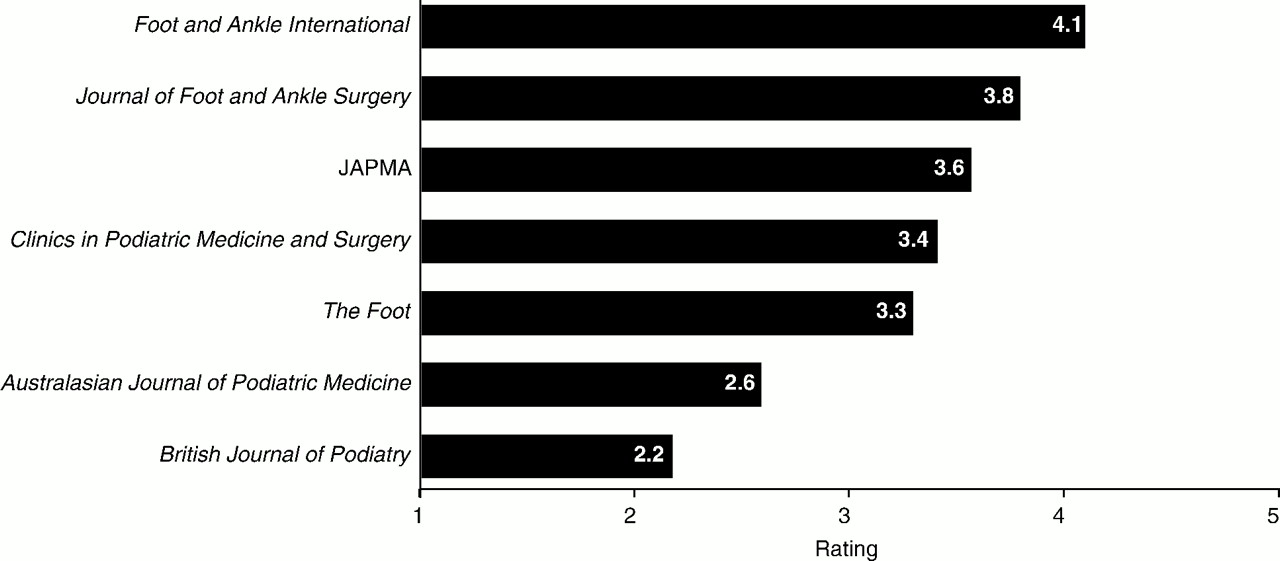
Figure 3 shows the perceived prestige of the seven podiatric medical journals presented as mean values in rank order. Foot and Ankle International was considered the most prestigious publication (median, 4; mean, 4.1), followed by the Journal of Foot and Ankle Surgery (median, 4; mean, 3.8), JAPMA (median, 4; mean, 3.6), Clinics in Podiatric Medicine and Surgery (median, 4; mean, 3.4), The Foot (median, 3; mean, 3.3), the Australasian Journal of Podiatric Medicine (median, 3; mean, 2.6), and the British Journal of Podiatry (median, 2; mean, 2.2). A number of respondents were not sufficiently familiar with the journals to give them a prestige rating; three respondents for the Journal of Foot and Ankle Surgery, three for The Foot, two each for Foot and Ankle International and Clinics in Podiatric Medicine and Surgery, and one for the British Journal of Podiatry.
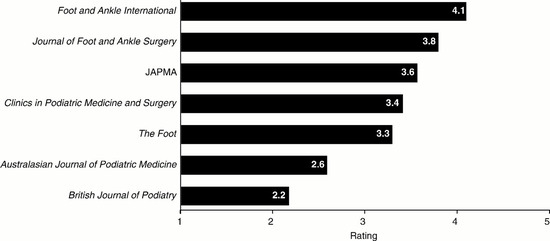
Figure 3.
Prestige ratings of podiatric medical journals.
The rating of the British Journal of Podiatry was negatively associated with the number of papers published (rs = –0.44, P < .05); the rating of Clinics in Podiatric Medicine and Surgery was negatively associated with level of employment (rs = –0.40, P < .05) and years in higher education (rs = –0.59, P < .01); the rating of Foot and Ankle International was positively associated with level of employment (rs = 0.47, P < .05) and the number of papers published (rs = 0.52, P < .01); and the rating of JAPMA was positively associated with highest qualification (rs = 0.40, P < .05).
Discussion
Before discussing the results of the present investigation, it is important to note some of the limitations of the study design. First, the sample was restricted to currently employed full- or part-time podiatric medical faculty—temporary staff and postgraduate students were excluded—and therefore the results do not reflect the entire literature contribution of the podiatric medical faculty in Australia. Second, the sample size of 27 staff members and the high degree of variability in publication rates prevent the employment of truly meaningful statistical analyses beyond basic descriptives. Third, the productivity data obtained from the respondents are slightly higher than for the overall sample, as MEDLINE and manual searching of the literature revealed that the three nonrespondents had published only one paper among them. However, the high response rate (90%) suggests that the results can be reasonably generalized to the entire sample.
No studies have previously been published regarding rates of publication by podiatric medical faculty either in Australia or in other countries, so a comparative evaluation of these results cannot be undertaken. However, similar investigations have been undertaken in medical, [10-13] physical therapy, [14-17] nursing, [18-21] and allied-health fields. [22] A generally accepted measure of publication productivity is the number of papers per author per year. In the current study, publication productivity ranged from 0 to 3.7, with an average of 0.7 papers per staff member per year. This average value is similar to the results of previous investigations of physical therapy, nursing, and allied-health faculty (reporting average rates of publication ranging from 0.2 to 1.8), [14-22] but is considerably less than that of medical school faculty members (average rates of publication ranging from 1.5 to 3.9). [10-13] The positive association between the number of years in higher education, academic rank, highest qualification, and publication productivity reported here is in agreement with previous research in other disciplines. Interestingly, the highest qualification attained was more closely associated with publication productivity than the number of years in higher education or academic rank, suggesting that publications result more from bursts of activity associated with undertaking a higher degree than from the consistent completion of projects from year to year.
When deciding where to submit a paper for publication, the respondents considered inclusion in MEDLINE to be the most important consideration, followed closely by the perceived level of prestige associated with the journal. MEDLINE, the medical and scientific indexing database maintained by the National Library of Medicine, currently indexes 3,800 journals, which has been estimated to account for only 30% of formally published medical and allied-health material. [23] Owing to MEDLINE’s selective nature, many authors consider its inclusion of a journal to be an indicator of journal prestige, and inclusion enables researchers to access the journal contents through the World Wide Web. Although a range of other indexing databases are available, and evidence suggests that using a combination of databases improves coverage of the literature, [24,25] MEDLINE is still considered the benchmark database in academic circles. [4-7] The finding that the journal’s perceived prestige is also an important consideration is in agreement with Frank, [9] who reported that prestige was the most important factor when medical authors select target journals for manuscript submission.
The next most important considerations when selecting a journal in which to publish were the quality of the peer-review panel and the quality of the editor. Each of the journals included in the survey has a peer-review system for evaluation of submitted papers. Peer review is a widely used technique to ensure a high level of academic merit and quality of published papers; however, the role of peer reviewers is contentious, and the success of this technique relies on the unbiased evaluations of carefully selected reviewers. [26,27] Although the final decision regarding the publication of a paper rests with the editor, an unfair or biased review may lead to the rejection of a good paper. It is thus not surprising that authors consider the quality of the peer-review board and the editorial staff to be an important consideration when selecting a journal to which to submit their papers.
The associations between criteria ratings and respondent characteristics provide some interesting information about the differing views of the sample group. Respondents who had published fewer papers rated the likelihood of acceptance and colleague recommendations more important, and younger respondents rated the importance of colleague recommendations more highly than older subjects. These associations suggest that less experienced authors rely more on advice from other colleagues when selecting a journal in which to publish and are more likely to submit papers to a journal for which there is a smaller chance of rejection.
Podiatric medical faculty in Australia perceive the most prestigious podiatric medical publication to be Foot and Ankle International, followed by the Journal of Foot and Ankle Surgery, JAPMA, and Clinics in Podiatric Medicine and Surgery. Although the survey did not directly ask respondents why they considered the journal prestigious, some interesting insights can be gained from comparing the characteristics of each journal and the responses to questions on criteria for submission. The four most prestigious journals are included in MEDLINE, while the three least prestigious journals are not, suggesting that prestige and MEDLINE listing are closely related. Similarly, the high ranking of Foot and Ankle International may be due to the high regard the respondents have for its editorial and peer-review board, factors considered to be the third and fourth most important criteria when selecting a journal in which to publish. However, it is possible that other factors, such as the ratio of original research papers to reviews and case reports, are also important in determining a journal’s perceived prestige. The author is currently conducting a retrospective analysis of publication patterns in each of these journals that will elucidate the actual differences in their content; this may provide further insight into the rather intangible quality of prestige.
The associations between journal prestige ratings and respondent characteristics suggest that younger staff members rate Clinics in Podiatric Medicine and Surgery more highly than older staff members, possibly because the clinically based review articles in this journal are widely used as reference material in undergraduate podiatric medical education. The number of publications was positively associated with the ranking of Foot and Ankle International, while the highest qualification attained was positively associated with the rating of JAPMA. These associations suggest that experienced authors are more likely to rate journals that contain original research papers more highly, while less experienced authors place a greater value on clinical reviews.
In a comparison of publication patterns with perceptions of journal prestige, a somewhat contradictory pattern emerges. The vast majority of papers have been published in the Australasian Journal of Podiatric Medicine, despite the fact that authors considered this to have low prestige. Furthermore, the Australasian Journal of Podiatric Medicine is not included in MEDLINE, the factor considered to be the most important when selecting a journal in which to publish. There are three possible explanations for this apparent discrepancy. First, the Australian podiatric medical faculty may consider publication in the Australasian Journal of Podiatric Medicine to be one of their professional responsibilities, despite the low prestige associated with the journal. Similar patterns were evident in a study of physical therapists in Canada, in that many authors chose to publish in Physiotherapy Canada, despite the journal’s relatively low impact factor when compared with Physical Therapy, the official journal of the American Physical Therapy Association. [17] Second, the Australian podiatric medical faculty may consider publication in the local journal a more direct way to educate and influence local podiatric physicians. While all members of the Australian and New Zealand associations receive the journal as part of their yearly membership fees, fewer may subscribe to, or regularly read, overseas journals. Finally, this result may indicate that publishing in podiatric medicine is currently in a transitional phase, in that recent advances in educational status have led to an increased need for faculty members to consider publishing in higher-quality international journals. If this interpretation is correct, local journals may struggle to attract sufficient submissions in the future.
The range of non–podiatric medical journals presented in Table 2 highlights the range of areas of interest and expertise of the current Australian podiatric medical faculty. A considerable number of papers have been published in a wide variety of journals, although there appears to be a greater tendency to direct papers to biomechanics and diabetic medicine journals. This focus on the more conservative areas of podiatric medicine may reflect the limited surgical scope of practice in Australia as compared with the United States; this may also explain the limited number of publications in the Journal of Foot and Ankle Surgery and Foot and Ankle International. The list of journals selected as potential targets for future research paper submissions (Table 3) suggests that the Australian podiatric medical faculty do not feel restricted to podiatric medical journals when submitting papers. This is also reflected in Figure 2, which shows that having previously published in a journal is not considered an important factor when selecting journals in which to publish in the future. These findings suggest that Australian researchers will continue to publish in a range of podiatric and non-podiatric forums depending on the topic area of their papers.
Implications and Future Directions
The implications of this study are threefold. First, the productivity data provide the only formally published information on scholarly publication by podiatric medical faculty. This information can be used as a starting point to chart future progress in schools of podiatric medicine. Second, the findings provide an indication as to which factors authors consider important when selecting journals in which to publish, information that may be helpful to journal editors and publishers in making their journals more attractive to potential authors. Given that academic staff are generally the primary producers of journal literature in the health sciences, [28] it is important that journals address their needs, while also ensuring that the general readership does not feel that published articles are too far removed from the reality of clinical practice. [4,28-30] Third, the journal prestige results provide insight into the perceived rankings of the major journals in the field of podiatric medicine; however, it is conceded that surveying a larger sample of podiatric medical faculty from other countries, in addition to practicing podiatric physicians, would be required to adequately address this issue.
Finally, this study confirms the feasibility of Web-based data collection for survey research. Although the high response rate may have been due partly to the limited size of the target population and the fact that each of the respondents knew the author, it is reasonable to expect that the electronic medium also played an important role. Web-based surveys are quick and easy to complete and are inexpensive to carry out, as no stationery or postage is required. The major limitation of this approach is that it assumes that Internet access is freely available and that subjects have a basic level of computer proficiency. This may not be the case in many populations of interest. In this study, however, the Web proved to be a very useful medium, and the survey could easily be extended to incorporate podiatric medical faculties from other countries.
Conclusion
Publication in scholarly journals is an important responsibility of podiatric medical faculty members, and the range of publishing opportunities in podiatric medicine necessitates the careful selection of target journals by authors. This survey has shown that Australian podiatric medical faculty members have published in a range of podiatric and non-podiatric journals and that they consider inclusion in MEDLINE and the perceived prestige of the journal to be the main considerations when deciding where to submit their papers. The findings of this study provide the first insights into publication productivity, criteria when selecting journals, and rankings of the available podiatric medical journals by academic staff in podiatric medical education. This information will be useful for planning by journal editors and publishers.
Acknowledgments
The staff of the Division of Podiatry, University of Western Sydney–Macarthur for their advice in the initial development of the survey, the academic staff in Australia who took part in the study, and Karl B. Landorf, DipAppSc(Pod), GradDipEd, for his assistance with the manuscript.
References
- Roberts D: The journal literature of physiotherapy: quality through peer review and access through Medline. Physiotherapy 78: 29, 1992.
- Parry A: The journal literature of physiotherapy: write it, read it, or put it in piles. Physiotherapy 79: 9, 1993.
- Dagnall JC: The origins of the Society of Chiropodists and Podiatrists and its history 1945 to 1995 (part II). J Br Podiatr Med 50: 151, 1995.
- The Camden Accord: the publications. J Br Podiatr Med 52: 169, 1997.
- Brachman, PR: Podiatric literature. JAPA 67: 132, 1977.
- Gabel LL: Research process: reporting results of the research. JAPMA 81: 93, 1991.
- Lundberg GD: The quality of a medical article. JAMA 165: 1161, 1991.
- Harris JC: Podiatric medical literature: progress, pitfalls, and prognostications. JAPMA 77: 387, 1987.
- Frank E: Authors’ criteria for selecting journals. JAMA 272: 163, 1994.
- Pearse WH, Peeples EH, Flora RE, et al: Medical school faculty productivity. J Med Educ 51: 201, 1976.
- Krumland RE, Will EE, Gorry GA: Scientific publications of a medical school faculty. J Med Educ 54: 876, 1979.
- Gjerde C, Clements W, Clements B: Publication characteristics of family practice faculty nominated for academic promotion. J Fam Pract 15: 663, 1982.
- Manu P, Landaw SA, Williams WJ, et al: Analysis of publication output of internal medicine faculty members. J Med Educ 60: 860, 1985.
- Onuoha ARA: Demographic characteristics of educators in physical and occupational therapy programs in Canadian universities. Physiother Can 32: 331, 1980.
- Walker JM, LeMasters M, Evans PR: Canadian and United States physical therapy educators: professional characteristics. Physiother Can 37: 73, 1985.
- Holcomb JD, Selker LG, Roush RE: Scholarly productivity: a regional study of physical therapy faculty in schools of allied health. Phys Ther 70: 118, 1990.
- Belanger AY, Girard J: Scholarly publication by Canadian physical therapy faculty. Physiother Can 48: 32, 1996.
- Lia-Hoagberg B: Comparisons of professional activities of nurse doctorates and other women academics. Nurs Res 34: 155, 1985.
- Ostmoe PN: Correlates of university nurse faculty publication productivity. J Nurs Educ 25: 207, 1986.
- White JH: Nurses who publish journal articles. Nurs Outlook 34: 225, 1986.
- Bergstrom N, Hansen BC, Grant M, et al: Collaborative nursing research: anatomy of a successful consortium. Nurs Res 33: 20, 1984.
- Flanigan KS, Ballinger PW, Grant HK, et al: Research productivity profile of allied health faculty. J Allied Health 17: 87, 1988.
- Greenhalgh T: How to read a paper: the Medline database. BMJ 315: 180, 1997.
- Woods D, Trewheellar K: Medline and Embase complement each other in literature searches. BMJ 316: 1166, 1998.
- Roberts D: Information databases [letter]. Lancet 335: 917, 1990.
- Goldbeck-Wood S: Evidence on peer review: scientific quality control or smokescreen. ?BMJ 318: 44, 1999.
- Rennie D: Editorial peer review in biomedical publication: the first international conference. JAMA 263: 1317, 1990.
- Rothstein JM: Physical therapy research: academic inadequacies. Phys Ther 72: 92, 1992.
- Crosbie J, Cole J, Galley P: Promoting quality in the reporting of research. Aust J Physiother 39: 165, 1993.
- Justice AC, Berlin JA, Fletcher SW, et al: Do readers and peer reviewers agree on manuscript quality. ?JAMA 272: 117, 1994.
© 2001 American Podiatric Medical Association