


Abstract
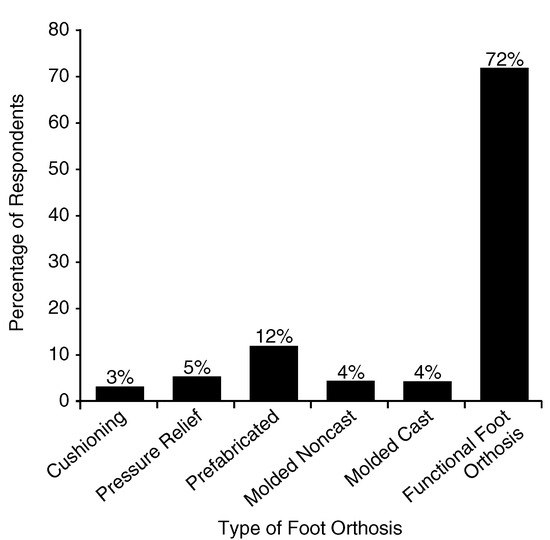
This research project investigated the orthotic prescription habits of podiatric physicians in Australia and New Zealand. A 23-item questionnaire was distributed to all members of the Australian Podiatry Association and the New Zealand Society of Podiatrists. When asked what type of foot orthoses they prescribe most often, 72% of respondents reported functional foot orthoses; the next most common response was prefabricated orthoses (12%). A typical prescription for functional foot orthoses consisted of a modified Root style orthosis, balanced to the neutral calcaneal stance position, with the shell made from polypropylene and an ethyl vinyl acetate (EVA) rearfoot post applied. The majority of podiatric physicians surveyed used a commercial orthotic laboratory to fabricate their orthoses. However, New Zealand respondents were three times more likely to prescribe prefabricated foot orthoses, and males were twice as likely as females to manufacture the orthoses themselves rather than use a commercial orthotic laboratory.
Foot orthoses are widely used by podiatric physicians to treat a variety of foot and foot-related conditions. Nevertheless, the term “foot orthoses” describes a myriad of devices used to affect the foot in some manner. Historically, foot orthoses have been developed and prescribed in response to increased knowledge or assumptions about foot function. In addition, a practitioner’s previous clinical experience, both positive and negative, affects his or her prescription of orthoses. This considerable variation of prescription among practitioners is further compounded by a lack of research on the effects of different types of foot orthoses on foot pathologies. Without adequate research to provide an evidence-based platform, podiatric physicians vary considerably in what they prescribe. Furthermore, it is difficult to develop guidelines for orthotic prescriptions when conclusive scientific evidence is not available. Therefore, it is important for these variations to be investigated and reported.
Since Merton Root [1] introduced the functional foot orthosis in the 1950s and 1960s, many modifications and new techniques have been proposed to advance his original ideas. For example, several modifications to the preparation of the positive cast have occurred, including the Hice method [2], intrinsic rearfoot posting [3], the inverted foot orthosis developed by Blake [4-8], the medial heel skive developed by Kirby [9], and the DC wedge [10], which originated in Australia. Other techniques have used similar principles, but have employed radically different methods, such as poly-sectional triaxial posting [11,12]. Techniques have also been developed and modified in which the orthosis is modified in response to a new theory of foot function. The kinetic wedge, for example, was developed in response to the sagittal plane facilitation model [13,14].
In addition to variations in the basic design of foot orthoses, there are other areas where differences occur among practitioners. First, many different materials are used in the manufacturing process [15-21]. Second, foot orthoses can be manufactured in many different ways; practitioners generally manufacture the orthoses themselves or use a commercial orthotic laboratory. Finally, to further complicate matters, in the past 10 years there has been a relative explosion in the use of prefabricated foot orthoses, which have gained an ever-increasing share of the market [22]. Due to this multitude of orthotic techniques, materials, and manufacturing habits, this research project was conducted to investigate the types of foot orthoses and the prescription variables used by podiatric physicians in Australia and New Zealand. An additional goal of this project was to develop a profile of a typical orthotic prescription, if one indeed exists.
Participants and Methods
Participants
Participants for this research project came from the membership of the Australian Podiatry Association and the New Zealand Society of Podiatrists (now combined to form the Australasian Podiatry Association).
Terminology
The lack of universal terminology for orthotic prescription has been identified as creating a problem for discourse on almost any aspect of orthotic therapy [23]. For the purposes of this study, general orthotic types were taken from the Australian Podiatry Council’s Clinical Guidelines for Orthotic Therapy Provided by Podiatrists [24] and are as follows:
- 1)
- Cushioning orthosis
- 2)
- Pressure relief orthosis
- 3)
- Premolded/preformed/prefabricated orthosis
- 4)
- Molded noncast orthosis
- 5)
- Molded cast (no posting) orthosis
- 6)
- Functional (customized kinetic) foot orthosis (FFO)
Among the functional (customized kinetic) foot orthoses, the Root functional foot orthosis is classified as described by Root [1,25]; it is generally balanced so that the bisection of the heel is vertical and any forefoot-to-rearfoot anomaly is supported. The modified Root foot orthosis is generally balanced so that the heel is held in a position that will align the subtalar joint in neutral (i.e., in the neutral calcaneal stance position) as described by Hice [2,26]. Other devices and modifications are as previously described by the original authors.
With respect to techniques for obtaining a negative cast or impression of the foot, the neutral suspension cast has previously been described by Root et al [27], and the direct pressure or Langer cast technique has been previously described by Langer and Wernick [28].
Questionnaire
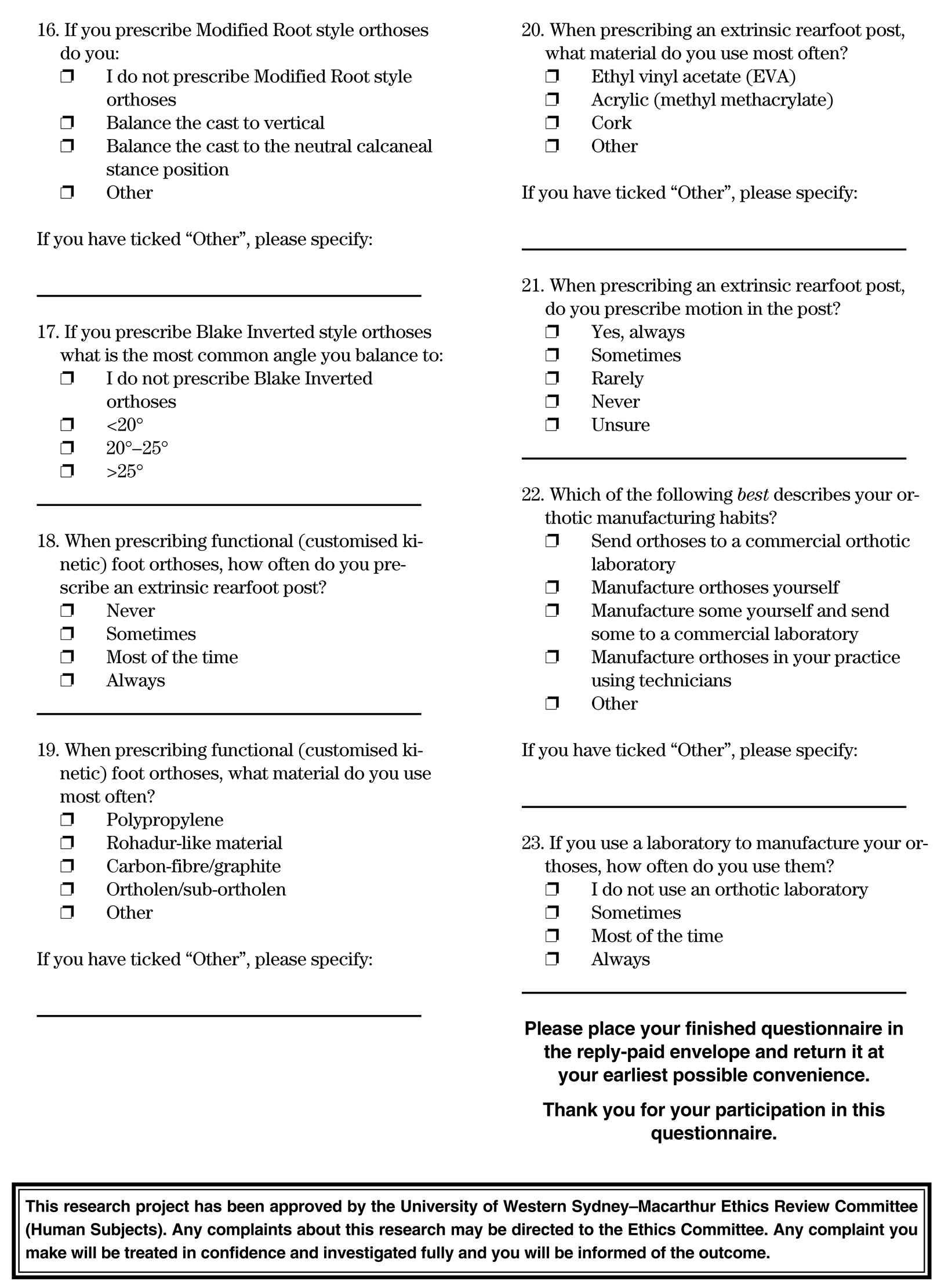
A questionnaire was developed and piloted to 40 registered podiatrists across Australia. After analysis of the responses, the questionnaire was further developed and refined to the format used in this research project—a 23-item questionnaire (Appendix A). The questionnaire included sections on demographics, quantity of orthoses prescribed, assessment methods, types of orthoses prescribed, casting methods, style of customized foot orthoses, additions/materials, and manufacturing habits.
Procedure
The questionnaire was distributed through the Australasian Journal of Podiatric Medicine and posted to all members of the Australian Podiatry Association and the New Zealand Society of Podiatrists. To maximize the response rate, a reply-paid envelope was included and a reminder notice was published in the subsequent issue of the journal. In addition, five state, national, and international conferences were targeted to improve the response rate from members who had not previously completed the questionnaire. Prior to distribution, the research project was approved by the University of Western Sydney–Macarthur Ethics Review Committee (Human Subjects).
Statistical Analysis
Data were analyzed by means of cross-tabulations, and statistical analysis was performed with the chisquare test. Fischer’s exact test was used when the sample size in a cell was small [29]. Statistical significance was set at P < .05.
Results
Response Rate
There were 617 eligible responses received, representing a 41% response rate. Of the respondents, 60% were female and 40% male. Fifty-four respondents (approximately 9%) did not prescribe any type of foot orthosis; therefore, the study sample for analyzing orthotic prescriptions was 563 (Table 1). Of the study sample, 93% were from Australia and 7% were from New Zealand.
Table 1.
Distribution of Eligible Members and Respondents Who Prescribed Foot Orthoses.
Number of Foot Orthoses Prescribed
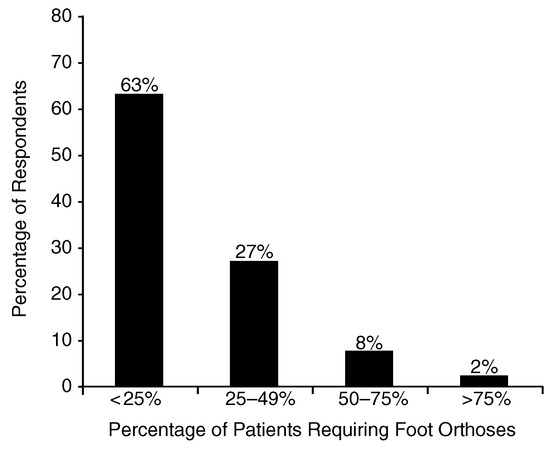
The majority of respondents indicated that fewer than one-quarter of their patients had conditions for which they would prescribe foot orthoses (Fig. 1). In contrast, only 2% indicated that more than threequarters of their patients had conditions for which they would prescribe orthoses.
Figure 1.
Respondents’ prescription of foot orthoses for their patients. Respondents indicated the percentage of their patients, e.g., <25%, with conditions that they would treat with foot orthoses.
Types of Foot Orthoses Prescribed
Of the respondents, 72% indicated that they prescribe functional foot orthoses most often; prefabricated foot orthoses were prescribed the next most often (Fig. 2). However, respondents from New Zealand were three times more likely than Australian respondents to prescribe prefabricated foot orthoses (χ2 = 19.78, df = 1, P < .001).
Figure 2.
Type of foot orthosis respondents used most often.
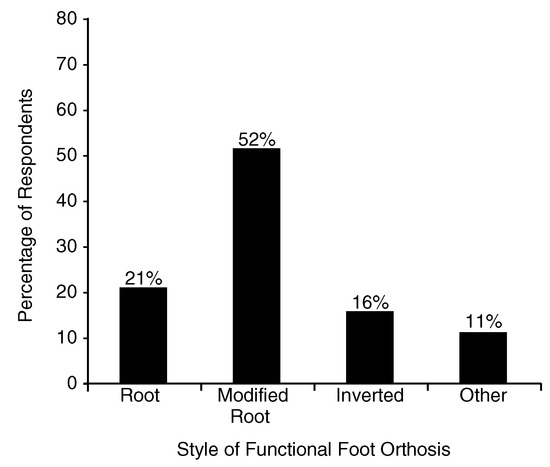
Of those who prescribed functional foot orthoses, the majority prescribed modified Root functional foot orthoses (52%) (Fig. 3). The second most common style prescribed was the Root style; the remainder of the orthoses prescribed were inverted orthoses and other kinds such as the DC wedge. Half of the respondents who prescribed the most commonly prescribed functional foot orthosis, the modified Root style, balanced the positive cast to the neutral calcaneal stance position (NCSP); the rest either balanced the cast with the heel vertical or used some other method (Table 2).
Figure 3.
Styles of functional foot orthosis respondents used most often.
Table 2.
Results of Respondents’ Positive Cast Balancing Protocols for Functional Foot Orthoses.
Although only 16% of respondents indicated they most often prescribe inverted style functional foot orthoses, there was a significant difference between Australian and New Zealand respondents (χ2 = 11.19, df = 3, P < .05). Sixty-seven percent of the New Zealand respondents indicated they did not prescribe inverted functional foot orthoses versus 41% of Australian respondents.
Types of Casting Used
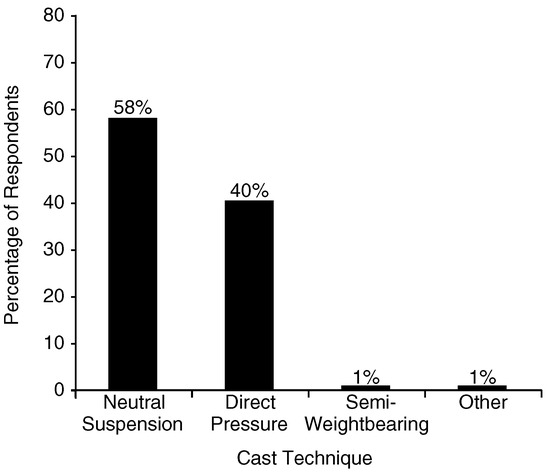
Neutral suspension casting was the most commonly used technique (58%) for obtaining a cast of the foot prior to manufacturing functional foot orthoses (Fig. 4). Most other respondents employed the direct pressure or Langer technique.
Figure 4.
Negative cast technique respondents used most often.
Materials and Manufacturing
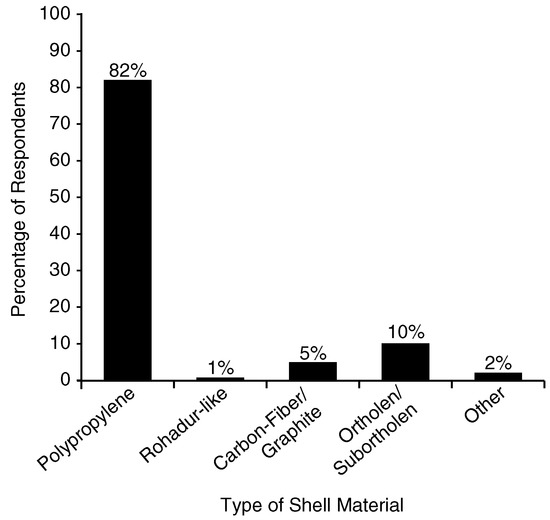
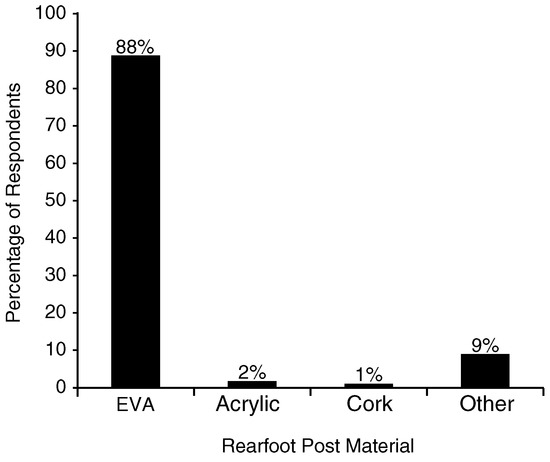
The vast majority of respondents used polypropylene most often for the orthotic shell material (Fig. 5) and ethyl vinyl acetate (EVA) most often for the rearfoot posting material (Fig. 6).
Figure 5.
Orthotic shell material respondents used most often.
Figure 6.
Rearfoot post material respondents used most often.
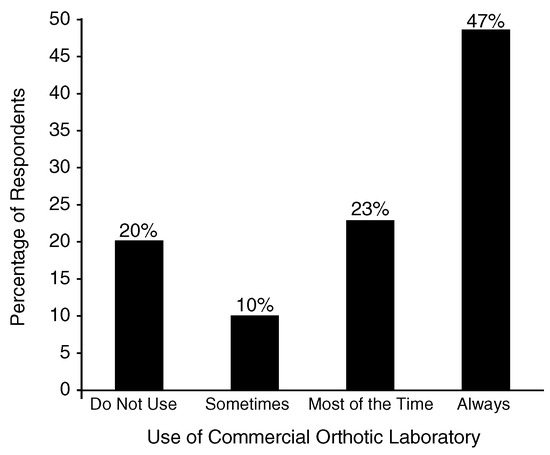
Among respondents, 70% used a commercial orthotic laboratory most of the time or always (Fig. 7), while 20% indicated they do not use a commercial laboratory. Respondents who never use a commercial laboratory either manufactured orthoses themselves or employed technicians in their practice.
Figure 7.
Frequency of respondents’ use of a commercial orthotic laboratory to manufacture foot orthoses.
Significant differences in manufacturing habits between males and females were found. Males were twice as likely as females to manufacture foot orthoses themselves (χ2 = 10.69, df = 4, P < .05). Consequently, there was a significant difference in the extent to which males and females used commercial orthotic laboratories (χ2 = 9.21, df = 3, P < .05). Seventy-four percent of females used a commercial laboratory most of the time or always, while this figure for males was only 63%.
Discussion
Although a large number of usable responses were returned (617), this represents only 41% of the potential sample. This low response rate is consistent with response rates from nondirected questionnaires in health professions generally [30-32], and in podiatry specifically [33]. Notwithstanding the low response rate, many of the results from this questionnaire were unambiguous, indicating that further responses would unlikely change the results.
The gender split for respondents is consistent with data found in Podiatry Labour Force data for 1992 [34], which indicated that approximately two-thirds of the total work force in Australia was female (68%). The slightly lower rate of females in this survey (60%) may be explained by a decrease in the number of female graduates in the 6 to 7 years since the labor force data were collected. This is supported by further data in the labor force report showing that in 1992, 70% of graduates were female; by 1994, however, this number had declined to 59% and in 1995, only 53.1% of undergraduate enrollments were females.
The percentage of patients for whom respondents prescribe foot orthoses was an interesting result, given that the podiatric profession has, in the past, been accused of over prescription of foot orthoses [35]. More than 60% of the respondents indicated that fewer than 25% of their patients had conditions warranting foot orthoses, while only a small proportion of respondents (2%) indicated they prescribe foot orthoses for most of their patients.
The vast majority of respondents in this study prescribed functional foot orthoses most often. In fact, respondents were six times more likely to prescribe functional foot orthoses than prefabricated foot orthoses, the second most commonly prescribed orthoses. Furthermore, among those respondents who did prescribe functional foot orthoses, the modified Root style was the most commonly prescribed style. In addition, the majority of respondents balanced the modified Root style orthosis to the neutral calcaneal stance position. The modified Root style was prescribed approximately two and one-half times more often than the second most commonly prescribed functional foot orthosis, the Root style. Prior to manufacturing cast-type orthoses, most respondents used the neutral suspension casting technique to obtain a negative cast, although the direct pressure or Langer technique was also reasonably common. More than 80% of respondents used polypropylene for the orthotic shell material and EVA for the rearfoot post material. Finally, the majority of respondents used a commercial orthotic laboratory to manufacture their foot orthoses most of the time or always.
A profile of a typical foot orthosis can be developed based upon the results of this study. A typical foot orthosis prescribed by podiatric physicians in Australia and New Zealand is a modified Root style functional foot orthosis, balanced to the neutral calcaneal stance position, made with a polypropylene shell and an EVA rearfoot post applied. Furthermore, podiatric physicians take a neutral suspension cast prior to manufacture and use the service of a commercial orthotic laboratory to fabricate their orthoses. As previously discussed, because of the unambiguous nature of these findings, it is unlikely that the results would change even if more responses had been received. Therefore, although the authors are cautious about generalizing these findings, they are relatively confident that this style of orthosis is the most commonly prescribed device in Australia and New Zealand. It is important to note, however, that although it was the most commonly prescribed foot orthosis, there was wide variation among respondents.
It is interesting to note the level of use of commercial orthotic laboratories by podiatric physicians. As commercial orthotic laboratories are a relatively recent phenomenon in Australia and New Zealand, the high level of use reported in this study has developed rapidly. However, this growth rate is likely to ease, given that the majority of practitioners are already using laboratories. Despite the high level of use, males were twice as likely to manufacture their own foot orthoses, compared with females, who were more likely to use a commercial orthotic laboratory.
Although practitioners in Australia and New Zealand still appear to be prescribing functional foot orthoses most often, respondents clearly indicated that prefabricated foot orthoses were the second most commonly prescribed devices (Fig. 2). With the need for clinicians to use cost-effective modalities, the market share of prefabricated foot orthoses may increase in the future; further research, however, is needed to evaluate their effectiveness in comparison to other orthoses. Of interest here is that the New Zealand respondents were more likely to prescribe prefabricated foot orthoses compared to Australian respondents, generating the question, “Are the outcomes from orthotic therapy any different in the two countries?” Whether the greater use of prefabricated foot orthoses in New Zealand is good or bad is impossible to determine without appropriate health outcome trials. Such research is necessary to determine which styles of foot orthosis provide the best outcome at the least cost to the patient.
Several limitations of this study need to be recognized. First, since the response rate was low, it is difficult to generalize the findings to the entire podiatric profession in Australia and New Zealand. However, the key findings of this study were generally quite clear, indicating that further responses probably would not affect the findings. Second, the use of a self-reported questionnaire raises the possibility that participants may not have responded honestly. However, since this was an anonymous survey, and participants were unaware of how the results were to be compiled, there was little motive for respondents not to have responded honestly. In addition, the authors could not check responses before they were returned to identify incomplete questionnaires, and subsequently obtain completion of unanswered questions. Finally, owing to variations in terminology in orthotic therapy, some respondents may not have been familiar with terms used in this questionnaire and thus may have misunderstood certain questions and responses.
Conclusion
This study investigated the foot orthosis prescription habits of Australian and New Zealand podiatric physicians. While there was great variation in prescription, a profile of a typical prescription could be developed. The typical prescription for Australian and New Zealand podiatric physicians was a modified Root style functional foot orthosis, balanced to the neutral calcaneal stance position, made of a polypropylene shell with an EVA rearfoot post applied. Furthermore, most practitioners take a neutral suspension cast and use the service of a commercial orthotic laboratory to manufacture this device. There were, however, some differences in orthotic prescription between the two countries, and in manufacturing habits between males and females. Further research is required to compare Australia and New Zealand with other countries, such as the United States and the United Kingdom, where similar scopes of practice exist. This would provide useful information about the most commonly prescribed foot orthosis in those countries and would make data available to compare variations in prescription.
References
- Root, M.L. Development of the functional foot orthosis. Clin. Podiatr. Med. Surg. 1994, 11, 183. [Google Scholar] [CrossRef] [Scilit]
- Hice, G.A. Orthotic treatment of feet having a high oblique midtarsal joint axis. J. Am. Podiatry Assoc. 1984, 74, 577. [Google Scholar] [CrossRef] [Scilit]
- Darrigan, R.D.; Ganley, J.V. Functional orthoses with intrinsic rearfoot post. J. Am. Podiatr. Med. Assoc. 1985, 75, 619. [Google Scholar] [CrossRef] [Scilit]
- Blake, R.L. Inverted functional orthosis. J. Am. Podiatr. Med. Assoc. 1986, 76, 275. [Google Scholar] [CrossRef] [Scilit]
- Blake, R.L.; Ferguson, H. Foot orthosis for the severe flatfoot in sports. J. Am. Podiatr. Med. Assoc. 1991, 81, 549. [Google Scholar] [CrossRef] [Scilit]
- Blake, R.L.; Ferguson, H. The inverted orthotic technique: a practical discussion of an orthotic therapy. J. Br. Podiatr. Med. 1993, 48, 25. [Google Scholar]
- Ferguson, H.; Blake, R.L. Update and rationale for the inverted functional foot orthosis. Clin. Podiatr. Med. Surg. 1994, 11, 311. [Google Scholar] [CrossRef] [Scilit]
- Blake, R.L.; Ferguson, H. The Inverted Orthotic Technique: Its Role in Clinical Biomechanics. In Clinical Biomechanics of the Lower Extremities; Valmassy, R.L., Ed.; Mosby: St Louis, 1996; p. 465. [Google Scholar]
- Kirby, K.A. The medial heel skive technique: improving pronation control in foot orthoses. J. Am. Podiatr. Med. Assoc. 1992, 82, 177. [Google Scholar] [CrossRef] [Scilit] [PubMed]
- Gardner, C.; Coull, D.; Coull, R. DC Inverted Wedge Technique. Available at: http://www.equusmedical.com/DC (accessed on 28 October 2000).
- Lundeen, R.O. Polysectional triaxial posting: a new process for incorporating correction in foot orthoses. J. Am. Podiatr. Med. Assoc. 1988, 78, 55. [Google Scholar] [CrossRef] [Scilit] [PubMed]
- Anthony, R.J. Positive cast sectioning: an essential prescription writing protocol. J. Br. Podiatr. Med. 1995, 50, 11. [Google Scholar]
- Dananberg, H.J. Gait style as an etiology to chronic postural pain: part I. Functional hallux limitus. J. Am. Podiatr. Med. Assoc. 1993, 83, 433. [Google Scholar] [CrossRef] [Scilit]
- Dananberg, H.J. Gait style as an etiology to chronic postural pain: part II. Postural compensatory process. J. Am. Podiatr. Med. Assoc. 1993, 83, 615. [Google Scholar] [CrossRef] [Scilit] [PubMed]
- Olson, W.R. Orthoses: an analysis of their component materials. J. Am. Podiatr. Med. Assoc. 1988, 78, 203. [Google Scholar] [CrossRef] [Scilit]
- Kippen, C. A review of plastic materials used in foot orthotic manufacture. Chiropodist 1989, 44, 90. [Google Scholar]
- Kippen, C. Insoling materials in foot orthosis manufacture: a review. Chiropodist 1989, 44, 83. [Google Scholar]
- Rome, K. Behavior of orthotic materials in chiropody. J. Am. Podiatr. Med. Assoc. 1990, 80, 471. [Google Scholar] [CrossRef] [Scilit]
- Rome, K. A study of the properties of materials used in podiatry. J. Am. Podiatr. Med. Assoc. 1991, 81, 73. [Google Scholar] [CrossRef] [Scilit]
- Berenter, R.W.; Kosai, D.K. Various types of orthoses used in podiatry. Clin. Podiatr. Med. Surg. 1994, 11, 219. [Google Scholar] [CrossRef] [Scilit] [PubMed]
- Olsen, W.R. Orthotic Materials. In Clinical Biomechanics of the Lower Extremities; Valmassy, R.L., Ed.; Mosby: St Louis, 1996; p. 307. [Google Scholar]
- Goslin, R.; Tollafield, D.R.; Rome, K. Mechanical Therapeutics in the Clinic. In Clinical Skills in Treating the Foot; Tollafield, D.R., Merriman, L.M., Eds.; Churchill Livingstone: New York, 1997; p. 187. [Google Scholar]
- Petchell, A.; Keenan, A.-M.; Landorf, K. National clinical guidelines for podiatric foot orthoses. Australas. J. Podiatr. Med. 1998, 32, 97. [Google Scholar]
- Australian Podiatry Council. Clinical Guidelines for Orthotic Therapy Provided by Podiatrists; Australian Podiatry Council: Collingwood, Victoria, Australia, 1998. [Google Scholar]
- Anthony, R.J. The Manufacture and Use of the Functional Foot Orthosis; Karger: Basel, Switzerland, 1991; p. 49. [Google Scholar]
- Philps, J.W. The Functional Foot Orthosis; Churchill Livingstone: Edinburgh, Scotland, 1995; pp. 39, 71. [Google Scholar]
- Root, M.L.; Weed, J.H.; Orien, W.P. Neutral Position Casting Techniques; Clinical Biomechanics Corporation: Los Angeles, CA, USA, 1971; p. 6. [Google Scholar]
- Langer, S.; Wernick, J. A Practical Manual for a Basic Approach to Foot Biomechanics; Langer Biomechanics Group (UK) Ltd.: England, UK, 1989; p. 28. [Google Scholar]
- Portney, L.G.; Watkins, M.P. Foundations of Clinical Research: Applications to Practice; Appleton & Lange: Norwalk, CT, USA, 1993; p. 497. [Google Scholar]
- Carr, J.; Shepherd, R. Clinical physiotherapy specialisation in Australia: some current views. Aust. Physiother. 1996, 42, 10. [Google Scholar] [CrossRef] [Scilit]
- Hunt, A.; Adamson, B.; Harris, L. Physiotherapists’ perception of the gap between education and practice. Physiother. Theory Pract. 1998, 14, 125. [Google Scholar] [CrossRef] [Scilit]
- Harris, L.; Hunt, B.; Adamson, J.; et al. Assessing quality in higher education: criteria for evaluating programmes for allied health professionals. Assess. Eval. High. Educ. 1998, 23, 273. [Google Scholar] [CrossRef] [Scilit]
- Kippen, C.; Tinley, P. Australian National Survey on Continuing Professional Education: A Gender Report. Presented at the Australasian Podiatry Conference, Methven, New Zealand, August 13, 1999. [Google Scholar]
- Australian Institute of Health and Welfare. Podiatry labour force 1992. Health Labour Force Bull. 1994, 2, 1. [Google Scholar]
- Torode, I.P. Postural abnormalities in childhood. Mod. Med. 1996, 74. [Google Scholar]

Appendix A. Foot Orthoses Prescription Questionnaire


© 2001 American Podiatric Medical Association