


To the Editor:
Smith-Lemli-Opitz syndrome is an autosomal recessive disorder due to a defect in cholesterol biosynthesis.[1] Patients with this syndrome suffer from profound mental retardation along with various morphological disfigurements, including pedal manifestations.[2] A literature search found no articles within the podiatric medicine literature pertaining to this syndrome. This genetic ailment is introduced here to the podiatric medical community through a case presentation and an overview of the syndrome.
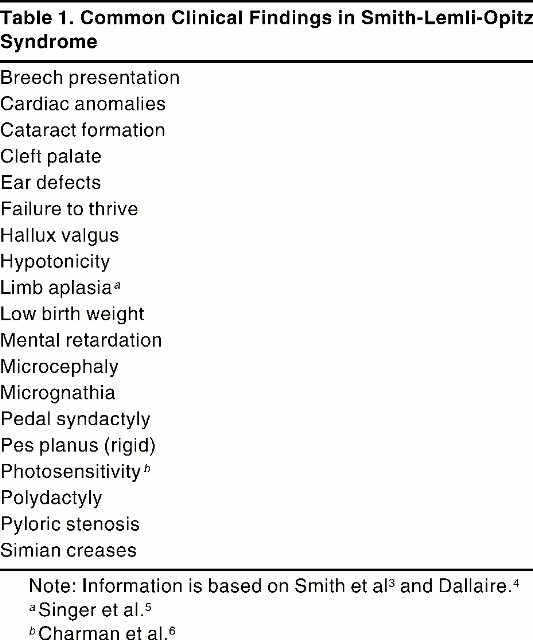
Smith-Lemli-Opitz syndrome is characterized by a multitude of malformations. Microcephaly, profound mental retardation, severe failure to thrive, and craniofacial and limb anomalies, including syndactyly and polydactyly anomalies, are but a few of the disfigurements accompanying this syndrome (Table 1).[3-6] The syndrome is autosomal recessive, affects approximately 1:20,000 to 1:40,000 births, and is categorized by a myriad of severe birth defects affecting nearly every organ system.[7]

Table 1.
Common Clinical Findings in Smith-Lemli-Opitz Syndrome
David Smith, Luc Lemli, and John Opitz [3] first described the syndrome in 1964. They presented four cases; two of the patients were brothers. The patients all had a similar pattern of multiple anomalies that included mental retardation, microcephaly, failure to thrive, incomplete external genitalia development, and foot abnormalities, including metatarsus adductus and/or syndactyly. Of the four cases, three were followed for several years; the fourth patient died at 2 months of age from pneumonitis. In their original paper, Smith, Lemli, and Opitz [3] were unsure of the etiology of this syndrome and hypothesized that a gene mutation might be the cause.
Smith-Lemli-Opitz syndrome is now known to be linked to a severe deficiency in cholesterol biosynthesis and elevated plasma and tissue levels of cholesterol’s precursor, 7-dehydrocholesterol. [8] The syndrome is caused by a defect of the final enzyme in cholesterol biosynthesis: beta hydroxy-delta 7 reductase. [8] Since cholesterol is important for the production of cell membranes, as well as myelin, a deficiency in cholesterol can lead not only to growth abnormalities, but to mental retardation as well.[9]
Diagnosis and Treatment
Cholesterol and 7-dehydrocholesterol levels can be measured in the amniotic fluid. When Smith-Lemli-Opitz syndrome is diagnosed prenatally, clinicians can begin to educate the parents and initiate treatment virtually immediately. Furthermore, newer techniques to screen for carriers of the disorder are being studied. Newborns can now be screened by measuring the concentration of 7-dehydrocholesterol in their erythrocytes.[9]
The goal of treatment for Smith-Lemli-Opitz syndrome is to provide exogenous cholesterol as early as possible. Cholesterol supplements do more than merely augment plasma cholesterol levels, however. By providing enough cholesterol exogenously, the physician can slow down the patient’s cholesterol pathway, thereby decreasing the amount of 7-dehydrocholesterol. Absorption of the supplemental cholesterol is aided by the use of exogenous bile acids in the form of ursodeoxycholic acid.[9]
Although this treatment can elevate cholesterol levels by nearly three times pretreatment levels, plasma cholesterol levels in patients on this treatment protocol often are still well below the fifth percentile.9 Treatment of Smith-Lemli-Opitz syndrome cannot cure patients, but many patients were noted to be happier and less hypotonic after beginning treatment.[9] Furthermore, attempts to down-regulate the formation of 7-dehydrocholesterol with enzymatic inhibitors worked quite well; unfortunately, these same enzymes were found to be teratogenic in rats.[10]
Case Report
A 20-year-old female accompanied by her mother presented to the author’s office for evaluation of bilateral foot pain. The mother was unable to provide a detailed history of her daughter’s foot pain, owing to the daughter’s inability to describe her symptoms because of severe mental retardation. The mother did state that her daughter often refused to take walks with the family, a frequent family activity. The mother attributed this to foot pain. The patient’s history of Smith-Lemli-Opitz syndrome had been diagnosed soon after birth.
The patient was delivered via cesarean section ten days after the gestational due date. The patient’s mother denied any complications in the pregnancy (other than the patient’s breech presentation at birth, which necessitated the cesarean section) and denied using alcohol, cigarettes, or prescription or recreational drugs. Consanguinity was also denied. The patient did not begin walking until 4 years of age. At 2 years, she underwent cardiac surgery to repair an interventricular septal defect. She is presently taking clonazepam and a cholesterol supplement. She has an allergy to penicillin. The patient has a younger sister, who does not have Smith-Lemli-Opitz syndrome, although there is a positive maternal history of the syndrome. The patient lives at home with her parents, who care for her daily needs.
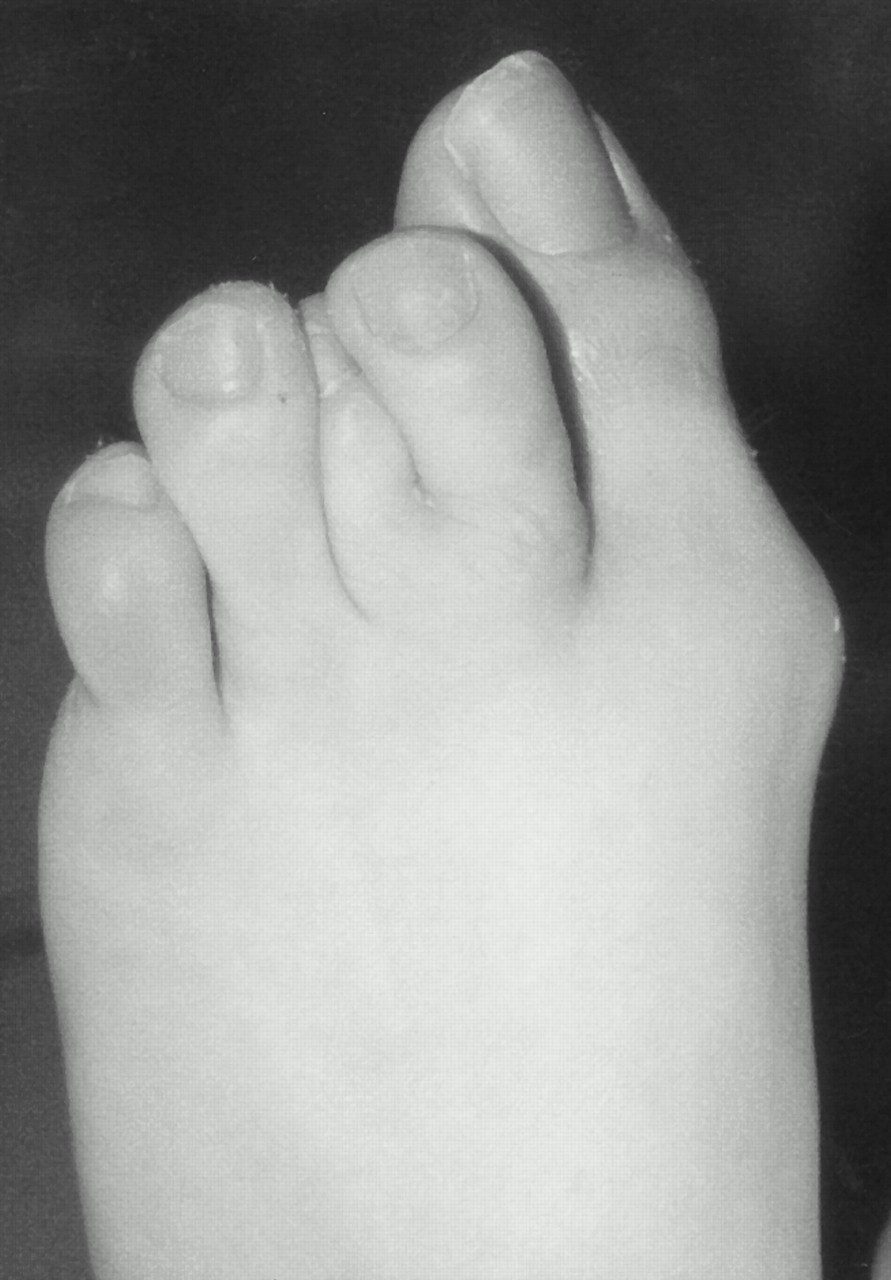
Physical examination revealed the patient to have profound mental retardation and to be nonverbal. She appeared to be in generally good health and ambulated slowly without assistance. She was wearing a pair of worn-out topsiders, which gave her little or no support. Her vascular examination was essentially unremarkable with 2+ pedal pulses, instant capillary filling time, and a normal temperature gradient with digital hair noted. She had a bilateral rigid flatfoot deformity with hallux valgus and erythema about the bunion eminence (Fig. 1). She had digital contractures of all of her lesser toes, and her second and third toes were webbed bilaterally (Fig. 2). Muscle strength and tactile sensation were not obtainable because of the patient’s level of understanding. An interdigital tinea infection was present in all the patient’s interspaces, except for the webbed interspaces. A full passive musculoskeletal examination elicited no tenderness. Radiographs were deferred at the initial visit.
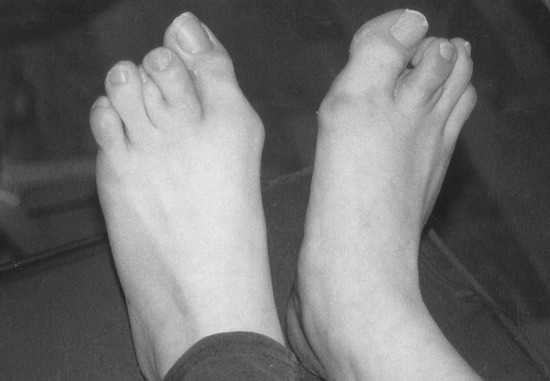
Figure 1.
Bilateral rigid flatfoot deformity with hallux valgus and erythema about the bunion eminence.
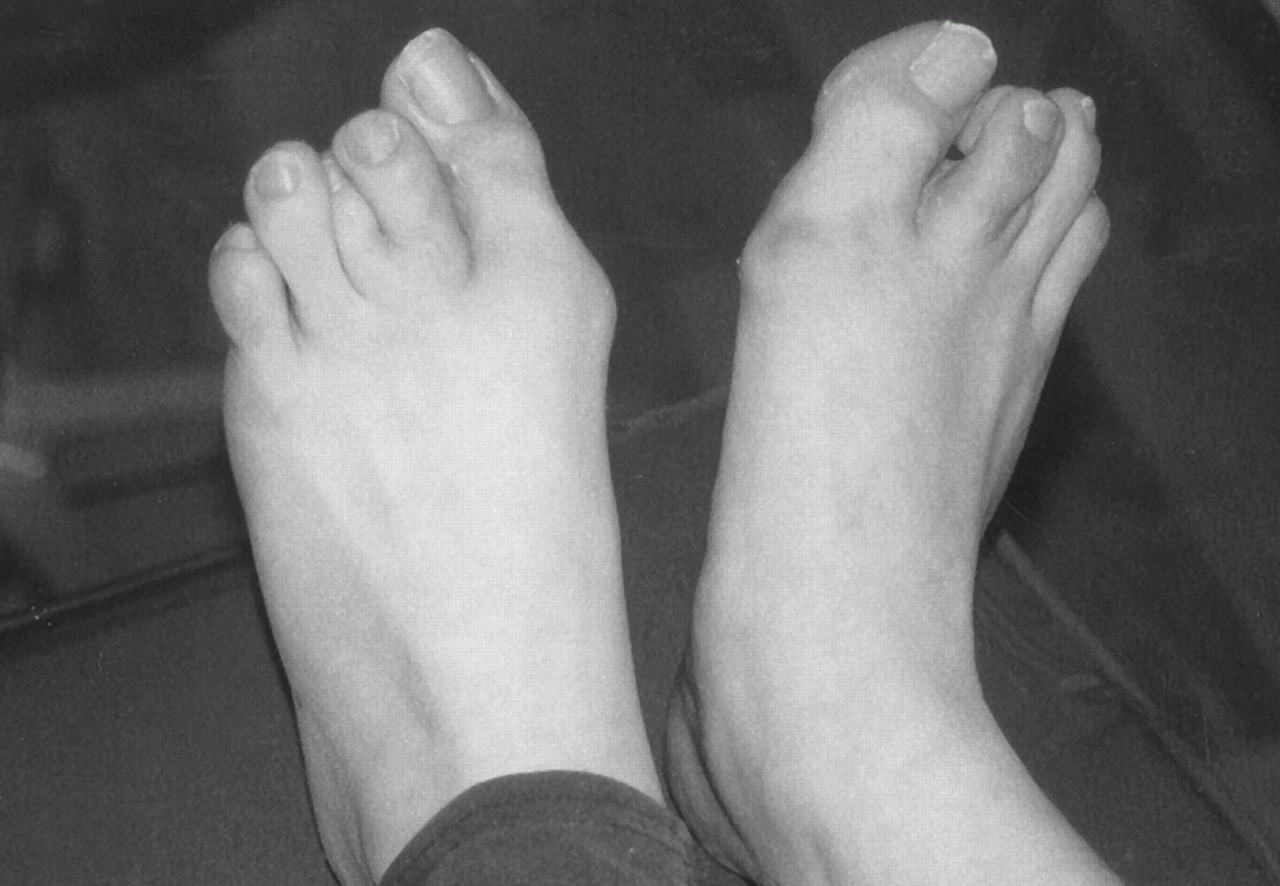
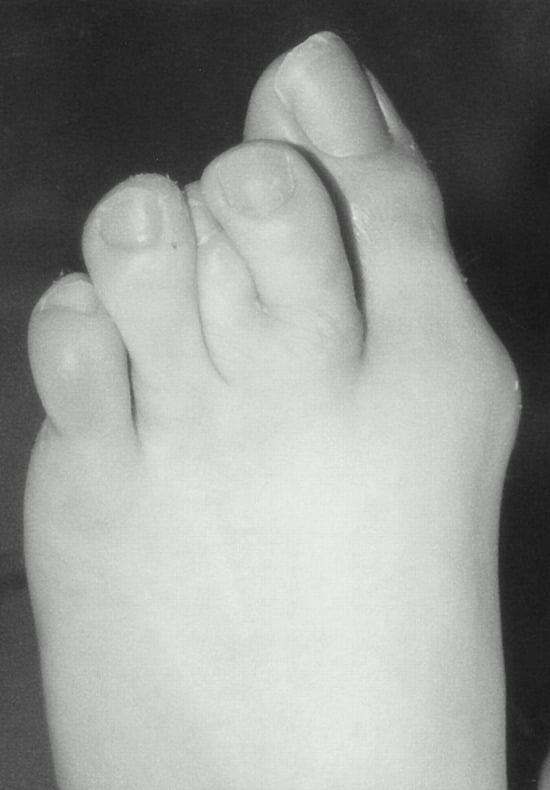
Figure 2.
Left foot shows digital contractures of all the lesser digits. The second and third toes were webbed bilaterally.
Although the patient’s physical examination was unsuccessful for eliciting tenderness, it made the patient’s mother aware of her daughter’s foot deformities and the possibility that these may have been causing the pain. Flatfoot deformity, hallux valgus, digital contractures, and the pain often associated with these deformities were discussed at length with the patient’s mother. Surgical correction of the foot deformities was discussed, as well as prescriptive orthotics and shoe modifications. The patient’s mother agreed to purchase a better-fitting, more supportive sneaker-type shoe prior to having her daughter casted for accommodative orthoses. The patient’s mother strongly opposed surgical intervention. She feared her daughter would be a poor surgical candidate due to her severe mental retardation. The mother called the office 1 month later, stating that her daughter was now actively participating in daily walks without complaint or hesitation since the purchase of better-fitting sneakers. The patient has since been lost to follow-up.
Although the patient presented only once, the visit did offer a view of a syndrome with significant pedal manifestations. Often, such patients have already undergone other operations, either for cardiac anomalies, gastrostomy tube placement for nutritional support, or excision of cataracts. As with Down’s syndrome—which is also characterized by mental retardation, cardiac anomalies, and pedal manifestations—Smith-Lemli-Opitz syndrome patients often have already been subject to major operations that leave them, and often their family members, opposed to further surgical intervention. Nonsurgical management of the pedal manifestations often may be the primary treatment for these patients.
Conclusion
Smith-Lemli-Opitz syndrome is a genetic malady characterized by profound mental retardation, failure to thrive, multi-organ involvement, and deformities of the appendicular skeleton. The syndrome is caused by a defect in the body’s synthesis of cholesterol. Patients with Smith-Lemli-Opitz syndrome may not often present to a podiatric medical physician because their other physical problems often outweigh the pedal manifestations of this disorder.
Owing to prior surgical procedures, patients and their families may not be amenable to corrective foot surgery, and conservative treatment, including proper shoes and biomechanical support, may be the only treatment options available for Smith-Lemli-Opitz syndrome. Parent education, however, remains a critical component in the treatment of patients with this syndrome.
References
- Tint SG, Irons M, Elias ER, et al: Defective cholesterol biosynthesis associated with the Smith-Lemli-Opitz syndrome. N Engl J Med 330: 107, 1994.
- Janssen HCJP, Schaap C, Vandevijver N, et al: Two sibs with microcephaly, hygroma coli, renal dysplasia, and cutaneous syndactyly: a new lethal MCA syndrome? J Med Genet 36: 481, 1999.
- Smith DW, Lemli L, Opitz JM: A newly recognized syndrome of multiple congenital anomalies .J Pediatr 64: 210, 1964.
- Dallaire L: Syndrome of retardation with urogenital and skeletal anomalies (Smith-Lemli-Opitz syndrome): clinical features and mode of inheritance. J Med Genet 6: 113, 1969.
- Singer LP, Marion RW, Li JK: Limb deficiency in an infant with Smith-Lemli-Opitz syndrome. Am J Med Genet 32: 380, 1989.
- Charman CR, Ryan A, Tyrrell RM, et al: Photosensitivity associated with the Smith-Lemli-Opitz syndrome. Br J Dermatol 138: 885, 1998.
- Ryan AK, Bartlett K, Clayton P, et al: Smith Lemli Opitz syndrome: a variable phenotype caused by 7 dehydrocholesterol reductase deficiency. J Med Genet 34: 23, 1997.
- Kolf-Clauw M, Chevy F, Ponsart C: Abnormal cholesterol biosynthesis as in Smith-Lemli-Opitz syndrome disrupts normal skeletal development in the rat. J Lab Clin Med 131: 222, 1998.
- Irons M, Elias ER, Tint GS, et al: Abnormal cholesterol metabolism in the Smith-Lemli-Opitz syndrome: report of clinical and biochemical findings in four patients and treatment in one patient .Am J Med Genet 50: 347, 1994.
- Kolf-Clauw M, Chevy F, Wolf C: Inhibition of 7-dehydrocholesterol reductase by the teratogen AY9944: a rat model for Smith-Lemli-Opitz syndrome. Teratology 54: 115, 1996.
Additional References
- Cunniff C, Kratz LE, Mosher A: Clinical and biochemical spectrum of patients with RSH/Smith-Lemli-Opitz syndrome and abnormal cholesterol metabolism. Am J Med Genet 68::263. ,1997.
- Fraser FC, Jequier S, Chen MF: Chondrodysplasia, situs inversus totalis, cleft epiglottis and larynx, hexadactyly of hands and feet, pancreatic cystic dysplasia, renal dysplasia/absence, micropenis and ambiguous genitalia, imperforate anus. .Am J Med Genet 34::401. ,1989.
- Opitz, JM: RSH/SLO (“Smith-Lemli-Opitz”) syndrome: historical, genetic, and developmental considerations. Am J Med Genet 50::344. ,1994.
© 2001 American Podiatric Medical Association