Clinical Features
The term “chronic osteomyelitis” can refer to a patient with documented osteomyelitis for many years, or chronic osteomyelitis that is revealed at the time of initial evaluation [
1]. Viable organisms can per-sist in small abscesses or fragments of necrotic bone for months or years before becoming clinically evident [
2].
Brodie [
3] first described a localized abscess in the tibial metaphysis that developed without previous acute illness and did not produce systemic signs. Throughout the years, several other authors have discussed this condition, known as subacute pyogenic osteomyelitis or chronic bone abscess [
2,
4,
5,
6]. Described as a chronic infection of cancellous bone, the lesion manifests as a well localized pyogenic abscess [
6]. Pain is the most common symptom, which may persist in intervals for years before definitive diagnosis [
7]. A general reaction may be absent, and the patient may have normal temperature and no leukocytosis [
8].
Although a focus of infection exists in bone, often there is a period of latency during which the resistance of the body and the local wall of sclerosed bone at the site of the abscess margin hold the infective process dormant. Activation may occur as a result of lowered resistance caused by local trauma or systemic illness [
6]. Brodie [
7] reported in his original eight patients a duration of symptoms that varied from 5 to 18 years. Brailsford [
9]. reviewed 62 cases of chronic bone abscess with a duration of symptoms ranging from 1 week to 30 years. Henderson and Simon [
6]. reported a history of symptoms ranging from 5 weeks to 14 years before diagnosis, while Choyce [
8]. reported a case undiagnosed for 60 years.
Radiographic findings of a chronic bone abscess are generally an area of radiolucency with an outline of sclerosis [
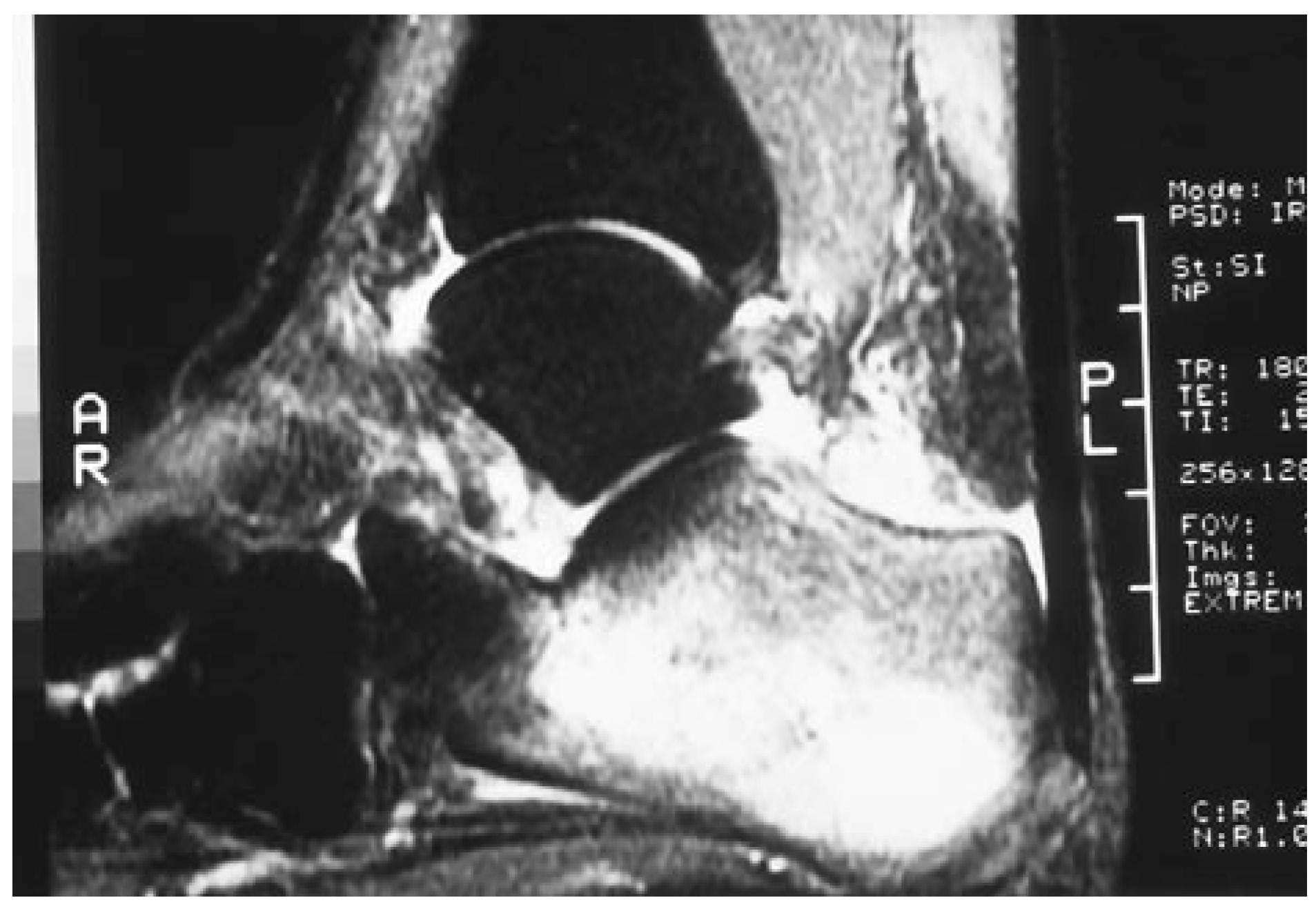
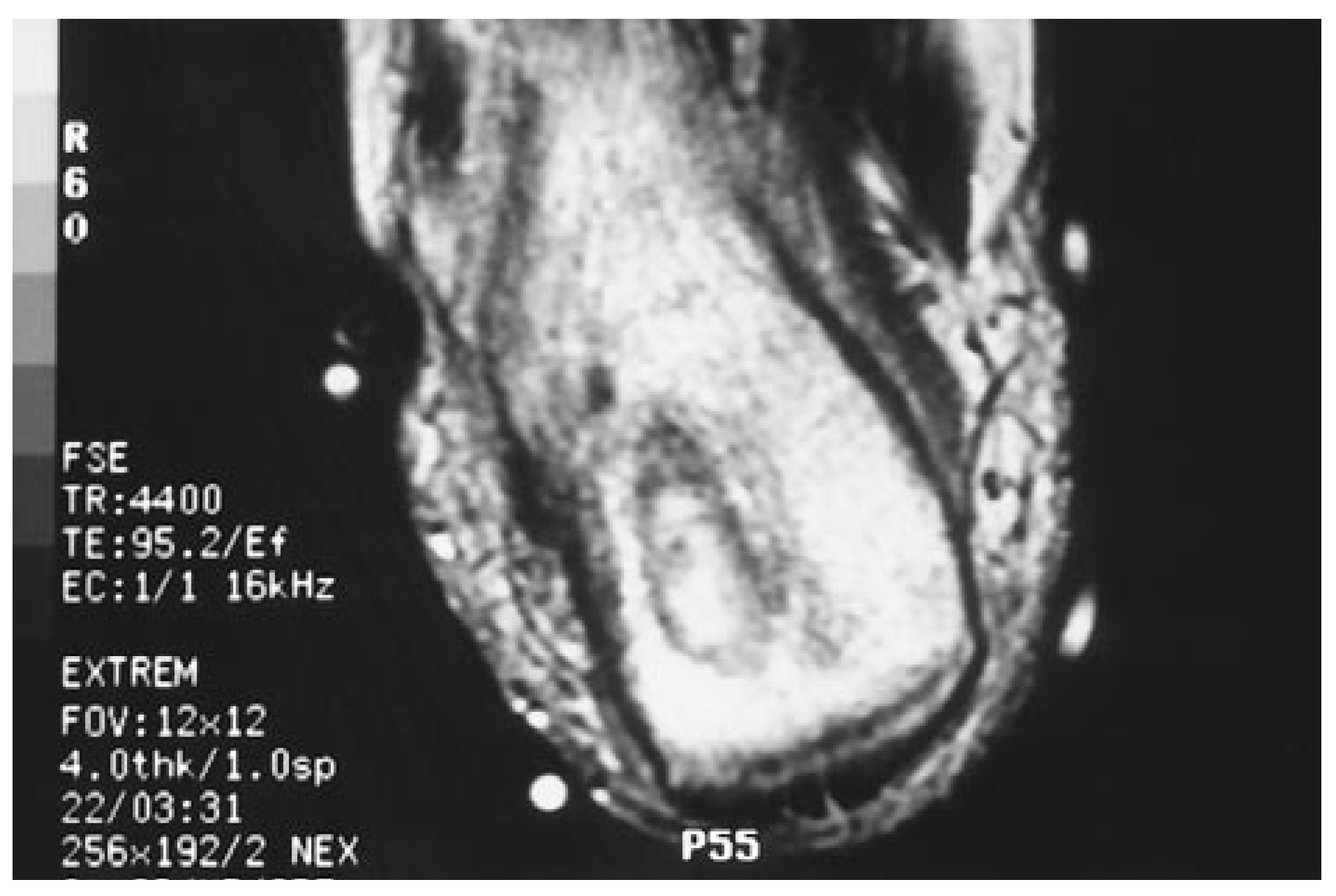
2]. An abscess in the medullary canal or cancellous bone is sometimes difficult to recognize by radiographs alone. Other diagnostic methods, such as magnetic resonance imaging, may be helpful. Magnetic resonance imaging scans reveal a well demarcated area that shows low-signal intensity on T-1 weighted images and high-signal intensity on T-2 weighted images. The surrounding thickened sclerotic bone shows low-signal intensity on T-1 and T-2.
Bone marrow edema around the intraosseous abscess can often be seen as ill-defined areas of high-signal intensity on T-2 weighted images. The granulation tissue lining the inner wall of the abscess may be seen as a high-signal intensity band on T-2 weighted images, producing a “double-line” sign [
10].
The chronic bone abscess develops when the infective organism has reduced virulence or the host has an increased resistance to infection. Usually 1 cm to 4 cm in diameter, the walls are lined by inflammatory granulation tissue that is surrounded by spongy bone eburnation. The fluid inside may be purulent or mucoid, while the bacteriologic examination of the fluid may or may not reveal the infective organism [
2]. As originally described, Brodie’s abscess is usually of staphylococcal origin [
2,
3,
6].
For many years,
Serratia marcescens was thought to be a harmless contaminant and was used as a marker dye because of its red pigment [
11]. It is now known as an opportunistic pathogen in patients with decreased immunity caused by immunosuppressive therapy, alcoholism, diabetes mellitus, drug addiction, and chronic hospitalization [
12,
13]. A member of the family Enterobacteriaceae,
S. marcescens is a saphrophyte commonly found in nature. It has been isolated from water, soil, foodstuffs, and animals. An aerobic, motile, gram-negative rod, it is capable of producing an inducible β-lactamase, and therefore is resistant to many antibiotics. Thus, antibiotic sensitivity studies are crucial for favorable treatment of infections with
Serratia. Greene [
14]. reported a case of a chronic abscess of osteomyelitis of the cuboid, presenting 11 years after penetration by a foreign body. The patient was a generally healthy male, without evidence of systemic illness or immunocompromise. The organism responsible was
S. marcescens.
Involvement of the calcaneus comprises 7% to 8% of all cases of osteomyelitis [
15,
16,
17] Clinical symptoms and signs of calcaneal osteomyelitis in comparison with other locations are less dramatic and easily dis-missed as normal local aches and pains [
15]. In common with the presentation of subacute and chronic osteo-myelitis in general, systemic symptoms of calcaneal osteomyelitis such as fever or chills are rare, while local pain is the most common. Swelling and tender-ness may or may not be present. Laboratory values of the total and differential white blood cell count are often normal [
15,
18,
19]. Radiographically, changes are the most common in the posterior third or “metaphyseal equivalent” of the calcaneus, usually consisting of osteolysis [
20]. Brodie’s abscess, though most commonly described in the metaphysis of long bones, may also occur in the tarsus [
2,
9]. Moreover, Nixon [
20]. describes the posterior third of the calcaneus as the “metaphyseal equivalent.”
The appearance of a radiolucent lesion in the calcaneus may be associated with many possible diagnoses. Osteosarcoma, clear cell chondrosarcoma, and metastases are imperative to rule out. Malignant bone tumors tend to be ill-defined, expansile, and cause obvious destruction on radiograph. Benign lesions such as osteoid osteoma, fibrous dysplasia, osteonecrosis, giant cell tumor, intraosseous ganglion, aneurysmal bone cyst, and unicameral bone cyst are considered as well. Also in the differential diagnosis are Brodie’s abscess, and acute and chronic osteomyelitis. The clinical and imaging characteristics of the lesion usually allow differentiation, while bone biopsy is required for a definitive diagnosis [
2].
A review of the literature shows that some authors suggest partial or total calcnetomy as a definitive procedure in the treatment of chronic calcaneal osteomyelitis [
21,
22]. Yet, most of these studies included patients with open ulcerations or underlying medical problems such as diabetes or vascular disease. The osteomyelitis had been present and documented for a long time and recalcitrant to other forms of treatment. Although both a high success rate and patient acceptance were reported, a large extent of the calcaneus was involved in the infection.
Brodie treated his first patient by amputation. Subsequently, he discovered the radical procedure could be avoided with treatment by trephining. Treatment depends somewhat on the size and activity of the abscess. However, a single localized bone abscess found in a healthy patient has been treated by aseptic drainage, curettage, and systemic antibiotics with excellent results [
6,
18,
19]. It should be noted that repeated culture and sensitivity with a rigorous course of antibiotic treatment is necessary. It has been suggested that three consecutive negative cultures indicate the infection is resolved [
11].
Case Report
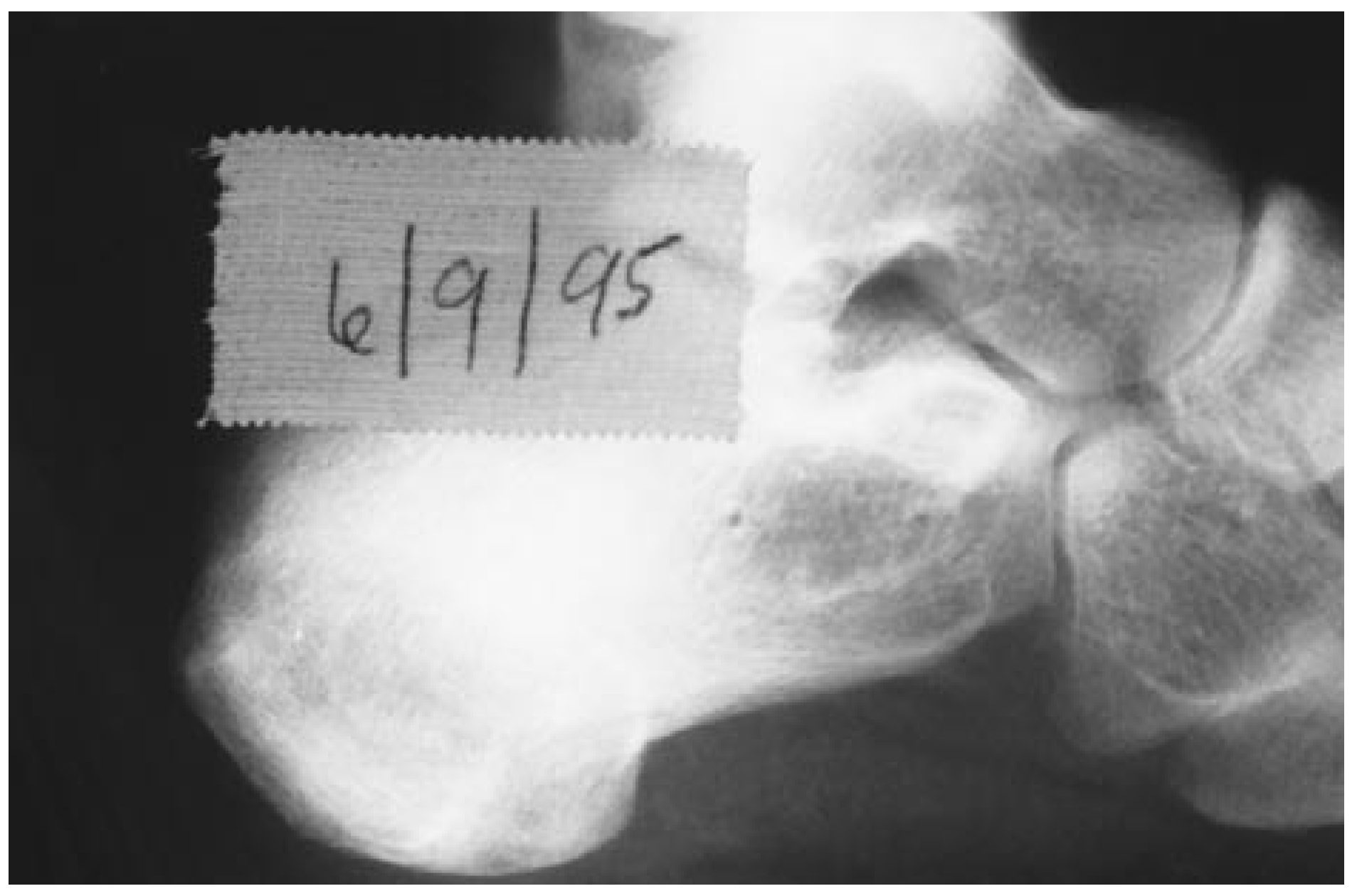
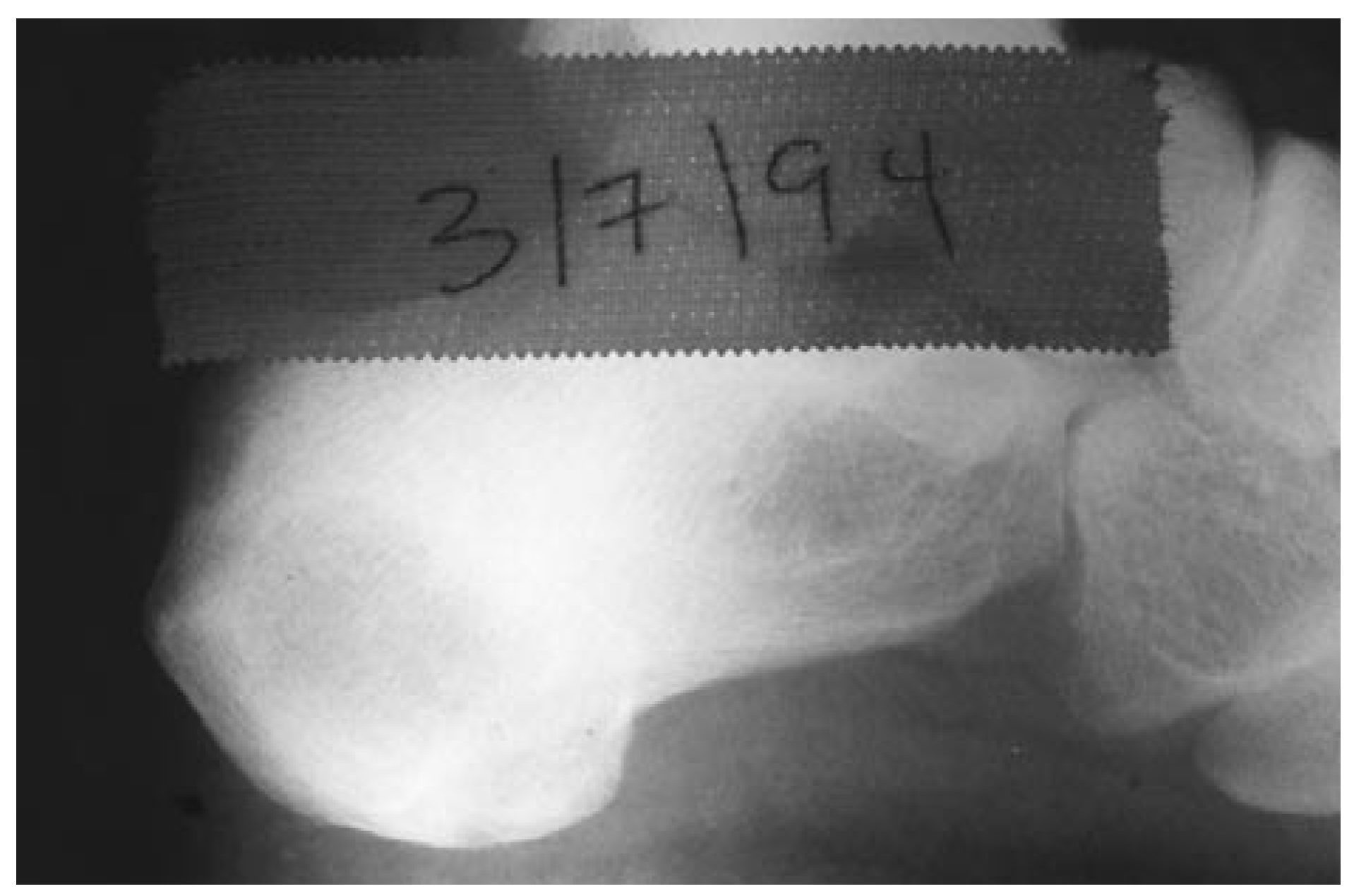
A 36-year-old female presented to the office in June 1995 with a painful right heel and ankle. The symptomatic onset was 18 months previously in January 1994, when the patient reportedly sprained her ankle. At that time, she was seen by several physicians who took bilateral x-rays and noted no significant findings (
Figure 1). She was treated conservatively with a walk-er and physical therapy. After 12 weeks, although the pain had not completely resolved, her problem was not believed to be anything more than a stubborn ankle sprain. She did not receive further treatment.
During the next year the pain lingered, being intermittent in nature. Progressively the pain grew worse, to the point that she was awakened from sleep, and found it difficult to walk. One week prior to her pre-sentation, she noted swelling around the ankle that would not go away. The intense pain, inability to walk, and recalcitrant swelling brought her to the office. The patient stated the pain was in the lateral ankle and heel, laterally and posteriorly near the Achilles tendon insertion. Radiographs were taken and concern was given to the posterior calcaneal area (
Figure 2).
At this point, magnetic resonance imaging was ordered for the right foot. The following sequences were performed on a 1.5 T imager: SE axial TR 500, TE 16; FSE axial TR 4400, TE 90; STIR sagittal TR 1800, TE 21, TI 155; SE sagittal TR 600, TE 18 precontrast enhancement, and SE sagittal TR 600, TE 18 images following intravenous Magnevist
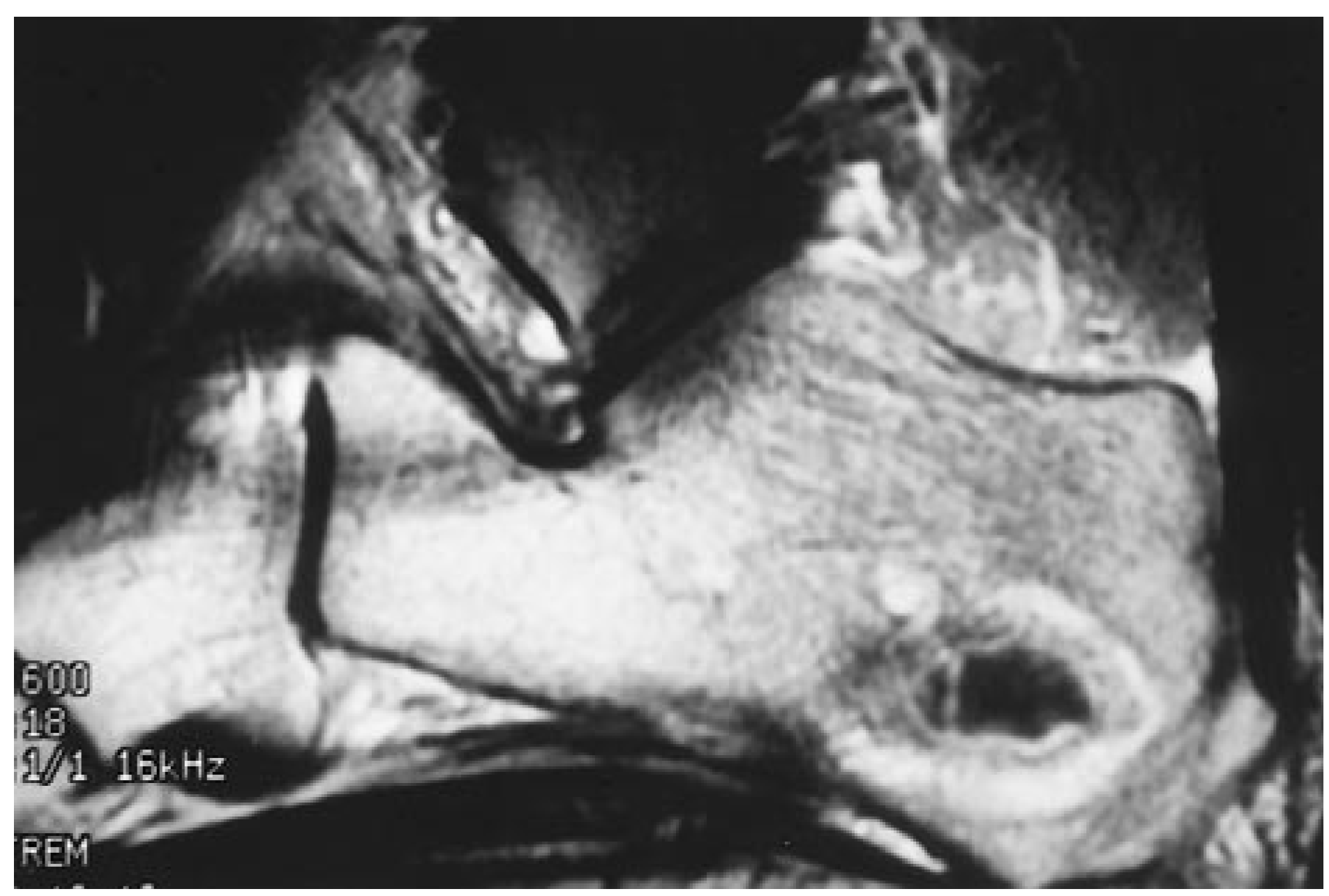
® (Berlex, Wayne, NJ) (11 ml). The magnetic resonance imaging scan revealed a normal Achilles tendon, yet a markedly abnormal calcaneus. A well demarcated round lesion was pre-sent in the inferior posterolateral calcaneus measuring 2.7 × 2.0 × 1.2 cm. Diffuse bone marrow edema was noted. T-2 weighted images showed a bright signal at the area of the walled-off cavity (
Figure 3 and
Figure 4), while T-1 showed a lower signal intensity (
Figure 5). Previous radiographic studies had not revealed evidence of a lesion in the calcaneus. However, in retrospect, with careful scrutiny of the lateral view, a faint outline of a round lytic lesion can be appreciated in the body of the calcaneus. The lesion is fairly trabeculated, and the changes are not obvious. The impression of the radiologist who read the magnetic resonance imaging scan was that these findings were most likely consistent with a focus of chronic osteomyelitis.
After subsequent questioning, the history was significant in that 25 years ago, the patient stepped on a chicken bone that entered the inferior lateral aspect of her right heel. She was not wearing shoes. At the time of injury, the bone was pulled out, and the wound cleaned. It healed without obvious infection, but approximately 6 months later, the patient noticed pain in the right heel area. She then sought medical treatment: x-rays were taken and a piece of retained bone was evident. Surgery was necessary to remove the foreign body, which was approximately 4 cm long. She believes the chicken bone was simply embedded in the soft tissue and does not remember any associated infection or complications. This incident and resultant surgery occurred in Australia. The patient denies any other trauma or violations of the skin since that episode. Throughout the next 20 years, the patient recalls several episodes of swelling and dull, aching pain to her right heel which she associated with wearing the wrong shoes or spraining her ankle. She did not seek medical treatment until January 1994.
Surgery was scheduled for incision and drainage of the lateral aspect of the right calcaneus in June 1995. Preoperative history was significant for innocent heart murmur and clinically inactive inflammatory bowel syndrome. The patient denied fever, chills, nausea, or vomiting. Vital signs were within normal limits, including a temperature of 37°C. Physical examination revealed a slightly erythematous and edematous right heel and ankle inferior to the medial and lateral malleoli, extending distally to the midfoot. The right heel area was warm to touch compared with the opposite side. The right heel and ankle were tender to palpation. The patient reported this area was extremely painful at times, although palpation during the examination elicited less pain than usual. A 4-cm scar was noted on the inferior lateral aspect of the right heel from the previous surgery to remove the foreign body when the patient was 11 years old. The history and physical examination were otherwise unremarkable. Preoperative laboratory values, including a white blood cell count of 7.2 and a differential, were all within normal limits. A generally healthy patient was taken to surgery in June 1995.
General anesthesia was induced with a thigh tourniquet used for hemostasis. The incision was made at the inferolateral aspect of the heel. A 1.5 × 2-cm bone window was removed, revealing a copious amount of white, purulent liquid. The necrotic bone was re-moved, leaving a cavity measuring 1.5 × 2.2 × 1.9 cm. Specimens of bone were sent for bone biopsy, culture and sensitivity, micropathologic and macro-pathologic examination, and Gram’s stain. The cavity was rigorously curetted, thoroughly lavaged with sterile lactated ringers and triple antibiotic solution, packed with iodoform gauze, and dressed. The Gram’s stain revealed 1+ gram-positive cocci and 2+ white blood cell count. The patient was admitted to the hospital for intravenous antibiotic treatment with piperacillin/tazobactam 4.5 g every 6 hr.
Intraoperative bone cultures resulted in growth of gram-negative rods, S. marcescens. Soft tissue cultures were negative for bacterial growth. The results of the pathology report revealed a fragment of bone with equivocal foci of new bone formation. At this point, according to the results of the culture and sensitivity, the patient was switched to oral ciprofloxacin, 750 mg every 12 hr.
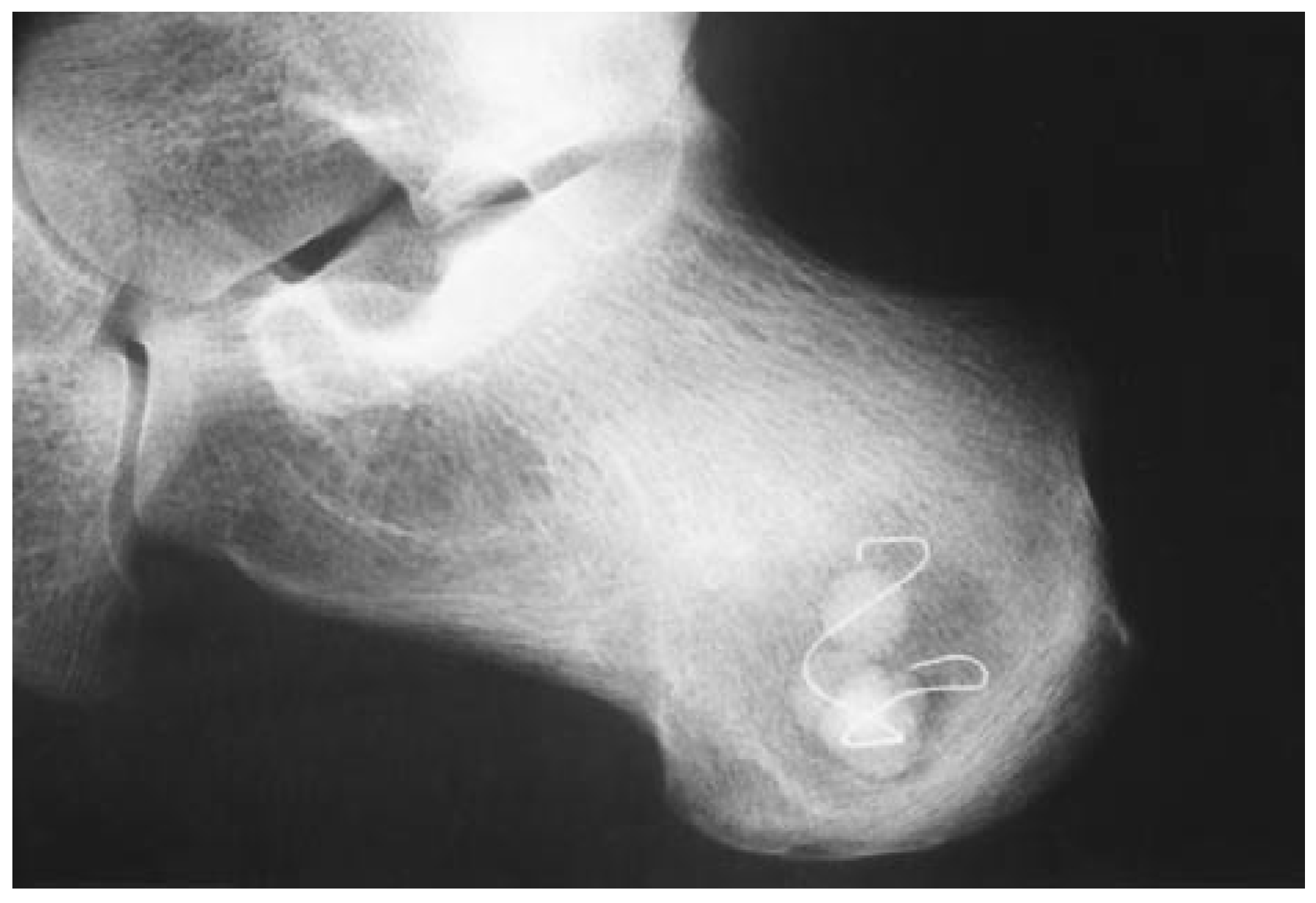
Delayed primary closure and packing of tobramycin-impregnated beads followed on June 16, 1995 (
Figure 6).
The wound was clean, without signs of infection, and granulation tissue was present. Soft tissue and bone cultures were taken that were negative for bacterial growth. The patient was discharged with a 6-week course of ciprofloxacin, 750 mg orally every 12 hr. A fracture boot was dispensed and the patient was partially weightbearing on the right foot.
On July 28, 1995, the patient was admitted to Davies Medical Center for removal of antibiotic beads and placement of an autogenous bone graft from the iliac crest to the right calcaneus. Preoperative laboratory values, including a white blood cell count of 5.3, were within normal limits. The patient had tolerated the antibiotics well and related almost complete absence of pain to her right foot. She denied any episodes of fever, chills, nausea, or vomiting. Physical examination revealed a well healed surgical site with-out erythema, swelling, or warmth.
The surgery proceeded with the patient under general anesthesia. The tricortical bone graft was harvested from the right iliac crest. The antibiotic beads were intact on removal, with no purulence noted in the cavity. Gram’s stain and cultures were sent, with no abnormal results. Packing of the bone graft into the calcaneus was achieved without complications. The patient was discharged with a 2-week course of ciprofloxacin, 750 mg orally every 12 hr, and nonweightbearing status.
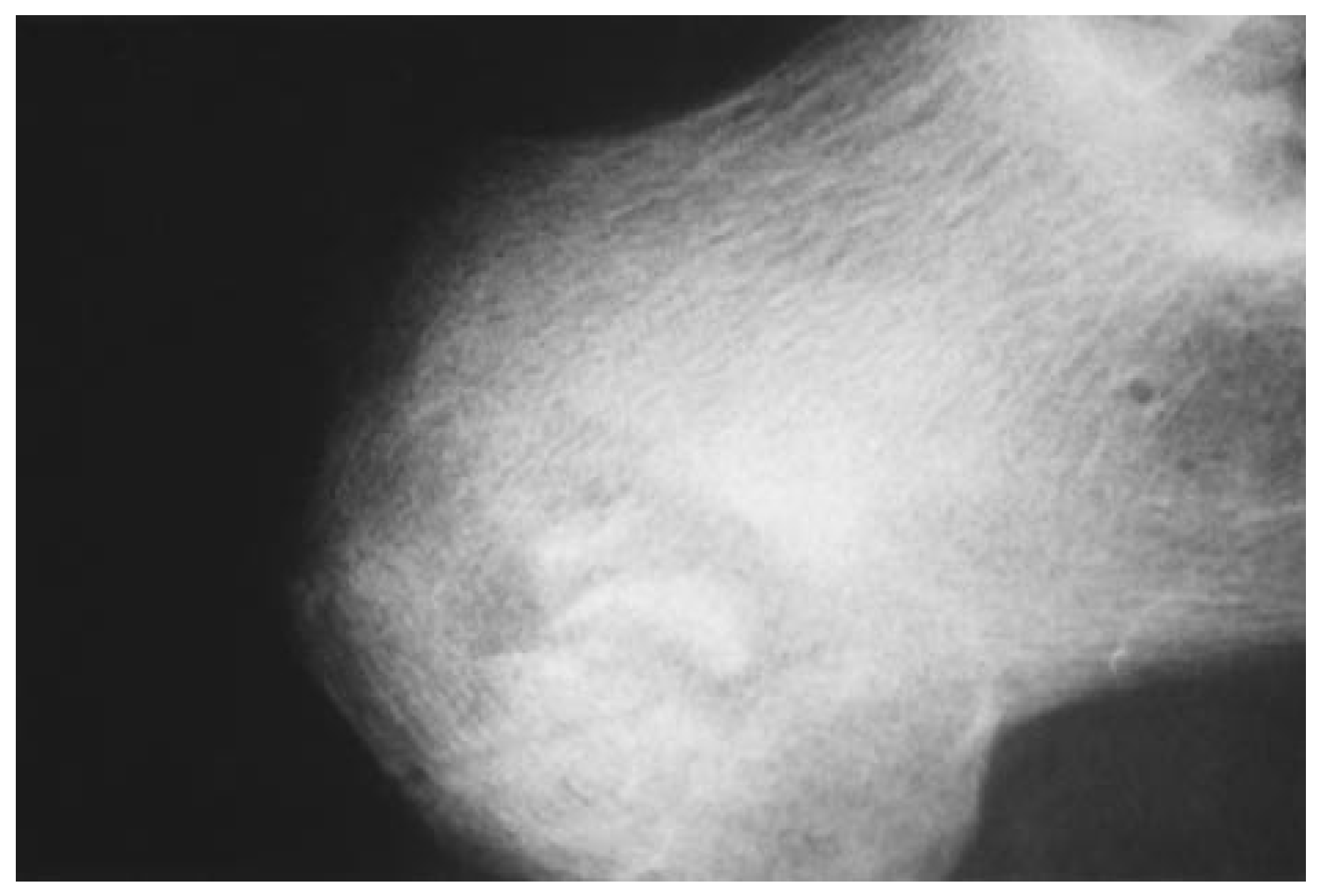
After 6 weeks and a short rehabilitation period, the patient returned to full activity. She has been wearing custom orthoses and stated that her pain is essentially resolved. A radiograph taken 5 months postoperatively shows the incorporation of the graft within the margins of the lesion and continuation of healing (
Figure 7).