


Abstract
Background: Diabetic foot osteomyelitis (DFO) poses significant challenges due to its high morbidity and recurring nature. Current treatments involve prolonged antibiotics and often surgical intervention; however, the optimal route of antibiotic administration is unknown. This study evaluated the effect of route of antibiotic administration on treatment failure among patients with diabetic foot osteomyelitis. Methods: The authors conducted a retrospective cohort study among patients with unresected diabetic foot osteomyelitis. A propensity score was used to match the treatment exposure groups. The primary outcome was treatment failure, defined as either (1) treatment with additional antibiotic course or (2) additional surgical debridement/amputation at the original site of infection within 1 year of initial treatment. Secondary outcomes included the impacts of hemoglobin A1c, peripheral arterial disease, obesity, and infection severity on treatment failure. Results: Among 152 patients meeting criteria, 49 matched pairs were analyzed. Treatment failure rates did not significantly differ between oral and intravenous groups (OR 0.98, 95% CI 0.30–3.19, p > 0.9). A time-to-event analysis similarly found no significant outcome disparities between groups (p = 0.3). Conclusions: The study results support the previously published literature that demonstrates comparable treatment outcomes between routes of antibiotic administration when treating diabetic foot osteomyelitis.
1. Introduction
Diabetic foot osteomyelitis (DFO) is a leading cause of morbidity in patients living with diabetes [1,2,3]. The annual incidence of foot ulceration is around 2% in people living with diabetes, with an estimated 18 million diabetic foot ulcers occurring globally in 2016 [4,5,6]. Over half of diabetic foot ulcers become infected and, of these, 20% are further complicated by osteomyelitis [7,8]. Osteomyelitis significantly increases the odds of foot ulcer recurrence and lower extremity amputation [2,9].
Treatment with several weeks of antibiotics, often in combination with surgical debridement or amputation, is the standard of care for the management of diabetic foot osteomyelitis [10]. However, even with appropriate treatment, failure rates of 20–60% are commonplace, highlighting the high-risk nature of this disease [2,11,12,13,14,15,16,17,18,19]. Furthermore, the optimal route of antibiotic administration (oral versus intravenous) is unknown.
Increasingly, oral antibiotics are used to treat invasive infections that were historically treated with intravenous antibiotic regimens [20]. In 2019, a large, prospective, randomized trial comparing oral antibiotics to intravenous antibiotics in the treatment of osteomyelitis demonstrated oral antibiotics were not inferior to intravenous antibiotic regimens [21]. While this was a pivotal finding, generalizing this outcome to a diabetic population is difficult. Host-specific factors, including neuropathy, peripheral artery disease, glycemic control, and complex microbiology, may create a toxic combination limiting healing. Several small and/or retrospective studies have demonstrated similar outcomes when using oral antibiotics to treat diabetic foot osteomyelitis, especially with antibiotics that have high bony penetration [11,22,23,24,25,26,27,28]. However, there is a paucity of data demonstrating the head-to-head efficacy of oral versus intravenous antibiotics in the treatment of DFO.
To further inform potential antibiotic regimens used when treating DFO, this study sought to compare treatment failure within one year among patients with DFO who were treated with either oral or intravenous antibiotic regimens.
2. Methods
2.1. Study Design and Patient Population
This retrospective cohort study included patients at the University of Vermont Health Network (UVMHN), a 6-hospital health system serving a mixed rural and urban population in Vermont, and areas of upstate New York and New Hampshire, across a 5-year period from 1 January 2017 to 31 December 2022. This study period was chosen based on the number of eligible patients included within it to compare favorably with the prior literature, as well as data availability within the electronic medical record. Patient records were sourced from the UVMHN electronic health record. The International Classification of Diseases and Related Health Problems, Tenth Revision (ICD-10) codes consistent with diabetes mellitus, osteomyelitis and foot ulcers were used to identify all patient encounters related to diabetic foot osteomyelitis within the study period. This study was approved by the UVMHN Institutional Review Board. Patients aged ≥18 years old were included if they had diabetes and had a foot ulcer with unresected osteomyelitis. We excluded patients who (1) had definitive amputation with complete resection of infected bone, (2) had implanted hardware at the site of infection, (3) had concurrent bloodstream infection, (4) had a recent infection at the current site of infection requiring >14 days of antibiotics within the prior 6 months, (5) were unable to take oral antibiotics, (6) were lost to follow up/unable to complete antibiotic course, or (7) were treated with mixed antibiotic therapy, defined as not receiving either oral or IV antibiotics for more than 2/3 of their antibiotic treatment duration.
Patients were distributed into two groups based on antibiotic exposure. Patients were assigned to the oral antibiotic group if greater than two-thirds of their antibiotic course consisted of oral antibiotics, and patients were assigned to the intravenous antibiotic group if greater than two-thirds of their antibiotic course consisted of intravenous antibiotics.
2.2. Data Collection
A standardized data collection form was created in REDCap, and this was used to extract data from the electronic health record for identified patients. Data was extracted retrospectively and included patient demographics, co-morbidities, immunosuppression, diabetes and surgical management, microbiology, and antibiotic regimens. Specifically, microbiology from bone cultures at the site of infection was collected.
2.3. Outcomes
The primary outcome for both groups was treatment failure, defined as either (1) treatment with additional antibiotic course beyond 6 weeks or (2) additional surgical debridement/amputation at the original site of infection within 1 year of initial treatment course. Secondary outcomes included the impacts of hemoglobin A1c, peripheral arterial disease, obesity, and infection severity on treatment failure. Infection severity was defined by the Infectious Disease Society of America (IDSA)/International Working Group on the Diabetic Foot (IWGDF) classification scheme [10].
2.4. Statistical Analysis
All statistical analyses were performed using R Studio Version 2024.04.0 (R: A Language and Environment for Statistical Computing, Vienna, Austria). To account for treatment decision bias and confounding influenced by clinical characteristics (i.e., tendency for sicker or medically complex patients to receive IV antibiotics), we pre-specified variables that we anticipated might differ between the two treatment groups. A propensity score was generated, and patients in each treatment group were then matched using a 1-to-1, nearest neighbor approach with the MatchIt package in R. Patients were matched on age, body mass index, hemoglobin A1c, Charlson Comorbidity Score, and IDSA severity index. Fisher exact and Wilcoxon rank-sum tests were used to compare categorical variables and the distribution of continuous variables between the oral and intravenous groups, respectively. Additionally, a time-to-event analysis was conducted with a multivariate Cox proportional hazard model along with Kaplan–Meier method, with outcomes censored at one year. The threshold for statistical significance was p < 0.05 for all analyses. We used a multivariable logistic regression model to examine the associations between our predictors (antibiotic course, BMI, Hemoglobin A1c, ischemic grade, and IDSA severity) and treatment failure. Results are reported as odds ratios (ORs) with 95% confidence intervals (CIs). Statistical significance was defined as a two-sided p value < 0.05.
3. Results
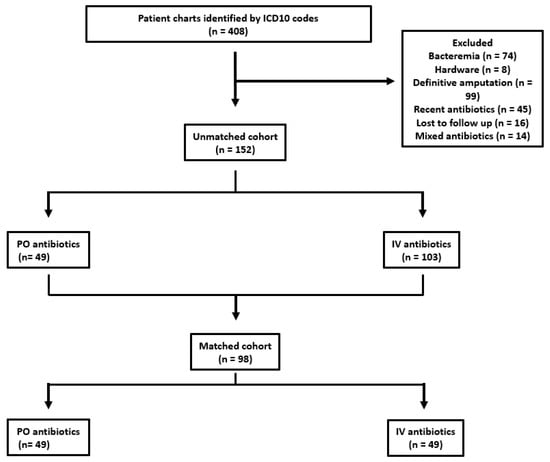
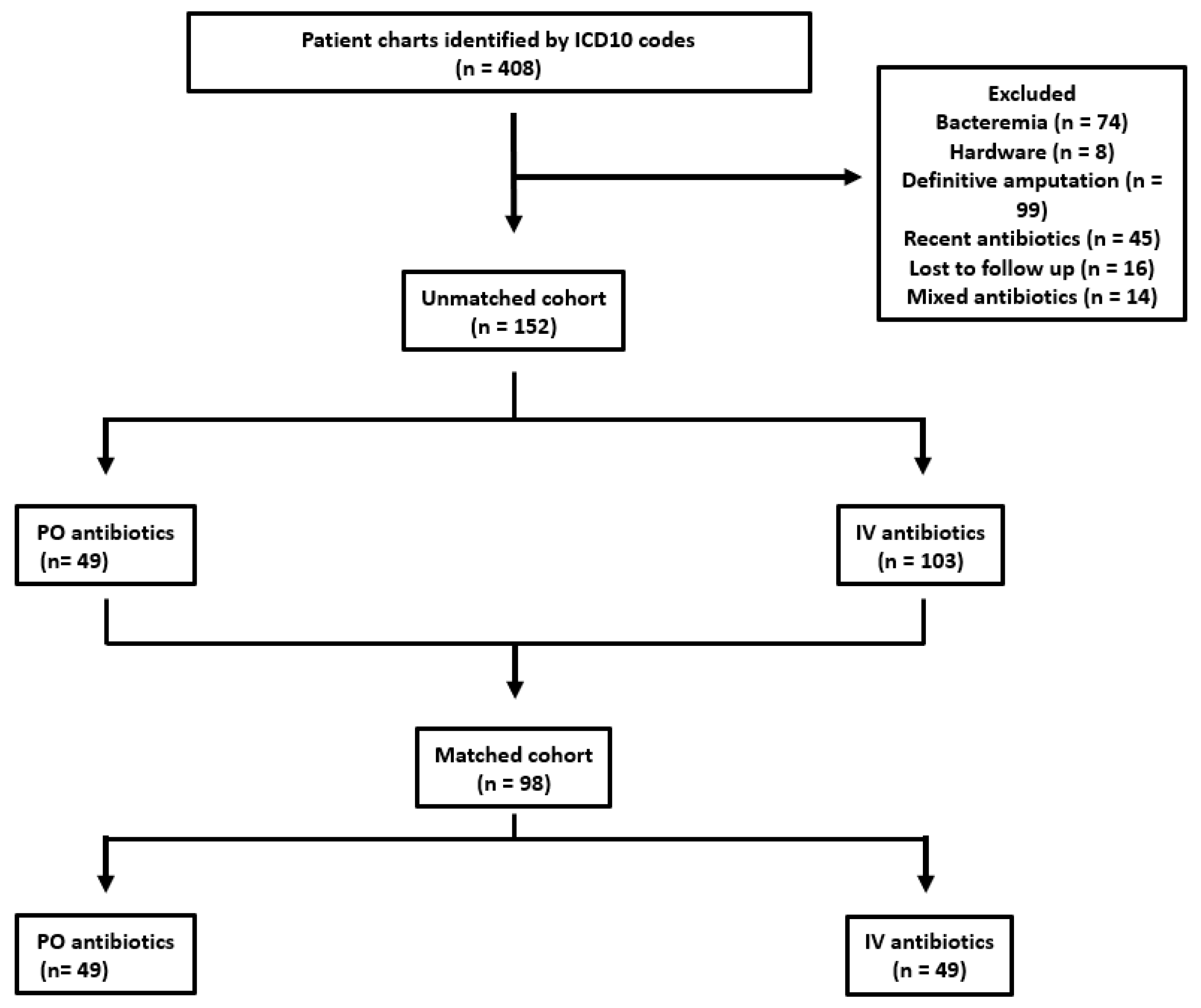
A total of 152 patients (103 treated with IV antibiotics, and 49 treated with PO antibiotics) met study criteria and were included in the initial propensity score-matching process (Figure 1). Propensity score matching resulted in 49 matched pairs for the primary analysis (n = 98).
Figure 1.
Flow diagram of patient selection. Abbreviations: PO, per oral; IV, intravenous. Mixed antibiotics include patients who did not receive an antibiotic course consisting of ≥2/3 oral or IV antibiotics.
Patient characteristics are presented in Table 1. A majority of the patients were male, and the median age was 65 years. The median hemoglobin A1c levels amongst the intravenous and oral groups were 8.4% and 7.8% (p = 0.5), respectively. Over 80% of the patients received initial surgical source control with either partial amputation or debridement. Staphylococcus aureus (n = 38) was the most commonly isolated pathogen, followed by Enterobacterales (n = 26), Group B beta hemolytic streptococcus (n = 24), Enterococci (n = 22), Pseudomonas aeruginosa (n = 13), and Group A streptococcus (n = 3). Twelve patients were treated empirically, without microbiological data.
Table 1.
Baseline characteristics among propensity-matched cohort. Abbreviations: PO, per oral; IV, intravenous; BMI, body mass index.
Patients treated with IV courses received vancomycin (n = 18), ceftriaxone (n = 13), daptomycin (n = 9), cefepime (n = 9), and/or cefazolin (n = 8). The oral antibiotic group received amoxicillin/clavulanate (n = 30), a fluroquinolone (n = 20), metronidazole (n = 16), and/or trimethoprim/sulfamethoxazole (n = 5). A full list of antibiotic treatment courses is available in Supplement Table S1. On average, patients were treated with 42 days of antibiotics. The oral antibiotic group received an average of 3 days of IV antibiotics prior to switching to oral antibiotics.
Overall, we did not observe a statistically significant difference in treatment failure rates between the oral and intravenous treatment groups (OR 0.98, 95% CI 0.30–3.19, p > 0.9) (Table 2). Furthermore, the impacts of BMI, hemoglobin A1c, IDSA/IWGDF severity index, and ischemic grade did not significantly affect treatment failure rates.
Table 2.
Multivariate analysis of treatment failure. Abbreviations: PO, per oral; IV, intravenous; BMI, body mass index; IDSA, Infectious Disease Society of America.
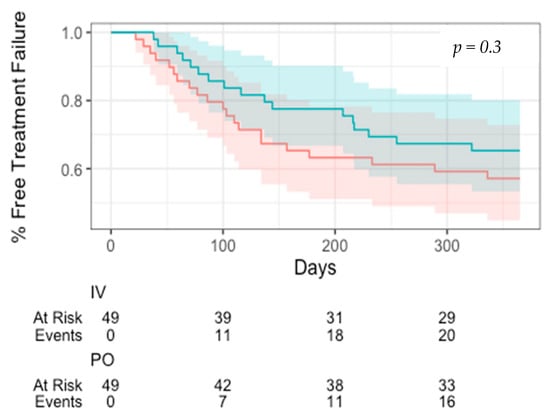
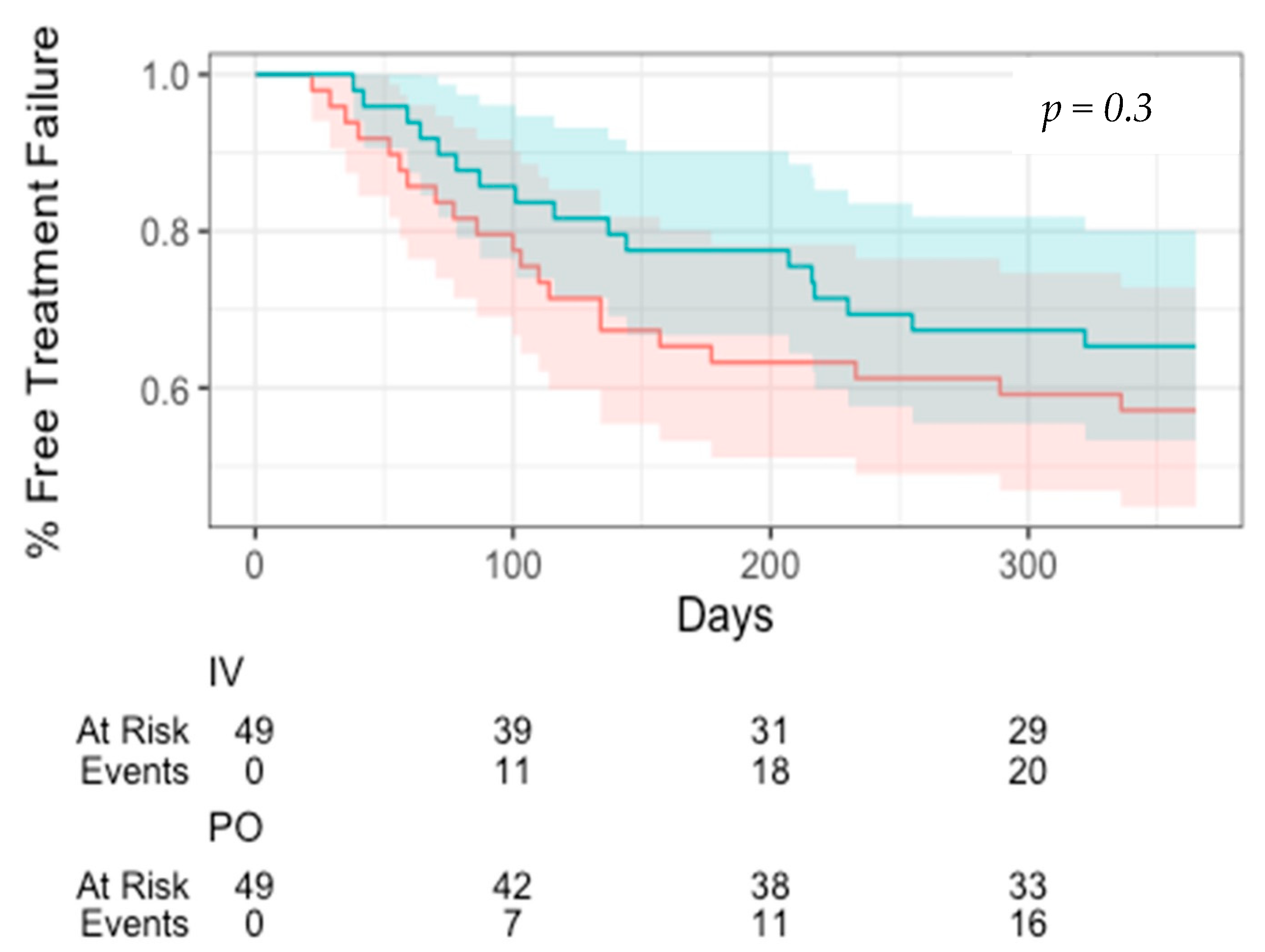
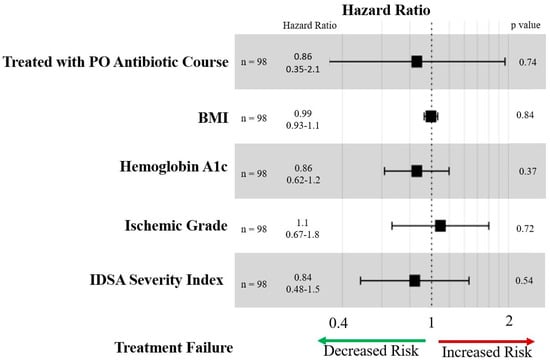
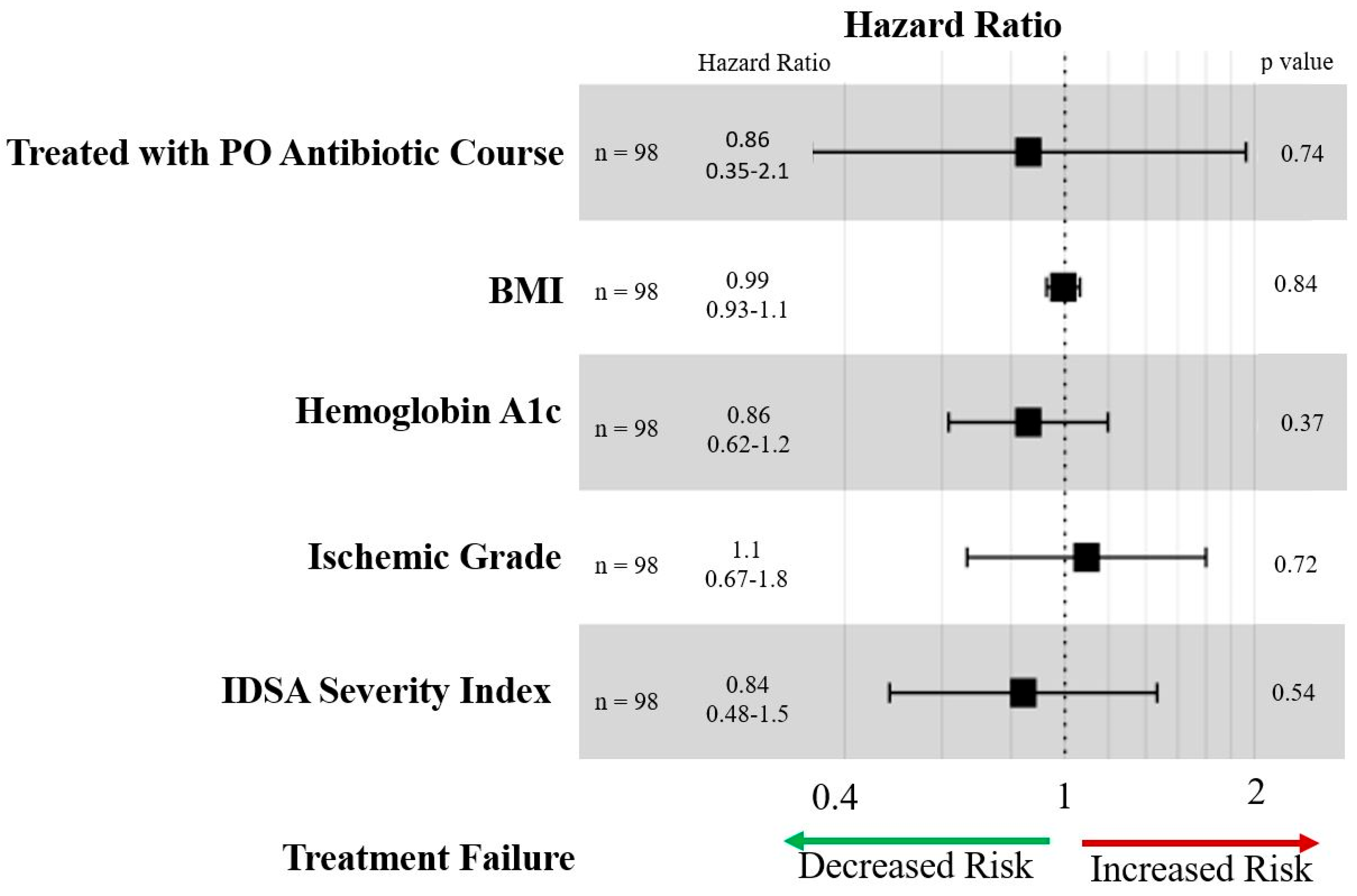
Additionally, a time-to-event analysis did not show a significant difference in outcomes between groups. While patients treated with intravenous antibiotics experienced shorter time to treatment failure, this was not a statistically significant result (p = 0.3) (Figure 2). Additional factors, such as BMI, hemoglobin A1c, IDSA/IWGDF severity index, surgical source control, or ischemic index, failed to reach statistical significance (Figure 3).
Figure 2.
Kaplan–Meier curve, Time to treatment failure. Oral therapy is shown in blue, and IV therapy is shown in red. Standard deviation is shown in blue and red shadow.
Figure 3.
Forest plot, multivariate time to treatment failure analysis.
4. Discussion
To the best of our knowledge, this is the largest propensity-matched retrospective study to date that directly compares treatment outcomes based on the route of antibiotic exposure in patients with diabetic foot osteomyelitis. Furthermore, we included patients with peripheral artery disease, and those who did and did not have initial source control with either debridement or partial amputation, which has been poorly assessed in the past. Overall, we observed similar rates of treatment failure between the oral and intravenous antibiotic groups.
Oral antibiotics are increasingly used to treat diabetic foot osteomyelitis [29]. However, there are no prospective, randomized trials that directly compare the route of antibiotic administration when treating diabetic foot osteomyelitis. The landmark OVIVA trial concluded that oral antibiotic therapy was not inferior to intravenous antibiotic therapy when used in the first 6 weeks for complex orthopedic infections; however, with only 19.5% of the cohort consisting of patients with diabetes, this result is difficult to generalize to a diabetic population [21]. Several small, single-center retrospective cohort studies have sought to further inform treatment decisions in diabetic foot osteomyelitis. Gill et al. (n = 65) demonstrated similar incidences of treatment failure regardless of route of antibiotic administration in patients who underwent a partial amputation [11]. They found that a severe IDSA/IWGDF infection classification on presentation correlated with treatment failure, in contrast to our findings, where IDSA/IWGDF severity was not correlated with treatment failure. A recent retrospective study by Kipp et al. (n = 128) found similar rates of treatment failure among patients treated with oral or intravenous antibiotics, specifically in patients who underwent partial amputation and who did not have peripheral artery disease [28]. However, each of these analyses were conducted with unmatched treatment groups, increasing the unintended chances for treatment bias. Our current study, by involving a broad cohort of propensity-matched patients, including those with peripheral artery disease and those who did and did not undergo debridement/partial amputation, adds to the emerging picture of similar outcomes between these two treatment modalities.
Consistent with the results from Gill et al. and Kipp et al., patients in our study who were treated with an intravenous antibiotic course experienced higher numerical (but not statistically significant) incidence of treatment failure (41% versus 33%, p ≥ 0.9) [11,28]. This is likely accounted for by unidentified treatment bias, despite propensity matching, highlighting the limitations of the retrospective nature of this study. Additionally, similar incidences of treatment failure after various antibiotic regimens were seen in several prospective, randomized controlled trials [14,15,16] that included patients with diabetic foot osteomyelitis and retrospective studies [12,19].
The most common oral antibiotic regimens used in our study were amoxicillin/clavulanate and a fluoroquinolone, used either alone or in combination. Each of these regimens are known to have suitable bone penetration [30], which, additionally, are well demonstrated treatment options in diabetic foot osteomyelitis [19,22,23]. It is worth pointing out that, in the OVIVA trial [21], there was a trend towards worse outcomes in patients treated with oral penicillin compared to IV therapy. However, in our study, oral amoxicillin/clavulanate had comparable outcomes to IV therapy, strengthening its role in DFO treatment. Oral antibiotic therapy has the added benefit of potentially reducing hospital length of stay and adverse events related to central line use [21,31].
Our study has several limitations. This study’s single-center retrospective design means treatment groups are not controlled, introducing confounding variables, all of which are not able to be controlled by a propensity score. Our definition of diabetic foot osteomyelitis was based on the treating physician’s diagnosis, so there could be bias based on which diagnostic modality was used to make the diagnosis, for which we cannot account. The lack of association between ischemia grade and IDSA severity level suggests the present study may be underpowered. The study sample size was limited in number due to the single-center nature of the study. This was further reduced by the inclusion criteria. Taken together, these factors reduce the statistical power or our study, increasing the chances for type II error. We excluded patients who were unable to complete a full course of either oral or IV antibiotic therapy, which limits insight into outcomes for these patients. Our study period included the early portion of the COVID-19 pandemic, which may have influenced treatment choice, but for which we cannot account the specific impact. However, despite these limitations, our results are consistent with, and add to, the previously published literature.
Overall, our study adds to the previously published literature in demonstrating that the route of antibiotic administration alone does not determine treatment failure when treating diabetic foot osteomyelitis. This is possibly driven by a toxic combination of peripheral artery disease, peripheral neuropathy, wound care, and microbiology, in addition to antibiotic treatment. Further prospective, randomized studies are needed to help inform antibiotic administration when treating diabetic foot osteomyelitis, especially as oral antibiotics are increasingly used in this realm. Additionally, more comparative data, focusing on which specific oral antibiotics or combinations are most efficacious in DFO, would be a welcome addition to the literature.
Supplementary Materials
The following supporting information can be downloaded at: https://www.mdpi.com/article/10.3390/japma116040047/s1, Table S1: Antibiotics used to treat diabetic foot osteomyelitis.
Author Contributions
Conceptualization, C.T. and A.J.H.; methodology, C.T. and A.J.H.; software, C.T. and A.J.H.; validation, C.T. and A.J.H.; formal analysis, C.T. and A.J.H.; investigation, C.T., S.B. and A.J.H.; resources, C.T. and A.J.H.; data curation, C.T., S.B. and A.J.H.; writing—original draft preparation, C.T., S.B. and A.J.H.; writing—review and editing, C.T., S.B. and A.J.H.; visualization, C.T., S.B. and A.J.H.; supervision, C.T. and A.J.H.; project administration, C.T. and A.J.H.; funding acquisition, N/A. All authors have read and agreed to the published version of the manuscript.
Funding
This research received no external funding.
Institutional Review Board Statement
This study was conducted in accordance with the Declaration of Helsinki and approved by the Institutional Review Board (or Ethics Committee) of UVM (STUDY00002568, approved on 11 May 2023).
Informed Consent Statement
Patient consent was waived due to exemption, as determined by the Institutional Review Board (or Ethics Committee) of UVM.
Data Availability Statement
Data is available upon reasonable request to the authors.
Conflicts of Interest
The authors declare no conflicts of interest.
References
- Boulton, A.; Vileikyte, L.; Ragnarson-Tennvall, G.; Apelqvist, J. The global burden of diabetic foot disease. Lancet 2005, 366, 1719–1724. [Google Scholar] [CrossRef] [Scilit] [PubMed]
- Armstrong, D.; Boulton, A.; Bus, S. Diabetic Foot Ulcers and Their Recurrence. N. Engl. J. Med. 2017, 376, 2367–2375. [Google Scholar] [CrossRef] [Scilit] [PubMed]
- Edmonds, M.; Manu, C.; Vas, P. The current burden of diabetic foot disease. J. Clin. Orthop. Trauma 2021, 17, 88–93. [Google Scholar] [CrossRef] [Scilit] [PubMed]
- Abbott, C.; Carrington, A.; Ashe, H.L.; Bath, S.; Every, L.C.; Griffiths, J.; Hann, A.W.; Hussein, A.; Jackson, N.; Johnson, K.E.; et al. The North-West Diabetes Foot Care Study: Incidence of, and risk factors for, new diabetic foot ulceration in a community-based patient cohort. Diabet. Med. 2002, 19, 377–384. [Google Scholar] [CrossRef] [Scilit] [PubMed]
- Crawford, F.; McCowan, C.; Dimitrov, B.; Woodburn, J.; Wylie, G.; Booth, E.; Leese, G.; Bekker, H.; Kleijnen, J.; Fahey, T. The risk of foot ulceration in people with diabetes screened in community settings: Findings from a cohort study. QJM 2011, 104, 403–410. [Google Scholar] [PubMed]
- Zhang, Y.; Lazzarini, P.; McPhail, S.; van Netten, J.J.; Armstrong, D.G.; Pacella, R.E. Global Disability Burdens of Diabetes-Related Lower-Extremity Complications in 1990 and 2016. Diabetes Care 2020, 43, 964–974. [Google Scholar] [CrossRef] [Scilit] [PubMed]
- Prompers, L.; Huijberts, M.; Apelqvist, J.; Jude, E.; Piaggesi, A.; Bakker, K.; Edmonds, M.; Holstein, P.; Jirkovska, A.; Mauricio, D.; et al. High prevalence of ischaemia, infection and serious comorbidity in patients with diabetic foot disease in Europe. Baseline results from the Eurodiale study. Diabetologia 2007, 50, 18–25. [Google Scholar] [PubMed]
- Lavery, L.; Armstrong, D.; Wunderlich, R.; Mohler, M.J.; Wendel, C.S.; Lipsky, B.A. Risk Factors for Foot Infections in Individuals with Diabetes. Diabetes Care 2006, 29, 1288–1293. [Google Scholar] [CrossRef] [Scilit] [PubMed]
- Uysal, S.; Arda, B.; Tasbakan, M.; Çetinkalp, Ş.; Şimşir, I.Y.; Öztürk, A.M.; Uysal, A.; Ertam, I. Risk factors for amputation in patients with diabetic foot infection: A prospective study. Int. Wound J. 2017, 14, 1219–1224. [Google Scholar] [CrossRef] [Scilit] [PubMed]
- Senneville, E.; Albalawi, Z.; van Asten, S.; Abbas, Z.G.; Allison, G.; Aragón-Sánchez, J.; Embil, J.M.; Lavery, L.A.; Alhasan, M.; Oz, O.; et al. IWGDF/IDSA Guidelines on the Diagnosis and Treatment of Diabetes-related Foot Infections (IWGDF/IDSA 2023). Clin. Infect. Dis. 2023, ciad527. [Google Scholar] [CrossRef] [Scilit] [PubMed]
- Gill, A.; Gorski, M.; Strage, K.; Dunn, J.T.; Jerabek, M.; Hoffman, K.M. Oral versus intravenous antibiotics for residual osteomyelitis after amputation in the diabetic foot. J. Foot Ankle Surg. 2022, 61, 735–738. [Google Scholar] [CrossRef] [Scilit] [PubMed]
- Haug, F.; Waibel, F.; Lisy, M.; Winkler, E.; Uçkay, I.; Schöni, M. The impact of the length of total and intravenous systemic antibiotic therapy for the remission of diabetic foot infections. Int. J. Infect. Dis. 2022, 120, 179–186. [Google Scholar] [CrossRef] [Scilit] [PubMed]
- Winkler, E.; Schoni, M.; Krahenbuhl, N.; Uçkay, I.; Waibel, F.W.A. Foot Osteomyelitis Location and Rates of Primary or Secondary Major Amputations in Patients with Diabetes. Foot Ankle Int. 2022, 43, 957–967. [Google Scholar] [CrossRef] [Scilit] [PubMed]
- Gariani, K.; Pham, T.; Kressman, B.; Jornayvaz, F.R.; Gastaldi, G.; Stafylakis, D.; Philippe, J.; Lipsky, B.A.; Uçkay, I. Three Weeks Versus Six Weeks of Antibiotic Therapy for Diabetic Foot Osteomyelitis: A Prospective, Randomized, Noninferiority Pilot Trial. Clin. Infect. Dis. 2021, 73, e1539–e1545. [Google Scholar] [PubMed]
- Lipsky, B.; Baker, P.; Landon, G.; Fernau, R. Antibiotic Therapy for Diabetic Foot Infections: Comparison of Two Parenteral-to-Oral Regimens. Clin. Infect. Dis. 1997, 24, 643–648. [Google Scholar] [CrossRef] [Scilit] [PubMed]
- Tone, A.; Nguyen, S.; Devemy, F.; Topolinski, H.; Valette, M.; Cazaubiel, M.; Fayard, A.; Beltrand, É.; Lemaire, C.; Senneville, É. Six-Week Versus Twelve-Week Antibiotic Therapy for Nonsurgically Treated Diabetic Foot Osteomyelitis: A Multicenter Open-Label Controlled Randomized Study. Diabetes Care 2015, 38, 302–307. [Google Scholar] [CrossRef] [Scilit] [PubMed]
- Wukich, D.; Hobizal, K.; Sambenedetto, T.; Kirby, K.; Rosario, B.L. Outcomes of Osteomyelitis in Patients Hospitalized with Diabetic Foot Infections. Foot Ankle Int. 2016, 37, 1285–1291. [Google Scholar] [CrossRef] [Scilit] [PubMed]
- Tardáguila-García, A.; Garcia-Alvarez, Y.; Garcia-Morales, E.; López-Moral, M.; Sanz-Corbalán, I.; Lázaro-Martínez, J.L. Long-Term Complications after Surgical or Medical Treatment of Predominantly Forefoot Diabetic Foot Osteomyelitis: 1 Year Follow Up. J. Clin. Med. 2021, 10, 1943. [Google Scholar] [CrossRef] [Scilit] [PubMed]
- Embil, J.; Rose, G.; Trepman, E.; Math, M.C.M.; Duerksen, F.; Simonsen, J.N.; Nicolle, L.E. Oral antimicrobial therapy for diabetic foot osteomyelitis. Foot Ankle Int. 2006, 27, 771–779. [Google Scholar] [CrossRef] [Scilit] [PubMed]
- Wald-Dickler, N.; Holtom, P.; Phillips, M.; Centor, R.M.; Lee, R.A.; Baden, R.; Spellberg, B. Oral Is the New IV. Challenging Decades of Blood and Bone Infection Dogma: A Systematic Review. Am. J. Med. 2022, 135, 369–379.e1. [Google Scholar] [CrossRef] [Scilit] [PubMed]
- Li, H.; Rombach, I.; Zambellas, R.; Walker, A.S.; McNally, M.A.; Atkins, B.L.; Lipsky, B.A.; Hughes, H.C.; Bose, D.; Kümin, M.; et al. Oral versus Intravenous Antibiotics for Bone and Joint Infection. N. Engl. J. Med. 2019, 380, 425–436. [Google Scholar] [CrossRef] [Scilit] [PubMed]
- Lipsky, B.; Itani, K.; Norden, C. Linezolid Diabetic Foot Infections Study Group. Treating Foot Infections in Diabetic Patients: A Randomized, Multicenter, Open-Label Trial of Linezolid versus Ampicillin-Sulbactam/Amoxicillin-Clavulanate. Clin. Infect. Dis. 2004, 38, 17–24. [Google Scholar] [CrossRef] [Scilit] [PubMed]
- Gariani, K.; Lebowitz, D.; Kressmann, B.; von Dach, E.; Sendi, P.; Waibel, F.; Berli, M.; Huber, T.; Lipsky, B.A.; Uçkay, I. Oral amoxicillin-clavulanate for treating diabetic foot infections. Diabetes Obes. Metab. 2019, 21, 1483–1486. [Google Scholar] [CrossRef] [Scilit] [PubMed]
- Mader, J.; Cantrell, J.; Calhoun, J. Oral ciprofloxacin compared with standard parenteral antibiotic therapy for chronic osteomyelitis in adults. J. Bone Jt. Surg. Am. 1990, 72, 104–110. [Google Scholar] [CrossRef] [Scilit]
- Peterson, L.; Lissack, L.; Canter, K.; Fasching, C.E.; Clabots, C.; Gerding, D.N. Therapy of lower extremity infections with ciprofloxacin in patients with diabetes mellitus, peripheral vascular disease, or both. Am. J. Med. 1989, 86, 801–808. [Google Scholar] [CrossRef] [Scilit] [PubMed]
- Spellberg, B.; Lipsky, B. Systemic Antibiotic Therapy for Chronic Osteomyelitis in Adults. Clin. Infect. Dis. 2012, 54, 393–407. [Google Scholar] [CrossRef] [Scilit] [PubMed]
- Wilson, B.; Bessesen, M.; Doros, G.; Brown, S.T.; Saade, E.; Hermos, J.; Perez, F.; Skalweit, M.; Spellberg, B.; Bonomo, R.A. Adjunctive Rifampin Therapy For Diabetic Foot Osteomyelitis in the Veterans Health Administration. JAMA Netw. Open 2019, 2, e1916003. [Google Scholar] [CrossRef] [Scilit] [PubMed]
- Kipp, J.; LeSavage, L.; Evans, J.; Denmeade, T.A.; Blazek, C.D. Diabetic Osteomyelitis: Oral versus Intravenous Antibiotics at a Single Level 1 Academic Medical Trauma Center. J. Foot Ankle Surg. 2024, 63, 490–494. [Google Scholar] [CrossRef] [Scilit] [PubMed]
- Cortés-Penfield, N.; Beekmann, S.; Polgreen, P.; Ryan, K.; Marschall, J.; Sekar, P. Variation in North American infectious disease specialists’ practice regarding oral and suppressive antibiotics for adult osteoarticular infections: Results of an Emerging Infections Network (EIN) survey. Open Forum Infect. Dis. 2024, 11, ofae280. [Google Scholar] [CrossRef] [Scilit] [PubMed]
- Thabit, A.; Fatani, D.; Bamakhrama, M.; Barnawi, O.A.; Basudan, L.O.; Alhejaili, S.F. Antibiotic penetration into bone and joints: An updated review. Int. J. Infect. Dis. 2019, 81, 128–136. [Google Scholar] [CrossRef] [Scilit] [PubMed]
- Azamgarhi, T.; Shah, A.; Warren, S. Clinical Experience of Implementing Oral Versus Intravenous Antibiotics (OVIVA) in a Specialist Orthopedic Hospital. Clin. Infect. Dis. 2021, 73, e2582–e2588. [Google Scholar] [PubMed]

Disclaimer/Publisher’s Note: The statements, opinions and data contained in all publications are solely those of the individual author(s) and contributor(s) and not of MDPI and/or the editor(s). MDPI and/or the editor(s) disclaim responsibility for any injury to people or property resulting from any ideas, methods, instructions or products referred to in the content. |
© 2026 by the authors. Published by MDPI on behalf of the American Podiatric Medical Association (APMA). Licensee MDPI, Basel, Switzerland. This article is an open access article distributed under the terms and conditions of the Creative Commons Attribution (CC BY) license.