


Abstract
Background: Diabetes mellitus is becoming one of the most important health problems today due to its increasing incidence and mortality. Many diabetic patients have foot ulcers; 60% of patients with foot ulcers undergo foot amputations. We aimed to show that circulatory disorders, smoking habit, chronic renal diseases, biochemical parameters, and inflammatory markers can cause and affect the course of reamputation. Methods: Patients were considered for revision surgery if they had at least one of the following with positive acute phase reactants: an aseptically obtained positive wound culture, abscess or purulent drainage from the surgical site, and infection symptoms such as fever, pain, swelling, erythema, or heat. We considered toe amputation as amputation at any level of the phalanx or at the level of the metatarsophalangeal joint. Patients were divided two groups: single (group 1) and multiple (group 2) toe and metatarsal amputations. Results: We identified 166 patients (57 women and 109 men) for the study: 114 (68.7%) had a single amputation (group 1) and 52 (31.3%) had multiple amputations (group 2). The mean patient age was 58.3 years (range, 36–88 years). The mean ± SD time to reamputation was 10.0 ± 42.0 days in group 1 and 9.1 ± 18.6 days in group 2; there was no difference between groups (P = .890). It was observed that 122 patients (73%) used a prosthesis after amputation. Conclusions: Many parameters should be evaluated when assessing toe amputations. The possibility of reamputation carries a high risk. Therefore, infection, serum parameters, renal diseases, peripheral artery diseases, C-reactive protein level, duration of diabetes, hypertension, diabetic neuropathy, hematocrit value, and ankle-arm indices should be considered in patients undergoing amputation due to diabetic foot ulcer. Wound care and antibiotic therapy after primary amputation play an important role in preventing reamputation.
Diabetes mellitus is becoming one of the most important health problems today due to its increasing incidence and mortality [1]. A significant number of diabetic patients have foot ulcers; 60% of patients with foot ulcers undergo foot amputations [2]. Amputations that may occur after diabetic foot ulcers are serious problems involving mortality and morbidity [3]. Unhealed foot wounds and amputations bring psychological, disability, and financial problems with them [4]. Although the rates of nonhealing wounds, infections, and circulatory disorders vary in studies, they lead to reamputation at different levels. These methods often mislead surgeons in determining amputation levels when determining vascularity.[5] Multidisciplinary teamwork should determine the amputation level, aiming to heal the wound and reduce reamputations.
In previous studies, it was stated that unregulated high blood glucose and hemoglobin A1c (HbA1c) levels, smoking, peripheral artery disease (PAD), renal failure, and cardiovascular diseases prevent the healing of diabetic wounds and cause reamputation [1,7]. The revision rate is between 22% and 65% in early and mid-term follow-up [7].
In the present study, we aimed to show that circulatory disorders, smoking habit, chronic renal diseases, biochemical parameters, and inflammatory markers can cause and affect the course of reamputation.
Materials and Methods
A retrospective study was conducted with patients who underwent amputation between January 1, 2008, and January 1, 2021. Data were collected by accessing the files of amputated patients from archives in Dokuz Eylül University Hospital (Izmir, Turkey). Ethics committee approval was obtained from the Dokuz Eylül University Non-Interventional Research Ethics Committee.
Patients were followed up for at least 3 years after their first amputation. Patients with bone tumors, traumatic amputations, and upper-extremity amputations and patients who did not attend follow-up were excluded from the study.
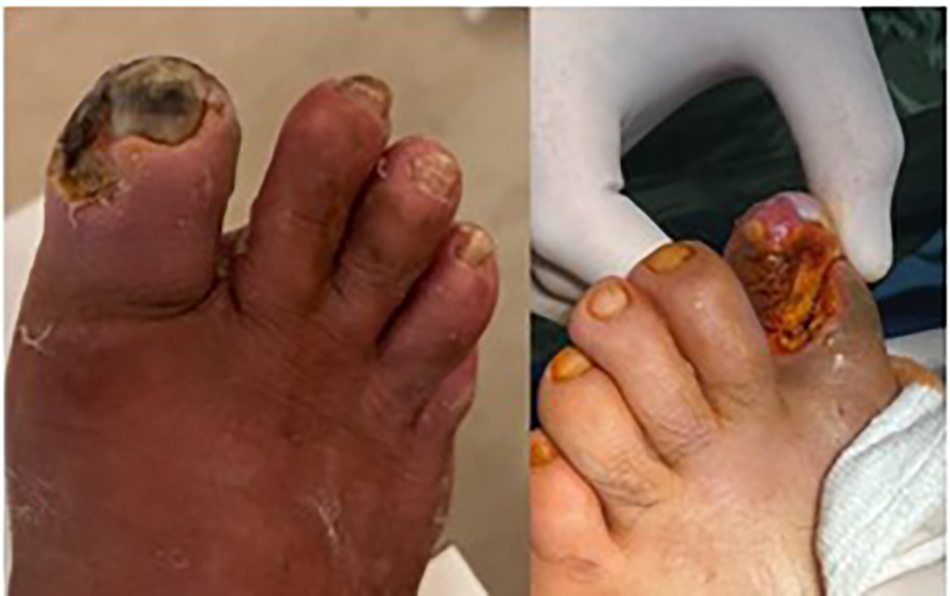
White blood cell (WBC), neutrophil, lymphocyte, and platelet counts; erythrocyte sedimentation rate (ESR); and C-reactive protein (CRP), albumin, creatinine, total protein, urea, and HbA1c levels were evaluated between groups. Smoking habit, PAD, and chronic renal failure presence were also compared between groups. Foot wounds were classified according to the Wagner classification [1]. The decision and level of amputation were evaluated with the multidisciplinary team approach (orthopedic surgeons, endocrinologists, infectious diseases specialists, and cardiovascular surgeons) [8]. Depending on the condition of the ulcer and the bone, one or more metatarsals and toes were amputated to try to preserve the stepping mechanism of the foot (Fig. 1). All of the surgical procedures were performed at a single center by different teams and surgeons according to the same clinical protocols.
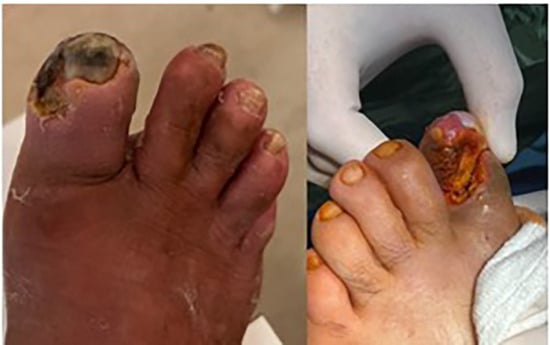
Figure 1.
Diabetic wounds of the hallux.
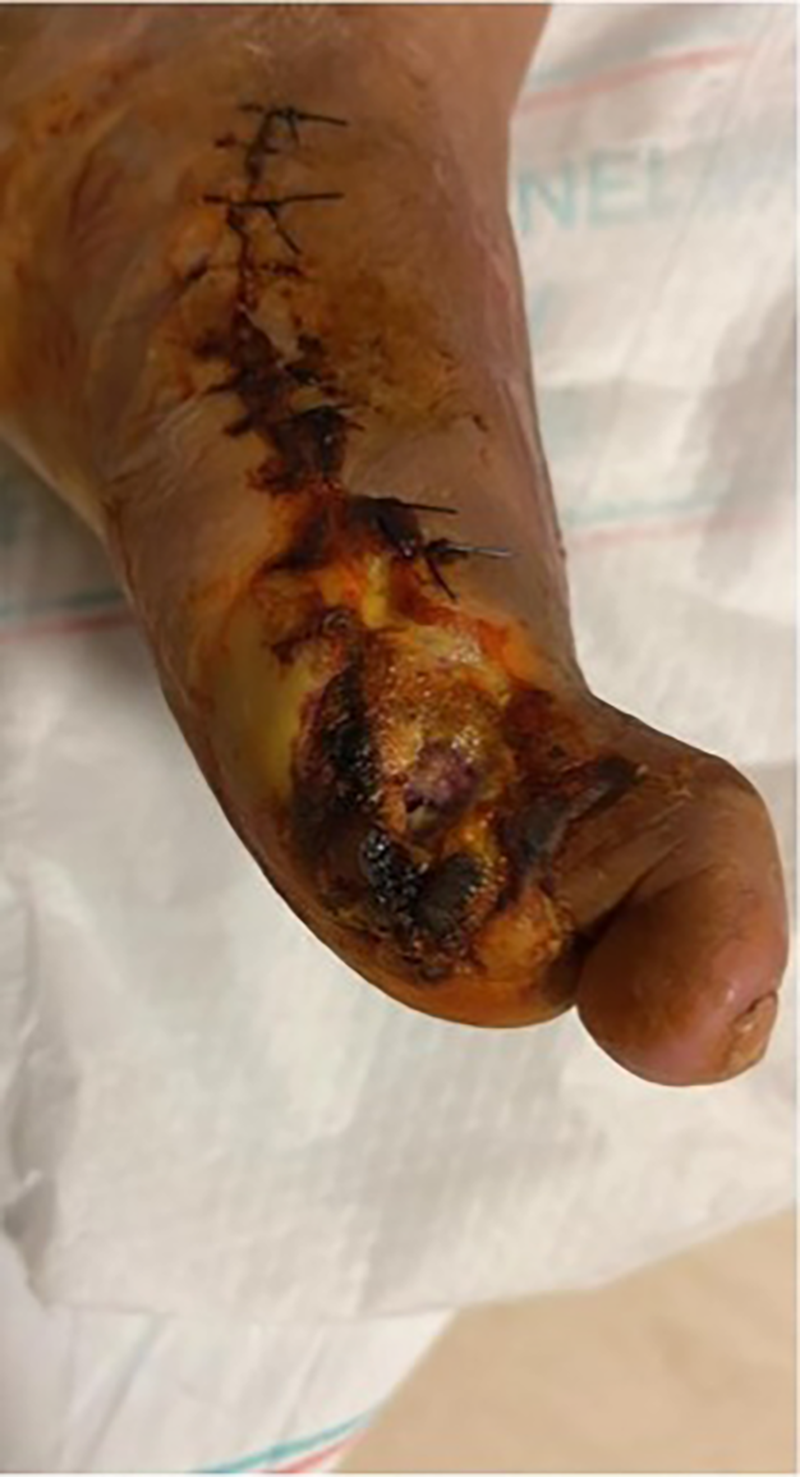
Patients were considered for a revision surgery if they had at least one of the following with positive acute phase reactants: an aseptically obtained positive wound culture, abscess or purulent drainage from the surgical site, and infection symptoms such as fever, pain, swelling, erythema, or heat (Fig. 2). Removal of bony surface at any level with debridement of the wound was considered reamputation [9]. We considered toe amputation as amputation at any level of the phalanx or at the level of the metatarsophalangeal joint. Transmetatarsal amputation included amputation at any level of the metatarsus. Patients were divided into two groups: single toe and metatarsal amputations (group 1) and multiple toe and metatarsal amputations (group 2).
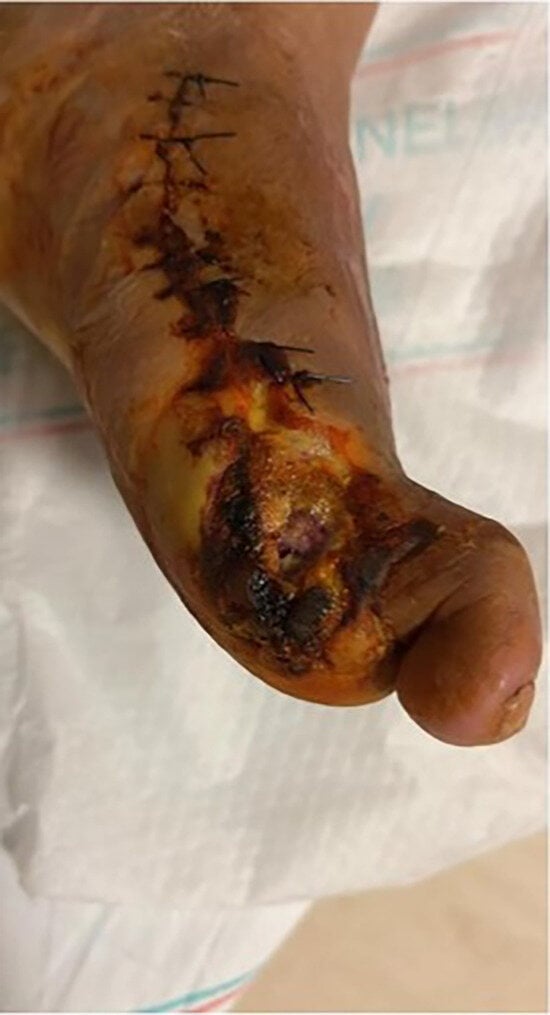
Figure 2.
Postoperative first-ray amputation, reconsidered for reamputation.
Severe diabetic patients who underwent amputation were categorized according to the Infectious Diseases Society of America. Patients were empirically treated with antibiotherapy before the amputation, and according to the postamputation culture results, antibiotherapy was continued for 4 to 6 weeks. Staphylococcus aureus is the most common infection in infected wound areas, and high-dose flucloxacillin 750 mg to 1 g was administered for empirical treatment [10]. In diabetic feet with known factors, specific antibiotics were given according to the Infectious Diseases Society of America protocol (eg, piperacillin/tazobactam, metronidazole, linezolid) [11].
The data were analyzed using SPSS Statistics for Windows software (Version 23.0; IBM Corp, Armonk, New York). The distribution of the data was evaluated using the Kolmogorov-Smirnov test. The categorical data were assessed using the Pearson χ2. The parametric and nonparametric data were evaluated using the Student t test and Mann-Whitney U test, respectively. A P < .05 was considered significant for all of the analyses.
Results
We identified 166 patients (57 women and 109 men) for the study: 114 (68.7%) had a single amputation (group 1) and 52 (31.3%) had multiple amputations (group 2). The mean patient age was 58.3 years (range, 36–88 years). For group 1, the mean ± SD time to reamputation was 10.0 ± 42.0 days; for group 2, it was 9.1 ± 18.6 days, and there was no difference between groups (P = .890).
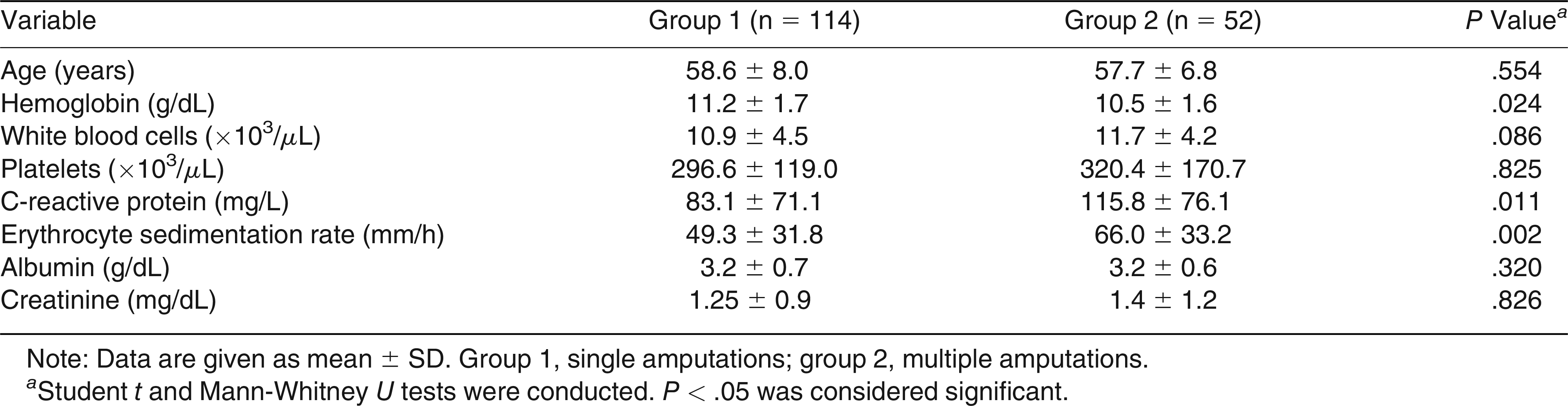
There were no differences between groups according to age and sex (Tables 1 and 2). The hemoglobin (Hb) value was found to be significantly higher in the single amputation group than in the multiple amputations group. Levels of CRP and ESRs were found to be significantly higher in the multiple amputations group. Although WBC counts were high in the multiple amputations group, no significant value was obtained statistically. Albumin levels and platelet counts in both groups were found to be below normal values; there was no significant difference between groups (P = .825 and P = .320, respectively) (Table 2).

Table 1.
Comparison of Qualitative Data Between Groups
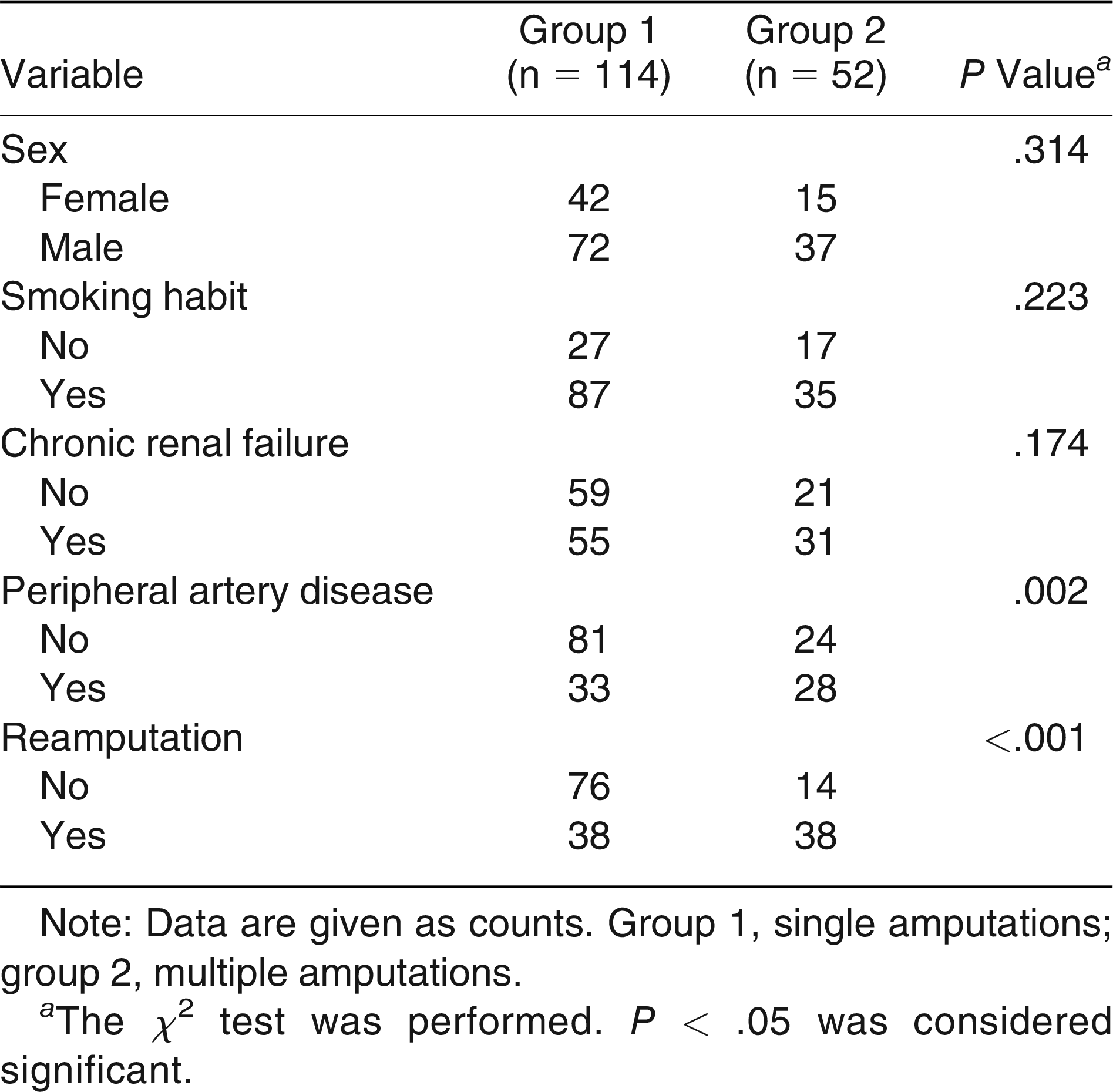
Table 2.
Comparison of Age and Laboratory Results Between Groups
There were no differences between groups according to smoking habit and chronic renal failure presence (Table 1). It was observed that there were significantly more patients with PAD in group 2 (P < .002). There was a smoking habit in most patients who went on to reamputation, but no statistically significant difference between groups was obtained.
After wound healing was achieved with appropriate physiotherapy, prosthetic planning with orthotists and prosthetists occurred 6 weeks later. It was observed that 122 patients (73%) used a prosthesis after amputation. Prostheses were made by the hospital's orthotics and prosthetics department as thumb prostheses and prostheses that take the amputated toe together with the thumb in multiple amputations.
Discussion
Diabetic foot ulcers and amputations are associated with high rates of morbidity and mortality. They significantly affect an individual's quality of life and have a heavy effect on their financial and psychologic well-being [12]. In addition, it was observed that the relatives of the patients had psychological difficulties during the amputation and treatment period in the hospital. As in previous studies, when the laboratory values were evaluated, we found that the increases in CRP level, ESR, and WBC count are important markers of reamputation. It is also obvious that chronic renal failure, PAD, and smoking also contributed to this progression.
Amputations in diabetic patients have many risk factors, including resistant wound healing, infections, inadequate blood glucose regulation, and inadequate wound care. It is essential to perform the amputation in a function-preserving manner as much as possible. Reamputation despite preservation of function is due to these risk factors. Distal amputations also seem to provide convenience to the patient in prosthesis use. However, healing and closure of the amputation site is more difficult.
Doerks et al [13] stated that the propulsive contribution of the area under the hallux increases by approximately 64.6% in fast walking compared with slow walking, and this increase is higher than the area under the first ray and toes. The results suggest that an adequate assistive device is needed to compensate for deficiencies in the propulsion phase even in cases of hallux amputation [13]. Aprile et al [14] compared patients who underwent ray amputation with nonamputees and showed decreased walking speed, increased ankle variability, and lower knee and hip range of motion values. Their study results show that gait biomechanics in diabetic patients with first-ray amputation are abnormal, probably owing to the severity of diabetes and the absence of the push-off phase provided by the hallux [14]. It has been reported that the prosthesis used after hallux amputations is more effective in taking the load and establishing balance, thus reducing reamputation due to osteomyelitis, which develops after ray amputation or metatarsal amputation involving the thumb [15]. Therefore, the level of amputation should be determined carefully.
Although the rate of reamputation among diabetic and nondiabetic patients varies in the literature, it has been estimated to range from 20% and 60% [16,17]. Especially in distal amputations, there are problems in wound healing and reamputation, such as toe or ray amputation [18]. Previous studies have shown that deterioration of foot biomechanics, change in load distribution, and the presence of neuropathy after amputation increase reamputation rates [19,20]. Izumi et al [21] found that the rate of distal toe amputations leading to reamputation increases over the years. According to the present study, the multiple toe amputation group had a higher risk of reamputation compared with the single toe amputation group. The reason the present reamputation rates are higher than those in the study by Izumi et al [21] (36%) is that we did not exclude patients who underwent reamputation at the same level, as in the study by Speer et al [22]. The mean time to reamputation in the multiple amputation group was 76 weeks, and 73% used a prosthesis after amputation. In the study by Kono and Muder [23], the rate of reamputation at 6 months was shown to be 78.9%, in parallel with the present study.
Many parameters should be evaluated when assessing toe amputations. The possibility of reamputation carries a high risk. Therefore, infection, serum parameters, renal diseases, PAD, CRP level, duration of diabetes, hypertension, diabetic neuropathy, hematocrit value, and ankle-arm indices should be considered in patients undergoing amputation due to diabetic foot ulcer [24]. In the study by Czerniecki et al [25], it was found that albumin and platelet values were low in diabetic feet undergoing reamputation. In the present study, no significant difference was observed when both groups were compared.
In the study by Jeon et al [26], it was observed that if these risk factors were found to be significantly lower, the diabetic foot could heal without amputation. In the study by Acar and Kacıra [27], diabetic neuropathy, male sex, duration of diabetes, and smoking habit increase the rate and probability of amputation and reamputation. Adler et al [28] and Nerone et al [29] showed that smoking is not associated with amputation. It was stated that the ease of wound formation and the difficulty of wound healing were independent of smoking. In the present study, most of the patients had a smoking habit and smoked at some point in their lives (84%). Contrary to the literature, the effect of smoking on progression to reamputation was not statistically significant, and this has not been associated with amputation. Studies that include the number of cigarettes smoked per day and years of smoking will be more effective in showing the effects of smoking on wound formation and amputation [30]. Younger et al [31] evaluated the risk factors for failure in forefoot amputations and found that kidney disease, type 2 diabetes, and smoking status were not significant. Their study showed that high HbA1c levels were important (7.8% for the group that recovered, 10.6% for the group that later required below-the-knee amputation) [31]. They conducted a prospective study of 776 diabetic patients, demonstrating that smoking is not a risk factor for amputation. Their study showed that risk factors for amputation include PAD, peripheral neuropathy, and previous amputation. Czerniecki et al [25] showed that smoking, renal failure, WBC count, and amputation level affect reamputation. In the present study, it was evaluated that the rate of reamputation was high in the group 2. The risk factors for multiple toe amputations are low Hb values, presence of PAD, and high CRP and ESR values. It was observed that renal diseases did not cause a significant rate of reamputation in the present study. In the multiple amputation group, 59.6% of patients experienced renal failure, and 48.2% of patients in the single amputation group experienced renal failure. Although group 2 had a higher renal failure rate, it was not statistically significant. A combination of comorbidities such as PAD, smoking habit, unregulated diabetes, lack of self-care features, and unstable psychological state would increase the risk of reamputation of the same segment or upper levels [31,32]. Although the WBC count was high in both groups, it was not statistically significant.
According to Kono and Muder [23] the treatment of patients who use antibiotics for a short period (eg, ≤2 weeks) in amputation cases includes potential benefits such as lower cost, lower risk of complications associated with intravenous catheterization, and lower risk of adverse effects associated with antibiotic therapy. However, there are publications supporting the standard antibiotic therapy for 4 to 6 weeks as a risk factor for reamputation due to osteomyelitis, diabetic foot ulcers, the infection process of diabetic wound amputations, internal organ damage, and microvascular damage [33,34,35]. In the present study, empirical treatment with ampicillin/sulbactam was initiated because of wound site discharge and open wound site, and a culture sample was obtained at the same time. After evaluation by the infectious diseases and endocrinology departments, intravenous or oral antibiotics were started according to the sensitivity of the pathogen in patients with positive growth in culture. Patients with fungal growth in culture were also given broad-spectrum antifungal drugs. These patients underwent reamputation if the antibiotics given for 3 weeks did not show any effect at the wound site. With the antibiotherapy protocol that was given to patients, we aimed to reduce costs and hospitalization durations. However, the inadequate response of patients’ conditions to this treatment lead us to question the antibiotherapy protocol. In the previous study by Gariani et al [36], diabetic patients with amputated limbs were postoperatively given antibiotics for 3 weeks in one group and for 6 weeks in the other group. Similar remission and cure rates were found between the groups [36. Multicenter studies have been conducted in recent years to ensure that antibiotic use is effective and cost reduction is achieved. Waibel et al [37] showed that patients with diabetic foot osteomyelitis who were given 6 weeks of antibiotic therapy had similar rates of improvement as those given 3 weeks of antibiotic therapy. In this study, it was shown that the use of antibiotics for 3 weeks instead of 6 weeks in patients undergoing reamputation significantly reduced the cost. However, we planned to review the empirical antibiotherapy protocol to reduce the rate of reamputation despite giving antibiotics according to culture. In our clinic, according to cost-effective planning, antibiotherapy protocol duration is planned to be changed to 6 weeks after culture sensitivity reports. For centers with high reamputation rates, antibiotherapy should be revised according to new publications, with faster culture medium growth rate and specific antibiotherapy as soon as possible to minimize the rate of reamputation.
Studies of the contribution of first- and fifth-ray foot amputations to axial foot loading are few, and future foot-loading analysis studies for postamputation prosthesis will contribute significantly to the literature. In studies of hallux amputation and amputations of other digits, it has been shown that 60% of the load is transferred from the hallux to other digits and the metatarsus [38.
In a multicenter systematic study by Goodall et al [39], diabetic wound care education helped increase patient awareness and decrease the rates of discharge at the wound site, osteomyelitis, and amputation. Thus, it also reduced the economic burden by providing wound palliation in the first step. By strengthening primary health care services and patients' smoking cessation, sugar regulation, and compliance with diabetes treatment and increasing personal hygiene and education, it is clear that diabetic complications are preventable [40].
Limitations of this study when evaluating patient data can include the absence of analyses for confounding variables, effect modification, and exposure interaction terms, as well as the lack of sensitivity analyses that could have been used to determine the resistance of findings to the potential influence of unmeasured variables. Because there were different surgical teams in the same clinic, we could not standardize the initial amputation and reamputation. Although it was the same surgical protocol, the intraoperative experience and skills of the different surgeons can be seen as a limiting factor. The specific type and duration of antibiotics for infected patients have not been well documented. The presence and prevalence of peripheral neuropathy have not been recorded. Similarly, there has been no regular flow meter recording for those with PAD due to a lack of standardized examination and documentation in patient records. In addition, the number of patients, the retrospective nature, the single-center design, and the limited number of parameters can be considered limitations of this study.
Conclusions
It is difficult to heal toe wounds in diabetic feet. There is a very high probability of reamputation after amputation. Having PAD will accelerate reamputation and increase its rate. High CRP level and ESR and low Hb level also increase reamputation rates. Wound care and antibiotic therapy after primary amputation play an important role in preventing reamputation.
Financial Disclosure
None reported.
Conflict of Interest
None reported.
References
- Murdoch, DP; Armstrong, DG; Dacus, JB; et al. The natural history of great toe amputations. J Foot Ankle Surg 1997, 36, 204. [Google Scholar]
- Beaulieu, RJ; Grimm, JC; Lyu, H; et al. Rates and predictors of readmission after minor lower extremity amputations. J Vasc Surg 2015, 62, 101. [Google Scholar]
- Rahaman, HS; Jyotsna, VP; Sreenivas, V; et al. Effectiveness of a patient education module on diabetic foot care in outpatient setting: an open-label randomized controlled study. Indian J Endocrinol Metab 2018, 22, 74. [Google Scholar]
- Al-Kaabi, JM; Al, MF; Cragg, P; et al. Illiteracy and diabetic foot complications. Prim Care Diabetes 2015, 9, 465. [Google Scholar]
- Smith, RG. Validation of Wagner's classification: a literature review. Ostomy Wound Manage 2003, 49, 54. [Google Scholar]
- Liu, R; Petersen, BJ; Rothenberg, GM; et al. Lower extremity reamputation in people with diabetes: a systematic review and meta-analysis. BMJ Open Diabetes Res Care 2021, 9, e002325. [Google Scholar]
- Jupiter, DC; LaFontaine, J; Barshes, N; et al. Transmetatarsal and minor amputation versus major leg amputation: 30-day readmissions, reamputations, and complications. J Foot Ankle Surg 2020, 59, 484. [Google Scholar]
- Boffeli, TJ; Thompson, JC. Partial foot amputations for salvage of the diabetic lower extremity. Clin Podiatr Med Surg 2014, 31, 103. [Google Scholar]
- Michelsson, O; Tukiainen, E. Minor forefoot amputations in patients with diabetic foot ulcers. Foot Ankle Clin 2014, 27, 671. [Google Scholar]
- Barwell, ND; Devers, MC; Kennon, B; et al. Diabetic foot infection: antibiotic therapy and good practice recommendations. Int J Clin Pract 2017, 71. [Google Scholar]
- Lipsky, BA; Berendt, AR; Deery, HG; et al. Diagnosis and treatment of diabetic foot infections. Clin Infect Dis 2004, 39, 885. [Google Scholar]
- Jodheea-Jutton, A; Hindocha, S; Bhaw-Luximon, A. Health economics of diabetic foot ulcer and recent trends to accelerate treatment. The Foot 2022, 52, 101909. [Google Scholar]
- Doerks, F; Riedel, L; Einfeldt, AK; et al. Contribution of various forefoot areas to push-off peak at different speeds and slopes during walking. Gait Posture 2024, 108, 264. [Google Scholar]
- Aprile, I; Galli, M; Pitocco, D; et al. Does first ray amputation in diabetic patients influence gait and quality of life? J Foot Ankle Surg 2018, 57, 44. [Google Scholar]
- Skoutas, D; Papanas, N; Georgiadis, GS; et al. Risk factors for ipsilateral reamputation in patients with diabetic foot lesions. Int J Low Extrem Wounds 2009, 8, 69. [Google Scholar]
- Honert, EC; Bastas, G; Zelik, KE. Effect of toe joint stiffness and toe shape on walking biomechanics. Bioinspir Biomim 2018, 13, 066007. [Google Scholar]
- Thorud, JC; Plemmons, B; Buckley, CJ; et al. Mortality after nontraumatic major amputation among patients with diabetes and peripheral vascular disease: a systematic review. J Foot Ankle Surg 2016, 55, 591. [Google Scholar]
- Thorud, JC; Jupiter, DC; Lorenzana, J; et al. Reoperation and reamputation after transmetatarsal amputation: a systematic review and meta-analysis. J Foot Ankle Surg 2016, 55, 1007. [Google Scholar]
- Kanade, RV; Van Deursen, RWM; Harding, KG; et al. Investigation of standing balance in patients with diabetic neuropathy at different stages of foot complications. Clin Biomech 2008, 23, 1183. [Google Scholar]
- Hastings, MK. Acquired midfoot deformity and function in individuals with diabetes and peripheral neuropathy. Clin Biomech 2016, 32, 261. [Google Scholar]
- Izumi, Y; Satterfield, K; Lee, S; et al. Risk of reamputation in diabetic patients stratified by limb and level of amputation: the 10-year observation. Diabetes Care 2006, 29, 566. [Google Scholar]
- Speer, CG; Rendos, NK; Davis, CE. Reoperation, reamputation, and new ulceration following complete or partial toe amputation among diabetic and non-diabetic patients. Diabetes Res Clin Pract 2021, 179, 109008. [Google Scholar]
- Kono, Y; Muder, RR. Identifying the incidence of and risk factors for reamputation among patients who underwent foot amputation. Ann Vasc Surg 2012, 26, 1120. [Google Scholar]
- Senneville, E; Robineau, O. Treatment options for diabetic foot osteomyelitis. Expert Opin Pharmacother 2017, 8, 759. [Google Scholar]
- Czerniecki, JM; Thompson, ML; Littman, AJ; et al. Predicting reamputation risk in patients undergoing lower extremity amputation due to the complications of peripheral artery disease and/or diabetes. J Br Surg 2019, 106, 1026. [Google Scholar]
- Jeon, BJ; Choi, HJ; Kang, JS; et al. Comparison of five systems of classification of diabetic foot ulcers and predictive factors for amputation. Int Wound J 2017, 14, 537. [Google Scholar]
- Acar, E; Kacıra, BK. Predictors of lower extremity amputation and reamputation associated with the diabetic foot. J Foot Ankle Surg 2017, 56, 1218. [Google Scholar]
- Adler, AI; Boyko, EJ; Ahroni, JH; et al. Lower-extremity amputation in diabetes: the independent effects of peripheral vascular disease, sensory neuropathy, and foot ulcers. Diabetes Care 1999, 22, 1029. [Google Scholar]
- Nerone, VS; Springer, KD; Woodruff, DM; et al. Reamputation after minor foot amputation in diabetic patients: risk factors leading to limb loss. J Foot Ankle Surg 2013, 52, 184. [Google Scholar]
- Häller, TV; Kaiser, P; Kaiser, D; et al. Outcome of ray resection as definitive treatment in forefoot infection or ischemia: a cohort study. J Foot Ankle Surg 2020, 59, 127. [Google Scholar]
- Younger, AS; Awwad, MA; Kalla, TP; et al. Risk factors for failure of transmetatarsal amputation in diabetic patients: a cohort study. Foot Ankle Int 2009, 30, 1177. [Google Scholar]
- Nerone Vincent, S. Reamputation after minor foot amputation in diabetic patients: risk factors leading to limb loss. J Foot Ankle Surg 2013, 52, 184. [Google Scholar]
- Kaiser, P. Revision after total transmetatarsal amputation. J Foot Ankle Surg 2019, 58, 1171. [Google Scholar]
- Endoh, S. Risk factors for in-hospital mortality and reamputation following lower limb amputation. Prog Rehabil Med 2017, 2, 20170015. [Google Scholar]
- Torbjörnsson, E. Risk factors for reamputations in patients amputated after revascularization for critical limb-threatening ischemia. J Vasc Surg 2021, 73, 258. [Google Scholar]
- Gariani, K; Pham, TT; Kressmann, B; et al. Three weeks versus six weeks of antibiotic therapy for diabetic foot osteomyelitis: a prospective, randomized, noninferiority pilot trial. Clin Infect Dis 2021, 73, e1539. [Google Scholar]
- Waibel, F; Berli, M; Catanzaro, S; et al. Optimization of the antibiotic management of diabetic foot infections: protocol for two randomized controlled trials. Trials 2020, 21, 54. [Google Scholar]
- Dai, W; Li, Y; Huang, Z; et al. Predictive factors and nomogram to evaluate the risk of below-ankle re-amputation in patients with diabetic foot. Curr Med Res Opin 2022, 38, 1823. [Google Scholar]
- Goodall, RJ; Ellauzi, J; Tan, MK; et al. A systematic review of the impact of foot care education on self efficacy and self care in patients with diabetes. Eur J Vasc Endovasc Surg 2020, 60, 282. [Google Scholar]
- Yammine, K; Honeine, M; Assi, C. Should we resect more proximally? outcomes of toe amputation versus ray resection in patients with infected diabetic ulcers and osteomyelitis: a preliminary study and new treatment algorithm. Foot Ankle Surg 2023, 29, 593. [Google Scholar]
© 2025 American Podiatric Medical Association