Body Mass and Foot Dominance Disparities in the Foot Plantar Pressure Parameters of Older Women

Abstract
Methods
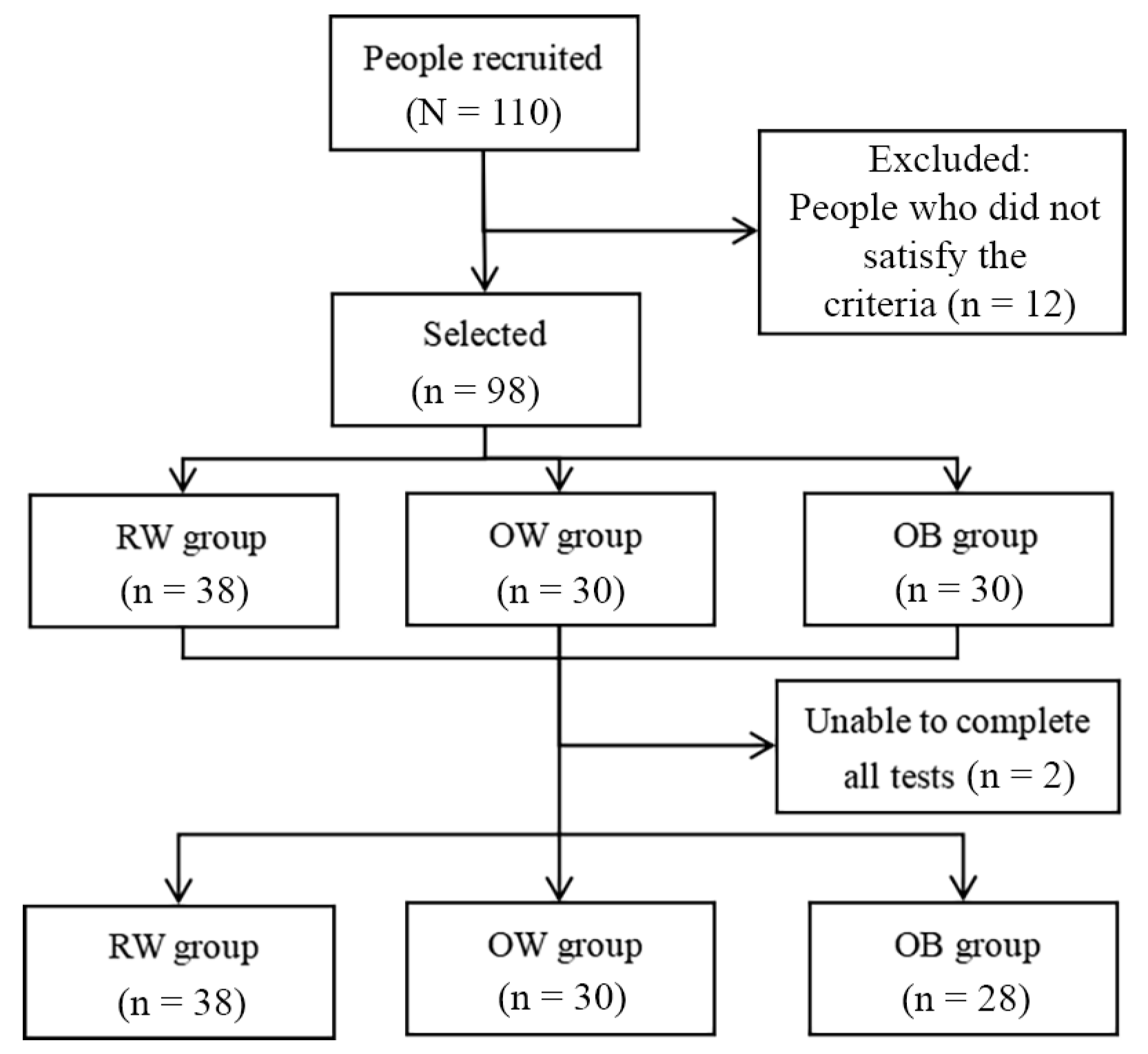
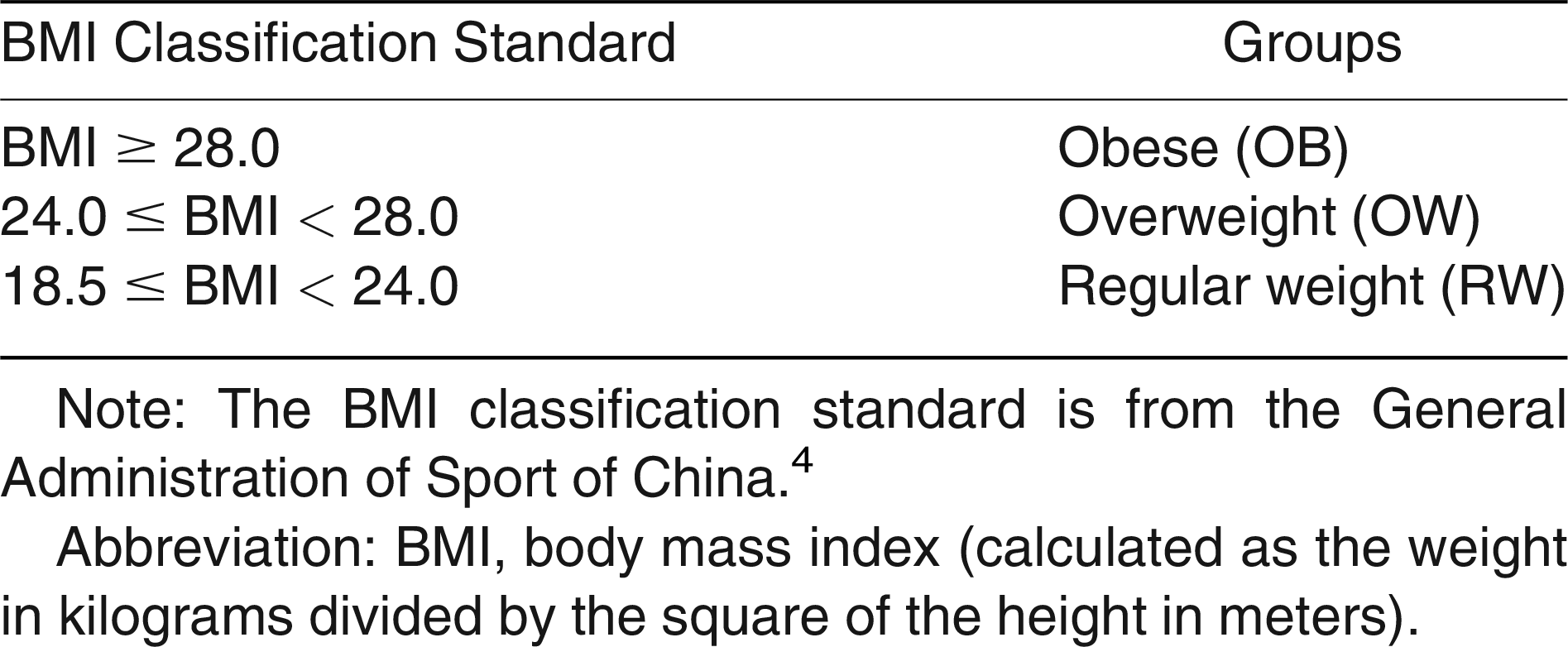
Participants


Test Time and Place
Instrument and Measures
Measures of Basic Characteristics of Participants.
Body Composition.
Instrumental Activities of Daily Living.
First Foot when Walking.
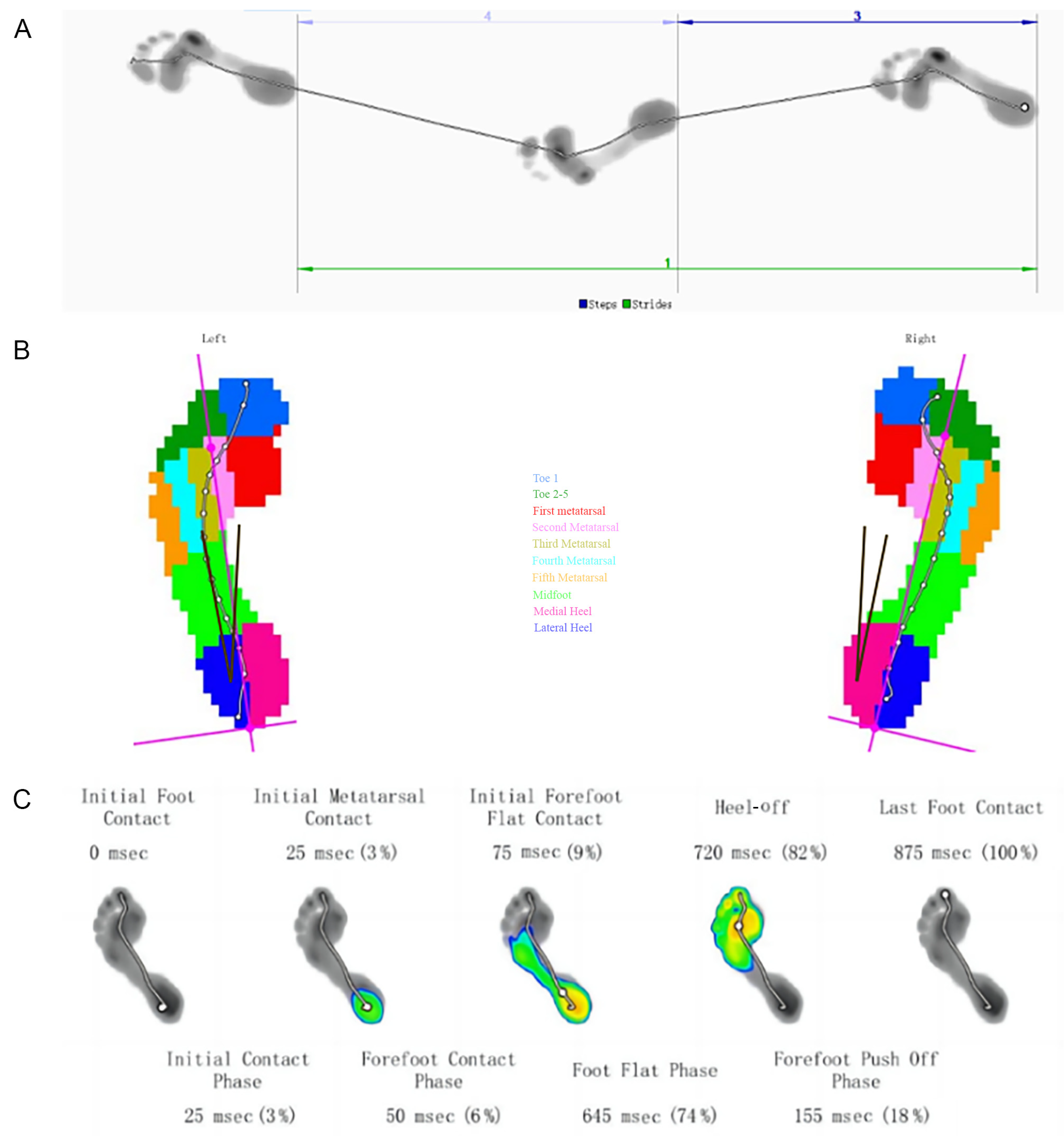
Measure of Foot Plantar Pressure.

Test Requirements.
Observed Parameters.
Risk Analysis.
Foot Axis Analysis.
Single-Foot Timing Analysis.
Plantar Pressure Analysis.
Statistical Analysis
Results
Descriptive Statistics

Foot Plantar Pressure
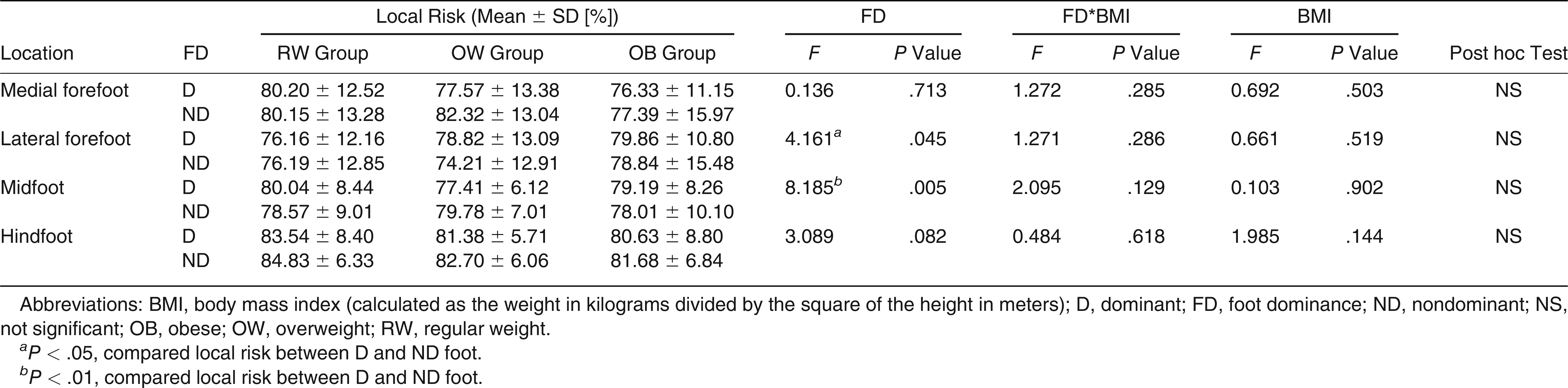
Local Risk.
Foot Axis Parameters.

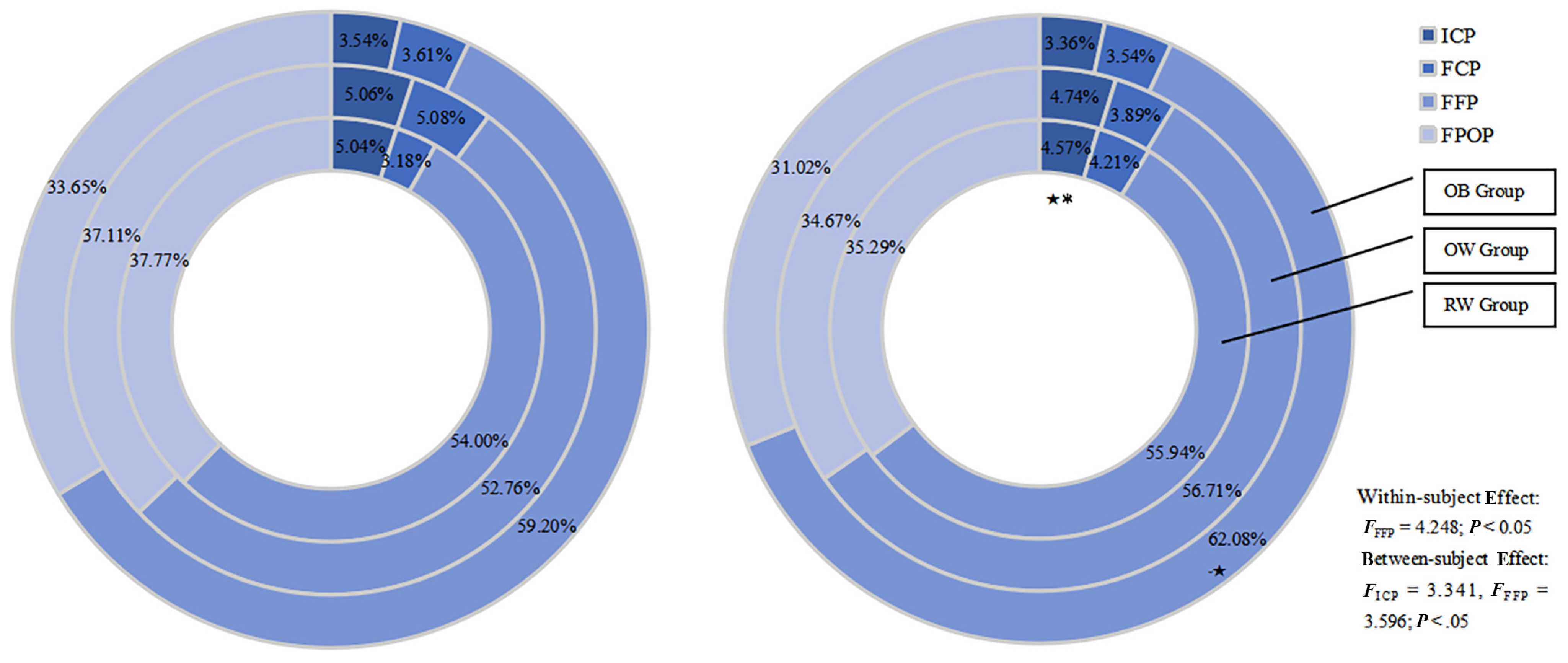
Single-Foot Timing

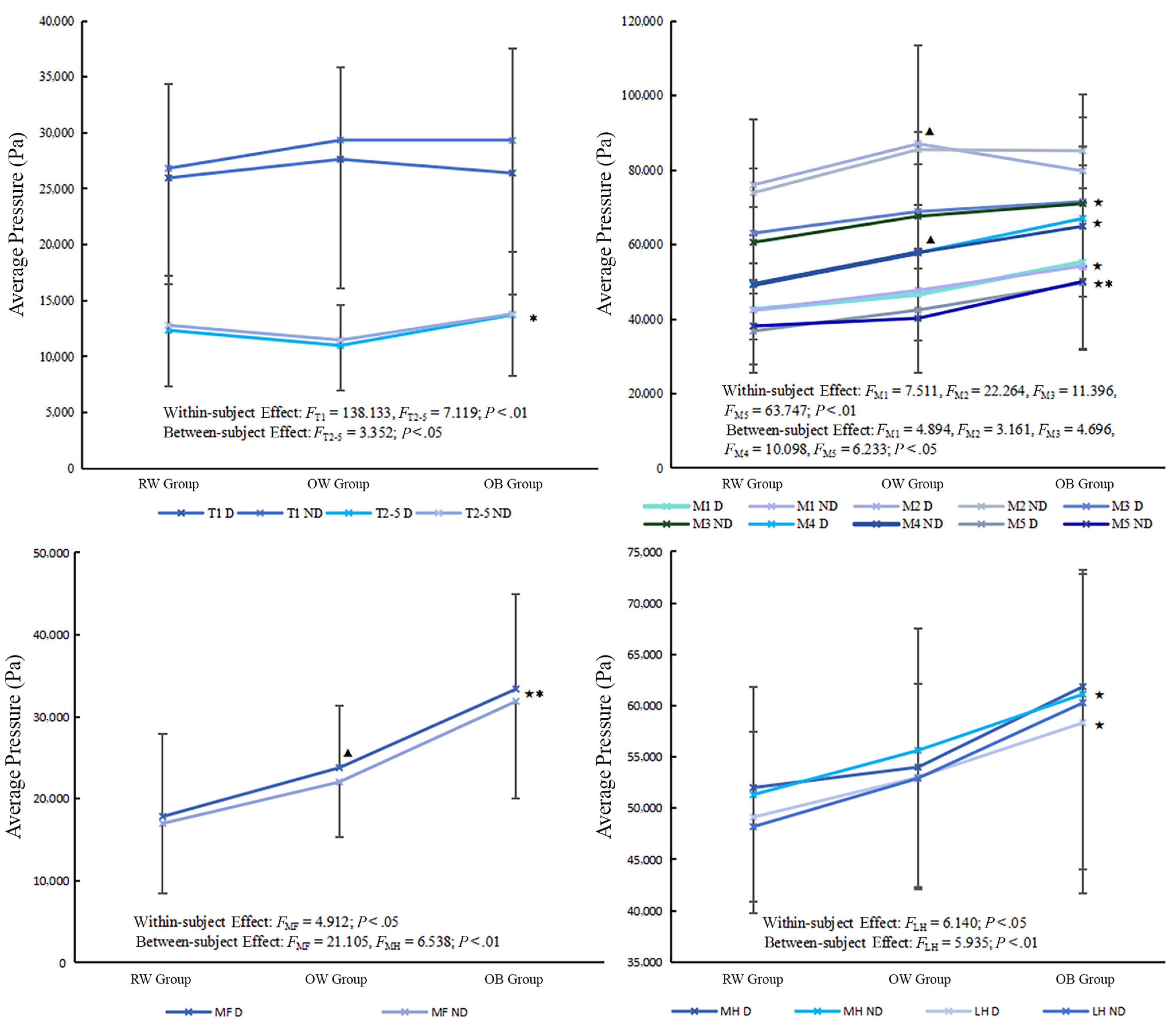
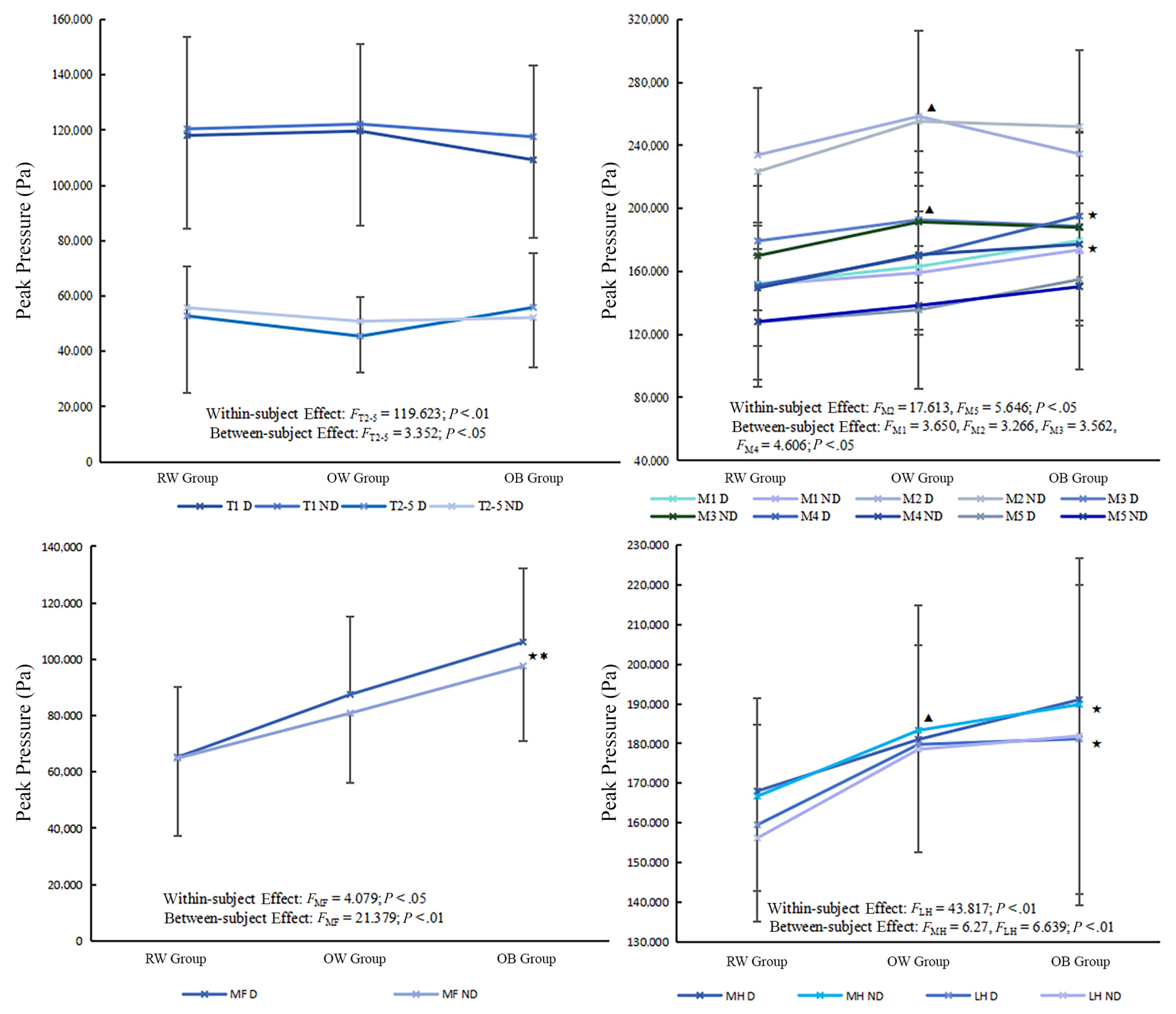
Average Pressure and Peak Pressure Parameters.


Discussion
Conclusions
Acknowledgment
Financial Disclosure
Conflict of Interest
Data Availability
References
- World Health Organization, Getting Ready for the Decade of Healthy Ageing 2021-2030. In Decade of Healthy Ageing: Baseline Report - Summary; World Health Organization: Geneva; 2021; p. 4.
- World Health Organization, Executive Summary,” in Decade of Healthy Ageing; Baseline Report; p. xiii. World Health Organization; Geneva; 2020.
- Chen, X; Giles, J; Yao, Y; et al. The path to healthy ageing in China: a Peking University–Lancet Commission. Lancet 2022, 400, 1967. [Google Scholar]
- China Institute of Sport Science. The 5th national physical fitness monitor bulletin [in Chinese]. Available at: https://www.ciss.cn/tzgg/info/2021/32030.html (accessed on 31 December 2021).
- Xu, ZQ. Interpretation of the compilation process and results of the Empirical Incidence Table of Accidental Injury in China Insurance Industry (2021) [in Chinese]. Insurance Theory Pract 2022, 5, 17. [Google Scholar]
- World Health Organization. Falls. Available at: https://www.who.int/news-room/fact-sheets/detail/falls (accessed on 26 May 2021).
- Liu, M; Zhou, ZY; Ma, XW; et al. Effect of circuit training on muscle strength of lower limbs and balance ability in overweight and obese elderly women [in Chinese]. J Wuhan Inst Phys Educ 2021, 55, 95. [Google Scholar]
- World Health Organization, Care Dependence and Loss of Healthy Life. In China Country Assessment Report on Ageing and Health; p. 9. WHO Press; Geneva; 2016.
- Auyeung, TW; Lee, SW; Leung, J; et al. Age-associated decline of muscle mass, grip strength and gait speed: a 4-year longitudinal study of 3018 community-dwelling older Chinese. Geriatr Gerontol Int 2014, 14, 76. [Google Scholar]
- Studenski, S; Perera, S; Patel, K. Gait speed and survival in older adults. JAMA 2011, 305, 50. [Google Scholar]
- Hicks, GE; Shardell, M; Alley, DE; et al. Absolute strength and loss of strength as predictors of mobility decline in older adults: the InCHIANTI study. J Gerontol A Biol Sci Med Sci 2012, 67, 66. [Google Scholar]
- Lima-Costa, MF; de Andrade, FB; de Souza, PRB; et al. The Brazilian Longitudinal Study of Aging (ELSI-Brazil): objectives and design. Am J Epidemiol 2018, 187, 1345. [Google Scholar]
- Aliberti, MJR; Bertola, L; Szlejf, C; et al. Validating intrinsic capacity to measure healthy aging in an upper middle-income country: findings from the ELSI-Brazil. Lancet Reg Health Am 2022, 12, 100284. [Google Scholar]
- World Health Organization, Healthy Life Expectancy and Burden of Disease. In World Health Statistics 2022: Monitoring Health for the SDGs, Sustainable Development Goals; p. 21. World Health Organization; Geneva; 2022.
- National Center for Chronic and Noncommunicable Disease Control and Prevention: “Abstract. In Report on the Status of Elderly Health: Chronic Disease Risk Factor Surveillance in China; p. 34. Peoples Medical Publishing House; Beijing; 2012.
- Muchna, A; Najafi, B; Wendel, CS; et al. Foot problems in older adults: associations with incident falls, frailty syndrome, and sensor-derived gait, balance, and physical activity measures. JAPMA 2018, 108, 126. [Google Scholar]
- Hallemans, A; de Clercq, D; van Dongen, S; et al. Changes in foot-function parameters during the first 5 months after the onset of independent walking: a longitudinal follow-up study. Gait Posture 2006, 3, 142. [Google Scholar]
- Razak, AH; Zayegh, A; Begg, RK; et al. Foot plantar pressure measurement system: a review. Sensors (Basel) 2012, 12, 9884. [Google Scholar]
- Burnfield, JM; Few, CD; Mohamed, OS; et al. The influence of walking speed and footwear on plantar pressures in older adults. Clin Biomech 2004, 19, 78. [Google Scholar]
- Mickle, KJ; Munro, BJ; Lord, SR; et al. Foot pain, plantar pressures, and falls in older people: a prospective study. J Am Geriatr Soc 2010, 58, 1936. [Google Scholar]
- Bosch, K; Nagel, A; Weigend, L; et al. From “first” to “last” steps in life: pressure patterns of three generations. Clin Biomech 2009, 24, 676. [Google Scholar]
- Liu, M; Kang, N; Wang, D; et al. Analysis of lower extremity motor capacity and foot plantar pressure in overweight and obese elderly women. Int J Env Res Pub He 2023, 20, 3112. [Google Scholar]
- Niu, WX; Wang, Y; He, Y; et al. Kinematics, kinetics, and electromyogram of ankle during drop landing: a comparison between dominant and non-dominant limb. Hum Mov Sci 2011, 30, 614. [Google Scholar]
- Menz, HB. Chronic foot pain in older people. Maturitas 2016, 91, 110. [Google Scholar]
- Neamtu, MC; Neamtu, OM; Marin, MI; et al. Morphofunctional muscle changes influence on foot stability in multiple sclerosis during gait prediction: the rehabilitation potential. J Back Musculoskelet 2018, 31, 469. [Google Scholar]
- Polk, JD; Stumpf, RM; Rosengren, KS. Limb dominance, foot orientation and functional asymmetry during walking gait. Gait Posture 2017, 52, 140. [Google Scholar]
- McGrath, R; Blackwell, TL; Ensrud, KE; et al. The associations of handgrip strength and leg extension power asymmetry on incident recurrent falls and fractures in older men. J Gerontol A Biol Sci Med Sci 2021, 76, e221. [Google Scholar]
- Matsuno, S; Yoshimura, A; Yoshiike, T; et al. Toe grip force of the dominant foot is associated with fall risk in community-dwelling older adults: a cross-sectional study. J Foot Ankle Res 2022, 15, 42. [Google Scholar]
- Yoshida, T; Ikemiyagi, F; Ikemiyagi, Y; et al. The dominant foot affects the postural control mechanism: examination by body tracking test. Acta Otolaryngol 2014, 134, 1146. [Google Scholar]
- Yoshida, T; Tanaka, T; Tamura, Y; et al. Dominant foot could affect the postural control in vestibular neuritis perceived by dynamic body balance. Gait Posture 2018, 59, 157. [Google Scholar]
- Seeley, MK; Umberger, BR; Shapiro, R. A test of the functional asymmetry hypothesis in walking. Gait Posture 2008, 28, 24. [Google Scholar]
- Wafai, L; Zayegh, A; Woulfe, J; et al. Identification of foot pathologies based on plantar pressure asymmetry. Sensors 2015, 15, 20392. [Google Scholar]
- Gao, Z; Mei, Q; Xiang, L; et al. Effects of limb dominance on the symmetrical distribution of plantar loading during walking and running. P I Mech Eng P-J Spo 2020, 236, 17. [Google Scholar]
- Willems, T; Witvrouw, E; Delbaere, K; et al. Relationship between gait biomechanics and inversion sprains: a prospective study of risk factors. Gait Posture 2005, 21, 379. [Google Scholar]
- De Cock, A; Willems, T; Witvrouw, E; et al. A functional foot type classification with cluster analysis based on plantar pressure distribution during jogging. Gait Posture 2006, 23, 339. [Google Scholar]
- Lawton, MP; Brody, EM. Assessment of older people: self-maintaining and instrumental activities of daily living. Gerontologist 1969, 9, 179. [Google Scholar]
- Ardern, CL; Taylor, NF; Feller, JA; et al. Sports participation 2 years after anterior cruciate ligament reconstruction in athletes who had not returned to sport at 1 year: a prospective follow-up of physical function and psychological factors in 122 athletes. Am J Sports Med 2015, 23, 848. [Google Scholar]
- Lindskog, J; Piussi, R; Simonson, R; et al. Lower rates of return to sport in patients with generalised joint hypermobility two years after ACL reconstruction: a prospective cohort study. BMC Sports Sci Med Rehabil 2023, 15, 100. [Google Scholar]
- Xia, C; Sun, M; Li, X; et al. Health-related quality of life and related factors among primary caregivers of children with disabilities in Shanghai, China: a cross-sectional study. Int J Environ Res Pub Health 2020, 24, 9299. [Google Scholar]
- Graf, CL. Lawton Instrumental Activities of Daily Living (IADL) Scale. Am J Nurs 2008, 8, 52. [Google Scholar]
- Siriwardhana, DD; Walters, K; Rait, G; et al. Cross-cultural adaptation and psychometric evaluation of the Sinhala version of Lawton Instrumental Activities of Daily Living Scale. PLoS One 2018, 13, e0199820. [Google Scholar]
- Xu, C; Wen, XX; Huang, L-Y; et al. Normal foot loading parameters and repeatability of the Footscan® platform system. J Foot Ankle Res 2017, 10, 30. [Google Scholar]
- Xu, C; Wen, XX; Huang, L-Y; et al. Reliability of the Footscan® platform system in healthy subjects: a comparison of without top-layer and with top-layer protocols. BioMed Res Int 2017, 2017, 2708712. [Google Scholar]
- Chan, O; O’Dowd, D; Padhiar, N; et al. High volume image guided injections in chronic Achilles tendinopathy. Disabil Rehabil 2008, 30, 1697. [Google Scholar]
- Yan, AF; Sinclair, PJ; Hiller, C; et al. Impact attenuation during weight bearing activities in barefoot vs. shod conditions: A systematic review. Gait Posture 2012, 38, 175. [Google Scholar]
- Franklyn-Miller, A; Bilzon, J; Wilson, C; et al. Can RSscan Footscan D3D software predict injury in a military population following plantar pressure assessment? a prospective cohort study. Foot 2014, 24, 6. [Google Scholar]
- Wilssens, J. Can the RSscan Footscan® system predict and reduce injuries? Footwear Sci 2009, 1, 87. [Google Scholar]
- Kirstyn, J; Ariela, RO; Schwartz, AW. Foot examination for older adults. Am J Med 2021, 134, 30. [Google Scholar]
- Reynolds, K; Williams, J; Miller, C; et al. Injuries and risk factors in an 18-day Marine winter mountain training exercise. Mil Med 2000, 165, 905. [Google Scholar][Green Version]
- Zifchock, RA; Davis, I; Hamill, J. Kinetic asymmetry in female runners with and without retrospective tibial stress fractures. J Biomech 2006, 39, 2792. [Google Scholar]
- Bredeweg, SW; Buist, I; Kluitenberg, B. Differences in kinetic asymmetry between injured and noninjured novice runners: a prospective cohort study. Gait Posture 2013, 38, 847. [Google Scholar]
- Menz, HB; Morris, ME; Lord, SR. Foot and ankle risk factors for falls in older people: a prospective study. J Gerontol A Biol Sci Med Sci 2006, 61, 866. [Google Scholar]
- Kasović, M; Štefan, L; Zvonar, M. Foot rotation and the risk of falls in older women: a cross-sectional study. PLoS One 2020, 15, e0239065. [Google Scholar]
- Yan, SH; Zhang, K; Tan, GQ; et al. Effects of obesity on dynamic plantar pressure distribution in Chinese prepubescent children during walking. Gait Posture 2013, 37, 37. [Google Scholar]
- Krähenbühl, N; Horn-Lang, T; Hintermann, B; et al. The subtalar joint: a complex mechanism. EFORT Open Rev 2017, 2, 309. [Google Scholar]
- Payne, C; Munteanu, S; Miller, K. Position of the subtalar joint axis and resistance of the rearfoot to supination. JAPMA 2003, 93, 131. [Google Scholar]
- Sadeghi, H; Allard, P; Prince, F; et al. Symmetry and limb dominance in able-bodied gait: a review. Gait Posture 2000, 12, 34. [Google Scholar]
- Young, PM; Whitall, J; Bair, WN; et al. Leg preference associated with protective stepping responses in older adults. Clin Biomech 2013, 28, 927. [Google Scholar]
- Silva, D; Gabriel, R; Moreira, M; et al. Differences in foot contact times between obese and non-obese postmenopausal women when crossing obstacles. Somatosens Mot Res 2018, 35, 170. [Google Scholar]
- Wang, Y; Watanabe, K. Limb dominance related to the variability and symmetry of the vertical ground reaction force and center of pressure. J Appl Biomech 2012, 28, 473. [Google Scholar]
- Mickle, KJ; Steele, JR. Obese older adults suffer foot pain and foot-related functional limitation. Gait Posture 2015, 42, 442. [Google Scholar]
- McNab, B; Sadler, S; Lanting, S; et al. The relationship between foot and ankle joint flexibility measures and barefoot plantar pressures in healthy older adults: a cross-sectional study. BMC Musculoskelet Dis 2022, 23, 1. [Google Scholar]
- Neri, SGR; Gadelha, AB; Correia, ALM; et al. Obesity is associated with altered plantar pressure distribution in older women. J Appl Biomech 2017, 33, 323. [Google Scholar]
- John, CT; Seth, A; Schwartz, MH; et al. Contributions of muscles to mediolateral ground reaction force over a range of walking speeds. J Biomech 2012, 45, 2438. [Google Scholar]
- Kaufman, KR; Miller, LS; Sutherland, DH. Gait asymmetry in patients with limb-length inequality. J Pediatr Orthop 1996, 16, 144. [Google Scholar]
© 2025 American Podiatric Medical Association
Share and Cite
Liu, M.; Zhang, Y.; Kang, N.; Mei, D.; Wen, E.; Wang, D.; Chen, G. Body Mass and Foot Dominance Disparities in the Foot Plantar Pressure Parameters of Older Women. J. Am. Podiatr. Med. Assoc. 2025, 115, 23210. https://doi.org/10.7547/23-210
Liu M, Zhang Y, Kang N, Mei D, Wen E, Wang D, Chen G. Body Mass and Foot Dominance Disparities in the Foot Plantar Pressure Parameters of Older Women. Journal of the American Podiatric Medical Association. 2025; 115(6):23210. https://doi.org/10.7547/23-210
Chicago/Turabian StyleLiu, Min, Yalu Zhang, Ning Kang, Donghui Mei, Erya Wen, Dongmin Wang, and Gong Chen. 2025. "Body Mass and Foot Dominance Disparities in the Foot Plantar Pressure Parameters of Older Women" Journal of the American Podiatric Medical Association 115, no. 6: 23210. https://doi.org/10.7547/23-210
APA StyleLiu, M., Zhang, Y., Kang, N., Mei, D., Wen, E., Wang, D., & Chen, G. (2025). Body Mass and Foot Dominance Disparities in the Foot Plantar Pressure Parameters of Older Women. Journal of the American Podiatric Medical Association, 115(6), 23210. https://doi.org/10.7547/23-210