


Abstract
Background: We aimed to analyze levels of knowledge and behavior regarding diabetic foot care and prevention in persons with diabetes according to the International Working Group on the Diabetic Foot (IWGDF) risk stratification system. Methods: This descriptive study included 83 persons with diabetes at different risk levels for diabetic foot ulceration (DFU) (IWGDF risk 0–3). The previously validated Patient Interpretation of Neuropathy questionnaire was used to analyze their levels of understanding of foot complications. Participants responded using a 5-point Likert scale. Results: Patients with IWGDF risk 3 knew that good circulation and absence of polyneuropathy in their feet were related to healthy feet relative to the other groups. In addition, they knew that a DFU is not painful relative to the other groups. High-risk patients knew which physical causes could affect the development of a DFU and that foot self-care and medical control could prevent DFU. Conclusions: Patients with IWGDF risk 3 knew the natural progression of diabetic foot complications and how to prevent them. Clinicians should focus their efforts on educating patients with diabetes who are at lower risk for DFU.
In 2019, 463 million people were diagnosed as having diabetes mellitus. This number is expected to rise to 578 million people in 2030 and 700 million in 2045, representing a 51% increase.[1] Diabetic foot disease affects approximately 19% to 34% of persons with diabetes.[2] Not all patients with diabetes mellitus are at risk for ulceration and its complications.[3] Data show that 25% of patients with diabetes develop a diabetic foot ulcer (DFU) in their lifetime.[4] In addition, the risk of death after 10 years in patients with diabetes and a history of DFU is twice as high as that in patients without a DFU history.[5]
Foot ulcers and related foot amputations cause an extensive burden in individuals with diabetes, health-care systems, and direct and indirect related costs.[6] Despite this finding, patients with diabetes have a lack of foot care knowledge, which is a key determinant of successful management and prevention of disease, especially long-term poor health.[7]
According to the American Diabetes Association, annual assessments of knowledge and skills are necessary for patients with diabetes.[8] Understanding the level of knowledge of patients with diabetes is important to incorporate strategies that include elements of prevention, patient and staff education, multidisciplinary treatment, and close monitoring that can reduce the burden of diabetic foot disease.[9] Previous research has indicated that it is possible for a series of relatively simple foot self-care actions to be effective in minimizing the impact of diabetic peripheral neuropathy (DPN) risk factors and thus reduce the risk of DFU occurrence.[10]
The Patient Interpretation of Neuropathy (PIN) questionnaire is a validated instrument for assessment of cognitive and emotional representations of DPN that can influence adherence to foot self-care. Patient interpretation of neuropathy scales have shown a direct association with past DFU and foot self-care behaviors.[11] The International Working Group on the Diabetic Foot (IWGDF) in the 2019 prevention guidelines state that one of the most important key elements to improving the prevention of DFUs is to identify the at-risk foot.[12] The IWGDF proposed a quantitative classification that varies from risk 0 (very low risk of DFU) to risk 3 (high risk of DFU).
To our knowledge, no research has yet evaluated whether there are differences in the diabetic foot disease knowledge of persons with diabetes with different risks of DFU according to the IWGDF guidance. Stratifying risk according to the level of knowledge based on the risk of DFU could be very useful in implementing preventive actions. Therefore, the main aim of this study was to analyze levels of knowledge and behavior regarding diabetic foot care and prevention in persons with diabetes according to the IWGDF risk stratification system.
Methods
Patients
Patients at different risk levels for DFU (IWGDF risk 0–3) who consecutively attended a specialized diabetic foot unit participated in this descriptive study between November 1, 2019, and June 30, 2021. The inclusion criteria were confirmed type 1 or type 2 diabetes and older than 18 years. The exclusion criterion was the inability to answer the questionnaire autonomously.
After institutional review board approval was obtained, patients’ medical records and clinicopathologic conditions were recorded. The study was completed following the ethical standards of the responsible committee. Informed consent was obtained from each patient. We declare that we complied with the code of ethics of the Declaration of Helsinki.[13]
Clinical Evaluation
Clinical characteristics at baseline were assessed after the patient signed informed consent on day 0. Body mass index was calculated as the weight in kilograms divided by the square of the height in meters. Clinicopathologic data, including diabetes type, hypertension, and hemoglobin A1c values, in the previous 3 months were collected. The patients’ renal, cardiac, and retinopathy status and previous minor amputations were recorded in the clinical record form from the patient’s clinical history. The DPN was diagnosed according to the inability to sense the pressure of a 10-g Semmes-Weinstein monofilament at three plantar foot sites and a vibration perception threshold greater than 25 V applied to a bony part on the dorsal side of the distal phalanx of the first toe as assessed using a biothesiometer (METEDA S.r.l., San Benedetto del Tronto, Italy).[12] Peripheral artery disease (PAD) was assessed by foot pulse palpation combined with ankle systolic pressure and systolic ankle brachial index or toe systolic pressure and toe brachial index measurement.[14]
Foot deformity was recorded in the standing position for the following conditions: claw toe, hammer toe, mallet toe, hallux abductus valgus,[15] plantar bony prominence, and rocker midfoot deformity secondary to Charcot’s neuroarthropathy.[16] Level of education was stratified into primary education, middle education, short-cycle tertiary education, and university.
After clinical evaluation, patients were classified into four different groups according to the IWGDF risk classification system[12]: 1) risk 0 (very low risk of DFU): no loss of protective sensation (LOPS) and no PAD; 2) risk 1 (low risk of DFU): LOPS or PAD; 3) risk 2 (moderate risk of DFU): LOPS + PAD or LOPS + foot deformity or PAD + foot deformity; and 4) risk 3 (high risk of DFU): LOPS or PAD, and one or more of the following: history of DFU, minor or major foot amputation, and end-stage renal disease.
PIN Questionnaire
After clinical evaluation and risk stratification, patients were asked to complete the PIN questionnaire, a reliable and valid measure of a patient´s cognitive and emotional representations of DPN affecting foot self-care.[11] The PIN questionnaire is a 39-item draft instrument stratified into 11 domains: illness identity (ID) 1, good circulation means healthy feet; ID2, accurate interpretation of neuropathy; ID3, ulcers accompanied by pain; causes (C) 1, physical causes for ulcers; C2, self/practitioner blame; timeline (TL), acute ulcer onset; cure/controllability (CC) 1, efficacy of foot self-care; CC2, practitioner-DFU control; consequences (CONS), anticipated consequences; emotions (Em) 1, worry about consequences; and Em2, anger at practitioners. The 39-item PIN questionnaire is shown in Supplemental Table 1.
The responses to each statement were scored on a 5-point Likert scale (1 = strongly disagree, 2 = disagree, 3 = uncertain, 4 = agree, and 5 = strongly agree). Depending on the domain under analyses, it can reach a different maximum final point value: ID1 (20 points), ID2 (15 points), ID3 (15 points), C1 (20 points), C2 (20 points), TL (15 points), CC1 (25 points), CC2 (15 points), CONS (20 points), Em1 (20 points), and Em2 (10 points).
Outcome Measures
The main outcome measure was to analyze whether there are any differences in the levels of knowledge and behavior regarding diabetic foot care and prevention in persons with diabetes according to the IWGDF risk stratification system.
Statistical Analyses
The assumption of normality of all of the continuous variables was verified using the Kolmogorov-Smirnov test. Normally distributed variables (Kolmogorov-Smirnov test with P ≥ .05) are reported as mean ± SD, and nonnormally distributed variables (Kolmogorov-Smirnov test with P < .05) are reported as medians (interquartile ranges). To explore differences in clinical features between the risk groups, the analysis of variance test was performed for normally distributed variables, and the χ2 test was performed for nonnormally distributed variables.
To analyze differences between IWGDF risk groups and PIN questionnaire responses, the 11 domains were analyzed separately, and a one-factor analysis of variance test was performed to explore differences between IWGDF groups and PIN questionnaire results.
A P < .05 was considered statistically significant, with confidence intervals of 95%. All of the statistical analyses were performed using IBM SPSS Statistics for Mac OS, Version 25.0 (IBM Corp, Armonk, New York).
A descriptive study of patients with diabetes and different risks of DFU[17] showed that patients with a long duration of diabetes had a proper foot care knowledge rate of 86.7%. As a relevant risk reduction, we assumed a difference in the recurrence rate of 10% in the group of patients who had appropriate diabetic foot disease knowledge based on what we considered a relevant risk reduction compared with the group of patients who did not have appropriate diabetic foot disease knowledge. With a 0.05 setting (one-sided), power of 0.80 in a ×2 analysis, and an anticipated loss to follow-up of 0%, we intended to include 83 patients.
Results
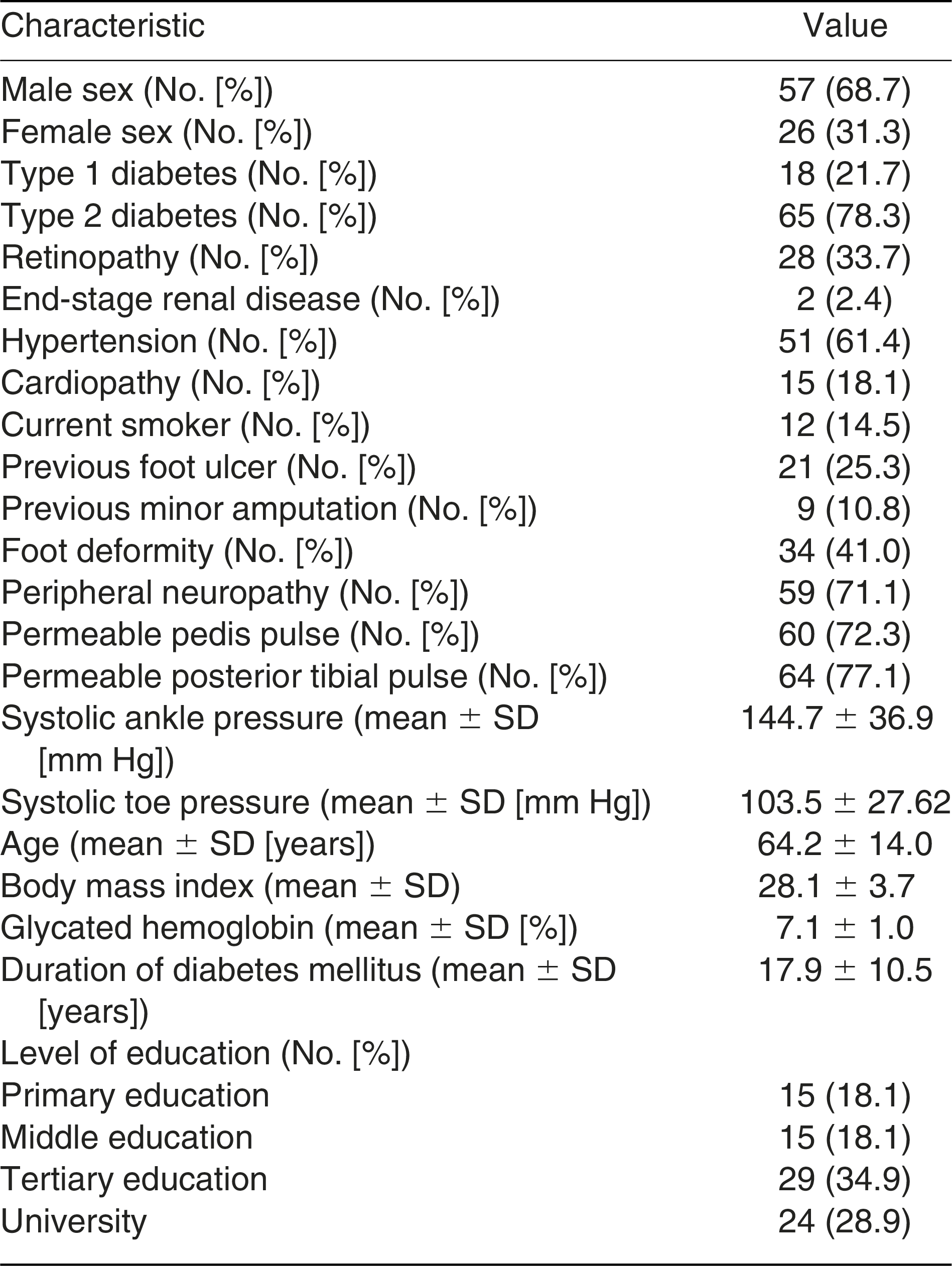
Eighty-three patients at different risk levels for DFU were included. Baseline data on demographic characteristics and diabetes complications are shown in Table 1. Of the 83 study patients, 22 (26.5%) were IWGDF risk 0, 20 (24.1%) were IWGDF risk 1, 20 (24.1%) were IWGDF risk 2, and 21 (25.3%) were IWGDF risk 3.

Table 1.
Baseline Characteristics of the 83 Study Patients
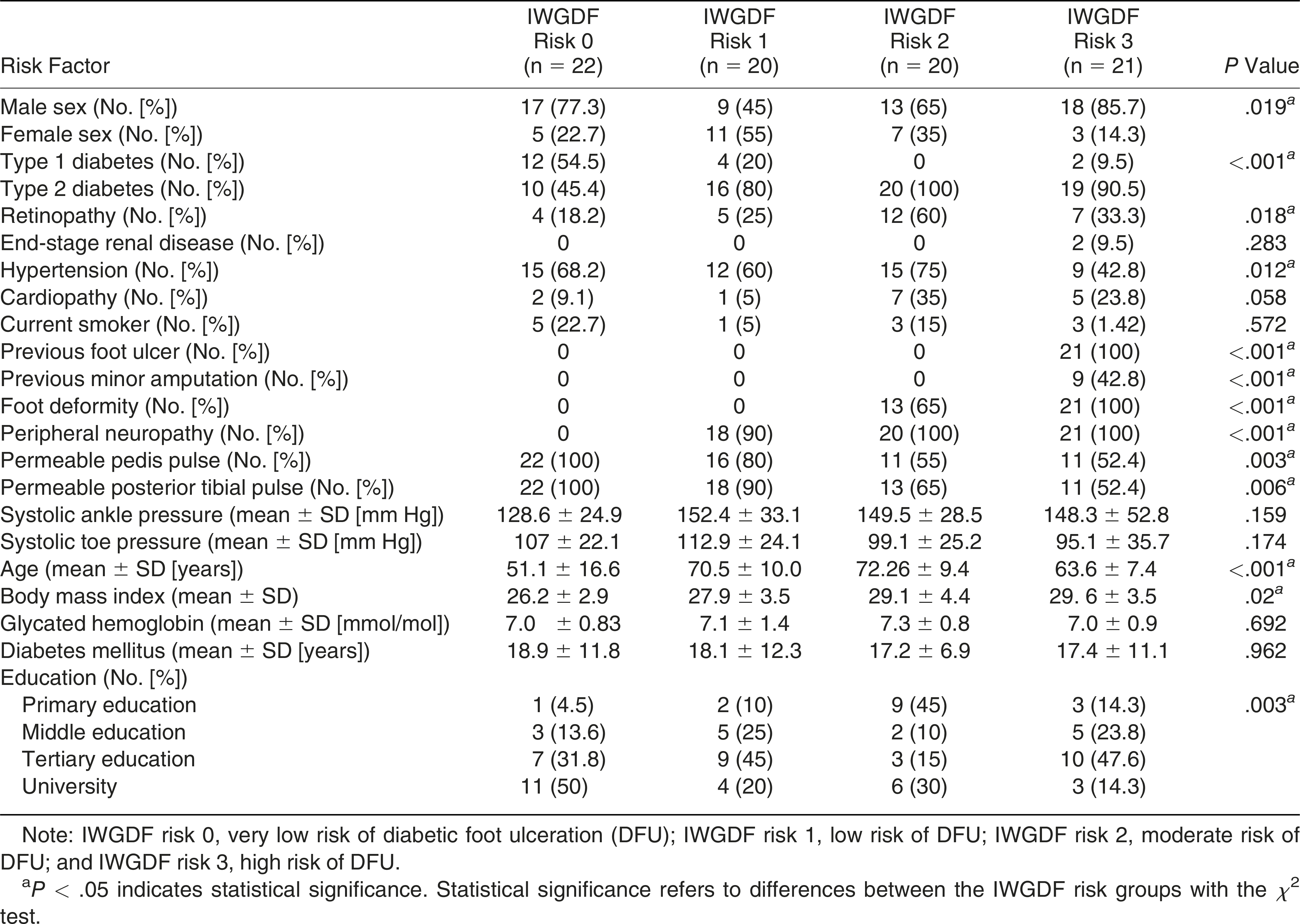
High-risk patients (IWGDF risk 3) had more previous DFUs, minor amputations, and foot deformities than the other groups. In addition, patients at high risk were older, and patients at low risk had the highest level of education. Differences between the risk factors for the risk of experiencing a DFU are shown in Table 2.
Table 2.
Associations Between the Risk Factors by International Working Group on the Diabetic Foot (IWGDF) Risk Group
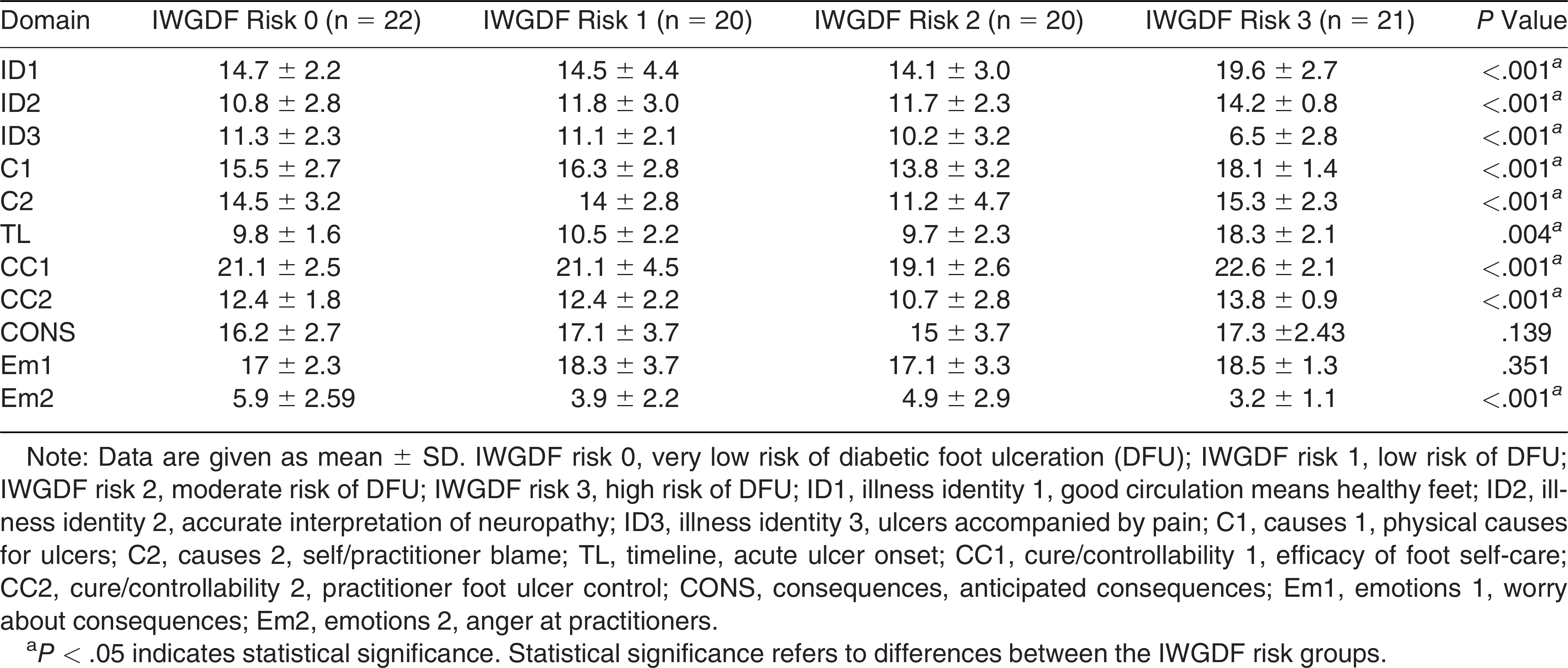
Regarding the primary outcome measure, patients with IWGDF risk 3 reported that good circulation (ID1) and absence of DPN in their feet (ID2) were related to healthy feet relative to the rest of the groups (mean ± SD: 19.6 ± 2.7; P < .001 and 14.2 ± 0.8; P < .001, respectively). Patients with IWGDF risk 3 reported that DFU will not be painful (ID3) relative to the other groups (mean ± SD: 6.5 ± 2.8; P < .001). In addition, patients with IWGDF risk 3 knew which physical causes could affect the development of a DFU (C1) (mean ± SD: 18.1 ± 1.4; P < .001) and that foot self-care (CC1) and medical control (CC2) could prevent DFU (mean ± SD: 22.6 ± 2.1, P < .001 and 13.8 ± 0.9, P < .001, respectively). Regarding the capability to anticipate complications (CONS) and the worry about them (Em1), we did not find any differences between groups. Finally, patients with IWGDF risk 3 of DFU occurrence had lower anger against practitioners (Em2) (mean ± SD: 3.2 ± 1.1; P < .001) (Table 3).
Table 3.
Differences Among the International Working Group on the Diabetic Foot (IWGDF) Risk Groups for the Patient Interpretation of Neuropathy Questionnaire Domains
Discussion
The results show that patients at high risk for DFU (IWGDF risk 3) had increased knowledge and behavior regarding diabetic foot disease versus the other IWGDF risk groups. The main difference is that patients with IWGDF risk 3 have previous DFU and minor amputation and, thus, know the natural timeline of diabetic foot disease. In addition, patients with IWGDF risk 3 frequently have close monitoring follow-up in specialized diabetic foot units.
Despite this, most studies in the literature report on poor foot care practices and knowledge among patients with diabetes.[18] In addition, it was difficult to compare the results of the present study with those of other studies because the nature of the study populations and the applied measurements were different due to the sample size, the heterogeneous disease status, the different methods of frequent data collection, and use of nonvalidated questionnaires.[19] Previous studies about diabetic foot care knowledge have demonstrated how demographic variables can modify the level of knowledge. A factor related to having major knowledge is a diabetes duration of more than 10 years[19]; furthermore, previous DFU, history of hospitalization, history of amputation, and female sex had a significant relationship with knowledge.[20] Compared with other results, patients with previous DFU and amputation (IWGDF risk 3) had a higher knowledge level, indicating that training in patients with previous diabetic foot injuries is higher due to the normal course of the disease. Clinicians and diabetes educators should focus their efforts on educating persons from the beginning of diabetes mellitus diagnosis to prevent further complications. Patients at a lower or moderate risk for DFU (IWGDF risk 0–2) will benefit from better outcomes, such as prevention of the first DFU event, by the application of structured education programs.
Structured education is considered by many to be a key aspect of a DFU prevention program.[21] The results derived from the present research support the fact that educational programs should be focused on validated systems such as IWGDF classification and are not based in demographic factors such as age, sex, or educational level. These are important factors that clinicians must consider, but they could be heterogeneous.
Studies are needed to better define the categories of patients who will benefit from preventive interventions and the specific types of interventions that should be included.[3] Patients with diabetes at lower risk for DFU (IWGDF risk 0–2) need to understand their disease to engage in proactive foot self-care, as previous literature has shown.[22–27]
To our knowledge, this is the first research to analyze diabetic foot disease knowledge and behavior separately as a function of DFU risk. Clinicians and diabetes educators should focus their efforts on educating people from the beginning of diabetes mellitus diagnosis to prevent complications, including the first ulcer event or foot amputation.
However, the present results should be interpreted with caution because of some limitations. We did not analyze whether patients at different risk for DFU could achieve better outcomes despite their different levels of knowledge and behaviors. In addition, the results were obtained from a single center (ie, clinic-based study). The study sample, thus, could not represent the entire whole population and the heterogenous nature of the sample due to the inclusion of both type 1 and type 2 diabetic patients. Nevertheless, this is the first study to separately analyze diabetic foot disease knowledge and behavior of persons at different risks for DFU.
Conclusions
High-risk patients (IWGDF risk 3) clearly understood the natural progression of diabetic foot complications and how to prevent them versus patients with IWGDF risk 0 to 2. Clinicians and diabetes educators should focus their efforts on educating people with diabetes at lower risk for DFU (IWGDF risk 0–2) to prevent further complications. High-level research is still needed to better define the categories of patients who will benefit from preventive interventions and the specific types of interventions that should be included.
Acknowledgment
The support of the staff and patients of the Diabetic Foot Unit of the Complutense University of Madrid.
Financial Disclosure: None reported.
Conflict of Interest: None reported.
References
- International Federation of Diabetes (IDF): About diabetes. Available at: https://diabetesatlas.org/upload/resources/material/20200302_133351_IDFATLAS9e-final-web.pdf. Accessed September 30, 2024.
- Armstrong DG, Boulton AJM, Bus SA: Diabetic foot ulcers and their recurrence. N Engl J Med 376: 2367, 2017.
- Bus SA, Lavery LA, Monteiro-Soares M, et al: Guidelines on the prevention of foot ulcers in persons with diabetes (IWGDF 2019 update). Diabetes Metab Res Rev 36 (suppl 1): e3269, 2020.
- Hurlow JJ, Humphreys GJ, Bowling FL, et al: Diabetic foot infection: a critical complication. Int Wound J 15: 814, 2018.
- Iversen MM, Tell GS, Riise T, et al: History of foot ulcer increases mortality among individuals with diabetes: ten-year follow-up of the Nord-Trondelag Health Study, Norway. Diabetes Care 32: 2193, 2009.
- Edmonds M, Manu C, Vas P: The current burden of diabetic foot disease. J Clin Orthop Trauma 17: 88, 2021.
- Ritsema TS, Bingenheimer JB, Scholting P, et al: Differences in the delivery of health education to patients with chronic disease by provider type, 2005-2009. Prev Chronic Dis 11: E33, 2014.
- Jackson IL, Adibe MO, Okonta MJ, et al: Knowledge of self-care among type 2 diabetes patients in two states of Nigeria. Pharm Pract (Granada) 12: 404, 2014.
- Dorresteijn JA, Kriegsman DM, Assendelft WJ, et al: Patient education for preventing diabetic foot ulceration. Cochrane Database Syst Rev 2014: CD001488, 2014.
- Mayfield JA, Reiber GE, Sanders LJ, et al; American Diabetes Association: Preventive foot care in diabetes. Diabetes Care 27: 63, 2004.
- Vileikyte L, Gonzalez JS, Leventhal H, et al: Patient Interpretation of Neuropathy (PIN) questionnaire: an instrument for assessment of cognitive and emotional factors associated with foot self-care. Diabetes Care 29: 2617, 2006.
- Schaper NC, van Netten JJ, Apelqvist J, et al: Practical guidelines on the prevention and management of diabetic foot disease (IWGDF 2019 update). Diabetes Metab Res Rev 36: e3266, 2020.
- World Medical Association: World Medical Association Declaration of Helsinki: ethical principles for medical research involving human subjects. JAMA 310: 2191, 2013.
- Hinchliffe RJ, Forsythe RO, Apelqvist J, et al: Guidelines on diagnosis, prognosis, and management of peripheral artery disease in patients with foot ulcers and diabetes (IWGDF 2019 update). Diabetes Metab Res Rev 36: 3276, 2020.
- Lazaro-Martinez JL, Aragon-Sanchez FJ, Beneit-Montesinos JV, et al: Foot biomechanics in patients with diabetes mellitus: doubts regarding the relationship between neuropathy, foot motion, and deformities. JAPMA 101: 208, 2011.
- López-Moral M, Molines-Barroso RJ, Garcia-Morales E, et al: Predictive values of foot plantar pressure assessment in patients with midfoot deformity secondary to Charcot neuroarthropathy. Diabetes Res Clin Pract 175: 108795, 2021.
- Gökdeniz D, Akgün Sahin Z: Evaluation of knowledge levels about diabetes foot care and self-care activities in diabetic individuals. Int J Low Extrem Wounds 21: 65, 2022.
- Coffey L, Mahon C, Gallagher P: Perceptions and experiences of diabetic foot ulceration and foot care in people with diabetes: a qualitative meta-synthesis. Int Wound J 16: 183, 2019.
- Manickum P, Mashamba-Thompson T, Naidoo R, et al: Knowledge and practice of diabetic foot care: a scoping review. Diabetes Metab Syndr 15: 783, 2021.
- Pourkazemi A, Ghanbari A, Khojamli M et al: Diabetic foot care: knowledge and practice. BMC Endocr Disord 20: 40, 2020.
- Dorresteijn JA, Kriegsman DM, Assendelft WJ, et al: Patient education for preventing diabetic foot ulceration. Cochrane Database Syst Rev 2014: CD001488, 2014.
- Kruger S, Guthrie D: Foot care: knowledge retention and self-care practices. Diabetes Educ 18: 487, 1992.
- Hamalainen H, Ronnemaa T, Toikka T, et al: Long-term effects of one year of intensified podiatric activities on foot-care knowledge and self-care habits in patients with diabetes. Diabetes Educ 24: 734, 1998.
- Corbett CF: A randomized pilot study of improving foot care in home health patients with diabetes. Diabetes Educ 29: 273, 2003.
- Borges WJ, Ostwald SK: Improving foot self-care behaviors with Pies Sanos. West J Nurs Res 30: 325, 2008.
- Seyyedrasooli A, Parvan K, Valizadeh L, et al: Self-efficacy in foot-care and effect of training: a single-blinded randomized controlled clinical trial. Int J Community Based Nurs Midwifery 3: 141, 2015.
- Ahmad Sharoni SK, Abdul Rahman H, Minhat HS, et al: The effects of self-efficacy enhancing program on foot self-care behaviour of older adults with diabetes: a randomised controlled trial in elderly care facility, Peninsular Malaysia. PLoS One 13: e0192417, 2018.
© 2024 American Podiatric Medical Association