


Abstract
Background: The use of antibiotics (ABs) for the prevention and management of infections has been widespread for decades and, at this time, AB resistance is a global health crisis. The available evidence highlights the need to reduce the prophylactic and therapeutic use of ABs to avoid associated risks. Methods: A preliminary study with a total sample of 56 Andalusian (Spain) podiatrists was surveyed. The purpose of this study was to identify whether there were changes in prescrip-tion habits from a situation before a subsequent training course on AB indications for the management of infections associated with ingrown toenails. An ad hoc questionnaire of 15 items related to therapeutic and prophylactic prescriptions of ABs was developed for this purpose, and the evaluation was carried out before and after the training course. Results: The responses obtained before and after training were compared. The training ac-tivity led to improvements in the prescription habits of the participants, producing significant changes in the prescription pattern of the professionals in 10 of the 15 items. Conclusions: The results of this preliminary study show that the podiatrists surveyed improved the rational use of systemic AB therapy in ingrown toenails infections.
According to data from the European Center for Disease Prevention and Control, approximately 33,000 people die every year in Europe, of which approximately 3,000 are Spanish, as a consequence of resistant infections [1,2]. The National Plan against Antibiotic Resistance implemented in Spain in 2015 has as its main objective reduction of the need for the use of antibiotics (ABs) in human and animal medicine. The plan revolves around six strategic lines: surveillance, control, prevention, research, training, and communication. Its imple-mentation has led to a decrease of 11.8% in AB consumption between 2015 and 2019, which has made our country go from occupying the second position in the European ranking to the fifth position in terms of AB consumption. Regarding prescrip-tions at the community level, both in the public health system and in the area of private medicine, there was a 5.4% drop in AB consumption in Spain in 2019. However, the high consumption in our country is unacceptably high, reaching between 85% and 90% of ABs in humans. For this reason, it is still necessary to promote strategies aimed at curbing consumption and thus reducing resistance to ABs to ensure that they remain effective in the future [1,2].
The link between AB consumption and resistance is well known [1,2,3]. In Spain, legal prescription of drugs is allowed by physicians, dentists, and podia-trists; podiatrists are college graduates with compe-tencies in the diagnosis and treatment of foot disorders, including surgery and infection manage-ment. Self-medication and AB prescription dispen-sation are still one of the most important factors contributing to increased AB use and resistance [3,4,5]. There are no data on the number of private AB pre-scriptions made in Spain by podiatrists. However, it makes sense to think that, in close similarity to other medical professions, such as physicians and dentists, podiatrists are often responsible for over-prescribing ABs. There are several reasons for this practice, perhaps the main being the fear of being found negligent in a possible legal action, especially in surgical practice [6,7].
Nail infections—in particular, ingrown toenails, or onychocryptosis (ONC)—are common reasons for consultation in podiatric clinics. In general, infection can be resolved by eliminating the cause and estab-lishing favorable conditions without the need for sys-temic ABs. There are several stages of ONC, and the treatment is different in each of them. It is important to select the surgical technique that is best suited to the patient’s particular clinical situation [8]. In stage I, the treatment involves the removal of the affected nail border; in stages II and III, resection of the granula-tion tissue may be necessary, and surgical matrixec-tomy is the treatment of choice. In advanced stages or chronic infective ONC associated with cellulitis and/or periostitis, systemic AB treatment is recom-mended before surgery [9,10]. The available evidence demonstrates a great deal of confusion with regard to chemical matrixectomies and suggests that seg-mental phenolization, compared to surgical exci-sional techniques, is more effective, but at the cost of increased postoperative infection. However, a review of the literature reveals the existence of a large body of lower-level evidence [11,12].
Sometimes, in clinical practice, the dose or duration of AB treatment is not correct, or the prescrip-tion is based on clinical evidence (usually a microbiological examination of the exudate of the lesion is missing); therefore, this situation is related to the development of bacterial resistance to ABs because of improper prescribing [3,13]. To minimize the undesirable effects of AB resistance, programs to optimize the use of ABs and educational pro-grams seem to reduce the prescription of ABs and are very well accepted by prescribers [14,15].
Several studies have analyzed the AB prescrip-tion habits of Spanish dentists and physicians through surveys [16,17]; however, to our knowl-edge, there are no studies that have analyzed AB prescription habits in the practice of podiatry. This preliminary research may be useful for checking some strategies for the correct use of systemic ABs that allow the reduction of resistant infec-tions. The purpose of this preliminary study was to analyze using a survey specifically developed for this purpose, whether there are significant changes in prophylactic and therapeutic AB prescribing habits in a sample of local Spanish podiatric prac-titioners in the treatment of infections associated with ingrown toenails before and after training on this topic.
Methods
We conducted a cross-sectional study with a pur-pose-sampling technique. There are a total target of 932 working podiatrists in Andalucia, Spain. A total of 51 podiatrists voluntarily chose to participate in the research after being informed of the nature of the research. Participation was anonymous, volun-tary, and without any kind of compensation. This study was set up with the indications proposed by Strengthening the Reporting of Observational Studies in Epidemiology [18].
The collection and handling of data obtained from the survey was carried out considering current regulations on the protection of individual data and the personal guarantee of digital rights [19]. The inclu-sion criteria were as follows: graduates in podiatry developing a self-employed professional activity in Andalucia (private office). The recruitment was car-ried out through telematic platforms (WhatsApp message as a habitual type of communication) coor-dinated through the Official College of Andalusian Podiatrists. An announcement was made about the possibility to collaborate on a drug training course on the management of ABs for ingrown toenail. It was considered interesting to check the relevance of the training courses on the prescription of a podi-atrist in relation to being useful for daily practice.
A 15-item survey related to the therapeutic and prophylactic use of AB prescriptions was developed ad hoc by an author of the study and senior lecturer at the University of Seville (A.C.-F.). The informa-tion provided by the survey was treated anony-mously and confidentially, with a limited use to achieve the objectives of this research project. This is a not validated questionnaire because there is no similar survey for this aim respecting our knowl-edge, so the information provided by this survey was specially developed to achieve the objectives of this research project; the one used is similar to others in general medicine and odontology [17,21]. The survey was designed in relation to AB prescription in the therapeutic approach of ONC that was eval-uated before and after the course taught by the cor-responding author of the present article. The survey was developed based on existing algorithms and clinical practice guidelines related to ONC and soft-tissue infections (Fig. 1) [8,10,20].
Figure 1.
Survey.
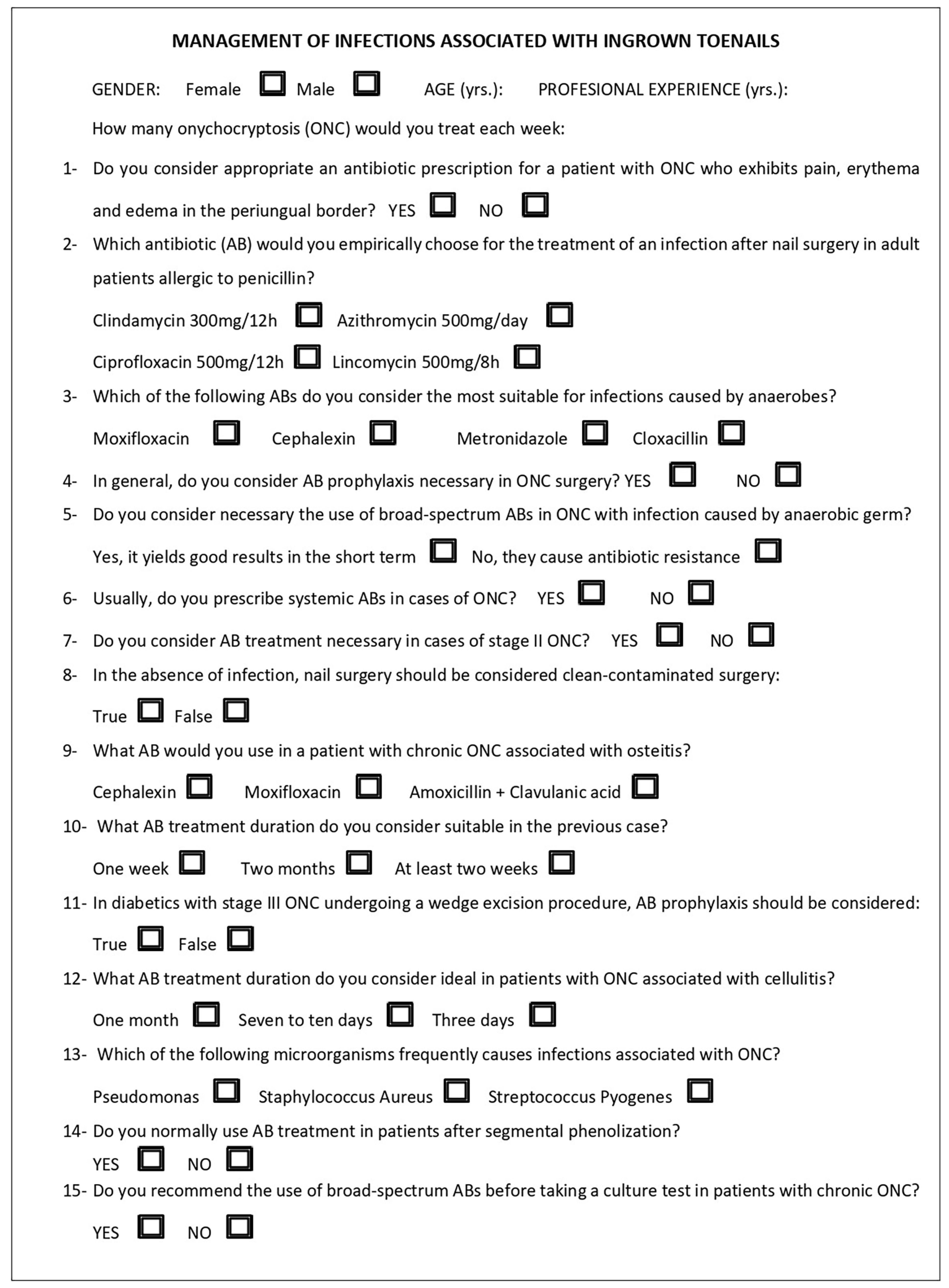
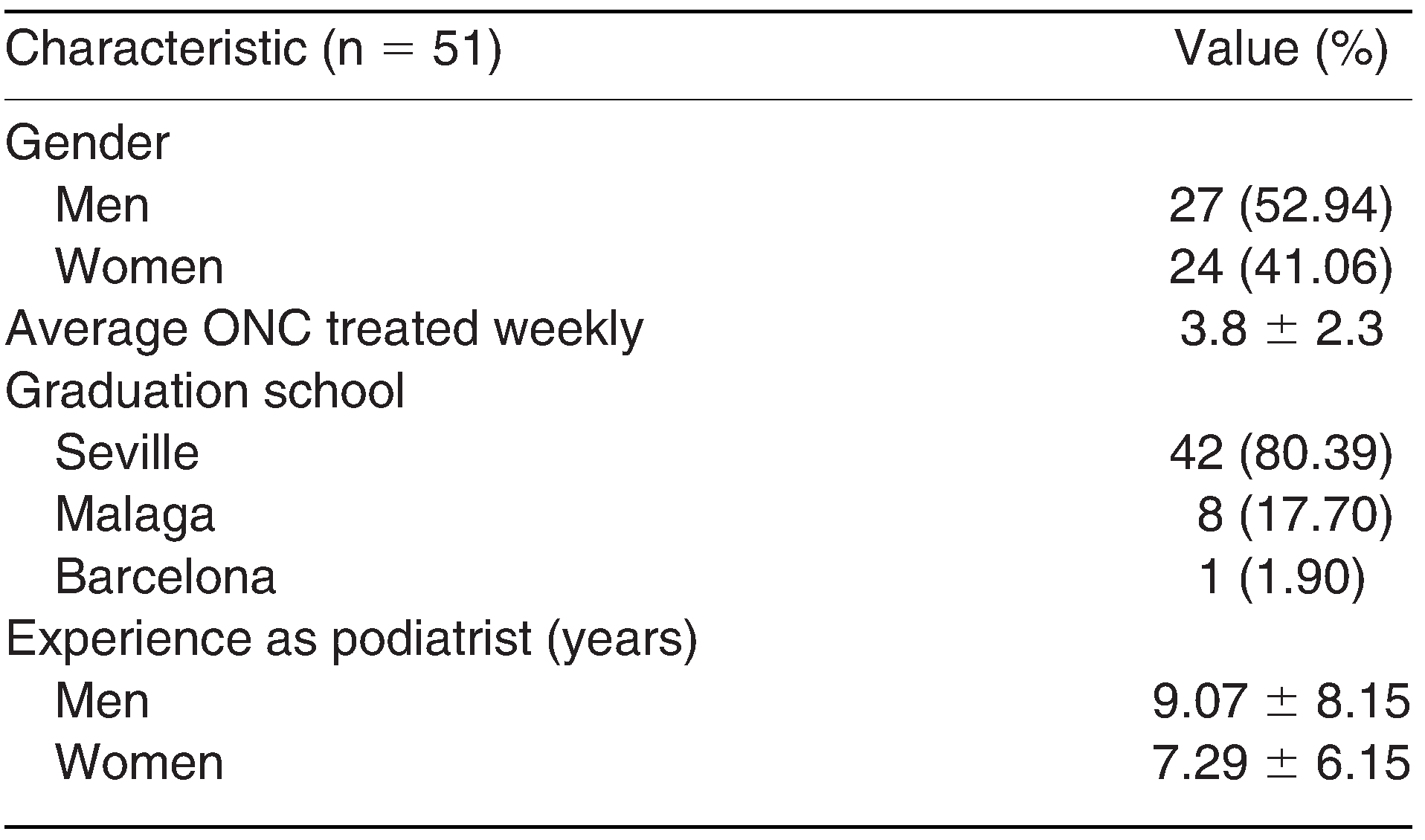
Table 1.
Sociodemographic and General Data of Respondents.
In May 2021, postgraduate training course entitled “Management of infections Associated with ingrown toenails” was carried out at the Official College of Podiatrists of Andalusia (Seville, Spain). Participating podiatrists completed the survey before and after the training course. Data were analyzed statistically, and the answers obtained were compared before and after the training activity. To know exactly the effect that this formation generated, the Z test for the comparison of two proportions in a group with paired data was used,  , with p0 and n0 being the proportion and number of subjects that do not match. The numerical variables were expressed as mean ± standard deviation. SPSS 22.0 (IBM Corp, Armonk, New York) was used for data collection and statistical analysis. Significant differences were established at P < .05 with a 95% confidence interval.
Results
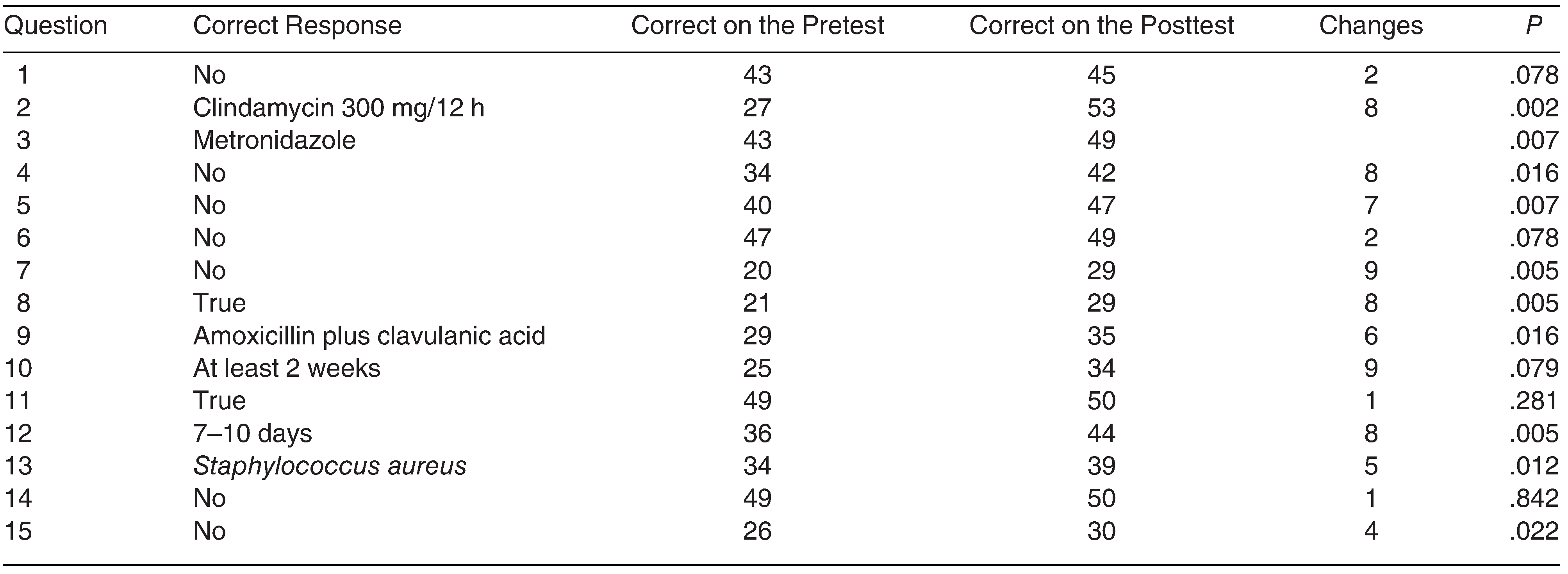
Demographic data for the 51 participants are listed in Table 1. A descriptive analysis of the 15 items evaluated in the survey was carried out before (pre-test) and after (posttest) the training course. A total of 10 of the 15 items analyzed underwent significant changes before and after the training course in favor of prescribing habits more in line with the available evidence (Table 2).
Table 2.
Evolution of the 15 Items of the Questionnaire.
Indication for ABs
Most respondents generally do not prescribe ABs in cases of ONC, and 84.31% do not prescribe ABs in cases of stage I ONC, characterized by pain, erythema, and edema. In both survey questions (questions 1 and 6), the training activity did not produce significant changes in favor of this accurate pre scribing habit. However, in the cases of ONC in stage II (infection of the nail border with pus and/or granulation tissue), 58.83% of the respondents were in favor of prescribing ABs (question 7), signifi-cantly reversing this trend in favor of the correct an-swer after undergoing the training activity (P = .005).
Antibiotic Prescription in Each Clinical Situation
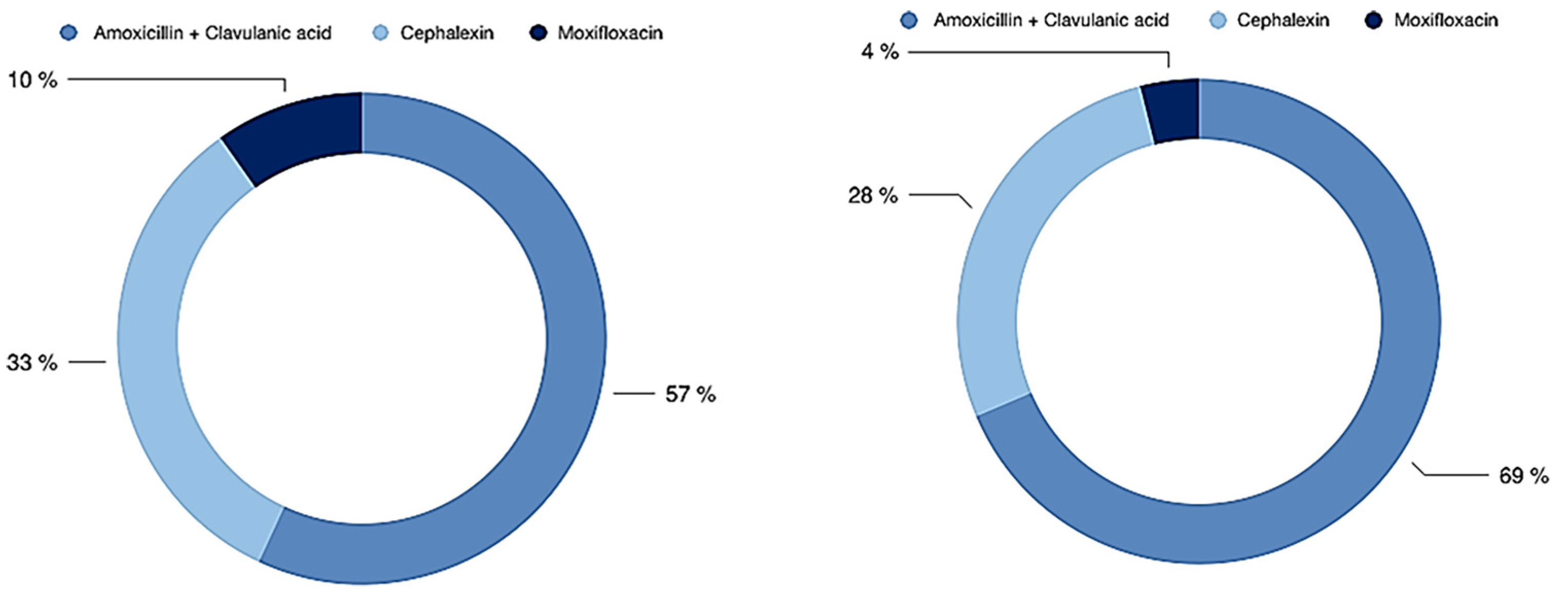
Before training, 66.66% of the respondents knew that the germ that is most often involved in ONC associated with infections is Staphylococcus aureus species, and more than half of the practitioners (52.9%) chose to prescribe clindamycin 300 to 450 mg/12 hours in cases of surgical-site infection (SSI) in patients allergic to penicillin (Fig. 2). In cases of anaerobic infection (question 3), 84.3% of the respondents opted for the correct option, metroni-dazole, in the pretest, a percentage that increased significantly in the posttest (P = .007). Only 50.98% of the practitioners in the pretest were not in favor of empirically administering broad-spectrum ABs in cases of chronic ONC, although in the posttest (question 15), this trend increased significantly (P = .02). In the pretest, 56.86% of professionals chose to prescribe the amoxicillin/clavulanic acid combination, followed by cephalexin (27.5%) in ONC cases associated with osteitis (question 9). In the posttest, this trend increased significantly (P = .01) in favor of amoxicillin/clavulanic acid (Fig. 3).
Figure 2.
Antibiotic preference in penicillin-allergic patients with surgical-site infection.
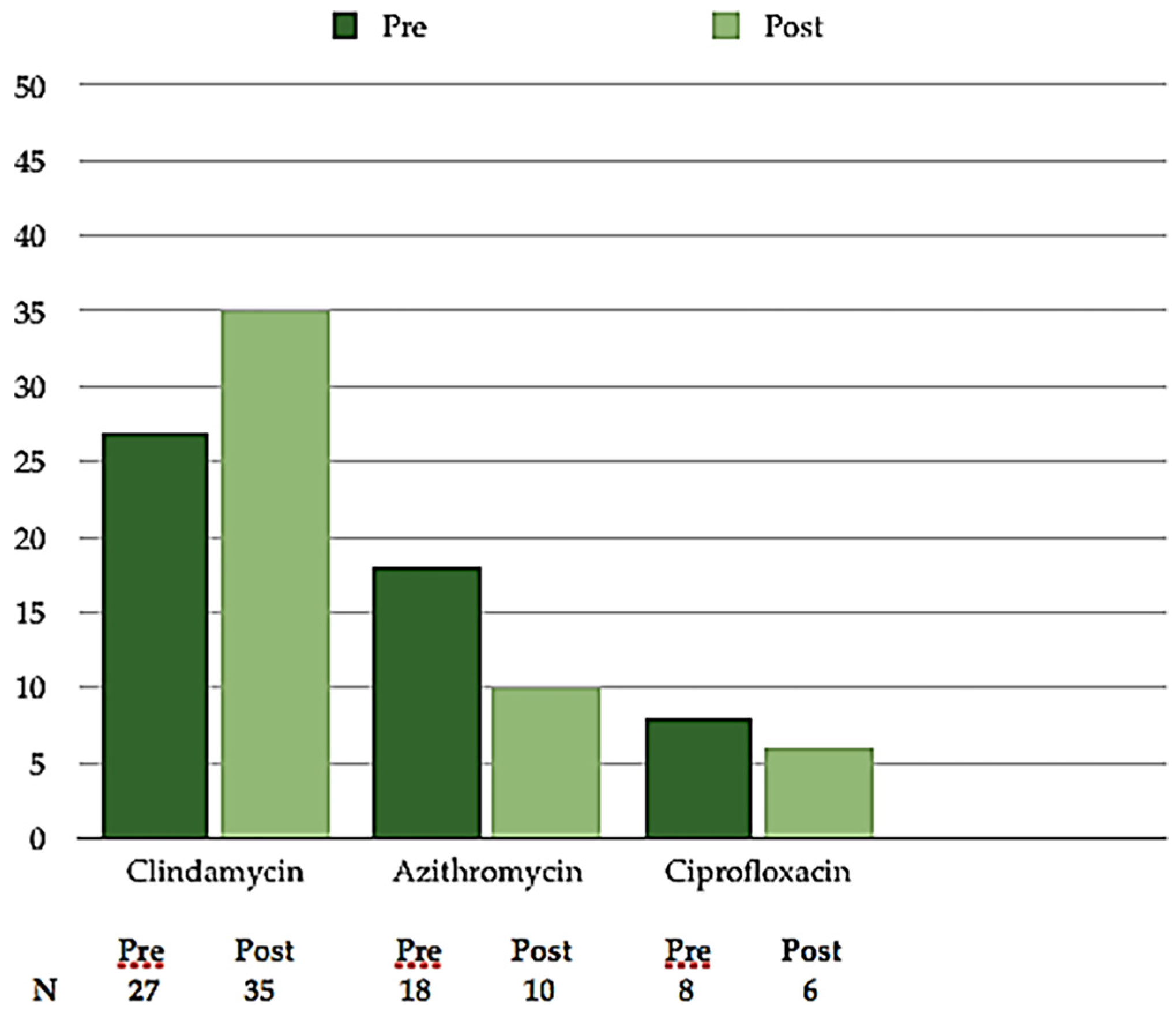
Figure 3.
Percentages of antibiotic prescriptions in a patient with chronic onychocryptosis associated with osteitis.
Duration of AB Treatment
In cases of ONC with cellulitis, 70.58% of professionals were in favor of maintaining AB treatment between 7 and 10 days, which increased significantly (P = .005) in the posttest to 86.27% (question 12). Half of the respondents in the pretest were in favor of maintaining antibiotic treatment for at least 2 weeks in the case of osteitis associated with chronic ONC, producing an increase (although not signifi-cant) of respondents who opted for the correct option in the posttest (question 10).
Antibiotic Prophylaxis in Onychocryptosis Surgery
In the pretest, 74.50% of the participants considered that in the absence of infected ONC, surgery should be considered clean contaminated (question 4) in the posttest, and this trend increased significantly (P = .01). Despite this, in the pretest, 66.66% of the participants correctly did not usually prescribe AB prophylaxis in ONC surgery (question 8), and in the posttest, this trend increased significantly (P = .005). In the pretest, 96.07% of the participants do not prescribe AB prophylaxis when performing seg-mental phenolization, and this same percentage of respondents considered it appropriate to administer AB prophylaxis in diabetic patients undergoing a wedge excision procedure (questions 11 and 14).
Discussion
After analgesics, anti-inflammatory agents, and local anesthetics, an AB is the drug most prescribed by podiatrists in the outpatient clinic [22]. Habitually, the use of ABs in clinical practice is characterized by an empiric prescription based on clinical and bacterial epidemiology. As recommended practice, compo-nents of the appropriate AB prescription include appropriate selection and doses, route, duration, and deescalation or streamline according to microbiol-ogy results. Especially in mixed infections associ-ated with chronic ONC, when a good response to conventional antimicrobial treatment does not occur, a culture and antibiogram should be per-formed quickly. The use of multiple antimicrobial agents or combinations of broad-spectrum agents is one of the most important factors involved in the development of bacterial resistance [6].
This is the first study to reflect the current stage of knowledge and prescribing habits in a sample of Andalusian podiatrists on indications of systemic ABs in the treatment of infections associated with ingrown toenails and antibiotic prophylaxis in ONC surgery. In the vast majority of acute cases of ONC, local treatment with removal of the spicule, drain-age, and debridement of the granulation tissue of the affected nail border can be successfully treated without the need for local or systemic AB prescrip-tions [9,10]. Furthermore, several studies have shown that oral and topical ABs, when used for ingrown toenail surgery, do not reduce postoperative mor-bidity, and available evidence shows that AB use has not shown a difference in infection rates [23,24,25]. In the pretest, almost all respondents were aware of this circumstance and did not usually prescribe ABs in cases of noninfected ONC. This trend was some-what lower (58.83%) only in ONC cases in stage II, although this circumstance was favored after training.
The most prevalent isolated pathogens in the vast majority of acute infections associated with ONC are gram-positive pyogenic bacteria, especially Staphylococcus aureus species. They are gener-ally characterized by rapid onset and a short du-ration of approximately 3 to 7 days if the cause is treated or eliminated [26]. In typical cases, active AB treatment against common pathogens should begin, and the treatment of choice is oral penicillin, the best option in these cases being cloxacillin or cepha-lexin (grade A1 recommendation) [20]. In Spain, macro-lides are no longer a good option for beta-hemolytic streptococcal infections due to the high rate of re-sistance observed [27]. Quinolones have shown similar efficacy to β-lactams but with a higher incidence of adverse effects. However, their broad spectrum of activity makes them less recommended for commu-nity-acquired infections because of the appearance of cross-resistance [28]. Therefore, in patients aller-gic to β-lactams, it is best to use clindamycin for simple infections (recommendation grade A1) [20]. In our pretest study, 52.9% of the respondents opted for clindamycin, 35.2% opted for azithromycin, and 3.9% opted for ciprofloxacin. This trend was signif-icantly reversed in favor of clindamycin (68.6%) as an ideal option in the posttest, followed by azithro-mycin (35.2%) and ciprofloxacin (15.6%).
Regarding the antibiotic treatment recommended in cases of cellulitis with or without radiographic signs of osteitis, more than half of the respondents were in favor of the use of the combination of amoxi-cillin/clavulanic acid. Consensus conferences in Spain recommend the use of first-generation cephalospo-rins or cloxacillin as an empirical treatment regi-men of AB in cases of cellulitis, especially cephalexin because of its high bioavailability administered orally. As an alternative to these, amoxicillin/clavulanic acid or a quinolone (moxifloxacin or levofloxacin) is rec-ommended [20]. In our country, at the community level, aminopenicillins (amoxicillin) followed by the combi-nation of amoxicillin/clavulanic acid for its antista-phylococcal effects, are indicated the most, especially for young patients. These account for 35% of AB pre-scriptions for different infections, well above macro-lides, quinolones, and cephalosporins, respectively [29]. Although evidence recommends the use of cloxacillin or cephalexin in cases of cellulitis, the main drawback of oral cloxacillin is its low bioavailability (32%) with a dose that does not facilitate adequate therapeutic compliance. In the case of cephalexin, in Spain, it is only administered in capsule form, making its admin-istration difficult, especially in pediatric patients. These circumstances could explain why this habit of prescribing was not reversed after the training activity.
Superinfections or mixed infections with a combination of aerobic and anaerobic organisms are not uncommon in chronic nail infections [30]. Most anaer-obic organisms are sensitive to metronidazole and meropenem, and the well-known high resistance rate to clindamycin is of concern [31]. In our study, 84.3% of the respondents correctly answered the metronidazole option for cases of ONC-associated infections caused by anaerobes, a percentage that increased significantly after the test to 96.1%. When chronic ONC infection caused by an unusual anaer-obic agent is suspected, a culture test and an anti-biogram are the most cost-effective option from a microbiological point of view in patients who have not responded to initial empirical treatment (grade A recommendation) [20]. A total of 76.9% of the respondents were not in favor of indicating empiri-cal antibiotic treatment for a suspected infection caused by anaerobes because of the high risk of an-tibiotic resistance. This percentage increased signif-icantly in the posttest.
The optimal duration of AB therapy depends on many factors but, in general, many critically ill infections can be treated with short-course AB ther-apy (7 days or less) and treatment should be stopped when there is evidence of improvement [32]. Even in acute osteomyelitis cases, short-course ABs (<4 weeks) are safe and effective, although it may sometimes be necessary to maintain treatment for up to 6 weeks or until symptoms resolve [33,34]. For decades, a course of between 5 and 7 days of AB treatment was considered ideal in cases of simple cellulitis. However, the available evidence appears to show that shorter short-course (5 days) treat-ments for simple cellulitis are equally effective [32]. In our study, just over 70% of the podiatrists surveyed chose to indicate an AB cycle between 5 and 7 days, which increased significantly to 86.3% after the training activity. Regarding the duration of AB treat-ment in the case of osteomyelitis, there are no high-quality data available to compare standard 4 to 6 weeks of therapy with shorter regimens for adult osteomyelitis. However, it seems prudent to con-tinue prescribing 4 or more weeks of ABs for adults with osteomyelitis until more data are available [35]. In cases of chronic ONC associated with osteitis, 49% of podiatrists surveyed for the pretest chose to indicate a cycle of at least 4 weeks of ABs followed by 47.1% who chose to indicate AB treatment for 1 week. This indicates that professionals are aware of the need to use longer AB courses in cases of chronic ONC with radiologic signs of bone involvement.
Nail surgery, because of the characteristics it presents, can be considered a clean-contaminated operation, and ingrown toenail surgery carries a higher risk of postoperative infection than other procedures performed by podiatric surgeons. Partial excision of the toenail bed is associated with higher postop-erative infection rates of more than 5%, which is considered normal compared to other ingrown toe-nail procedures, including wedge resection and total nail removal. The mean reported SSI rate associated with partial resection is approximately 3.8%, segmen-tal phenolization being the most commonly used pro-cedure [36]. The available evidence shows that this technique did not significantly increase the postoper-ative infection rate and prophylactic use of ABs is not justified [11]. In our study, both before and after the training activity, only one of the participating podia-trists was in favor of prescribing ABs when perform-ing a partial resection associated with phenolization. Although the available evidence does not support the routine use of AB prophylaxis in ONC surgery, retrospective cohort studies highlight that risk fac-tors for SSI after ONC surgery include older than 60 years with a relative risk three times higher than that of younger subjects [36]. In general, cardiopathic, immunosuppressed, and diabetic patients are con-sidered at-risk patients because they are more likely to suffer from SSI. Therefore, the prophylactic use of ABs is recommended in ONC surgery, especially in wedge excision procedures [10,36]. In our study, 74.5% of the respondents in the pretest consider that in the absence of infection, nail surgery should be considered clean-contaminated surgery, increas-ing significantly to 94.1% in the posttest. Despite this, 66.6% of the respondents in the pretest were not in favor of the use of AB prophylaxis in ONC surgery, a percentage that increased significantly in the posttest (78.4%). In the pretest, except for one of the subjects surveyed, podiatrists usually did not use AB prophylaxis when performing segmental phenolization. In contrast, the same percentage of professionals in the pretest were in favor of estab-lishing AB prophylaxis in diabetics with stage III ONC undergoing a wedge excision procedure.
The results of our study show that the podiatrists surveyed make a fairly rational use of AB therapy in terms of indication, prescription, and AB prophylaxis in the treatment of infections ingrown toenails. However, there are aspects to improve related to prescription habits aimed at further reducing the prescription of sys-temic ABs associated with ONC management in stage II and III; improvements include the recommended use of first-generation cephalosporins as an empirical AB treatment regimen in cases of uncomplicated cellulitis, and opting for shorter course AB therapy (5 days).
Conclusions
We highlight that the main limitation of this pilot study is the small sample size of podiatrists surveyed; 80% of the professionals surveyed were graduated from the Seville school, so the results cannot be ex-trapolated to the entire group of Andalusian podia-trists. To obtain results that are more in line with professional reality, we consider that future studies should be carried out with a prior validation of the survey used with an adequate number of items and scale scores including a greater number of professio-nals from all over Spain trained in different schools of podiatry.
Financial Disclosure
None reported.
Conflict of Interest
None reported.
References
- MADERO CM: Plan Nacional frente a la resistencia a los antibio´ticos. n Veterinaria 2017, 22, 14.
- Rodri´guez-Ban˜ o J, Pan˜ o-Pardo JR, Alvarez-Rocha L, et al: Programs for optimizing the use of antibiotics (PROA) in Spanish hospitals: GEIH-SEIMC, SEFH and SEMPSPH consensus document [in Spanish]. Enferm Infecc Microbiol Clin 2012, 30, 22.e1.
- GRIGORYAN L, HAAIJER-RUSKAMP FM, BURGERHOF JGM, ET AL: Self-medication with antimicrobial drugs in Europe. Emerg Infect Dis 2006, 12, 452.
- COSTELLOE, C; METCALFE, C; LOVERING, A; et al. Effect on antibiotic prescribing in primary care on antimicrobial re-sistance in individual patients: systematic review and meta-analysis. BMJ 2010, 18, 340. [Google Scholar]
- BATISTA, AD; RODRIGUES, DA; FIGUEIRAS, A. ET AL: Antibiotic dispensation without a prescription worldwide: a sys-tematic review. Antibiotics (Basel) 2020, 9, 786. [Google Scholar] [CrossRef] [Scilit]
- SMITH, RG; JOSEPH, WS. Antibiotic stewardship: the lower-extremity physician’s prescription for effectively treat-ing infection. JAPMA 2014, 104, 77. [Google Scholar] [CrossRef] [Scilit]
- ANDERSON, AC. Are your antibiotic prescriptions in line with evidence-based medicine? Podiatry Today 2005, 13, 1. [Google Scholar]
- Marti´nez-Nova A, Sa´ nchez-Rodri´guez R, Alonso-Pen˜ a D: A new onychocryptosis classification and treatment plan. JAPMA 2007, 97, 389. [CrossRef] [Scilit]
- KLINE A: Onychocryptosis: a simple classification sys-tem. Foot Ankle J 2008, 1, 6.
- Co´ rdoba-Ferna´ ndez A, Ruiz-Garrido G, Canca-Cabrera A: Algorithm for the management of antibiotic prophylaxis in onychocryptosis surgery. Foot (Edinb) 2010, 20, 140. [CrossRef] [Scilit]
- EEKHOF JA, VAN WIJK B, KNUISTINGH NEVEN A, ET AL: Interventions for ingrowing toenails. Cochrane Database Syst Rev 2012, 18, CD001541.
- ESPENSEN, EH; NIXON, BP; ARMSTRONG, DG. Chemical matrixectomy for ingrown toenails: is there an evidence basis to guide therapy? JAPMA 2002, 92, 287. [Google Scholar] [CrossRef] [Scilit]
- GUILLEMOT, D; CARBON, C; BALKAU, B; et al. Low dosage and long treatment duration of beta-lactam: risk factors for carriage of penicillin-resistant Streptococcus pneumo-niae. JAMA 1998, 279, 365. [Google Scholar] [CrossRef] [Scilit]
- CISNEROS, JM; NETH, O; GIL-NAVARRO, MV. ET AL: Global impact of an educational antimicrobial stewardship programme on prescribing practice in a tertiary hospital centre. Clin Microbiol Infect 2014, 20, 82. [Google Scholar] [CrossRef] [Scilit]
- LITTLE, P; STUART, B; FRANCIS, N; ET, AL. Effects of internet-based training on antibiotic prescribing rates for acute respiratory-tract infections: a multinational, cluster, randomised, factorial, controlled trial. Lancet 2013, 382, 1175. [Google Scholar] [CrossRef] [Scilit]
- MEZ J, GARCI´A-VA´ ZQUEZ E, BONILLO C, ET AL: Self-assessment of patterns of antibiotic use in a university hospi-tal [in Spanish]. Enferm Infecc Microbiol Cl´ın 2014, 32, 507.
- Domi´nguez-Domi´nguez L, Lo´ pez-Marrufo-Medina A, Cabanillas-BALSERA D, ET AL: Antibiotics prescription by Spanish general practitioners in primary dental care. Antibiotics (Basel) 2021, 10, 703. [CrossRef] [Scilit]
- Vandenbroucke, JP; von Elm, E; Altman, DG; et al. PLoS Med 2007, 4, e297. [CrossRef] [Scilit]
- Organic Law 3/2018, of December 5, on the Protection of personal data and guarantee of digital rights. Boletin Oficial del Estado 2018, 294, 1.
- Salgado Ordo´ n˜ ez F, Arroyo Nieto A, Lozano Serrano AB, ET AL: Skin and soft tissue infections [in Spanish]. Med Clin (Barc) 2009, 17, 133.
- Alonso-Ezpeleta O, Marti´n-Jime´ nez M, Marti´n-Biedma B, ET AL: Use of antibiotics by Spanish dentists receiving postgraduate training in endodontics. J Clin Exp Dent 2018, 10, e687.
- DICKINSON, BD; ALLEY, P; PRICE, TW; et al. Prescription drug therapy in the podiatric outpatient population: interac-tions and precautions. Clin Podiatr Med Surg 1988, 5, 291. [Google Scholar] [CrossRef] [Scilit]
- REYZELMAN, AM; TROMBELLO, KA; VAYSER, DJ. ET AL: Are antibiotics necessary in the treatment of locally infected ingrown toenails? Arch Fam Med 2000, 9, 930. [Google Scholar] [CrossRef] [Scilit]
- BOS, AM; VAN TILBURG, MW; VAN SORGE, AA. ET AL: Randomized clinical trial of surgical technique and local antibiotics for ingrowing toenail. Br J Surg 2007, 94, 292. [Google Scholar] [CrossRef] [Scilit] [PubMed]
- SARGIN, S; GULCU, A; ASLAN, A. Does the type of surgical technique and the use of prophylactic antibiotics affect the clinical results in symptomatic ingrown toenail patients? Int J Low Extrem Wounds 2021, 23, 1. [Google Scholar] [CrossRef] [Scilit]
- STEVENS, DL; BISNO, AL; CHAMBERS, HF; et al. Practice guidelines for the diagnosis and management of skin and soft-tissue infections. Clin Infect Dis 2005, 41, 1373. [Google Scholar] [CrossRef] [Scilit] [PubMed]
- Pe´ rez-Trallero E, Garci´a-de-la-Fuente C, Garci´a-Rey C, et AL: Geographical and ecological analysis of resistance, coresistance, and coupled resistance to antimicrobials in respiratory pathogenic bacteria in Spain. Antimicrob Agents Chemother 2005, 49, 1965. [CrossRef] [Scilit]
- FALAGAS, ME; MATTHAIOU, DK; VARDAKAS, KZ. Fluoroquinolones vs beta-lactams for empirical treatment of immunocompe-tent patients with skin and soft tissue infections: a meta-analysis of randomized controlled trials. Mayo Clin Proc 2006, 81, 1553. [Google Scholar] [CrossRef] [Scilit]
- GARCI´A-RODRI´GUEZ JA, ORERO A, GONZA´ LEZ J: Prescripcio´n de antibio´ticos en atencio´ n primaria en Espan˜a. Motivos y caracter´ısticas. Med Gen 2002, 48, 785.
- Grande-Del-Arco J, Jimenez-Cristino MD, Garci´a-de-la-PEN˜ A R, ET AL: A rare paronychia with superinfection with Prevotella bivia and Staphylococcus haemolyti-cus: the importance of early microbiological diagnosis. Pathogens 2020, 9, 999.
- RODLOFF, AC; DOWZICKY, MJ. In vitro activity of tigecycline and comparators against a European collection of anae-robes collected as part of the Tigecycline Evaluation and Surveillance Trial (T.E.S.T.) 2010–2016. Anaerobe 2018, 51, 78. [Google Scholar] [CrossRef] [Scilit] [PubMed]
- HANRETTY, AM; GALLAGHER, JC. Shortened courses of anti-biotics for bacterial infections: a systematic review of randomized controlled trials. Pharmacotherapy 2018, 38, 674. [Google Scholar] [CrossRef] [Scilit] [PubMed]
- HUANG, CY; HSIEH, RW; YEN, HT. ET AL: Short-versus long-course antibiotics in osteomyelitis: a systematic review and meta-analysis. Int J Antimicrob Agents 2019, 53, 246. [Google Scholar] [CrossRef] [Scilit]
- HEPBURN, MJ; DOOLEY, DP; SKIDMORE, PJ. ET AL: Comparison of short-course (5 days) and standard (10 days) treat-ment for uncomplicated cellulitis. Arch Intern Med 2004, 164, 1669. [Google Scholar] [CrossRef] [Scilit]
- S-PENFIELD NW, KULKARNI PA: The history of antibi-otic treatment of osteomyelitis. Open Forum Infect Dis 2019, 6, ofz181. [CrossRef] [Scilit]
- TERRILL, AJ; GREEN, KJ; SALERNO, A. ET AL: Risk factors for infection following ingrowing toenail surgery: a retro-spective cohort study. J Foot Ankle Res 2020, 13, 48. [Google Scholar] [CrossRef] [Scilit] [PubMed]
© 2024 American Podiatric Medical Association