


Abstract
Background: Many surgical techniques have been reported for treatment of ingrown toenails. Occurrence of infection after matricectomy procedures could cause clinicians to prefer using external braces in the treatment of ingrown toenails. This study compares patients with ingrown toenails who underwent the nail fixation technique and the Winograd technique. Methods: Patients who underwent ingrown toenail surgery were reviewed retrospectively. The patients’ demographic characteristics (ie, age, gender, body mass index morphology according to Heifetz classification, surgical technique, visual analogue scale values, time to return to daily activities [days], complications, and satisfaction levels) were all recorded. Results: Seventy patients were included in the study. Of the patients, 33 underwent nail fixation and 37 underwent the Winograd technique. No significant statistical differences were found in terms of patients’ age, gender, body mass index, preoperative clinical features, long-term satisfaction, and ingrown toenail recurrence rates between the two groups, but time to return to daily activities and visual analogue scale values were statistically significantly lower in patients treated using nail fixation compared with the Winograd technique. Conclusions: Nail fixation can be an effective surgical treatment option for ingrown toenail.
Ingrown toenail is a common foot health problem usually seen affecting the first toe of young individuals. [1,2] It may develop as the result of poor nail-clipping practices, obesity, nail plate disorientation, excessive sweating of the foot, pregnancy, or trauma. [3] Inflammation, infection, abscess, and granulation tissue develop in the affected area after the occurrence of an ingrown nail. Pain and stinging in the affected area are the most common symptoms. [2,4,5] Classifications such as the Mozena and Heifetz classifications determine disease severity. [6,7] The degree of pathology and the clinician’s judgment determine the course of treatment. The literature reports that surgical and conservative methods applied with various techniques are effective. [8–18] Conservative treatments, such as applying cotton plugs under the nail plate and using nylon threads to elevate the nail plate, are reportedly effective. [12,13] Other reportedly effective conservative treatment methods include phenol and trichloroacetic acid, local triamcinolone acetonide, and cryotherapy treatments applied locally to the affected area, and the literature describes many surgical techniques for ingrown toenails that are similar to one another. [7,9,19] The popular Winograd technique is frequently reported to carry low recurrence rates; in this approach, the affected nail plate is excised together with the germinal matrix, and the nail tissue is sutured to the digit skin. [3,11] Studies have reported that germinal matrix cauterization (by means of electrocautery, sodium hydroxide exposure, or dichloroacetic acid exposure) in addition to the Winograd technique reduces the recurrence rate of ingrown nails and increases patient satisfaction. [8,9,16]
Nail brace application to the nail plate is another treatment option for ingrown nails of different morphologies. The early recovery associated with this option has been reported to result in high patient satisfaction. [11,15] This study is the first to compare the outcomes of patients treated with nail fixation therapy and the Winograd technique. Regarding the literature, there has been no study yet to report on nail fixation for ingrown toenails.
Methods
Patients who underwent surgery for an ingrown toenail between April of 2019 and January of 2021 were reviewed retrospectively from the hospital database. In total, 88 patients were included in the study, and all were treated for an ingrown toenail. Exclusion criteria for this study included patients who were younger that 15 or older than 65 years and who had a fungal infection, foot deformity, or neurovascular disease. The treatment method for the patients was chosen based on informed consent. Patients treated with nail fixation were designated as group I, and patients treated with the Winograd technique were designated as group II. The following data were obtained and recorded for each group: demographic characteristics (ie, age, gender, body mass index [BMI], morphology according to the Heifetz classification), surgical technique applied, postoperative first day visual analogue scale (VAS) values (pain scores 1 to 10), time elapsed before returning to daily activities (days), complication status (recurrence and infection), and the first month satisfaction (yes or no answers) levels. Missing data were obtained through telephone calls to patients. Statistical analysis of the obtained data was performed, and treatment results of the nail fixation technique and Winograd technique were compared. Approval and informed consent to conduct the study were obtained from the local ethics committee (February 23, 2021; Reference number 264).
Nail Fixation Technique
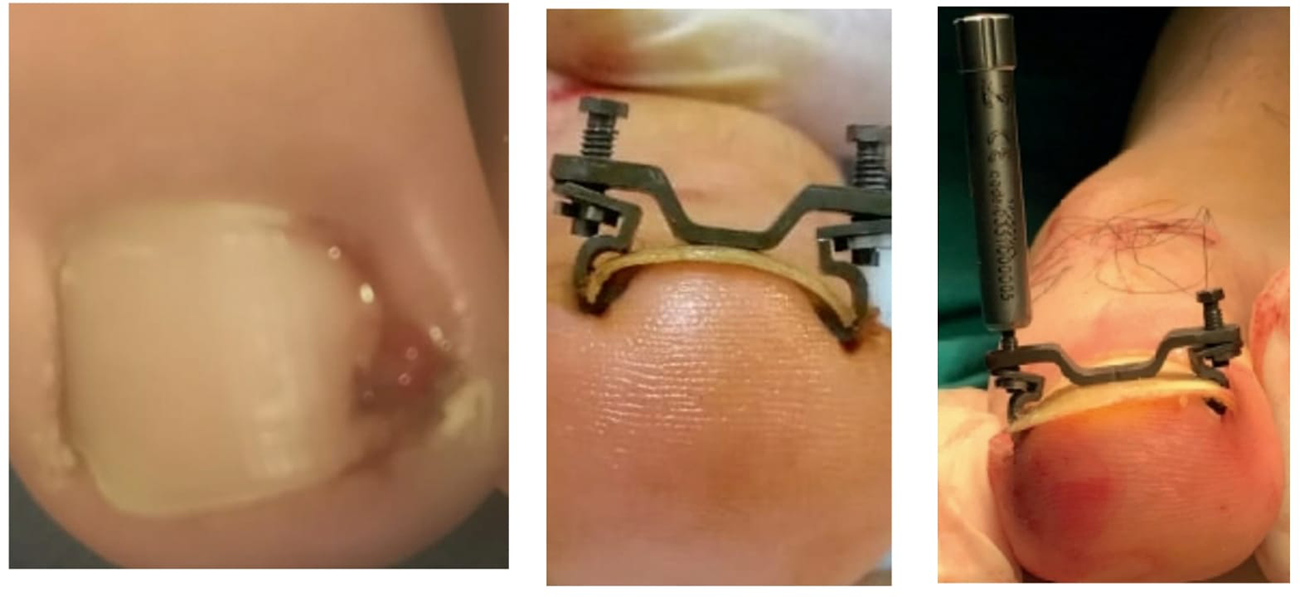
Nail fixation involves mechanically lifting the edges of the nail that are sunk into the soft tissue, followed by tightening two screws to restore the nail to its correct shape and ensure continued growth in the correct orientation. The technique uses two sizes of fixator (normal and wide) according to the size of the nail to be treated. Nails and digits are painted with antiseptic, and local anesthetic is applied to the nail. Surgical forceps separate the part of the nail that has sunk into the soft tissue and place the hooks of the nail fixator on the edges of the nail. The fixator wrench turns the screws counterclockwise to lift the nail edges, and the keys turn both sides gradually and sequentially. The result is that the nail is separated from the soft tissue and raised to the appropriate level (Figure 1). Postoperatively, extremity elevation and use of analgesics and antibiotics (cefazolin, 1 g for 24 hours) are recommended. Patients are advised not to wear closed shoes for the first week after surgery. Assessment of the patient is made by the orthopedic surgeon on the dressing days every 3 days, and the nail fixator is removed at the end of the first week.
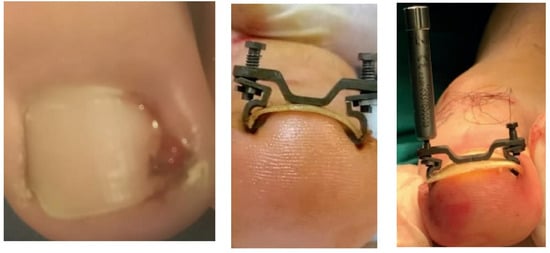
Figure 1.
Application of nail fixation.
Winograd Technique
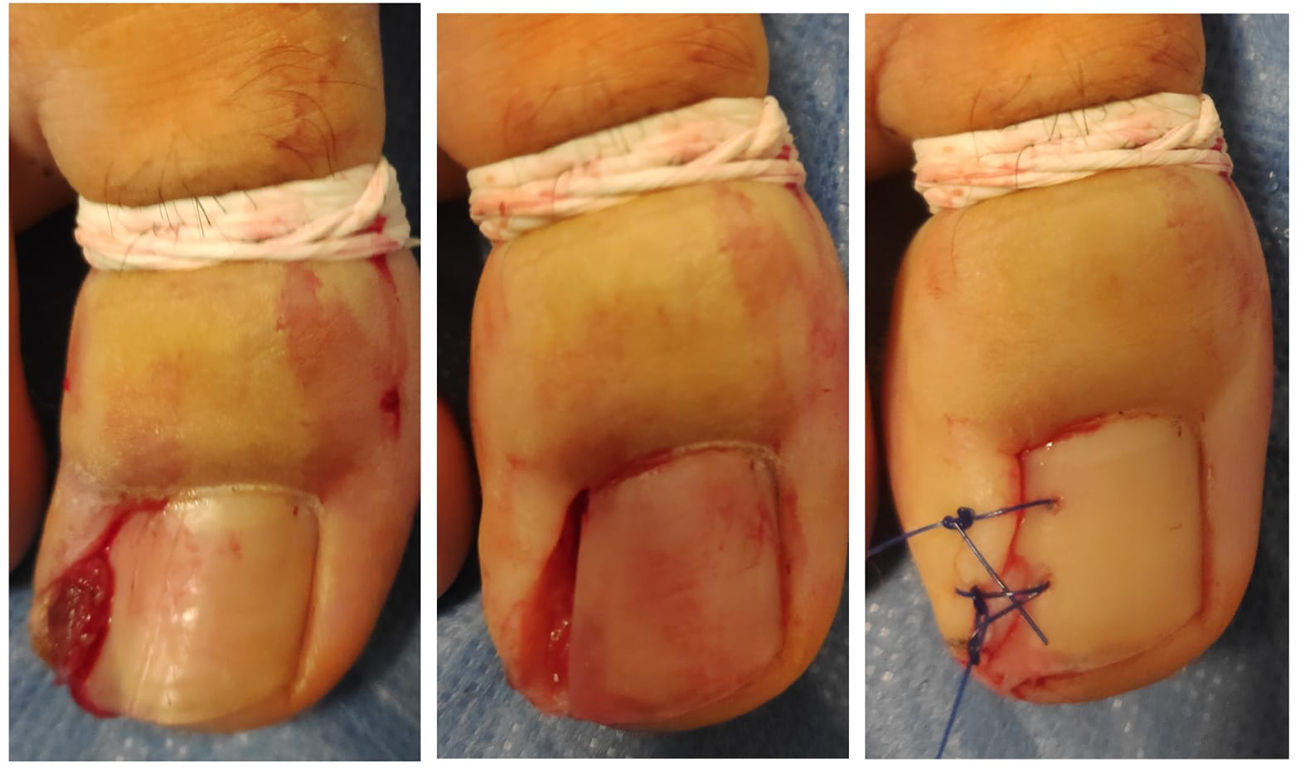
In the Winograd technique, digital block anesthesia (using 20 mg/mL prilocaine hydrochloride is administered under sterile conditions. A partial matricectomy is performed on the affected nail plate by applying a finger tourniquet. The skin is sutured over the nail (Figure 2). Postoperatively, extremity elevation and use of analgesics and antibiotics are recommended. Patients are advised not to wear closed shoes for 72 hours. Assessment of the patient is made by the orthopedic surgeon on the dressing days every 3 days. At the end of the second week, the skin sutures are removed.
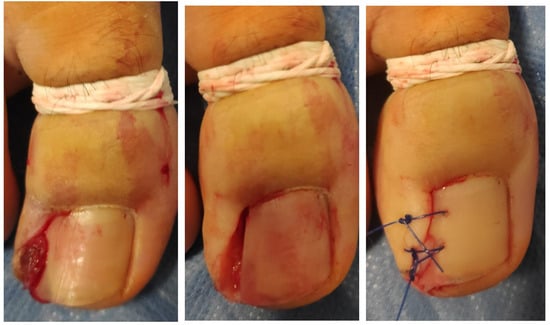
Figure 2.
Application of the Winograd technique.
Statistical Analysis
Descriptive statistics were expressed as mean ± standard deviation or median for continuous variables and as numbers and percentages for categorical variables. Normality for continuous variables was tested using the Shapiro-Wilk test. After determining that the assumption of normality was met, the independent samples t test was used to compare patient and control groups. The χ2 test was used to determine the relationships between categorical variables. The statistical significance level was taken as P < .05 in the calculations. The IBM SPSS version 22.0 (IBM Corp, Armonk, New York) statistical package program was used for the calculations.
Results
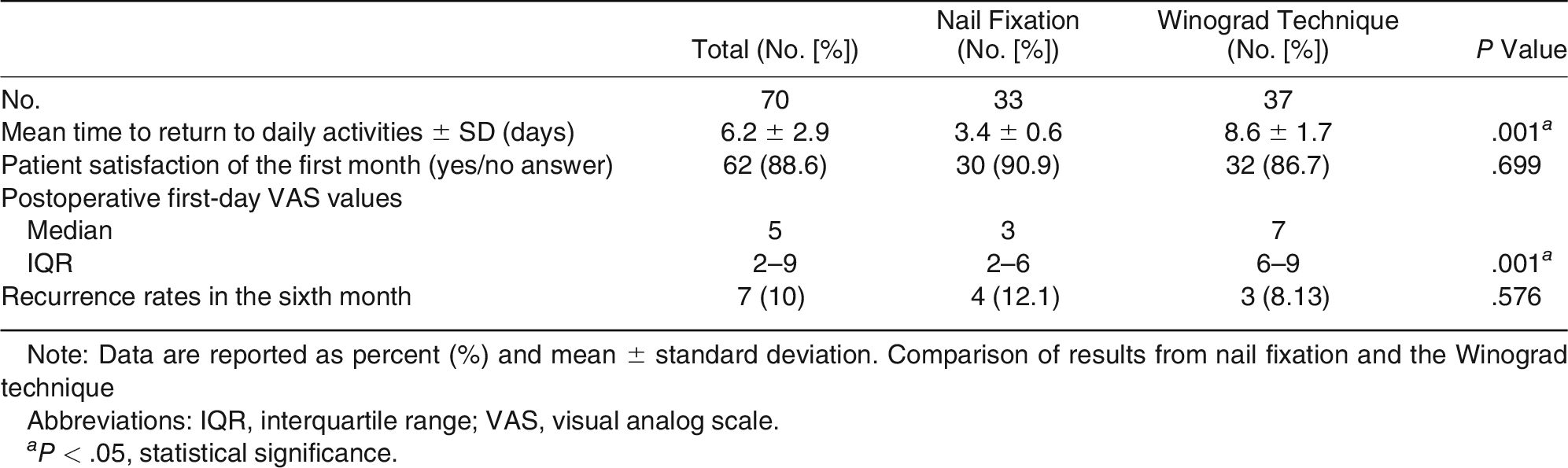
A total of 88 patients were treated and included in the study, of whom 14 patients were excluded and four were lost to follow-up. Thus, our study consisted of 70 patients. The mean follow-up period of the patients was 35 ± 4 weeks. Of these, 33 were in group I (16 male patients [48.5%] and 17 female patients [51.5%], with a mean age of 20.1 ± 5.6 years and a mean BMI of 24.3 ± 1.9 kg/m2), and 37 were in group II (23 male patients [62.2%] and 14 female patients [37.8%], with a mean age of 21.7 ± 5 years and a mean BMI of 24.6 ± 2.5 kg/m2) (Table 1). Group I included five patients (15.2%) in stage I, 19 patients (57.6%) in stage 2, and nine patients (27.3%) in stage 3 according to the Heifetz classification; and group II contained seven patients (18.9%) in stage 1, 20 patients (54.1%) in stage 2, and 10 patients (27%) in stage 3 (Table 1). Postoperative VAS values, the time to return to daily activities, satisfaction levels, and recurrence rates of the cases were recorded (Table 2). The median VAS value was 3 (range, 2–6) on the first day postoperatively in group I patients and 7 (range, 6–9) in group II. The difference between the two groups was statistically significant (P = .001) (Table 2). The mean time required to return to daily activities was 3.4 ± 0.6 days in group I patients and 8.6 ± 1.7 days in group II patients; the difference was statistically significant (P = .001). The satisfaction rate of group I patients was 90.9% and that of group II patients was 86.7%; the difference was statistically significant (P = .699) (Table 2). In the 6-month postoperative period, recurrence was observed in four group I patients (12.1%) and three group II patients (8.1%); the difference was statistically significant (P = .576) (Table 2).

Table 1.
Patient Demographic Characteristics
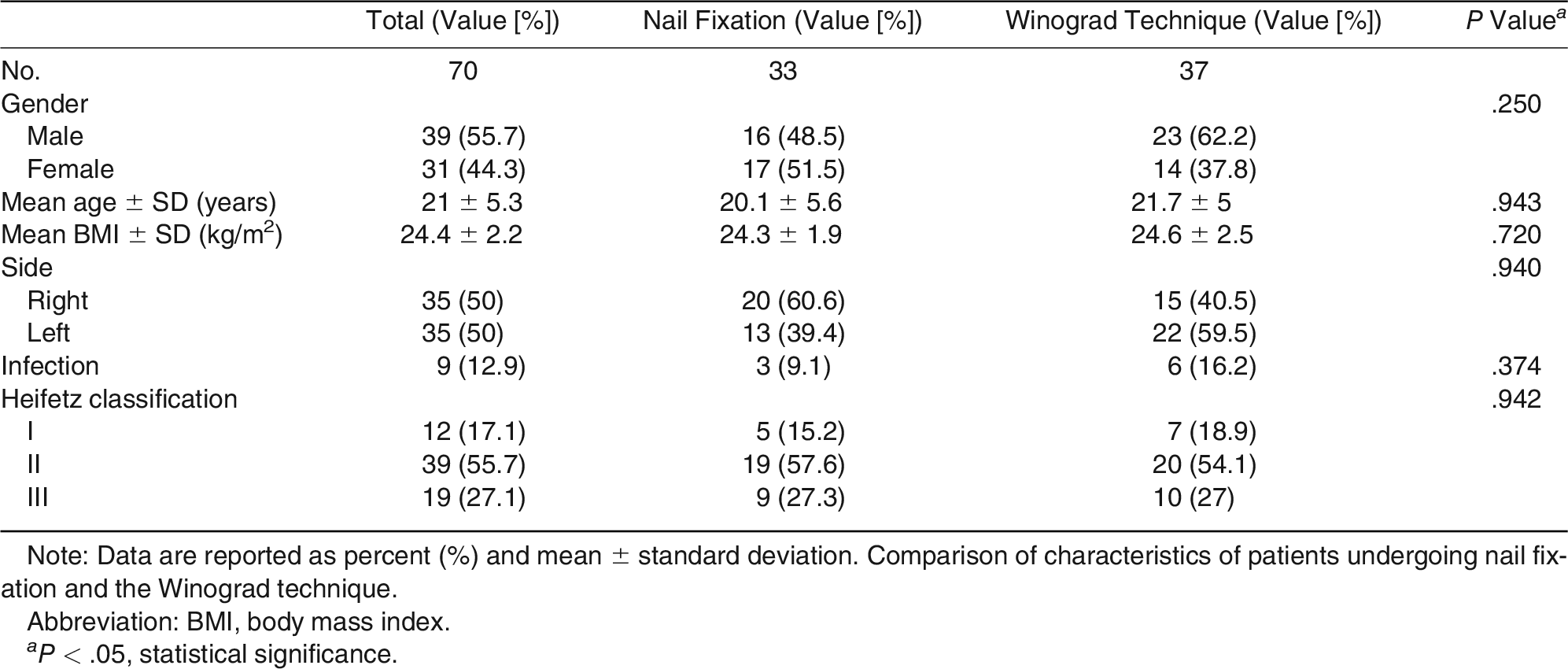
Table 2.
Treatment Results of Patients
Discussion
To the best of our knowledge, our study is the first comparative study between the nail fixation technique and the Winograd technique for the treatment of ingrown toenails. The literature includes many studies of external braces for the treatment of ingrown nails. [19,20] The nail fixator is evaluated separately from other braces because of the compression-distraction technique it applies to the nail plate. Our study observed ingrown nails most frequently in adolescents and young adults, which is consistent with the literature (Table 1). Surgical treatment is reportedly more effective in cases where resistance and recurrence develop after conservative treatment in the adolescent patient population. [20] We observed that the nail fixation technique is an effective treatment in the adolescent patient population because it is easy to apply and minimally invasive.
It has been reported that ingrown toenails are more common in patients who are overweight, lack good foot care, and do not wear appropriate shoes. [3] Our study’s patients were normal in weight but lacked good foot care. Our study used the Heifetz classification. The literature includes more than one classification for ingrown toenails. [6,7] We observed high satisfaction in Heifetz first- and second-degree patients who underwent nail fixation and third-degree patients who underwent treatment with the Winograd technique. The literature includes many studies reporting the effectiveness of nail braces in treating ingrown nails. [19,20] Nail braces are reported to result in early recovery and short hospital stays. [4] We observed a higher satisfaction level in the patient group treated with the nail fixator, as these patients had better VAS values in the first 72 hours after surgery and were able to return to their daily activities sooner. After surgery, surgical-site infection and ingrown toenail recurrence are common. [21] Our study observed that fewer surgical-site infections developed postoperatively in the nail fixator group, but recurrence rates were similar between the groups (Table 2). Although the nail fixator seems costly, it might be more reasonable because of the short hospital stay required and early return to work. It is an ingrown nail treatment method that could be preferred in occupational groups where time is valuable.
Limitations
The number of subjects in our study was small and the study was retrospective. Prospective studies with larger subject numbers and longer follow-up periods are needed.
Conclusions
In conclusion, nail fixation treatment of ingrown toenails is a method that offers earlier recovery and earlier return to daily activities, with high patient satisfaction.
Financial Disclosure: None reported.
Conflict of Interest: None reported.
References
- Chabchoub I, Litaiem N: Ingrown Toenails, StatPearls Publishing, Treasure Island, FL, 2022.
- Mayeaux EJ, Carter C, Murphy TE: Ingrown toenail management. Am Fam Physician 100: 158, 2019.
- Arica IE, Bostanci S, Kocyigit P, et al: Clinical and sociodemographic characteristics of patients with ingrown nails. JAPMA 100: 201, 2019.
- Guler O, Tuna H, Mahirogullari M, et al: Nail braces as an alternative treatment for ingrown toenails: results from a comparison with the Winograd technique. J Foot Ankle Surg 54: 620, 2015.
- Pavotbawan K, Müller TS:, Ingrown toenails [in German]. Ther Umsch Rev Ther 77: 227, 2020.
- Heifetz CJ: Operative management of ingrown toenail. Mo Med 42: 213, 1945.
- Mozena JD: The Mozena classification system and treatment algorithm for ingrown hallux nails. JAPMA 92: 131, 2002.
- Acar E: Winograd method versus Winograd method with electrocoagulation in the treatment of ingrown toenails. J Foot Ankle Surg 56: 474, 2017.
- Aksoy B, Aksoy HM: Novel surgical method for pincer nail treatment: partial matricectomy and triple flap technique. Dermatol Surg 43: 1397, 2017.
- André M-S, Caucanas M, André J, et al: Treatment of ingrowing toenails with phenol 88% or trichloroacetic acid 100%: a comparative, prospective, randomized, double-blind study. Dermatol Surg 44: 645, 2018.
- Arik HO, Arican M, Gunes V, et al: Treatment of ingrown toenail with a shape memory alloy device. JAPMA 106: 252, 2016.
- Bishnoi A, Vinay K, Dogra S: Use of multifilament nylon floss in onychocryptosis. J Am Acad Dermatol 81: 61, 2019.
- Du J-F, Xi X-Y, Liu Z-H: Successful conservative treatment with cotton wisp for ingrown toenail with granulation. Dermatol Ther 29: 486, 2016.
- Gera SK, PG Zaini DKH, Wang S, et al: Ingrowing toenails in children and adolescents: is nail avulsion superior to nonoperative treatment? Singapore Med J 60: 94, 2019.
- Márquez-Reina S, Palomo-Toucedo I, Reina-Bueno M, et al: Polyethylene nail brace for ingrown toenails treatment: a randomized clinical trial. Int J Environ Res Public Health 17: 7741, 2020.
- Terzi E, Guvenc U, Tursen B, et al: The effectiveness of matrix cauterization with bichloracetic acid in the treatment of ingrown toenails. Dermatol Surg 43: 728, 2017.
- Turan Ç, Şahin T, Meral Ekşioğlu H: How effective is cryotherapy applied to the nail fold in ingrown toenails? Acta Dermatovenerol Alp Pannonica Adriat 29: 11, 2020.
- Vílchez-Márquez F, Morales-Larios E, Del Ríode la Torre E: Nonsurgical treatment of ingrown nails with local triamcinolone injections. Actas Dermosifiliogr (Engl Ed) 110: 772, 2019.
- Shih Y-H, Huang C-Y, Lee C-C, et al: Nail brace application: a noninvasive treatment for ingrown nails in pediatric patients. Dermatol Surg Off 45: 323, 2019.
- Wang H-H, Yang T-H, Liu C-W, et al: Efficacy of nail braces for acute and chronic ingrown toenails: a prospective study. Dermatol Surg 46: 258, 2020.
- Noula AGM, Tochie JN, Tchuenkam LW, et al: Surgical site infection leading to gangrene and amputation after ambulatory surgical care of an ingrown toenail: a case report. Patient Saf Surg 13: 44, 2019.
© 2024 American Podiatric Medical Association