


Abstract
Background: Despite national and international guidelines supporting podiatric services as a means of prevention for lower-extremity complications, especially in at-risk individuals, current coverage for these services under the US Medicaid program is not universal. The vast differences between state Medicaid programs regarding reimbursable foot care services is confusing and potentially serves as a barrier for the most vulnerable populations to receive preventative services. This article provides a brief discussion of “routine” podiatric services from a clinical perspective and provides a review of state Medicaid programs including optional services (eg, podiatric coverage). Methods: Using data from a national survey of state Medicaid programs, we present and discuss common Medicaid coverage schemes for routine foot care provided by podiatric physicians. Results: Analysis demonstrated that states vary dramatically in basic descriptions of preventive foot care, levels of coverage, eligibility, and methods of documenting coverage details. Conclusions: The authors recommend bringing Medicaid in line with other federal health programs and including podiatric physicians in the definition of “physician” for coverage purposes. States should move away from describing preventative services as “routine” and choose language that more accurately reflects the true nature and purpose of the care.
The US Centers for Disease Control and Prevention estimates that 37.3 million Americans (11.3% of the population) have diabetes and another 96 million people aged 18 years or older are prediabetic [1]. The cost of caring for this population was estimated to be $327 billion in 2017 [2]. Although many diabetes complications are expensive and difficult to treat, a study of Medicare claims from beneficiaries with types 1 and 2 diabetes from 2006 to 2017 found lower-extremity amputation to be the third most costly complication behind only kidney transplantation and dialysis [3]. The study estimated the average cost of a lower-extremity amputation to be approximately $45,000, with another $8,000 in care over the following years [3]. Other issues such as infections and lower-extremity revascularization add considerable costs to the treatment of diabetes-related complications [4]. In addition to decreasing the physical burden of diabetes, even slight reductions in rates of lower-extremity amputation and other complications would represent a major cost savings to the nation’s health-care system.
One of the most common risk factors for diabetes-related amputations are infected foot ulcers [5,6]. Eighty-five percent of amputations related to conditions of the diabetic foot are preceded by a foot ulcer [7]. It is estimated that only two-thirds of foot ulcers ultimately heal [8]. In addition to the risk of amputation, individuals with a diabetic foot ulcer (DFU) have a mortality rate three times that of an individual with diabetes who did not have a foot ulcer [9]. As is almost always the case, the best management for diabetes-related complications is prevention [6,10]. This axiom is certainly the case with DFUs.
To mitigate the devastating consequences, a number of guidelines have outlined best practices for DFU management and prevention. Specifically, the International Working Group on the Diabetic Foot (IWGDF) routinely promulgates guidelines on prevention. These guidelines recommend that high-risk (ie, neuropathic and/or vascular compromised) patients should be identified and examined regularly. These individuals should also be using appropriate footwear and be treated for modifiable risk factors associated with DFUs [11]. The IWGDF stratified the risk and the recommended frequency of visits for at-risk foot checks. High-risk individuals who have loss of protective sensation or who have peripheral arterial disease with a history of foot ulcers, lower-extremity amputation, or end-stage renal disease should be seen every 1 to 3 months. Moderate-risk individuals who have loss of protective sensation and peripheral arterial disease, or loss of protective sensation and foot deformity, or peripheral arterial disease and foot deformity should be evaluated every 3 to 6 months. Low-risk individuals who have loss of protective sensation or peripheral arterial disease should be examined every 6 to 12 months [11].
The IWGDF is not alone in recognizing the value of routine, at-risk foot checks in the prevention of DFUs. Marn Pernat et al12]. found that monthly checks are associated with reduced rates of major lower-limb amputations in diabetic patients receiving hemodialysis. These checks have the potential to reduce amputations and improve quality of life. Research by Schmidt et al13]. and Apelqvist and Larsson7]. reached similar conclusions.
In addition, the American Podiatric Medical Association, the Society of Vascular Surgery, and the Society of Vascular Medicine published a joint recommendation on DFU management [14]. This statement further highlighted the need to address patients who suffered from peripheral vascular disease with or without diabetes [15]. Despite the recommendations from various national and international experts, government standards have not clearly incorporated these recommendations nor aligned incentives toward preventive efforts on DFUs. This failure of the Medicaid program is a prime example of the disconnect between science and public policy.
Despite the evidence of its effectiveness, Medicaid coverage for podiatric care in general, and preventative services such as routine foot care (RFC) in particular, is not universal. Even for state Medicaid programs that do provide some level of coverage, the precise contours of the coverage are often a maze of different services offered or excluded, required qualifying conditions, and methods of documentation. This article highlights some examples of this patchwork coverage for RFC. We will begin with a brief discussion of services typically referred to as “routine” from a clinical perspective. This will be followed with a review of the Medicaid program in general and optional services such as podiatric coverage in particular. We will then present and discuss common Medicaid coverage schemes for RFC provided by podiatric physicians. Finally, suggestions for improving the system will be discussed.
RFC
Although widely used by state Medicaid plans, private insurance companies, and policymakers, from a clinical perspective, the term routine foot care has no universally accepted definition. There are recommended best practices regarding foot care that basically apply to everyone, regardless of age or health status. These practices would tend to fall under the umbrella of self-care or simple hygiene, such as washing one’s feet, clipping one’s toenails, and wearing properly fitting shoes. In most cases, these practices can be safely performed by individuals and would not require the assistance of a podiatric physician. In such a case, routine self-care would understandably not be covered under any insurance plan.
There are, however, certain comorbidities that can lead to difficulty in completing routine self-care safely. Generally speaking, two common circumstances exist where typical hygienic practices might be dangerous if performed by the individual. The first circumstance is for the treatment of pain (including pain caused from thickened toenails and/or callus build-up) regardless of the comorbidities present. In addition to the management of pain for the sake of comfort, foot pain is a major contributor to falls and gait instability in the elderly population, and a cause for decreased productivity in younger populations [16,17]. Therefore, treating foot pain from any cause, whether it is treated by simple or complex means, can aid in preventing serious public health incidents, such as injurious falls. The prevention of falls can potentially save a significant amount of health-care dollars, as the costs of fall-related injuries are estimated at roughly $50 million and $754 million for the fatal fall [18].
The second circumstance where it might be dangerous for a person to perform these self-care tasks is for prevention of serious complications such as foot ulceration and infection in high-risk groups. In the latter example, nail and callus debridement can prevent ulceration and infection in high-risk groups, such as in adults with active diabetes complications, peripheral neuropathy, peripheral vascular disease, and other conditions [11,19]. From a clinical standpoint, neither of these circumstances can be considered “routine'” and instead represent “preventative care” given the magnitude of their downstream effects as discussed above. As in the clinical realm, there is no universally agreed-on definition of RFC in the public policy sphere.
Medicaid Coverage of RFC
Medicaid was established under Title XIX of the Social Security Act in 1965. This law also created Medicare. Both programs are administered through the US Department of Health and Human Services, Centers for Medicare & Medicaid Services, but are very different from one another in funding, administration, and implementation [20]. One important difference between the two programs is in the coverage of podiatric care. With Medicare, podiatric physicians’ services are covered alongside allopathic and osteopathic physicians. Medicaid, in contrast, does not include podiatric physicians in its definition of “physician.” This Medicaid exclusion sets up a situation where states have discretion in whether to include podiatric care in their individual plans and leads to coverage that varies from jurisdiction to jurisdiction.
At its inception, Medicaid provided health-care insurance solely to people who were also receiving government cash assistance. The program has since grown, and now Medicaid provides health coverage to a much wider range of low-income families and individuals who meet specific criteria, such as pregnant women, people with disabilities, and those in long-term care facilities [21]. Unlike Medicare which is completely funded and administered by the federal government, Medicaid is a combined state and federal program, with each level of government sharing the cost [22]. The funding individual states receive from the federal government is based on a calculation (Federal Medical Assistance Percentages), with lower income states getting a larger federal share than more wealthy states. The minimum federal share a state can receive is set at 50%,21]. whereas less wealthy states receive up to 77%. To qualify for any federal funding, state Medicaid plans must cover a minimum set of 15 specific services, such as hospital and physician visits, radiology, and laboratory services [22]. Beyond the required minima, states are free to expand their coverage from a menu of 28 additional services if political and budgetary circumstances permit [23]. Of these additional services, all states cover prescription drugs and most cover services such as vision and dental care [24]. The scope of additional services is not a binary decision of offering the coverage or not. States have wide latitude in limiting optional services to specific subpopulations of their Medicaid beneficiaries. For example, a state may choose to offer an optional service to beneficiaries in a certain age group or with a specific medical condition. States also have a degree of discretion in precisely what treatments are covered within a larger service group. All of this discretion creates a system that is a patchwork of coverage from state-to-state beyond the 15 required services. Podiatric care is considered one of these optional services under Medicaid.
A further distinction needs to be made between Medicaid fee-for-service delivery and coverage through Medicaid managed care organizations (MCOs). Medicaid benefits under fee-for-service delivery are defined and paid directly by the state Medicaid authority. As the name implies, fee-for-service coverage reimburses providers for individual services provided to beneficiaries. In addition to fee-for-service coverage, 40 states contract with MCOs to provide part or all of their Medicaid coverage [25]. (for a complete list and map of state-by-state coverage, please see https://www.kff.org/statedata/collection/medicaid-managed-care-tracker/). These organizations are essentially health insurance companies that enroll beneficiaries, coordinate care, and distribute payment to providers. As is discussed briefly below, MCOs are often permitted to offer expanded preventive services to beneficiaries as a means of controlling cost. Nationwide, 69% of all Medicaid beneficiaries receive their Medicaid benefits through an MCO [25]. The coverage for podiatric care under an MCO is often, but as we will see, not always the same as for regular Medicaid. Because Medicaid leaves so much discretion to states and territories, we are left with a patchwork of 56 different systems across the 50 states, territories, and the District of Columbia.
To further complicate this picture, there are some categories of Medicaid beneficiaries where coverage for these “optional” services is required. Recipients, known as “dual-eligibles,” qualify for both Medicaid and Medicare benefits. Dual-eligibles make up approximately 20% of all Medicare beneficiaries [26]. As previously stated, because Medicare designates a podiatric physician as a physician, podiatric services are covered in a similar way as any other medical visit for this group.
Finally, the Early and Periodic Screening, Diagnostic and Treatment (EPSDT) benefit is the Medicaid benefit for children and adolescents up to age 21. This coverage is more comprehensive than typical Medicaid for adults; it is designed to provide early diagnosis and prevention, so health problems in children and young people are treated as promptly as possible [27]. With EPSDT treatment, all medically necessary services are covered, even those listed as optional services under Medicaid. Medical necessity is determined on a case-by-case basis. This means that under EPSDT, podiatric coverage is broader than under regular Medicaid and therefore could be covered. The discussion of coverage in the remainder of this article is limited to beneficiaries in the truly optional categories outside of dual-eligibles and EPSDT.
To document the complex benefit matrix, Brewer [28]. collected statutes, regulations, and program documents related to Medicaid coverage for podiatry in all 50 states and the District of Columbia. The project collected 235 individual data points on eight variables related to coverage across the 51 jurisdictions. The five US territories (American Samoa, the Commonwealth of the Northern Mariana Islands, Guam, Puerto Rico, and the US Virgin Islands) were not included in the research. The resulting data are archived on the LawAtlas platform at the Center for Public Health Law Research at the Beasley School of Law, Temple University [29]. A review of the collected data determined that, although most jurisdictions (n = 42 [82%]) do provide Medicaid coverage for podiatric services to optional populations, the specific rules, restrictions, and limitations are where the differences are found [30]. For example, of the jurisdictions that provide coverage for podiatry, 25 limited the frequency of visits [30]. Twenty-eight states require prior authorization before seeing a podiatric physician and 38 states list one or more individual podiatric service as noncovered [30].
One aspect that particularly stands out for its variability across jurisdictions is Medicaid coverage for services commonly referred to RFC. Variation in RFC coverage naturally exists between states that cover or do not cover podiatric services generally. However, even within states that pay for podiatric care, there is very little consensus on coverage details for RFC. Although no two states have exactly the same RFC coverage, certain patterns emerged. We have attempted to categorize these below. It should be noted at the outset that these categorical definitions are based on fee-for-service plans. Although we do provide illustrative examples of divergence found in managed care plans, that should be considered the exception rather than the rule.
RFC Regulatory Schemes
Answering the seemingly simple question of whether a state fee-for-service Medicaid plan covers RFC by a podiatric physician is actually a rather complex enterprise. This task is complicated by the fact that states have widely divergent administrative and legal structures for authorizing, regulating, and documenting their Medicaid programs. The first, and perhaps most straightforward question is whether the state provides any podiatry services outside of the required dual-eligible and EPSDT populations. Assuming that broader coverage is provided, there exists another determination regarding whether or not the state covers RFC. Although most states affirmatively provide some coverage, there are a small number of states that explicitly state that RFC is not covered. Even in those situations, the actual limits of coverage a typical beneficiary might expect are not completely clear. For example, Georgia lists RFC as a noncovered fee-for-service benefit and does not provide common exceptions for beneficiaries with conditions such as diabetes [31]. They do, however, permit their contracted MCO providers to offer these services to individuals enrolled in those specific plans. Of the three MCOs operating in Georgia, two have mechanisms in place to cover elements of RFC provided by a podiatric physician. One plan covers these services as a general medical benefit, not strictly a podiatry benefit. For example, if a general practitioner determined that it was medically necessary for a patient with diabetes to see a podiatric physician for nail trimming, the plan would cover those visits. Another MCO directly covers RFC as a podiatric benefit. The third MCO reports strictly following the fee-for-service guidelines. The South Dakota Medicaid Billing and Policy Manual also lists RFC as a noncovered service. However, provisions are made to cover RFC in cases where the foot is infected or eczematized [32].
The coverage landscape in states that do explicitly provide Medicaid coverage of RFC is an order of magnitude more complex. State coverage schemes vary by the type of individual services covered or not covered; qualifying inclusion or exclusion criteria for coverage, methods of applying the criteria, and manner in which all of these variables are documented.
Beyond the simple covered/not covered dichotomy, there is no consensus among states as to what specific procedures constitute RFC. Typically, a state will provide a list of such services. This list can be rather perfunctory, as in the case of Florida, which simply defines “[f]oot and nail care” as a Medicaid reimbursable service [33]. Rhode Island provides a slightly more expansive list: “[t]he Medicaid Program covers routine foot care, such as debridement of nails and treatment for ingrown toenails ”[34](p6). However, the inclusion of “such as” suggests the list is not exhaustive and directs the reader to a separate fee schedule where individual procedure codes and descriptions can be queried to determine eligibility [35]. A more typical coverage description can be found in Missouri, which defines RFC as “the removal of corns, calluses or growths, trimming of toenails (grinding, debridement or reduction), and other hygienic or preventive maintenance ”[36] (p211).
Jurisdictions use these RFC service lists to specify coverage in different ways. Some states enumerate RFC services as a means of defining things that are affirmatively covered (inclusion). Other states use these lists as a means of describing services that are not covered (exclusion). Although these two paradigms appear on their face to be diametrically opposed, the reality is that they typically arrive at similar levels of coverage through different routes. Inclusion jurisdictions make coverage of the enumerated services contingent on the beneficiary having qualifying conditions (discussed below). Exclusion jurisdictions provide exceptions to the coverage limitation if the beneficiary has a similar qualifying diagnosis, thus arriving at the same level of coverage. New Hampshire makes use of both devices. Section 3 of the Podiatry Provider Manual lists RFC ([r]outine foot care, and trimming and burring of nails, including mycotic nails) as a covered service contingent upon the member’s primary health-care provider determination of need. The very next section (section 4), uses the exact same language to describe RFC, but lists them as “not covered.” [37].
As with defining the scope of coverage, the manner in which states define qualifying criteria varies widely. Without question, the most common method states use to define qualifying conditions is by simply providing a list. As discussed above, these lists can serve to support the coverage in states that view RFC as an included service (eg, RFC is covered for beneficiaries who have a specific condition) or serve as an exception to RFC coverage exclusions (eg, RFC is not covered unless the beneficiary is diagnosed with a specific condition). Although wide variations exist in the language, common conditions include diabetes mellitus, peripheral neuropathies, circulatory embarrassment, or areas of desensitization in the legs or feet.
Other states developed severity scoring matrices that list multiple tiers or classes of conditions. Beneficiaries’ diagnoses must satisfy the matrix criteria to qualify for coverage. The example excerpted below is based on New Mexico’s system [38].
Routine foot care services: Medical Assistance Division (MAD) covers routine foot care services for a medical assistance program (MAP) eligible recipient who has a systemic condition and meets the severity in the class findings as follows: one of class A findings; or two of class B findings; or one of the class B findings and two of the following class C findings:
A small number of jurisdictions rely solely on “medical need” as the qualifying criterion. For example, the Arizona Fee-For-Service Provider Billing Manual simply uses the term “medically necessary foot and ankle care.” [39]. Despite the somewhat ambiguous nature of this language, a monthly Arizona Health Care Cost Containment System publication makes clear that “trimming of mycotic nails, the removal of corns or calluses, the treatment of pressure ulcers…” are covered as long as they are ordered by the beneficiary’s primary care provider or attending physician [40].
North Dakota’s published materials are silent as to qualifying criteria for Medicaid coverage. Although the absence of such qualifying language may appear to allow for unregulated RFC coverage, communication with a representative of the North Dakota Medicaid authority made clear that non–medically necessary RFC services would not be covered. We could identify no jurisdiction that covered RFC without some underlying condition or medical need on the part of the beneficiary.
The manner in which states document and publish the details of their podiatric coverage also varies. The LawAtlas database looked at eight variables related to podiatric coverage (of which two are related to RFC specifically) across all 50 states and the District of Columbia. To gather that information, researchers collected data from 235 different sources. The most common sources were administrative regulations (n = 162). Agency documents such as provider manuals, fee schedules, and other publications accounted for 67 data points. Statutes (n = 5) and state plan amendments (n = 1) rounded out the sources. These diffuse, difficult-to-locate, difficult-to-interpret, and sometimes obscure documentation sources can make it difficult to understand the already complicated coverage schemes.
Not all states even use the term RFC to describe coverage. In addition to Florida's “foot and nail care” described above, Hawaii refers to common RFC services as “diabetic foot care.” [41]. Minnesota and Massachusetts refer to care as “foot hygiene” [42]. and “hygienic foot care,” [43]. respectively.
Finally, jurisdictions exist in which the coverage of procedures generally captured by the broader service definition of routine foot care are referenced, but no explicit mention of RFC is found in the legal text or program documents in relation to these procedures. In some examples, the broader service generally referred to as RFC is given an alternate definition such as: “maintenance care.” Two such examples are found in Minnesota Rules, part 9505.0350 subpart 2, and Wisconsin Administrative Code § DHS 107.14, respectively:
“Payment for debridement or reduction of nails, corns, and calluses. Debridement or reduction of pathological toenails and of infected or eczematized corns or calluses shall be a covered service. The service shall be eligible for payment once every 60 days;
(a) Podiatric services pertaining to the cleaning, trimming and cutting of toenails, often referred to as palliative or maintenance care, shall be reimbursed once per 61 day period only if the recipient is under the active care of a physician and the recipient's condition is one of the following:…”
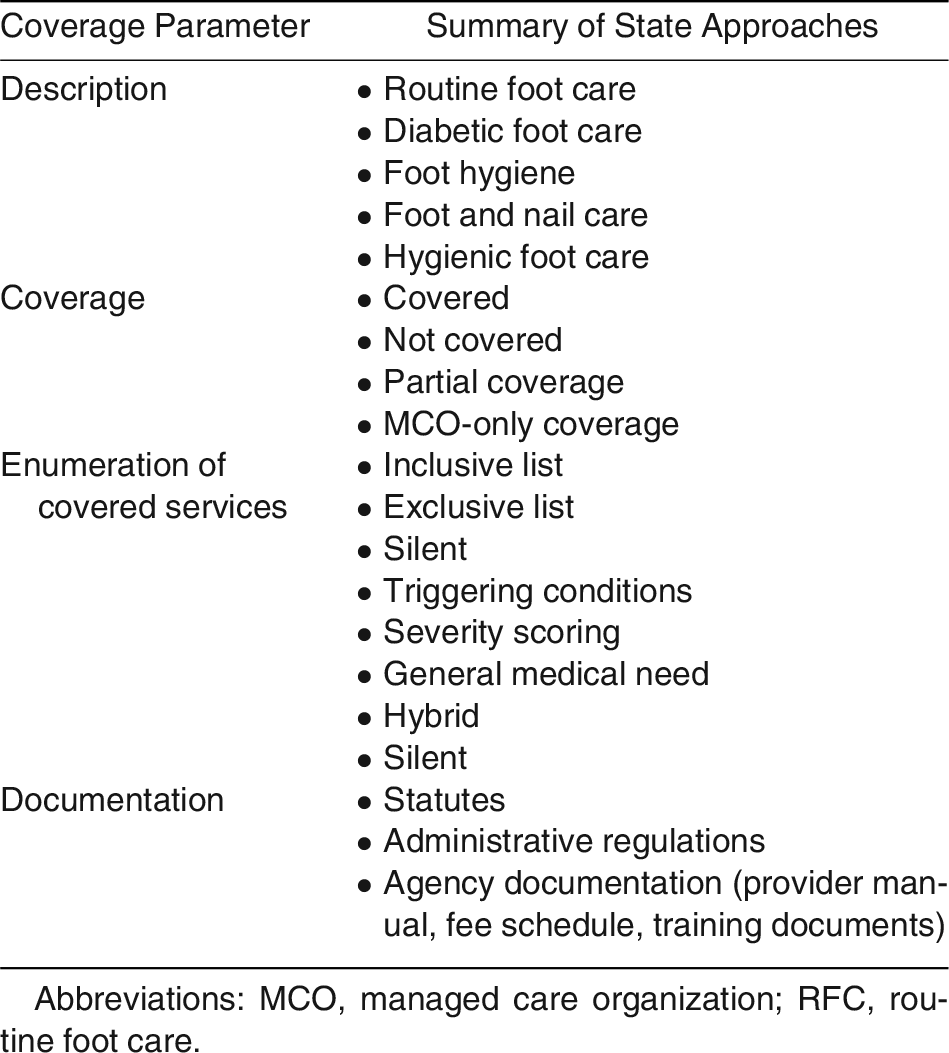
Table 1 provides a summary of the various coverage parameters and examples of state approaches as discussed above.
Table 1.
Summary of RFC Coverage Schemes
Discussion
As demonstrated above, Medicaid coverage for RFC is a complex patchwork of coverage, definitions, limitations, qualifying conditions, and disparate documentation. The result is a system that provides or denies access to this potentially life-saving care depending on the state in which a person lives. In some cases, coverage varies even within a single state. These disparities are particularly pernicious, as Medicaid beneficiaries include low-income adults, older adults, pregnant women, children, and people with disabilities. The link between poverty and poorer health outcomes is well established [44]. Low-income people are at a greater risk for health complications and have higher rates of chronic conditions, including diabetes [30,45]. These vulnerable populations who are higher risk are typically the ones who are most in need of comprehensive Medicaid coverage.
Recommendations
An important first step in addressing this issue is moving toward the use of more appropriate descriptive language. Using the term “routine” in “routine foot care” diminishes the importance of potentially limb-saving services. The adjective routine implies that the services are unremarkable and do not warrant the expense of a physician visit. Without context, it would be understandably difficult for a policymaker or legislator to advocate for spending scarce resources on something that is defined as routine. This confusion is exacerbated when the service is something like clipping toenails that millions of people are able to safely perform themselves every day. A more accurate way of defining these services in the clinically indicated populations would be a term such as “preventive foot care.” For such service, a visit would include inspection of the dermatologic, vascular, neurologic, and musculoskeletal elements for findings that could increase risk of foot wounds and limb threats. By emphasizing “preventive” over routine, the actual purpose of preventing downstream complications that are likely to arise in the absence of the care would be underscored [46–48]. This change would also work to raise awareness of the value of podiatric care for indicated populations on par with other preventive services such as immunizations, colorectal screening, and mammograms. It should be noted that this idea is not a novel suggestion. Prominent podiatric physicians such as Arthur Helfand [49]. Harry Goldsmith [50]. and others have been advocates for the preventive benefits of podiatry for decades.
In line with the clinical and scientific recommendations discussed above, podiatric preventive care should be made available to all Medicaid beneficiaries. One way to accomplish this goal would be passage of the Helping Ensure Life- and Limb-Saving Access to Podiatric Physicians Act in the US Congress. This legislation has bipartisan support in both chambers of Congress. It would bring Medicaid in line with Medicare, Tricare, the Veterans Health Administration, and the Indian Health Service by defining podiatric physicians as “physicians” alongside their allopathic and osteopathic colleagues for coverage determination. Stakeholders should continue to advocate for changing the policy on routine foot care services. This change would ensure eligible patients are able to see physicians specially trained in preventive foot care.
Although not a substitute for passage of the Helping Ensure Life- and Limb-Saving Access to Podiatric Physicians Act, one way to begin addressing the current inequities would be for states to standardize and clarify coverage for preventive foot care using evidence-based guidelines. Although work remains to be done, there exists a preponderant body of evidence linking preventive foot care to improved outcomes for patients with certain comorbidities. In addition to the clinical evidence, several studies have demonstrated the cost savings associated with Medicaid coverage for podiatry. It is possible that states would see the initial increased costs for expanding coverage returned in reduced outlays for treatment of complications from DFUs [30].
Conclusions
Even if states begin to revise coverage schemes for preventive foot care, the change will not occur overnight. Also, there is no guarantee that the changes will move toward schemes that maximize clinical outcomes and fiscal efficiency. To help incentivize and inform this process, it is recommended that research be undertaken to determine how the current Medicaid schemes perform. Working together, clinicians and policy researchers could use existing Medicaid data from a carefully selected sample of jurisdictions to determine which policies obtain the best results from both clinical and budgetary standpoints. These results should then be used to inform policymakers toward better coverage schemes.
Financial Disclosure: Funding for the collection of the data used in this analysis was provided by The Podiatry Foundation.
Conflict of Interest: None reported.
References
- Centers for Disease Control and Prevention. National diabetes statistics report. Available at: https://www.cdc.gov/diabetes/data/statistics-report/index.html. Accessed February 12, 2022.
- American Diabetes Association. Economic costs of diabetes in the U.S. in 2017. Diabetes Care 2018, 41, 917.
- WangYU; ZhangP; ShaoH; et al. Cost of diabetes complications in U.S. adults aged 65 years or older. Diabetes. 2021, 70 suppl 1, p. 1015-P. available at: https://doi.org/10.2337/db21-1015-P.
- BarshesNR; SaediS; WrobelJ; et al. A model to estimate cost-savings in diabetic foot ulcer prevention efforts. J Diabetes Complications 2017, 31, 700. [Google Scholar]
- LaveryLA; HigginsKR; LanctotDR; et al. Home monitoring of foot skin temperatures to prevent ulceration. Diabetes Care 2004, 27, 2642. [Google Scholar]
- BusSA; van NettenJJ. A shift in priority in diabetic foot care and research: 75% of foot ulcers are preventable. Diabetes Metab Res Rev 2016, 32 suppl 1, 195. [Google Scholar]
- ApelqvistJ; LarssonJ. What is the most effective way to reduce incidence of amputation in the diabetic foot? Diabetes Metab Res Rev 2000, 16 suppl 1, S75. [Google Scholar]
- BakkerK; ApelqvistJ; LipskyBA; et al. The 2015 IWGDF guidance documents on prevention and management of foot problems in diabetes: development of an evidence-based global consensus. Diabetes Metab Res Rev 2016, 32 suppl 1, 2. [Google Scholar]
- WalshJW; HoffstadOJ; SullivanMO; et al. Association of diabetic foot ulcer and death in a population-based cohort from the United Kingdom. Diabet Med 2016, 33, 1493. [Google Scholar]
- ChowI; LemosEV; EinarsonTR. Management and prevention of diabetic foot ulcers and infections. Pharmacoeconomics 2008, 26, 1019. [Google Scholar]
- SchaperNC; van NettenJJ; ApelqvistJ; et al. Practical guidelines on the prevention and management of diabetic foot disease (IWGDF 2019 update). Diabetes Metab Res Rev 2020, 36 suppl 1, e3266. [Google Scholar]
- Marn PernatA; PeršièV; UsvyatL; et al. Implementation of routine foot check in patients with diabetes on hemodialysis: associations with outcomes. BMJ Open Diabetes Res Care 2016, 4, e000158. [Google Scholar]
- SchmidtBM; WrobelJS; MunsonM; et al. Podiatry impact on high-low amputation ratio characteristics: a 16-year retrospective study. Diabetes Res Clin Pract 2017, 126, 272. [Google Scholar]
- HingoraniA; LaMuragliaGM; HenkeP; et al. The management of diabetic foot: a clinical practice guideline by the Society for Vascular Surgery in collaboration with the American Podiatric Medical Association and the Society for Vascular Medicine. J Vasc Surg 2016, 63 suppl, 3S. [Google Scholar]
- PrompersL; HuijbertsM; SchaperN; et al. Resource utilisation and costs associated with the treatment of diabetic foot ulcers. Prospective data from the Eurodiale Study. Diabetologia 2008, 51, 1826. [Google Scholar]
- GaskinDJ; RichardP. The economic costs of pain in the United States. J Pain 2012, 13, 715. [Google Scholar]
- KawaiK; KawaiAT; WollanP; et al. Adverse impacts of chronic pain on health-related quality of life, work productivity, depression and anxiety in a community-based study. Fam Pract 2017, 34, 656. [Google Scholar]
- FlorenceCS; BergenG; AtherlyA; et al. Medical costs of fatal and nonfatal falls in older adults. J Am Geriatr Soc 2018, 66, 693. [Google Scholar]
- CrawfordF; CezardG; ChappellFM; et al. Scottish clinical information: diabetes foot risk stratification and triage traffic light grading system. Available at: https://www.ncbi.nlm.nih.gov/books/NBK305611/. Accessed September 5, 2021.
- RudowitzR; GarfieldR; HintonE. 10 things to know about Medicaid: setting the facts straight. Available at: https://tuftsdentalcentral.com/wp-content/uploads/2020/10/Issue-Brief-10-Things-to-Know-about-Medicaid-Setting-the-Facts-Straight.pdf. Accessed May 12, 2022.
- Center on Budget and Policy Priorities. Introduction to Medicaid. Available at: https://www.cbpp.org/research/health/policy-basics-introduction-to-medicaid#:∼:text=Created%20in%201965%2C%20Medicaid%20is,federal%20government%20and%20the%20states. Accessed May 12, 2022.
- Congressional Research Service. Medicaid: an overview. CRS R43357. Available at: https://fas.org/sgp/crs/misc/R43357.pdf. Accessed May 10, 2022.
- BrewerTW; LaneseBG; AppelCL; et al. Past as prologue: the effects of the COVID-19 economic downturn on Medicaid coverage for podiatry services. JAPMA Published online ahead of print November 10, 2020.
- Medicaid.gov. Mandatory & optional Medicaid benefits. Available at: https://www.medicaid.gov/medicaid/benefits/mandatory-optional-medicaid-benefits/index.html. Accessed April 14, 2021.
- HintonE; RudowitzR; LisaS; et al. 10 things to know about Medicaid managed care. Available at: https://www.kff.org/medicaid/issue-brief/10-things-to-know-about-medicaid-managed-care/. Accessed January 22, 2022.
- Center Medicare & Medicaid Services. MMCO statistical & analytic reports. Available at: https://www.cms.gov/Medicare-Medicaid-Coordination/Medicare-and-Medicaid-Coordination/Medicare-Medicaid-Coordination-Office/Analytics. Accessed April 21, 2021.
- Department of Health and Human Services. EPSDT—A Guide for States: Coverage in the Medicaid Benefit for Children and Adolescents. Available at: https://www.medicaid.gov/sites/default/files/2019-12/epsdt_coverage_guide.pdf. Accessed April 22, 2021.
- BrewerTW. Examining variability in state regulatory structures for Medicaid coverage. Paper presented at: American Society of Law, Medicine, and Ethics-Health Law Professors Conference; Northeastern University School of Law, Boston, Massachusetts, June 10, 2021. [Google Scholar]
- BrewerTW; BonnahGK; CairnsJS. Medicaid coverage for podiatric care: a national survey. Available at: https://lawatlas.org/datasets/medicaid-coverage-for-podiatric-care-a-national-survey. Accessed March 22, 2021.
- BrewerTW; BonnahGK; CairnsJS; et al. Medicaid coverage for podiatric care: a national survey. Public Health Rep 2023, 138, 273. [Google Scholar]
- Georgia Department of Community Health, Division of Medicaid, Part II: Policies and procedures for podiatry services.
- South Dakota Medicaid Billing and Policy Manual. Podiatric services. Available at: https://dss.sd.gov/docs/medicaid/providers/billingmanuals/Professional/Podiatry_Services.pdf. Accessed June 13, 2023.
- Florida Agency for Healthcare Administration. Podiatry services. Available at: https://ahca.myflorida.com/medicaid/medicaid-policy-quality-and-operations/medicaid-policy-and-quality/medicaid-policy/medical-and-behavioral-health-coverage-policy/primary-and-preventive-care-policy/florida-medicaid-s-covered-services-and-hcbs-waivers20. Accessed June 12, 2023.
- Rhode Island Department of Health and Human Services. RI Provider Reference Manual-Podiatry. Available at: https://eohhs.ri.gov/sites/g/files/xkgbur226/files/Portals/0/Uploads/Documents/MA-Providers/MA-Reference-Guides/Podiatry/podiatry_coverage_policy.pdf. Accessed June 13, 2023.
- Health and Human Services, State of Rhode Island. Fee for service fee schedule. Available at: https://providersearch.riproviderportal.org/ProviderSearchEOHHS/FFSFeeSchedule.aspx. Accessed January 25, 2022.
- MO HealthNet. State of Missouri Physical Manual. Available at: http://manuals.momed.com/collections/collection_phy/print.pdf. Accessed June 13, 2023.
- New Hampshire Medicaid. Podiatry Provider Manual, Vol 2: Podiatry 2017.
- New Mexico Administrative Code § 8.310.2.12 H. (3) as of May 2022.
- Arizona Health Care Cost Containment System (AHCCCS). Fee-For-Service Provider Billing Manual. Available at: https://www.azahcccs.gov/PlansProviders/Downloads/FFSProviderManual/MasterFFSManual.pdf. Accessed January 31, 2022.
- Arizona Health Care Cost Containment System (AHCCCS). Is podiatry a covered benefit? Available at: https://www.azahcccs.gov/PlansProviders/Downloads/ClaimsClues/2017/ClaimscluesNovember2017.pdf. Accessed January 31, 2022.
- US Department of Health and Human Services. ADC HI. West’s Hawaii Administrative Code. Available at: https://aspe.hhs.gov/sites/default/files/private/pdf/108011/adultday14-HI.pdf. Accessed June 13, 2023.
- Minnesota Legislature. Minnesota Administrative Rules: 9505.0350 podiatry services. Available at: https://www.revisor.mn.gov/rules/9505.0350/ Accessed January 30, 2022.
- Mass.gov. Podiatrist Manual for MassHealth Providers. Available at: https://www.mass.gov/lists/podiatrist-manual-for-masshealth-providers. Accessed June 13, 2023.
- KhullarD; ChokshiDA. Health, income, and poverty: where we are and what could help. Available at: https://www.healthaffairs.org/do/10.1377/hpb20180817.901935/ Accessed June 13, 2023.
- GaskinDJ; ThorpeRJJr; McGintyEE; et al. Disparities in diabetes: the nexus of race, poverty, and place. Am J Public Health 2014, 104, 2147. [Google Scholar]
- DejgaardA; AndersenP; HvidbergA; et al. Cardiovascular, metabolic, and hormonal responses to noradrenaline in diabetic patients with autonomic neuropathy. Diabet Med 1996, 13, 983. [Google Scholar]
- AmemiyaA; NoguchiH; OeM; et al. Factors associated with callus formation in the plantar region through gait measurement in patients with diabetic neuropathy: an observational case-control study. Sensors (Basel) 2020, 20, 4863. [Google Scholar]
- SageRA; WebsterJK; FisherSG. Outpatient care and morbidity reduction in diabetic foot ulcers associated with chronic pressure callus. JAPMA 2001, 91, 275. [Google Scholar]
- HelfandAE; HausmanAJ. A conceptual model for public health education in podiatric medicine. JAPMA 2001, 91, 488. [Google Scholar]
- NeergaardL. Many diabetic foot amputations are preventable. Available at: https://www.southcoasttoday.com/story/lifestyle/2009/08/27/many-diabetic-foot-amputations-are/51886546007/. Accessed May 17, 2022.
© 2023 American Podiatric Medical Association