


Abstract
Background: Burnout and medical resident well-being has become an increasingly studied topic in medical degree (MD) and doctor of osteopathic medicine (DO) fields and specialties, which has led to systemic changes in postgraduate education and training. Although an important topic to address for physicians of all experience levels and fields of practice, there is little research on this topic as it pertains specifically to the podiatric medical community. Methods: A wellness needs assessment was developed and distributed to podiatric medical residents via electronic survey to assess overall wellness levels of residents and to highlight several subdomains of well-being in the training programs of the podiatric medical profession. Results: A total of 121 residents completed the wellness needs assessment. Survey respondents indicated that they experienced high levels of professional burnout, with large numbers of them experiencing depression and anxiety. When analyzing the different subdomains of wellness, levels of intellectual and environmental wellness were high, and levels of financial and physical wellness were reported as low. In addition, free response answers were recorded in the survey regarding well-being initiatives that have been implemented in residency programs, and in many cases no such programs are reported to exist. Conclusions: Podiatric medical residents experience compromised well-being similar to their MD/DO counterparts. These exploratory survey group results are concerning and warrant further investigation as well as organizational introspection. Analyzing well-being and implementing changes that can support podiatric physicians at all levels of training could decrease the deleterious effects of burnout in all its forms.
Burnout was originally defined as the condition of physical and mental exhaustion pertaining to caregiving activities that arises as a result of long-term exposure to interpersonal stressors at work [1,2]. This phenomenon among health-care professionals and trainees has been estimated to affect nearly 50% of individuals and has garnered attention during the past decades, with acutely increased awareness, surveillance, and management in the past year given the added strain from the coronavirus disease 2019 pandemic. Physician burnout in the United States can lead to poorer clinical performance, attrition, depression, and suicide [3,4]. Several predispositions to burnout include sleep deprivation, conflicts with coworkers, difficulty adjusting to a new environment, demanding patient responsibilities, lack of control over managing one's time, and inherent neuroticism or introversion [5]. The effects of burnout on residents increase the likelihood of developing depression, suicidal ideation, or cardiovascular disease and can have psychological symptoms such as irritability and reduced concentration, procrastination, daydreaming, and substance use disorder [6,7]. Burnout’s effects extend past the resident as physician depersonalization is associated with longer patient recovery time after discharge and overall lower patient satisfaction, thereby monetizing burnout [7].
Many specialties have been the subject of inspection regarding burnout, and the results are mixed. Rodrigues et al [2] found that residents in general surgery, anesthesiology, orthopedics, and obstetrics and gynecology had the highest prevalence of burnout syndrome, with plastic surgery, dermatology, and otolaryngology having a significantly lower prevalence. It was postulated that the significantly greater prevalence of burnout in the aforementioned specialties could be attributed to factors such as more shifts, high-stress work environment, life-threatening emergencies, increased inpatient and fewer outpatient experiences, and overloaded shifts [2]. Rosen et al [8] in 2006 reported that the percentage of internal medicine residents who met the Maslach Burnout Inventory (MBI) criteria for burnout increased from 4.3% to 55.3% during their intern year alone. Orthopedic and trauma residents were found to report severe burnout in 40% and suicidal ideation in 10% in a study by Faivre et al in 2018 [9]. The American Orthopaedic Association took a detailed look at this topic in orthopedic surgery. They reviewed physician burnout onset and course during one's career and examined preventive and therapeutic strategies. Their findings reveal that burnout begins in medical school and worsens during residency and affects physicians in all types of practice models [10].
There is also literary support regarding the inverse relationship between burnout and wellness, which would suggest the need for greater focus on measuring and improving wellness versus decreasing burnout. A study published in 2019 by Fick et al [11] performed an initial MBI survey that reported 44% of inpatient teaching faculty and 43% of current residents were experiencing high levels of distress in one of three subdomains. To transition from identifying burnout to promoting wellness, they created an internally developed wellness needs assessment (WNA) to track resident burnout and wellness over a year’s course of implementing low-resource/high-yield interventions [12]. The survey was used to assess the success of the program, monitor the various domains needing the most focus, and determine which interventions were the most effective. They found that there was no significant difference in the distribution of responses comparing overall wellness from the beginning to the 1-year mark of their efforts. However, they did note an increase of “high” and “very high” ratings and a large decrease (although not statistically significant) in thought of self-harm and many responses trending toward significant improvement over the course of only 1 year [11].
The primary objective of this survey group is to assess the self-perceived overall wellness of podiatric medical residents using a wellness assessment survey. Secondary objectives of this survey were to assess change in self-perceived wellness in the past year, subdomains of wellness, behaviors, and support.
Materials and Methods
The WNA from Fick et al [11] was modified and used for survey question formatting and assessment. This WNA was widely disseminated to all of the US podiatric medical residents from postgraduate years 1 through 3 or greater and was administered via a SurveyMonkey survey link from June 2019 to April 2020. The response rate was unable to be determined due to the dissemination method. All of the respondent information is securely stored via the SurveyMonkey SOC 2 accredited data centers that adhere to security and technical best practices. Approval was obtained through the Ascension St. Vincent Hospital institutional review board (Indianapolis, Indiana). The survey was distributed through podiatric medical residency directors, newsletters, and electronic podiatric medical blogs. All of the responses were completed anonymously, and personal and residency program information was not tracked due to the sensitive nature of the material. The survey was designed in a manner that ensured that only unique responses were recorded. There were no cases of duplicate survey respondents. The data were used to assess the overall well-being of podiatric medical residents, evaluate well-being subdomains, and help initiate discussion on which wellness measures can be implemented in podiatric medical residency programs in the future.
The survey consisted of 11 questions, two of which were free response. Qualitative analysis was performed of the open responses regarding methods currently used to enhance well-being. Each response was manually coded by one of us (J.A.N.) using thematic analysis and reported. Each response was coded for at least a single theme, with some responses including multiple themes.
Results
A total of 121 first-, second-, third-, and fourth-year podiatric medical residents completed the survey. The distribution of responses grouped by postgraduate year of training is shown in Figure 1.
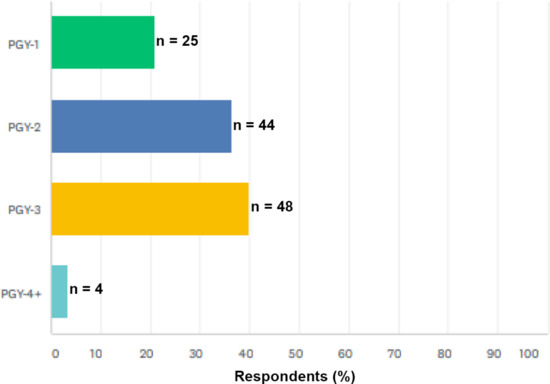
Figure 1.
What is your level of training? PGY indicates postgraduate year.
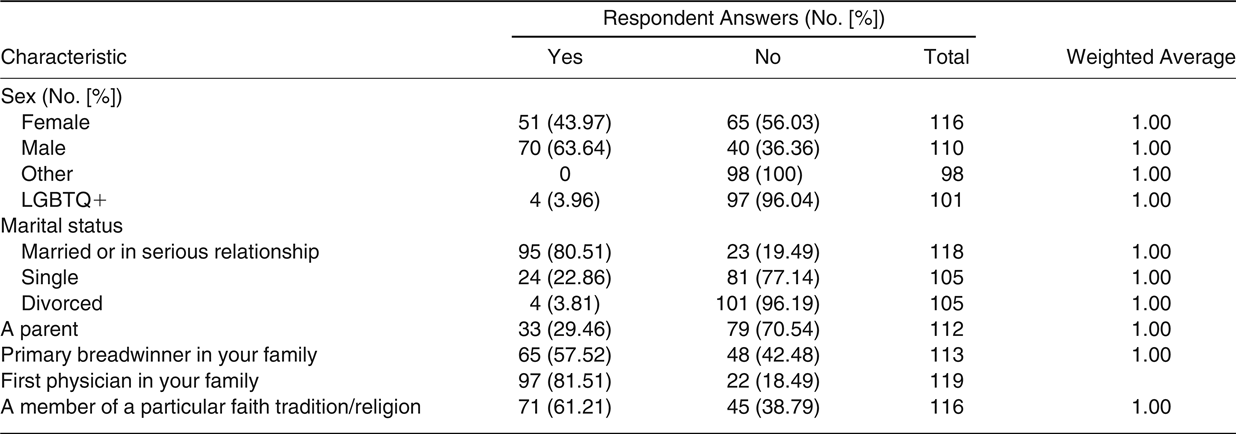
Table 1 presents demographic information for physicians who participated in the WNA. There were 70 male and 51 female respondents, and most were either married or in a serious relationship (80.5%). Sixty-five respondents (57.5%) stated that they were the primary income producer in their family, and 33 (29.5%) have children. In addition, most participants (81.5%) disclosed that they were the first physician in their family.

Table 1.
Demographic Characteristics of the 121 Respondents
Respondents were first asked to describe their current overall level of well-being (Fig. 2) and were then asked to follow that up by rating their level of well-being compared with 1 year ago (Fig. 3). Twenty-one percent of residents described their current well-being as either low or very low, 47% as high or very high, and 32% as neither high nor low. Comparing this to 1 year ago, 29% rated it as worse or much worse, 44% as better or much better, and 27% as unchanged.
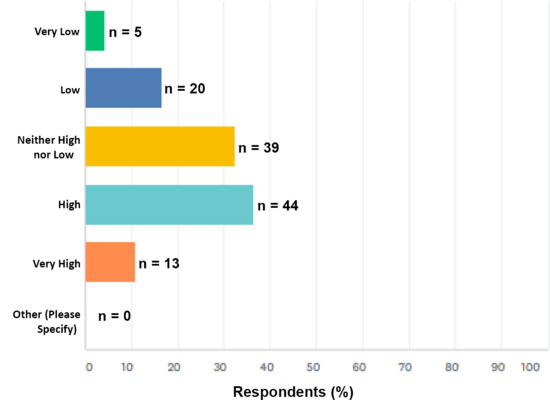
Figure 2.
How would you describe your current overall level of well-being?
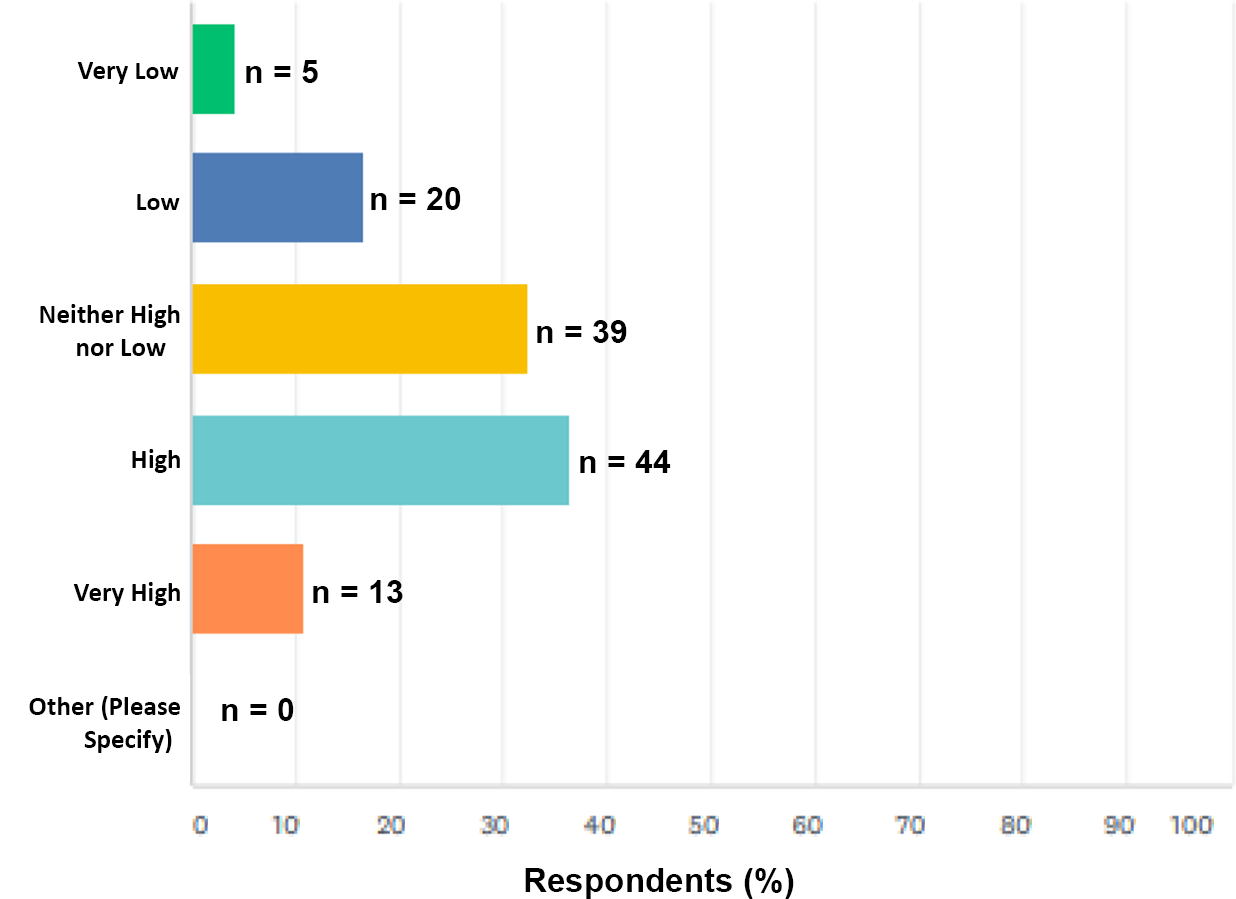
Figure 3.
How would you rate your overall level of well-being compared with 1 year ago?
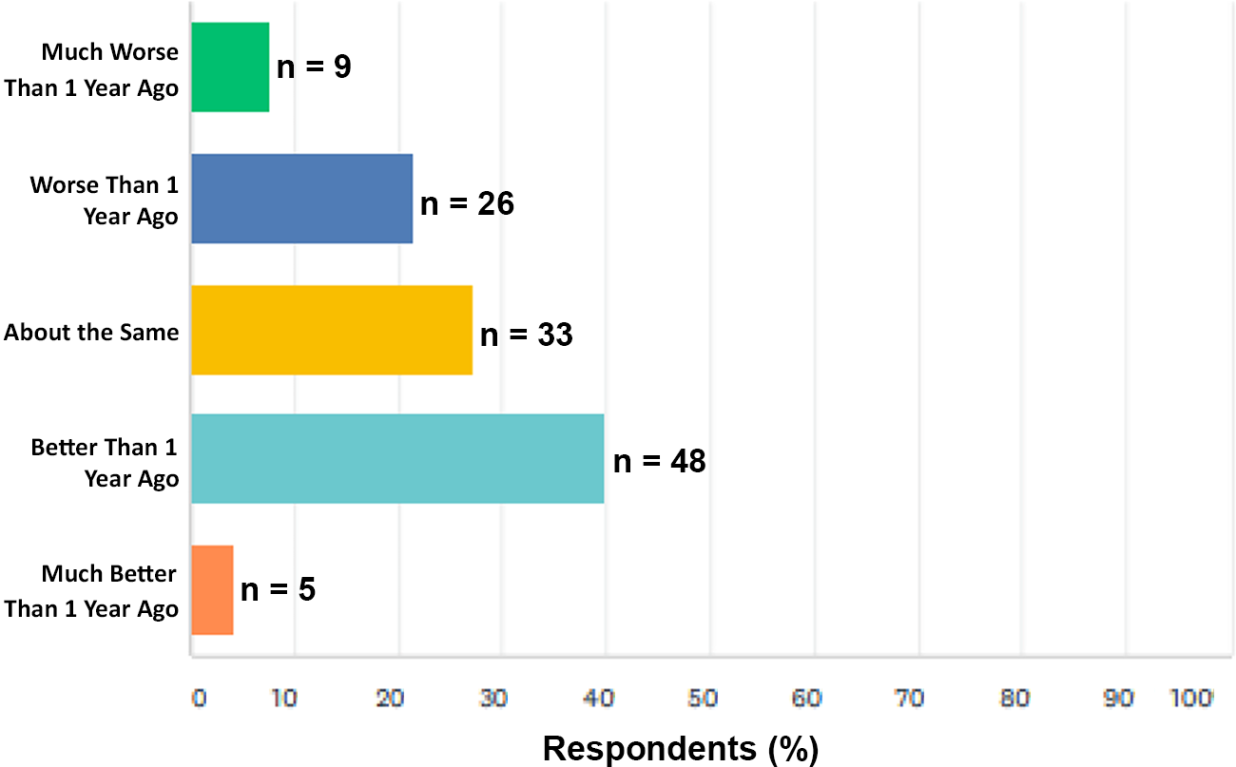
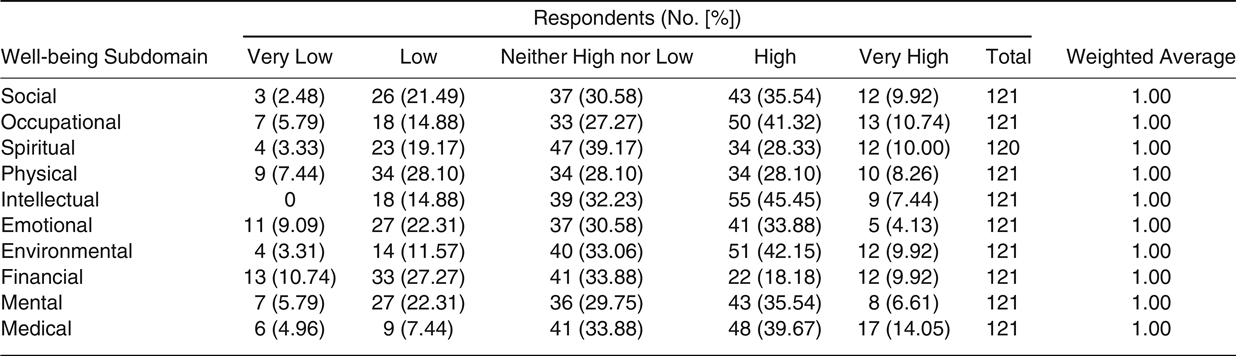
Table 2 describes the various modes of wellness as well as the response counts and rates for specific wellness subdomains. Among the subdomains of wellness, resident levels of physical, emotional, and financial well-being were all alarmingly low. More than 30% of respondents reported their levels of well-being to be either poor or very poor in each of these categories. Conversely, levels of intellectual and environmental wellness were reported as relatively high. More than 50% of residents reported their well-being within those subdomains as being high or very high.
Table 2.
Subdomains of Wellness
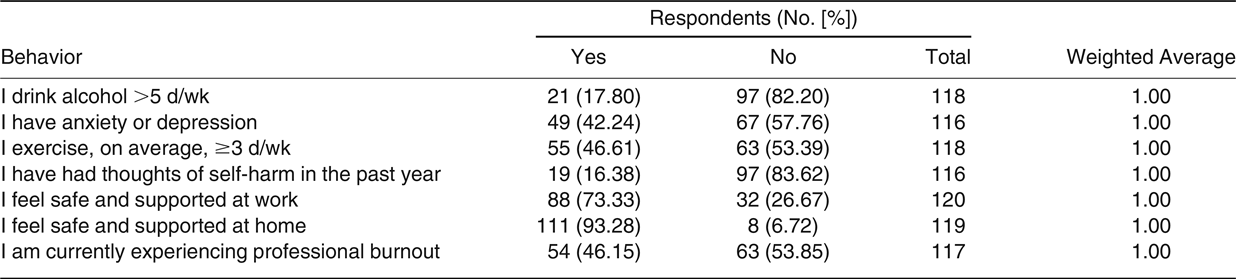
The survey also examined various self-reported behaviors among resident physicians, including alcohol use, mental health, and exercise (Table 3). Ninety-three percent of residents reported feeling safe and supported at home, and 73% stated that they felt safe and supported at work. Despite respondents revealing a relatively high level of support, 46% were experiencing professional burnout, 42% reported having anxiety or depression, and more than 16% have had thoughts of self-harm within the past year.
Table 3.
Self-Reported Behaviors
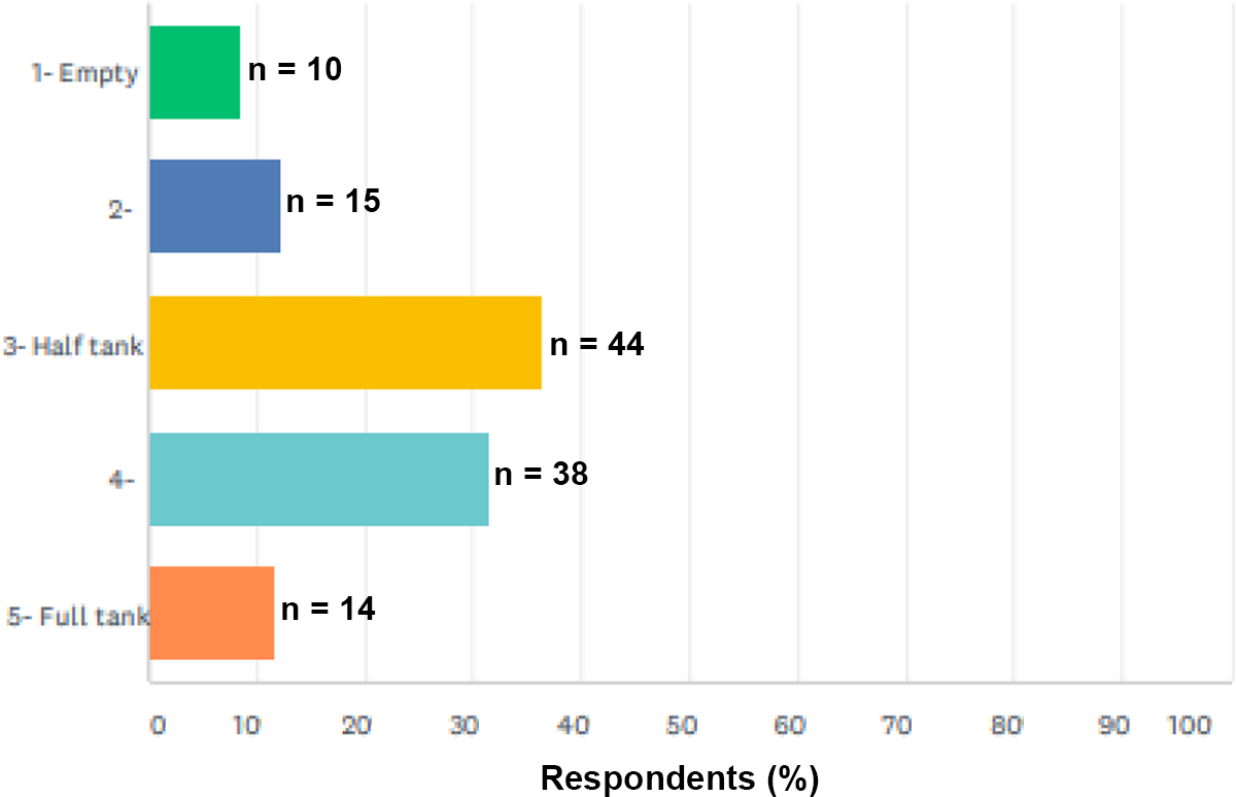
Residents responded to the question of if they have a safe place to talk about their personal well-being and were asked to describe their overall well-being fuel tank (Figs. 4 and 5). Only 10% of respondents reported that they did not feel comfortable talking to anyone at work or home about their well-being; however, more than 50% stated that they felt like their well-being fuel tank fell between half full and empty.
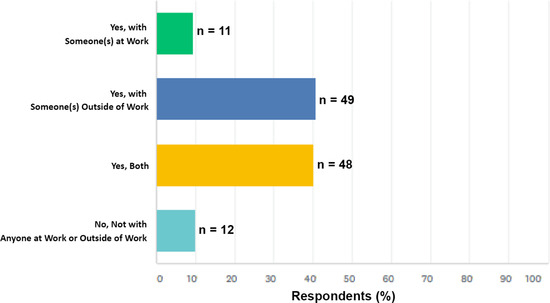
Figure 4.
Do you have a safe space to talk about your personal well-being? One response was skipped (N = 120).
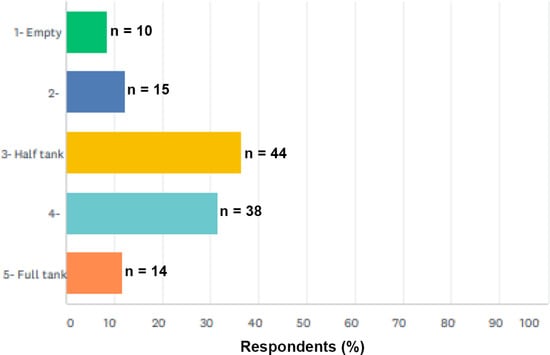
Figure 5.
Overall my well-being fuel tank is …
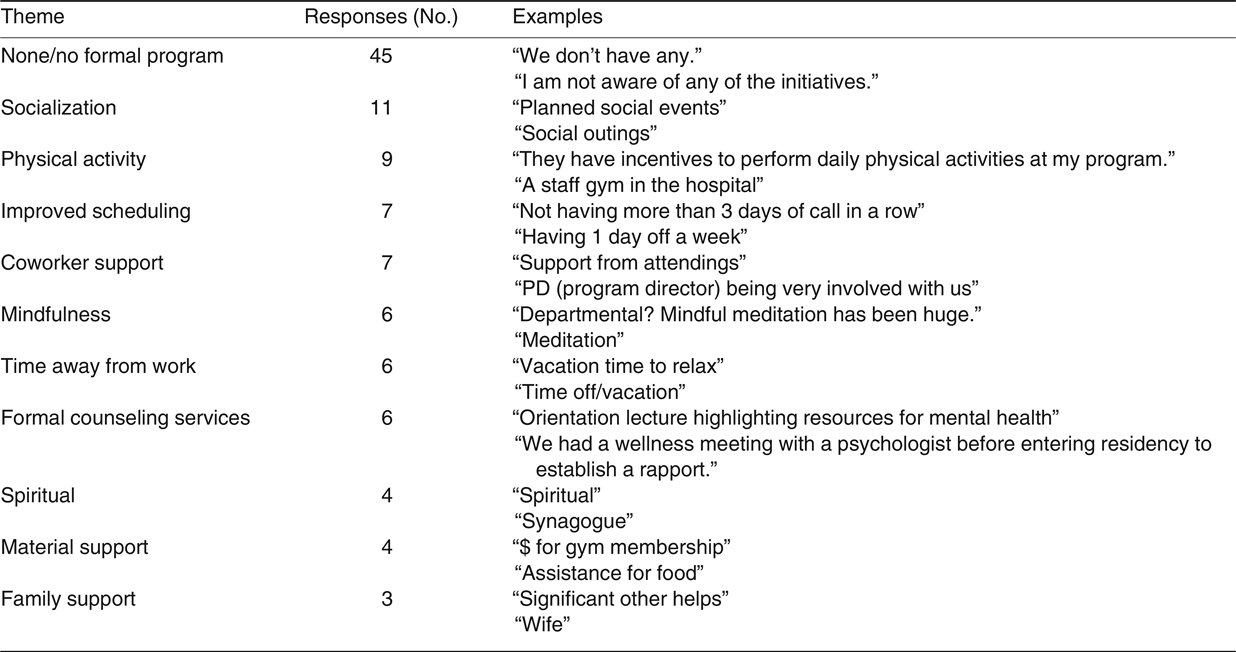
Thematic responses (99 total) for questions 5 and 11 regarding department initiatives they have found most helpful to their personal/program well-being and how personal well-being could be improved in their residency programs are shown in Table 4.
Table 4.
Methods Currently Used to Enhance Well-being (Themes)
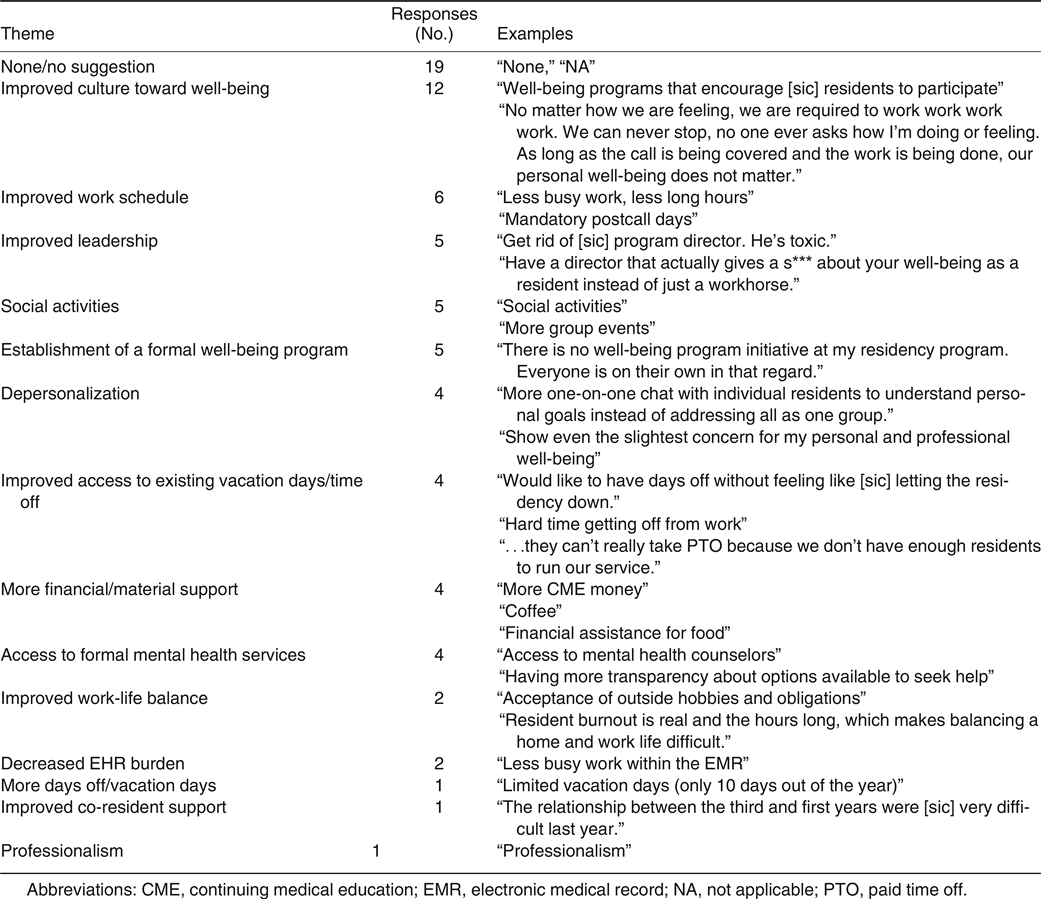
Qualitative analysis of the open responses regarding ways in which personal well-being can be improved in residency programs was performed. Each response was coded using thematic analysis and reported. Each response was coded for at least a single theme, with some responses including multiple themes. Sixty-six responses organized by theme are given in Table 5.
Table 5.
Ways in Which Personal Well-being Can Be Improved Within Residency Programs (Themes)
Discussion
In this survey, we found concerning high rates of low and very low self-perceived wellness. Although different from suicidal ideation, self-harm is a risk factor for suicide, and the 16% found in this survey of podiatric medical residents is larger than the 10% reported among orthopedic residents [9]. Ninety-three percent of residents responded that they feel safe and supported at home. However, that number reduces to 73% when asked if they feel safe and supported in the workplace. In addition, more than 40% of respondents report having anxiety or depression and are experiencing professional burnout, which is lower than the 46% reporting high burnout and 54% reporting moderate to severe anxiety in the study by Rushing et al [13] for podiatric medical residents. In the study by Rushing et al [13], an anonymous 35-question cross-sectional online survey was developed using the MBI–Human Services Survey and the Hospital Anxiety and Depression Scale−Anxiety.
There is potential bias in the results of this study. It is possible that residency program directors more attuned to resident burnout may have required residents to participate in the survey. Residents who may have felt the effects of burnout and decreased wellness at the time the survey was being circulated may have been more likely to submit the survey versus counterparts whose well-being was not self-perceived as low. Results may have also been strengthened if responses were compared by postgraduate year, sex, and region of residency. Region of residency was not included in the survey due to the sensitive nature of the survey material and sparsity of residencies. Although a respectable sample of podiatric medical residents submitted the survey, a true response rate was not able to be deduced, and greater participation would strengthen results.
Conclusions
The survey used in this study evaluated podiatric medical resident wellness. The results of this survey are concerning and, in conjunction with the findings of Rushing et al [13], should be carefully considered by podiatric medical colleges, residencies, and fellowships and all practicing podiatric physicians. These results suggest that there could be value in introspection and development of measures to improve wellness and decrease burnout in podiatric medical residents.
The American Podiatric Medical Association does have resources for podiatric physicians regarding burnout. Their Web site [14] includes a Mayo Clinic survey, or “well-being index,” that allows users to assess current status regarding their well-being and monitor it over time. There are also articles and resources on physician wellness, mostly geared toward individuals [14]. The APMA’s Physicians Recovery Network is also a toll-free help line offering peer consultation for physicians struggling with alcohol use, mental health issues, or physical impairments. There are also resources connecting DPMs to recovery programs in each state [15].
An investigation comparing MBI and WNA results among students, residents, and postgraduate podiatric physicians would be useful in determining baseline values and where efforts in prevention and therapy could be initiated. Afterward, devoted wellness committees initiating preventive and therapeutic measures, such as in the study by Fick et al [11] addressing the overall professional and personal wellness of the podiatric medical community, could reap significant benefits and instill systemic change that could improve the careers and personal lives of the entire podiatric medical community.
Financial Disclosure: None reported.
Conflict of Interest: None reported.
References
- Freudenberger HJ: Burnout: past, present, and future concerns. Loss Grief Care 3: 1, 1989.
- Rodrigues H, Cobucci R, Oliveira A, : Burnout syndrome among medical residents: a systematic review and meta-analysis. PLoS One 13: 11, 2018.
- Shanafelt TD, West CP, Sinsky C, : Changes in burnout and satisfaction with work-life integration in physicians and the general US working population between 2011 and 2017. Mayo Clin Proc 94: 1681, 2019.
- Shanafelt TD, Noseworth JH: Executive leadership and physician well-being: nine organizational strategies to promote engagement and reduce burnout. Mayo Clin Proc 92: 129, 2017.
- McManus IC, Keeling A, Paice E: Stress, burnout and doctors' attitudes to work are determined by personality and learning style: a twelve year longitudinal study of UK medical graduates. BMC Med 2: 29, 2004.
- Dyrbye LN, Thomas MR, Massie FS, : Burnout and suicidal ideation among U.S. medical students. Ann Intern Med 5: 334, 2008.
- Halbesleben JR, Rathert C: Linking physician burnout and patient outcomes: exploring the dyadic relationship between physicians and patients. Health Care Manage Rev 33: 29, 2008.
- Rosen IM, Gimotty PA, Shea JA, : Evolution of sleep quantity, sleep deprivation, mood disturbances, empathy, and burnout among interns. Acad Med 81: 82, 2006.
- Faivre G, Kelwasser H, Bourgeois M, : Burnout syndrome in orthopedic and trauma surgery residents in France: a nationwide survey. Orthop Traumatol 104: 1291, 2018.
- Ames SE, Cowan JB, Kenter K, : Burnout in orthopaedic surgeons: a challenge for leaders, learners, and colleagues: AOA critical issues. J Bone Joint Surg Am 99: e78, 2017.
- Fick L, Axon K, Potini Y, : Improving overall resident and faculty wellbeing through program-sponsored innovations. MedEdPublish 8: 35, 2019.
- Eckleberry-Hunt J, Kirkpatrick H, Barbera T: The problems with burnout research. Acad Med 93: 367, 2018.
- Rushing CF, Casciato DJ, Ead JK, : Perceptions of burnout, personal achievement, and anxiety among US podiatric medicine and surgery residents: a cross-sectional pilot study. J Foot Ankle Surg 59: 953, 2020.
- American Podiatric Medical Association: Well-being resources: self-care leads to better patient care. Available at: https://www.apma.org/wellbeing. Accessed December 8, 2020.
- American Podiatric Medical Association: Physicians’ recovery network. Available at: https://www.apma.org/prn. Accessed December 8, 2020.
© 2022 American Podiatric Medical Association