


Abstract
Closed degloving injury involving a toe represents a rare phenomenon in which the bones of the toe dislocate but the soft-tissue envelope remains intact. It has been described sparingly throughout the medical literature, and outcomes have been poor. This article presents a case report of the unique injury while also investigating trends through a detailed review of the literature.
Degloving injuries usually affect the extremities and involve the avulsion of an extensive section of skin and soft tissue from the underlying bone, often leading to poor functional outcomes or amputation. The majority of degloving injuries occur in an open fashion; however, in 1863, Dr. Morel-Lavallée [1] described a rare form of closed degloving injury that was observed in trauma patients. In the orthopedic literature, this has since been referred to as a Morel-Lavallée lesion, and there have been case reports involving the abdominal flank, greater trochanter, and both the upper and lower extremities [1]. Similar to an open degloving injury, this type of closed degloving injury also is generally the result of a high-energy shearing or crush trauma [2,3]. Unlike an open injury, however, a closed degloving injury will leave an intact soft-tissue envelope. Despite the outward appearance of intact skin, there is underlying destruction that transects the blood supply between the tissue planes. The resulting tissue void may then undergo liquefied fat necrosis with resultant hematoma and/or seroma formation, usually leading to rapid gangrenous changes when occurring in the extremities, given the vascular injury [4].
The term ‘‘empty toe’’ phenomenon was coined in recent literature, first appearing in 1998, and describes a type of closed degloving event occurring in the digits of the lower extremity [5]. This form of closed degloving injury is unique from the MorelLavallée lesions described in orthopedic literature because it involves not only the stripping of bone from vascular supply, but also the translocation of osseous structures out of normal anatomical position. Again, this is generally the result of shearing or crushing trauma and, in the lower extremity, results in an ‘‘empty toe’’ devoid of bony contents. The bones of the affected toe are forcefully translocated into the adjacent soft tissue, leaving behind a remnant toe envelope that has sustained significant vascular insult, despite a relatively normal outward appearance. The reported incidence is extremely rare, with seven individual case reports being described since 1994. Of the seven reported cases, five resulted in amputation of the affected digit(s). In the two cases in which the affected toe was saved, neither patient experienced dislocation of all three phalanges, and closed reduction was able to be performed on both relatively quickly after initial injury. Although the majority of the case reports resulted in amputation of the affected digit(s), there are distinctive similarities that exist between many of the cases, including our own report, that may lead to better understanding of the injury, management, and outcome expectations.
Case Report
A 33-year-old man sustained an injury to his left foot after losing his balance and falling a short height from the back of a truck tailgate while at work. The patient was wearing high-top steel-toe work boots at the time. He initially thought that he injured his ankle and therefore continued to walk on the affected foot without removing his boot to examine his foot. His boot was not removed until he arrived at an emergency department at an outside hospital. According to chart review, there was severe edema and discoloration noted to the left fourth and fifth digits on removal of the boot. Further details of the physical examination are limited because of lack of access to the charts from the outside hospital. A computed tomographic (CT) scan and CT angiography scan of his foot were then obtained for further evaluation because of dark discoloration of the toes. The CT scan revealed a closed degloving injury of the fifth toe with translocation of osseous contents into the fourth interspace without fracture. Computed tomographic angiography showed no vascular anomaly. According to chart review, the orthopedic team was then consulted at the Ohio State Wexner Medical Center. There was concern for compartment syndrome; thus, compartment pressure was measured at that time using compartmental pressure instrumentation, which resulted in a measurement of 22 mm Hg. His pain worsened overnight, prompting repeated compartment pressure measurements to be performed, which reportedly reached as high as 70 mm Hg. Compartment syndrome was suspected and he was emergently taken to the operating room for fasciotomies through medial and dorsolateral foot incisions. A wound vacuum-assisted closure (VAC) device was applied to the surgical fasciotomy sites intraoperatively. After the fasciotomies were performed, his fourth and fifth toes remained dusky, with some associated numbness. He was taken back to the operating room 2 days after the fasciotomy for a wound VAC change. We assumed this was performed in the operating room because of the patient’s pain level and inability to tolerate a change of the wound VAC device without anesthesia versus the possible need for further debridement of fasciotomy sites. This account is again limited because of the inability to obtain formal documents from the treating facility. During this second operation, it was reported that, as he was being extubated, he experienced an episode of aspiration and was transferred to the intensive care unit, requiring mechanical ventilation until the following day. He was given intravenous piperacillin/tazobactam empirically because of left foot injury while wearing a shoe. His creatine phosphokinase level was noted to peak at 2,000 U/L and he was given aggressive intravenous hydration, after which a downtrend to 700 U/L was noted.
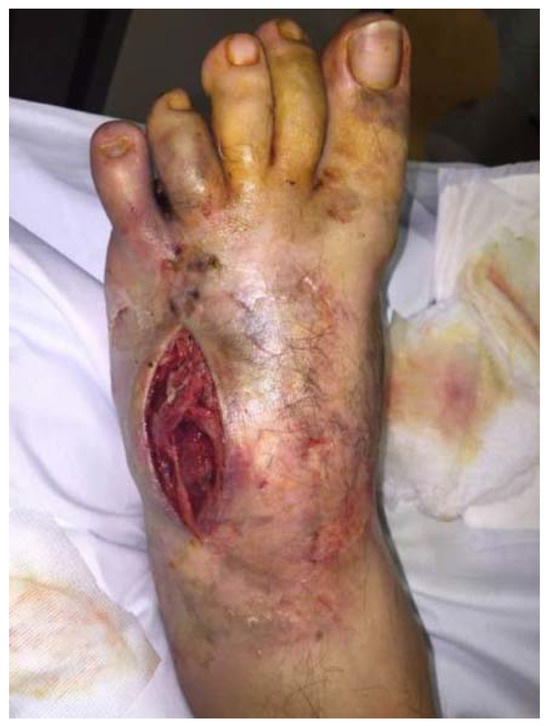
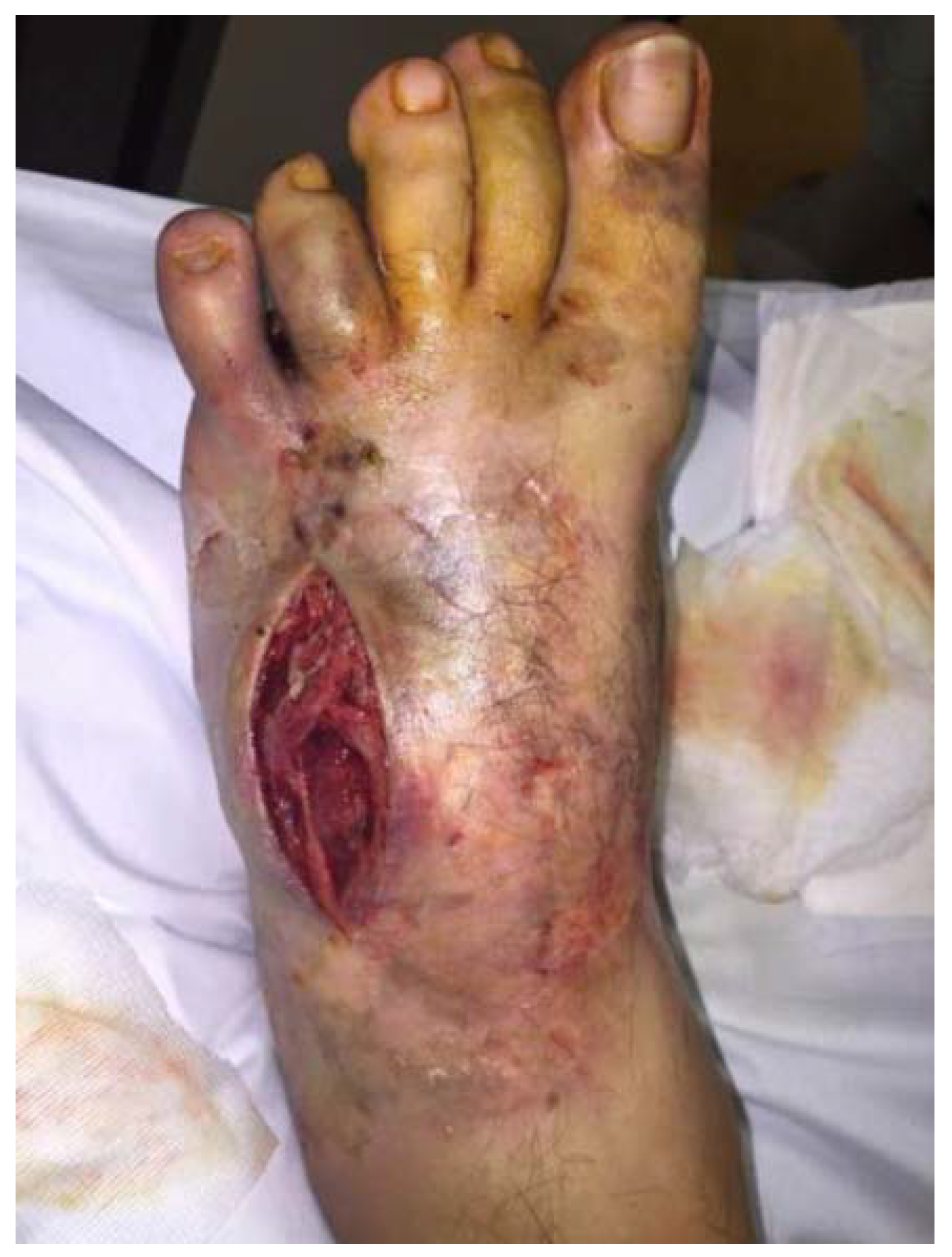
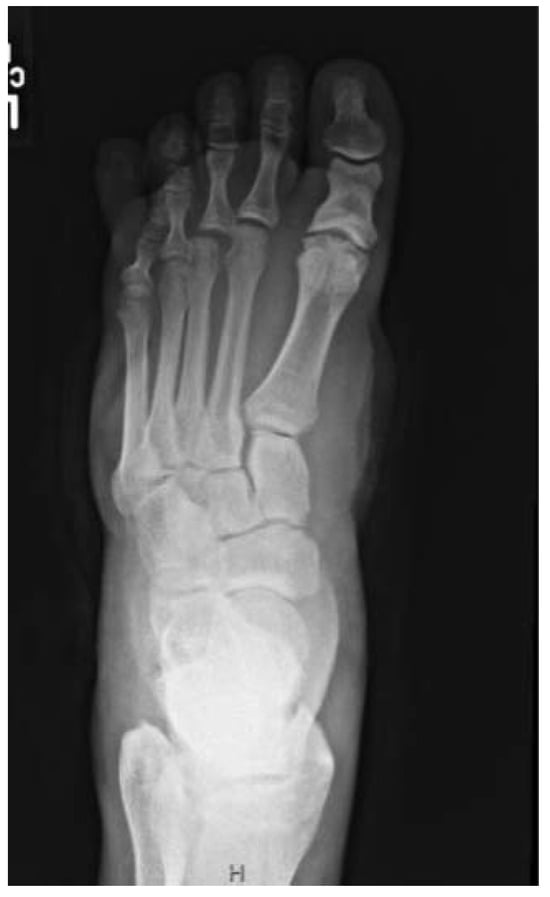
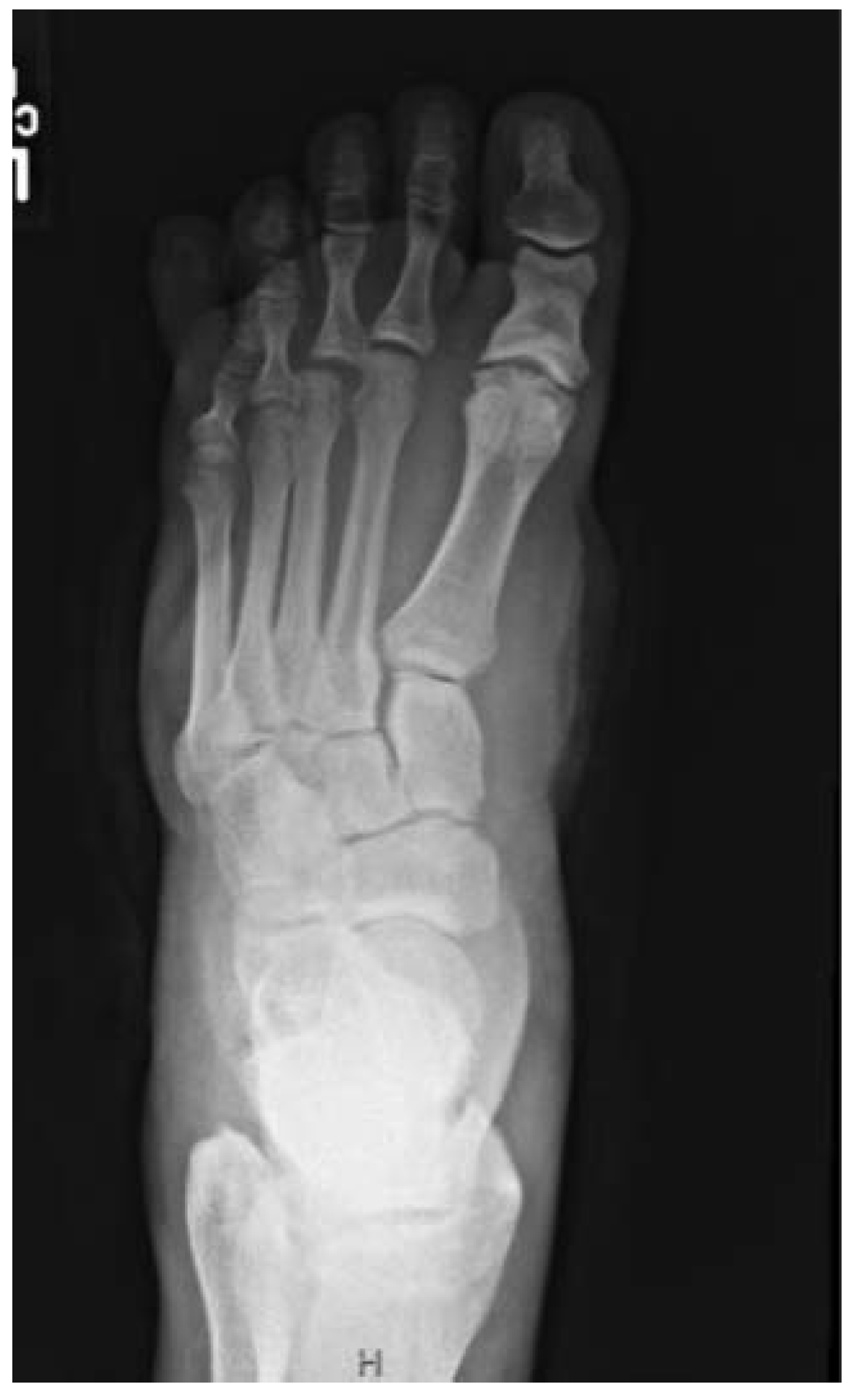
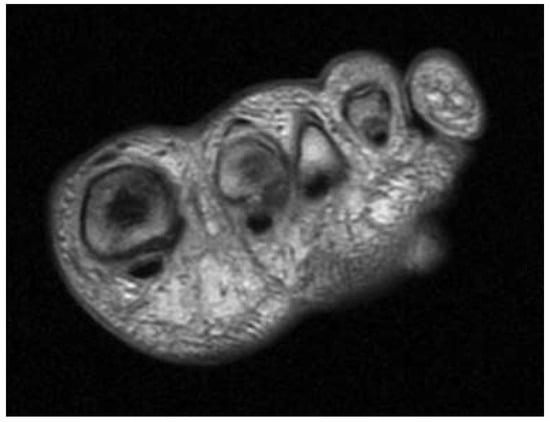
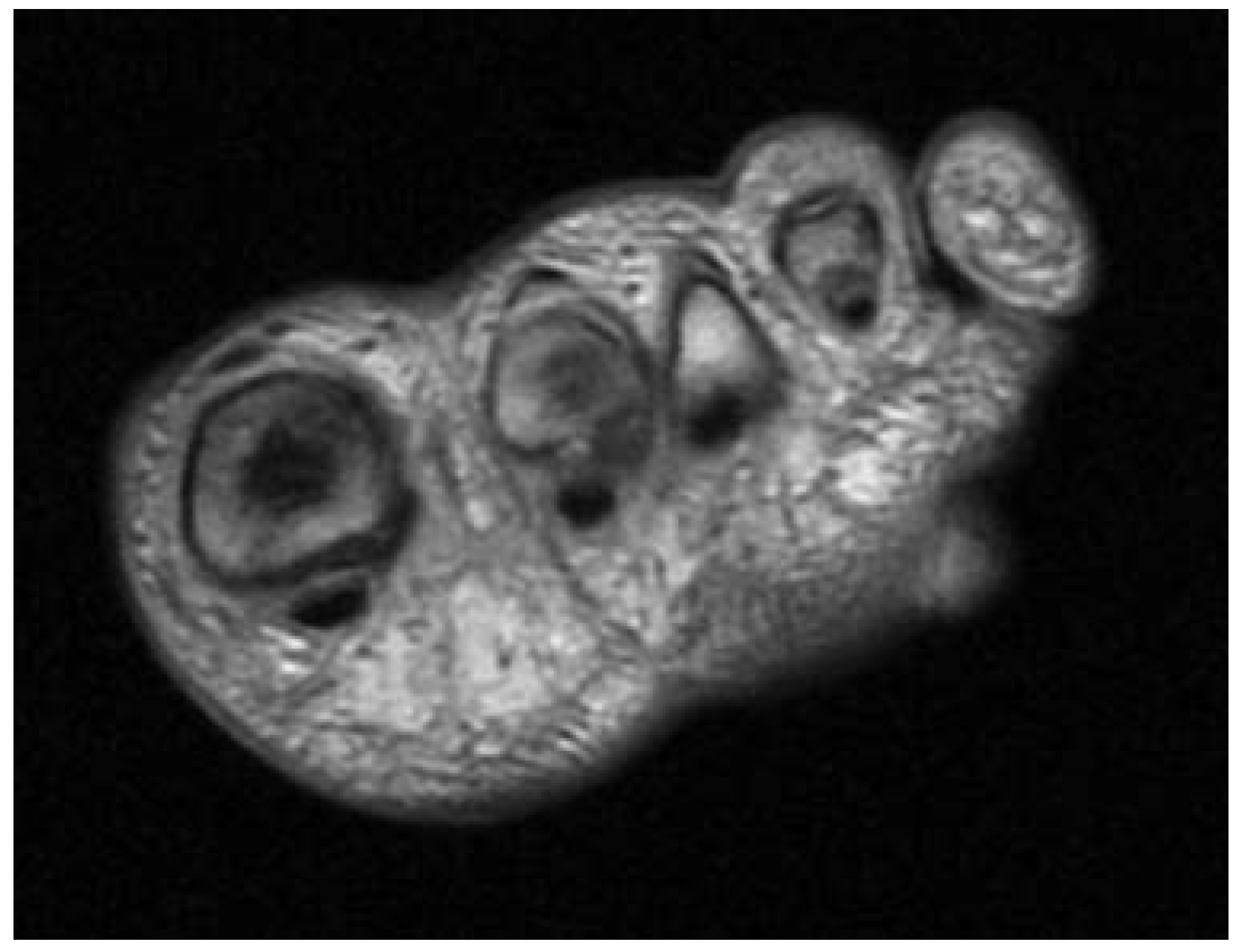
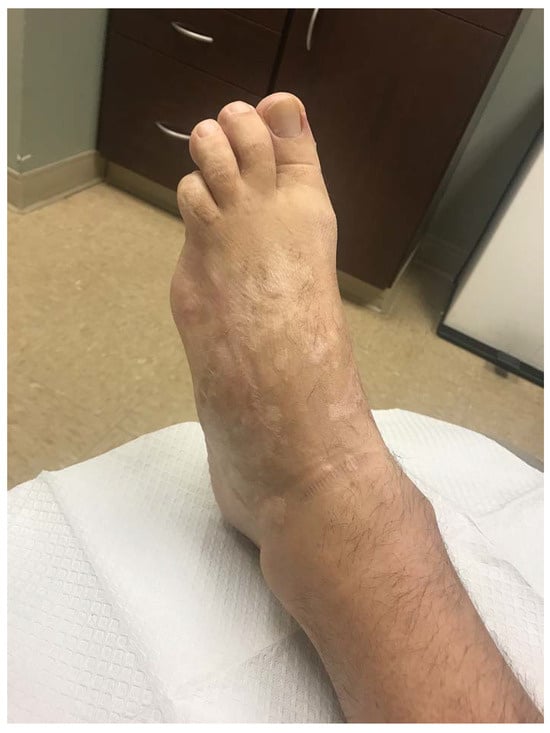
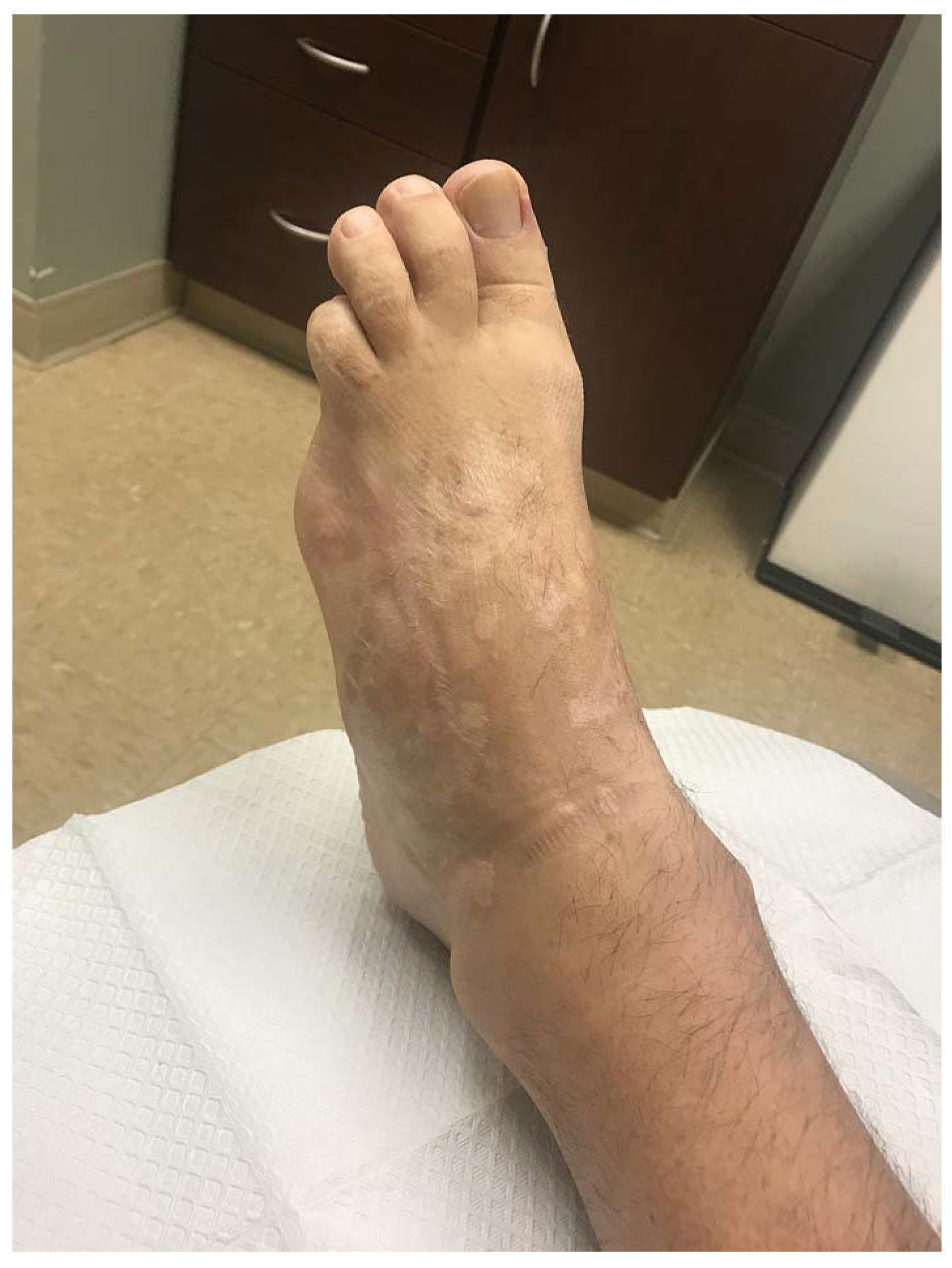
Following medical stabilization, the patient was transferred to our institution for further medical management and for reevaluation of the left lower extremity. At this time, it had been 6 days since his initial injury (Figure 1). On arrival, repeated radiographs were obtained of the left foot concerning for diffuse soft-tissue swelling of the foot and translocation of the osseous structures of the fifth toe (Figure 2). Physical examination revealed a dusky appearance of the left fourth and fifth digits, although the patient reported this to be slightly improved. There was full sensation appreciated to the first, second, and third digits of the left foot; decreased sensation to the left fourth digit; and absent sensation to the left fifth digit and lateral foot. He was able to actively and passively dorsiflex and plantarflex the first, second, and third digits without pain. There was continued severe edema to the left foot. The skin temperature of the fifth toe was cold to the touch; the fourth toe was slightly cool. A magnetic resonance imaging scan was obtained for assistance in further delineation of soft-tissue injury. This revealed medial and dorsal dislocation of the fifth metatarsophalangeal joint, with the fifth toe phalanges completely disassociated from the soft tissues, now dorsally overlying the base of the fourth toe—consistent with a history of internal degloving injury. There were also findings of diffuse soft-tissue swelling and large cutaneous fasciotomy defects along the medial and dorsolateral aspects of the foot (Figure 3). An urgent consultation for hyperbaric oxygen therapy (HBOT) was also ordered on initial presentation because of recent compartment syndrome. He began HBOT two times per day. Coloration of the fourth toe improved with time, but the fifth digit remained dusky. Twelve days after the initial injury, the patient elected to proceed with left fifth digit amputation and wound debridement. He continued inpatient HBOT for another 3 weeks before hospital discharge. His fasciotomy sites had healed completely by secondary intention with assistance of wound VAC therapy within 6 months, with noted cicatrix formation. At final follow-up nearly 2 years later, the edema to the left foot had resolved, and mild foot deformity including formation of hammertoes with contracture of the second, third, and fourth digits was appreciated (Figure 4). He has been doing well with the use of offloading crest (buttress) hammertoe pads. The patient was able to return to full-time work with no work restrictions and currently walks without pain or difficulty.
Figure 1.
Left foot appearance on arrival to our institution showing dusky appearance of fourth and fifth digits with open fasciotomy site.
Figure 2.
Left foot radiographs depicting translocation of fifth digit phalanges into the soft-tissue envelope of the fourth digit.
Figure 3.
Left foot magnetic resonance imaging scan revealing empty soft-tissue envelope of the fifth digit.
Figure 4.
Left foot healed at final follow-up.
Discussion
Closed degloving injuries involving a toe are exceedingly rare, with only a handful of reported case studies appearing in the literature. The outcomes associated with the injury have been overall very poor, albeit predictable. Our goal was to present a case report of the rare injury and also to examine some of the prior case reports to look for trends and predictors or management strategies that may lead to more favorable outcomes [6,7,8,9].
One of the more obvious trends with this injury is the propensity for involvement of the fifth toe primarily. Although fingers may be more prone to open-type degloving injuries given adornment with rings or jewelry, toes tend to be more vulnerable to this closed-degloving injury, which is capable of causing osseous translocation. The osseous structure of the toe is such that phalanges tend to be short and wide compared to long and narrow as in the fingers; although unusual, with an extreme amount of crushing force as demonstrated in the reported injuries, the toe phalanges are capable of being stripped and translocating out of their respective soft-tissue envelopes. Although this injury can also occur in an open fashion, the routine use of protective shoe gear makes the closed degloving injury possible. The reason the fifth toe is affected more often than the other lesser digits is again because the phalanges of the fifth toe are even shorter and wider than the other toes, making them the easiest to strip and translocate. In addition, the position of the fifth digit as the lateralmost digit makes it more likely to be injured.
The mechanism of injury that results in a closed degloving injury of a toe does seem to be reflected uniformly throughout the previous case reports as involving a crushing injury, often with a shearing component. It can be assumed that during the time while the foot is being crushed, there is a strong moment of longitudinal or shearing traction placed on it that is capable of stripping and translocating the toe bones from their soft-tissue envelopes. Our case was unique in that we were not able to elucidate a mechanism of injury from the patient or the prior records that were consistent with any type of crushing or shearing incident; although traumainduced, the patient maintained that it was strictly the result of a fall from a short height.
When looking at outcomes, there does appear to be a distinction between cases where all three of the phalanges were displaced and translocated versus cases in which the distal phalanges remained intact. Those cases where all three phalanges were displaced, including our own case report, all resulted in necrosis and amputation of the digit. In cases where the distal phalanx or more remained intact and in position, there were a couple of positive outcomes, indicating that, in those scenarios, the blood supply may not have been completely transected.
In terms of management, this injury requires urgent intervention. Efforts should be made to perform closed reduction of the toe when possible to prevent further vascular insult to a compromised digit. If closed reduction cannot be achieved, however, open reduction and even Kirschner wire fixation may be necessary. In addition, clinical acumen must be used to identify and diagnose compartment syndrome, which always must be considered and often addressed in these cases given the mechanism of injury.
Financial Disclosure
None reported.
Conflicts of Interest
None reported.
References
- MOREL-LAVALLE´E VAL: Decollements traumatiques de la peau et des couches sous jacentes. J Trauma Arch Gen Med 1863, 1, 20.
- NICKERSON, TP; ZIELINSKI, MD; JENKINS, DH; et al. The Mayo Clinic experience with Morel-Lavallée lesions: establishment of a practice management guideline. J Trauma Acute Care Surg 2014, 76, 493. [Google Scholar] [CrossRef] [Scilit] [PubMed]
- SCOLARO, JA; CHAO, T; ZAMORANO, DP. The Morel-Lavallée lesion: diagnosis and management. J Am Acad Orthop Surg 2016, 24, 667. [Google Scholar] [CrossRef] [Scilit] [PubMed]
- BINGHAM, AL; FALLAT, LM. Empty toe phenomenon: a rare presentation of closed degloving injury of the foot. J Foot Ankle Surg 2016, 55, 842. [Google Scholar] [CrossRef] [Scilit] [PubMed]
- FLAHERTY, JD; EVANS, DA; DANAHY, PR. The empty toe phenomenon: a type of closed degloving. Am J Orthop (Belle Mead NJ) 1998, 27, 524. [Google Scholar]
- MATELIC, TM. MANOLI A II: Closed degloving injury of the fifth toe. J Orthop Trauma 1994, 8, 265. [Google Scholar] [CrossRef] [Scilit]
- SINGH, HP. DOWNING ND: An ‘‘empty’’ toe. Foot 2005, 15, 114. [Google Scholar] [CrossRef] [Scilit]
- TANG, CL; LEE, SS; LIN, TY; et al. Empty toe: a unique type of closed degloving injury with dismal outcome. Am J Emerg Med 2013, 31, 263.e1. [Google Scholar] [CrossRef] [Scilit]
- TARLETON, AA; FAUST, KC; DAVIS, JA. Empty toe phenomenon: a big problem for a little toe. Skeletal Radiol 2014, 43, 71. [Google Scholar] [CrossRef] [Scilit] [PubMed]
© 2021 American Podiatric Medical Association