


Abstract
Background: Onychomycosis is a chronic nail infection caused by dermatophytes, Candida, nondermatophyte molds, and Trichosporon. The purpose of this study was to identify the underlying pathogen in patients with onychomycosis in our region. Methods: A retrospective analysis of 225 cases with onychomycosis, diagnosed over a 27-month period at the Department of Dermatoveneorology, Bezmialem Vakif University, Istanbul, Turkey, and confirmed with culture, was performed. Results: Patient age ranged from 2 to 87 years (mean ± SD, 41.59 ± 17.61), and female patients were more commonly affected (120 cases, 53.3%) than male patients. Lateral and distal subungual onychomycosis was detected in 180 cases (80%). Etiologic agents were as follows: Trichophyton rubrum, 77 cases (34.2%); Trichophyton mentagrophytes, 30 cases (13.3%), Candida albicans, 28 cases (12.4%); Candida parapsilosis, 25 cases (11.1%); Acremonium species, one case (0.4%); Aspergillus species, two cases (0.9%); Fusarium species, four cases (1.3%); and Trichosporon species, three cases (1.3%). Conclusions: The most frequent isolated etiologic agents were T rubrum for toenails and C albicans for fingernails.
Onychomycosis is the term for fungal infections of the nails. It is the most common disease of the nails and represents half of all onychopathies. [1] Onychomycosis affects toenails and fingernails; however, toenail infections are more common.
Thickened, discolored, deformed nails without pain are the most common symptoms of a fungal nail infection. Even though most cases of onychomycosis are caused by dermatophytes, yeasts and nondermatophyte molds are the causal agents. [2] Candidal onychomycosis mainly affects fingernails in people who frequently immerse their hands in water. Nondermatophytic molds occur in approximately 1.5% to 6% of cases of onychomycosis, mostly seen in toenails of elderly individuals. [3]
Aging is the most common risk factor for onychomycosis, because of decreased blood circulation, longer exposure to fungi, diabetes mellitus, and repeated nail trauma. [4] People with onychomycosis may experience significant psychosocial problems caused by the appearance of the nail.
The differential diagnosis of onychomycosis includes nail psoriasis, lichen planus, contact dermatitis, nail bed tumors such as melanoma, trauma, or yellow nail syndrome; thus, laboratory confirmation may be necessary to differentiate between fungal infections and other skin diseases. This study was therefore aimed at identifying the causative agent, with an analysis of 225 participants with clinically suspected onychomycosis, and studying the correlation between concomitant dermatophyte infections, mainly tinea pedis, toenail onychomycosis, and fingernail onychomycosis.
Materials and Methods
In the interest of determining the causative agents of onychomycosis, a retrospective study was carried out from February 2014 to June 2016 at the Department of Dermatology and Veneorology, Bezmialem Vakif University, Istanbul, Turkey.
We reviewed the data collected in the hospital-based electronic files, and analyzed the following variables: sex, age, clinical type, localization, the presence of tinea pedis, toenail and fingernail onychomycosis, and culture. Patients who were undergoing treatment with systemic or topical antifungal agents, and who were culture-negative, were excluded to rule out false-negative cases and to avoid the influence of antifungal agents on the disease course.
Results
Of a total of 225 onychomycosis cases diagnosed over a 27-month period, a predominance of females was observed (120 cases, 53.3%). The age of the patients varied from 2 to 87 years (mean ± SD, 41.59 ± 17.61 years).
Regarding the clinical form, distal and lateral subungual onychomycosis predominated, accounting for 180 cases (80%); followed by proximal subungual onychomycosis, which accounted for 26 cases (11.6%); and white superficial onychomycosis, which accounted for 19 cases (8.4%).
We also found a predominance of toenail involvement, which accounted for 169 cases (75.1%). There were 56 cases of fingernail onychomycosis (24.9%).
Of the 225 cases, dermatophytes were the most common pathogens and were isolated in 124 participants (55.1%), followed by Candida species in 91 participants (40.4%). Nondermatophyte molds were isolated in seven participants (3.1%). Trichosporon genus was isolated in three patients (1.3%). Trichosporon rubrum was the predominant causative agent for most cases of toenail onychomycosis, accounting for 39.4% of cases, followed by T mentagrophytes, which was responsible for 15% of cases. The results of this study have revealed that Candida albicans has emerged as the predominant causative agent, accounting for 33.9% of all cases of fingernail onychomycosis, followed by Candida parapsilosis, which was responsible for 16.1% of cases (Tables 1 and 2).
Table 1.
Epidemiologic Data of Patients.
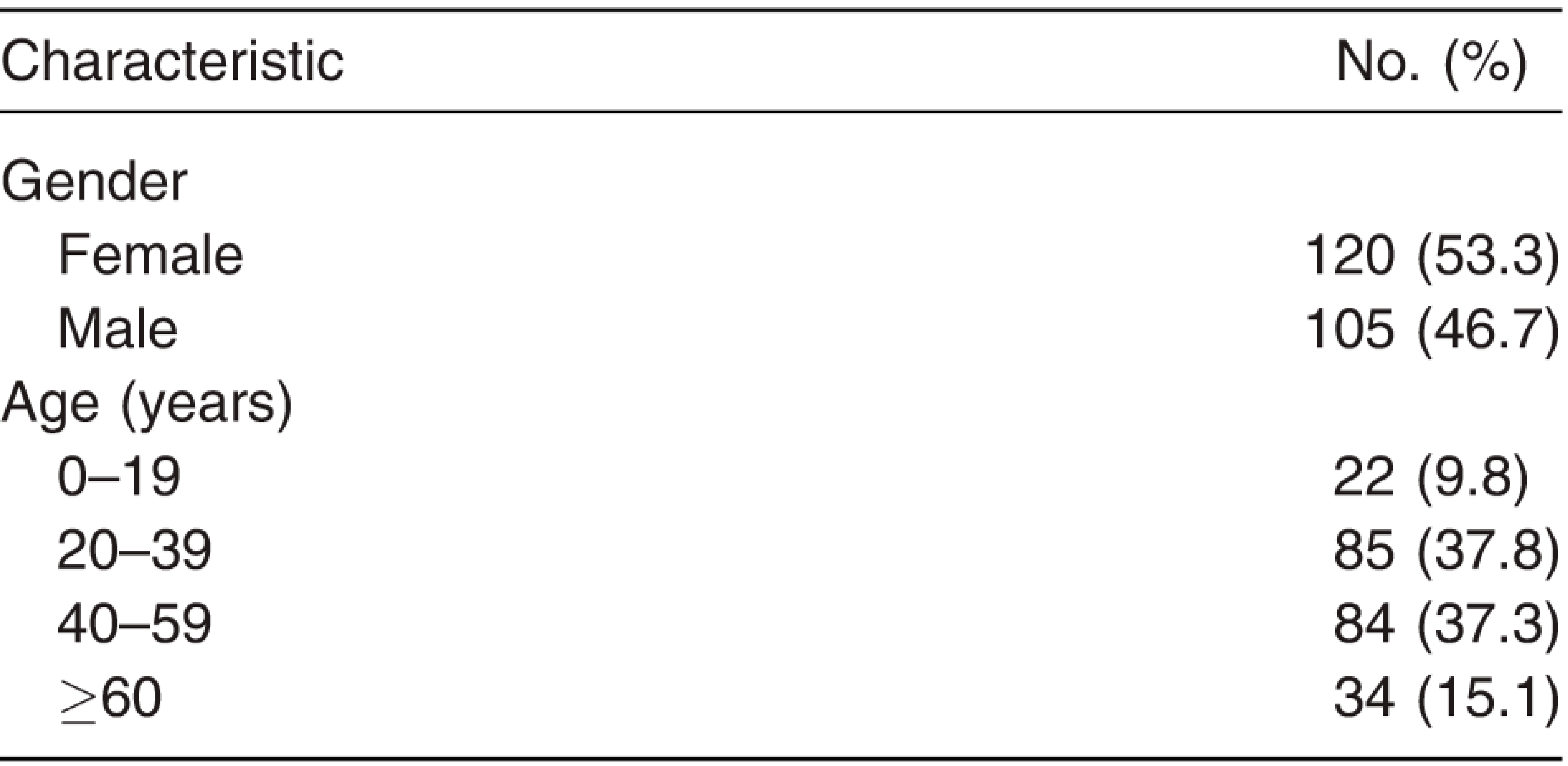
Table 2.
Etiologic Agents.
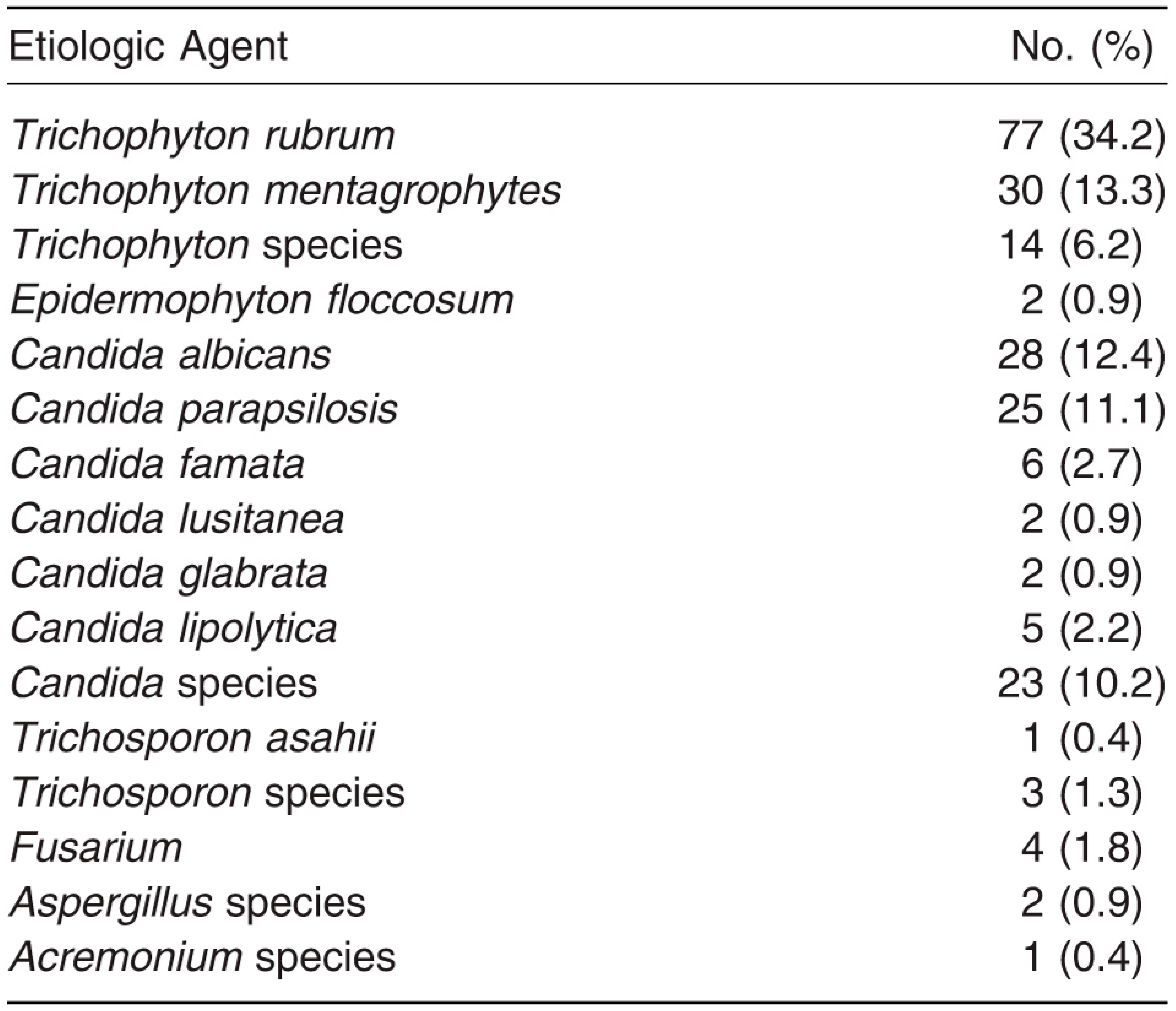
Three patients had positive results for Trichosporon species (1.3%), and one patient had positive results for T asahii (0.4%). All of them were isolated from toenails.
Our results showed that approximately 25.3% of patients with toenail onychomycosis have a concomitant tinea pedis infection. The most frequently identified agent was T rubrum, which was identified in 20 of the 57 patients (35.1%), followed by T mentagrophytes, which was responsible for 24.6% of these cases. Additionally, 4.9% of patients with toenail onychomycosis have a concomitant fingernail onychomycosis. The most frequently identified species was T rubrum, which was identified in three of the 11 patients (27.3%) in this group. Nondermatophyte molds were isolated in seven participants (4%) with toenail onychomycosis; however, they were not identified in patients with fingernail onychomycosis.
Discussion
Onychomycosis is referred to as chronic fungal nail infection, whereas tinea unguium specifically describes dermatophytic nail infection. The etiologic agents for onychomycosis are dermatophytes, Candida, and nondermatophytic molds. [5] Several species of dermatophytes belong to the Epidermophyton, Microsporum, and Trichophyton genera. Trichophyton rubrum is the predominant causative agent for most cases of onychomycosis of toenails. The toenails were the most affected anatomical area in this study, with a total of 169 cases (75.1%). The mean age of patients was 41.59 years, which is in accordance with other studies. [6,7]
Reasons for higher prevalence in older adults for onychomycosis may include poor peripheral circulation, diabetes, repeated nail trauma, longer exposure to pathogenic fungi, suboptimal immune function, inactivity, or the inability to cut the toenails or maintain good foot care. [4]
In our study, onychomycosis was more common in females (53.3%) than in males (46.7%). These results are in contrast with many of the studies in the worldwide literature. [2,8] A higher isolation rate in females in our study may be attributable to increased negative effects on female patients' emotional and social functioning; in addition, female patients may be unwilling to allow their hands or feet to be seen in our country.
In our study, dermatophytes were the most commonly found pathogens (56.4%), which is comparable to other studies. [2,9] Trichophyton rubrum was the most frequently isolated dermatophyte from cultures, which was in concordance with a study from Turkey. [2] In some studies, T mentagrophytes has been reported as the most prevalent dermatophyte, but we identified T mentagrophytes in 30 participants (13.3%), which can be attributed to variations in epidemiology based on different countries and regions. [10]
Most cases of tinea unguium and tinea pedis are caused by T rubrum, which is the most common dermatophyte worldwide. [11] In our study, T rubrum was the predominant dermatophyte, isolated in 35% of concomitant tinea pedis and onychomycosis cases, followed by T mentagrophytes, which was isolated in 24.6%.
Common use of occlusive footwear and increased physical activity, leading to increased perspiration of the feet, frequently results in a warm, moist environment and predisposes patients to onychomycosis.
Nondermatophyte molds were isolated in 3.1% of participants, with Fusarium species being the most common isolate found in four cases. Other isolated species were Aspergillus species (two cases) and Acremonium species (one case). The most common nondermatophyte molds worldwide are Scopulariopsis brevicaulis, Fusarium species, Aspergillus species, Scytalidium dimidiatum, and Acremonium species. In South America and Europe, there are studies suggesting that Fusarium is an important cause of onychomycosis. [12,13]
In 92 cases (41%) involving Candida species, C parapsilosis, C albicans, C famata, C lusitanea, C glabrata and C lipolytica were the most common pathogens, respectively, which is in accordance with many studies. [9,10] In cases of candidal onychomycosis, females (76.6%) were affected more than males (23.4%). Candida nail infections occur more commonly in fingernails than in toenails. Candida species were isolated predominantly from the fingernails in our study, in concordance with the literature. Housework may chronically expose female patients to submersion in water and facilitate ease of entry of fungal agents into the hands.
Trichosporon is a yeast that is usually isolated from cases of white piedra of the head or pubic hair. Trichosporon species have rarely been implicated as causative agents of onychomycosis. [14,15] We detected a 1.7% frequency for Trichosporon isolation from onychomycosis, mainly Trichsporon species isolates (75%); other authors have reported frequencies varying from 0.54% to 8% for Trichosporon in different countries. [15,16] Although T asahii is implicated as a systemic disease-associated pathogen, we were able to isolate Trichosporon species at a noticeable frequency, as a single microorganism, from onychomycosis in patients living in Turkey. Thus, we propose that Trichosporon genus can play a role in human nail disease.
Distal lateral subungual onychomycosis was the most common form of onychomycosis (80%), which is comparable to other reports. [10] Proximal subungual onychomycosis was the second most common type, and it was not found to be associated with any immunodeficiency disease.
Mycologic speciation is important because allylamines are more effective against dermatophytes, whereas azoles are more effective against yeast infections. [17,18] If onychomycosis is not successfully treated, it may spread to other parts of body, and it may be complicated by secondary bacterial infections.
Conclusions
Trichosporon rubrum is the main causative agent of tinea pedis and tinea unguium and is likely to be the predominant dermatophyte worldwide. However, Candida and nondermatophytic molds can be identified in some cases that appear like typical dermatophytic onychomycosis. Therefore, both clinical presentation and mycology culture are important for selecting the most suitable antifungal agent, which is possible only if the underlying pathogen is correctly identified.
Financial Disclosure
None reported.
Conflicts of Interest
None reported.
References
- SzepietowskiJC.SalomonJ.Do fungi play a role in psoriatic nails?Mycoses50: 437, 2007.
- YenişehirliG.BulutY.SezerE.et al: Onychomycosis infections in the Middle Black Sea Region, Turkey. Int J Dermatol 48: 956, 2009.
- GreerDL.Evolving role of nondermatophytes in onychomycosis. Int J Dermatol 34: 521, 1995.
- ElewskiBE.CharifMA.Prevalence of onychomycosis in patients attending a dermatology clinic in northeastern Ohio for other conditions. Arch Dermatol133: 1172, 1997.
- WesterbergDP.VoyackMJ.Onychomycosis: current trends in diagnosis and management. Am Fam Physician88: 762, 2013.
- Martínez-HerreraEO.Arroyo-CamarenaS.Tejada-GarcíaDL.et al: Onychomycosis due to opportunistic molds. An Bras Dermatol90: 334, 2015.
- DasNK.GhoshP.DasS.et al: A study on the etiological agent and clinico-mycological correlation of fingernail onychomycosis in eastern India. Indian J Dermatol53: 75, 2008.
- GuptaM.SharmaNL.KangaAK.et al: Onychomycosis: clinic-mycologic study of 130 patients from Himachal Pradesh, India. Indian J Dermatol Venereol Leprol73: 389, 2007.
- SanjivA.ShaliniM.CharooH.Etiological agents of onychomycosis from a tertiary care hospital in Central Delhi, India. Indian J Fund Appl Life Sci1: 11, 2011.
- AdekhandiS.PalS.SharmaN.et al: Incidence and epidemiology of onychomycosis in patients visiting a tertiary care hospital in India. Cutis95: E20, 2015.
- BormanAM.CampbellCK.FraserM.et al: Analysis of the dermatophyte species isolated in the British Isles between 1980 and 2005 and review of worldwide dermatophyte trends over the last three decades. Med Mycol45: 131, 2007.
- MoralesCA.SolórzanoA.RojasAP.Características epidemiológicas y clínicas de las onicomicosis causadas por Fusarium spp. en un centro de referencia de Bógota, Colombia, 2001-2010. Rev Asoc Colomb Dermatol21: 21, 2013.
- TostiA.PiracciniBM.LorenziS.Onychomycosis caused by nondermatophytic molds: clinical features and response to treatment of 59 cases. J Am Acad Dermatol42: 217, 2000.
- HanMH.ChoiJH.SungKJ.et al: Onychomycosis and Trichosporon beigelii in Korea. Int J Dermatol39: 266, 2000.
- MagalhãesAR.NishikawaMM.MondinoSS.et al: Trichosporon isolation from human ungueal infections: is there a pathogenic role?An Bras Dermatol91: 173, 2016.
- GunduzT.MetinDY.SacarT.et al: Onychomycosis in primary school children: association with socioeconomic conditions. Mycoses49: 431, 2006.
- MorenoG.ArenasR.Other fungi causing onychomycosis. Clin Dermatol28: 160, 2010.
- BlakeN.ZhuJ.HernandezG.et al: A retrospective review of diagnostic testing for onychomycosis of the foot. JAPMA105: 503, 2015.
© 2018 American Podiatric Medical Association