


Abstract
Background: This study examines the possible influence of factors such as nail shape and consistency, sex, and sports activity on the development of the most common nail disorders in a population of young people. Methods: The nail plates of 140 young people (66 females and 74 males) were studied. Of these 140 participants, 72 were runners who trained more than 10 hours a week and competed regularly, and 68 did not habitually do any sports activity. Nail shape, consistency, and disorders were examined, taking into account the sex of the participants and their sports activity. Results: A hard nail consistency is more frequent in runners (74.4%) than in people who do no sports activity (25.6%). In contrast, a soft nail consistency is more prevalent in participants who do no sports activity (70%) than in runners (30%). It was also shown that onychocryptosis is related to sex, as females had a higher prevalence of this nail disorder (57.8%, P = .016). However, young male runners showed the highest and most significant percentage of the presence of onychocryptosis (74.1%; P = .002). Conclusions: Sports activity by young male runners whose nails have a hard consistency seems to be directly related to the high incidence of onychocryptosis in this population.
Nails are the most distal structure of the dorsal surface of the toes, and their main function is to protect the toes [1]. A variety of factors contribute to disorders of the nail [2]. Some sports, such as running and rhythmic gymnastics, can lead to the appearance of both dermal and nail disorders at the distal part of the foot, including lamellar splitting, splinter hemorrhages, median canaliform dystrophy, transverse lines (Beau's lines), longitudinal pigmented bands, and thickening of the skin of the upper part of the big toe [2,3,4].
Intrinsic factors, such as sex and nail shape and consistency, have not previously been examined as influencing factors in the appearance of onychocryptosis. In some disorders, nail consistency can vary greatly, as in the case of epidermal nails, which are soft, weak, and deformed [5,6,7].
In onychocryptosis, the lateral and anterior borders penetrate the soft periungual tissue [8,9]. It is normally recurrent and accompanied by pain and inflammation in most cases, and may even produce infection. In more serious cases, granulation tissue is formed on the lateral fold of the nail, causing considerable pain [10,11,12]. This disorder, which mainly affects young people, can interfere in sports activities because of the pain it causes [13,14]. Sports activity could be considered a risk factor in onychocryptosis, although the few data in the literature do not demonstrate a direct relation between these factors [2,4,15].
Mechanical traumas caused by sports activity or the use of poor footwear cause acute or chronic alterations, such as subungual hematomas and shedding of the nail [16, 17,18]. The literature does not provide conclusive data to relate factors such as nail shape and consistency to factors such as sex and sports activity to explain disorders of the nail apparatus in young people. This study aimed to examine the nails of a population of young people to find the most frequent nail disorders and classify the results to determine whether any relations exist between sports activity and nail disorders. This will allow at-risk groups to be defined and will increase our understanding of the origin of the nail disorders that most commonly affect this population.
Materials and Methods
Of 200 young people examined, 140 were included in this study (mean ± SD age, 21.74 ± 3.041 years). Seventy-two participants (45 males and 27 females) were runners who ran more than 10 hours a week and regularly participated in competitions. The other 68 participants (29 males and 39 females) did no sports activity on a regular basis.
The exclusion criteria were age younger than 16 years or older than 27 years, not cutting nails properly or not consistently cutting them the same way, and for the runners, not running at least 10 hours a week or not running at all.
A clinical cross-sectional study was conducted analyzing each participant by collecting their personal data (full name) and assessing their sports activity (amount of training), the nail disorders they presented, any illnesses they experienced and the medications they took, and their nail shape and consistency. The data were collected after participants had signed an informed consent form at the University Podiatry Clinic of Extremadura University (Plasencia, Spain). The study was also approved by the Bioethics Committee of Extremadura University.
To analyze nail shape, the classification described by Rocha Salinas et al [19] was used. The nail shapes obtained were oval, square, pointed, square oval, and rounded. Oval nails are defined as those with an oval shape at the distal ends of the free border. Square nails present the angular distal ends in a square shape, and pointed nails have a longer lateral cut on the distal ends. When these borders are cut only slightly and the distal end of the nail protrudes close to the nail bed, the nails are rounded. Square oval nails are found only in cases in which the free border is extended to make the nail longer and the distal end is oval in shape.
Nail shape can be altered by the way the nails are cut; therefore, each individual was asked how they cut their nails and whether their nails presented their usual shape at the time of the examination. Only those who habitually had one of the nail shapes defined in the preceding paragraph were considered. Individuals who were unsure whether they always cut their nails the same way were excluded from the study (one of the exclusion criteria).
Nail thickness was measured using vernier calipers (Ratio Calipers, DESPI, Spain) following the method in the study by Langford et al, [20] but this method was ruled out when it was shown that nail thickness was not directly related to nail hardness or resistance to pressure applied to bend the nail. This decision was based on the observation of different nail thicknesses—soft, hard, and medium consistency (Fig. 1). Nail thickness measured with vernier calipers showed no differences in most cases; therefore, this was not an objective measure. Manipulation of the nail by bending seems to be a better measure of nail consistency and, therefore, a better way to determine the capacity of the nail to resist the action of repeated bending that occurs during some sports, such as running and walking. To measure consistency, the same procedure was used for each participant, and all of the measurements were taken by the same investigator (A.M.P.P.) to ensure that similar pressure was applied to the nail plate in all cases (Fig. 2). Sufficient pressure was always applied to make the nail bed turn pale as a result of the force used (Fig. 1).
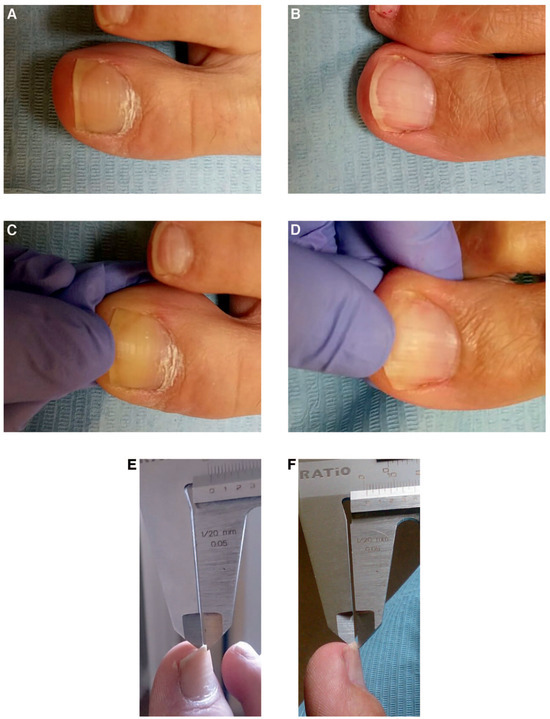
Figure 1.
Measuring procedure for nail consistency. A–D, Changes in the color of the nail bed during the nail consistency measuring procedure. A and C show a nail with hard consistency that cannot be bent, and B and D show a nail with soft consistency that can be bent easily by applying sufficient pressure to make the nail bed change color. E and F, Measurement of nail thickness using vernier calipers. E shows a hard nail and F a soft nail. Note that the thickness is almost identical (references on the scale).
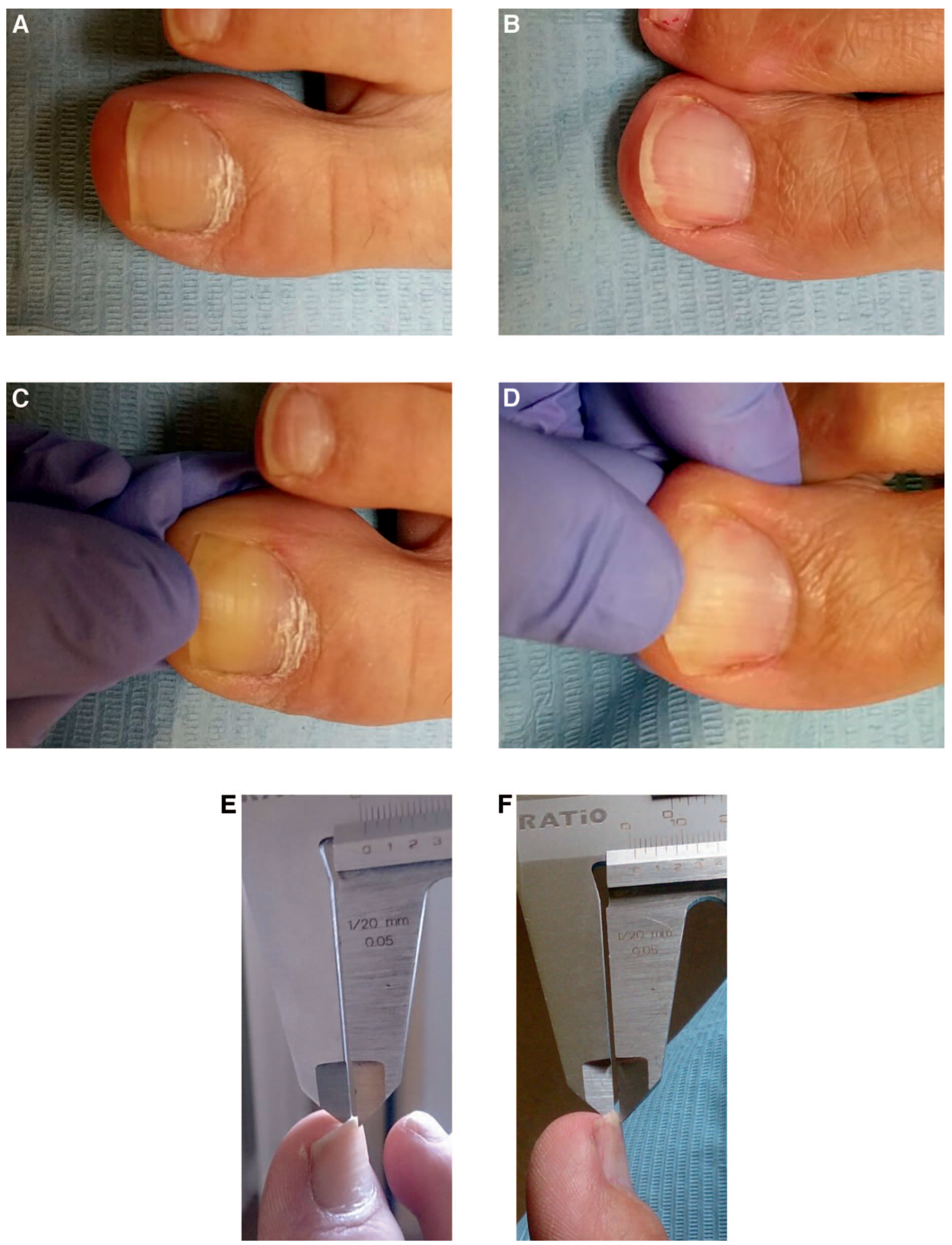
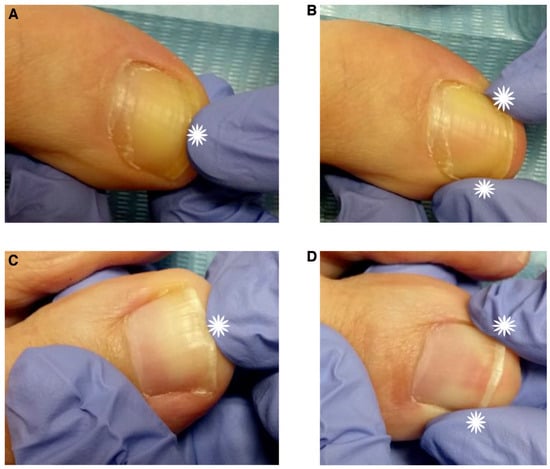
Figure 2.
Examination procedure for nail consistency. Procedure for measuring nail consistency by applying dorsoplantar pressure on a medium consistency square nail plate (A) and a soft consistency nail plate (C). Observe that the soft nail plate is bent by the pressure, in contrast to the medium nail plate. Assessment of the consistency of the nail plate by applying pressure on the lateral and medial borders of a medium consistency square nail plate (B) and a soft consistency nail plate (D). The stars indicate the points of maximum pressure.
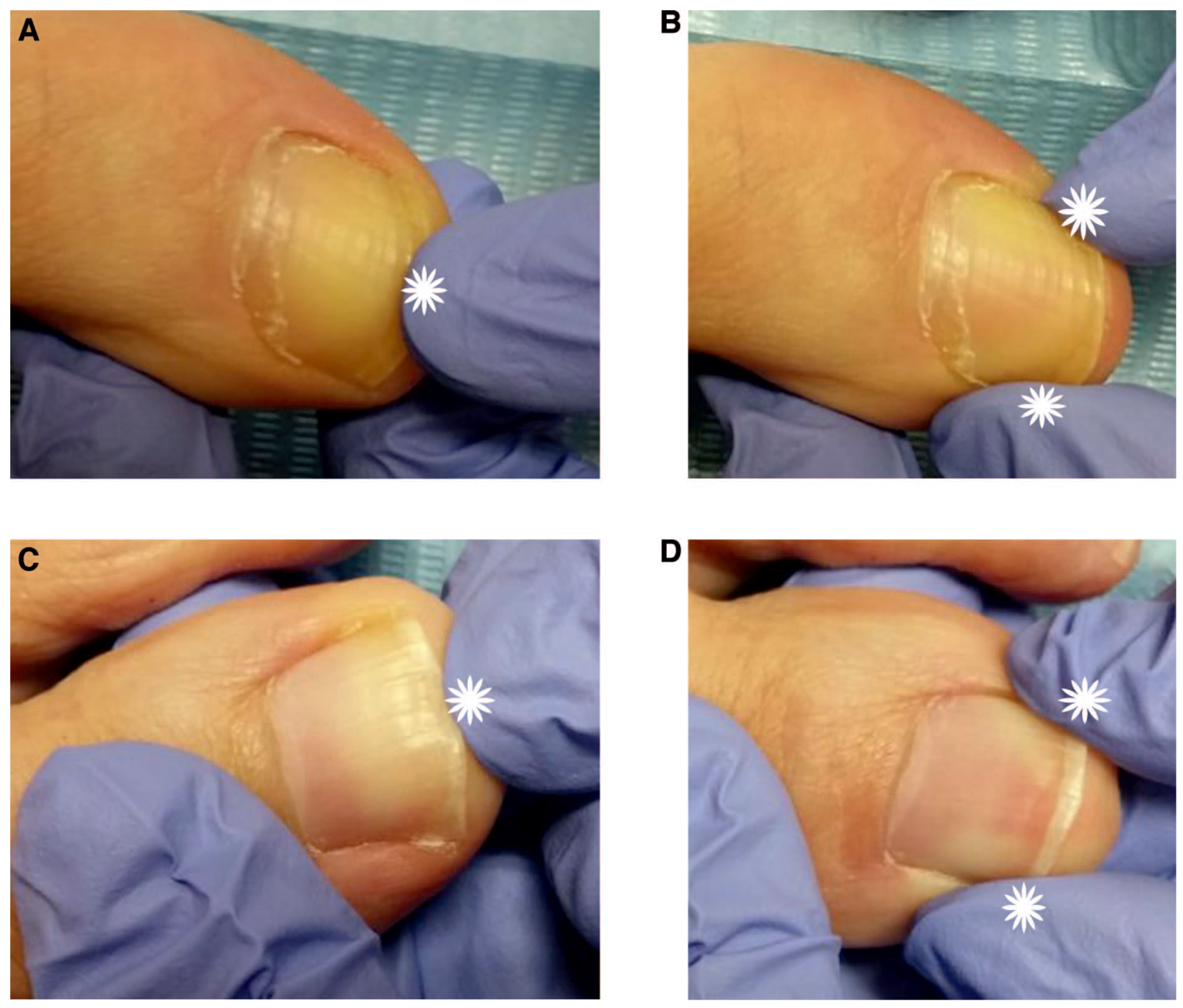
The free distal end of the plate was pressed first (stars in Fig. 2A and C), followed by the lateral and medial borders of the nail plate (stars in Fig. 2B and D), to determine whether the nail bent. Three types of consistency were obtained. If the free nail plate bent easily it was classified as a soft nail; if it resisted the pressure but could still be bent it was classified as a nail with a medium consistency; and if it did not bend with pressure it was considered a nail with a hard consistency.
During examination, all nail disorders were noted, as well as any other relevant data provided by the participant that could be related to the characteristics of their nails. All the data collected were classified and entered into a statistical software program (IBM SPSS Statistics for Windows, Version 20.0; IBM Corp, Armonk, New York) to conduct the statistical comparisons. Frequency tables were prepared, and the χ2 test was performed, with statistical significance of P < .05. The only quantitative variable in the study is age. This variable does not follow a normal model because the sample consists of individuals aged 15 to 30 years. It is not part of the study and was taken into account only to choose the sample. In the case of the qualitative dichotomous variables, the χ2 test (nonparametric statistics and contingency tables) were used where necessary to compare the percentages obtained.
Results
The nail morphology data obtained show that the most frequent nail shape in the population of young people studied was square (49%), followed by rounded (41%). Very few nails with a square oval (6%), pointed (3%), or only oval (1%) shape were found (P > .001).
Analysis of the data by sex shows that although females have more diversity in nail shape, there is no significant relation between nail shape and sex (P = .378) (Table 1). Oval-shaped nails were found only in females, and nails with a square oval shape were much more common in females than in males.
Table 1.
Nail Morphology and Consistency by Sex and Sports Activity.
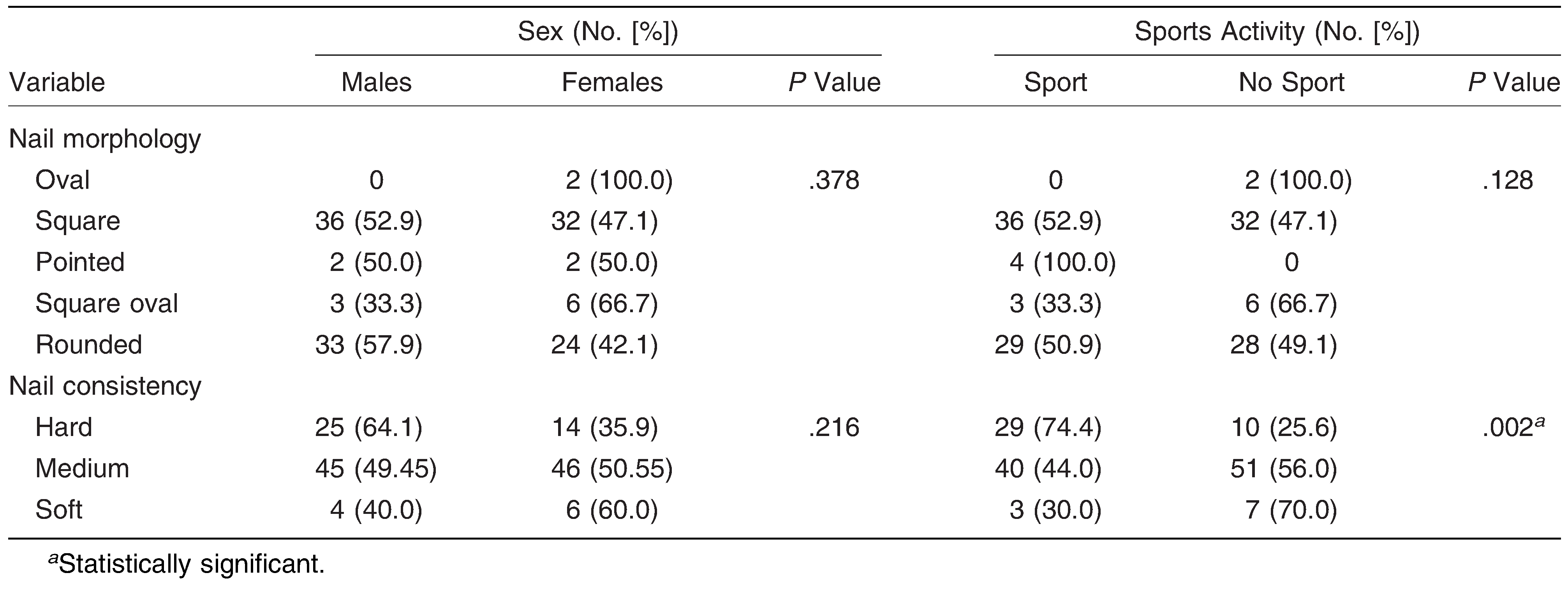
According to the results, nail shape is not associated with sports activity (P = .128) (Table 1): again, the predominant nail shape was square, followed by rounded, although the difference was not statistically significant.
The most frequent nail consistency type in the young people studied was medium (65%), followed by hard (28%). The least frequent consistency was soft, present in only 7% of participants (P > .001).
The study of nail consistency in the two groups (sport vs no sport) showed significant results, indicating a predominance of nails with a hard consistency in those who do sports activity, whereas nails with medium and soft consistency were predominant in those who do no sports activity (Table 1). Assessment of nail disorders present in the population of young people studied showed that 48.57% of individuals had no nail disorder. Onychocryptosis was observed in 39.29% of participants. Other minor disorders were also noted: nails with onychomycosis, subungual hematomas, and epidermal nails (12.14%). None of these disorders were found in more than 4% of the population. Therefore, the nail disorder study addressed onychocryptosis, as the other disorders were found in an insufficient number of individuals to obtain statistical significance in the tests.
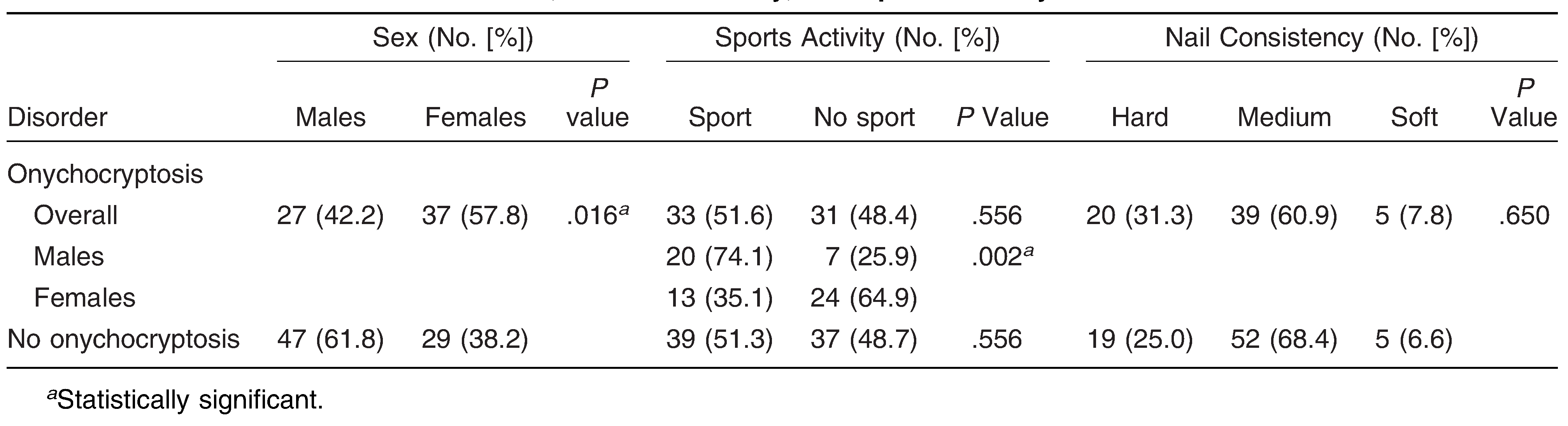
When testing whether onychocryptosis is related to sex, sports activity, nail consistency, and nail shape, statistically significant data were obtained only for sex. More females (57.8%) were shown to experience this nail disorder (Table 2; P = .016). The other relations showed no significant data (data not shown). However, on relating the participants who had onychocryptosis to sports activity, it was shown that females who do no sports activity have a higher incidence of this disorder (64.9%). In males, the opposite occurred: those who do sports activity present a higher incidence of onychocryptosis (74.1%). This is the highest percentage of incidence of onychocryptosis, and the difference is significant (P = .002) (Table 2).
Table 2.
Nail Disorder and Relation to Sex, Nail Consistency, and Sports Activity.
Discussion
Few studies in the literature show the incidence of nail consistency and the way toenails are cut in the population of young people, or any relation between these factors. Only the study by Langford et al [20] examined the influence of the way nails are cut and nail thickness as risk factors in onychocryptosis, although it provided no statistically significant data.
A new, previously unreported procedure was developed in this study to determine nail hardness and the ability of the nail to bend under pressure (Fig. 2), indicating the capacity of the nail to adapt to impact in sports that require rapid and continuous movement, such as running, walking, and athletics [2,4,16]. The data shown in this study are, therefore, a new contribution.
The results show that the most frequent nail shape in this population of young people is square, followed by rounded, regardless of nail consistency, sex, and whether the participants participate in sports activity. The other shapes had little incidence. These results correspond to the study of 140 young individuals who indicated that they always cut their toenails the same way. This criterion was essential for ensuring consistent results. Thus, the way in which the nails are cut does not seem to be related to the presence of onychocryptosis.
In continuous running exercise, the nail is repeatedly pounded, and this could increase nail consistency even though consistency is an intrinsic feature of nails [4,5,18]. This study shows significant data for nail consistency (Table 1). A hard nail consistency appears in most of the participants who engage in sports activity. These individuals also present the highest rate of onychocryptosis, which would support the hypothesis that a nail with a hard consistency subjected to repeated pounding could become ingrown into the lateral border of the toe, producing onychocryptosis [21]. Studies by Langford et al [20] on risk factors in onychocryptosis found a relation between onychocryptosis and thinned nails. However, the present study shows that in males who participate in sports activity and have hard nails, ingrown toenails are more frequent, although Langford et al [20] did not focus on sports activity. Moreover, a soft nail consistency occurs in a much lower percentage of individuals who run (only 30%) and is more than twice that in individuals who do no sports activity, which would support this hypothesis.
This study contributes data that relate nail consistency to sports activity for the first time. No studies were found that related the different types of nail consistency to nail shape or sports activity. The results can help sports clinicians and health professionals when providing care for athletes, as attention needs to be given to the footwear of young people who participate in sports activity, particularly those whose nails have a hard consistency. This will help avoid nail injuries that make it difficult to participate in sports activity [21]. From the data obtained about disorders that affect the nail, it can be assumed that ingrown toenail is the disorder with the highest incidence, as almost 40% of the young people studied experienced this disorder. This percentage is higher than that described in a recent study reporting 14.5% of runners with onychocryptosis [15]. Sánchez Arjona et al [22] reported an incidence of 18.6% among the sports they studied.
According to some authors [8,11], onychocryptosis is more frequent in men than in women, although the age of the participants in these studies was not defined. However, the results of the present study show that this disorder appears more frequently in young women (Table 2), concurring with the results obtained by other authors [23,24]. The results also show a relation between sex and sports activity. Females present a higher incidence of onychocryptosis and show a statistically significant relation (Table 2). The incidence of onychocryptosis in females is higher in the population that does no sports activity and could be related to the use of narrow, high-heeled footwear [25].
In this study, the analysis of participants with onychocryptosis showed a higher and significant percentage of young males who do sports activity and present this disorder compared with participants who do no sports activity at all. This concurs with the findings of Sánchez Arjona et al [22], although these authors did not specify the age of the participants in their study.
It was initially thought that the shape of the nail plate could also be related to the presence of this disorder with such a high incidence, but no statistically significant relation was found to support this. Interestingly, a hard consistency is more frequent in males than in females, particularly in men who do sports activity. Although the data are not statistically significant (a larger number of participants in the sample could help to obtain statistical significance), a hard nail consistency in the presence of onychocryptosis is more frequent in men who do sports activity. This result has not previously been reported. It can, therefore, be concluded that young male runners whose nails have a hard consistency are more likely to experience onychocryptosis.
Nail composition was not measured, although this could be a key factor for understanding why weak nails that bend easily usually have similar thicknesses as nails that cannot be bent. This study is a preliminary approach that aims to help explain the cause of the prevalence of onychocryptosis in people who do sports activity, and in this sense it provides interesting information: the definition of nail consistency as the ability of the nail to bend, which has not been described previously. Only thickness measurements have been reported, although we found that this is not a reliable measure of the ability of the nail to bend or to respond to trauma from continuous sports activity.
This study was conducted only with runners. It would be interesting to take the same measurements in people who do a different sport to determine whether nail consistency differs depending on the type of sports activity.
Examination of the nails of people who do sports activity using the procedure described herein would mean that preventive treatment could be applied in the case of individuals whose nails are classified as having a hard consistency. Podiatric medical treatment could be recommended to reduce the incidence of ingrown toenails, and where this disorder already exists, appropriate health care could be provided to improve recovery.
Financial Disclosure:
This study was funded by the Regional Government of Extremadura (Spain) and the European Regional Development Fund through a grant to the research group (code CTS020, reference GR10107).
Conflict of Interest:
None reported.
References
- MARTIN B: Nail histopathology. Actas Dermosifiliogr 2013, 104, 564.
- BIOLCATI, G.; BERLUTTI, G.; BAGARONE, A. ET AL: Dermatological marks in athletes of artistic and rhythmic gymnastics. Int J Sports Med 2004, 25, 638. [Google Scholar] [CrossRef] [Scilit] [PubMed]
- EISELE SA: Conditions of the toenails. Orthop Clin North Am 1994, 25, 183. [CrossRef] [Scilit]
- BORDELON, R.L. Management of disorders of the forefoot and toenails associated with running. Clin Sports Med 1985, 4, 717. [Google Scholar] [CrossRef] [Scilit]
- HIDALGO RUIZ S: ‘‘Patologı´as del Aparato Ungueal,’’ in Podologı´a: Atlas de Cirugı´a Ungueal, edited by A Martı´nez Nova, p 15, Panamericana, Madrid, 2006.
- UVA, L.; LOPES, L. FILIPE P: Onychogryphosis [in Portuguese]. Acta Med Port 2014, 27, 531. [Google Scholar] [CrossRef] [Scilit]
- SHEMER, A.; DANIEL, C.R. Common nail disorders. Clin Dermatol 2013, 31, 578. [Google Scholar] [CrossRef] [Scilit]
- PURIM, K.S.; LEITE, N. Sports-related dermatoses among road runners in Southern Brazil. An Bras Dermatol 2014, 89, 587. [Google Scholar] [CrossRef] [Scilit]
- Zavala Aguilar K, Guitiérrez Pineda F, Bozalongo de Aragón E: Manejo de la onicocriptosis en atención primaria. Caso clínico. Medicina de Familia y Comunitaria-Semergen 2013, 39, 38. [CrossRef] [Scilit]
- KHUNGER, N.; KANDHARI, R. Ingrown toenails. Indian J Dermatol Venereol Leprol 2012, 78, 279. [Google Scholar] [CrossRef] [Scilit]
- MARTI´NEZ-NOVA A, SA´ NCHEZ-RODRI´GUEZ R, ALONSO-PEN˜ A D: A new onychocryptosis classification and treatment plan. JAPMA 2007, 97, 389. [CrossRef] [Scilit]
- DARWISH, F.M.; HADDAD, W.; AMMARI, F. ET AL: Association of abnormal foot angles and onychocryptosis. Foot (Edinb) 2008, 18, 198. [Google Scholar] [CrossRef] [Scilit] [PubMed]
- INCE, B.; DADACI, M.; ALTUNTAS, Z. Knot technique: a new treatment of ingrown nails. Dermatol Surg 2015, 41, 250. [Google Scholar] [CrossRef] [Scilit] [PubMed]
- GRIFFIN LY: Common sports injuries of the foot and ankle seen in children and adolescents. Orthop Clin North Am 1994, 25, 83. [CrossRef] [Scilit]
- DADACI M, INCE B, ALTUNTAS Z, ET AL: Skin bridging secondary to ingrown toenail. Pak J Med Sci 2014, 30, 1425.
- MORTIMER, P.S.; DAWBER, R.P. Trauma to the nail unit including occupational sports injuries. Dermatol Clin 1985, 3, 415. [Google Scholar] [CrossRef] [Scilit]
- CHANG, P.; HANEKE, E.; RODAS, A.C. Hematomas of the nail apparatus. Dermatol CMQ 2009, 7, 196. [Google Scholar]
- JENKINS, D.W.; COOPER, K.; O’CONNOR, R. ET AL: Prevalence of podiatric conditions seen in Special Olympics athletes: structural, biomechanical and dermatological findings. Foot (Edinb) 2011, 21, 15. [Google Scholar] [CrossRef] [Scilit]
- ROCHA SALINAS, E.; LARA CASTELLANO, J.P.; Gómez García, P. “Morfología de Manos y Pies” in Estetica de Manos y Pies, edited by E Rocha Salinas, JP Lara Castellano, P Gómez García, McGraw-Hill Interamericana de España S.L., Madrid, Spain. 2013. Available at: http://www.mcgraw-hill.es/bcv/guide/capitulo/8448180747.pdf.
- LANGFORD, D.T.; BURKE, C.; ROBERTSON, K. Risk factors in onychocryptosis. Br J Surg 1989, 76, 45. [Google Scholar] [CrossRef] [Scilit]
- BORDELON, R.L. Management of disorders of the forefoot and toenails associated with running. Clin Sports Med 1985, 4, 717. [Google Scholar] [CrossRef] [Scilit]
- SA´ NCHEZ ARJONA C, MARTI´ N FERNA´ NDEZ MC, RUIZ MARTI´- NEZ Y: Estudio de las dermopatı´as que se presentan con mayor frecuencia en el pie del deportista: prevencio´ n y tratamiento. Apunts Med Esport 2007, 42, 123. [CrossRef] [Scilit]
- García Carmona, F.J.; Fernández Morato, D. “Generalidades,” in Tratamiento Quirúrgico de la Onicocriptosis, edited by FJ Garcia Carmona, F Morato, p 3, Aula Médica, Madrid. 2003.
- DELAURO, N.M.; DELAURO, T.M. Onychocryptosis. Clin Podiatr Med Surg 2004, 21, 617. [Google Scholar] [CrossRef] [Scilit]
- IUNES, D.H.; MONTE-RASO, V.V.; SANTOS, C.B.A. ET AL: A influeˆncia postural do salto alto em mulheres adultas: ana´ lise por biofotogrametria computadorizada. Rev Bras Fisioter 2008, 12, 454. [Google Scholar] [CrossRef] [Scilit]
© 2017 American Podiatric Medical Association