


Abstract
Background: We sought to report the clinical results of a new conservative treatment modality that uses a shape memory alloy device in patients with ingrown toenail. Methods: A retrospective review was performed on 41 patients with ingrown toenail treated with the K-D device (S&C Biotech, Seoul, South Korea) between April 2013 and July 2014. Recurrence rate, cosmetic results, pain during the treatment period, and patient satisfaction were the major outcome measures. Results: Patients were followed for at least 6 months (mean ± SD, 8.6 ± 2.1 months; range, 6–12 months). Recurrence was seen in eight patients (19.5%). Mean time to recurrence was 6.2 months (range, 3–10 months). Thirty-one patients (75.6%) were satisfied with the treatment. Thirty-five patients (85.4%) rated the application and treatment period as painless, and the remaining six (14.6%) noted pain particularly during shoe wearing. Thirty-one patients (75.6%) rated the cosmetic results as “excellent,” four (9.8%) as “acceptable,” and six (14.6%) as “poor.” Satisfaction with the treatment, the cosmetic results, and pain were significantly worse in patients with recurrence (P = .0001 for all). All of the patients returned to their work immediately after application of the device. No complications occurred. Conclusions: The K-D device is a safe and effective treatment method for ingrown toenail. Although the recurrence rate is higher than for surgical treatment methods, the K-D device is a practical and painless method that provides immediate return to work and daily activities and excellent or acceptable cosmesis in most patients.
Ingrown toenail, or onychocryptosis, is a commonly encountered foot problem in routine orthopedic practice that causes pain, discharge, swelling, undesirable foot odor, and difficulty in shoe wear and daily activities.[1] Several treatment methods, both conservative and surgical, have been described to date. However, certain disadvantages have been identified in each of these methods, such as recurrence, infection, permanent disfigurement of the natural appearance of the nail, and a considerable period of restriction of daily activities during the healing process.[2] Therefore, research into alternative treatment modalities that eliminate these disadvantages is ongoing.
Recently, a new conservative treatment method was introduced that used a device made of shape memory alloy, the K-D device (S&C Biotech, Seoul, South Korea). Initial reported clinical results were promising, with a low recurrence rate, high patient satisfaction, and few minor complications.[1] However, few studies have evaluated the clinical efficacy of this new modality in the current literature.[3-7] The purpose of this study was to present our experience with this novel device and report the results of treatment in a prospectively followed series of patients with ingrown toenail.
Materials and Methods
We retrospectively reviewed 41 prospectively followed patients with ingrown toenail who were treated conservatively with the K-D device between April 1, 2013, and April 30, 2014, at Yozgat State Hospital, Yozgat, Turkey. Patients with diabetes mellitus, peripheral vascular disease, a history of toenail surgery, noncompliance with the treatment regimen, or follow-up of less than 6 months were excluded from the study. The presence of distal pulses (tibialis posterior and dorsalis pedis arteries) and capillary refill were examined for a possible diagnosis of vascular disease in all of the patients. If the patient had a long-standing history of ingrown toenail and infection with severe drainage of pus, foot radiographs were taken to exclude patients with possible osteomyelitis. The Heifetz staging system was used to classify the severity of the ingrown toenail.[8] In stage I and II, no antibiotic drug was prescribed. However, in stage III, a 5-day course of antibiotic drug treatment starting from application of the device was prescribed (amoxicillin and clavulanic acid, 625-mg tablets, twice daily). This study was performed in accordance with the ethical standards of the 1964 Declaration of Helsinki and its later amendments. All of the patients gave informed consent before their inclusion in the study. Patient demographic information (age and sex) and anatomic localization of the disease (medial, lateral, or both borders) were recorded.
Description and Application of the K-D Device
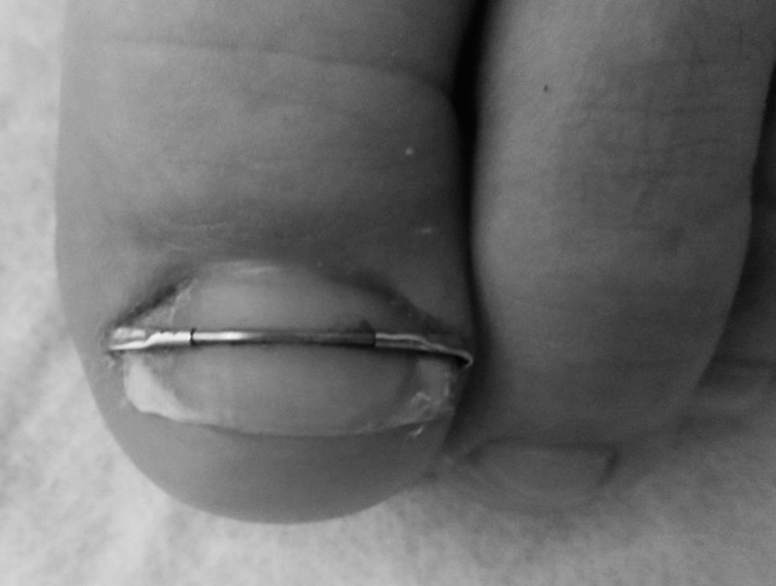
The K-D device consists of three components: two hooks and a central metal rod connector. The lateral hook portion is attached to both ends of the metal connector and fixes the device to the toenail (Fig. 1). The central rod is made of shape memory alloy, and it changes its shape depending on temperature. At a cool temperature, less than 25°C, it is flexible and bends easily; however, it returns to its original shape when it is at body temperature. Therefore, it unrolls a toenail actively and remains steady by body heat and provides gradual straightening on both sides of the toenail, correcting the nail plate. The separation of the nail plate from the nail bed eventually provides an environment to reorganize the nail bed, and it normalizes the shape of the nail bed. Second, it relieves the pressure between the nail edge and the nail fold by its lateral hooks. The device was applied to patients in the supine position under sterile conditions. If there was hypertrophic granulation tissue, it was excised with a scalpel and removed after an anesthetic digital block was performed at the base of the toe with a 2% solution of prilocaine. No incision was performed during the removal of hypertrophic granulation tissue; rather, the scalpel was used as a sharp curette. No tourniquet was used. First, the ingrown part of the nail was raised with a surgical clamp, the width of the nail was measured, and an appropriate K-D device size was selected. The device was dipped in cold sterile saline to decrease its temperature and then was bent to the shape of the nail. One hook of the device was applied to one side of the nail and the other hook to the other side. Finally, the hook and connector were fixed and tightened (Fig. 2).
Figure 1.
The appearance of the K-D device.
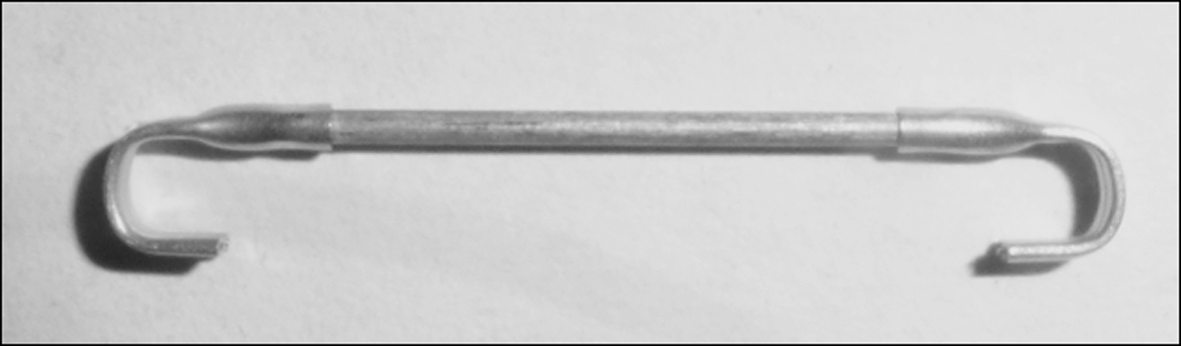
Figure 2.
Application of the K-D device to an ingrown toenail.
Follow-up and Clinical Assessments
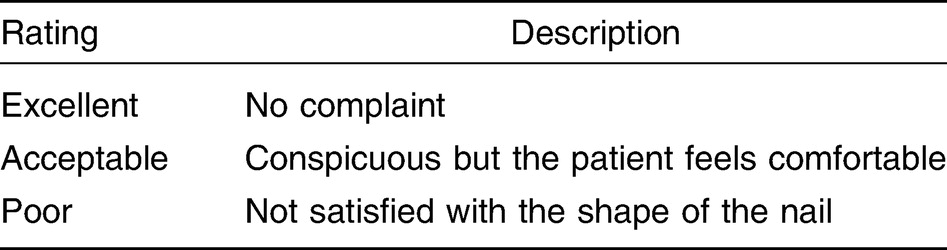
All of the patients were followed weekly until the K-D device was removed at approximately 4 to 6 weeks. Patients were encouraged to return to their daily life and work immediately, including wearing their normal footwear. Local cleaning with povidone solution once daily was instructed during the application period. For the final follow-up, all of the patients were invited to the hospital and underwent a clinical assessment and completed a questionnaire. Recurrence, pain during the treatment period, return to work, cosmetic results, and patient satisfaction were the major outcome measures. The cosmetic results were evaluated according to patients' subjective ratings (Table 1). Satisfaction of the patient was scored as “yes” or “no.” Any complication during treatment and follow-up was recorded.
Table 1.
Cosmesis According to Patients' Subjective Ratings
Statistical Analysis
A descriptive analysis of the continuous and categorical data was performed using proportions, frequency distributions, means, and standard deviations. Categorical variables were compared using the χ2 test. The Kruskal-Wallis test was used to analyze the means of independent groups. An α level of P < .05 was considered significant.
Results
There were 17 (41.5%) male and 24 (58.5%) female patients (mean ± SD age, 25.5 ± 6.9 years; range, 16–43 years). The right toe was affected in 27 patients (65.9%) and the left toe in 14 (34.1%). The medial border of the toenail was involved in 26 patients (63.4%), the lateral border in ten (24.4%), and bilateral borders in the remaining five (12.2%). Seventeen ingrown toenails (41.5%) were classified as Heifetz stage I, 14 (34.1%) as stage II, and 10 (24.4%) as stage III. All of the patients were followed for at least 6 months (mean ± SD, 8.6 ± 2.1 months; range, 6–12 months). Recurrence was seen in eight patients (19.5%). Mean time to recurrence was 6.2 months (range, 3–10 months). Recurrence rates in patients with stage I, II, and III ingrown nails were 5.9%, 14.3%, and 50.0%, respectively (P = .001). In all, 31 patients (75.6%) were satisfied with the treatment (Fig. 3). Thirty-five patients (85.4%) rated the application and treatment as a painless procedure, and the remaining six (14.6%) noted pain particularly during shoe wearing. Thirty-one patients (75.6%) patients rated the cosmetic results as “excellent,” four patients (9.8%) as “acceptable,” and six (14.6%) as “poor.” A summary of all of the data is presented in Table 2.
Figure 3.
Appearance of the toenail immediately after application of the device (A) and at 6-month follow-up (B).
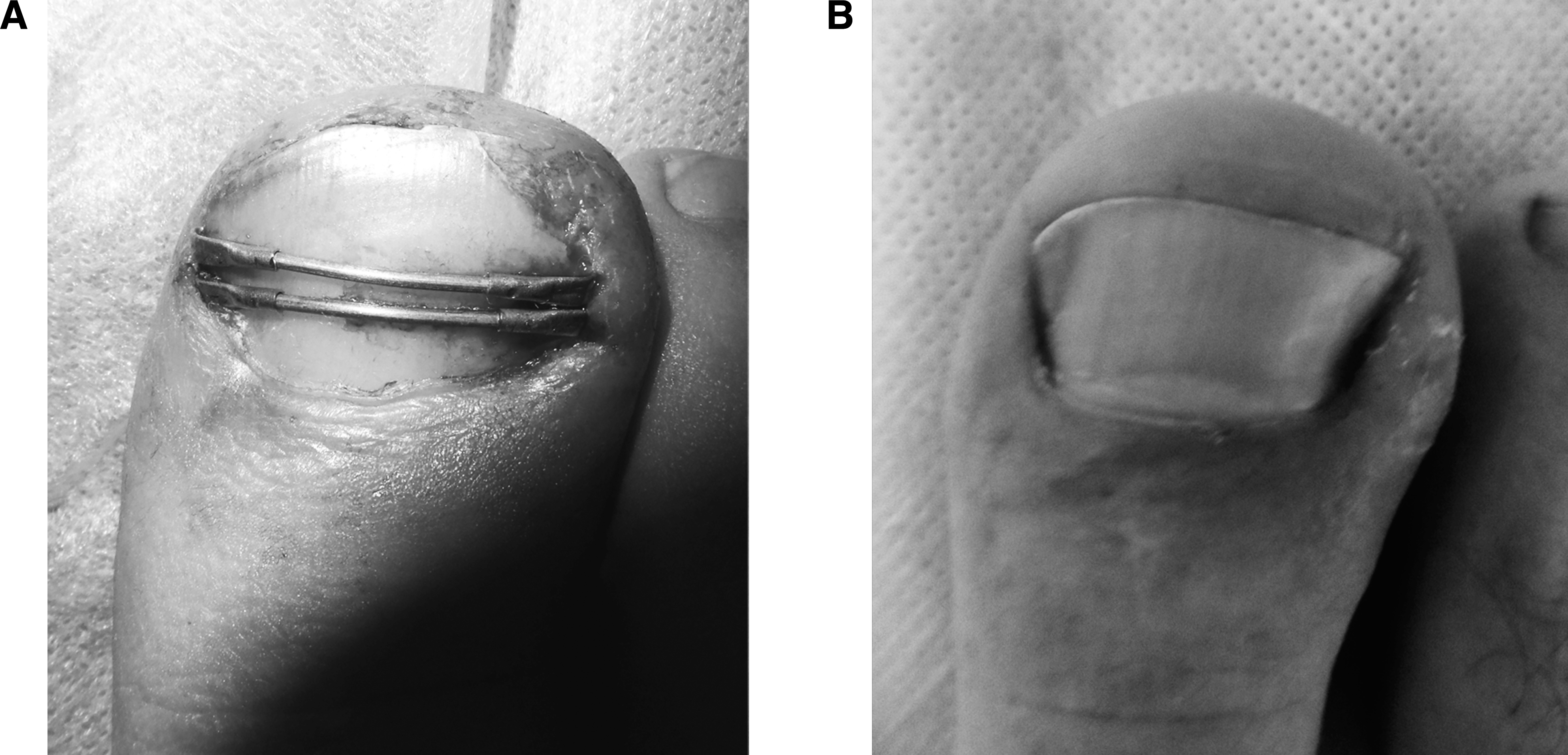
Table 2.
Summary of the Data
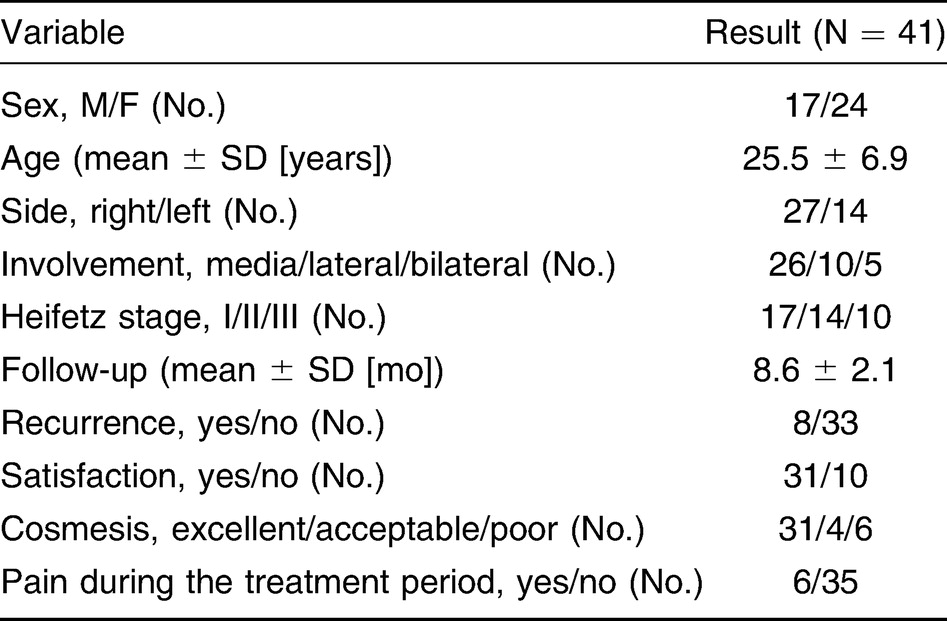
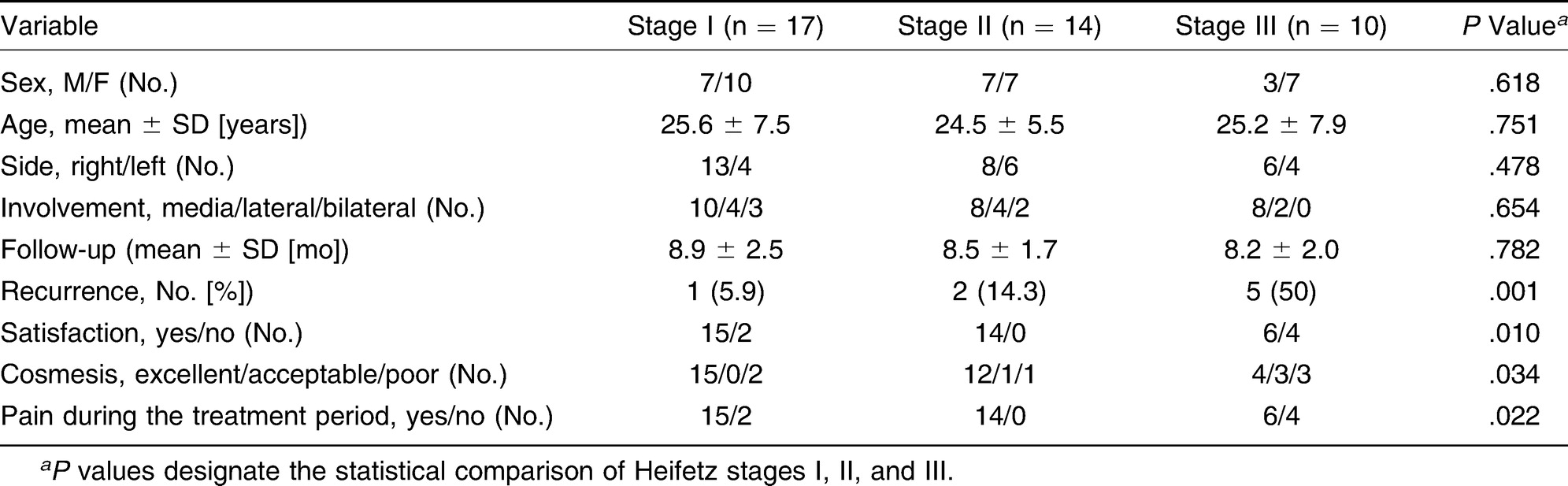
Satisfaction with the treatment, the cosmetic results, and pain were significantly worse in patients with recurrence (P = .0001 for all). Patients were divided into three groups according to the stage of the disease, and their demographic and clinical characteristics and outcomes were compared. Although the groups were similar in terms of demographic and clinical characteristics, recurrence rate, cosmetic results, patient satisfaction, and pain during the treatment period were better in Heifetz stages I and II than in stage III (Table 3). All of the patients returned to their work immediately after application of the device. No complications occurred in any of the patients.
Table 3.
Comparison of Demographic Variables and Outcomes According to Heifetz Classification
Discussion
This study evaluated the therapeutic efficacy of the K-D device in the treatment of ingrown toenails. Based on our results and experience, this device is easy to use for both physicians and patients. The device can be applied in an outpatient clinic without an advanced facility. It provides an immediate return to daily activities and footwear. The healing period was rated as painless by most of the patients. Although, the recurrence rate was higher than that for surgical methods, it was effective in approximately 80% of the patients, with excellent cosmetic results, high patient satisfaction, and no complications. A noteworthy end result of this study is the significant inferior outcomes (recurrence rate, cosmetic results, patient satisfaction, and pain during the treatment period) in patients with Heifetz stage III ingrown toenail. Thus, patients with stage I and II ingrown toenail seem to be better candidates for this treatment method.
Few studies have evaluated the therapeutic efficacy of the K-D device in the relevant literature. Kim and Park[3] reported the clinical results of 31 ingrown toenails (19 patients) treated with the K-D device in 2009. During their follow-up period (mean, 13.3 months), there were only two recurrences (6%). The American Orthopaedic Foot and Ankle Society forefoot hallux score increased significantly from 71 to 100 points, and all of the patients, including those experiencing recurrence, were satisfied with the treatment.[3] Kim et al,[4] in a small case series of four patients, reported that none of their patients had recurrence at mean follow-up of 4 months. In contrast to these studies, which reported low recurrence rates, Park et al[5] reported a higher recurrence rate with the K-D device. They followed 24 patients (31 toenails) for a mean of 161 days and found a 22.6% recurrence rate with the K-D device. Twenty-seven of 31 patients (87.1%) reported no pain during the treatment period.[5] Similarly, the recurrence rate in the present study was 19.5%, which is consistent with the findings in the study by Park et al.[5]
In the current literature, there are many clinical studies that used several different treatment modalities, including both conservative and surgical techniques and their modifications. In a recent systematic review, it was concluded that surgical techniques have less recurrence than do conservative methods. However, surgical techniques are not without complications. Ideally, treatment of ingrown toenail should be noninvasive, practical, painless, and curative. Unfortunately, no treatment method seems to include all of these advantages. Surgical techniques may provide less recurrence, but most of them cause disfiguration of the nail bed and poor cosmetic results. Furthermore, the healing period is long and usually painful, with delayed return to daily activities. Kose at al,[9] using the Winograd technique, reported poor cosmetic results due to the asymmetrical appearance of the nails in unilateral cases. Patients, particularly women, were not eager to wear open-toed shoes. Timely return to daily activities is also an important advantage of this particular treatment. One of the most important advantages of the K-D device seems to be immediate can be attributed to this feature.
In addition to the K-D device, there are other devices that used the same mechanism of action and the same concept of toenail deformity correction in the literature. Ishibashi et al[6] used a shape memory alloy implant applied at the tip of the nail plate for the treatment of ingrown toenail. Erdogan and Erdogan[10] used a brace with a similar mechanism of action as the K-D device; however, instead of a shape memory alloy central rod, simple plastic bands were used, with two hooks put on the nail edges. They used this device for ingrown toenail in 21 patients with diabetes mellitus, and their recurrence rate was 28.5%.[10]
The K-D device is also used for pincer nail deformity, which is characterized by overcurvature of the nail plate and the nail bed. Yang et al[7] reported successful results in a patient with pincer nail. In 2013, Kim et al[11] used this device in 14 patients with pincer nail and reported that overcurvature was corrected with a recurrence rate of 9.5%. Both authors concluded that the K-D device is also effective for the treatment of pincer nail.[7,11]
There are some strengths and limitations of this study. A major limitation is that it was a retrospective case series with a limited number of patients. Second, there was no control group or other treatment group. However, we followed and clinically assessed the patients and obtained patient-rated outcome measures in all of the patients.
In conclusion, the K-D device can be considered a practical method for the treatment of ingrown toenail that is easy to apply, gives immediate relief of pain, does not disrupt the natural anatomic shape of the nail, and does not create any infection risk. However, further clinical studies that compare this new treatment with conventional conservative and surgical treatment methods should be conducted to arrive at a definitive decision about the efficacy of this treatment method for ingrown toenails.
Funding
None reported.
Conflicts of Interest
None reported.
References
- Blatière V: Ingrown nails or onychocryptosis. Presse Med43: 1230, 2014.
- Eekhof JA, Van Wijk B, Knuistingh Neven A, et al: Interventions for ingrowing toenails. Cochrane Database Syst Rev 4: CD001541,2012.
- Kim JY, Park JS: Treatment of symptomatic incurved toenail with a new device. Foot Ankle Int30: 1083, 2009.
- Kim CR, Jung MY, Lee DY: Letter: treatment of ingrown toenail with a novel instrument. Dermatol Surg37: 1550, 2011.
- Park SW, Park JH, Lee JH, et al: Treatment of ingrown nail with a special device composed of shape-memory alloy. J Dermatol41: 292, 2014.
- Ishibashi M, Tabata N, Suetake T, et al: A simple method to treat an ingrowing toenail with a shape-memory alloy device. J Dermatolog Treat19: 291, 2008.
- Yang BH, Bang CY, Byun JW, et al: A case of pincer nail treated using a shape-memory alloy. Dermatol Surg37: 1536, 2011.
- Heifetz CJ. Ingrown toenail: a clinical study. Am J Sug38: 298, 1937.
- Kose O, Guler F, Gurcan S, et al: Cosmetic results of wedge resection of nail matrix (Winograd technique) in the treatment of ingrown toenail. Foot Ankle Spec5: 241, 2012.
- Erdogan FG, Erdogan G: Long-term results of nail brace application in diabetic patients with ingrown nails. Dermatol Surg34: 84, 2008.
- Kim JY, Park SY, Jin SP, et al: Quick and easy correction of a symptomatic pincer nail using a shape memory alloy device. Dermatol Surg39: 1520, 2013.
© 2016 American Podiatric Medical Association