


Abstract
Background: We sought to study the impact of foot complications on 10-year mortality independent of other demographic and biological risk factors in a racially and socioeconomically diverse managed-care population with access to high-quality medical care. Methods: We studied 6,992 patients with diabetes in Translating Research Into Action for Diabetes (TRIAD), a prospective observational study of diabetes care in managed care. Foot complications were assessed using administrative claims data. The National Death Index was searched for deaths across 10 years of follow-up (2000-2009). Results: Charcot’s neuro-osteoarthropathy and diabetic foot ulcer with debridement were associated with an increased risk of mortality; however, the associations were not significant in fully adjusted models. Lower-extremity amputation (LEA) was associated with an increased risk of mortality in unadjusted (hazard ratio [HR], 3.21; 95% confidence interval [CI], 2.50–4.12) and fully adjusted (HR, 1.84; 95% CI, 1.28–2.63) models. When we examined the associations between LEA and mortality stratified by sex and race, risk was increased in men (HR, 1.96; 95% CI, 1.25–3.07), Hispanic individuals (HR, 5.17; 95% CI, 1.48–18.01), and white individuals (HR, 2.18; 95% CI, 1.37–3.47). In sensitivity analyses, minor LEA tended to increase the risk of mortality (HR, 1.48; 95% CI, 0.92–2.40), and major LEA was associated with a significantly higher risk of death at 10 years (HR, 1.89; 95% CI, 1.18–3.01). Conclusions: In this managed-care population with access to high-quality medical care, LEA remained a robust independent predictor of mortality. The association was strongest in men and differed by race.
Diabetes-related foot complications have a substantial effect on morbidity, mortality, and health-care expenditures.[1,2] Charcot’s neuro-osteoarthropathy (CN),[3] diabetic foot ulceration (DFU),[4,5] and lower-extremity amputation (LEA)[4,5,6] have all been associated with mortality. It is not clear what the independent contribution of each of these complications is to all-cause mortality in people with diabetes.
Identification of diabetic patients with feet at risk, combined with preventive care, can prevent LEA, and improved cardiovascular risk factor management can improve long-term survival.[7,8,9] Patients with diabetes receiving care from managed-care organizations have access to preventive care and receive very good diabetes-related processes and intermediate outcomes of care.[10] As a result, racial and ethnic minorities with diabetes receiving care through managed-care organizations seem to have lower rates of LEA than similar populations with less access to care.[11,12,13]
The objective of the present study was to extend those previous studies by examining the impact of foot complications on 10-year mortality independent of other demographic and biological risk factors in a racially and socioeconomically diverse managed-care population. We hypothesized that LEA would remain a risk factor for mortality but that the racial and ethnic differences in LEA risk observed in studies of populations with less consistent access to care, and the impact of LEA on survival, would be attenuated in this managedcare population with access to high-quality medical care.
Patients and Methods
Study Population
Translating Research Into Action for Diabetes (TRIAD) has been described elsewhere.[14] TRIAD studied a random sample of adults with diabetes enrolled in ten managed-care health plans in eight states (California, Hawaii, Indiana, Michigan, New York, New Jersey, Pennsylvania, and Texas) that served approximately 180,000 patients with diabetes. Patients were eligible to participate if they were at least 18 years of age, lived in the community, were not pregnant, had diabetes for at least 1 year, spoke either English or Spanish, were continuously enrolled in the health plan for at least 18 months, used at least one service during that time, and could give informed consent. Institutional review boards at each participating site reviewed and approved the study, and all of the participants provided informed consent.
In 2000-2001, we administered a survey by computer-assisted telephone interview or in writing by mail. In addition, centrally trained reviewers used standardized methods to abstract medical records. Health plan administrative data were collected for 1999 through 2003. Initially, 11,927 people consented to participate (a 69% Council of American Survey Research Organizations response rate), and 8,820 provided survey and medical record data. The analytic sample for this study included participants who had survey and medical record data at baseline and were enrolled at sites participating in the 2010-2013 TRIAD Legacy Study (N = 6,992). The analytic sample did not include data from health plan participants in Hawaii.
Outcomes
Each year, we obtained information on TRIAD decedents using National Death Index (NDI) Plus searches.[15] Deaths were verified by matching the name, date of birth, sex, and social security number of the decedent with data supplied by the NDI. The sensitivity of the NDI has been shown to range from 87% to 98%.[16] Different combinations of identifiers, excluding social security number, correctly identify 83% to 92% of decedents and 92% to 99% of living individuals, making NDI an accurate means of ascertaining vital status even without social security numbers.[17] Vital status was determined for all TRIAD Legacy Study participants through December 31, 2009.
Primary Predictors
We used 1999-2003 health plan administrative data to determine the 3-year period prevalence of the three specific foot conditions: CN, DFU, and LEA. A CN was defined as the presence of the International Classification of Diseases, Ninth Revision (ICD-9), diagnosis code 713.5 in any inpatient or outpatient records. A DFU was defined using ICD-9 code 707.1x or 707.9 in any inpatient or outpatient records. To better define people with active DFUs (rather than simply a remote history of DFUs), we also required that participants have at least one Current Procedural Terminology code for debridement (code 11040, 11041, 11042, 11043, or 11044). An LEA was defined as the presence of at least one ICD-9 procedure code for LEA (code 84.11, 84.12, 84.13-84.16, or 84.17-84.19), ICD-9 status code for LEA (code v49.7), or Current Procedural Terminology code for LEA (code 27590-8, 27880-9, 28800, 28805, 28810, 28820, or 28825) in any inpatient or outpatient record. We defined minor LEA as toe or transmetatarsal amputation and major LEA as any below- or above-the-knee amputation. We defined each person as having none or one or more foot conditions and examined the occurrence of prevalent conditions using a Venn diagram. We then used a hierarchy to place each person with at least one prevalent foot condition into one of three mutually exclusive groups: any CN (n = 55), DFU (n = 205), or LEA with or without DFU (n = 101).
Covariates
We assessed demographic variables (age, sex, race/ ethnicity, education, and income), diabetes-specific variables (type of diabetes, duration of diabetes, treatment for diabetes, and hemoglobin A1c [HbA1c] level), and other clinical variables (body mass index, systolic blood pressure, low-density lipoprotein cholesterol level, smoking status, history of microvascular complications, history of macrovascular complications, and Charlson comorbidity index) as possible effect modifiers and confounders. Type 1 diabetes was defined by insulin use (without the use of oral antidiabetic agents) and age at diagnosis of diabetes younger than 30 years; all others were defined as having type 2 diabetes. Smoking was considered present if the participant reported current smoking some days or every day in the past year. The number of comorbidities was defined using the Charlson index, a weighted measure of comorbid conditions associated with mortality.[18]
Statistical Analysis
We describe the sample population using mean ± SD for continuous variables and frequencies for categorical variables. We determined the percentage of the sample that had died on or before December 31, 2009, and the percentage that was still alive. We described the distribution of baseline sociodemographic variables and health factors stratified by vital status and used Student t tests and χ2 tests for comparisons.
For each primary predictor of all-cause mortality (CN, DFU, and LEA), we constructed a series of Cox proportional hazards models. First, we constructed unadjusted models to determine whether each predictor was associated with the outcome. Second, we constructed fully adjusted models including covariates selected because of their known association with foot complications to determine whether each primary predictor remained significant even after adjustment. At both stages, the Cox proportional hazards models also included a stratum statement for health plan/provider group to account for the clustered study design and the correlation among participants within health plans and provider groups. All of the models excluded persons with any missing data for any of the covariates in the model. In sensitivity analyses, we stratified by age, sex, race/ethnicity, and smoking status to develop stratum-specific Cox proportional hazards models for the association between LEA and mortality. Additional sensitivity analyses included evaluation of any LEA as a predictor of mortality (regardless of CN or DFU status because seven patients with CN also underwent LEA) and evaluation of minor (toe or transmetatarsal) and major (below- or above-the-knee) LEA as predictors of mortality.
All of the analyses were performed using a statistical software program (SAS version 9.3; SAS Institute, Inc, Cary, North Carolina).
Results
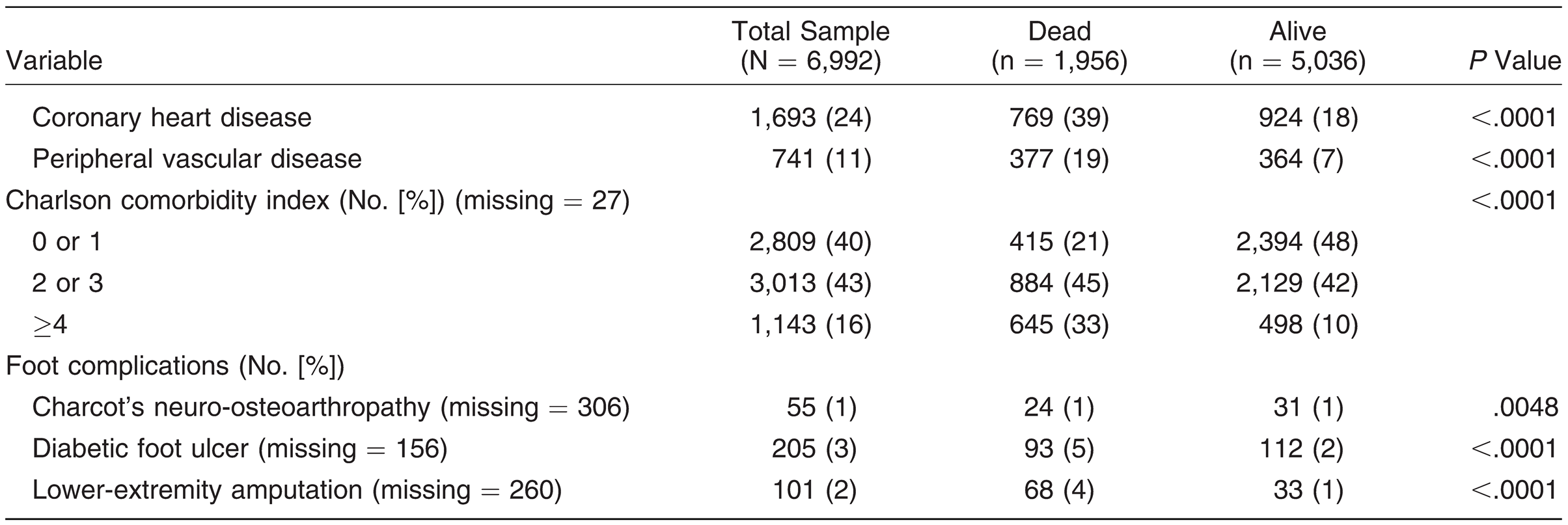
Between 1999 and 2003, 55 patients (1%) had a diagnosis of CN, 205 (3%) had a diagnosis of at least one DFU with active debridement, and 101 (1%) had LEA procedures. There were 6,631 patients (95%) with none of these foot conditions.
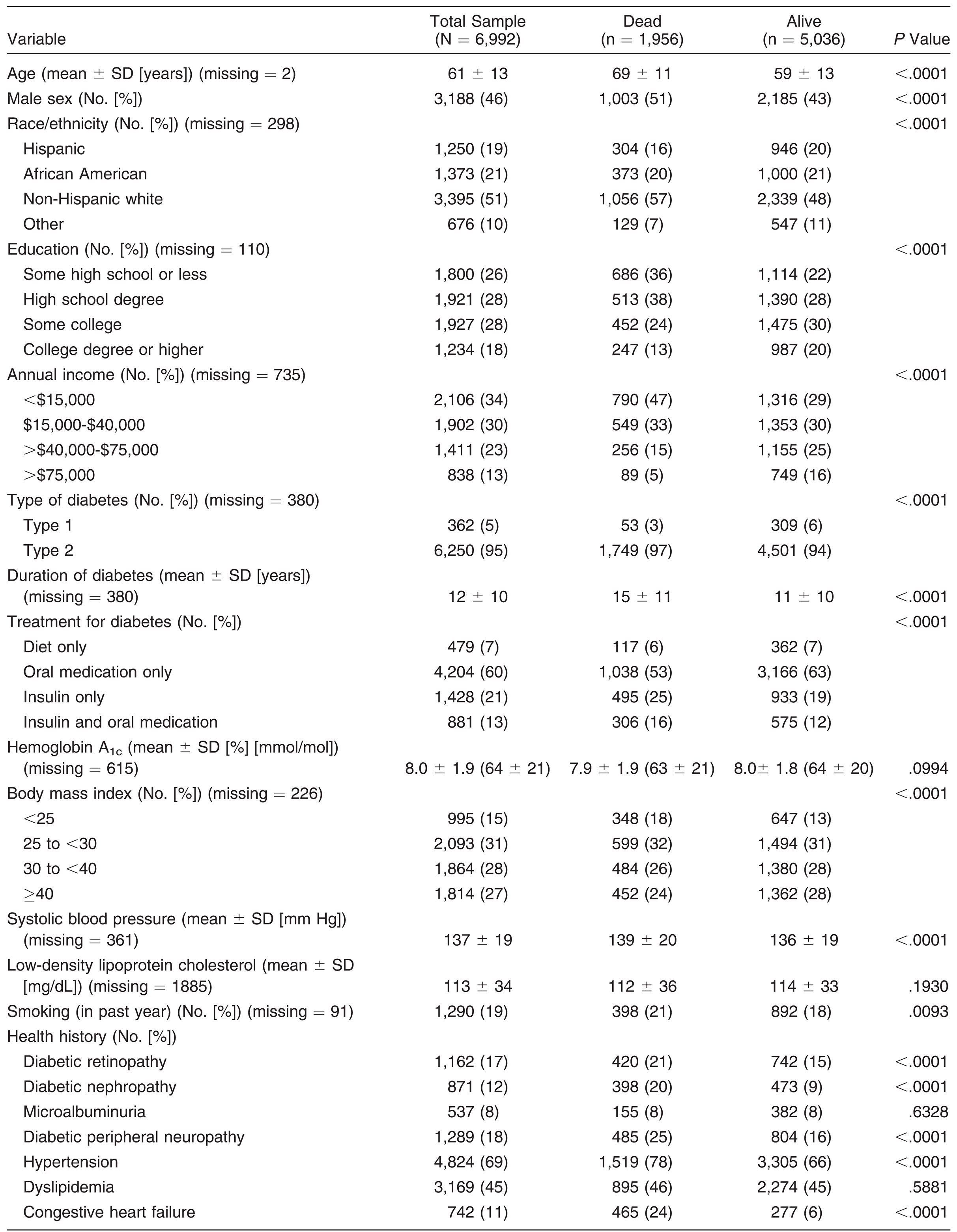
After 10 years of follow-up, 1,956 participants (28%) had died. Mean ± SD time until death was 7.7 ± 2.3 years. Those who died were more likely to be older and male, to be of non-Hispanic white race/ ethnicity, and to have a lower educational level and income. They were more likely to have type 2 diabetes, to have a longer duration of diabetes, and to be treated with insulin. They were also more likely to have a lower body mass index and higher systolic blood pressure; to be smokers; and to have histories of retinopathy, nephropathy, neuropathy, hypertension, coronary heart disease, congestive heart failure, and peripheral vascular disease. They were also more likely to have higher Charlson indices (Table 1).
Table 1.
Characteristics of the Study Population Using Baseline Characteristics and Mortality Data Ascertained from the National Death Index 2000-2009.
Hazard ratios (HRs) and corresponding 95% confidence intervals (CIs) for the associations between CN, DFU, or LEA and all-cause mortality are shown in Table 2. Relative to those with no foot complications, those with LEA had an 84% higher risk of all-cause mortality after adjusting for age, sex, race/ethnicity, income, diabetes treatment, HbA1c level, body mass index, low-density lipoprotein cholesterol level, smoking status, and history of diabetic nephropathy, myocardial infarction, congestive heart failure, and peripheral vascular disease (HR, 1.84; 95% CI, 1.28–2.63). Those reporting CN or DFU had higher unadjusted all-cause mortality rates compared with those without foot complications, but these associations did not remain statistically significant after adjustment.
Table 2.
Unadjusted and Adjusted Cox Proportional Hazards Models Predicting All-Cause Mortality.
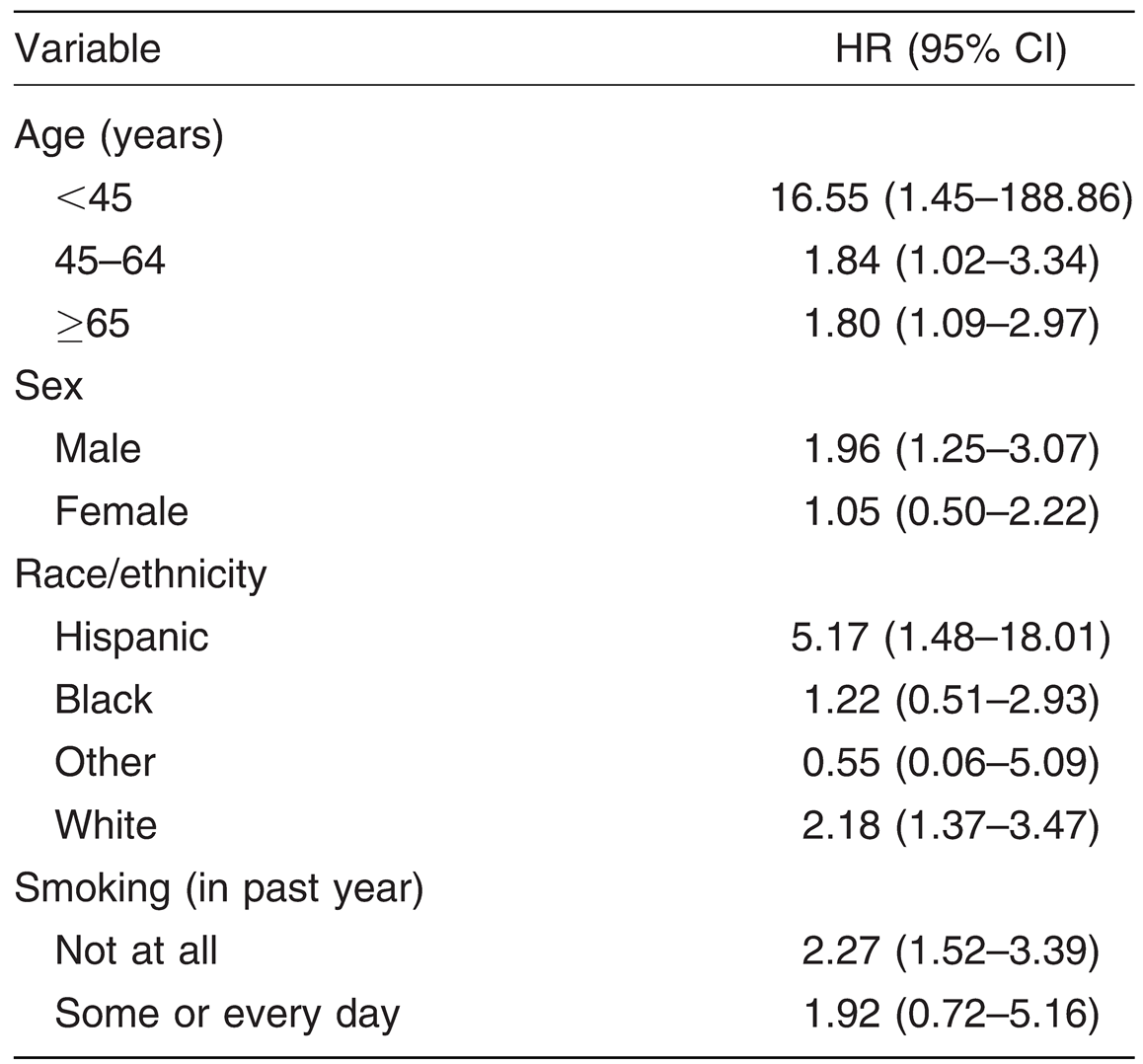
Age, sex, race/ethnicity, and smoking-specific HRs and corresponding 95% CIs for the stratumspecific association between LEA and all-cause mortality are shown in Table 3. The risk of mortality associated with LEA stratified by age group was significant for every age group. The increased risk of mortality associated with LEA was significant in men (HR, 1.96; 95% CI, 1.25–3.07) but was not significant in women (HR, 1.05; 95% CI, 0.50–2.22). The risk of mortality associated with LEA was highest in the Hispanic ethnic group (HR, 5.17; 95% CI, 1.48–18.01), followed by the non-Hispanic white group (HR, 2.18; 95% CI, 1.37–3.47). The racespecific HRs for the non-Hispanic black and other race/ethnic groups were not significantly elevated. The increased risk of mortality associated with LEA seemed to be driven by the nonsmoking subpopulation (HR, 2.27; 95% CI, 1.52–3.39) compared with some or every day smokers (HR, 1.92; 95% CI, 0.72– 5.16). Because we inquired about smoking in the past year only, it is possible that participants with DFU or LEA were former smokers.
Table 3.
Adjusteda Cox Proportional Hazards Models Predicting the Association Between LEA and All-Cause Mortality Stratified by Age, Sex, Race/Ethnicity, and Smoking Status.
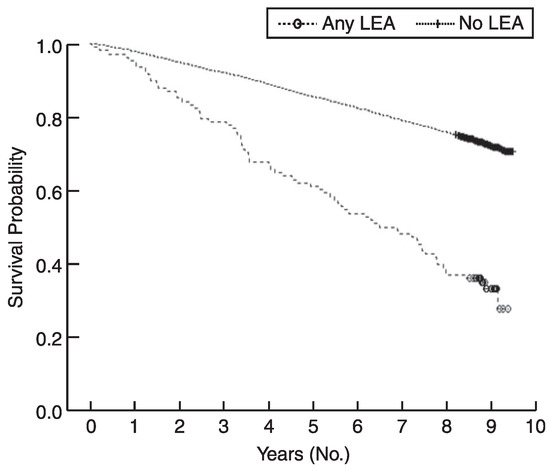
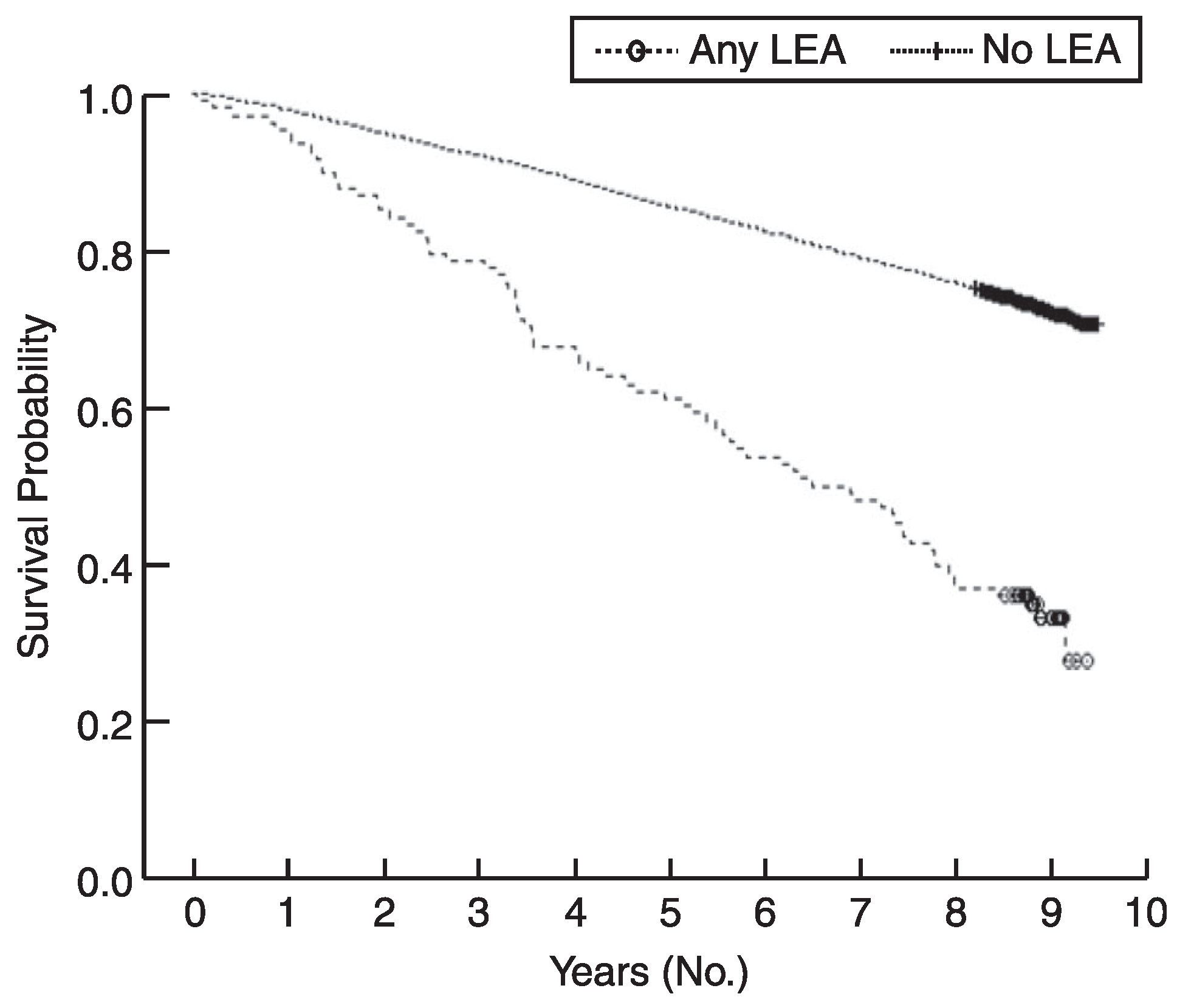
In sensitivity analyses (data not shown), there were 108 people with any LEA with or without CN or DFUs. Of the 1,956 people who died, 72 (4%) had LEA, and of the 5,036 people who remained alive after 10 years, 36 (1%) had LEA (P < .0001). Five- and 10-year mortality for people with LEA were 39% and 67%, respectively. For people without LEA, 5- and 10-year mortality were 15% and 27%, respectively. Figure 1 presents the unadjusted survival curve for any versus no LEA during 10 years of follow-up. The association between any LEA and mortality remained statistically significant in fully adjusted models (HR, 1.67; 95% CI, 1.19–2.35), and the stratum-specific trends were the same as those noted previously herein.
Figure 1.
Unadjusted survival curve for Translating Research Into Action for Diabetes (TRIAD) participants with no lower-extremity amputation (LEA) versus any LEA over 10 years.
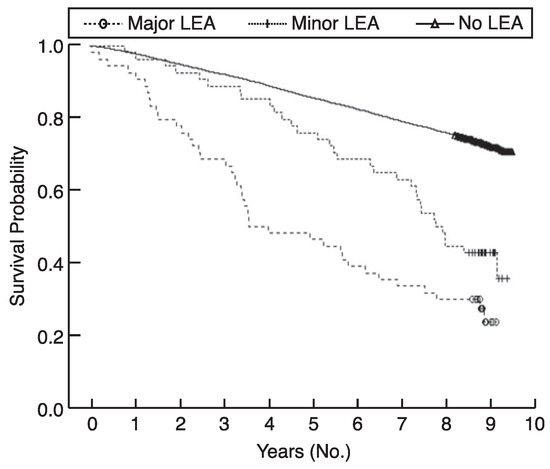
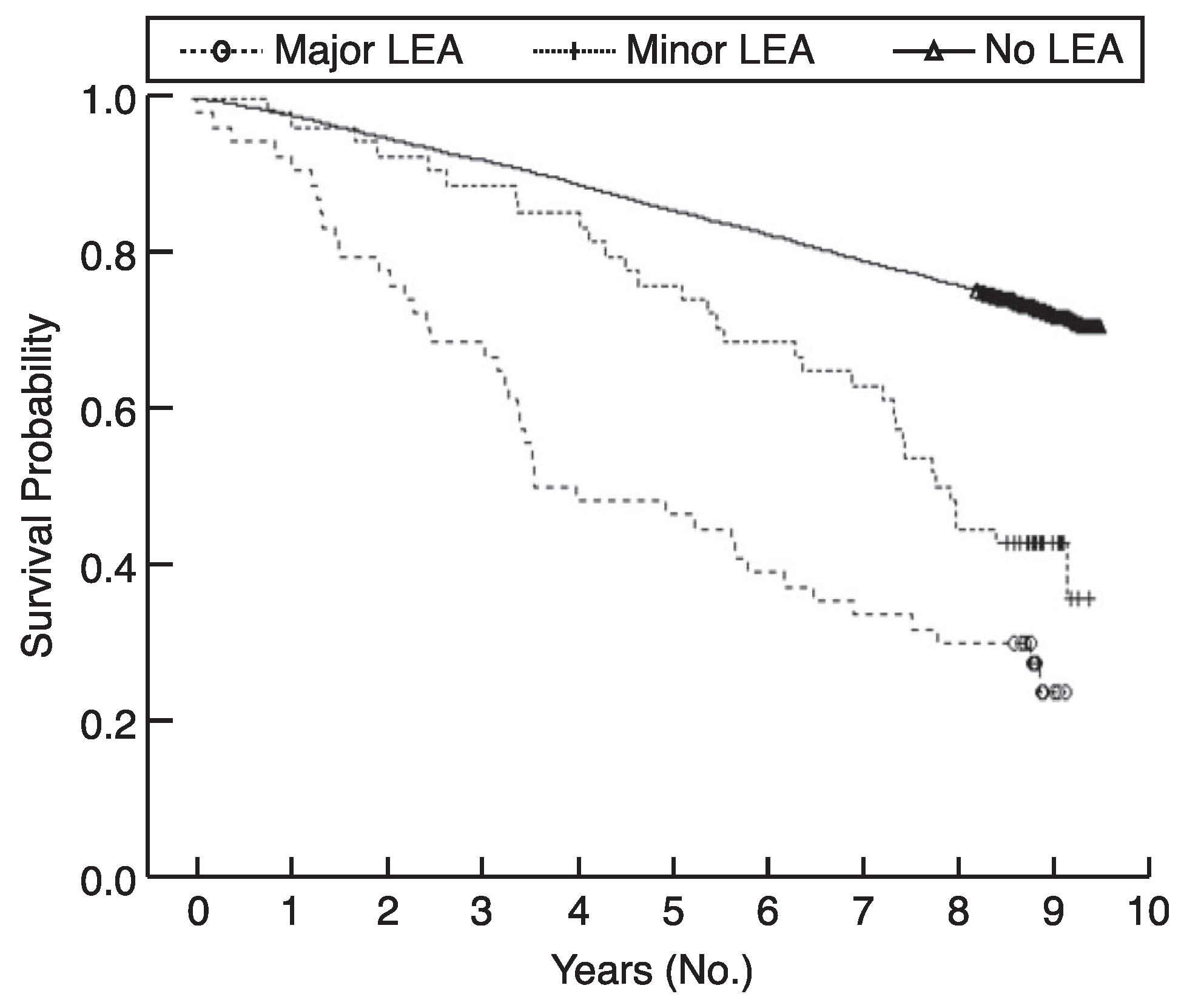
The numbers of minor (toe or transmetatarsal) and major (below- or above-the-knee) LEAs were equal (n = 54 in each category). In multivariate models, minor LEAs were not a significant predictor of mortality (HR, 1.48; 95% CI, 0.92–2.40), but major LEAs were (HR, 1.89; 95% CI, 1.18–3.01). Figure 2 presents the unadjusted survival curves for patients undergoing minor and major LEAs versus no LEA during 10 years of follow-up. It is evident from Figure 2 that at 5 years there is not much of a survival difference between people who had a minor LEA versus those who had no LEA. However, for those who survived past 5 years this difference was greater. Survival at 10 years for people who had a minor LEA was similar to that for people who had a major LEA.
Figure 2.
Unadjusted survival curve for Translating Research Into Action for Diabetes (TRIAD) participants with no lower-extremity amputation (LEA), minor LEA only, and major LEA over 10 years.
Discussion
Charcot’s neuro-osteoarthropathy, DFU, and LEA were all associated with increased all-cause mortality in unadjusted analyses. We were not surprised by these findings because foot complications are associated with higher levels of proinflammatory cytokines, which are associated with mortality. A recent meta-analysis described increased mortality associated with long-term elevations of C-reactive protein levels.[19] Diabetes-related foot infections, CN, DFU, and osteomyelitis preceding LEA have all been described as chronic inflammatory states. Foot complications are frequently treated with prosthetic devices that increase the energy costs of walking and could precipitate cardiovascular events in patients with multiple comorbid conditions.[20]
For these same reasons, we were surprised that all of the foot complications were not independently associated with mortality. Although CN and DFU frequently precede LEA, we did not find an independent effect of either of these foot complications on mortality. The LEA was the only foot complication that predicted mortality independent of age, sex, race/ethnicity, income, body mass index, diabetes treatment, HbA1c level, low-density lipoprotein cholesterol level, smoking status, and history of diabetic nephropathy, myocardial infarction, congestive heart failure, and peripheral vascular disease. This may reflect the very high perioperative mortality rate associated with LEA. Thirtyday mortality after major amputation has been reported to be as high as 16% in patients undergoing dialysis.[21] The present study confirms that diabetesrelated LEAs are associated with high 5- and 10-year mortality rates.[5,22,23,24] Unadjusted 5- and 10-year mortality for those with LEA was 39% and 67%, respectively. This is higher than the 5- and 10-year mortality for those with breast cancer (10% and 17%, respectively) and is comparable with the 36% 5-year mortality and higher than the 42% 10-year mortality for those with colorectal cancer.[25,26]
Historically, mortality rates after LEA have been reported to be very high. In a study by Whitehouse et al,[27] 64% mortality was observed at 5 years for patients who underwent below-the-knee amputation between 1956 and 1965. In the present study, 5-year mortality was 39%, similar to the 5-year mortality rate for people 40 to 64 years of age with type 2 diabetes after amputation and lower than the mortality rate for those 65 to 84 years of age (~70%) in the Swedish National Diabetes Register.[28] Another concerning finding was the five-fold increased hazard for mortality associated with LEA in patients of Hispanic ethnicity. As demonstrated in previous work, racial differences in the odds of having an amputation were attenuated in the TRIAD population.[17] However, this new finding indicates that there may still be an increased risk of mortality associated with LEA in Hispanic individuals. Our finding underscores the potential importance of early access to care and risk factor interventions in reducing amputation risk. Once an amputation has occurred, access to care and treatment seem to be ineffective in preventing death.
This study has some limitations. We used data from people enrolled in managed-care plans; these results may not be generalizable to those outside of managed care or even to those in managed-care plans with different levels of access to care or quality of care. Identification of foot conditions relied on data recorded for administrative purposes. These data may not accurately represent a patient’s clinical status. However, previous studies have demonstrated that CN identified by ICD-9 codes can be confirmed by medical records 92% of the time. The ICD-9 codes have also been shown to have 93% sensitivity and 91% specificity in identifying DFUs.[29,30] Administrative data do not allow for identification of the affected foot, so we do not know whether the conditions were unilateral or bilateral. We did not observe an association between LEA and mortality in those reporting smoking in the past year. However, due to survey measurement, the dichotomization of smoking may have resulted in misclassification and biased the results of the analysis. Last, although we had 6,992 patients in the sample, only 55 had CN, which limited the power for multivariate analyses. It is important to keep in mind, however, that CN is a relatively rare complication of diabetes, with an estimated prevalence of 0.1% to 0.9%, so our prevalence of 1% was actually quite high.[31,32]
Conclusions
Early detection of feet at risk and appropriate management are the most important factors in preventing diabetes-related foot complications. In the present study of managed-care patients with access to high-quality health care, we found that LEA remained a robust independent predictor of mortality and that the 5- and 10-year mortality rates were high. Although a previous study noted an attenuation of the racial/ethnic differences in the prevalence of foot complications reported in the literature,[12] we now observed some differences in the association between LEA and mortality by sex and racial/ethnic group, with men and Hispanics having the highest risk. This suggests that although early treatment and preventive care may be critical for the prevention of foot complications in people with diabetes, LEA reflects suboptimal long-term treatment and remains a robust risk factor for mortality.
Acknowledgments
Significant contributions to this study were made by members of the TRIAD study group. The authors acknowledge the participation of their health plan partners and the technical assistance of Ed Tierney, Centers for Disease Control and Prevention.
Financial Disclosure
This study was jointly funded by Program Announcement 04005 from the Centers for Disease Control and Prevention (Division of Diabetes Translation) and the National Institute of Diabetes and Digestive and Kidney Diseases. Additional support was provided by the National Institute of Diabetes and Digestive and Kidney Diseases through the Michigan Diabetes Research Center (grant P30DK020572) and the Michigan Center for Diabetes Translational Research (grant P30DK092926).
Conflicts of Interest
None reported.
References
- BOYKO, E.J.; AHRONI, J.H.; STENSEL, V. ET AL: A prospective study of risk factors for diabetic foot ulcer: the Seattle Diabetic Foot Study. Diabetes Care 1999, 22, 1036. [Google Scholar] [CrossRef] [Scilit]
- BOULTON, A.J.; VILEIKYTE, L. RAGNARSON-TENNVALL, ET AL: The global burden of diabetic foot disease. Lancet 2005, 366, 1719. [Google Scholar] [CrossRef] [Scilit]
- SOHN, M.W.; LEE, T.A.; STUCK, R.M.; et al. Mortality risk of Charcot arthropathy compared with that of diabetic foot ulcer and diabetes alone. Diabetes Care 2009, 32, 816. [Google Scholar] [CrossRef] [Scilit]
- APELQVIST, J.J.; LARSSON, J. AGARDH CD: Long-term prognosis for diabetic patients with foot ulcers. J Intern Med 1993, 233, 485. [Google Scholar] [CrossRef] [Scilit]
- MOULIK, P.K.; MTONGA, R.; GILL, G.V. Amputation and mortality in new-onset diabetic foot ulcers stratified by etiology. Diabetes Care 2003, 26, 491. [Google Scholar] [CrossRef] [Scilit]
- FAGLIA, E.F.; FAVALES, F.; MORABITO, A. New ulceration, new major amputation, and survival rates in diabetic subjects hospitalized for foot ulceration from 1990 to 1993: a 6.5-year follow-up. Diabetes Care 2001, 24, 78. [Google Scholar] [CrossRef] [Scilit]
- KUMAR, S.; FERNANDO, D.J.S.; VEVES, A. ET AL: Semmes-Weinstein monofilaments: a simple, effective and inexpensive screening device for identifying diabetic patients at risk of foot ulceration. Diabetes Res Clin Pract 1991, 31, 63. [Google Scholar] [CrossRef] [Scilit]
- YOUNG, M.J.; MCCARDLE, J.E.; RANDALL, L.E.; et al. Improved survival of diabetic foot ulcer patients 1995-2008: possible impact of aggressive cardiovascular risk management. Diabetes Care 2008, 31, 2143. [Google Scholar] [CrossRef] [Scilit] [PubMed]
- GAEDE, P.; VEDEL, P.; LARSEN, N.; et al. Multifactorial intervention and cardiovascular disease in patients with type 2 diabetes. N Engl J Med 2003, 348, 383. [Google Scholar] [CrossRef] [Scilit] [PubMed]
- MCEWEN, L.N.; HSIAO, V.C.; NOTA-KIRBY, E.M. ET AL: Effect of a managed care disease management program on diabetes care. Am J Manag Care 2009, 15, 575. [Google Scholar] [PubMed]
- KARTER, A.J.; FERRARA, A.; LIU, J.Y.; et al. Ethnic disparities in diabetic complications in an insured population. JAMA 2002, 287, 2519. [Google Scholar] [CrossRef] [Scilit]
- MCEWEN, L.N.; YLITALO, K.R.; HERMAN, W.H. ET AL: Prevalence and risk factors for diabetes-related foot complications in Translating Research Into Action for Diabetes (TRIAD). J Diabetes Complications 2013, 27, 588. [Google Scholar] [CrossRef] [Scilit]
- LAVERY, L.A.; VAN HOUTUM, W.H.; ASHRY, H.R. ET AL: Diabetes-related lower-extremity amputations disproportionately affect Blacks and Mexican Americans. South Med J 1999, 92, 593. [Google Scholar] [CrossRef] [Scilit]
- TRIAD STUDY GROUP. The Translating Research Into Action for Diabetes (TRIAD) study: a multicenter study of diabetes in managed care. Diabetes Care 2002, 25, 386. [Google Scholar] [CrossRef] [Scilit]
- NATIONAL CENTER FOR HEALTH STATISTICS: National Death Index. Centers for Disease Control and Prevention Web site. Available online: http://www.cdc.gov/nchs/ndi.htm (accessed on 2 September 2015).
- COWPER, D.C.; KUBAL, J.D.; MAYNARD, C. ET AL: A primer and comparative review of major US mortality databases. Ann Epidemiol 2002, 12, 462. [Google Scholar] [CrossRef] [Scilit]
- WILLIAMS, B.C.; DEMITRACK, L.B. FRIES BE: The accuracy of the National Death Index when personal identifiers other than Social Security number are used. Am J Public Health 1992, 82, 1145. [Google Scholar] [CrossRef] [Scilit]
- CHARLSON, M.E.; POMPEI, P.; ALES, K.L. ET AL: A new method for classifying prognostic comorbidity in longitudinal studies: development and validation. J Chronic Dis 1987, 40, 373. [Google Scholar] [CrossRef] [Scilit]
- KAPTOGE, S.; DI ANGELANTONIO, E.; LOWE, G. ET AL: C-reactive protein concentration and risk of coronary heart disease, stroke, and mortality: an individual participant meta-analysis. Lancet 2010, 375, 132. [Google Scholar] [PubMed]
- WATERS, R.L.; PERRY, J.; ANTONELLI, D.; et al. Energy cost of walking of amputees: the influence of level of amputation. J Bone Joint Surg Am 1976, 58, 42. [Google Scholar] [CrossRef] [Scilit] [PubMed]
- LOGAR, C.M.; PAPPAS, L.M.; RAMKUMAR, N.; ET, A.L. Surgical revascularization versus amputation for peripheral vascular disease in dialysis patients: a cohort study. BMC Nephrol 2005, 6, 3. [Google Scholar] [CrossRef] [Scilit]
- ARMSTRONG, D.G.; WROBEL, J. Guest editorial: are diabetes-related wounds and amputations worse than cancer? Int Wound J 2007, 4, 286. [Google Scholar] [CrossRef] [Scilit]
- IZUMI, Y.; SATTERFIELD; LEE, S. ET AL: Mortality of first-time amputees in diabetics: a 10 year observation. Diabetes Res Clin Pract 2009, 83, 126. [Google Scholar] [CrossRef] [Scilit] [PubMed]
- MORBACH, S.; FURCHERT, H.; GROBLIJNGHOFF, U. ET AL: Long-term prognosis of diabetic foot patients and their limbs. Diabetes Care 2012, 35, 2021. [Google Scholar] [CrossRef] [Scilit]
- AMERICAN CANCER SOCIETY: Cancer Facts & Figures 2013; American Cancer Society: Atlanta, 2013.
- AMERICAN CANCER SOCIETY: Colorectal Cancer Facts & Figures 2014-2016; American Cancer Society: Atlanta, 2014.
- WHITEHOUSE, F.W.; JURGENSEN, C. BLOCK MA: The later life of the diabetic amputee. Diabetes 1968, 17, 520. [Google Scholar] [CrossRef] [Scilit]
- KELLY, P.J.; CLARKE, P.M.; HAYES, A.J. ET AL: Predicting mortality in people with type 2 diabetes mellitus after major complications: a study using Swedish National Diabetes Register data. Diabet Med 2014, 31, 954. [Google Scholar] [CrossRef] [Scilit]
- SOHN, M.W.; BUDIMAN-MAK, E.; STUCK, R.M.; et al. Diagnostic accuracy of existing methods for identifying diabetic foot ulcers from inpatient and outpatient datasets. J Foot Ankle Res 2010, 3, 27. [Google Scholar] [CrossRef] [Scilit]
- SOHN, M.W.; STUCK, R.M.; PINZUR, M. ET AL: Lower-extremity amputation risk after Charcot arthropathy and foot ulcer. Diabetes Care 2010, 33, 98. [Google Scholar] [CrossRef] [Scilit]
- LAVERY, L.A.; ARMSTRONG, D.G.; WUNDERLICH, R.P.; et al. Diabetic foot syndrome: evaluating the prevalence and incidence of foot pathology in Mexican Americans and non-Hispanic whites from a diabetes disease management cohort. Diabetes Care 2003, 26, 1435. [Google Scholar] [CrossRef] [Scilit] [PubMed]
- SINHA, S.; MUNICHOODAPPA, C.S.; KOZAK, G.P. Neuro-arthropathy (Charcot joints) in diabetes mellitus (clinical study of 101 cases). Medicine (Baltimore) 1972, 51, 191. [Google Scholar] [CrossRef] [Scilit] [PubMed]


© 2016 American Podiatric Medical Association