Next Article in Journal
Assessment and Diagnosis of Posterior Tibial Tendon Dysfunction. Do We Share the Same Opinions and Beliefs?
Previous Article in Journal
Foot Complications and Mortality. Results from Translating Research Into Action for Diabetes (TRIAD)
 
 
Journal of the American Podiatric Medical Association is published by MDPI from Volume 116 Issue 1 (2026). Previous articles were published by another publisher in Open Access under a CC-BY (or CC-BY-NC-ND) licence, and they are hosted by MDPI on mdpi.com as a courtesy and upon agreement with American Podiatric Medical Association.
Case Report

Eccrine Syringofibroadenoma of the Heel. A Case Report

by
Nathalia Doobay
1,* and
Jason Mallette
2
1
Orthopaedic Associates Inc, Cranston, RI, USA
2
South County Foot and Ankle Inc, Warwick, RI, USA
*
Author to whom correspondence should be addressed.
J. Am. Podiatr. Med. Assoc. 2016, 106(1), 76-78; https://doi.org/10.7547/14-121
Published: 1 January 2016

Abstract

Eccrine syringofibroadenoma is a rare, benign tumor of eccrine ductal differentiation, typically presenting in the extremities. Herein we report a case of a 77-year-old man with pain in the lateral midfoot and the presence of an eccrine syringofibroadenoma lesion in the lateral heel. On surgical excision of the lesion, the foot pain promptly resolved, and at the most recent follow-up visit, the patient remained pain free.

Eccrine syringofibroadenoma (ESFA) is a skin lesion described by Mascaro in 1963. It is a rare tumor, appearing in the literature only approximate-ly 75 times.[1] Other eccrine tumors have been reported in the podiatric medical literature,[2,3,4,5,6] but to our knowledge, ESFA has not been described. Clinically, it presents as a benign solitary nodule. However, several subtypes have been identified, such as nevoid lesions, adenomas, multiple lesions with hydrotic ectodermal dysplasia, and reactive lesions.[7] These lesions have also been associated with other dermatologic conditions, such as lichen planus, bullous pemphigoid, skin cancers, and even, in some cases, diabetic neuropathic ulcers. A case of ESFA associated with atypical foot pain is presented herein.

Case Report

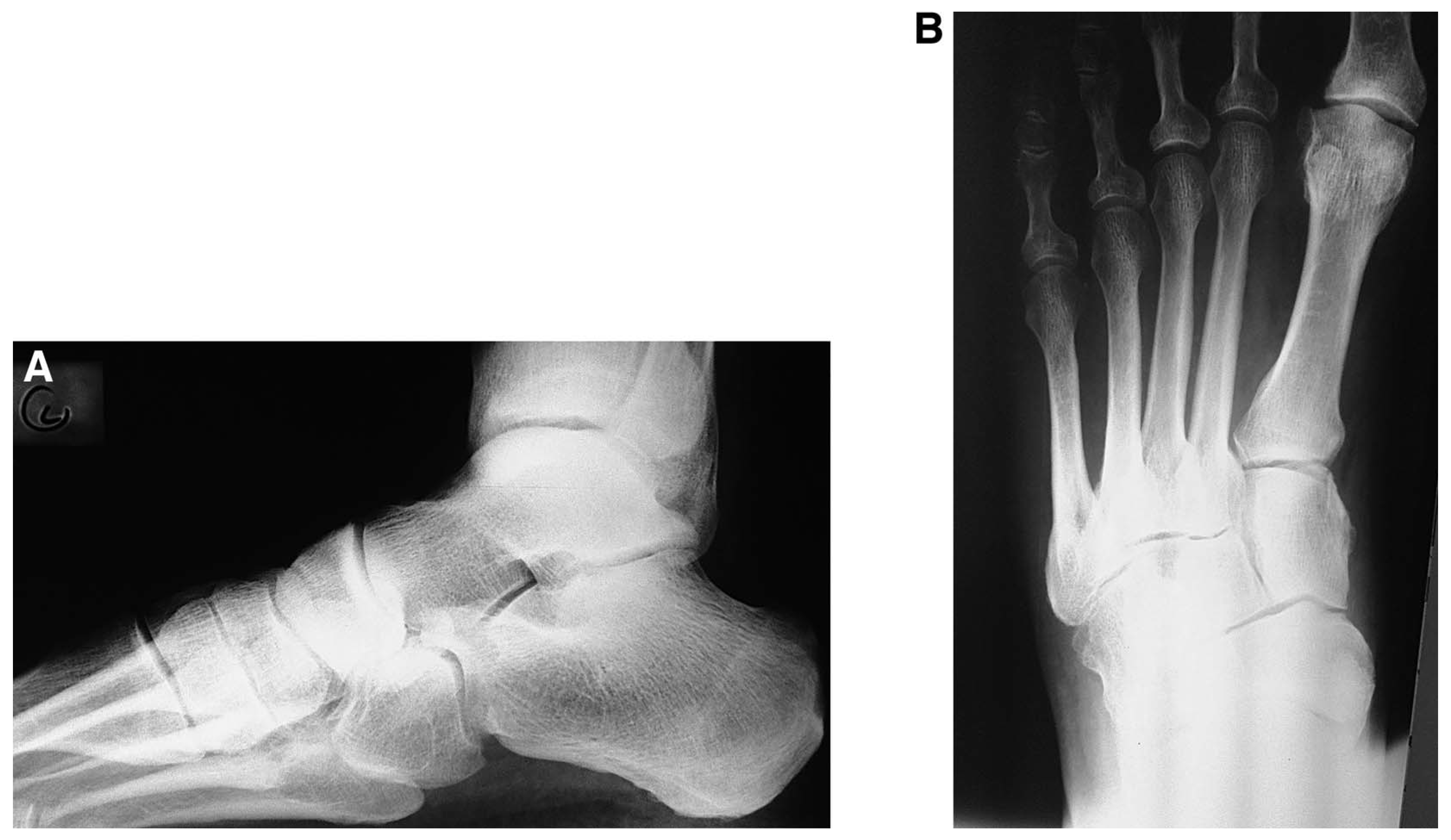
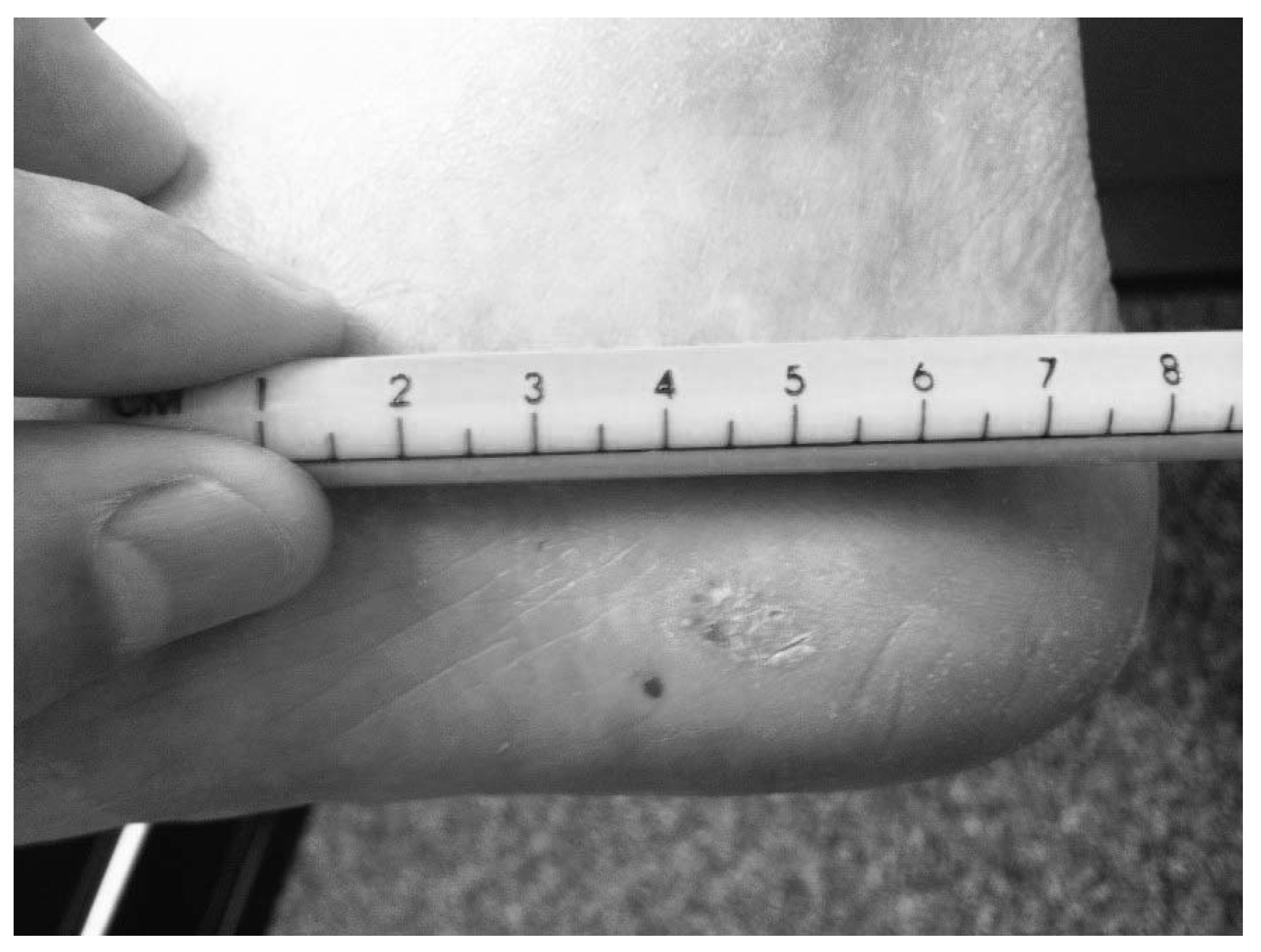
A 77-year-old man presented with intermittent pain in the lateral aspect of the left foot for the past 18 months. The patient reported that the pain was aggravated by prolonged walking. He denied previous trauma, increase in activity, change of footwear, or a history of gout or other arthropathy. His medical history was significant for prostate cancer and an excision of squamous cell carcinoma to the contralateral thigh. On clinical examination, the dorsalis pedis artery was palpable, whereas the posterior tibial artery was not palpable. All of the pedal signals were triphasic using a handheld Doppler. A mildly raised violaceous plaque measuring approximately 1 cm in diameter was noted to the lateral aspect of the heel (Figure 1). No other signs of dermatologic compromise, such as edema, erythema, drainage, or other lesions, were noted. Pain was not elicited with palpation of the lesion. However, pain was induced on palpation of the area surrounding the articulation of the cuboid bone and the fifth metatarsal. There was no pain with any range of motion and no gross deformities or orthomechanical derangements noted. Radiographs obtained at the initial visit did not exhibit any abnormality (Figure 2). A magnetic resonance image was ordered and showed no irregularities to the affected foot. Baseline inflammatory chemistry tests (erythrocyte sedimentation rate, C-reactive protein level, complete blood cell count with differential count, and uric acid level) were ordered, and the results proved to be within normal limits.
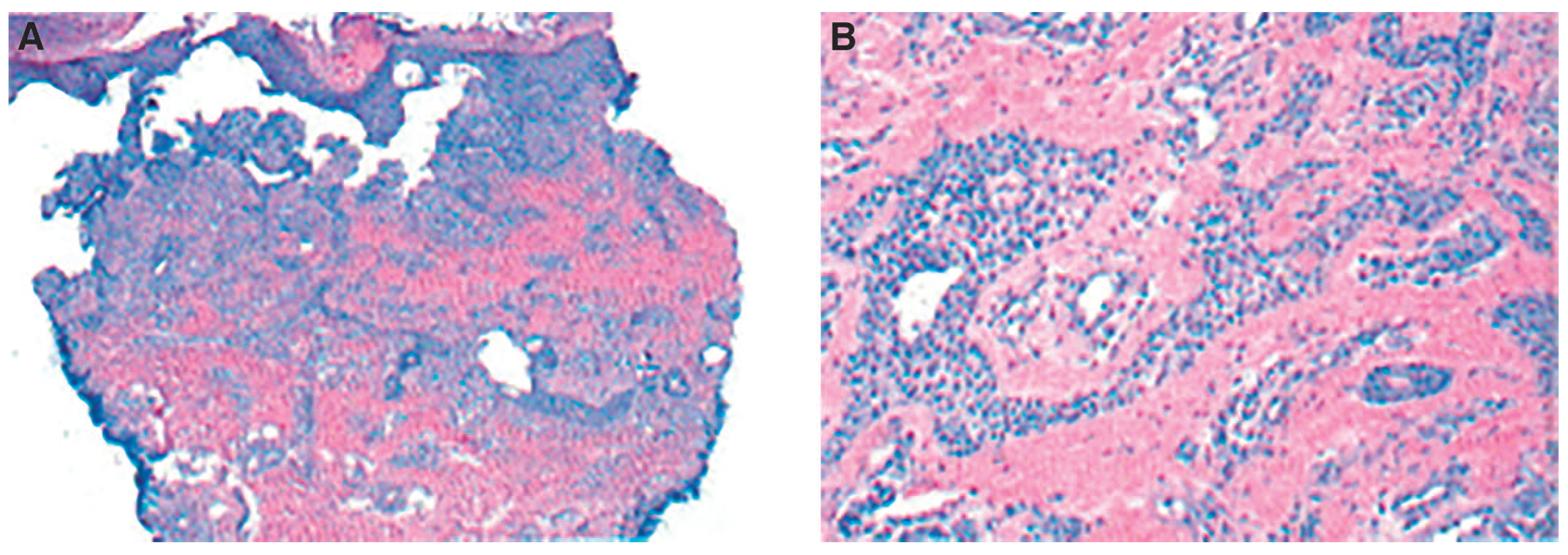
At the follow-up visit 1 week later, the patient again reported pain in the lateral aspect of the midfoot. A 5-mm punch biopsy of the lesion was then performed, and the sample was sent for pathologic analysis. The pathology report described ‘‘thin anastomosing epithelial cords and strands connected to the undersurface of the epidermis, ducts present within the tumor, rich fibrovascular stroma between the strands.’’ The final diagnosis was ESFA (Figure 3). Owing to the patient’s history of squamous cell carcinoma, he was referred to his existing surgical dermatologist, who performed Moh’s surgery to the site. Subsequent care included daily wet-to-dry dressings until the area fully healed. The pathologic analysis of specimens acquired from that surgery also revealed ESFA.
The patient returned for subsequent follow-up visits and denied any pain in the left foot after the initial biopsy. One year later, he again denied any pain or discomfort, and there has been no recurrence of the lesion.

Discussion

An ESFA is a rare tumor of the eccrine glands. It is typically a benign condition; however, there have been reported cases of differentiation into eccrine syringofibrocarcinoma and a correlation with squamous cell carcinoma.[8] There are a myriad of clinical presentations, such as solitary or multiple nodules, plaques, and hyperkeratoses. The classic histologic appearance of ESFA is ‘‘anastomosing cords and strands of epithelial cells, surrounded by rich stroma with variable numbers of small ductal structures.’’[9](pS20) Reported treatments have primarily consisted of surgical excision and long-term observation to ensure no recurrence or malignant transformation.
We propose the possibility of this solitary lesion causing referred pain to the lateral midfoot. Certainly, other causes of pain cannot be completely ruled out, ie, gout or other inflammatory arthropathies, but given the patient’s immediate resolution of pain after surgical excision, referred pain must be a consideration. This case report at least reaffirms the importance of a multisystem examination when arriving at a diagnosis.

Financial Disclosure

None reported.

Conflicts of Interest

None reported.

References

  1. CHO, E.; LEE, J.D. CHO SH: A case of reactive eccrine syringofibroadenoma. Ann Dermatol 2011, 23, 70. [Google Scholar] [CrossRef] [PubMed]
  2. KURTZ, D.H.; FINNELL, J.A.; MEHLER, A.S. Papillary eccrine adenoma of the heel: a case report. J Foot Ankle Surg 2000, 39, 249. [Google Scholar] [CrossRef]
  3. SHEFF, J.S.; MACDOUGALL, D.B. Unusual case of porocarcinoma of the foot with no clinically evident dermatologic manifestations. J Foot Ankle Surg 2005, 44, 412. [Google Scholar] [CrossRef]
  4. COLLMAN, D.R.; BLASKO, M.; ALONZO, J. ET AL: Clear cell hidradenoma of the ankle. J Foot Ankle Surg 2007, 46, 387. [Google Scholar] [CrossRef] [PubMed]
  5. SIRINOGLU, H.; ERSOY, B.; TEZEL, E. Benign chondroid syringoma: atypical presentation of a rare eccrine tumor. J Foot Ankle Surg 2011, 50, 364. [Google Scholar] [CrossRef] [PubMed]
  6. WENZEL, E.; SANDHU, J.; KAJGANA, Z. ET AL: Malignant eccrine acrospiroma: a case report. JAPMA 2012, 102, 247. [Google Scholar] [CrossRef] [PubMed]
  7. DUFFY, K.L.; BOWEN, A.R.; TRISTANI-FIROUZI, P. ET AL: Eccrine syringofibroadenoma-like change adjacent to a squamous cell carcinoma: potential histologic pitfall in Mohs micrographic surgery. Dermatol Surg 2009, 35, 519. [Google Scholar] [CrossRef] [PubMed]
  8. STARINK, T.M. Eccrine syringofibroadenoma: multiple lesions representing a new cutaneous marker of the Schopf syndrome and solitary nonhereditary tumors. J Am Acad Dermatol 1997, 36, 569. [Google Scholar] [CrossRef]
  9. MORGANTI, A.G.; MARTONET, F.R.; MACCHIA, G. ET AL: Eccrine syringofibroadenoma radiation treatment of an unusual presentation. Dermatol Ther 2010, 23, 520. [Google Scholar] [CrossRef] [PubMed]
Figure 1. Clinical photograph of the skin tumor.
Japma 106 00076 g001
Figure 2. Lateral (A) and anteroposterior (B) radiographs of the affected foot showing no midfoot abnormality or lesion calcification.
Japma 106 00076 g002
Figure 3. Thin, anastomosing epithelial cords and strands connected to the undersurface of the epidermis, ducts present in the tumor, and rich fibrovascular stroma between the strands shown at lower (A) and higher (B) magnifications. The specific magnifications were not provided by the laboratory.
Japma 106 00076 g003