


Abstract
Background: Many operative techniques have been studied for correction of ingrown toenails, yet the role of nail fold resection without matricectomy is poorly defined. Current literature on this topic is sparse, and previous systematic reviews are absent. Methods: A MEDLINE/Cumulative Index to Nursing and Allied Health Literature/Scopus search was performed and a systematic review was undertaken for articles discussing surgical treatment of ingrown toenail by nail fold resection without matricectomy. Outcome measures were systematically reported, and variations in operative technique were identified. Results: Of the 14 articles that fit the inclusion criteria, 2 were level V evidence, 11 were level IV, and 1 was level III. Minimum follow-up time and the criteria for a satisfactory outcome were not consistently defined. Recurrence rates varied from 0% to 20%. The postsurgical infection rate was 0% for all nine studies reporting infection. Ten different operative techniques were identified. Three studies used partial or total nail avulsion as an adjunctive operative procedure. Triangular-, crescent-, elliptical-, semi-elliptical–, and radical-shaped skin excision strategies were identified. Primary and secondary intentions were used for closure. Conclusions: Operative algorithms for the treatment of ingrown toenail are still unclear regarding nail fold resection without matricectomy and are supported by almost entirely level IV evidence. Future prospective comparative studies and randomized trials are necessary to support and strengthen current practice.
Ingrown toenails, also known as onychocryptosis, are a common problem for physicians and surgeons who treat foot problems. Ingrown toenails occur when a nail border penetrates the skin fold alongside the nail. DeLauro and DeLauro[1] reviewed ingrown toenails and classified them into three stages: mild, moderate, and severe. Mild deformities may respond to conservative interventions, such as soaking or a cotton wisp under the nail edge. However, moderate and severe ingrown toenails usually require operative intervention.[2]
Heifitz[3] and Mozena[4] also developed classifications of onychocryptosis. These concepts were recently expanded by Martinez-Nova et al[5] into the following stages: I (inflammatory), IIa (abscess with nail fold <3 mm), IIb (abscess with nail fold ≥3 mm), III (granulation and chronic nail fold hypertrophy), and IV (deformity of both nail folds and distal fold). Martinez-Nova et al[5] included a treatment algorithm with different operative procedures for each stage of deformity.
There are many different operative techniques available for ingrown nail correction. Partial nail avulsion has been associated with high recurrence rates on the order of 70%.[6] Therefore, almost every surgical strategy aims to destroy underlying nail germinal matrix in addition to removing the troublesome part of the nail.[7] Wedge segmental excision, total nail avulsion, and partial nail avulsion have been combined with matricectomy (surgical or chemical) to prevent reoccurrence. Strategies that preserve the germinal matrix, such as nail fold excision and rotational flaps, are not used as often.
Although excising the nail fold may sound novel or exceptional to those unfamiliar with this technique, this procedure is more than 100 years old. Woods first described excision of nail fold granulations in 1869, and Cotting included a generous margin of normal tissue in his resection to prevent nail fold regeneration in 1872.[8] Ney[9] then described a generous excision of soft tissue next to the nail in 1923. In 1933, Du Vries[10] described a wide excision of nail wall skin with subcutaneous fat to eliminate the nail sulcus.
Nail fold resection represents a paradigm shift focusing on the adjacent overgrown toe skin instead of the ingrown nail.[11] This paradigm shift may be further supported by a prospective study by Pearson et al[12] that failed to find significant differences in toenail shape between ingrown hallux toenails and age-matched controls. Lloyd-Davies and Brill[13] argued that tissue resection reduces bulk around the toes and, thus, decreases the likelihood that a new nail will impinge the nail fold.
The operative management of ingrown toenails with matricectomy has been well studied, and the literature was recently reviewed by Eekhof et al.[7] However, the literature on the operative treatment of ingrown toenails by nail fold resection without matricectomy is scant in comparison. The role of this alternative operative intervention is poorly defined. Previous systematic reviews are absent. The purpose of this study was to evaluate the current literature and describe the level of evidence regarding nail fold resection without matricectomy.
Materials and Methods
A systematic literature search was performed using MEDLINE (1946–2013), the Cumulative Index to Nursing and Allied Health Literature (1980–2013), and Scopus (1966–2013). Key search terms used included ingrown nail, toenail surgery, onychocryptosis, nail fold resection, nail fold, and wedge excision. The abstracts of all of the resulting articles were investigated. Articles evaluating the efficacy of nail fold resection surgery for ingrown toenails were included for further review.
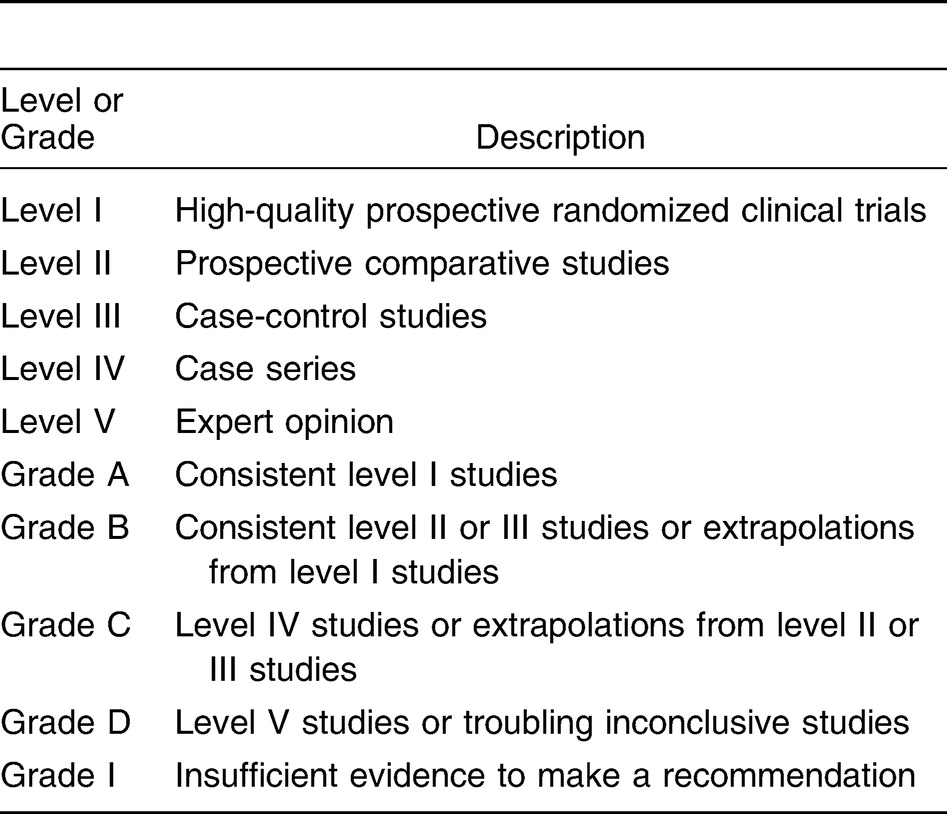
Outcomes measures were reported with respect to primary outcomes (type of study, number of participants, recurrence, and duration of follow-up) and secondary outcomes (healing time, infection, pain, participant satisfaction, and indications for operative procedure). Operative technique variations were reported with respect to location of skin excision, closure, and adjunctive procedures. The level of evidence hierarchy summarized in Table 1 was used to assign appropriate levels of evidence and grades of recommendation.
Table 1.
Levels of Evidence and Grades of Recommendation
Included in the study group was any manuscript that studied the operative management of ingrown toenails using nail fold resection. There were no restrictions regarding date or language. Studies that combined nail fold resection with translational or rotational flaps, orthonyxia (bracing), matricectomy, or any other nail ablation method were excluded. Studies for which the original manuscript could not be retrieved were also excluded.
Results
More than 300 articles were identified during the search, yet only 14 articles met the criteria for inclusion in this review.[8,11,14-25] Two expert opinion (level V) manuscripts were identified.[11,14] Eleven studies were retrospective or prospective case series without control groups (level IV).[8,15-20,22-25] Only one randomized controlled study (level III) was identified.[21]
One expert opinion manuscript provides detailed technique tips for the Vandenbos nail fold resection technique and is recommended reading for those who want to master this technique.[11] The expert opinion manuscript by Kufdakis[14] describes a procedure to remove skin inferior and anterior to the distal edge of the ingrown nail.
Search results are compared in Tables 2 and 3 for all of the articles excluding the two expert opinion manuscripts. A meta-analysis was not performed. Table 2 summarizes the following primary and secondary outcomes: type of study, number of participants, recurrence, minimum follow-up time, and postsurgical infection rate. All of these studies were level IV case series except for the controlled study by Perry et al.[21] The number of participants varied from 20 to 124, with mean and median numbers of patients per study of 57 and 53, respectively. Overall, 682 nail fold resections were performed. Four studies had 30 or fewer participants. Recurrence rates varied from 0% to 20%, with no recurrence observed in seven studies. Minimum follow-up varied from 3 to 18 months. Only three studies had follow-up of 12 months or longer. Two studies did not report minimum follow-up time, although Chapeskie and Kovac[19] reported mean follow-up of 58 months. Infection rates were 0% for all nine studies reporting, and three studies did not report infection rates. One study not reporting infection rates simply stated no cases of osteomyelitis.[25]
Table 2.
Comparison of Operative Outcomes for Level III and IV Studies
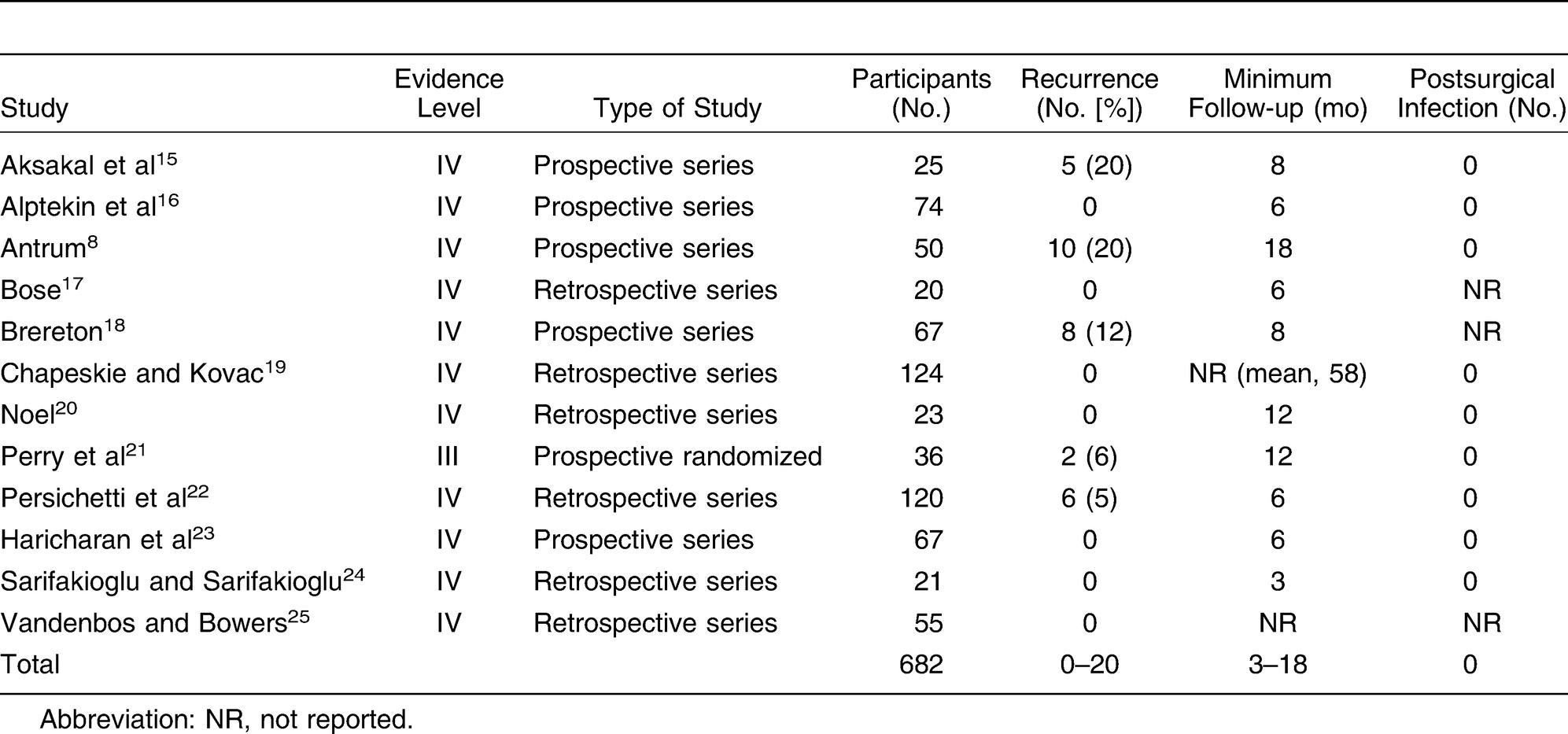
Table 3.
Variations in Operative Technique
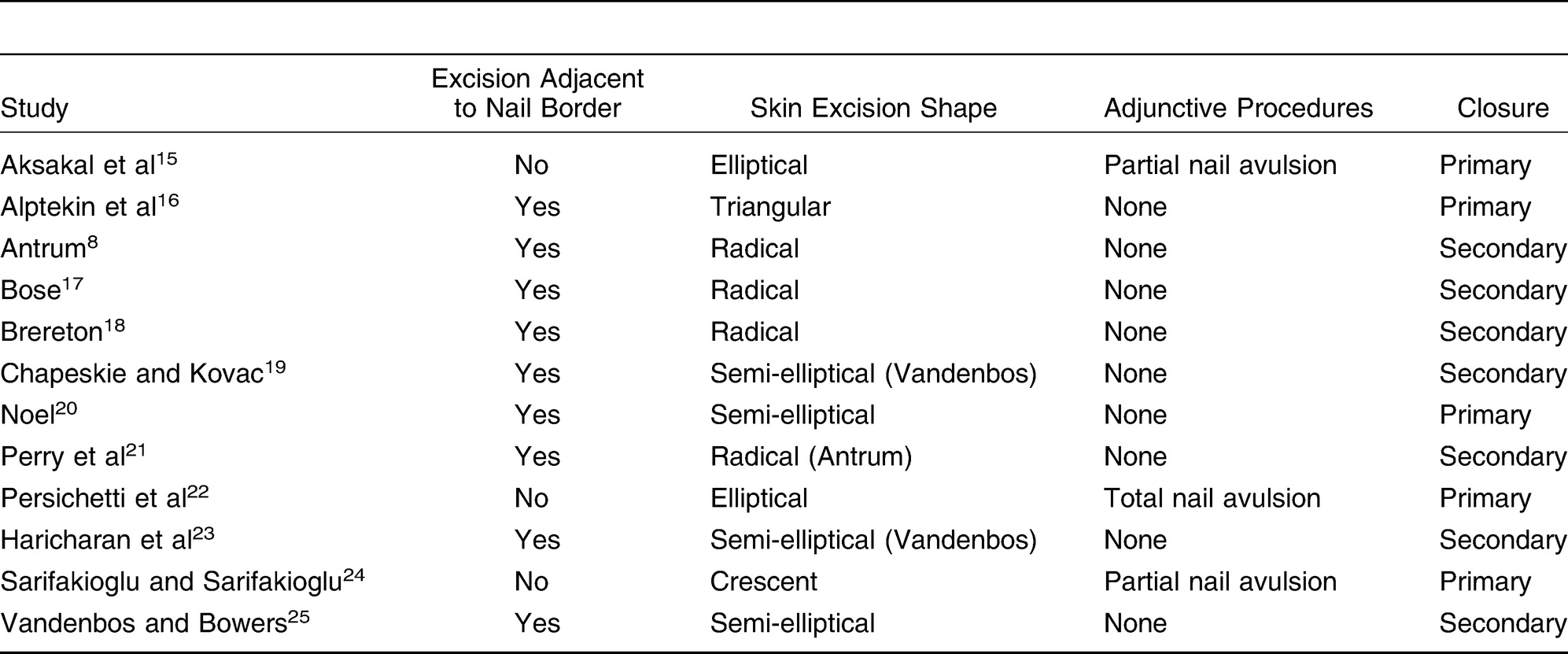
Table 3 calls attention to variations in operative technique, including skin excision location regarding the nail border, skin excision shape, adjunctive procedures, and closure. The 12 manuscripts in Table 3 use nine different operative techniques (the Antrum and Vandenbos techniques were repeated). If one considers the briefly aforementioned Kufdakis operative technique, then there are ten different operative techniques identified by this review study. Most techniques (9 of 12) favor excising the skin adjacent to the nail border. The most common techniques were radical[8,17,18,21] and semi-elliptical Vandenbos[19,23,25] procedures.
Table 3 also identifies adjunctive procedures and methods of closure. Partial and total nail avulsions were used as adjunctive procedures in only three studies.[15,22,24] These adjunctive procedures were associated with elliptical- and crescent-shaped skin excisions. Most techniques (n = 9) did not use an adjunctive procedure. Furthermore, both primary (n = 5) and secondary (n = 7) intentions were used for skin closure.
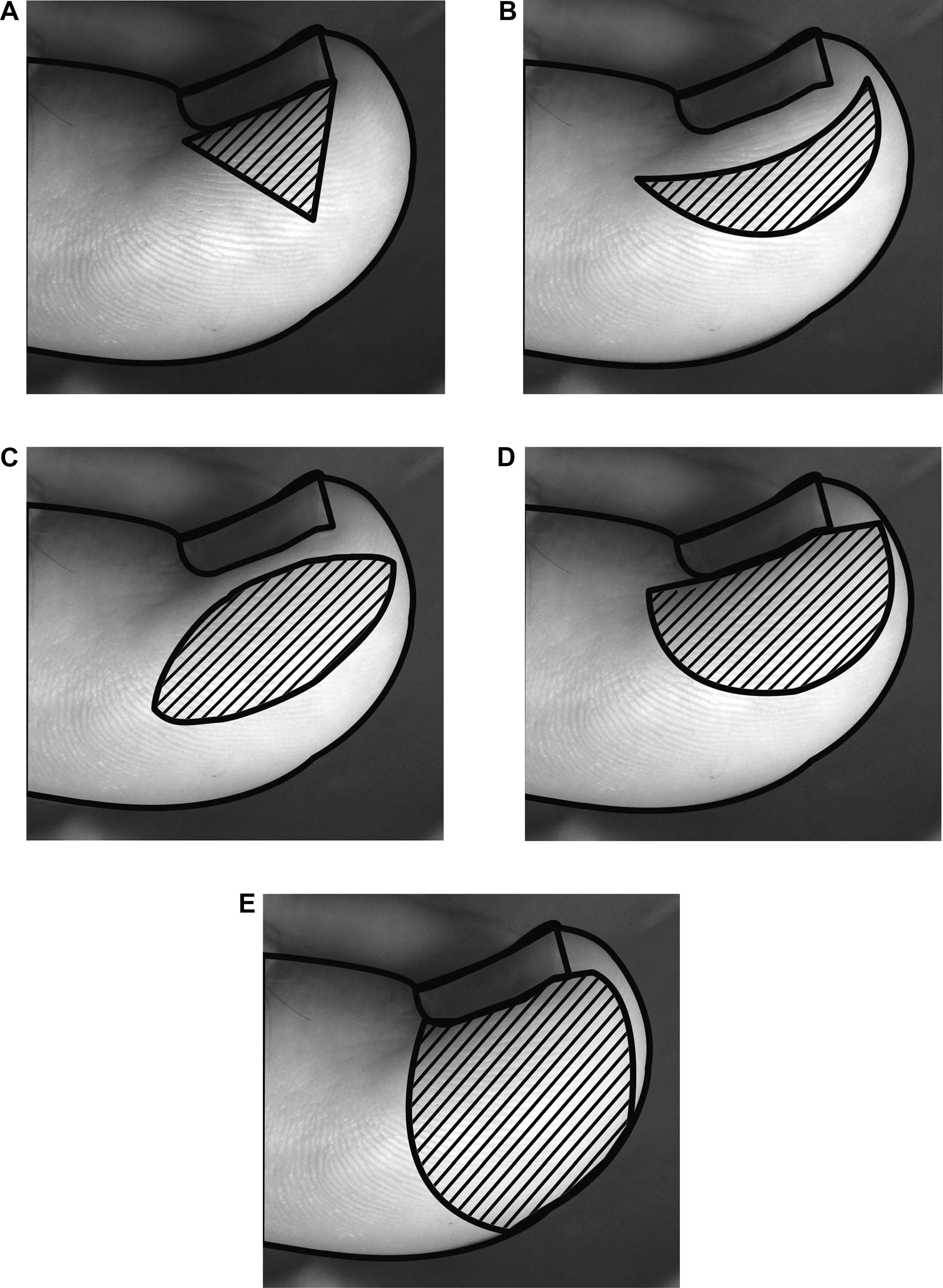
The shape of the skin excision varied, with five strategies identified: triangular, crescent, elliptical, semi-elliptical, and radical. Figure 1 displays these techniques and demonstrates a lack of consensus regarding the shape of the skin excision. The radical excision can remove the greatest amount of skin. Antrum[8] accomplished this by placing a No. 10 surgical blade vertically between the nail fold and the edge of the nail until it protruded through the plantar surface of the toe, leaving a raw defect. Although not evident in Figure 1, there are significant technique differences described for the various radical, semi-elliptical, and elliptical skin excisions.[8,15,17-23] Furthermore, some authors recommended removing skin from the medial and lateral nail folds.[11,19,20,22,25] Therefore, Figure 1 should not be used in place of original manuscripts for reproducing these techniques.
Figure 1.
Five different strategies for skin excision. A, Triangular; B, crescent; C, elliptical; D, semi-elliptical; and E, radical.
Outcomes with respect to the remaining secondary outcomes of healing time, pain, and participant satisfaction were not recounted in table format because authors seldom reported this information. Antrum[8] and Perry et al[21] reported average healing times of 20 days and 5 weeks, respectively. Brereton[18] reported healing times that ranged from 2 to 12 weeks, with an average of 4.9 weeks. No studies recorded postoperative pain levels with visual or number scales. Regarding participant satisfaction, Chapeskie and Kovac[19] found that 94% were strongly satisfied and only 1.6% noted a loss of sensation in the toe. Haricharan et al[23] stated that mean ± SD patient satisfaction on a 10-point scale was 9.9 ± 0.3.
The indications for nail fold resection were poorly defined. No studies included preoperative staging of the ingrown toenails with accepted classification schemes such as Martinez-Nova et al[5] or Heifitz.[3] One manuscript limited operative treatment to severe ingrown toenails and described differences between mild and severe.[18] Also, some manuscripts studied only pediatric patients.[18,23]
Perry et al[21] was the only study that compared different nail-conserving procedures versus a nail ablation procedure. At 1-year follow-up, recurrence rates for the procedures of wedge resection as described by Winograd[26] and radical nail fold excision were 6.3% (2 of 32) and 5.6% (2 of 36), respectively. Mean healing times were 2.4 and 5.0 weeks, respectively. With the numbers available, no significant difference was reported for recurrence and mean healing times. This study was of poor methodological quality because of the low number of patients, the failure to mask assessors or participants, and the failure to specify eligibility criteria. The study also did not describe the operative technique or postoperative protocols and instead referenced previous studies.
Discussion
The most important finding of this systematic review is the deficiency of randomized controlled studies. Without well-designed future studies, nail fold resection may have difficulty gaining acceptance as an operative technique. For example, a recent Cochrane review of ingrown nail operative techniques essentially excludes nail fold resection, devoting a mere two paragraphs of 61 pages to this subject.[7]
The current literature has other obvious inadequacies. First, most studies had insufficient follow-up times of less than 1 year. This criticism may be important for future comparative studies that include nail ablation procedures because sufficient time must be allowed for the nail to grow before observing possible recurrence. Second, the number of participants in most studies was low, and only two studies had more than 100 participants.[19,22] Future multicenter studies and development of patient registries may assist in achieving adequate study power and patient numbers. Furthermore, the criteria for a satisfactory outcome were not consistently defined and varied considerably from study to study.
Recurrence of ingrown toenails undergoing operative treatment is variable and can be associated with poor outcomes. Recurrence rates have ranged from 0% to 86%, with procedures aimed at ablating the matrix demonstrating lower recurrence rates.[27] For example, Shaath et al,[28] in a prospective randomized clinical trial, observed recurrence rates of 60.5% and 15.6% for the Zadik procedure (total nail ablation) and chemical ablation, respectively. Another study observed high recurrence rates of 34% and 50% when nail ablation procedures were performed by general practitioners and general surgeons, respectively.[29] In sharp contrast, Karaca and Dereli[30] observed an excellent recurrence rate of only 0.3% for 348 toes undergoing proximal-lateral partial matricectomy followed by phenol ablation.
The low recurrence rates for nail fold resection ranging from 0% to 20% seem encouraging. Although Perry et al[21] did not observe statistically significant differences in recurrence rates between radical nail fold resection and Winograd techniques, future studies may help demonstrate differences in recurrence rates for the various nail fold resection techniques and nail ablation procedures.
The extremely low infection rates reported for nail fold resection also seem encouraging given that postoperative infection is a major concern for ingrown nail operative procedures. Rusmir and Salerno[31] reported a high infection rate of 18.9% in 111 patients undergoing excisional toenail matricectomy compared with clean orthopedic foot and ankle surgery infection rates of 0.5% to 6.5%. A case report of toe amputation from osteomyelitis resulting from phenol matricectomy excessive burn has also been described by Sugden et al.[32] Future studies are required to explore the potential advantages in postoperative infection between nail fold resection and nail ablation.
According to this review, there are ten different operative techniques for nail fold resection without matricectomy. There is no consensus on skin excision technique regarding shape, location, use of adjunctive procedures, and closure. Randomized comparative studies would constitute a significant contribution to the state of the literature.
One clear trend emerges from Table 3: adjunctive nail avulsion procedures were used only when skin excision was not adjacent to the nail border. This was the case for all elliptical- and crescent-shaped skin excisions. Persichetti et al[22] argued that complete nail avulsion is essential for their technique to help reduce nail fold convexity and may help improve sterilization of the surgical field.
Looking back, this systematic review has some limitations. The most obvious is the poor-quality literature, and, hence, the current role of nail fold resection is still uncertain. Also, the focus of this study may have been too narrow. The findings might have been different if the study included rotational flaps or hybrid nail fold resection-ablation procedures similar to those described by El-Shaer[33] or Herold et al,[34] respectively. However, that may have been more confusing for the reader.
On the other hand, this study calls much needed attention to an effective treatment option that is often overlooked, forgotten, or ignored. I hope that this review will help inspire future research focusing on how the various techniques compare with more popular nail ablation procedures. Future studies may also consider healing time, pain, participant satisfaction, technique differences, the necessity of adjunctive procedures, and preoperative staging using an accepted classification scheme.
Conclusions
Ten different operative techniques were identified by this study. Operative algorithms for the treatment of ingrown toenail are still unclear regarding nail fold resection without matricectomy. Future prospective comparative studies and randomized trials are necessary to support and strengthen current practice. The following recommendations may be drawn from the severely limited published data:
- Operative treatment of ingrown toenails by nail fold resection without matricectomy is supported by poor-quality literature consisting almost entirely of level IV evidence (grade C recommendation).
- There are no direct comparisons of the different techniques for fold resection. Therefore, evidence for selecting a specific procedure is inconclusive at this time (grade I recommendation).
- There are severely limited data with direct comparisons of nail fold resection without matricectomy and nail ablation procedures. Therefore, evidence comparing these procedures is also inconclusive (grade I recommendation).
Financial Disclosure: None reported.
Conflict of Interest: None reported.
References
- DeLauroNM, DeLauroTM: Onychocryptosis. Clin Podiatr Med Surg4: 617, 2004.
- HeidelbaughJJ, LeeH: Management of the ingrown toenail. Am Fam Physician79: 303, 2009.
- HeifitzCJ: Ingrown toenail: a clinical study. Am J Surg38: 298, 1937.
- MozenaJD: The Mozena Classification System and treatment algorithm for ingrown hallux nails. JAPMA92: 131, 2002.
- Martinez-NovaA, Sanchez-RodriguezR, Alonso-PenaD: A new onychocryptosis classification and treatment plan. JAPMA97: 389, 2007.
- PalmerBV, JonesA: Ingrowing toenails: the results of treatment. Br J Surg66: 575, 1979.
- EekhofJA, Van WijkB, Knuistingh NevenA, et al: Interventions for ingrowing toenails. Cochrane Database Syst Rev4: CD001541,2012.
- AntrumRM: Radical excision of the nailfold for ingrowing toenail. J Bone Joint Surg Br66: 63, 1984.
- NeyGC: An operation for ingrowing toenails. JAMA80: 374, 1923.
- Du VriesHL: Hypertrophy of the unguilabia. Chirop Rec16: 11, 1933.
- ChapeskieH: Ingrown toenail or overgrown toe skin? alternative treatment for onychocryptosis. Can Fam Physician54: 1561, 2008.
- PearsonHJ, BuryRN, WapplesJ, et al: Ingrowing toenails: is there a nail abnormality? a prospective study. J Bone Joint Surg Br69: 840, 1987.
- Lloyd-DaviesRW, BrillGC: The aetiology and outpatient management of ingrowing toe nails. Br J Surg50: 592, 1983.
- KufdakisAD: Ingrown toenail surgery: a new procedure. Int Surg66: 339, 1981.
- AksakalAB, OztasP, AtahanC, et al: Decompression for the management of onychocryptosis. J Dermatolog Treat15: 108, 2004.
- AlptekinH, YilmazH, SahinM, et al: Simple new operative technique to treat ingrown toenails without recurrence. Eur J Dermatol21: 281, 2011.
- BoseB: A technique for excision of nail fold for ingrowing toenail. Surg Gynecol Obstet132: 511, 1971.
- BreretonRJ: Simple old surgery for juvenile embedded toenails. Z Kinderchir Grenzgeb30: 258, 1980.
- ChapeskieH, KovacJR: Soft-tissue nail-fold excision: a definitive treatment for ingrown toenails. Can J Surg53: 282, 2010.
- NoelB: Surgical treatment of ingrown toenail without matricectomy. Dermatol Surg34: 79, 2008.
- PerryEP, O'MalleyS, McGowanJ, et al: A comparison of four nail-conserving procedures for ingrowing toenail. Br J Surg71: 912, 1984.
- PersichettiP, PierfrancoS, Li VecchiG, et al: Wedge excision of the nail fold in the treatment of ingrown toenail. Ann Plast Surg52: 617, 2004.
- HaricharanR, MasquijoJ, BettolliM: Nail-fold excision for the treatment of ingrown toenail in children. J Pediatr162: 398, 2013.
- SarifakiogluE, SarifakiogluN: Crescent excision of the nail fold with partial avulsion does work with ingrown toenails. Eur J Dermatol20: 822, 2010.
- VandenbosKQ, BowersWF: Ingrown toenail: a result of weight bearing on soft tissue. U S Armed Forces Med J10: 1168, 1959.
- WinogradAM: Modification in the technique of operation for ingrown toenail. JAMA92: 229, 1929.
- KuruI, SualpT, FeritD, et al: Factors affecting recurrence rate of ingrown toenail treated with marginal toenail ablation. Foot Ank Int25: 410, 2004.
- ShaathN, SheaG, WhitemanI, et al: A prospective randomized comparison of the Zadik procedure and chemical ablation in the treatment of ingrown toenails. Foot Ankle Int26: 401, 2002.
- LaxtonC: Clinical audit of forefoot surgery performed by registered medical practitioners and podiatrists. J Public Health Med17: 311, 1995.
- KaracaN, DereliT: Treatment of ingrown toenail with proximolateral matrix partial excision and matrix phenolization. Ann Fam Med10: 556, 2012.
- RusmirA, SalernoA: Postoperative infection after excisional toenail matrixectomy: a retrospective clinical audit. JAPMA101: 316, 2011.
- SugdenP, LevyM, RaoGS: Onychocryptosis-phenol burn fiasco. Burns27: 289, 2001.
- El-ShaerWM: Lateral fold rotational flap technique for treatment of ingrown nail. Plast Reconstr Surg120: 2131,2007.
- HeroldHZ, BaruchinAM, ShmueliG, et al: Radical wedge resection for ingrown toenail: long-term results. J Dermatol Surg Oncol11: 513, 1985.
© 2015 American Podiatric Medical Association