


Abstract
Public finance sustainability has become increasingly shaped by recurrent systemic shocks, yet the structure and evolution of research at the intersection of public finances and different types of crises remain insufficiently synthesized. This study provides a comparative bibliometric assessment of four crisis domains—economic, pandemic, geopolitical, and environmental—to identify their developmental trajectories, intellectual cores, and collaboration patterns. Using records extracted exclusively from the Web of Science and processed through the Bibliometrix R package (R version 4.2.2), the analysis covers 1170 publications for economic crises (1991–2025), 285 for pandemic crises (2010–2025), 21 for geopolitical crises (2009–2025), and 110 for environmental crises (1991–2025). The results show that the economic crisis literature represents the most mature and cohesive field, characterized by a sustained annual growth rate of 12.57% and strong internal citation density. The pandemic corpus expanded rapidly during 2020–2022, with the highest growth rate (19.24%) and elevated levels of international co-authorship. The geopolitical segment remains comparatively small and fragmented, while the environmental domain demonstrates steady growth (6.68%) and the highest average citation impact (13.99 citations per document). Overall, the findings indicate differentiated stages of institutionalization across the four domains and suggest a gradual shift toward conceptualizing fiscal sustainability as a dynamic capacity to manage systemic and multidimensional risks.
1. Introduction
Public finance sustainability is an essential concept in contemporary economic analysis, reflecting governments’ ability to maintain fiscal and budgetary policies over time without jeopardizing state solvency or macroeconomic stability (European Commission, 2020). In operational terms, fiscal sustainability implies the capacity to finance public debt and budget deficits under acceptable cost-and-risk conditions, avoiding the buildup of structural imbalances that may lead to episodes of financial-market stress, a loss of credibility vis-à-vis domestic and foreign investors, and, in extreme cases, sovereign default (Afonso & Jalles, 2016). From this perspective, sustainability is not merely an accounting constraint, but a prerequisite for the functioning of the social contract and for the state’s capacity to provide public goods, stabilize the economy, and manage systemic risks.
Conceptually, however, public finance sustainability cannot be reduced to compliance with numerical thresholds (e.g., the debt-to-GDP ratio or the deficit level). Rather, it requires a dynamic, intertemporal approach that internalizes the relationship among economic growth, the cost of financing, the structure of revenues and expenditures, and both institutional and external vulnerabilities (Baciu & Botezat, 2019). Within an intertemporal framework, public finances are considered sustainable if the state can service its debt and continue financing essential public policies even in the presence of adverse shocks, without generating major fiscal imbalances in the long run (Hallett et al., 2020). In this sense, sustainability becomes an emergent property of the entire fiscal–budgetary system and of its interaction with the real economy and the domestic and international financial architecture.
The importance of studying public finance sustainability increases substantially during crisis periods, when the relationships between revenues, expenditures, and financing conditions change abruptly. Economic crises generate contractions in budget revenues and simultaneously intensify pressures on public spending through automatic stabilizers and discretionary measures, thereby undermining fiscal balance (Corsetti et al., 2013). At the same time, crisis episodes tend to strengthen financial contagion mechanisms and compress fiscal space, especially in economies with structural vulnerabilities or limited access to financing in their own currency (Reinhart & Rogoff, 2009). Thus, fiscal sustainability becomes not only an outcome variable, but also a condition for macro-financial stability and for the state’s capacity to respond to shocks.
Pandemic crises have highlighted this tension particularly clearly. The COVID-19 pandemic required massive budgetary interventions (health support, social protection measures, subsidies, and guarantees), which led to accelerated increases in public debt across most economies and to a temporary reconfiguration of fiscal rules and policy paradigms (International Monetary Fund, 2021). The literature has emphasized that the magnitude of the fiscal shock and the speed of recovery depended on the institutional resilience of health systems and the coherence of governance arrangements (Haldane et al., 2021), as well as on the integration of the global health security agenda with universal health coverage (Lal et al., 2021). At the same time, strengthening prevention mechanisms and reinforcing the global response framework are viewed as public investments with high social returns, capable of reducing the economic costs of future crises (Gostin & Katz, 2016; Talisuna et al., 2020; Chua et al., 2020). From a fiscal perspective, these findings indicate that sustainability depends not only on budgetary variables, but also on the state’s ability to reduce the probability and severity of shocks.
Similarly, geopolitical crises place pressure on public finances through direct and indirect channels. On the one hand, they raise military and security expenditures; on the other hand, they affect trade, supply chains, and especially energy prices, thereby amplifying macroeconomic volatility. In the European Union, these developments have revived the debate on defense as a European public good, the need for common fiscal capacity, and supranational financing mechanisms, with implications for debt dynamics and institutional design (Beetsma et al., 2024). Moreover, energy volatility remains a major channel through which geopolitical risk is transmitted to fiscal balances, particularly in hydrocarbon-dependent economies or those exposed to external supply shocks (Oswald, 2017). Against this background, the principal contribution of this study lies in its comparative perspective. Rather than proposing a new bibliometric methodology, the paper applies established bibliometric tools within a common analytical framework to compare how research on public finance sustainability has developed across economic, pandemic, geopolitical, and environmental crises (Caprotti, 2009; Nesvetailova & Palan, 2010). This comparative design highlights differences in maturity, cohesion, collaboration, and thematic orientation that are less visible when each crisis domain is examined separately.
Ecological crises interact with public finances along a dual axis: (i) they produce shocks that erode the tax base and increase budgetary pressure (natural disasters, health costs, productivity losses), and (ii) they generate massive investment needs for green transition and adaptation, which can reshape the structure of public spending and fiscal policies (Eyraud et al., 2011). Analyses of the post-2008 period show that the early phases of the crisis opened windows of opportunity for green investments and governance reforms, but these windows narrowed later amid austerity and political fatigue, with implications for inequality and public health (Geels, 2013; Labonté & Stuckler, 2016). Furthermore, integrating climate risks into monetary and prudential policy has led to reinterpretations of macroeconomic coordination and of the role of financial institutions in supporting public objectives (Campiglio et al., 2017; van’t Klooster, 2022). In this setting, public finance sustainability must be understood as a matter of intertemporal allocation and risk governance, rather than merely a condition of nominal convergence.
Therefore, analyzing the relationship between public finance sustainability and crises cannot be reduced to a single shock category or a single transmission mechanism. The literature suggests that sustainability dynamics are shaped by growth regimes and financialization (Boyer, 2000), by the legal construction of markets and discretionary state interventions during crises (Pistor, 2013), by the quality and productivity of public investment (Ansar et al., 2016), and by institutional arrangements at local and national levels (Rodríguez Bolívar et al., 2016). The pandemic also highlighted the role of support policies (including public guarantees for SMEs) in cushioning shocks without immediately burdening the budget, while also raising the risk of shifting vulnerabilities into the future (Corredera-Catalán et al., 2021). At the same time, global interdependencies and supply-chain disruptions can generate substantial fiscal losses, which justifies analyzing systemic risks associated with economic governance (Xu et al., 2023). In normative terms, the literature discusses paradigm shifts—such as “technocratic Keynesianism” and the consolidation of market-oriented approaches in emerging economies—that reconfigure the relationship among financing, risk, and institutional legitimacy (van’t Klooster, 2022; Doran et al., 2025). These broader interpretations should be understood as theoretical perspectives identified within the reviewed literature rather than as transformations demonstrated directly by the bibliometric evidence presented in this study.
The scale and growth rate of this body of research make it difficult to obtain a coherent assessment solely through narrative reviews. Consequently, bibliometric analysis becomes an appropriate tool to organize evidence, identify thematic cores and research frontiers, trace the diffusion of ideas, and quantify the influence of actors, institutions, and countries (Aria & Cuccurullo, 2017). Bibliometrics enables the identification of influential sources and authors, co-citation networks, thematic clusters (e.g., sovereign debt and fiscal rules; public health and institutional capacity; energy and security; green finance and climate risk), and the temporal evolution of research agendas. In addition, this approach facilitates the detection of gaps: insufficiently integrated themes (e.g., the intersection of geopolitical risk and green transition in public budgets), regional asymmetries in knowledge production, or underused methodologies in sustainability analysis.
Recent bibliometric studies have begun to explore the field of fiscal sustainability and related areas, providing valuable insights into publication trends and thematic developments. For instance, Dică (2022) examines the evolution of research on sustainable fiscal systems, focusing primarily on general publication patterns and keyword dynamics. Marín-Rodríguez et al. (2023) analyze fiscal sustainability within the broader landscape of economics research, emphasizing citation structures and thematic clusters. Similarly, Destriana et al. (2024) investigate financial sustainability from a bibliometric perspective, highlighting trends in sustainability-related research and its interdisciplinary connections.
While these studies offer important contributions, they remain relatively limited in scope, either focusing on a single dimension of sustainability or providing a general overview without explicitly differentiating between types of systemic shocks. In particular, they do not provide a comparative analysis across multiple crisis contexts, nor do they examine differences in the maturity, cohesion, and institutionalization of research fields associated with distinct crisis types.
Against this background, there is a clear need for a more comprehensive and comparative bibliometric approach that integrates multiple crisis dimensions and captures the heterogeneity of research trajectories in the field of public finance sustainability.
Within this conceptual perspective, bibliometric structures are interpreted as observable manifestations of how scholarly communities organize knowledge around fiscal sustainability, resilience, and crisis governance. Publication growth reflects the consolidation of research attention, citation structures indicate the emergence of shared intellectual references, and collaboration patterns provide evidence of the degree to which crisis-related fiscal research has become institutionally and interdisciplinarily integrated.
To address this gap, the study is guided by the following research questions:
- (i)
- How has the scientific literature on public finance sustainability evolved across different types of crises (economic, pandemic, geopolitical, and environmental)?
- (ii)
- What are the main thematic structures, intellectual cores, and research frontiers characterizing each crisis domain?
- (iii)
- To what extent do these research fields differ in terms of maturity, cohesion, and institutionalization?
- (iv)
- How does the thematic structure of research differ across the four crisis domains?
- (v)
- What patterns of collaboration and geographical distribution can be identified across the four domains?
By addressing these questions, the study aims to provide a structured and comparative understanding of how fiscal sustainability is conceptualized in the context of multidimensional crises.
In this article, we propose a bibliometric analysis of the relationship between public finances and four major types of crises—economic, pandemic, geopolitical, and environmental—in order to investigate how the international literature conceptualizes fiscal sustainability under conditions of instability. This approach aims to map dominant thematic trends, landmark publications, and research networks, providing an overview of knowledge accumulated over the past two decades and identifying emerging directions (Badareu et al., 2025). The selection of these four categories is motivated by the distinct pressures they exert on fiscal space: economic crises reduce revenues and increase deficits (Corsetti et al., 2013; Reinhart & Rogoff, 2009); pandemic crises trigger exceptional interventions and institutional reconfigurations (International Monetary Fund, 2021; Haldane et al., 2021); geopolitical crises intensify security expenditures and energy-price volatility (Oswald, 2017); and environmental crises require massive public investment and transition-oriented fiscal policies (Eyraud et al., 2011; Geels, 2013).
Complementarily, the article seeks to clarify the conceptual framework by integrating bibliometric results with economic and institutional interpretations. Thus, fiscal sustainability is approached not merely as a budget constraint, but as a form of state resilience to multiple shocks, including through coordination between fiscal and monetary/prudential policies (Campiglio et al., 2017; van’t Klooster, 2022), through governance and transparency (Oliinyk et al., 2023), and through the quality of public investment and policy design (Nemec & Špaček, 2020; Siminică et al., 2025). In this sense, bibliometric analysis is not an end in itself, but a method to empirically ground a robust synthesis, position the research within international debates, and delineate policy-relevant future agendas.
Finally, the study argues that the relationship between public finances and crises exhibits a fragmented landscape, yet one characterized by recurring regularities: pressure on fiscal space, the role of institutions in shock absorption, interdependence between capital markets and budgetary policies, and the emergence of green finance and hybrid public–private arrangements. By applying a transparent and replicable bibliometric framework, the article aims to provide the empirical basis needed to move from isolated findings to robust conclusions and to anchor policy recommendations in the actual dynamics of knowledge production in economic and financial sciences (Grecu et al., 2025).
Against this background, the contribution of this study is fourfold. First, it advances the literature by providing a comparative bibliometric framework that integrates four distinct types of crises within a single analytical perspective. Second, it highlights differences in the maturity, cohesion, and institutionalization of the corresponding research fields, offering a structured understanding of their evolution. Third, the paper explicitly incorporates the geopolitical crisis dimension, which remains relatively underexplored in the literature on public finance sustainability. Finally, by combining bibliometric evidence with economic and institutional interpretation, the study goes beyond descriptive mapping and provides policy-relevant insights into fiscal resilience under multidimensional risks.
2. Materials and Methods
2.1. Methodology
For the bibliometric analysis in this article, we used Bibliometrix, an open-source R package specifically designed for bibliometric analysis and science mapping. The tool provides an end-to-end workflow—from data import (including from Web of Science), metadata cleaning and standardization, to performance analyses and knowledge mapping through co-citation, bibliographic coupling, co-authorship, institutional collaboration, and co-word networks. The biblioshiny web interface enables the same functions to be executed without programming, while preserving the reproducibility and transparency advantages of the R ecosystem (Donthu et al., 2021). In the specialized literature, Bibliometrix is recommended for quantitative systematic reviews in economics, management, and finance because it integrates established science-mapping methods into a coherent, replicable framework supported by documentation and procedures that can be reported in technical appendices (Zupic & Čater, 2015; Mongeon & Paul-Hus, 2016).
Its efficiency stems from the ability to handle large record batches and from a rich set of routines for standard indicators (productivity, citation-based impact, h-index) as well as relational structures that are directly relevant to our field: who collaborates with whom, which themes cluster emergently, and how the field reorients over time. Normalization functions and fractional vs. full counting options support robust comparisons across authors, institutions, and countries, while thematic maps and keyword networks facilitate the identification of research “niches” and knowledge gaps that can substantiate future research agendas in public finance, macroeconomics, or sustainability (Oliinyk et al., 2023; Nemec & Špaček, 2020). In addition, anchoring the workflow in R enables code auditing, reproducible versioning, and integration with other analytical or visualization packages—requirements that are increasingly common in leading journals in economics and finance.
As with any bibliometric study, results depend on the quality and coverage of the underlying database. Web of Science (WoS) applies rigorous selection standards, yet its coverage across certain disciplines, regions, languages, or document types may be more limited than in other databases, introducing selection biases that no software can eliminate post hoc (Mongeon & Paul-Hus, 2016). Entity standardization remains a key challenge: name homonyms, affiliation changes, journal-name variants, or keyword synonymy require cleaning and deduplication; otherwise, centrality measures and thematic clusters may be distorted (Zupic & Čater, 2015). Analytical parameter choices also shape network structures: full versus fractional counting and inclusion thresholds can shift node weights and conclusions about a field’s “core”; best practices therefore recommend explicitly reporting these choices and testing robustness (Waltman & Van Eck, 2015). Finally, visualizations are heuristic maps rather than causal evidence: map proximity reflects layout algorithms and similarity criteria, and recent publications are structurally underrepresented in citation indicators for purely temporal reasons. Hence, interpretation must be complemented by theoretical context and, where appropriate, qualitative analyses (Donthu et al., 2021; Zupic & Čater, 2015).
Accordingly, Bibliometrix provides a solid, transparent, and reproducible platform for mapping and synthesizing the literature in economics and finance. We leverage it most effectively by combining its toolset with careful data selection, rigorous metadata cleaning, and explicit reporting of parameters, while remaining mindful of the structural limitations of the chosen bibliographic source.
In our bibliometric analysis, we relied exclusively on records indexed in Web of Science (WoS). This database was selected for its metadata accuracy and the rigorous control of journals and bibliographic fields that support science mapping (Mongeon & Paul-Hus, 2016). Queries were constructed so that each corpus captured the intersection between public finance and one crisis type. For each corpus, we combined umbrella terms from the public finance domain (e.g., public finance/fiscal/public budget terminology, in English and morphological variants) with crisis-specific keyword families (e.g., pandem*, geopolit*, environment*/climate*, crisis/financial*), using Boolean operators and truncation to capture lexical variants and synonyms. This approach balances sensitivity (maximizing retrieval of relevant literature) and specificity (limiting false positives), in line with science-mapping best practices (Donthu et al., 2021).
We designed the WoS search so that each corpus sits precisely at the intersection of public finance and a specific crisis. We kept the same “anchor”—the phrase public finances—and changed only the crisis dimension, enabling clean comparability across the four themes. In WoS syntax (TS field = Title, Abstract, Author Keywords, Keywords Plus), the queries were:
- “public finances” AND “economic crisis”
- “public finances” AND “pandemic crisis”
- “public finances” AND “geopolitical crisis”
- “public finances” AND “environmental crisis”
The four crisis categories are analytical rather than mutually exclusive representations of real-world phenomena. In particular, post-2020 studies may simultaneously address pandemic and macroeconomic or fiscal instability. Corpus assignment therefore reflects the explicit crisis framing captured by the predefined search strategy rather than an assumption of complete conceptual independence between crisis types. The operator AND ensures substantive thematic relevance—documents must address both public finance and the specific crisis type, not merely one of them in a general way. This design entails an explicit precision–coverage trade-off. Broadening the term set increases false positives; restricting it to exact phrases risks missing papers that use synonyms. The search strategy was intentionally designed to prioritize comparability rather than exhaustiveness. By applying an identical search structure to all four crisis domains, the study ensures that observed differences reflect variations in the literature itself rather than inconsistencies in document retrieval. Here, we prioritized comparability across crisis types and specificity on “public finances,” in order to avoid contaminating corpora with corporate finance or overly general macroeconomic studies.
We explicitly acknowledge limitations that should be reported: some relevant literature uses alternative terms such as “fiscal policy,” “public budgeting,” “government finance,” “sovereign debt,” “taxation.” Crisis-related vocabulary also varies: “recession/downturn,” “COVID-19/pandemic” without “crisis,” “conflict/war/sanctions” for geopolitical shocks, or “climate change/environmental degradation” for environmental crises. This choice may underestimate absolute volume, but it does not undermine relative comparisons across the four fields because identical rules were applied. Moreover, downstream relational analyses (co-occurrence, co-citation, coupling, trend topics, thematic maps/evolution) tend to “pull back” related vocabulary during interpretation even if it was not included in the initial search string.
Self-citations were not separately excluded from the citation indicators; consequently, citation-based results are interpreted as measures of overall bibliographic visibility within the retrieved records rather than citation impact net of author self-citation.
We kept the time window unlimited to capture historical dynamics and cycle effects. To avoid penalizing recent literature in impact measures, interpretation draws on time normalized indicators (e.g., average citations per year) and on network analyses that are less sensitive to document age. In short, the search scheme is intentionally parsimonious and symmetric: the same anchor (“public finances”), the same operator (“AND”), and the same expression structure for each crisis. This yields a clean comparative design consistent with science-mapping best practices (Donthu et al., 2021; Zupic & Čater, 2015), with explicit and acknowledged limitations.
We included only articles and book chapters indexed in WoS, regardless of language, across the full period available in the database (no temporal restriction). All other document types (e.g., editorials, notes, reviews, proceedings) were excluded from the outset to maintain coherence in assessing scientific impact at the level of original research or substantial syntheses. Duplicates across indexing editions (SCI-E, SSCI, ESCI) were detected and removed during preprocessing.
The paper extraction protocol followed a structured and reproducible procedure. First, records were identified in the Web of Science database using predefined search queries for each crisis category. Second, the dataset was screened by restricting document types to articles and book chapters and by removing duplicates. Third, records were assessed for eligibility based on thematic relevance, evaluated through titles, abstracts, and keywords. Finally, the resulting datasets were included in the bibliometric analysis and processed using Bibliometrix.
The selection of keywords was guided by the objective of ensuring both comparability and specificity across the four research domains. The term “public finances” was used as a consistent anchor to delimit the field, while crisis-specific keywords (economic, pandemic, geopolitical, environmental) were introduced to isolate each thematic corpus. This approach minimizes contamination across domains and ensures that each dataset captures a distinct intersection between public finance and a specific type of crisis. Although this choice may exclude some studies using alternative terminology, it ensures methodological consistency and robustness in comparative analysis.
2.2. Data
Datasets were harmonized in Bibliometrix through author and institution name standardization, consolidation of keyword synonyms (e.g., “public finance”/“public finances,” “climate change”/“global warming”), deduplication, and, where needed, unification of source-title variants. Keyword harmonization involved consolidating lexical variants referring to the same underlying concept under a common form (e.g., singular/plural variants and closely equivalent expressions such as “public finance”/“public finances” and “climate change”/“global warming”). This preprocessing step was intended to prevent conceptually equivalent terms from being represented as separate nodes and thereby artificially fragmenting the bibliometric structure.
These steps are essential to reduce attribution errors in networks and to improve the stability of clustering results (Donthu et al., 2021).
Bibliometrix provides complementary techniques such as bibliographic coupling, co-citation analysis, and thematic mapping for examining research fronts and cognitive structures. In the present study, these capabilities informed the broader methodological framework, while the empirical comparison focuses on the indicators consistently interpretable across the four differently sized corpora (Waltman & Van Eck, 2015; Kessler, 1963; Small, 1973).
For network construction, we used standard full or fractional counting approaches and community detection methods, with subsequent reporting of inclusion thresholds and similarity measures, consistent with methodological recommendations (Mongeon & Paul-Hus, 2016).
Because network weights may vary according to the selected counting approach, results should be interpreted in relation to the adopted Bibliometrix parameterization. A systematic sensitivity comparison between full and fractional counting represents a useful extension for future research, particularly for collaboration networks involving differently sized author or institutional teams.
Figure 1 presents the four corpora corresponding to each relationship under investigation.
Figure 1.
Characteristics of the corpus used in bibliometric analysis.
Corpus retrieved from Web of Science using the exact query “public finances and economic crises”, with document types restricted to articles and book chapters and no temporal limitation, initially contained 1203 records. After applying these filters in Bibliometrix, the final dataset includes 1170 records published over 1991–2025, which underpin the indicators summarized in the “Main Information” figure. This is a large and mature corpus: 1170 documents across 723 sources (≈1.6 documents/source), indicating a fragmented literature dispersed across many journals in economics and adjacent public policy fields. The annual growth rate (12.57%) suggests a sustained upward trajectory, likely accelerated around major crisis episodes (post-2008 and after 2020), while the average document age (7.93 years) indicates that a canonical base has already formed but remains active. The average impact (≈10.07 citations/document) is moderate, consistent with a broad, policy-oriented field in which citations tend to be relatively evenly distributed. Collaboration is relatively “compact”: authors/document and only 18.89% international co-authorship, suggesting the prevalence of national-level analyses and institutional case studies. At the same time, the substantial number of single-authored documents (477) points to a pronounced theoretical-analytical component (models, conceptual frameworks, normative assessments). Cognitive density is high: 51,673 references (≈44/document) and 3501 author keywords (≈3/document) reflect extensive grounding and thematic diversity—ranging from budget design and countercyclical fiscal policy to debt sustainability, governance, and financial markets under shock conditions.
Regarding the corpus for the relationship “public finances and pandemic crises,” the dataset is well delineated. The WoS query initially retrieved 306 articles and book chapters; after filtering in Bibliometrix, 285 contributions remained, published between 2010–2025 and distributed across 236 sources. The average age of documents is only 2.7 years, indicating a very recent research stream that crystallized with COVID-19, with limited antecedents linked to earlier outbreaks (SARS, Ebola, H1N1). Dynamically, the field displays rapid expansion: the average annual growth rate is 19.24%. This pattern suggests a quick shift from first-wave descriptive studies toward evaluative and comparative analyses as administrative and fiscal data became available and comparable across jurisdictions. The collaboration structure is distinctive for economics: 3.39 co-authors per paper and 28.42% international co-authorship indicate multi-institutional and interdisciplinary projects, in which public finance is combined with public health, service management, administrative law, or political science. Only 60 works are single-authored, reinforcing the team- and consortium-based nature of this literature.
The field’s cognitive complexity is reflected in its terminological and bibliographic density: 1132 author keywords and 14,130 references (≈50 per document) signal a highly diversified thematic agenda—from the design of fiscal rescue packages, health-system financing, and local budget resilience to revenue-collection digitalization, governance, and socio-economic impact assessment. In terms of visibility, the average citations per document (7.386) indicate moderate impact, largely explained by the corpus’s temporal immaturity (average age 2.7 years). This feature requires caution in crude impact comparisons; age- and field-normalized indicators are more appropriate for robust assessments of academic influence.
The corpus for “public finances and geopolitical crises” is the narrowest among the four. The WoS query identified 21 works (articles and book chapters) published over 2009–2025 in 21 sources. Given the limited number of documents, findings for this domain should therefore be regarded as exploratory rather than as directly equivalent, in statistical or bibliometric terms, to those obtained for the substantially larger economic and pandemic corpora. The average annual growth rate (4.43%) points to a largely episodic field, activated around specific moments of tension (regime shifts, sanctions, regional conflicts), without yet producing a large and continuous literature. Collaboration patterns suggest a predominance of individual contributions: 9 of 21 are single-authored (≈43%), the average is 2.1 co-authors/document, and international co-authorship reaches 23.81%, below the level observed for the “pandemic crises” corpus. This profile is typical of policy analysis and perspective-oriented work rooted in political science, security studies, and public law, where large-scale quantitative studies based on transnational fiscal data remain relatively rare.
From a cognitive standpoint, terminological (119 author keywords) and bibliographic density (1126 references, ≈54/document) are high relative to volume, indicating cross-cutting themes: defense financing as a European public good, sanctions and their fiscal–financial transmission, energy security and impacts on public revenues/expenditures, fiscal risk and debt management in conflict settings, and the role of EU/NATO institutions. Impact indicators are moderate: 4.714 average citations/document, with an average document age of 4.95 years. Given the small size and the recency of several contributions (post-2022), these values are sensitive to cohort effects; rigorous evaluation would require normalization by age and field. Overall, the bibliometric profile depicts a subfield still consolidating, with a narrow documentary base and an emphasis on conceptual and institutional analyses rather than large-scale comparative empirical work. Accordingly, research opportunities include: (i) quantitative models of the fiscal costs of sanctions and wars (military spending, refugee assistance, reconstruction), (ii) debt-sustainability risk assessments for economies exposed to geopolitical shocks, and (iii) co-financing architectures (EU, international financial institutions, markets) for security-related public goods.
The corpus dedicated to “public finances and environmental crises” comprises 110 works (articles and book chapters) indexed in WoS over 1991–2025, published in 96 sources. In size, this represents a maturing field, with an average annual growth rate of 6.68%, suggesting steady development driven by the institutionalization of green public finance and its shift from normative debate to applied analysis. Collaboration is moderate: 307 authors, of whom 39 produced single-authored works; an average of 2.79 co-authors/document and 17.27% international co-authorship indicate a still predominantly national output, consistent with the anchoring of fiscal and budgetary measures in domestic legal frameworks. Nevertheless, this distribution leaves room for stronger cross-country consortia on issues such as green budgeting, climate-related fiscal risks, and transition-financing architectures.
Cognitive density is high: 472 author keywords and 6289 references (≈57/document) point to an interdisciplinary space linking public finance with climate policy, energy, infrastructure, and capital markets. Thematic and instrumental foci include carbon taxation, green bonds and their markets, public investment for energy efficiency, public–private partnerships, governance of resilient cities, and the relationship between ESG indicators and financial performance. The impact profile is the strongest among the four corpora: 13.99 citations per document on average, with an average document age of 7.52 years, suggesting the emergence of a frequently reused core of references within both environmental economics and public finance. This visibility can be explained by the convergence between the sustainability agenda and fiscal reforms, as well as policy interest in transition-financing instruments. Overall, the bibliometric evidence depicts a consolidated, high-impact subfield, albeit with still modest international collaboration. Expanding cross-country comparisons, integrating climate-risk assessment into fiscal sustainability frameworks, and measuring the distributive effects of green instruments remain fertile directions for future research.
To enhance transparency and replicability in reporting the document-selection process, the identification, screening, eligibility, and inclusion stages were organized using the PRISMA reporting logic, as illustrated in Figure 2. PRISMA is employed here solely to document the selection workflow and should not be interpreted as the methodological framework of the bibliometric analysis itself, which was conducted using Bibliometrix.
Figure 2.
PRISMA flow chart of study selection process.
The identification stage involved retrieving records from the Web of Science database using predefined search queries for each crisis category. In the screening stage, document types were restricted to articles and book chapters, and duplicate records were removed. The eligibility stage consisted of assessing thematic relevance based on titles, abstracts, and keywords. Finally, the inclusion stage resulted in four distinct corpora corresponding to the economic, pandemic, geopolitical, and environmental crisis domains, which were subsequently analyzed using bibliometric techniques. This structured procedure enhances the transparency and robustness of the dataset used in the analysis.
As shown in Figure 2, the data selection followed a structured and transparent procedure, resulting in four distinct and comparable corpora corresponding to the economic, pandemic, geopolitical, and environmental crisis domains.
3. Results
The results are presented in a structured manner. First, we examine the dynamics and impact of scientific production across the four crisis domains. Next, we identify the canonical works that have shaped the intellectual development of each research area, followed by an analysis of the source structure and publishing infrastructure. A comparative thematic map and thematic evolution analysis is then conducted to explore the conceptual organization and longitudinal development of the four research domains. Finally, we investigate authorship patterns, the most influential authors, local citation structures, and the geographical distribution of scientific production.
3.1. Dynamics and Impact of Scientific Production
The indicator “Annual Scientific Production,” presented in Figure 3 captures the pace at which the academic community publishes articles and book chapters on the relationships between public finances and different types of crises. This time series reveals not only publication volume, but also patterns of scholarly reaction to shocks, agenda shifts, and the maturation of research streams. The figure displays four distinct trajectories, consistent with the nature of each crisis and with the way research evolves in the economic and financial sciences.
Figure 3.
Annual scientific output on the four relations (1991–2025).
For the “public finances–economic crises” relationship, scientific production shows the longest and most sustained trajectory among the four domains. Publication output remained limited until the 2008–2009 global financial crisis, after which it increased rapidly and stabilized at a high level throughout the following decade. A second peak during 2021–2023 reflects renewed interest driven by the fiscal consequences of the COVID-19 pandemic and subsequent macroeconomic instability. Although publication activity declines slightly after 2023, this pattern is likely influenced by publication lags rather than reduced scholarly interest.
Research on “public finances–pandemic crises” follows a markedly different trajectory, characterized by an abrupt expansion after 2020. Before the COVID-19 outbreak, the topic attracted little attention, whereas the pandemic generated a sharp increase in publications that peaked in 2021–2022. Although output gradually declined afterwards, it remained substantially above pre-pandemic levels, indicating that topics such as fiscal resilience, health-system financing, and crisis governance have become established research directions.
The “public finances–geopolitical crises” literature exhibits a more discontinuous and event-driven evolution. Publication activity remains limited, with noticeable increases following major geopolitical events such as the Crimea crisis and the Russia–Ukraine war. Compared with the other domains, this field is still relatively small, reflecting both its recent emergence and the limited availability of comparable fiscal data related to defense expenditure, sanctions, and reconstruction.
The “public finances–environmental crises” relationship displays a gradual but consistent growth pattern. After limited activity during the 1990s and early 2000s, publication output increased following the global financial crisis and accelerated further after the institutionalization of international climate policies. Recent publications increasingly focus on green fiscal policies, energy transition, climate-related fiscal risks, and sustainable public investment.
Viewed comparatively, the four trajectories reflect three logics of knowledge production. The first is a structural logic, typical of economic crises: the topic remains permanently high on the agenda because recessions, fiscal consolidations, public debt, and fiscal federalism are recurrent and institutionalized, and official data enable consistent comparative analyses. The second is an exogenous shock logic, illustrated by pandemics: interest surges with the event, remains strong for two to three years, then declines, leaving behind several durable sub-niches (resilience, governance of health risk, emergency instrument design). The third is the logic of transitional agendas, characteristic of environmental and geopolitical crises: interest increases as policy instruments consolidate and generate data and standards (green taxonomies, carbon markets; for geopolitics, joint defense spending, sanctions, reconstruction), yet remains sensitive to events and political windows of opportunity.
Differences in amplitude also reflect the scientific infrastructure surrounding each topic. In economics, long-established ecosystems of top journals, datasets, and specialized conferences “absorb” large annual volumes. In pandemics, rapid growth was facilitated by open-access channels and accelerated peer-review practices for studies with immediate policy relevance. In geopolitics, dispersion across disciplinary communities limits critical mass within a single “corpus,” while in environmental research, the shift from general environmental studies to “public finance for transition” is more recent but gaining ground as fiscal authorities become central actors in decarbonization.
Finally, trends in 2024–2025 should be interpreted with caution. Declines in the pandemic and economic series partly reflect editorial-cycle inertia: projects launched in 2023–2024 on themes such as post-pandemic fiscal consolidation, inflation and the cost of debt, or financing European defense are likely to appear in subsequent years. At the same time, the steady upward movement in the “environment” series suggests that, in the medium term, the “public finances–environmental crises” nexus is the most likely to continue rising, as green policies move from pilot stages to large-scale implementation and generate rigorous evaluations of budgetary efficiency.
Overall, the comparative analysis of annual production confirms a mature and high-volume field for economic crises, a transitory but influential peak for pandemics, an emerging and still volatile agenda for geopolitics, and a structural upward trend for environmental crises.
These patterns should not be interpreted solely as differences in publication volume; rather, they reflect different stages of research-field development, degrees of interdisciplinarity, and responses to the temporal characteristics of the underlying crises.
3.2. Canonical Works Shaping the Four Crisis–Fiscal Interfaces
Figure 4 aggregates, for each of the four thematic corpora, the works with the highest cumulative number of citations indexed in Web of Science. This indicator captures not only the visibility of individual publications, but also their role as “anchor texts” within the cognitive architecture of each field. Across all four datasets, the distribution is strongly asymmetric (“heavy-tailed”): a small number of publications account for a disproportionate share of total citations, suggesting the emergence of canonical references around which scholarly debate gravitates.
Figure 4.
The most cited papers globally (WoS) on the four relationships analyzed.
Accordingly, cross-corpus citation differences are interpreted as descriptive bibliometric patterns rather than direct rankings of scientific quality, since both publication age and corpus size influence the opportunity for citations to accumulate.
For the relationship between public finances and economic crises, the citation hierarchy is dominated by theoretically and institutionally oriented contributions. Foundational works on finance-led growth regimes, financialization, and the legal foundations of markets (e.g., Boyer, Pistor) provide the conceptual basis for much of the subsequent literature. These are complemented by applied studies in fiscally relevant areas such as public health, urban governance, and infrastructure, illustrating the broad applicability of these frameworks across public finance research.
In the public finances–pandemic crises domain, the citation profile reflects the rapid expansion of the literature following the COVID-19 outbreak. The most influential studies, published mainly during 2020–2022, focus on fiscal responses, health-system resilience, and the evaluation of emergency policy measures. Alongside these policy-oriented contributions, several highly cited papers propose broader reconsiderations of monetary–fiscal governance, indicating that the pandemic stimulated both applied and conceptual developments.
The public finances–geopolitical crises literature displays a more fragmented citation structure. The most influential publications address energy security, the fiscal implications of geopolitical tensions, urban infrastructure, and post-crisis transitions. The thematic diversity of these contributions reflects the early stage of development of this research area, where no single theoretical framework has yet emerged as dominant.
For public finances–environmental crises, highly cited publications are concentrated around sustainability transitions, climate-related fiscal risks, environmental governance, and ESG-related instruments. The coexistence of theoretical, methodological, and policy-oriented studies illustrates the interdisciplinary nature of this literature and its growing relevance for both academic research and public policy.
Comparatively, two regularities deserve emphasis. The first concerns the age effect: the economic and environmental corpora, populated with foundational texts published predominantly before 2018, exhibit the highest cumulative citation stocks; by contrast, the pandemic corpus, despite its surge in 2020–2022, has not yet had sufficient bibliometric time to reach similar levels. The second concerns paradigmatic interconnections: some contributions transcend thematic boundaries—such as works on systemic transitions or the reconfiguration of central banks’ roles—functioning as conceptual hubs linking public finance with health, climate, and economic governance.
From a research perspective, the analysis of the “Most Global Cited Documents” indicator clarifies where established theoretical anchors are available (economic and environmental crises), which areas require iterative updating (pandemic crises), and where high–marginal-return research opportunities exist (geopolitical crises). At the same time, it highlights inherent limitations of the indicator: citations favor older works, disciplines with larger scholarly communities, and normative or synthetic contributions. Consequently, assessments of influence should be complemented with additional metrics—such as co-citation networks, thematic co-occurrence, and thematic evolution analyses—to fully capture the cognitive dynamics of the field.
Viewed from a public-finance perspective, these findings also position climate finance and green fiscal policy as increasingly important components of the environmental-crisis literature. Green budgeting, carbon-related fiscal instruments, sovereign and public-sector green financing, and the incorporation of climate risks into fiscal planning connect environmental sustainability directly with the long-term management of public finances.
3.3. Source Structure and Publishing Infrastructure
This subsection examines the publication channels through which knowledge on public finances in crisis contexts circulates and consolidates: journals and their dynamics over time. Beyond total output, the focus is on where research is published (disciplinary dominance versus interdisciplinarity), how consistently key outlets publish over time (continuity versus episodic contributions), how production is distributed across journals oriented toward public policy, administration, economics, health, or environmental studies, and the degree of editorial market concentration (dependence on a few titles versus dispersion). Bibliometric analysis based on Web of Science and processed with bibliometrix enables the identification of “hub journals” (Most Relevant Sources), their temporal dynamics (Sources’ Production over Time), and the specificities of each crisis type (economic, pandemic, geopolitical, environmental) in relation to these channels. The findings must be interpreted alongside impact metrics (citations) and chronological trends in scientific production in order to provide a coherent picture of how evidence relevant to public finance is formed and disseminated during periods of turbulence.
In Figure 5, within the public finances & economic crises corpus, production is dominated by journals specializing in public economics and regional policy, with a visible Central and Eastern European imprint. Public Finance Quarterly—Hungary clearly leads, followed by Financial and Credit Activity: Problems of Theory and Practice and Baltic Journal of Economic Studies. Alongside these appear Revista de Estudios Regionales, Journal of Economic Issues, and, as a high-output interdisciplinary hub, Sustainability. The presence of CIRIEC-España. Revista de Economía Pública, Social y Cooperativa and Russian-language titles indicates a strong empirical orientation anchored in national contexts (austerity, budget reforms, fiscal federalism). Although Review of International Political Economy appears among the top sources, the remainder of the leading outlets are predominantly policy-oriented, suggesting that debates on economic crises and public finances are primarily published in venues privileging case studies and institutional evaluations.
Figure 5.
The most productive sources.
For public finances & pandemic crises, the Journal of Public Budgeting, Accounting & Financial Management is the leading publication outlet, highlighting the central role of public sector financial management during the COVID-19 period. Other prominent journals include Economics, International Review of Political Economy, Financial and Credit Activity, Health Policy, and the Journal of European Public Policy. Together, these outlets illustrate the interdisciplinary nature of the field, where fiscal measures, public administration, healthcare governance, and European policy coordination are examined within a common research framework.
The public finances & geopolitical crises corpus is characterized by a highly dispersed journal distribution, with each of the leading journals contributing only a single publication. The editorial landscape spans international relations, political economy, energy, urban studies, and regional policy journals, including International Politics, Critical Perspectives on International Business, Energy Research & Social Science, Environment and Planning A, and Asia-Pacific Journal—Japan Focus. This diversity reflects the multidisciplinary character of research on defense financing, energy security, sanctions, and post-conflict fiscal reconstruction.
For public finances & environmental crises, the journal landscape is led by Sustainability, followed by CIRIEC-España, Annals of the American Association of Geographers, and several specialized journals in environmental and energy policy, including Energy Policy, Environmental Management, Environmental Policy and Governance, and the Journal of Cleaner Production. The presence of political economy journals such as Journal of Political Ecology and New Political Economy further illustrates the integration of fiscal policy with climate governance, sustainable finance, and environmental transition.
Two comparative conclusions emerge. First, the type of crisis shapes the editorial ecosystem:
- Economic crises → public economics and regional journals;
- Pandemic crises → public administration and health policy;
- Geopolitical crises → dispersed, interdisciplinary outlets;
- Environmental crises → environment/energy and sustainability journals.
Second, productivity does not necessarily equate to impact: high-volume journals (e.g., Sustainability, Public Finance Quarterly) are not always those concentrating the highest-cited documents, as shown in the separate analysis of top-cited works. For robust interpretation, these findings must therefore be read in conjunction with citation metrics and the temporal evolution of sources.
3.4. Comparative Analysis of Thematic Structures
The thematic map presented in Figure 6 provides a structural overview of the conceptual architecture of each corpus by positioning research themes according to two dimensions: centrality, which reflects a theme’s relevance and connections with the broader research field, and density, which indicates its internal coherence and level of development. Themes located in the motor quadrant are both highly central and well developed, representing consolidated research areas that drive the evolution of the field. The niche quadrant comprises highly developed but relatively isolated themes, whereas the basic themes quadrant includes topics that are central to the field but remain only moderately developed. Finally, the emerging or declining quadrant contains peripheral themes that are either at an early stage of development or gradually losing research attention. A comparative examination of the four thematic maps reveals important differences in the maturity and conceptual organization of research across the four crisis domains.
Figure 6.
Comparative thematic map.
Within the public finances and economic crises corpus, the positioning of the “crisis–economic crisis–finance” cluster in the motor-theme quadrant confirms its pivotal role in the literature addressing macroeconomic shocks and their implications for public finances. This thematic cluster is strongly connected with concepts such as growth and performance, highlighting that research on economic crises remains closely associated with the assessment of economic growth trajectories and fiscal performance. Concepts including public debt, fiscal policy, and public finance occupy relatively central positions but display lower density, indicating that they function as basic themes—fundamental concepts that remain open to methodological refinement and further integration with issues such as fiscal sustainability and fiscal governance reforms. At the same time, sustainable development and related concepts are positioned within the emerging-theme quadrant, suggesting an ongoing conceptual shift toward sustainability-oriented approaches to fiscal policy. The association between austerity and the financial crisis forms a compact yet less central thematic cluster, reflecting the gradual transition from post-2008 austerity debates toward broader discussions focused on resilience and the quality of public expenditure.
The thematic map for public finances and pandemic crises depicts a more fragmented conceptual landscape while simultaneously showing the rapid emergence of health policy, budget process, and public expenditure as motor themes. Their position reflects the growing integration of health and fiscal policies during the COVID-19 pandemic, where budgetary processes, emergency financing mechanisms, and public risk-management instruments became central components of scholarly debate. The COVID-19 crisis itself appears among the basic themes, combining high centrality with moderate density, which is consistent with a research field that continues to expand conceptually through links with economics, governance, and public-sector digitalization. The niche quadrant includes specialized themes such as financial literacy, Islamic finance, and healthcare corporate governance, which exhibit strong internal development but relatively limited interaction with the core fiscal literature. Meanwhile, the emerging or declining quadrant contains topics related to political geography and public project management, suggesting areas that may gain greater prominence as post-pandemic research continues to mature.
In the public finances and geopolitical crises corpus, the thematic structure is considerably more concentrated, with a limited number of conceptual clusters. The “crisis–finance–neoliberalism” cluster is located close to the motor-theme quadrant, indicating that research primarily examines public finances through the lens of geopolitical shocks and changing fiscal paradigms, particularly the evolving role of the state from fiscal restraint toward strategic public investment. Nevertheless, the relatively modest centrality and density values indicate that these research themes are still in the process of consolidation. Concepts such as European Union and governance appear within the emerging-theme quadrant, reflecting increasing scholarly interest in common fiscal instruments, European public goods, defense financing, and risk-sharing mechanisms, although these topics have not yet reached the critical mass required to form fully established motor themes. Overall, the thematic map portrays a research field that remains in the early stages of conceptual development, where recent geopolitical crises are stimulating new debates on fiscal integration and institutional adaptation.
For the public finances and environmental crises corpus, the motor-theme quadrant is dominated by a conceptual cluster connecting policy, sustainability, and finance with investment, corporate social responsibility, and renewable energy. This configuration reflects the rapid consolidation of research at the intersection of green transition policies and public finance, where climate-related policies are increasingly incorporated into fiscal decision-making and the design of market-based instruments, while green investment financing has become a central organizing principle of the literature. Themes such as public debt, impact, and governance also display high centrality, indicating that balancing sustainability objectives with economic growth and fiscal stability currently represents one of the core research challenges. The niche quadrant includes more specialized topics, such as emissions trading and environmental public goods, which are internally coherent but maintain relatively weak links with the broader conceptual structure. Conversely, circular economy and related concepts appear within the emerging-theme quadrant, suggesting that their systematic integration into public finance research is still developing but is likely to accelerate as green taxonomy frameworks and climate budgeting become more widely institutionalized.
Taken together, the thematic maps reveal clear differences in the maturity of the four research domains. The relationship between public finances and economic crises remains the most established field, characterized by well-developed motor themes and a stable conceptual core. Research on pandemic crises exhibits strong centrality around health policy and budgetary processes but continues to display uneven thematic density. The geopolitical crisis literature remains at an early stage of conceptual consolidation, where common fiscal instruments and the evolving role of the state have the potential to become future motor themes. By contrast, the environmental crisis literature represents the most dynamic domain, with fiscal sustainability, green investment, and multi-level governance rapidly reshaping its conceptual center of gravity. Overall, this thematic mapping highlights opportunities for greater integration across research fields—such as incorporating green budgeting into macro-fiscal stability frameworks—while also identifying important research gaps, particularly regarding the interaction between fiscal resilience mechanisms and geopolitical or public health risks.
3.5. Authors and Geography of Scientific Collaboration
3.5.1. The Most Relevant Authors
Within this subsection, we investigated the human infrastructure of academic production: who the central authors are, how their productivity is distributed, and to what extent transnational collaboration shapes the field. The analysis relies on indicators provided by Bibliometrix (e.g., Most Relevant Authors, Most Local Cited Authors, Author Productivity through Lotka’s Law, International Co-Authorship rate, Co-authors per Document, and Countries’ Scientific Production) and relates them to the four thematic corpora addressing public finances in the context of economic, pandemic, geopolitical, and environmental crises. The approach seeks to identify both poles of expertise (schools of thought, research groups, opinion leaders) and patterns of idea diffusion through co-authorship networks, measured in terms of density, average degree, and centrality.
Comparatively, scientific geography is treated as a determinant of thematic specialization and impact. We connect national output volumes with the intensity of international collaboration and citation performance in order to assess whether traditional “centers” (United States, United Kingdom, Western Europe) maintain their hegemony or whether emerging hubs (Central and Eastern Europe, Latin America, Asia) are gaining prominence.
The Most Relevant Authors indicator provides a direct measure of the concentration of scientific output per author within each of the four thematic corpora (Figure 7). Unlike impact metrics, this indicator captures the regularity of contributions and the “anchor” role certain researchers play in developing subfields. In the analysis below, we also draw on contextual information regarding average co-authorship and international collaboration rates to determine whether high productivity results from persistent individual efforts, interdisciplinary consortia, or dispersed and opportunistic output catalyzed by exogenous shocks (crises).
Figure 7.
Most relevant authors (number of documents).
The public finances–economic crises corpus displays the highest concentration of productive authors. Lentner C. leads the ranking with seven publications, followed by Grigorakis N. and Tsoukatos E. with five publications each, while McKee M., Povarova A.I., and Ulgen F. contribute four publications each. A broader group of authors with three publications further reflects the continuity of research on fiscal consolidation, budget governance, debt sustainability, and the effects of economic crises on public finances. The prominence of researchers from Central and Eastern Europe and the Mediterranean region is consistent with the strong regional relevance of fiscal adjustment and post-transition economic reforms.
The public finances–pandemic crises corpus presents a more dispersed authorship structure. Lentner C. remains among the most productive authors with three publications, while numerous researchers—including Adam O.A., Angeli-Silva L., Bharali I., Brown R., Cowling M., Dumitru I., Esperidião M.A., Focacci A., and Lal A.—contribute two publications each. This distribution reflects the broad participation of interdisciplinary research teams responding to the fiscal and institutional challenges generated by the COVID-19 pandemic.
Thematically, the leading contributors in the pandemic crises corpus come from health policy, public economics, law, and public administration, reflecting the interdisciplinary nature of research on fiscal responses to COVID-19. Their work combines analyses of emergency fiscal measures with studies on health-system capacity, institutional resilience, and crisis governance. The geographical diversity of the leading authors—including researchers from Latin America, Central and Eastern Europe, and Asia—also indicates that the pandemic broadened participation beyond the traditional North American and Western European research centers.
For public finances and geopolitical crises, the Most Relevant Authors indicator reveals a highly dispersed authorship structure, with each leading author contributing a single publication (e.g., Alexandra N.L., Alves J., Anguelov D., Beetsma R., Bookman M., Buleishvili M., Buti M., Caprotti F., Cherniavskyi B., and D’Orazio P.). Research is primarily concentrated on defense financing, energy security, sanctions, fiscal reconstruction, and European fiscal governance. The coexistence of scholars from public economics, political science, geography, and energy economics highlights the multidisciplinary character of this emerging research area.
In the environmental crises corpus, the most productive authors likewise contribute a single publication each (e.g., Abbassi W., Adaman F., Agero A.D., Agravante E.M.O., Ahmad W., Albalate D., Aldea S., Algermissen M., Allman T.K., and Apodaca-Ontiveros F.). Their research focuses predominantly on green public finance, climate-related fiscal policies, green bonds, ESG instruments, and sustainable public investment. The distribution of authors across journals in public policy, environmental management, energy economics, and economic geography further illustrates the interdisciplinary nature of this literature.
Taken together, the four distributions provide a clear diagnosis. Authorial concentration is highest in “economic crises,” signaling a mature field with opinion leaders and continuity. Here, editorial strategies may focus on special issues and synthesis programs (systematic reviews, state-of-the-art analyses) with potential for methodological standardization. “Pandemic crises” represent a “team science” domain: distributed productivity, high international collaboration, and pronounced interdisciplinarity.
To preserve accumulated knowledge capital, institutionalized thematic networks (e.g., cost–benefit of interventions, behavioral public finance in health crises, fiscal resilience evaluation) are beneficial. “Geopolitical crises” remain an emerging frontier: low productivity per author, diffuse leadership, but high consolidation potential. In the short term, bibliometric returns could be accelerated through problem-driven grants (defense as a European public good, sanction financing, energy security and public budgets) fostering stable consortia. “Environmental crises” display author dispersion with impact: the lack of a volume core is offset by thematic attractiveness and intersection with strong bodies of literature. Scientific efficiency may increase through coordination across communities (energy, public finance, local administration) and shared data platforms (green investment projects, municipal finance, sovereign green bonds).
A transversal aspect worth highlighting is the recurrence of Lentner C. in two different corpora (economic and pandemic), suggesting the presence of “bridge researchers” capable of transferring concepts and instruments across crisis types. From a science policy perspective, identifying and supporting such knowledge brokers may accelerate theoretical integration within the “public finances & crises” domain.
The Most Relevant Authors indicator should be interpreted with methodological caution: (i) it measures frequency within the filtered WoS sample (articles and book chapters), not authors’ total productivity in absolute terms; (ii) comparability across corpora is affected by differing sample sizes (e.g., the geopolitical corpus is much smaller); (iii) high productivity does not automatically imply high impact—this requires cross-validation with citation metrics and positioning within co-citation and co-occurrence networks. With these caveats, the core conclusion remains: author configurations reflect the maturation stage of each subfield and suggest differentiated institutional development paths—consolidation of mature cores (economic), capitalization of interdisciplinary collaborations (pandemic), strategic organization of an emerging agenda (geopolitical), and orchestration of transversal integration (environmental).
3.5.2. Most Locally Cited Authors
Regarding the Most Local Cited Authors indicator, “local citations” represent the number of references an author receives from within the same thematic corpus, rather than from the entire indexed literature (Figure 8). Thus, it measures internal coherence and the degree of canonization of contributions within each sub-community (public finance & economic/pandemic/geopolitical/environmental crises). Higher values indicate the emergence of bibliographic “nodes” toward which subsequent studies converge, whereas low values suggest fragmentation, emergent character, or interdisciplinary dispersion of citations.
Figure 8.
The Most Local Cited Authors.
Within this corpus, we observe the highest density of local citations, indicating a mature and relatively well-sedimented body of literature. The nodal authors are easily identifiable: Boyer R. leads the hierarchy (≈10 local citations), followed by Cylus J. (≈9) and a compact group—Emmerson C., Grigoriakis N., Tetlow G. (≈8 each)—to which Floros C., McKee M., Mladovsky P., Tsangari H., and Tsoukatos E. (≈7) can be added.
The configuration of these names outlines two dominant “narrative threads” within the corpus:
- (i)
- A macro-fiscal–institutional thread (Boyer; Emmerson & Tetlow, with emphasis on the United Kingdom and mechanisms of fiscal consolidation/austerity);
- (ii)
- A health–public finance thread (Cylus, McKee, Mladovsky), clearly anchored in debates on health system financing during recessions and fiscal consolidations.
The presence of authors from Greece and Cyprus (e.g., Grigoriakis, Tsangari, Tsoukatos) adds a center–periphery dimension specific to the European sovereign debt crisis, explaining the intense inter-citation around themes of debt sustainability, fiscal rules, and institutional constraints. Overall, the local citation profile reveals intellectual convergence around landmark works that structured the agenda after 2008–2013 and remained relevant in subsequent waves of economic stress.
In the case of pandemic crises, the indicator shows a pattern of recent concentration, with local citation peaks around Heald D. and Hodges R. (≈5 each), authors of a reference analysis on public accounting and budgetary impact in the United Kingdom during the first phase of COVID-19. In the next tier (≈2 local citations) appear authors addressing SME and entrepreneurship financing during the pandemic (e.g., Barrowclough, Cowling, Brown), governance and health policy (Akkazieva, Cylus), or nonprofit sector implications (Johnson).
This profile reflects two explanatory features. First, as a very young literature (2020–2024), endogenous citations have had limited time to accumulate; consequently, average values are lower than in the “economic crises” corpus. Second, the agenda is multidimensional (public health, local finance, labor markets, SMEs, nonprofit), and this transversal character directs part of the citations outside the corpus (toward health, management, or entrepreneurship journals), thereby reducing internal density. Nevertheless, the existence of a local visibility “core” already indicates rapid crisis canonization around works addressing budget accounting, transparency, and support package design.
For the geopolitical crises relationship, local citations are nearly absent (≈0 for most authors). The list includes dispersed names—Alexandra N.L., Alves J., Anguelov D., Beetsma R., Bookman M., Buleshvili M., Buti M., Caprotti F., Chernivatskyi B., D’Orazio P.—reflecting notable thematic and methodological heterogeneity: from European defense reforms and joint financing (Buti, Beetsma) to regional crises (Ukraine/Georgia), and critical perspectives on state activism or financial infrastructures (Caprotti, Anguelov).
Three explanations are plausible for the low level of local citations:
- (i)
- The corpus is small and recent in its core (post-2022);
- (ii)
- The literature is inter- and transdisciplinary, with dominant citations directed toward security studies, international relations, and geopolitics outside the bibliometric sample;
- (iii)
- National case studies (defense policies, refugee financing, sanctions) prevail, without yet constructing a shared reference base.
The fundamental conclusion is that the field remains in aggregation. Editorial strategies and collaboration networks may enhance cohesion by fostering hybridization with “strict” public finance (e.g., fiscal rules in wartime, supranational fiscal instruments, defense debt).
In the environmental crises relationship, scores are modest but higher than in the geopolitical set. We observe authors with ≈1 local citation (e.g., Beer C.M.—philanthropic conservation finance; Geels F.W.—socio-technical transitions), while others—from climate policy, CSR, governance, and energy—show similar values. This distribution suggests a fragmented yet convergent marketplace of ideas, organized around common anchors: financing the transition, institutional design of green policies, and the role of data and private investment in achieving climate goals.
The fact that numerous contributions receive a single local citation indicates the emergence of a broad but still diffuse network of reciprocal references, beginning to recognize shared landmarks (e.g., transitions literature—Geels; policy instruments—Energy Policy/Environmental Management; green finance & CSR). In the short term, consolidation around themes such as green debt sustainability, fiscal instrument efficiency, and prudential alignment with climate risks is expected to increase local citation density.
Comparing the four series, the descending order of internal cohesion (measured by local citations) is:
economic crises > pandemic crises > environmental crises > geopolitical crises.
This interpretation aligns with corpus age and size: the economic crisis literature has a long history and clearly defined theoretical cycles; the pandemic literature is recent but quickly generated key works; the environmental field is broad yet polycentric and interdisciplinary; and the geopolitical field is only beginning to crystallize within public finance.
Methodologically, the results caution that local citations depend on corpus coverage (search terms, document filters) and exposure duration (publication year). Nevertheless, as an indicator of cognitive cohesion, local citations are useful for guiding:
- (i)
- The selection of core bibliographies for each relationship;
- (ii)
- The design of systematic reviews focused on inter-citation gaps;
- (iii)
- The prioritization of editorial collaborations (special issues, symposia) to connect still-dispersed sub-communities—especially in the geopolitical and environmental domains.
3.5.3. The Geographical Distribution of Scientific Production
The geographical distribution of scientific production, presented in Figure 9, confirms the “geography of problems” hypothesis: where crises have hit hardest or generated major institutional change, scholarly contributions tend to concentrate. At the same time, the power structures of the global academic system—English as the dominant language, Western editorial networks, and institutional research capacity—visibly shape the resulting map.
Figure 9.
Countries with the highest scientific productivity.
In the public finances & economic crises corpus, scientific production is concentrated primarily in Europe and North America, with the United States and the United Kingdom leading the field, alongside a strong Mediterranean cluster including Spain, Italy, Greece, and Portugal. Central and Eastern European countries, such as Poland, Romania, Hungary, Slovakia, and the Czech Republic, are also well represented, reflecting the importance of post-2008 fiscal adjustment and structural reform programs in shaping empirical research. The presence of Ukraine highlights the growing attention to fiscal sustainability in contexts of conflict and reconstruction.
The public finances & pandemic crises corpus exhibits the broadest geographical distribution. In addition to the traditional research centers in North America and Western Europe, substantial contributions originate from low- and middle-income countries, including Kenya, Ghana, Pakistan, and the Philippines. This wider participation reflects the global nature of the COVID-19 crisis and the expansion of comparative research on fiscal responses, public health financing, and emergency government interventions.
The public finances & geopolitical crises literature remains largely concentrated in Europe, with Germany, Ukraine, Romania, and Italy among the most productive countries. Research is closely linked to recent geopolitical developments, particularly those concerning defense financing, energy security, sanctions, and European fiscal coordination.
For public finances & environmental crises, the geographical distribution combines established contributors—including the United States, Canada, the United Kingdom, Spain, Germany, France, and Italy—with growing participation from China and several emerging economies. Research focuses on carbon pricing, green investment, environmental fiscal instruments, and sustainable public finance, reflecting the increasing international relevance of climate-related fiscal policies.
Methodologically, differences in corpus size (particularly geopolitical versus economic/pandemic) require caution in direct comparisons; frequencies may also reflect indexing biases (English-language dominance, journal visibility) or bibliometric country-attribution conventions. Even so, the observed regularities are robust: “economic” and “environmental” themes gravitate toward established scientific centers; the pandemic crisis “democratizes” production; and the geopolitical theme remains regionally concentrated and in the process of crystallization.
In synthesis, the geographical variation across the four corpora outlines four phases in the relationship between public finances and crises: consolidation and reform in response to economic shocks; universalization and rapid mobilization during the health crisis; strategic regionalization in geopolitical crises; and long-term institutionalization in the green transition. This typology provides a useful framework for interpreting subsequent differences in co-authorship networks, citation structures, and thematic evolution.
To understand “who cites whom, who writes, and about what,” the Three-Field Plot (Sources–Authors–Keywords) provides a synoptic view of the intellectual ecosystem within each corpus (Figure 10).
Figure 10.
Tripartite structure (sources–authors–keywords) of the four thematic corpora.
The Sankey-type diagram connects, on the left, the canonical references that supply the theoretical infrastructure (CR), in the center the active authors (AU), and on the right the dominant themes aggregated into keywords (KW). Unlike purely quantitative indicators (annual production, citations), this visualization captures conceptual alliances: how recent works rely on established research traditions and how these are distilled into thematic agendas. Below, each of the four relationships is interpreted in turn.
In the case of the public finances–economic crises relationship, the flows reveal a shared axiomatic core of the literature. Research on economic crises in the sphere of public finance is consistently anchored in classic macro-fiscal contributions (e.g., Barro’s “tax smoothing”), in the empirical canon of sovereign debt crises (Reinhart & Rogoff), and in econometric methodologies for panel data (Arellano–Bond; Blundell–Bond), indicating epistemic dependence on theoretical and estimation tools developed between the 1970s and 2000s. Contemporary authors mobilize this foundation to discuss the triad “public debt–austerity–growth,” with recurring references to procyclical fiscal policies and the role of governance in macroeconomic stabilization.
On the right side, aggregated keywords—public finance, economic growth, crisis, policy, public debt, financial crisis, austerity, governance, fiscal policy—confirm a thematic matrix focused simultaneously on debt sustainability and the distributive effects of fiscal consolidation. The coherence of flows between references and keywords suggests paradigmatic continuity: crises are primarily explained through budget constraints and fiscal transmission mechanisms, with innovation arising mainly from contextual applications (national episodes, new datasets) or the integration of institutional governance dimensions. Notably, references to health-related studies (e.g., austerity and public health) signal hybridization, as research increasingly examines the social consequences of fiscal adjustment. Overall, the diagram shows a dense network in which authors mediate between the macro-fiscal canon and applied themes (stability, growth, debt), explaining the sub-corpus’s methodological coherence and conceptual resilience over time.
In the “pandemic” corpus, flows converge strongly toward references published in 2020–2021 (e.g., comparative syntheses in Nature Medicine on health system resilience and OECD reports), reflecting an emergency regime: the literature rapidly coalesced around assessing states’ capacity to finance health responses and cushion economic shocks. Authors from public health, social policy, and public finance occupy the center, indicating transdisciplinary reconfiguration. On the right, keywords cluster around COVID-19, health policy, public debt, inflation, resilience, state, policy, finance, revealing a dual axis: (i) financing health measures (infrastructure, workforce, procurement) and (ii) macro-fiscal implications (debt, inflation, consolidation). Strong links between authors and terms such as resilience and model suggest the proliferation of evaluation frameworks—from SEIR models integrated with budget analysis to institutional resilience frameworks—designed to articulate costs, capacities, and outcomes.
Unlike the economic corpus, where historical canon dominates, here citation authority is recent and dispersed across interdisciplinary journals. The thematic direction is clearly policy-oriented: support programs, guarantees, recovery funds, and the tension between short-term expansion and medium-term debt sustainability. The diagram reflects rapid consolidation of a still-fluid field grounded in public health expertise and public finance analytics, with emphasis on fiscal–health resilience.
The “geopolitical” field is the most intellectually heterogeneous, as visible in the Three-Field Plot. References range from energy transition and climate adaptation to sovereignty, security, and European institutional architectures. This plurality feeds a core of authors addressing public finance under geopolitical shock: redefining European public goods (common defense), restructuring urban finance amid conflict or sanctions, and exploring digital mechanisms (e.g., blockchain for cultural heritage) to diversify revenue under fiscal constraints. On the right, keywords—European Union, governance, neoliberalism, crisis, cities, blockchain, accessibility—point to four narratives: (1) Europeanization of public finance in strategic sectors; (2) governance and legality under extraordinary policy regimes; (3) financialization of infrastructure and urban space under geopolitical pressure; and (4) emergence of distributed ledger technologies as financing and traceability tools in high-risk contexts. Flows are less concentrated than in other corpora, indicating programmatic divergence and the absence of a stable canon. Research relies more on case studies, institutional design, and normative assessments than on standard econometric modeling. This positioning across traditions explains slower citation accumulation: the field is still consolidating, with influence dispersed across academic communities.
In the “environmental” corpus, the Three-Field Plot reveals a theoretical anchor in corporate social responsibility and governance (Porter, Carroll, Aguinis), alongside corporate finance benchmarks (agency theory—Jensen & Meckling). This infrastructure supports authors operating at the intersection of public finance, environmental policy, and management—addressing green bonds, fiscal incentives, renovation programs, and multi-level climate governance. Keywords—corporate social responsibility, governance, renewable energy, policy, growth, impact, climate change, health—indicate public–private hybridization: fiscal and budgetary policies catalyze corporate green investment, while firms become vectors of public objectives through reporting and standards.
Strong author-to-CSR/renewable energy/governance flows highlight transmission chains: budget design → cost of capital for green projects → energy performance and co-benefits (health, equity). Compared to other corpora, emphasis falls on instruments and impact evaluation rather than fiscal adjustment cycles; hence, management and CSR references are as central as economic ones. The diagram also suggests convergence of vocabularies, with governance and policy mediating dialogue across disciplines, supporting an analytical program focused on the political economy of transition.
Overall, the four diagrams show structurally distinct continuities between sources, authors, and keywords: from the macro-fiscal canon of economic crises, through the reactive interdisciplinarity of the pandemic, to the institutional-technological pluralism of geopolitics and the public–private hybridization of the green transition. This mapping justifies the comparative approach adopted in our chapter and guides the selection of thematic clusters and representative studies.
4. Conclusions
This study addressed the main research questions concerning the evolution, structure, and differentiation of the scientific literature on public finance sustainability across multiple crisis contexts. Specifically, the analysis examined how the literature has developed across economic, pandemic, geopolitical, and environmental crises, what thematic structures and intellectual cores define each domain, and to what extent these research fields differ in terms of maturity, cohesion, and institutionalization. In addition, the study explored patterns of scientific collaboration and geographical distribution.
The results show that the economic crisis literature represents the most mature and cohesive field, with the largest volume of publications and a substantial accumulation of citations, reflecting the maturation of debates on debt sustainability, fiscal rules, and countercyclical policies. From the perspective of the dynamics and impact of scientific production (Section 3.1), the theme “public finances and economic crises” represents the historical and quantitative core of the field, with the largest volume of publications and a substantial accumulation of citations, reflecting the maturation of debates on debt sustainability, fiscal rules, and countercyclical policies. The literature on pandemic crises experienced rapid and concentrated growth during 2020–2022, illustrating an accelerated scientific response to a major exogenous shock, followed by a phase of consolidation and thematic selection. The geopolitical segment remains relatively narrower and more fragmented, with a reactive dynamic closely linked to recent international developments, while the relationship between public finances and environmental crises shows a steady upward trend, supported by the integration of green finance instruments and climate risks into fiscal debates. The citation structure confirms the maturity of the economic corpus and the gradual consolidation of influential cores in the other three domains.
Regarding the canonical works shaping the crisis–fiscal interfaces (Section 3.2), the analysis of the most globally and locally cited documents reveals a stable canon in the economic literature, with anchor texts that structured the post-2008 agenda. In the pandemic domain, canon formation is more recent and concentrated around studies on public accounting, fiscal intervention design, and institutional resilience. In the environmental field, a nucleus of works on green transition, climate risks, and fiscal decarbonization instruments is consolidating. The geopolitical segment remains in a crystallization phase, with a limited number of pivot references and more dispersed citation patterns, suggesting opportunities for the development of integrated theoretical frameworks.
The analysis of source structure and publishing infrastructure (Section 3.3) indicates that each type of crisis is associated with a distinct publication ecosystem. Economic crises are predominantly published in public economics and regional policy journals; pandemic-related research gravitates toward public administration and health policy outlets; geopolitical literature is dispersed across interdisciplinary and political economy journals; and environmental crises are reflected in a transdisciplinary nucleus of sustainability, energy, and environmental policy journals. A diversification of publication channels is evident, alongside a growing role for interdisciplinary journals, particularly in the pandemic and environmental domains, signaling a reconfiguration of disciplinary boundaries within public finance research.
The thematic map and thematic evolution (Section 3.4) analyses further strengthen the comparative perspective of this study by revealing differences in the conceptual maturity and evolution of the four research domains. Overall, they confirm the central role of fiscal sustainability as a common research theme across different types of crises.
With respect to authors and the geography of scientific collaboration (Section 3.5), the distributions confirm the existence of centers of expertise and differentiated collaboration patterns. The economic crises literature shows a more pronounced authorial concentration, characteristic of a mature field. In the pandemic domain, international co-authorship rates and team sizes are higher, reflecting the interdisciplinary and global nature of the health shock. The geopolitical segment is marked by diffuse leadership and less consolidated networks, while the environmental field displays dispersed authorship combined with relatively high citation impact. This pattern can be explained by differences in research funding, institutional capacity, and exposure to crisis episodes, which shape both the volume and orientation of scientific output.
The Most Relevant Authors indicator (Section 3.5.1) highlights that, within the economic corpus, productivity is concentrated around authors with repeated contributions, suggesting thematic continuity and stability. In the pandemic corpus, productivity is more distributed and associated with intense international collaboration. In the geopolitical and environmental domains, productivity is more fragmented, without a dominant volume nucleus, reflecting either the emergent character of the field (geopolitical) or its interdisciplinary transversal nature (environmental).
The Most Local Cited Authors indicator (Section 3.5.2) confirms varying degrees of internal cohesion across subdomains. The literature on economic crises exhibits the highest density of local citations, indicating the presence of a well-established canon. The pandemic corpus shows rapid but still developing consolidation, while the environmental field reveals a broad yet less concentrated network of internal references. The geopolitical segment displays the lowest levels of internal cross-citation, reflecting its emergent and fragmented nature.
Finally, the geographical distribution of scientific production (Section 3.5.3) confirms the predominance of Anglo-American and European academic centers, particularly the United States and the United Kingdom, alongside significant contributions from Western and Central–Eastern Europe. The pandemic theme demonstrates the highest geographical diversity, reflecting the universal nature of the health shock. The geopolitical literature is more concentrated in Europe, while the environmental domain combines advanced and emerging economies, indicating the global institutionalization of the green fiscal agenda.
Taken together, the four domains reveal distinct configurations of knowledge development. Economic-crisis research combines long-term evolution with comparatively mature intellectual structures; pandemic research is characterized by rapid expansion, strong interdisciplinarity, and comparatively intensive international collaboration; geopolitical research remains exploratory, fragmented, and strongly event-driven; and environmental research displays sustained growth and increasing integration between fiscal policy, climate finance, and sustainability. From a policy perspective, these differences suggest that fiscal resilience requires crisis-specific instruments while also benefiting from greater integration across economic stabilization, health preparedness, strategic security, and climate-transition policies.
Based on these findings, several future research directions emerge. In the field of economic crises, further comparative analyses of fiscal rule flexibility under multiple shocks and the integration of non-financial systemic risks into debt sustainability models are warranted. In pandemic-related research, a priority is the institutionalization of studies on fiscal resilience and health system financing, including long-term evaluations of emergency intervention costs. In the geopolitical segment, significant potential exists for developing quantitative models of the fiscal costs of conflicts, sanctions, and defense expenditures, as well as for analyzing supranational financing mechanisms for strategic public goods. In the environmental domain, future research should focus on systematically integrating climate risks into fiscal sustainability frameworks, assessing the efficiency of green instruments, and examining the distributive effects of the green transition.
From a practical perspective, the findings suggest that fiscal sustainability should be approached as a multidimensional resilience challenge. Policymakers should adapt fiscal instruments to economic, health, geopolitical, and environmental shocks, while international institutions should promote more integrated risk-assessment frameworks.
Future research could also explore the interaction between fiscal sustainability and structural factors such as population aging, which may generate additional long-term pressures on public finances and complement the crisis-based perspective developed in this study.
Methodologically, priority should be given to multi-database validation, alternative keyword sensitivity tests, citation normalization, and comparative network specifications, as these extensions would directly address the principal limitations of the present bibliometric design.
This research also presents methodological limitations that must be explicitly acknowledged. The exclusive use of the Web of Science database introduces potential coverage bias, favoring English-language journals and more represented disciplines. Consequently, publications indexed exclusively in other databases, including Scopus or Dimensions, may not be represented, particularly in interdisciplinary areas such as environmental finance, geopolitical risk, and public governance. Future studies could employ multi-database designs to assess the extent to which database coverage influences the observed bibliometric patterns. The choice of search terms and the inclusion of only journal articles and book chapters may exclude relevant contributions published in other formats or local-language bodies of literature. This restriction was adopted to maintain document-type homogeneity and comparability across the four corpora rather than to imply that excluded document types lack scientific or policy relevance. Reviews, conference proceedings, and policy reports may provide important complementary evidence, particularly in rapidly emerging fields such as geopolitical crises. Citation indicators are affected by an “age effect,” disadvantaging more recent themes, particularly in the geopolitical corpus. Moreover, bibliometric metrics measure visibility and diffusion but cannot substitute for assessments of methodological rigor or policy relevance. Future bibliometric research could complement this approach by conducting sensitivity analyses based on broader and alternative keyword specifications in order to assess the stability of corpus composition and thematic patterns under different retrieval strategies.
Overall, the findings provide clear answers to the research questions by showing that the relationship between public finances and crises is structured differently depending on the type of shock, while gradually converging toward a common paradigm centered on resilience and systemic risk management. The economic crises domain is mature and cohesive; the pandemic field is highly collaborative and recently consolidated; the geopolitical segment remains comparatively small and fragmented and should therefore be interpreted as an exploratory bibliometric domain in which emerging patterns can be identified, but strong comparative generalizations remain premature. These differences reflect distinct thematic structures, collaboration patterns, and levels of institutionalization, suggesting that the future evolution of research will be marked by deeper integration across crisis interfaces and by the development of analytical frameworks capable of conceptualizing fiscal sustainability as a dynamic capacity to adapt to uncertainty.
Author Contributions
Conceptualization, N.M.D. and C.A.G.; methodology, N.M.D.; software, N.M.D.; validation, N.M.D., G.B. and C.A.G.; formal analysis, G.B.; investigation, C.A.G.; resources, N.M.D.; data curation, G.B.; writing—original draft preparation, G.B.; writing—review and editing, N.M.D. and C.A.G.; visualization, G.B.; supervision, C.A.G.; project administration, N.M.D.; funding acquisition, C.A.G. All authors have read and agreed to the published version of the manuscript.
Funding
This research received no external funding.
Institutional Review Board Statement
Not applicable.
Informed Consent Statement
Not applicable.
Data Availability Statement
The original contributions presented in this study are included in the article. Further inquiries can be directed to the corresponding author.
Conflicts of Interest
The authors declare no conflicts of interest.
References
- Afonso, A., & Jalles, J. T. (2016). Fiscal sustainability: A panel assessment for advanced economies. Applied Economics Letters, 23, 133–138. [Google Scholar] [CrossRef] [Scilit]
- Ansar, A., Flyvbjerg, B., Budzier, A., & Lunn, D. (2016). Does infrastructure investment lead to economic growth or economic fragility? Evidence from China. Oxford Review of Economic Policy, 32, 360–390. [Google Scholar] [CrossRef] [Scilit]
- Aria, M., & Cuccurullo, C. (2017). Bibliometrix: An R-tool for comprehensive science mapping analysis. Journal of Informetrics, 11, 959–975. [Google Scholar] [CrossRef] [Scilit]
- Baciu, L., & Botezat, A. (2019). Public debt sustainability in EU countries. Economic Research—Ekonomska Istraživanja, 32, 1257–1274. [Google Scholar] [CrossRef] [Scilit]
- Badareu, G., Cârstina, S., Militaru, F., Siminică, M. I., & Cîrciumaru, D. (2025). What is the current status of research on the impact of digitalization in medicine? A bibliometric analysis. Healthcare, 13, 93. [Google Scholar] [CrossRef] [Scilit] [PubMed]
- Beetsma, R., Buti, M., & Nicoli, F. (2024). Joint defence as a European public good. International Politics, 62(5), 959–974. [Google Scholar] [CrossRef] [Scilit]
- Boyer, R. (2000). Is a finance-led growth regime a viable alternative to Fordism? A preliminary analysis. Economy and Society, 29, 111–145. [Google Scholar] [CrossRef] [Scilit]
- Campiglio, E., Godin, A., Kemp-Benedict, E., & Matikainen, S. (2017). The tightening links between financial systems and the low-carbon transition. In Economic policies since the global financial crisis (pp. 227–257). Palgrave. [Google Scholar] [CrossRef] [Scilit]
- Caprotti, F. (2009). Financial crisis, activist states and (missed) opportunities. Critical Perspectives on International Business, 5, 189–195. [Google Scholar] [CrossRef] [Scilit]
- Chua, A. Q., Tan, M. M. J., Verma, M., Han, E. K. L., Hsu, L. Y., Cook, A. R., Teo, Y. Y., Lee, V. J., & Legido-Quigley, H. (2020). Health system resilience in managing the COVID-19 pandemic: Lessons from Singapore. BMJ Global Health, 5, e003317. [Google Scholar] [CrossRef] [Scilit] [PubMed]
- Corredera-Catalán, F., di Pietro, F., & Trujillo-Ponce, A. (2021). Post-COVID-19 SME financing constraints and the credit guarantee scheme solution in Spain. Journal of Banking Regulation, 22, 290–303. [Google Scholar] [CrossRef] [Scilit]
- Corsetti, G., Kuester, K., Meier, A., & Müller, G. J. (2013). Sovereign risk, fiscal policy, and macroeconomic stability. The Economic Journal, 123, F99–F132. [Google Scholar] [CrossRef] [Scilit]
- Destriana, N., Zulfikar, R., Mulyasari, W., & Ismawati, I. (2024). Financial sustainability for a sustainable future: A bibliometric analysis. International Journal of Sustainable Development and Planning, 19, 1213. [Google Scholar] [CrossRef] [Scilit]
- Dică, A. G. (2022). A bibliometric analysis of the sustainable fiscal system. Finance: Challenges of the Future, 22(24), 137. [Google Scholar]
- Donthu, N., Kumar, S., Mukherjee, D., Pandey, N., & Lim, W. M. (2021). How to conduct a bibliometric analysis: An overview and guidelines. Journal of Business Research, 133, 285–296. [Google Scholar] [CrossRef] [Scilit]
- Doran, N. M., Badareu, G., & Puiu, S. (2025). Automation systems implications on economic performance of industrial sectors in selected European Union countries. Systems, 13, 26. [Google Scholar] [CrossRef] [Scilit]
- European Commission. (2020). European semester thematic factsheet: Public finance sustainability. Publications Office of the European Union. [Google Scholar]
- Eyraud, L., Clements, B., & Wane, A. (2011). Green investment and public finance (pp. 1–26). IMF Working Papers. IMF. [Google Scholar]
- Geels, F. W. (2013). The impact of the financial-economic crisis on sustainability transitions: Financial investment, governance and public discourse. Environmental Innovation and Societal Transitions, 6, 67–95. [Google Scholar] [CrossRef] [Scilit]
- Gostin, L. O., & Katz, R. (2016). The International Health Regulations: The governing framework for global health security. The Milbank Quarterly, 94, 264–313. [Google Scholar] [CrossRef] [Scilit] [PubMed]
- Grecu, F., Badareu, G., Roșculete, C., Siminică, M. I., Cîrciumaru, D., Cârstina, S., & Doran, N. M. (2025). How has agricultural financing research evolved? A bibliometric analysis of emerging trends and key factors. Agriculture, 15, 541. [Google Scholar] [CrossRef] [Scilit]
- Haldane, V., Foo, C. D., Abdalla, S. M., Jung, A. S., Tan, M., Wu, S. S., & Legido-Quigley, H. (2021). Health systems resilience in managing the COVID-19 pandemic: Lessons from 28 countries. Nature Medicine, 27, 964–980. [Google Scholar] [CrossRef] [Scilit] [PubMed]
- Hallett, A. H., Oliva, V., & Thomas, A. (2020). Fiscal sustainability in the presence of macroeconomic shocks. Economic Modelling, 91, 589–601. [Google Scholar] [CrossRef] [Scilit]
- International Monetary Fund. (2021). Fiscal monitor: Strengthening the credibility of public finances. International Monetary Fund. [Google Scholar]
- Kessler, M. M. (1963). Bibliographic coupling between scientific papers. American Documentation, 14, 10–25. [Google Scholar] [CrossRef] [Scilit]
- Labonté, R., & Stuckler, D. (2016). The rise of neoliberalism: How bad economics imperils health and what to do about it. Journal of Epidemiology and Community Health, 70, 312–318. [Google Scholar] [CrossRef] [Scilit] [PubMed]
- Lal, A., Erondu, N. A., Heymann, D. L., Gitahi, G., & Yates, R. (2021). Fragmented health systems in COVID-19: Rectifying the misalignment between global health security and universal health coverage. The Lancet, 397, 61–67. [Google Scholar] [CrossRef] [Scilit] [PubMed]
- Marín-Rodríguez, N. J., Gonzalez-Ruiz, J. D., & Botero, S. (2023). Assessing fiscal sustainability in the landscape of economics research. Economies, 11, 300. [Google Scholar] [CrossRef] [Scilit]
- Mongeon, P., & Paul-Hus, A. (2016). The journal coverage of Web of Science and Scopus: A comparative analysis. Scientometrics, 106, 213–228. [Google Scholar] [CrossRef] [Scilit]
- Nemec, J., & Špaček, D. (2020). The COVID-19 pandemic and local government finance: Czechia and Slovakia. Journal of Public Budgeting, Accounting & Financial Management, 32(5), 837–846. [Google Scholar] [CrossRef] [Scilit]
- Nesvetailova, A., & Palan, R. (2010). The end of liberal finance? The changing paradigm of global financial governance. Millennium: Journal of International Studies, 38, 797–825. [Google Scholar] [CrossRef] [Scilit]
- Oliinyk, Y., Kucheriava, M., Korytnyk, L., Dmytrenko, T., Kuzminska, O., & Lagunov, K. (2023). Development of information support for fiscal risk management within crises. Financial and Credit Activity: Problems of Theory and Practice, 6, 405–414. [Google Scholar] [CrossRef] [Scilit]
- Oswald, U. (2017). Energy security, availability, and sustainability in Mexico. Revista Mexicana de Ciencias Políticas y Sociales, 62, 351–388. [Google Scholar] [CrossRef] [Scilit]
- Pistor, K. (2013). A legal theory of finance. Journal of Comparative Economics, 41, 315–330. [Google Scholar] [CrossRef] [Scilit]
- Reinhart, C. M., & Rogoff, K. S. (2009). This time is different: Eight centuries of financial folly. Princeton University Press. [Google Scholar]
- Rodríguez Bolívar, M. P., Navarro Galera, A., Alcaide Muñoz, L., & López Subires, M. D. (2016). Risk factors and drivers of financial sustainability in local government: An empirical study. Local Government Studies, 42, 29–51. [Google Scholar] [CrossRef] [Scilit]
- Siminică, M. I., Cîrciumaru, D., Manta, A. G., Cârstina, S., Badareu, G., & Gherțescu, C. (2025). FinTech, artificial intelligence, and European Union banks: A double-edged sword for performance? Oeconomia Copernicana, 16, 1099–1176. [Google Scholar] [CrossRef] [Scilit]
- Small, H. (1973). Co-citation in the scientific literature: A new measure of the relationship between two documents. Journal of the American Society for Information Science, 24, 265–269. [Google Scholar] [CrossRef] [Scilit]
- Talisuna, A. O., Okiro, E. A., Yahaya, A. A., Stephen, M., Bonkoungou, B., Musa, E. O., & Fall, I. S. (2020). Spatial and temporal distribution of infectious disease epidemics, disasters and other potential public health emergencies in the WHO Africa region, 2016–2018. Globalization and Health, 16, 9. [Google Scholar] [CrossRef] [Scilit] [PubMed]
- van’t Klooster, J. V. (2022). Technocratic Keynesianism: A paradigm shift without legislative change. New Political Economy, 27, 771–787. [Google Scholar] [CrossRef] [Scilit]
- Waltman, L., & Van Eck, N. J. (2015). Field-normalized citation impact indicators and the choice of an appropriate counting method. Journal of Informetrics, 9, 872–894. [Google Scholar] [CrossRef] [Scilit]
- Xu, X. Y., Sethi, S. P., Chung, S.-H., & Choi, T.-M. (2023). Reforming global supply chain management under pandemics: The GREAT-3Rs framework. Production and Operations Management, 32, 524–546. [Google Scholar] [CrossRef] [Scilit]
- Zupic, I., & Čater, T. (2015). Bibliometric methods in management and organization. Organizational Research Methods, 18, 429–472. [Google Scholar] [CrossRef] [Scilit]
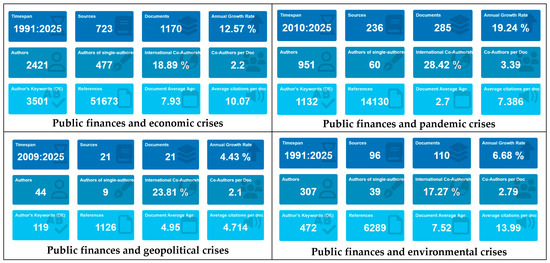
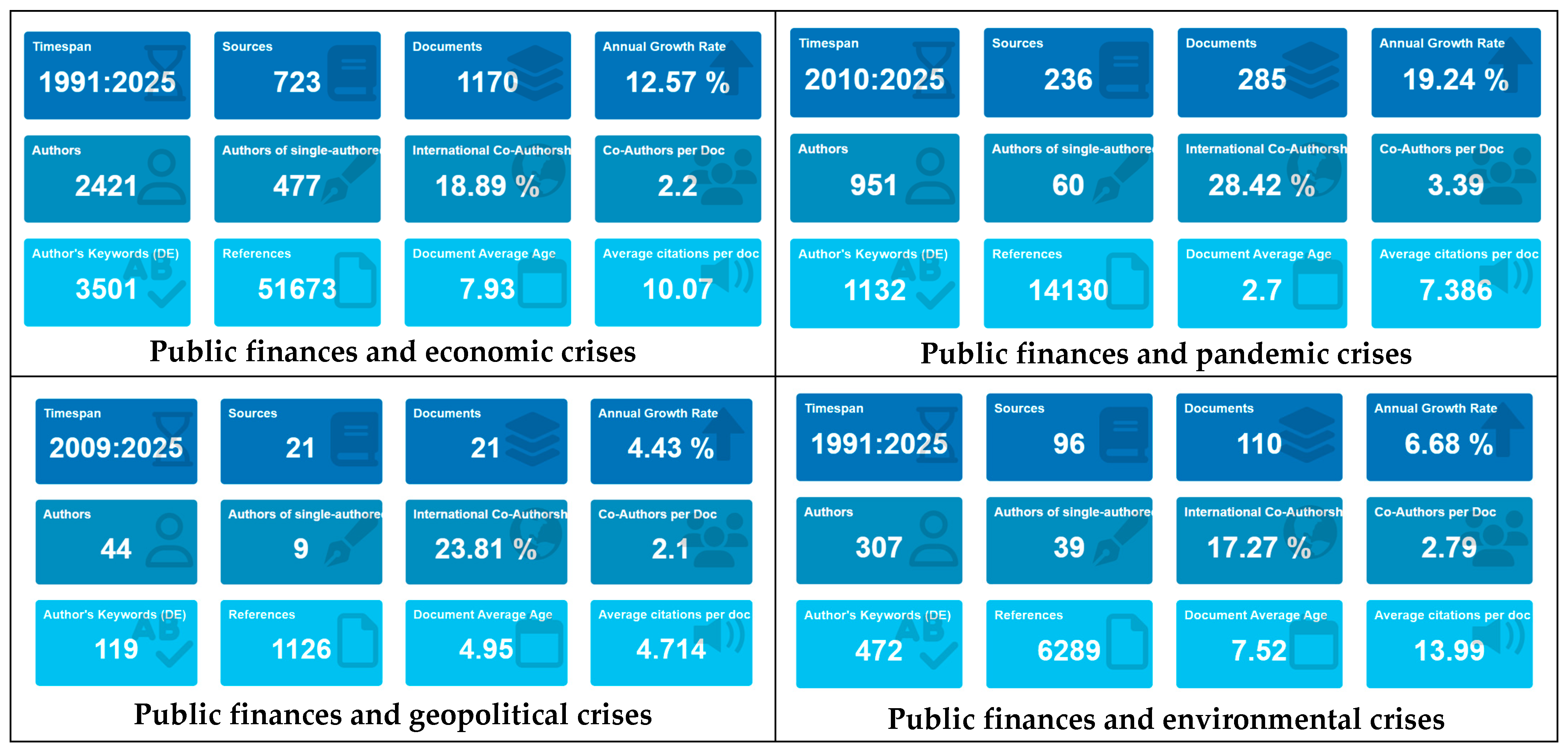
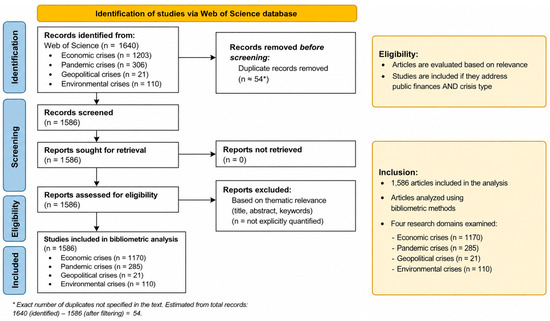
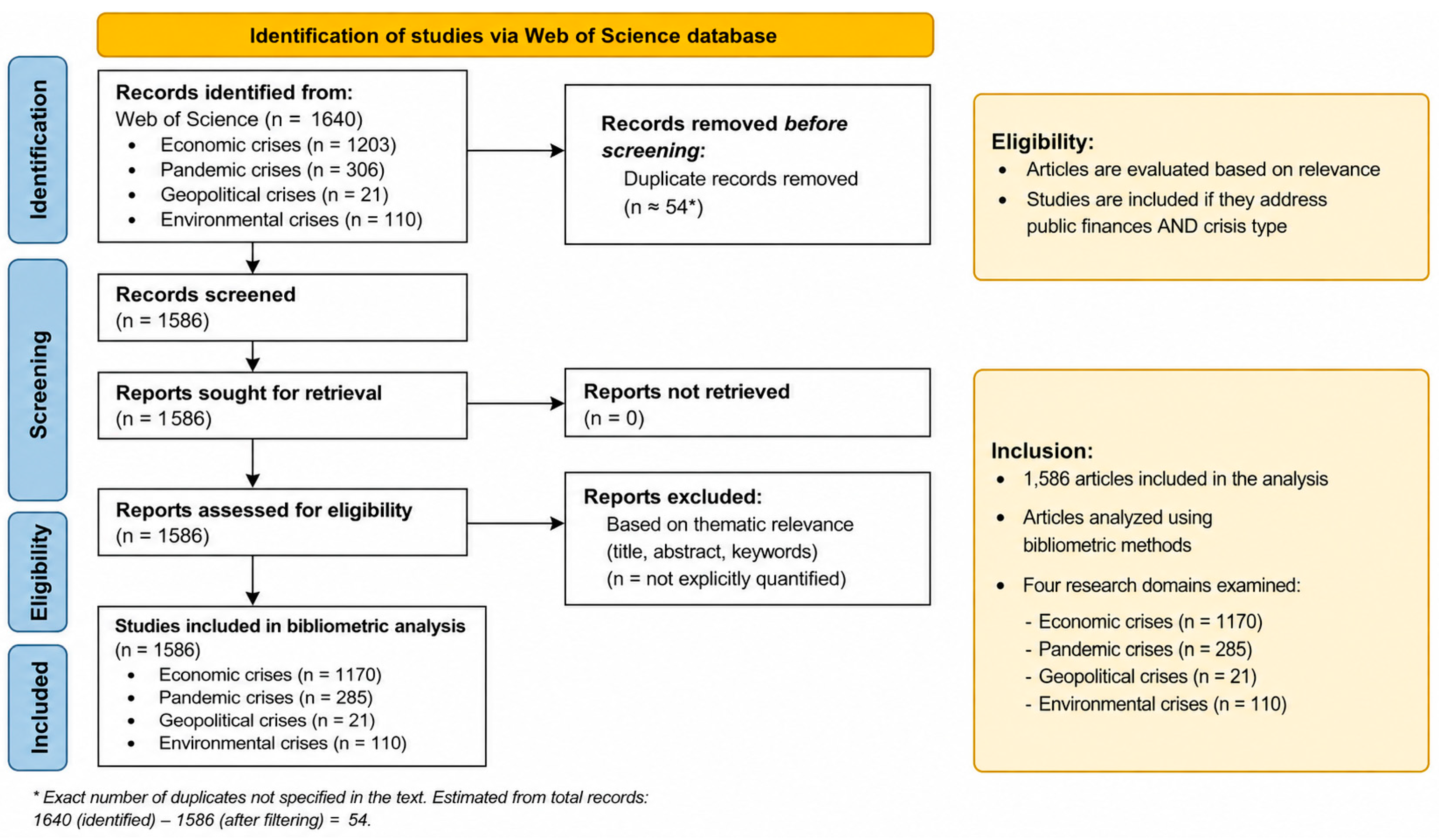
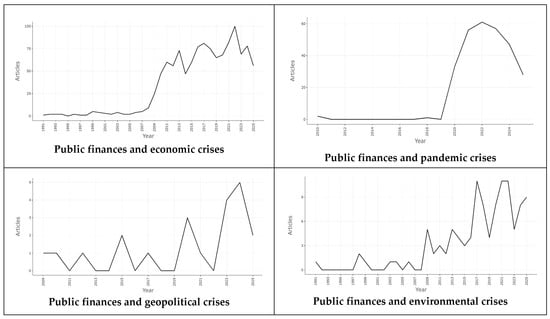
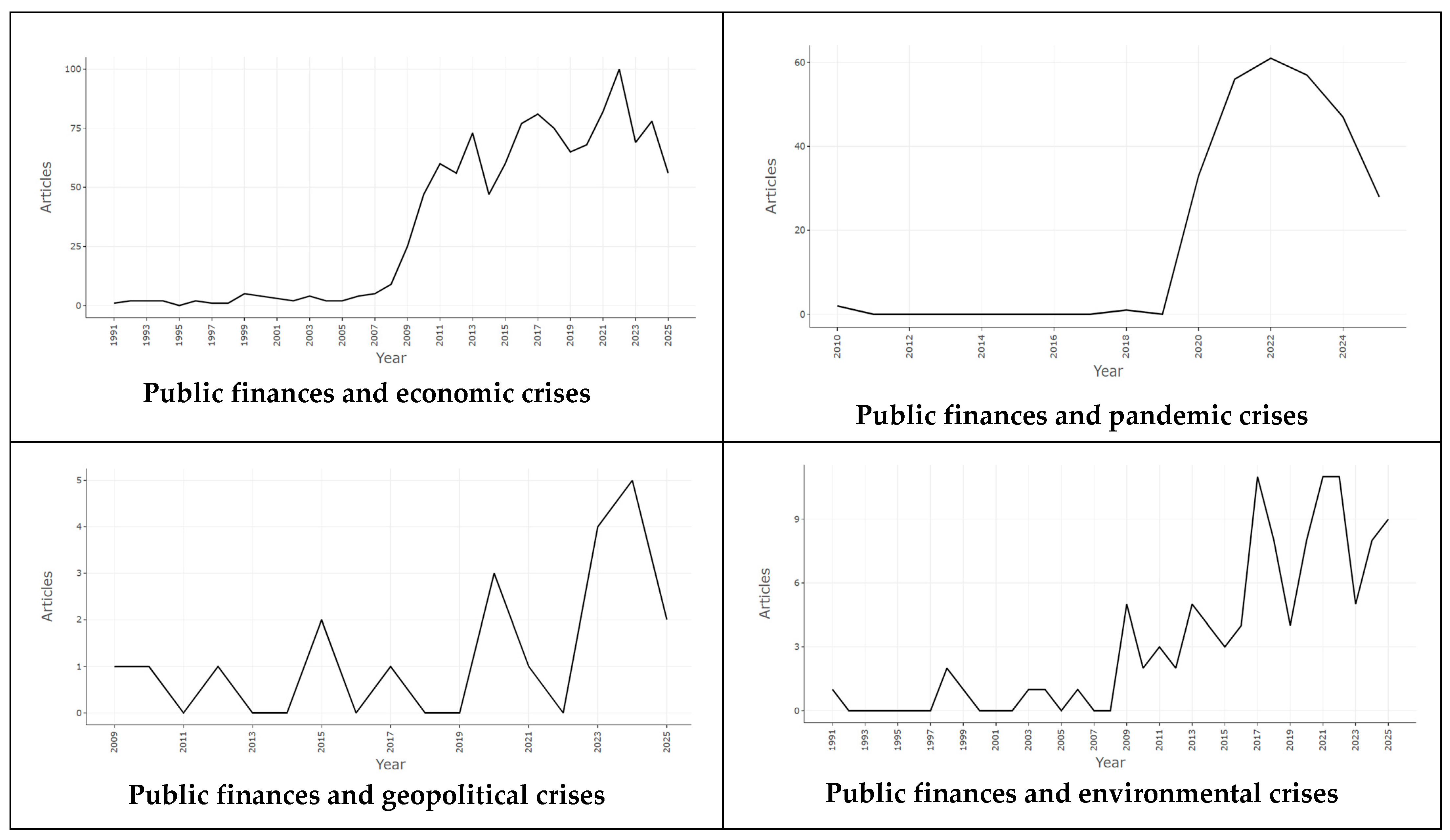
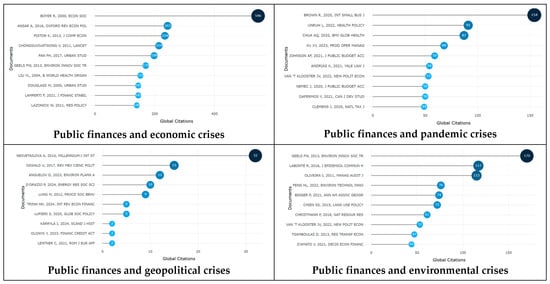
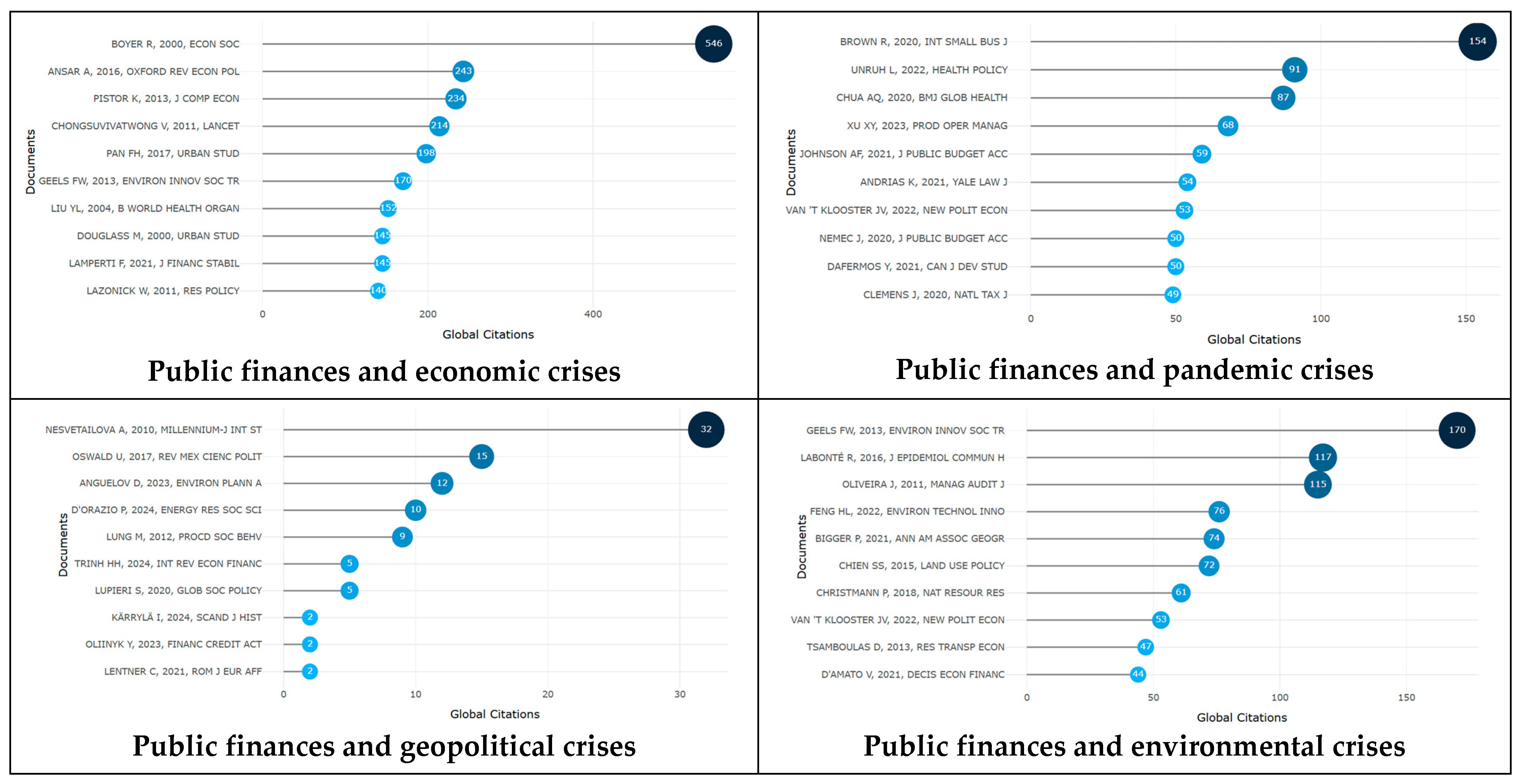
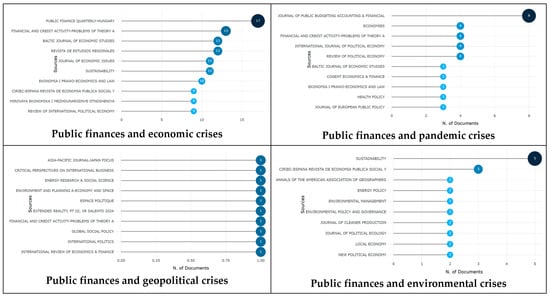
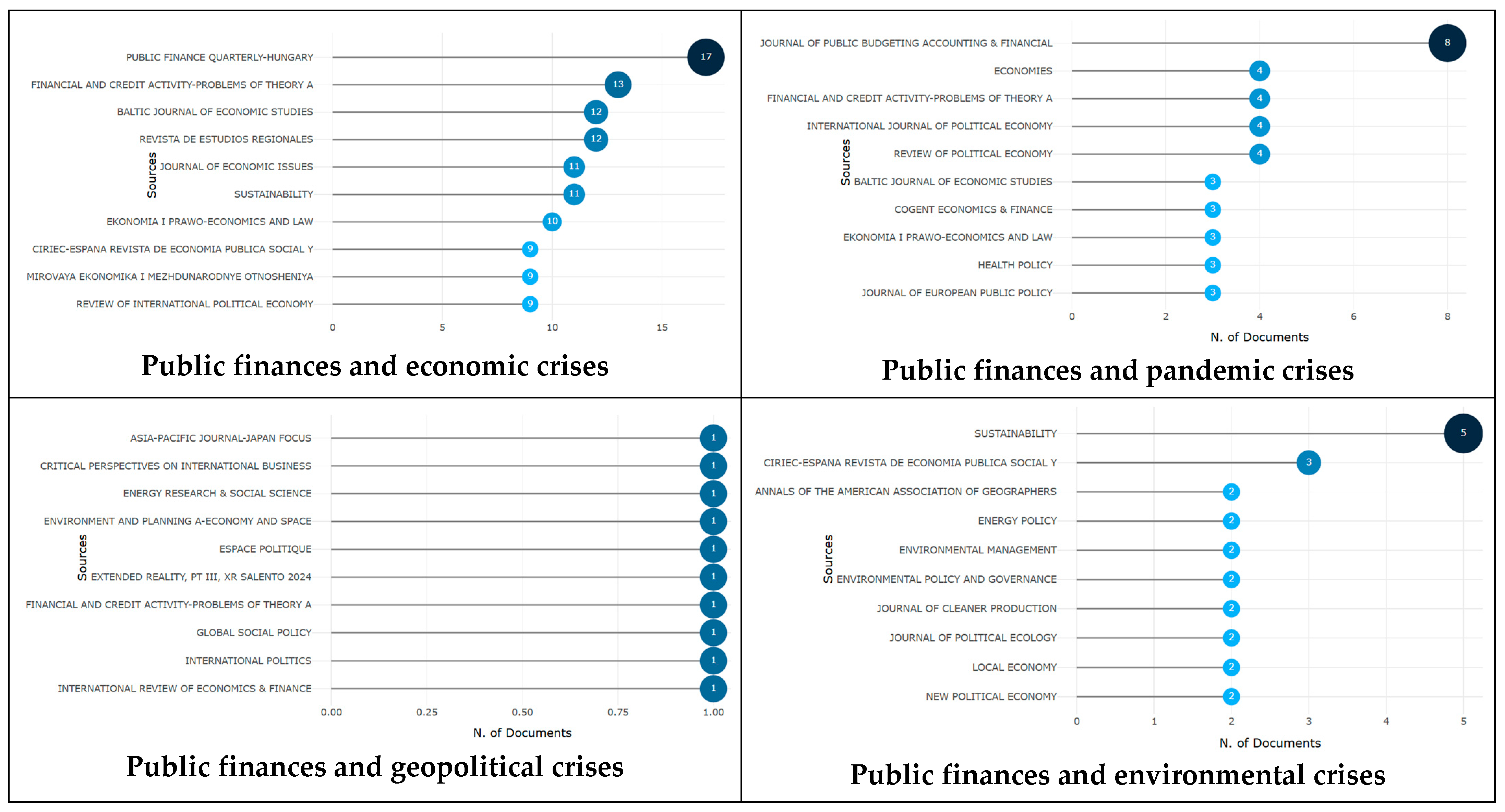
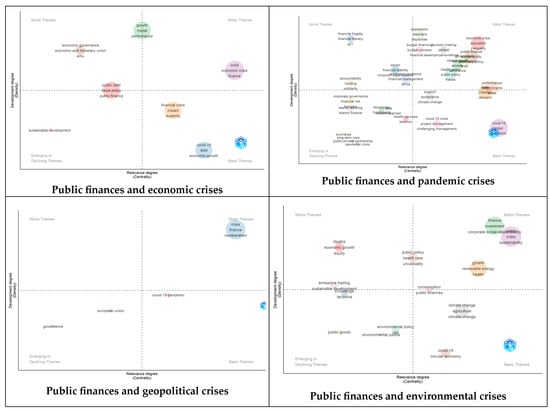
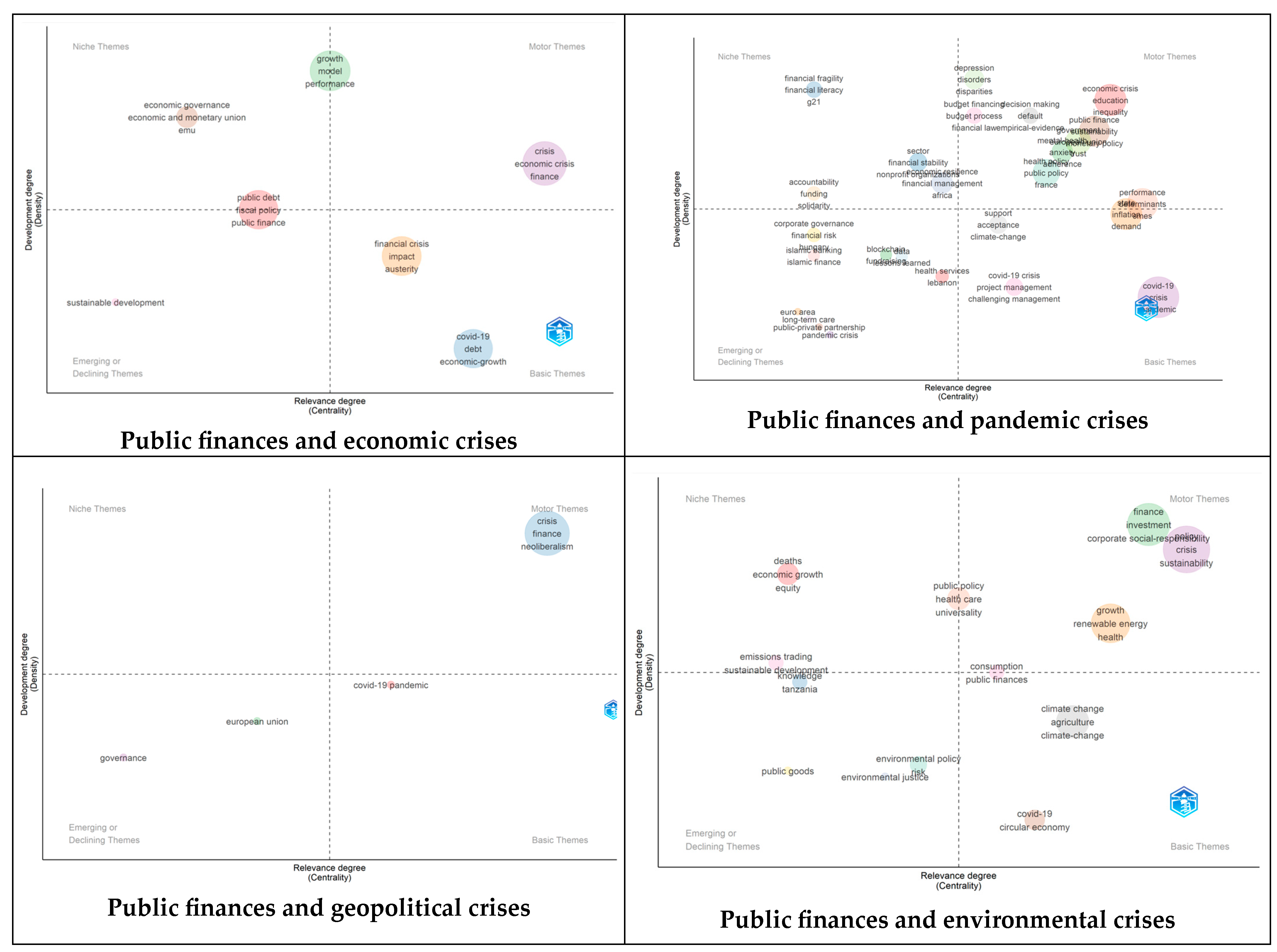
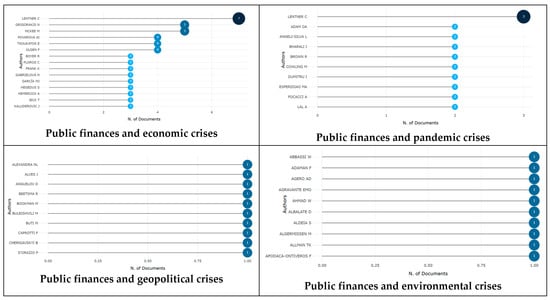
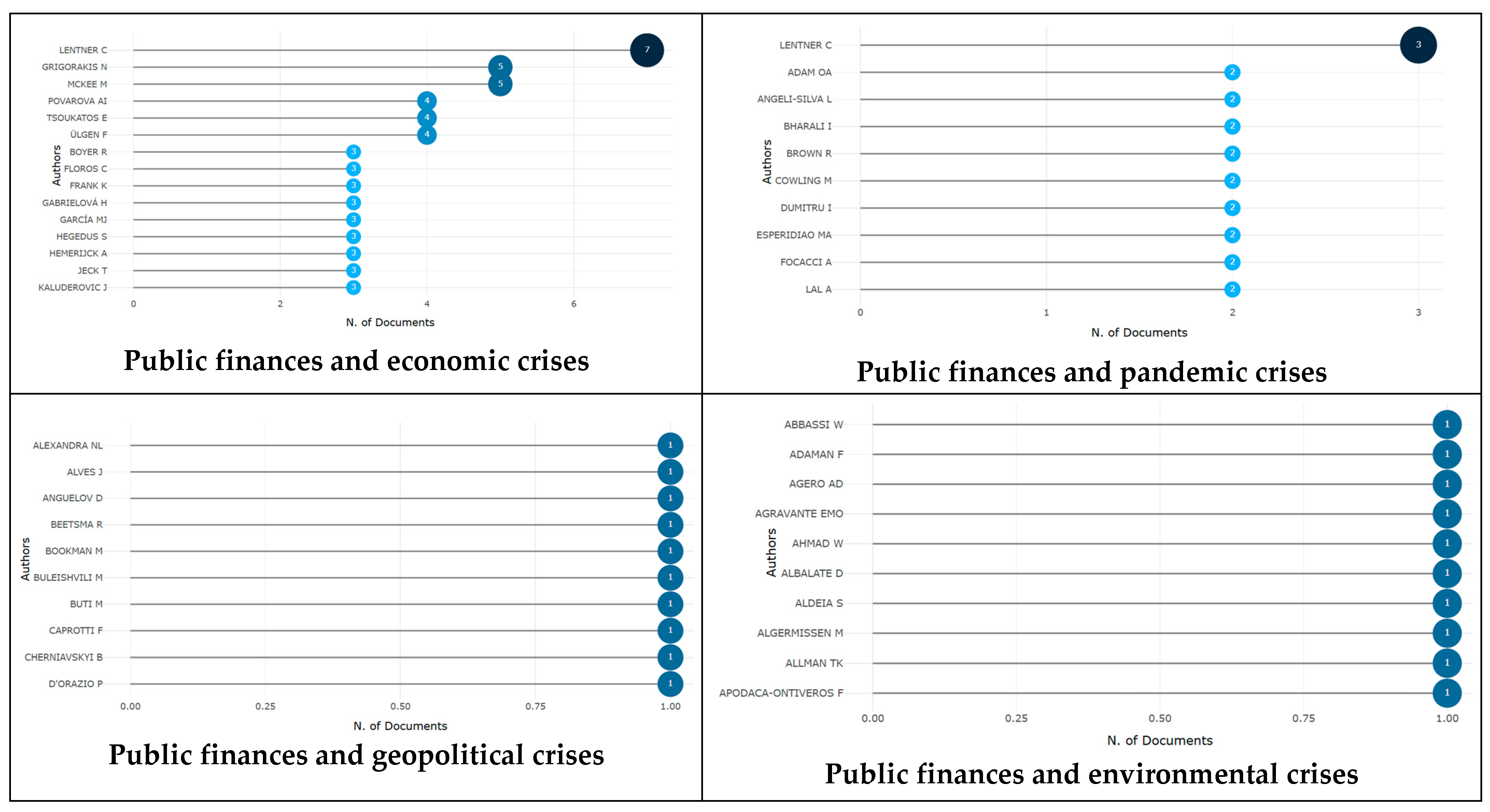
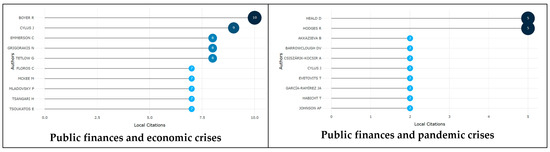
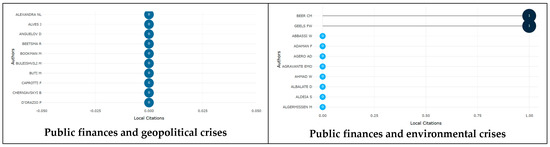
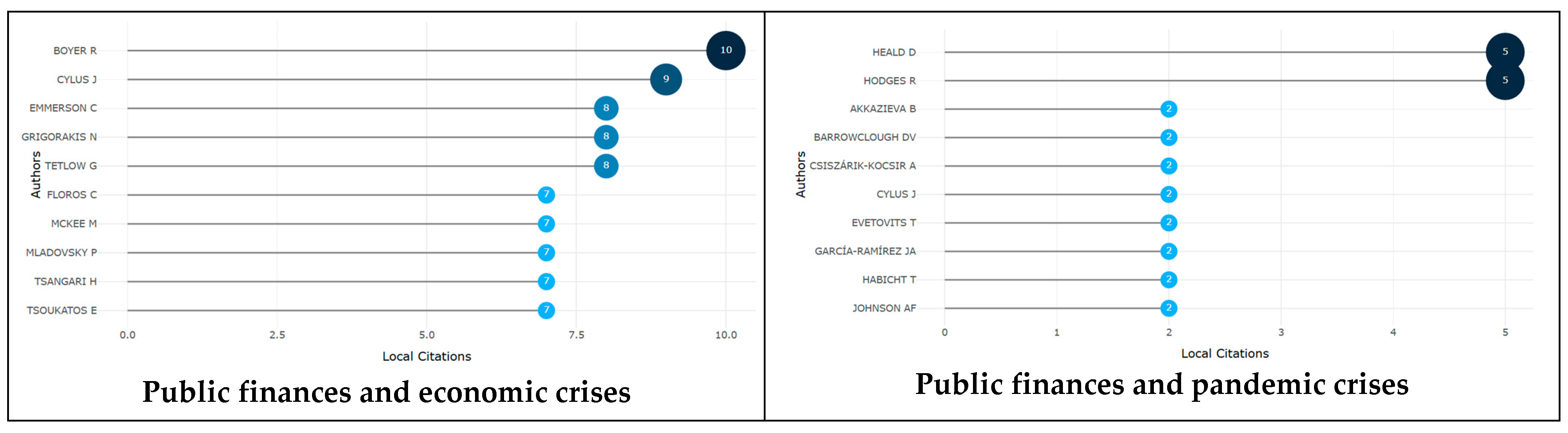
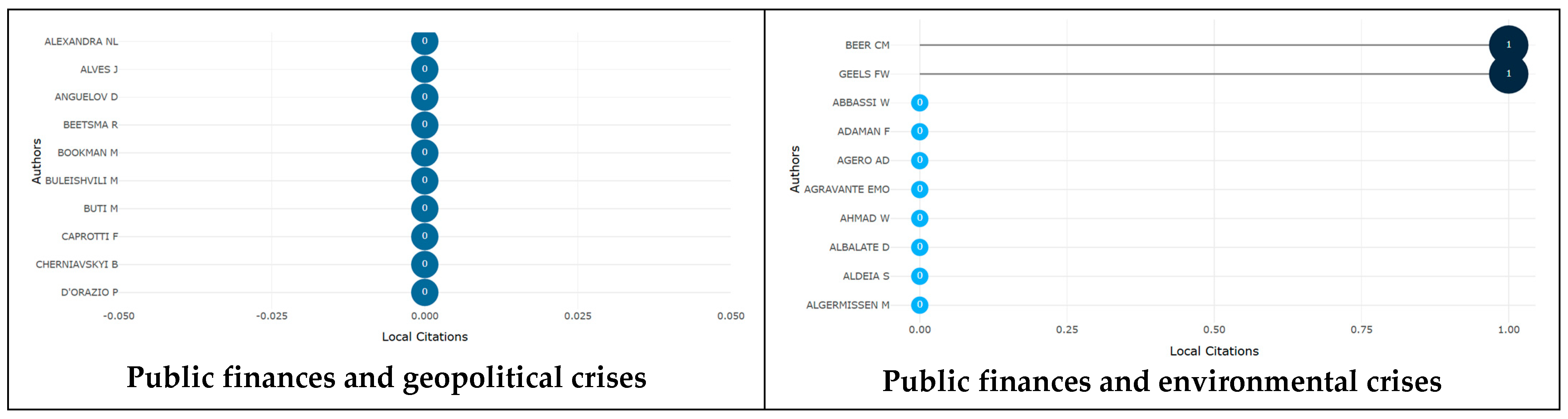
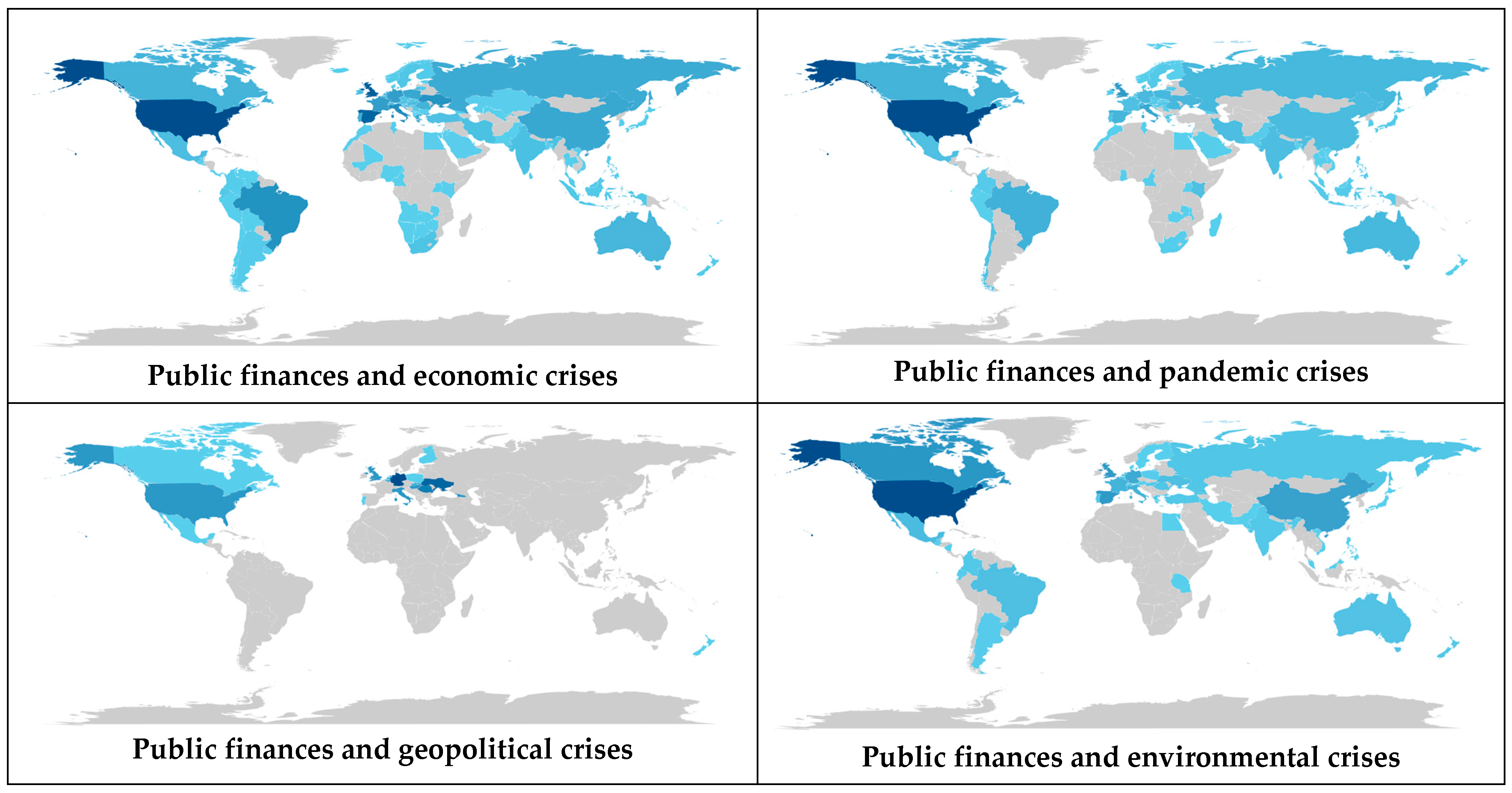
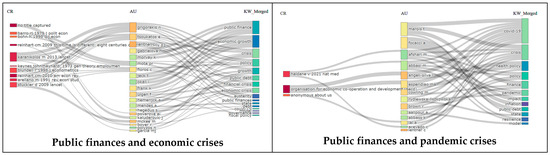
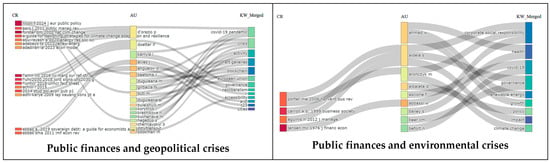
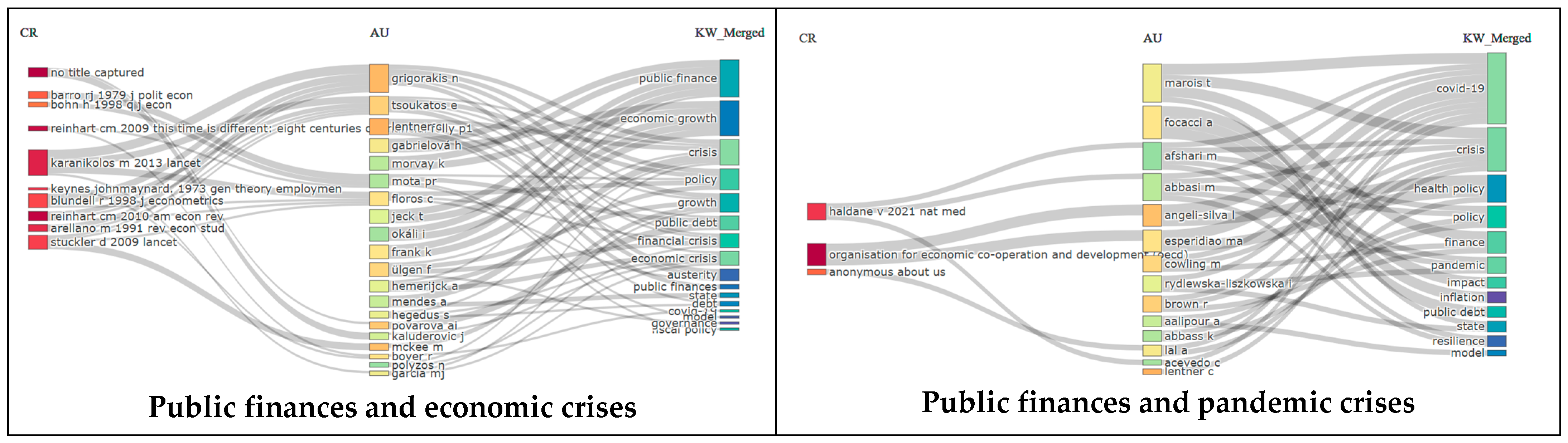
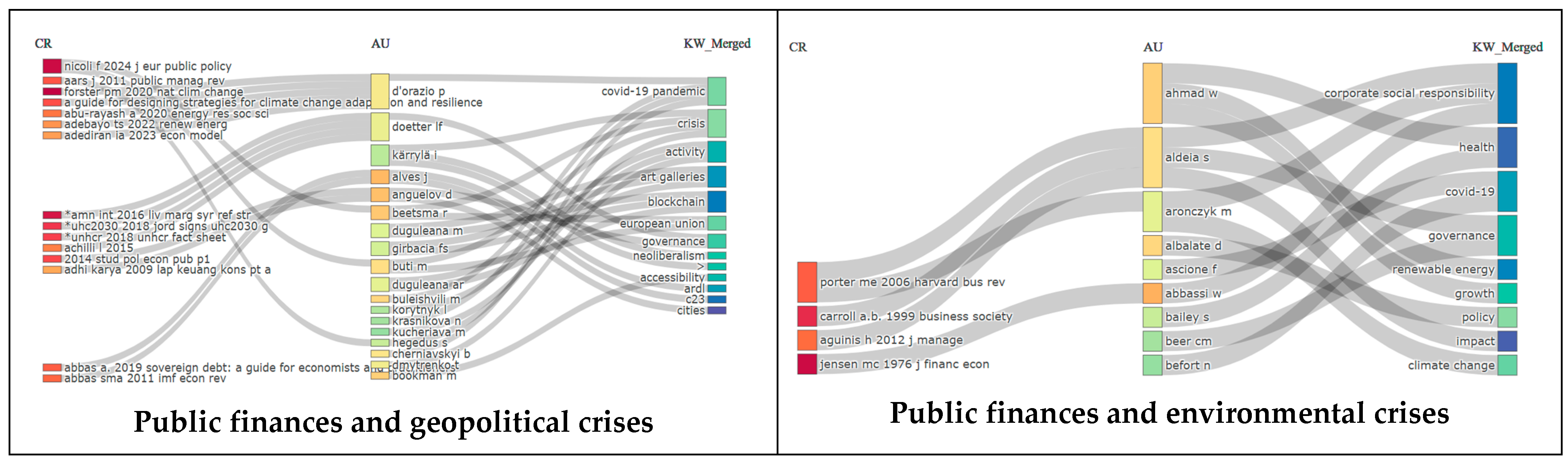
Disclaimer/Publisher’s Note: The statements, opinions and data contained in all publications are solely those of the individual author(s) and contributor(s) and not of MDPI and/or the editor(s). MDPI and/or the editor(s) disclaim responsibility for any injury to people or property resulting from any ideas, methods, instructions or products referred to in the content. |
© 2026 by the authors. Licensee MDPI, Basel, Switzerland. This article is an open access article distributed under the terms and conditions of the Creative Commons Attribution (CC BY) license.