


Abstract
Environmental, social, and governance (ESG) disclosure has received increasing attention in capital markets as investors place greater emphasis on sustainability information alongside financial information when evaluating firms. In this study, the authors examine the relationship between ESG disclosure and investor reactions among firms listed on the Stock Exchange of Thailand using Bloomberg ESG disclosure scores and an event study approach. The analysis is based on secondary data over the period of 2019–2022, employing a fixed-effects model on unbalanced panel data. The findings indicate that overall ESG disclosure is positively and statistically significantly associated with investor reactions. These results show that each ESG dimension is positively associated with investor reactions. While the environmental and social dimensions are significant at the 0.01% level, governance disclosure remains statistically significant at the 0.05 level. The empirical evidence suggests that ESG disclosure provides information that investors may consider when evaluating firms. Moreover, this study provides evidence that changes in the level of ESG disclosure are associated with changes in cumulative abnormal returns (CARs). This study contributes to the literature on ESG disclosure and corporate sustainability in emerging markets. Its results have practical implications for listed companies, investors, and regulators by highlighting the importance of ESG disclosure in corporate reporting and investment evaluation.
1. Introduction
Environmental, social, and governance (ESG) disclosure has become an increasingly important aspect of corporate reporting and a key consideration in investment decision-making. As business environments become more complex and stakeholders place greater emphasis on sustainability, ESG information has emerged as a valuable source of non-financial information that complements traditional financial indicators (La Torre et al., 2020; Eng et al., 2022). Investors are increasingly incorporating ESG-related information into their evaluation of firms, recognizing its potential relevance to risk assessment, corporate performance, and long-term value creation (Eccles et al., 2014; Amel-Zadeh & Serafeim, 2018). The growing importance of ESG disclosure has attracted considerable attention from both academics and practitioners, resulting in an expanding body of research examining its implications for corporate performance and capital market outcomes. In particular, prior studies have explored the role of ESG disclosure in influencing investor perceptions and market reactions. To explain these relationships, several theoretical perspectives have been widely adopted, including Signaling Theory, Stakeholder Theory, and Legitimacy Theory. Together, these theories provide a useful foundation for understanding the role of ESG disclosure in contemporary capital markets and its potential influence on investor behavior (Suchman, 1995; Wang et al., 2022).
Previous studies have shown that ESG disclosure is generally associated with positive investor reactions as it reduces information asymmetry, enhances transparency, and reflects firms’ ability to manage risks, ultimately leading to increases in stock prices and abnormal returns (Friede et al., 2015; Yoon et al., 2018; Chen, 2024). Additionally, Desai (2024) found that ESG disclosure is positively associated with firm value, further indicating that sustainability-related information plays an increasingly important role in capital market valuation. Specifically, environmental disclosure helps reduce uncertainty related to environmental risks (Jizi et al., 2014), social disclosure enhances stakeholder trust and confidence (Treepongkaruna & Suttipun, 2024), and governance disclosure mitigates agency problems while strengthening corporate credibility (Pandey et al., 2024). Conversely, ESG disclosure may generate negative market responses when it reveals adverse information, such as environmental violations, labor issues, or governance failures, prompting investors to sell shares and driving stock prices downward (Krueger, 2015; Capelle-Blancard & Petit, 2019). In addition, inconsistent disclosure or information reflecting regulatory costs and constraints may reduce shareholder returns. Nevertheless, some studies report no significant relationship, particularly in contexts where investors place limited importance on ESG information or where disclosure quality is low and not aligned with firm performance, resulting in muted market responses (Capelle-Blancard & Petit, 2019).
As an emerging economy, Thailand has increasingly emphasized sustainability reporting and ESG disclosure in the capital market. The Stock Exchange of Thailand (SET) has played a significant role in encouraging listed companies to disclose sustainability-related information in accordance with internationally recognized reporting frameworks, such as the Global Reporting Initiative (GRI) and the Integrated Reporting (IR) Framework. Furthermore, in 2021, the Securities and Exchange Commission (SEC) of Thailand introduced ESG disclosure guidelines under the One Report framework, which integrates annual reporting and sustainability reporting into a single reporting system (Securities and Exchange Commission, Thailand, 2021). These developments reflect the growing importance of ESG information in enhancing corporate transparency and supporting informed investment decisions. Previous studies have shown that the level of ESG disclosure among Thai listed companies has steadily increased over time. In particular, firms tend to disclose more information related to social and governance dimensions than environmental issues, reflecting stakeholder pressure, investor expectations, and firms’ efforts to enhance credibility and corporate reputation. However, the effectiveness of ESG disclosure depends not only on the quantity of information provided but also on its nature and quality. Prior evidence suggests that voluntary disclosures generally receive more favorable market responses than mandatory disclosures, especially when mandatory reporting includes unfavorable information or business-related risks. In addition, challenges remain regarding the consistency, comparability, and standardization of ESG reporting practices across industries in Thailand (Suttipun & Yordudom, 2022; Treepongkaruna & Suttipun, 2024). Despite the increasing emphasis on ESG disclosure through the One Report framework and sustainability initiatives promoted by the Stock Exchange of Thailand, empirical evidence regarding the relationship between ESG disclosure and investor reactions in the Thai capital market remains limited. In particular, relatively few studies have employed the Bloomberg ESG disclosure score as a proxy for ESG disclosure and examined both the aggregate effect of ESG disclosure and the individual effects of its environmental, social, and governance dimensions. Moreover, information asymmetry continues to represent an important issue in the Thai capital market because investors may not have equal access to firm-specific information. Differences in information availability can influence security valuation, price formation, and investment decisions. Evidence from the Stock Exchange of Thailand indicates that informed trading continues to play a role in the price discovery process, suggesting that information asymmetry remains present in the Thai market (Visaltanachoti et al., 2011). In addition, ownership structure and corporate governance have been found to be associated with the degree of information asymmetry and market liquidity among Thai listed companies (Prommin et al., 2016). More recent evidence also suggests that stronger corporate governance practices are associated with lower levels of information asymmetry and improved firm performance (Silpachai et al., 2024). Against this background, investors increasingly seek information that complements conventional financial reporting and helps reduce uncertainty in firm evaluation. In this regard, environmental, social, and governance (ESG) disclosure has attracted growing attention as an additional source of information concerning corporate sustainability. Such information may provide investors with a broader basis for assessing firm characteristics alongside traditional financial indicators. Accordingly, in this study, the authors examine the relationship between ESG disclosure and investor reactions in the Thai capital market by employing Bloomberg ESG disclosure scores and an event study approach. Through analysis, they evaluate both the overall ESG disclosure score and its environmental, social, and governance dimensions, providing additional evidence on ESG disclosure in the context of an emerging market.
The remainder of this paper is organized as follows. In Section 2, the authors establish the theoretical framework and review the relevant literature. In Section 3, they delineate the data sources and methodology employed. The empirical findings are presented in Section 4, followed by a detailed discussion in Section 5. Finally, Section 6 concludes the study.
2. Literature Review and Hypothesis Development
2.1. Theoretical Framework
Environmental, social, and governance (ESG) disclosure has become an important strategic practice in corporate management and a key factor influencing investment decisions in capital markets worldwide. Understanding the reasons why organizations choose to disclose ESG-related information, as well as how investors respond to such disclosures, can be comprehensively explained through three major theoretical perspectives: Signaling Theory, Stakeholder Theory, and Legitimacy Theory. These theories provide a conceptual framework for explaining the relationship between non-financial information disclosure, particularly ESG disclosure, firm value, investor confidence, and capital market reactions.
Signaling Theory was established by Spence (1973) to explain the problem of information asymmetry between organizations and investors. Since corporate managers possess more internal information than external investors, they often use information disclosure as a signal to communicate the quality, transparency, and future prospects of the firm to stakeholders (Spence, 1973). In relation to the context of sustainability, Ching and Gerab (2017) argue that environmental, social, and governance (ESG) disclosure serves as a strategic signal reflecting an organization’s commitment to corporate responsibility and sustainable business practices. Such disclosure helps reduce information asymmetry between firms and external stakeholders by providing greater transparency regarding the company’s sustainability-related activities and performance. Moreover, Treepongkaruna and Suttipun (2024) suggest that ESG disclosure functions as an important mechanism through which organizations signal transparency, management quality, and long-term sustainability. As a result, ESG-related information may be positively associated with investor confidence and shape investor reactions in capital markets. Consequently, firms that provide more extensive and credible ESG disclosures are likely to be perceived as less risky, more transparent, and better positioned for sustainable growth, thereby enhancing their attractiveness to investors.
Stakeholder Theory provides an important theoretical foundation for explaining environmental, social, and governance (ESG) disclosure. According to Freeman (1984), organizations should consider the interests of all stakeholders rather than focusing solely on shareholders, as these stakeholder groups significantly influence organizational success and long-term sustainability. Within the ESG context, a growing body of research suggests that ESG disclosure serves as a crucial mechanism through which organizations respond to stakeholder expectations and enhance stakeholder trust. For instance, Tarmuji et al. (2016) found a positive relationship between ESG scores and firms’ economic performance, indicating that companies with stronger ESG practices tend to achieve superior business outcomes. Similarly, Treepongkaruna and Suttipun (2024) reported that ESG reporting positively affects the profitability of listed companies in Thailand. Furthermore, in their studies, Wu et al. (2024) found that stronger ESG performance is associated with lower abnormal stock price volatility. Consequently, ESG disclosure not only helps organizations address stakeholder expectations but also strengthens investor confidence and enhances firm value in the capital market.
Legitimacy Theory defines that organizations must conduct their activities in a manner consistent with the values, beliefs, and expectations of society in order to gain social acceptance and maintain their long-term operations (Suchman, 1995). Accordingly, organizations use public disclosure as a mechanism to reduce societal pressure and strengthen the legitimacy of their operations. Failure to comply with the implicit social contract may result in negative consequences, such as reduced access to capital, regulatory sanctions, and declining consumer trust (Branco & Rodrigues, 2006). In the context of environmental, social, and governance (ESG) disclosure, organizations utilize ESG reporting to demonstrate corporate responsibility, transparency, and alignment with the expectations of society and stakeholders (Wang et al., 2022). Furthermore, Al Amosh et al. (2023) found that ESG practices enhance organizational legitimacy and reduce financial risk. Similarly, Reber et al. (2022) reported that investors react positively to ESG disclosures because capital markets tend to perceive firms that operate in accordance with sustainability principles as more transparent, trustworthy, and less risky investment opportunities.
In general, the present study can be explained through three major theoretical perspectives: Signaling Theory, Stakeholder Theory, and Legitimacy Theory. Signaling Theory suggests that ESG disclosure serves as a positive signal that reduces information asymmetry and enhances investor confidence. Stakeholder Theory argues that organizations disclose ESG information to meet stakeholder expectations and foster sustainable relationships with key stakeholder groups. Legitimacy Theory, in turn, views ESG disclosure as an important mechanism through which organizations gain legitimacy and social acceptance by demonstrating responsible and sustainable business practices. Together, these three theories provide a comprehensive framework for understanding the association between ESG disclosure and investors’ perceptions, confidence, and reactions in capital markets. Within this theoretical framework, ESG disclosure may affect how investors evaluate corporate value, assess firm quality, and make investment decisions, ultimately influencing market reactions and firm valuation.
2.2. Hypothesis Development
2.2.1. Overall ESG Disclosure and Investor Reactions
Overall ESG disclosure has received considerable attention in the accounting and finance literature as a key mechanism reflecting corporate sustainability, transparency, and risk management capability, all of which influence investor decision-making. A substantial body of research supports a positive relationship between ESG disclosure and investor reactions, arguing that such disclosure reduces information asymmetry, enhances investor confidence, and signals long-term value creation potential, thereby increasing stock prices and returns (Friede et al., 2015; Murguia & Lence, 2015; Suttipun & Yordudom, 2022; Yang & Li, 2024). Additionally, firms with strong ESG performance are better equipped to cope with economic uncertainty and systemic risks, which enhances investor confidence and firm value resilience (Carvalhal & Nakahodo, 2023). However, some studies report negative relationships, particularly in the case of adverse ESG events, such as environmental or social violations, which are interpreted by investors as signals of increased risk, remediation costs, and reputational damage (Krueger, 2015; Endrikat, 2016). Moreover, other studies find no significant relationship, suggesting that certain types of ESG disclosure may not influence stock prices or investment behavior, especially when the information is not financially material or when investors do not sufficiently value ESG considerations (Capelle-Blancard & Petit, 2019). Even though previous studies have reported mixed findings, the general consensus suggests that ESG disclosure reduces information asymmetry and enhances corporate transparency, enabling investors to better assess a firm’s risk profile and long-term performance potential (Murguia & Lence, 2015). From the perspectives of Signaling Theory, Stakeholder Theory, and Legitimacy Theory, ESG disclosure reflects management quality, corporate responsibility toward stakeholders, and alignment with societal expectations, all of which can contribute to strengthening investor confidence (Freeman, 1984; Suchman, 1995). In the Thai context, where sustainability reporting has been continuously promoted through the One Report framework, investors are increasingly likely to incorporate ESG information into their investment decision-making processes. As ESG-related information becomes more accessible and standardized, it may play a more significant role in shaping investor perceptions and market responses. Therefore, the following hypothesis is proposed in this study:
H1.
Overall ESG disclosure is positively associated with investor reactions.
2.2.2. Environmental Disclosure and Investor Reactions
Prior studies largely document the positive effect of environmental disclosure on investor reactions (Jizi et al., 2014; Jagannathan et al., 2018; Yoon et al., 2018; Almeyda & Darmansya, 2019; Flammer, 2013). Proactive disclosure reflects responsibility toward stakeholders and the ability to manage environmental risks, thereby enhancing investor confidence and increasing stock prices or abnormal returns. Recent international evidence highlights the importance of disclosure frequency and consistency. For instance, Liao (2025) found that continuous environmental disclosure significantly improves abnormal returns, indicating that markets value long-term environmental commitment. However, some studies report negative relationships, arguing that environmental disclosure may signal regulatory compliance costs or environmental risks, which investors interpret negatively, leading to declines in stock prices—particularly in cases of adverse environmental news such as pollution or high carbon emissions (Capelle-Blancard & Petit, 2019; Suttipun et al., 2025). In addition, some evidence shows no significant relationship, especially in contexts where investors place limited importance on ESG information or where disclosure is incomplete, is inconsistent, or lacks economic relevance, reducing its usefulness in valuation (Xu et al., 2012). From the perspective of Signaling Theory, environmental disclosure serves as a signal of a firm’s transparency and management quality, helping to reduce information asymmetry between the firm and investors. Stakeholder Theory suggests that such disclosure reflects a firm’s responsibility toward its stakeholders and society as a whole. Meanwhile, Legitimacy Theory argues that environmental disclosure enables firms to demonstrate that their operations are aligned with societal expectations and corporate governance requirements. Within the Thai context, ongoing sustainability reporting initiatives under the One Report framework have heightened investor demand for information that supports the evaluation of long-term corporate risks and opportunities. As noted by Suttipun and Yordudom (2022), sustainability-related information has become an important source of information for investment analysis and decision-making. Therefore, environmental disclosure is likely to be considered a significant factor that investors use in evaluating firm value and making investment decisions. Accordingly, the following hypothesis is proposed:
H2.
Environmental disclosure is positively associated with investor reactions.
2.2.3. Social Disclosure and Investor Reactions
The existing literature generally supports a positive relationship between social disclosure and investor reactions, as such disclosure reduces information asymmetry, enhances transparency, and builds trust in firms, leading to more favorable investment decisions and higher firm valuation (Jizi et al., 2014; Yoon et al., 2018). Moreover, corporate social responsibility activities help mitigate future risks and uncertainties while strengthening corporate image, which may be reflected in increased sales growth and investor confidence (Dai et al., 2019). Nevertheless, some studies report negative effects, suggesting that social initiatives may impose additional costs on firms, thereby reducing shareholder returns and firm value (Barnea & Rubin, 2010). Negative social disclosures, such as labor disputes or community conflicts, may also be interpreted as risk signals, leading to stock price declines (Liao, 2025). Other studies find no significant relationship, particularly when social disclosure is not directly linked to financial performance or when investors do not sufficiently value CSR information (Capelle-Blancard & Petit, 2019; Suttipun et al., 2025). However, the findings of Suttipun and Yordudom (2022) reveal that social disclosure is positively associated with investor reactions in the Thai capital market, reflecting that investors place importance on information that demonstrates a firm’s ability to manage relationships with stakeholders and conduct business in a socially responsible manner. Within the framework of Signaling Theory, social disclosure can serve as a signal reflecting management quality and a firm’s commitment to creating sustainable value. Meanwhile, Stakeholder Theory explains that social activities and social disclosure help respond to the expectations of stakeholders, leading to trust and support from various stakeholder groups. Legitimacy Theory, on the other hand, suggests that social disclosure helps enhance a firm’s image and legitimacy in the eyes of society. Accordingly, the following hypothesis is proposed:
H3.
Social disclosure is positively associated with investor reactions.
2.2.4. Governance Disclosure and Investor Reactions
Prior research largely supports a positive relationship between governance disclosure and investor reactions as strong corporate governance reduces information asymmetry, mitigates agency risk, and enhances confidence in capital markets, leading to higher stock prices (Yoon et al., 2018; Pandey et al., 2024; Suttipun et al., 2025). Effective governance mechanisms, such as audit committee independence and appropriate board structure, also improve financial reporting quality and internal control systems, thereby increasing firm value (Uwuigbe, 2013). However, some studies report negative relationships, suggesting that governance disclosure may reveal regulatory constraints, compliance costs, or governance-related risks such as fraud or internal control failures, which can undermine investor confidence and exert downward pressure on stock prices (Suttipun & Yordudom, 2022). This is particularly relevant in Thailand, where governance disclosure is mandatory and includes both positive and negative information, resulting in more varied market reactions. Additionally, some studies found no significant relationship, indicating that governance disclosure may not influence stock prices when investors do not consider it financially material or when mixed positive and negative information offsets overall effects (Capelle-Blancard & Petit, 2019). Even though previous studies have reported mixed findings regarding the relationship between corporate governance disclosure and investor reactions, theoretical perspectives advocate that transparent governance disclosure can help reduce agency conflicts between managers and shareholders, improve the quality of information available to investors, and enhance investor confidence. As a result, such disclosure may influence investment decisions and capital market reactions. Therefore, the researcher proposes the following hypothesis:
H4.
Governance disclosure is positively associated with investor reactions.
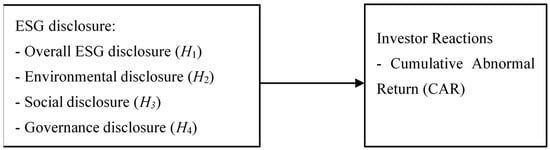
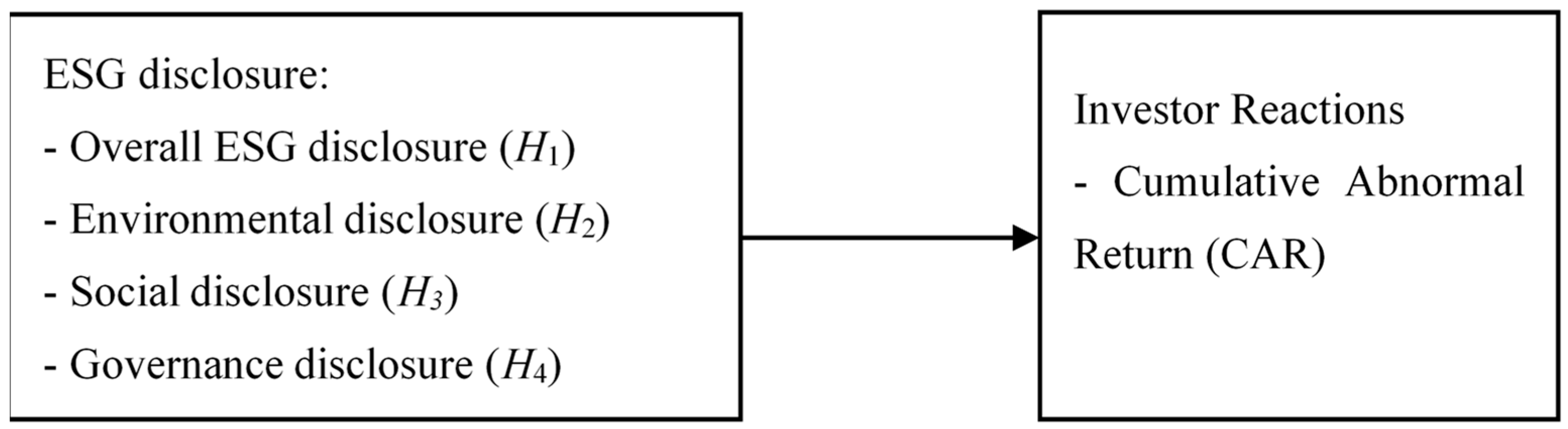
Based on the literature reviewed, environmental, social, and governance (ESG) disclosure plays an important role in investors’ decision-making processes because it enhances corporate transparency, reduces information asymmetry, and supports the assessment of a firm’s risk profile and long-term performance potential (Murguia & Lence, 2015; Suttipun & Yordudom, 2022). Although empirical findings have been mixed across different contexts and ESG dimensions, the existing literature generally suggests that ESG disclosure provides valuable data to investors and may influence capital market reactions. However, regarding Signaling Theory, ESG disclosure serves as a signal that reflects management quality, corporate transparency, and a firm’s ability to create sustainable value (Spence, 1973). Stakeholder Theory suggests that such disclosure reflects a firm’s responsibility toward its stakeholders and helps strengthen investor confidence (Freeman, 1984). Meanwhile, Legitimacy Theory argues that ESG disclosure functions as a mechanism through which firms demonstrate that their operations are aligned with societal expectations and corporate governance requirements (Suchman, 1995). Therefore, in this study, the perspectives of these three theories are integrated to explain the relationship between ESG disclosure and investor reactions. Based on these theoretical foundations, the research framework is developed as illustrated in Figure 1.
Figure 1.
Conceptual framework.
3. Data and Methodology
3.1. Sample
In this study, an empirical research design is employed based on secondary data. Specifically, an unbalanced panel-data regression model is applied using data from 2019 to 2022. The population of the study comprises Thai listed companies. There are several reasons for selecting Thailand as the research context. First, Thailand is one of the leading countries in sustainable and green management practices in Southeast Asia and is considered competitive with countries that demonstrate strong ESG performance at the global level. Second, the trend of investment in ESG-related activities has been growing across five ASEAN countries—Thailand, Singapore, Malaysia, Indonesia, and Vietnam—although this development remains at an earlier stage compared with more developed economies. Third, the Stock Exchange of Thailand (SET) actively promotes long-term sustainable development and supports integration with internationally recognized ESG assessment frameworks. In addition, the study period covers 2019–2022 because the data were obtained from the Bloomberg database, which evaluates firms based on their ESG disclosures in accordance with the Global Reporting Initiative (GRI) guidelines. Furthermore, in 2016, the Global Reporting Initiative introduced the GRI Standards, which replaced the GRI G4 version and became effective after June 2018.
3.2. Data Collection
In this study, following the selection of a sample of Thai listed companies from the Stock Exchange of Thailand, data were collected as follows. First, to examine the level of ESG disclosure among Thai listed companies, Bloomberg ESG scores for the period of 2019–2022 were used. Second, to investigate whether ESG disclosure affects investor reactions, ESG disclosure was treated as the independent variable of this study. This variable consists of three dimensions: environmental, social, and governance disclosure. This study focuses on the ESG disclosure scores of the sampled firms. Accordingly, the ESG scores were obtained from the Bloomberg database, which integrates fundamental corporate data to provide users with ESG metrics. Bloomberg ESG data combine environmental, social, and governance indicators to support investment decision-making and risk management processes. In addition, investor reaction was employed as the dependent variable. The daily closing stock prices of listed companies were collected and used to calculate cumulative abnormal returns (CARs), which serve as a proxy for investor reactions to ESG-related information. These data were collected from SETSMART and the website of the Stock Exchange of Thailand (www.set.or.th). Finally, this study also includes control variables consisting of firm size, leverage, and profitability. Data for these control variables were manually collected from annual reports, Form 56-1 (One Report), and SETSMART, all of which are publicly available through the database of the Securities and Exchange Commission of Thailand (www.sec.or.th) and the listed companies’ disclosures.
3.3. Variable Definitions and Measurements
ESG disclosure is measured using the Bloomberg ESG disclosure score, an index developed based on environmental, social, and governance information publicly disclosed by firms through annual reports, sustainability reports, corporate websites, and regulatory filings. The score ranges from 0.1 to 100, with higher scores indicating a greater level of comprehensiveness and transparency in ESG disclosure. Previous studies have extensively employed the Bloomberg ESG disclosure score as a proxy for ESG disclosure as the score is derived from ESG information publicly disclosed by firms and reflects the level of transparency of information provided to stakeholders (Eng et al., 2022). Therefore, a higher Bloomberg ESG disclosure score indicates a greater and more comprehensive level of ESG disclosure.
According to the literature on investor reactions and consistent with numerous prior studies, the event study method proposed by MacKinlay (1997) is employed to determine the impact of an event on stock prices. This technique is grounded in efficient market theory, which assumes that stock prices respond to all publicly available information and reflect the expected return of the firm (Fama, 1970). At the same time, unexpected information leads to adjustments in stock prices, thereby enabling an analysis of the impact of a specific event on the firm. The method examines changes in stock prices around the event date by calculating abnormal returns over the event window. Accordingly, abnormal returns (ARs) are defined as the difference between the actual stock return during the event period and the expected return that would have occurred in the absence of the event (Nakajima & Inaba, 2022). In this study, March 31 of each year is used as a common regulatory benchmark date. This date was selected because it represents the statutory deadline for most Thai listed companies with a December 31 fiscal year-end to submit their annual reports and Form 56-1 (One Report). It also marks the completion of the annual reporting cycle. Using a common regulatory benchmark date provides a consistent reference point across firms and years, thereby improving comparability and reducing potential inconsistencies arising from differences in firm-specific disclosure schedules. However, March 31 is not intended to represent the exact disclosure date of each individual company. Instead, it serves as a practical reference point during a period when annual corporate information is generally expected to be publicly available and accessible to investors. The authors acknowledge that actual disclosure timing may vary across firms; therefore, the use of a common regulatory benchmark date is recognized as a methodological limitation of this study.
Moreover, in this study, the authors calculate abnormal returns (ARs) using the Fama–French four-factor (FF4) model estimated by ordinary least squares (OLS). The coefficients of the FF4 OLS model are estimated using stock returns over the estimation window from 260 to 10 days prior to the event date, following the approach of Kim and Koo (2023). Accordingly, AR is calculated using Equation (1) as follows:
where represents the return for stock (i) on day (t); represents the risk-free return, used as a risk-free rate of return, and is the one-month yield to maturity (YTM) of the T-bill at the beginning of each month; represents the market risk premium; represents the size premium, measured as the difference between the average returns of small-capitalization and large-capitalization stock portfolios; represents the value premium, measured as the difference between the average returns of high and low book-to-market stock portfolios; represents the momentum premium, measured as the difference between the returns of winner and loser portfolios; represent the estimated intercept and factor loadings associated with the market, size, value, and momentum factors, respectively.
In addition, in this study, the authors employ cumulative abnormal returns (CARs) as the primary measure of investor reactions, calculated using the ordinary least squares (OLS) Fama–French four-factor (FF4) model. The coefficients of the OLS FF4 model are estimated using stock returns over the estimation window from 260 to 10 days prior to the event date. The firm’s CAR is then calculated as the cumulative sum of abnormal returns over the event window from day 0 to day 60, denoted as CAR (0, 60).
The CAR (0, 60) window is employed as the main measure because ESG disclosures contain multidimensional non-financial information that may require investors additional time to process and incorporate into valuation decisions. Unlike conventional financial announcements, sustainability-related information may be gradually reflected in market prices as investors interpret its implications. This approach is consistent with prior evidence suggesting that information diffusion and market adjustment may occur over extended periods rather than immediately following disclosure events (Sprenger et al., 2014). To address potential concerns associated with longer event windows, a shorter event window is additionally employed as a robustness test to assess the consistency of the findings.
The cumulative abnormal returns (CARs) are obtained by summing the abnormal returns (ARs) over the event window, specifically from t1 = 0 to t1 = 60. Following the methodology of Kim and Koo (2023), CAR is calculated using Equation (2).
The cumulative abnormal returns (CARs) are calculated by first estimating the daily abnormal returns (ARi,t) using the Fama–French four-factor (FF4) model. The beta loadings for the model are estimated over the estimation window from t = −260 days to t = −10 days relative to the event date. Separate regressions are then conducted for each period using the specified equation.
In this study, the authors apply the concept of ESG disclosure scores, the use of which has grown significantly in recent years and is now widely adopted by major business consulting firms worldwide. ESG scores are employed as key indices and comprehensive indicators to evaluate environmental (ENV), social responsibility (CSR), and corporate governance (CG) practices. According to prior research, indicators relating to environmental activities, social responsibility, and governance mechanisms are critical for businesses and their stakeholders. Accordingly, in this study, the authors use ESG score data provided by Bloomberg, which is recognized for collecting reliable data and maintaining a strong reputation in ESG-related information services. The Bloomberg ESG valuation tool assesses and classifies companies’ performance and portfolios by quantifying ESG performance and categorizing firms according to best and worst practices in these areas (Alareeni & Hamdan, 2020).
Investor reactions may also be influenced by the complexity and characteristics of the firm. It is possible that corporate characteristics are associated with investor reactions. To reduce the likelihood of omitted variable bias, this study includes important control variables adopted from prior related studies, namely, Kiattikulwattana and Pattanapanyasat (2024) and Suttipun and Yordudom (2022). The authors of these studies suggest that excluding relevant control variables may lead to incorrect hypothesis testing results. Therefore, in this study, firm characteristics including firm size, profitability, and leverage are incorporated as control variables in examining the relationship between ESG disclosure and investor reactions.
3.4. Research Model
In this study, the authors examine investor reactions by measuring changes in the market value of Thai listed companies following ESG disclosure. To address the research questions and test the hypotheses, appropriate quantitative data analysis methods are employed. Specifically, the following regression model is specified to examine the association between ESG disclosure and investor reactions. In addition, a series of equations are estimated using an unbalanced panel-data regression model, as follows:
where
CARi,t = β0 + β1 ESGi,t + β2 FSi,t + β3 ROAi,t + β4 LEVi,t + εi,t
CARi,t = β0 + β1 ENVi,t + β2 FSi,t + β3 ROAi,t + β4 LEVi,t + εi,t
CARi,t = β0 + β1 SOCi,t + β2 FSi,t + β3 ROAi,t + β4 LEVi,t + εi,t
CARi,t = β0 + β1 GOVi,t + β2 FSi,t + β3 ROAi,t + β4 LEVi,t + εi,t
CARi,t = Cumulative abnormal returns for firm i in year t;
ESGi,t = Overall ESG disclosure score for firm i in year t;
ENVi,t = Environmental disclosure score for firm i in year t;
SOCi,t = Social disclosure score for firm i in year t;
GOVi,t = Governance disclosure score for firm i in year t;
FSi,t = Firm size for firm i in year t;
ROAi,t = Firm profitability for firm i in year t;
LEVi,t = Firm leverage for firm i in year t.
The parameters of Equations (3)–(6) are estimated using a firm fixed-effects model to control for unobservable time-invariant firm-specific characteristics that may affect investor reactions. The choice of the fixed-effects specification is supported by the Hausman test. In addition, robust standard errors clustered at the firm level are estimated using the covariance estimator proposed by Arellano (1987). This approach provides standard errors that are robust to potential heteroskedasticity and within-firm dependence over time, thereby improving the reliability of statistical inference in panel-data estimation.
4. Results
4.1. Descriptive Statistics
Table 1 presents the descriptive statistics. The mean value of investor reactions, measured by cumulative abnormal returns (CARs), is 0.046. This indicates an average positive market reaction among the sample firms. The range of investor reactions, from −0.091 to 0.356, suggests substantial variation in market responses across firms.
Table 1.
Descriptive Statistics of the Study Variables.
The mean ESG disclosure score is 50.86, indicating a moderate level of overall ESG disclosure among the sample firms. There is considerable variation in ESG disclosure, with scores ranging from 0.00 to 98.62. Among the three dimensions, governance disclosure has the highest mean score (82.73) and the lowest variation, suggesting that firms in the sample demonstrate relatively strong governance disclosure practices. In contrast, environmental and social disclosure scores exhibit greater variation and lower mean.
4.2. Correlation Analysis
Table 2 shows the results of the correlation analysis of all constructs. The overall ESG disclosure (ESG) is a variable that combines environmental (ENV), social (SOC), and governance (GOV) disclosure scores. It has a high correlation coefficient with ENV (0.954) and SOC (0.910). At the same time, the overall ESG disclosure score has a relatively low correlation coefficient with GOV (0.551), which is consistent with the relatively weak relationship between the governance score and the environmental and social dimensions. Therefore, to avoid the problem of multicollinearity in the estimation, this study did not include all the scores of the variables in the analysis together in the model (Yoon et al., 2018).
Table 2.
Pearson correlations.
However, this study demonstrates that firm size (FS) has a positive relationship with all the ESG disclosure measures, meaning that big firms have high levels of ESG disclosures. Moreover, the results reveal that firm profitability (ROA) has a positive relationship with all the ESG disclosures.
4.3. Multivariate Regression
Table 3 presents the results of the fixed-effects regression analysis examining the association between ESG disclosure and investor reactions, measured by cumulative abnormal returns (CARs) over the 0–60-day window. The findings indicate a positive and statistically significant association between overall ESG disclosure and CAR (Model 3) at the 1% significance level (β = 0.0020; t = 4.098). This result suggests that ESG disclosure generates favorable investor reactions and reflects the importance of corporate sustainability information in capital markets. When ESG disclosure is disaggregated into its three dimensions, the results remain consistent. Environmental disclosure (ENV) is positively and significantly associated with CAR (β = 0.0010; t = 3.177; p < 0.01), followed by social disclosure (SOC) (β = 0.0014; t = 3.935; p < 0.01) and governance disclosure (GOV) (β = 0.0013; t = 2.146; p < 0.05) (Models 4–6). These findings suggest that all three ESG dimensions are positively associated with investor reactions, although the estimated association for governance disclosure is relatively smaller than those for the environmental and social dimensions.
Table 3.
Fixed-effects regression results for ESG disclosure and investor reactions.
Regarding control variables, firm size (FS) and return on assets (ROA) are positively and highly significant (p < 0.01) in relation to CAR, suggesting that firm scale and financial performance are key determinants in investor valuation decisions. In contrast, leverage (LEV) does not exhibit a statistically significant relationship, implying that capital structure may play a less prominent role in explaining investor reactions within this context.
The within R2 values range from 0.1844 to 0.2055. Although moderate, these values are considered appropriate in studies of investor behavior, as CAR is positively associated with multiple factors, including macroeconomic conditions, firm-specific characteristics, and behavioral elements. The use of a fixed-effects model helps control for unobserved firm-specific heterogeneity, thereby enhancing the reliability of the estimated coefficients and strengthening causal inference.
Furthermore, robustness tests support the validity of the results. White’s test confirms the stability of standard errors when applying robust standard errors clustered at the firm level. The maximum variance inflation factor (VIF) does not exceed 2.042, indicating no multicollinearity concerns among the independent variables. Additionally, the Hausman test confirms the appropriateness of the fixed-effects specification across all models (Hausman, 1978).
4.4. Robustness Test
To assess the sensitivity of the main findings to the selected event window, in this study, the authors further estimate the model using a shorter window: CAR (0, 3). This additional analysis captures short-term investor reactions around the reporting period and reduces the possibility that abnormal returns are affected by other market events. The use of a shorter window is consistent with the event study approach, where narrow windows are commonly applied to better isolate market reactions to newly available information (Cellier & Chollet, 2016). Table 4 presents the robustness analysis results using the shorter event window, which are based on the overall ESG disclosure score and its environmental (ENV), social (SOC), and governance (GOV) dimensions.
Table 4.
Robustness analysis of ESG disclosure and investor reactions.
The results reported in Table 4 provide additional support for the main findings. The overall ESG score remains positively and significantly associated with investor reactions (β = 0.0003; t = 2.590; p < 0.01). When the ESG dimensions are examined separately, environmental (ENV: β = 0.0002; t = 2.225; p < 0.05) and social (SOC: β = 0.0002; t = 2.3930 p < 0.05) disclosures exhibit significant positive associations with CAR (0, 3), whereas governance (GOV: β = 0.0002; t = 1.2120; p > 0.05) disclosure does not show a statistically significant relationship. These findings suggest that investors respond more strongly to environmental and social information in the immediate post-disclosure period, while the governance dimension appears to play a less prominent role in short-term market reactions.
Regarding control variables, firm size (FS: β = 0.0412; t = 5.0190; p < 0.01) and return on assets (ROA: β = 0.0179; t = 4.7030; p < 0.01) remain positively and highly significant (p < 0.01), whereas leverage (LEV: β = −0.0041; t = −0.4971; p > 0.05) continues to show no statistically significant relationship with CAR.
To ensure robust statistical inference, all estimations are reported with standard errors clustered at the firm level using the covariance estimator proposed by Arellano (1987). This estimator is robust to heteroskedasticity and potential within-firm correlation, thereby improving the reliability of coefficient significance tests. In addition, the maximum variance inflation factor (VIF) remains below 2.042, suggesting no multicollinearity concerns, while the Hausman test confirms the suitability of the fixed-effects specification.
5. Discussion
A fixed-effects model analysis using unbalanced panel data of companies listed on the Stock Exchange of Thailand between 2019 and 2022 revealed a statistically significant positive correlation between overall ESG disclosure and investor reaction. Although the coefficient is relatively small, the findings suggest that ESG disclosure provides information that investors may consider in their investment decisions. Moreover, this association may become more meaningful when variations in ESG disclosure scores across firms are taken into account rather than focusing solely on a one-point increase in the score. This reflects that Thai capital investors not only consider financial information but also prioritize environmental, social, and governance (ESG) data, which can be used to assess the risks and long-term operational potential of businesses. These findings are consistent with Signaling Theory, which explains how ESG disclosure reduces information asymmetry between businesses and investors (Ching & Gerab, 2017; Spence, 1973). This aligns with Stakeholder Theory and Legitimacy Theory, which view ESG disclosure as a mechanism to build trust (Reber et al., 2022) and reflect a company’s responsibility to society and stakeholders (Wang et al., 2022). Furthermore, this study’s findings are consistent with research in several emerging markets that reported that ESG disclosure is valuable information for investment decisions and may contribute to the valuation of a business (Yoon et al., 2018; Desai, 2024). However, when considering each dimension of ESG, the importance of information is not the same across all aspects, reflecting the differing perspectives and expectations of Thai investors regarding each type of information.
Additionally, the findings reveal a positive association between environmental disclosure and investor reactions, suggesting that transparent environmental information may help reduce information asymmetry and uncertainty. Such information may also enable investors to better assess firms’ environmental performance, environmental risk management capabilities, and prospects for long-term value creation. This interpretation is consistent with Flammer (2013), who found that firms engaging in environmentally responsible behavior experienced positive stock market reactions, whereas environmentally harmful behavior elicited negative market reactions. In addition, Murguia and Lence (2015) found that the release of Newsweek’s Global 100 Green Rankings prompted investors to adjust firms’ relative stock prices according to their environmental performance and environmental management quality, with higher-ranked firms receiving more favorable valuation adjustments. Collectively, these studies suggest that investors consider environmental information relevant and incorporate it into their assessments of corporate responsibility, risk, and value-creation potential, thereby potentially contributing to more favorable investor reactions. In the Thai context, investors may perceive companies that disclose environmental information transparently as more likely to adapt to stricter future environmental regulations. As a result, this information is used to assess business valuation and investment decisions, consistent with the findings of Suttipun and Yordudom (2022), which found that environmental information may shape investor perception and business risk assessment.
Moreover, the findings indicate that social disclosure is positively associated with investor reactions. This result suggests that investors place considerable importance on information reflecting a firm’s responsibilities toward employees, customers, local communities, and other stakeholders. Such information enables investors to better evaluate a firm’s long-term sustainability, its ability to manage social-related risks, and its commitment to corporate social responsibility. Therefore, social disclosure may help reduce information asymmetry and strengthen investor confidence, which may be associated with a more favorable market response. Additionally, Dai et al. (2019) reported that corporate social responsibility (CSR) disclosure is associated with lower stock price crash risk. The authors argued that transparent CSR disclosure reduces managers’ incentives to withhold adverse information, enhances corporate transparency, and mitigates information asymmetry between firms and investors. Therefore, social disclosure may not only strengthen investor confidence but also reduce uncertainty that may influence investors’ assessments of corporate value in capital markets. Similarly, Tarmuji et al. (2016) reported that ESG practices are positively associated with firms’ economic performance. In particular, the social dimension reflects corporate practices related to human resource management, consumer responsibility, and community engagement. These practices contribute to enhancing corporate reputation, credibility, and long-term competitiveness, thereby increasing the likelihood that capital market participants will evaluate firms more favorably.
Furthermore, regarding the governance dimension, the main analysis shows a positive and statistically significant association between governance disclosure and investor reactions.
This finding suggests that transparent governance information may enable investors to assess managerial accountability, corporate oversight mechanisms, and potential agency risks more effectively. Therefore, such disclosure may reduce information asymmetry and uncertainty while enhancing corporate transparency and credibility, thereby contributing to more favorable investor reactions. This explanation is consistent with Suttipun et al. (2025), who found a positive association between governance disclosure and market reactions among companies listed on Thailand’s Market for Alternative Investment (MAI). They argued that disclosures concerning corporate governance, sustainability risk management, corporate innovation, and supply chain management serve as credible signals of transparency and accountability to investors. Further support is provided by Pandey et al. (2024), who found that governance was the most influential ESG component in mitigating adverse firm-level investor reactions following the introduction of a reasonable assurance mandate in India. Taken together, these findings suggest that governance information may strengthen investor confidence by improving the assessment of corporate accountability and risk, thereby supporting more favorable market responses across different emerging-market contexts. However, the robustness analysis based on the shorter event window does not produce a statistically significant association. This difference suggests that the governance results are not consistent across alternative event-window specifications. Therefore, the evidence should be interpreted with caution, and the findings do not support the conclusion that governance disclosure exhibits a more stable association with investor reactions than the environmental or social dimensions.
6. Conclusions
6.1. Theoretical Implications
This research contributes to knowledge in several dimensions. Firstly, in terms of theoretical contribution, the research integrates Signaling Theory, Stakeholder Theory, and Legitimacy Theory to explain the relationship between ESG disclosure and investor reactions. The study supports the idea that ESG disclosure may play a role in reducing information asymmetry, showing responsibility to stakeholders, and enhancing the credibility of a business in the eyes of investors. Second, from an empirical perspective, this study provides evidence from the Thai capital market regarding the association between ESG disclosure and investor reactions, an area that has received relatively limited attention compared with evidence from developed markets. The findings indicate that higher levels of ESG disclosure are positively associated with investor reactions, suggesting that ESG-related information may be incorporated into investors’ evaluation processes alongside traditional financial information. Furthermore, when the individual ESG dimensions are examined separately, environmental, social, and governance disclosures each exhibit a positive association with investor reactions, although the strength of these associations varies across dimensions. Third, from a contextual perspective, this study extends the ESG literature by providing empirical evidence from the Thai capital market, an emerging market that has received relatively limited attention in prior ESG research. The main analysis indicates that overall ESG disclosure is positively associated with investor reactions. Similar positive associations are observed for the environmental, social, and governance dimensions. However, the robustness analysis using the shorter event window provides a more differentiated pattern of results. While the positive associations for overall ESG disclosure, environmental disclosure, and social disclosure remain evident, the governance dimension is no longer statistically significant. These findings indicate that the evidence for governance disclosure is less consistent across the alternative analyses conducted in this study. Accordingly, the governance results should be interpreted with greater caution than those for the environmental and social dimensions. These findings enhance the credibility of the results and suggest that sustainability-related information is increasingly considered by investors when evaluating firm value and future business prospects. As such, this study contributes to a better understanding of the role of ESG information within emerging markets, where institutional environments, regulatory frameworks, and investor preferences may differ from those observed in developed economies.
6.2. Practical Implications
This study has several practical implications for listed companies, investors, and regulators. The findings suggest that ESG disclosure may serve as a mechanism for enhancing transparency and reducing information asymmetry between firms and investors. For listed companies, the results highlight the importance of improving the quality, completeness, and consistency of ESG disclosures in order to support investor decision-making and strengthen market confidence. At the regulatory level, the findings may provide useful insights for the development of ESG reporting guidelines and disclosure standards that are appropriate for the Thai capital market.
6.3. Limitations and Future Research
Despite the contributions of this study, several limitations should be acknowledged. These limitations also provide opportunities for future research. Firstly, the use of data from a single source (Bloomberg) may not cover all dimensions of ESG; the focus solely on the Thai capital market may limit general explanations; and the study period is relatively short (2019–2022). Therefore, future research should consider using data from multiple sources, extending the study period, and adding control variables to test the robustness of results in a wider range of contexts. Secondly, this study uses the Bloomberg ESG disclosure score as a proxy for ESG disclosure as it is an index developed from publicly disclosed ESG data and allows for a standardized measurement of the comprehensiveness and transparency of disclosures among companies. However, Bloomberg’s assessment framework may reflect broader ESG aspects than disclosure alone. Finally, in this study, March 31 is used as a common regulatory benchmark date to provide a consistent reference point across firms and years. The authors acknowledge that this date may not correspond to the exact disclosure date of each individual company. Differences in firm-specific disclosure timing may affect the precision of capturing immediate investor reactions to ESG-related information. Therefore, the findings should be interpreted within this methodological context. Future research could further extend this study using firm-specific ESG disclosure dates when such data become consistently available to provide additional insights into market reactions to ESG disclosures.
Author Contributions
Conceptualization, C.P., N.P. and S.N.; methodology, C.P.; software, C.P.; validation, C.P., N.P. and S.N.; formal analysis, C.P.; investigation, C.P.; resources, C.P.; data curation, C.P.; writing—original draft preparation, C.P., N.P. and S.N.; writing—review and editing, C.P., N.P. and S.N.; visualization, C.P.; supervision, N.P. and S.N.; project administration, N.P. and S.N.; funding acquisition, N.P. All authors have read and agreed to the published version of the manuscript.
Funding
This research was supported by Mahasarakham Business School, Mahasarakham University.
Institutional Review Board Statement
Not applicable.
Informed Consent Statement
Not applicable.
Data Availability Statement
The data presented in this study are available on request from the corresponding author due to privacy reasons.
Acknowledgments
The authors gratefully acknowledge the financial support provided by Mahasarakham Business School, Mahasarakham University, to conduct this research.
Conflicts of Interest
The authors declare no conflicts of interest.
References
- Al Amosh, H., Khatib, S. F., & Ananzeh, H. (2023). Environmental, social and governance impact on financial performance: Evidence from the Levant countries. Corporate Governance, 23(3), 493–513. [Google Scholar] [CrossRef] [Scilit]
- Alareeni, B. A., & Hamdan, A. (2020). ESG impact on performance of US S&P 500-listed firms. Corporate Governance: The International Journal of Business in Society, 20(7), 1409–1428. [Google Scholar] [CrossRef] [Scilit]
- Almeyda, R., & Darmansya, A. (2019). The influence of environmental, social, and governance (ESG) disclosure on firm financial performance. IPTEK Journal of Proceedings Series, 5(5), 278–290. [Google Scholar] [CrossRef] [Scilit]
- Amel-Zadeh, A., & Serafeim, G. (2018). Why and how investors use ESG information: Evidence from a global survey. Financial Analysts Journal, 74(3), 87–103. [Google Scholar] [CrossRef] [Scilit]
- Arellano, M. (1987). Computing robust standard errors for within-groups estimators. Oxford Bulletin of Economics and Statistics, 49(4), 431–434. [Google Scholar] [CrossRef] [Scilit]
- Barnea, A., & Rubin, A. (2010). Corporate social responsibility as a conflict between shareholders. Journal of Business Ethics, 97(1), 71–86. [Google Scholar] [CrossRef] [Scilit]
- Branco, M. C., & Rodrigues, L. L. (2006). Corporate social responsibility and resource-based perspectives. Journal of Business Ethics, 69(2), 111–132. [Google Scholar] [CrossRef] [Scilit]
- Capelle-Blancard, G., & Petit, A. (2019). Every little helps? ESG news and stock market reaction. Journal of Business Ethics, 157(2), 543–565. [Google Scholar] [CrossRef] [Scilit]
- Carvalhal, A., & Nakahodo, S. (2023). Did environmental, social, and governance (ESG) practices affect abnormal returns during the COVID-19 pandemic? Evidence from Brazil. Latin American Business Review, 24(4), 363–382. [Google Scholar] [CrossRef] [Scilit]
- Cellier, A., & Chollet, P. (2016). The effects of social ratings on firm value. Research in International Business and Finance, 36, 656–683. [Google Scholar] [CrossRef] [Scilit]
- Chen, J. (2024). Market reaction to mandatory sustainability disclosures: Evidence from Singapore. Journal of Applied Accounting Research, 25(3), 748–775. [Google Scholar] [CrossRef] [Scilit]
- Ching, H. Y., & Gerab, F. (2017). Sustainability reports in Brazil through the lens of signaling, legitimacy and stakeholder theories. Social Responsibility Journal, 13(1), 95–110. [Google Scholar] [CrossRef] [Scilit]
- Dai, J., Lu, C., & Qi, J. (2019). Corporate social responsibility disclosure and stock price crash risk: Evidence from China. Sustainability, 11(2), 448. [Google Scholar] [CrossRef] [Scilit]
- Desai, R. (2024). Analysing the firm value effects of environmental, social and governance disclosure: Empirical study of Indian firms. NMIMS Management Review, 32(1), 58–67. [Google Scholar] [CrossRef] [Scilit]
- Eccles, R. G., Ioannis, I., & Serafeim, G. (2014). The impact of corporate sustainability on organizational processes and performance. Management Science, 60(11), 2835–2857. [Google Scholar] [CrossRef] [Scilit]
- Endrikat, J. (2016). Market reactions to corporate environmental performance related events: A meta-analytic consolidation of the empirical evidence. Journal of Business Ethics, 138(3), 535–548. [Google Scholar] [CrossRef] [Scilit]
- Eng, L. L., Fikru, M., & Vichitsarawong, T. (2022). Comparing the informativeness of sustainability disclosures versus ESG disclosure ratings. Sustainability Accounting, Management and Policy Journal, 13(2), 494–518. [Google Scholar] [CrossRef] [Scilit]
- Fama, E. F. (1970). Efficient capital markets. The Journal of Finance, 25(2), 383–417. [Google Scholar] [CrossRef] [Scilit]
- Flammer, C. (2013). Corporate social responsibility and shareholder reaction: The environmental awareness of investors. Academy of Management Journal, 56(3), 758–781. [Google Scholar] [CrossRef] [Scilit]
- Freeman, R. E. (1984). Strategic management: A stakeholder approach. Pitman Publishing. [Google Scholar]
- Friede, G., Busch, T., & Bassen, A. (2015). ESG and financial performance: Aggregated evidence from more than 2000 empirical studies. Journal of Sustainable Finance & Investment, 5(4), 210–233. [Google Scholar] [CrossRef] [Scilit]
- Hausman, J. A. (1978). Specification tests in econometrics. Econometrica, 46(6), 1251–1271. [Google Scholar] [CrossRef] [Scilit]
- Jagannathan, R., Ravikumar, A., & Sammon, M. (2018). Environmental, social, and governance criteria: Why investors should care. Journal of Investment Management, 16(1), 18–31. [Google Scholar]
- Jizi, M. I., Salama, A., Dixon, R., & Stratling, R. (2014). Corporate governance and corporate social responsibility disclosure: Evidence from the US banking sector. Journal of Business Ethics, 125(4), 601–615. [Google Scholar] [CrossRef] [Scilit]
- Kiattikulwattana, P., & Pattanapanyasat, R.-P. (2024). Market reactions to timing and information of mandatory disclosures. Journal of Accounting in Emerging Economies, 14(2), 352–372. [Google Scholar] [CrossRef] [Scilit]
- Kim, R., & Koo, B. (2023). The impact of ESG rating disagreement on corporate value. Journal of Derivatives and Quantitative Studies: Seonmul Yeon’gu, 31(3), 219–241. [Google Scholar] [CrossRef] [Scilit]
- Krueger, P. (2015). Corporate goodness and shareholder wealth. Journal of Financial Economics, 115(2), 304–329. [Google Scholar] [CrossRef] [Scilit]
- La Torre, M., Mango, F., Cafaro, A., & Leo, S. (2020). Does the ESG index affect stock return? Evidence from the Eurostoxx50. Sustainability, 12(16), 6387. [Google Scholar] [CrossRef] [Scilit]
- Liao, C.-F. (2025). ESG disclosure frequency and its association with market performance: Evidence from Taiwan. Sustainability, 17(17), 7812. [Google Scholar] [CrossRef] [Scilit]
- MacKinlay, A. C. (1997). Event studies in economics and finance. Journal of Economic Literature, 35(1), 13–39. [Google Scholar]
- Murguia, J. M., & Lence, S. H. (2015). Investors’ reaction to environmental performance: A global perspective of the newsweek’s “green rankings”. Environmental and Resource Economics, 60(4), 583–605. [Google Scholar] [CrossRef] [Scilit]
- Nakajima, Y., & Inaba, Y. (2022). Stock market reactions to voluntary integrated reporting. Journal of Financial Reporting and Accounting, 20(3/4), 516–541. [Google Scholar] [CrossRef] [Scilit]
- Pandey, D. K., Kumari, V., Palma, A., & Goodell, J. W. (2024). Impact of ESG regulation on stock market returns: Investor responses to a reasonable assurance mandate. Finance Research Letters, 64, 105412. [Google Scholar] [CrossRef] [Scilit]
- Prommin, P., Jumreornvong, S., Jiraporn, P., & Tong, S. (2016). Liquidity, ownership concentration, corporate governance, and firm value: Evidence from Thailand. Global Finance Journal, 31, 73–87. [Google Scholar] [CrossRef] [Scilit]
- Reber, B., Gold, A., & Gold, S. (2022). ESG disclosure and idiosyncratic risk in initial public offerings. Journal of Business Ethics, 179(3), 867–886. [Google Scholar] [CrossRef] [Scilit]
- Securities and Exchange Commission, Thailand. (2021). ESG disclosure guidelines under the one report framework (Form 56-1 one report). Securities and Exchange Commission, Thailand. Available online: https://www.sec.or.th/onereport (accessed on 24 April 2024).
- Silpachai, K., Siengthai, S., & Levermore, R. (2024). Corporate governance, information asymmetry and firm performance: Evidence from Thailand. Cogent Economics & Finance, 12(1), 2379583. [Google Scholar] [CrossRef] [Scilit]
- Spence, M. (1973). “Job market signaling”. The Quarterly Journal of Economics, 87(3), 355–374. [Google Scholar] [CrossRef] [Scilit]
- Sprenger, T. O., Sandner, P. G., Tumasjan, A., & Welpe, I. M. (2014). News or noise? Using Twitter to identify and understand company-specific news flow. Journal of Business Finance & Accounting, 41(7-8), 791–830. [Google Scholar] [CrossRef] [Scilit]
- Suchman, M. C. (1995). Managing legitimacy: Strategic and institutional approaches. Academy of Management Review, 20(3), 571–610. [Google Scholar] [CrossRef] [Scilit]
- Suttipun, M., Lakkanawanit, P., Saramolee, A., Yaacob, Z., & Srijunpetch, S. (2025). Environmental, social, and governance disclosures and market reaction of Thai-listed companies in the alternative capital market. Journal of Risk and Financial Management, 18(3), 113. [Google Scholar] [CrossRef] [Scilit]
- Suttipun, M., & Yordudom, T. (2022). Impact of environmental, social and governance disclosures on market reaction: An evidence of top 50 companies listed from Thailand. Journal of Financial Reporting and Accounting, 20(3/4), 753–767. [Google Scholar] [CrossRef] [Scilit]
- Tarmuji, I., Maelah, R., & Tarmuji, N. H. (2016). The impact of environmental, social and governance practices (ESG) on economic performance: Evidence from ESG score. International Journal of Trade, Economics and Finance, 7(3), 67–74. [Google Scholar] [CrossRef] [Scilit]
- Treepongkaruna, S., & Suttipun, M. (2024). The impact of environmental, social and governance (ESG) reporting on corporate profitability: Evidence from Thailand. Journal of Financial Reporting and Accounting, 24(2), 815–841. [Google Scholar] [CrossRef] [Scilit]
- Uwuigbe, O. R. (2013). Corporate governance and share price: Evidence from listed firms in Nigeria. African Research Review, 7(2), 129–143. [Google Scholar] [CrossRef] [Scilit][Green Version]
- Visaltanachoti, N., Charoenwong, C., & Ding, D. K. (2011). Information asymmetry in warrants and their underlying stocks on the stock exchange of Thailand. Journal of Empirical Finance, 18(3), 474–487. [Google Scholar] [CrossRef] [Scilit]
- Wang, R., Lu, W., & Wei, Y. (2022). Project-based organizations’ pursuit of production efficiency and legitimate power: An institutional perspective. Project Management Journal, 53(3), 295–308. [Google Scholar] [CrossRef] [Scilit]
- Wu, F., Zhu, B., & Tao, S. (2024). Can good ESG performance of listed companies reduce abnormal stock price volatility? Mediation effects based on investor attention. PLoS ONE, 19(9), E0307535. [Google Scholar] [CrossRef] [Scilit] [PubMed]
- Xu, X. D., Zeng, S. X., & Tam, C. M. (2012). Stock market’s reaction to disclosure of environmental violations: Evidence from China. Journal of Business Ethics, 107(2), 227–237. [Google Scholar] [CrossRef] [Scilit]
- Yang, Y., & Li, X. (2024). Market reaction to ESG information disclosure—A case study of midea group. Advances in Economics, Management and Political Sciences, 122, 6–13. [Google Scholar] [CrossRef] [Scilit]
- Yoon, B., Lee, J. H., & Byun, R. (2018). Does ESG performance enhance firm value? Evidence from Korea. Sustainability, 10(10), 3635. [Google Scholar] [CrossRef] [Scilit]

Disclaimer/Publisher’s Note: The statements, opinions and data contained in all publications are solely those of the individual author(s) and contributor(s) and not of MDPI and/or the editor(s). MDPI and/or the editor(s) disclaim responsibility for any injury to people or property resulting from any ideas, methods, instructions or products referred to in the content. |
© 2026 by the authors. Licensee MDPI, Basel, Switzerland. This article is an open access article distributed under the terms and conditions of the Creative Commons Attribution (CC BY) license.