


Abstract
Corporate social performance has increasingly become a strategic source of competitive advantage, requiring examination of both firm-level leadership factors and broader institutional contexts. Drawing on upper echelons and institutional theories, this study examines how observable CEO demographic (age, gender, nationality) and cognitive (education, tenure, multiple directorships) characteristics influence corporate social performance and how institutional governance conditions moderate these relationships. Using panel data analysis, the study empirically examines the relationship between CEO characteristics and social performance outcomes, while assessing the moderating role of governance quality. In addition, the analysis explores potential differences by industry sensitivity through a subsample approach, where firms are divided into sensitive and non-sensitive industries to test heterogeneous effects. The results indicate that the influence of CEO characteristics varies across institutional and industry contexts. In sensitive industries, demographic characteristics exert a stronger and more consistent influence on social performance, particularly under stronger governance conditions, while cognitive traits also contribute in a less stable and more governance-dependent manner. In non-sensitive industries, both demographic and cognitive characteristics exhibit a relatively similar influence on social performance, suggesting a more balanced role of CEO traits in less scrutinized environments. The findings suggest that executive influence on sustainability outcomes is not uniform but depends on the interaction between leadership attributes, institutional governance, and industry sensitivity, highlighting the importance of contextual factors in understanding variations in corporate social performance.
1. Introduction
Corporate social performance has become a central dimension of firm strategy, reflecting growing stakeholder expectations for firms to contribute not only to economic value creation but also to social and environmental well-being (Velte, 2019). As firms are increasingly evaluated on their impacts on society, the community, and stakeholders, social performance has gained prominence, prompting companies to adopt more socially responsible decision-making processes (Callan & Thomas, 2009; Wood, 2010). Despite this heightened attention, substantial heterogeneity persists in firms’ social performance across organizations, raising the fundamental question: Which CEO characteristics influence corporate social performance, and to what extent is this relationship moderated by Worldwide Governance Indicators across sensitive and non-sensitive industries?
Prior research attributes this variation in corporate social performance to multiple structural and organizational factors (Melo, 2012). Scholars emphasize differences in institutional environments, highlighting how legitimacy pressures and regulatory expectations shape social performance (Campbell, 2007; Matten & Moon, 2008). Additionally, based on the slack resources’ hypothesis, corporate financial performance is posited as a potential determinant of social performance, as organizational slack allows firms to invest in social initiatives (Melo, 2012). While these perspectives provide important insights, they primarily emphasize firm-level resources and external pressures, offering limited explanation of how strategic choices related to social performance are formed and enacted within the firm. However, existing research provides fragmented and sometimes inconsistent explanations of corporate social performance, and tend to examine structural, institutional, and managerial factors in isolation, with limited integration across levels of analysis.
Beyond these structural factors, a growing body of evidence emphasizes the central role of managerial attributes, suggesting that social initiatives are largely shaped, initiated, and implemented by top managers (Huang, 2013; Waldman et al., 2006). Specifically, executive decisions are influenced by chief executive officers’ (CEOs) diverse attributes including their personalities, experiences, values, and social networks (Bhaskar et al., 2023; Oh et al., 2016). Other CEO characteristics such as duality, ethical values, education, ideology, compensation, tenure, power, narcissism, confidence, and gender also play a crucial role in shaping how CEOs assess trade-offs between financial outcomes and social considerations (Bhaskar et al., 2023; Huang, 2013). This perspective suggests that corporate social performance is not only a response to external pressures but also a reflection of how CEOs interpret stakeholder demands and prioritize competing objectives. Despite this growing focus, empirical findings on the role of CEO characteristics remain mixed and context-dependent, with variations across institutional settings that are not yet fully explained in the literature.
While prior studies have examined a wide range of CEO qualities and attributes, they often investigate CEO characteristics in isolation, resulting in limited attention being paid to how different CEO attributes interact or jointly influence a firm’s social performance. In particular, limited attention has been given to how these CEO characteristics operate within different institutional environments, and how governance conditions may shape or constrain their effects. This study aims to fill this gap by investigating how different CEO characteristics collectively relate to social performance. Accordingly, the first objective of this study is to examine how CEO demographic and cognitive characteristics collectively influence corporate social performance. To achieve this, the study identifies two distinct categories of CEO characteristics: demographic (including CEO age, gender and nationality) and cognitive (including education, multiple directorships, and tenure) (Janani et al., 2022; Jarboui & Bouzouitina, 2025). Drawing on the upper echelons theory, which posits that organizational outcomes reflect the demographic characteristics and cognitive orientations of top executives (Bhaskar et al., 2023), this study conceptualizes corporate social performance as a strategic outcome dependent on senior executives’ perception of social responsibility. From this perspective, differences in CEO attributes are expected to systematically shape how social initiatives are framed, prioritized, and implemented within the firm.
Furthermore, the study will explore why levels of corporate social performance vary across firms operating in different institutional contexts. The literature suggests that corporate social activities are influenced by the prevailing institutional frameworks (Y. Cai et al., 2016). As noted by Campbell (2007), firms are more likely to exhibit socially responsible practices in contexts characterized by strong regulatory environments. Therefore, this study will utilize institutional theory to elucidate the impact of nation-level institutions on corporate social performance, emphasizing how governance structures shape CEO decisions.
The second objective of this study is to examine the moderating role of institutional and governance factors on the relationship between CEO characteristics and social performance. By integrating executive-level attributes with national governance contexts, this study offers a multi-level explanation of corporate social performance that bridges micro-level managerial traits with macro-level institutional constraints. This multi-level perspective allows for a more comprehensive understanding of how internal managerial factors and external governance conditions jointly shape corporate social outcomes.
To this end, the study utilizes a comprehensive sample of firms listed in the STOXX Europe 600 index over the period from 1999 to 2023. This selection ensures coverage of major European firms operating across diverse sectors and institutional environments.
This study contributes to the literature in several important ways. First, it examines the relationship between CEO demographic and cognitive characteristics and social performance through the moderating role of Worldwide Governance Indicators, highlighting how national governance quality conditions the influence of executive attributes on organizational social outcomes. Therefore, the study integrates institutional theory with leadership research by linking firm-level managerial characteristics to country-level governance environments, offering a more comprehensive explanation of how internal and external factors jointly shape strategic outcomes. Second, the study identifies governance quality as a key boundary condition, demonstrating that the effect of CEO characteristics on social performance is contingent upon the institutional context rather than universally consistent. Third, the study introduces an industry-level perspective by splitting the sample into sensitive and non-sensitive industries, revealing how differences in regulation, disclosure, and external pressures influence the moderating role of governance in the CEO–social performance relationship. Fourth, by employing a multi-country European sample, the study provides comparative insights into how these conditional relationships vary across different institutional contexts.
The remainder of the study is structured as follows: Section 2 presents the theoretical foundations of the study and develops research hypotheses based on such theories. Section 3 outlines sample selection, the data collection process and the methodological framework adopted for empirical analyses. Section 4 presents the descriptive statistics, and the results of the regression analyses are then reported and discussed. Section 5 concludes by summarizing the main findings and highlighting their implications, limitations and future recommendations.
2. Theoretical Background and Hypotheses Development
2.1. Theoretical Background
2.1.1. Upper Echelons Theory
Upper Echelons Theory (UET) posits that organizational outcomes reflect the values, cognitive bases, and experiences of top executives because strategic decisions are shaped by how senior leaders perceive, interpret, and respond to their environments (Hambrick & Mason, 1984). Operating under bounded rationality, executives rely on their personal backgrounds as interpretive filters when confronting complex strategic issues. Observable characteristics such as age, gender, education, tenure, and professional experience therefore serve as proxies for deeper cognitive structures and value systems that guide managerial judgment and strategic priorities.
Strategic choices are thus socially constructed rather than purely objective responses to external conditions. Executives differ in how they allocate attention, frame problems, identify relevant stakeholders, and evaluate tradeoffs between short-term financial outcomes and longer-term legitimacy and social considerations. Subsequent refinements of the theory emphasize that executive influence extends beyond financial policy to broader strategic domains, including ethics, stakeholder orientation, risk posture, and long-term organizational direction (Hambrick, 2007). Corporate social performance can therefore be understood as a strategic outcome that depends on whether executives define social responsibility as salient and strategically relevant.
Within this framework, demographic characteristics capture relatively stable elements of executives’ socialization that shape ethical sensitivity, temporal orientation, and stakeholder identification. Attributes such as gender, age, tenure, and nationality are expected to influence how social responsibilities are interpreted, prioritized, and embedded within corporate decision-making. Empirical research consistently treats CSR commitment, social performance, and CSR disclosure as strategic outcomes sensitive to executive demographics, supporting the micro-foundational logic of the theory (Bhaskar et al., 2023; Malik et al., 2020; G. Wang et al., 2016; Elmoursy et al., 2025). Direct application of this logic is illustrated by evidence showing that CEOs’ demographic characteristics are systematically associated with firms’ societal and environmental engagement (Jarboui & Bouzouitina, 2025), and that observable executive attributes predict strong social performance after controlling firm and industry characteristics, reflecting managerial discretion rather than reverse causality (Manner, 2010).
At the same time, UET emphasizes that cognitive characteristics shape how executives process information, evaluate alternatives, and implement complex initiatives. Education, functional experience, managerial expertise, and accumulated knowledge influence not only whether firms engage in social initiatives but also how effectively such initiatives are designed, implemented, and sustained. Empirical evidence supports this view, showing stronger social performance among firms led by CEOs with postgraduate business education (DasGupta & Pathak, 2024) and higher social performance among firms led by CEOs with marketing experience, particularly when executive discretion is greater (Janani et al., 2022). Broader composites of executive cognition are also positively associated with social and environmental performance, although these relationships are conditioned by organizational constraints such as supervisory oversight, innovation intensity, and financial slack (X. Wang et al., 2025).
Additional evidence indicates that cognitive orientation is shaped not only by formal education and professional experience but also by formative demographic contexts. CEOs from disadvantaged early-life backgrounds have been shown to lead firms with stronger ESG engagement, consistent with deeper social sensitivity and longer-term orientation (Y. Liu et al., 2024). Studies from emerging economies further document positive associations between tenure, age, education, and CSR disclosure or environmental performance, while also highlighting that some attributes exhibit weaker or context-dependent effects (Malik et al., 2020; Tran, 2022). Cross-national analyses similarly link education, tenure, and country of origin to variation in ESG outcomes among globally prominent CEOs (Garcia-Blandon et al., 2019; Zhang & Zhang, 2024), reinforcing the view that executive values and cognition shape how firms balance stakeholder claims and strategic objectives (Aguilera et al., 2021).
Taken together, UET provides a coherent explanation of why both demographic and cognitive CEO characteristics systematically influence firms’ social performance by shaping strategic perception, evaluation, and prioritization processes. While demographic attributes reflect relatively stable socialization effects, cognitive characteristics capture variation in information processing capacity and implementation capability. The documented heterogeneity of these effects across institutional and national settings further suggests that executive influence is contingent on contextual constraints and enabling conditions, a premise that motivates the incorporation of Institutional Theory in the subsequent theoretical development.
2.1.2. Institutional Theory
Institutional Theory explains how organizational behavior is shaped by regulatory, normative, and cognitive pressures that define legitimate conduct within a given social context (DiMaggio & Powell, 1983). Firms operate within environments structured by formal rules, enforcement capacity, professional norms, and societal expectations, which influence strategic priorities and acceptable modes of action. Corporate social performance therefore reflects not only managerial preferences but also efforts to secure legitimacy and long-term organizational survival (Scott, 1995).
Early accounts portrayed firms as passive adopters of institutional constraints (Scott, 2008). More recent work emphasizes strategic interaction, whereby organizations selectively interpret and respond to external demands rather than merely conforming (Oliver, 1991; Y. Wang & Oliver, 2009). Social responsibility initiatives thus represent both compliance and strategic adaptation to evolving expectations from regulators, investors, and civil society. Campbell (2007) further argues that socially responsible behavior is most likely under conditions of strong regulation, credible monitoring, and established norms of corporate accountability.
National governance systems form a central element of this institutional environment. Regulatory quality, rule of law, control of corruption, and government effectiveness shape enforcement credibility, stakeholder scrutiny, and the reputational consequences of corporate behavior. Strong governance environments formalize and monitor social performance, embedding it in reporting and compliance practices, whereas weaker systems permit greater discretion and increase the scope for symbolic or opportunistic adoption of social initiatives.
Institutional Theory therefore implies that executive influence on social performance is context-dependent. Even when CEOs possess demographic or cognitive orientations favoring social engagement, their ability to translate these orientations into substantive practices depends on the incentives and constraints embedded in the surrounding governance structure.
Direct support for this conditional logic is provided by Y. Liu et al. (2024), who show that executive education, compensation incentives, and political embeddedness promote ESG performance, but that these effects are significantly weakened by strong local fiscal intervention. Their findings demonstrate that institutional constraints can suppress the realization of executive level social orientations even when managerial cognitive resources are present.
Complementary evidence indicates that institutional context similarly conditions the social performance effects of demographic traits. The ESG impact of female leadership is stronger in countries with legal gender equality and weaker in settings characterized by entrenched societal bias (Hoch et al., 2025). Related studies show that governance quality and disclosure regimes shape both the credibility and performance consequences of social initiatives (Ben Fatma & Chouaibi, 2023; Elmagrhi et al., 2019; Fayyaz et al., 2023). Cross country analyses further indicate that national governance indicators are systematically associated with corporate ESG and social performance, generating persistent differences in firms’ incentives to invest in substantive social practices (EmadEldeen et al., 2025; Bouaddi et al., 2023; Basuony et al., 2026).
Accordingly, Institutional Theory provides the macro-level foundation for expecting systematic cross-national heterogeneity in how CEO characteristics translate into social performance. By emphasizing the role of governance structures in shaping legitimacy pressures, enforcement intensity, and stakeholder monitoring, the theory directly justifies the use of Worldwide Governance Indicators as moderators of the effects of CEO demographic and cognitive characteristics on social outcomes.
Taken together, UET explains why CEO demographic and cognitive characteristics shape firms’ social performance, while Institutional Theory explains when such characteristics translate into substantive outcomes by conditioning managerial discretion. This integrated perspective justifies examining CEO characteristics as drivers of social performance, with Worldwide Governance Indicators capturing the governance contexts that moderate these effects.
While UET and Institutional Theory provide the primary foundations for this study, the theoretical framework is further enriched by complementary perspectives that help to explain the mechanisms through which CEO characteristics shape corporate social performance. In particular, Stakeholder Theory, Agency Theory, and behavioral and cognitive perspectives offer additional insights into how executive attributes influence social outcomes and how these effects vary across governance environments and industry contexts.
2.1.3. Stakeholder Theory
Stakeholder Theory (Freeman, 1984) provides an important perspective for understanding corporate social performance by emphasizing that firms are accountable to a broad set of stakeholders, including employees, customers, communities, regulators, and investors. Rather than focusing solely on shareholder value, the theory highlights the role of managerial decision-making in identifying, prioritizing, and balancing competing stakeholder interests within the firm’s strategic agenda (Parmar et al., 2010).
Within this framework, corporate social performance reflects the extent to which firms respond to stakeholder expectations and integrate social considerations into strategic decisions. Executives play a central role in this process by determining which stakeholder claims are considered legitimate and how resources are allocated across competing demands (Donaldson & Preston, 1995). Consequently, CEO characteristics are expected to influence how stakeholder pressures are interpreted and translated into firm-level social performance outcomes.
Prior research further suggests that managerial attention to stakeholder demands depends on executives’ underlying values, cultural backgrounds, and cognitive orientations, which shape how stakeholder issues are framed and prioritized (Bansal & Roth, 2000; Aguilera et al., 2007). Firms led by CEOs who place greater emphasis on stakeholder engagement are therefore more likely to adopt substantive rather than symbolic social practices, leading to stronger corporate social performance.
This perspective complements Upper Echelons Theory by providing a stakeholder-oriented mechanism through which CEO attributes influence strategic outcomes, particularly in contexts where stakeholder demands are complex or competing.
2.1.4. Agency Theory
Agency Theory explains the relationship between principals (shareholders) and agents (managers), emphasizing conflicts of interest arising from the separation of ownership and control (Jensen & Meckling, 1976). In this context, CEOs may pursue objectives that do not fully align with shareholder value, particularly in discretionary areas such as corporate social performance, where outcomes are less immediate and more difficult to monitor.
In the domain of corporate social performance, managerial decisions may reflect incentives, risk preferences, and reputational considerations. While some CEOs invest in social initiatives to enhance long-term firm value, others may engage in such activities for personal legitimacy, potentially leading to overinvestment or symbolic actions that do not translate into substantive performance (Barnea & Rubin, 2010; Masulis & Reza, 2015). These dynamics highlight how CEO characteristics shape the alignment between managerial actions and organizational objectives.
Beyond the traditional CEO–shareholder conflict, Agency Theory also highlights a second layer of conflict between CEOs and governmental or regulatory expectations, particularly in the context of sustainability and social responsibility. In this context, CEOs may underinvest in social performance when it conflicts with short-term financial goals, or overinvest when driven by personal incentives, especially in weak regulatory environments. This dual conflict underscores the importance of governance in shaping managerial behavior.
Governance quality plays a central role in mitigating these agency conflicts by strengthening monitoring and accountability mechanisms. Strong institutional environments constrain opportunistic behavior and align managerial decisions with both shareholder and societal expectations, whereas weaker governance conditions allow greater discretion, amplifying the influence of CEO characteristics on social performance outcomes (La Porta et al., 1998; Shleifer & Vishny, 1997). Accordingly, the effect of CEO characteristics on corporate social performance is expected to vary across governance contexts, consistent with the moderating role examined in this study.
2.1.5. Behavioral and Cognitive Theories
Behavioral and cognitive theories provide a micro-level explanation of how CEO characteristics influence strategic decision-making by shaping how executives process information, evaluate alternatives, and respond to uncertainty. Unlike traditional economic assumptions of fully rational decision-making, these theories recognize that managerial choices are subject to systematic biases and heuristics that affect corporate outcomes, including corporate social performance, as well as broader behavioral drivers related to individual agency (Mayengo et al., 2025).
One key bias is familiarity bias, whereby decision-makers favor strategies, markets, or practices that are consistent with their prior experiences and knowledge (Huberman, 2001). In the context of corporate social performance, CEOs may be more likely to support social or sustainability initiatives that align with their educational background, professional exposure, or prior involvement in similar activities, while overlooking unfamiliar or complex social issues. This tendency can lead to selective engagement in social performance initiatives, depending on the CEO’s cognitive profile, thereby contributing to variation in the level and focus of social performance across firms.
Another relevant mechanism is herd behavior, where executives imitate the actions of peer firms or industry leaders, particularly under conditions of uncertainty (Bikhchandani et al., 1992). In the context of corporate social performance, herd behavior may lead CEOs to adopt widely accepted sustainability practices or disclosure standards to maintain legitimacy and reduce perceived risk, rather than based on firm-specific strategic considerations. This effect is likely to be more pronounced in industries with higher visibility or stronger normative pressures, where deviation from prevailing practices may be penalized, potentially leading to convergence in social performance practices across firms.
These behavioral mechanisms help explain why the impact of CEO characteristics on corporate social performance is not uniform but depends on how executives interpret information and external signals. Familiarity bias reinforces the role of individual cognitive traits, while herd behavior reflects responsiveness to industry norms and competitive dynamics. Together, these theories complement Upper Echelons Theory by providing a deeper understanding of the cognitive mechanisms through which CEO characteristics translate into strategic outcomes, including both the heterogeneity and convergence observed in firms’ social performance.
2.2. Hypotheses Development
2.2.1. Demographic CEO Characteristics and Social Performance
Prior research suggests that CEOs’ demographic characteristics play a meaningful role in shaping firms’ approaches to social responsibility. Observable executive attributes such as gender, age, and nationality are associated with differences in values, ethical orientation, time horizons, and stakeholder sensitivity, which may influence how firms perceive social obligations and prioritize social performance initiatives, in line with Stakeholder Theory, which emphasizes firms’ responsiveness to stakeholder expectations and social obligations. This implies that demographic traits serve as observable proxies through which underlying managerial values and priorities are translated into strategic decisions, particularly in domains such as social performance where discretion and judgment play a central role. Accordingly, demographic characteristics of top executives have been widely examined as micro-level antecedents of corporate social outcomes. This micro-level focus is explicitly adopted in empirical studies grounded in UET, which conceptualize demographic CEO traits as key drivers of CSR-related strategic choices (Jarboui & Bouzouitina, 2025; Malik et al., 2020; Manner, 2010; Kandil et al., 2025).
Empirical evidence provides substantial support for this perspective. Examining a panel of European firms listed on the STOXX Europe 600, Jarboui and Bouzouitina (2025) show that CEO demographic characteristics are significantly associated with corporate social and environmental performance. Their findings indicate that firms led by female CEOs invest more heavily in social and environmental activities, consistent with arguments that female executives tend to emphasize inclusiveness, ethical conduct, and stakeholder welfare. This can be explained by the tendency of female leaders to adopt more stakeholder-oriented decision frameworks, which place greater weight on long-term relational outcomes and social legitimacy considerations. The study further reports a positive association between CEO age and CSR engagement, suggesting that age-related experience and longer decision horizons may encourage greater attention to social responsibility and sustained stakeholder relationships, reflecting differences in cognitive orientation and decision-making tendencies, as emphasized in Behavioral Theory and upper echelons-based cognitive perspectives. In this context, older CEOs may also exhibit greater risk aversion and reputational awareness, which can translate into more cautious and socially responsible strategic choices. Similar CEO-level demographic effects on CSR outcomes are documented in other institutional contexts, including emerging markets (Malik et al., 2020) and the United States (Manner, 2010).
At the same time, evidence from diverse institutional and organizational settings reveals mixed and context-dependent effects of demographic CEO characteristics. While several studies document positive associations between CEO demographics and social or ESG-related outcomes, others report insignificant, negative, or conditional relationships depending on ownership structures, disclosure regimes, industry characteristics, and national context (Almulhim & Aljughaiman, 2023; Chu et al., 2023; Erraja et al., 2024; Malik et al., 2020; Manner, 2010; Oyinlola, 2025). For instance, demographic attributes such as tenure, gender, or age may enhance social engagement in some settings, yet exhibit weaker or even adverse associations in others. This suggests that the influence of demographic traits is not direct but operates through governance- and context-dependent mechanisms that either enable or constrain the expression of managerial preferences. These mixed findings suggest that demographic characteristics shape social performance through channels that are sensitive to institutional expectations, monitoring intensity, and stakeholder scrutiny, as well as to differences in managerial incentives and constraints across governance environments, consistent with Agency Theory. Cross-country evidence further indicates that demographic attributes such as CEOs’ country of origin systematically relate to variation in ESG and social performance outcomes (Garcia-Blandon et al., 2019). Such variation reflects differences in cultural norms and institutional exposure, which may shape how CEOs interpret stakeholder expectations and prioritize social initiatives across contexts.
Taken together, this body of evidence supports the view that demographic CEO characteristics are not merely symbolic but can meaningfully influence firms’ social performance. However, the observed variability across institutional and national settings indicates that these effects are contingent rather than universal. This variability highlights the role of broader governance environments in shaping how demographic attributes translate into observable social outcomes. Consistent with this view, institutional analyses show that governance-related intervention can weaken the extent to which executive attributes are reflected in ESG and social outcomes (Y. Liu et al., 2024), by constraining managerial discretion and aligning executive actions with external expectations, as highlighted in Agency Theory and institutional perspectives. Accordingly, the effect of demographic CEO characteristics on social performance is expected to depend on the extent to which governance systems allow managerial discretion versus imposing alignment with externally defined standards and accountability mechanisms.
2.2.2. Cognitive CEO Characteristics and Social Performance
Prior research suggests that CEOs’ cognitive characteristics shape how executives interpret stakeholder expectations, allocate attention, and prioritize organizational goals, including social responsibility. Cognitive attributes such as education, experience, managerial expertise, and related cognition-linked orientations may influence whether firms pursue substantive social performance initiatives and how consistently such initiatives are implemented, consistent with Behavioral and Cognitive Theories, which emphasize how decision-making is shaped by heuristics such as familiarity bias and herd behavior. This suggests that cognitive characteristics influence not only what decisions are made but also how information is processed and prioritized, thereby shaping the consistency and depth of firms’ social engagement. Accordingly, cognitive CEO characteristics have been examined as potential micro-level drivers of firm-level social outcomes. This micro-level framing is explicitly adopted in studies grounded in UET, which conceptualize executive cognition as a central mechanism through which CSR and social performance orientations are formed and enacted (Janani et al., 2022; Manner, 2010).
Direct empirical support for this perspective is provided by X. Wang et al. (2025), who show that firms led by more cognitively endowed CEOs exhibit significantly higher levels of social and environmental performance. Using a composite measure of CEO cognition that incorporates education, tenure, and experience-related knowledge, they further demonstrate that this relationship is conditioned by organizational and governance features, with supervisory oversight strengthening the effect, and corporate innovation and cash holdings weakening it. These findings indicate that cognitive CEO attributes are generally associated with stronger social performance, but that their translation into firm outcomes depends on contextual constraints, in line with Agency Theory, which highlights how monitoring and governance structures shape managerial discretion. In this sense, cognitive capabilities may enhance firms’ ability to identify and implement socially beneficial strategies, but their impact depends on whether governance structures enable or restrict the application of such capabilities.
Evidence on specific cognitive channels reinforces this conclusion. Janani et al. (2022) demonstrate that CEOs’ functional experience constitutes an important cognitive mechanism shaping corporate social performance. Focusing on prior marketing experience as a form of stakeholder-oriented managerial cognition, they show that CEOs with marketing backgrounds exhibit significantly higher levels of corporate social performance than their counterparts, and that this effect is stronger than that associated with other functional experiences. Their findings further indicate that the influence of marketing experience depends on the degree of executive discretion, suggesting that cognitive traits translate into social outcomes more strongly when managerial autonomy is higher, consistent with Agency Theory and discretion-based arguments within UET. This implies that cognitively driven stakeholder awareness is more likely to translate into action when CEOs have sufficient discretion to prioritize long-term relational and reputational outcomes over short-term performance pressures.
Beyond formal education and professional experience, formative life events also appear to shape social orientation. O’Sullivan et al. (2021) show that CEOs who experienced large-scale disasters early in life exhibit higher levels of responsible corporate social performance and lower levels of socially irresponsible behavior, with the magnitude of these effects depending on the CEO’s age at exposure and the severity of the trauma. This evidence indicates that cognitive orientations toward social responsibility may be shaped by deep personal experiences that influence values, risk perceptions, and stakeholder sensitivity, which may also reinforce familiarity bias by shaping how executives prioritize issues aligned with prior experiences. Such experiences may create enduring cognitive frames that heighten sensitivity to social risks and stakeholder welfare, thereby influencing how firms respond to social challenges.
Complementary evidence from listed small and medium-sized enterprises indicates that cognitively endowed CEOs are associated with higher levels of CSR activity, and that this relationship is strengthened by board independence (Li et al., 2020). Similarly, Y. Yuan et al. (2019) show that CEO ability is positively associated with CSR performance, particularly stakeholder-oriented CSR, while also documenting systematic boundary conditions, including CEO duality, proximity to retirement, and high external CSR pressure. Together, these findings reinforce the positive role of executive cognition while highlighting that its effects are contingent on governance structures and managerial incentives. This suggests that cognitive attributes enhance strategic capability, but their effectiveness depends on alignment with governance mechanisms that support or constrain their implementation.
Recent empirical work further underscores the importance of institutional context. M. Liu et al. (2025) show that executive cognitive characteristics, including educational background and incentive-related attributes, are positively associated with firms’ ESG performance, but that this relationship weakens in institutional environments characterized by strong local fiscal intervention. Drawing explicitly on an institutional theory perspective, their findings indicate that governance-related intervention constrains the extent to which executive cognitive traits are reflected in ESG and social outcomes. This highlights that institutional constraints may limit the extent to which cognitive advantages translate into observable outcomes, particularly when external controls substitute for managerial initiative.
Additional studies document that specific cognitive attributes shape not only the level but also the effectiveness and credibility of CSR engagement. CEO education and tenure strengthen the implementation and communication of CSR initiatives (Ghardallou, 2022; Jarboui & Bouzouitina, 2025), while evidence from emerging and developing markets shows that these attributes are positively associated with CSR disclosure and social performance, albeit with substantial cross-country variation (Malik et al., 2020; Nashilyo et al., 2024). At the same time, postgraduate business education enhances corporate social performance only under certain governance conditions, with effects weakening when CEOs face tighter professional constraints (DasGupta & Pathak, 2024). Executive cognition itself also evolves over time, with CEOs exhibiting higher cognitive complexity as tenure increases (Graf-Vlachy et al., 2020), reinforcing the view that cognition represents a dynamic input into social decision making. This dynamic nature implies that cognitive effects are not static but evolve with experience and exposure, influencing how consistently social priorities are integrated into strategic decision-making.
At the same time, not all cognitive traits operate uniformly or positively. Malhotra and Harrison (2022) show that CEO cognitive complexity improves firm performance in stable and resource-rich environments but reduces performance in more volatile and constrained settings, highlighting the context sensitivity of cognitive effects. Firm-level governance further conditions these relationships: evidence from emerging-market SMEs indicates that cognitively endowed CEOs enhance corporate sustainability, but that this effect is significantly weakened by high agency costs and intensive monitoring (Sarfraz et al., 2020), consistent with Agency Theory predictions regarding monitoring and incentive alignment. This suggests that complex cognitive approaches may be beneficial in stable environments but may lead to suboptimal outcomes when uncertainty or constraints limit effective implementation.
Other studies identify cognition-related attributes that may even undermine social outcomes. Social capital has been negatively associated with ESG performance in some settings (Wu et al., 2024), while narcissistic or hubristic traits are linked to opportunistic CSR engagement that weakens its substantive performance consequences (Khanchel et al., 2025; Petrenko et al., 2016). By contrast, higher CEO education can strengthen the ethical quality of CSR by reducing earnings management, particularly under stronger disclosure and governance regimes (Erraja et al., 2024). These contrasting findings indicate that cognitive traits may enhance or distort social performance depending on whether they are aligned with ethical orientation and accountability structures.
Cross-national evidence further highlights opposing effects across cognitive profiles. CEOs with engineering backgrounds exhibit higher ESG performance, whereas longer-tenured CEOs display weaker ESG engagement, and substantial variation exists across CEOs’ national origins (Garcia-Blandon et al., 2019). Evidence from emerging markets also indicates that CEO education and tenure may intensify the short-term financial costs of sustainability engagement, potentially constraining the viability of socially oriented strategies in some institutional settings (Almulhim & Aljughaiman, 2023). Such variation suggests that cognitive traits influence not only strategic intent but also the perceived trade-offs between social and financial objectives.
Taken together, this body of evidence indicates that cognitive CEO characteristics are systematically related to firms’ social performance, but that both the strength and direction of this relationship depend on governance structures and institutional conditions. Cognitive attributes appear to facilitate social engagement in some environments while being constrained, redirected, or weakened in others, reflecting both familiarity-driven preferences and, in some cases, herd behavior in response to external pressures. Accordingly, cognitive characteristics can be understood as enabling conditions for social performance, the effectiveness of which depends on the surrounding governance and institutional context.
This contingency aligns closely with the role of the broader governance environment in shaping managerial discretion and the feasibility of translating executive cognition into organizational outcomes. Institutional settings characterized by strong regulatory quality, rule of law, and effective public governance tend to constrain opportunistic behavior, increase the credibility of CSR initiatives, and strengthen the link between executive orientations and observable social performance. By contrast, weaker governance environments may dilute managerial accountability, raise implementation frictions, or redirect cognitively driven initiatives toward symbolic or privately beneficial objectives. In such contexts, the translation of cognitive capabilities into social outcomes becomes conditional on the balance between managerial autonomy and external control mechanisms.
Consistent with this view, cross-country evidence shows that national governance quality is directly associated with firms’ social performance (Kaufmann et al., 2010; Mooneeapen et al., 2022), and recent European evidence indicates that strong governance structures mitigate the short-term costs of ESG investments while altering how such initiatives are interpreted by stakeholders (Demiraj et al., 2025).
Building on this reasoning, the present study explicitly examines whether differences in national governance environments condition the relationship between CEO cognitive characteristics and social performance, using Worldwide Governance Indicators to capture cross-country variation in regulatory quality, government effectiveness, the rule of law, and control of corruption.
2.2.3. Moderating Role of Worldwide Governance Indicators
Beyond firm-level and executive-specific factors, national institutional environments play a critical role in shaping corporate social performance. Prior research demonstrates that country-level governance quality—captured by Worldwide Governance Indicators such as regulatory quality, rule of law, control of corruption, and voice and accountability—is systematically associated with corporate social and ESG outcomes (Kaufmann et al., 2010; Mooneeapen et al., 2022). Firms operating in different governance environments face distinct regulatory expectations, enforcement mechanisms, and societal pressures, which influence both the incentives for social engagement and the credibility of reported social performance, as weak governance environments may enable opportunistic or symbolic sustainability practices, including greenwashing (Gassouma & Benhamed, 2025), consistent with Stakeholder Theory, which emphasizes the role of broader societal expectations in shaping firm behavior. This implies that governance environments shape not only the level of social engagement but also the extent to which such engagement reflects substantive versus symbolic actions.
Importantly, the influence of governance quality is not uniform across institutional dimensions. While stronger regulatory quality tends to support higher governance and sustainability performance, other aspects of the governance environment, such as democracy or political stability, may shape social and ESG outcomes in more nuanced and context-specific ways (Mooneeapen et al., 2022). This heterogeneity suggests that governance systems operate as conditioning structures that shape managerial discretion, stakeholder expectations, and the salience of executive characteristics, rather than as direct determinants of social performance, in line with Institutional Theory, which highlights the role of formal governance structures in shaping organizational behavior. In this sense, governance quality influences how executive decisions are evaluated and constrained, thereby altering the extent to which individual CEO attributes can shape observable firm outcomes.
Evidence further indicates that governance environment conditions how executive attributes are expressed at the firm level. In stronger governance contexts, social responsibility practices are more likely to be formalized, monitored, and subject to external scrutiny, thereby shaping the extent to which demographic CEO characteristics influence firm behavior. Conversely, in weaker governance environments, limited enforcement and accountability may amplify the role of individual executives, leading to greater variation in how demographic characteristics affect social performance (Garcia-Blandon et al., 2019; Kaufmann et al., 2010), consistent with Agency Theory, which emphasizes how monitoring and control mechanisms constrain or enable managerial discretion. Accordingly, governance environments can either attenuate or amplify the behavioral expression of CEO characteristics by restricting or enabling managerial discretion. While direct empirical links between CEO demographic traits and national governance indicators remain limited, existing research suggests that country-level governance environments systematically shape how demographic characteristics, including CEOs’ country of origin, are translated into firm-level social and ESG outcomes (Almulhim & Aljughaiman, 2023; Garcia-Blandon et al., 2019; Sannino et al., 2020).
Taken together, this reasoning supports the relevance of Worldwide Governance Indicators as a contextual moderating framework for examining the relationship between cognitive CEO characteristics and corporate social performance. From a Behavioral and Cognitive Theories perspective, governance environments may also influence the extent to which familiarity bias and herd behavior shape executive decision-making, as stronger governance systems can constrain bias-driven decisions, while weaker environments may allow such cognitive tendencies to play a more prominent role. This suggests that governance quality not only moderates the strength of the relationship between CEO characteristics and social performance but also shapes the direction and consistency of this relationship across institutional contexts. We proposed the following hypotheses for this study:
H1.
Demographic CEO characteristics have a significant effect on social performance, with worldwide governance indicators as moderators.
H2.
Cognitive CEO characteristics have a significant effect on social performance, with worldwide governance indicators as moderators.
3. Research Methodology
3.1. Conceptual Framework
Based on the preceding discussion, the study’s conceptual framework is illustrated in Figure 1.
Figure 1.
Conceptual framework.
3.2. The Econometric Model
We use a smooth transition model to capture the effect of the regressors on the dependent variable. That is, we use the following model:
where
where and are vectors capturing the effect of the explanatory and control variables on the dependent variable is the cross-section fixed effect, is the probability of the moderator being in its low regime and is the statistical error term. The probability captures the proportion of times the moderator is below its mode.
3.3. Sample, and Data Collection
The study constructs its sample by compiling firms listed in the STOXX Europe 600 over the period 1999–2023, ensuring broad coverage of major European companies operating across diverse sectors and institutional environments. The final sample consists of 1361 firms for which complete data on corporate social performance and the Worldwide Governance Indicators (WGIs) are available. The dataset is compiled from multiple sources. Data on corporate social performance are obtained from Refinitiv DataStream, which provides information on firms’ social practices and stakeholder relations. Information on CEO demographic and cognitive characteristics is collected from BoardEx. CEO demographic characteristics include age, gender, and nationality, while cognitive characteristics capture CEO tenure, multiple board memberships, and educational background. The moderating variables are drawn from the Worldwide Governance Indicators (WGIs) database of the World Bank. These indicators capture different dimensions of institutional quality, including political stability, the rule of law, voice and accountability, control of corruption, government effectiveness, and regulatory quality. Finally, firm-specific control variables are obtained from Refinitiv DataStream and include profitability, firm size, and leverage.
3.4. Variables Measurement
To ensure clarity and consistency in variable construction, Table 1 presents the definitions and sources of all variables used in the empirical analysis. The table summarizes the dependent, independent, moderating, and control variables, along with their corresponding data sources.
Table 1.
Variable measurement.
3.5. Research Method
To account for the variation across the diverse panel dataset, the study follows the approach of Khaled et al. (2021) and employs a panel analysis. To determine the most appropriate estimation approach, the Hausman specification test is conducted. As reported in Table 2, the Hausman test yields a p-value of 0.000, indicating a statistically significant result. Accordingly, the null hypothesis is rejected, concluding that the fixed effects regression model better fulfills the objectives of the study.
Table 2.
Hausman specification test.
4. Findings and Analysis
4.1. Descriptive Statistics
Table 3 reports the descriptive statistics for the variables employed in the study. The mean value of the social performance score is 48.48. Regarding CEO demographic characteristics, the mean gender value of 0.042 indicates that only about 4.2% of CEOs in the sample are female, while the nationality mean of 0.462 shows that 46.2% of CEOs are foreign. The average age of CEOs is 53 years. For the cognitive characteristics, CEO tenure averages 4.8 years, the typical CEO holds approximately 1.84 educational qualifications, and the mean number of multiple directorships is 2, suggesting a relatively limited occurrence of “busy” executives.
Table 3.
Descriptive analysis.
The study also incorporates the Worldwide Governance Indicators (WGIs) as moderating variables. Among these indicators, Political Stability records the lowest average percentile rank at roughly 61.9%, suggesting comparatively higher exposure to instability. In contrast, Regulatory Quality has the highest average percentile rank at about 91.5%, reflecting strong perceptions of effective policy design and implementation. The remaining governance measures—the Rule of Law, Voice and Accountability, Control of Corruption, and Government Effectiveness—each average around 89%, indicating relatively consistent institutional performance across these dimensions.
4.2. Correlation Analysis
Table 4 presents the correlation matrix among the independent variables. The highest observed pairwise correlation is 0.41, while the lowest is −0.07. These values suggest that the matrix has full rank, indicating no issues of multicollinearity. Consequently, the estimators are well-behaved, and the regression results are reliable.
Table 4.
Correlation Analysis.
4.3. Multivariate Analysis
Table 5 presents the fixed effects regression analyses examining the moderating effect of the worldwide governance indicators on the impact of CEO characteristics on corporate social performance. Regarding demographic CEO characteristics, when WGIs are low, CEO age negatively affects social performance—except under the government effectiveness indicator, where the effect is not significant, and control of corruption, where the effect is positive. In weak institutional contexts, where enforcement of social standards is limited, older CEOs might prioritize traditional or short-term business goals over socially responsible practices. However, when WGIs are high, CEO age positively affects social performance—except under government effectiveness, where the effect remains insignificant, and control of corruption, where the effect turns negative. In well-governed environments, older CEOs may be better able to align with institutional expectations and leverage their leadership experience to promote social responsibility, explaining the positive effect (Attah-Boakye et al., 2024).
Table 5.
Regression analysis for corporate social performance.
Moreover, the results indicate that foreign CEOs have a significantly positive effect on the social score only under the low regulatory quality indicator and a significantly negative effect only under the high regulatory quality indicator, while showing no significant effect under all other WGI dimensions. In low regulatory quality environments, where labor and social standards are weakly enforced, foreign CEOs, often able to successfully navigate diverse institutional frameworks and value systems, can fill the institutional gap by introducing more progressive practices, resulting in a positive impact (Zhang & Dong, 2023). Consistent with this argument, Zhang and Dong (2023) show that in countries with low awareness of social responsibility, such as China, CEOs with foreign experience are more likely to acknowledge the importance of strong social performance, which in turn significantly enhances the fulfillment of corporate social activities.
In contrast, in high regulatory quality settings where strong social governance already exists, foreign CEOs may encounter challenges in aligning with local expectations. R. Yuan and Wen (2018) argue that foreign CEOs operating in favorable legal and regulatory environments tend to adopt more cautious and risk averse decision-making approaches. Such conservatism may limit their engagement in social initiatives due to heightened concerns over regulatory compliance, potential contractual violations, and the risk of adversely affecting stakeholder interests, thereby leading to lower levels of corporate social activity. On the other hand, female CEOs show no significant effect on the social score across all WGI indicators.
Regarding cognitive CEO characteristics, a busy CEO holding multiple directorships has a significant negative effect on social performance when WGIs are low—specifically under the Rule of Law, Voice and Accountability, and Regulatory Quality indicators. In weak institutional environments, CEOs with multiple external commitments may be stretched too thin, resulting in limited attention to internal social responsibilities. Their divided focus can reduce their ability to prioritize employee welfare, stakeholder engagement, or community involvement—key aspects of social performance (Ratri et al., 2021). However, when WGIs are high, there is a positive relationship between busy CEOs and social performance under the Rule of Law, Voice and Accountability, Government Effectiveness, and Regulatory Quality indicators. In stronger institutional contexts, robust governance structures and external oversight can compensate for the CEO’s divided attention. These environments may support delegation, ensure compliance, and foster socially responsible behavior, allowing busy CEOs to leverage their broader networks and exposure without compromising social outcomes. X. Cai et al. (2020) further demonstrate that firms led by busy CEOs holding multiple outside directorships exhibit higher social performance scores, indicating that CEOs with broader networks and external exposure are associated with enhanced engagement in socially responsible activities.
On the other hand, the number of qualifications held by the CEO exhibits a positive effect on social performance only when political stability is low. In unstable environments, highly qualified CEOs may bring in global insights, advanced problem-solving skills, and adaptive strategies that help organizations navigate uncertainty while maintaining socially responsible practices. Their education and experience can compensate for weak institutional frameworks by promoting stronger internal social governance. Moreover, in these volatile contexts, highly qualified CEOs are better positioned to take more rational decisions and to identify opportunities and challenges related to socially responsible activities, thereby enhancing the firm’s overall social performance (Ma, 2019).
However, when political stability is high, the number of qualifications held by a CEO has a negative effect on social performance. In these stable environments, overqualified CEOs may prioritize technical efficiency, innovation, or growth over social initiatives, especially if institutional structures already enforce minimum social standards. This can lead to less personal attention being paid to social issues, assuming they are already adequately addressed by the system. The results also show that the number of CEO qualifications has no significant effect on social performance under all the other high or low WGI dimensions. The results also show that a long-tenured CEO has no significant effect on social performance under any of the WGI indicators.
Table 6 reports the regression results for the same set of relationships, with the sample firms classified according to industry sensitivity into sensitive industries (Panel A) and non-sensitive industries (Panel B). Focusing on Panel A, the results reveal distinct patterns in how CEO demographic and cognitive characteristics affect firms’ social performance across different levels of institutional governance, as captured by the Worldwide Governance Indicators (WGIs).
Table 6.
Regression analysis for sensitive and non-sensitive industries.
Consistent with the main regression models, CEO age, foreign and gender exhibit similar effects in sensitive industries. Specifically, CEO age is positively associated with corporate social performance in environments characterized by stronger institutional stability and more effective enforcement of laws and regulations, suggesting that older CEOs are more inclined to pursue socially responsible strategies under robust governance conditions. Moreover, the presence of a foreign CEO is positively related to social performance when WGIs are low. This finding suggests that foreign CEOs in sensitive industries may play a compensatory role by supporting socially responsible initiatives in weaker governance environments.
Regarding cognitive CEO characteristics, the findings for firms in sensitive industries show that CEO tenure exhibits a positive association with social performance under conditions of high control of corruption; also, CEO education shows a positive effect in similarly strong corruption control environments. These results suggest that accumulated experience and higher educational attainment become particularly valuable for enhancing social performance when institutional regulations are well established.
For the non-sensitive industries, the results for CEO demographic characteristics reveal that CEO age has a negative and significant effect on social performance when the rule of law is weak, suggesting that in environments with limited legal enforcement, older CEOs may adopt more conservative strategies that do not prioritize social engagement. However, CEO age becomes positive and significant under strong rule of law and strong regulatory quality conditions, indicating that institutional stability enables experienced leaders to leverage their strategic judgment toward more socially responsible actions. Across all other governance conditions, CEO age does not display a significant association with social performance, implying that its influence is highly context dependent.
In contrast, CEO gender has a positive effect on social performance under conditions of weak political stability, weak rule of law, and weak voice and accountability, suggesting that female CEOs may adopt more socially responsive practices in challenging institutional environments, possibly as a means of strengthening stakeholder legitimacy. However, gender becomes negative under strong political stability and strong voice and accountability, indicating a shift in priorities when institutional structures already support accountability mechanisms. No significant gender effects are observed under the remaining governance indicators. Regarding CEO nationality, foreign CEOs negatively influence social performance under weak governance conditions, but the effect becomes positive when governance quality is strong, indicating that foreign CEOs may rely on institutional guidance to align social practices with stakeholder expectations. The only exception is control of corruption, where nationality shows no significant effect under either weak or strong conditions.
Revealing slightly different patterns, the results indicate that while CEO tenure in highly sensitive industries positively affects social performance under strong control of corruption conditions, for firms operating in non-sensitive industries, CEO tenure has a positive effect on social performance under weak governance conditions, as shown in Panel B. This finding suggests that longer-serving CEOs may rely on accumulated relational capital to support social initiatives when external governance support is limited. However, tenure becomes negative under strong governance, with the exception of control of corruption, where no significant effect is found.
A similar pattern emerges for educational qualifications: education is positively associated with social performance under weak governance but negatively associated under strong governance, again with no significant effect under control of corruption. This suggests that education enhances adaptability and socially oriented decision-making in unstable contexts, while in strong governance environments, formal qualifications may align leaders more closely with efficiency and compliance-driven priorities. Finally, multiple directorships show no significant relationship with social performance under any governance conditions, indicating that for non-sensitive industries, CEO external board involvement does not materially influence firms’ social outcomes.
These heterogeneous findings are consistent with the arguments of Monti et al. (2022), who suggest that the benefits of socially responsible activities are more pronounced for companies operating in weak institutional environments and active in controversial industries. At the same time, the results indicate that variations in CEO demographic and cognitive characteristics, together with differences in institutional contexts, generate distinct social performance outcomes. This highlights that both leadership attributes and industry-specific institutional conditions jointly shape firms’ social performance.
Table 7 provides the combined results for the effects of demographic and cognitive CEO characteristics on social performance across three sets of analyses: the full sample (Panel A), the sensitive industries (Panel B), and the non-sensitive industries (Panel C). The results in Panel A indicate that demographic characteristics exert a stronger influence on social performance than cognitive characteristics. This suggests that observable personal attributes such as age, gender, and nationality are more consistently associated with variations in social outcomes than experience-based or skill-related attributes in the broader sample.
Table 7.
Regression analysis for cognitive and demographic attributes.
Panel B further reinforces this pattern for firms in sensitive industries, where demographic traits show a more pronounced and statistically significant effect on social performance compared to cognitive characteristics. This finding is justified by the fact that firms in sensitive industries (e.g., energy, pharmaceuticals, mining) face heightened scrutiny from external stakeholders. As a result, visible and identity-related CEO characteristics may serve as signals of corporate responsibility, thereby shaping stakeholder perceptions and social performance outcomes.
In Panel C, the results show that in non-sensitive industries, demographic and cognitive characteristics exert relatively similar effects on social performance, with one exception: under the Control of Corruption indicator, neither demographic nor cognitive characteristics show significant influence. This suggests that in industries with lower social or environmental exposure, the role of CEO characteristics becomes less differentiated, and institutional conditions play a more neutral role in moderating leadership effects.
Overall, the results indicate that demographic CEO characteristics have a stronger and more consistent impact on social performance across contexts, whereas cognitive characteristics tend to play a more substantial role in shaping governance-related outcomes. This distinction highlights the importance of understanding which CEO attributes matter most under different industry pressures and institutional governance environments.
The preceding argument is consistent with the upper echelons theory, which states that organizational outcomes are shaped by the demographic characteristics of top executives. Within this perspective, CEOs’ demographic attributes are believed to significantly influence strategic decision-making, including firms’ engagement in socially responsible activities. Building on this perspective, prior empirical evidence suggests that CEO demographic characteristics are strongly associated with corporate social responsibility and social performance outcomes. Specifically, Bhaskar et al. (2023) demonstrate that CEO demographics exhibit a high degree of correlation with socially responsible activities, highlighting their relevance as potential predictors of CSR engagement across firms.
5. Summary and Conclusions
This study examines the impact of CEO demographic and cognitive characteristics on social performance under varying institutional governance conditions, differentiating between sensitive and non-sensitive industries. The results demonstrate that the influence of CEO traits on social outcomes is contingent on both industry context and the strength of national governance systems. In sensitive industries—where firms face greater stakeholder scrutiny and reputational risk—demographic CEO characteristics such as age, gender, and nationality exhibit a stronger and more consistent influence on social performance. This suggests that identity-related attributes become more salient in shaping socially oriented decisions within highly scrutinized and well-governed environments. In contrast, cognitive characteristics such as tenure, multiple directorships, and education also matter in sensitive sectors, but their effects vary according to governance strength, indicating that institutional conditions influence the extent to which experience and expertise translate into socially responsible outcomes.
In non-sensitive industries, however, demographic and cognitive characteristics exhibit a relatively similar influence on social performance, particularly under varying governance conditions. This suggests that in less scrutinized environments, firms do not rely predominantly on one set of CEO traits over the other; rather, both identity-related attributes and experience-based capabilities contribute in a more balanced manner to social engagement. Moreover, the effects of both demographic and cognitive characteristics remain sensitive to institutional strength, indicating that governance quality continues to shape how these traits translate into social outcomes. Overall, while demographic CEO characteristics emerge as stronger and more consistent drivers of social performance in sensitive industries, both demographic and cognitive characteristics play a comparable role in non-sensitive contexts, reflecting a more balanced influence in terms of shaping corporate social behavior. Therefore, the findings suggest that executive influence on social performance is not solely a function of managerial attributes but emerges from the interaction between leadership characteristics and institutional governance conditions, highlighting the context-dependent nature of ESG outcomes across countries.
These findings contribute to the upper echelons and sustainability governance literature by demonstrating that the effects of CEO traits are context-dependent rather than uniform. The study advances theoretical understanding by highlighting the intersection of leadership attributes, institutional governance, and industry sensitivity, showing that CEO influence is shaped by the external environment as much as by internal characteristics. These insights are consistent with recent meta-analytic and institutional evidence emphasizing the joint role of CEO characteristics and governance environments in shaping CSR and ESG outcomes (Bhaskar et al., 2023; Y. Liu et al., 2024; Ozgen et al., 2025). These relationships are further clarified through established theoretical perspectives. From an Agency Theory standpoint, the results suggest that CEO characteristics influence how managerial discretion is exercised under varying governance conditions, particularly where monitoring mechanisms are weak. In line with Stakeholder Theory, the stronger effects observed in sensitive industries reflect heightened stakeholder pressures, where executive attributes shape firms’ ability to respond to social expectations and legitimacy concerns (Gassouma & Benhamed, 2025). Moreover, Behavioral and Cognitive theories provide additional insight, as CEO characteristics may affect decision-making through bounded rationality and heuristic-driven biases, particularly under conditions of uncertainty and institutional complexity. This is further supported by recent evidence highlighting the role of institutional quality and governance environments in shaping ESG performance across firms (Mooneeapen et al., 2022; Pinheiro et al., 2024).
5.1. Practical Implications
The study offers practical implications for boards, regulators, and policy actors. Boards operating in sensitive industries may enhance firms’ social legitimacy by prioritizing demographic diversity and leadership profiles aligned with stakeholder expectations. Policymakers can strengthen national governance systems to amplify the positive effects of CEO experience and strategic capabilities on sustainability-related outcomes. Furthermore, foreign and female leadership may yield especially meaningful social performance benefits in institutional environments where accountability mechanisms are weak.
The findings also extend to investors and financial analysts operating in cross-country contexts. The results indicate that CEO characteristics should be evaluated alongside country-level governance conditions when interpreting corporate social performance. Differences in institutional quality may affect the extent to which executive attributes translate into observable ESG outcomes, thereby influencing the comparability and persistence of sustainability performance across firms. Incorporating governance indicators into investment and risk assessment frameworks may therefore improve the evaluation of socially responsible corporate behavior in international settings.
5.2. Limitations and Future Research
This study has some limitations. CEO cognitive characteristics were proxied through observable indicators such as education, tenure, and multiple directorships, which may not fully capture deeper psychological decision-making processes. Additionally, social performance was measured through ESG scoring systems that may vary across data providers. Future research could incorporate behavioral leadership measures, explore board–CEO interaction effects, or conduct cross-country comparative studies to capture cultural dimensions of sustainability governance. In sum, the results emphasize that effective leadership for sustainability is contingent on alignment between CEO characteristics, industry context, and institutional governance conditions. Firms and regulators seeking to improve social outcomes must therefore consider not only who leads but also the governance environment in which leadership decisions are made.
Author Contributions
Conceptualization, M.B. and M.A.K.B.; methodology: R.E., M.A.K.B. and M.B.; software, M.B. and M.A.K.B.; validation, M.E. and H.E.K.; formal analysis, M.B. and R.E.; investigation, H.E.K. and M.E.; resources, R.E. and H.E.K.; data curation, M.B. and H.E.K.; writing—original draft preparation, R.E., M.E. and H.E.K.; writing—review and editing, M.E., M.A.K.B. and R.E.; visualization, M.A.K.B. and R.E.; supervision, M.A.K.B.; project administration, M.B. and M.A.K.B.; funding acquisition, H.E.K. All authors have read and agreed to the published version of the manuscript.
Funding
This work was supported by the American University in Cairo; grant number #BUS-MGMT-M.E-FY25-RG-2025-Jan-15-10-03-03.
Institutional Review Board Statement
Not applicable.
Informed Consent Statement
Not applicable.
Data Availability Statement
The data used in this study were obtained from Refinitiv DataStream, BoardEx, and the World Bank’s Worldwide Governance Indicators (WGI). Refinitiv DataStream and BoardEx data are subject to licensing restrictions and are not publicly available. WGI data are publicly available from the World Bank.
Acknowledgments
The authors would like to express their gratitude to the American University in Cairo (AUC) for funding this research.
Conflicts of Interest
The authors declare no conflicts of interest.
Abbreviations
| WGIs | Worldwide Governance Indicators |
| CEOs | Chief Executive Officers |
| UET | Upper Echelons Theory |
| CSR | Corporate social responsibility |
| ESG | Environmental, social, and governance |
References
- Aguilera, R. V., Aragón-Correa, J. A., Marano, V., & Tashman, P. A. (2021). The corporate governance of environmental sustainability: A review and proposal for more integrated research. Journal of Management, 47(6), 1468–1497. [Google Scholar] [CrossRef] [Scilit]
- Aguilera, R. V., Rupp, D. E., Williams, C. A., & Ganapathi, J. (2007). Putting the S back in corporate social responsibility: A multilevel theory of social change in organizations. Academy of Management Review, 32(3), 836–863. [Google Scholar] [CrossRef] [Scilit]
- Almulhim, A. A., & Aljughaiman, A. A. (2023). Corporate sustainability and financial performance: The moderating effect of CEO characteristics. Sustainability, 15(16), 12664. [Google Scholar] [CrossRef] [Scilit]
- Attah-Boakye, R., Adams, K., Yu, H., Mali, D., & Lim, H. (2024). Growing old, but paying back: Understanding how age influences corporate social innovation depth and breadth of multinationals in weak institutional contexts. Management International Review, 64(3), 419–458. [Google Scholar] [CrossRef] [Scilit]
- Bansal, P., & Roth, K. (2000). Why companies go green: A model of ecological responsiveness. Academy of Management Journal, 43(4), 717–736. [Google Scholar] [CrossRef] [Scilit]
- Barnea, A., & Rubin, A. (2010). Corporate social responsibility as a conflict between shareholders. Journal of Business Ethics, 97(1), 71–86. [Google Scholar] [CrossRef] [Scilit]
- Basuony, M. A. K., Bouaddi, M., El Kolaly, H., ElShinnawy, M., & EmadEldeen, R. (2026). When leadership meets worldwide governance: The role of CEO characteristics in environmental, social, and governance performance. Sustainability, 18(8), 3736. [Google Scholar] [CrossRef] [Scilit]
- Ben Fatma, H., & Chouaibi, J. (2023). Corporate governance and firm value: A study on European financial institutions. International Journal of Productivity and Performance Management, 72(5), 1392–1418. [Google Scholar] [CrossRef] [Scilit]
- Bhaskar, R., Li, P., Bansal, S., & Kumar, S. (2023). A new insight on CEO characteristics and corporate social responsibility (CSR): A meta-analytical review. International Review of Financial Analysis, 89, 102815. [Google Scholar] [CrossRef] [Scilit]
- Bikhchandani, S., Hirshleifer, D., & Welch, I. (1992). A theory of fads, fashion, custom, and cultural change as informational cascades. Journal of Political Economy, 100(5), 992–1026. [Google Scholar] [CrossRef] [Scilit]
- Bouaddi, M., Basuony, M. A., & Noureldin, N. (2023). The heterogenous effects of carbon emissions and board gender diversity on a firm’s performance. Sustainability, 15(19), 14642. [Google Scholar] [CrossRef] [Scilit]
- Cai, X., Gao, N., Garrett, I., & Xu, Y. (2020). Are CEOs judged on their companies’ social reputation? Journal of Corporate Finance, 64, 101621. [Google Scholar] [CrossRef] [Scilit]
- Cai, Y., Pan, C. H., & Statman, M. (2016). Why do countries matter so much in corporate social performance? Journal of Corporate Finance, 41, 591–609. [Google Scholar] [CrossRef] [Scilit]
- Callan, S. J., & Thomas, J. M. (2009). Corporate financial performance and corporate social performance: An update and reinvestigation. Corporate Social Responsibility and Environmental Management, 16(2), 61–78. [Google Scholar] [CrossRef] [Scilit]
- Campbell, J. L. (2007). Why would corporations behave in socially responsible ways? An institutional theory of corporate social responsibility. Academy of Management Review, 32(3), 946–967. [Google Scholar] [CrossRef] [Scilit]
- Chu, H.-L., Liu, N.-Y., & Chiu, S.-C. (2023). CEO power and CSR: The moderating role of CEO characteristics. China Accounting and Finance Review, 25(1), 101–121. [Google Scholar] [CrossRef] [Scilit]
- DasGupta, R., & Pathak, R. (2024). CEO education and corporate social performance: Moderation effects of CEO characteristics and firm’s governance quality. Benchmarking: An International Journal, 31(10), 3624–3654. [Google Scholar] [CrossRef] [Scilit]
- Demiraj, R., Demiraj, E., & Dsouza, S. (2025). The moderating role of worldwide governance indicators on ESG–firm performance relationship: Evidence from Europe. Journal of Risk and Financial Management, 18(4), 213. [Google Scholar] [CrossRef] [Scilit]
- DiMaggio, P. J., & Powell, W. W. (1983). The iron cage revisited: Institutional isomorphism and collective rationality in organizational fields. American Sociological Review, 48(2), 147–160. [Google Scholar] [CrossRef] [Scilit]
- Donaldson, T., & Preston, L. E. (1995). The stakeholder theory of the corporation: Concepts, evidence, and implications. Academy of Management Review, 20(1), 65–91. [Google Scholar] [CrossRef] [Scilit] [PubMed]
- Elmagrhi, M. H., Ntim, C. G., Elamer, A. A., & Zhang, Q. (2019). A study of environmental policies and regulations, governance structures, and environmental performance: The role of female directors. Business Strategy and the Environment, 28(1), 206–220. [Google Scholar] [CrossRef] [Scilit]
- Elmoursy, H., Bouaddi, M., Basuony, M. A. K., Kandil, N., & EmadEldeen, R. (2025). The influence of board diversity on capital structure decisions: Examining financial risk management across different market conditions in UK-listed firms. Journal of Risk and Financial Management, 18(4), 202. [Google Scholar] [CrossRef] [Scilit]
- EmadEldeen, R., Elbayuomi, A. F., Elmoursy, H., Bouaddi, M., & Basuony, M. A. K. (2025). Does board diversity drive sustainability? Evidence from UK-listed companies. Sustainability, 17(3), 1177. [Google Scholar] [CrossRef] [Scilit]
- Erraja, C., Ying, Q., & Khalil, H. (2024). Corporate social responsibility, CEO characteristics, and earnings management: Evidence from China. Business and Society Review, 129(2), 313–345. [Google Scholar] [CrossRef] [Scilit]
- Fayyaz, U., Jalal, R. N., Venditti, M., & Minguez-Vera, A. (2023). Diverse boards and firm performance: The role of environmental, social and governance disclosure. Corporate Social Responsibility and Environmental Management, 30(3), 1457–1472. [Google Scholar] [CrossRef] [Scilit]
- Freeman, R. E. (1984). Strategic management: A stakeholder approach. Pitman. [Google Scholar]
- Garcia-Blandon, J., Argilés-Bosch, J. M., & Ravenda, D. (2019). Exploring the relationship between CEO characteristics and performance. Journal of Business Economics and Management, 20(6), 1064–1082. [Google Scholar] [CrossRef] [Scilit]
- Gassouma, M. S., & Benhamed, A. (2025). The greenwaching testing of Green Sukuk in MENA and ASEAN countries. Research Square. [Google Scholar] [CrossRef] [Scilit]
- Ghardallou, W. (2022). Corporate sustainability and firm performance: The moderating role of CEO education and tenure. Sustainability, 14(6), 3513. [Google Scholar] [CrossRef] [Scilit]
- Graf-Vlachy, L., Bundy, J., & Hambrick, D. C. (2020). Effects of an advancing tenure on CEO cognitive complexity. Organization Science, 31(4), 936–959. [Google Scholar] [CrossRef] [Scilit]
- Hambrick, D. C. (2007). Upper echelons theory: An update. Academy of Management Review, 32(2), 334–343. [Google Scholar] [CrossRef] [Scilit]
- Hambrick, D. C., & Mason, P. A. (1984). Upper echelons: The organization as a reflection of its top managers. Academy of Management Review, 9(2), 193–206. [Google Scholar] [CrossRef] [Scilit]
- Hoch, F., Seyberth, L., Faherty, C. M., Clinton, E., & Sharma, P. (2025). Can women save a man’s world? The influence of gender-discriminating institutions on female family CEOs’ CSR performance. Journal of Business Ethics, 202(2), 357–376. [Google Scholar] [CrossRef] [Scilit]
- Huang, S. K. (2013). The impact of CEO characteristics on corporate sustainable development. Corporate Social Responsibility and Environmental Management, 20(4), 234–244. [Google Scholar] [CrossRef] [Scilit]
- Huberman, G. (2001). Familiarity breeds investment. The Review of Financial Studies, 14(3), 659–680. [Google Scholar] [CrossRef] [Scilit]
- Janani, S., Christopher, R. M., Nikolov, A. N., & Wiles, M. A. (2022). Marketing experience of CEOs and corporate social performance. Journal of the Academy of Marketing Science, 50(3), 460–481. [Google Scholar] [CrossRef] [Scilit]
- Jarboui, A., & Bouzouitina, A. (2025). How do the CEO demographic characteristics affect CSR commitment in European firms? Society and Business Review, 20(2), 347–368. [Google Scholar] [CrossRef] [Scilit]
- Jensen, M. C., & Meckling, W. H. (1976). Theory of the firm: Managerial behavior, agency costs and ownership structure. Journal of Financial Economics, 3(4), 305–360. [Google Scholar] [CrossRef] [Scilit]
- Kandil, N., Basuony, M. A., Bouaddi, M., Elmoursy, H., & Elbayuomi, A. F. (2025). Examining CEO characteristics and carbon emissions: A quantile approach to UK-listed firms. Sustainability, 17(13), 5732. [Google Scholar] [CrossRef] [Scilit]
- Kaufmann, D., Kraay, A., & Mastruzzi, M. (2010). The worldwide governance indicators: Methodology and analytical issues. World Bank. [Google Scholar] [CrossRef] [Scilit]
- Khaled, R., Ali, H., & Mohamed, E. K. (2021). The Sustainable Development Goals and corporate sustainability performance: Mapping, extent and determinants. Journal of Cleaner Production, 311, 127599. [Google Scholar] [CrossRef] [Scilit]
- Khanchel, I., Lassoued, N., & Souguir, Z. (2025). Corporate social responsibility and earnings management: The moderating effect of CEO personality traits. European Management Review, 22(4), 910–929. [Google Scholar] [CrossRef] [Scilit]
- La Porta, R., Lopez-de-Silanes, F., Shleifer, A., & Vishny, R. W. (1998). Law and finance. Journal of Political Economy, 106(6), 1113–1155. [Google Scholar] [CrossRef] [Scilit]
- Li, H., Hang, Y., Shah, S. G. M., Akram, A., & Ozturk, I. (2020). Demonstrating the impact of cognitive CEO on firms’ performance and CSR activity. Frontiers in Psychology, 11, 278. [Google Scholar] [CrossRef] [Scilit]
- Liu, M., Lu, J., Liu, Q., Wang, H., Yang, Y., & Fang, S. (2025). The impact of executive cognitive characteristics on a firm’s ESG performance: An institutional theory perspective. Journal of Management and Governance, 29(1), 145–173. [Google Scholar] [CrossRef] [Scilit]
- Liu, Y., Zhang, H., & Zhang, F. (2024). The power of CEO growing up in poverty: Enabling better corporate environmental, social, and governance (ESG) performance. Corporate Social Responsibility and Environmental Management, 31(3), 1610–1633. [Google Scholar] [CrossRef] [Scilit]
- Ma, Y. (2019). Relationship between a CEO’s level of education and corporate social responsibility: Evidence from Chinese listed firms. International Journal of Business and Economics Research, 8(4), 232–244. [Google Scholar] [CrossRef] [Scilit]
- Malhotra, S., & Harrison, J. S. (2022). A blessing and a curse: How chief executive officer cognitive complexity influences firm performance under varying industry conditions. Strategic Management Journal, 43(13), 2809–2828. [Google Scholar] [CrossRef] [Scilit]
- Malik, F., Wang, F., Naseem, M. A., Ikram, A., & Ali, S. (2020). Determinants of corporate social responsibility related to CEO attributes: An empirical study. Sage Open, 10(1), 2158244019899093. [Google Scholar] [CrossRef] [Scilit]
- Manner, M. H. (2010). The impact of CEO characteristics on corporate social performance. Journal of Business Ethics, 93(S1), 53–72. [Google Scholar] [CrossRef] [Scilit]
- Masulis, R. W., & Reza, S. W. (2015). Agency problems of corporate philanthropy. The Review of Financial Studies, 28(2), 592–636. [Google Scholar] [CrossRef] [Scilit]
- Matten, D., & Moon, J. (2008). “Implicit” and “Explicit” CSR: A conceptual framework for a comparative understanding of corporate social responsibility. Academy of Management Review, 33(2), 404–424. [Google Scholar] [CrossRef] [Scilit]
- Mayengo, N., Namusoke, J., Kibedi, H., & Amone-P’Olak, K. (2025). Education-to-work transition among the youth in post-conflict settings: A review of the roles of individual agency, mental health, and psychosocial well-being. Social Sciences, 14(7), 400. [Google Scholar] [CrossRef] [Scilit]
- Melo, T. (2012). Determinants of corporate social performance: The influence of organizational culture, management tenure and financial performance. Social Responsibility Journal, 8(1), 33–47. [Google Scholar] [CrossRef] [Scilit]
- Monti, A., Pattitoni, P., Petracci, B., & Randl, O. (2022). Does corporate social responsibility impact equity risk? International evidence. Review of Quantitative Finance and Accounting, 59(3), 825–855. [Google Scholar] [CrossRef] [Scilit]
- Mooneeapen, O., Abhayawansa, S., & Mamode Khan, N. (2022). The influence of the country governance environment on corporate environmental, social and governance (ESG) performance. Sustainability Accounting, Management and Policy Journal, 13(4), 953–985. [Google Scholar] [CrossRef] [Scilit]
- Nashilyo, M. M., Nagriwum, T. M., & Nti-Kwakye, A. (2024). Effects of CEO tenure and education on corporate social and environmental performance: Evidence from listed firms on Namibia stock exchange. American Journal of Environmental Economics, 3(1), 59–69. [Google Scholar] [CrossRef] [Scilit]
- Oh, W.-Y., Li, Z., & Park, S. (2016). The effects of CEO characteristics and incentives on corporate social responsibility. In Corporate responsibility: Social action, institutions and governance (pp. 162–182). Palgrave Macmillan UK. [Google Scholar]
- Oliver, C. (1991). Strategic responses to institutional processes. Academy of Management Review, 16(1), 145–179. [Google Scholar] [CrossRef] [Scilit]
- O’Sullivan, D., Zolotoy, L., & Fan, Q. (2021). CEO early-life disaster experience and corporate social performance. Strategic Management Journal, 42(11), 2137–2161. [Google Scholar] [CrossRef] [Scilit]
- Oyinlola, B. (2025). Do CEO and board characteristics matter in the ESG performance of their firms? Corporate Governance: The International Journal of Business in Society, 25(8), 21–39. [Google Scholar] [CrossRef] [Scilit]
- Ozgen, S., Sim, D., Hiller, N., Zhou, Y., & Parente, R. (2025). CEO characteristics and corporate social responsibility and irresponsibility: Mirrored or distinct correlates? A meta-analytic review. Corporate Governance: An International Review, 34(2), 338–357. [Google Scholar] [CrossRef] [Scilit]
- Parmar, B. L., Freeman, R. E., Harrison, J. S., Wicks, A. C., Purnell, L., & De Colle, S. (2010). Stakeholder theory: The state of the art. Academy of Management Annals, 4(1), 403–445. [Google Scholar] [CrossRef]
- Petrenko, O. V., Aime, F., Ridge, J., & Hill, A. (2016). Corporate social responsibility or CEO narcissism? CSR motivations and organizational performance. Strategic Management Journal, 37(2), 262–279. [Google Scholar] [CrossRef] [Scilit]
- Pinheiro, A., Santos, J., Cherobim, A., & Segatto, A. (2024). What drives environmental, social and governance (ESG) performance? The role of institutional quality. Management of Environmental Quality: An International Journal, 35(2), 427–444. [Google Scholar] [CrossRef] [Scilit]
- Ratri, M. C., Harymawan, I., & Kamarudin, K. A. (2021). Busyness, tenure, meeting frequency of the CEOs, and corporate social responsibility disclosure. Sustainability, 13(10), 5567. [Google Scholar] [CrossRef] [Scilit]
- Sannino, G., Di Carlo, F., & Lucchese, M. (2020). CEO characteristics and sustainability business model in financial technologies firms. Management Decision, 58(8), 1779–1799. [Google Scholar] [CrossRef] [Scilit]
- Sarfraz, M., He, B., & Shah, S. G. M. (2020). Elucidating the effectiveness of cognitive CEO on corporate environmental performance: The mediating role of corporate innovation. Environmental Science and Pollution Research, 27(36), 45938–45948. [Google Scholar] [CrossRef] [Scilit]
- Scott, W. R. (1995). Institutions and organizations. Sage Publications. [Google Scholar]
- Scott, W. R. (2008). Approaching adulthood: The maturing of institutional theory. Theory and Society, 37(5), 427–442. [Google Scholar] [CrossRef] [Scilit]
- Shleifer, A., & Vishny, R. W. (1997). A survey of corporate governance. The Journal of Finance, 52(2), 737–783. [Google Scholar] [CrossRef]
- Tran, N. M. (2022). CEO and chairperson characteristics and corporate environmental performance: A study of cooperatives in Vietnam. SAGE Open, 12(4), 21582440221129241. [Google Scholar] [CrossRef] [Scilit]
- Velte, P. (2019). Do CEO incentives and characteristics influence corporate social responsibility (CSR) and vice versa? A literature review. Social Responsibility Journal, 16(8), 1293–1323. [Google Scholar] [CrossRef] [Scilit]
- Waldman, D. A., Sully de Luque, M., Washburn, N., House, R. J., Adetoun, B., Barrasa, A., Bobina, M., Bodur, M., Chen, Y.-J., Debbarma, S., Dorfman, P., Dzuvichu, R. R., Evcimen, I., Fu, P., Grachev, M., Gonzalez Duarte, R., Gupta, V., Den Hartog, D. N., de Hoogh, A. H. B., … Wilderom, C. P. M. (2006). Cultural and leadership predictors of corporate social responsibility values of top management: A GLOBE study of 15 countries. Journal of International Business Studies, 37(6), 823–837. [Google Scholar] [CrossRef] [Scilit]
- Wang, G., Holmes, R. M., Oh, I., & Zhu, W. (2016). Do CEOs matter to firm strategic actions and firm performance? A meta-analytic investigation based on upper echelons theory. Personnel Psychology, 69(4), 775–862. [Google Scholar] [CrossRef] [Scilit]
- Wang, X., Wang, D., Shah, S. G. M., Draghici, A., & Taucean, V. (2025). Can cognitive chief executive officers revitalize social and environmental performance? Assessing the relation under the aegis of innovation, the moderating role of supervisors and cash holdings. Sustainability, 17(13), 5752. [Google Scholar] [CrossRef] [Scilit]
- Wang, Y., & Oliver, J. (2009). Board composition and firm performance variance: Australian evidence. Accounting Research Journal, 22(2), 196–212. [Google Scholar] [CrossRef] [Scilit]
- Wood, D. J. (2010). Measuring corporate social performance: A review. International Journal of Management Reviews, 12(1), 50–84. [Google Scholar] [CrossRef] [Scilit]
- Wu, W., Tian, Z., & Wang, G. (2024). Does CEO social capital affect corporate ESG performance? PLoS ONE, 19(11), e0300211. [Google Scholar] [CrossRef] [Scilit] [PubMed]
- Yuan, R., & Wen, W. (2018). Managerial foreign experience and corporate innovation. Journal of Corporate Finance, 48, 752–770. [Google Scholar] [CrossRef] [Scilit]
- Yuan, Y., Tian, G., Lu, L. Y., & Yu, Y. (2019). CEO ability and corporate social responsibility. Journal of Business Ethics, 157(2), 391–411. [Google Scholar] [CrossRef] [Scilit]
- Zhang, Y., & Dong, L. (2023). Foreign experience of CEO and corporate social responsibility: Evidence from China. Frontiers in Environmental Science, 11, 1103394. [Google Scholar] [CrossRef] [Scilit]
- Zhang, Y., & Zhang, X. (2024). Top management team functional diversity and ESG performance. Finance Research Letters, 63, 105362. [Google Scholar] [CrossRef] [Scilit]
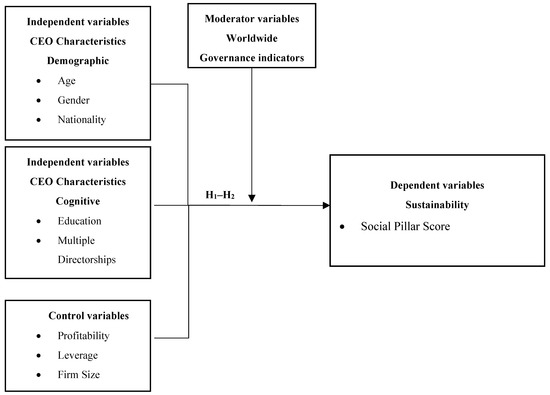
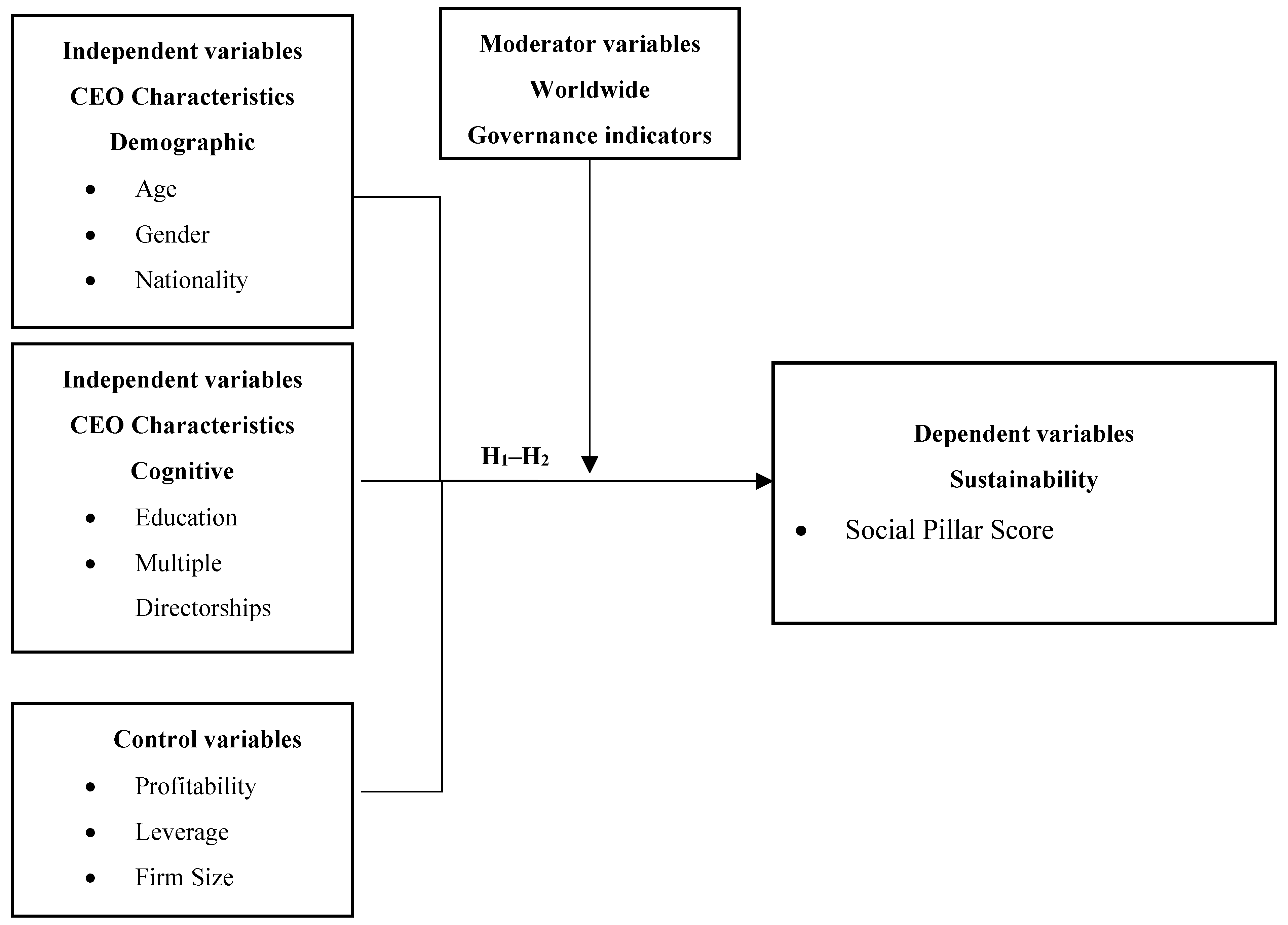

Disclaimer/Publisher’s Note: The statements, opinions and data contained in all publications are solely those of the individual author(s) and contributor(s) and not of MDPI and/or the editor(s). MDPI and/or the editor(s) disclaim responsibility for any injury to people or property resulting from any ideas, methods, instructions or products referred to in the content. |
© 2026 by the authors. Licensee MDPI, Basel, Switzerland. This article is an open access article distributed under the terms and conditions of the Creative Commons Attribution (CC BY) license.