


Abstract
Nigeria entered the 2020 COVID-19-related oil price downturn without the fiscal buffers that numerous resource-rich economies had built over time. Despite heavy dependence on petroleum revenues, the country has made limited use of stabilization tools such as structured hedging programs, sovereign savings mechanisms, or strategic reserves, leaving public finances exposed to external shocks. Drawing on political choice theory and the resource governance literature, this study examines how institutional conditions shaped crisis management during the 2020 oil price collapse and the COVID-19 pandemic. The study combines qualitative institutional analysis with a stochastic counterfactual simulation. It compares Nigeria’s policy approach with those of oil-producing countries including Mexico, Saudi Arabia, the United Arab Emirates, Angola, and Ghana, using data from the IMF, World Bank, Afreximbank, and peer-reviewed sources. The counterfactual simulation is calibrated to Nigeria’s 2019 federal budget oil benchmark of US $60 per barrel, with the IMF’s 2019 petroleum price assumption used as a robustness check. The model treats hedging as a form of partial fiscal insurance rather than full stabilization. Results suggest that hedging sufficient to offset 10%, 20%, and 30% of the shock would have improved 2020 GDP decline from −1.80% to approximately −1.62%, −1.44%, and −1.26%, respectively. The analysis identifies institutional gaps in Nigeria’s use of hedging, sovereign savings, and reserve infrastructure. The counterfactual results indicate that even modest oil hedging could have meaningfully softened the 2020 downturn, with the 20% scenario reducing GDP contraction by an estimated 0.36 percentage points. These findings suggest that governance constraints contributed materially to fiscal vulnerability. The study proposes a four-pillar framework centered on risk hedging, revenue savings, strategic investment, and institutional reform to strengthen fiscal stability and resilience to external shocks.
1. Introduction
Oil-exporting countries face recurring cyclical shocks that test fiscal stability and economic resilience, requiring governments to manage their sovereign balance sheets to absorb these shocks and protect public finances. A sovereign balance sheet includes financial assets, natural resource wealth, savings funds, reserves, and public liabilities that governments use to finance operations, manage fiscal risks, stabilize the economy, and ensure long-term sustainability (Affinito et al., 2022). When these instruments are used effectively, governments can manage revenue volatility and reduce crisis risk. When they are neglected, external price shocks translate into fiscal emergencies.
A cyclical shock is a sudden, often sharp rise or fall in commodity prices that disrupts government revenue, public spending, exchange rates, and overall economic activity over a short period (Nguyen & Paltalidis, 2025). Such shocks are recurrent and largely unavoidable in resource-dependent economies. Anecdotal evidence suggests that downturns in commodity prices occur approximately every five to seven years. Commodity-dependent countries therefore experience repeated cycles of price booms and busts: high prices generate windfalls, whereas price collapses trigger fiscal crises.
The late 2010s and early 2020s vividly illustrate commodity price volatility. In early 2020, a price war among major producers coincided with the collapse of global demand caused by the COVID-19 pandemic, triggering an unprecedented crash in oil prices. By April 2020, benchmark crude prices had fallen to historic lows, and on 20 April 2020, West Texas Intermediate traded at negative prices, meaning sellers effectively paid buyers to take delivery. This extreme market condition reflected a severe glut of unsold oil and limited storage capacity as lockdowns eliminated approximately 29 million barrels per day of global demand. Consequently, oil-exporting countries faced the twin shocks of sharp revenue losses and severe market disruption.
For Nigeria, Africa’s largest oil producer, the 2020 oil shock was devastating. Oil accounts for approximately 65% of government revenue and more than 85% of exports (Extractive Industries Transparency Initiative [EITI], 2021; Nwaogu & Osahon, 2025). This structure creates deep fiscal dependence on a single volatile commodity. When oil prices collapsed, fiscal revenues declined sharply, and external balances weakened. This situation was further aggravated by nearly five years of weak growth following Nigeria’s 2016 recession. The Excess Crude Account (ECA), Nigeria’s main stabilization fund, had declined from $2.5 billion in December 2015 to only $72 million by May 2020 (Securities and Exchange Commission, 2017), a level that provided no meaningful buffer against major shocks. Without savings or hedging protection, fiscal pressure quickly intensified. Across several states, budget adjustments reflected this strain; “compared to the Original 2020 Budgets: total expenditures reduced by 35 percent” (Worldbank, 2020, p. 5). The naira faced strong depreciation pressure, and the federal government turned to emergency external financing to stabilize public finances (IMF, 2020a).
This outcome raises a critical question: Why did Nigeria enter the 2020 oil cycle shock with so little preparation? Several oil-producing countries weathered the crash more effectively because they used sovereign balance sheet tools, such as financial hedges, savings funds, and physical reserves, to stabilize revenue. For example, Mexico entered 2020 with an oil hedging program that guaranteed a price of approximately $49 per barrel, helping cushion its budget (Ma & Valencia, 2018; Johnson, 2022). Major exporters in the Middle East had accumulated substantial foreign assets and drew on sovereign wealth funds (SWFs) or central bank reserves to finance deficits. Large importers, such as the United States, China, and India, maintain strategic petroleum reserves (SPRs) and purchase oil during price declines to stabilize domestic supply.
However, Nigeria followed a different path. The country operated without hedging protection, substantial savings, or meaningful storage capacity. The Nigerian National Petroleum Corporation sold crude oil largely on the spot market, exposing public revenue directly to price volatility. When prices collapsed, fiscal vulnerability became acute. The Nigerian government reached a breaking point, revealing a deeper failure to manage its sovereign balance sheet for resilience.
This study addresses this gap by examining the consequences of Nigeria’s failure to use its sovereign balance sheet to manage commodity cycle shocks. It investigates why Nigeria did not deploy key instruments such as financial hedging, SWFs, or SPRs, despite its heavy dependence on oil revenue and the extensive literature, including IMF analysis, emphasizing the importance of risk-mitigation mechanisms in resource-dependent economies. Drawing on political choice theory and the resource governance literature, the study analyzes how institutional weaknesses, limited accountability structures, and short-term political incentives constrained fiscal preparation before the 2020 oil price collapse and the COVID-19 pandemic. It moves beyond descriptive accounts of oil dependence to provide a structured evaluation of balance sheet management as a stabilization strategy. The study makes two contributions. First, it reconceptualizes sovereign balance sheet management as an integrated stabilization framework that combines hedging, sovereign savings, strategic reserves, and governance design rather than treating these as isolated policy tools. Second, it shows how political incentives and institutional fragmentation limited Nigeria’s ability to deploy these instruments before the 2020 shock. To improve analytical clarity, Section 1 develops the conceptual and theoretical foundations, Section 2 explains the mixed-methods design and counterfactual model, Section 3 presents the findings, and Section 4 distinguishes immediate policy options from longer-term institutional reforms. The findings offer broader lessons for commodity-dependent economies seeking to convert natural resource wealth into long-term fiscal resilience rather than recurrent crises.
1.1. The Sovereign Balance Sheet Approach
A sovereign balance sheet comprises assets (financial funds, foreign reserves, natural resource wealth, and infrastructure) and liabilities (debt and contingent obligations) (Huertas & Meyer Cirkel, 2021). Proactive management of this balance sheet involves saving or hedging during booms and leveraging assets during downturns to stabilize the economy. In theory, resource-rich countries should convert volatile commodity earnings into more stable assets, such as diversified financial savings and productive infrastructure, while avoiding excessive borrowing during booms that can create debt overhang during busts (Bova et al., 2016; Wills et al., 2016). Effective balance sheet management depends on strong institutions, fiscal rules, transparent governance, and public accountability that support long-term planning over short-term political incentives (Gelb et al., 2014).
In Nigeria, institutional weaknesses have undermined prudent management. Political-economic analyses often describe Nigeria’s governance in terms of the “resource curse” and patronage (Ojakorotu et al., 2018). Ufodike et al. (2023) draw on the “tragedy of the commons” thesis developed by Hardin (1968), which posits that individual rationality and self-interest can lead to the overexploitation of commonly shared resources. Subsequent scholars, such as Berkes (2021), revisited and critiqued this argument, emphasizing the role of institutions and collective governance in preventing resource depletion. Since Nigeria’s return to democracy in 1999, the country’s elite—comprising former and current politicians and their associates—have often treated oil revenues as a “national cake” to be distributed among patronage networks (Wills et al., 2016). Although formal democratic institutions exist, scholars have noted a deficit in horizontal (O’Donnell, 1999; Schedler, 1999) or network accountability (Ufodike et al., 2022), including checks and balances that hold leaders accountable. This condition has been described as “democracy washing,” referring to the presence of elections without effective governance, which enables the mismanagement of oil wealth with limited consequences. For example, legal frameworks for saving oil revenues have frequently been ignored or contested, and instances of high-level corruption have often gone unpunished. These issues are examined extensively in Okonjo-Iweala’s (2018) aptly titled book: Fighting Corruption Is Dangerous, a firsthand account by Nigeria’s former Minister of Finance, who previously served as Managing Director of the World Bank and currently serves as Director-General of the World Trade Organization. Such institutional factors help explain why Nigeria has struggled to adopt the policies used by numerous peer countries to mitigate commodity shocks (O’Donnell, 1999; Schedler, 1999).
This study examines these issues in depth. First, it reviews global examples of commodity risk hedging and stabilization mechanisms, highlighting how countries such as Mexico, Saudi Arabia, and the United Arab Emirates (UAE) manage oil cycles. It then compares Nigeria’s approach with those of other OPEC members and emerging oil producers, emphasizing the institutional gaps and policy failures that left Nigeria particularly exposed. To illustrate these differences, the analysis incorporates data on oil dependency, SWF assets, strategic reserves, and fiscal outcomes. The study concludes with policy recommendations and proposes a conceptual framework for sovereign balance sheet resilience tailored to resource-dependent economies, drawing lessons from international best practices and Nigeria’s experience.
1.2. Theoretical Background
Political choice theory emerged in the mid-twentieth century through the work of scholars such as Buchanan and Tullock (1965). Buchanan’s *The Calculus of Consent* provided the foundation for analyzing political decision-making using economic reasoning (Buchanan & Tullock, 2003). The theory rejects the assumption that governments always pursue the public interest. Recognizing the difficulty of defining the “public interest” (Ufodike, 2020), political choice theory argues that political actors respond to incentives and often seek to maximize power, electoral support, and control over resources (Buchanan & Tullock, 2003; Carden et al., 2022). This framework treats fiscal decisions as outcomes of strategic behavior rather than neutral economic planning. It therefore provides a useful lens for analyzing policy choices in resource-dependent economies.
The theory rests on several interconnected concepts that explain how political incentives shape fiscal outcomes in resource-dependent economies. Political choice theory suggests that policy decisions reflect the incentives of powerful interest groups and politicians who may favor the immediate distribution of resource rents to secure support rather than investing for the future (Becker, 1983). Shaw (2002) argues that political actors behave rationally within institutional constraints and pursue policies that strengthen their political positions and electoral survival. Consequently, short-term electoral pressures often favor visible public spending over long-term savings. In resource-rich environments, large and volatile revenue inflows intensify rent-seeking behavior by creating opportunities for patronage, redistribution, and political bargaining (Mengiste, 2020). Weak accountability structures reduce the political cost of fiscal indiscipline and limit oversight of resource allocation (Theletsane, 2014). These conditions reinforce one another, creating a cycle of short-term fiscal expansion during commodity booms. Governments therefore overspend, underinvest in stabilization mechanisms, and avoid hedging strategies that limit discretionary control over public revenue.
Political choice theory addresses a gap in conventional macroeconomic analysis. In Nigeria, oil revenue has historically served as a tool for political bargaining and distribution. Leaders may deplete stabilization funds or avoid hedging mechanisms because these tools constrain short-term spending flexibility. The theory therefore explains how institutional weaknesses and political incentives undermine prudent sovereign balance sheet management, consistent with the arguments of Okonjo-Iweala (2018). It links Nigeria’s fiscal vulnerability during the 2020 oil shock to incentive structures and governance constraints, explaining why the country entered the crisis without adequate savings, hedging arrangements, or strategic reserves despite clear exposure to oil volatility. The theory strengthens the institutional argument in this study and supports the proposed framework for sovereign balance sheet resilience. Effective hedging programs, SWFs, and reserve accumulation require credible institutions, transparency, and political commitment; without these conditions, technical instruments alone cannot prevent recurring fiscal crises in resource-dependent economies.
2. Research Methodology
This study adopts a mixed-methods research approach that integrates qualitative institutional analysis with quantitative macro-fiscal simulation. The theoretical discussion is confined to the preceding section, Section 1, while this section focuses on the research design, data sources, comparative case selection, and model specification. The qualitative component draws on political choice theory and the resource governance literature to examine how institutional incentives shaped Nigeria’s fiscal policy decisions. The quantitative component applies stochastic counterfactual simulation to estimate the macroeconomic implications of alternative policy choices. This combined approach provides both explanatory depth and empirical estimates of policy effects.
The study also employs a comparative policy case-study design, with Nigeria as the primary case. Comparator oil-producing countries, including Mexico, Saudi Arabia, the UAE, Angola, and Ghana, serve as benchmark cases. The design is analytical and retrospective and focuses on the 2020 oil price collapse during the COVID-19 pandemic. The study integrates documentary analysis, institutional assessment, and probabilistic modeling to evaluate Nigeria’s fiscal vulnerability and simulate alternative policy outcomes under conditions of oil price volatility.
The population of interest comprises oil-producing economies that rely heavily on hydrocarbon revenues for fiscal stability. The analytical sample includes Nigeria as the focal case and selected oil producers that have implemented oil hedging programs, SWFs, or strategic reserve mechanisms. The temporal scope primarily covers the period from 2015 to 2022, with particular emphasis on fiscal outcomes in 2020.
This study relies exclusively on secondary data. Sources include macroeconomic and fiscal statistics from the IMF, World Bank, Afreximbank, Central Bank of Nigeria, and national budget documents. Policy documentation related to SWFs, oil hedging programs, and fiscal rules was also reviewed. Academic literature and institutional reports were analyzed to identify governance patterns and institutional constraints. Documentary analysis served as the principal data-collection instrument for the qualitative component. For the quantitative component, macro-fiscal data were extracted and calibrated into a stochastic simulation model to generate counterfactual GDP outcomes.
Qualitative data were analyzed using structured comparative analysis. Institutional features—including fiscal rules, savings mechanisms, hedging strategies, and accountability structures—were systematically compared across countries to identify explanatory differences. The study then examines the commodity hedging experiences of OPEC and non-OPEC members and evaluates the potential benefits had Nigeria implemented a hedging program during the COVID-19 downturn.
2.1. Commodity Risk Hedging Mechanisms: International Experiences
One key component of sovereign balance sheet management is the financial hedging of commodity price risk. Hedging involves using financial instruments, such as futures or options, to lock in prices or insure against adverse price movements (Prymostka et al., 2024). While corporations often hedge their exposure, only a few sovereigns have implemented hedging programs for national oil revenues (Batten et al., 2021). A prominent example is Mexico, which operates the world’s largest sovereign oil hedge. Since at least 2001, Mexico’s Ministry of Finance has annually purchased put options on oil through the Hacienda hedge program, effectively buying an “insurance policy” against oil price crashes (IMF, 2015). This program typically costs Mexico around $1 billion per year but pays off when prices plunge. For example, Mexico received payouts of $5.1 billion in 2009, $6.4 billion in 2015, and $2.7 billion in 2016 from its hedges (IMF, 2015; Baumeister & Kilian, 2016). During the 2020 collapse, Mexico had hedged at approximately $49 per barrel, helping to shield fiscal revenues during the global downturn (Kumar & Eschenbacher, 2020). The hedge also gave Mexico greater confidence during OPEC negotiations, as downside risks were already covered (Levi et al., 2022). In effect, Mexico transferred risk to financial markets during favorable periods to maintain budget stability during downturns. Academic analyses of Mexico’s oil-hedging program show that it can reduce income volatility and lower sovereign borrowing costs (Ma & Valencia, 2018). More specifically, Ma and Valencia (2018) argues that Mexico’s sovereign borrowing costs would be 19 basis points higher without hedging. Nonetheless, Mexico remains “the only country” (Cifuentes, 2016) to operate an oil hedge on this scale, partly because the approach requires significant technical capacity and high upfront costs (van den Bremer & van der Ploeg, 2013).
Most major producers do not employ sovereign-level financial hedging. For instance, Saudi Arabia, where oil accounts for approximately 55% of government revenue, has generally avoided hedging through international financial markets. One reason is that, as the de facto leader of OPEC, Saudi Arabia manages oil prices primarily through supply policy rather than financial instruments (IMF, 2019a; Kouleas, 2023). Hedging large volumes could be perceived as undermining OPEC’s supply discipline by effectively “betting against” efforts to raise prices. Instead, Saudi Arabia has focused on fiscal reforms and economic diversification to reduce oil dependence (Azad, 2023; Ateba & Enwereji, 2024). Following the 2014–2016 price slump, the country implemented austerity measures and introduced a 5% value-added tax (VAT), which was later increased to 15% in 2020, to strengthen non-oil revenue (Platt, 2020). These measures, part of the Vision 2030 agenda, aim to mitigate oil volatility by expanding the non-oil fiscal base. Nevertheless, Saudi Arabia’s national oil company, Saudi Aramco, and the government have occasionally considered hedging certain exposures; for example, during discussions surrounding the 2018 initial public offering (IPO), hedging refined product margins was contemplated (Bakir & Al-Shamari, 2025). In practice, however, the norm has been “too big to hedge.” The kingdom relies on its substantial foreign reserves and its role as a swing producer to absorb price shocks rather than relying on derivative contracts (van der Ploeg & Venables, 2011).
The UAE follows a similar pattern. The UAE is a major OPEC producer (particularly the emirate of Abu Dhabi) that has not publicly implemented an oil hedging program (Antwi-Boateng & Al Jaberi, 2022). Instead, the UAE’s strategy for managing oil cycles emphasizes investment diversification and savings (El Anshasy & Khalid, 2023). With a population of approximately 10 million, the country maintains several large SWFs, including the Abu Dhabi Investment Authority, whose assets are estimated at approximately $700 billion (USD) and are invested globally using surplus oil revenues (International Energy Agency, 2020). Income generated from these diversified portfolios provides a fiscal cushion during periods of oil price decline. The UAE’s economy is also relatively diversified, for example, through Dubai’s tourism and services sectors, which helps reduce exposure to oil price volatility.
Furthermore, as a high-income federation with substantial financial reserves, the UAE can afford to run deficits or stimulate the economy during oil price declines without resorting to hedging (Crupi & Schiliro, 2023). During the 2020 COVID-19 crisis, UAE authorities supported the economy, for example, through central bank stimulus and the use of state resources, while tolerating a larger deficit, confident that SWF assets and low debt levels would reassure creditors (Berg et al., 2013; Siddiqui & Afzal, 2022). The strength of the UAE’s balance sheet is also evident in its ability to maintain a peg between its currency, the dirham, and the USD. In contrast, Nigeria attempted for many years to peg its currency, the naira, to the USD. However, a weak balance sheet and an inability to meet public demand for USD contributed to the emergence of a thriving black market and significant depreciation of the naira, eventually resulting in “duers”, a dual exchange rate system that created substantial arbitrage opportunities linked to political connections.
Other emerging-market oil exporters have shown interest in hedging but face significant barriers. Notably, Nigeria has periodically debated hedging its crude oil sales but has never implemented a sustained program (Adegun & Abiola, 2020). Industry analysts cite several reasons for this. Hedging costs can be “prohibitive” for Nigeria, particularly given its production (approximately 2 million barrels per day before the pandemic), which would require substantial option premiums (Ayodele et al., 2024). Nigeria’s oil derivatives market is also underdeveloped, meaning that any hedge would likely be arranged through international banks, potentially at higher cost or perceived risk (Ansari et al., 2020). Importantly, Nigerian policymakers often appear to assume that oil revenues will eventually rebound (“the market will always be there”), reducing the perceived urgency to hedge (Okwueze et al., 2025). Membership in OPEC also plays a role; as one expert noted, it may seem “counterintuitive if you are part of [OPEC]” to hedge against price declines (Azebi & Joseph, 2025). In practice, Nigerian officials have relied on OPEC’s collective supply management and ad hoc domestic measures—such as currency devaluation or borrowing—when prices fall rather than on pre-emptive financial insurance (Okwueze et al., 2025).
In summary, sovereign-level commodity hedging remains rare, and Mexico represents the clearest example of its successful application. The trade-off is clear: hedging provides protection during price crashes but requires consistent upfront costs and the political willingness to allocate funds for insurance during favorable periods. Countries such as Nigeria have thus far considered these costs too high or the mechanism too complex, a decision that proved costly in 2020 when unhedged exposure contributed to fiscal stress. As discussed later, establishing a hedging program could significantly strengthen Nigeria’s fiscal stability but would require overcoming technical and political constraints, including improving stakeholder understanding of its long-term benefits. Meanwhile, other sovereign balance sheet tools are more widely adopted by oil-producing countries, particularly SWFs and reserve assets.
2.2. Quantitative Model of a Nigerian Hedging Program
The quantitative analysis employed the stochastic simulation framework developed by Berg et al. (2013). The baseline scenario uses Nigeria’s observed GDP contraction of −1.8% in 2020. The counterfactual scenario assumes the adoption of a partial oil-hedging mechanism capable of offsetting approximately 20% of oil-revenue losses. This abstraction differs from country-specific implementations such as Mexico’s annual oil hedge, which uses put options to secure a price floor. Instead, the model captures the fiscal-insurance function of hedging without imposing assumptions about instrument design, pricing, or execution. This 20% assumption is deliberately conservative and is used as a stylized midpoint rather than as a claim of exact realized hedge performance. It is broadly consistent with the sovereign-hedging literature, which shows that even Mexico’s long-standing and highly developed program protects only part, rather than all, of fiscal exposure to adverse oil-price movements and is therefore better interpreted as partial budget insurance than as full revenue protection. For example, Ma and Valencia (2018) note that Mexico hedged, on average, about 29% of total production over the preceding decade, while related IMF work (Daniel, 2001; Duclaud, 2012). emphasizes that sovereign oil hedging is designed to reduce vulnerability, not eliminate it entirely. Consequently, hedge effectiveness was modeled as a normally distributed random variable centered on 20%, with the distribution used to represent uncertain but bounded stabilization outcomes under volatile market conditions. One thousand iterations were conducted to generate a probability distribution of counterfactual GDP outcomes. Distributional statistics, including mean values and percentile bounds, were computed to assess the potential effects of macroeconomic stabilization. In addition, a simple sensitivity analysis was performed at 10%, 20%, and 30% hedge-effectiveness levels to test how strongly the results depend on the central assumption. The findings are presented in descriptive tables, comparative institutional matrices, and graphical simulation outputs. The stochastic simulation results are illustrated using probability distribution charts to demonstrate the range of possible GDP outcomes under a hedging regime.
The benchmark price for the counterfactual is anchored in Nigeria’s 2019 federal budget oil-price assumption of US $60 per barrel (Thisday, 2019), which serves as the primary policy reference point. The IMF’s 2019 petroleum price assumption of US $61.78 (IMF, 2019b) per barrel is also used as a robustness check. This dual treatment preserves policy relevance while avoiding reliance on a purely global comparator. The simulation was implemented in Python 3.13.7 and generated a reproducible dataset of 1000 stochastic draws, summary statistics, and graphical outputs.
Internal validity was strengthened through triangulation across multiple data sources and institutional reports. The counterfactual model is grounded in established fiscal stress-testing frameworks in the macroeconomic literature. Sensitivity checks were conducted to ensure that simulation outcomes remained stable across repeated runs. Reliability is supported by transparent modeling assumptions and replicable simulation procedures. The use of 1000 iterations ensures distributional stability and reduces random estimation noise.
This study relied entirely on publicly available secondary data and did not involve human participants; therefore, formal ethical approval was not required. All data sources are acknowledged to ensure academic integrity. The analysis was conducted objectively without political bias, and the findings are presented in a manner that supports evidence-based policy discussions.
2.3. Counterfactual Model Specification
Counterfactual models use econometric simulations or fiscal stress-testing frameworks to estimate how economic outcomes might differ under alternative policy conditions. In this study, a stochastic counterfactual simulation is employed to estimate how Nigeria’s 2020 GDP outcome might have differed under a partial oil-hedging regime. The approach is informed by Berg et al. (2013) but adapted as a stylized macro-fiscal framework rather than a reconstruction of a specific hedge contract. The objective is to quantify the fiscal-insurance value of hedging under transparent, policy-relevant assumptions.
The counterfactual is anchored to Nigeria’s 2019 federal budget oil benchmark of US $60 per barrel, which serves as the pre-shock fiscal planning reference. As a robustness check, this benchmark is compared with the IMF’s 2019 petroleum price assumption. This dual anchoring ensures that the model is both institutionally grounded and externally consistent. Rather than modeling a specific financial instrument, hedging is represented as a partial fiscal insurance mechanism. This abstraction is deliberate. The model does not impose assumptions regarding options structures, strike prices, premiums, or execution strategies. Instead, it captures the macroeconomic effect of offsetting a proportion of oil-revenue losses. In doing so, the simulation isolates the stabilizing function of hedging while avoiding unnecessary assumptions about implementation details.
Let denote Nigeria’s observed GDP growth in 2020 (−1.8%), and let θ ∈ [0, 1] denote hedge effectiveness, defined as the proportion of oil-shock-related fiscal losses offset through hedging. Counterfactual GDP growth is then defined as:
where is an increasing function of hedge effectiveness. Intuitively, as a larger share of oil-revenue losses is offset, the associated fiscal contraction is reduced, leading to improved macroeconomic outcomes. The transmission mechanism operates through the fiscal channel: reduced revenue volatility lowers the need for abrupt expenditure cuts or emergency borrowing, thereby dampening the contractionary impact on output. This aligns with established resource-curse and fiscal volatility literature, which links revenue instability to procyclical fiscal adjustments and weaker growth outcomes (e.g., Mehlum et al., 2006). Full model assumptions and variables are defined in Appendix A. The simulation dataset reports five variables: the simulation ID (for each of the 1000 iterations), 2020 base gdp growth percentage (−1.8%), hedge effectiveness stochastic variable, counterfactual gdp growth percentage, and gdp improvement with hedging in percentage points.
This abstraction differs from country-specific implementations such as Mexico’s oil hedge, which uses put options to secure a price floor and has historically generated substantial fiscal offsets during downturns. The present model does not attempt to replicate Mexico’s institutional design; rather, it uses Mexico as a functional reference point to illustrate how hedging can operate as a form of macro-fiscal insurance.
3. Key Findings
The results of the stochastic simulation are presented in Figure 1, which illustrates the distribution of Nigeria’s counterfactual GDP growth in 2020 under the baseline 20% hedging scenario. The model is based on 1000 simulations of hedge effectiveness. Summary statistics are presented below:
| −1.44%. |
| −1.58%. |
| −1.29% |
Figure 1.
Distribution of simulated GDP outcomes under the baseline 20% hedging scenario (2020).
These results indicate that, under the baseline hedging scenario, Nigeria’s GDP contraction in 2020 would likely have remained within a relatively narrow range between −1.58% and −1.29%, with an expected outcome of approximately −1.44%.
3.1. Interpretation of Results
The simulation assumes that oil-price hedging mitigates between 0% and 40% of external oil shocks, with a central effectiveness value of 20%. Prior studies provide useful reference points for this range. Daniel (2001) modeled a 50% hedge-effectiveness scenario as a simplified illustration, noting the trade-off between retaining upside gains and reducing downside risk. Ma and Valencia (2018) report that Mexico’s hedging program covered, on average, about 29% of crude production over the ten years preceding their study. Against this background, the 20% assumption used here is intentionally conservative and is designed to capture partial, rather than full, fiscal protection under volatile market conditions, consistent with the sovereign-hedging literature on budget insurance and downside-risk reduction (Daniel, 2001; Ma & Valencia, 2018). To strengthen robustness, we also include sensitivity checks at 10%, 20%, and 30% hedge-effectiveness levels, with the upper bound approximating a more optimistic case inspired by Mexico’s experience. Figure 2 reports the 10%, 20%, and 30% simulations side by side.
Figure 2.
Distribution of simulated GDP outcomes across 10%, 20%, and 30% hedging scenarios.
Figure 2 shows that higher hedge effectiveness shifts the distribution rightward and reduces downside risk, illustrating the stabilizing role of partial hedging and the incremental improvement in GDP outcomes as hedge effectiveness increases.
3.1.1. Risk Containment
Three key insights emerged from our analysis. First, even in the lower tail of the distribution (5th percentile), GDP contraction remains moderated relative to the no-hedge scenario. This finding suggests that partial hedging can significantly reduce downside risk.
3.1.2. Stability Effect
Second, the relatively narrow dispersion between the 5th and 95th percentiles indicates that hedging contributes to macroeconomic stability by limiting extreme output fluctuations.
3.1.3. Macroeconomic Cushioning
Third, the result of our sensitivity simulations indicates that as hedge effectiveness increases, the severity of contraction declines, mean outcomes improve, and downside risk narrows, even under conservative assumptions.
Table 1 presents the observed 2020 GDP outcome alongside simulated outcomes under 10%, 20%, and 30% hedge-effectiveness scenarios. It presents the mean simulated GDP growth rate, the 5th and 95th percentile outcomes, and the improvement in mean GDP growth relative to the observed contraction. The counterfactual model suggests that even a modest 10% hedge could have improved GDP performance by 0.18 percentage points, while a 30% hedge-effectiveness scenario produces an improvement of 0.54 percentage points. This magnitude is economically significant, particularly in a recessionary context. These findings reinforce the argument that even partial oil price hedging can serve as an effective macroeconomic stabilization instrument. By smoothing revenue volatility, hedging reduces the likelihood of emergency borrowing and abrupt fiscal contraction, thereby supporting sustainable fiscal management (Mehlum et al., 2006).
Table 1.
Summary of Sensitivity Simulations: GDP Improvements under alternative hedge-effectiveness assumptions.
Beyond output stabilization, reduced revenue volatility also has implications for sovereign risk. By lowering the likelihood of abrupt fiscal deterioration and emergency borrowing, hedging can indirectly support sovereign creditworthiness and reduce pressure on borrowing costs during periods of external shock. Sensitivity checks further suggest that this qualitative conclusion is robust under both more conservative and more optimistic assumptions. As Table 1 shows, under a 10% hedge-effectiveness scenario, the implied GDP contraction improves to about −1.62%; under the baseline 20% scenario, it improves to about −1.44%; and under a 30% scenario, it improves further to about −1.26%. These scenario tests show that the direction of the result remains stable across plausible parameter values.
3.2. SWFs and Oil Revenue Savings
The second major mechanism for managing oil cycle shocks is the establishment of SWFs or related sovereign savings instruments (Bouhmidi, 2024). These funds enable governments to save surplus revenue during boom periods and allocate it to long-term investment or macroeconomic stabilization objectives (Garg & Shukla, 2021). In practice, SWFs convert non-renewable and volatile oil revenues into diversified financial assets that generate more stable returns and provide fiscal buffers during economic downturns. Across oil-producing regions—from the Gulf States to emerging African producers—numerous countries have adopted such funds, although their effectiveness varies depending on governance quality, transparency, and policy discipline (Ma & Valencia, 2018).
At one end of the spectrum is Norway, often cited as a model of prudent resource management and therefore not used as a comparator country for Nigeria. Norway is not an OPEC member but is a major oil exporter that allocates virtually all petroleum budget surpluses to the Government Pension Fund Global, now the world’s largest SWF (Takle, 2021). In recent years, the fund has exceeded $1 trillion (922 billion USD in 2017), amounting to nearly $180,000 per Norwegian citizen on average. Norway earns returns that can finance up to 3% of its budget annually (under a self-imposed fiscal rule) while preserving wealth for future generations through investment in a diversified global portfolio (Norouzi & Ataei, 2022). Norway’s strong institutions, including a transparent mandate for the sovereign fund, effective parliamentary oversight, and a well-established culture of rule compliance, have safeguarded the fund’s integrity and supported its long-term growth (Øvald et al., 2019). As a result, Norway has largely decoupled fiscal spending from short-term oil price fluctuations; even during the 2020 collapse, the government could comfortably run deficits or withdraw funds as a countercyclical measure with minimal fiscal stress. Norway’s experience highlights the value of saving oil revenues in sovereign funds and investing them prudently abroad (Berg et al., 2013).
Gulf Arab states also maintain enormous sovereign funds, although their governance structures differ. Kuwait’s fund, established in the 1950s, and Abu Dhabi’s ADIA (UAE) are among the largest, each managing assets of approximately $600–700 billion (Carvalho et al., 2017). These funds have accumulated decades of oil surpluses. For example, by 2020, Kuwait’s sovereign net foreign assets had reached nearly 500% of its GDP, providing an extraordinary fiscal buffer. Qatar and Saudi Arabia also maintain sizable funds; the Qatar Investment Authority held around 300 billion USD (Oancea, 2022), while Saudi Arabia’s Public Investment Fund had grown rapidly to more than 360 billion USD by 2020, partly boosted by proceeds from the Aramco IPO (Roll, 2019).
These funds serve multiple roles, including stabilization, savings, and economic development, but their sheer size allows countries such as Saudi Arabia and the UAE to access assets or investment income when oil revenue declines. For instance, during the 2020 oil price collapse, Saudi Arabia drew down its central bank’s foreign reserves and used the Public Investment Fund (PIF) to support the economy while also issuing debt. The impact of the shock was mitigated by past savings:
Although Saudi Arabia’s fiscal deficit widened to 11.3% of GDP in 2020 due to an approximately 30% decline in oil revenue, the kingdom was able to finance it through a combination of reserve drawdowns and borrowing, maintaining both solvency and creditworthiness (Magazzino, 2022).
In contrast, Nigeria’s deficit, about 5.6% of GDP in 2020, was smaller as a share of GDP; however, Nigeria faced more severe financing constraints, its reserves were limited, and borrowing options were restricted without multilateral assistance (Odekunle, 2024). The difference lies in the accumulated buffers: Saudi Arabia had hundreds of billions in reserves and SWF assets to draw upon, whereas Nigeria’s official sovereign funds were nearly depleted.
Nigeria’s SWF position is among the weakest globally relative to its oil earnings (IMF, 2016; Ekong et al., 2025). Over the past few decades, Nigeria has implemented several oil-saving mechanisms. The ECA, established in 2004, functioned as a stabilization account designed to save oil revenue exceeding a benchmark budget price (Oleka et al., 2014). In principle, the ECA had the potential to accumulate substantial reserves; at one point in 2008, it held more than $20 billion (Onyi-Ogelle & Musa, 2020; Mark et al., 2023). In practice, however, the account was repeatedly drawn down or distributed to cover budget shortfalls and political expenditures. Between 2005 and 2015, approximately $201.2 billion was deposited into the ECA, while $204.7 billion was withdrawn during the same period (102% of deposits) (NEITI, 2017). This effectively nullified its stabilization function. As oil prices declined in 2014–2015, the ECA balance fell from $22 billion in 2008 to only $2.5 billion by the end of 2015 and, as noted earlier, to merely $72 million by 2020 (NEITI, 2017).
Separately, the Nigeria Sovereign Investment Authority (NSIA) was established in 2011 and is structured into three funds: the Stabilization Fund, the Future Generations Fund, and the Nigeria Infrastructure Fund. The NSIA began with $1 billion in seed capital and gradually grew to manage about $3.6 billion by 2020 (including third-party funds) (Nwoke, 2023). This amount remains modest for a country of Nigeria’s size, equivalent to roughly $18 per capita in sovereign wealth (with a population of approximately 200 million in 2020). By comparison, despite its own governance challenges, Angola (another OPEC member with similar oil dependence) saved about $5 billion in its SWF, or roughly $156 per capita (Shaxson, 2021). Saudi Arabia’s per capita sovereign assets (PIF plus reserves) are on the order of tens of thousands of dollars, while those of the UAE are even higher (see Figure 3). Nigeria’s SWF assets remain relatively small, covering only about 10% of its annual budget. A NEITI report noted that Nigeria’s $1.5 billion SWF (as of a few years earlier) was “one of the lowest in the world, better only than war-torn Iraq and crisis-hit Venezuela” (NEITI, 2017).
Figure 3.
Sovereign oil fund comparison. Source: NEITI (2017).
Figure 3 shows that Nigeria’s savings are minimal compared with those of its OPEC peers and Norway. Illustrative values are as follows: Nigeria ~$18, Angola ~$156, Saudi Arabia ~$10,500, the UAE ~$70,000, and Norway ~$177,000 per person.
The consequences of Nigeria’s weak savings were fully revealed during the 2020 crisis (Ozili, 2021). With almost no fiscal reserves to draw upon, Nigeria resorted to emergency measures. It requested an IMF Rapid Financing Instrument (drawing $3.4 billion), secured World Bank loans, and borrowed domestically at high interest using its sovereign credit because it lacked sufficient sovereign wealth buffers (Efosa et al., 2020). Meanwhile, countries such as Ghana and Botswana—although much smaller economies—had accumulated modest stabilization funds or savings during favorable periods. While not large, these funds provided some fiscal space when commodity revenues declined (Onyekwena & Edafe, 2024; Honde, 2024). Ghana’s Petroleum Stabilization Fund, for example, though only several hundred million dollars, was drawn upon to support the national budget during the 2015–2016 oil price slump (Onyekwena & Edafe, 2024). Because of repeated withdrawals and a constitutional dispute between federal and state governments over oil funds that undermined long-term savings, Nigeria lacked such a cushion by 2020 (Ozili, 2021). Importantly, establishing a fund alone is insufficient; governance and institutional rules determine its effectiveness. In Nigeria, both the ECA and NSIA were weakened by unclear legal status and political interference (Roy et al., 2022). Moreover, the ECA lacked firm legal protection; state governors at times sued the federal government over its accrual (Okonjo-Iweala, 2018). Although the NSIA was legally established, it faced political opposition and received limited funding from successive governments (Chigozie & Alao, 2021). In contrast, countries that have successfully used SWFs, such as Norway, Chile (with a copper stabilization fund), and Botswana (with a diamond fund), typically maintain strict deposit and withdrawal rules alongside high transparency. For example, Chile’s Economic and Social Stabilization Fund can be accessed only under structural budget rules tied to long-term copper prices, insulating it from ad hoc political pressure (Morandé, 2025). Nigeria’s experience demonstrates that without political commitment and legal safeguards, oil funds can be treated as discretionary accounts, undermining their stabilization purpose (Roy et al., 2022).
Nigeria fell behind its peers in oil revenue savings. While numerous OPEC and emerging oil-producing states built sovereign wealth portfolios during the 2000s commodity boom, Nigeria largely did not. Figure 3 highlights the stark gap in per capita sovereign assets. Nigeria’s total oil savings (ECA and NSIA) were less than $4 billion in 2017, representing less than 20% of the annual federal budget. In contrast, smaller countries such as Kuwait and the UAE accumulated funds several times larger than their annual budgets, and even an African peer, Angola, maintained higher reserves despite also facing corruption and debt challenges. The absence of a robust fund left Nigeria’s balance sheet unprotected, and when oil prices collapsed, there were no substantial financial assets to liquidate. This situation places Nigeria among the most vulnerable “petrostates,” which, as noted by a Carbon Tracker analysis, face severe revenue shortfalls during energy transitions because of limited savings and heavy dependence on oil revenues (Gopalakrishnan & Miller, 2023). Thus, building and preserving sovereign wealth remains an urgent priority for strengthening Nigeria’s future fiscal resilience.
3.3. Downstream Infrastructure and Strategic Reserves
Beyond financial instruments, sovereign states can also manage commodity cycles through physical assets such as downstream infrastructure (refineries, pipelines, and storage terminals) and SPRs (Jaffe, 2020). According to Ikevuje et al. (2024), these assets enhance flexibility during periods of price volatility. With adequate storage, a producer can withhold crude oil when prices collapse and sell it when markets recover. However, Nigeria has historically underinvested in this area. Despite being a major oil producer, the country operates with severely limited refining capacity and has long relied on imported petroleum products (Itsekor, 2020). State-owned refineries have operated far below capacity for years, creating the paradox of exporting crude oil while importing refined products. Compounding this weakness, Nigeria lacks a functional strategic petroleum reserve, leaving it unable to store crude oil during price collapses, such as the 2020 contango episode, when futures prices exceeded spot prices.
By contrast, several countries treat physical oil stocks as strategic national assets. The United States Department of Energy manages the world’s largest strategic reserve. During the 2020 price crash, the United States considered further filling its storage facilities to support producers and energy security and later released barrels in 2022 to stabilize markets (Norouzi, 2021). China aggressively expanded its strategic and commercial storage, reportedly exceeding 300 million barrels by 2020, while India filled its smaller reserves during the downturn (Guo et al., 2020). Among producers, Saudi Arabia maintains extensive storage infrastructure at multiple sites, enabling it to smooth exports and respond to disruptions, as demonstrated after the 2019 Abqaiq attack (Barbary, 2025). The UAE has similarly expanded its storage and pipeline networks, including the Habshan–Fujairah pipeline, positioning itself as a resilient exporter. These investments provide operational flexibility, market leverage, and shock-absorption capacity.
The absence of comparable infrastructure in Nigeria imposed high costs in 2020. Without adequate storage capacity, the country could not defer sales during the glut period and was forced to sell crude oil at extremely low prices (Ikevuje et al., 2024). Limited refining capacity also meant continued reliance on fuel imports, even as foreign exchange earnings from crude exports declined. This created a double vulnerability: falling export revenue and persistent import bills. Countries with substantial refining and storage capacity can partially hedge against such volatility because refining margins may offset weakness in crude prices, while stockpiles can be accumulated during low-price periods. Consequently, Nigeria’s structural gaps amplified the fiscal and external shocks triggered by COVID-19.
Recent post-COVID developments, such as the commissioning of the privately owned Dangote refinery, may improve Nigeria’s downstream capacity and reduce dependence on refined product imports (Ahmed & Usman, 2023). However, this development is unlikely to significantly expand domestic storage capacity because the private refinery is expected to contract production primarily for domestic consumption and foreign exports rather than maintain strategic reserves, which typically remain a government responsibility.
Nigeria’s sovereign balance sheet lacked an important class of assets, physical reserves and infrastructure, that numerous other countries use to manage oil cycles. The absence of strategic storage left Nigeria highly exposed to market forces in 2020. This situation highlights a broader principle: resilience depends not only on economic diversification but also on diversification of the asset base (both financial and physical) that supports national stability. Ideally, a resilient oil producer should maintain (a) financial savings, (b) hedging contracts, (c) spare capacity and storage, and (d) diversified revenue streams. Nigeria performed poorly across all of these dimensions in 2020, whereas its peers had at least one in place (Mexico: hedging; Saudi Arabia, UAE, Angola, and Ghana: savings and storage). The next section compares Nigeria with specific peer countries to identify the institutional differences that contributed to these outcomes.
3.4. Nigeria vs. Other Oil Producers: Institutional Gaps and Failures
This section compares Nigeria with other oil producers to examine institutional gaps and failures. Nigeria’s experience can be better understood by comparing it with both wealthy OPEC members and emerging oil producers. While numerous oil exporters face common challenges—such as price volatility, rent-seeking, and Dutch disease—the degree of preparedness and institutional response varies widely. The emphasis is placed on African and institutionally relevant comparators, especially Angola and Ghana, because they illuminate alternative fiscal and governance responses within resource-dependent settings that more closely resemble Nigeria’s policy constraints in the Global South and reflect comparable colonial legacies (Ufodike, 2025). Saudi Arabia and the UAE are retained as high-capacity contrast cases rather than direct peers, illustrating how stronger buffers and centralized policy coordination can change the management of oil-price volatility. This comparative structure keeps Nigeria’s own macro-fiscal trajectory at the centre of the analysis while situating it within a broader range of sovereign balance sheet strategies.
3.4.1. Saudi Arabia and the UAE
Saudi Arabia and the UAE built strong fiscal buffers during oil booms and implemented long-term planning through centralized governance. Saudi Arabia accumulated more than $500 billion in foreign assets in 2014, which helped it absorb major price shocks between 2014 and 2016 and again in 2020 (Moshashai et al., 2020; Young, 2021). Both countries, neither of which are democracies, implemented fiscal reforms, including subsidy reductions and the introduction of new taxes, to lower fiscal break-even oil prices and protect public finances. Their national oil companies, Saudi Aramco and the Abu Dhabi National Oil Company, operate with strong commercial mandates and remain closely aligned with state strategy, including downstream investment and global asset expansion. Centralized authority reduced policy conflicts and ensured consistent savings as well as effective implementation of reforms. In contrast, Nigeria struggled with intergovernmental disputes, weak savings discipline, and low revenue mobilization, leaving it highly exposed during the COVID-19 oil price collapse.
Nigeria has since passed the Petroleum Industry Act, but it has not yet built a state oil institution with the balance-sheet strength, governance discipline, or operational insulation associated with Saudi Aramco or ADNOC. A further governance difference lies in sector leadership and institutional coordination. In 2020, Nigeria’s petroleum portfolio was retained by the President, consistent with a broader pattern in which Nigerian presidents have often exercised direct control over the sector, while a minister of state handled supporting responsibilities. By comparison, Saudi Arabia and the UAE combined centralized authority with deeper sectoral capacity and stronger institutional continuity. The broader point is not simply that Saudi Arabia and the UAE avoided hedging, but that they paired the absence of hedging with alternative tools—large fiscal buffers, sovereign wealth depth, institutional coherence, and experienced sector leadership—that Nigeria had not comparably developed. Nigeria did employ some reactive fiscal and financial measures, including emergency external borrowing, exchange-rate adjustment, and ad hoc budget compression, but these did not constitute pre-funded, rules-based stabilization mechanisms comparable to the reserve accumulation, sovereign fund depth, and institutional coordination seen in Saudi Arabia or the UAE. As a result, Nigeria could only partially absorb the shock through post hoc adjustment, whereas countries with stronger buffers were able to smooth fiscal pressures more effectively without the same degree of financing stress, exchange-rate pressure, or expenditure compression.
3.4.2. Angola
Angola shares Nigeria’s high dependence on oil revenues and similar governance challenges, yet it has introduced modest institutional reforms that improved crisis management. The government established a SWF in 2012, creating a formal savings framework despite ongoing governance concerns (Bolander, 2024). After 2017, Angola pursued IMF-supported reforms, devalued its currency, reduced fuel subsidies, and restructured its public debt to restore macroeconomic stability (Markowitz, 2020). It also restructured its national oil company, Sonangol, to strengthen oversight and transparency (Mouan, 2024). Although Angola faced declining output from maturing fields, it maintained tighter control over production and avoided the scale of oil theft observed in Nigeria. Nigeria, by contrast, delayed structural reforms, relied heavily on central bank financing, and suffered major revenue losses from production leakages, which deepened fiscal vulnerability during downturns.
3.4.3. Mexico
Mexico presents a contrasting model built on fiscal risk management rather than large savings (Levi et al., 2022). Although oil production declined from its earlier peaks, the government maintained macroeconomic discipline after the 1990s crisis and adopted a systematic oil hedging strategy managed by the Finance Ministry. Rather than relying primarily on large precautionary reserves, Mexico has long used annual oil-hedging operations to protect budgeted oil revenues, while also maintaining stabilization and trust funds as secondary buffers (Duclaud, 2012; IMF, 2020b; Cervantes & Rivera, 2021). During the 2020 oil-price collapse, the IMF noted that the government was benefiting from its oil hedge while drawing down its revenue stabilization and trust funds, which helped cushion the fiscal shock and preserve spending capacity.
The stabilization funds themselves were not the sole line of defense. Rather, Mexico’s hedging program played a central role in offsetting the revenue impact of sharply lower oil prices, including in 2020, when hedge gains supplemented fiscal buffers. Strong coordination between fiscal authorities and the central bank supported the confidential and strategic execution of the program (Levi et al., 2022). However, Nigeria did not replicate this model. Fragmentation among the Finance Ministry, the national oil company, and subnational governments limited consensus on hedging or benchmark discipline. Mexico’s experience demonstrates how technocratic capacity and policy coherence can substitute for large sovereign savings.
3.4.4. Ghana
Ghana adopted a rules-based framework before oil production began in 2010 (Ayanoore & Hickey, 2022). The Petroleum Revenue Management Act of 2011 created a Stabilization Fund and a Heritage Fund and mandated formula-based deposits from oil revenue. In a 2013 Reuters interview, the Central Bank of Ghana governor pointed to Nigeria’s experience and stated that the government was wary of Dutch disease and did not want oil to come “at the expense of cocoa or gold” (Reuters, 2013). This mindfulness and early institutional design aimed to prevent procyclical spending and improve intergenerational equity. Savings have remained modest, and political pressures have led to drawdowns; however, the legal framework established clear fiscal rules from the outset (Ayanoore, 2020).
Ghana also strengthened transparency through parliamentary oversight and participation in global accountability initiatives. Nigeria introduced reforms only after decades of oil dependence had entrenched spending expectations and weakened savings discipline. Ghana’s approach shows that the early institutionalization of fiscal rules, even in a lower-income context, can promote greater accountability and structured revenue management than a system shaped by ad hoc political bargaining. Table 2 outlines the hedging strategies, sovereign fund presence, and reserve strategies of the selected countries.
Table 2.
Comparative use of commodity hedging and reserves.
This comparison shows that institutional quality and governance determine how oil exporters manage volatility. Countries that outperformed Nigeria relied on distinct but coherent strategies: long-term, centralized planning in Gulf monarchies; technocratic risk management, such as hedge programs in Mexico, Saudi Arabia, and the UAE; conditional reform and restructuring in Angola; and early fiscal rules and savings laws in Ghana. Nigeria’s weakness stemmed not from ignorance of these tools but from weak political will, fragmented institutions, and limited accountability. Recurrent corruption scandals, subsidy fraud, and opaque oil revenue management undermined savings and reform efforts, while legal and political disputes diluted the implementation of measures such as the SWF and revenue centralization reforms. By contrast, countries that embedded fiscal discipline, enforced accountability, and aligned political incentives with long-term national goals built buffers against oil shocks. Nigeria’s experience reflects a systemic governance failure that prevented the effective use of its sovereign balance sheet, despite clear policy alternatives.
4. Discussion of Results
A comparative analysis of Nigeria and other oil-producing countries highlights the critical roles of institutional quality and governance in managing fiscal vulnerability. The African comparison is especially instructive because Angola and Ghana faced constraints more comparable to Nigeria’s and still built more structured stabilization mechanisms. Nigeria’s sovereign balance sheet in 2020 was notably weak, with minimal savings, an absence of hedging programs, and limited strategic reserves (Ozili, 2021). By contrast, Saudi Arabia and the UAE built robust fiscal buffers through centralized governance and long-term planning, enabling them to absorb oil price shocks without major fiscal disruptions (Moshashai et al., 2020; Young, 2021). Angola, while facing governance challenges similar to Nigeria, implemented modest reforms, established an SWF in 2012, and pursued IMF-supported policy measures, which allowed it to manage revenue shocks more effectively (Bolander, 2024; Markowitz, 2020). Mexico relied on technocratic risk management through annual oil hedges that guaranteed minimum budget revenues and reduced exposure to price volatility without accumulating large reserves (Levi et al., 2022; Cervantes & Rivera, 2021). By contrast, Ghana institutionalized fiscal rules and revenue stabilization mechanisms early in its oil development, creating a legal framework for savings and accountability even under political pressure (Ayanoore & Hickey, 2022; Ayanoore, 2020). Nigeria’s underperformance relative to its peers demonstrates that fiscal resilience requires more than resource wealth; it depends on credible institutions, policy coordination, and governance capacity.
At the same time, Nigeria’s 2020 fiscal stress should not be interpreted as a balance-sheet story alone. The COVID-19 shock occurred during a period of severely negative macro fundamentals, acute market uncertainty, and destabilizing investor behavior across many emerging markets. Erol and Dogan (2024), for example, show how herding dynamics amplified financial-market distortions during the pandemic despite weak underlying fundamentals. In Nigeria’s case, these broader external conditions likely intensified exchange-rate pressure, financing stress, and fiscal adjustment costs, thereby magnifying the consequences of entering the crisis without adequate sovereign buffers.
Political choice theory provides a lens through which to interpret Nigeria’s institutional failures and policy choices. The framework asserts that political actors respond primarily to incentives rather than pursuing the public interest (Buchanan & Tullock, 2003; Becker, 1983). In Nigeria, short-term electoral pressures and entrenched patronage networks created strong incentives for immediate resource distribution rather than long-term savings or hedging (Shaw, 2002; Mengiste, 2020). Weak accountability structures and limited enforcement of fiscal rules further reduced the political cost of mismanaging oil revenues, leaving instruments such as the ECA and NSIA underutilized or politically contested (Chigozie & Alao, 2021). By contrast, countries like Mexico and Ghana aligned technocratic capacity and institutional frameworks with long-term fiscal stability, while Gulf monarchies adopted centralized authority to enforce disciplined savings and investment policies (Moshashai et al., 2020). This suggests that the mere existence of fiscal instruments is insufficient, and their effectiveness is contingent on political incentives and the capacity of institutions to enforce strategic policy objectives.
The findings highlight that Nigeria’s fiscal vulnerability during the 2020 oil shock resulted from systemic governance failures rather than a lack of awareness of international best practices. While peer countries demonstrated distinct approaches—long-term centralized planning in Saudi Arabia and the UAE, risk-management hedging in Mexico, early institutionalization of fiscal rules in Ghana, and conditional reform in Angola—Nigeria’s political fragmentation, intergovernmental disputes, and rent-seeking behavior prevented the effective implementation of sovereign balance sheet tools (Ozili, 2021; Bolander, 2024; Levi et al., 2022). This reinforces the political choice argument that technical instruments, including hedges, SWFs, and strategic reserves, require complementary institutional structures and political commitments to achieve fiscal resilience (Buchanan & Tullock, 2003; Mehlum et al., 2006). The study, therefore, highlights the importance of integrating governance reform with financial tools to convert resource wealth into long-term macroeconomic stability, offering lessons for Nigeria and other resource-dependent economies facing recurrent commodity shocks.
4.1. Sovereign Balance Sheet Resilience
Building resilience to commodity cycles requires sound economic tools and institutions to implement them. Based on these discussions, we propose a conceptual framework for the balance sheet management of a resource-dependent sovereign, along with specific recommendations tailored to Nigeria (but applicable to its peers). The conceptual framework of this study aligns with and builds upon the scholarly discourse on the resource curse and the institutional determinants of macroeconomics.
The framework highlights that the proactive management of assets and liabilities is essential for fiscal resilience in resource-dependent economies. Like any resource-rich state, Nigeria should treat its wealth as a corporate balance sheet, in which assets such as natural resources, financial reserves, physical infrastructure, and skilled institutions must be managed to cover liabilities, including public debt, contingent obligations, and decommissioning costs. A resilient balance sheet ensures that assets exceed liabilities and that their characteristics match obligations—for example, holding financial reserves or hedges to meet debt repayments—even if oil prices collapse. The framework also incorporates intergenerational equity, ensuring that the depletion of natural resources is offset by building financial assets or strategic reserves for future citizens, consistent with the Hartwick rule.
Operationalizing this framework requires fiscal discipline and integrated risk management. Nigeria could adopt fiscal rules to limit non-oil deficits; coordinate scenario planning across the Finance Ministry, NNPC, and Central Bank; and institutionalize stress testing of the sovereign balance sheet under different oil price scenarios. International partners, including the IMF, World Bank, and Afreximbank, can provide technical guidance on hedging, SWF governance, and infrastructure financing. Ultimately, sustainable implementation depends on domestic political will, institutional capacity, and societal support to maintain buffers, enforce rules, and make strategic asset and liability decisions that protect the economy from commodity shocks while preserving resources for future generations. This framework (Figure 4) emphasizes that proactive asset management, especially building buffers, is key to weathering fiscal shocks in resource-dependent economies.
Figure 4.
Sovereign balanced sheet resilience model (for Nigeria). Source: Compiled by the authors.
The framework can be considered a four-pillar strategy: (1) Risk Hedging, (2) Revenue Savings, (3) Physical Investment, and (4) Governance and Institutions. These findings provide clear policy recommendations for Nigeria to restore and strengthen its sovereign balance sheets. The recommendations are as follows.
4.2. Implement a Pragmatic Oil Price Hedging Policy
Nigeria should adopt a limited and opportunistic oil hedging program to protect its budget from price shocks. The government can hedge a portion of production using put options (or other appropriate instrument) to secure a minimum price floor when market conditions are unfavorable. This approach treats hedging premiums as insurance rather than losses and helps stabilize annual revenue, reduce midyear budget disruptions, and cushion external shocks. A dedicated unit within the Ministry of Finance should manage the program to ensure strong transparency, competitive contracting, and independent audits to prevent abuse. Hedging would complement broader fiscal reforms and provide short-term stability while deeper structural measures take effect.
4.3. Strengthen and Consolidate Sovereign Wealth Funds with Clear Rules
Nigeria should consolidate oil savings into a single legally protected SWF with automatic deposit and withdrawal rules. Oil revenue above a defined benchmark should flow directly into the fund, whereas withdrawals should occur only during certified revenue shortfalls or with strong legislative approval. Clear governance structures, professional management, and representation from federal and state stakeholders can improve trust and compliance. The fund should aim to build a meaningful stabilization buffer and include a component to promote intergenerational equity for future generations. Predictable rules and transparency would help smooth expenditures across cycles and prevent political interference.
4.4. Invest in Downstream Assets and Strategic Storage
Nigeria should prioritize investments in refineries, pipelines, and storage to reduce import dependence and strengthen energy security. Supporting the operational success of the Dangote refinery and rehabilitating domestic refining capacity can retain more value within the economy and reduce foreign exchange pressure. The country should also establish strategic reserves of refined products, targeting at least 30–60 days of supply, and expand crude storage at export terminals. Development partners can support financing for storage infrastructure. Strategic reserves would provide flexibility during supply disruptions or price spikes and prevent forced sales during global gluts.
4.5. Enhance Governance, Transparency, and Accountability
Sovereign balance sheet resilience requires strong governance and credible enforcement. Nigeria should fully implement the Petroleum Industry Act, strengthen its regulatory independence, and act decisively on audit findings from oversight institutions. Legislative scrutiny, independent fiscal councils, and civil society participation can reinforce horizontal accountability. Anti-corruption efforts must focus on oil sector contracts, revenue leakages, and oil theft, with visible prosecution of offenders. Clear public communication about oil revenue management and savings objectives can build citizens’ trust in and support for reforms.
4.6. Limitations
This study has several limitations that should be considered when interpreting the findings. First, the analysis relies exclusively on secondary data and documentary sources, which limits the ability to verify institutional practices in real time or to capture informal political bargaining that may have shaped fiscal decisions. Second, the comparative case design is analytically useful but constrained by differences in country size, regime type, production structure, fiscal rules, and access to financial markets, which means that the experiences of Mexico, Saudi Arabia, the UAE, Angola, and Ghana are not fully comparable to Nigeria in all respects. Third, the stochastic counterfactual simulation is deliberately stylized and is intended to illustrate plausible macroeconomic effects rather than provide a precise ex post estimate of what would have occurred under an actual hedging regime. The simulation maps hedge effectiveness directly into GDP improvement and therefore abstracts from premiums, strike prices, execution costs, and market microstructure. Its results depend on simplifying assumptions regarding hedge effectiveness, transmission to GDP, and the share of oil-revenue losses that could realistically have been offset.
Finally, the study focuses primarily on the 2020 oil shock and therefore does not model the full political economy of repeated boom–bust cycles over a longer historical horizon. These limitations do not negate the study’s central argument, but they suggest that the results should be interpreted as indicative rather than definitive.
5. Conclusions
Nigeria’s vulnerability to the 2020 oil shock reflected not only exposure to commodity volatility, but also the failure to use sovereign balance sheet instruments to manage that risk. The absence of financial hedges, robust savings buffers, and strategic reserve capacity amplified the transmission of the shock into fiscal stress and economic contraction. Our findings suggests that even modest hedging, calibrated against Nigeria’s 2019 budget benchmark of US $60 per barrel, could have provided partial fiscal insurance by reducing revenue volatility, limiting emergency borrowing, and softening the associated GDP contraction.
The implication is not that hedging eliminates shocks, but that it materially reshapes how they are transmitted through the sovereign balance sheet. In this sense, the policy question is not whether shocks occur, but whether governments choose to absorb them passively or actively manage them through balance sheet design. Fiscal resilience is therefore not only a function of how much revenue a government earns, but of whether it actively manages risk through balance sheet design. In the short term, Nigeria can improve resilience through a limited oil price hedging program, stricter benchmark-based savings rules, and targeted investment in strategic storage and refining capacity to reduce immediate exposure to price shocks and import dependence. Over the longer term, durable resilience depends on institutional reforms: consolidating and professionally managing sovereign wealth under clear fiscal rules, strengthening transparency and accountability, and improving coordination across the Ministry of Finance, NNPC, the Central Bank, and subnational governments. Political will and active citizen engagement are also essential to safeguard oil revenues, ensure transparent and accountable hedging programs, and guarantee that public investments produce tangible and measurable development outcomes.
Future research could extend this study in several directions. First, scholars could develop more detailed sovereign balance sheet models for Nigeria that incorporate debt dynamics, exchange-rate pressures, reserve adequacy, and alternative hedging structures under different oil-price scenarios. Second, future work could examine the political economy of implementation by analyzing how federal-state relations, electoral incentives, and bureaucratic fragmentation affect the adoption of stabilization mechanisms. Third, comparative longitudinal studies could test whether countries with stronger legal protections for sovereign savings and hedging arrangements experience lower fiscal volatility over time. Fourth, subsequent research could assess the post-2020 implications of the Petroleum Industry Act, the Dangote refinery, and ongoing energy-transition pressures for Nigeria’s fiscal resilience. Finally, interview-based or archival research could complement this study by providing deeper evidence on why successive governments failed to institutionalize buffer-building despite repeated exposure to oil shocks.
The urgency of these reforms is heightened by the finite lifespan of Nigeria’s oil reserves and the global shift toward decarbonization, which narrows the window for converting oil wealth into sustainable assets. Implementing these measures could stabilize the economy, reduce vulnerability to future shocks, and establish a foundation for diversification into education, industry, and other sectors—transforming the resource curse into a potential driver of long-term development.
Supplementary Materials
The following supporting information can be downloaded at: https://www.mdpi.com/article/10.3390/jrfm19040298/s1, Simulation dataset, Derived variables, Model parameters and Python 3.13.7 code used for simulation.
Funding
This research received support from the Social Sciences and Humanities Research Council of Canada.
Institutional Review Board Statement
Not applicable.
Informed Consent Statement
Not applicable.
Data Availability Statement
The study relied exclusively on publicly available secondary data from sources cited in the manuscript, including the International Monetary Fund, World Bank, Afreximbank, Central Bank of Nigeria, and national budget and policy documents. No new primary dataset was created. The simulation dataset, model parameters, summary outputs, and code used for the counterfactual analysis are provided as Supplementary Materials accompanying this article.
Acknowledgments
During the preparation of this study, the author used ChatGPT-5 (OpenAI) to assist with the development of the counterfactual simulation framework and related analytical materials. All outputs were reviewed and validated by the authors, who take full responsibility for the final content.
Conflicts of Interest
Akolisa Ufodike is employed by York University. The author declares that the research was conducted in the absence of any commercial or financial relationships that could be construed as a potential conflict of interest.
Abbreviations
The following abbreviations are used in this manuscript:
| ECA | Excess Crude Account |
| EITI | Extractive Industries Transparency Initiative |
| IMF | International Monetary Fund |
| NEITI | Nigeria Extractive Industries Transparency Initiative |
| SWF | Sovereign wealth fund |
| SPR | Strategic petroleum reserves |
| UAE | United Arab Emirates |
Appendix A. Counterfactual Simulation Framework, Assumptions, and Reproducibility
Appendix A.1. Purpose and Scope
This appendix provides detailed documentation of the counterfactual simulation used to estimate the macro-fiscal implications of partial oil hedging for Nigeria during the 2020 oil price shock. The model is designed as a stylized macro-fiscal framework to quantify the fiscal-insurance value of hedging.
Appendix A.2. Benchmark Price Assumptions
The counterfactual simulation is anchored to:
- Nigeria 2019 Federal Budget Benchmark: US $60 per barrel
- Robustness Check: IMF 2019 petroleum price assumption (~US $61.78 per barrel)
The budget benchmark serves as the primary counterfactual reference because it reflects Nigeria’s pre-shock fiscal planning assumption. The IMF benchmark is used to test sensitivity to an alternative external reference.
Appendix A.3. Core Model Structure
Oil Revenue Function
Oil revenue is defined as:
where denotes oil production and the realized oil price.
Hedging Representation
Rather than modeling specific financial instruments, hedging is represented as a partial fiscal insurance mechanism that offsets a proportion of revenue shortfalls relative to a benchmark price:
where θ denotes hedge effectiveness, : Revenue at benchmark price, : Observed revenue and : Realized revenue with hedging i.e. at oil price
Hedge effectiveness is modeled as a stochastic parameter with a mean of 20% and bounds between 0% and 40%, with sensitivity scenarios at 10%, 20%, and 30%. This formulation captures implementation frictions such as basis risk, timing mismatch, and imperfect coverage.
Appendix A.4. GDP Mapping
Counterfactual GDP growth is defined as:
where is an increasing function of hedge effectiveness.
Where denote Nigeria’s observed GDP growth in 2020 (−1.8%), and let θ ∈ [0, 1] denote hedge effectiveness, defined as the proportion of oil-shock-related fiscal losses offset through hedging and (θ) denotes GDP improvements from hedging.
Appendix A.5. Transmission Mechanism
The simulation assumes a fiscal transmission channel:
Hedging→Reduced Revenue Volatility→Lower Fiscal Stress→Improved GDP
This captures:
Reduced need for emergency borrowing
Lower likelihood of abrupt expenditure compression
Improved macroeconomic stability
Appendix A.6. Scenario Design
Three hedge-effectiveness scenarios are modeled:
| Scenario | Hedge Effectiveness |
| Conservative | 10% |
| Baseline | 20% |
| Strong | 30% (Mexico = 29%) |
These represent partial fiscal insurance, not full stabilization.
Appendix A.7. Stochastic Simulation
- Monte Carlo simulation framework
- Hedge effectiveness drawn within bounded range (0–40%)
- Outputs:
- ○
- Mean GDP outcome
- ○
- 5th percentile
- ○
- 95th percentile
Appendix A.8. Key Outputs
For Each simulation iteration, reported variables: simulation_id, base_gdp_growth_pct, hedge_effectiveness_share, counterfactu-al_gdp_growth_pct, and gdp_improvement_pct_points.
| Hedge (%) | Mean GDP (%) | 5th (%) | 95th (%) | Improvement (pp) |
| 0 | −1.80 | — | — | — |
| 10 | −1.62 | −1.76 | −1.47 | +0.18 |
| 20 | −1.44 | −1.58 | −1.29 | +0.36 |
| 30 | −1.26 | −1.40 | −1.11 | +0.54 |
Appendix A.9. Variables Summary
| Variable | Description |
| Oil production | |
| Oil price | |
| Hedge effectiveness | |
| Oil revenue | |
| Hedged GDP growth | |
| Counterfactual GDP growth | |
| Actual 2020 GDP growth (−1.8%) |
Appendix A.10. Reproducibility and Data Availability
All data used in this study are derived from publicly available sources cited in the manuscript.
- The following materials are provided as Supplementary Files:
- Simulation dataset
- Derived variables
- Model parameters
- Python 3.13.7 code used for simulation
Appendix A.11. Limitations of the Model
- Does not model specific hedge instruments
- Does not include premiums or execution costs
- Simplifies fiscal transmission
- Is not intended as predictive
References
- Adegun, A., & Abiola, O. (2020). Crude oil price risk management: Should Nigeria hedge its crude oil production? [Paper]. In SPE Nigeria annual international conference and exhibition, Virtual, August 11 (SPE-203753-MS). SPE. [Google Scholar] [CrossRef] [Scilit]
- Affinito, M., Albareto, G., & Santioni, R. (2022). Purchases of sovereign debt securities by banks during the crisis: The role of balance sheet conditions. Journal of Banking & Finance, 138, 105575. [Google Scholar] [CrossRef] [Scilit]
- Ahmed, Y. U., & Usman, M. (2023). Economic analysis of the potential benefits to Nigeria of the new Dangote oil refinery. International Journal of Economic and Financial Management, 8(5), 43–71. [Google Scholar] [CrossRef] [Scilit]
- Ansari, D., Holz, F., & Al-Kuhlani, H. (2020). Energy outlooks compared: Global and regional insights. Economics of Energy & Environmental Policy, 9(1), 21–42. [Google Scholar] [CrossRef] [Scilit]
- Antwi-Boateng, O., & Al Jaberi, N. H. S. (2022). The post-oil strategy of the UAE: An examination of diversification strategies and challenges. Politics & Policy, 50(2), 380–407. [Google Scholar] [CrossRef] [Scilit]
- Ateba, B. B., & Enwereji, P. C. (2024). The resource curse in the Gulf region: Charting a path for long-term economic sustainability. International Journal of Energy Economics and Policy, 14(5), 259–270. [Google Scholar] [CrossRef] [Scilit]
- Ayanoore, I. (2020). The politics of local content implementation in Ghana’s oil and gas sector. The Extractive Industries and Society, 7(2), 283–291. [Google Scholar] [CrossRef] [Scilit]
- Ayanoore, I., & Hickey, S. (2022). Reframing the politics of natural resource governance in Africa: Insights from the local content legislation process in Ghana. Politics & Policy, 50(1), 119–136. [Google Scholar] [CrossRef] [Scilit]
- Ayodele, O. I., Salufu, S. O., Onolemhemhen, O. R. U., & Isehunwa, S. O. (2024). Crude oil price volatility and its impact on the development of marginal fields: A case study from the Niger Delta Basin, Nigeria. SN Business & Economics, 4(7), 72. [Google Scholar] [CrossRef] [Scilit]
- Azad, S. (2023). Ushering in the post-oil era: A functional finance approach to development, diversification and sustainability in Saudi Arabia [Unpublished Doctoral Thesis, University of Missouri-Kansas City]. [Google Scholar]
- Azebi, O. I., & Joseph, M. D. I. (2025). Opec and oil price: An impact analysis of Opec’s role in the international oil pricing. Available online: www.gajrc.com (accessed on 12 March 2026).
- Bakir, A., & Al-Shamari, N. (2025). The art of hedging: Qatar, Saudi Arabia, and the UAE manoeuvres amid US–China great power competition. Third World Quarterly, 46(7), 773–794. [Google Scholar] [CrossRef] [Scilit]
- Barbary, M. M. (2025). Supply chain resilience and international trade flow sustainability: Evidence from Saudi Arabia. ECONOMICS—Innovative and Economics Research Journal, 13(4), 459–480. [Google Scholar] [CrossRef] [Scilit]
- Batten, J. A., Kinateder, H., Szilagyi, P. G., & Wagner, N. F. (2021). Hedging stocks with oil. Energy Economics, 93, 104422. [Google Scholar] [CrossRef] [Scilit]
- Baumeister, C., & Kilian, L. (2016). Understanding the decline in the price of oil since June 2014. Journal of the Association of Environmental and Resource Economists, 3(1), 131–158. [Google Scholar] [CrossRef] [Scilit]
- Becker, G. S. (1983). A theory of competition among pressure groups for political influence. Quarterly Journal of Economics, 98(3), 371–400. [Google Scholar] [CrossRef] [Scilit]
- Berg, A., Portillo, R., Yang, S.-C. S., & Zanna, L. (2013). Public investment in resource-abundant developing countries. IMF Economic Review, 61(1), 92–129. [Google Scholar] [CrossRef] [Scilit]
- Berkes, F. (2021). Toward a new social contract: Community based resource management and small scale fisheries (TBTI blobal book series). TBTI Global. [Google Scholar]
- Bolander, J. (2024). Catch-up and capabilities: Resource-for-infrastructure loans, economic transformation and catch-up growth in Angola. Available online: https://lup.lub.lu.se/student-papers/search/publication/9167935 (accessed on 12 March 2026).
- Bouhmidi, S. (2024). The sovereign wealth funds and monetary stabilization role on financial crisis. International Journal of Economic Performance, 7(1), 104–122. [Google Scholar] [CrossRef] [Scilit]
- Bova, E., Ruiz-Arranz, M., Toscani, F. G., & Elif Ture, H. (2016). The fiscal costs of contingent liabilities: A new dataset (IMF working paper WP/16/14). International Monetary Fund. [Google Scholar]
- Buchanan, J. M., & Tullock, G. (1965). The calculus of consent: Logical foundations of constitutional democracy. University of Michigan Press. [Google Scholar]
- Buchanan, J. M., & Tullock, G. (2003). What is public choice theory. In Rationalizing capitalist democracy: The cold war origins of rational choice liberalism (pp. 133–153). University of Chicago Press. [Google Scholar]
- Carden, A., Geloso, V., & Magness, P. W. (2022). Situating Southern influences in James M. Buchanan and modern public choice economics. In Standard of living: Essays on economics, history, and religion in honor of John E. Murray (pp. 465–475). Springer. [Google Scholar]
- Carvalho, A., Youssef, J., Ghosn, J., Talih, L., Dunais, N., & El Gemayel, J. (2017). Kuwait in transition: Towards a post-oil economy (pp. 1–28). Tri International Consulting Group. [Google Scholar]
- Cervantes, M. M., & Rivera, R. G. (2021). Law and economics challenges of natural gas—The hard case of Mexico. The Journal of World Energy Law & Business, 14(3), 205–214. [Google Scholar]
- Chigozie, U. G., & Alao, M. M. (2021). An appraisal of the Nigerian Sovereign Investment Authority Act viz-à-vis the operations of Nigerian Sovereign Investment Authority (NSIA): Benefits, challenges and the way forward. International Journal of Technology Innovation and Management, 2, 136–141. [Google Scholar]
- Cifuentes, E. (2016). Mexico made $3 billion from oil hedging in 2016–What is their 2017 strategy? Available online: https://oilprice.com/Energy/Energy-General/Mexico-Made-3-Billion-From-Oil-Hedging-In-2016-What-is-Their-2017-Strategy.html (accessed on 12 March 2026).
- Crupi, A., & Schiliro, D. (2023). The UAE economy and the path to diversification and innovation. International Journal of Business Management and Economic Research, 14(5), 2286–2300. [Google Scholar]
- Daniel, J. A. (2001). Hedging government oil price risk (IMF working paper WP/01/185). International Monetary Fund. [Google Scholar]
- Duclaud, J. (2012). Mexico’s oil price–Hedging program. In Commodity price volatility and inclusive growth in low-income countries. IMF. [Google Scholar]
- Efosa, E. E., Onyinye, E., & Jimmy, O. (2020). Palliative measures to fight COVID-19 in Nigeria. International Journal of Applied Research, 6(7), 5–12. [Google Scholar]
- Ekong, U. M., Ekong, C. U., & Ekpeyong, B. E. (2025). Sovereign wealth fund: Mitigating oil price volatility—A comparative analysis. Journal of Current Research and Studies, 2(5), 100–109. [Google Scholar]
- El Anshasy, A. A., & Khalid, U. (2023). From diversification resistance to sustainable diversification: Lessons from the UAE’s public policy shift. Management & Sustainability: An Arab Review, 2(1), 47–66. [Google Scholar]
- Erol, U., & Dogan, B. (2024). How herding led to a speculative bubble during a period of severely negative macro fundamentals: The case of Istanbul stock market. Eurasian Economic Review, 14(2), 361–395. [Google Scholar] [CrossRef] [Scilit]
- Extractive Industries Transparency Initiative (EITI). (2021). Nigeria: Country profile. Available online: https://eiti.org/countries/nigeria (accessed on 12 March 2026).
- Garg, R., & Shukla, A. (2021). The impact and implications of SWFs: A systematic review of literature. Qualitative Research in Financial Markets, 13(5), 580–607. [Google Scholar] [CrossRef] [Scilit]
- Gelb, A., Tordo, S., Halland, H., Arfaa, N., & Smith, G. (2014). Sovereign wealth funds and long-term development finance: Risks and opportunities (World Bank policy research working paper no. 6776). Available online: https://openknowledge.worldbank.org/entities/publication/dfac9fdd-7e42-5ecd-b108-a26173b0742a (accessed on 18 March 2014).
- Gopalakrishnan, T., & Miller, J. (2023). Energy transition in fragile states: A critical primer. Available online: https://worldpeacefoundation.org/wp-content/uploads/2024/03/EnergyTransition_Paper-FINAL-20230214.pdf (accessed on 12 March 2026).
- Guo, X., Hao, C., & Niu, S. (2020). Analysis of oil import risk and strategic petroleum reserve: The case of China. Sustainability, 12(9), 3723. [Google Scholar] [CrossRef] [Scilit]
- Hardin, G. (1968). The tragedy of the commons: The population problem has no technical solution; it requires a fundamental extension in morality. Science, 162(3859), 1243–1248. [Google Scholar] [CrossRef] [Scilit]
- Honde, G. (2024). Botswana: Challenges and policy responses to avoid the trap. In Avoiding the middle-income trap in Africa: Economic challenges and policy responses (pp. 207–258). Springer. [Google Scholar]
- Huertas, G., & Meyer Cirkel, A. (2021). Balance sheets and debt crises—Empirical regularities for modern cases of sovereign distress (Working paper). IMF. [Google Scholar]
- Ikevuje, A. H., Kwakye, J. M., Ekechukwu, D. E., Ogundipe, O. B., & Esiri, A. E. (2024). Negative crude oil prices: Supply chain disruptions and strategic lessons. Open Access Research Journal of Multidisciplinary Studies, 8(01), 85–93. [Google Scholar] [CrossRef] [Scilit]
- International Energy Agency. (2020). Oil market report—April 2020. Available online: https://www.iea.org/reports/oil-market-report-april-2020 (accessed on 12 March 2026).
- International Monetary Fund (IMF). (2015). Fiscal policy and long-term oil revenue management. Available online: https://www.imf.org/external/pubs/ft/sdn/2015/sdn1507.pdf (accessed on 12 March 2026).
- International Monetary Fund (IMF). (2016). Nigeria’s oil revenue dependence. Available online: https://www.imf.org/en/publications/cr/issues/2016/12/31/nigeria-selected-issues-43852 (accessed on 12 March 2026).
- International Monetary Fund (IMF). (2019a). Saudi Arabia: 2019 article IV consultation—Staff report (IMF country report no. 19/290). International Monetary Fund. [Google Scholar]
- International Monetary Fund (IMF). (2019b). World economic outlook (Special feature): Commodity markets developments and forecast. Available online: https://www.imf.org/-/media/files/research/commodityprices/weospecialfeature/sfoctober2019.pdf (accessed on 5 April 2026).
- International Monetary Fund (IMF). (2020a). Nigeria: Request for Purchase under the rapid financing instrument—Press release; staff report; and statement by the executive director for Nigeria (IMF country report no. 20/142). International Monetary Fund. [Google Scholar]
- International Monetary Fund (IMF). (2020b). Mexico: 2020 article IV consultation—Press release; staff report; and statement by the executive director for Mexico (IMF country report no. 20/293). IMF. [Google Scholar]
- Itsekor, L. U. (2020). A need for investment in Nigerian crude oil refining and infrastructures: A panacea to refined petroleum shortages and economic growth. In Energy in transition, 7th IAEE Asian conference. International Association for Energy Economics. [Google Scholar]
- Jaffe, A. M. (2020). Stranded assets and sovereign states. National Institute Economic Review, 251, R25–R36. [Google Scholar] [CrossRef] [Scilit]
- Johnson, O. (2022). Trading on behalf of a nation. In 40 classic crude oil trades (1st ed., pp. 222–227). Routledge. [Google Scholar] [CrossRef] [Scilit]
- Kouleas, J. A. (2023). Saudi Arabian foreign policy and hedging: Playing its cards right. Available online: https://uwindsor.scholaris.ca/server/api/core/bitstreams/bed8ef79-1428-4cc2-96e6-767de147415d/content (accessed on 12 March 2026).
- Kumar, D. K., & Eschenbacher, S. (2020). Exclusive: Mexico’s oil hedge to be pricier, but government likely doing it anyway. Reuters. Available online: https://www.reuters.com/article/business/exclusive-mexicos-oil-hedge-to-be-pricier-but-government-likely-doing-it-anyway-idUSKBN23M0H1/ (accessed on 12 March 2026).
- Levi, M. A., Mahler-Haug, A., & O’Neil, S. K. (2022). Spillovers from falling oil prices: Risks to Mexico and the United States. Council on Foreign Relations. [Google Scholar]
- Ma, C., & Valencia, F. (2018). Welfare gains from market insurance: The case of Mexican oil price risk (IMF working paper WP/18/35). International Monetary Fund. [Google Scholar]
- Magazzino, C. (2022). Fiscal sustainability in the GCC countries. International Journal of Economic Policy Studies, 16(2), 389–408. [Google Scholar] [CrossRef] [Scilit]
- Mark, K. C., Eze, C. M., & Menkiti, E. (2023). The political economy of Nigeria’s oil dependency and its implication on economic diversification. Scholars Journal of Arts, Humanities and Social Sciences, 10, 265–270. [Google Scholar] [CrossRef] [Scilit]
- Markowitz, C. (2020). Sovereign wealth funds in Africa: Taking stock and looking forward (Occasional paper no. 304). South African Institute of International Affairs. [Google Scholar]
- Mehlum, H., Moene, K., & Torvik, R. (2006). Institutions and the resource curse. The Economic Journal, 116(508), 1–20. [Google Scholar] [CrossRef] [Scilit]
- Mengiste, B. W. (2020). Public choice theory: Its application and challenges in public-sector. Public Choice, 66, 1–11. [Google Scholar]
- Morandé, F. (2025). The Chilean economy: A general profile. In Droughts in Chile: Impacts, monitoring, and adaptation policies (pp. 29–56). Springer. [Google Scholar]
- Moshashai, D., Leber, A. M., & Savage, J. D. (2020). Saudi Arabia plans for its economic future: Vision 2030. British Journal of Middle Eastern Studies, 47(3), 381–401. [Google Scholar] [CrossRef] [Scilit]
- Mouan, L. (2024). Spotlight on Sonangol: Oil, corruption and the politics of state-owned enterprise reform in Angola. In Capitalism and economic crime in Africa (pp. 206–214). Routledge. [Google Scholar]
- Nguyen, D. K., & Paltalidis, N. (2025). Credit and financial cycle synchronisation impact on sovereign credit risk. Finance Research Letters, 86, 108236. [Google Scholar] [CrossRef] [Scilit]
- Nigeria Extractive Industries Transparency Initiative (NEITI). (2017). The case for a robust oil savings fund for Nigeria (Occasional paper series issue 2). Nigeria Extractive Industries Transparency Initiative (NEITI). [Google Scholar]
- Norouzi, N. (2021). Post-COVID-19 and globalization of oil and natural gas trade: Challenges, opportunities, lessons, regulations, and strategies. International Journal of Energy Research, 45(10), 14338–14356. [Google Scholar] [CrossRef] [Scilit]
- Norouzi, N., & Ataei, E. (2022). Transition of a rentier oil country to a sustainable economy: A case study for Norway. Thailand and the World Economy, 40(1), 39–68. [Google Scholar]
- Nwaogu, D. C., & Osahon, P. E. (2025). The rationales for the exit of major oil companies from Nigeria: A critical analysis. International Review of Law and Jurisprudence, 7(1). Available online: https://www.nigerianjournalsonline.org/index.php/IRLJ/article/view/1721 (accessed on 6 September 2025).
- Nwoke, C. (2023). Regulatory framework for alternative investments in Nigeria. Available online: https://ssrn.com/abstract=4825269 (accessed on 3 March 2026). [CrossRef] [Scilit]
- Oancea, T. (2022). Qatar’s economic diplomacy and soft power: The role of the Qatar investment authority and the 2022 FIFA world cup. In Proceedings of the 20th international scientific conference strategies XXI (pp. 59–65). Carol I National Defence University Publishing House. [Google Scholar]
- Odekunle, A. (2024). The impact of financing sources on export performance of SMEs: Evidence from non-oil exporters in Nigeria [Doctoral dissertation, University of Derby]. [Google Scholar]
- O’Donnell, G. (1999). Horizontal accountability in new democracies. In A. Schedler, L. Diamond, & M. F. Plattner (Eds.), The self-restraining state: Power and accountability in new democracies (pp. 29–52). Lynne Rienner Publishers. [Google Scholar]
- Ojakorotu, V., Kamidza, R., & Eesuola, O. S. (2018). Oil wealth paradox and its implication for sustainable development in Angola and Nigeria. Journal of African Foreign Affairs, 5(1), 85–106. [Google Scholar] [CrossRef] [Scilit]
- Okonjo-Iweala, N. (2018). Fighting corruption is dangerous: The story behind the headlines. MIT Press. [Google Scholar]
- Okwueze, F. O., Gueh, D., Kaze, V., Krivins, A., & Etalong, T. (2025). Oil revenue dependency: Economic and legal challenges. Access Journal, 6(2), 270–286. [Google Scholar] [CrossRef] [Scilit]
- Oleka, D. C., Ugwuanyi, B. U., & Ewah, E. B. (2014). Sovereign wealth fund and economic growth in Nigeria: An empirical analysis. IOSR Journal of Economics and Finance, 4(5), 1–20. [Google Scholar] [CrossRef] [Scilit]
- Onyekwena, C., & Edafe, O. D. (2024). Enhancing macroeconomic resilience: A comparative analysis of Nigeria and Ghana. IDRC CRDI. [Google Scholar]
- Onyi-Ogelle, O. H., & Musa, P. (2020). The Effect of Stabilization Clauses in Petroleum Contracts in Developing Countries like Nigeria. International Review of Law and Jurisprudence, 2, 145. [Google Scholar]
- Ozili, P. K. (2021). COVID-19 pandemic and economic crisis: The Nigerian experience and structural causes. Journal of Economic and Administrative Sciences, 37(4), 401–418. [Google Scholar] [CrossRef] [Scilit]
- Øvald, C. B., Tranøy, B. S., & Raknes, K. (2019). The Norwegian petroleum fund as institutionalized self-restraint. Great Policy Successes, 244, 245. [Google Scholar]
- Platt, G. (2020). Saudi Arabia’s big VAT hike balances falling oil revenue: But what about economic recovery? global finance magazine. Available online: https://gfmag.com/data/saudi-arabia-austerity-hard-times/ (accessed on 12 March 2026).
- Prymostka, L., Krasnova, I., Okhrymenko, I., Shchehliuk, M., & Prymostka, A. (2024). Development of financial risk hedging strategies. Financial & Credit Activity: Problems of Theory & Practice, 1(54), 68–82. [Google Scholar]
- Reuters. (2013). Ghana hopes to shield economy from African oil curse, May 21, 20132:30 AM ED. Available online: https://www.reuters.com/article/markets/commodities/ghana-hopes-to-shield-economy-from-african-oil-curse-idUSL6N0DY3DA/ (accessed on 3 March 2026).
- Roll, S. (2019). A sovereign wealth fund for the prince: Economic reforms and power consolidation in Saudi Arabia (SWP research paper no. 8/2019). Stiftung Wissenschaft und Politik (SWP). [Google Scholar]
- Roy, P., Watkins, M., Adenikinju, A., Oranye, N., Osagu, F., Omotosho, Y., Olubusoye, O., & Falobi, E. (2022). When rainy day funds run dry: Corruption and mismanagement of Nigeria’s excess crude account. Available online: https://ace.soas.ac.uk/wp-content/uploads/2022/05/ACE-WorkingPaper045-Nigeria-ECA.pdf (accessed on 24 August 2022).
- Schedler, A. (1999). Conceptualizing accountability. In A. Schedler, L. Diamond, & M. F. Plattner (Eds.), The self-restraining state: Power and accountability in new democracies (pp. 13–28). Lynne Rienner Publishers. [Google Scholar]
- Securities and Exchange Commission. (2017). Registration statement under schedule b of the securities act of 1933; The Federal Republic of Nigeria (registrant). Available online: https://www.sec.gov/Archives/edgar/data/1627521/000119312517089543/d334746dsb.htm (accessed on 3 March 2026).
- Shaw, J. S. (2002). Public choice theory. The Concise Encyclopedia of Economics, 1(1), 1–7. [Google Scholar]
- Shaxson, N. (2021). Oil and capital flight: The case of Angola (PERI working paper series). University of Massachusetts Amherst. [Google Scholar]
- Siddiqui, S. A., & Afzal, M. N. I. (2022). Sectoral diversification of UAE toward a knowledge-based economy. Review of Economics and Political Science, 7(3), 177–193. [Google Scholar] [CrossRef] [Scilit]
- Takle, M. (2021). The Norwegian petroleum fund: Savings for future generations? Environmental Values, 30(2), 147–167. [Google Scholar] [CrossRef] [Scilit]
- Theletsane, K. I. (2014). The legislative oversight bodies in ensuring public financial accountability and responsibility [Doctoral dissertation, University of Pretoria]. [Google Scholar]
- Thisday. (2019). NNPC, 2019 budget and baru’s optimism. Available online: https://www.thisdaylive.com/2019/04/11/nnpc-2019-budget-and-barus-optimism/ (accessed on 5 April 2026).
- Ufodike, A. (2020). Reviving austerity: Populist support for unpopular economics in Canada. Journal of Accounting, Ethics & Public Policy, 21(4), 451–479. [Google Scholar] [CrossRef] [Scilit]
- Ufodike, A. (2025). The Sociology of exclusion: A knowledge synthesis of imperialism, colonialism, and postcolonialism in accounting research. Accounting Perspectives, 24(2), 469–515. [Google Scholar] [CrossRef] [Scilit]
- Ufodike, A., Okafor, O. N., & Opara, M. (2022). Network accountability in healthcare: A perspective from a First Nations community in Canada. Accounting Perspectives, 21(1), 101–129. [Google Scholar] [CrossRef] [Scilit]
- Ufodike, A., Okafor, O. N., & Opara, M. (2023). First Nations gatekeepers as a common pool health care institution: Evidence from Canada. Financial Accountability & Management, 39(4), 731–752. [Google Scholar]
- van den Bremer, T., & van der Ploeg, F. (2013). Managing and harnessing volatile oil windfalls. IMF Economic Review, 61, 130–167. [Google Scholar] [CrossRef] [Scilit]
- van der Ploeg, F., & Venables, A. J. (2011). Harnessing windfall revenues: Optimal policies for resource-rich developing economies. Economic Journal, 121(551), 1–30. [Google Scholar] [CrossRef] [Scilit]
- Wills, S. E., Senbet, L. W., & Simbanegavi, W. (2016). Sovereign wealth funds and natural resource management in Africa. Journal of African Economies, 25(Suppl. 2), ii3–ii19. [Google Scholar] [CrossRef] [Scilit]
- Worldbank. (2020). Nigeria SFTAS additional financing for COVID-19 response PforR (P174042). Available online: https://documents1.worldbank.org/curated/en/593531605596235068/pdf/Appraisal-Stage-Program-Information-Document-PID-Nigeria-SFTAS-Additional-Financing-for-Covid-19-Response-PforR-P174042.pdf (accessed on 12 March 2026).
- Young, K. E. (2021). Federal benefits: How federalism encourages economic diversification in the United Arab Emirates. In Oil and the political economy in the Middle East (pp. 145–163). Manchester University Press. [Google Scholar]
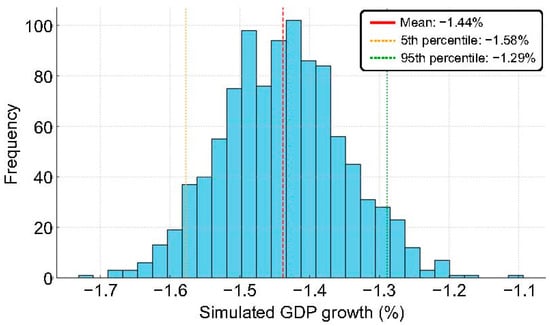
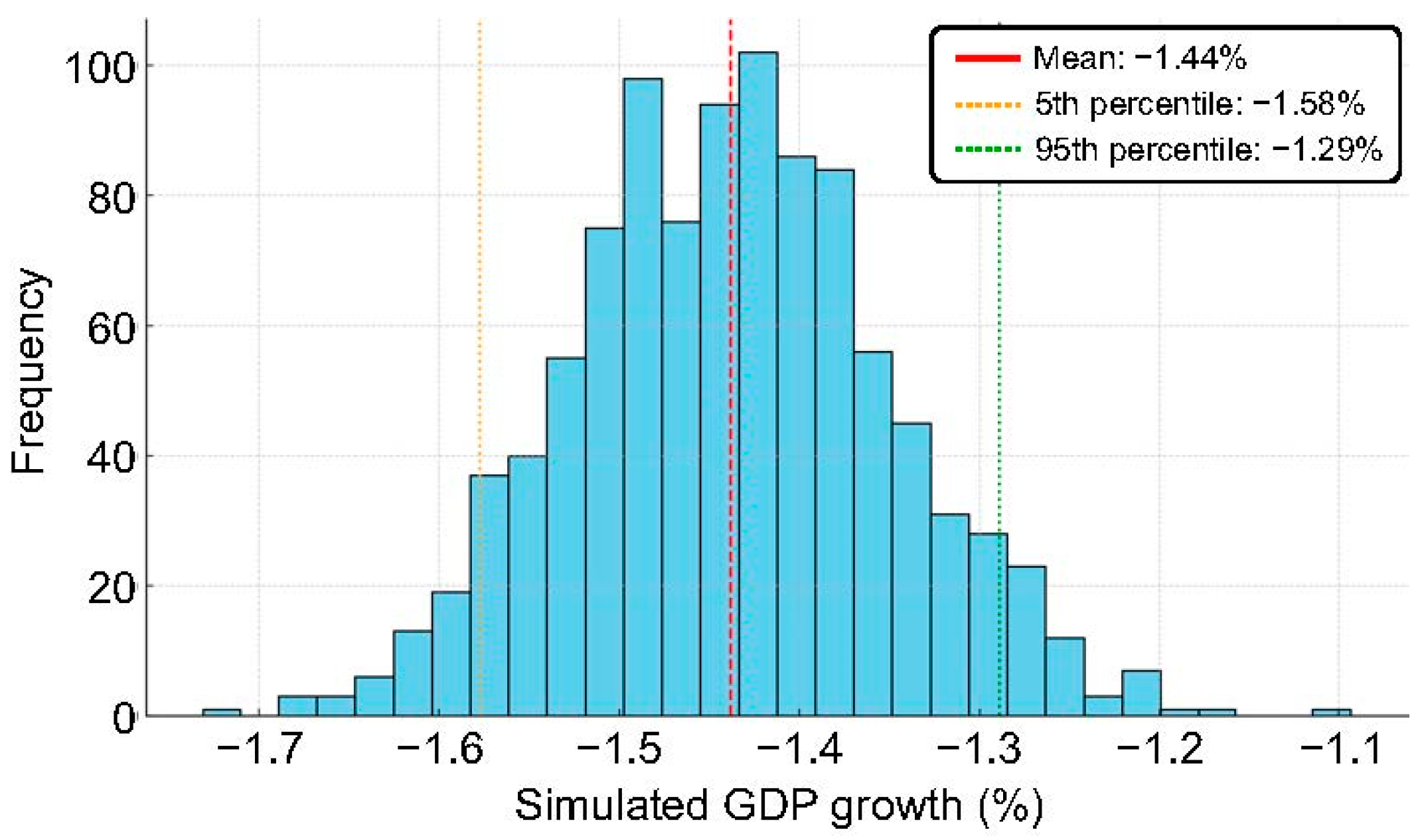
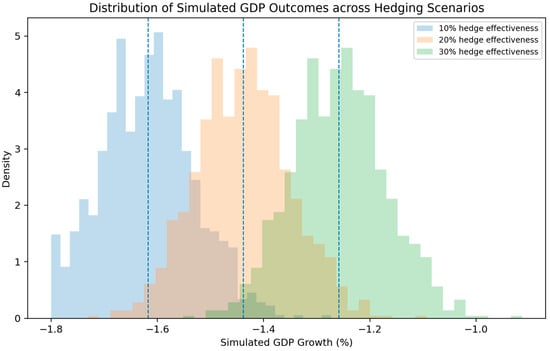
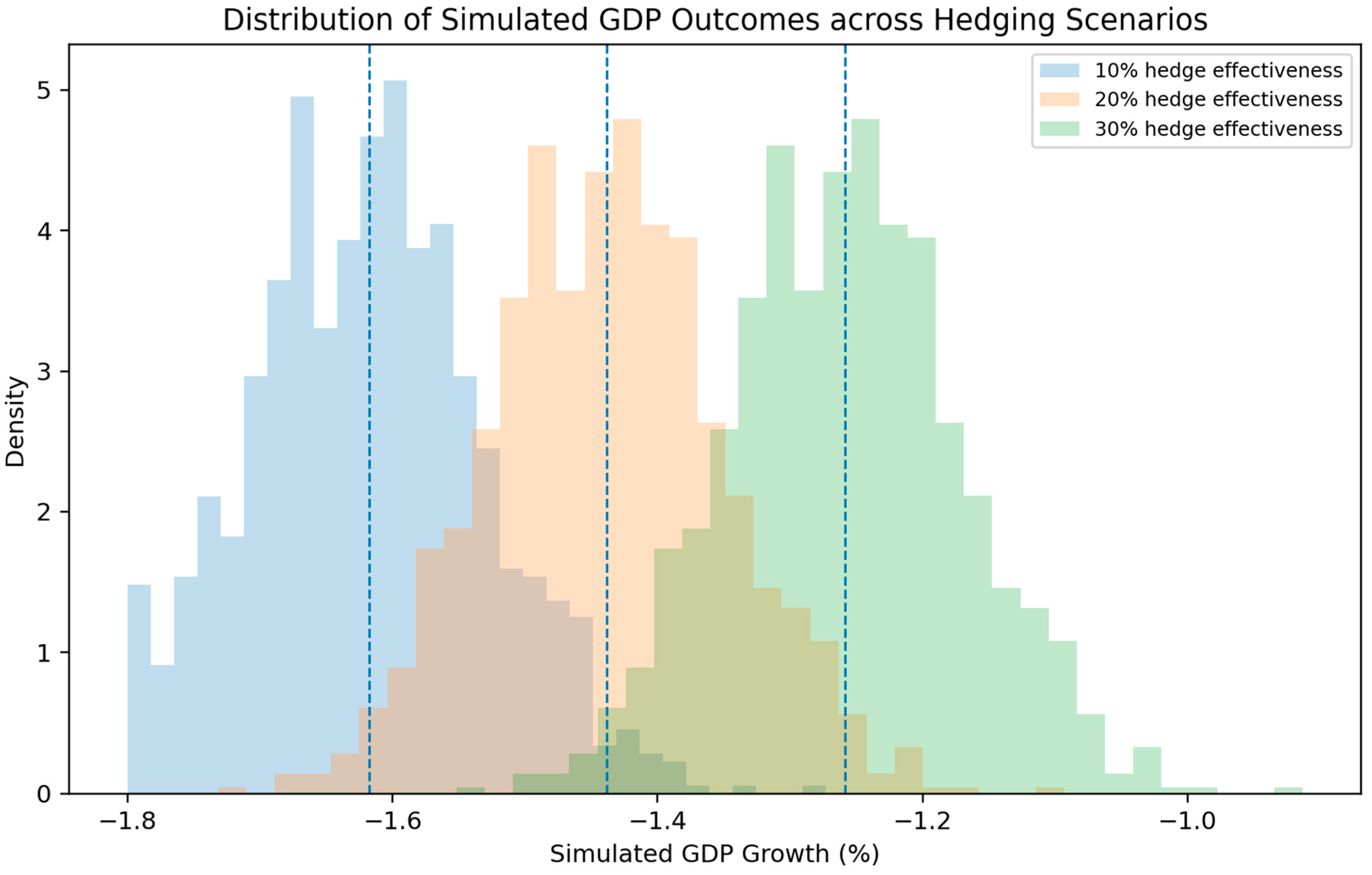
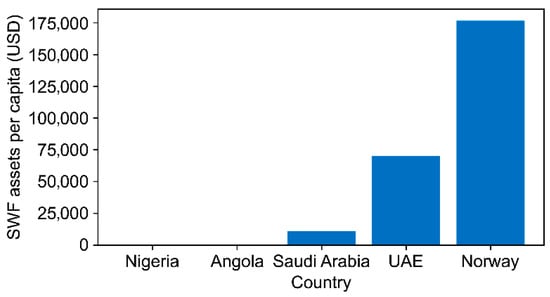
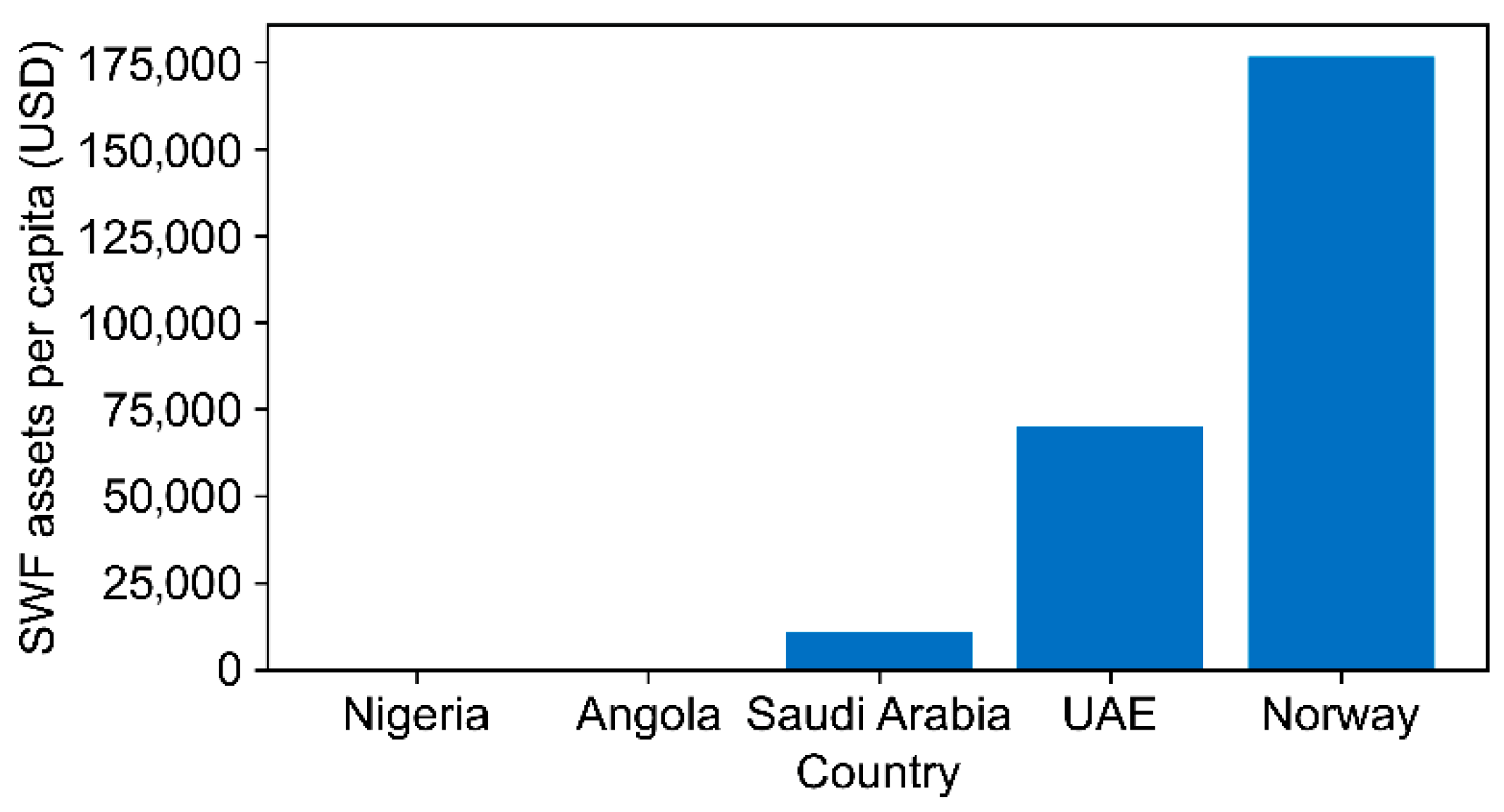
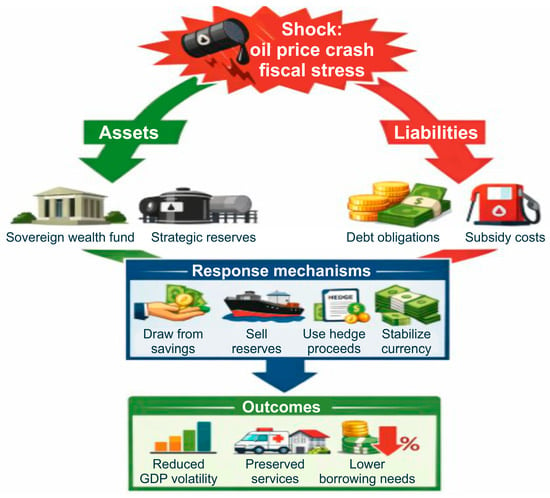
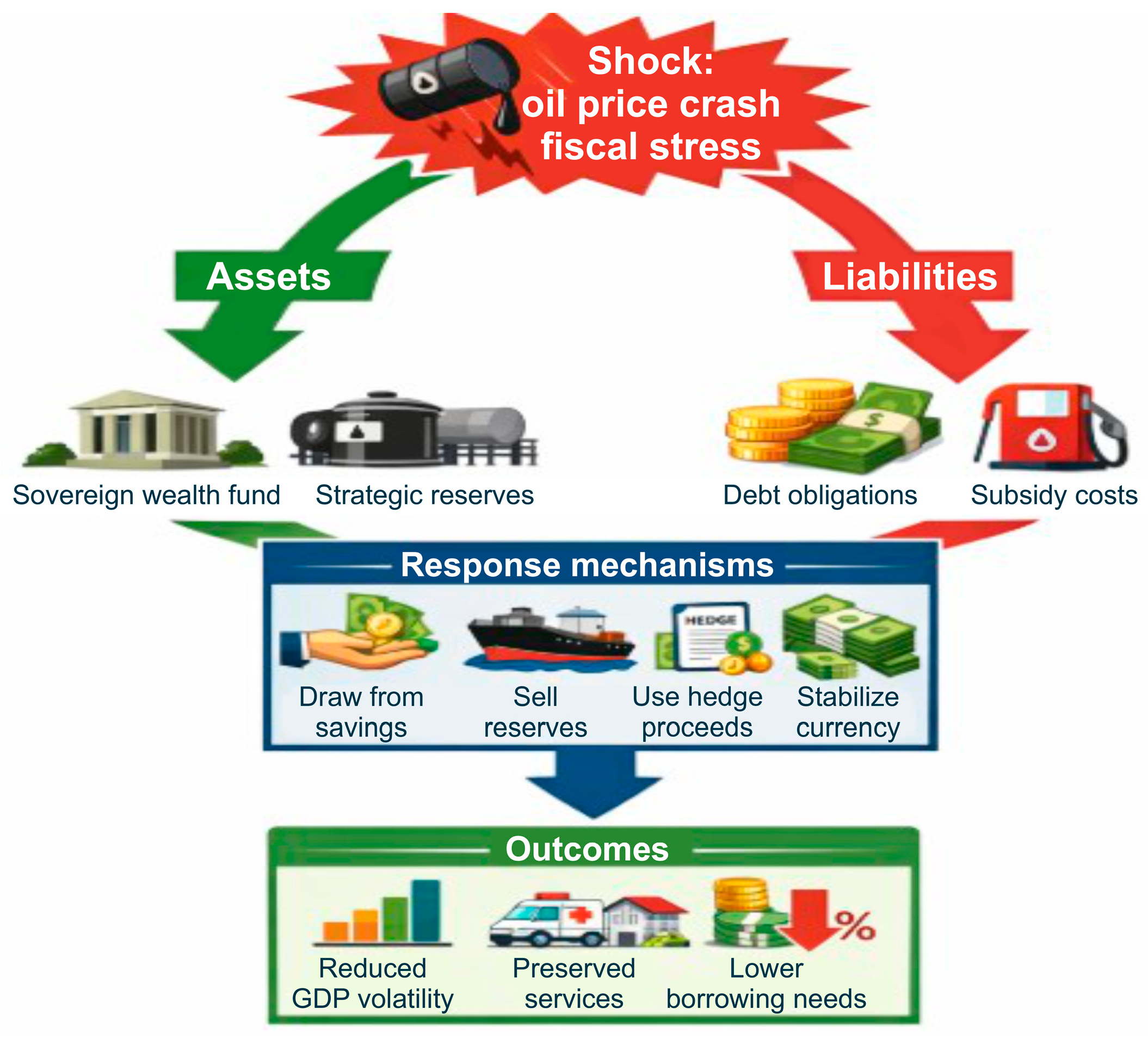

Disclaimer/Publisher’s Note: The statements, opinions and data contained in all publications are solely those of the individual author(s) and contributor(s) and not of MDPI and/or the editor(s). MDPI and/or the editor(s) disclaim responsibility for any injury to people or property resulting from any ideas, methods, instructions or products referred to in the content. |
© 2026 by the author. Licensee MDPI, Basel, Switzerland. This article is an open access article distributed under the terms and conditions of the Creative Commons Attribution (CC BY) license.