


Abstract
This study examines the impact of mobile wallet adoption on the profitability of a banking institution in Peru during the period 2021–2025, in a context of rapid digital transformation in financial services. The research adopted a quantitative, non-experimental, longitudinal, and explanatory design based on a single-bank case study. Mobile wallet adoption was measured through a synthetic index (IAD) constructed from five indicators using principal component analysis, while profitability was assessed through return on assets (ROA), return on equity (ROE), and aggregate monetary profitability. The effect of the IAD on profitability was estimated using generalized estimation equations with HAC-type robust standard errors. The results show that mobile wallet adoption exerts a positive and statistically significant effect on all three profitability indicators, with the strongest effect on aggregate monetary profitability, followed by ROE and ROA. These findings contribute to the literature by providing longitudinal evidence from an underexplored emerging economy and by showing that the financial effects of digital adoption differ according to the profitability measure considered. Overall, the study highlights the relevance of mobile wallet adoption as a strategic digital factor in banking performance within emerging financial contexts.
Keywords:
mobile wallets; digital payments; fintech; bank profitability; ROA; ROE; financial digitization 1. Introduction
The rapid digitalization of financial services has transformed the structure, delivery, and competitive logic of modern banking. Among the most visible manifestations of this transformation, digital payments and mobile wallets have emerged as key instruments for expanding transaction capacity, improving customer convenience, and supporting broader financial inclusion, particularly in emerging economies where digital infrastructure and platform-based finance have grown rapidly (Kirdasinova et al., 2022; Ortikov et al., 2024; Toshtemirovich, 2021; Wang et al., 2024). In this context, banks are increasingly expected not only to adopt digital tools, but also to convert those technological investments into measurable financial outcomes.
However, the relationship between digital payment adoption and bank profitability remains far from settled. A substantial body of literature suggests that digital transformation can improve banking performance through operational efficiency gains, lower transaction frictions, stronger customer engagement, and greater diversification of income sources (Bui et al., 2025; Hari et al., 2025; Ren et al., 2024; Sayari, 2024; Wang et al., 2024; Yongjie & Shanyue, 2025). At the same time, other studies report more cautious or mixed results, showing that the financial benefits of digitalization may be weakened by high implementation costs, competitive pressure, limited monetization capacity, regulatory constraints, or the absence of effective integration with broader banking services (Begimkulov & Kuti, 2024; Citterio et al., 2024; Le & Hiep, 2025; Liao, 2023; Phung et al., 2024; Priyan & Shah, 2025). Some authors even find that the effect of digital transformation may vary across institutional settings, market segments, and time horizons, indicating that digital expansion does not automatically translate into sustained profitability improvements (Cantika & Kusumaning, 2025; Q. He et al., 2025; Nhat, 2025; Shanti et al., 2023; Song et al., 2023).
This divergence in prior evidence reveals an important research gap. First, much of the existing literature has focused on digital transformation, fintech innovation, and bank performance in Asian and, to a lesser extent, European contexts, with relatively limited evidence from Latin America (Bui et al., 2025; Citterio et al., 2024; Le & Hiep, 2025; Linh et al., 2025; Nguyen-Thi-Huong et al., 2023; Ren et al., 2024). Second, although many studies examine digitalization and profitability, a smaller number explicitly address mobile payment or mobile wallet adoption as a specific driver of banking outcomes (Jiang et al., 2022; Li, 2024; Phung et al., 2024; Verdier, 2024; Wiśniewski et al., 2021; Wu et al., 2024). Third, several prior studies rely on cross-sectional evidence, broad multi-bank datasets, or context-specific samples, which, while valuable, may overlook the cumulative and dynamic effects of digital adoption within a particular institutional trajectory over time (Alduneibat, 2025; Alroud, 2025; Phung et al., 2024; Priyan & Shah, 2025; Song et al., 2023). As a result, there is still insufficient longitudinal evidence on how mobile wallet adoption relates to bank profitability in emerging Latin American settings such as Peru.
From a theoretical perspective, this relationship can be understood through complementary lenses drawn from fintech innovation, technology adoption, and financial intermediation. The fintech innovation perspective suggests that digital financial tools can reshape traditional banking models by enabling faster service delivery, expanding digital ecosystems, and reducing operational frictions (Demirdöğen, 2021; Ortikov et al., 2024; Wang et al., 2024; Xing, 2024). Technology adoption and digital transformation perspectives further suggest that the financial value of innovation depends on the extent to which digital systems are embedded in organizational processes and converted into efficiency, scale, and service quality improvements (Alroud, 2025; Hari et al., 2025; Kirdasinova et al., 2022; Linh et al., 2025; Ren et al., 2024). The reasoning behind the idea that financial intermediaries will profit from digital channels shows there are many things beyond just transactions growing that could determine how profitable a company’s use of digital channels would be. They include the degree to which the digital channel provides for customer retention, enhances the generation of revenue through non-interest income or improves the efficiency in allocating resources and/or creates synergies among financial services (Bui et al., 2025; Q. He et al., 2025; Naim et al., 2023; N. Nguyen & Vu, 2025; Sayari, 2024; Yongjie & Shanyue, 2025). If this perspective holds true, then mobile wallets will potentially lead to greater profits; however, they can do so only conditionally and not as an unconditional event.
The Peruvian example represents an appropriate context to analyze the problem mentioned. During the last few years there was an important development of electronic payment systems and mobile wallet services in Peru due to policies that support greater financial inclusion, to technological development and to changes in how consumers make purchases. Nonetheless, there are still empirical studies about whether the adoption of mobile wallets will result in increased bank profit margins. This is particularly relevant for developing countries where it can be possible that a rise in transactions through digital channels does not lead to proportionate financial income for banks when investment costs of platforms are high, as well as competition among them and/or limitations of their ability to generate revenue from their services, as some previous research in other contexts suggests (Begimkulov & Kuti, 2024; Citterio et al., 2024; Q. He et al., 2025; Le & Hiep, 2025; Phung et al., 2024).
Against this background, the main objective of this study is to analyze the impact of mobile wallet adoption on the profitability of a banking institution in Peru during the period 2021–2025 through a longitudinal case study design. The study is relevant for three reasons. First, it addresses a context that remains underexamined in the literature on digital banking and profitability. Second, it focuses specifically on mobile wallet adoption rather than on digital transformation in a broad sense. Third, it adopts a longitudinal perspective that allows the analysis of dynamic associations over time within a single institutional setting. The results suggest that the expansion of mobile wallets may boost banking performance, although the magnitude of the impact and the nature of the relationship vary depending on the profitability indicator considered.
Based on this objective, the following hypotheses are proposed: H1: Mobile wallet adoption significantly affects bank profitability in Peru during the period 2021–2025. H1a: Mobile wallet adoption significantly affects the return on assets (ROA) of a banking institution in Peru during the period 2021–2025. H1b: Mobile wallet adoption significantly affects the return on equity (ROE) of a banking institution in Peru during the period 2021–2025.
2. Literature Review and Theoretical Framework
2.1. Digital Transformation, Fintech Innovation, and Banking Change
Banking in many ways has changed fundamentally due to digital technologies that are now used for delivering services, interacting with customers, executing company-wide processes, and competing in markets. As such, the transformation of banks digitally is now viewed as a strategic and organizational shift, rather than simply an improvement of technology. Banks are therefore transforming their business model(s), automating transactional activities, developing new digital-based communication channels with customers, and adjusting to shifting expectations from the marketplace (Hari et al., 2025; Kirdasinova et al., 2022; Ren et al., 2024; Shanti et al., 2023; Wang et al., 2024; Yongjie & Shanyue, 2025). Closely related to this process, Fintech innovations will also continue to put significant pressure on traditional financial institutions to develop improved payment systems, increase the efficiency of their service offerings, and provide greater integration of digital based platforms within the core intermediate roles they perform (Citterio et al., 2024; Liao, 2023; Song et al., 2023; Wang et al., 2024; Yongjie & Shanyue, 2025).
Within the context of the mobile payment ecosystem, the increasing use of mobile payment systems and mobile wallets are particularly relevant as they are some of the most prominent examples of how digital banking influences daily financial transactions. Mobile wallets enable banks to enhance transaction speed, lower barriers to consumer access for mobile payments, and increase their participation within increasingly platform-driven financial ecosystems (Begimkulov & Kuti, 2024; Q. He et al., 2025; Le & Hiep, 2025; Phung et al., 2024; Shanti et al., 2023). Thus, mobile wallet adoption represents an important element of a larger transition that will define how banks create value, serve customers, and compete in digital financial markets (Citterio et al., 2024; Q. He et al., 2025; Wang et al., 2024; Yongjie & Shanyue, 2025).
In addition, past research indicates there is no reason to believe the effects of digital transformation will always have positive consequences. Innovation may improve the bank’s scope for offering services through new digital means and update how banking functions are carried out. The economic outcome depends upon whether the institution has successfully absorbed changes in technology, integrated new channels within their current structures and maintained costs from investments made for digital platforms and competition (Cantika & Kusumaning, 2025; Citterio et al., 2024; Q. He et al., 2025; Le & Hiep, 2025; Nhat, 2025; Song et al., 2023). This makes it necessary to examine digitalization not only as a technological trend, but also as an organizational and financial process with potentially heterogeneous outcomes.
2.2. Theoretical Channels Linking Mobile Wallet Adoption and Bank Profitability
The relationship between mobile wallet adoption and bank profitability can be interpreted through three complementary conceptual lenses: fintech innovation, technology adoption and digital transformation, and financial intermediation.
Fintech innovation has been argued to provide Banks with opportunities to improve their operational efficiency and profitability through improving access to services, reducing transactional friction, and providing more platforms for customers to interact digitally (Citterio et al., 2024; Liao, 2023; Phung et al., 2024; Song et al., 2023; Wang et al., 2024). Therefore, from the perspective of Fintech Innovation, Mobile Wallets have the potential to increase a Banks competitive advantage through enhancing the level of engagement a Bank achieves with its customers and enabling it to take a more active role within Digital Payment Systems.
The second lens is technology adoption/digital transformation. For digital innovation to add value to an organization requires successful translation of investments in technology to improved capabilities/operational processes and scalable service models (Begimkulov & Kuti, 2024; Cantika & Kusumaning, 2025; Hari et al., 2025; Linh et al., 2025; Nguyen-Thi-Huong et al., 2023; Ren et al., 2024; Shanti et al., 2023). In other words, the positive impact of digital tools on profitability does not depend solely on a bank’s adoption of these technologies. Rather, it depends on the quality of the bank’s internal digital system and its ability to support the use of such technologies, as well as on how effectively these technologies are integrated into the organization’s operational practices and decision-making structures (Citterio et al., 2024; Q. He et al., 2025; Yongjie & Shanyue, 2025).
Financial intermediation theory presents a third analytical lens for understanding bank performance. The theory states that banks can create wealth beyond simply facilitating transactions, by creating long-term income streams from their financial relationships through operational efficiencies, retaining customers, selling additional products to customers, managing the liquidity of their institution, and developing a wide range of complementary financial services. Considering this perspective, mobile wallets have multiple mechanisms by which they could impact profit margins at banks. These include lower transaction and operation costs as well as an increase in transaction volume per month due to increased usage. Mobile wallets could also lead to increased customer retention. This would lead to higher levels of non-interest revenue. Finally, mobile wallets could improve the ability of banks to offer customers a wider array of financial products (including saving accounts and loans) that are directly linked to each other in real-time (Bui et al., 2025; Hari et al., 2025; Q. He et al., 2025; Priyan & Shah, 2025; Sayari, 2024; Yongjie & Shanyue, 2025). However, some of these benefits may be offset by expenses associated with maintaining the necessary mobile payment infrastructure, including securing data privacy, and significant investments in both technology and marketing efforts required to promote mobile wallets (Begimkulov & Kuti, 2024; Citterio et al., 2024; Q. He et al., 2025; Le & Hiep, 2025; Liao, 2023; Phung et al., 2024).
Overall, there appears to be evidence from various theoretical and empirical perspectives that adopting mobile wallets will result in greater profitability for banks. Nonetheless, the degree to which profitability increases depends upon a number of factors, most notably how the use of mobile payments relates to operational efficiency, strategic decisions made by the bank’s leadership team, competition among banks for customers using digital platforms, and ultimately the ability of banks to effectively monetize their mobile payment systems over time (Cantika & Kusumaning, 2025; Nhat, 2025; Song et al., 2023; Yang & Masron, 2023; Zhu et al., 2025).
2.3. Empirical Evidence on Digital Payments, Mobile Wallets, and Bank Profitability
Empirical research on digital transformation and bank performance has produced mixed results. The first group of studies reports that digitalization improves profitability, efficiency, or broader financial performance. Positive effects have been documented in studies showing that digital transformation enhances profit efficiency, supports bank performance, strengthens financial sustainability, and improves profitability through process modernization and stronger digital interaction with customers (Bui et al., 2025; Hari et al., 2025; Linh et al., 2025; Phong et al., 2025; Ren et al., 2024; Sayari, 2024; Wang et al., 2024; Yongjie & Shanyue, 2025). These studies generally support the view that digital technologies can create measurable financial value when they are linked to broader organizational transformation.
A second group of studies presents more heterogeneous findings. Some authors find that the effect of digitalization depends on institutional context, ownership structure, financial inclusion conditions, competitive intensity, or the time horizon under analysis (Cantika & Kusumaning, 2025; Chao et al., 2024; Citterio et al., 2024; Nhat, 2025; Shanti et al., 2023; Song et al., 2023; Yang & Masron, 2023; Zhu et al., 2025). In other words, for example, in these cases, digital transformation does not produce the same positive effects at all banks, and the impact will depend upon structural and strategic characteristics. Thus, this type of study is particularly interesting as it indicates that the profit effects of digital change are influenced by specific environmental factors and not simply due to the fact that there is an increased use of technology.
There is a third body of empirical evidence which is even less optimistic. It shows varying degrees of ambiguity and/or weakness regarding the effects. For instance, some studies have indicated that digital transformation produces additional sources of income through non-interest income or improves efficiency. However, these results also indicate that the total effect on bank’s profitability was moderate or conditional. This was due to either technological expenses related to digital transformation, high implementation burdens or poor conversion into cash of the potential advantages created by the digital transformation (Begimkulov & Kuti, 2024; Q. He et al., 2025; Le & Hiep, 2025; Liao, 2023; Phung et al., 2024; Priyan & Shah, 2025). In addition to these examples, there were studies that found no improvements or negative impacts from the digital transformation when the measurement criteria were too narrow or when organizational returns did not match investments and changes in the competitive environment (Citterio et al., 2024; Nguyen-Thi-Huong et al., 2023; Phung et al., 2024). These differences demonstrate that higher levels of digital activity or number of transactions cannot be considered to necessarily result in long term financial performance improvement.
Additionally, there are significant constraints in this field because of previous literature, and therefore there is room for additional study. Much of the existing information is based on studies conducted in China, Vietnam, Taiwan, Indonesia, Saudi Arabia, etc. This constrains cross-contextual applicability (Begimkulov & Kuti, 2024; Bui et al., 2025; Cantika & Kusumaning, 2025; Liao, 2023; Linh et al., 2025; Nhat, 2025; Phong et al., 2025; Ren et al., 2024; Sayari, 2024). Many studies have identified such limitations by way of omission including short time frames of study observation, omission of macro-economic variables, lack of available data and inability to identify causality (Begimkulov & Kuti, 2024; Cantika & Kusumaning, 2025; Chao et al., 2024; Liao, 2023; Phong et al., 2025; Ren et al., 2024; Sayari, 2024). Moreover, only a smaller subset of studies focuses specifically on mobile payments or mobile wallets, whereas much of the literature examines digital transformation in broad terms without isolating wallet adoption as a distinct mechanism affecting profitability (Citterio et al., 2024; Q. He et al., 2025; Phung et al., 2024; Priyan & Shah, 2025).
These are some of the key issues that have created a significant void in current understanding on how the expansion of mobile wallets has contributed to greater profitability for banks in future through use of unexamined emerging markets including Peru. The digital advancement in finance could create an increase in transaction activity; however, this will not produce increases in profitability for banks, unless it is linked to successful institutional development and long-term revenue creation.
Considering these theoretical and empirical gaps, this study examines the relationship between mobile wallet adoption and bank profitability in Peru through a longitudinal case study of a banking institution over the period 2021–2025.
3. Materials and Methods
3.1. Research Design
This study adopted a quantitative approach with a non-experimental, longitudinal, and explanatory design. Quantitative methods were appropriate because they allowed the statistical examination of the impact of mobile wallet adoption on bank profitability through numerical indicators observed over time. The non-experimental design was justified because the variables were not manipulated but rather analyzed as they occurred in their natural institutional context. The longitudinal component made it possible to examine the temporal evolution of the variables during the period under study and to identify patterns in the effect of digital adoption on financial performance (Linh et al., 2025; Nguyen-Thi-Huong et al., 2023; Wiśniewski et al., 2021).
3.2. Case Selection and Scope of Inference
The analysis was conducted using a longitudinal single-bank case study approach within the Peruvian financial system. This design was selected for analytical rather than merely practical reasons. Recent research on digital transformation in banking has frequently relied on context-specific empirical designs, including studies focused on countries, banking segments, or institutionally bounded samples, to examine digital change under defined regulatory, operational, and competitive conditions (Begimkulov & Kuti, 2024; Chao et al., 2024; Q. He et al., 2025; Nguyen-Thi-Huong et al., 2023; Nhat, 2025; Ortikov et al., 2024; Phung et al., 2024; Ren et al., 2024; Sayari, 2024; Song et al., 2023). In line with this empirical tradition, the present study focuses on one banking institution to assess the effect of mobile wallet adoption on profitability within a consistent organizational setting.
A single-bank design offers three advantages for the purpose of this study. First, it reduces cross-institutional heterogeneity related to business models, customer structures, accounting practices, and digitalization strategies, thereby allowing a more internally consistent assessment of the effect under analysis. Second, it makes it possible to observe the co-evolution of adoption and profitability over time within a specific institutional trajectory. Third, the period analyzed (June 2021 to November 2025) captures a relevant phase of digital payment expansion, making the selected case analytically useful for understanding how mobile wallet growth may affect financial outcomes in an emerging banking context, consistent with the logic of longitudinal studies that examine digital transformation processes over defined time horizons (Begimkulov & Kuti, 2024; Chao et al., 2024; Citterio et al., 2024; Q. He et al., 2025; Le & Hiep, 2025; Nguyen-Thi-Huong et al., 2023; Ortikov et al., 2024; Ren et al., 2024; Sayari, 2024; Song et al., 2023).
The study period covers June 2021 to November 2025, an interval that coincides, on the one hand, with the beginning of the entity’s operations with mobile wallets and, on the other hand, with the last period for which official data were available in the systems of the Superintendency of Banking, Insurance, and Pension Fund Administrators (SBS).
The study does not seek to estimate an average effect for the entire Peruvian banking system; instead, it provides empirical evidence from a specific institutional case. Differences in bank size, strategic orientation, digital maturity, operating costs, and customer composition may lead to different results in other institutions. Nevertheless, the case remains informative for theory-building and for expanding the still limited evidence on digital banking and profitability in Latin America, especially considering that much of the previous literature has relied on country-specific or segmented banking samples rather than universally generalizable designs (Q. He et al., 2025; Le & Hiep, 2025; Nguyen-Thi-Huong et al., 2023; Nhat, 2025; Phung et al., 2024; Ren et al., 2024; Sayari, 2024; Song et al., 2023).
3.3. Data Sources
The study relied on secondary data sources. Information on mobile wallets was extracted from reports issued by the selected banking institution, while the profitability indicators were obtained from the official records published by the Superintendency of Banking, Insurance, and Pension Fund Administrators (SBS) through its digital statistical platform. Secondary data was an appropriate choice due to providing systematic, periodic, and trustworthy data. Therefore, the researchers were able to conduct a longitudinal analysis using objective indicators.
In Peru, the Yape and Plin mobile wallets are the main digital payment instruments in widespread use, operating as instant electronic transfer platforms linked to bank accounts. Recent studies on digital payment systems indicate that these types of wallets act as a high-frequency, low-cost transaction channel, facilitating financial inclusion and changing patterns of use of traditional banking services (Chao et al., 2024; Guo et al., 2024; Xing, 2024). As such, the adoption of mobile wallets in this research study does not simply represent the availability of technology, rather it represents both the availability and effective use of the technology being studied and is measurable through observed transaction volume and frequency.
3.4. Instrument and Variable Operationalization
A structured form was designed as a data collection tool, aimed at systematically organizing monthly information. This tool included the date of registration (month and year), the total number of transactions made using Yape and Plin, the total monetary amount processed, and the monthly values of the selected financial indicators. The use of forms for extracting data from documents has been widely recommended in empirical studies on digital banking, as it facilitates the replicability and quality control of the information collected (Ren et al., 2024; Song et al., 2023).
The independent variable, adoption of mobile wallets, was operationalized through a set of observable indicators of volume and frequency, coded for presentation and replicability. The literature on technology adoption in the financial sector agrees that this phenomenon should be approached as a multidimensional construct, since the economic effect of digitization depends both on the intensity of use and the monetary value of the transactions processed (Chao et al., 2024; Guo et al., 2024; Nguyen-Thi-Huong et al., 2023). Given that these indicators have different measurement scales, a standardization procedure was applied prior to empirical analysis to ensure comparability and avoid magnitude biases.
The dependent variable, bank profitability, was evaluated based on consolidated accounting indicators, specifically return on assets (ROA) and return on equity (ROE), supplemented by an aggregate monetary measure of financial results. Financial literature widely recognizes the use of ROA and ROE as key metrics for evaluating asset efficiency and capital performance, especially in studies analyzing the effect of technological innovations on banking institutions (Alroud, 2025; Q. He et al., 2025; Y. He et al., 2025).
To synthesize digital adoption indicators and facilitate their incorporation into statistical models, dimensionality reduction techniques widely used in digital transformation and financial performance studies were employed. This approach contributes to improving the interpretability of results and reducing multicollinearity issues in subsequent econometric analyses (Liao, 2023; Nguyen-Thi-Huong et al., 2023; Sayari, 2024; Wu et al., 2024).
3.5. Statistical Analysis
The statistical analysis was conducted in two stages. First, the relationship between the adoption of mobile wallets and bank profitability indicators was examined using correlation analysis. Second, linear models were estimated to assess the effect of digital adoption on each profitability measure, using generalized estimation equations with robust HAC-type standard errors to correct for possible autocorrelation and heteroscedasticity problems inherent in the longitudinal structure of the data. This approach is consistent with empirical strategies used in prior studies on digital transformation, digital payments, and banking profitability, as it allows hypotheses to be tested and the magnitude of the estimated effects to be assessed in a consistent manner (Begimkulov & Kuti, 2024; Chao et al., 2024; Citterio et al., 2024; Q. He et al., 2025; Nguyen-Thi-Huong et al., 2023; Nhat, 2025; Ortikov et al., 2024; Phung et al., 2024; Priyan & Shah, 2025; Ren et al., 2024; Sayari, 2024; Song et al., 2023).
The empirical specification was designed to evaluate the longitudinal effect of the IAD on the selected profitability indicators within the analyzed institution. Relevant control variables such as macroeconomic conditions, operating costs, balance-sheet composition, or other bank-specific characteristics were not incorporated into the model. This decision reflects the lack of fully homogeneous and consistent monthly series for these variables over the complete study period within the same analytical framework. As a result, the estimated coefficients should be interpreted as conditional longitudinal effects within the analyzed case, rather than as definitive causal effects. This limitation does not invalidate the empirical exercise, but it does delimit the inferential scope of the findings. This caution is consistent with prior studies in the field that also acknowledge contextual, data-related, or design-based limits to causal generalization in analyses of digital transformation and profitability (Begimkulov & Kuti, 2024; Chao et al., 2024; Citterio et al., 2024; Q. He et al., 2025; Liao, 2023; Nhat, 2025; Phung et al., 2024; Ren et al., 2024; Sayari, 2024; Song et al., 2023).
The data used in the study have been deposited on the open-access platform Zenodo to ensure transparency, reproducibility, and future verification of the results. As a robustness check, the models were re-estimated using a lagged value of the IAD (IADt−1) to reduce potential simultaneity concerns between digital adoption and profitability.
4. Results
This section presents the empirical results obtained from the analysis of mobile wallet adoption and its impact on bank profitability. First, the results of the principal component factor analysis used to construct the Mobile Wallet Adoption Index (IAD) are presented. Next, the results of the correlational analysis between the IAD and profitability indicators are presented. Finally, the results of the linear models estimated using generalized estimation equations with robust HAC-type standard errors, used to evaluate the impact of IAD on the different measures of bank profitability, are reported.
4.1. Construction of the Mobile Wallet Adoption Index (IAD)
The Mobile Wallet Adoption Index is a composite variable that summarizes several observable measures of digital adoption into a single quantitative variable.
The mobile wallet adoption variable is observed through a set of observable indicators coded for presentation and replicability as X1 to X5.
- : monetary volume transacted through the mobile wallet 1.
- : monetary volume transacted through the mobile wallet 2.
- : number of transactions made using the mobile wallet 1.
- : number of transactions made using the mobile wallet 2.
- : total aggregate monetary volume associated with the use of mobile wallets.
Bank profitability was assessed using three complementary indicators, coded as Y1 to Y3.
- : return on assets (ROA), as a measure of efficiency in the use of assets.
- : return on equity (ROE), as a measure of capital performance.
- : aggregate monetary profitability, expressed in monetary units (absolute indicator).
4.1.1. Standardization
Given that the indicators have different scales, they were standardized prior to factor analysis to ensure comparability and avoid magnitude bias. Indicators – were converted to Z-scores:
where Xit represents the observed value of indicator i in period , its sample meaning, and its standard deviation.
4.1.2. Principal Component Analysis
Subsequently, a principal component analysis (PCA) based on the covariance matrix of standardized variables was conducted with the aim of synthesizing the standardized indicators into a single construct representative of the level of digital adoption.
The Kaiser–Meyer–Olkin (KMO) index and Bartlett’s test of sphericity were examined as diagnostic measures of sampling adequacy and factorability. The results indicated a strongly unidimensional structure of the adoption indicators.
The analysis extracted a single dominant component with an eigenvalue of 4.977, explaining 99.544% of the total variance. All indicators exhibited extremely high factor loadings (ranging from 0.996 to 1.000), reflecting the proportional co-movement of transaction volumes and transaction frequencies over time.
Although these loadings confirm strong internal coherence, they also indicate that the empirical variation captured by the index is highly concentrated in one shared signal. This strengthens the interpretability of the IAD as a unidimensional measure, but it also requires caution, since the index reflects limited separation among the individual indicators.
The extracted component was used to construct the Mobile Wallet Adoption Index (IAD). The index can be expressed as a linear combination of the standardized variables:
where correspond to the estimated factor loadings and “t” denotes the period. This reflects the mechanical proportional growth of transaction volume and frequency indicators over time, rather than measurement redundancy, given that the indicators capture distinct operational dimensions.
IADt = λ1 Z (X1)t + λ2 Z (X2)t + λ3 Z (X3)t +λ4 Z (X4)t + λ5 Z (X5)t
4.2. Correlation Analysis and Econometric Models with HAC Correction
To evaluate the association and statistical impact of the index constructed on bank profitability, the following analytical approach was applied:
- Pearson correlation coefficients were estimated between and each profitability indicator ().
- Linear models were estimated for each profitability measure using generalized estimation equations with robust HAC-type standard errors, with the aim of obtaining consistent inferences in the face of possible problems of autocorrelation and heteroscedasticity in the data:where is the constant, is the coefficient that measures the marginal impact of the IAD on the profitability indicator , and is the error term estimated with robust variance, which captures the influence of factors not explicitly included in the model.Yk t = αk + βk IADt + εk,t, k = 1, 2, 3
4.3. Results of the Factor Analysis for the Construction of the IAD
4.3.1. Communalities and Representativeness of the Factor
The extraction communalities showed extremely high values for all five indicators, indicating that the extracted factor captures virtually all the variability in each measure of digital adoption. According to Table 1, the communalities ranged between 0.993 and 0.999, confirming the high structural consistency between the indicators used to construct the index.
Table 1.
Initial and extraction commonalities of the five digital adoption indicators used to construct the IAD.
4.3.2. Total Variance Explained and Number of Components
Principal component analysis identified a single dominant component with an eigenvalue of 4.977, explaining 99.544% of the total variance, as shown in Table 2. This result supports the use of a synthetic index (IAD) to summarize the common dynamics of mobile wallet adoption during the longitudinal period analyzed. At the same time, the extremely high proportion of explained variance suggests that the five indicators move in a highly synchronized manner over time, which may reflect near-collinearity among the observed dimensions. Therefore, the IAD should be interpreted as a strongly concentrated summary measure of a common digital adoption process rather than as a composite index that preserves broad differentiation across underlying dimensions. In substantive terms, this pattern is consistent with the fact that the indicators capture closely related transactional behaviors; volume, intensity of use, and user activity; within a single institutional and temporal setting.
Table 2.
Total variance explained and eigenvalues of the principal component analysis for the construction of IAD.
4.4. Correlational Results: Association Between IAD and Bank Profitability
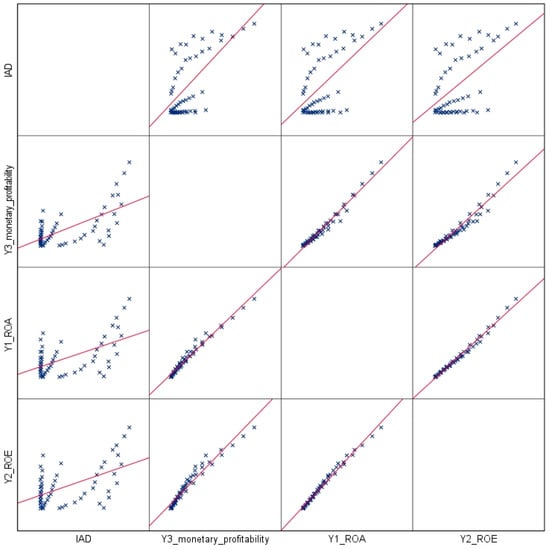
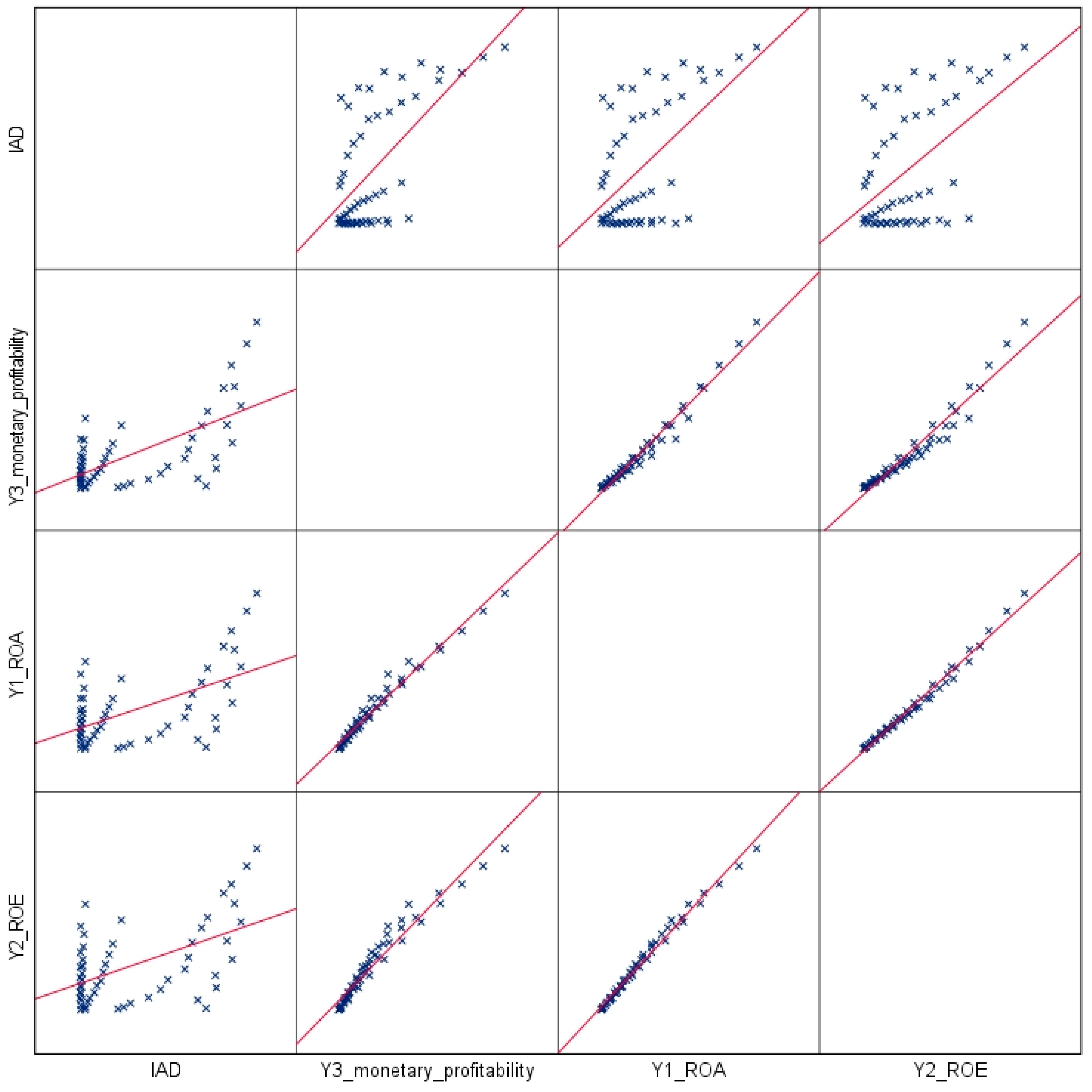
Figure 1 and Table 3 present the results of the correlation analysis between the IAD and bank profitability indicators for the period 2021–2025, with the aim of examining the linear association between the adoption of mobile wallets and the financial performance of the institution.
Figure 1.
Scatterplot matrix of mobile wallet adoption and profitability indicators. Blue “x” marks show individual observations, and red lines show fitted linear trends.
Table 3.
Pearson correlations between the IAD and bank profitability indicators.
The scatter matrix shows positive and approximately linear relationships between the IAD and bank profitability indicators. There is a visually more pronounced association between IAD and monetary profitability, while the relationships with ROA and ROE show positive patterns of moderate magnitude. The adjustment lines included serve a descriptive function, acting as visual trend guides and not representing inferential estimates.
The results show positive and statistically significant associations between the IAD and bank profitability indicators. In particular, the IAD shows a moderate-high correlation with monetary profitability (), as well as moderate positive correlations with ROA ( and ROE ().
Likewise, very high correlations are identified between the profitability indicators themselves, especially between ROA and ROE (), as well as between monetary profitability and both financial indicators, reflecting a high degree of internal consistency between the performance measures used.
4.5. Results of the Model Estimated Using HAC-Type Generalized Estimation Equations
4.5.1. Model 1: ROA as Dependent Variable (Y1)
The model estimated using generalized estimation equations with robust HAC-type standard errors showed a significant improvement in overall fit when the Mobile Wallet Adoption Index (IAD) was included, compared with the intercept-only specification (χ2 = 20.892, p < 0.001). This suggests that the IAD contributes relevant explanatory power to the variation in ROA during the study period.
Likewise, according to Table 4, the Wald test confirms that the coefficient associated with the IAD is statistically significant (χ2 = 25.509; p < 0.000), evidencing a positive impact of the level of adoption of mobile wallets on the profitability of assets.
Table 4.
Testing the effects of the model between the IAD and the ROA.
In quantitative terms, Table 5 shows that the estimated coefficient for the IAD is positive, ranging between 0.002 and 0.005, indicating that an increase in the IAD is associated with an average increase in ROA, within the estimated model specification.
Table 5.
Estimates of linear model parameters with HAC correction for ROA.
The model can be formally expressed as follows:
where represents the return on assets in period t, IADt corresponds to the mobile wallet adoption index, and εt is the estimated error term with robust variance.
ROAt = 0.007 + 0.003⋅IADt + εt
From an econometric standpoint, the positive and statistically significant coefficient of the IAD indicates that higher levels of mobile wallet adoption are associated with improvements in ROA within the analyzed institution during the study period. The estimated coefficient suggests that, under the specified model, increases in digital adoption exert a favorable effect on asset-based profitability, even after accounting for the longitudinal structure of the data through HAC-type robust correction. In substantive terms, this result implies that the expansion of mobile wallet use may have contributed not only to greater transactional activity, but also to a more efficient capacity of the bank to generate earnings from its asset base over time. Therefore, the estimated effect supports the view that digital adoption can be reflected in accounting measures of financial performance, particularly in the productive use of institutional resources.
4.5.2. Model 2: ROE as Dependent Variable (Y2)
The IAD has a positive and statistically significant impact on ROE. The omnibus test confirms that the model with IAD significantly improves the fit compared to the model with only the intersection (χ2 = 18.216; p < 0.000). Likewise, in Table 6 The Wald test shows that the coefficient associated with the IAD is statistically significant (χ2 = 21.666; p < 0.000). In quantitative terms, Table 7 shows that the estimated coefficient is positive (B = 0.029), with a 95% confidence interval between 0.017 and 0.041, which shows that a higher level of adoption of mobile wallets translates into an increase in return on equity:
Table 6.
Tests of model effects between IAD and ROE.
Table 7.
Estimates of linear model parameters with HAC correction for ROE.
The model can be formally expressed as follows:
where represents the return on equity in period t, IADt corresponds to the mobile wallet adoption index, the constant reflects the average level of profitability when the index is zero, and is the robust error term that captures unobserved factors.
ROEt = 0.069 + 0.029⋅IADt + εt
From an econometric standpoint, the positive and statistically significant coefficient of the IAD indicates that greater mobile wallet adoption is associated with improvements in return on equity within the analyzed institution during the study period. In substantive terms, this suggests that the expansion of mobile wallet use contributes to strengthening not only transactional activity, but also the bank’s ability to generate returns from shareholders’ equity. Thus, the estimated effect supports the interpretation that digital adoption contributes to capital-based profitability, extending its influence beyond operational dynamics and into broader measures of financial performance.
4.5.3. Model 3: Monetary Profitability as a Dependent Variable (Y3)
In the case of monetary profitability, the results show that the IAD has the greatest statistical impact among the three indicators analyzed. The omnibus likelihood ratio test confirms that the model with IAD fits significantly better than the model with intercept-only model (χ2 = 29.952; p < 0.000), while the Wald test in Table 8, confirms the significance of the coefficient associated with the adoption index (χ2 = 40.033; p < 0.000). Likewise, according to Table 9 the estimated coefficient indicates that a one-unit increase in the IAD leads, on average, to an increase of 39,658.802 monetary units in profitability within the estimated specification, with a 95% confidence interval between 27,373,649 and 51,943,954.
Table 8.
Testing the effects of the model between the IAD and monetary profitability.
Table 9.
Estimates of linear model parameters with HAC correction for monetary profitability.
The model can be formally expressed as follows:
which suggests that the effects of adopting mobile wallets are more immediately and directly apparent in the bank’s monetary results.
monetary_profitabilityt = 62,871.759 + 39,658.802⋅IADt + εt
From an econometric standpoint, the positive and statistically significant coefficient of the IAD indicates that greater mobile wallet adoption exerts the strongest effect on monetary profitability among the three indicators analyzed. In substantive terms, this result shows that the expansion of mobile wallet use contributes more directly to absolute financial gains than to ratio-based profitability measures such as ROA and ROE. This pattern suggests that the first observable impact of digital adoption is reflected in the bank’s monetary results, likely through higher transaction intensity, greater operational scale, and stronger revenue flows associated with digital payment activity. Thus, the estimated effect reinforces the interpretation that mobile wallet adoption contributes to strengthening the bank’s financial performance, with its most immediate expression appearing in absolute profitability.
Overall, the empirical evidence derived from the estimated econometric models indicates that the IAD exerts a positive and statistically significant effect on the three profitability indicators analyzed. Although the sign of the effect is consistent across all specifications, its magnitude differs substantially across monetary profitability, ROE, and ROA, indicating that the sensitivity of each indicator to digital adoption is not uniform. In comparative terms, the strongest effect is observed in monetary profitability, followed by ROE and ROA, which suggests that the expansion of mobile wallets first translates into direct financial gains and subsequently becomes reflected in broader accounting ratios. Therefore, the results support the interpretation that digital payment adoption constitutes a relevant factor in explaining the bank’s financial performance during the study period, with differentiated transmission channels depending on the profitability measure considered.
5. Discussion
5.1. Theoretical Interpretation of the Findings
The findings of this study can be interpreted through the complementary lenses of fintech innovation, digital transformation, and financial intermediation. From the fintech innovation perspective, the positive and statistically significant effects observed across ROA, ROE, and aggregate monetary profitability suggest that mobile wallet adoption is not merely a technological add-on, but a mechanism that contributes to value creation within banking operations (Citterio et al., 2024; Liao, 2023; Phung et al., 2024; Song et al., 2023; Wang et al., 2024). In this sense, the results support the view that digital payment technologies can enhance financial performance when they are effectively embedded in the bank’s operating structure.
From the perspective of digital transformation and technology adoption, the results indicate that the financial relevance of mobile wallets depends not only on their existence as digital tools, but on their sustained operational integration over time (Begimkulov & Kuti, 2024; Hari et al., 2025; Linh et al., 2025; Nguyen-Thi-Huong et al., 2023; Ren et al., 2024; Shanti et al., 2023). The positive effects identified in the estimated models suggest that the adoption process captured by the IAD was sufficiently consolidated within the selected institution to generate measurable performance improvements. This interpretation is consistent with the idea that digital technologies produce greater organizational value when they are aligned with institutional routines, customer engagement, and transactional scalability (Ye & Miao, 2025).
From the perspective of financial intermediation, the results suggest that mobile wallet adoption contributes to profitability through more than one channel. The positive coefficients estimated for ROA, ROE, and aggregate monetary profitability indicate that digital payment adoption may strengthen the bank’s ability to generate returns from its assets, its equity base, and its absolute financial flows. This is coherent with the view that digital channels can support profitability by expanding transaction intensity, reducing frictions, improving the use of resources, and reinforcing complementarities with broader financial services (Bui et al., 2025; Hari et al., 2025; Q. He et al., 2025; Sayari, 2024; Yongjie & Shanyue, 2025). Taken together, the evidence suggests that the profitability effects of mobile wallets should be understood as part of a wider process of digital financial intermediation rather than as an isolated transactional phenomenon.
5.2. Comparison with Prior and Contradictory Evidence
The results are broadly consistent with studies reporting positive links between digital transformation and banking performance, particularly those showing improvements in efficiency, financial sustainability, and profitability associated with greater digital integration (Bui et al., 2025; Hari et al., 2025; Linh et al., 2025; Phong et al., 2025; Ren et al., 2024; Sayari, 2024; Wang et al., 2024; Yongjie & Shanyue, 2025). In this respect, the present findings reinforce the argument that digital payment adoption can become financially relevant when it reaches sufficient scale and institutional integration.
However, the current results should also be interpreted considering prior studies reporting mixed or conditional effects. Some authors have found that the profitability impact of digitalization is heterogeneous across contexts and may depend on competitive conditions, implementation costs, regulatory environments, and the degree to which digital tools relate to broader banking strategies (Begimkulov & Kuti, 2024; Chao et al., 2024; Citterio et al., 2024; Q. He et al., 2025; Y. He et al., 2025; Le & Hiep, 2025; Liao, 2023; Nhat, 2025; Phung et al., 2024). This is important because the positive effects identified here should not be interpreted as evidence that mobile wallet adoption automatically improves profitability in all banking environments.
Rather, the present study suggests that, in the analyzed institution, the adoption of mobile wallets was sufficiently embedded in the bank’s operational and financial dynamics to generate measurable effects across multiple profitability indicators. This may explain why the findings are more favorable than those reported in studies where digital transformation was more fragmented, where monetization mechanisms were weaker, or where technological investments had not yet translated into stable financial returns (Shanti et al., 2024). Therefore, the contribution of this study is not to deny the contradictory evidence found in the literature, but to show that under a specific institutional and temporal configuration in an emerging economy, mobile wallet adoption can exert a positive effect on banking profitability.
5.3. Contribution to Research on Emerging Economies
These findings are particularly relevant for research on emerging economies. A substantial part of the literature on digital banking, fintech innovation, and profitability has been generated in Asian settings or in more consolidated digital financial markets, while Latin American evidence remains comparatively limited (Begimkulov & Kuti, 2024; Bui et al., 2025; Chen et al., 2023; Citterio et al., 2024; Le & Hiep, 2025; Linh et al., 2025; Ren et al., 2024; Sayari, 2024). By focusing on Peru, this study contributes empirical evidence from an emerging financial system where digital payment growth has accelerated under conditions of unequal digital maturity, evolving consumer habits, and institutional heterogeneity (Xu et al., 2024).
In that sense the study extends the geographical scope of research on profitability (and therefore digital) as well as underlines the importance of investigating profitability dynamics of digital banking outside the very well-studied financial system. Therefore, it is shown with the Peruvian example how important the effects of mobile wallets on profitability are even in developing markets. However, these effects must be viewed in the framework of the respective institutional, legal and competitive environment. Thus, the study does not contribute just by providing new empirical evidence, but especially by emphasizing the need for more contextualized studies in the field of digital banking.
5.4. Managerial Implications for Banking Strategy and Fintech Integration
The above information from a management point of view indicates that bank’s mobile wallet adoption should not simply be considered just as an option for customers to make their life easier, but instead as an element in the strategy of the bank to improve performance. Therefore, the positive impact seen in all three measures of profitability clearly shows that the use of digital payment systems will contribute positively to the financial situation of institutions when they are part of the larger business model of those organizations.
Thus, banks must go beyond just measuring whether mobile wallet users exist and measure how well mobile digital ecosystems (that include both mobile payment systems and associated financial service offerings) are being monetized and strategically linked to existing financial services. Practically speaking, banks could increase profitability from mobile wallets if they were able to increase the number of transactions made using these wallets, retain more users over time, expand interoperability among different digital channels and link user activity in digital wallets to savings accounts, credit services, insurance and loyalty programs. The findings of this research also suggest that the greatest benefits from adopting digital technology (in terms of absolute dollars) may occur before being completely captured within broader accounting ratios. Thus, banks need to consider measuring fintech performance through several (multiple) measures of profitability rather than just one.
Therefore, this research supports the position that digital technology provides greater contributions to profitability when used as a coordinated strategy of fintech adoption/implementation versus individual innovations.
5.5. Policy Implications for Fintech Regulation
The findings also have significant implications for the development of public policy and fintech regulations. The positive relationship between mobile wallet adoption and banking performance suggests that regulatory bodies should take a broader view of their responsibilities to promote innovation. They should ensure that digital payment ecosystems are developed with an emphasis on interoperability; consumer protection; cybersecurity; fair competition and operational resilience.
Emerging economies face significant challenges as rapid digital payment growth can occur before institutions adapt. As such, it is increasingly important that regulatory approaches provide balance and do not merely create a “fintech friendly” environment. The evidence presented here also provides support for the idea that a pro-fintech approach may lead to improved financial access and convenience, however, for this to result in sustained improvements in financial performance requires regulatory structures that enable reliable digital infrastructures, trust in digital services, prudent supervisory activities and competitive equality amongst service providers.
5.6. Limitations and Future Research
Although this study contributes substantially to literature in the field, there are some substantial limitations that need to be recognized. First, the empirical analysis conducted in this research was based upon a singular banking institution; therefore, it limits the statistical generality of the results obtained. Even though the case presented is rich with evidence of the banking environment within an institutionalized context; however, we should be careful not to view the results from this research as representative for all banks throughout Peru or similar financial institutions.
In addition to the previous limitations, although the longitudinal nature of the data enhances our ability to examine time, the empirical methodology employed does not sufficiently provide for causal inference. Due to the limited availability of complete homogeneous monthly time-series for relevant control variables (such as macro-economic conditions, operating expenses, dynamic changes in a bank’s balance sheet and various additional characteristics specific to each individual bank), these control variables could not be included in the estimation of the model. Therefore, the estimated coefficients represent conditional longitudinal effects associated with the bank examined, rather than providing us with conclusive causal effects. This indicates that possible endogeneity and omitted variable bias remain unaccounted for in this research.
Third, the construction of the IAD through PCA yielded a highly concentrated common component, which improves the summary measurement of the adoption process but limits differentiation across the underlying indicators. Therefore, the index should be interpreted as a strong unidimensional signal of digital expansion rather than as a multidimensional structure with broad internal separation.
Future research should extend this line of inquiry in several directions. Comparative multi-bank studies would help determine whether the positive effects identified here remain stable across institutions with different sizes, digital maturity levels, and business models. Additional research should also incorporate relevant control variables and, where possible, stronger identification strategies to improve causal inference, as seen in broader panel-based studies of banking digitalization (Hoque et al., 2024; N. B. Nguyen & Nguyen, 2024; Sun et al., 2025). Finally, future studies could examine whether the profitability effects of mobile wallet adoption are mediated by non-interest income, customer retention, operating efficiency, or cross-selling dynamics, thereby providing a more refined explanation of how digital payment adoption is translated into financial performance in emerging banking systems.
6. Conclusions
This study examined the impact of mobile wallet adoption on the profitability of a banking institution in Peru during the period 2021–2025 using a longitudinal and explanatory approach. The findings show that mobile wallet adoption exerts a positive and statistically significant effect on bank profitability, thereby supporting the general research hypothesis. This effect is not uniform across indicators: it is strongest in aggregate monetary profitability, followed by ROE and ROA, suggesting that the benefits of digital adoption are reflected first in direct financial gains and later in broader accounting measures of performance. The study contributes to existing research by providing longitudinal information on the adoption of mobile wallets for banks and their profitability. It is focused exclusively on the adoption of mobile wallets (and not on the digital transformation process in general) and provides new insight to an under-examined emerging market country like Peru. In terms of practice, it suggests that mobile wallets could become a viable addition to a bank’s overall strategic approach if they are sufficient in scale and integrated into other elements of the bank’s financial services. Although this is a significant contribution there are limitations associated with the interpretation of the findings related to the case analysis. The single-bank nature of the data analyzed restricts statistical generalization. Additionally, the empirical model used does not provide full assurance regarding the elimination of potential causal inference issues. Future research should therefore expand the analysis to multiple banks and incorporate additional control variables and stronger identification strategies. Overall, this study provides evidence that mobile wallet adoption can play a meaningful role in shaping bank profitability in emerging economies.
Author Contributions
Conceptualization, J.A.R.G. and D.M.P.R.; methodology, J.A.R.G.; software, J.A.R.G.; validation, W.E.Q.B. and D.M.P.R.; formal analysis, J.A.R.G.; investigation, J.A.R.G. and W.E.Q.B.; data curation, W.E.Q.B. and J.A.R.G.; writing—original draft, J.A.R.G.; writing—review and editing, W.E.Q.B. and D.M.P.R.; visualization, J.A.R.G.; supervision, D.M.P.R.; project management, D.M.P.R. All authors have read and agreed to the published version of the manuscript.
Funding
This research received no external funding.
Institutional Review Board Statement
Not applicable.
Informed Consent Statement
Not applicable.
Data Availability Statement
The data supporting the findings of this study are openly available in Zenodo at https://doi.org/10.5281/zenodo.18463333. The dataset includes the monthly indicators used to construct the Mobile Wallet Adoption Index and the bank profitability measures analyzed in this study. The data are provided for transparency, reproducibility, and further research purposes.
Conflicts of Interest
The authors declare no conflicts of interest.
Abbreviations
The following abbreviations are used in this manuscript:
| ROA | Return on Assets |
| ROE | Return on Equity |
| IAD | Mobile Wallet Adoption Index |
| SBS | Superintendencia de Banca, Seguros y AFP |
References
- Alduneibat, K. (2025). The impact of digital transformation on the adoption of modern management accounting methods in commercial bank governance. Asian Economic and Financial Review, 15(9), 1431–1446. [Google Scholar] [CrossRef] [Scilit]
- Alroud, S. F. (2025). Digital transformation as a moderator: A study of the impacts of sustainability reporting disclosure on financial reporting quality in the Jordanian banking sector. ECONOMICS—Innovative and Economics Research Journal, 13(2), 389–413. [Google Scholar] [CrossRef] [Scilit]
- Begimkulov, E., & Kuti, M. (2024). Analyzing the effects of bank digitalization on bank competition and profitability in Central Asia: Insights from Kyrgyzstan and Kazakhstan. Eurasian Journal of Business and Economics, 17(34), 43–63. [Google Scholar] [CrossRef] [Scilit]
- Bui, H., Duong, L., Le, M., Nguyen, H., & Bui, K. (2025). Digital transformation, income diversification, and bank stability: Evidence from an emerging economy. Humanities and Social Sciences Letters, 13(4), 1508–1519. [Google Scholar] [CrossRef] [Scilit]
- Cantika, E., & Kusumaning, L. (2025). Exploring the digital transformation impacts on bank profitability in Indonesia: A textual and sentiment analysis approach. Banks and Bank Systems, 20(1), 271–281. [Google Scholar] [CrossRef] [Scilit]
- Chao, N., Zhou, Y., & Yang, H. (2024). How does digital transformation affect the profitability of rural commercial banks? Heliyon, 10(8), e29412. [Google Scholar] [CrossRef] [Scilit]
- Chen, Z., Li, H., Wang, T., & Wu, J. (2023). How digital transformation affects bank risk: Evidence from listed Chinese banks. Finance Research Letters, 58, 104319. [Google Scholar] [CrossRef] [Scilit]
- Citterio, A., King, T., & Locatelli, R. (2024). Is digital transformation profitable for banks? Evidence from Europe. Finance Research Letters, 70, 106269. [Google Scholar] [CrossRef] [Scilit]
- Demirdöğen, Y. (2021). New Resources for Islamic Finance: Islamic Fintech. Hitit İlahiyat Dergisi, 20(3), 29–56. [Google Scholar] [CrossRef] [Scilit]
- Guo, R., Jia, Y., & Shentu, L. (2024). The effect of audit digital transformation on audit quality: Evidence from digital bank confirmations. China Journal of Accounting Studies, 1–35. [Google Scholar] [CrossRef] [Scilit]
- Hari, S., Kittur, C., Policepatil, S., Rani, S., Jwalapuram, S., Rajshree, S., & Basha, S. (2025). Digital transformation in banking: Assessing the impact of technological innovation on the performance of public sector banks in South India. International Journal of Accounting and Economics Studies, 12(SI-1), 363–370. [Google Scholar] [CrossRef] [Scilit]
- He, Q., Tong, Z., Mai, H., Shen, Y., & Jiang, J. (2025). Digital transformation and profitability in rural commercial banks. Finance Research Letters, 85, 107867. [Google Scholar] [CrossRef] [Scilit]
- He, Y., Li, W., Tan, X., & Sun, Y. (2025). Economic policy uncertainty, digital transformation, and bank systemic risk. International Review of Economics & Finance, 102, 104309. [Google Scholar] [CrossRef] [Scilit]
- Hoque, A., Le, D. T., & Le, T. (2024). Does digital transformation reduce bank’s risk-taking? Evidence from vietnamese commercial banks. Journal of Open Innovation: Technology, Market, and Complexity, 10(2), 100260. [Google Scholar] [CrossRef] [Scilit]
- Jiang, H., Ma, J., & Feng, Z. (2022). Game between the third party payment service provider and bank in mobile payment market. IFAC-PapersOnLine, 55(10), 3058–3063. [Google Scholar] [CrossRef] [Scilit]
- Kirdasinova, K., Omarbekova, N., Tolysbaev, B., Utegenova, Z., & Ashimova, I. (2022). Digital transformation of banking services: Development scenarios and management mechanisms. Eastern-European Journal of Enterprise Technologies, 6(13), 107–113. [Google Scholar] [CrossRef] [Scilit]
- Le, T., & Hiep, L. (2025). Dual effect of income diversification and digital transformation on banks’ profitability in Asian countries. Ianna Journal of Interdisciplinary Studies, 7(2), 250–261. [Google Scholar] [CrossRef]
- Li, Q. (2024). The impact of mobile payments on the financial management efficiency of small and medium-sized enterprises. International Journal of Interactive Mobile Technologies (IJIM), 18(21), 171–184. [Google Scholar] [CrossRef] [Scilit]
- Liao, C.-S. (2023). How does fintech affect bank efficiency in Taiwan? PLoS ONE, 18(8), e0289629. [Google Scholar] [CrossRef] [Scilit]
- Linh, D. H., Chau, L. P., Huong, N. M., Huyen, P. T. N., Khue, T. M., Mai, N. T. T., & Yen, N. T. H. (2025). Digital transformation in Vietnam commerical banks: Moderating effect of COVID-19 pandemic. Journal of Organizational Behavior Research, 10(1), 83–96. [Google Scholar] [CrossRef] [Scilit]
- Naim, A. M., Mirza, A. A. I., Shukor, A. R. A., Nor, M. Z. M., Muhamed, N. A., Ahmad, A., & Ali, S. R. S. (2023). E-wallet models: An appraisal of shariah related issues. AHKAM: Jurnal Ilmu Syariah, 23(2), 2023–2519. [Google Scholar] [CrossRef] [Scilit]
- Nguyen, N., & Vu, N. (2025). Factors influencing the profitability of Vietnamese commercial banks during the 2013–2024 period. Edelweiss Applied Science and Technology, 9(2), 1648–1658. [Google Scholar] [CrossRef] [Scilit]
- Nguyen, N. B., & Nguyen, H. D. (2024). Impacts of digital transformation and Basel III implementation on the credit risk level of Vietnamese commercial banks. International Journal of Financial Studies, 12(3), 91. [Google Scholar] [CrossRef] [Scilit]
- Nguyen-Thi-Huong, L., Nguyen-Viet, H., Nguyen-Phuong, A., & Van Nguyen, D. (2023). How does digital transformation impact bank performance? Cogent Economics & Finance, 11(1), 2217582. [Google Scholar] [CrossRef] [Scilit]
- Nhat, N. (2025). Impact of technological investment and ownership structure on the profitability of commercial banks: Evidence from Vietnam. Ianna Journal of Interdisciplinary Studies, 7(2), 24–34. [Google Scholar] [CrossRef]
- Ortikov, O., Mamadiyarov, Z., Makhmudov, S., Khamdamov, S., & Salayev, R. (2024, December 11–12). Digital transformation and market competition in banking an econometric analysis of ROE influencers in Uzbekistan. 8th International Conference on Future Networks & Distributed Systems (pp. 571–579), Marakech, Morocco. [Google Scholar] [CrossRef] [Scilit]
- Phong, L., Minh, T., & Thanh, L. (2025). Impact of IT investments on bank profitability: Empirical evidence from Vietnam. Investment Management and Financial Innovations, 22(2), 323–337. [Google Scholar] [CrossRef] [Scilit]
- Phung, M.-T., Kao, C.-Y., Cheng, C.-P., Liu, Y.-J., & Liang, L.-W. (2024). Mobile payment-banking efficiency nexus—A concise review of the evolution and empirical exploration of the Taiwan banking industry. Journal of Infrastructure Policy and Development, 8(6), 6057. [Google Scholar] [CrossRef] [Scilit]
- Priyan, P., & Shah, T. (2025). Impact of usage and investment in banking technology on its profitability. Finance India, 39, 103–117. [Google Scholar]
- Ren, X., Song, K., Zhu, K., & Yang, X. (2024). Does digital transformation increase bank profit efficiency? Evidence from China. Pacific-Basin Finance Journal, 86, 102388. [Google Scholar] [CrossRef] [Scilit]
- Sayari, S. (2024). Driving digital transformation: Analyzing the impact of internet banking on profitability in the Saudi Arabian banking sector. Journal of Risk and Financial Management, 17(5), 174. [Google Scholar] [CrossRef] [Scilit]
- Shanti, R., Siregar, H., Zulbainarni, N., & Tony. (2023). Role of digital transformation on digital business model banks. Sustainability, 15(23), 16293. [Google Scholar] [CrossRef] [Scilit]
- Shanti, R., Siregar, H., Zulbainarni, N., & Tony. (2024). Revolutionizing banking: Neobanks’ digital transformation for enhanced efficiency. Journal of Risk and Financial Management, 17(5), 188. [Google Scholar] [CrossRef] [Scilit]
- Song, X., Yu, H., & He, Z. (2023). Heterogeneous impact of fintech on the profitability of commercial banks: Competition and spillover effects. Journal of Risk and Financial Management, 16(11), 471. [Google Scholar] [CrossRef] [Scilit]
- Sun, W., Zhai, Y., Li, R., & Wang, X. (2025). The extreme event of climate change: How digital transformation affects the performance of commercial banks? Energy Economics, 150, 108783. [Google Scholar] [CrossRef] [Scilit]
- Toshtemirovich, Z. (2021, December 15–16). Risk Management in the remote provision of banking services in the conditions of digital transformation of banks. The 5th International Conference on Future Networks & Distributed Systems (pp. 311–317), Dubai, United Arab Emirates. [Google Scholar] [CrossRef] [Scilit]
- Verdier, M. (2024). Digital payments and bank competition. Journal of Financial Stability, 73, 101287. [Google Scholar] [CrossRef] [Scilit]
- Wang, Y., Yu, X., Yao, Q., Lu, Y., Che, W., Jiang, J., & Chen, S. (2024). Assessing the impact of financial technology innovations on the sustainable profitability of listed commercial banks in China. FinTech, 3(3), 337–348. [Google Scholar] [CrossRef] [Scilit]
- Wiśniewski, J. W., Sokołowska, E., Wu, J., & Dziadkiewicz, A. (2021). Evolutionary game analysis of the partners’ behavior in the rural e-payment market of China. Risks, 9(12), 220. [Google Scholar] [CrossRef] [Scilit]
- Wu, W., Chen, X., Zvarych, R., & Huang, W. (2024). The Stackelberg duel between central bank digital currencies and private payment titans in China. Technological Forecasting and Social Change, 200, 123169. [Google Scholar] [CrossRef] [Scilit]
- Xing, T. (2024). Research on the digital transformation path of banks in the era of big data. Applied Mathematics and Nonlinear Sciences, 9(1), 1–14. [Google Scholar] [CrossRef] [Scilit]
- Xu, T., Shen, Z., Zhang, H., Zhang, C., & Huang, H. (2024). Digital HP finance’s role in the economic resilience of enterprises’ digital transformation. Finance Research Letters, 63, 105312. [Google Scholar] [CrossRef] [Scilit]
- Yang, F., & Masron, T. A. (2023). Does financial inclusion moderate the effect of digital transformation on banks’ performance in China? Cogent Economics & Finance, 11(2), 2267270. [Google Scholar] [CrossRef] [Scilit]
- Ye, X., & Miao, L. (2025). Digital transformation and green finance efficiency of tourism enterprises: The effect of credit ratings. International Review of Financial Analysis, 106, 104527. [Google Scholar] [CrossRef] [Scilit]
- Yongjie, Z., & Shanyue, J. (2025). The impact of bank digital transformation on the financial performance of commercial banks. SAGE Open, 15(3). [Google Scholar] [CrossRef] [Scilit]
- Zhu, N., Ma, B., Wang, B., Tang, X., & Yu, Z. (2025). Can digital transformation expand the boundaries of the earnings potential of commercial banks? Evidence from China. China Economic Review, 94, 102576. [Google Scholar] [CrossRef] [Scilit]

Disclaimer/Publisher’s Note: The statements, opinions and data contained in all publications are solely those of the individual author(s) and contributor(s) and not of MDPI and/or the editor(s). MDPI and/or the editor(s) disclaim responsibility for any injury to people or property resulting from any ideas, methods, instructions or products referred to in the content. |
© 2026 by the authors. Licensee MDPI, Basel, Switzerland. This article is an open access article distributed under the terms and conditions of the Creative Commons Attribution (CC BY) license.