


Abstract
This paper set out to investigate how the Big Four auditing firms in Saudi Arabia perceive the impact of International Financial Reporting Standards (IFRS) adoption on financial reporting practices, addressing ongoing debate in the literature regarding whether IFRS adoption consistently enhances reporting practices across different institutional contexts. Further, the study investigates whether audit quality (AQ) mediates the relationship between IFRS adoption and financial reporting quality (FRQ). To address these questions, a structured questionnaire was circulated among auditors and quality assurance auditors working in the Saudi branches of the Big Four. Responses were examined using partial least squares (PLS) analysis. The results showed that IFRS has a clear positive effect on the qualitative characteristics of financial reporting, aligning with evidence from earlier studies. The results also underscored the mediating role played by AQ in reinforcing the benefits of IFRS on reporting practices. The findings carry significant ramifications, specifically for major stakeholders, including regulatory authorities, financiers, board members, senior executives, and investors.
1. Introduction
The successive developments in the business world and the globalization of capital markets have led to efforts to integrate financial markets across different countries. Consequently, the international convergence of accounting standards has become a key concern for regulators, professional bodies, investors, and other stakeholders who use financial information. This has highlighted the growing need for a unified accounting language across countries—one that forms the basis for preparing financial reports—represented by a set of high-quality standards, namely the IFRS, issued by the International Accounting Standards Board (IASB). These standards aim to establish unified principles for preparing financial reports globally, using the same IFRS framework (Ergun & Öztürk, 2013; Kamath & Desai, 2014; Sunder, 2016; Sassi & Damak-Ayadi, 2023; Nofel et al., 2024).
Over the past two decades, IFRS adoption has expanded rapidly worldwide. Since this shift seeks to harmonize accounting standards across nations, facilitate cross-border capital flows, improve market integration, lessen disparities in financial reporting, and foster greater transparency and comparability, this development is regarded as one of the most important turning points in the history of accounting and auditing. Many jurisdictions have implemented IFRS to harmonize reporting practices, reduce cross-country differences, and facilitate international investment flows. In Saudi Arabia, the Saudi Organization for Certified Public Accountants (SOCPA) mandated the adoption of IFRS for companies listed on the Saudi Stock Exchange beginning in January 2017 (Nurunnabi et al., 2022). This regulatory transition provides an important setting for examining the effectiveness of IFRS within an emerging market environment characterized by ongoing institutional and economic transformation.
Many researchers have been interested in studying the effects of IFRS adoption on various aspects, including the role of accounting information in value measurement, comparability, cost of capital, accounting conservatism, and the overall quality of financial reporting. Progressively, these standards have been viewed as a primary tool for enhancing the quality of financial reports and a key mechanism for producing complete and transparent information that accurately reflects the true financial status of companies. According to Sitepu et al. (2021), financial reports are considered high-quality when they improve decision-making, have predictive and confirmatory value, and accurately depict economic phenomena and the financial health of the company. Despite this, concerns remain among various stakeholders participating in capital markets regarding the adoption of IFRS in the preparation of financial statements. Questions have been raised about whether this adoption will impact the quality of financial reporting (Chua et al., 2012; Sunder, 2016).
A large body of research suggests that adopting IFRS brings several advantages to financial reporting, notably greater comparability, enhanced transparency, stronger investor confidence, and lower information asymmetry (Dimitropoulos et al., 2013; Al-Htaybat, 2018; Bassemir, 2018). Additional benefits are highlighted by other studies, such as cheaper financing costs and ultimately better capital market performance and more efficient resource allocation (García et al., 2017; Outa, 2011). However, empirical evidence remains inconclusive regarding whether IFRS implementation consistently leads to higher FRQ. While some studies document improvements in reporting practices following IFRS adoption, others argue that these benefits depend heavily on contextual and institutional factors, such as enforcement mechanisms, governance structures, and the broader regulatory environment (Samaha & Khlif, 2016; Sharma et al., 2017). These mixed findings indicate that the relationship between IFRS adoption and FRQ is neither automatic nor uniform across settings.
Some research contends that the absence of a conducive implementation environment and variations in the legal, regulatory, cultural, political, and economic contexts among nations are some of the factors influencing the IFRS and quality financial reporting relationship (Sharma et al., 2017; Alruwaili et al., 2023). Furthermore, IFRS may be less useful in underdeveloped environments due to being primarily designed with the institutional frameworks and societal ideals of developed economies. According to Samaha and Khlif (2016), the advantages of IFRS in these contexts largely rely on the adoption and compliance tactics employed. Therefore, developing economies where compliance enforcement mechanisms are less effective may experience different outcomes following IFRS implementation.
In addition to contradictory empirical outcomes, earlier literature has also diverged in how FRQ is framed and measured. While some researchers stress the qualitative aspects of accounting information as a more direct reflection of FRQ, others depend on proxies such as decreased earnings management. This study takes the former stance, contending that since accounting data is the end result of financial reporting, it offers a useful foundation for evaluating reporting quality. In particular, the qualitative characteristics of accounting information—such as comparability, verifiability, timeliness, and understandability—remain underexplored in the IFRS literature, despite their central role in enhancing the usefulness of financial statements.
Moreover, the function of AQ in reflecting the outcomes of IFRS implementation remains an essential yet unresolved problem. It is commonly acknowledged that AQ is a crucial method for guaranteeing reliable financial reporting, especially in settings with inconsistent compliance and enforcement. By improving the accuracy of reported data and reducing managerial discretion, high-quality audits may increase the efficacy of IFRS. Nevertheless, previous studies have not reached consensus on whether AQ mediates the relationship between IFRS adoption and improvements in FRQ, leaving an important research gap in the literature.
This issue is particularly pertinent when discussing the role of the Big Four audit firms, which are typically considered global leaders in audit expertise, independence, and the implementation of international reporting standards. Big Four auditors play a crucial role in promoting IFRS compliance and shaping reporting practices, especially in emerging markets where institutional frameworks are still forming. Despite this, scant research has studied how Big Four auditors evaluate the impact of IFRS on financial reporting practices, particularly in the context of Saudi Arabia and the wider Gulf area.
Collectively, the body of the literature identifies three significant gaps. First, empirical evidence on the impact of IFRS adoption on financial reporting quality remains mixed, particularly in emerging market contexts. Second, prior studies differ considerably in how financial reporting quality is conceptualized and measured, with limited attention given to the qualitative characteristics of accounting information emphasized in the IFRS conceptual framework. Third, despite the recognized importance of audit quality as an enforcement and governance mechanism, its mediating role in the relationship between IFRS adoption and financial reporting quality remains insufficiently explored, especially from the perspective of auditors themselves.
Accordingly, this study aims to fill these gaps by analyzing whether the adoption of IFRS affects the qualitative aspects of accounting information and by investigating how AQ functions as a mediator in this relationship. Utilizing survey data from auditors and audit quality specialists working for the Big Four audit firms’ Saudi offices, the study offers fresh perspectives on how IFRS functions in practice within an emerging market context. Thereby, the study adds to the body of knowledge on IFRS by highlighting the significance of AQ as a crucial institutional mechanism that makes it possible for IFRS to result in appreciable enhancements in the quality of financial reporting.
The remainder of the paper is structured as follows. Section 2 reviews the relevant literature. Section 3 outlines the conceptual framework and hypotheses development. Section 4 explains the methodology and data collection. Section 5 presents the empirical results, followed by a discussion in Section 6. Finally, Section 7 concludes with key findings, practical implications, and suggestions for future research.
2. Literature Review
2.1. IFRS Adoption and Financial Reporting Quality
Financial reporting is a primary channel through which firms communicate their financial position and performance to external and internal users, including investors, creditors, employees, regulators, and the public (Davern et al., 2019). The literature generally views FRQ as a multi-dimensional construct that reflects the extent to which reports provide decision-useful information, rather than mere compliance with rules (Lennard, 2007; Li et al., 2014; A. A. E. Abdelraheem & Hussien, 2022). This view aligns with the IASB’s Conceptual Framework, which distinguishes fundamental qualitative characteristics—relevance and faithful representation—from enhancing characteristics—comparability, verifiability, timeliness, and understandability—intended to increase the usefulness of information for decision-making (International Accounting Standards Board [IASB], 2010; Cheong et al., 2010; Elsiddig Ahmed, 2020; A. Abdelraheem et al., 2021; A. Abdelraheem, 2024). A key implication of this conceptualization is that FRQ can improve even when traditional outcome proxies such as value relevance or earnings management show limited change, because these proxies capture only selected dimensions of the broader FRQ construct (Sunder, 2016).
Empirical research on IFRS adoption typically predicts improvements in FRQ through greater disclosure requirements, more consistent recognition and measurement principles, and enhanced comparability across firms and jurisdictions (Barth et al., 2008; Palea, 2013). However, prior evidence also converges on an important caveat: IFRS adoption does not mechanically produce higher FRQ; realized effects depend on enforcement, governance, incentives, and preparer and auditor competence, which vary widely across institutional contexts (Palea, 2013; Samaha & Khlif, 2016). This conditionality has produced a literature with both convergence and divergence. Studies that emphasize settings with stronger enforcement and monitoring tend to report clearer quality improvements, while studies in environments with weaker enforcement often find smaller, mixed, or dimension-specific effects.
In Saudi Arabia, mandatory IFRS adoption in 2017 created a natural setting in which to examine whether these expected benefits materialized. A stream of Saudi-focused studies reports results broadly consistent with an improvement in perceived or observed reporting outcomes after adoption. For example, Ebaid (2022) documents improvements across multiple qualitative attributes of financial information in Saudi commercial banks, and Alshetwi (2020) similarly reports enhanced transparency and usefulness of reports. Hashed and Almaqtari (2021) add that IFRS adoption is associated with reduced earnings management, with governance conditions such as audit committee and board independence strengthening this association. These findings converge on the view that IFRS can support higher-quality reporting in Saudi Arabia, but they also implicitly suggest that governance and monitoring conditions shape the magnitude of the gains, which is consistent with cross-country reviews emphasizing the role of institutions and enforcement (Palea, 2013; Samaha & Khlif, 2016).
At the same time, Saudi evidence is not uniformly strong across all commonly used empirical proxies, which points to unresolved debates about what “quality improvement” should mean and how it should be measured. Alomair et al. (2022), for instance, report that the combined value relevance of earnings and book value did not change substantially after IFRS adoption, although the relative importance of book value increased when fair value accounting became more salient. This result can be read in two different ways. One interpretation is that IFRS improved balance-sheet informativeness through fair value–oriented measurement and disclosure, thereby shifting investor attention toward book values. Another interpretation is that the expected broad-based enhancement in market-based usefulness did not fully materialize, at least in the specific period and sample studied, raising questions about whether the benefits were concentrated in certain accounting components rather than the overall information set. This divergence is consequential because it underscores that “improvement in FRQ” is not always captured by a single indicator; rather, IFRS effects may be uneven across dimensions such as disclosure clarity, comparability, or measurement informativeness (International Accounting Standards Board [IASB], 2010; Sunder, 2016).
A related debate in the Saudi literature concerns the extent to which IFRS effects are intrinsically standard-driven versus governance-driven. Zehri et al. (2023) emphasize that corporate governance, particularly independent audit committees, strengthens the effectiveness of IFRS in improving reporting quality. When such studies find that IFRS outcomes are stronger under robust governance, they raise a critical interpretive issue: observed post-adoption improvements may reflect not only the standards themselves but also contemporaneous changes in monitoring, enforcement expectations, and firm-level governance reforms that accompany adoption. This point aligns with institutional theory arguments that formal adoption can be partly symbolic unless accompanied by effective monitoring and complementary institutions that translate rules into practice (DiMaggio & Powell, 1983; Chen & Zhang, 2010). Consequently, the Saudi literature suggests a convergence on positive directionality for IFRS–FRQ, yet also reveals a persistent inconsistency in the strength and breadth of effects across different measures and institutional conditions, motivating closer examination of the mechanisms that operationalize IFRS in practice.
2.2. IFRS Adoption and Audit Quality
A second stream of literature argues that IFRS adoption changes the audit environment by increasing complexity, judgment, and disclosure intensity, particularly in areas such as fair value measurement, impairment testing, and estimation uncertainty. This tends to increase both the demand for, and the expected contribution of, high-quality auditing as a monitoring and assurance device (Francis, 2024). AQ itself is widely conceptualized as multi-dimensional, reflecting auditor competence and industry expertise, independence and ethical behavior, audit methodologies and quality-control systems, and the broader regulatory context in which audits are performed (Carcello & Neal, 2000; Francis, 2024; Karim et al., 2024). Because IFRS is principles-based and relies heavily on professional judgment, the literature often anticipates that AQ becomes more consequential after adoption, but it also notes that auditor capability and regulatory enforcement determine whether this consequence is realized.
In Saudi Arabia, empirical evidence provides support for the view that IFRS adoption and AQ are related, though the relationship is not solely a function of the standards. Zureigat (2015) finds that IFRS compliance is stronger among financial institutions audited by larger audit firms and more experienced auditors, implying that audit inputs and capability are important complements to IFRS implementation. Alhazmi et al. (2024) report that firms audited by Big Four auditors exhibit lower discretionary accruals, consistent with the notion that reputable auditors constrain opportunistic reporting. However, other work raises doubts about whether AQ constrains earnings management as strongly in Saudi Arabia as in more developed markets, pointing to institutional features that may weaken monitoring effectiveness (Habbash & Alghamdi, 2017). Taken together, these studies highlight an unresolved issue in the literature: whether AQ in emerging-market contexts operates with the same disciplining intensity observed in stronger enforcement regimes, or whether local institutional features attenuate audit effectiveness even when international standards are adopted.
This debate connects directly to institutional theory, which emphasizes coercive pressures arising from regulation and oversight. In Saudi Arabia, institutions such as SOCPA play an important role in setting audit expectations and monitoring compliance, suggesting that changes in the audit environment may occur alongside IFRS adoption and may partly explain observed reporting outcomes (DiMaggio & Powell, 1983). Yet the literature remains divided on how much enforcement strength and regulatory monitoring must improve before AQ changes become systematic rather than firm-specific. Studies emphasizing stronger monitoring regimes argue that credible oversight improves audit discipline and stakeholder trust, whereas research highlighting weak enforcement warns that adoption without effective monitoring can limit benefits (Uyar et al., 2021; Hung, 2023). This divergence matters because it implies that, in Saudi Arabia, IFRS adoption alone may be insufficient to ensure uniformly higher AQ unless it is accompanied by consistent enforcement and professional capacity-building.
Another emerging line of work highlights that AQ is being reshaped by technology, including data analytics, automation, and AI-based risk assessment, which may improve audit effectiveness by increasing coverage, timeliness, and anomaly detection—capabilities that are especially relevant when IFRS requires extensive estimates and disclosures (Mardian & Avianti, 2019; Seethamraju & Hecimovic, 2023). However, the technology-based argument also introduces an additional unresolved question: whether technology-driven audit enhancements diffuse evenly across audit firms and clients, or whether they primarily benefit firms with greater resources and structured methodologies, thereby widening audit-quality differences. This reinforces the need to examine AQ not as a single attribute but as a bundle of capabilities shaped by firm size, training, and quality-control infrastructure, which may be particularly salient for Big Four firms operating in the Kingdom.
Finally, several studies stress that AQ is influenced not only by auditors but also by governance arrangements such as audit committees, which can strengthen auditor independence, support resolution of accounting disputes, and enhance monitoring of financial reporting and audit processes (Mardessi, 2021; Al-ahdal & Hashim, 2022). At the same time, context-specific institutional features, including sectoral differences such as Islamic banking, may require specialized audit approaches that complicate direct transferability of audit-quality expectations across settings (Rashid & Ghazi, 2021). These findings collectively suggest that the IFRS–AQ relationship is embedded in a broader governance and institutional ecosystem, and that auditing capacity and oversight may be as important as the standards themselves in producing improved reporting outcomes.
2.3. Audit Quality and Financial Reporting Quality, and the Unresolved Mechanism Debate in the Saudi IFRS Setting
A large body of research treats AQ as a key determinant of FRQ because higher-quality audits enhance the credibility of reported information, reduce information asymmetry, and constrain opportunistic earnings management and disclosure choices (Francis, 2024). Evidence from the Gulf region supports this general association. Alzeban (2020) reports that Saudi companies audited by Big Four firms achieve higher levels of FRQ, and Ali (2022) finds that external AQ and audit committee characteristics are positively associated with reporting outcomes among GCC-listed firms. Kateb (2024) further argues that Big Four firms play an influential role in guiding IFRS interpretation due to global networks, structured training, and technical expertise, and Ammer and Pantamee (2024) emphasize that Big Four effectiveness is linked to institutionalized processes such as continuous professional training and internal quality-control systems rather than reputation alone. Convergence across these studies is evident in the claim that stronger audit inputs and stronger audit-related governance correlate with better reporting outcomes in Saudi Arabia.
Nevertheless, an important unresolved debate concerns whether AQ primarily functions as a direct driver of FRQ, a mechanism through which IFRS produces improvements, or a contextual condition that amplifies or weakens IFRS effects. This debate matters because different empirical specifications imply different interpretations of “what makes IFRS work.” If AQ is mainly a direct determinant, then IFRS adoption and AQ may independently improve FRQ without necessarily interacting. If AQ is a mediator, IFRS adoption may lead to investments in audit capability and oversight, which then translate into higher FRQ. If AQ is a moderator, IFRS adoption would improve FRQ more strongly in firms with higher AQ. The empirical literature has not reached a consistent conclusion, particularly in emerging markets.
Recent Saudi-focused evidence illustrates this inconsistency. Alluhaidan (2020) finds that IFRS implementation is associated with reduced earnings management, particularly when supported by high AQ, which is consistent with a complementary role of auditing in realizing IFRS benefits. Kateb (2024) similarly highlights governance-related channels by showing that audit committee competence mediates constraints on earnings manipulation under IFRS. In contrast, Saleh et al. (2025), examining firms in Saudi Arabia and the UAE, report that IFRS and AQ each independently reduce earnings management, but their combined effect is not statistically significant. This divergence challenges a simple “IFRS plus high AQ always yields stronger outcomes” narrative and suggests that interaction-type effects may be sensitive to research design, measurement, and the institutional setting. For instance, moderation tests can be difficult to detect when AQ exhibits limited variation, when regulatory oversight compresses differences across firms, or when audit-quality proxies capture general audit inputs rather than incremental enforcement intensity; under such conditions, IFRS and AQ may appear additive rather than multiplicative even though auditing remains important for implementation. More broadly, these inconsistent findings reinforce long-standing arguments that IFRS outcomes are conditional on enforcement, incentives, and institutional complements, and that empirical proxies capture different slices of a complex construct (Palea, 2013; Samaha & Khlif, 2016; Sunder, 2016; Francis, 2024).
This review, therefore, motivates a clear research gap. Despite a growing Saudi literature documenting post-IFRS changes in reporting outcomes and associating audit characteristics with FRQ, there remains limited synthesis and insufficient consensus on the role auditing plays in translating IFRS into realized reporting quality. Specifically, unresolved debates persist regarding whether the post-adoption improvements attributed to IFRS reflect the standards’ intrinsic properties, the strength of AQ and governance mechanisms that enforce implementation, or broader institutional changes that accompany adoption. In addition, many studies rely heavily on earnings management or market-based measures, which may not fully capture FRQ as conceptualized by the IASB, enhancing qualitative characteristics, leaving open the question of whether IFRS effects extend to comparability, verifiability, timeliness, and understandability in practice (International Accounting Standards Board [IASB], 2010; Sunder, 2016). Addressing these gaps requires a literature-informed approach that evaluates IFRS consequences while explicitly accounting for audit-related implementation capacity and employing a FRQ conceptualization aligned with qualitative characteristics, particularly in the Saudi post-2017 context, where institutional adaptation and enforcement continue to evolve.
3. Conceptual Framework and Hypotheses Development
Figure 1 presents the study’s conceptual framework and the hypothesized paths among IFRS adoption, audit quality (AQ), and financial reporting quality (FRQ). Consistent with Agency and Institutional perspectives, the model specifies both direct effects (IFRS → FRQ; IFRS → AQ; AQ → FRQ) and an indirect effect in which AQ serves as an implementation and enforcement mechanism linking IFRS adoption to realized improvements in FRQ (Jensen & Meckling, 1976; DiMaggio & Powell, 1983; Chen & Zhang, 2010; Francis, 2024).
Figure 1.
Conceptual framework and hypotheses. Authors own creation.
This study develops an integrated conceptual framework linking IFRS adoption to FRQ through both direct and indirect channels. To strengthen theoretical coherence, the framework specifies (i) direct effects of IFRS adoption on FRQ and AQ, and (ii) a mechanism-based pathway in which AQ operates as a mediator explaining how IFRS adoption is translated into realized improvements in FRQ. This mediation focus follows the argument that the benefits of IFRS depend on credible implementation and enforcement capacity, for which auditing is a key channel (DiMaggio & Powell, 1983; Chen & Zhang, 2010; Francis, 2024).
The framework is grounded in Agency Theory, Institutional Theory, Resource Dependence Theory, and Stakeholder Theory (DiMaggio & Powell, 1983; Freeman, 1984; Jensen & Meckling, 1976; Pfeffer & Salancik, 1978). Agency Theory emphasizes the monitoring value of external assurance in reducing information asymmetry and constraining opportunistic reporting choices, implying that both higher-quality standards and higher-quality audits should be associated with better reporting outcomes (Jensen & Meckling, 1976; Francis, 2024). Institutional Theory highlights that mandatory IFRS adoption can increase legitimacy by aligning reporting practices with a globally accepted template, but it also stresses that the benefits of adoption depend on effective enforcement and implementation capacity; therefore, AQ becomes a practical channel through which formal rules are applied rigorously rather than symbolically (DiMaggio & Powell, 1983; Chen & Zhang, 2010). Resource Dependence Theory explains why IFRS adoption can reshape the audit function by increasing the technical complexity of reporting, thereby increasing firms’ reliance on auditors for specialized expertise, methodologies, and quality-control resources needed to interpret and apply principles-based standards (Pfeffer & Salancik, 1978; Francis, 2024). Stakeholder Theory reinforces the outcome logic by arguing that IFRS-based reporting, when credibly assured, enhances decision usefulness for a broad set of users through improved comparability, understandability, and confidence in reported information (Freeman, 1984; Sunder, 2016). Taken together, these theories motivate a coherent sequence in which IFRS adoption can improve FRQ directly, can induce stronger audit practices, and can improve FRQ indirectly by elevating the monitoring and verification role of audits.
This study extends and refines prior IFRS–FRQ research by focusing on Saudi Arabia after mandatory IFRS adoption (effective 2017) and by examining the perceptions of auditors and quality reviewers within Big Four firms operating in the Kingdom. It refines measurement by operationalizing FRQ using the enhancing qualitative characteristics—comparability, verifiability, timeliness, and understandability—consistent with the IASB Conceptual Framework, rather than relying exclusively on earnings management–based proxies that capture only certain dimensions of reporting quality (International Accounting Standards Board [IASB], 2010; Sunder, 2016). This positioning is important because IFRS effects are known to vary with institutional context, enforcement intensity, professional capacity, and measurement choices; therefore, even when prior studies report largely positive associations, re-examination remains necessary in settings where implementation conditions and compliance incentives may differ (Palea, 2013; Samaha & Khlif, 2016).
The first relationship concerns the direct effect of IFRS adoption on FRQ. Stakeholder Theory suggests that IFRS should enhance the decision usefulness of financial statements by improving transparency, comparability, and the communicative value of disclosures for investors, creditors, regulators, and other users (Freeman, 1984; Sunder, 2016). The IASB Conceptual Framework indicates that the enhancing qualitative characteristics—particularly comparability, verifiability, timeliness, and understandability—strengthen the usefulness of information, aligning with our operationalization of FRQ (International Accounting Standards Board [IASB], 2010). Institutional Theory further suggests that IFRS adoption may improve reporting outcomes through alignment with a legitimized global reporting model, but it also cautions that realized improvements depend on the credibility of implementation and the strength of oversight; consequently, the same formal adoption can produce different quality outcomes across jurisdictions or periods (DiMaggio & Powell, 1983; Chen & Zhang, 2010). Because Saudi Arabia’s post-2017 environment combines mandatory adoption with evolving enforcement and professional practice adaptation, hypothesis testing remains warranted rather than assumed. Accordingly, the study proposes the following hypothesis:
H1.
IFRS adoption positively affects financial reporting quality (FRQ).
The second relationship links IFRS adoption to AQ. From a Resource Dependence perspective, IFRS adoption increases reporting complexity and judgment, particularly in measurement and disclosure-intensive areas, which raises demand for audit expertise, standardized methodologies, and robust engagement quality controls (Pfeffer & Salancik, 1978; Francis, 2024). Institutional Theory complements this argument by suggesting that mandatory IFRS adoption can heighten regulatory scrutiny and normative pressures for professionalization, leading audit firms to strengthen training, consultation, documentation, and quality review processes to meet elevated expectations (DiMaggio & Powell, 1983). Prior Saudi-based evidence indicates that audit capability and experience are related to stronger IFRS compliance and audit outcomes, and post-adoption transition challenges have been linked to the need for additional training and technical competence, consistent with the view that IFRS adoption can induce changes in audit practices and investments (Zureigat, 2015; Ben Gamra et al., 2022). Therefore, the study proposes the following hypothesis:
H2.
IFRS adoption positively affects audit quality (AQ).
The third relationship concerns the effect of AQ on FRQ. Agency Theory predicts that higher-quality audits strengthen monitoring, reduce managerial opportunism, and increase the credibility of reporting by challenging aggressive accounting choices, improving evidence gathering, and enforcing discipline around estimates and disclosures (Jensen & Meckling, 1976; Francis, 2024). This logic maps directly onto the IASB notion of verifiability as an enhancing qualitative characteristic: stronger audit processes should improve the degree to which reported information can be substantiated and trusted, thereby increasing FRQ (International Accounting Standards Board [IASB], 2010). Stakeholder Theory similarly predicts that credible audits enhance confidence among diverse users, which supports improved perceptions of reporting quality, particularly in settings where users rely heavily on assurance as a signal of reliability and transparency (Freeman, 1984). Empirical work in the Saudi context has likewise associated stronger external audit attributes with improved reporting-related outcomes, reinforcing the plausibility of this link (Alzeban, 2020). Thus, the following hypothesis is proposed:
H3.
Audit quality (AQ) positively affects financial reporting quality (FRQ).
The final relationship specifies the indirect pathway from IFRS adoption to FRQ through AQ. This mediation argument is theoretically distinct from a moderation argument. Moderation would imply that IFRS adoption improves FRQ more strongly when AQ is high, treating AQ as a contingent amplifier of IFRS outcomes. By contrast, mediation proposes that IFRS adoption changes audit practices and audit capability, and those changes are part of the causal chain that produces higher FRQ. Institutional Theory is central to this mediation logic because it emphasizes that formal adoption of rules can be ceremonial unless implementation is credible; AQ operates as a practical mechanism that increases the likelihood of substantive compliance through scrutiny of judgments, insistence on appropriate disclosures, and escalation of contentious accounting issues (DiMaggio & Powell, 1983; Chen & Zhang, 2010).
Resource Dependence Theory reinforces mediation by explaining why IFRS adoption can increase reliance on auditors’ expertise and methodological resources, prompting investments in training, consultation networks, and engagement quality controls that enable more faithful application of IFRS (Pfeffer & Salancik, 1978; Francis, 2024). Agency Theory clarifies the behavioral channel: auditors translate IFRS requirements into enforceable constraints on managerial discretion by evaluating estimates, testing assumptions, and requiring support for recognition and measurement choices; higher-quality audits therefore operationalize IFRS in a way that directly affects reporting quality (Jensen & Meckling, 1976). Stakeholder Theory links this process to the outcome: when IFRS implementation is supported by strong assurance, financial reports are more likely to be perceived as credible, comparable, and decision-useful, aligning with the qualitative characteristics used to capture FRQ in this study (Freeman, 1984; International Accounting Standards Board [IASB], 2010; Sunder, 2016).
Given prior cross-setting inconsistencies in IFRS outcomes, we focus on AQ as an implementation mechanism rather than specifying interaction (moderation) effects in the model (Palea, 2013; Samaha & Khlif, 2016; Francis, 2024). Consequently, the study proposes the following mediation hypothesis:
H4.
Audit quality (AQ) mediates the relationship between IFRS adoption and financial reporting quality (FRQ).
4. Methods
Sample and Data Collection
In this study, Big Four auditing firms in Saudi Arabia—Deloitte, PricewaterhouseCoopers (PwC), Ernst & Young (EY), and KPMG—constitute the target population. The study sample consists of auditors and quality auditors working within these firms.
Only professionals with accepted qualifications (auditor, audit quality specialists) meeting the eligibility criteria and performing audit-related tasks at the point when the data were collected were eligible (Zureigat, 2015). To ensure rigor, the research team partnered with the HR departments to receive anonymized datasets that contained no personally identifiable information and were safely transported through encryption and stored on password-controlled servers in accordance with SADPA and IRB requirements. These samples have been combined into one spreadsheet with unique identifiers, resulting in a population of 705 qualified specialists (430 auditors and 275 quality auditors). The determination of the sample size relied on the formula of Yamane (1973), which yielded a required sample size of 159. Of the 159 questionnaires that were sent, 147 were received (92.5% response rate), 120 of which were valid (81.63% of the data received) once those who had not filled out the entire questionnaire and those who had inconsistent responses were filtered out. To reduce sampling bias, random sampling was used to give equal opportunities to all members of the population, whereas systematic follow-ups helped reduce non-response bias. The representativeness and inclusivity were also promoted by a clear sampling frame and repeated non-respondent communication, making the dataset conform to the inclusion criteria of the study.
The required sample size was determined using Yamane’s (1973) formula:
where n denotes the sample size, N represents the total population size (705), and e is the acceptable margin of error (7%). Substituting these values into the formula yields a required minimum sample size of approximately 158 respondents. Accordingly, questionnaires were distributed to ensure that this threshold was met.
An electronic questionnaire was developed and reviewed by academic experts specializing in accounting to ensure its content validity. A pilot survey was conducted with 30 participants from the target population, recruited via the LinkedIn platform. The reliability of the questionnaire was assessed using Cronbach’s alpha, yielding a coefficient of 0.90, which indicates a high level of internal consistency. Results from the split-half reliability method are presented in Table 1. Subsequently, of the 147 received questionnaires, 120 were deemed valid and 27 were excluded due to incompleteness, resulting in a final sample of 80 auditors and 40 quality auditors. The data were analyzed using SPSS V.29 and Partial Least Squares Structural Equation Modeling (PLS-SEM) to test the study’s hypotheses.
Table 1.
Statistical reliability and validity.
The Cronbach’s alpha coefficient for the pilot sample of 30 participants reached 0.90, exceeding the commonly accepted threshold of 0.60, which indicates a high level of internal consistency. As shown in Table 1, all reliability and validity coefficients related to the three study variables—as well as the overall questionnaire for the pilot test—were above 0.60. These results suggest that the questionnaire demonstrates an adequate degree of reliability and validity, supporting its suitability for further statistical analysis.
5. Result
5.1. KMO and Bartlett’s Test
The Kaiser-Meyer-Olkin (KMO) measure assesses the adequacy of the sample size for factor analysis. The KMO value ranges between 0 and 1, with values closer to 1 indicating that the data exhibit sufficient variance for meaningful factor analysis (Shrestha, 2021). As shown in Table 2, the KMO value in this study reached 0.947, suggesting that the sample is highly suitable for factor analysis.
Table 2.
KMO and Bartlett’s Test.
Bartlett’s Test of Sphericity evaluates whether the correlation matrix is significantly different from an identity matrix, thereby determining whether relationships exist among the variables. A statistically significant result (p < 0.05) indicates that factor analysis is appropriate (Revelle, 2016). In this study, Bartlett’s test yielded a significance value of 0.000, confirming that the data are suitable for factor analysis.
5.2. Measurement Validity, Reliability, and Discriminant Validity
SmartPLS, a popular tool for modeling structural equations using partial least squares (PLS-SEM), is known for producing reliable results with small samples, sometimes as few as 100. However, to ensure the stability and accuracy of the model’s estimates, it is generally recommended that the sample size be between 100 and 200 respondents. This range allows for more precise analysis and helps minimize potential biases and errors that can arise from small sample sizes. It helps to have greater confidence in results and be more certain of generalizability to the wider population, ultimately leading to more reliable and significant conclusions. Using SmartPLS with sample sizes between 100 and 200 respondents strikes a balance between practicality and statistical accuracy, making it an attractive option for researchers across various disciplines (Hair et al., 2019).
Hair et al. (2020) identify the first step in PLS-SEM as assessing the reliability and validity of the measurement model, including the evaluation of discriminant validity. They explain that reliability is assessed by examining the indicator loadings and the Average Variance Extracted (AVE). The indicator loading should not be less than 0.70, and the AVE should exceed 0.50. As shown in Table 3 and Figure 2, all indicator loadings exceed 0.70, and the AVE values for the study variables are above 0.50, indicating strong reliability (see Table 3 and Figure 2).
Table 3.
Model Validity and Reliability Measurement.
Figure 2.
Loading rate, R2, and F2.
Model validity is further assessed using Cronbach’s alpha (CA) and Composite Reliability (CR), both of which should also exceed 0.70. Table 3 demonstrates that the CA and CR values surpass this threshold, confirming the model’s internal consistency and validity.
The Fornell–Larcker criterion was used to evaluate discriminant validity, which measures how much a concept is empirically different from other constructs in the measurement model (Fornell & Larcker, 1981). By comparing the AVE for each construct with its correlations with other constructs, discriminant validity was specifically demonstrated. The square root of AVE is greater than the corresponding inter-construct correlations. This approach was chosen because it offers a clear quantitative evaluation of whether constructs share more variance with their own indicators than with other constructs in the model and is frequently used in variance-based structural equation modeling (PLS-SEM).
Discriminant validity represents the correlation coefficients between the study variables; if the correlation of the variable itself is higher than its correlation with other variables, this indicates a high rate of discriminant validity (Cheung et al., 2024; Sürücü & Maslakci, 2020). Table 4 shows that the correlation of the variable itself is higher than its correlation with other variables, confirming the model’s high discriminant validity.
Table 4.
Correlation Matrix.
5.3. Structural Model Assessment
The structural model is assessed by examining the coefficient of determination (R2) and the effect size (f2) (Hair et al., 2019). The coefficient of determination (R2), which ranges between 0 and 1, represents the percentage of the dependent variable’s variance that can be accounted for by the independent variables. Lin et al. (2020) state that R2 values are categorized as weak if they fall between 0.19 and 0.33, moderate if they fall between 0.33 and 0.67, and strong if they are >0.67.
As shown in Table 5 and Figure 2, the R2 value for the AQ variable is 0.331, indicating a moderate level of explanatory power, while the R2 value for the financial reporting variable is 0.740, indicating strong explanatory power. These results suggest that IFRS explains 33.1% of the variance in AQ and 74.0% of the variance in financial reporting, thereby demonstrating a substantial linear relationship between the independent and dependent variables.
Table 5.
Coefficient of Determination.
The effect size (f2) indicates the magnitude of the impact that an independent variable exerts on a dependent variable. According to Selya et al. (2012), an f2 value is considered large if it is ≥0.35, medium if it ranges between 0.15 and 0.35, small if it lies between 0.02 and 0.15, and negligible if it is ≤0.02. As shown in Table 6, the effect size of IFRS on AQ is 0.495, which is considered large, while its effect on financial reporting is 0.145, indicating a small effect. In contrast, the effect size of AQ on financial reporting is 1.271, indicating a very large effect.
Table 6.
The Effect Size.
5.4. Variability Inflation (VIF) Test for Full Linear Correlation
We performed a full evaluation of linear correlations. In partial least squares structural equation modeling (PLS-SEM), if all factor-level VIFs, derived via the common-method bias test, are equal to or less than 3.3, the model can be considered free of common-method bias. Our results, detailed in Table 7, show that all VIFs are less than this threshold.
Table 7.
Collinearity statistics (VIF).
5.5. Hypotheses Test
The final step in PLS-SEM is path analysis using linear regression to test the study’s hypotheses and assess the direct and indirect effects of the independent variables on the dependent variables (Guenther et al., 2023; Sarstedt et al., 2014). As shown in Table 8 and Figure 3, both direct and indirect effects were evaluated. The results reveal a statistically significant direct positive effect of IFRS on financial reporting at the 0.001 significance level, with a standardized coefficient (β) of 0.237, a t-statistic of 3.582, and a p-value of 0.000. Accordingly, the first hypothesis (H1) was supported.
Table 8.
Direct and Indirect Effects.
Figure 3.
Path Analysis.
A statistically significant direct positive effect was found between IFRS and AQ at the 0.001 significance level, with a standardized coefficient (β) of 0.575, a t-statistic of 7.276, and a p-value of 0.000. Accordingly, the second hypothesis (H2) was supported.
Similarly, a significant direct positive effect was found between AQ and financial reporting at the 0.001 significance level, with a β of 0.702, a t-statistic of 13.302, and a p-value of 0.000, supporting the third hypothesis (H3).
Moreover, AQ was found to mediate the relationship between IFRS and financial reporting, with a β of 0.404, a t-statistic of 6.543, and a p-value of 0.000. This result supports the fourth hypothesis (H4) and is consistent with the findings of Jatiningrum et al. (2020) and Nadhir and Wardhani (2019).
Therefore, the results of hypothesis testing, which are the final step in PLS-SEM using path analysis, as shown in Table 8 and Figure 3, are as follows:
H1.
IFRS adoption positively affects financial reporting quality (FRQ) (β = 0.237, t = 3.582, p = 0.000).
H2.
IFRS adoption positively affects audit quality (AQ) (β = 0.575, t = 7.276, p = 0.000).
H3.
Audit quality (AQ) positively affects financial reporting quality (FRQ) (β = 0.702, t = 13.302, p = 0.000).
H4.
Audit quality (AQ) mediates the relationship between IFRS adoption and financial reporting quality (FRQ) (β = 0.404, t = 6.543, p = 0.000).
6. Discussion
This study set out to explore how the adoption of IFRS affects FRQ and whether AQ plays a meaningful role in that relationship. The results paint a clear and insightful picture: IFRS adoption does improve the quality of financial reporting in Saudi Arabia, but its true potential is unlocked when supported by strong AQ.
To begin with, the findings show that IFRS adoption has a significant positive impact on FRQ. This reinforces the idea that global standards bring clarity and consistency to financial statements, making them more useful for stakeholders. This aligns with what previous studies like Mensah (2021) and Palea (2013) have found—namely, that IFRS enhances the usefulness of financial information, especially for investors, by encouraging fair value accounting and improving comparability. Musa (2019) also noted that better financial reporting under IFRS can attract more foreign investment, which is particularly relevant for Saudi Arabia’s economic diversification goals. However, it is worth noting that not all studies have reached the same conclusion. For example, Newman et al. (2016) found conflicting findings about the impact of IFRS in their review of the Zimbabwean stock market. This implies that although IFRS offers a robust framework, its effectiveness largely depends on how well it is applied and upheld.
Additionally, the study discovered a high and statistically significant correlation between AQ and IFRS. Put differently, implementing IFRS alters not only how businesses report, but also how they are audited. This is consistent with what Zureigat (2015) and Deb et al. (2023) observed: introducing IFRS into a company’s reporting process makes audits more complex and, in turn, pushes firms to seek out more capable auditors. The added complexity of principles-based standards like IFRS means that auditors need to exercise more judgment and technical know-how (Alaskar et al., 2025). This supports the view of the institutional theory, which emphasizes that new rules—like IFRS—only work when they are backed by effective implementation mechanisms. Audit firms, especially those with international expertise, become key players in making these standards work in practice.
Perhaps the most revealing outcome of this study is the strong relationship found between AQ and FRQ. This is not surprising but is certainly important. A good audit does not just tick boxes—it gives credibility to the numbers in a company’s financial statements. This supports the agency theory, which argues that audits help reduce information asymmetry between managers and shareholders. The findings echo those of Alzeban (2020) and Ali (2022), who found that high-quality external audits, especially those conducted by Big Four firms, are linked to more reliable and transparent financial reporting in the Gulf region. Kateb (2024) also highlights the transformative role these firms play in Saudi Arabia, particularly as they bring global expertise to local financial systems.
Most importantly, the study confirms that AQ acts as a bridge between IFRS adoption and improved financial reporting. In other words, IFRS by itself improves reporting, but the improvement is even more substantial when the audit process is strong. This mediation effect supports earlier research by Jatiningrum et al. (2020) and Nadhir and Wardhani (2019), who showed that AQ enhances the impact of IFRS on reducing earnings management. It also ties in well with the resource dependence theory, which sees audit firms as vital external partners that companies rely on for guidance, credibility, and legitimacy in complex reporting environments.
The traits of the audit firm have a significant impact on the results of reporting. According to Fedyk et al. (2022) and Dikuua et al. (2023), larger audit firms, especially the Big Four, have the resources, experience, and training necessary to handle the intricacies of IFRS. In addition to their technical prowess, stakeholders place greater trust in these companies. They offer an extra degree of control and trustworthiness owing to their extensive global networks and reputation. This notion is supported by evidence from Senyiit (2014) and Dimitropoulos et al. (2013), which demonstrate that financial statements audited by large corporations typically provide a clearer image of a company’s underlying economic reality and are more useful.
Theoretically, this study brings together several important strands. It supports the institutional theory by showing how external pressures like IFRS adoption lead to internal governance improvements. It reinforces the agency theory by demonstrating the role of audits in reducing conflicts between management and shareholders. It affirms the resource dependence theory by highlighting the strategic value of auditors in implementing complex standards. And it ties in with the stakeholder theory by showing that better reporting benefits a broad range of users, from investors to regulators.
Although the results strongly corroborate the suggested correlations, some methodological considerations should be taken into account when interpreting them. First, self-reported questionnaires are used to gather perception-based metrics for the study. Despite their widespread usage in auditing and financial reporting studies, these metrics might represent respondents’ professional opinions and experiences rather than impartial reporting results. Therefore, as opposed to archival or market-based measures, the observed connections represent perceived refinements in financial reporting and audit quality.
Secondly, the data’s cross-sectional character restricts the capacity to make causal deductions. The findings do not prove a temporal direction or rule out reverse causality, even if they show a strong correlation between the adoption of IFRS, audit quality, and financial reporting quality. Future studies using mixed methods or longitudinal designs may shed further light on how these associations vary over time and if audit quality improvements come before or after IFRS-driven reporting changes.
From a practical standpoint, the implications are clear. Policymakers and regulators should continue promoting IFRS but must recognize that standards alone are not enough. AQ must be developed in parallel. This includes strengthening the audit profession, enhancing regulatory oversight, and supporting continuous training—especially in IFRS application. For companies, the message is equally clear: aligning with IFRS is essential, but choosing the right auditors is just as critical. Boards and audit committees should prioritize independence, expertise, and global affiliations when selecting audit firms.
The results provide significant theoretical insights into the reasons behind the observed associations and how they build upon previous theories. According to agency theory, the adoption of IFRS alone does not necessarily reduce information asymmetry between principals (such as shareholders and regulators) and agents (such as firm management). Instead, the mediation results show that AQ is an essential enforcement mechanism that converts IFRSs into reliable and relevant financial data. High-quality audits operationalize IFRS principles, lessen opportunistic behavior, and increase accountability by limiting managerial discretion and improving verification.
By showing that IFRS adoption in Saudi Arabia operates as a meaningful organizational practice when backed by robust auditing mechanisms, rather than only as a symbolic reaction to international reporting standards, the mediation effect further improves institutional theory. A crucial institutional complement that helps businesses acquire legitimacy and credibility beyond formal compliance is AQ in the Saudi environment, which is marked by swift regulatory reforms, mandated adoption of IFRS, and growing alignment with global capital markets. By emphasizing how local enforcement capability and professional infrastructure affect the efficacy of international standards, this realization enhances institutional theory.
Additionally, the results align with stakeholder theory since the adoption of IFRS better meets the information requirements of various stakeholder groups, including creditors, investors, and governmental organizations, due to the mediating role of AQ. When standardized IFRS-based reporting is reliably guaranteed, stakeholders find it more valuable, especially in emerging markets where confidence in financial data is still growing. The relationship between IFRS and AQ is particularly important in Saudi Arabia, where economic diversification under Vision 2030 strongly emphasizes transparency and attracting foreign investment.
Overall, by going beyond direct-effect explanations and showing that AQ is a key mechanism through which IFRS adoption enhances financial reporting practices in a developing institutional environment, the mediation results build on earlier IFRS work. This advances theory by elucidating the ways in which local auditing structures interact with global standards to provide significant improvements in reporting.
In summary, this study confirms that IFRS adoption improves FRQ, but the full benefits are only realized when AQ plays its part. In the Saudi context, where the financial system is rapidly evolving, this insight is particularly timely. As companies strive to meet international expectations, the combination of sound standards and high-quality audits will be key to building trust, attracting investment, and enhancing transparency in the financial markets.
7. Conclusions
This study investigated the relationship between IFRS adoption and FRQ in Saudi Arabia, with a particular focus on the mediating role of AQ as perceived by auditors and quality reviewers working in Big Four audit firms. The study adds to the literature by adopting a mechanism-based perspective that positions AQ as a crucial conduit between standards adoption and realized FRQ. This approach is motivated by persistent inconsistencies in previous empirical findings and by a lack of understanding of the mechanisms through which IFRS translates into improved reporting practices.
The results offer substantial evidence that the adoption of IFRS has a positive impact on the qualitative aspects of financial reporting, encompassing both basic and enhancing characteristics. More significantly, the findings show that AQ is an important mediating factor, suggesting that formal adoption alone does not automatically result in the benefits of IFRS. Instead, these advantages are reinforced when the use of IFRS is backed by excellent auditing procedures that improve expert judgment, verification, and reporting requirement enforcement. This result supports institutional theory arguments that highlight the significance of implementation capacity and enforcement mechanisms in converting global standards into meaningful improvements and provides a clearer explanation for why previous studies have reported inconsistent IFRS outcomes across settings.
By combining agency theory, institutional theory, resource dependence theory, and stakeholder theory into a cohesive explanatory framework, the study enhances IFRS and auditing research from a theoretical standpoint. It emphasizes how the adoption of IFRS strengthens the legitimacy and use of financial reporting by relying more on the knowledge and oversight capabilities of auditors. The study also advances a more thorough understanding of FRQ in line with the IASB’s framework by emphasizing the qualitative aspects of accounting information rather than depending exclusively on earnings management or market-based proxies.
On the practical side, the results have significant practical ramifications for Saudi Arabian authorities, audit firms, company boards, and market players in comparable emerging markets. The findings highlight the need for regulatory measures to prioritize enhancing AQ through professional training, quality-control systems, and efficient oversight, even though adopting IFRS is a critical step toward promoting transparency and comparability. The results emphasize the strategic significance of hiring top-notch auditors, especially those with substantial international experience, for firms and audit committees in order to guarantee that IFRS rules are applied strictly rather than symbolically. Strong standards and excellent audits work together to boost investor trust and capital market credibility in the context of Saudi Arabia’s continuing institutional and economic change.
Limitations and Directions for Future Research
Despite its merits, this study contains a number of shortcomings that provide opportunities for further investigation. First, the study is predicated on the opinions of quality reviewers and auditors from Saudi Arabia’s Big Four companies. Although this approach offers insightful perspectives from highly skilled practitioners, it may restrict the findings’ applicability to enterprises operating in different institutional environments or non-Big Four auditors. By adding viewpoints from smaller audit firms, corporate preparers, regulators, or financial statement users, future research could broaden the analysis.
Second, rather than analyzing the impact of individual standards or particular accounting domains (such as revenue recognition, impairment testing, or fair value measurement), the study views IFRS adoption as a single, cohesive entity. A more detailed knowledge of which IFRS components lead to improvements in the quality of financial reporting and how AQ interacts with these particular criteria may result from breaking down IFRS into its component standards.
Third, the IASB framework’s qualitative features are used to evaluate the quality of financial reporting. This method may not fully capture all aspects of IFRS effects seen through alternative proxies like earnings management, value relevance, or transparency indices, even if it roughly matches the conceptual definition of reporting quality. Future studies could use multi-proxy or mixed-method approaches to triangulate the effects of IFRS across various reporting quality criteria.
Lastly, the cross-sectional form of the study makes it more difficult to record dynamic changes over time. Longitudinal studies could look at how the link between IFRS, AQ, and FRQ changes as market participants adjust to IFRS rules, professional capacity grows, and enforcement mechanisms mature. It would also be easier to understand how institutional variations influence the mediation function of AQ if comparative cross-country studies were conducted within the Gulf region or across developing economies.
Author Contributions
M.Z.A.: Conceptualization, Funding acquisition, Project administration, Supervision, Review & Editing. A.A.: Writing–original draft, review & editing, Conceptualization. A.A.E.A.: Data curation, Methodology, Resources, Writing—original draft. A.M.H.M.: Conceptualization, Project administration, Validation, Writing–original draft. All authors have read and agreed to the published version of the manuscript.
Funding
The authors extend their appreciation to Prince Sattam bin Abdulaziz University, Saudi Arabia, for funding this research work through project number (PSAU/2025/R/1447). This work, also, was supported by the Deanship of Scientific Research, Vice Presidency for Graduate Studies and Scientific Research, King Faisal University, Saudi Arabia [KFU260644].
Institutional Review Board Statement
The study was conducted in accordance with the Declaration of Helsinki and approved by the Standing Committee of Bioethics Research at Prince Sattam Bin Abdulaziz University (protocol code: SCBR-568/2025; date of approval: 14 October 2025).
Informed Consent Statement
Informed consent was obtained from 14 October to 5 November 2025. All participants were thoroughly informed about the purpose and scope of the study, including how their data would be utilized, and they were assured that no personal or identifiable information would be collected or disclosed. Furthermore, since the data was gathered through an online survey, their anonymity was guaranteed.
Data Availability Statement
The data sets collected for this study contain respondent’s personal information; hence, they are not stored in any repository. However, the corresponding author can obtain an anonymized version of the data sets upon reasonable request.
Conflicts of Interest
The authors declare no competing interests.
References
- Abdelraheem, A. (2024). Detecting the effect of main characteristics of accounting information on sustainable development at Al-Kharj Governorate. Decision Science Letters, 13(3), 587–594. [Google Scholar] [CrossRef] [Scilit]
- Abdelraheem, A., Hussaien, A., Mohammed, M., & Elbokhari, Y. (2021). The effect of information technology on the quality of accounting information. Accounting, 7(1), 191–196. [Google Scholar] [CrossRef] [Scilit]
- Abdelraheem, A. A. E., & Hussien, A. M. (2022). The effect of application of non-financial dimensions of balanced scorecard on performance evaluation: An empirical study from Saudi Arabia. Journal of Asian Finance, Economics and Business, 9(4), 63–72. [Google Scholar]
- Al-ahdal, W. M., & Hashim, H. A. (2022). Impact of audit committee characteristics and external audit quality on firm performance: Evidence from India. Corporate Governance: The International Journal of Business in Society, 22(2), 424–445. [Google Scholar] [CrossRef] [Scilit]
- Alaskar, M. Z., Kim, J. R., Nguyen, T. H., & Rafique, M. (2025). Balancing performance and ethics: Navigating visual recognition technology adoption in the auditing industry. Journal of International Accounting, Auditing and Taxation, 59, 100701. [Google Scholar] [CrossRef] [Scilit]
- Alhazmi, A. H. J., Islam, S., & Prokofieva, M. (2024). The impact of changing external auditors, auditor tenure, and audit firm type on the quality of financial reports on the Saudi stock exchange. Journal of Risk and Financial Management, 17(9), 407. [Google Scholar] [CrossRef] [Scilit]
- Al-Htaybat, K. (2018). IFRS adoption in emerging markets: The case of Jordan. Australian Accounting Review, 28(1), 28–47. [Google Scholar] [CrossRef] [Scilit]
- Ali, S. A. H. M. (2022). The association between audit committee characteristics and earning management: Evidence from GCC stock markets. Information Sciences Letters, 11(1), 257–268. [Google Scholar] [CrossRef] [Scilit]
- Alluhaidan, M. N. (2020). The impact of IFRS adoption and AQ upon earnings management in Saudi Stock Exchange (Tadawul). Journal of Economic Administrative & Legal Sciences, 4(15), 178. [Google Scholar]
- Alomair, A., Farley, A., & Yang, H. H. (2022). The impact of IFRS adoption on the value relevance of accounting information in Saudi Arabia. Accounting & Finance, 62(2), 2839–2878. [Google Scholar]
- Alruwaili, W. S., Ahmed, A. D., & Joshi, M. (2023). IFRS adoption, firms’ investment efficiency and financial reporting quality: A new empirical assessment of moderating effects from Saudi listed firms. International Journal of Accounting & Information Management, 31(2), 376–411. [Google Scholar] [CrossRef] [Scilit]
- Alshetwi, M. (2020). The effect of adoption of IFRS on financial reporting quality in Saudi Nonfinancial Listed Firms. Academy of Accounting and Financial Studies Journal, 24(4), 1–13. [Google Scholar]
- Alzeban, A. (2020). The impact of audit committee, CEO, and external auditor quality on the quality of financial reporting. Corporate Governance: The International Journal of Business in Society, 20(2), 263–279. [Google Scholar] [CrossRef] [Scilit]
- Ammer, M. A., & Pantamee, A. A. (2024). Audit quality and firm specific characteristics impact on Saudi Arabia manufacturing firms values: Mediating role of earning management. Cuadernos de Economía, 47(133), 82–90. [Google Scholar]
- Barth, M. E., Landsman, W. R., & Lang, M. H. (2008). International accounting standards and accounting quality. Journal of Accounting Research, 46(3), 467–498. [Google Scholar] [CrossRef] [Scilit]
- Bassemir, M. (2018). Why do private firms adopt IFRS? Accounting and Business Research, 48(3), 237–263. [Google Scholar] [CrossRef] [Scilit]
- Ben Gamra, S., Hamza, F., & Borgi, H. (2022). The impact of IFRS adoption and corporate governance mechanisms on audit report lag: Evidence from an emerging country. Accounting and Management Information Systems, 21(4), 604–630. [Google Scholar]
- Carcello, J. V., & Neal, T. L. (2000). Audit committee composition and auditor reporting. The Accounting Review, 75, 453–467. [Google Scholar] [CrossRef] [Scilit]
- Chen, J. J., & Zhang, H. (2010). The impact of regulatory enforcement and audit upon IFRS compliance: Evidence from China. European Accounting Review, 19(4), 665–692. [Google Scholar] [CrossRef] [Scilit]
- Cheong, C. S., Kim, S., & Zurbruegg, R. (2010). The impact of IFRS on financial analysts’ forecast accuracy in the Asia-Pacific region: The case of Australia, Hong Kong and New Zealand. Pacific Accounting Review, 22(2), 124–146. [Google Scholar] [CrossRef] [Scilit]
- Cheung, G. W., Cooper-Thomas, H. D., Lau, R. S., & Wang, L. C. (2024). Reporting reliability, convergent and discriminant validity with structural equation modeling: A review and best-practice recommendations. Asia Pacific Journal of Management, 41, 745–783. [Google Scholar] [CrossRef] [Scilit]
- Chua, Y. L., Cheong, C. S., & Gould, G. (2012). The impact of mandatory IFRS adoption on accounting quality: Evidence from Australia. Journal of International Accounting Research, 11(1), 119–146. [Google Scholar] [CrossRef] [Scilit]
- Davern, M., Gyles, N., Hanlon, D., & Pinnuck, M. (2019). Is financial reporting still useful? Australian evidence. Abacus, 55(1), 237–272. [Google Scholar] [CrossRef] [Scilit]
- Deb, R., Nepal, M., & Chakraborty, S. (2023). IFRS and audit quality: A systematic literature review. Management and Labour Studies, 48(1), 118–138. [Google Scholar] [CrossRef] [Scilit]
- Dikuua, M. B., Maroun, W., van Zijl, W., & Ram, A. J. (2023). Audit regulation and its relevance for audit quality in Namibia. South African Journal of Economic and Management Sciences, 26(1), 4866. [Google Scholar] [CrossRef] [Scilit]
- DiMaggio, P. J., & Powell, W. W. (1983). The iron cage revisited: Institutional isomorphism and collective rationality in organizational fields. American Sociological Review, 48(2), 147–160. [Google Scholar] [CrossRef] [Scilit]
- Dimitropoulos, P. E., Asteriou, D., Kousenidis, D., & Leventis, S. (2013). The impact of IFRS on accounting quality: Evidence from Greece. Advances in Accounting, 29(1), 108–123. [Google Scholar] [CrossRef] [Scilit]
- Ebaid, I. E. S. (2022). IFRS adoption and accounting-based performance measures: Evidence from an emerging capital market. Journal of Money and Business, 2(1), 94–106. [Google Scholar] [CrossRef] [Scilit]
- Elsiddig Ahmed, I. (2020). The qualitative characteristics of accounting information, earnings quality, and Islamic banking performance: Evidence from the Gulf banking sector. International Journal of Financial Studies, 8(2), 30. [Google Scholar] [CrossRef] [Scilit]
- Ergun, U., & Öztürk, E. (2013). Perceptions of small and medium enterprises on IFRS adaptation process: A case study in federation of Bosnia and Herzegovina. Journal of Business Administration Research, 2(1), 43. [Google Scholar] [CrossRef] [Scilit]
- Fedyk, A., Hodson, J., Khimich, N., & Fedyk, T. (2022). Is artificial intelligence improving the audit process? Review of Accounting Studies, 27(3), 938–985. [Google Scholar] [CrossRef] [Scilit]
- Fornell, C., & Larcker, D. F. (1981). Evaluating structural equation models with unobservable variables and measurement error. Journal of Marketing Research, 18(1), 39–50. [Google Scholar] [CrossRef] [Scilit]
- Francis, J. R. (2024). What exactly do we mean by audit quality? Accounting in Europe, 21(2), 123–133. [Google Scholar] [CrossRef] [Scilit]
- Freeman, R. E. (1984). Strategic management: A stakeholder approach. Pitman. [Google Scholar]
- García, M. d. P. R., Alejandro, K. A. C., Sáenz, A. B. M., & Sánchez, H. H. G. (2017). Does an IFRS adoption increase value relevance and earnings timeliness in Latin America? Emerging Markets Review, 30, 155–168. [Google Scholar] [CrossRef] [Scilit]
- Guenther, P., Guenther, M., Ringle, C. M., Zaefarian, G., & Cartwright, S. (2023). Improving PLS-SEM use for business marketing research. Industrial Marketing Management, 111, 127–142. [Google Scholar] [CrossRef] [Scilit]
- Habbash, M., & Alghamdi, S. (2017). Audit quality and earnings management in less developed economies: The case of Saudi Arabia. Journal of Management & Governance, 21, 351–373. [Google Scholar]
- Hair, J. F., Risher, J. J., Sarstedt, M., & Ringle, C. M. (2019). When to use and how to report the results of PLS-SEM. European Business Review, 31(1), 2–24. [Google Scholar] [CrossRef] [Scilit]
- Hair, J. F., Jr., Howard, M. C., & Nitzl, C. (2020). Assessing measurement model quality in PLS-SEM using confirmatory composite analysis. Journal of Business Research, 109, 101–110. [Google Scholar] [CrossRef] [Scilit]
- Hashed, A., & Almaqtari, F. (2021). The impact of corporate governance mechanisms and IFRS on earning management in Saudi Arabia. Accounting, 7(1), 207–224. [Google Scholar] [CrossRef] [Scilit]
- Hung, P. H. (2023). The influence of cultural, legal and institutional factors on auditors’ roles, responsibilities and perceptions of audit quality. European Journal of Theoretical and Applied Sciences, 1(5), 1131–1145. [Google Scholar] [CrossRef] [Scilit]
- International Accounting Standards Board [IASB]. (2010). The conceptual framework for financial reporting. IASB. Available online: https://www.ifrs.org/projects/completed-projects/2010/conceptual-framework-2010/ (accessed on 18 February 2026).
- Jatiningrum, C., Fauzi, R. I., & Mujiyati, S. H. (2020). An investigation on the effect of audit committee on financial reporting quality in pre and post IFRS adoption: Evidence from Malaysian companies. Humanities & Social Sciences Reviews, 8(2), 25–35. [Google Scholar] [CrossRef] [Scilit]
- Jensen, M. C., & Meckling, W. H. (1976). Theory of the firm: Managerial behaviour, agency costs and ownership structure. Journal of Financial Economics, 3(4), 305–360. [Google Scholar] [CrossRef] [Scilit]
- Kamath, R., & Desai, R. (2014). The impact of IFRS adoption on the financial activities of companies in India: An empirical study. IUP Journal of Accounting Research & Audit Practices, 13(3), 25. [Google Scholar]
- Karim, R., Roshid, M. M., Dhar, B. K., Nahiduzzaman, M., & Kuri, B. C. (2024). Audit committee characteristics and sustainable firms’ performance: Evidence from the financial sector in Bangladesh. Business Strategy & Development, 7(4), e70059. [Google Scholar]
- Kateb, I. (2024). The bridge to quality financial reporting: Audit committees’ mediating role in IFRS implementation for emerging markets. Journal of Corporate Accounting & Finance, 35(1), 250–268. [Google Scholar]
- Lennard, A. (2007). Stewardship and the objectives of financial statements: A comment on IASB’s preliminary views on an improved conceptual framework for financial reporting: The objective of financial reporting and qualitative characteristics of decision-useful financial reporting information. Accounting in Europe, 4(1), 51–66. [Google Scholar]
- Li, S., Ho Park, S., & Shuji Bao, R. (2014). How much can we trust the financial report? Earnings management in emerging economies. International Journal of Emerging Markets, 9(1), 33–53. [Google Scholar] [CrossRef] [Scilit]
- Lin, H., Lee, M., Liang, J., Chang, H., Huang, P., & Tsai, C. (2020). A review of using partial least square structural equation modeling in e-learning research. British Journal of Educational Technology, 51(4), 1354–1372. [Google Scholar] [CrossRef] [Scilit]
- Mardessi, S. M. (2021). The effect of audit committee characteristics on financial reporting quality: The moderating role of audit quality in the Netherlands. Corporate Ownership and Control, 18(3), 19–30. [Google Scholar] [CrossRef] [Scilit]
- Mardian, S., & Avianti, I. (2019). Improving audit quality: Adopting technology and risk management. International Journal of Innovation, Creativity and Change, 8(3), 89–103. [Google Scholar]
- Mensah, E. (2021). The effect of IFRS adoption on financial reporting quality: Evidence from listed manufacturing firms in Ghana. Economic Research-Ekonomska Istraživanja, 34(1), 2890–2905. [Google Scholar] [CrossRef] [Scilit]
- Musa, A. (2019). The role of IFRS on financial reporting quality and global convergence: A conceptual review. International Business and Accounting Research Journal, 3(1), 67–76. [Google Scholar] [CrossRef] [Scilit]
- Nadhir, Z., & Wardhani, R. (2019). The effect of audit quality and degree of international financial reporting standards (IFRS) convergence on the accrual earnings management in ASEAN countries. Entrepreneurship and Sustainability Issues, 7(1), 105. [Google Scholar] [CrossRef] [Scilit]
- Newman, W., Edmore, T., Milondzo, K., & Ongayi, W. V. (2016). A literature review on the impact of IAS/IFRS and regulations on quality of financial reporting. Risk Governance and Control: Financial Markets & Institutions, 6(4), 102–108. [Google Scholar] [CrossRef] [Scilit]
- Nofel, M., Marzouk, M., Elbardan, H., Saleh, R., & Mogahed, A. (2024). Integrating blockchain, IoT, and XBRL in accounting information systems: A systematic literature review. Journal of Risk and Financial Management, 17(8), 372. [Google Scholar] [CrossRef] [Scilit]
- Nurunnabi, M., Donker, H., & Jermakowicz, E. K. (2022). The impact of mandatory adoption of IFRS in Saudi Arabia. Journal of International Accounting, Auditing and Taxation, 49, 100509. [Google Scholar] [CrossRef] [Scilit]
- Outa, E. R. (2011). The impact of international financial reporting standards (IFRS) adoption on the accounting quality of listed companies in Kenya. SSRN Electronic Journal, 1(1). [Google Scholar] [CrossRef] [Scilit]
- Palea, V. (2013). IAS/IFRS and financial reporting quality: Lessons from the European experience. China Journal of Accounting Research, 6(4), 247–263. [Google Scholar] [CrossRef] [Scilit]
- Pfeffer, J., & Salancik, G. R. (1978). The external control of organizations: A resource dependence perspective. Harper & Row. [Google Scholar]
- Rashid, A., & Ghazi, M. S. (2021). Factors affecting Sharīah audit quality in Islamic banking institutions of Pakistan: A theoretical framework. Islamic Economic Studies, 28(2), 124–140. [Google Scholar] [CrossRef] [Scilit]
- Revelle, W. (2016). How to: Use the psych package for factor analysis and data reduction. Northwestern University, Department of Psychology. [Google Scholar]
- Saleh, A. F., Ellouz, S., & Abdullah, R. A. (2025). Influence of IFRS adoption on earnings management through the moderating role of audit quality: Evidence from KSA and UAE. Management & Accounting Review (MAR), 24(1), 99–126. [Google Scholar]
- Samaha, K., & Khlif, H. (2016). Adoption of and compliance with IFRS in developing countries: A synthesis of theories and directions for future research. Journal of Accounting in Emerging Economies, 6(1), 33–49. [Google Scholar] [CrossRef] [Scilit]
- Sarstedt, M., Ringle, C. M., Smith, D., Reams, R., & Hair, J. F., Jr. (2014). Partial least squares structural equation modeling (PLS-SEM): A useful tool for family business researchers. Journal of Family Business Strategy, 5(1), 105–115. [Google Scholar] [CrossRef] [Scilit]
- Sassi, N., & Damak-Ayadi, S. (2023). IFRS for SMEs adoption, corporate governance, and quality of financial statements: Evidence from Dominican Republic and El Salvador. Journal of Accounting in Emerging Economies, 13(5), 922–946. [Google Scholar] [CrossRef] [Scilit]
- Seethamraju, R., & Hecimovic, A. (2023). Adoption of artificial intelligence in auditing: An exploratory study. Australian Journal of Management, 48(4), 780–800. [Google Scholar] [CrossRef] [Scilit]
- Selya, A. S., Rose, J. S., Dierker, L. C., Hedeker, D., & Mermelstein, R. J. (2012). A practical guide to calculating Cohen’s f2, a measure of local effect size, from PROC MIXED. Frontiers in Psychology, 3, 111. [Google Scholar] [CrossRef] [Scilit]
- Senyiit, Y. B. (2014). Determinants of voluntary IFRS adoption. Accounting and Management Information Systems, 13(3), 449. [Google Scholar]
- Sharma, S., Joshi, M., & Kansal, M. (2017). IFRS adoption challenges in developing economies: An Indian perspective. Managerial Auditing Journal, 32(4/5), 406–426. [Google Scholar] [CrossRef] [Scilit]
- Shrestha, N. (2021). Factor analysis as a tool for survey analysis. American Journal of Applied Mathematics and Statistics, 9(1), 4–11. [Google Scholar] [CrossRef] [Scilit]
- Sitepu, B. N., Nasution, M. H., & Dani, R. (2021). The effects of punctuality, quality of financial statements, and the effectiveness of financial statement information on the improvement of company financial statement performance. Journal of Economics, Finance and Accounting Studies, 3(2), 101–105. [Google Scholar] [CrossRef] [Scilit]
- Sunder, S. (2016). Better financial reporting: Meanings and means. Journal of Accounting and Public Policy, 35(3), 211–223. [Google Scholar] [CrossRef] [Scilit]
- Sürücü, L., & Maslakci, A. (2020). Validity and reliability in quantitative research. Business & Management Studies: An International Journal, 8(3), 2694–2726. [Google Scholar] [CrossRef] [Scilit]
- Uyar, A., Kuzey, C., Kilic, M., & Karaman, A. S. (2021). Board structure, financial performance, corporate social responsibility performance, CSR committee, and CEO duality: Disentangling the connection in healthcare. Corporate Social Responsibility and Environmental Management, 28(6), 1730–1748. [Google Scholar] [CrossRef] [Scilit]
- Yamane, T. (1973). Statistics: An Introductory Analysis (3rd ed.). Harper & Row. [Google Scholar]
- Zehri, F., Alrumayyan, N., & Alzeaagi, N. (2023). IFRS adoption, corporate governance, and information quality: Evidence from KSA. EuroMid Journal of Business and Tech-Innovation, 12–25. [Google Scholar]
- Zureigat, Q. M. (2015). IFRS compliance and audit quality: Evidence from KSA. International Journal of Accounting, Auditing and Performance Evaluation, 11(2), 188–201. [Google Scholar] [CrossRef] [Scilit]
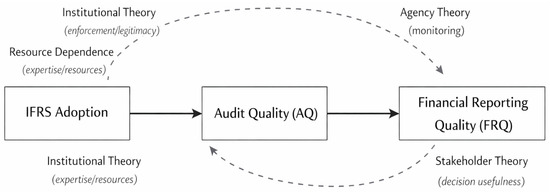
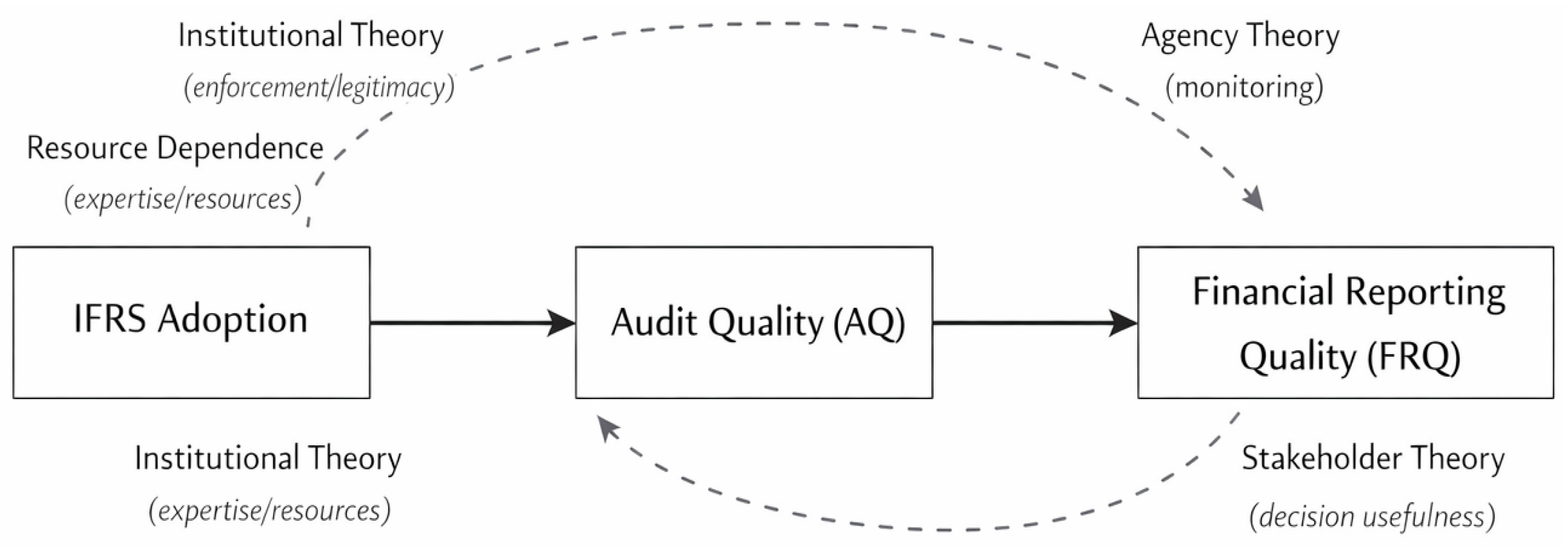
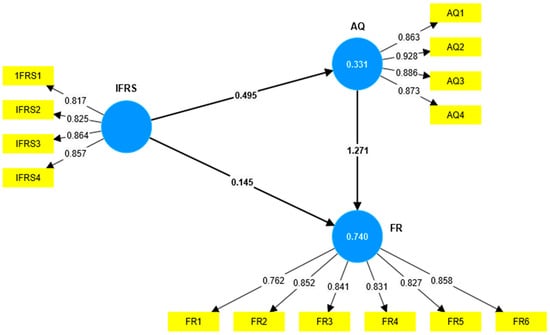
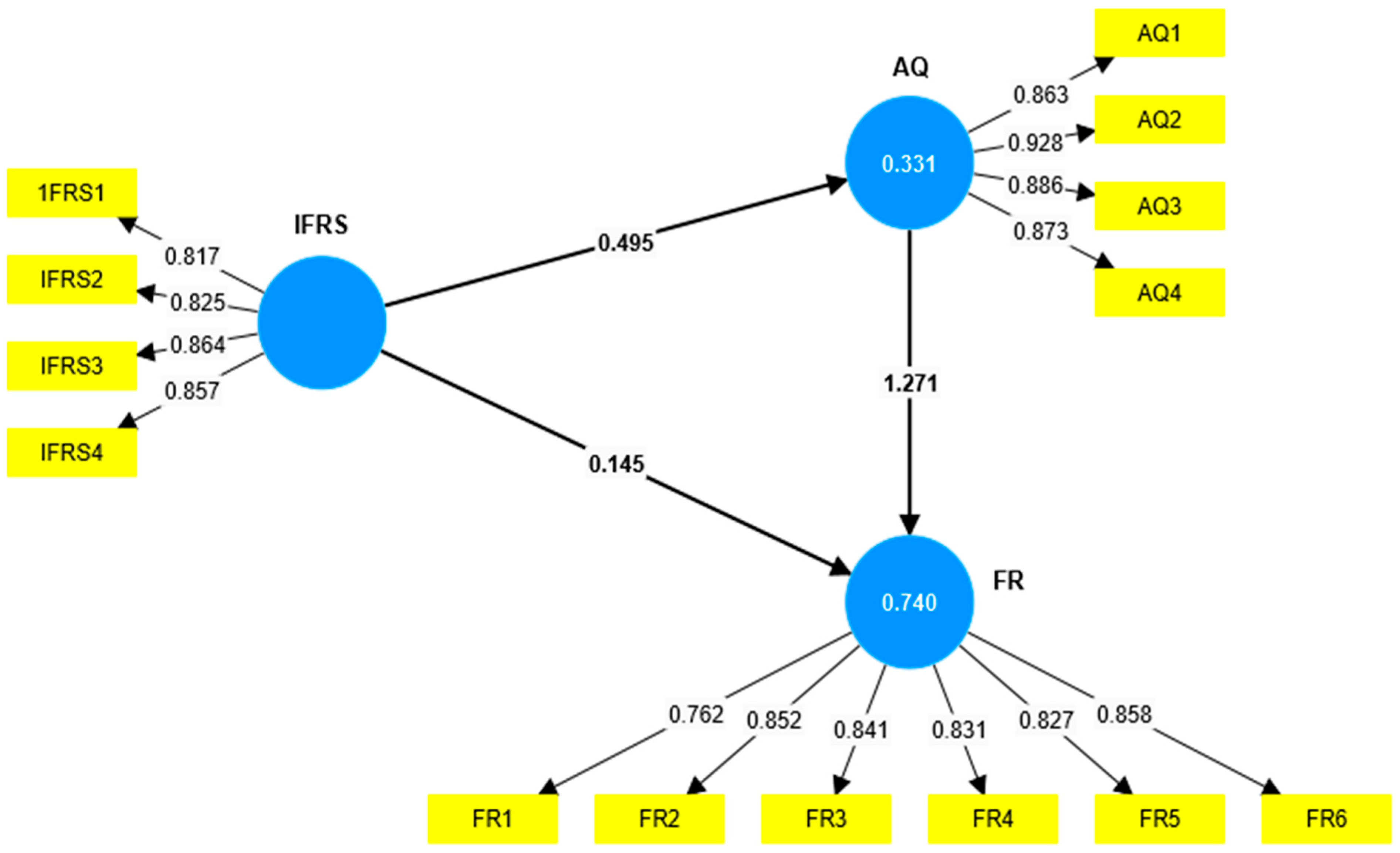
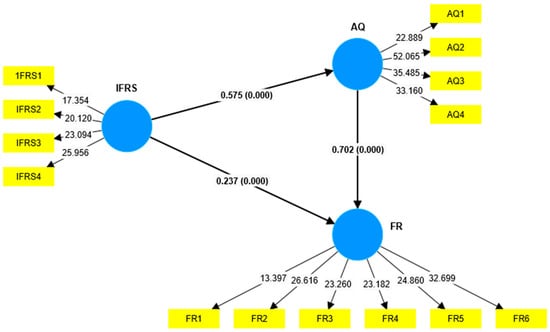
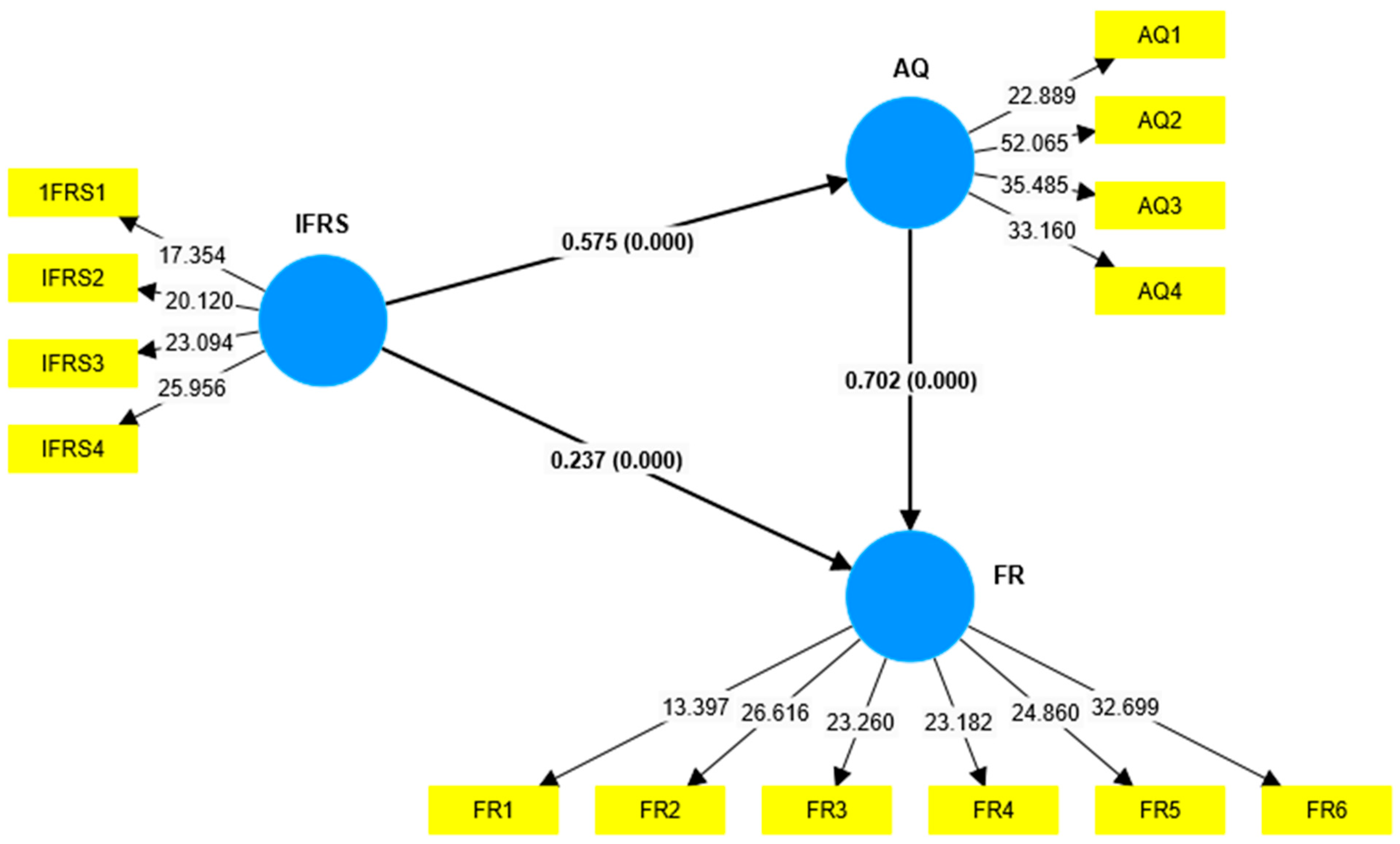

Disclaimer/Publisher’s Note: The statements, opinions and data contained in all publications are solely those of the individual author(s) and contributor(s) and not of MDPI and/or the editor(s). MDPI and/or the editor(s) disclaim responsibility for any injury to people or property resulting from any ideas, methods, instructions or products referred to in the content. |
© 2026 by the authors. Licensee MDPI, Basel, Switzerland. This article is an open access article distributed under the terms and conditions of the Creative Commons Attribution (CC BY) license.