


Abstract
Social cohesion and inclusive growth constitute the central pillars of the European Commission’s policy agenda. Meanwhile, the recurrence of energy crises exacerbates the living standards and raises the structural inequalities across European households. This paper exploits a Generalized Structural Equation Model (GSEM) to identify the effects of macroeconomic and political factors on the volatility in energy poverty. By moving beyond static levels, we examine volatility as a distinct dimension of vulnerability capturing the exposure to short-term shocks in energy affordability. The analysis is founded on a sample of 27 European countries between 2003 and 2022. The GSEM approach clarifies the drivers of the endogenous covariates, that is, the channels through which macroeconomic and political conditions are transmitted to energy poverty volatility. By decomposing the effects into within-country(cyclical) and between-country (structural) components, we find significant relationships that offer valuable insights for the design of effective policy measures. Economic expansion, higher public spending and household expenditure on maintenance of dwellings are directly linked with higher energy poverty volatility. Howbeit, political stability exerts a stabilizing effect, reflecting the importance of institutional quality and government effectiveness. Significant indirect mechanisms transmitted through growth reveal that cyclical expansions, inflationary pressures and short-term fiscal consolidations fuel energy poverty volatility. Growth, inflationary and tax-based driven volatility reflect asymmetrical effects on vulnerable consumers and rising energy deprivation in times of macroeconomic pressures. The results offer valuable evidence for the implication of effective fiscal and institutional policies that shield households from energy vulnerability and ensure affordable access to energy.
1. Introduction
Despite the notable efforts of governments and international agencies to meet the targets of the UN 2030 Agenda, energy inequality in terms of access is still rising, and the energy access gap is widening with population growth (WHO, 2024). Concurrently, energy affordability remains one of the most pressing global concerns, in that household utility costs burden vulnerable consumers due to the imperfect competition in energy prices between global suppliers (Price et al., 2012). To that end, household energy consumption imposes a heavy strain on family incomes, given that vulnerable households spend more on energy use owing to substandard housing conditions and the prevalence of inefficient appliances (Winkler et al., 2011; Brunner et al., 2012; Boardman, 2012). The energy sector undergoes pivotal challenges followed by economic and geopolitical shocks in the international environment. The persistent inequalities, the prolonged recovery from the 2019 health crisis and the recent geopolitical conflict between Russia and Ukraine have caused cumulative and detrimental effects on the living standards of the poor, primarily through the surge in energy prices (Al Kez et al., 2024).
The aforementioned factors induced compounding consequences on social welfare but also hindered the progress of the goals towards energy access and affordability. Videlicet, the onset of the pandemic induced both demand and supply shocks, with the latter persisting beyond expectations (Giannone & Primiceri, 2024). Despite the implementation of social protection measures during the pandemic, the unexpected rise in inflation intensified households’ ability to afford adequate heating (Carfora & Scandurra, 2024). In tandem, the ensuing rise in inflation undermined consumers’ purchasing power and exacerbated the energy poverty in the European households. Hence, monetary policy is significant for the purchasing power of consumers and their ability to afford energy needs in that economic stability is essential for the protection of vulnerable consumers from energy insecurity.
It is well established that energy poverty is a multidimensional concept, not solely related to household incomes or energy prices (Moore, 2012; Bouzarovski, 2014), but, from a system-level perspective, it is shaped by political and institutional decisions. Precisely, effective fiscal and economic policy frameworks are essential in facilitating government intervention to reduce energy inequalities and promote energy justice. Targeted government policies such as social programs, tax reductions, energy subsidies and public spending may affect those who are energy poor through the reallocation of income between high and low earners (Crudu, 2015). Public investments in the residential sector for dwellings, renewable energy and smart energy infrastructure could lower energy costs of households and increase the real income from the augmentation of the purchasing power. The allocation of clean resources should then mitigate the rising inequalities between poor and non-poor households and enhance the resilience of communities. Market regulation and economic growth constitute fundamental policies of governmental strategies to combat energy poverty. The effective monitoring of the regulatory framework of the global energy supply chain and the prompt intervention can limit disruptions in the energy market, such as imperfect competition, energy insecurity and inefficiencies. Holistically, energy poverty is a complex phenomenon which cannot be effectively addressed in the absence of coherent and well-designed fiscal and economic policies. Tackling this phenomenon requires a redefinition of state priorities and the strategic allocation of public resources, guided by the principles of social cohesion, economic justice, and sustainable development. Recent studies on energy poverty are highlighting the effects of government spending (Nguyen & Su, 2022; Z. Liu & Wang, 2024), governmental capabilities and management (Schiffer, 2022; Kwilinski et al., 2024) and financial inclusion (Boutabba et al., 2020).
The empirical studies focus on the levels of energy poverty; however, these measures do not account for the instability in energy deprivation. Multiple studies on poverty indicate that deprivation is often transient rather than chronic and that short-term episodes of adversity can cause significant welfare losses relative to persistent poverty (Jalan & Ravallion, 1998, 2000; Dercon, 2004). This insight applies directly to energy poverty. Even when average energy poverty is low, households may face short-term shocks due to energy price spikes, extreme climatic conditions or changes in policy frameworks. These factors do not necessarily move individuals into chronic energy deprivation, but they cause significant uncertainty and decrease the level of consumption that maintains adequate living standards (Chaudhuri, 2003; Günther & Klasen, 2009). The purpose of this study is to examine the effects of macroeconomic and political factors on the volatility in energy poverty. We introduce the Energy Poverty Volatility (EPV) indicator that reflects the instability and fluctuations in energy poverty over time, rather than the absolute levels at any given point in time. The volatility is measured as the rolling three-year standard deviation of the population unable to keep their home adequately warm. This metric shows the temporal variation in energy deprivation, reflecting the degree to which households experience recurrent episodes of deprivation and recovery. While the level of energy poverty represents a measure of prevalence, volatility is a distinct dimension of vulnerability: it captures exposure to short-term shocks in energy affordability. High volatility in energy poverty signals several concerning dynamics. First, energy-poor households face unpredictable changes in their ability to afford energy, which might signal instability in energy market conditions and the uneven transmission of macroeconomic cycles to household energy security. Second, policy interventions may be inconsistent or insufficient to buffer households from temporal shocks. Third, welfare systems may exhibit fragility and sensitivity to cyclical conditions.
Understanding volatility is therefore critical for designing policies that stabilize energy access during economic fluctuations rather than merely reducing average poverty levels. This study therefore sheds new light on how macroeconomic and political factors shape the stability of households’ energy access over time. A Generalized Structural Equation Model (GSEM) is exploited to capture the direct and indirect mechanisms through which macroeconomic and political outcomes are transmitted to volatility in energy poverty through different channels. On these grounds, we employ the Mundlak decomposition to distinguish between-country from within-country effects and unfold the structural and cyclical dynamics on the volatility in energy poverty. This study contributes to the energy poverty literature by moving beyond the traditional focus on levels to examine temporal instability. Furthermore, the study provides insights into both long-term determinants and short-run dynamics of the volatility in energy poverty.
We find that economic growth, higher public spending and household consumption on maintenance and repair of dwellings are associated with intensity in energy poverty volatility. Beyond that, short-run fiscal and inflationary conditions amplify the volatility in energy poverty through economic expansions. Nevertheless, political stability exerts significant gains for the energy poor, reflecting good governance, institutional quality and government effectiveness. The rest of the study is structured as follows. The second section provides an extensive review of the theoretical and empirical framework of energy poverty. The third section conceptualizes the GSEM and the employed dataset, while the empirical results are analyzed in the fourth section. The last section includes the main findings and outlines the policy implications and the recommendations for future work.
2. Literature Review
2.1. Income and Prices
A widely acceptable definition of energy poverty is the inability of households to access essential energy services (Kryk & Guzowska, 2023). Global perspectives of energy transition to renewable and clean energy should be cautiously committed to the existing living standards of the population that deals with obstacles in terms of energy resources (Groves et al., 2020). Alternatively, policy implications should account for poor households’ challenges, i.e., high energy prices, low individual income, poor conditions of residential buildings, ownership of inefficient appliances and unaffordable bills, rather than focusing on the implications of energy vulnerability (Bouzarovski, 2014). The fundamental origins of energy poverty stem from household income, the efficiency of appliances, energy efficiency and energy prices (Hills, 2011; Moore, 2012; Renner et al., 2019). Households that reside in inefficient buildings and buildings with poor insulation are more vulnerable even if energy prices remain stable. If the efficiency of energy use is upgraded, then more individuals can get access to energy services. This is because energy consumption increases due to the purchasing power gain in terms of quantity (B. Liu et al., 2019). Further studies distinguish energy poverty outcomes between rural and urban areas, assuming that the first are frequently subject to low access to electricity or other energy services (Barnes et al., 2011). Due to regional income inequalities across urban and rural areas, given energy prices, residents in urbanized regions are more likely to gain access to available energy resources rather than the rural ones. This is particularly evident to the industrialized economies that retain a structurally divided economic framework between urban and rural areas. In conjunction with this, the institutional constraints in the registration system of rural areas have increased the income disparities (Umair et al., 2024). The financing of energy infrastructure investments and energy efficiency programs, i.e., subsidies for energy bills, electric appliances replacement, home insulation upgrades and vehicle programs, should inherently benefit all households (Sigrin & Mooney, 2018). While these innovative schemes were originally designed to address climate change, they have recently emerged as prominent means of alleviating energy poverty and fostering regional economic development (Brown et al., 2019; Figus et al., 2019). Nevertheless, the key matter is whether these schemes are distributed equitably and genuinely improve the well-being of all households, rather than disproportionately favoring wealthier households (Borenstein & Davis, 2012; Pérez Bezos et al., 2020). In addition, the capacity to adopt green innovation depends on geographical conditions, and to that end locations and territorializations generate distinct patters of uneven development (Bridge et al., 2013). The diversity of buildings’ features between regions, i.e., detached and older dwellings with lower energy efficiency standards in rural areas, influences the probability of being energy poor (Salach et al., 2016). This, however, introduces the existence of strong spatial heterogeneity in energy poverty outcomes which attribute to regional-specific characteristics, i.e., geological factors (Chen et al., 2022; Frantál & Dvořák, 2022; Riva et al., 2024).
2.2. Beyond Core Factors
Early studies on energy access and affordability highlighted income and energy prices as the origins of energy inequalities (Bouzarovski, 2014; Thomson & Bouzarovski, 2018). Nonetheless, recent scholarship reveals that energy poverty is embedded in structural factors beyond households’ spending capacity, financial resources and bad housing conditions. Extending the analysis beyond micro-level perspectives, recent studies suggest that energy poverty is grievously embedded in broader macroeconomic and institutional contexts. Fluctuations in the states’ macroeconomic performance, i.e., growth, inflation, and fiscal capacity outcomes, affect households’ ability to access affordable and clean energy (Primc et al., 2019; Sari & dan Agussalim, 2025), while government spending, redistribution, and transition mechanisms mediate the extent to which energy poverty is mitigated or exacerbated (Nguyen & Su, 2022; Acheampong et al., 2023). Over and above that, the quality of governance and political stability are crucial for the effective implementation and continuity of energy policies and initiatives (Xin et al., 2024). In this respect, several authors affirm the importance of understanding energy poverty through broader structural, fiscal, and institutional dynamics, beyond its treatment as a mere result of household resources and energy markets (Dubois & Meier, 2016; Bouzarovski & Tirado Herrero, 2017).
2.2.1. Macroeconomic and Fiscal Dimensions
The rapid increase in global energy demand has intensified the debate on inclusive growth, particularly concerning its implications for energy poverty. Indeed, the energy sector serves as a promoter of economic activities, given its essential role in the production processes (Stern, 1997). From one perspective, economic growth can indirectly alleviate energy outcomes through investments in green energy and employment opportunities. During economic expansion periods the increase in domestic and foreign direct investments generates employment opportunities, increases capital flows and stimulates the development of the local economies (Hussain et al., 2023). Hence, investments in energy infrastructure and innovative technologies can promote energy access which is crucial for reducing energy and income disparities (Medeiros & Ribeiro, 2020) and improving health and education standards (Best & Burke, 2018). From another perspective, persistent socioeconomic inequalities elicit concerns about whether the gains of growth are equitably distributed among different groups of the population, thereby giving rise to the notion of inclusive growth. The concept of inclusive growth implies that the benefits of growth are evenly distributed and promote the well-being of all individuals that participate in the society (Alekhina & Ganelli, 2023). In many cases, economic growth raises energy prices and deteriorates the living conditions of vulnerable households that face a higher energy burden. To that end, if growth is concentrated in specific sectors of economic activities or income groups and not accompanied by appropriate redistributive policies, it reinforces disparities and produces uneven outcomes.
In addition, these considerations are particularly evident in times of business cycles, where economic fluctuations influence the energy sector (De Giorgi & Gambetti, 2017; Anastasiou & Zaroutieri, 2023). During economic expansions, the rising energy demand may lead to higher energy prices, which adversely affect vulnerable consumers and disproportionately burden low-income households. In tandem, the cost of industrial production processes may increase, and if the energy policies are not effectively adjusted in the business cycle, then the instability in the industry threatens employment and energy efficiency outcomes (Li et al., 2022). The energy supply shocks followed by financial stress and economic instability adversely affect the quantity supplied to vulnerable segments of the population (Smirnova et al., 2021). Nevertheless, other studies suggest that economic expansion cycles promote energy access and alleviate energy poverty outcomes, which is attributed to innovation and investments in energy infrastructure (Yasmeen & Shah, 2025). In the context of recessions, the effects on energy poverty are more consistently acknowledged across the literature. Economic downturns reduce the access to electricity for low-income households and increase the arrears on utility bills, due to the austerity measures of public government and the energy cost burden (Kamguia et al., 2024; Anastasiou et al., 2024a; Vasiliki & Anastasiou, 2023; Lyroni et al., 2018; Zervoyianni & Anastasiou, 2009; Anastasiou, 2009; Christos et al., 2021). In addition, economic downturns can affect growth trajectories and welfare standards, leading to output volatility and surging income inequality (Lin & Kim, 2014; Aye et al., 2020; Papailiou et al., 2018; Zavou et al., 2018; Anastasiou et al., 2022).
Government intervention is a cornerstone of energy poverty alleviation. Being a key fiscal policy instrument, the allocation of public resources serves as a tool for governments to stimulate economic growth and address absolute poverty (Wilhelm & Fiestas, 2005). Public spending policies have the potential to reduce poverty through subsidies, welfare transfers, investments in education that strengthen human capabilities, and investments in energy infrastructure that improve the living standards of the poor. Nevertheless, growth-oriented expenditures are not solely associated with welfare gains for all and may instead reinforce existing inequalities owing to poorly designed programs and inefficiencies (Healy & Clinch, 2004). For that reason, there is a clear trade-off between benefits and costs of spending (Dinh Thanh & Canh, 2019) in that a non-linear relationship between government spending and growth is observed (Hajamini & Falahi, 2018; Divino et al., 2020). Recent studies suggest a U-shaped relationship between government expenditures and energy poverty, implying that even though moderate and well-targeted spending can alleviate poverty, excessive expenditure may generate adverse outcomes (Nguyen & Su, 2022; Xu, 2025). An equivalent U-shaped effect of government debt is found in the context of energy poverty. Evidence indicates that diminishing returns to public debt are initially exhibited by financing welfare transfers and infrastructure investments, but there is a shift towards increasing returns when government proceed with excessive borrowing (Okere et al., 2023).
2.2.2. Institutional and Political Factors
Further studies highlight the need for including socio-political dimensions in energy poverty research (Dubois & Meier, 2016; Filippidis et al., 2021; Certomà et al., 2023). Beyond social tariffs and other income support schemes, the European actions for energy communities can contribute to the alleviation of energy poverty (Campagna et al., 2024). Political circumstances or governmental inefficiencies and failures exacerbate energy poverty so that a growing proportion of population is unable to respond to daily needs (Overland, 2016). Economically and politically stable states facilitate the continuity and effectiveness of long-term energy policies, since governments can sustain targeted support schemes for vulnerable households that accelerate energy access and affordability (Karlsson-Vinkhuyzen et al., 2012; Wang et al., 2015; Acheampong et al., 2023). Further studies suggest that effective governance structures, responsive to the protection of rural population, can facilitate electrification programs and promote the access to clean energy and technologies (Best & Burke, 2017). In tandem, collaborative energy management and power sharing promote democratic engagement through international negotiations, principally for developing countries (Schiffer, 2022). The knowledge-sharing enables the accumulation of governmental capabilities for the fragile states to establish and adjust to policies that eliminate energy disparities (Kwilinski et al., 2024). Instead, unstable states are more vulnerable to weak institutional quality which disrupts the implementation of welfare programs and exacerbates energy poverty (Dalyop, 2019; Oualy, 2024). The erosion of political stability is also tied with decreasing foreign direct investments that impede the financing of energy access initiatives. Verily financial inclusion is a key instrument of energy policies and negatively associated with energy poverty (Boutabba et al., 2020; Dong et al., 2022; Khan et al., 2023; Kar & Bali Swain, 2024). Overall, relevant studies for the drivers of energy poverty in the European economies are synthesized in Table 1.
Table 1.
Recent empirical studies on the energy poverty determinants in the European economies.
2.3. Critical Synthesis of the Literature
The literature on energy poverty identifies interplay of economic, social and political factors that affect the prevalence and severity of the phenomenon. Disparities in income and the rising energy prices are the origins of energy poverty, with low and lower-middle income households being the most vulnerable to energy-related costs. Moreover, poor housing conditions and the ownership of low-efficient electric appliances increase households’ energy needs and the associated expenses. The predominant focus on income and prices often omits the compounding effects of housing quality and other structural factors. Central and Eastern European countries exhibit severe housing-related vulnerabilities but receive less policy attention than other regions. This implies that the policy interventions undermine long-term effectiveness. Beyond that, the regulatory frameworks, the quality of governance and the institutional effectiveness are increasingly embedded on the dynamics of energy poverty. However, the complexity of institutional factors is challenging for isolating the direct effects due to confounding variables and data limitations. Alternatively, there is less understanding on how these factors interact with economic and housing determinants to influence energy poverty persistence.
A second set of limitations relates to the measurement of energy poverty. Several methods are used to measure energy poverty, including composite multidimensional indices, expenditure-based measures, and machine learning techniques. These approaches differ in their capacity to capture economic, subjective, and physical dimensions of energy poverty and enhance its conceptual clarity. The composite indicators enable cross-country comparison between the European economies and longitudinal assessments. Nevertheless, the lack of consensus on the weights may cause biases on country rankings and inconsistent cross-country comparability. Recently, machine learning techniques have provided innovative dynamics on the prediction of energy poverty at the household level and can offer significant insights on policy implications. The complexity and multidimensionality of energy poverty requires different methodological approaches for accuracy. Several studies robustly integrate socioeconomic and political dimensions; however, the data quality, the regional specificity and the use of subjective versus objective indicators remain as challenges for the measurement of energy poverty. The absence of a universally accepted definition and standardized measurement metrics for energy poverty undermines comparability across studies and countries, affecting the coherence of evidence and policy formulation at the EU level.
A third set arises from the constraints on methods and sample selection. The empirical research employs a wide range of methodologies, including panel data models, machine learning, spatial analyses, and qualitative analysis, enriching the understanding of energy poverty factors. Howbeit, issues on data quality, such as inconsistent definitions, omitted variable biases, and temporal gaps, limit comparability and the generalizability of findings. A number of studies exploit cross-sectional data or short periods, limiting the analysis of causal relationships over time. At the rural level, some studies use small samples which may limit the applicability of findings to broader contexts. The research on energy poverty offers valuable insights into the socioeconomic and institutional factors. However, there is a need for uniform measurement frameworks, longitudinal analysis and the integration of further governance variables.
2.4. From Levels to Volatility
Despite significant progress in understanding what determines energy poverty in Europe, there are critical limitations that motivate the present study. The existing literature has predominantly investigated energy poverty towards its levels, that is, the prevalence and distribution (Bouzarovski & Petrova, 2015; Thomson et al., 2017). These approaches provide important insights into the structural drivers of energy poverty; however, they may disregard its temporal dimension. To the best of our knowledge, no existing study examines the volatility of energy poverty, that is, the instability of energy access to macroeconomic and political shocks. By focusing exclusively on the levels of energy poverty, the factors that make households enter and exit poverty in the short run are disregarded. Even when energy poverty is low, the movements beyond the average level require policy interventions, particularly in periods of unexpected price fluctuations and macroeconomic shocks. The limited integration of macroeconomic aggregates and governance quality on energy poverty models can reduce their explanatory power. These gaps may impede the response of governments to temporal changes in vulnerability and the resilience of policy implications. This study addresses these shortcomings by conceptualizing energy poverty volatility in the European economies and extending static assessments. The econometric approach enhances the understanding of how macroeconomic and political factors interact and generate instability in energy vulnerability.
Volatility captures the unpredictable fluctuations in economic time series, that is, the shocks induced by economic cycles, fiscal adjustments, institutional disruptions, geopolitical tensions or changes in market sentiment. In energy economics research, volatility has been extensively studied with an exclusive reference to energy prices, oil shocks, and financial market dynamics (Kanamura, 2009; Oberndorfer, 2009; Ruiz et al., 2012; Efimova & Serletis, 2014; Karali & Ramirez, 2014; Manera et al., 2016; Serletis & Xu, 2016; Zhang & Sun, 2016). Notwithstanding, little empirical research has systematically explored the short-run fluctuations in access and affordability. Distinct from prices volatility, short-run cycles in energy access and affordability are equally vital for policymakers, particularly in the European context, which may signal instability in household conditions and government ineffectiveness of policies over time. Thereupon, this study focuses on the concept of energy poverty volatility. Despite the considerable attention devoted to energy price volatility in relation to investment, hedging, and policy design, little is known about the instability of energy access and affordability. Hence, we contend that beyond levels, it is important to examine energy poverty in relation to its volatility dimension, a crucial indicator of policy effectiveness. Precisely, high volatility in energy poverty may signal the fragility in welfare systems, inconsistent policy interventions, and vulnerability to macroeconomic and institutional shocks. Moving beyond static prevalence, the dynamic fluctuations serve as an important indicator of stability in energy policies, providing insights into the effectiveness and sustainability of fiscal and institutional interventions.
3. Method and Data
3.1. Energy Poverty Volatility Indicator
Addressing this gap, we estimate an indicator of Energy Poverty Volatility across 27 European countries over the period 2003–2020. We construct the volatility of energy poverty within each country i = 1, …, 27 in year t = 1, …, 20, denoted as , by exploiting a rolling standard deviationof the energy poverty indicator over a fixed-length time window. Precisely, for a rolling window of size k, the calculation is as follows:
where EPiΔ is the energy poverty for country i at year Δ, is the average of energy poverty for country i over the k-year window ending at year t and k is the fixed window length. We then set k = 3, and the rolling standard deviation captures the short-term variation in energy poverty for each European country. Although volatility in financial and energy markets is inherently estimated with high-frequency data, the annual perspective remains equally important in the context of energy poverty. The employment of the rolling standard deviation in annual observations reveals the extent to which energy poverty trajectory is stable over consecutive years, reflecting policy inconsistency, fragility and exposure to macroeconomic shocks. In terms of interpretation, higher values of energy poverty volatility imply within-country instability, that is, temporal fluctuations in the energy access and affordability of households. The specification k = 3 years supports the offset of sensitivity against robustness of the rolling window estimation, videlicet, shorter windows (k = 2) may signal excessive noise from a year over year variability, whilst extended windows (k > 5) are inclined to excessive smoothness of the series which may conceal short-run shocks.
3.2. Structural Equation Model
To estimate the effects of fiscal, institutional and macroeconomic factors on energy poverty volatility, we exploit a Generalized Structural Equations Model (GSEM). In empirical economics fixed and random effects estimators are predominant methods for longitudinal data models which account for unobserved heterogeneity from time-invariant omitted variables bias. Notably, these models provide insights for the unobserved or latent variables that may impact the response variable and are constant over the observed period. The random effects model assumes that the time-invariant omitted variables are uncorrelated with the exploited time-varying covariates, while in the fixed effects model the aforementioned variables are permitted to correlate (Mundlak, 1978). At any rate, the use of these models entails the researcher’s choice between correlated or uncorrelated variables that might affect the estimation in terms of biases or greater asymptotic standard errors (Bollen & Brand, 2010). Nevertheless, the random effects model provides higher efficiency under exogeneity assumptions that yields to smaller standard errors of the estimated coefficients and subsequently stronger statistical power (Hsiao, 2022). Several econometric techniques have been established to overcome the limitations of random and fixed effects estimators, such as the inclusion of interaction terms or lagged instrumental variables, i.e., the Generalized Method of Moments (Hausman & Taylor, 1981; Chamberlain, 1984; Arellano & Bond, 1991; Wooldridge, 2002). Nonetheless, conventional panel estimators are limited in their capacity to define systems of simultaneous equations and decouple direct and indirect relationships. We argue that energy poverty is affected by macroeconomic, fiscal, and institutional factors which are interdependent and transmit their impact through multiple interaction mechanisms. Therefore, these interplays should be considered in the empirical model to the extent that any endogeneity or omitted mediation biases are eliminated. We contend that a structural equation model offers a coherent framework to identify these recursive mechanisms, that is, the causal pathways for the outcomes on energy poverty.
The empirical model is then grounded in a set of simultaneous pathways that arise from the theoretical and empirical macroeconomic literature. Precisely, the fundamental concept is the distinction between direct and indirect effects which formalize the theoretical framework of GSEM. In the previous section we discussed the determinants of energy poverty beyond income and prices; hence, we consider that economic growth, government spending, government debt and political stability have a direct impact on energy poverty volatility. Beyond these aggregates, household consumption patterns reflect the capacity of meeting daily essential energy needs and a decent standard of living (Walker et al., 2014; Meyer et al., 2018). Despite the energy prices burden, the surging households’ expenditures for electricity, cooking, heating, cooling and dwelling maintenance reveal structural inefficiencies in the household’s characteristics. Verily, low income households own less efficient appliances and equipment, and as a result they exhibit higher energy costs burden (Nevin, 2010; Cluett et al., 2016). Although government financial assistance and subsidies prompt low-income households to participate in energy efficiency programs for the residential sector, they are less likely to utilize these programs (Frank & Nowak, 2015). If households’ expenditures do not rise with improving energy efficiency standards, then low-income households remain vulnerable to energy costs. Hence, the patterns of household consumption expenditures may impact energy vulnerability and, to that end, are included as direct factors of energy poverty volatility.
The preceding discussion formulated the direct effects, while the subsequent analysis defines the indirect mechanisms of GSEM through political, fiscal and growth channels. The first channel arises from the effects of government effectiveness on political stability (Androniceanu et al., 2022). Kaufmann et al. (2011) conceptualize government effectiveness as the state’s capacity to effectively formulate and implement sound policies that ensure quality of public services and a bureaucracy independent from political pressures. Beyond individual welfare effects (Frey & Stutzer, 2000) these policies exert substantial effects on society by fostering democratic stability (Rose & Shin, 2001). Failures in government effectiveness, resource mismanagement and weak institutions may raise the risks of political tensions and conflicts in society (Latto, 2002). The second channel conceptualizes the mediating effect of taxation on energy poverty volatility through government spending. Assuming that the decision of governments to collect revenues is independent of government spending allocation, then excessive spending might induce adverse budget deficits, while these deficits can be eliminated by effective taxation policies that raise government revenues (Narayan & Narayan, 2006). Nevertheless, taxes on goods and services do not inherently promote a state’s fiscal capacity, as excessive taxation increases the relative prices of goods and services, thereby impeding household purchasing power. For instance, energy taxes that increase the relative prices of electricity or other fuels may induce adverse effects both for consumers and producers. In that, higher energy input prices might disturb the production patterns and the global energy supply chain or even induce labor market transitions in the affected industries (Oueslati et al., 2017). This taxation could also affect vulnerable consumers that would bear the cost of higher energy bills or the inability to access basic energy services. Notwithstanding, effective taxation can provide notable resources for governments to expand their spending policies towards social welfare and sustainable development, to wit, energy infrastructure investments, income support schemes and energy efficiency programs. At any rate, the effectiveness of taxation depends on the targeted allocation through government spending policies (Tagem, 2023). We argue that tax revenues may induce productive expenditures in favor of vulnerable households, and to that end we conceptualize their mediating role on energy poverty volatility through government spending. Finally, the third channel is founded on the transmitting mechanisms of fiscal balance, output gap, inflation and globalization on household conditions through their effects on growth. The last consideration provides insights into the cyclical and macroeconomic mechanisms that affect energy poverty volatility. On econometric grounds we should note that the GSEM framework specifies only observed variables, and any latent constructs are dismissed. The empirical model assumes that the observed variables are interrelated via theoretically conceptualized pathways, which enable the estimation of direct and indirect effects without applying measurement models.
3.3. Data and Econometric Issues
The study exploits a unique dataset that captures the aforementioned factors. We use annual data for 27 European countries which are observed over the period 2003–2022, leading to a dataset of 540 observations. Table 2 shows the definitions of the selected variables and the data sources. The volatility indicator is estimated for one consensual-based metric of energy poverty, that is, the population unable to keep their home adequately warm as a percentage of total population (EPV). This indicator derives from the European Union Statistics on Income and Living Conditions where households are asked whether they can financially afford to keep the home adequately warm. Hence, this is a perceived indicator of thermal comfort. We dissever the determinants of energy poverty volatility between macroeconomic, political and household factors. From the macroeconomic perspective we collect data on real GDP per capita growth in chain-linked volumes 2015 (Gdppcgrowth), the gap between actual and potential GDP as a percentage of potential GDP (Outputgap), GDP deflator in percentage (Inflation), general government total expenditure on general public services as a percentage of GDP (govexp), cyclically adjusted primary balance as a percentage of potential GDP (CAPB), and total receipts from taxes and social contributions as a percentage of GDP (taxrevenues). To capture the economic dimension of globalization, we use data for imports and exports of goods and services and GDP in chain-linked volumes 2010 and millions of euros. Then we construct the indicator as follows: trade openness = [(Imports + Exports)/GDP] in percentage. These aggregates reflect the extent to which countries integrate to international product markets and can influence growth dynamics by competitiveness, diffusion of technology, and global demand shocks. The aforementioned data are collected from several Eurostat and AMECO databases. To capture the effects of financial globalization on growth, we use the financial globalization index (KOFFI) retrieved from the KOF Swiss Economic Institute (Dreher, 2006; Gygli et al., 2019). This indicator is a standardized metric ranging between 0 and 100, where higher values imply stronger financial integration with global markets. Financial globalization affects the investment cycles, capital flows and the macroeconomic stability of the domestic economy. Both trade and financial globalization are used to capture different aspects of openness. In the context of political factors, we use the political stability and absence of violence/terrorism indicator, percentile rank (politstab) and the standardized index of government effectiveness (goveffect) from the Worldwide Governance Indicators database proposed by the World Bank. The households’ data are collected from Eurostat and refer to the final consumption expenditure of households for electricity, gas and other fuels (HCE_EG) and the final consumption expenditure of households for maintenance, repair and security of the dwelling (HCE_MRD) as percentages of total household energy consumption.
Table 2.
Data sources.
Howbeit, the GSEM framework does not account for the inherent panel structure of the data, and the longitudinal form is treated as pooled. This implies that explicit econometric techniques are required to absorb common time shocks of the European members, country-specific unobserved heterogeneity and within-country heteroscedasticity. To that end, three adjustments are made for time-invariant effects, robust standard errors and within and between-country variation. Precisely, we include year dummies in GSEM to address the unobserved common shocks of the European economy that arise from global financial, health and energy crises or emerging geopolitical risks and tensions. The Great recession, the COVID-2019 pandemic, Russia’s 2022 invasion of Ukraine, and the 2021–2022 global energy crises are distinctive events that severely disrupted the European economies and should be considered for the unobserved time-specific events. Then, clustered at the country, robust standard errors are specified to relax the assumption of independent observations across groups, strengthening the inference and reliability of the estimated standard errors by correcting for within-country dependence over time (Jackson, 2020). Whilst these issues significantly improve robustness, the unobserved country heterogeneity may nonetheless bias the empirical results. Against this backdrop, we adopt a Mundlak (1978) specification by decomposing the independent variables into country means and deviations from the means. In particular, we calculate the averages of the explanatory variables for each country i = 1, …, 27 and the deviations from means . This decomposition disaggregates the between and within-country components, that is, the structural differences across countries and the cyclical fluctuations within countries. The between-country component embodies persistent cross-country heterogeneity, while the within-country component depicts short-run deviations from the country’s long run mean. Thus, by adopting Mundlak’s formulation we eliminate bias from unobserved country heterogeneity, and each variable is decomposed as follows: . Having discussed the econometric specification in Section 3.2 and the Mundlak’s decomposition, the path diagram of the GSEM is shown in Figure 1. In terms of notation, (w) implies the within-country components and (b) stands for the between-country components. The directional arrows represent the hypothesized effects from the determinants. The variables D1–D19 correspond to year dummies between 2003 and 2021, excluding 2022 as the reference year.
Figure 1.
Path diagram of GSEM.
4. Results and Discussion
4.1. Descriptive Statistics
This section presents the summary statistics of the variables for 27 European countries over the period 2003–2022. Table 3 shows the descriptive statistics, including measures of shape to detect the existence of outliers and deviations from normality. On average, about 11.09% of the European households were unable to maintain their home at adequate warmth between 2003 and 2022. In addition, the median rate of energy poverty indicates that 50% of the country–year observations are below 6.6%. The difference between the median and the mean indicates that the distribution of energy poverty is positively asymmetric (skewness = 2.11), that is, most of the country–year observations are clustered at the lower levels of energy poverty, while less-frequent extreme cases drive the distribution’s upper tail. The excess kurtosis shows that the distribution is leptokurtic with a sharp peakedness in the center (kurtosis = 8.8), implying a greater likelihood of extreme incidents of energy poverty with respect to a normal distribution. Put differently, the heavier tails evidence the existence of cross-country differences or crises spikes.
Table 3.
Descriptive statistics.
Nevertheless, to uncover the origins of this asymmetry we conduct an analysis of variance to detect whether energy poverty varies more between countries or within countries in the course of the reference period. Table 4 reports the ANOVA results for the differences between country averages and year averages. The null hypothesis for the equality of population means between countries is rejected by the 1% level of significance (p-value = 0.000 < α = 0.01); instead, there is no statically significant difference across years (p-value = 0.478 < α = 0.05). At any rate there are profound differences in the between- and within-groups variations in that the between-country (SSB = 57,816.74) outreaches the within-country variation (SSW = 12,506.28), implying that energy poverty differs systematically across EU countries while giving prominence to the structural cross-country heterogeneity. Notwithstanding, the results for the time variations are reversed, that is, the between-years (SSB = 2439.73) falls short of the within-years variation (SSW = 67,883.19), signifying that common time shocks do not shift the European year-average uniformly; rather, the main source stems from within-year disparities across countries.
Table 4.
One-way ANOVA.
Revisiting the descriptive statistics, GDP per capita growth is uniformly distributed around the average level of 2.108%, given that the distribution is kindly symmetric (skewness = −0.152). However, the distribution exhibits heavy-tails (kurtosis = 5.724) and a pronounced deviation from the mean (sd = 4.115%) which indicates frequent extreme values of growth, that is, shocks in the European and the global economy such as the Great Recession, the European Sovereign Debt Crisis, and the COVID-19 crisis. The average government expenditure to GDP is 6.118% with a standard deviation of 1.86%, which depicts moderate variation between countries and years. That is to say, the distribution is nearly symmetric (skewness = 0.682), and the data are evenly distributed around the mean with incidental extreme cases (kurtosis = 4.101). The mean of government effectiveness is 1.072 with a standard deviation of 0.595, implying dispersion across low- and high-performing states. The bimodal distribution formulates a classification between clusters of countries with weaker and those with stronger governance. The measures of central tendency of CAPB (mean = −0.65%, median = −0.34%) indicate the occurrence of fiscal deficits, while the wide range of the distribution demonstrates the fiscal cross-country or cross-time heterogeneity. The leptokurtic distribution evidences that small fiscal changes are less frequent, as the bulk of data is concentrated around the mean. The average output gap exhibits a mean of −0.537%, implying that the European economies operated below potential output between 2003 and 2022. The left tails of the distribution (skewness = −1.011) demonstrate that deflationary output gaps are more frequent than positive gaps, that is, recession periods are more persistent with respect to economic booms, followed by low growth and unemployment. The standard deviation (3.728%) and the excess kurtosis (6.637) suggest the emergence of deeply negative and positive output gaps that reflect abnormal cyclical volatility. Inflation rates average 2.367%, but the wide range of the data (min = −18.728%, max = 20.20%) and the undue kurtosis (11.348) denote that European economies are subject to extreme hyperinflation and deflationary episodes, followed by energy prices shocks and macroeconomic instability. The tax revenues share of GDP is 36.763% on average, which aligns with the European high-taxation model for funding public services such as social welfare, infrastructure, defense, healthcare and national debt. Among European countries, Austria, Belgium, Denmark and France exhibit the highest tax revenues, which signal their capacity to generate substantial resources and reallocate a significant portion of GDP to public services. In terms of trade liberalization, the sample mean of trade openness is 122.62% of GDP, with a notable variation of 60.27% between countries and years. The distribution is right-skewed (1.426) with an excess kurtosis (5.609) entailing that few countries exhibit exceptionally high involvement in international trade. In conjunction with the measures of shape and the maximum value reaching 373.278%, the European economies display large differences in the degree of trade openness. Financial globalization measured by KOF index has an average of 79.148, exhibiting a kindly symmetric and platykurtic distribution (kurtosis = 2.225) in that small changes are more frequent than extreme values. The bimodal distribution of KOFFI suggests the formulation of two uniform clusters that split into lower and higher financially integrated economies. Within Europe, Luxemburg, Ireland, Belgium, Sweden, and the Netherlands converge towards higher levels of financial integration, whereas Poland, Slovenia, Lithuania, Latvia, Greece, and Croatia are less involved in foreign direct investments, portfolio investments, capital account openness, international reserves, and agreements. The institutional indicators marked by higher dispersion evidence the fluctuations in economic and political uncertainty across European countries. In tandem, the kindly symmetric distribution of political stability reflects both stable European economies (Austria, Finland, Sweden) and more fragile states (Bulgaria, Romania, Spain, Italy). In terms of household consumption patterns, both distributions of expenditures are positively asymmetric, implying the heterogeneity in energy burdens across countries. The average household expenditure on electricity, gas and other fuels is 4.695% and on maintenance and repair of the dwelling 0.825%. Despite its low mean value, the distribution of maintenance and repair of dwellings expenditures is substantially asymmetric and extremely leptokurtic, signifying that few countries spend disproportionately more (e.g., Portugal, Romania), which is attributed to aging housing stocks and policy interventions for energy upgrades and renovations in the residential sector.
The median energy poverty between 2003 and 2023 is heterogeneous across the European members. Figure 2 shows the distribution of the median inability to keep home warm over the reference period. We observe that households in Malta, Italy, Poland, Romania, Latvia and Greece experience significant financial constraints to maintain houses’ warmth, that is, the median population with the perceived inability is between 10.1% and 20%. Nevertheless, Lithuania, Portugal and Bulgaria showcase extreme median energy poverty (>20%). The spatial distribution of median energy poverty reveals a regional pattern across the European countries. Particularly, countries in Northern and Central Europe exhibit the lowest levels of energy poverty, while Southern and Eastern European member states show notably higher levels.
Figure 2.
Median energy poverty across European members 2003–2023. Classifications of median energy poverty: 0–6%, 6.1–10%, 10.1–20%, >20%.
4.2. GSEM Results
4.2.1. Effects on Endogenous Covariates
This section presents the empirical results of the Generalized Structural Equation Model (GSEM) which is estimated for a panel of 27 EU countries between 2003 and 2022. The results demonstrate the direct and indirect effects of macroeconomic, political and household factors on the volatility of energy poverty. At this point, we should recall that the effects are disaggregated into between-country effects that reflect long-term structural differences across economies and within-country effects that measure short-run deviations from each country’s mean. Verily, this decomposition is significant in that it disentangles cross-country heterogeneity from transitory shocks and reveals whether energy poverty volatility is driven by inherent country-specific conditions or the changing macroeconomic and institutional environment over time. Table 5 initially presents the results for the endogenous covariates, that is, GDP per capita growth, political stability and government expenditures divided into between-country (b) and within-country (w) components. The results across between-country and within-country components are rather mixed. The estimated coefficients of output gap and financial globalization at the between-country level are statistically significant at the 5% level of significance (p-values < α = 0.05).The results indicate that countries with structurally greater output gaps display higher levels of long-term growth per capita; instead, more financially globalized economies are expected to exhibit lower levels of per capita growth. Given the between-country dimension, economies with a one percentage point higher structural level of the output gap exhibit 0.27 percentage point higher per capita growth. In tandem, a one-point increase in the average KOFFI corresponds to a 0.07 percentage point lower rate of per capita growth. Despite the low magnitude of the estimated coefficient, the effect is meaningful once interpreted in greater ranges of the globalization index. Hence, this effect is particularly meaningful for countries that exhibit greater levels of openness to global capital markets and are more exposed to risks in the international financial system. Accordingly, the effects of country-specific means of trade openness, inflation and CAPB are insignificant, implying that they do not explain long-run differences in the European economies’ per capita growth.
Table 5.
Direct effects on endogenous covariates.
Conversely, the within-country estimates provide richer insights into short-run growth differentials, given that all the estimated coefficients are statistically significant at the 1% level (p-values < α = 0.01), other than the coefficient of KOFFI being significant at the 10% level. The output gap exerts a positive and strong effect on short-term per capita growth, that is, a one percentage point increase in the cyclical position of the economy is linked to a 0.61 percentage point increase in per capita growth. This indicates the expected procyclical pattern in that movements towards the potential output coincide with stronger short-run growth. A one percentage point short-run increase in the cyclically adjusted primary balance is associated with a 0.319 percentage point higher growth per capita, implying that fiscal consolidation and short-run macroeconomic stability translate into higher growth dynamics within countries. In a similar vein, inflation is positively associated with growth in that a one percentage point irregular rise in inflation contributes to 0.174 percentage point acceleration in growth per capita. Trade openness further shows a positive impact whereby a one percentage point increase in short-run trade integration is expected to stimulate per capita growth within countries by 0.026 percentage points on average. Nevertheless, financial globalization exerts a negative effect which perhaps reflects the countries’ exposure to the global financial market’s risks.
Beyond that, the results suggest that political stability is notably responsive to both short-run changes and long-term shifts in government effectiveness. At the structural level, cross-countries differences in the quality of public services explain a considerable proportion of the long-term level of political continuity. In particular, economies with a one unit higher average level of government effectiveness display a 14.869 percentile higher level of political stability in the between-country dimension. In tandem, the within-country estimates imply that short-run meliorations in government effectiveness generate substantial gains in political continuity. Proceeding with the effects on government spending, the between-country estimated coefficient of tax revenues is strongly significant and positive. The magnitude denotes that countries with a one percentage point higher structural level of tax revenues allocate 0.166 percentage points more to public spending. That is, the elasticity of public spending with respect to tax revenues is inelastic, and government expenditures increases slower than revenues. Instead, given the within-country estimates, lagged tax revenues display a negative but weakly significant effect on short-term government expenditures. The coefficient’s significance at the 10% level suggests that fiscal adjustments in the previous year may weakly constrain spending outcomes over successive periods.
4.2.2. Effects on Energy Poverty Volatility
This section examines the direct mechanisms on the volatility of energy poverty, as shown in Table 6. The estimated coefficients of both the structural and cyclical drivers are statistically significant at the 1% level, excluding the coefficients of within-country political stability and government spending. We find that countries with a one percentage point higher long-term level of GDP per capita growth exhibit 0.593 percentage point higher energy poverty volatility, while each one percentage point short-term increase in per capita growth corresponds to 0.099 percentage point increase in EPV. The between-country estimate suggests that economies with persistently stronger growth trajectories display greater fluctuations around the energy poverty threshold over time. In addition, the within-country coefficient implies that cyclical expansions are linked with higher instability in energy poverty. This implies that periods of accelerating economic activity often involve adjustments in disposable income, or support schemes that contribute to greater volatility in households’ ability to keep their homes adequately warm. At the between-country level, political stability exerts a negative effect, where a one percentile higher structural level of political stability is associated with 0.024 percentage point lower EPV. This evidences that economies with more structurally stable political environments experience lower levels of volatility in energy poverty. Moreover, a one percentage point higher long-run level of public spending corresponds to 0.326 percentage point greater EPV. The between-country estimator highlights that economies with stronger public sectors may exhibit more uneven transmission of fiscal adjustments to vulnerable households, thereby increasing the variability in affordability conditions. At the household consumption level, the results show that one percentage point increase in the share of spending on maintenance and repair of dwelling in total household energy consumption is linked with a 0.266 percentage point rise in energy poverty volatility. Conversely a one percentage point increase in the share of household expenditures allocated to electricity, gas and other fuels is associated with a 0.102 percentage point decline in energy poverty volatility.
Table 6.
Direct effects on EPV.
The preceding analyses established the drivers of the endogenous covariates that may operate as intermediate mechanisms for energy poverty volatility and the direct effects of the endogenous covariates. Subsequently, we investigate the indirect effects on the volatility in energy poverty through the endogenous factors (Table 7). At this juncture we should note that each transmission mechanism is derived from the corresponding between-country or within-country component of the model. Following this, the indirect effects capture the cross-country structural heterogeneity through the between-country dimension and the short-run deviations from the country mean by means of the within-country dimension. The results show that structural differences in the output gap, financial globalization, government effectiveness and tax revenues exert differences in the levels of energy poverty volatility. Precisely, countries with a one percentage point higher long-run level of the output gap exhibit 0.162 percentage point higher volatility through the long-run per capita growth mechanism. This suggests that economies with expansionary cyclical conditions exhibit greater long-run instability in energy affordability once the effects on growth are considered. In this respect, fiscal capacity transmits to energy poverty volatility, in that a one percentage point higher long-run level of tax revenues is associated with a 0.054 percentage point higher volatility though government spending. On the contrary, government effectiveness reduces energy poverty volatility, that is, a one unit higher long-run level of government effectiveness is linked with a 0.351 percentage point lower volatility through political stability. With respect to the within-country dynamics, we find that short-run increases in cyclically adjusted primary balance, output gap and inflation are positively linked with energy poverty volatility. Howbeit, the implied marginal effects are modest, a pattern consistent with the smoothing in the 3-year rolling volatility indicator.
Table 7.
Indirect effects on EPV (via endogenous covariates).
4.3. Robustness Test and Discussion
4.3.1. Robustness Test
To evaluate the robustness of the findings, we estimated the GSEM using an alternative smoothing window for EPV, that is k = 4. Precisely, we assessed whether the findings depend on the specific construction of the energy poverty volatility indicator. Recall that the baseline specification relies on a rolling three-year standard deviation of the share of population unable to keep their home adequately warm. The alternative specification of the rolling window offers a useful sensitivity analysis, since longer windows reduce the influence of temporal disturbances. The findings obtained with the four-year window are similar to the baseline model (Table 8, Table 9 and Table 10). The signs and the statistical significance of the coefficients are mainly preserved. The robustness analysis suggests that the main conclusions from the baseline model are not sensitive to the choice of a three-year smoothing horizon. However, the effects of government spending are sensitive to the length of the rolling window, with respect to the baseline model. Precisely, the statistical significance and the magnitude of the between-country component of government spending (0.326 ***) imply that countries with structurally higher levels of public spending exhibit greater levels of energy poverty volatility. Instead, the within-country component is not statistically significant. When volatility is measured over a longer horizon, k = 4, the effect of structural cross-country differences in public spending is insignificant, while the effect of the within-country dimension becomes significant. In light of this, each one percentage point short-term increase in government spending corresponds to a 0.429 percentage point increase in volatility. This implies that temporary increases in public spending may signal reactive or unevenly targeted interventions. The difference in the statistical significance of the between-country and within-country components of government spending between the baseline and the robustness model reinforces this interpretation. Public spending also operates through country-specific fiscal dynamics rather than an absolute structural factor of energy poverty volatility. The sensitivity of the effect of government spending to the length of the rolling window suggests that this effect depends more on the short-term fiscal adjustments within countries, rather than structural differences in fiscal capacity between countries. Overall, the robustness analysis reinforces the main findings of the study and provides insights into the cyclical effects on energy poverty volatility.
Table 8.
Direct effects on endogenous covariates (4-year rolling window).
Table 9.
Direct effects on EPV (4-year rolling window).
Table 10.
Indirect effects on EPV via endogenous covariates (4-year rolling window).
4.3.2. Discussion
The results provide meaningful evidence for the mechanisms through which macroeconomic governance household expenditure dynamics affect the volatility in energy poverty of the European economies. Instead of privileging a focus on the levels of energy deprivation, this paper explores the responses of instability in energy poverty to structural cross-country differences and short-run cyclical fluctuations. The decomposition into between-country and within-country effects contributes to an emerging dimension by which energy poverty is treated as a condition vulnerable to macroeconomic or institutional short-term shocks and persistent conditions rather than a static outcome. This disaggregation provides valuable insights for policymakers to design countercyclical interventions and long-term institutional reforms.
The positive magnitude of economic growth in both the structural and cyclical dimensions departs from the conventional view that income expansion alleviates vulnerability (Pachauri and Spreng, 2011). The results suggest that economies with persistently higher levels of growth exhibit structurally greater volatility in energy poverty, indicating that expansionary conditions magnify heterogeneity in households’ energy needs and affordability conditions rather than improving them. A main interpretation is that sustained growth may generate asymmetric effects against lower-income groups, particularly when growth-driven increases in energy demand are not aligned with improvements in energy efficiency or affordability mechanisms, and consequently raise energy prices. By implication, the rising energy demand followed by economic expansions is historically linked with rising inflation in the energy market which is excessively exposed to external oil demand and supply shocks (Hamilton, 2009; Kilian & Murphy, 2014). The emerging energy costs of expansion amplify the heterogeneity in households’ exposure to heating deprivation and entail that low-income households are disproportionately harmed by rising prices rather than wealthier households (Reanos & Wölfing, 2018). The within-country estimations reinforce this interpretation, to wit, short-run boosts in economic activity are associated with heightened volatility in energy poverty, implying that cyclical expansions yield unequal benefits. In addition, during macroeconomic upturns, short-run regulatory interventions might unevenly affect vulnerable households, especially when price-formation processes and consumer protection schemes are weak or slowly adjusted to new market conditions (Hills, 2012; Bouzarovski & Petrova, 2015).
The negative magnitude of the between-country estimator of political stability denotes that the absence of political disruption fosters the households’ thermal comfort, reflecting good governance and the members’ consistent policies to energy justice (DellaValle & Czako, 2022; Certomà et al., 2023). This aligns with the broader consideration that policy continuity and reduced regulatory uncertainty generate the prerequisites for promoting equitable income allocation and eliminating disparities (Ajakaiye & Adeyeye, 2001; Tebaldi & Mohan, 2010). Albeit, a number of energy-related policies towards energy infrastructure require considerable capital outlays that entail a significant fiscal commitment by the states. In tandem, the absorption of funds is most probable for economies with higher political stability and institutional quality rather than countries with politically uncertain environments (Gammoudi & Cherif, 2015). The results from the within-country dimension reinforce that energy poverty volatility is influenced by the persistent governance features, while the short-run institutional disturbances do not explain the variation in affordability pressures. This distinction underscores that governance operates primarily as a long-term structural determinant rather than a driver of short-run fluctuations.
Proceeding with the direct effects of government spending, we observe that higher public spending intensifies the affordability conditions of the energy poor. This association diverges from the findings of Xu (2025) where government expenditures alleviate energy poverty, but it is partially confirmed by the study of Nguyen and Su (2022) who find a U-shaped effect. A main explanation originates from the inefficient fiscal targeting by which public spending on energy-saving programs and relevant schemes in not directly allocated to vulnerable populations. Evidence from Healy and Clinch (2002) indicates that fuel poverty is concentrated in specific social groups, implying that universal or weakly targeted policies may be less effective. In addition, in times of economic distress, increase in public spending could signal reactive interventions rather than preemptive welfare policies. Precisely, these allocations emerge once vulnerabilities are already amplified and to that end the stabilizing effect on energy poverty is regressed. An alternative interpretation relies on the procyclical or inertial nature of public expenditure across European countries. Fiscal policy commitments are commonly anchored in medium-term budgetary rules, debt oversight mechanisms and political bargaining agreements that limit governments’ responsiveness to emerging economic pressures (Fatás & Mihov, 2013). In essence, when public budgets frameworks are rigid and devoid of preventive mechanisms for mitigating the energy burden on vulnerable households, energy poverty may rise through delayed support, poor coordination or uneven deployment of spending. Alternative explanations may originate from the means by which government spending is allocated or the extent to which households depend on subsidies. Firstly, excessive spending may crowd out private sector investments, especially when financed through taxation and debt. Precisely, energy infrastructure development, technological advancements and innovative systems are notably dependent on private capital flows; hence, the crowding-out effect can hinder the investors’ incentives. This might lead to efficiency losses and slow down the rate by which states adopt new technologies and transition to clean energy. Secondly, increased energy-prices subsidies can limit the incentives for end-users to consume less energy and for producers to adopt innovative and clean production technologies. In contrast, the within-country estimation confirms that energy poverty volatility is not responsive to temporary adjustments in public spending.
In terms of household consumption patterns, the results evidence that structural inefficiencies in the residences exacerbate the volatility in energy poverty. The increasing costs for the maintenance and repair of dwellings reflect the inferior building quality, especially in low-income groups that reside in older properties. These households exhibit greater burdens to maintain their dwellings as habitable, howbeit without necessarily improving the energy efficiency standards. This type of household expenditure absorbs significant resources that could be allocated to efficiency upgrades and eliminate the exposure to energy poverty risks. These findings are consistent with the empirical studies that highlight the role of housing quality in the variability of energy deprivation and well-being (Ortiz et al., 2019; Ballesteros-Arjona et al., 2022; Mulder et al., 2023; Mei & Seo, 2024). In turn, greater spending on housing, water, electricity and fuels stabilize the volatility of energy poverty in that households increase their access to energy services and exhibit between living conditions.
In view of the indirect effects, the results evidence that the structural macroeconomic characteristics of countries transmit significant impacts on the volatility of energy poverty through per capita growth. The positive indirect effect of the output gap in the between-country dimension suggests that economies operating close or above the long-run potential output exhibit higher volatility in thermal discomfort, reflecting that expansionary structures tend to intensify distributional asymmetries in energy affordability. When structurally expansionary economies undergo growth trajectories, the distributional asymmetries in energy access across households are intensified and the growth-driven volatility in energy poverty raises the exposure of households to sharper cost adjustments. Instead, the negative magnitude of financial globalization index suggests that greater structural integration to global capital flows corresponds to lower volatility in energy poverty through growth. The openness to cross-border financial flows smoothes the economies’ exposure to external shocks, and even though substantial economic gains are expected, the instability and the fluctuations in global markets may lead to a less volatile growth which mitigates energy vulnerability. In a similar vein, short-run increases in the output gap are positively linked with the volatility in energy poverty through growth, implying that cyclical expansions yield uneven growth gains and households are unable to absorb the shocks.
The within-country estimates reveal that short-run fluctuations in the cyclically adjusted primary balance and inflation intensify the volatility in affordability through the increasing growth. A more positive balance is typically associated with fiscal consolidation and long-term macroeconomic stability which fosters economic growth. To that end, temporary fiscal tightening reacts as an immediate destabilizer of energy poverty volatility, implying that growth gains are not uniformly transmitted to different groups of population, and perhaps reflecting the absence of policies that reduce energy costs. With respect to prices fluctuations, we find that short-run inflation stimulates short-run growth which in turn increases volatility in energy poverty. Howbeit the inflation-driven growth initially increases the demand of goods and services and boosts income through wage adjustments and other expansionary policies, inflationary episodes exert a disproportionate upward pressure on household energy costs, thereby reinforcing energy disparities. Against this backdrop, the erosion of consumers’ purchasing power disproportionately affects vulnerable households, which exhibit a higher energy burden than wealthier households, and reinforces energy disparities (Hussain et al., 2023; Mawutor et al., 2024).
Government effectiveness employs a negative association with energy poverty volatility through the political stability channel, but only at the between-country level. States that are grounded in the attainment of government effectiveness exhibit strong institutional capacity, regulatory quality and structurally higher levels of political continuity, which in turn prevent conflicts and regime disruptions (Kartiko, 2024). From a certain standpoint, well-functioning and politically stable governments benefit from greater access to external financial resources that enable the investments in energy infrastructure and facilitate the implementation of energy-related policies and social support schemes. These policies are consistent with the reduction in energy vulnerability and the promotion of energy equity across households. Verily, economies with coherent governance are less exposed to corruptive activities and organizational structures that impede the implementation of targeted energy policies towards households, particularly in the remote areas where procedures towards the financing of off-grid or decentralized systems are required (Akella et al., 2009; Ahlborg & Hammar, 2014; Ahlborg et al., 2015). This association highlights the stabilizing role of state capacity in delivering equitable support and promoting social welfare. Finally, the indirect effect of tax revenues evidences that higher structural revenues enable governments to increase public expenditures and finance social support schemes (Tagem, 2023); howbeit, excessive spending is regressive when allocated disproportionally between lower and higher-income groups (Rhee et al., 2014; Anderson et al., 2017). In tandem, this channel is inherently affected by the type of tax regimes and the government’s capacity to implement equitable and effective tax policies (Anjarwi, 2025). Verily, progressive tax regimes, income reallocation policies and targeted public spending can offset the regressive outcomes of taxation (Nilsson et al., 2018). Albeit, consumption-based taxes exert a disproportionate strain on low-income households in that they allocate a greater share of their income to essential goods and services (Gnangnon, 2022).
5. Conclusions
This paper investigates the effects of macroeconomic, institutional and fiscal policy factors on the volatility of energy poverty in the European Union. The study employs an indicator of short-run variation in energy deprivation by using a rolling three-year standard deviation for the share of population unable to keep home adequately warm. The Generalized Structural Equation Model enables the detection of the direct and indirect mechanisms of energy poverty, while Mundlak’s decomposition of the covariates disentangles the between- from the within-country effects. Precisely, the between-country component reflects structural cross-country differences and the within-country dimension captures the short-run deviations from each country’s long-run mean. The results from the GSEM framework suggest that GDP per capita growth, government expenditure, political stability, and household consumption patterns are directly linked with the volatility in energy poverty. Significant indirect channels are further revealed through growth, spending and political stability. Although growth offers significant gains in economic activities, macroeconomic expansions are associated with intensified short-term volatility in energy poverty, indicating that growth gains are not uniformly transmitted across socio-economic groups when energy systems, affordability measures, or market protections do not adjust proportionally. In a similar vein, excessive public spending amplifies energy disparities, which may be indicative of insufficiently targeted or reactive fiscal transfers rather than proactive mitigation frameworks. At the household level, we infer that higher spending on maintenance and repair of dwellings put a heavier strain on households due to the aging housing stock, the inferior building quality and the lack of energy-efficient infrastructure standards. Instead, higher household expenditure on housing, water, electricity, and gas mitigates the volatility in thermal discomfort in that individuals exhibit consistent and adequate access to essential energy services. In contrast, political stability exerts an alleviating role on the volatility of energy poverty, reinforcing the importance of institutional quality and policy continuity in promoting equity and energy security across lower-income groups. The indirect effects transmitted through growth highlight the pro-cyclical aspect of energy poverty volatility. We find that short-run increases in the output gap and inflation intensify energy poverty volatility by fostering economic growth, suggesting that cyclical expansions and price pressures exacerbate disparities in energy affordability. Accordingly, short-run fiscal consolidations are also found to increase volatility when conveyed through growth, raising the importance of interventions for stabilizing volatility, particularly when growth-driven improvements are exclusionary or uneven. In addition, tax revenues increase energy poverty volatility through their association with higher long-run levels of government spending, underlining that tax-based policies need to be consistent with targeted interventions that protect energy-poor households. Howbeit, government effectiveness exerts significant gains on the alleviation of energy poverty volatility, reflecting good governance, absence of corruptive activities and commitment to social cohesion policies. The robustness analysis reinforces the core findings of the study; however, the effects of government spending indicate that energy poverty volatility is primarily driven by short-run fiscal dynamics within economies, rather than persistent cross-country differences.
The empirical findings suggest that energy poverty is determined by cyclical, structural and institutional mechanisms that deliver key guidance for the design of appropriate policies towards energy poverty alleviation. A key contribution of this study is the conceptualization of energy poverty as a volatile condition rather than a static state, demonstrating that macroeconomic fluctuations and governance structures shape the instability of energy deprivation over time. Policy implications follow directly from these empirical mechanisms. Given that economic expansions do not automatically improve the conditions for all households, policymakers should maintain and adapt redistributive and targeted support schemes to ensure that vulnerable groups are protected from uneven growth gains. This aligns with the evidence that the overall magnitude of government spending does not presuppose lower levels of poverty; what matters most is not how much governments spend, but which parts of the population receive support and what forms of expenditure are allocated. In addition, fiscal instruments like tax revenue mobilization should be accompanied by equity-based allocation and coordinated spending. To that end, governments should prioritize energy-related subsidies that reduce energy costs and address the households’ needs without stimulating excessive energy demand that impedes sustainability objectives. In tandem, long-term structural improvements towards energy efficiency retrofits and housing upgrades are essential to eliminate disparities and enhance energy affordability objectives. Beyond that, sustained investments in health and education grant poorer households the access to labor market, which in turn raise their disposable income and strengthen their responsiveness to income and energy shocks. Thus, human capital development and productivity fosters inclusive long-run growth which is essential for the eradication of enduring poverty. Further implications arise from the effects of inflation, primary balance and output gap. First, governments should design robust anti-inflationary frameworks that protect vulnerable households from inflationary and energy prices shocks, such as short-run subsidies, social tariffs and regulation for stabilizing energy prices. Second, given that austerity measures in times of economic downturns may amplify vulnerability, governments should preserve fiscal space for spending and ensure that income support schemes remain active amid fiscal consolidations. Third, since higher output gaps increase volatility through growth, governments should implement countercyclical fiscal policies to eliminate the adverse growth-driven effects. These policies pertain to energy price-smoothing mechanisms involving subsidies on retail energy prices, fuel price stabilization funds, short-term cuts on excise taxes on fuels or value added taxes on essential energy goods, forward contracts or hedging schemes that protect suppliers and consumers from energy market volatility, and strategic petroleum reserves. The retention of oil reserves is crucial for the readiness of states during periods of global disturbances where governments can exploit a portion to reduce supply shortages or moderate demand-driven prices volatility. Finally, considering the findings of household consumption patterns, governments should design large-scale energy efficiency programs for residential buildings that reduce energy poverty through decreased housing costs, improve the living standards of vulnerable citizens and promote sustainable growth. Fundamentally, the stabilization and eradication of energy poverty requires a combination of fiscal and institutional policies that strengthen social cohesion and protection mechanisms. Thereupon, what matters most for energy poverty alleviation is well-targeted spending and countercyclical instruments. This study, however, comes with some limitations that need to be acknowledged. Precisely, the indicator of volatility measures the instability of energy poverty outcomes over time. Howbeit, the rolling three-year standard deviation does not account for short-lived shocks but rather measures the structural volatility in energy poverty. Future research should then integrate higher-frequency data on energy vulnerability to capture fluctuations within the same years. Moreover, future work should rely on the combination of country-level and household-level data that accounts for the heterogeneity across households. Overall, assessing energy poverty as a volatile rather than a structural condition offers a deeper insight into policy inconsistencies and macro-fiscal mechanisms that undermine the European framework towards equity, sustainability and inclusion.
Author Contributions
Conceptualization, A.A. and E.Z.; methodology, A.A.; software, E.Z.; validation, AA. and E.Z.; formal analysis, E.Z.; investigation, A.A.; resources, E.Z.; data curation, E.Z.; writing—original draft preparation, E.Z.; writing—review and editing, A.A.; visualization, E.Z.; supervision, A.A.; project administration, E.Z.; funding acquisition, A.A. All authors have read and agreed to the published version of the manuscript.
Funding
This research received no external funding.
Institutional Review Board Statement
Not applicable.
Informed Consent Statement
Not applicable.
Data Availability Statement
Our manuscript contains data, which will be made available on reasonable request.
Conflicts of Interest
On behalf of all authors, the corresponding author states that there is no conflict of interest.
References
- Acheampong, A. O., Nghiem, X. H., Dzator, J., & Rajaguru, G. (2023). Promoting energy inclusiveness: Is rural energy poverty a political failure? Utilities Policy, 84, 101639. [Google Scholar] [CrossRef] [Scilit]
- Ahlborg, H., Boräng, F., Jagers, S. C., & Söderholm, P. (2015). Provision of electricity to African households: The importance of democracy and institutional quality. Energy Policy, 87, 125–135. [Google Scholar] [CrossRef] [Scilit]
- Ahlborg, H., & Hammar, L. (2014). Drivers and barriers to rural electrification in Tanzania and Mozambique–Grid-extension, off-grid, and renewable energy technologies. Renewable Energy, 61, 117–124. [Google Scholar] [CrossRef] [Scilit]
- Ajakaiye, D. O., & Adeyeye, V. A. (2001). Concepts, measurement and causes of poverty. Economic and Financial Review, 39(4), 3. [Google Scholar]
- Akella, A. K., Saini, R. P., & Sharma, M. P. (2009). Social, economical and environmental impacts of renewable energy systems. Renewable Energy, 34(2), 390–396. [Google Scholar] [CrossRef] [Scilit]
- Alekhina, V., & Ganelli, G. (2023). Determinants of inclusive growth in ASEAN. Journal of the Asia Pacific Economy, 28(3), 1196–1228. [Google Scholar] [CrossRef] [Scilit]
- Al Kez, D., Foley, A., Lowans, C., & Del Rio, D. F. (2024). Energy poverty assessment: Indicators and implications for developing and developed countries. Energy Conversion and Management, 307, 118324. [Google Scholar] [CrossRef] [Scilit]
- Anastasiou, A. (2009). Central bank independence and economic performance. Cyprus Economic Policy Review, 3(1), 123–156. [Google Scholar]
- Anastasiou, A., Apergis, N., & Zervoyianni, A. (2024a). Convergence of public expenditures and revenues in EU28 during 2002–2019: Evidence from club-clustering analysis before and after the European debt crisis. International Journal of Finance & Economics, 29(2), 1856–1876. [Google Scholar] [CrossRef] [Scilit]
- Anastasiou, A., Kalligosfyris, C., & Kalamara, E. (2022). Assessing the effectiveness of tax administration in macroeconomic stability: Evidence from 26 European Countries. Economic Change and Restructuring, 55(4), 2237–2261. [Google Scholar] [CrossRef] [Scilit]
- Anastasiou, A., & Zaroutieri, E. (2023). Energy poverty and the convergence hypothesis across EU member states. Energy Efficiency, 16(5), 38. [Google Scholar] [CrossRef] [Scilit]
- Anderson, E., JallesD’Orey, M. A., Duvendack, M., & Esposito, L. (2017). Does government spending affect income inequality? A meta-regression analysis. Journal of Economic Surveys, 31(4), 961–987. [Google Scholar] [CrossRef] [Scilit]
- Androniceanu, A., Georgescu, I., & Sabie, O. M. (2022). Comparative research on government effectiveness and political stability in Europe. Administratiesi Management Public, (39), 63–76. [Google Scholar] [CrossRef] [Scilit]
- Anjarwi, A. W. (2025). Tax burden and poverty in lower-middle-income countries: The moderating role of fiscal freedom. Development Studies Research, 12(1), 2466511. [Google Scholar] [CrossRef] [Scilit]
- Arellano, M., & Bond, S. (1991). Some tests of specification for panel data: Monte Carlo evidence and an application to employment equations. The Review of Economic Studies, 58(2), 277–297. [Google Scholar] [CrossRef] [Scilit]
- Aye, G. C., Gozgor, G., & Gupta, R. (2020). Dynamic and asymmetric response of inequality to income volatility: The case of the United Kingdom. Social Indicators Research, 147(3), 747–762. [Google Scholar] [CrossRef] [Scilit]
- Ballesteros-Arjona, V., Oliveras, L., Munoz, J. B., de Labry Lima, A. O., Carrere, J., Ruiz, E. M., Peralta, A., León, A. C., Rodríguez, I. M., Daponte-Codina, A., & Mari-Dell’Olmo, M. (2022). What are the effects of energy poverty and interventions to ameliorate it on people’s health and well-being?: A scoping review with an equity lens. Energy Research & Social Science, 87, 102456. [Google Scholar]
- Barnes, D. F., Khandker, S. R., & Samad, H. A. (2011). Energy poverty in rural Bangladesh. Energy Policy, 39(2), 894–904. [Google Scholar] [CrossRef] [Scilit]
- Best, R., & Burke, P. J. (2017). The importance of government effectiveness for transitions toward greater electrification in developing countries. Energies, 10(9), 1247. [Google Scholar] [CrossRef] [Scilit]
- Best, R., & Burke, P. J. (2018). Electricity availability: A precondition for faster economic growth? Energy Economics, 74, 321–329. [Google Scholar] [CrossRef] [Scilit]
- Boardman, B. (2012). Fuel poverty synthesis: Lessons learnt, actions needed. Energy Policy, 49, 143–148. [Google Scholar] [CrossRef] [Scilit]
- Bollen, K. A., & Brand, J. E. (2010). A general panel model with random and fixed effects: A structural equations approach. Social forces, 89(1), 1–34. [Google Scholar] [CrossRef] [Scilit] [PubMed]
- Borenstein, S., & Davis, L. W. (2012). The equity and efficiency of two-part tariffs in US natural gas markets. The Journal of Law and Economics, 55(1), 75–128. [Google Scholar] [CrossRef] [Scilit]
- Boutabba, M. A., Diaw, D., Laré, A., & Lessoua, A. (2020). The impact of microfinance on energy access: A case study from peripheral districts of Lom? Togo. Applied Economics, 52(45), 4927–4951. [Google Scholar] [CrossRef] [Scilit]
- Bouzarovski, S. (2014). Energy poverty in the European union: Landscapes of vulnerability. Wiley Interdisciplinary Reviews: Energy and Environment, 3(3), 276–289. [Google Scholar] [CrossRef] [Scilit]
- Bouzarovski, S., & Petrova, S. (2015). A global perspective on domestic energy deprivation: Overcoming the energy poverty–fuel poverty binary. Energy Research & Social Science, 10, 31–40. [Google Scholar] [CrossRef] [Scilit]
- Bouzarovski, S., & Tirado Herrero, S. (2017). The energy divide: Integrating energy transitions, regional inequalities and poverty trends in the European Union. European Urban and Regional Studies, 24(1), 69–86. [Google Scholar] [CrossRef] [Scilit]
- Bridge, G., Bouzarovski, S., Bradshaw, M., & Eyre, N. (2013). Geographies of energy transition: Space, place and the low-carbon economy. Energy Policy, 53, 331–340. [Google Scholar] [CrossRef] [Scilit]
- Brown, M. A., Soni, A., Lapsa, M. V., Southworth, K., & Cox, M. (2019). Low-income energy affordability in an era of US energy abundance. Progress in Energy, 1(1), 012002. [Google Scholar] [CrossRef] [Scilit]
- Brunner, K. M., Spitzer, M., & Christanell, A. (2012). Experiencing fuel poverty. Coping strategies of low-income households in Vienna/Austria. Energy Policy, 49, 53–59. [Google Scholar] [CrossRef] [Scilit]
- Campagna, L., Radaelli, L., Ricci, M., & Rancilio, G. (2024). Exploring the complexity of energy poverty in the EU: Measure it, map it, take actions. Current Sustainable/Renewable Energy Reports, 11(4), 116–126. [Google Scholar] [CrossRef] [Scilit]
- Carfora, A., & Scandurra, G. (2024). Forecasting energy poverty in European countries: The effect of increasing energy commodities prices. Energies, 17(5), 1224. [Google Scholar] [CrossRef] [Scilit]
- Certomà, C., Corsini, F., Di Giacomo, M., & Guerrazzi, M. (2023). Beyond income and inequality: The role of socio-political factors for alleviating energy poverty in Europe. Social Indicators Research, 169(1), 167–208. [Google Scholar] [CrossRef] [Scilit]
- Chamberlain, G. (1984). Panel data. In Handbook of econometrics (Vol. 2, pp. 1247–1318). Elsevier. [Google Scholar]
- Chaudhuri, S. (2003). Assessing vulnerability to poverty: Concepts, empirical methods and illustrative examples (p. 56). Department of Economics, Columbia University. [Google Scholar]
- Cheikh, N. B., Zaied, Y. B., & Nguyen, D. K. (2023). Understanding energy poverty drivers in Europe. Energy Policy, 183, 113818. [Google Scholar] [CrossRef] [Scilit]
- Chen, C. F., Feng, J., Luke, N., Kuo, C. P., & Fu, J. S. (2022). Localized energy burden, concentrated disadvantage, and the feminization of energy poverty. IScience, 25(4), 104139. [Google Scholar] [CrossRef] [Scilit]
- Christos, P., Athanasios, A., & Panagiotis, L. (2021). Trends in the European monetary union. An overview. Global Business Review, 25(5), 1244–1268. [Google Scholar] [CrossRef] [Scilit]
- Cluett, R., Amann, J., & Ou, S. (2016). Building better energy efficiency programs for low-income households. American Council for an Energy-Efficient Economy. [Google Scholar]
- Crudu, R. (2015). The influence of fiscal policy on income inequality in European Union’s member states. Business Systems & Economics, 5(1), 46–60. [Google Scholar] [CrossRef] [Scilit]
- Dalyop, G. T. (2019). Political instability and economic growth in Africa. International Journal of Economic Policy Studies, 13(1), 217–257. [Google Scholar] [CrossRef] [Scilit]
- De Giorgi, G., & Gambetti, L. (2017). Business cycle fluctuations and the distribution of consumption. Review of Economic Dynamics, 23, 19–41. [Google Scholar] [CrossRef] [Scilit]
- DellaValle, N., & Czako, V. (2022). Empowering energy citizenship among the energy poor. Energy Research & Social Science, 89, 102654. [Google Scholar] [CrossRef] [Scilit]
- Dercon, S. (2004). Growth and shocks: Evidence from rural Ethiopia. In Macroeconomic policies and poverty (pp. 308–329). Routledge. [Google Scholar]
- Dinh Thanh, S., & Canh, N. P. (2019). Dynamics between government spending and economic growth in China: An analysis of productivity growth. Journal of Chinese Economic and Business Studies, 17(2), 189–212. [Google Scholar] [CrossRef] [Scilit]
- Divino, J. A., Maciel, D. T. G. N., & Sosa, W. (2020). Government size, composition of public spending and economic growth in Brazil. Economic Modelling, 91(C), 155–166. [Google Scholar] [CrossRef] [Scilit]
- Dong, K., Taghizadeh-Hesary, F., & Zhao, J. (2022). How inclusive financial development eradicates energy poverty in China? The role of technological innovation. Energy Economics, 109, 106007. [Google Scholar] [CrossRef] [Scilit]
- Dreher, A. (2006). Does globalization affect growth? Evidence from a new index of globalization. Applied Economics, 38(10), 1091–1110. [Google Scholar] [CrossRef] [Scilit]
- Dubois, U., & Meier, H. (2016). Energy affordability and energy inequality in Europe: Implications for policymaking. Energy Research & Social Science, 18, 21–35. [Google Scholar] [CrossRef] [Scilit]
- Efimova, O., & Serletis, A. (2014). Energy markets volatility modelling using GARCH. Energy Economics, 43, 264–273. [Google Scholar] [CrossRef] [Scilit]
- Fatás, A., & Mihov, I. (2013). Policy volatility, institutions, and economic growth. Review of Economics and Statistics, 95(2), 362–376. [Google Scholar] [CrossRef] [Scilit]
- Figus, G., Lecca, P., McGregor, P., & Turner, K. (2019). Energy efficiency as an instrument of regional development policy? The impact of regional fiscal autonomy. Regional Studies, 53(6), 815–825. [Google Scholar] [CrossRef] [Scilit]
- Filippidis, M., Tzouvanas, P., & Chatziantoniou, I. (2021). Energy poverty through the lens of the energy-environmental Kuznets curve hypothesis. Energy Economics, 100, 105328. [Google Scholar] [CrossRef] [Scilit]
- Frank, M., & Nowak, S. (2015, November 2–5). Who is participating, and who is not? An analysis of demographic data from California residential energy-efficiency programs, 2010–2012. Behavior, Energy & Climate Change Conference, Sacramento, CA, USA. Available online: https://beccconference.org/wp-content/uploads/2015/10/presentation_frank.pdf (accessed on 4 October 2025).
- Frantál, B., & Dvořák, P. (2022). Reducing energy poverty in deprived regions or supporting new developments in metropolitan suburbs? Regional differences in the use of subsidies for home energy efficiency renovations. Energy Policy, 171, 113250. [Google Scholar] [CrossRef] [Scilit]
- Frey, B. S., & Stutzer, A. (2000). Happiness, economy and institutions. The Economic Journal, 110(466), 918–938. [Google Scholar] [CrossRef] [Scilit]
- Gammoudi, M., & Cherif, M. (2015). Capital account openness, political institutions and FDI in the MENA region: An empirical investigation (Economics Discussion Papers No. 2015-10). Kiel Institute for the World Economy (IfW). [Google Scholar]
- Giannone, D., & Primiceri, G. (2024). The drivers of post-pandemic inflation (No. w32859). National Bureau of Economic Research.
- Gnangnon, S. K. (2022). Does poverty matter for tax revenue performance in developing countries? South Asian Journal of Macroeconomics and Public Finance, 11(1), 7–38. [Google Scholar] [CrossRef] [Scilit]
- Groves, C., Shirani, F., Pidgeon, N., Cherry, C., Thomas, G., Roberts, E., & Henwood, K. (2020). ‘The bills are a brick wall’: Narratives of energy vulnerability, poverty and adaptation in South Wales. Energy Research & Social Science, 70, 101777. [Google Scholar] [CrossRef] [Scilit]
- Grzybowska, U., Wojewódzka-Wiewiórska, A., Vaznonienė, G., & Dudek, H. (2024). Households vulnerable to energy poverty in the visegrad group countries: An analysis of socio-economic factors using a machine learning approach. Energies, 17(24), 6310. [Google Scholar] [CrossRef] [Scilit]
- Günther, I., & Klasen, S. (2009). Measuring chronic non-income poverty. Poverty Dynamics: Interdisciplinary Perspectives, 16, 77. [Google Scholar]
- Gygli, S., Haelg, F., Potrafke, N., & Sturm, J. E. (2019). The KOF globalisation index–revisited. The Review of International Organizations, 14(3), 543–574. [Google Scholar] [CrossRef] [Scilit]
- Hajamini, M., & Falahi, M. A. (2018). Economic growth and government size in developed European countries: A panel threshold approach. Economic Analysis and Policy, 58, 1–13. [Google Scholar] [CrossRef] [Scilit]
- Hamilton, J. D. (2009). Causes and consequences of the oil shock of 2007-08 (No. w15002). National Bureau of Economic Research. [Google Scholar]
- Hausman, J. A., & Taylor, W. E. (1981). Panel data and unobservable individual effects. Econometrica: Journal of the Econometric Society, 49(6), 1377–1398. [Google Scholar] [CrossRef] [Scilit]
- Healy, J. D., & Clinch, J. P. (2002). Fuel poverty in Europe: A cross-country analysis using a new composite measurement, environmental studies research series. University College Dublin. [Google Scholar]
- Healy, J. D., & Clinch, J. P. (2004). Quantifying the severity of fuel poverty, its relationship with poor housing and reasons for non-investment in energy-saving measures in Ireland. Energy Policy, 32(2), 207–220. [Google Scholar] [CrossRef] [Scilit]
- Hills, J. (2011). Fuel poverty: The problem and its measurement. Interim report of the Fuel poverty review (No. casereport69). Centre for Analysis of Social Exclusion, LSE. [Google Scholar]
- Hills, J. (2012). Getting the measure of fuel poverty: Final report of the fuel poverty review. Centre for Analysis of Social Exclusion. [Google Scholar]
- Hsiao, C. (2022). Analysis of panel data (No. 64). Cambridge University Press. [Google Scholar]
- Hussain, S. A., Razi, F., Hewage, K., & Sadiq, R. (2023). The perspective of energy poverty and 1st energy crisis of green transition. Energy, 275, 127487. [Google Scholar] [CrossRef] [Scilit]
- Jackson, J. E. (2020). Corrected standard errors with clustered data. Political Analysis, 28(3), 318–339. [Google Scholar] [CrossRef] [Scilit]
- Jalan, J., & Ravallion, M. (1998). Transient poverty in postreform rural China. Journal of Comparative Economics, 26(2), 338–357. [Google Scholar] [CrossRef] [Scilit]
- Jalan, J., & Ravallion, M. (2000). Is transient poverty different? Evidence for rural China. The Journal of Development Studies, 36(6), 82–99. [Google Scholar] [CrossRef] [Scilit]
- Kamguia, B., Djeunankan, R., Tadadjeu, S., & Njangang, H. (2024). Does macroeconomic instability hamper access to electricity? Evidence from developing countries. Economics of Transition and Institutional Change, 32(2), 387–414. [Google Scholar] [CrossRef] [Scilit]
- Kanamura, T. (2009). A supply and demand based volatility model for energy prices. Energy Economics, 31(5), 736–747. [Google Scholar] [CrossRef] [Scilit]
- Kar, A. K., & Bali Swain, R. (2024). Does financial inclusion improve energy accessibility in Sub-Saharan Africa? Applied Economics, 56(49), 5789–5807. [Google Scholar] [CrossRef] [Scilit]
- Karali, B., & Ramirez, O. A. (2014). Macro determinants of volatility and volatility spillover in energy markets. Energy Economics, 46, 413–421. [Google Scholar] [CrossRef] [Scilit]
- Karlsson-Vinkhuyzen, S. I., Jollands, N., & Staudt, L. (2012). Global governance for sustainable energy: The contribution of a global public goods approach. Ecological Economics, 83, 11–18. [Google Scholar] [CrossRef] [Scilit]
- Kartiko, N. D. (2024). Does government effectiveness and corruption control support political stability? Integritas: JurnalAntikorupsi, 10(1), 81–94. [Google Scholar] [CrossRef] [Scilit]
- Kaufmann, D., Kraay, A., & Mastruzzi, M. (2011). The worldwide governance indicators: Methodology and analytical issues1. Hague Journal on the Rule of Law, 3(2), 220–246. [Google Scholar] [CrossRef] [Scilit]
- Khan, Z., Haouas, I., Trinh, H. H., Badeeb, R. A., & Zhang, C. (2023). Financial inclusion and energy poverty nexus in the era of globalization: Role of composite risk index and energy investment in emerging economies. Renewable Energy, 204, 382–399. [Google Scholar] [CrossRef] [Scilit]
- Kilian, L., & Murphy, D. P. (2014). The role of inventories and speculative trading in the global market for crude oil. Journal of Applied Econometrics, 29(3), 454–478. [Google Scholar] [CrossRef] [Scilit]
- Kryk, B., & Guzowska, M. K. (2023). Assessing the level of energy poverty using a synthetic multidimensional energy poverty index in EU countries. Energies, 16(3), 1333. [Google Scholar] [CrossRef] [Scilit]
- Kwilinski, A., Lyulyov, O., & Pimonenko, T. (2024). Energy poverty and democratic values: A European perspective. Energies, 17(12), 2837. [Google Scholar] [CrossRef] [Scilit]
- Latto, B. (2002). Governance and conflict management: Implications for donor intervention (Crisis States Research Centre Working Papers Series 1 (9)). Crisis States Research Centre, London School of Economics and Political Science. [Google Scholar]
- Li, T., Li, X., & Liao, G. (2022). Business cycles and energy intensity. Evidence from emerging economies. Borsa Istanbul Review, 22(3), 560–570. [Google Scholar] [CrossRef] [Scilit]
- Lin, S. C., & Kim, D. H. (2014). The link between economic growth and growth volatility. Empirical Economics, 46(1), 43–63. [Google Scholar] [CrossRef] [Scilit]
- Liu, B., Zhang, L., Liu, C., Wang, D., Sun, J., Luther, M., & Xu, Y. (2019). Measuring energy poverty based on energy embodied in exports of vertical specialisation trade in the construction sector. Energy and Buildings, 196, 157–168. [Google Scholar] [CrossRef] [Scilit]
- Liu, Z., & Wang, S. P. (2024). Analyzing how government spending, incentives, and supply chains affect financial performance in energy poverty alleviation. Environmental Science and Pollution Research, 31(3), 5001–5012. [Google Scholar] [CrossRef] [Scilit]
- Lyroni, A., Anastasiou, A., Liargovas, P., Dermatis, Z., & Komninos, D. (2018). Factors affecting the relationship between research and development (R & D) and economic development in EU. Advances in Economics and Business, 6(5), 322–331. [Google Scholar]
- Manera, M., Nicolini, M., & Vignati, I. (2016). Modelling futures price volatility in energy markets: Is there a role for financial speculation? Energy Economics, 53, 220–229. [Google Scholar] [CrossRef] [Scilit]
- Mawutor, J. K. M., Gborse, F. C., Agbanyo, R., & Sogah, E. (2024). Inflation and energy poverty: Threshold effect of governance quality in Africa. Journal of Economic Studies, 51(1), 222–237. [Google Scholar] [CrossRef] [Scilit]
- Medeiros, V., & Ribeiro, R. S. M. (2020). Power infrastructure and income inequality: Evidence from Brazilian state-level data using dynamic panel data models. Energy Policy, 146, 111734. [Google Scholar] [CrossRef] [Scilit]
- Mei, X., & Seo, B. K. (2024). The relationships among housing, energy poverty, and health: A scoping review. Energy for Sustainable Development, 83, 101568. [Google Scholar] [CrossRef] [Scilit]
- Meyer, S., Laurence, H., Bart, D., Middlemiss, L., & Maréchal, K. (2018). Capturing the multifaceted nature of energy poverty: Lessons from Belgium. Energy Research & Social Science, 40, 273–283. [Google Scholar] [CrossRef] [Scilit]
- Moore, R. (2012). Definitions of fuel poverty: Implications for policy. Energy Policy, 49, 19–26. [Google Scholar] [CrossRef] [Scilit]
- Mulder, P., Dalla Longa, F., & Straver, K. (2023). Energy poverty in the Netherlands at the national and local level: A multi-dimensional spatial analysis. Energy Research & Social Science, 96, 102892. [Google Scholar]
- Mundlak, Y. (1978). On the pooling of time series and cross section data. Econometrica: Journal of the Econometric Society, 46(1), 69–85. [Google Scholar] [CrossRef] [Scilit]
- Narayan, P. K., & Narayan, S. (2006). Government revenue and government expenditure nexus: Evidence from developing countries. Applied Economics, 38(3), 285–291. [Google Scholar] [CrossRef] [Scilit]
- Nevin, R. (2010). Energy-efficient housing stimulus that pays for itself. Energy Policy, 38(1), 4–11. [Google Scholar] [CrossRef] [Scilit]
- Nguyen, C. P., & Su, T. D. (2022). The influences of government spending on energy poverty: Evidence from developing countries. Energy, 238, 121785. [Google Scholar] [CrossRef] [Scilit]
- Nilsson, M., Chisholm, E., Griggs, D., Howden-Chapman, P., McCollum, D., Messerli, P., Neumann, B., Stevance, A. S., Visbeck, M., & Stafford-Smith, M. (2018). Mapping interactions between the sustainable development goals: Lessons learned and ways forward. Sustainability Science, 13(6), 1489–1503. [Google Scholar] [CrossRef] [Scilit]
- Oberndorfer, U. (2009). Energy prices, volatility, and the stock market: Evidence from the Eurozone. Energy Policy, 37(12), 5787–5795. [Google Scholar] [CrossRef] [Scilit]
- Okere, K. I., Dimnwobi, S. K., Ekesiobi, C., & Onuoha, F. C. (2023). Turning the tide on energy poverty in sub-Saharan Africa: Does public debt matter? Energy, 282, 128365. [Google Scholar] [CrossRef] [Scilit]
- Ortiz, J., Casquero-Modrego, N., & Salom, J. (2019). Health and related economic effects of residential energy retrofitting in Spain. Energy Policy, 130, 375–388. [Google Scholar] [CrossRef] [Scilit]
- Oualy, J. M. R. (2024). Income inequality and socio-political instability in Sub-Saharan Africa. Managing Global Transitions, 19(1), 49–72. [Google Scholar] [CrossRef] [Scilit]
- Oueslati, W., Zipperer, V., Rousselière, D., & Dimitropoulos, A. (2017). Energy taxes, reforms and income inequality: An empirical cross-country analysis. International Economics, 150, 80–95. [Google Scholar] [CrossRef] [Scilit]
- Overland, I. (2016). Energy: The missing link in globalization. Energy Research & Social Science, 14, 122–130. [Google Scholar] [CrossRef] [Scilit]
- Pachauri, S., & Spreng, D. (2011). Measuring and monitoring energy poverty. Energy Policy, 39(12), 7497–7504. [Google Scholar] [CrossRef] [Scilit]
- Papailiou, P., Komninos, D., Dermatis, Z., Anastasiou, A., & Liargovas, P. (2018). Intelligent growth and macroeconomic performance of EU member countries in the framework of Europe 2020. Applied Economics and Finance, 5(4), 117–126. [Google Scholar] [CrossRef] [Scilit]
- Pérez Bezos, S., Grijalba Aseguinolaza, O., & Irulegi Garmendia, M. O. (2020). Proposal for prioritizing the retrofitting of residential buildings in energy poverty circumstances. Environmental and Climate Technologies, 24(3), 66–79. [Google Scholar] [CrossRef] [Scilit]
- Price, C. W., Brazier, K., & Wang, W. (2012). Objective and subjective measures of fuel poverty. Energy Policy, 49, 33–39. [Google Scholar] [CrossRef] [Scilit]
- Primc, K., Slabe-Erker, R., & Majcen, B. (2019). Energy poverty: A macrolevel perspective. Sustainable Development, 27(5), 982–989. [Google Scholar] [CrossRef] [Scilit]
- Rákos, M., Mihály-Karnai, L., Fróna, D., & Csetneki, C. (2025). Examination of the factors of multidimensional energy poverty in a Hungarian rural settlement. Energies, 18(16), 4287. [Google Scholar] [CrossRef] [Scilit]
- Reanos, M. A. T., & Wölfing, N. M. (2018). Household energy prices and inequality: Evidence from German microdata based on the EASI demand system. Energy Economics, 70, 84–97. [Google Scholar] [CrossRef] [Scilit]
- Renner, S., Lay, J., & Schleicher, M. (2019). The effects of energy price changes: Heterogeneous welfare impacts and energy poverty in Indonesia. Environment and Development Economics, 24(2), 180–200. [Google Scholar] [CrossRef] [Scilit]
- Rhee, C., Zhuang, J., Kanbur, R., & Felipe, J. (2014). Confronting Asia’s rising inequality: Policy options. In Inequality in Asia and the Pacific (pp. 103–124). Routledge. [Google Scholar]
- Riva, M., Grubbs, E., & Breau, S. (2024). The geography of energy poverty in Canada: Spatial clustering and inequalities at the municipal level. Energy Policy, 195, 114298. [Google Scholar] [CrossRef] [Scilit]
- Rose, R., & Shin, D. C. (2001). Democratization backwards: The problem of third-wave democracies. British Journal of Political Science, 31(2), 331–354. [Google Scholar] [CrossRef] [Scilit]
- Ruiz, M. D. C., Guillamón, A., & Gabaldón, A. (2012). A new approach to measure volatility in energy markets. Entropy, 14(1), 74–91. [Google Scholar] [CrossRef] [Scilit]
- Salach, K., Lis, M., & Miazga, A. (2016). Location, location, location. What accounts for regional variation of fuel poverty in Poland? IBS Working Paper 09/2016. Available online: https://ibs.org.pl/en/publications/location-location-location-what-accounts-for-regional-variation-of-fuel-poverty-in-poland/ (accessed on 21 January 2026).
- Sarafidis, Y., Mirasgedis, S., Gakis, N., Kalfountzou, E., Kapetanakis, D., Georgopoulou, E., Tourkolias, C., & Damigos, D. (2025). Analyzing energy poverty and its determinants in Greece: Implications for policy. Sustainability, 17(12), 5645. [Google Scholar] [CrossRef] [Scilit]
- Sari, R. M., & dan Agussalim, N. D. S. S. (2025). The dynamics of rural poverty in Indonesia: Perspectives from local communities, government, and the international community. International Journal of Environmental Sciences, 11(6s), 534–553. [Google Scholar] [CrossRef] [Scilit]
- Schiffer, A. (2022). Collective capabilities: Overcoming energy scarcity through power sharing. Journal of the British Academy, 9(Suppl. S7), 85–101. [Google Scholar] [CrossRef] [Scilit]
- Serletis, A., & Xu, L. (2016). Volatility and a century of energy markets dynamics. Energy Economics, 55, 1–9. [Google Scholar] [CrossRef] [Scilit]
- Sigrin, B. O., & Mooney, M. E. (2018). Rooftop solar technical potential for low-to-moderate income households in the United States (No. NREL/TP-6A20-70901). National Renewable Energy Lab. (NREL). [Google Scholar]
- Smirnova, E., Szczepańska-Woszczyna, K., Yessetova, S., Samusenkov, V., & Rogulin, R. (2021). Supplying energy to vulnerable segments of the population: Macro-financial risks and public welfare. Energies, 14(7), 1834. [Google Scholar] [CrossRef] [Scilit]
- Stern, D. I. (1997). Limits to substitution and irreversibility in production and consumption: A neoclassical interpretation of ecological economics. Ecological Economics, 21(3), 197–215. [Google Scholar] [CrossRef] [Scilit]
- Tagem, A. M. (2023). The dynamic effects of aid and taxes on government spending. International Tax and Public Finance, 30(6), 1656–1687. [Google Scholar] [CrossRef] [Scilit]
- Tebaldi, E., & Mohan, R. (2010). Institutions and poverty. The Journal of Development Studies, 46(6), 1047–1066. [Google Scholar] [CrossRef] [Scilit]
- Thomson, H., & Bouzarovski, S. (2018). Addressing energy poverty in the European Union: State of play and action. EU Energy Poverty Observatory. [Google Scholar]
- Thomson, H., Bouzarovski, S., & Snell, C. (2017). Rethinking the measurement of energy poverty in Europe: A critical analysis of indicators and data. Indoor and Built Environment, 26(7), 879–901. [Google Scholar] [CrossRef] [Scilit] [PubMed]
- Umair, M., Aizhan, A., Teymurova, V., & Chang, L. (2024). Does the disparity between rural and urban incomes affect rural energy poverty? Energy Strategy Reviews, 56, 101584. [Google Scholar] [CrossRef] [Scilit]
- Vasiliki, K., & Anastasiou, A. (2023). Taxation effects on economic growth. World Economics, 24(1), 87–108. [Google Scholar]
- Walker, R., Liddell, C., McKenzie, P., Morris, C., & Lagdon, S. (2014). Fuel poverty in Northern Ireland: Humanizing the plight of vulnerable households. Energy Research & Social Science, 4, 89–99. [Google Scholar] [CrossRef] [Scilit]
- Wang, K., Wang, Y. X., Li, K., & Wei, Y. M. (2015). Energy poverty in China: An index based comprehensive evaluation. Renewable and Sustainable Energy Reviews, 47, 308–323. [Google Scholar] [CrossRef] [Scilit]
- Wilhelm, V., & Fiestas, I. (2005). Exploring the link between public spending and poverty reduction: Lessons from the 90s (World Bank Institute Working Paper, 35868). World Bank. [Google Scholar]
- Winkler, H., Simões, A. F., La Rovere, E. L., Alam, M., Rahman, A., & Mwakasonda, S. (2011). Access and affordability of electricity in developing countries. World Development, 39(6), 1037–1050. [Google Scholar] [CrossRef] [Scilit]
- Wooldridge, J. M. (2002). Econometric analysis of cross section and panel data (Vol. 108, pp. 245–254). MIT Press. [Google Scholar]
- World Health Organization. (2024, June 12). Progress on basic energy access reverses for first time in a decade. Available online: https://www.who.int/news/item/12-06-2024-progress-on-basic-energy-access-reverses-for-first-time-in-a-decade (accessed on 21 January 2026).
- Xin, B., Zhang, T., & Santibanez-Gonzalez, E. D. (2024). Synergistic effects of regional environmental governance on alleviating energy poverty and promoting household decarbonization. Energy Policy, 185, 113970. [Google Scholar] [CrossRef] [Scilit]
- Xu, B. (2025). How government expenditure reduces energy poverty? Evidence from spatial quantile model. Environmental Impact Assessment Review, 112, 107851. [Google Scholar] [CrossRef] [Scilit]
- Yasmeen, R., & Shah, W. U. H. (2025). Impact of business cycles on energy poverty: Exploring the significance with sustainable development goals in newly industrialized economies. Applied Energy, 378, 124777. [Google Scholar] [CrossRef] [Scilit]
- Zavou, A., Anastasiou, A., Liargovas, P., Dermatis, Z., & Komninos, D. (2018). Trade flows and economic growth between countries—Members of the European Union. Noble International Journal of Economics and Financial Research, 3(7), 78–85. [Google Scholar]
- Zervoyianni, A., & Anastasiou, A. (2009). Convergence of shocks and trade in the Enlarged European union. Journal of International Trade and Economic Development, 18(1), 79–114. [Google Scholar] [CrossRef] [Scilit]
- Zhang, Y. J., & Sun, Y. F. (2016). The dynamic volatility spillover between European carbon trading market and fossil energy market. Journal of Cleaner Production, 112, 2654–2663. [Google Scholar] [CrossRef] [Scilit]
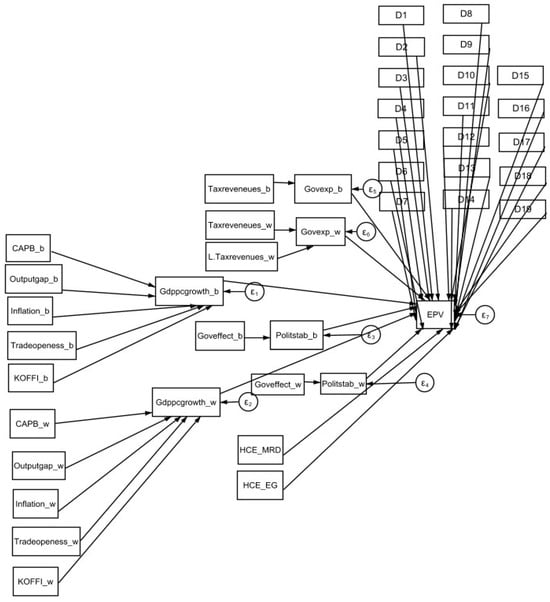
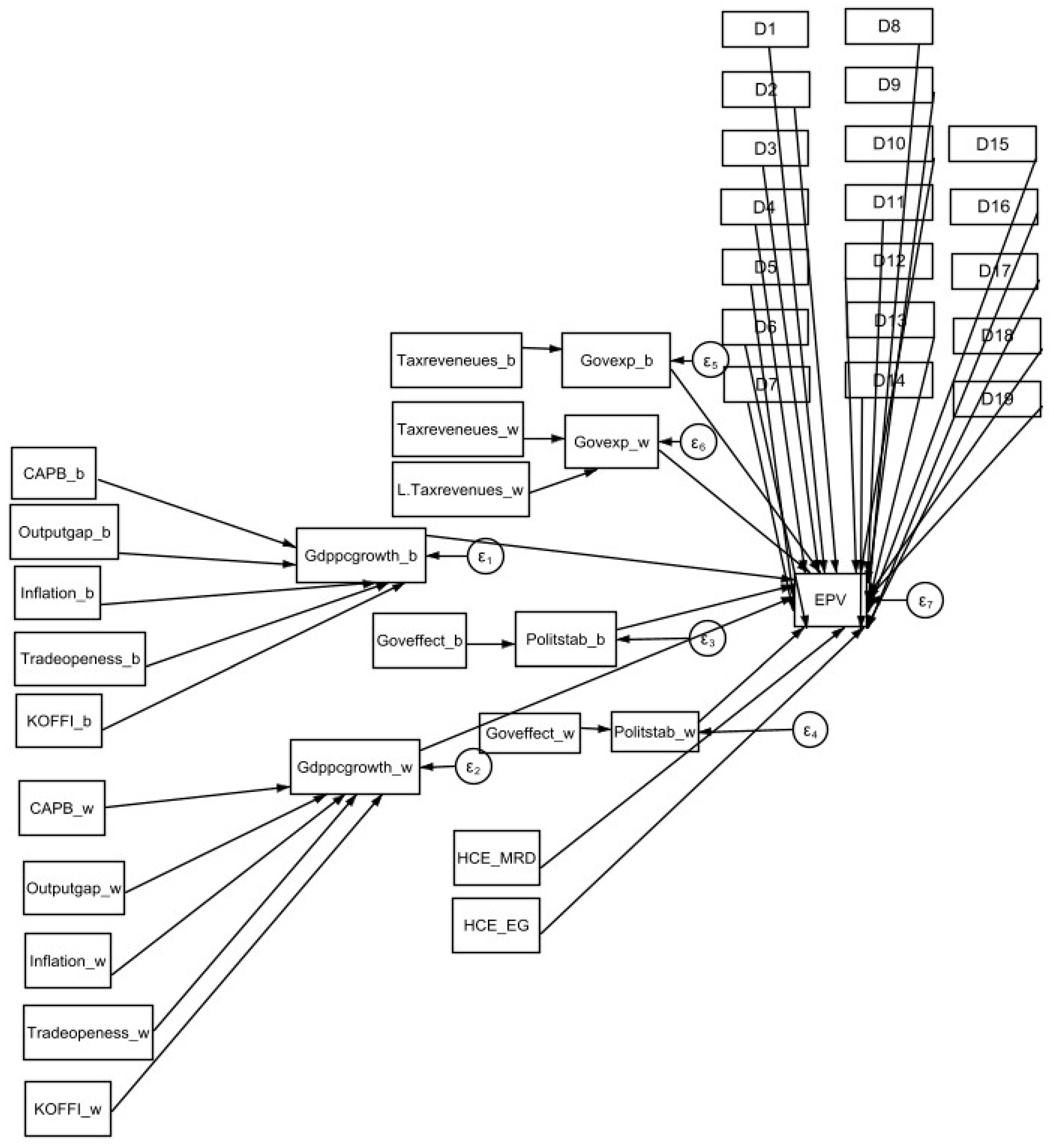
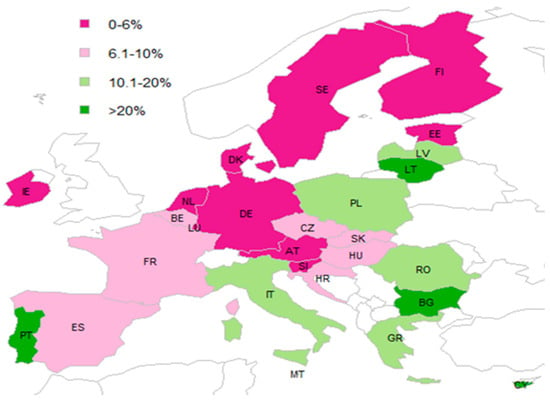
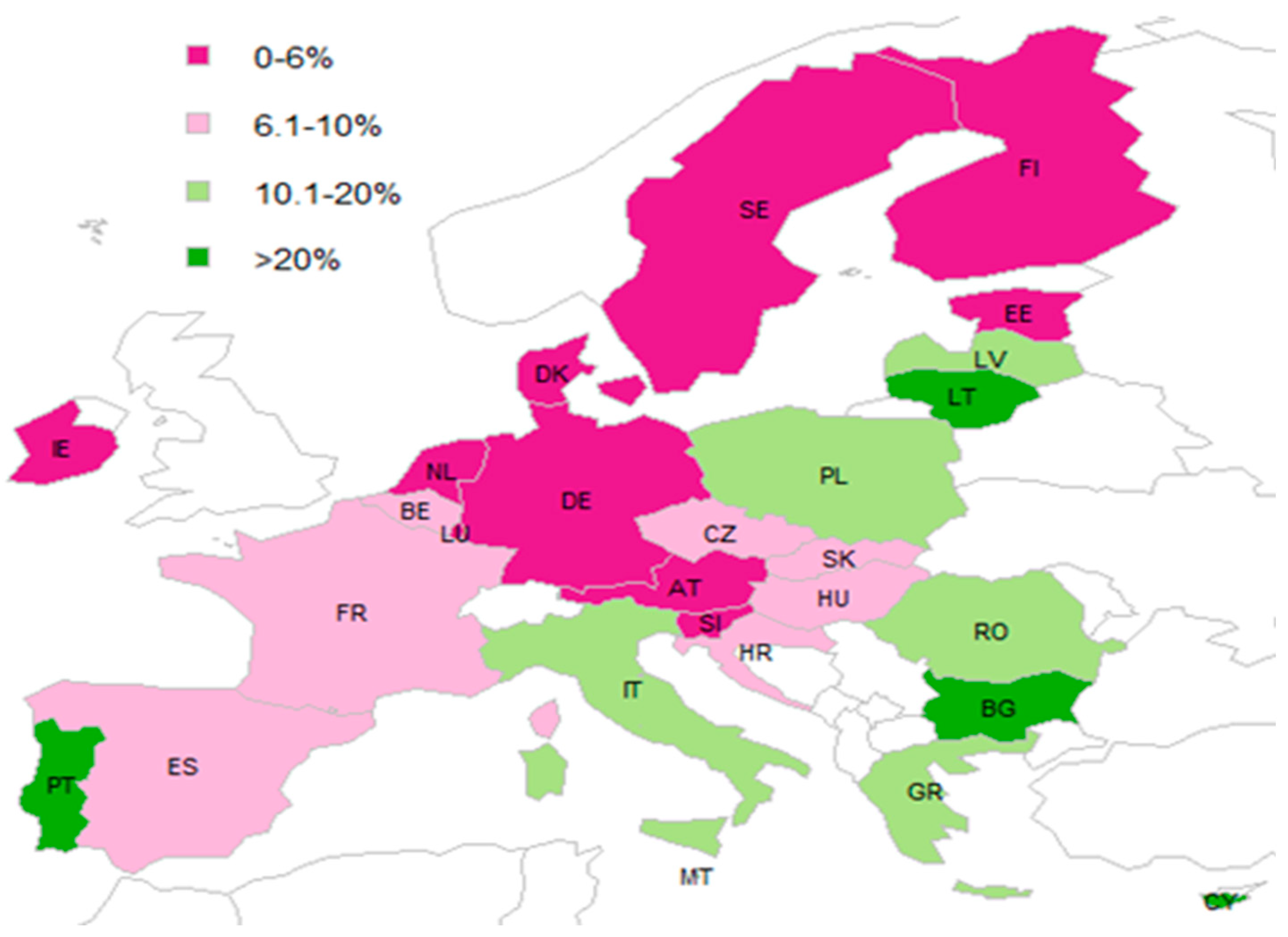

Disclaimer/Publisher’s Note: The statements, opinions and data contained in all publications are solely those of the individual author(s) and contributor(s) and not of MDPI and/or the editor(s). MDPI and/or the editor(s) disclaim responsibility for any injury to people or property resulting from any ideas, methods, instructions or products referred to in the content. |
© 2026 by the authors. Licensee MDPI, Basel, Switzerland. This article is an open access article distributed under the terms and conditions of the Creative Commons Attribution (CC BY) license.