


Abstract
Environmental taxation is an important instrument in the transition to a low-carbon economy, yet empirical findings on its relationship with economic growth remain inconclusive. This study examines whether public debt moderates the relationship between environmental tax revenue and real GDP growth in the EU-27. It uses a balanced panel of 297 observations covering 2014–2024. The baseline specification is a two-way fixed-effects model with Driscoll–Kraay standard errors, supplemented by marginal-effects analysis and robustness checks. At the mean level of the other interacting variable, neither environmental tax revenue nor public debt exhibits a statistically significant conditional association with economic growth. In the baseline two-way fixed-effects specification, the interaction coefficient is negative and statistically significant, indicating that the estimated relationship between environmental tax revenue and growth becomes less favourable as public debt increases. The marginal effect is positive and statistically significant at low debt levels, statistically insignificant at the mean debt level, and negative but statistically insignificant at high debt levels. Robustness checks using alternative covariance estimators and dynamic System GMM specifications indicate that the statistical significance and precise magnitude of the interaction effect are sensitive to the estimation method employed. Therefore, the results provide limited, specification-dependent evidence for the moderating role of public debt, without establishing a causal effect or a universal debt threshold.
1. Introduction
The transition to a low-carbon, resource-efficient economy has made environmental taxation a key instrument in contemporary tax policy to address activities that adversely affect the environment. Its primary purpose is to internalise externalities by correcting and compensating for environmental costs that are not reflected in market prices. Alongside this environmental function, environmental taxes generate public revenue that may be used to finance green investment, technological upgrading, social compensation, or reductions in other, more distortionary taxes. This feature, associated with the so-called double dividend (Metcalf, 2003), distinguishes environmental taxes from other forms of taxation.
The relationship between environmental taxation and economic growth is nevertheless not unambiguous. In the short term, a higher tax burden on environmentally harmful activities may raise firms’ costs, constrain investment, and weaken the price competitiveness of energy-intensive industries. Over a longer horizon, however, the same taxes may stimulate technological innovation and energy efficiency, alter the structure of production, and redirect resources towards more productive and environmentally sustainable activities. The eventual outcome also depends on how the revenue is used, the country’s institutional quality and economic structure, and the broader fiscal environment.
Public debt occupies a particularly important position in this context. Its level reflects not only the accumulated fiscal burden but also the government’s capacity to finance investment, implement compensatory policies, and respond to economic shocks. Countries with lower debt may have greater fiscal space to direct environmental tax revenue towards green infrastructure, energy efficiency, and technological upgrading. At high levels of public debt, by contrast, budgetary resources may be constrained by debt-servicing costs and the need for fiscal consolidation.
The existing literature reports mixed findings on the relationship between environmental taxation and economic growth (Fullerton & Metcalf, 1997; Porter & Van Der Linde, 1995). Some studies identify positive associations related to innovation (Bovenberg & Goulder, 2001), resource efficiency, and the recycling of tax revenue. Others report negative or statistically insignificant relationships attributable to higher production costs, reduced competitiveness, and cross-country differences in tax and institutional systems. These divergent findings suggest that examining only an average relationship between environmental taxes and economic growth may be insufficient. It is also necessary to identify the conditions under which environmental taxation is associated with stronger or weaker economic performance (De Bruin et al., 2019; Guéret et al., 2024).
The existing literature has developed mainly along three relatively distinct strands. The first examines the relationship between environmental taxes and economic growth, with findings remaining mixed and dependent on the design of the tax reform, the use of the resulting revenues, and country-specific economic conditions. The second strand investigates the relationship between public debt and economic growth. Likewise, it offers no consensus regarding the direction of the relationship, causality, or the existence of a universal debt threshold. The third, considerably more limited, strand examines environmental policy under debt and budgetary constraints, focusing on the financing of environmental expenditure, the use of carbon tax revenues for fiscal consolidation, and the interaction between fiscal and environmental sustainability. Despite progress within these strands, the question of whether a country’s fiscal position systematically alters the relationship between environmental tax revenues and economic growth remains insufficiently explored.
The present study addresses this gap by considering public debt not merely as an independent macroeconomic factor but as a moderator of the relationship between environmental taxation and economic growth. The central argument is that the growth effect of environmental tax revenues may depend on the available fiscal space. Less-indebted countries may have greater capacity to use these revenues to finance green investment and technological upgrading, reduce other distortionary taxes, or compensate adversely affected economic agents. At higher debt levels, debt-servicing requirements and the need for fiscal consolidation may constrain these options and amplify the short-term costs of environmental taxation. Accordingly, the study moves beyond estimating a single average direct effect. It examines whether the relationship between environmental tax revenues and economic growth varies with the level of public debt across the EU-27 Member States.
The study makes three main contributions. First, it integrates the literature on environmental taxation, public debt, and economic growth within a unified conditional analytical framework. Second, it introduces an interaction term between environmental tax revenues and public debt to assess whether the relationship between environmental taxation and economic growth varies with a country’s fiscal position. Third, the analysis provides comparable empirical evidence for all 27 EU Member States over the period 2014–2024, while accounting for time-invariant unobserved heterogeneity across countries, common time shocks, and cross-sectional dependence.
Based on the identified research gap, this study aims to assess the conditional relationship between environmental tax revenues and real GDP growth and to determine whether this relationship varies with the level of public debt. The main research question is as follows: Does public debt alter the direction and magnitude of the estimated relationship between environmental tax revenues and economic growth across the EU-27 Member States?
The analysis uses balanced panel data from Eurostat for the 27 EU Member States over the period 2014–2024. The empirical strategy comprises pooled ordinary least squares (Pooled OLS), fixed-effects and random-effects models, and a two-way fixed-effects specification. The preferred specification controls for both time-invariant unobserved country characteristics and common time shocks. Because the diagnostic tests indicate dependence in the residuals, statistical inference is based on Driscoll–Kraay standard errors. Marginal effects of environmental tax revenue are also estimated at different levels of public debt to provide a substantively meaningful interpretation of the moderating relationship.
The remainder of the article is organised as follows. The next section presents the theoretical framework, reviews the relevant literature, identifies the research gap, and develops the hypotheses. Section 3 describes the data, variables, and econometric methodology. Section 4 reports the descriptive statistics, correlation analysis, diagnostic tests, model-selection results, baseline estimates, marginal effects, and robustness checks. Section 5 discusses the findings. Section 6 presents the policy implications, while the final section presents the main conclusions, limitations, and directions for future research.
2. Literature Review and Hypothesis Development
2.1. Theoretical Framework
In recent years, environmental taxes have become a key market-based instrument for promoting sustainable development and supporting the transition to a low-carbon economy. This is partly because they differ from other forms of taxation through the so-called double dividend they may generate. Unlike traditional fiscal instruments, environmental taxes pursue two objectives. First, they seek to internalise the external costs associated with environmental degradation. At the same time, they generate public revenue that can subsequently be used to finance green investment, reduce other distortionary taxes, or support fiscal consolidation. The theoretical foundations of environmental taxation derive from the Pigouvian taxation concept (Pigou, 1920), according to which taxes imposed on environmentally harmful activities correct market failures by incorporating the social costs of pollution into market prices. This approach can improve allocative efficiency by encouraging producers and consumers to reduce environmentally harmful behaviour and adopt cleaner technologies (Goulder, 1994; Bovenberg & de Mooij, 1994).
Alongside the development of the double-dividend theory, research has also examined the potentially divergent economic consequences of environmental taxes. The relevant studies and their findings can broadly be divided into two groups. The first group suggests that environmental taxation may be positively associated with economic growth. According to the Porter hypothesis, appropriately designed environmental standards can encourage firms to use resources more efficiently (Porter, 1991). This may reduce waste and energy intensity, improve production processes, and stimulate the development of new products. Consequently, part of the cost of regulatory compliance may be offset by so-called innovation offsets arising in response to regulatory pressure (Porter & Van Der Linde, 1995). Based on 139 simulations reported in 56 studies evaluating the effects of environmental tax reform on CO2 emissions, employment, economic activity, investment, and consumer prices, Bosquet (2000) concludes that environmental taxes produce positive or neutral outcomes in a substantial proportion of the studies examined. Such outcomes are particularly likely when the revenue is used effectively, for example, to reduce other highly distortionary taxes or support employment. Bosquet does not, however, argue that environmental taxes automatically generate economic growth. Rather, the outcomes are conditional on the design of the reform, the use of the revenue generated, labour-market characteristics, and the broader macroeconomic environment (Andersen, 2010; Metcalf & Stock, 2023).
Similar findings are reported in other empirical studies (Gurtu et al., 2022; He et al., 2019; Mirović et al., 2021; Radulescu et al., 2017). These studies support the proposition that environmental taxation may improve energy efficiency, stimulate technological innovation, and enhance productivity, particularly when environmental tax revenue is used to reduce taxes on labour or corporate activity or is redirected towards green public investment.
More recent evidence for the EU is provided by Kalaš et al. (2025), who examine the dynamic relationships among environmental taxation, economic development, and environmental sustainability. Their findings confirm that environmental taxes constitute an important component of the EU’s sustainable development framework, although their effectiveness depends on the broader economic and institutional context.
From a broader fiscal perspective, Sakar et al. (2025) examine the relationships among total tax revenue, economic policy uncertainty, and economic growth in G7 economies. Their symmetric and asymmetric panel causality results reveal considerable cross-country heterogeneity and show that the direction of the relationships varies across economies and between positive and negative shocks. Although their analysis concerns aggregate rather than environmental tax revenue, it demonstrates that the tax–growth nexus is embedded in a broader macroeconomic and policy environment.
The second group of studies suggests that environmental taxation may increase production costs, reduce firms’ international competitiveness, and discourage investment, particularly in energy-intensive industries. Such adverse effects may arise when environmental tax revenue is used primarily to improve fiscal balances rather than to finance productive investment or compensate affected households and firms (Bovenberg & Goulder, 2001; Freire-González, 2018; Fullerton & Metcalf, 1997).
More recent empirical research increasingly indicates that the economic consequences of environmental taxation are highly context-dependent and are influenced by how the revenue generated is used (Saramas et al., 2026). Environmental taxes do not produce identical outcomes across countries. Their effectiveness depends on institutional quality, economic structure, the design of environmental tax reforms, revenue-recycling mechanisms, and broader fiscal conditions. Existing studies indicate that differences in national fiscal capacity and policy implementation contribute substantially to the heterogeneous macroeconomic outcomes observed across countries (De Bruin et al., 2019; Guéret et al., 2024; Halidu et al., 2025).
A growing body of research links environmental taxation to fiscal sustainability and public debt. Fodha et al. (2018) examine environmental policies financed through taxation or public borrowing and argue that reducing public debt may support both capital accumulation and environmental quality.
Using a dynamic game-theoretic framework, Halkos and Papageorgiou (2018) establish a direct theoretical link between pollution, environmental taxation, and public debt. Their analysis highlights the strategic tension faced by governments that must simultaneously reduce pollution and maintain debt sustainability. Similarly, Rausch (2013) examines the use of carbon tax revenue to consolidate public debt and shows that such a policy may generate long-term welfare gains by reducing future interest obligations. Theoretically, Davin et al. (2025) investigate whether an economy can simultaneously sustain economic growth, finance anti-pollution measures through public debt, and avoid unsustainable debt and environmental dynamics. Their central argument is that public debt does not necessarily constitute only a constraint on economic growth. When debt is used to finance effective pollution-control measures and adaptation to environmental damage, it may indirectly support productivity and growth.
Boly et al. (2022) conceptualise “environmental debt” as accumulated CO2 emissions and identify short- and long-run relationships between public and environmental debt. They find that, in the long run, higher public debt is associated with a greater accumulation of environmental debt. In the short run, a substitution relationship may emerge, although it weakens when the initial level of public indebtedness is high.
In addition, the relationship between economic growth and public debt has been examined by numerous authors. For example, Reinhart and Rogoff (2010) find only a weak relationship between these variables until public debt reaches their estimated threshold of 90% of GDP, beyond which median economic growth declines markedly. They also report that when external debt reaches approximately 60% of GDP, annual economic growth declines by about 2%.
Replicating and reassessing this analysis, Herndon et al. (2014) find no convincing evidence that exceeding the 90% threshold invariably leads to a sharp decline in economic growth. They emphasise that the relationship varies substantially across countries and periods. Checherita-Westphal and Rother (2012) identify an even lower range at approximately 70–80% of GDP, beyond which public debt may adversely affect economic growth.
The possibility of reverse causality in this relationship is examined by Panizza and Presbitero (2014), who ask whether high public debt reduces economic growth or whether weak growth leads to debt accumulation. Conventional estimates reveal a negative correlation, but this relationship disappears when instrumental-variable techniques are employed. The authors therefore find no robust evidence that high public debt, in itself, causes lower economic growth.
Eberhardt and Presbitero (2015) identify a negative long-run relationship between public debt and economic growth, while emphasising the substantial cross-country heterogeneity in their results. They find no common debt threshold that can be applied uniformly across economies.
The inability to establish a single universal and automatic debt threshold is also supported in other investigations (Kourtellos et al., 2013; Baum et al., 2013; Égert, 2015). These studies demonstrate that the effect of public debt depends considerably on the prevailing economic regime and institutional quality. At the same time, estimated threshold values are sensitive to the sample, period, data frequency, and model specification.
Recent evidence further confirms the heterogeneous nature of the debt–growth relationship. Using fixed-effects panel quantile regressions for 127 developing countries, Mudayen et al. (2025) find that public debt constrains economic growth across a substantial part of the conditional growth distribution, particularly between the 30th and 90th quantiles. Their findings suggest that the growth implications of public debt may vary depending on the position of an economy within the growth distribution. Although the study focuses on developing countries and is therefore not directly comparable with the EU context, it provides additional evidence against assuming a homogeneous debt effect.
The conditional nature of the debt–growth relationship is also demonstrated by Shi et al. (2025). Using a dynamic System GMM model for a global panel of 115 countries, the authors find that public debt has a negative direct effect on economic growth. In contrast, the interaction between public debt and institutional quality is positive. Their results indicate that the consequences of public indebtedness depend on the broader institutional environment and demonstrate the analytical relevance of moderation effects in the debt–growth nexus.
While Shi et al. (2025) identify institutional quality as a factor modifying the growth consequences of public debt, the reverse conditional relationship, whether public debt modifies the growth effect of a particular fiscal instrument, remains considerably less explored. In the context of environmental taxation, this question is especially relevant because indebted governments may have more limited fiscal capacity to recycle environmental tax revenues, compensate affected economic agents, or finance complementary green investment.
To systematise differences in scope, measurement, and methodological approaches, Table 1 provides a comparative overview of selected studies that most closely examine the relationship among environmental policy, public debt, and economic growth.
Table 1.
Comparison of Selected Studies on the Interrelationship between Environmental Policy, Public Debt, and Economic Growth.
In summary, the existing theoretical and empirical literature does not establish an unambiguous relationship between environmental taxes and economic growth, or between public debt and economic growth. The findings vary depending on the sample, period, econometric methodology, level of indebtedness, and institutional setting. Empirical studies jointly examining environmental taxation, public debt, and economic growth remain considerably more limited. This provides the rationale for analysing public debt as a factor that may alter the estimated relationship between environmental tax revenues and economic growth.
Building on the identified research gap, the present study integrates these strands of literature into a unified empirical framework for the EU-27. Unlike studies that consider public debt solely as an independent macroeconomic factor, this study also incorporates it as a moderator of the relationship between environmental tax revenues and economic growth. The interaction specification is used to examine whether the direction and magnitude of this estimated relationship vary with a country’s fiscal position. The study neither identifies a formal debt threshold nor directly observes how environmental tax revenues are used. Instead, it provides new empirical evidence on the conditional nature of the relationship under investigation.
2.2. Scientific Gap and Hypothesis Development
Most of the existing literature examines the relationship between environmental taxation and economic growth separately from the relationship between environmental policy and fiscal sustainability. Empirical studies integrating environmental tax revenue, public debt, and economic growth within a unified analytical framework remain limited. More specifically, public debt is generally treated as an independent determinant of growth, an indicator of fiscal sustainability, or an outcome of fiscal policy. It is rarely examined as a factor that may alter the strength and direction of the relationship between environmental taxation and economic growth. Consequently, it remains insufficiently understood whether the same environmental tax policy is associated with different growth outcomes at low and high levels of public indebtedness.
This study addresses this gap by treating public debt not only as an independent explanatory variable but also as a moderator of the relationship between environmental tax revenue and economic growth. The analysis, therefore, moves beyond estimating a universal average effect and examines the conditions under which environmental taxation may be associated with stronger or weaker economic performance. In this way, the study empirically integrates three strands of research that have largely been examined separately: environmental taxation, fiscal sustainability, and economic growth. These dimensions are incorporated into a common panel-data framework for the EU Member States, together with a set of relevant control variables.
Based on the theoretical framework, the identified research gap, and the findings of previous empirical studies, three research hypotheses are formulated. Because the econometric model includes an interaction term between environmental tax revenue and public debt, the estimated relationship of each variable with economic growth is conditional on the level of the other variable. To facilitate the interpretation of the main coefficients, environmental tax revenue and public debt are mean-centred. Accordingly, coefficient β1 represents the conditional association between environmental tax revenue and economic growth at the sample mean level of public debt, whereas β2 represents the conditional association between public debt and economic growth at the sample mean level of environmental tax revenue.
Hypothesis 1 (H1).
At the sample mean level of public debt, environmental tax revenue is positively associated with economic growth in the EU Member States:
where β1 is the coefficient on the environmental tax revenue variable and represents its conditional association with economic growth when the mean-centred value of public debt equals zero.
H1: β1 > 0
The expected positive sign is based on the capacity of environmental taxation to promote resource and energy efficiency, stimulate technological innovation, and support the productive use of the revenue generated.
Hypothesis 2 (H2).
At the sample mean level of environmental tax revenue, public debt is negatively associated with economic growth in the EU Member States:
where β2 is the coefficient on the public debt variable and represents its conditional association with economic growth when the mean-centred value of environmental tax revenue equals zero.
H2: β2 < 0
The expected negative sign is based on the proposition that higher public debt may increase debt-servicing costs, constrain fiscal space, and reduce governments’ capacity to undertake productive public investment.
Within the analytical framework of the present study, a distinction is made between the empirically tested moderating relationship and the proposed mechanism through which it may arise. The interaction term between environmental tax revenues and public debt allows examination of whether the estimated relationship between environmental taxation and economic growth varies with the level of public indebtedness. However, it does not directly identify the channels that may explain this relationship. More specifically, the data used do not reveal whether environmental tax revenues are allocated to green investment, technological upgrading, reductions in other taxes, social compensation, general budget financing, or public debt servicing.
Fiscal space is considered a theoretically plausible but directly unobserved mechanism. All else being equal, higher levels of indebtedness may constrain a government’s capacity to finance complementary investment and compensatory measures and increase the need for fiscal consolidation. This could reduce the scope for using environmental tax revenues to support economic growth. This interpretation is consistent with the theoretical arguments (Rausch, 2013; Fodha et al., 2018; Davin et al., 2025), but it is not directly tested in the present empirical model. Therefore, the interaction coefficient should be interpreted as an estimate of a conditional statistical relationship, while fiscal space should be regarded as a possible but unverified explanatory channel.
Hypothesis 3 (H3).
Public debt negatively moderates the relationship between environmental tax revenue and economic growth, such that the marginal effect of environmental tax revenue decreases as public debt increases:
where β3 is the coefficient on the interaction term between the mean-centred values of environmental tax revenue and public debt. A negative coefficient indicates that, as public debt increases, the estimated relationship between environmental tax revenue and economic growth becomes less favourable. This hypothesis represents the central proposition of the study because it tests whether the relationship between environmental taxation and growth varies with a country’s fiscal position.
H3: β3 < 0
3. Materials and Methods
3.1. Research Design
This study employs a quantitative research design using balanced panel data to examine the relationship between environmental tax revenue and economic growth in EU Member States, with particular emphasis on the moderating role of public debt. Panel-data analysis is especially appropriate for this type of research because it combines the cross-sectional and time dimensions of the data. It therefore permits the analysis of both within-country changes over time and cross-country differences (Baltagi, 2005; Hsiao, 2014; Wooldridge, 2010). Compared with purely cross-sectional or time-series approaches, panel models provide more observations, may improve estimation efficiency, and reduce the risk of bias from unobserved time-invariant country characteristics.
The empirical analysis is based on a balanced panel comprising the 27 Member States of the European Union over the period 2014–2024, yielding a total of 297 observations. The study period is determined by the joint availability of data for all indicators included in the model in the Eurostat database. More specifically, the “Real GDP growth rate—volume” series, used to measure real GDP growth, begins in 2014, while 2024 is the latest year for which data on total environmental tax revenues as a percentage of GDP are available. Consequently, 2014–2024 represents the longest common period for which a complete and comparable balanced panel can be constructed, covering all variables for all EU-27 countries without excluding any country or observation.
At the same time, the selected period is particularly relevant because it encompasses markedly different macroeconomic and policy conditions. It covers the years before and after the introduction of the European Green Deal, the COVID-19 pandemic, the energy crisis, and the inflationary shock. This makes it possible to estimate the relationship under investigation against the background of substantial EU-wide changes occurring during the period.
The empirical analysis follows a sequential research strategy. First, descriptive statistics and correlation analysis are used to examine the main characteristics of the variables and their preliminary relationships. Multicollinearity is then assessed using variance inflation factors (VIFs), which indicate whether the explanatory variables can be included simultaneously in the regression model without substantial problems arising from linear dependence among them (O’Brien, 2007).
The econometric analysis subsequently proceeds from simpler to more complex panel-data specifications. Pooled ordinary least squares (Pooled OLS) is estimated as the baseline model, followed by fixed-effects and random-effects models that account for unobserved country heterogeneity. The selection of the most appropriate specification is based on standard panel-data tests, including the F-test for individual effects, the Breusch–Pagan Lagrange multiplier test (Breusch & Pagan, 1980), and the Hausman test (Hausman, 1978).
Given the presence of common economic shocks affecting all countries during the period examined, the preferred specification is a two-way fixed-effects model that simultaneously controls for country-specific characteristics and common time effects. Following model selection, diagnostic tests are conducted for heteroskedasticity, serial correlation, and cross-sectional dependence among the panel units (Breusch & Pagan, 1979; Drukker, 2003; Wooldridge, 2010). The detected violations of the classical assumptions motivate the use of Driscoll–Kraay standard errors (Driscoll & Kraay, 1998), which provide inference robust to heteroskedasticity, serial correlation, and cross-sectional dependence.
Although the two-way fixed-effects model controls for unobserved time-invariant heterogeneity and common time shocks, it does not fully address the possibility of reverse causality or the simultaneous determination of economic growth and fiscal indicators. Therefore, a dynamic System GMM model is employed as an additional robustness check.
The dynamic specification includes the first lag of real GDP growth to account for possible short-run persistence in economic activity. Lagged economic growth, environmental tax revenues, public debt, and the interaction term are treated as potentially endogenous and instrumented using their own lagged values. Gross fixed capital formation, inflation, and unemployment are included as control variables, while year effects account for common macroeconomic shocks.
Given the limited number of cross-sectional units, a parsimonious instrument strategy is employed. Alternative specifications using instruments based on the second and third lags are estimated to assess the sensitivity of the results to the choice of instrument set. Model adequacy is evaluated using the Arellano–Bond tests for first- and second-order serial correlation, a test of the validity of the overidentifying restrictions, and a comparison between the number of instruments and the number of countries. System GMM is used as a supplementary dynamic robustness check rather than as a substitute for the baseline two-way fixed-effects specification.
In the final stage of the analysis, the marginal effects of environmental tax revenue are estimated at different levels of public debt to facilitate an accurate interpretation of the moderating relationship. The robustness of the results is also examined using alternative covariance estimators and different lag specifications for the standard errors.
The methodological framework is designed to progress systematically from identifying simple statistical relationships to estimating conditional associations. This makes it possible to examine not only whether environmental tax revenue is associated with economic growth, but also how this association changes under different fiscal conditions. The overall methodological framework, research strategy, and analytical sequence are presented in Figure 1.
Figure 1.
Research Framework and Empirical Strategy.
3.2. Data and Variables
The main characteristics of the variables used in the study are summarised in Table 2.
Table 2.
Variables Used in the Empirical Analysis.
The dependent variable is the annual real GDP growth rate at market prices, measured as the percentage change in chain-linked volumes relative to the previous year. This measure captures changes in the real volume of economic activity, excluding the effects of inflation, and is widely used as an indicator of economic growth in cross-country analyses.
Environmental tax revenue is selected as the main explanatory variable because environmental taxes are an important market-based instrument whose principal purpose is to internalise the negative externalities generated by environmentally harmful activities. The indicator used in the analysis is total environmental tax revenue as a percentage of GDP. This indicator should not be interpreted directly as a measure of tax rates or of the stringency or effectiveness of environmental policy. Tax rates, the size and composition of the taxable base, the behaviour of economic agents, and GDP dynamics jointly determine its value.
The indicator combines revenues from energy and transport taxes, as well as taxes on pollution and resource use. These categories differ in their tax bases, fiscal significance, and the mechanisms by which they affect production costs, consumption, investment, and the behaviour of economic agents. Consequently, the aggregate indicator may conceal heterogeneous or offsetting effects across the individual tax categories. The resulting estimates should therefore be interpreted as reflecting the overall revenue significance of environmental taxes rather than the effect of a specific environmental tax or a change in its rate.
Unlike the other variables, the expected sign of environmental tax revenue is theoretically ambiguous and may be either positive or negative. This ambiguity is partly related to the time horizon over which the relationship is evaluated. In the short term, environmental taxes may be associated with weaker economic growth due to higher production costs and energy prices, reduced investment, and constrained consumption. Over the longer term, however, they may stimulate innovation, resource and energy efficiency, and green investment (Blagoeva & Georgieva, 2023; Krastev & Krasteva-Hristova, 2024). They also generate revenue that may be used to reduce other taxes or finance green investment, thereby potentially supporting economic growth (Blagoeva & Georgieva, 2021).
Previous empirical studies likewise report mixed findings concerning the sign of this relationship. Some identify a negative association attributable to higher production costs and reduced competitiveness (Hassan et al., 2020). Others report a strong positive association operating through improvements in energy efficiency and innovation (Kalaš et al., 2025). Abdullah and Morley (2014) find evidence of causality between environmental taxation and economic growth, but do not confirm a clear growth-enhancing effect.
The next variable included in the model is public debt. Public debt as a percentage of GDP is used as a comparable indicator of countries’ accumulated fiscal positions. Normalisation by GDP enables comparisons across economies of different sizes, and the indicator is available for all EU-27 countries throughout the entire period under analysis. It also has direct institutional relevance within the EU because of its role in fiscal surveillance and debt sustainability assessments. A higher ratio may signal a more limited capacity for additional borrowing and greater sensitivity to debt-servicing costs.
However, the public debt-to-GDP ratio is neither a comprehensive nor a direct measure of fiscal space. Fiscal space also depends on the overall budget balance, the primary balance, interest expenditure, the maturity and currency composition of debt, refinancing costs, revenue-raising capacity, and financial market confidence. Accordingly, in the present study, the public debt-to-GDP ratio is interpreted as a proxy for the fiscal position rather than as a comprehensive measure of available budgetary capacity. Alternative indicators capture different dimensions of fiscal capacity. The budget balance is highly sensitive to the prevailing economic cycle and extraordinary fiscal measures. Interest expenditure and the debt-service burden more directly reflect immediate budgetary pressures, but they also depend on the maturity structure of debt, historical financing conditions, and prevailing interest rates. By contrast, the debt-to-GDP ratio reflects the accumulated fiscal position and is available on a harmonised basis for all countries and years in the sample. Its selection ensures comparability and model parsimony but does not imply that it is superior to all alternative measures of fiscal space.
Using GDP as a common denominator for both environmental tax revenues and public debt facilitates international comparisons across economies of different sizes, but it may generate a mechanical relationship when GDP changes substantially. This risk is particularly relevant to the period under analysis because of the sharp economic contraction in 2020 and the subsequent recovery. Time fixed effects account for common annual shocks but do not eliminate cross-country differences in the intensity of their effects. Therefore, an additional robustness check is performed by excluding 2020 and 2021 from the sample.
In addition to its inclusion as an explanatory variable, public debt is specified as a moderating variable. The underlying argument is that public debt may not only be directly associated with economic growth but also alter the relationship between environmental tax revenue and growth. Countries with low public indebtedness generally have greater fiscal capacity to invest and to support firms and households. Under these conditions, environmental tax revenue may be channelled towards green investment, innovation, and productivity improvements. The opposite may apply in highly indebted countries, where substantial debt-servicing costs and budgetary constraints reduce the resources available for green programmes, technological modernisation, compensation for households and firms, or reductions in other taxes. Consequently, the relationship between environmental taxation and growth may become less favourable and may potentially turn negative. The estimated association, therefore, depends on the fiscal environment in which environmental taxation is implemented.
This reasoning motivates the moderating role assigned to public debt: rather than merely being associated with economic growth, debt may modify the relationship between environmental tax revenue and growth. To capture this moderating relationship, an interaction term between environmental tax revenue and public debt is introduced into the regression model (Aiken & West, 1991). The interaction coefficient is expected to be negative because higher public debt may weaken the potentially favourable association between environmental taxation and economic growth by limiting governments’ fiscal capacity to direct revenue towards productive investment or other compensatory measures.
Gross fixed capital formation is included as a proxy for investment and physical capital accumulation, a factor commonly incorporated into empirical growth models (Mankiw et al., 1992). In the present study, the indicator is expressed as a percentage of GDP.
Inflation and unemployment are included as additional controls. Inflation is measured by the Harmonised Index of Consumer Prices, which provides a comparable measure of consumer-price developments across EU Member States (Eurostat, 2024). Inflation is included as a control because macroeconomic instability and changes in the general price level may be associated with economic growth and may also affect the estimated relationship between environmental tax revenue and growth (Fischer, 1993). The expected coefficient on inflation is negative because high inflation is associated with declining purchasing power, greater economic-policy uncertainty, and weaker incentives to invest.
The final variable included in the model is unemployment among the economically active population aged 15–74. The indicator is measured in accordance with the International Labour Organisation (ILO, 2013) definition and harmonised by Eurostat through the EU Labour Force Survey (Eurostat, 2024), ensuring methodological consistency and comparability across EU Member States. It is measured as the percentage of the labour force aged 15–74 that is willing and able to work but unable to find employment. The expected coefficient on unemployment is negative. This indicator is included to control for differences in labour-market utilisation and cyclical economic conditions, given the established relationship between changes in output and unemployment (Ball et al., 2017).
The selection of the control variables follows the principle of a parsimonious specification. Investment, inflation, and unemployment capture key channels through which real economic conditions, price dynamics, and labour market developments are associated with economic growth. Their limited number reflects the relatively short time dimension of the panel and the need to avoid overparameterisation, multicollinearity, and the inclusion of additional potentially endogenous regressors. The two-way fixed effects account for unobserved country characteristics that remain constant over time, as well as common time shocks across countries. However, this approach does not eliminate the potential influence of omitted factors that vary both across countries and over time.
3.3. Baseline Empirical Specification
The empirical analysis is based on a balanced panel dataset covering the EU-27 Member States over the period 2014–2024. The dependent variable is real GDP growth, while environmental tax revenue is the main explanatory variable. Public debt is included both as an explanatory variable and as a moderator of the relationship between environmental tax revenue and economic growth. To facilitate interpretation of the interaction term and reduce nonessential multicollinearity, environmental tax revenue and public debt are mean-centred before constructing the interaction term.
The baseline empirical specification is defined as follows:
where i = 1, … 27 denotes the country;
t = 2014, … 2024 denotes the year;
β0 is the intercept;
β1, β2, β3, β4, β5, β6 are the regression coefficients;
is the mean-centred value of environmental tax revenue for country i in year t;
is the mean-centred value of public debt for country i in year t;
is the interaction term between mean-centred environmental tax revenue and mean-centred public debt;
Investit, Inflit and UnEmplit denote gross fixed capital formation, inflation, and unemployment, respectively, for country i in year t;
αi denotes country fixed effects; λt denotes year fixed effects;
εit is the idiosyncratic error term.
Statistical inference for the preferred specification is based on Driscoll–Kraay standard errors.
4. Results
4.1. Descriptive Statistics
Descriptive statistics summarise the main characteristics of the variables and provide information on their variation, skewness, and potential extreme observations. The results for the balanced panel of 297 observations are presented in Table 3.
Table 3.
Descriptive statistics results.
The average annual real GDP growth rate is 2.62%, with a standard deviation of 3.72 percentage points and a range from −10.90% to 24.60%. The wide range and positive excess kurtosis reflect the influence of exceptional macroeconomic events during the period examined. Environmental tax revenue averages 2.60% of GDP and exhibits limited variation, ranging from 0.85% to 5.62% of GDP.
The greatest heterogeneity is observed in public debt, which averages 68.81% of GDP and ranges from 8.50% to 209.40% of GDP. Its positive skewness reflects the presence of a limited number of highly indebted countries. This substantial variation provides an appropriate empirical basis for examining the moderating role of public debt in the relationship between environmental tax revenue and economic growth.
The mean value of gross fixed capital formation is 21.44% of GDP. The high skewness and excess kurtosis of investment are primarily attributable to extreme observations, most notably that for Ireland in 2019. Inflation and unemployment also exhibit positive skewness and substantial variation. Inflation mainly reflects the price and energy shocks of 2022–2023, whereas differences in unemployment reflect the heterogeneous conditions prevailing in national labour markets.
Overall, the variables exhibit considerable heterogeneity both across countries and over time. Environmental tax revenue has a comparatively more stable distribution, whereas public debt, investment, inflation and unemployment display more pronounced extreme values. These characteristics should be considered when interpreting the subsequent panel estimates and robustness checks.
4.2. Correlation Analysis
Descriptive statistics alone do not provide information on the direction and strength of the relationships among the selected variables. Therefore, the next stage of the analysis employs Pearson correlation coefficients (Rodgers & Nicewander, 1988). The correlation analysis evaluates the direction and strength of the linear relationships among the variables and provides a preliminary assessment of potential multicollinearity before the panel model is estimated. The results are presented in Table 4.
Table 4.
Correlation matrix.
As shown in the table, the Pearson correlation coefficients indicate relatively weak to moderate linear relationships among the explanatory variables. The strongest correlation is observed between public debt and unemployment (r = 0.614), followed by a negative correlation between gross fixed capital formation and unemployment (r = −0.425). None of the pairwise correlation coefficients exceed the commonly used diagnostic threshold of 0.70. These results suggest that severe multicollinearity is unlikely to affect the regression estimates materially. Nevertheless, multicollinearity is examined further using variance inflation factors (VIFs) in the subsequent analysis.
The correlations between GDP growth and the explanatory variables are generally weak. However, weak bivariate correlations do not imply the absence of a relationship among the variables. Rather, they suggest that the relationships may be more complex, may depend on other macroeconomic factors, and may vary across different levels of public debt. Consequently, the relationship between economic growth and the selected indicators is unlikely to be adequately captured by simple bivariate associations. A multivariate panel regression model is therefore appropriate because it permits the simultaneous estimation of the conditional associations of environmental tax revenue, public debt, their interaction, and the selected control variables, while controlling for unobserved country-specific heterogeneity.
Although Pearson correlation coefficients provide preliminary information on the direction and strength of linear relationships among variables, they are insufficient for assessing multicollinearity in a multivariate regression model. An additional diagnostic assessment is therefore performed using the variance inflation factor (VIF) and tolerance statistics. Because the final model specification includes an interaction term between environmental tax revenue and public debt, the two variables are mean-centred before constructing the interaction term. Mean-centring is widely recommended in moderation models because it facilitates the interpretation of the main coefficients and may reduce nonessential multicollinearity between the interaction term and its constituent variables (Aiken & West, 1991; Shieh, 2011). The results are presented in Table 5.
Table 5.
VIF values.
As shown in Table 5, the VIF values range from 1.158 to 1.932, whereas the tolerance values range from 0.518 to 0.863. All VIF values are well below both the conservative threshold of 3 and the commonly used threshold of 5. At the same time, all tolerance values exceed the recommended minimum of 0.20. These results indicate that the explanatory variables do not exhibit problematic multicollinearity and that the inclusion of the interaction term does not create substantial collinearity with its constituent variables. The selected variables can therefore be retained in the subsequent panel regression analysis.
4.3. Panel Model Selection
The empirical analysis compares pooled OLS, one-way fixed-effects, random-effects, and two-way fixed-effects specifications. Pooled OLS is retained only as a benchmark, whereas the panel estimators account for unobserved country-level heterogeneity.
The F-test for individual effects rejects the null hypothesis of common country intercepts (F = 14.425; p < 0.001), indicating that pooled OLS does not adequately account for the panel structure. The Breusch–Pagan Lagrange multiplier test also rejects pooled OLS in favour of a random-effects specification (χ2 = 290.036; p < 0.001). Finally, the Hausman test supports the fixed-effects estimator, indicating that the unobserved country-specific effects are correlated with the explanatory variables.
Given these results and the presence of common macroeconomic shocks during 2014–2024, the preferred specification is a two-way fixed-effects model incorporating both country and year effects. The estimates from the alternative specifications and the preferred model are reported in in Section 4.5.
4.4. Diagnostic Tests
Following model selection, diagnostic tests were conducted for heteroskedasticity, serial correlation, and cross-sectional dependence. The results are reported in Table 6.
Table 6.
Diagnostic Tests Results.
The Breusch–Pagan test provides weak evidence of heteroskedasticity at the 10% significance level (BP = 11.027; p = 0.088). The Breusch–Godfrey/Wooldridge test rejects the null hypothesis of no serial correlation in both the fixed-effects and random-effects specifications. The additional Wooldridge test for the fixed-effects model leads to the same conclusion (F = 7.011; p = 0.009).
The Pesaran CD test (Pesaran, 2004) identifies strong cross-sectional dependence in the one-way fixed-effects and random-effects models (p < 0.001). However, after year fixed effects are introduced, the null hypothesis of cross-sectional independence cannot be rejected for the two-way fixed-effects specification (z = −0.821; p = 0.412). This result indicates that year effects capture a substantial part of the common shocks affecting the EU Member States during the period examined.
Taken together, the diagnostic results indicate serial correlation, weak evidence of heteroskedasticity, and substantial cross-sectional dependence in the one-way specifications. Statistical inference for the preferred two-way fixed-effects model is therefore based on Driscoll–Kraay standard errors, which are robust to heteroskedasticity, serial correlation, and potential cross-sectional dependence.
4.5. Baseline Regression Results
Table 7 presents the estimates from pooled OLS, one-way fixed-effects, random-effects, and two-way fixed-effects specifications. The final column reports the preferred two-way fixed-effects model with Driscoll–Kraay standard errors, which controls for both time-invariant country heterogeneity and common year-specific shocks.
Table 7.
Panel Regression Results and Final Specification.
In the preferred specification, the coefficient on environmental tax revenue is positive but statistically insignificant (β = 0.037; p = 0.866). Because the variables entering the interaction are mean-centred, this coefficient represents the conditional association between environmental tax revenue and economic growth at the sample mean level of public debt. The coefficient on public debt, evaluated at the sample mean level of environmental tax revenue, is also statistically insignificant (β = −0.024; p = 0.549).
The central result concerns the interaction between environmental tax revenue and public debt. The interaction coefficient is negative and statistically significant at the 5% level (β = −0.020; p = 0.020). Within the baseline specification, this indicates that the estimated conditional relationship between environmental tax revenue and economic growth becomes less favourable as public debt increases. More specifically, a one-percentage-point increase in the debt-to-GDP ratio reduces the estimated marginal association between environmental tax revenue and real GDP growth by approximately 0.020 percentage points.
Accordingly, the preferred specification provides no statistical support for H1 or H2 because the respective main coefficients are not statistically significant. By contrast, the negative and statistically significant interaction coefficient supports H3 within the baseline specification. The robustness of this result is examined subsequently using alternative covariance estimators, sample specifications, and dynamic System GMM models.
Among the control variables, inflation has a negative and statistically significant coefficient (β = −0.134; p < 0.001), while unemployment is negative and significant only at the 10% level (β = −0.195; p = 0.067). Gross fixed capital formation has a positive but statistically insignificant coefficient (β = 0.005; p = 0.956).
The preferred model has an R2 of 0.072, while the explanatory variables are jointly statistically significant (F = 3.292; p = 0.004). The relatively limited explanatory power is not unexpected, given the volatility of annual real GDP growth and the influence of additional time-varying factors that the specification does not fully capture.
4.6. Marginal Effect of Environmental Tax Revenue at Different Levels of Public Debt
Because the interaction term between environmental tax revenue and public debt is statistically significant, the marginal effect of environmental tax revenue is estimated at different levels of public debt (Brambor et al., 2006). The results are presented in Table 8.
Table 8.
Interpretation of Marginal Effects.
The values reported in Table 8 are calculated from the preferred two-way fixed-effects model with Driscoll–Kraay standard errors. The marginal effect is calculated as:
where β1 is the coefficient on environmental tax revenue and β3 is the coefficient on the interaction term.
The marginal effects are evaluated at three levels of public debt: one standard deviation below the sample mean, at the sample mean, and one standard deviation above the sample mean. The corresponding standard errors and p-values are calculated using the delta method (Oehlert, 1992).
The results show that the estimated conditional marginal relationship between environmental tax revenues and economic growth varies with the level of public debt. At a debt level one standard deviation below the sample mean, corresponding to approximately 30.39% of GDP, the estimated marginal effect is positive and statistically significant (β = 0.804; p = 0.015). This indicates that, at this specific debt level, a higher share of environmental tax revenues in GDP is associated with higher real GDP growth.
At the sample mean level of public debt, approximately 68.81% of GDP, the estimated marginal effect is close to zero and statistically insignificant (β = 0.037; p = 0.866). Thus, at the mean debt level, the conditional relationship between environmental tax revenues and economic growth is not statistically distinguishable from zero.
At a debt level one standard deviation above the sample mean, corresponding to approximately 107.23% of GDP, the point estimate of the marginal effect becomes negative but remains statistically insignificant (β = −0.731; p = 0.107). Therefore, the results do not provide sufficient evidence that environmental tax revenues are associated with lower economic growth at high levels of indebtedness. They indicate only that the positive and statistically significant conditional relationship identified at the low-debt level weakens and is no longer statistically distinguishable from zero at the average and high-debt levels.
Accordingly, the marginal-effects analysis supports the presence of a diminishing estimated conditional relationship in the baseline specification, but it does not demonstrate that environmental taxation becomes detrimental once public debt exceeds a particular level.
The model-implied point at which the estimated marginal effect changes sign can be calculated by setting the marginal-effect expression equal to zero:
Solving this expression shows that the estimated marginal effect changes sign at a mean-centred public debt value of approximately 1.84 percentage points above the sample mean ( ≈ 1.84).
Given that the mean public debt in the sample is 68.81% of GDP, this corresponds to an indicative debt level of approximately 70.65% of GDP. This value represents only the algebraic point at which the estimated conditional marginal effect of environmental tax revenues changes sign within the baseline linear interaction model. It should not be interpreted as a statistically estimated structural, fiscal, or policy threshold, nor should it be taken to indicate a discrete transition between two regimes. Moreover, the negative marginal effect estimated at the high observed level of public debt is not statistically significant. Therefore, the results do not support the conclusion that environmental taxation begins to impede economic growth once debt reaches a particular level. Identifying a formal threshold would require a different econometric design, such as a panel threshold model, along with an assessment of the statistical uncertainty surrounding the estimated threshold.
Figure 2 illustrates the conditional marginal effect of environmental tax revenue on GDP growth at different levels of public debt. The black line represents the estimated marginal effect. Its downward slope illustrates the negative moderating role of public debt. The grey area represents the 95% confidence interval calculated using Driscoll–Kraay standard errors, while the horizontal dashed line at β = 0 separates positive from negative estimates.
Figure 2.
Marginal Effect of Environmental Tax Revenue on GDP Growth Conditional on Public Debt.
At relatively low levels of public debt, the marginal effect is positive, indicating that environmental tax revenue may be associated with stronger GDP growth in economies facing fewer fiscal constraints. At a public debt of approximately 30% of GDP, the confidence interval does not include zero, and the estimated marginal effect is statistically significant (Debt ≈ 30%, β ≈ 0.80, p ≈ 0.015).
As public debt increases, the positive marginal effect gradually weakens and approaches zero. Around the sample mean debt level, the confidence interval includes zero, indicating that the marginal effect is no longer statistically distinguishable from zero (Debt ≈ 68%, β ≈ 0.04, p ≈ 0.866). This pattern is consistent with the negative interaction coefficient and supports H3 in the preferred specification.
At very high levels of public debt, the estimated marginal effect becomes negative. At a debt of approximately 107% of GDP, for example, the estimated marginal effect is negative but statistically insignificant (Debt ≈ 107%, β ≈ −0.731, p ≈ 0.107). The widening confidence interval indicates greater uncertainty at high debt levels. Consequently, although the point estimate is negative, the analysis does not provide sufficient evidence to conclude that the marginal effect is statistically negative at this debt level.
Figure 2 illustrates the decline in the estimated marginal effect as public debt increases within the baseline specification. A positive and statistically significant conditional association is identified at relatively low levels of public debt, whereas at average and high debt levels, the estimated marginal effect is not statistically distinguishable from zero. Thus, as public indebtedness increases, the positive conditional association gradually weakens and ceases to be statistically significant.
Taken together, the results do not support statistically significant conditional associations of either environmental tax revenue or public debt with economic growth at the sample mean of the other interacting variable in the preferred two-way fixed-effects specification. However, the negative and statistically significant interaction coefficient indicates that the conditional relationship between environmental tax revenue and economic growth becomes less favourable as public debt increases. H3 therefore receives empirical support in the preferred specification, whereas H1 and H2 do not.
4.7. Robustness Checks
4.7.1. Alternative Covariance and Sample Specifications
To assess the robustness of the main empirical finding, additional specifications are estimated to examine the sensitivity of the results to the choice of standard-error estimator, the model’s time structure, and the composition of the sample. The results of these robustness checks are presented in Table 9.
Table 9.
Robustness Checks Results.
For maximum temporal lags ranging from one to four years, the interaction coefficient retains its negative sign and remains statistically significant at the 5% level, with p-values ranging from 0.014 to 0.029. When standard errors are clustered by country, the estimated coefficient remains unchanged (β = −0.020) but is not statistically significant (p = 0.318), indicating that the statistical inference is sensitive to the choice of covariance estimator.
The difference arises not from a change in the point estimate, which remains −0.020, but from the different ways in which the two covariance estimators account for dependence in the residuals. Country-clustered standard errors allow for arbitrary heteroskedasticity and serial correlation within each country but assume independence across countries. Driscoll–Kraay standard errors additionally account for cross-sectional dependence, which is relevant in the context of the highly integrated EU economies and is supported by the diagnostic tests. At the same time, the relatively short time dimension of the panel means that neither inferential method should be regarded as unconditionally decisive. Therefore, the difference between the two is treated as an important indication of the uncertainty surrounding the statistical significance of the interaction effect.
In the model in which all regressors are lagged by one year, the interaction term remains negative and statistically significant when Driscoll–Kraay standard errors are used (β = −0.013; p = 0.037).
To assess whether the baseline result is driven by the sharp decline and subsequent recovery in GDP during the pandemic, the model was re-estimated after excluding 2020 and 2021. The interaction coefficient remains negative and statistically significant (β = −0.020; p = 0.034) and is similar in magnitude to the estimate from the baseline specification. This indicates that the identified negative conditional relationship is not driven solely by the most pronounced pandemic-related changes in GDP. The robustness check mitigates concerns about the influence of the common denominator during this exceptional period, but it does not entirely eliminate the potential mechanical relationship that arises from using ratio-based measures.
In the leave-one-country-out analysis, the interaction coefficient remains negative in all 27 specifications and is statistically significant at the 5% level in 25 of them.
Taken together, the robustness checks confirm that the negative direction of the interaction is preserved across alternative temporal specifications and changes in sample composition. However, the loss of statistical significance when country-clustered standard errors are used requires that the result be interpreted with caution.
4.7.2. Dynamic System GMM Robustness Analysis
To assess whether the results of the baseline two-way fixed-effects specification are robust to the dynamics of economic growth and the potential endogeneity of the fiscal variables, additional dynamic panel models were estimated using System GMM. The first lag of real GDP growth was added to the specification. Lagged economic growth, environmental tax revenues, public debt, and the interaction term were treated as potentially endogenous and instrumented using their own lagged values. Investment, inflation, and unemployment were included as control variables, while year dummies accounted for common macroeconomic shocks.
Given the limited number of cross-sectional units, a parsimonious instrument strategy was adopted. The instrument matrix was collapsed, and the lag window was restricted to a single lag. Two specifications were estimated—one using instruments from the second lag and another using instruments from the third lag. This approach enables assessment of the sensitivity of the results to the choice of instrument set while limiting the risk of instrument proliferation. Model validity was evaluated using the Arellano–Bond tests for first- and second-order serial correlation, a test of the overidentifying restrictions, and the ratio of instruments to countries. The results are presented in Table 10.
Table 10.
Dynamic System GMM Robustness Estimates.
The diagnostic test results indicate that, in both two-step System GMM specifications, the null hypothesis of no second-order serial correlation cannot be rejected. The tests of the overidentifying restrictions also fail to reject the validity of the instrument sets employed. The numbers of instruments are 24 and 23, respectively, and remain lower than the number of cross-sectional units. In the specification using the second lag, the AR(1) test is statistically significant, whereas in the third-lag specification, it is significant only at the 10% level. Overall, the diagnostic results allow both specifications to be used as supplementary robustness checks; however, the relatively high ratio of instruments to countries warrants cautious interpretation.
When instruments based on the second lag are used, the interaction coefficient between environmental tax revenues and public debt retains its negative sign but is not statistically significant (β = −0.033; p = 0.257). When instruments based on the third lag are used, the coefficient is close to zero and likewise statistically insignificant (β = 0.002; p = 0.948). Thus, the dynamic specifications do not confirm the statistical significance of the moderating relationship identified in the baseline two-way fixed-effects model. The results indicate that the interaction estimate is sensitive to the treatment of dynamics and potential endogeneity, as well as to the choice of instrument lag.
Taken together, the static robustness checks show a relatively consistent negative sign for the interaction coefficient across alternative time specifications and sample composition changes. However, its statistical significance does not persist when country-clustered standard errors or dynamic System GMM estimators are used; moreover, the negative sign itself is not preserved in the third-lag specification. Therefore, H3 is supported by the baseline specification but is not consistently confirmed across all alternative models. The results should thus be interpreted as indicative of a potentially diminishing conditional relationship rather than as evidence of a universal and robust moderating effect.
5. Discussion
The first research hypothesis, H1, posits a positive conditional relationship between environmental tax revenue and economic growth at the sample-mean level of public debt. In the preferred two-way fixed-effects model with Driscoll–Kraay standard errors, the coefficient is positive but statistically insignificant (β = 0.037; p = 0.866). H1 therefore does not receive empirical support. This finding does not demonstrate the absence of an economic relationship. Rather, it indicates that at the sample-mean level of public debt, the conditional association is not statistically distinguishable from zero.
The finding suggests that the relationship between environmental taxation and economic growth is conditional on the broader macroeconomic and institutional environment in which the policy is implemented. By including country fixed effects, the model controls for persistent structural differences among the EU Member States, including differences in economic structure, energy mix, institutional quality, and fiscal frameworks. Year fixed effects account for common shocks affecting all countries, such as the COVID-19 pandemic and the subsequent energy crisis, the inflationary surge, and the accelerated implementation of the European Green Deal. These factors may explain part of the variation that simpler model specifications might otherwise attribute to environmental taxation.
The absence of a statistically significant conditional coefficient is also consistent with the growing empirical literature indicating that the economic consequences of environmental taxation are highly context-dependent (Halidu et al., 2025; Stameski et al., 2024). Previous studies suggest that the performance of environmental taxes depends on several complementary factors, including tax system design and the use of tax revenue, institutional quality, energy dependence, and the broader fiscal environment (Abdullah & Morley, 2014; De Bruin et al., 2019). Environmental taxes should therefore not be expected to be associated with identical growth outcomes across countries characterised by different structural and fiscal conditions.
The findings are also consistent with the most recent evidence for EU countries. Kalaš et al. (2025) show that the relationship between environmental taxes and sustainable economic development forms part of a broader system of interactions among fiscal, economic, and environmental factors. This supports the interpretation that environmental tax revenues should not be regarded as an independent and universally applicable driver of economic growth. The broader analysis by Sakar et al. (2025), although focused on total tax revenues, likewise reveals substantial cross-country differences and asymmetric relationships among tax revenues, economic uncertainty, and growth. The present findings contribute to this literature by indicating that the fiscal position, proxied by public debt, may be one of the conditions shaping the relationship between environmental taxation and economic growth.
The second research hypothesis, H2, posits a negative conditional relationship between public debt and economic growth at the sample-mean level of environmental tax revenue. The coefficient on public debt is negative but statistically insignificant (β = −0.024; p = 0.549). H2 therefore does not receive empirical support. This result does not imply that public debt is economically irrelevant; rather, within the specification employed, its conditional association with economic growth is not statistically distinguishable from zero at the sample mean level of environmental tax revenue.
The absence of a statistically significant conditional coefficient may reflect the heterogeneous economic consequences of public indebtedness across the EU Member States. High public debt may constrain growth through higher debt-servicing costs, restricted fiscal capacity, increased sovereign risk, and the displacement of productive public expenditure. At the same time, debt financing may support economic activity when it is productively directed towards infrastructure, human capital, technological upgrading, or countercyclical measures. The net relationship, therefore, depends not only on the level of debt but also on its structure, financing conditions, and the use of borrowed resources. In addition, country and year fixed effects account for persistent differences in fiscal institutions and for common periods of rising indebtedness, including the fiscal response to the COVID-19 pandemic.
The statistically insignificant conditional coefficient on public debt does not support the existence of a uniform negative relationship with economic growth and therefore differs from other findings (Reinhart & Rogoff, 2010; Checherita-Westphal & Rother, 2012; Mudayen et al., 2025), who identify an adverse relationship at high or specific levels of indebtedness. At the same time, the result is more closely aligned with the conclusions of Panizza and Presbitero (2014), who find that the negative correlation between debt and growth weakens once potential endogeneity is taken into account, as well as with other critiques by Herndon et al. (2014) of the existence of a universal debt threshold. It is also consistent with Eberhardt and Presbitero (2015), who emphasise the cross-country heterogeneity and nonlinearity of this relationship. Therefore, the absence of a statistically significant average coefficient in the present study may reflect offsetting effects of public debt across different national, institutional, and fiscal settings.
Although the conditional coefficient on public debt is not statistically significant, public debt also enters the statistically significant interaction term with environmental tax revenue. This indicates that public indebtedness matters by changing the conditions under which environmental taxation is associated with economic growth. This interpretation receives further support from Shi et al. (2025), who show that the direct effect of public debt may be negative, while its overall effect on economic growth varies with institutional quality. Although the present study employs a different moderator and specifies the interaction in the opposite direction, both analyses share the view that the consequences of public indebtedness cannot be fully captured by a single standalone linear coefficient.
The lack of empirical support for H2 therefore does not negate the economic relevance of public debt but directs attention towards its moderating role, as examined under H3.
The third research hypothesis, H3, posits that public debt has a negative moderating role. The interaction coefficient is negative and statistically significant in the baseline two-way fixed-effects specification with Driscoll–Kraay standard errors (β = −0.020; p = 0.020). This indicates that the estimated marginal effect of environmental tax revenues decreases as public debt increases. However, the marginal-effects analysis does not identify a statistically significant negative relationship at the high debt level examined. Therefore, the results support H3 regarding a declining conditional relationship in the baseline model, but they do not demonstrate that environmental tax revenues become detrimental to economic growth beyond a particular level of public indebtedness.
The marginal-effects analysis further clarifies this relationship. At a public debt of approximately 30.4% of GDP, the estimated marginal effect is positive and statistically significant (β = 0.804; p = 0.015). At the sample mean debt level of 68.8% of GDP, it is close to zero and statistically insignificant. At a debt level of approximately 107.2% of GDP, the estimate is negative but not statistically significant. The findings, therefore, reveal a gradual weakening of the conditional association, but do not establish a universal negative effect across all highly indebted countries.
From an economic perspective, this pattern may be explained by differences in fiscal space. One possible explanation is that lower-debt countries may have greater capacity to use environmental tax revenue for green investment, technological upgrading, energy efficiency, reductions in other more distortionary taxes or compensation for affected households and firms. Under high indebtedness, a substantial share of public resources may instead be directed towards debt servicing and fiscal consolidation, restricting the capacity to transform environmental tax revenue into productive investment. Under such conditions, higher environmental taxation may increase energy, transport and production costs without sufficient compensatory or investment mechanisms.
The interaction coefficient remains negative and statistically significant after excluding 2020 and 2021, indicating that the main finding is not driven solely by the unusual GDP fluctuations during the pandemic, although the use of a common denominator remains a limitation of the analysis.
In summary, H3 has empirical support within the preferred baseline specification, although this support is not confirmed by all robustness checks. The results indicate that the relationship between environmental tax revenue and economic growth depends on a country’s fiscal position. They are consistent with the theoretical explanation that restricted fiscal space may reduce the capacity to transform environmental tax revenue into productive investment. However, the proposed revenue-use mechanism is not directly observed in the dataset and therefore cannot be empirically verified by the present model.
The negative interaction coefficient is consistent with the theoretical literature examining environmental policy under debt constraints. Fodha et al. (2018) show that the outcomes of environmental tax reform depend on the constraint imposed on the public debt-to-GDP ratio and on how pollution-abatement expenditure is financed. Rausch (2013) likewise finds that the economic and distributional consequences of carbon taxation depend substantially on the use of revenues and on the relationship between climate policy and fiscal consolidation. In this respect, the present finding supports the view that the effects of environmental taxes cannot be separated from the government’s budget constraint.
The estimated relationship is also consistent with the findings of Boly et al. (2022), who identify complex short- and long-run interactions between public and environmental debt and show that the initial level of public indebtedness may limit the scope for reconciling fiscal and environmental objectives. Similar conditional reasoning can be found in Davin et al. (2025), who argue that the joint sustainability of economic growth, public debt, and environmental policy depends on fiscal rules, the instruments employed, and initial economic conditions. Unlike these studies, the present analysis does not directly model environmental debt, pollution-abatement expenditure, or the use of environmental tax revenues. Nevertheless, it provides empirical evidence for the EU-27 that the estimated relationship between environmental tax revenues and economic growth becomes less favourable as public debt increases.
The dynamic System GMM estimates add an important qualification to the interpretation of the baseline finding. In the specification using instruments based on the second lag, the interaction coefficient retains its negative sign but is not statistically significant, while the diagnostic tests neither reject the validity of the overidentifying restrictions nor indicate second-order serial correlation. The specification using instruments based on the third lag likewise does not confirm the statistical significance of the interaction effect. Thus, the dynamic estimates do not independently confirm the statistical significance of the moderating relationship identified in the baseline model. Accordingly, evidence of the moderating role of public debt is present within the preferred two-way fixed-effects specification but remains sensitive to the dynamic estimator and instrument structure employed.
To further examine the moderating role of public debt, conditional marginal effects of environmental tax revenue on GDP growth are evaluated at each country’s average public debt level. These values are model-implied conditional marginal effects derived from the panel model’s common coefficients, rather than separately estimated country-specific effects. The results are presented in Figure 3. It allows countries to be classified into four groups based on their model-implied conditional marginal effects.
Figure 3.
Conditional Marginal Effects of Environmental Tax Revenue on GDP Growth Evaluated at Country-Average Public Debt Levels.
The first group comprises countries with positive and statistically significant conditional marginal effects: Estonia, Luxembourg, Bulgaria, Czechia, Sweden, Lithuania, Denmark, Latvia and Romania. These countries are characterised by low to moderate public debt, ranging from 14% to 43% of GDP. For each country in this group, the confidence interval lies entirely to the right of the zero line, indicating a positive and statistically significant model-implied marginal effect. At these countries’ average debt levels, higher environmental tax revenue is associated with stronger economic growth.
The second group comprises countries with positive but statistically insignificant conditional marginal effects: Malta, Poland, the Netherlands, Slovakia, Ireland, and Germany. Public debt in these countries is generally at an intermediate level, ranging from approximately 50% to 65% of GDP. The estimated marginal effect weakens, and the corresponding confidence intervals cross the zero line. Therefore, the analysis does not provide evidence of a statistically significant relationship between environmental tax revenue and economic growth at the average debt levels of these countries.
The third group comprises countries with negative but statistically insignificant conditional marginal effects: Finland, Hungary, Croatia, Slovenia, Austria, Cyprus, France, Belgium, and Spain. In these countries, public debt ranges from approximately 70% to 105% of GDP.
The fourth group comprises Greece, Italy, and Portugal, the countries with the highest public debt levels. For Greece, the model-implied conditional marginal effect is statistically significant at the 5% level, and the confidence interval lies entirely below zero. For Portugal and Italy, the estimates are close to conventional levels of statistical significance. The results for this group, particularly Greece, suggest that very high public indebtedness may substantially weaken and potentially reverse the estimated growth association of environmental tax revenue.
In highly indebted economies, limited fiscal space and debt-servicing pressures may constrain governments’ capacity to use environmental tax revenue for productive purposes. Environmental taxes may consequently impose additional costs on firms and households without generating sufficient growth-supporting fiscal benefits. These findings are consistent with the theoretical explanation based on restricted fiscal space. However, neither the use of environmental tax revenue nor debt-servicing expenditure is directly observed in the model; therefore, the proposed mechanism cannot be empirically verified in the present analysis.
Accordingly, the marginal effects derived from the baseline two-way fixed-effects specification indicate that the estimated relationship between environmental taxation and economic growth is not homogeneous across EU Member States. Within this specification, environmental tax revenues are associated with higher economic growth in less-indebted economies, whereas the estimated positive relationship weakens and may reverse direction in highly indebted countries. These marginal effects are conditional estimates derived from the baseline model and should not be interpreted as independently identified causal effects for individual countries.
The observed pattern of a gradually diminishing marginal effect as public debt increases is consistent with the broader literature on the heterogeneous and nonlinear consequences of public indebtedness (Checherita-Westphal & Rother, 2012; Eberhardt & Presbitero, 2015). It also extends prior studies (Fodha et al., 2018; Boly et al., 2022; Davin et al., 2025) by applying the question of fiscal constraints specifically to the relationship between environmental tax revenues and economic growth. At the same time, the country-level values presented are model-derived conditional marginal effects evaluated at each country’s average public debt level rather than separately estimated country-specific coefficients. The country grouping should therefore be interpreted as an illustration of the general moderating relationship rather than as evidence of an independently identified causal effect in each country.
However, the robustness of this finding is limited. In the dynamic System GMM specification using instruments based on the second lag, the interaction coefficient retains its negative sign but is not statistically significant. When instruments based on the third lag are used, the coefficient is close to zero and likewise fails to reach statistical significance. Neither specification indicates second-order serial correlation, and neither rejects the validity of the overidentifying restrictions. Nevertheless, the relatively high ratio of instruments to cross-sectional units warrants cautious interpretation.
The difference between the baseline and dynamic estimates does not imply that the two-way fixed-effects model was selected incorrectly, as the static FE specification and System GMM estimate the relationship under different assumptions. It does, however, indicate that the statistical support for the moderating role of public debt is sensitive to the treatment of growth dynamics and potential endogeneity, as well as to the choice of instrument lag. Therefore, H3 is supported within the baseline FE specification, but this support is not confirmed by the dynamic System GMM robustness checks. The finding should thus be interpreted as indicative of a possible conditional relationship rather than as evidence of a robust causal effect.
The control variables exhibit different relationships with economic growth. The coefficient on gross fixed capital formation is positive but statistically insignificant (β = 0.005; p = 0.956). After controlling for country and year fixed effects, the analysis therefore does not identify a statistically significant short-term association between the investment share and annual economic growth. One possible explanation is that the relationship between investment and growth operates with a time lag and depends on the structure, quality, and productivity of investment, which the aggregate indicator does not distinguish.
Unlike investment, inflation has a negative and statistically significant coefficient (β = −0.134; p < 0.001). A one-percentage-point increase in inflation is associated with an approximately 0.134-percentage-point reduction in real GDP growth, holding the other modelled factors constant. This result should be interpreted as a conditional statistical association because the model does not fully exclude reverse causality or the simultaneous determination of the macroeconomic variables.
The coefficient on unemployment is also negative (β = − 0.195) but is statistically significant only at the 10% level (p = 0.067). This provides limited evidence that higher unemployment is associated with weaker economic growth through the underutilisation of labour resources, lower income and weaker domestic demand. Given its marginal statistical significance, this result should be interpreted cautiously.
6. Policy Implications
The results indicate that the fiscal position should be taken into account when assessing the relationship between environmental taxation and economic growth. This does not imply that a particular level of public debt automatically makes environmental taxes effective or ineffective, nor that more highly indebted countries should postpone environmental tax reforms. Rather, the estimates suggest that the design and pace of such reforms should be aligned with broader fiscal conditions, the structure of the national economy, and the capacity to mitigate adverse distributional and production effects.
Where fiscal space is more constrained, the introduction or increase in environmental taxes could be accompanied by an ex ante assessment of their effects on energy-intensive firms and vulnerable households, transparent reporting on the intended use of the additional revenues, and an ex post evaluation of the resulting economic and environmental outcomes. Depending on national circumstances, possible measures could include targeted and time-limited support for vulnerable households, incentives for energy efficiency and technological upgrading, investment in low-carbon infrastructure, or reductions in other distortionary taxes. These measures should be designed so that they neither offset the price signal created by environmental taxation nor generate permanent additional budgetary commitments.
In more highly indebted countries, the gradual implementation of reforms and stricter expenditure prioritisation may help limit short-term economic and social costs. Part of the additional revenue could support fiscal consolidation, but the specific allocation among green investment, compensatory measures, reductions in other taxes, and general budget financing should be determined according to national circumstances. The present study does not allow the optimal allocation of revenues among these uses to be established.
The European Commission and national finance ministries could improve coordination between environmental and fiscal policies by introducing more transparent reporting on the use of environmental tax revenues in national medium-term fiscal-structural plans. Such reporting could indicate the proportions of revenue allocated to green investment, social compensation, reductions in other taxes, general budget financing, and debt reduction. Ex ante and ex post assessments could track changes in emissions, energy consumption, green investment, household energy costs, the competitiveness of energy-intensive industries, and employment.
These policy considerations do not represent direct implications empirically established by the econometric model. The data used measure the amount of environmental tax revenue but contain no information on its budgetary allocation or actual expenditure. Consequently, the analysis does not demonstrate that less-indebted countries use these revenues more effectively for green investment or that more highly indebted countries allocate them to debt servicing. Revenue recycling, technological upgrading, and compensatory measures represent possible mechanisms rather than empirically established explanations. The results identify neither a causal effect nor a normative debt threshold; therefore, the policy implications should be regarded as contingent on the specific fiscal and institutional context.
7. Conclusions
This study examines the relationship between environmental tax revenue and economic growth in the EU Member States, with particular emphasis on the moderating role of public debt. The analysis uses a balanced panel of 27 countries over the period 2014–2024. The preferred specification is a two-way fixed-effects model with Driscoll–Kraay standard errors. This approach controls for both time-invariant unobserved differences across countries and common time shocks affecting all countries during the period examined. The main findings can be summarised as follows:
- The results do not identify a statistically significant conditional relationship between environmental tax revenue and economic growth at the sample mean level of public debt. H1 therefore does not receive empirical support. The finding indicates that no universal and statistically distinguishable association can be established independently of the fiscal context;
- The coefficient on public debt at the sample mean level of environmental tax revenue is negative but statistically insignificant. H2 therefore does not receive empirical support. This does not imply that public indebtedness is economically irrelevant; rather, the specification does not identify a statistically distinguishable conditional association at the sample mean level of environmental tax revenue;
- The principal finding is the negative and statistically significant interaction coefficient between environmental tax revenue and public debt. It indicates that the estimated conditional relationship between environmental tax revenue and economic growth becomes less favourable as public debt increases. At a low level of debt, the marginal effect is positive and statistically significant. At the sample mean debt level, the estimate is not statistically distinguishable from zero, whereas at a high debt level, it is negative but not statistically significant. However, this evidence is not sustained in the dynamic System GMM specifications; therefore, the finding should be interpreted as sensitive to the estimation method employed;
- The robustness checks yield mixed results. The negative sign of the interaction term is preserved across alternative covariance estimators, time specifications, changes in sample composition, and the System GMM specification using instruments based on the second lag. However, its statistical significance is not preserved when country-clustered standard errors or dynamic System GMM models are employed. In the GMM specification using instruments based on the third lag, the interaction coefficient is close to zero. Therefore, the evidence for the moderating role of public debt is limited and specification-dependent and should not be interpreted as establishing a causal effect;
- The findings indicate that assessments of the relationship between environmental tax revenue and economic growth should account for a country’s fiscal position. A theoretically plausible interpretation is that countries with lower public debt may have greater fiscal space to direct revenue towards green investment, energy efficiency, technological upgrading, or reductions in other, more distortionary taxes. Under high indebtedness, public resources may be constrained by debt-servicing costs and the need for fiscal consolidation, reducing the capacity to use environmental tax revenue to support economic growth.
The scientific contribution of the study lies in extending the existing literature beyond the average relationship between environmental tax revenue and economic growth. By introducing public debt as a moderating factor, the analysis shows that differences in countries’ fiscal positions may be among the factors associated with heterogeneous economic outcomes across the EU Member States.
From a policy perspective, the results highlight the need to coordinate environmental tax reforms with public debt management and medium-term budgetary planning. Particularly in highly indebted countries, changes in environmental taxation should be implemented gradually, incorporate a predefined mechanism for the use of revenue, and be accompanied by targeted compensation measures and ex post impact assessments.
The study is subject to several limitations. The indicator used captures total environmental tax revenues as a percentage of GDP and does not distinguish energy and transport taxes from pollution and resource taxes. These categories may have different effects on production costs, consumption, investment, and technological adaptation. The indicator measures the revenue significance of environmental taxation rather than statutory tax rates, the effective tax burden, policy stringency, or the strength of behavioural incentives. An increase in revenues may result from changes in tax rates, a broadening of the tax base, higher consumption of taxed products, or changes in GDP. Therefore, the findings should not be interpreted as reflecting the effect of an increase in any specific environmental tax rate.
Moreover, using GDP as a common denominator for both environmental tax revenue and public debt may yield a mechanical relationship when economic activity changes substantially.
The analysis does not directly observe how environmental tax revenue is used, institutional quality, or the composition of public expenditure. Although the two-way fixed-effects model controls for time-invariant unobserved country differences and common time shocks, reverse causality, simultaneous determination of the variables and the influence of omitted factors cannot be fully excluded. The findings should therefore be interpreted as conditional statistical relationships rather than as established causal effects.
A further limitation arises from using the public debt-to-GDP ratio as a proxy for the fiscal position. It does not directly account for the overall budget balance, primary balance, interest burden, debt maturity structure, or refinancing costs. Future research could examine whether the moderating relationship persists when alternative measures of fiscal space are employed and when the actual use of environmental tax revenues is explicitly considered.
An additional limitation relates to the sample size in the dynamic panel estimations. Although the instrument matrix is collapsed and the number of instruments remains lower than the number of countries, the ratio of instruments to cross-sectional units is still relatively high. The System GMM results are also sensitive to the selected instrument lag. Therefore, the dynamic estimates are used solely as an additional robustness check.
Future research could extend the analysis by considering separate categories of environmental taxes, indicators of revenue use, institutional quality, and green public investment. Dynamic panel models, threshold regressions, and other nonlinear specifications could also be applied to determine whether there is a specific level of public debt beyond which the relationship between environmental tax revenue and economic growth changes significantly.
In addition, the parsimonious structure of the model leaves scope for omitted-variable effects. Economic growth in EU Member States may also depend on time-varying factors such as institutional quality, trade openness, government expenditure, the budget balance, debt-servicing costs, and energy dependence. These factors are not included simultaneously due to the panel’s limited time dimension, the risk of multicollinearity, and potential endogeneity. The estimated coefficients should therefore be interpreted as conditional relationships within the selected specification rather than as a comprehensive structural assessment of all the determinants of economic growth. Future research using longer time series could assess the robustness of the findings by employing alternative sets of control variables.
Overall, environmental tax revenue does not exhibit a universal relationship with economic growth. The estimates indicate that this relationship is conditional on the fiscal context, with public debt emerging as a potential moderating factor in the baseline specification.
Author Contributions
Conceptualization, N.B. and V.G.; methodology, N.B. and V.G.; software, N.B.; validation, N.B.; formal analysis, N.B. and V.G.; investigation, N.B. and V.G.; resources, N.B. and V.G.; data curation, N.B. and V.G.; writing—original draft preparation, N.B. and V.G.; writing—review and editing, N.B. and V.G.; visualization, N.B. and V.G.; supervision, N.B. and V.G.; project administration, N.B. and V.G.; funding acquisition, N.B. and V.G. All authors have read and agreed to the published version of the manuscript.
Funding
This research was funded by the Agricultural University-Plovdiv, grant № 21–25 “Economic Instruments for Promoting the Circular Economy in Rural Areas: Synergies between Agriculture, Tourism, and Green Tax Policies”.
Institutional Review Board Statement
Not applicable.
Informed Consent Statement
Not applicable.
Data Availability Statement
The data presented in this study are openly available from Eurostat at https://ec.europa.eu/eurostat. The datasets are tec00115, env_ac_tax, gov_10dd_edpt1, tec00011, prc_hicp_ainr, and une_rt_a (all data were extracted on 2 July 2026).
Conflicts of Interest
The authors declare no conflicts of interest.
References
- Abdullah, S., & Morley, B. (2014). Environmental taxes and economic growth: Evidence from panel causality tests. Energy Economics, 42, 27–33. [Google Scholar] [CrossRef] [Scilit]
- Aiken, L. S., & West, S. G. (1991). Multiple regression: Testing and interpreting interactions. Sage Publications, Inc. [Google Scholar]
- Andersen, M. S. (2010). Europe’s experience with carbon-energy taxation. Surveys and Perspectives Integrating Environment and Society, 3(2), 1072. [Google Scholar]
- Ball, L., Leigh, D., & Loungani, P. (2017). Okun’s law: Fit at 50? Journal of Money, Credit and Banking, 49, 1413–1441. [Google Scholar] [CrossRef] [Scilit]
- Baltagi, B. (2005). Econometric analysis of panel data. John Wiley & Sons. [Google Scholar]
- Baum, A., Checherita-Westphal, C., & Rother, P. (2013). Debt and growth: New evidence for the euro area. Journal of International Money and Finance, 32, 809–821. [Google Scholar] [CrossRef] [Scilit]
- Blagoeva, N., & Georgieva, V. (2021). Tax expenditures as an incentive for the agriculture in Bulgaria. Scientific Papers Series “Management, Economic Engineering in Agriculture and Rural Development”, 21(1), 85–93. [Google Scholar]
- Blagoeva, N., & Georgieva, V. (2023). Pesticide tax—The new challenge in Europe’s green tax policy. Bulgarian Journal of Agricultural Science, 29(1), 3–13. [Google Scholar]
- Boly, M., Combes, J., Menuet, M., Minea, A., Motel, P., & Villieu, P. (2022). Can public debt mitigate environmental debt? Theory and empirical evidence. Energy Economics, 111, 105895. [Google Scholar] [CrossRef] [Scilit]
- Bosquet, B. (2000). Environmental tax reform: Does it work? A survey of the empirical evidence. Ecological Economics, 34(1), 19–32. [Google Scholar] [CrossRef] [Scilit]
- Bovenberg, A. L., & de Mooij, R. A. (1994). Environmental taxes and labor-market distortions. European Journal of Political Economy, 10(4), 655–683. [Google Scholar] [CrossRef] [Scilit]
- Bovenberg, A. L., & Goulder, L. H. (2001). Environmental taxation and regulation (NBER working papers 8458). National Bureau of Economic Research, Inc. [Google Scholar]
- Brambor, T., Clark, R. W., & Golder, M. (2006). Understanding interaction models: Improving empirical analyses. Political Analysis, 14(1), 63–82. [Google Scholar] [CrossRef] [Scilit]
- Breusch, T. S., & Pagan, A. R. (1979). A simple test for heteroscedasticity and random coefficient Variation. Econometrica, 47(5), 1287–1294. [Google Scholar] [CrossRef] [Scilit]
- Breusch, T. S., & Pagan, A. R. (1980). The Lagrange multiplier test and its applications to model specification in econometrics. Review of Economic Studies, 47(1), 239–253. [Google Scholar] [CrossRef] [Scilit]
- Checherita-Westphal, C., & Rother, P. (2012). The impact of high government debt on economic growth and its channels: An empirical investigation for the euro area. European Economic Review, 56, 1392–1405. [Google Scholar] [CrossRef] [Scilit]
- Davin, M., Fodha, M., & Seegmuller, T. (2025). Pollution, public debt and growth: The question of sustainability. Macroeconomic Dynamics, 29, e84. [Google Scholar] [CrossRef] [Scilit]
- De Bruin, K., Monaghan, E., & Yakut, A. M. (2019). The economic and distributional impacts of an increased carbon tax with different revenue recycling schemes (ESRI Research series, number RS95). Economic and Social Research Institute (ESRI). [Google Scholar] [CrossRef] [Scilit]
- Driscoll, J. C., & Kraay, A. C. (1998). Consistent covariance matrix estimation with spatially dependent panel data. Review of Economics and Statistics, 80(4), 549–560. [Google Scholar] [CrossRef] [Scilit]
- Drukker, D. M. (2003). Testing for serial correlation in linear panel-data models. The Stata Journal, 3(2), 168–177. [Google Scholar] [CrossRef] [Scilit]
- Eberhardt, M., & Presbitero, A. (2015). Public debt and growth: Heterogeneity and non-linearity. Journal of International Economics, 97, 45–58. [Google Scholar] [CrossRef] [Scilit]
- Eurostat. (2024). Unemployment by sex and age—Metadata. Eurostat. [Google Scholar]
- Égert, B. (2015). Public debt, economic growth and nonlinear effects: Myth or reality? Journal of Macroeconomics, 43, 226–238. [Google Scholar] [CrossRef] [Scilit]
- Fischer, S. (1993). The role of macroeconomic factors in growth. Journal of Monetary Economics, 32, 485–512. [Google Scholar] [CrossRef] [Scilit]
- Fodha, M., Seegmuller, T., & Yamagami, H. (2018). Environmental tax reform under debt constraint. Annals of Economics and Statistics, (129), 33–52. [Google Scholar]
- Freire-González, J. (2018). Environmental taxation and the double dividend hypothesis in CGE modelling literature: A critical review. Journal of Policy Modelling, 40(1), 194–223. [Google Scholar] [CrossRef] [Scilit]
- Fullerton, D., & Metcalf, G. E. (1997). Environmental taxes and the double-dividend hypothesis: Did you really expect something for nothing? (NBER working paper series 6199). National Bureau of Economic Research. [Google Scholar] [CrossRef] [Scilit]
- Goulder, L. H. (1994). Environmental taxation and the “double dividend”: A reader’s guide (NBER working paper 4896). National Bureau of Economic Research. [Google Scholar] [CrossRef] [Scilit]
- Guéret, A., Reynes, F., Landa, G., Malliet, P., Hamdi-Cherif, M., Saussay, A., & Callonnec, G. (2024). Investigating the economic and environmental effects of a carbon tax in a quantitative macroeconomic framework (hal-04719618). HAL. [Google Scholar]
- Gurtu, A., Vyas, V., & Gurtu, A. (2022). Emissions reduction policies and their effects on economy. Journal of Risk and Financial Management, 15(9), 404. [Google Scholar] [CrossRef] [Scilit]
- Halidu, O. B., Iddrisu, A. A., Djan, G. O., Soku, M. G., & Appiah, K. P. (2025). Revisiting the economic growth effects of environmental taxes: Empirical evidence from global level. Journal of Tax Reform, 11(3), 548–575. [Google Scholar] [CrossRef] [Scilit]
- Halkos, G. E., & Papageorgiou, G. J. (2018). Pollution, environmental taxes and public debt: A game theory setup. Economic Analysis and Policy, 58, 111–120. [Google Scholar] [CrossRef] [Scilit]
- Hassan, M., Oueslati, W., & Rousselière, D. (2020). Environmental taxes, reforms and economic growth: An empirical analysis of panel data. Economic Systems, 44(3), 100806. [Google Scholar] [CrossRef] [Scilit]
- Hausman, J. A. (1978). Specification tests in econometrics. Econometrica, Econometric Society, 46(6), 1251–1271. [Google Scholar] [CrossRef] [Scilit]
- He, P., Chen, L., Zou., X., Li, S., Shen, H., & Jian, J. (2019). Energy taxes, carbon dioxide emissions, energy consumption and economic consequences: A comparative study of Nordic and G7 countries. Sustainability, 11(21), 6100. [Google Scholar] [CrossRef] [Scilit]
- Herndon, T., Ash, M., & Pollin, R. (2014). Does high public debt consistently stifle economic growth? A critique of Reinhart and Rogoff. Cambridge Journal of Economics, 38, 257–279. [Google Scholar] [CrossRef] [Scilit]
- Hsiao, C. (2014). Analysis of panel data (3rd ed.). Cambridge University Press. [Google Scholar]
- International Labour Organisation (ILO). (2013). Resolution concerning statistics of work, employment and labour underutilization. International Labour Organisation. [Google Scholar]
- Kalaš, B., Mirović, V., Bolesnikov, D., Akadiri, S., & Radulescu, M. (2025). Environmental taxes and sustainable development in the EU: A decade of data-driven insights. Systems, 13(7), 503. [Google Scholar] [CrossRef] [Scilit]
- Kourtellos, A., Stengos, T., & Tan, C. (2013). The effect of public debt on growth in multiple regimes. Journal of Macroeconomics, 38, 35–43. [Google Scholar] [CrossRef] [Scilit]
- Krastev, B., & Krasteva-Hristova, R. (2024). Challenges and trends in green finance in the context of sustainable development—A bibliometric analysis. Journal of Risk and Financial Management, 17(7), 301. [Google Scholar] [CrossRef] [Scilit]
- Mankiw, N. G., Romer, D., & Weil, D. (1992). A contribution to the empirics of economic growth. The Quarterly Journal of Economics, 107, 407–437. [Google Scholar] [CrossRef] [Scilit] [PubMed]
- Metcalf, G. E. (2003). Environmental levies and distortionary taxation: Pigou, taxation and pollution. Journal of Public Economics, 87(2), 313–322. [Google Scholar] [CrossRef] [Scilit]
- Metcalf, G. E., & Stock, J. H. (2023). The macroeconomic impact of Europe’s carbon taxes. American Economic Journal: Macroeconomics, 15(3), 265–286. [Google Scholar] [CrossRef] [Scilit]
- Mirović, V., Kalaš, B., & Milenković, N. (2021). Panel cointegration analysis of total environmental taxes and economic growth in EU countries. Economic Analysis, 54(1), 92–103. [Google Scholar] [CrossRef] [Scilit]
- Mudayen, Y., Arsyad, L., Pradiptyo, R., & Setiastuti, S. (2025). Does public debt encourage economic growth? An application of quantile regressions to panel data for developing countries. Economies, 13, 113. [Google Scholar] [CrossRef] [Scilit]
- O’Brien, R. M. (2007). A caution regarding rules of thumb for variance inflation factors. Quality & Quantity, 41(5), 673–690. [Google Scholar] [CrossRef] [Scilit]
- Oehlert, G. W. (1992). A note on the delta method. The American Statistician, 46(1), 2–29. [Google Scholar] [CrossRef] [Scilit]
- Panizza, U., & Presbitero, A. (2014). Public debt and economic growth: Is there a causal effect? Journal of Macroeconomics, 41, 21–41. [Google Scholar] [CrossRef] [Scilit]
- Pesaran, M. H. (2004). General diagnostic tests for cross section dependence in panels (Cambridge working papers in economics 0435). University of Cambridge. [Google Scholar]
- Pigou, A. (1920). The economics of welfare. Macmillan. [Google Scholar]
- Porter, M. E. (1991). America’s green strategy. Scientific American, 264(4), 168. [Google Scholar]
- Porter, M. E., & Van Der Linde, C. (1995). Toward a new conception of the environment-competitiveness relationship. Journal of Economic Perspectives, 9(4), 97–118. [Google Scholar] [CrossRef] [Scilit]
- Radulescu, M., Sinisi, C. I., Popescu, C., Iacob, S. E., & Popescu, L. (2017). Environmental tax policy in Romania in the context of the EU: Double dividend theory. Sustainability, 9(11), 1986. [Google Scholar] [CrossRef] [Scilit]
- Rausch, S. (2013). Fiscal consolidation and climate policy: An overlapping generations perspective. Energy Economics, 40, S134–S148. [Google Scholar] [CrossRef] [Scilit]
- Reinhart, C., & Rogoff, K. (2010). Growth in a time of debt. American Economic Review, 100(2), 573–578. [Google Scholar] [CrossRef] [Scilit]
- Rodgers, J. L., & Nicewander, W. A. (1988). Thirteen ways to look at the correlation coefficient. The American Statistician, 42(1), 59–66. [Google Scholar] [CrossRef] [Scilit]
- Sakar, E., Şaşmaz, M., & Özen, A. (2025). The nexus between tax revenue, economic policy uncertainty, and economic growth: Evidence from G7 economies. Sustainability, 17, 6780. [Google Scholar] [CrossRef] [Scilit]
- Saramas, N., Tuncharo, S., & Tunpanit, A. (2026). Carbon tax, macroeconomic stability and the growth rate of GDP per capita: Panel evidence from carbon-pricing economies. Journal of Risk and Financial Management, 19(7), 530. [Google Scholar] [CrossRef] [Scilit]
- Shi, H., Song, D., & Ramzan, M. (2025). Institutional quality, public debt, and sustainable economic growth: Evidence from a global panel. Sustainability, 17, 6487. [Google Scholar] [CrossRef] [Scilit]
- Shieh, G. (2011). Clarifying the role of mean centring in multicollinearity of interaction effects. Journal of Mathematical and Statistical Psychology, 64(3), 462–477. [Google Scholar] [CrossRef] [Scilit] [PubMed]
- Stameski, N., Radulescu, M., Zelenović, V., Mirović, V., Kalaš, B., & Pavlović, N. (2024). Investigating the effects of environmental tax revenues on economic development: The case of Nordic countries. Sustainability, 16(18), 7957. [Google Scholar] [CrossRef] [Scilit]
- Țibulcă, I. (2021). Debt sustainability: Can EU Member States use environmental taxes to regain fiscal space? Sustainability, 13, 5952. [Google Scholar] [CrossRef] [Scilit]
- Wooldridge, J. M. (2010). Econometric analysis of cross section and panel data (2nd ed.). The MIT Press. [Google Scholar]
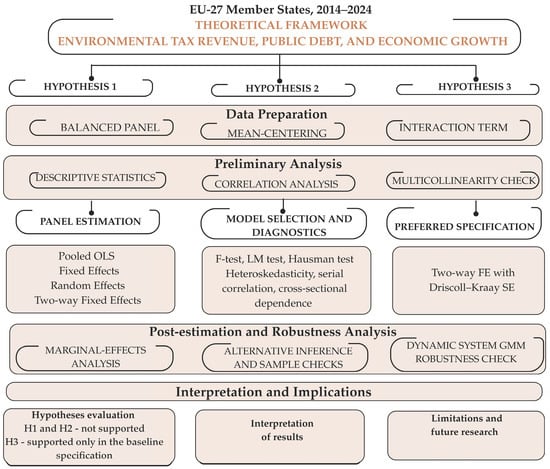
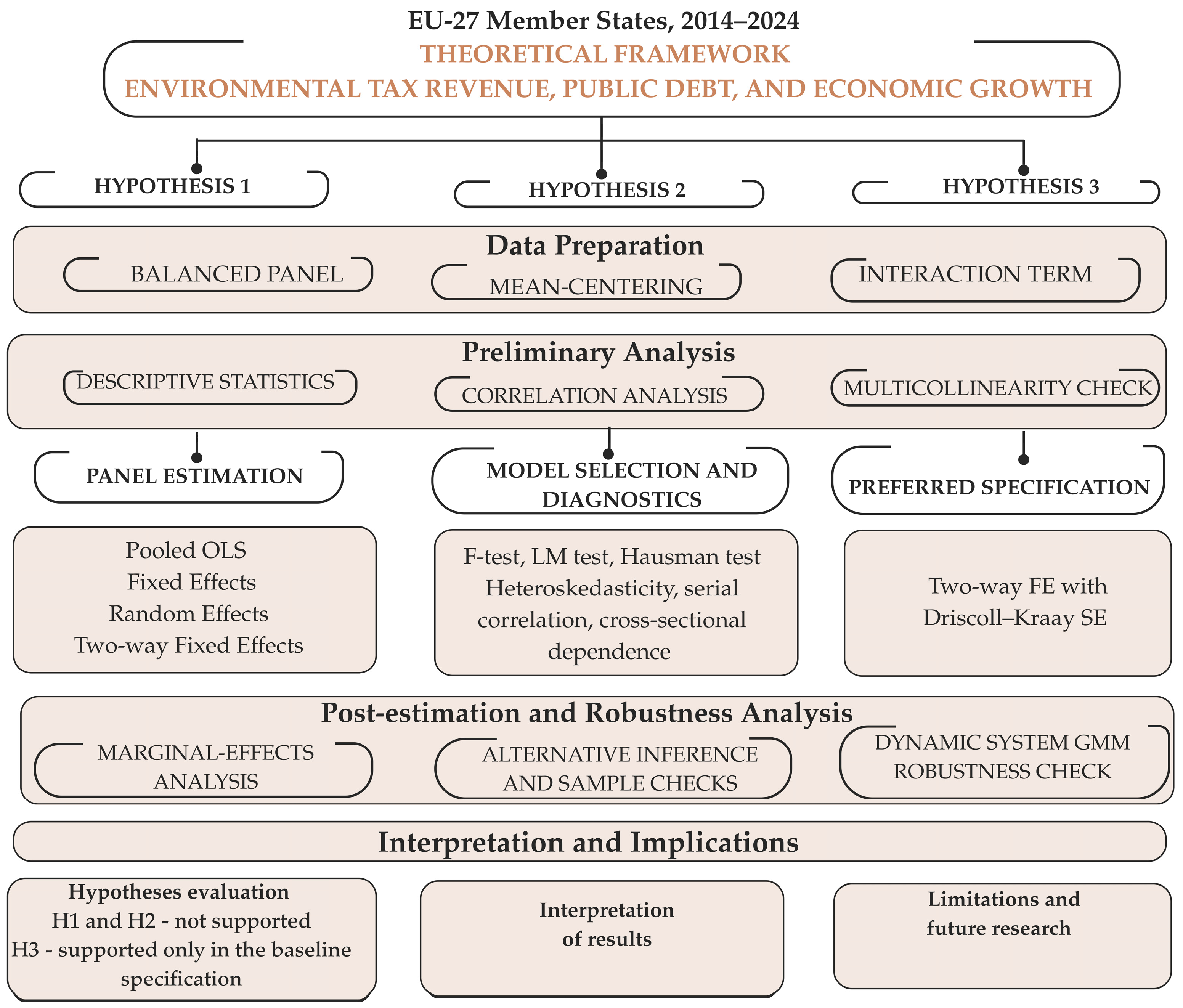
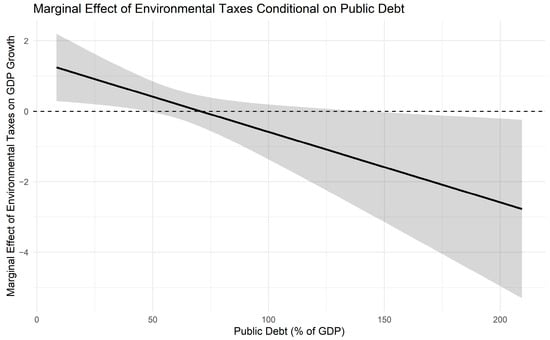
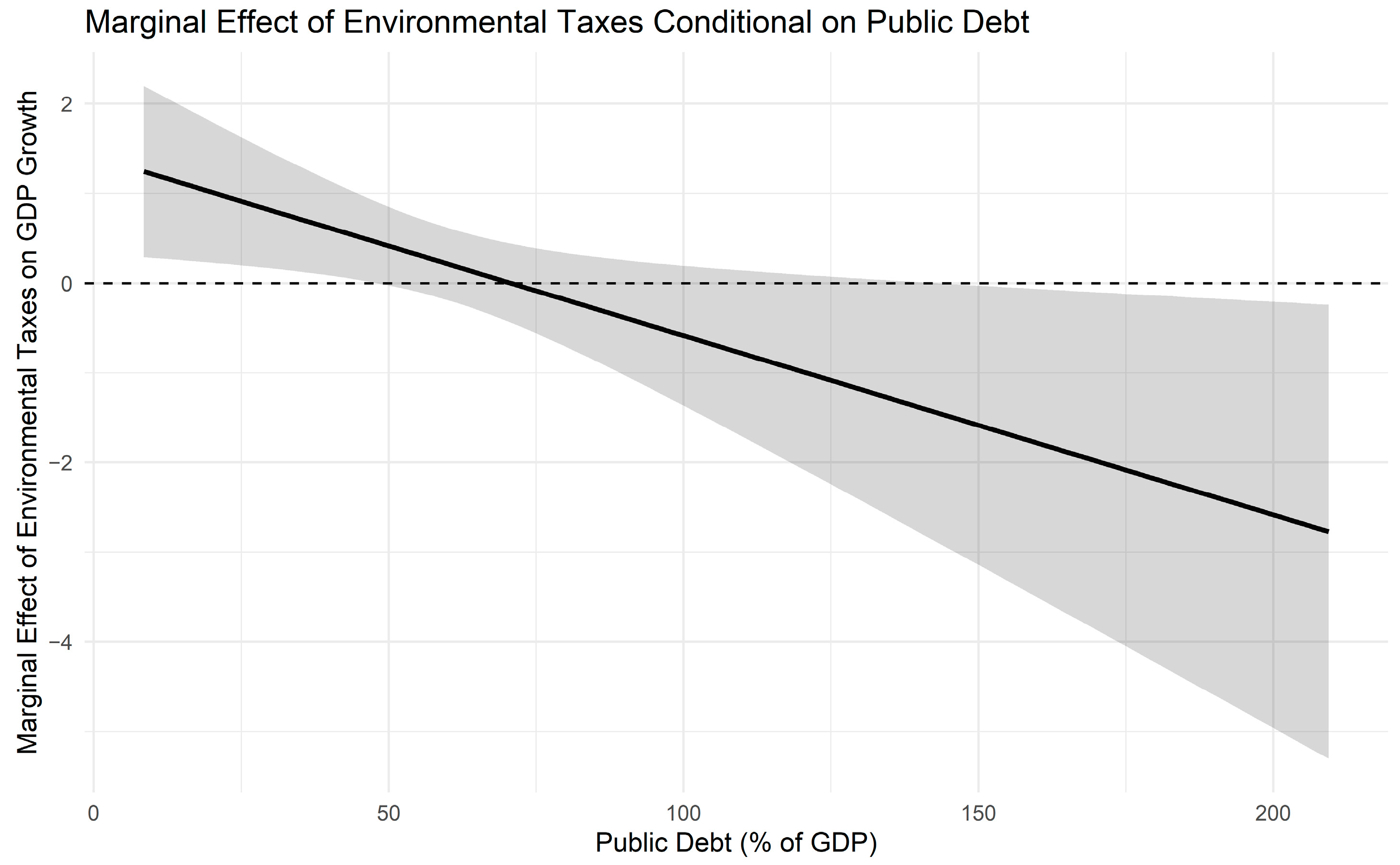
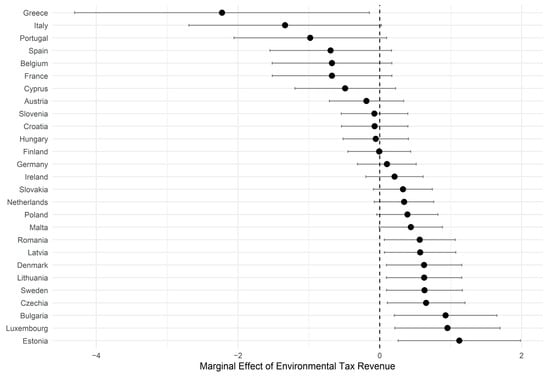
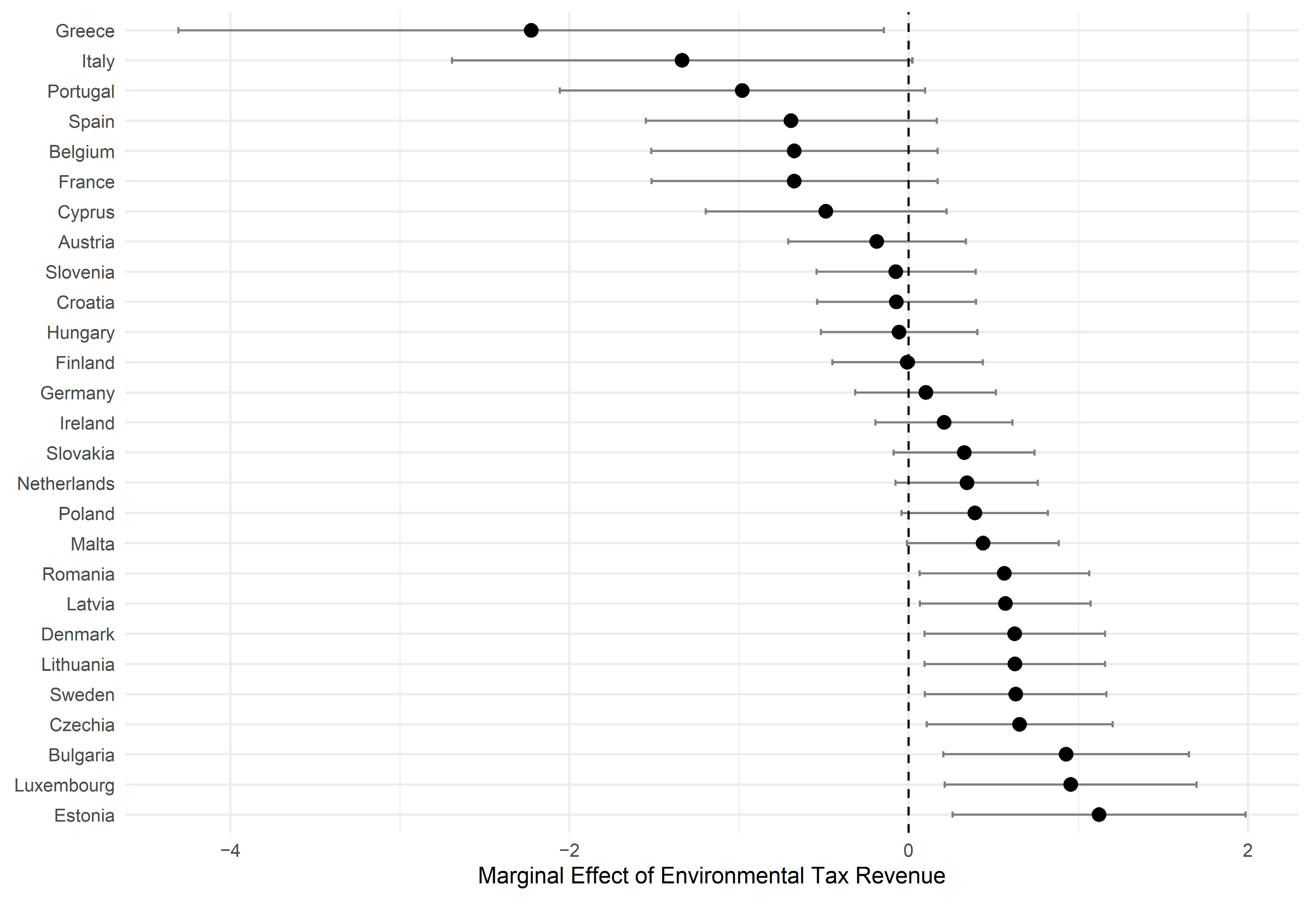

Disclaimer/Publisher’s Note: The statements, opinions and data contained in all publications are solely those of the individual author(s) and contributor(s) and not of MDPI and/or the editor(s). MDPI and/or the editor(s) disclaim responsibility for any injury to people or property resulting from any ideas, methods, instructions or products referred to in the content. |
© 2026 by the authors. Licensee MDPI, Basel, Switzerland. This article is an open access article distributed under the terms and conditions of the Creative Commons Attribution (CC BY) license.