


Simple Summary
Many cancer patients take cannabis extracts to help manage their symptoms, but traditional parallel-group clinical trials have not shown the benefits that patients report experiencing. This study used a novel patient-centred design to assess responses to three types of medical cannabis extract and a placebo oil among a mixed group of people living with symptoms related to all cancer types, at all stages. It showed that more than half had a clinically meaningful response to at least one of the extracts. Most participants had a clear preference; however, preferences were evenly distributed across the three cannabis extracts, with no single extract emerging as the overall favourite. Only 9% preferred the placebo. Reported benefits appeared to be driven more by improvements in sleep and related symptoms, such as daytime drowsiness, tiredness, and anxiety, than by pain relief. A starting dose of 2.5 mg of either THC, CBD or a combination of both was shown to be safe and well-tolerated.
Abstract
(1) Background: Despite widespread use of medical cannabinoids for cancer-related symptom management, systematic reviews consistently call for more clinical trial evidence. (2) Methods: An aggregate N-of-1 study of symptomatic but clinically stable outpatients from eight Canadian cancer centres compared three blinded sublingual extracts (THC; CBD; Combined) with placebo, self-titrated within a prescribed schedule for four consecutive days each, in randomized sequence for up to three cycles. The primary outcome was the frequency of reporting a ≥1.4-point (20%) improvement in a 7-point Patient Global Impression of Change (PGIC) for at least one extract over placebo. (3) Results: The primary outcome was achieved in 50/89 (56%) participants. Though most participants had a clear preference for one extract above the others, all three extracts were preferred equally frequently. Changes in a modified Edmonton Symptom Assessment score and blinded preference confirmed the findings. Improved sleep, tiredness, and anxiety contributed most to overall improvement regardless of primary symptom. Mild side-effects were common with all extracts and placebo but resolved rapidly on dose reduction. Moderate or severe adverse effects were rare but associated with higher doses of THC. (4) Conclusions: Medical cannabis extracts can be meaningfully beneficial for cancer-related symptoms in at least half of eligible patients. A starting dose of 2.5 mg of THC/CBD up to three times a day was safe and well-tolerated by most participants. Personalization of treatment is required to optimize response.
1. Introduction
Medical cannabis extracts are consumed by many people living with or after cancer for symptom management at all stages of the disease despite there being limited randomized clinical trial evidence informing the use of these extracts [1,2,3,4]. There have been many calls for more clinical trials to provide evidence-based clinical guidance [5,6,7].
There is substantial diversity between individuals in endocannabinoid physiology [8]. Widespread anecdotal evidence suggests that some patients find cannabinoids very helpful, and others do not. Trials that compare average responses within treatment arms may underestimate benefits experienced by some participants [9,10]. Parallel group studies have difficulty recruiting with a placebo-only arm, and advanced cancer patients have a high dropout rate due to clinical instability. Symptom severity scores alone are limited in detecting clinically meaningful changes [11].
Aggregate n-of-1 trials are multi-cycle, placebo-controlled, short crossover trials, with all participants receiving all interventions, serving as their own controls. Clinical stability is essential for differences between treatment effects to be attributed to the intervention and not altered disease status. This design provides the strongest possible evidence about the efficacy of a treatment in an individual [12]. A series (aggregate) of such trials can yield an estimate of the population effect comparable to parallel group randomized controlled trials with far fewer participants, by removing the need for baseline matching of treatment arms and avoidance of potential confounders [13,14]. Without the need for matching treatment groups, recruitment can be demographically diverse, maximizing generalizability of conclusions. Interpretation of trials provides response rates rather than focusing on differences in average responses between treatment arms.
2. Materials and Methods
2.1. Study Design
This multi-centre Canadian study consisted of a series of 91 individual triple-blind n-of-1 trials comparing three different types of cannabinoid oil extracts with placebo oils. The study was designed according to the Consolidated Standards of Reporting Trials (CONSORT) statement and CONSORT Extension for n-of-1 trials.
2.2. Participants
Eligible patients were ≥19 years (minimum age for Health Canada medical cannabis authorization in most of Canada), competent, clinically stable, with a life expectancy ≥4 months, ECOG ≤ 2, with at least one of three target symptoms rated ≥4/10 related to living with cancer of any kind, at any stage, or its treatment. Their most troublesome symptom had to be either pain, sleep disturbance, or anxiety. Recruitment was to three corresponding subgroups equally, and each subgroup was capped once an adequate sample size (30) for subgroup analysis had completed their participation [15]. One participant was included in the anxiety subgroup for having a very high hereditary cancer risk and experienced symptoms entirely related to the fear of developing cancer, which was comparable to a cancer survivor’s anxiety about recurrence and therefore met the eligibility criteria.
Patients were excluded if they had a cannabis use disorder (CUDIT-R score ≥ 8) [16], other substance use disorder, recent cannabis consumption (within 30 days) by self-declaration, pregnancy, breastfeeding or reproductive potential, a concurrent relevant clinical trial, serious cardiovascular disease, or having a personal or first-degree relative with schizophrenia. Participants agreed to alcohol and driving restrictions during participation. Patients on daily oral or intermittent parenteral systemic therapies with no immediate side-effects or need for anticipatory medication were allowed, including immunotherapies if their symptoms were stable [17].
2.3. Recruitment
Recruitment was through seven symptom management/palliative care clinics in Canadian cancer centres and a medical cannabis clinic closely associated with one (Montreal). Eligible patients self-identified from REB-approved advertising or were identified by medical staff and contacted (with permission) by research staff to obtain informed consent.
2.4. Study Products
Medical cannabis extracts were tetrahydrocannabinol (THC), cannabidiol (CBD), and a Combined extract of THC and CBD, as close to a 1:1 ratio as was available. All extracts were low or very low in terpene content. Placebo was the same vehicle oil (olive or mixed-chain triglycerides) as the active extracts, containing zero cannabinoids or terpenes. Three different suppliers of similar research-grade extracts were required over the course of the study, all certified by Health Canada for research purposes according to Good Manufacturing Practices (GMP). Equivalent products (non-GMP) are widely available across Canada. Manufacturers were, in order of use, Whistler Medical Marijuana Corp. (now closed); Aurora Cannabis Inc., 2207 90B St. SW, Edmonton, Alberta, T6X 1V8; MediPharm Labs, 151 John St, Barrie, Ontario, L4N 2L1.
2.5. Randomization and Masking
Extract sequences were randomized according to a pre-coded computer-generated randomization schedule for each patient, coordinated by the Vancouver study site pharmacist. Participants were told that flavouring (rosemary or peppermint) may be added to mask the taste of any oils, so they could not assume that flavoured extracts were placebo. Coloured syringes and opaque containers ensured visual blinding. Even if participants examined the oils, any differences in appearance could not reliably reveal the identity of a product, as each supplier provided more than one clear extract.
2.6. Study Procedures
Informed consent was obtained from all subjects. After baseline assessments, four 30 mL bottles labelled from 1 to 4 were given/sent to participants. The sequence was randomized. The numbers did not correspond to the same extract for each participant. Each oil’s treatment period was 4 days; minimum participation of 1 cycle (16 days), up to 3 cycles (48 days) allowed. Participants were unblinded after returning documentation and remaining extracts. Given the prompt onset and limited duration of effects following sublingual administration [18], the first 2 days of each 4-day period were considered the washout period to allow for resolution of effects from the prior extract. Inactive cannabinoid metabolites of cannabinoids have been shown to persist for longer than 2 days in the blood, but do not impact symptoms. A minimum of 30 days of patient-reported abstinence was required prior to starting the study. Requiring blood or urine testing would have decreased accessibility for remote and rural participants as well as substantially increased cost, so participants were trusted to disclose truthfully. A treatment-free washout would have made participation too long for maintenance of clinical stability and compromised compliance with the study routine. A treatment pause between extracts was allowed for potentially confounding events, e.g., vaccination or unexpected international travel, provided that clinical stability was not compromised.
In addition to being allowed to withdraw from the study at any point for any reason, for ethical integrity, participants were allowed to stop after only completing one cycle (16 days), either because they felt clear about the effects the study products had (positive or negative) and did not need more time to be sure; if they unexpectedly developed a complication or had a new treatment offered rendering them no longer clinically stable; or if they had an adverse reaction to any extract which made them reluctant to go through another cycle. Those who were willing to continue were encouraged to complete at least one more cycle, to a maximum of three cycles (48 days).
The oil was delivered under the tongue and held in the mouth for at least a minute, until it had disappeared. Swallowing residual cannabinoid in saliva was likely, but the maximum extract volume per dose was only 0.15 mL and absorption reported by participants was rapid. The sublingual route was chosen for rapidity of effect, minimization of first-pass effect, avoidance of inhalation, and flexibility in dosing. Oils can also be clearly labelled, and bottles made secure, reducing the risk of accidental ingestion compared with edibles. Moreover, these products are widely available for immediate clinical application of each participant’s n-of-1 trial.
Participants were asked to take a minimum of 0.15 mL (3 drops) per day, and additionally up to 0.15 mL every 4 h as needed on an escalating schedule, for a total of no more than 0.75 mL (15 drops) per day in the first cycle. In cycles 2 and 3, participants could start at the dose worked up to by the end of the 1st cycle for that extract and could increase further to a maximum of 18 drops (0.9 mL) per day. Cannabinoid concentrations were THC: 20.1–27.0 mg/mL (0% CBD in all three suppliers’ THC extracts); CBD: 19.4–27.5 mg/mL (a negligible 0.5–1.4 mg/mL THC); and Combined: 8.0–18.1 mg/mL THC and 10.7–16.0 mg/mL CBD. The maximum amount of THC and CBD that this represents from each of the three suppliers varied from 18.0 to 24.6 mg/day, respectively. As participants were able to titrate their doses according to effect, they could adjust for minor concentration differences between products supplied by the three manufacturers. Further, consumption is expressed as mg of cannabinoids, not volume. A dose comparison between suppliers was carried out to ensure that results could be generalized to similar products available to patients. No participant had a mix of products from different suppliers. All extracts were low or very low in terpene content. Placebo was the same vehicle oil (olive or mixed-chain triglycerides) as the active extracts, containing zero cannabinoids or terpenes.
It should be noted that the doses of CBD were lower than in some other studies; this is based on anecdotal reporting from patients that even small doses of CBD showed benefits in some individuals, and on the work performed on the development of equally balanced nabiximols spray [19].
Participants completed daily medication logs whenever they took a study extract and completed their outcome assessment questionnaires daily. Compliance and adverse event documentation was facilitated by study personnel telephoning at least every 4 days, actively soliciting reports of effects and adverse events using standard reporting tools, and checking that participants were completing their logs and assessments according to the protocol. Videochat and e-mail were used to supplement voice communication where there was doubt about participant documentation. Unused study products were returned for reconciliation with drug diaries after each individual n-of-1 trial study was completed and before unblinding. All data were collected on paper case report forms and entered into an REB-approved REDCap database by study staff. Outcomes were entered from all study days but only data from the last 2 days of each 4-day treatment period was included in the analysis to avoid contamination between treatments by any carry-over effects from the prior product. A study monitor ensured data capture was accurate with regular audits. An investigator’s phone call/visit took place at the end of each cycle.
No non-study medications were allowed to be changed (started, stopped or doses altered) throughout the study and no procedures or radiotherapy were allowed for 30 days prior to starting the study or during it. Use of pre-established breakthrough/rescue medications was allowed if there was no relief from the study product assigned during that treatment period after one hour.
An independent Data and Safety Monitoring Committee reviewed the study when any subgroup reached 50% recruitment, and on subgroup completion. The trial is registered at clinicaltrials.gov, NCT03948074.
2.7. Outcome Assessment
The primary outcome was the difference in average Patient Global Impression of Change (PGIC) in overall symptom severity across the third and fourth days of each treatment cycle from baseline for each oil as compared to the days on placebo. The first and second days of each four-day treatment period were considered washout days, based on patient-reported length of effect on symptoms (3–4 h). Though metabolites of cannabinoids can be detected in blood and urine for many days after consumption, these metabolites do not appear to affect symptoms. The effects of one extract would be expected to have worn off well within 24 h of last consumption, but a 48 h period was chosen to further reduce the possibility of the effects of one extract impacting the effects of the following one.
We aimed to identify the proportion of participants who reported a clinically meaningful benefit from at least one of the extracts as compared to their response to placebo. The PGIC was chosen as the primary outcome because responses to cannabinoid treatment were expected to be heterogeneous, and because in previous studies focusing on specific symptoms, such as pain, many participants requested to continue with the cannabinoid treatment after completion of the study despite the study showing little or no benefit in the limited outcomes selected, reflecting that they either had difficulty with 0–10 numerical scale completion, or there was some benefit that the scales were not capturing.
PGIC scales have not been extensively validated as primary outcomes but are considered the “gold standard” against which other outcome measures are validated and are used to identify Minimal Clinically Important Differences in other outcome indicator scales [20,21]. The PGIC scale we used [22] asked subjects to rate their status as compared with baseline as
- No change (or worse condition);
- Almost the same (hardly any change at all);
- A little better (no noticeable change);
- Somewhat better (change has not made any real difference;
- Moderately better (slight but noticeable change);
- Better (definite improvement that has made a real and worthwhile difference);
- A great deal better and a considerable improvement that has made all the difference.
Participants were asked to rate the change in their overall symptom burden, not just their most troublesome symptom or the symptom that the extract was mainly taken for. Most patients had multiple symptoms, and some took the extracts for different symptoms at different times.
We considered a 1.4-point (20%) improvement in PGIC score over the individual placebo response to be equivalent to a Minimal Clinically Important Difference (MCID) in other scales. This was derived pragmatically from a review of multiple PGIC scales [23]. Kamper and colleagues combined five non-cancer pain cohorts and reported that a change greater than 1.35 points on an 11-point PGIC scale (a 12% difference) was clinically important. They also stated that a head-to-head comparison of a 7-point scale with a 15-point scale found no significant difference in performance.
The Edmonton Symptom Assessment System was chosen as a secondary outcome to explore how the cannabinoids affected different symptoms, and to quantify the magnitude of benefit or harm; to enable comparison with other studies using versions of the ESAS as their primary outcome measure; and to provide a dataset of relatively healthy cancer patients where MCID determination may have differed from cohorts with higher levels of distress and potentially differ depending on primary symptom. It should be noted that a simple 3-point PGIC score was used to determine the MCID for the ESAS [24]. Sleep disturbance and night sweats were added to the ESASr (ESAS-r-SN) to not miss common symptoms that may explain the discrepancy between patient reports and prior studies that did not include these symptoms. The ESASr has already been validated with the addition of sleep and other symptoms [21,25]. The ESAS-r-SN was completed daily in the morning for the sleep arm, or otherwise at bedtime.
PGIC and ESAS-r-SN scores from the last 2 days of each extract’s treatment periods were averaged from all completed cycles, i.e., over 2 days for those who completed one cycle, 4 days for two cycles, 6 days for three. This generated four averaged treatment effect scores: one for each extract and one for placebo, which were compared.
Extract preference stated before unblinding was chosen as a third outcome to validate the 20% improvement in PGIC relative to placebo target as an appropriate primary outcome. Retrospective measures have been shown to be more sensitive to change than serial measures and correlate more strongly with patients’ satisfaction with change [26].
Exploratory outcomes included optimized doses in participants’ last cycle; breakdown in symptom severity ratings as a proportion of overall ESAS-r-SN change; adverse event reports; final optimized dosing on the last days of each final treatment period, and analysis of demographic variables with respect to response rates.
2.8. Statistical Considerations
As the primary goal of the study was the analysis of individual participants’ data, power simulations were conducted to determine if the 12 observations (4 oils across 3 cycles) in the study design were sufficient to achieve 80% power at an alpha level of 0.05. The simulations indicated that 80% or greater statistical power was achieved across the seven possibilities in which one or more treatment oils were at least 1.4 points better than placebo. These power simulations are shown in Supplemental Materials File S1.
For each individual participant, a linear regression using the oil and cycle as fixed effects was conducted, with the resulting estimate representing the expected increase or decrease attributable to a treatment extract compared to placebo. Statistical and clinical significance were evaluated independently, with clinical significance represented by an increase in PGIC at least 1.4 points compared to placebo, and statistical significance evaluated at a p ≤ 0.05 threshold.
While the procedure for analysis was set prior to database lock, with comparisons to 3 extracts being made amongst 91 participants, some significant results will occur due to type I errors. At α = 0.05, approximately 14 (91 × 3 × 0.05) significant results would be expected by chance alone if the null hypothesis (that there is no difference between placebo and any treatment oil) is true. For both PGIC and ESAS-r-SN, the number of significant individual comparisons exceeded this number, suggesting a true effect is present even if a proportion of the results were to have occurred by chance alone.
As outlined in Zucker et al. (Section 2.2), pooled analyses of the PGIC and ESAS-r-SN data were conducted using linear mixed-effects models and maximum likelihood tests with data from all participants (individual patient data) [27]. The treatment extract and treatment cycle were used as fixed effects, and a random effect for the intercept and slope were used to account for the non-independence of observations from the same participant. Models of increasing complexity were compared using likelihood ratio tests, via the Chi-squared statistic and associated p-value to determine overall model significance and goodness-of-fit (S1).
Model fixed effects were determined via protocol prior to data collection, and therefore cycle was included for both ESAS-s-RN and PGIC even though it did not significantly improve or worsen the model. Inclusion of a random-effect for the participants was also decided prior to data collection as within-subject non-independence was highly expected, and the tests confirmed that this was an appropriate assumption. Whether to include a random effect for the slope was informed by the maximum likelihood tests, which revealed that the increase in complexity was justified by an increase in goodness-of-fit for both PGIC and ESAS-s-RN (Supplemental Materials Tables S2 and S3).
3. Results
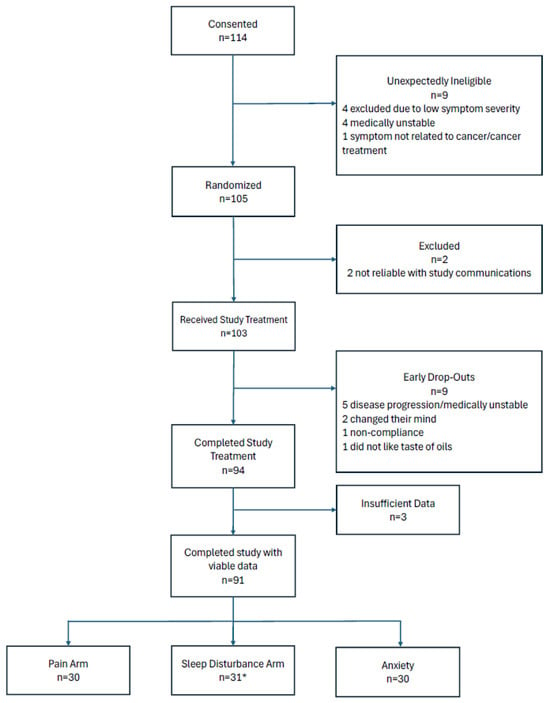
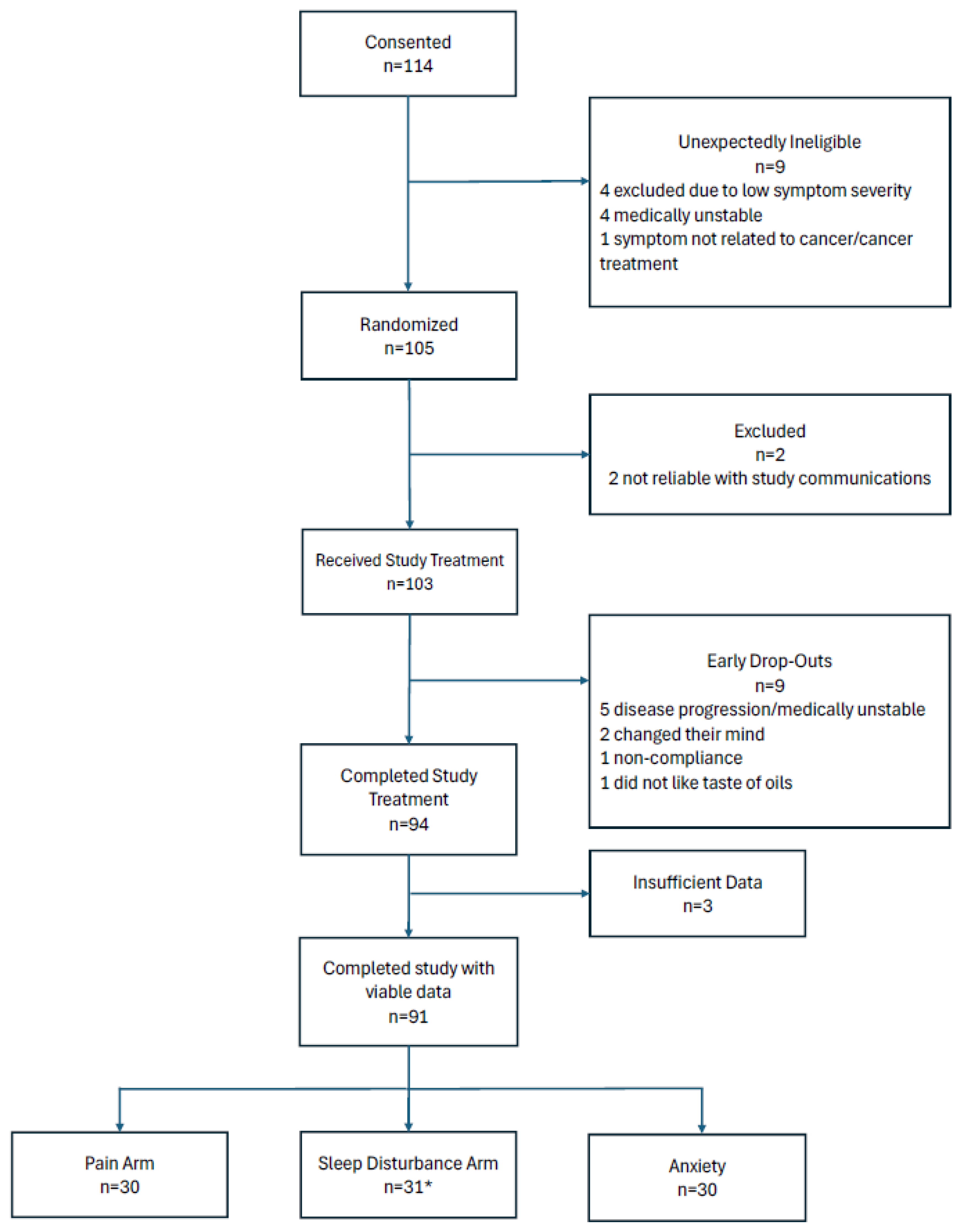
Total recruitment time was 43 months, between February 2021 and July 2025, with two breaks for approval of the new study product. See Figure 1: CONSORT diagram.
Figure 1.
CONSORT diagram. * One participant transferred from the pain subgroup because they indicated sleep as their motivation for taking the products throughout their study despite pain having been stated as their most troublesome symptom at baseline.
3.1. Demographics
As each participant acted as their own control, there is no difference in demographics between treatment arms. Baseline demographics of the whole group were as follows: age 27 to 86 yrs, mean 60, median 62. The anxiety subgroup was younger (mean 55 yrs). Breast cancer was the most common primary cancer in all three subgroups. All stages of cancer were represented: 21% no active disease (including the single patient with very high hereditary risk), the rest in remission; 30% stages 1–3; and 36% stage 4. “Unknowns” (14%) were mostly hematologic cancers where the staging system does not apply.
The mean and median total baseline ESAS-r-SN scores were 36/110, ranging from 4 to 73, with mean individual symptom severity in decreasing order: sleep disturbance (5.8), tiredness (5.4), pain (4.2), wellbeing (4.2), drowsiness (4.1), anxiety (3.8), depression (2.3), night sweats (2.2), shortness of breath (1.6), loss of appetite (1.5) and nausea (0.8). There was no significant difference in mean total ESAS-r-SN between subgroups.
For comparison with other study purposes, the mean total ESAS-r (also known as the ESAS-Global Distress Scale) was 28, which falls into the “moderate” severity range (16–34) [26]. To put this in perspective, a 2024 study of 60 patients admitted to a Portuguese palliative care unit reported a higher mean total ESAS-r score of 42.5, range 15–62 [27]. See Supplementary Materials File S4 for full details.
3.2. Response Rates
In our interpretation of the findings, it should be remembered that each participant completed their own placebo-controlled n-of-1 study, and outcomes are reported as compared to their response to placebo. Those whose best response to an extract exceeded their response to placebo by our predetermined threshold can be considered responders.
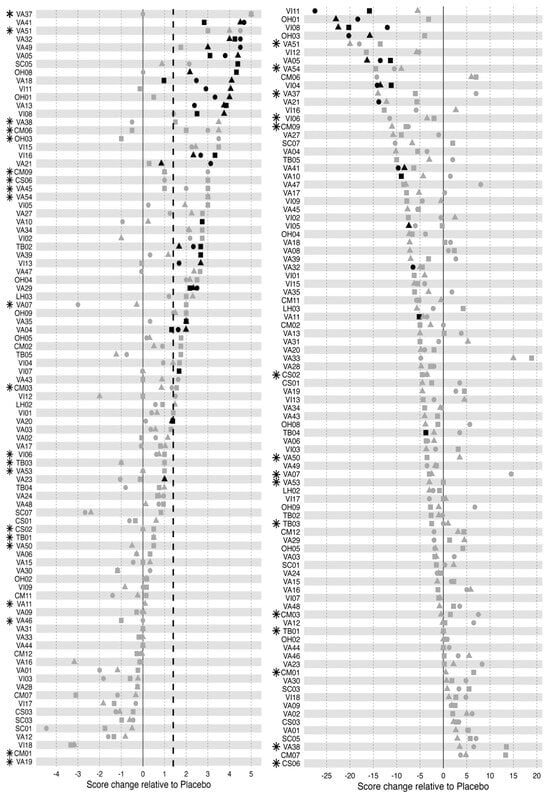
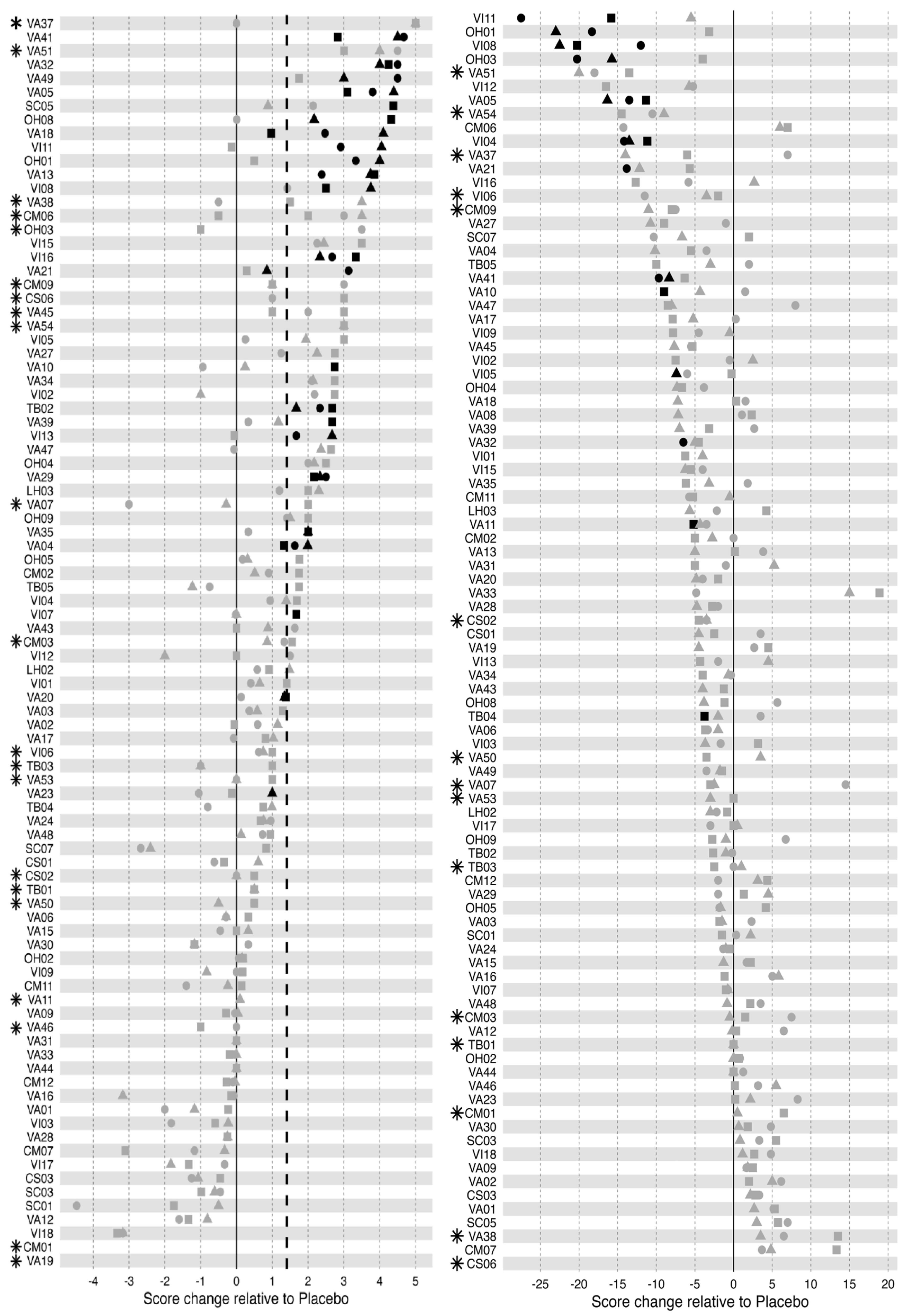
Figure 2 shows the forest plot for raw differences in PGIC and ESAS-r-SN relative to placebo (vertical black line) for each individual participant. Each horizontal line represents one individual participant’s n-of-1 trial. Each symbol represents the difference in response to each extract compared to placebo. The dotted vertical line represents the threshold for a clinically meaningful benefit of 20% (1.4 points) in PGIC above placebo for that individual. The placebo response was on average 2.17 points. Individual logistic regression was not possible in those who either stopped after 1 cycle (15 participants, as starred in the ESAS-r-SN plot) or had incomplete data from cycles 2 and 3: 7 participants had only 1 PGIC rating instead of 2 in at least 1 treatment period. These are also starred in the PGIC plot. Lack of individual trial statistical significance does not imply lack of clinically meaningful results, and all participants had sufficient data for the pooled analyses, i.e., at least one observation per treatment period. As shown in the CONSORT diagram, three participants from the original 94 were excluded from all analyses because of insufficient data in both PGIC and ESAS-r-SN, i.e., no observation from at least one treatment period for at least one oil.
Figure 2.
Forest plot of PGIC (left) and ESAS-r-SN (right) changes relative to placebo for all individual n-of-1 trials, in order of best response at the top, worst at the bottom. ● = THC; ■ = CBD; ▲ = Combined; Black indicates p < 0.05 in individual logistic regression. Grey means individual logistic regression not possible or p > 0.05. The dotted vertical line represents threshold for clinically meaningful response in PGIC. Starred participants did not have sufficient data to run the individual regression. See additional explanation in the text, and Supplementary Materials Figure S1 for ESAS-r-SN in the same participant order as PGIC (S8).
Fifty (56%) of the eighty-nine participants with complete PGIC data reported at least a 1.4-point improvement compared to placebo with at least one extract. Subgroup analysis showed response rates of 50% for the pain, 47% for sleep, and 60% for anxiety subgroup. Though there was often a marked difference in response within individuals, each active extract was associated with the best and worst responses in approximately equal numbers of participants.
The pooled PGIC analysis (Table 1) shows that overall, a small but statistically significant (p < 0.001) increase in PGIC score is expected from all three treatment oils relative to placebo, but there was no clear difference in effectiveness depending on treatment oil composition. Compared with those who only completed one cycle (17/89), participants completing two or three cycles did not show a significant additional increase in PGIC scores, indicating that one cycle was sufficient for inclusion in the pooled analysis.
Table 1.
Pooled PGIC analysis random slope and intercept.
The pooled total ESAS-r-SN analysis (Table 2) shows a statistically significant overall benefit from all three extracts (p < 0.001–0.05), with the sleep subgroup contributing most. The response of the anxiety subgroup increased more relative to the first cycle (p < 0.001) than for the PGIC. Participants in this subgroup were understandably slower to increase their doses than the pain/sleep subgroups.
Table 2.
Pooled ESAS-r-SN analysis, random slope and intercept.
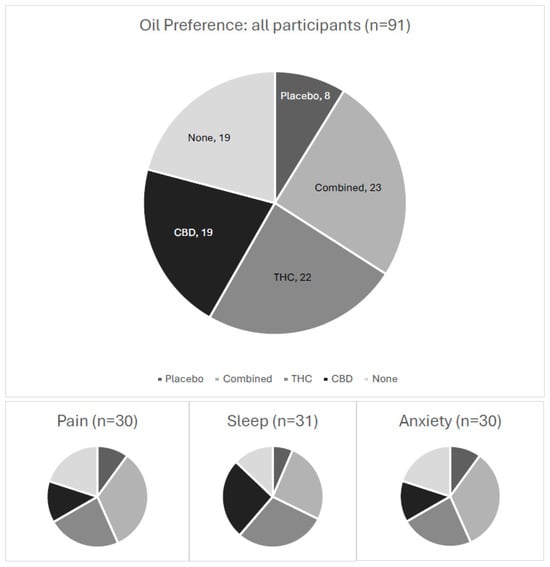
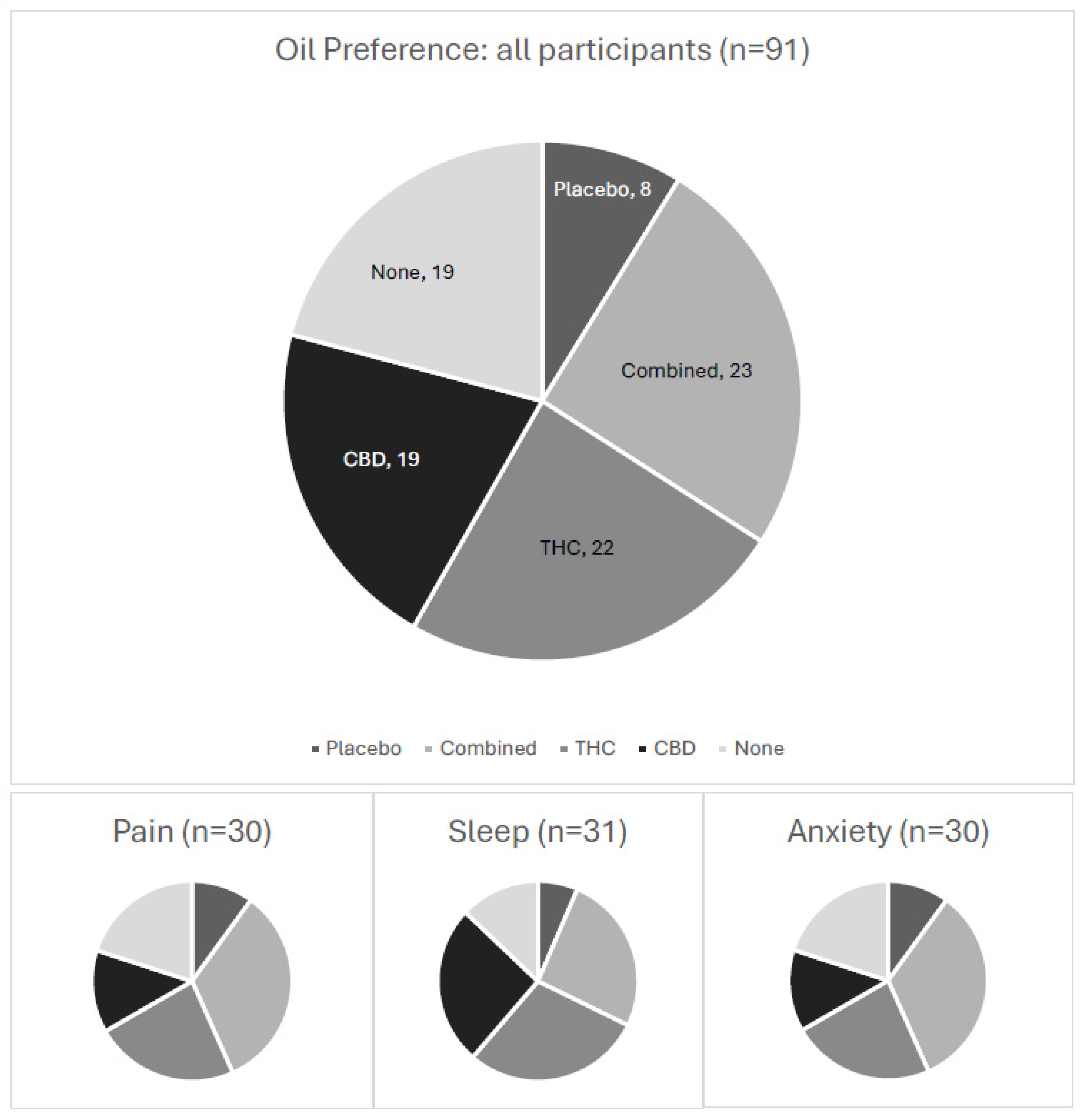
The even spread of blinded participant’s stated active extract preference further confirmed the PGIC and ESAS findings (see Figure 3).
Figure 3.
Blinded extract preference. Shading and order of each extract in subgroup charts is the same as for all participants.
3.3. Doses
There was a trend for lower optimized doses in the anxiety subgroup, but dosing was otherwise independent of symptom number or intensity at baseline.
The mean total cannabinoid doses taken on the last day of the last treatment period for each extract were very similar: THC 9.64 mg; CBD 10.47 mg and Combined 8.56 mg (Table 3). The final average total cannabinoid dose of Combined extract was close to that of THC and CBD alone, which suggests that CBD has independent and additive effects to THC, not just reducing THC’s side-effects.
Table 3.
Mean doses of cannabinoids taken on final day of each extract.
3.4. Relative Contribution of Each Symptom to Overall Response
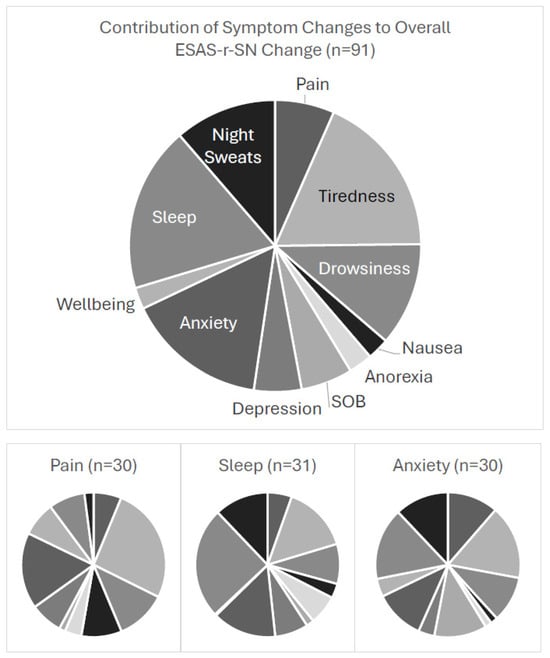
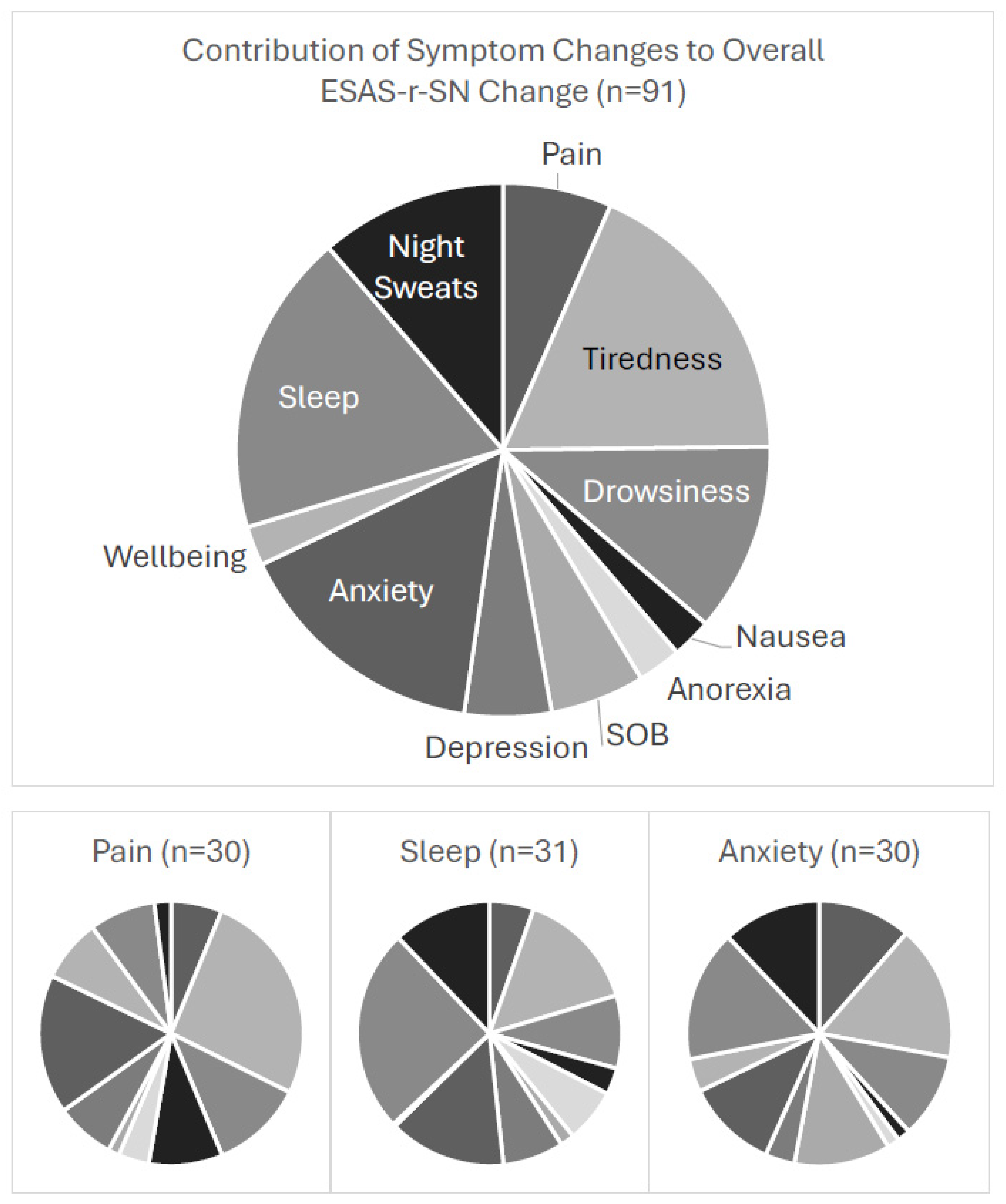
As shown in Figure 4, improvements in sleep, anxiety, and tiredness contributed most to the total ESAS-r-SN changes, but there were differences between subgroups. Breathlessness only featured along with anxiety. The improvements seen in anxiety and tiredness in the pain subgroup were greater compared to other symptoms. In the sleep subgroup, sleep was the biggest contributor to benefit but still only contributed a quarter of the overall benefit. The anxiety and sleep subgroups showed improvement in night sweats. Improvement in appetite, overall wellbeing, and depression were not major contributors, and nausea was only mildly relevant in the pain subgroup, reflecting low baseline prevalence.
Figure 4.
Contribution of each symptom to overall change in ESAS-r-SN. The shading and order of each oil in the pie charts for each study subgroup are the same as for those in the “All participants” chart.
3.5. Adverse Events
As expected, most participants reported multiple mild (no intervention indicated) or moderate (limiting age-appropriate ADL) adverse effects with multiple extracts and placebo (Table 4). Most were seen with higher doses; however, all resolved rapidly with dose reduction or cessation. There were no Grade 3 Adverse Events according to CTAE v5.0 criteria (life-threatening/requiring hospitalization). There were 31 adverse events that were moderate or severe (subjective assessment by investigator) and deemed “possibly” or “probably” related to the intervention by the investigator. Amongst these, only THC was found to increase the odds of an adverse event, by 189% vs. placebo (Supplementary Materials Table S5). Two participants experienced dizziness/fall, one worst when on the Combined oil and one worst on CBD. Another in the anxiety subgroup withdrew due to multiple anxiety-related symptoms experienced whilst on all extracts, including placebo. All adverse events are included in the analysis. Reasons for dropping out prior to completion of the minimum one cycle required for analysis (9/103) were not due to adverse events but were for unexpected changes in circumstances, inability to comply with the study protocol, and one disliking the taste of at least one extract.
Table 4.
All severities of adverse events occurring during extract treatment periods (n = 91).
3.6. Demographic Predictors of Response
Though the responders were on average slightly younger than the non-responders, this difference was not statistically significant and there was no association between response and sex, primary cancer type or stage (Supplementary Materials Table S6). Those who were more symptomatic at baseline had a statistically significant greater degree of response. For each point increase in the starting baseline ESAS-r-SN score, their ESAS-r-SN score is predicted to decrease by 0.36 (Supplementary Materials Table S7). To put this into perspective, the mean baseline value in the pooled dataset was 37/110 (all observations together); the standard deviation was 13.4. Thus, if a participant were to move one standard deviation in baseline score, they would be estimated to have an increase/decrease in ESAS score of 4.824 (0.36 × 13.4), all else being equal.
4. Discussion
We found that more than half of participants experienced a clinically meaningful benefit over placebo with at least one type of cannabis extract. Although no extract type was routinely better than the others on average, most participants had a clearly better response to one type than the others, most likely reflecting heterogeneity in participant endocannabinoid tone. Participants were able to self-titrate, and there were few subjectively moderate or severe side effects reported, none life-threatening or requiring hospitalization, all of which resolved rapidly on dose reduction/cessation.
In contrast to most prior studies, by using an aggregate n-of-1 design, we were able to isolate the effects of the different active oils from baseline treatment arm differences with an efficient sample size and include a diverse spread of the population. By keeping participation short and requiring clinical stability for eligibility, we were able to avoid confounding interventions and complications. These design features facilitated identification of differences in multiple outcomes measured in three different ways: clinical significance, statistical significance, and descriptive statistics. Ensuring that each subject personally benefited from their participation also created a sense of personal investment and added meaning to their illness.
Our threshold for the definition of clinically meaningful response may have under-represented the real response rate. Only 9% preferred placebo. Clear preference for a single extract was higher (66%) than the PGIC-derived response rate (56%), suggesting that the response threshold of 1.4 points above placebo may have underestimated the minimal clinically important benefit. Additionally, some participants who reported no preference were unable to choose between more than one active oil, but at least two were perceived as better than placebo, indicating likelihood of further under-identification of potentially relevant clinical benefit.
Our finding that no preparation was better than the others on average, but most participants found one to provide greater benefit individually, may further explain why trials that focus on a single preparation may have underestimated the potential benefit of cannabinoids. Restricting patients to a single extract ignores the known heterogeneity in endocannabinoid physiology. A recent meta-analysis of clinical trials of cannabinoids describes the perils of over-simplification of complex physiology and pharmacology and concluded that patient-reported outcomes, particularly global impressions of change, indicate that a real therapeutic effect is likely [28]. Our >50% clinical response rate is consistent with patient surveys and the few open-label studies where patients were allowed to personalize their cannabinoid therapy [29,30,31]. Canadian cancer survivors have been found to choose a THC-predominant product 36% of the time, CBD-predominant 23% of the time, and a 1:1 combination 33% of the time, with a high proportion reporting sleep and anxiety as the primary motivation for consumption [2]. As with systemic oncology treatments, though it would be convenient to be able to recommend a single agent for everyone, this would clearly not meet the needs of a diverse population. Until we have cannabinoid response predictive testing analogous to mutation detection in tumours, personalized cannabinoid therapy is required. Clinical trials would benefit from allowing personalization of therapy, for example, having short n-of-1 trials to identify preferred extract type as a run-in for long-term studies.
The threshold for MCID in the total ESAS-r-SN has implications for future research. As a post hoc analysis, taking the PGIC response as the “gold standard” indicator, a 56% response rate would indicate that a point change of −4 points would be the MCID. However, when the two forest plots are placed side by side with participants in the same order (Supplementary Materials Figure S1), it is noticeable that they are not entirely consistent. Patients may assign differing levels of importance to changes in different symptoms.
Though THC-only products were associated with moderate/severe side-effects more often than the CBD or balanced oils and placebo, a quarter of participants still preferred a THC-predominant oil over the others, inferring that the benefits for many participants outweighed the side-effects.
This study provides an evidence-based starting protocol for therapeutic trials of medical cannabis extracts in stable adult cancer patients, at all stages of disease, irrespective of sex. A starting dose of 2.5 mg total THC/CBD self-titrated up to every 4 h to best balance between benefits and side-effects would be well-tolerated by most patients, similar to consensus recommendation [32].
Strengths and Limitations
Though the total duration of treatment was short (4–12 days total per extract), this ensured that clinical stability was maintained, and potentially confounding treatments were avoided, thereby maximizing the validity of comparisons between treatment periods. There was no treatment-free period between extracts but the 2-day washout between data inclusion periods was more than adequate to avoid carryover effects. This approach, however, does not capture longer-term efficacy, development of tolerance or delayed adverse effects. Longer-term studies are required, but our results suggest that future study design would benefit from a run-in n-of-1 trial for each participant to establish optimal personalized therapy. There is no “one best extract” on a population basis. Adaptation to variability in endocannabinoid physiology is important in achieving optimal results. Testing single extracts risks overlooking those who might show better response with a different extract, as well as exposing non-responders to adverse effects. Testing personalized cannabinoid therapy in clinical trials rather than single products maximizes the value of participation to patients—thus enhancing recruitment and retention—improves potential to identify long-term effects, and better reflects the real-life clinical applicability of study results.
The PGIC scale could be criticized for not including gradations of worsening, which may have led to a skewing of the results toward a more positive assessment; however, any worsening of symptoms was captured by the ESAS-r-SN, which confirmed the PGIC findings. These findings were further supported by participants’ blinded preference for active extracts over placebo. In support of our study design, our results are very similar to a 34-participant chronic non-cancer pain cannabinoid therapy n-of-1 series reported in 2004 [33].
Half the participants were recruited through one centre (Vancouver); however, there was no difference in response rate at that site as compared with the other sites, and all centres provided comparable services.
Very few participants were previously experienced with cannabinoids. This facilitated effective blinding, but doses may need to be higher in patients who are tolerant to the effects of cannabinoids.
The three different study-product suppliers required to complete the study could be considered a limitation of the study in terms of reproducibility; however, there was no difference in outcomes between product suppliers, suggesting that the findings can be generalized to similar products available in Canada and other regulated jurisdictions, e.g., the US, Australia, the UK.
Supplementary Materials
The following supporting information can be downloaded at https://www.mdpi.com/article/10.3390/curroncol33120727/s1, File S1. Power simulations; Table S2. Pooled PGIC maximum likelihood; Table S3. Pooled SESAS-r-SN maximum likelihood; File S4. Baseline demographics; Table S5. Logistic regression for risk of moderate/severe adverse events deemed possibly or probably related to each extract; Table S6. Odds of response by demographics; Table S7. Odds of response by baseline symptom burden; Figure S1. PGIC and ESAS-r-SN in the same order.
Author Contributions
P.H.H. was the sponsor and principal investigator (Vancouver site), responsible for study conceptualization and design, protocol development, Health Canada communication, compiling the Investigator Brochure, study implementation, financing, compliance with regulators, holding the Cannabis Research Licence, analyzing and interpreting the data, writing and editing the manuscript and preparing the attachments for publication. P.J.D. and I.K. validated the original data, were site investigators, and contributed to reviewing and editing the manuscript. J.D. assisted with study implementation through the Pan-Canadian Palliative Care Research Collaborative and contributed to reviewing and editing the manuscript. All other authors (K.W., E.F., M.K. and C.E.G.) were site investigators and contributed to the review and editing of the manuscript. All authors have read and agreed to the published version of the manuscript.
Funding
The study was funded by the BC Cancer Foundation through donations from the Hecht Foundation (the study itself), and the Kaatza Foundation (protocol development). Initially, the study products were donated by Whistler Medical Marijuana Corp, which was bought by Aurora Inc, who subsequently restored product supply. When this was withdrawn, the study was finished with products purchased from MediPharm.
Institutional Review Board Statement
The study was performed in line with the principles of the Declaration of Helsinki, and the protocol was approved by Health Canada on 23 December 2019, file #HC6-24-c227946; the University of British Columbia BC Cancer Research Ethics Board on 18 June 2020, ID # H18-03724; and by the local research ethics boards applicable to the other sites.
Informed Consent Statement
Informed consent was obtained from all subjects involved in the study.
Data Availability Statement
The data that support the findings of this study are openly available at clinicaltrials.gov, NCT03948074.
Acknowledgments
1. Michael Dworkind (now retired), for being the Sante Cannabis site lead (investigator) in Montreal. 2. Isabella Ghement for statistical analysis plan development, and Mark Pitblado for providing the interim and final statistical reports. 3. The Pan-Canadian Palliative Care Research Collaboration, for assistance with protocol review, recruiting participating sites and assisting with finding volunteers for the Data Safety and Monitoring Board. 4. MediPharm (Ontario), for making suitable study products available for purchase at short notice.
Conflicts of Interest
Paul Daeninck discloses royalties from Springer Nature for a co-authored book on cannabinoid medicines (2023) and speaking honoraria from Spectrum Therapeutics (2024). No other authors have any conflicts.
References
- Newcomer, K.F.; Barnell, E.K.; Zhang, F.; Vetter, J.; Bagley, E.M.; Petty, M.; Ohman, K.A.; Hawkins, W.G. Surgical cancer patients’ attitudes and beliefs about cannabis at a midwest comprehensive cancer center. Surg. Oncol. Insight 2025, 2, 100154. [Google Scholar] [CrossRef] [Scilit] [PubMed]
- Lee, R.M.; Donnan, J.; Harris, N.; Garland, S.N. A cross-sectional survey of the prevalence and patterns of using cannabis as a sleep aid in Canadian cancer survivors. J. Cancer Surviv. 2025, 19, 386–396. [Google Scholar] [CrossRef] [Scilit] [PubMed]
- Hawley, P.; Gobbo, M.; Afghari, N. The impact of legalization of access to recreational Cannabis on Canadian medical users with Cancer. BMC Health Serv. Res. 2020, 20, 977. [Google Scholar] [CrossRef] [Scilit] [PubMed]
- Braun, I.M.; Bohlke, K.; Abrams, D.I.; Anderson, H.; Balneaves, L.G.; Bar-Sela, G.; Bowles, D.W.; Chai, P.R.; Damani, A.; Gupta, A.; et al. Cannabis and Cannabinoids in Adults with Cancer: ASCO Guideline. J. Clin. Oncol. 2024, 42, 1575–1593. [Google Scholar] [CrossRef] [Scilit] [PubMed]
- Cyr, C.; Arboleda, M.F.; Aggarwal, S.K.; Balneaves, L.G.; Daeninck, P.; Néron, A.; Prosk, E.; Vigano, A. Cannabis in palliative care: Current challenges and practical recommendations. Ann. Palliat. Med. 2018, 7, 463–477, Erratum in Ann. Palliat. Med. 2019, 8, 215–217. [Google Scholar] [CrossRef] [Scilit] [PubMed]
- Braun, I.M.; Wright, A.; Peteet, J.; Meyer, F.L.; Yuppa, D.P.; Bolcic-Jankovic, D.; LeBlanc, J.; Chang, Y.; Yu, L.; Nayak, M.M.; et al. Medical Oncologists’ Beliefs, Practices, and Knowledge Regarding Marijuana Used Therapeutically: A Nationally Representative Survey Study. J. Clin. Oncol. 2018, 36, 1957–1962. [Google Scholar] [CrossRef] [Scilit] [PubMed]
- Allan, G.M.; Ramji, J.; Perry, D.; Ton, J.; Beahm, N.P.; Crisp, N.; Dockrill, B.; Dubin, R.E.; Findlay, T.; Kirkwood, J.; et al. Simplified guideline for prescribing medical cannabinoids in primary care. Can. Fam. Physician 2018, 64, 111–120. Available online: https://www.cfp.ca/content/cfp/64/2/111.full.pdf (accessed on 17 November 2026). [PubMed]
- Boehnke, K.F.; Scott, J.R.; Litinas, E.; Sisley, S.; Clauw, D.J.; Goesling, J.; Williams, D.A. Cannabis Use Preferences and Decision-making Among a Cross-sectional Cohort of Medical Cannabis Patients with Chronic Pain. J. Pain 2019, 20, 1362–1372. [Google Scholar] [CrossRef] [Scilit] [PubMed]
- Hardy, J.; Greer, R.; Huggett, G.; Kearney, A.; Gurgenci, T.; Good, P. Phase IIb Randomized, Placebo-Controlled, Dose-Escalating, Double-Blind Study of Cannabidiol Oil for the Relief of Symptoms in Advanced Cancer (MedCan1-CBD). J. Clin. Oncol. 2023, 41, 1444–1452. [Google Scholar] [CrossRef] [Scilit] [PubMed]
- Hardy, J.R.; Greer, R.M.; Pelecanos, A.M.; Huggett, G.E.; Kearney, A.M.; Gurgenci, T.H.; Good, P.D. Medicinal cannabis for symptom control in advanced cancer: A double-blind, placebo-controlled, randomised clinical trial of 1:1 tetrahydrocannabinol and cannabidiol. Support. Care Cancer 2025, 33, 715. [Google Scholar] [CrossRef] [Scilit] [PubMed]
- Hui, D.; Bruera, E. The Edmonton Symptom Assessment System 25 Years Later: Past, Present, and Future Developments. J. Pain Symptom Manag. 2017, 53, 630–643. [Google Scholar] [CrossRef] [Scilit] [PubMed]
- Mitchell, G.K. Generating high-quality clinical evidence in palliative care using N-of-1 Trials. J. Palliat. Med. 2010, 13, 1185–1186. [Google Scholar] [CrossRef] [Scilit] [PubMed]
- Lillie, E.O.; Patay, B.; Diamant, J.; Issell, B.; Topol, E.J.; Schork, N.J. The n-of-1 clinical trial: The ultimate strategy for individualizing medicine? Per. Med. 2011, 8, 161–173. [Google Scholar] [CrossRef] [Scilit] [PubMed]
- Hui, D.; Zhukovsky, D.S.; Bruera, E. Which treatment is better? Ascertaining patient preferences with crossover randomized controlled trials. J. Pain Symptom Manag. 2015, 49, 625–631. [Google Scholar] [CrossRef] [Scilit] [PubMed]
- Senn, S. Sample size considerations for n-of-1 trials. Stat. Methods Med. Res. 2019, 28, 372–383. [Google Scholar] [CrossRef] [Scilit] [PubMed]
- Adamson, S.J.; Kay-Lambkin, F.J.; Baker, A.L.; Lewin, T.J.; Thornton, L.; Kelly, B.J.; Sellman, J.D. An improved brief measure of cannabis misuse: The Cannabis Use Disorders Identification Test-Revised (CUDIT-R). Drug Alcohol Depend. 2010, 110, 137–143. [Google Scholar] [CrossRef] [Scilit] [PubMed]
- Waissengrin, B.; Leshem, Y.; Taya, M.; Meiri, D.; Merimsky, O.; Shamai, S.; Wolf, I.; Rubinek, T. The use of medical cannabis concomitantly with immune checkpoint inhibitors in non-small cell lung cancer: A sigh of relief? Eur. J. Cancer 2023, 180, 52–61. [Google Scholar] [CrossRef] [Scilit] [PubMed]
- Health Canada. Cannabis Health Effects. Available online: https://www.canada.ca/en/health-canada/services/drugs-medication/cannabis/health-effects/effects.html (accessed on 17 November 2026).
- Russo, E.B. Cannabinoids in the management of difficult to treat pain. Ther. Clin. Risk Manag. 2008, 4, 245–259. [Google Scholar] [CrossRef] [Scilit] [PubMed]
- Hui, D.; Bruera, E. Minimal clinically important differences in the Edmonton symptom assessment system: The anchor is key. J. Pain Symptom Manag. 2013, 45, e4–e5. [Google Scholar] [CrossRef] [Scilit] [PubMed]
- Hannon, B.; Dyck, M.; Pope, A.; Swami, N.; Banerjee, S.; Mak, E.; Bryson, J.; Rodin, G.; Ridley, J.; Lo, C.; et al. Modified Edmonton Symptom Assessment System including constipation and sleep: Validation in outpatients with cancer. J. Pain Symptom Manag. 2015, 49, 945–952. [Google Scholar] [CrossRef] [Scilit] [PubMed]
- Fischer, D.; Stewart, A.L.; Bloch, D.A.; Lorig, K.; Laurent, D.; Holman, H. Capturing the Patient’s View of Change as a Clinical Outcome Measure. JAMA 1999, 282, 1157–1162. [Google Scholar] [CrossRef] [Scilit] [PubMed]
- Kamper, S.J.; Maher, C.G.; Mackay, G. Global rating of change scales: A review of strengths and weaknesses and considerations for design. J. Man. Manip. Ther. 2009, 17, 163–170. [Google Scholar] [CrossRef] [Scilit] [PubMed]
- Hui, D.; Shamieh, O.; Paiva, C.E.; Perez-Cruz, P.E.; Kwon, J.H.; Muckaden, M.A.; Park, M.; Yennu, S.; Kang, J.H.; Bruera, E. Minimal clinically important differences in the Edmonton Symptom Assessment Scale in cancer patients: A prospective, multicenter study. Cancer 2015, 121, 3027–3035. [Google Scholar] [CrossRef] [Scilit] [PubMed]
- Savard, J.; Ivers, H. Screening for clinical insomnia in cancer patients with the Edmonton Symptom Assessment System-Revised: A specific sleep item is needed. Support. Care Cancer 2019, 27, 3777–3783. [Google Scholar] [CrossRef] [Scilit] [PubMed]
- Hurst, H.; Bolton, J. Assessing the clinical significance of change scores recorded on subjective outcome measures. J. Manip. Physiol. Ther. 2004, 27, 26–35. [Google Scholar] [CrossRef] [Scilit] [PubMed]
- Zucker, D.R.; Schmid, C.H.; McIntosh, M.W.; D’Agostino, R.; Selker, H.; Lau, J. Combining single patient (N-of-1) trials to estimate population treatment effects and to evaluate individual patient responses to treatment. J. Clin. Epidemiol. 1997, 50, 401–410. [Google Scholar] [CrossRef] [Scilit] [PubMed]
- Castle, R.; Marzolf, J.; Morris, M.; Bushell, W. Meta-analysis of medical cannabis outcomes and associations with cancer. Front. Oncol. 2025, 15, 1490621. [Google Scholar] [CrossRef] [Scilit] [PubMed]
- Waissengrin, B.; Urban, D.; Leshem, Y.; Garty, M.; Wolf, I. Patterns of use of medical cannabis among Israeli cancer patients: A single institution experience. J. Pain Symptom Manag. 2015, 49, 223–230. [Google Scholar] [CrossRef] [Scilit] [PubMed]
- Schleider, B.L.; Mechoulam, R.; Lederman, V.; Hilou, M.; Lencovsky, O.; Betzalel, O.; Shbiro, L.; Novack, V. Prospective analysis of safety and efficacy of medical cannabis in large, unselected population of patients with cancer. Eur. J. Intern. Med. 2018, 49, 37–43. [Google Scholar] [CrossRef] [Scilit] [PubMed]
- Aviram, J.; Zgairy, S.; Meiri, D.; Sznitman, S.R. Medical cannabis treatment non-adherence among oncology patients: A prospective cohort analysis in Israel. Eur. J. Oncol. Nurs. 2026, 83, 103247. [Google Scholar] [CrossRef] [Scilit] [PubMed]
- Bhaskar, A.; Bell, A.; Boivin, M.; Briques, W.; Brown, M.; Clarke, H.; Cyr, C.; Eisenberg, E.; Silva, R.F.d.O.; Frohlich, E.; et al. Consensus recommendations on dosing and administration of medical cannabis to treat chronic pain: Results of a modified Delphi process. J. Cannabis Res. 2021, 3, 22. [Google Scholar] [CrossRef] [Scilit] [PubMed]
- Notcutt, W.; Price, M.; Miller, R.; Newport, S.; Phillips, C.; Simmons, S.; Sansom, C. Initial experiences with medicinal extracts of cannabis for chronic pain: Results from 34 ‘n of 1’ studies. Anaesthesia 2004, 59, 440–452. [Google Scholar] [CrossRef] [Scilit] [PubMed]

Disclaimer/Publisher’s Note: The statements, opinions and data contained in all publications are solely those of the individual author(s) and contributor(s) and not of MDPI and/or the editor(s). MDPI and/or the editor(s) disclaim responsibility for any injury to people or property resulting from any ideas, methods, instructions or products referred to in the content. |
© 2026 by the authors. Licensee MDPI, Basel, Switzerland. This article is an open access article distributed under the terms and conditions of the Creative Commons Attribution (CC BY) license.