


The MRC/BHF Heart Protection Study
- Background
Statins are well proven to lower the risk of cardiac death in patients after myocardial infarction, but uncertainty exists about whether statins reduce mortality in patients with cardiovascular disease risk factors. Secondly, it is unknown if vitamin C, E and beta-carotene can reduce coronary heart disease mortality.
- Questions
To test the hypotheses that simvastatin can reduce all cause and coronary heart disease mortality and reduces vascular event rates. To demonstrate an influence of vitamins on all cause and coronary heart disease mortality and show risk reduction in vascular events.
Design
Placebo controlled, multicenter, and randomized clinical trial with a 2×2 factorial design, involving 20,536 patients in 69 hospitals in England and Scotland. Patients were randomly assigned to one of the following four groups:
- simvastatin and vitamin (C, E and beta-carotene)
- placebo simvastatin and placebo vitamin
- simvastatin and placebo vitamin
- placebo simvastatin and vitamin.
Average follow-up period 5.5 years, study designed and powered for 5 years follow-up.
- Primary and secondary endpoints
All cause mortality, cause specific mortality and combined all cause vascular events, such as coronary heart disease, stroke, and revascularization.
- Inclusion criteria
- -
- Preexisting cardiovascular diseases, such as prior myocardial infarction, coronary heart disease, coronary artery bypass, peripheral vascular disease, diabetes mellitus and hypertension.
- -
- age 40 to 80
- -
- cholesterol >3.5 mmol/l (135 mg/dl)
- -
- no statin considered
- Exclusion criteria
Not specified
- Baseline characteristics
Not specified
- Sponsors
British Government’s Medical Research Council; British Heart Foundation; Merck; Roche
Results
- Statin results
In the simvastatin groups vascular death occurred in 7.7% of patients compared with 9.2% in the placebo groups. This is a 16% relative risk reduction for simvastatin. Non-vascular death causes occurred in 5.2% in the simvastatin groups, which correlates to a statistically non-significant 5% relative risk reduction compared with placebo. Additionally, the relative risk of all cause death was reduced by 12% compared with placebo. Simvastatin reduced the relative risk of stroke by 27% compared with placebo. The decrease in stroke events occurred almost all in the subgroup of ischemic strokes. For the secondary combined endpoint all cause vascular events simvastatin reduced the relative risk for major vascular events by 24% compared with placebo (absolute risk reduction 5.5%). The number-needed-to-treat for risk reduction of vascular events by prior disease are as follows:
In a 5-year treatment with simvastatin, 1 vascular event could be avoided by treating
- -
- 41 patients with prior myocardial infarction,
- -
- 311 patients with prior cerebrovascular disease,
- -
- 108 patients with prior peripheral vascular disease, and
- -
- 114 patients with prior diabetes mellitus.
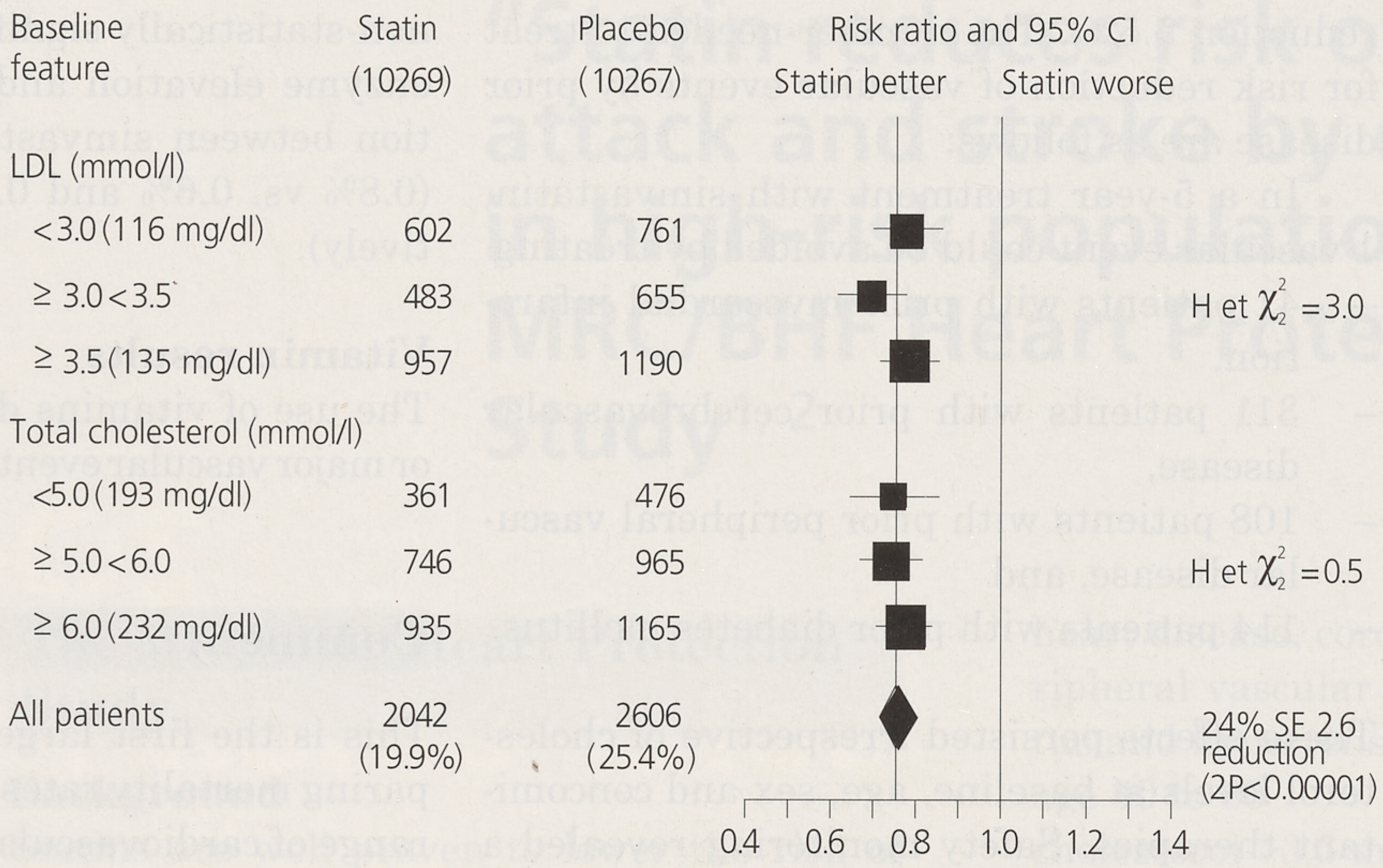
These effects persisted irrespective of cholesterol levels at baseline, age, sex and concomitant therapies. Safety monitoring revealed a non-statistically significant difference in liver enzyme elevation and creatine kinase elevation between simvastatin users and placebo (0.8% vs. 0.6% and 0.09% vs. 0.05%, respectively).
- Vitamin results
The use of vitamins did not reduce mortality or major vascular events compared with placebo.
Comment
This is the first large multicenter trial comparing mortality rates in patients with a broad range of cardiovascular risk factors given randomly simvastatin or placebo. The population is at high risk for future cardiovascular events and death and included patients in the age between 40 and 80, both sexes, diabetics, patients with cerebro vascular and peripheral vascular disease as well as hypertensive patients. Simvastatin reduced safely the relative risk of a heart attack or stroke by 12% to 27% irrespective of age, sex or prior conditions. It is important to emphasize that this trial included patients with average or below-average cholesterol levels. It was commonly recognized that this trial is a landmark study with important public health implications. The study has the potential to change practice patterns, by recommending the drug to twice as many patients as currently recommended.
Figure 1.
Vitamin: major vascular events. (Modified from http://www.ctsu.ox.ac.uk/~hps/).
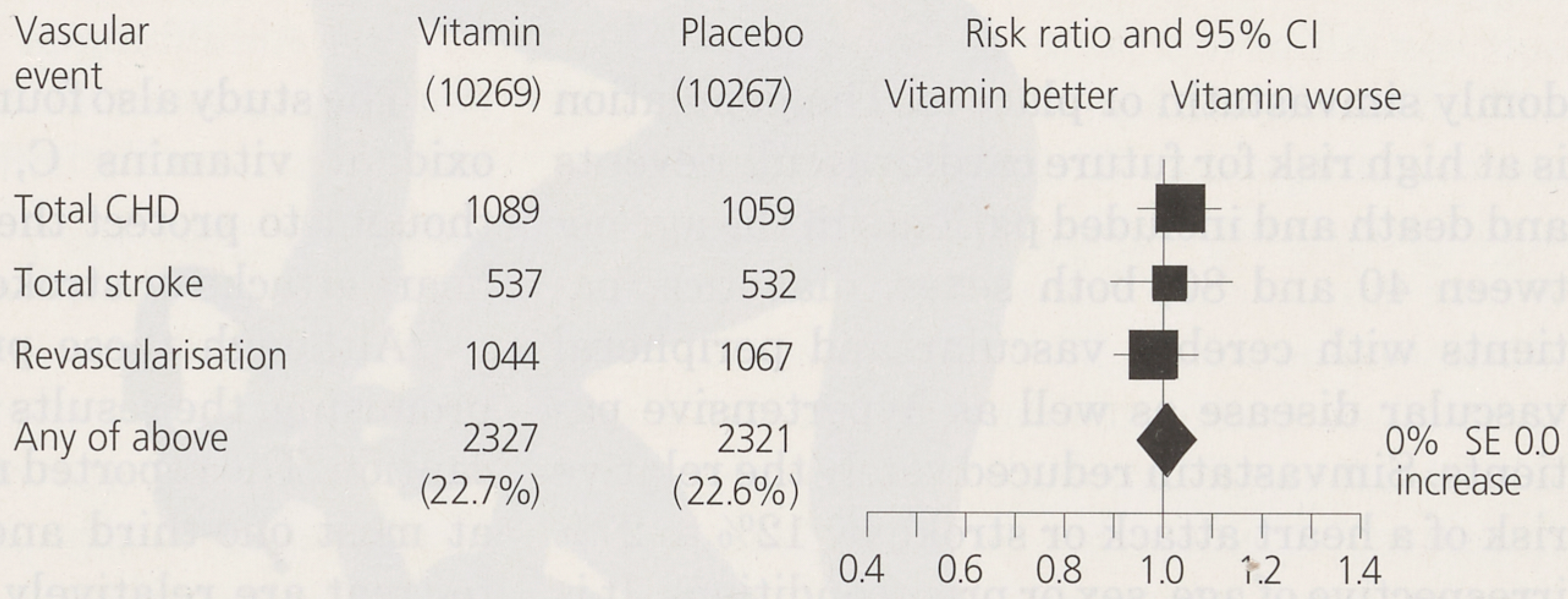
Figure 2.
Simvastatin: major vascular events. (Modified from http://www.ctsu.ox.ac.uk/~hps/).
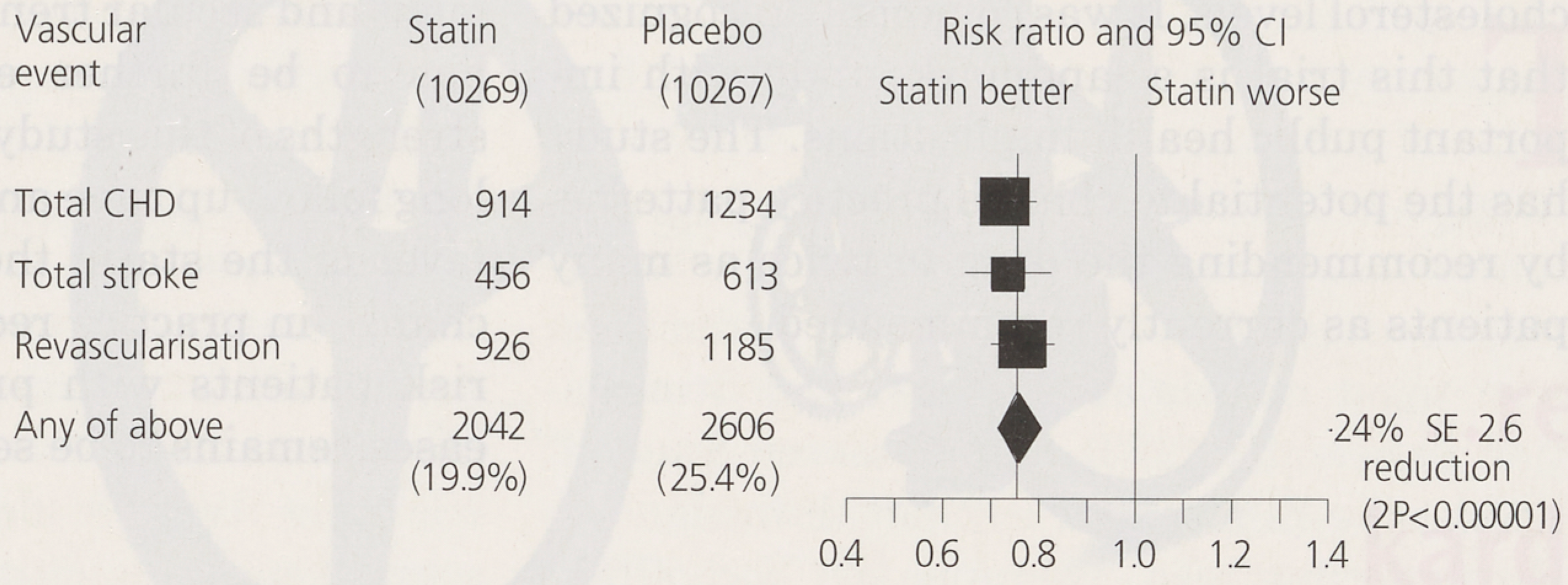
Figure 3.
Simvastatin: vascular events by follow-up duration. (Modified from http://www.ctsu.ox.ac.uk/~hps/).
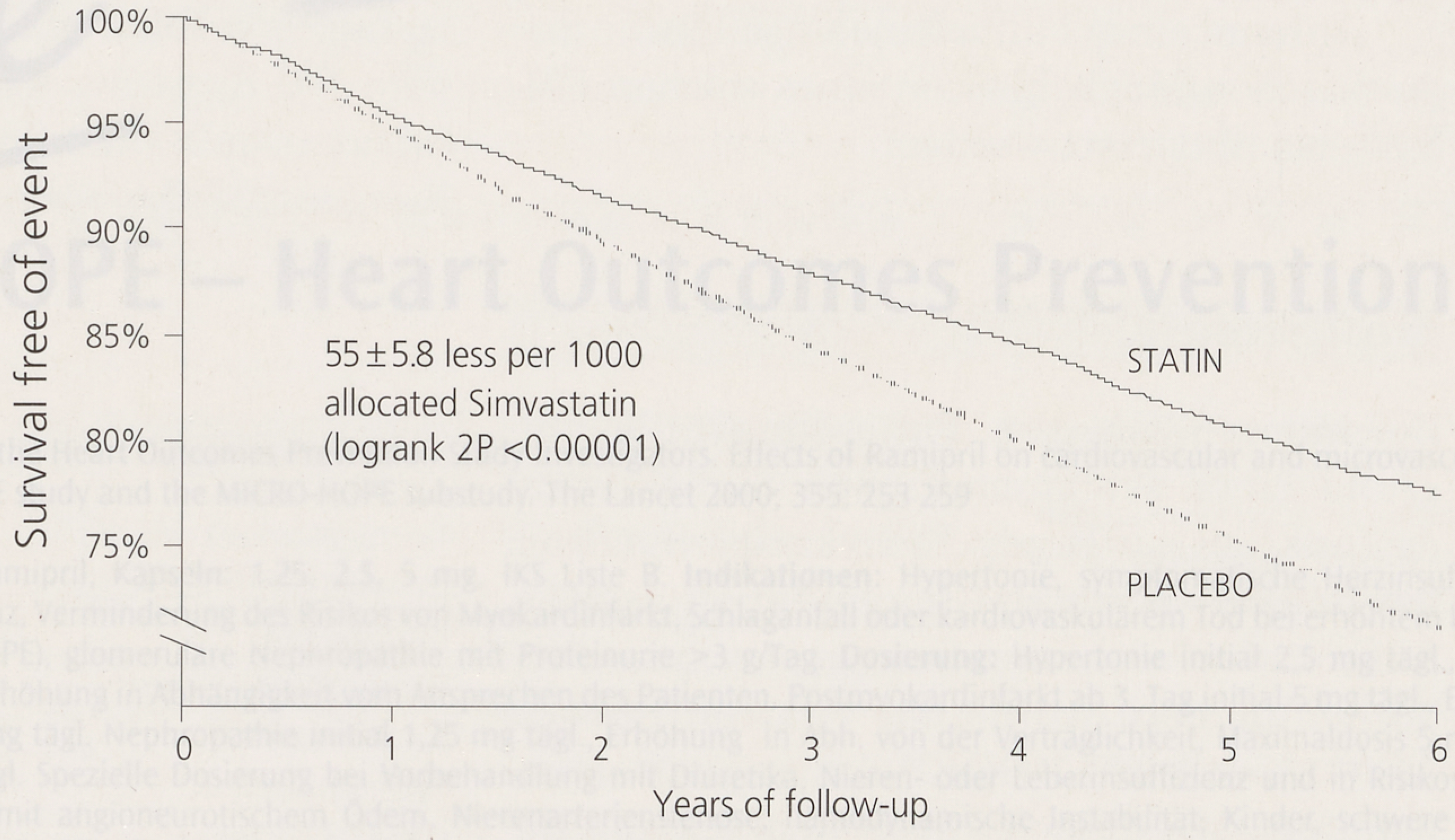
Figure 4.
Simvastatin: vascular events by prior lipid levels. (Modified from http://www.ctsu.ox.ac.uk/~hps/).
The study also found that the popular antioxidant vitamins C, E and beta-carotene, thought to protect the heart, did not prevent heart attacks or strokes.
Although these preliminary results look promising, the results have to be handled with caution. The reported relative risk reduction is at most one-third and the numbers-needed-to-treat are relatively high in view of the increasing health care costs. Furthermore, the issue of compliance with the simvastatin treatment and secular trends in statin prescription has to be further explored. However, the strengths of this study are a large sample size, long follow-up time and unequivocal results in favor of the statin therapy. If this leads to a change in practice recommendation for high-risk patients with prior cardiovascular diseases remains to be seen.
© 2002 by the author. Attribution - Non-Commercial - NoDerivatives 4.0.