


Summary
Low levels of physical activity and fitness substantially increase risk of several chronic diseases, reduce longevity, and lead to loss of function. The strength of the relation of inactivity to health problems and the high prevalence of sedentary habits in most countries of the world make lack of exercise a major public health problem. Fortunately, there is now good consensus regarding public health recommendations for physical activity from many important medical, scientific, and public health organizations. Recent research on physical activity interventions provides additional approaches to helping sedentary adults become more physically active.
Introduction
In this report we review recent developments from physical activity and public health. First, we will summarize research on the contributions of regular physical activity to prevention of chronic disease and extension of longevity. Second, we will review recent public health recommendations for physical activity from leading medical, scientific, and public health organizations. Finally, we will discuss steps that need to be taken to produce a more active society.
Physical Activity and Cardiovascular Health
Research on the relation of regular physical activity to health flourished in the latter half of the 20th century. This line of research was initiated by Professor Jeremy Morris of London with his observations on occupational physical activity and coronary heart disease (CHD) [1]. Work on physical activity and health was extended by Professor Ralph Paffenbarger [2,3,4,5] and others [6,7,8], and there is now general agreement that physical inactivity and low levels of cardiorespiratory fitness are a cause of CHD [9,10,11,12]. Inactive individuals are approximately twice as likely as active persons to die of CHD, and the association is even stronger when cardiorespiratory fitness is considered as the exposure variable. In the Aerobics Center Longitudinal Study (ACLS), we followed 7,080 women and 25,341 men who have been examined at the Cooper Clinic [13]. All of these individuals received a thorough medical examination and completed a maximal exercise test at the time of enrollment in the study.
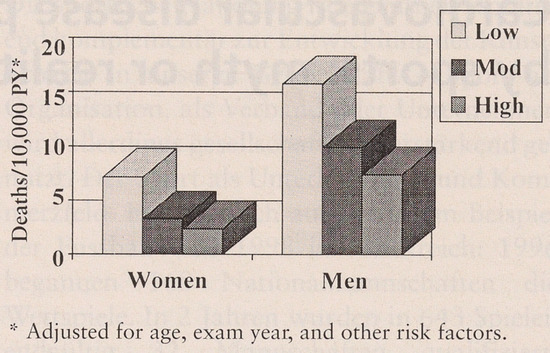
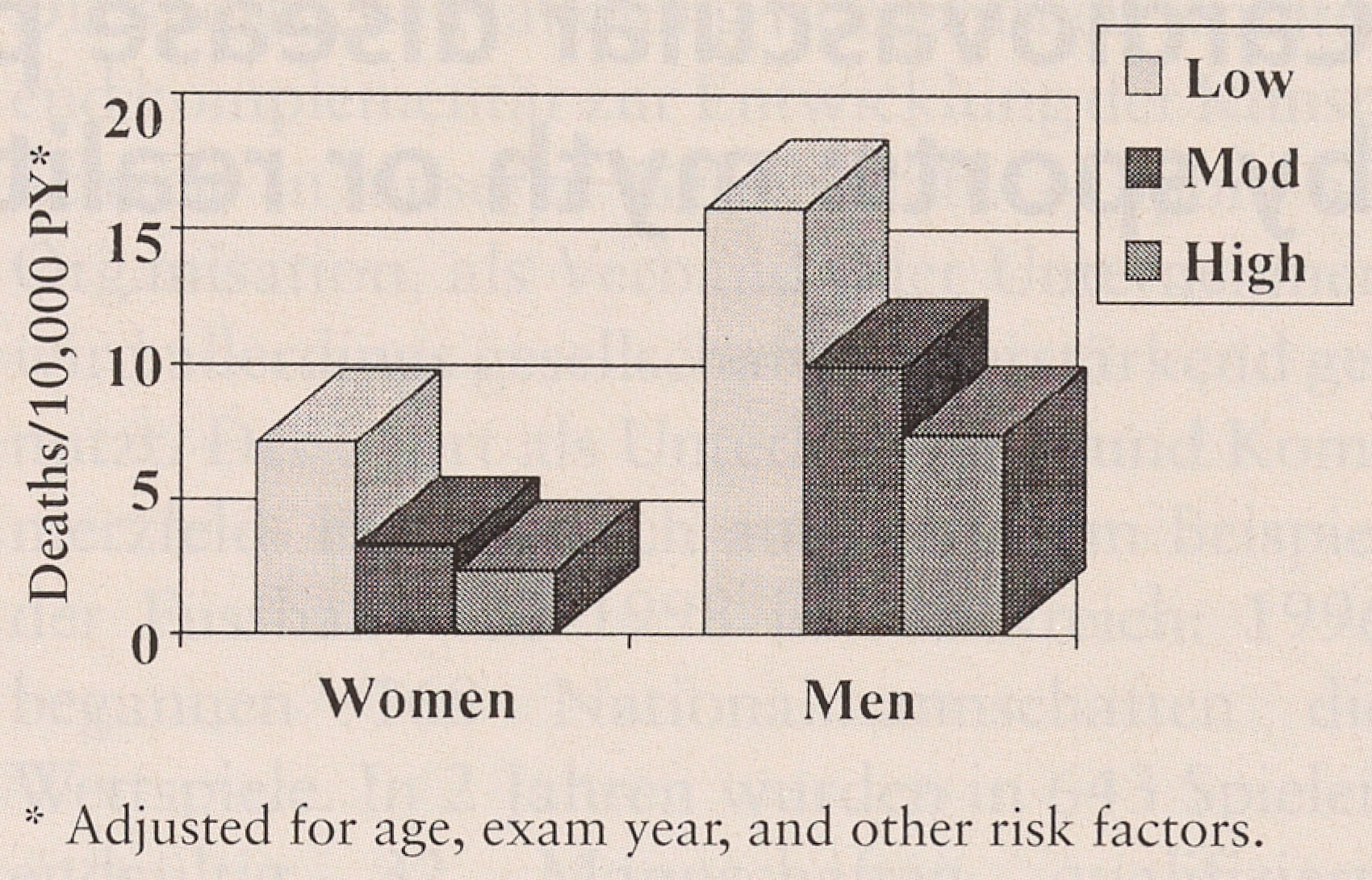
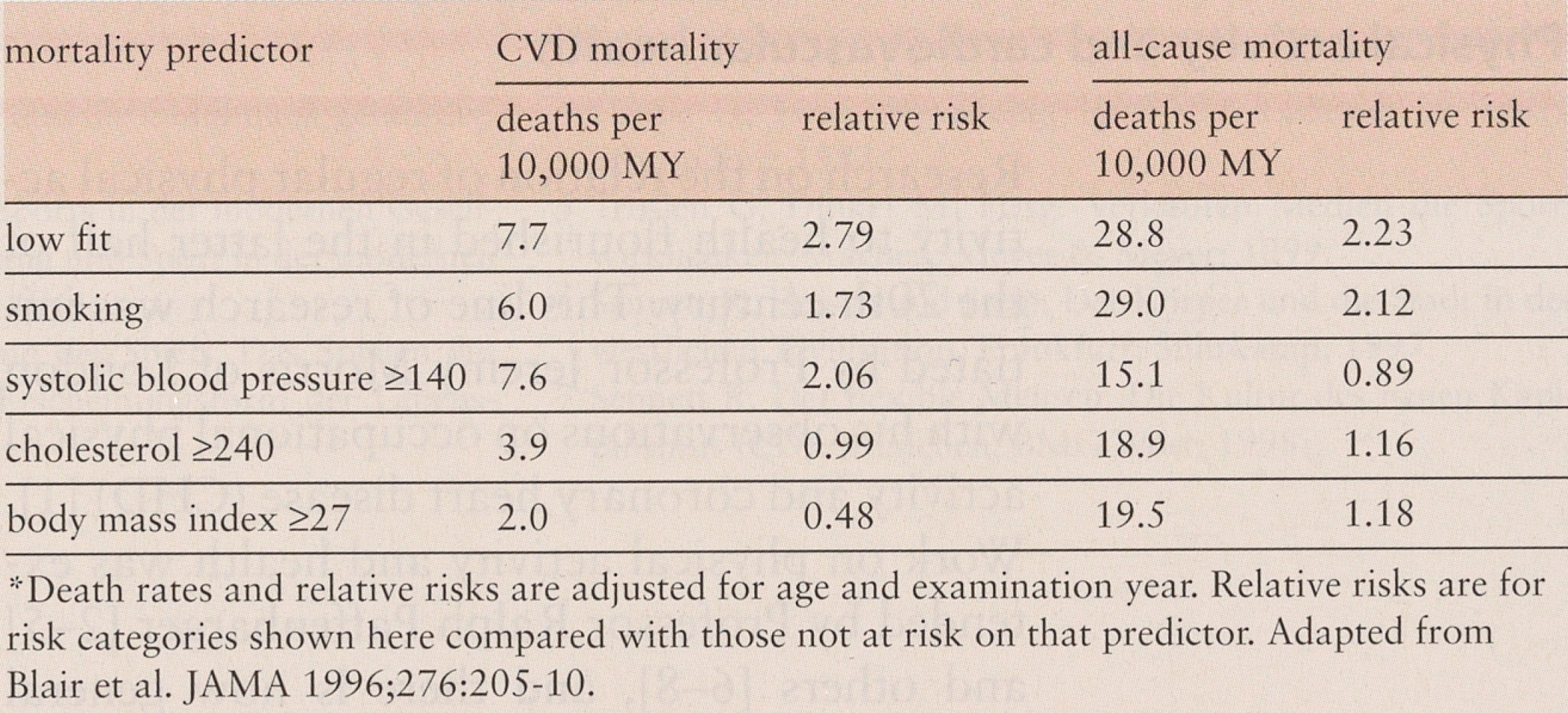
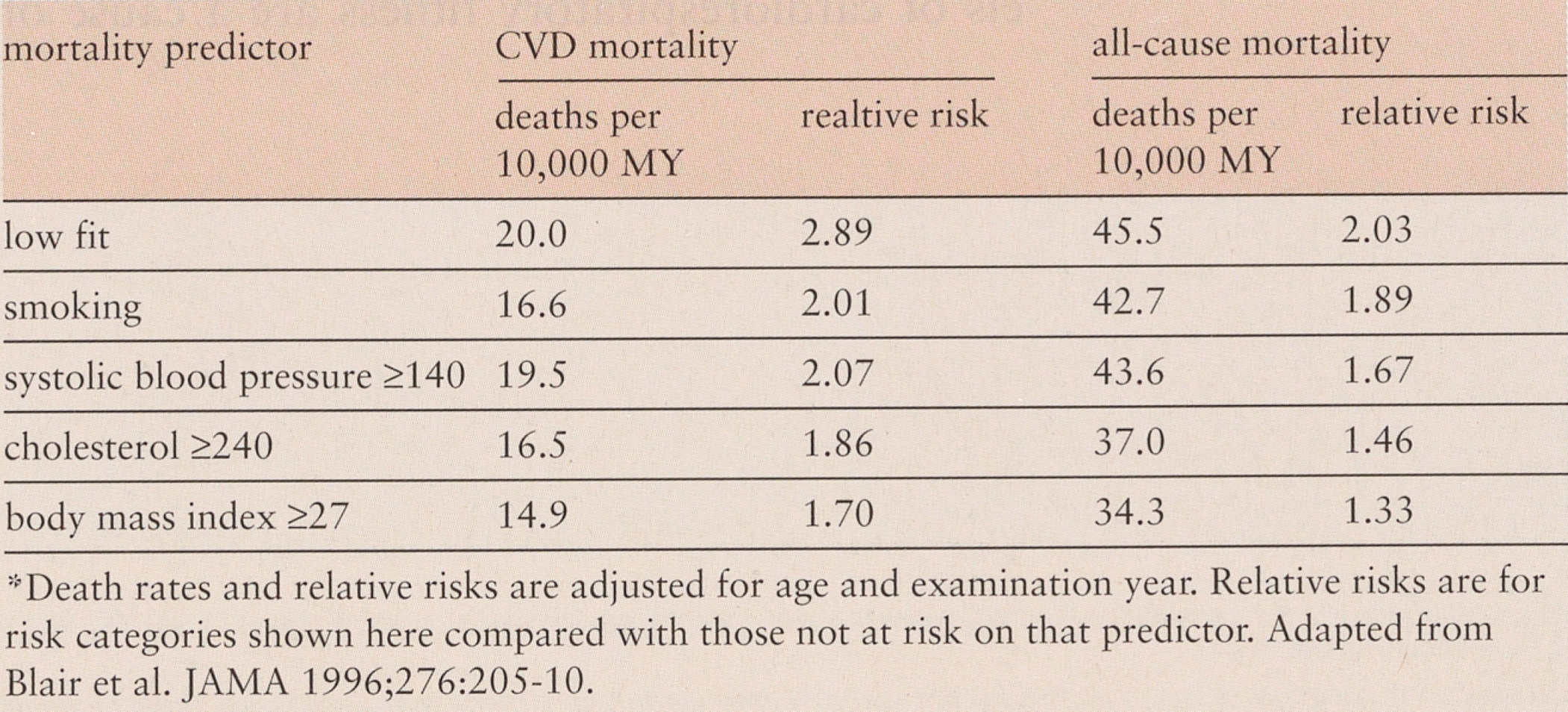
We followed these women and men for a little more than 8 years on the average, during which there were 89 deaths in the women and 601 deaths in the men. Cardiovascular disease (CVD) death rates are shown in Figure 1 for categories of cardiorespiratory fitness levels. There is a steep inverse gradient of risk for both women and men from low to high fitness levels. Low fitness in these analyses refers to the least fit 20% of women and men in each age group, moderate fitness refers to the next 40% of the fitness distribution, and high fitness to the most fit 40%. The CVD death rates are adjusted for age, year of examination, and the other major risk factors for CHD. Low fitness is not only a strong independent predictor of CVD death, it is in fact one of the strongest predictors of both CVD and all-cause deaths. Table 1 and Table 2 show that for CVD mortality low fitness is as strong a predictor as smoking, high blood pressure or cholesterol, or overweight.
Figure 1.
Cardiovascular disease death rates by categories of cardiorespiratory fitness (low, moderate, high) for women and men in the Aerobic Centers Longitudinal Study. Adapted from Blair et al. JAMA 1996;276: 205-10.
Table 1.
Death rates and relative risks* for selected mortality predictors, women, ACLS.
Table 2.
Death rates and relative risks* for selected mortality predictors, men, ACLS.
A second important point from this study [13] about cardiorespiratory fitness and mortality risk is that the relation holds in various subgroup analyses. For example, fit individuals have lower all-cause death rates than unfit individuals regardless of other risk predictors. Individuals at lowest risk are those who are fit and do not smoke or have high blood pressure or cholesterol, and those who are unfit and also have the other predictors are at highest risk. However, women and men in each stratum of the number of other risk predictors who were fit had a lower death rate than similar individuals who were unfit. We can conclude from this study that cardiorespiratory fitness is an independent predictor of all-cause mortality, similarly strong to cigarette smoking and likely to be stronger than elevated pressure or cholesterol.
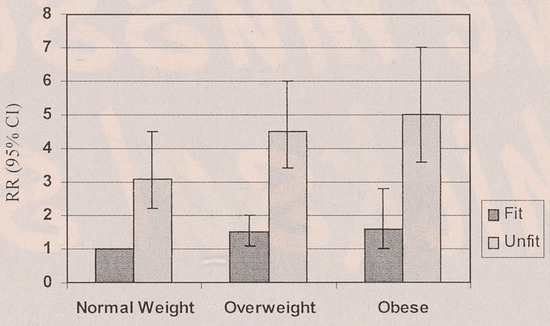
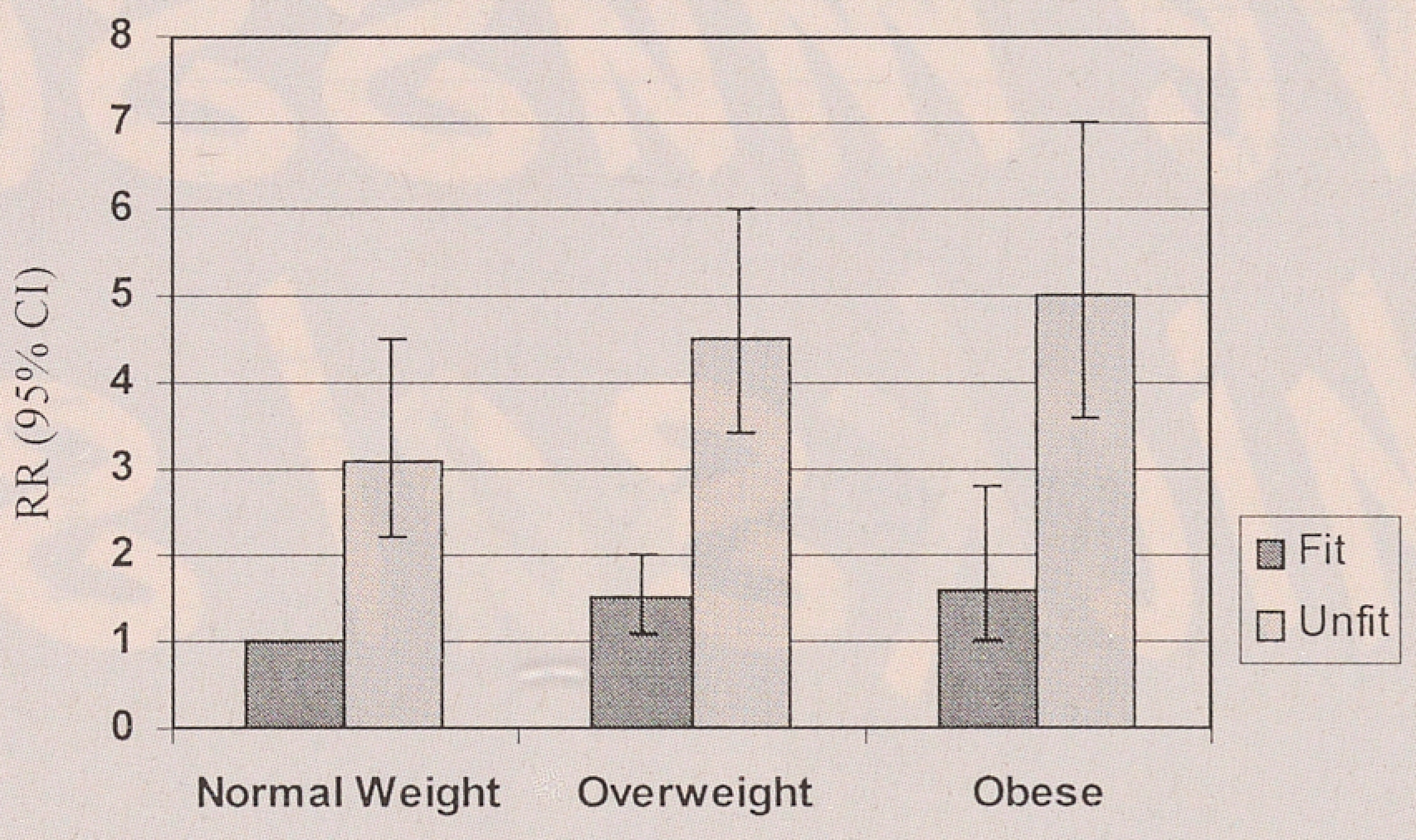
The protection of fitness against mortality seen in strata of other risk factors also is seen in the ACLS in different levels of overweight or obesity. A recent study involves 25,714 men examined at the Cooper Clinic from 1970 to 1993 and followed up for about 10 years [14]. Cardiorespiratory fitness was inversely associated with all-cause mortality in all categories of body mass index (BMI [kg/m²]). In fact, obese men who were fit actually had lower death rates (35/1,619 No. of men) than normal weight men who were unfit (102/987 No. of men) (Figure 2).
Figure 2.
Age- and examination year-adjusted relative risk (RRs) of cardiovascular disease death rates by categories of BMI for men in the Aerobics Center Longitudinal Study. Normal weight is defined as BMI of 18.5 to 24.9; overweight, 25.0 to 29.9; and obese, at least 30.0 kg/m². Adapted from Wei et al. JAMA 1999;282:1547-53.
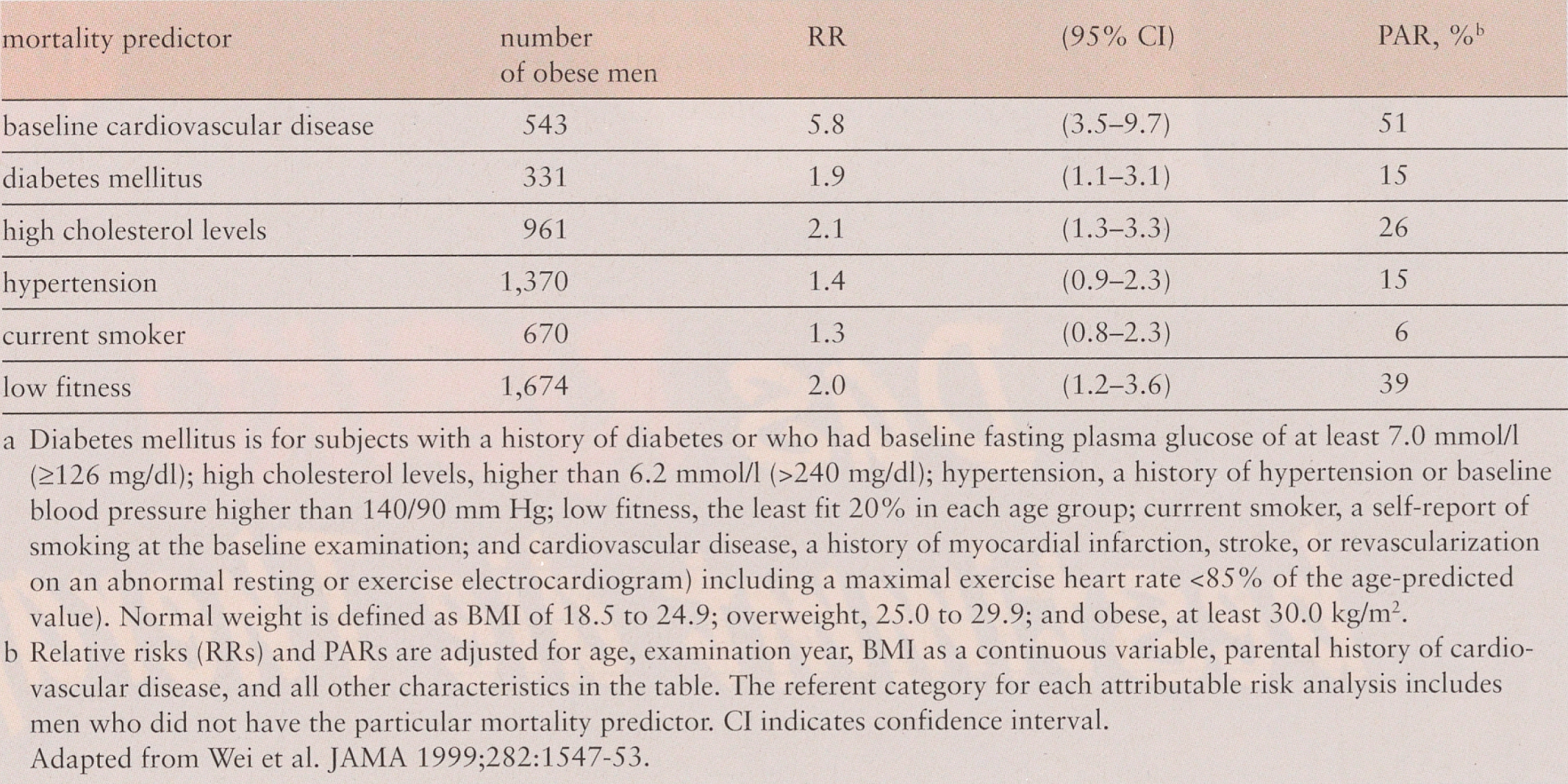
Baseline CVD was the strongest predictor of death for an obese individual (Table 3). Low cardiorespiratory fitness was also a strong predictor with relative risks similar to diabetes mellitus and high cholesterol levels and higher than cigarette smoking. However, when the population perspective is considered by calculating population attributable risks (PARs), low fitness is nearly as important as baseline CVD in obese men. PARs are estimates of the proportion or number of cases of the disease that could be eliminated if the risk factor had not occurred. A 39% reduction in CVD mortality in this population might have been observed if all unfit individuals had been fit.
Table 3.
Mortality predictors in obese men (BMI ≥30 kg/m²).
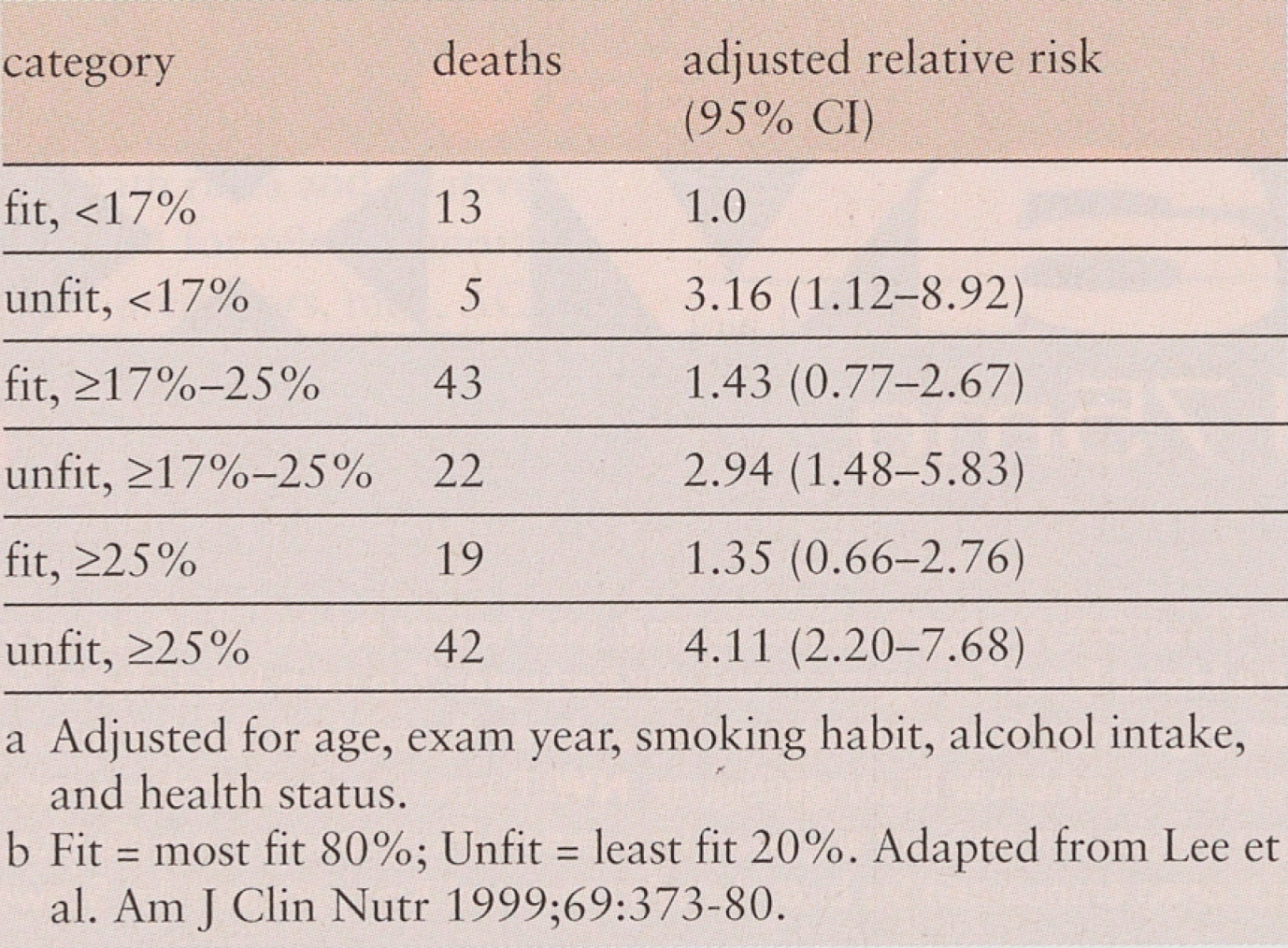
It is possible that these results could be due to the fit men with a high BMI having a high level of muscular development instead of a large amount of body fat. We evaluated this possibility in more than 21,000 men in the ACLS who had their body composition determined by either underwater weighing, by sum of 7 skin-folds, or both methods (Table 4) [15]. Results of these analyses are in agreement with the findings on fitness, BMI, and mortality. Fit men who had >25% body fat had no higher death rates than fit men with < 17% body fat. These fit but fat men had a death rate less than one half that of lean men who were unfit. Thus, although obesity is an important predictor of several chronic diseases, moderate to high levels of cardiorespiratory fitness provide protection against these health hazards in fat men.
Table 4.
Deaths and adjusted relative risks for all-cause mortality according to fitness and body fat categories (men).
It has been said that activity or fitness is independently associated with mortality risk. Although few studies on activity and health have assessed the effects of change in activity or fitness, evidence has been provided in recent studies [5,16]. A group of men who were initially in the least fit one fifth of the population tested in the Cooper Clinic, but by a later examination had become at least moderately fit, registered a 44% lower risk of all-cause mortality when compared to unfit men who had stayed unfit [16]. Men who improved to a high level of fitness had a 64% reduction in risk of death, which was greater than the 50% reduction in risk associated with stopping smoking and also greater than for any risk characteristics in similar analyses. These results were obtained after adjusting for age, family history of CHD, and potential confounding variables.
Increases in physical activity also are associated with a reduction in mortality in the Harvard Alumni Study [5]. Inactive men at baseline who became active had a 23% lower risk of dying than men who remained sedentary. Coronary heart disease mortality also was evaluated, and the level of the reduction in risk with increased physical activity was comparable to that related to other positive changes such as preventing obesity and hypertension and stopping smoking.
Public health recommendations for physical activity
As briefly reviewed here, sedentary living habits are a major contributor to the development of chronic disease, early mortality, and loss of independence with aging. Although most people know about the detrimental effects of inactivity, far too many persons are sedentary. In the U.S., about 25% of the adult population is essentially totally sedentary [12]. The strong association of inactivity to health problems and the high prevalence of sedentary habits led the U.S. Surgeon General to conclude that physical inactivity is one of the major health problems facing the country [12].
There has been considerable consensus achieved in terms of public health recommendations for physical activity. Since 1992, when the American Heart Association named physical inactivity as the fourth risk factor for coronary artery disease [9], several other major organizations have identified inactivity as a public health issue. The Centers for Disease Control and Prevention (CDC) and the American College of Sports Medicine (ACSM) released a report in 1995 on physical activity and public health [10]. Two new features of these recommendations were the focus on moderate intensity physical activity and that activity accumulated over the course of the day had benefit. In 1996, there were reports on physical activity from the U.S. Surgeon General, the U.S. National Institutes of Health Consensus Development Conference on Physical Activity and Cardiovascular Health, and a revised exercise statement from the American Heart Association [11,12,17]. All these reports are consistent with the 1995 report from the CDC/ACSM [10]. Common features of these various recommendations are that: For sedentary adults
- -
- Moderate intensity physical activity, perhaps best characterized by brisk walking (3–4 mph), is sufficient to provide important health benefits.
- -
- The recommended dose is approximately 30 minutes of moderate intensity activity on most, preferably all, days of the week.
- -
- The 30 minutes of activity may be accumulated in shorter bouts of at least 7 to 8 minutes each.
For individuals who are already meeting the activity guidelines listed above
- -
- Additional health benefits and fitness can be obtained by increasing the total dose of exercise, exercise intensity, or both.
Physical activity interventions
Physical activity is a major public health problem in many countries of the world [18]. We have known for decades about the effect of exercise on health and function [19]. However, research on physical activity interventions is a recent development in science [20]. It seems clear that the traditional structured approach to exercise, where exercise is viewed as something done wearing special clothes in a special place such as a gymnasium, is not appealing to many sedentary adults. Fortunately, the new public health recommendations reviewed in this report provide opportunities to expand advice about exercise. For example, those who dislike or otherwise find themselves unable to maintain a traditional exercise program now have a variety of options. The approach that we call lifestyle exercise involves encouraging sedentary individuals to put energy expenditure back into their daily routines. Over the past several decades, the laborsaving devices at work, at home, and during leisure-time have become ubiquitous; the decline in daily energy expenditure amounts to several hundred kilocalories just over the past 25 years [21].
We recently evaluated the lifestyle physical activity intervention approach in a controlled clinical trial, Project Active [22,23]. The purpose of Project Active was to compare the lifestyle program with a traditional, structured, gymnasium-based exercise program. We recruited 235 very sedentary men and women between the ages of 35 and 60 years and randomly assigned them to one of the treatments. Both groups participated in 6 months of intensive exercise interventions, and we continued to follow them for an additional 18 months. The primary purpose of the study was to compare physical activity and cardiorespiratory fitness levels between the lifestyle and structured groups at the end of the 24-month study.
The structured exercise group received a free membership to the Cooper Fitness Center, which is a state-of-the-art health club at our center. We provided a well-trained exercise leader to work with them and help them follow a traditional structured exercise prescription. We asked them to come to the center for at least 3 days a week initially, and work up to coming 5 days a week. Each exercise session was to last 30 to 45 minutes. All facilities at the Cooper Fitness Center were available to these participants, including aerobics classes, exercise machines such as stair steppers and treadmills, swimming pools, indoor and outdoor walking and jogging tracks, and vigorous sports such as racquetball or tennis.
Participants assigned to the lifestyle group came to the Cooper Institute for 1 hour per week for the first 4 months and then 1 hour every other week for the final 2 months of the intensive intervention program. The lifestyle participants did not come to our center to exercise. Instead, they took part in behaviorally-oriented group process sessions designed to help them develop and use cognitive and behavioral strategies for increasing physical activity in daily life.
At the end of the 24-month period, both treatment groups had increased their physical activity and cardiorespiratory fitness levels from baseline [24]. Both groups also lost body fat and lowered their blood pressures. There were no significant differences between the treatment groups on any of these variables at the 24-month evaluation. These results confirm that there are different approaches to physical activity interventions that can be effective and that the lifestyle approach works, at least for some individuals.
Conclusion
Low cardiovascular fitness is one of the strong- est predictors of CVD mortality, and physical inactivity is one of the major problems in many countries of the world. By increasing physical activity and improving fitness, patients will re- duce risk of mortality and CVD.
We thank all colleagues in the Division of Epidemiolog- y and Clinical Applications at the Cooper Institute for their hard work in conducting the various studies mentioned in this report, Dr. Kenneth H. Cooper for establishing the Aerobics Center Longitudinal Study, Stephanie Parker for secretarial support, and Melba Morrow for editing the manuscript. The work re- ported here was supported by grants from the U.S. National Institutes of Health (AG06945 and HL48597) and Polar Electro Oy.
References
- Morris, J.N.; Crawford, M.D. Coronary heart disease and physical activity of work evidence of a national necropsy survey. Br. Med. J. 1958, 2, 1485–96. [Google Scholar] [CrossRef] [Scilit]
- Paffenbarger, R.S., Jr.; Wing, A.L.; Hyde, R.T. Physical activity as an index of heart attack risk in college alumni. Am. J. Epidemiol. 1978, 108, 161–75. [Google Scholar] [CrossRef] [Scilit]
- Paffenbarger, R.S., Jr.; Hyde, R.T.; Wing, A.L.; Hsieh, C.C. Physical activity, all-cause mortality, and longevity of college alumni. N Engl. J. Med. 1986, 314, 605–13. [Google Scholar] [CrossRef] [Scilit] [PubMed]
- Paffenbarger, R.S., Jr.; Hyde, R.T.; Wing, A.L.; Steinmetz, C.H. A natural history of athleticism and cardiovascular health. JAMA 1984, 252, 491–5. [Google Scholar] [CrossRef]
- Paffenbarger, R.S., Jr.; Hyde, R.T.; Wing, A.L.; Lee, I.-M.; Jung, D.L.; Kampert, J.B. The association of changes in physical-activity level and other lifestyle characteristics with mortality among men. N Engl. J. Med. 1993, 328, 538–45. [Google Scholar] [CrossRef] [Scilit]
- Ekelund, L.G.; Haskell, W.L.; Johnson, J.L.; Whaley, F.S.; Criqui, M.H.; Sheps, D.S. Physical fitness as a predictor of cardiovascular mortality in asymptomatic North American men: The Lipid Research Clinics Mortality Follow-up Study. N Engl. J. Med. 1988, 319, 1379–84. [Google Scholar] [CrossRef] [Scilit]
- Leon, A.S.; Connett, J.; Jacobs, Jr; Rauramaa, R. Leisure-time physical activity levels and risk of coronary heart disease and death: The Multiple Risk Factor Intervention Trial. JAMA 1987, 258, 2388–95. [Google Scholar] [CrossRef] [Scilit]
- Kaplan, G.A.; Seeman, T.E.; Cohen, R.D.; Knudsen, L.P.; Guralnik, J. Mortality among the elderly in the Alameda County Study: Behavioral and demographic risk factors. Am. J. Public Health 1987, 77, 307–12. [Google Scholar] [CrossRef] [Scilit]
- Fletcher, G.F.; Blair, S.N.; Blumenthal, J.; Caspersen, C.; Chaitman, B.; Epstein, S.; et al. Position statement - Statement on Exercise - Benefits and recommendations for physical activity programs for all Americans - A statement for health professionals by the committee on Exercise and Cardiac Rehabilitation of the Council on Clinical Cardiology, American Heart Association. Circulation 1992, 86, 340–4. [Google Scholar] [PubMed]
- Pate, R.R.; Pratt, M.; Blair, S.N.; Haskell, W.L.; Macera, C.A.; Bouchard, C.; et al. Physical activity and public health: A recommendation from the Centers for Disease Control and Prevention and the American College of Sports Medicine. JAMA 1995, 273, 402–7. [Google Scholar] [CrossRef] [Scilit] [PubMed]
- NIH Consensus Development Panel on Physical Activity and Cardiovascular Health. NIH Consensus Conference: Physical activity and cardiovascular health. JAMA, 1996; 276, pp. 241–6.
- U.S. Department of Health and Human Services. Physical activity and health: A report of the Surgeon General; U.S. Department of Health and Human Services, Centers for Disease Control and Prevention, National Center for Chronic Disease Prevention and Health Promotion: Atlanta, GA, 1996.
- Blair, S.N.; Kampert, J.B.; Kohl, H.W., III; Barlow, C.E.; Macera, C.A.; Paffenbarger, R.S., Jr.; et al. Influences of cardiorespiratory fitness and other precursors on cardiovascular disease and all-cause mortality in men and women. JAMA 1996, 276, 205–10. [Google Scholar] [CrossRef] [Scilit] [PubMed]
- Wei, M.; Kampert, J.B.; Barlow, C.E.; Nichaman, M.Z.; Gibbons, L.W.; Paffenbarger, R.S., Jr.; et al. Relationship between low cardiorespiratory fitness and mortality in normal-weight, overweight, and obese men. JAMA 1999, 282, 1547–53. [Google Scholar] [CrossRef] [Scilit] [PubMed]
- Lee, C.D.; Blair, S.N.; Jackson, A.S. Cardiorespiratory fitness, body composition, and all-cause and cardiovascular disease mortality in men. Am. J. Clin. Nutr. 1999, 69, 373–80. [Google Scholar] [CrossRef] [Scilit] [PubMed]
- Blair, S.N.; Kohl, H.W., III; Barlow, C.E.; Paffenbarger, R.S., Jr.; Gibbons, L.W.; Macera, C.A. Changes in physical fitness and all-cause mortality: A prospective study of healthy and unhealthy men. JAMA 1995, 273, 1093–8. [Google Scholar] [CrossRef] [Scilit]
- Fletcher, G.F.; Balady, G.; Blair, S.N.; Blumenthal, J.; Caspersen, C.; Chaitman, B.; et al. Statement on exercise: Benefits and recommendations for physical activity programs for all Americans: A statement for health professionals by the Committee on Exercise and Cardiac Rehabilitation of the Council on Clinical Cardiology, American Heart Association. Circulation 1996, 94, 857–62. [Google Scholar]
- Blair, S.N.; Bouchard, C.; Gyarfas, I.; Hollmann, W.; Iwane, H.; Knuttgen, H.G.; et al. Exercise for health. Bull. World Health Organ 1995, 73, 135–6. [Google Scholar]
- American College of Sports Medicine. The recommended quantity and quality of exercise for developing and maintaining fitness in healthy adults. Med. Sci. Sports Exerc 1978, 10, viii–x. [Google Scholar]
- Blair, S.N.; Morrow, J.R.J. Cooper Institute/The American College of Sports Medicine: 1997 Physical Activity Interventions Conference. Am. J. Prev. Med. 1998, 15, 255–6. [Google Scholar] [CrossRef] [Scilit]
- James, W.P.T. A public health approach to the problem of obesity. Int. J. Obes. Relat. Metab. Disord. 1995, 19, 537–45. [Google Scholar]
- Dunn, A.L.; Marcus, B.H.; Kampert, J.B.; Garcia, M.E.; Kohl, H.W., III; Blair, S.N. Reduction in cardiovascular disease risk factors: Six-month results from Project Active. Prev. Med. 1997, 26, 883–92. [Google Scholar] [CrossRef] [Scilit]
- Dunn, A.L.; Garcia, M.E.; Marcus, B.H.; Kampert, J.B.; Kohl, H.W., III; Blair, S.N. Six-month physical activity and fitness changes in Project Active, a randomized trial. Med. Sci. Sports Exerc 1998, 30, 1076–83. [Google Scholar] [CrossRef] [Scilit] [PubMed]
- Dunn, A.L.; Marcus, B.H.; Kampert, J.B.; Garcia, M.E.; Kohl, H.W., III; Blair, S.N. Comparison of lifestyle and structured interventions to increase physical and cardiorespiratory fitness: A randomized trial. JAMA 1999, 281, 327–34. [Google Scholar] [CrossRef] [Scilit] [PubMed]

© 2000 by the author. Attribution - Non-Commercial - NoDerivatives 4.0.