


Abstract
Cardiac memory (CM), also called Chatterjee phenomenon, is characterised by transient negative T-waves during sinus rhythm on the surface electrocardiogram (ECG). This phenomenon reflects a change in ventricular activation repolarisation induced by prolonged abnormal electrical activation (e.g., cardiac pacing). We report a case of a 28-year old patient with repolarisation abnormalities due to CM in response to idiopathic left fascicular ventricular tachycardia (IFLVT).
Case report
A 28-year-old healthy male without
structural heart disease complained of five episodes of palpitations over a
2-year period, which were never documented.
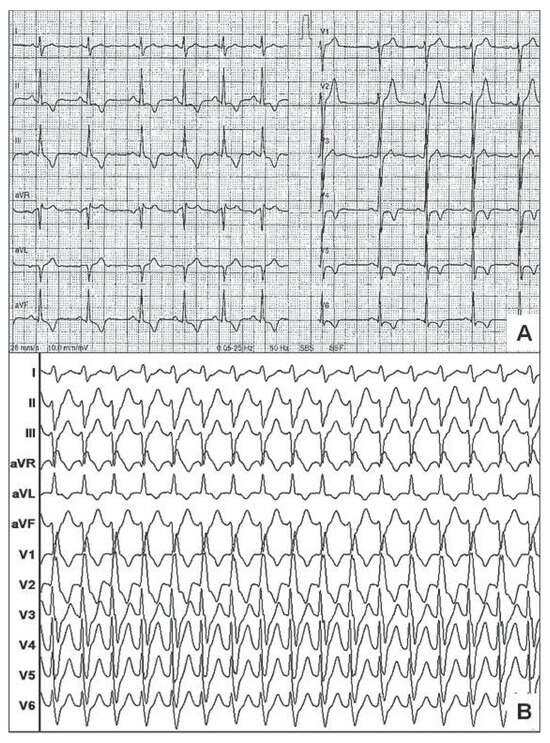
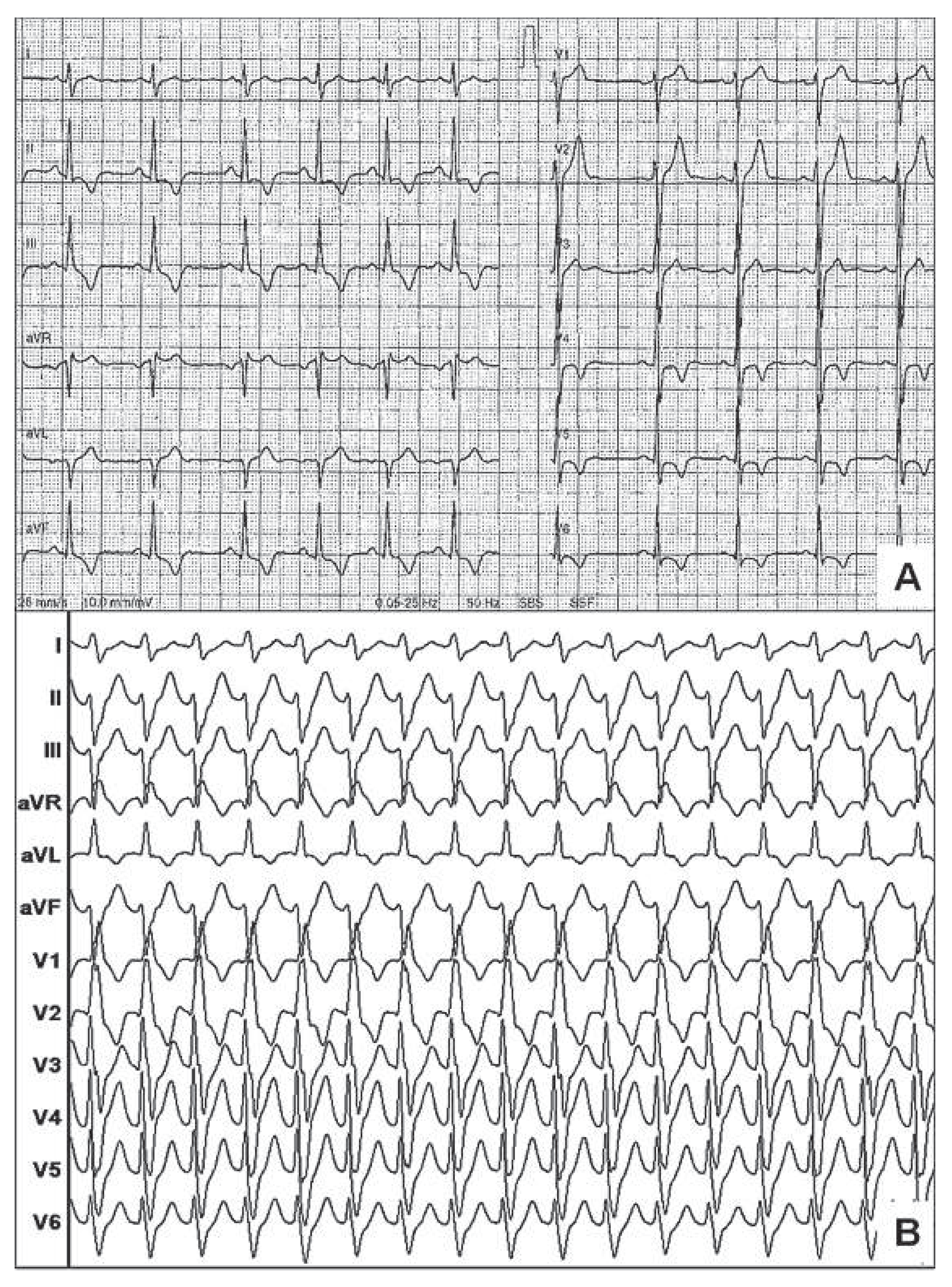
Electrocardiography (ECG) in sinus rhythm
soon after spontaneous cardioversion of a palpitation episode lasting for about
15 h, showed negative T-waves in
inferior leads and V4–V6, which were absent on a
comparative ECG two years prior (Figure 1A).
Figure 1.
(A) Twelve-lead ECG obtained soon after spontaneous cardioversion demonstrating a sinus rhythm with negative T-waves in inferior and in V4 to V6 leads. (B) Induction by atrial pacing, under isoproterenol infusion of ventricular tachycardia with a right bundle branch block pattern and left-axis deviation compatible with an IFLVT.
An electro-physiological study with
programmed stimulation under isoproterenol infusion induced a sustained tachycardia with a right bundle branch
block pattern and left-axis deviation compatible with an idiopathic
fascicular left ventricular tachycardia (IFLVT) (Figure 1B). The tachycardia was successfully
ablated with nine applications of
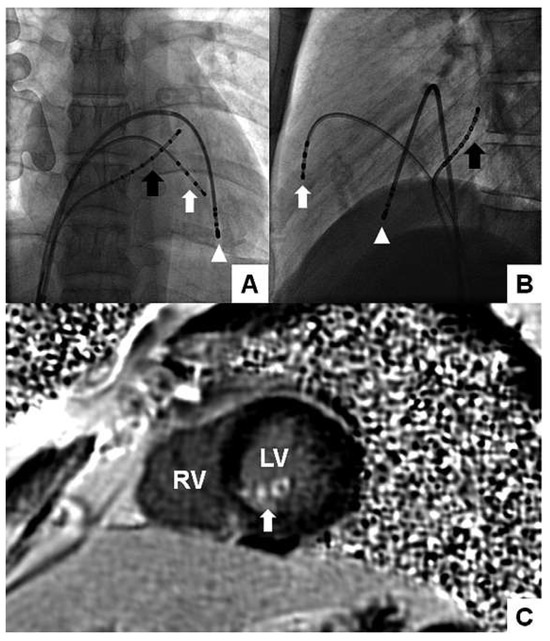
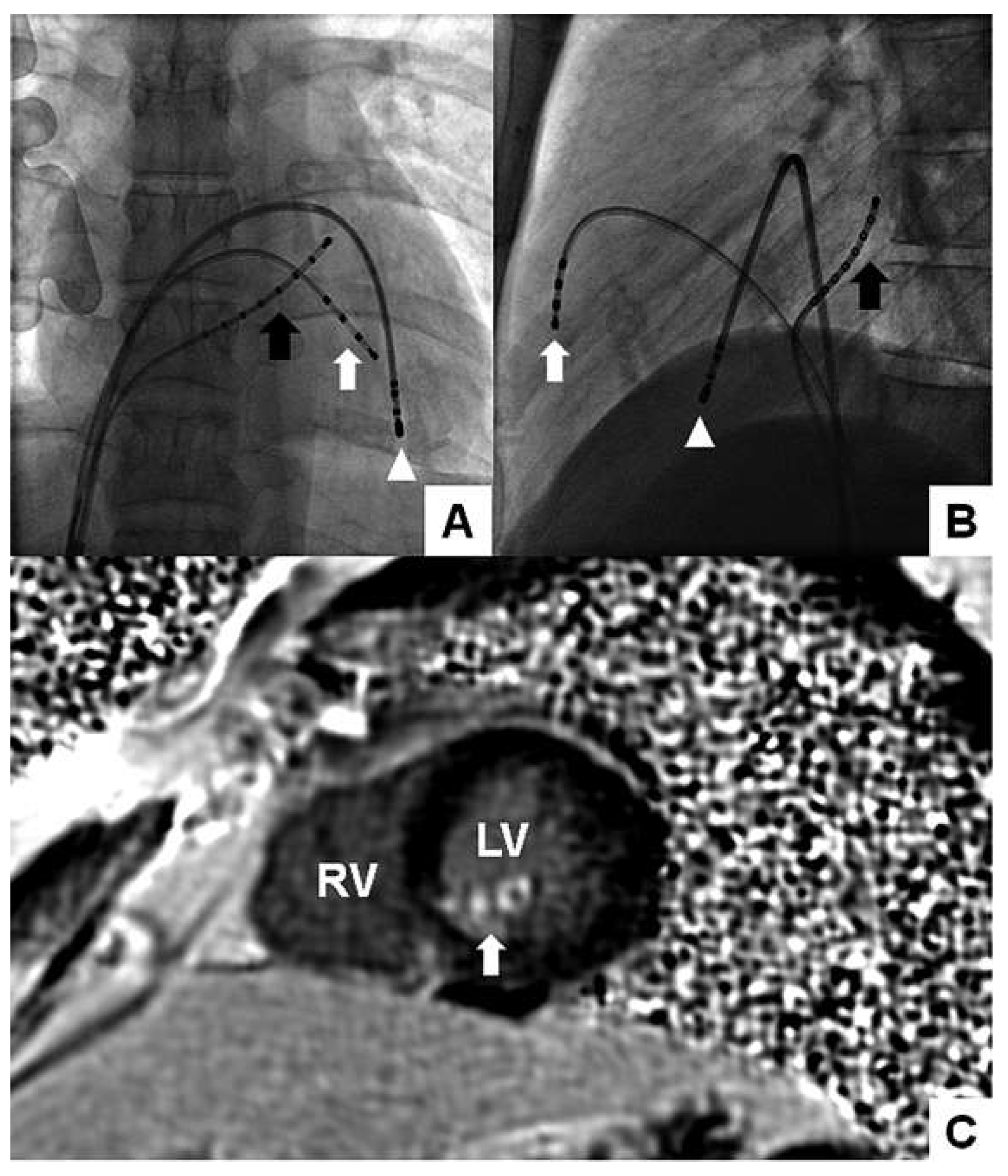
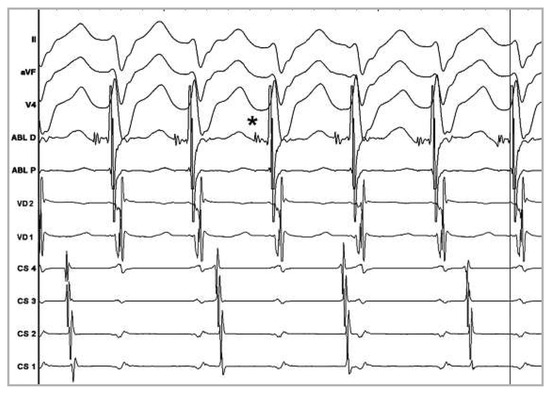
radiofrequency (RF) current in the basal and mid inferoseptal LV segments (Figure 2A,B), where a late diastolic potential
preceding ventricular
activation was recorded (Figure 3). The
arrhythmia was no longer inducible and fifteen months after the patient remains
asymptomatic. A cardiac magnetic resonance (CMR) the day after the ablation
showed subendocardial late gadolinium hyper-enhancement of the
inferoseptal wall of LV (Figure 2C),
reflecting inflammation following RF energy delivery. The underlying mechanism
of IFLVT is thought
to be re-entry with a slow conducting area, close to the Purkinje
fibre network of the left posterior
fascicle [1]. The locations visualised with CMR corresponded precisely
to the sites where the tachyarrhythmia
was successfully terminated.
Figure 2.
(A) Antero-posterior. (B) Lateral fluoroscopic views showing ablation catheter – antergradely inserted via trans-septal puncture – in the mid inferoseptal segment of the LV (white arrowhead). White arrow = quadripolar catheter placed at the anterior wall of the right ventricle; black arrow = octapolar catheter inserted into the coronary sinus; AP = anteroposterior; LAT = lateral. (C) CMR phase sensitive short axis slice of the mid ventricle showing subendocardial late gadolinium enhancement of the inferoseptal wall and posterior papillary muscle (arrow).
Figure 3.
Intracardiac recording during IFLVT showing a presystolic potential (*) 56 ms before the onset of the QRS at the mid inferoseptal segment of left ventricle. We can also observe atrioventricular dissociation in the coronary sinus electrogram, confirming the diagnosis of VT.
The T-waves abnormalities shown in the initial
ECG are probably related to abnormal cardiac activation during IFLVT reflecting cardiac memory (CM) [2]; the T-wave vector shows the same direction
as the QRS vector during the IFLVT (Figure 1A,B). These
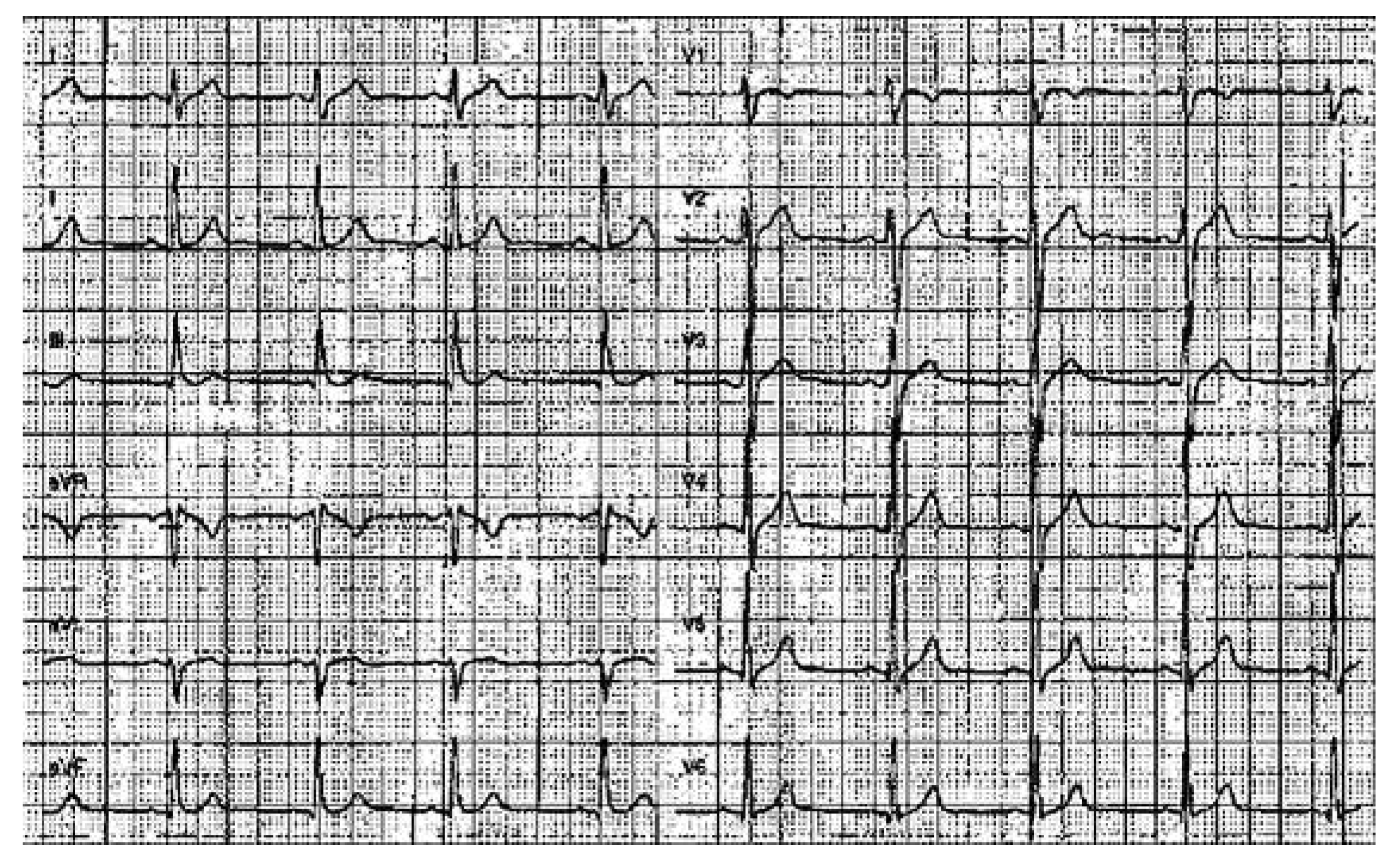
abnormalities were no longer visible three months after the intervention
confirming this hypothesis (Figure 4).
Figure 4.
Twelve-lead electrocardiogram performed three months after the procedure, showing the disappearance of the negative T-waves in inferior leads and V4–V6 confirming the hypothesis of cardiac memory.
In the differential diagnosis of T-wave
inversion in young adults,
CM due to tachyarrhythmia must be considered when hypertrophic cardiomyopathy, myopericarditis or cardiac ischaemia have been excluded.
Funding/potential competing interests
No financial support and no other potential conflict of interest relevant to this article were reported.
References
- Tsuchiya, T.; Okumura, K.; Honda, T.; Iwasa, A.; Yasue, H.; Tabuchi, T. Significance of late diastolic potential preceding Purkinje potential in verapamil-sensitive idiopathic left ventricular tachycardia. Circulation 1999, 99, 2408–2413. [Google Scholar] [CrossRef] [Scilit] [PubMed]
- Rosenbaum, M.B.; Blanco, H.H.; Elizari, M.V.; Lazzari, J.O.; Davidenko, J.M. Electrotonic modulation of the T wave and cardiac memory. Am J Cardiol. 1982, 50, 213–222. [Google Scholar] [CrossRef] [Scilit] [PubMed]
© 2012 by the author. Attribution - Non-Commercial - NoDerivatives 4.0.