


Abstract
The rapid expansion of the global nutraceutical industry has heightened the urgency for rigorous yet efficient safety assessment of food-derived bioactives. Conventional toxicological methods, while indispensable, are often costly, time-consuming, and insufficient to keep pace with the rapid product innovation in this sector. In this context, in silico models for predicting Absorption, Distribution, Metabolism, Excretion, and Toxicity (ADMET), alongside broader computational toxicology tools, are increasingly recognized as scalable and cost-effective strategies for early-stage safety evaluation of nutraceuticals. Techniques such as quantitative structure–activity relationship (QSAR) modeling, molecular docking, and physiologically based pharmacokinetic (PBPK) simulation enable early prioritization of candidate compounds, forecasting of potential enzyme- or receptor-mediated interactions, and prediction of bioactive metabolite profiles, prior to costly experimental or clinical evaluation. Yet, their application in the nutraceutical domain presents unique challenges. Food matrices are chemically complex, bioactive data remain sparse and unevenly curated, and long-term, low-dose effects are difficult to capture with existing computational frameworks. These limitations constrain predictive accuracy and raise questions about general applicability across diverse classes of compounds. Therefore, this review critically examines both the opportunities and limitations of computational safety assessment for nutraceuticals. It synthesizes representative case studies, evaluates current methodological limitations, and discusses the evolving regulatory landscape alongside emerging integrative frameworks such as New Approach Methodologies (NAMs) that may guide the future of nutraceutical safety assessment.
1. Introduction
The intersection of nutrition and preventive medicine has given rise to a rapidly expanding nutraceutical industry [1]. Defined as food-derived products that provide purported physiological benefits beyond basic nutrition, nutraceuticals, including dietary supplements, functional foods, and herbal extracts, are increasingly consumed worldwide for the enhancement of health and wellness [2]. According to a recent market analysis by Fortune Business Insights, the global nutraceutical market was valued at approximately USD 500 billion in 2025 and is projected to surpass USD 1.12 trillion by 2034, growing at a compound annual growth rate (CAGR) of 10.58% [3]. This unprecedented growth has outpaced the capacity of existing safety evaluation frameworks, exposing a critical gap between product innovation and rigorous safety assessment. The establishment of robust and predictive safety assessment strategies remains a critical bottleneck. This challenge arises not only from the chemical diversity and multi-component nature of nutraceutical products, but also from the limited scalability of conventional toxicity testing approaches.
Moreover, the regulatory landscape further exacerbates this challenge. Unlike pharmaceutical products, which generally require rigorous premarket evaluation, nutraceuticals are regulated under comparatively flexible frameworks in many jurisdictions [4]. For example, in the United States, the Dietary Supplement Health and Education Act (DSHEA) places the responsibility for ensuring safety on manufacturers, often without mandatory pre-market approval [5]. Consequently, this regulatory structure, combined with limited standardized safety data, increases the burden of safety evaluation in the context of rapidly expanding product diversity.
This increasing evaluation burden cannot be effectively addressed by conventional toxicological approaches, particularly given the broad chemical space of food-derived bioactives. Beyond their methodological limitations, animal-based assays also raise ethical concerns, and increasing efforts are being made to reduce or replace their use in accordance with the 3Rs principle (Replacement, Reduction, and Refinement) and recent regulatory initiatives promoting New Approach Methodologies (NAMs) [6]. Consequently, these limitations highlight a structural mismatch between current safety assessment frameworks and the scale of nutraceutical innovation, necessitating scalable and biologically relevant strategies for early risk identification.
To address these limitations, computational toxicology has emerged as a promising approach. The integration of in silico models for predicting Absorption, Distribution, Metabolism, Excretion, and Toxicity (ADMET) offers a scalable strategy for early-stage safety evaluation [7]. By leveraging methods such as Quantitative Structure-Activity Relationship (QSAR) modeling, molecular docking, and pharmacokinetic simulation, researchers can now efficiently screen large chemical libraries in silico. This allows for the prediction of potential hepatotoxicity, cardiotoxicity, carcinogenicity, and drug-interaction risks before a single laboratory experiment is conducted [8]. However, despite these advances, significant challenges remain, particularly in accurately capturing the complexity of food matrices, chronic exposure scenarios, and multi-component interactions characteristic of nutraceuticals. This review critically examines the extent to which computational toxicology can bridge the gap between rapid nutraceutical innovation and reliable safety assessment. We first survey the current landscape of in silico ADMET prediction methods and evaluate their strengths in nutraceutical safety evaluation. We then critically analyze the unique challenges posed by food-derived bioactives—including matrix effects, data scarcity, and chemical complexity—before discussing regulatory perspectives, standardization imperatives, and integrated hybrid approaches as part of the emerging NAMs framework.
For this narrative review, relevant literature was identified through searches of PubMed, Web of Science, and Scopus for publications available up to July 2026. Google Scholar was used to supplement the database searches, and the reference lists of relevant primary studies and review articles were manually examined to identify additional publications. Search terms were used in various combinations and included “nutraceutical,” “food bioactive,” “dietary supplement,” “natural product,” “computational toxicology,” “in silico,” “QSAR,” “read-across,” “molecular docking,” “ADMET,” “PBPK,” “machine learning,” “artificial intelligence,” “new approach methodologies,” “toxicity,” and “safety assessment.”
Peer-reviewed articles published in English were considered when they described the development, validation, or application of computational methods relevant to the safety, toxicity, ADMET properties, metabolism, exposure, or biological interactions of nutraceuticals, food-derived bioactives, dietary ingredients, or related natural products. Studies addressing therapeutic efficacy alone, without relevant safety, toxicological, ADMET, or methodological information, were excluded. Duplicate records, conference abstracts, and publications lacking sufficient methodological information were also excluded. Official documents issued by the FDA, EFSA, and OECD were separately examined to support the discussion of regulatory frameworks and the regulatory acceptance of computational approaches. As this study was intended to provide a critical narrative synthesis rather than a systematic review or meta-analysis, formal risk-of-bias assessment and quantitative evidence synthesis were not undertaken.
2. Computational Approaches in Nutraceutical Safety Assessment
Recent progress in computational toxicology has positioned in silico approaches—such as Quantitative Structure-Activity Relationship (QSAR) modeling, read-across, molecular docking, and Physiologically Based Pharmacokinetic (PBPK) modeling—as essential components for predicting ADMET profiles. QSAR, in particular, establishes quantitative relationships between chemical structure and biological activity, thereby reducing dependence on traditional, resource-intensive experimental testing [9].
Complementary to QSAR, the read-across method extrapolates data from well-characterized chemicals to structurally or functionally similar but less-studied substances. By leveraging chemical similarity, this approach addresses data gaps while maintaining regulatory relevance and reducing dependence on animal testing [10]. Molecular docking offers a more mechanistic perspective by simulating interactions between small molecules and biological macromolecules, such as proteins or enzymes [11]. Through the prediction of binding affinity and interaction modes, docking allows the identification of potential toxicological pathways and bioactive mechanisms, offering early mechanistic insights relevant to toxicity prediction.
Beyond individual methodologies, computational approaches are increasingly integrated with experimental workflows in natural product research, where phytochemical characterization, molecular docking, and in vitro validation are combined to support compound prioritization and hypothesis generation [12,13,14,15,16,17]. A further advancement is the coupling of molecular docking with ultra-large-scale virtual screening, which enables the rapid in silico evaluation of extensive chemical libraries—including natural product databases and dietary compound collections—to prioritize candidates with favorable ADMET profiles [16]. When combined with machine learning–enhanced scoring and applicability domain analysis, these approaches extend predictive capabilities across vast chemical spaces and support the identification of compounds for downstream validation [18]. Such strategies are particularly relevant to nutraceutical research, where chemical diversity and combinatorial complexity pose significant challenges for conventional testing.
At the systems level, PBPK modeling extends earlier structure- and mechanism-based approaches, such as QSAR modeling and molecular docking, by constructing mathematical representations of biological systems to simulate ADMET processes across tissues and organs [19]. By integrating physiological parameters with compound-specific properties, PBPK models provide dynamic insights into internal exposure, dose–response relationships, and interindividual variability. Although widely applied in pharmaceutical and environmental research, the use of PBPK modeling in nutraceuticals remains constrained by the limited availability of compound- and species-specific parameters. Nevertheless, PBPK modeling represents a critical step toward bridging molecular-level predictions with organism-level responses [19,20]. The fundamental principles, predictive outputs, strengths, limitations, and typical safety applications of these computational approaches are comparatively summarized in Table 1. Representative studies demonstrating their practical roles in the safety evaluation of food-derived bioactives are presented in Table 2.
Table 1.
Comparative characteristics of computational approaches used in nutraceutical safety assessment.
Table 2.
Representative applications and practical contributions of computational approaches in the safety assessment of food-derived bioactives.
Collectively, these computational methodologies enable multi-scale safety assessment spanning molecular structure, mechanistic interaction, and system-level exposure. By complementing experimental approaches, they help reconcile the expanding chemical diversity of nutraceuticals with the limited throughput of conventional toxicity testing. However, beyond their methodological diversity, these approaches also offer distinct practical and mechanistic advantages for nutraceutical safety evaluation, particularly in early-stage prioritization, mechanistic interpretation, and predictive metabolism assessment.
3. Strengths of Computational Approaches in Nutraceutical Safety Prediction
Computational models provide a scalable and efficient framework for evaluating food-derived bioactives, particularly in the context of increasing chemical complexity and limited experimental throughput. Building on the multi-scale approaches described above, they offer several key advantages for safety assessment across different stages of evaluation and risk characterization. These strengths, summarized in Figure 1, include early-stage triage, mechanistic insight, metabolite prediction, and reduced reliance on animal testing.
Figure 1.
Schematic overview of the strengths and challenges of computational models in nutraceutical safety prediction, illustrating their complementary roles and the need for integrated evaluation frameworks.
3.1. Early-Stage Triage and Virtual Screening
As an early-stage triage system, computational approaches enable the rapid filtering of large chemical libraries to prioritize compounds for subsequent experimental validation [33,34]. When integrated with QSAR modeling and machine learning algorithms, these approaches enhance predictive accuracy and support efficient resource allocation by identifying compounds with favorable ADMET-related properties [35]. Pharmacophore modeling further contributes by identifying key three-dimensional structural features required for interactions with biological targets, while molecular docking provides structural insights into binding interactions and predicted affinity between food-derived compounds and their targets [36].
Rather than serving as definitive predictors, these methods function as prioritization tools that guide downstream experimental validation, ensuring that limited resources are focused on compounds with higher likelihood of biological relevance and acceptable safety profiles. In this way, computational triage supports a more efficient and targeted safety evaluation framework, reducing time and cost while improving decision-making processes. Although such approaches have been extensively validated in pharmaceutical research [37], their application in nutraceutical science is rapidly expanding, particularly for large-scale screening of food-derived bioactives. Consequently, computational triage serves as a foundational step that enables subsequent mechanistic and metabolic analyses, as discussed in the following sections.
3.2. Mechanistic Interpretation of Bioactivity and Toxicity
Computational tools provide mechanistic insights into how food-derived bioactives interact with biological systems, particularly in the context of safety evaluation. Molecular docking can predict interactions between bioactive compounds and biological targets, including metabolic enzymes (e.g., cytochrome P450s) or cardiac ion channels (e.g., hERG), thereby enabling early identification of potential food–drug interaction risks or cardiotoxicity [38,39]. These predictions help characterize how specific structural features contribute to adverse biological responses, supporting the identification of potential toxicity pathways.
Complementary to docking, QSAR modeling correlates molecular descriptors—such as lipophilicity, electronic properties, and hydrogen-bonding capacity—with biological outcomes, enabling the identification of structural motifs associated with toxicity. Together, these approaches improve the ability to rationalize toxicity risks based on chemical structure and predicted molecular interactions. However, because many food-derived bioactives exert pleiotropic and context-dependent effects, single-target prediction alone is often insufficient to fully explain their biological activity.
Beyond single-target prediction, computational approaches increasingly support pathway- and network-level interpretation of biological responses. Because many food-derived bioactives interact with multiple molecular targets, network-based analyses are particularly useful for understanding their broader biological consequences. Approaches such as network pharmacology and pathway enrichment analysis enable identification of interconnected signaling pathways associated with oxidative stress, inflammation, metabolism, and xenobiotic responses. These methods provide broader mechanistic context by revealing how structurally diverse compounds may converge on shared biological processes [40,41,42].
Integration with omics datasets further expands mechanistic interpretation by enabling systems-level analysis of cellular responses to bioactive exposure. Transcriptomics, proteomics, and metabolomics can be computationally integrated to identify differentially regulated pathways, biomarker candidates, and adaptive stress responses associated with both beneficial and adverse effects. Such approaches are particularly relevant in nutraceutical safety assessment because biological responses often vary depending on dose, exposure duration, physiological status, and interactions with other dietary components. Consequently, omics-guided computational modeling contributes to a more comprehensive understanding of context-dependent bioactivity and toxicity. In this context, the Adverse Outcome Pathway (AOP) framework provides a structured conceptual model linking molecular initiating events to apical toxicity outcomes, offering a valuable scaffold for organizing mechanistic predictions from in silico tools.
3.3. Predictive Metabolism of Complex Bioactives
Machine learning–based and evidence-driven tools such as MetaPrint2D, SMARTCyp, BioTransformer, and MetaPredictor enable prediction of metabolic sites and likely metabolite structures by analyzing known xenobiotic transformation patterns [43,44]. These approaches are particularly valuable for food-derived bioactives, whose biological activity and safety profiles are often strongly influenced by metabolic conversion rather than by the parent compound itself. For example, computational models have accurately predicted glucuronidation and sulfation pathways of resveratrol, providing mechanistic explanations for its rapid clearance and limited bioavailability [45].
Cytochrome P450-mediated metabolism is central to biotransformation prediction, and computational metabolism models can identify pathways leading to the formation of stable or reactive intermediates [46]. Such predictions are important because metabolic conversion may either detoxify compounds or generate metabolites with altered biological potency and toxicity. A representative example is glycyrrhizin, which is hydrolyzed into glycyrrhetinic acid, a metabolite associated with enhanced biological activity but also increased risk of pseudoaldosteronism under excessive exposure conditions [47]. These mechanistic insights are therefore valuable for distinguishing adaptive metabolic processing from pathways that may contribute to adverse biological effects.
Beyond metabolite formation itself, physiologically based biotransformation and pharmacokinetic models further connect metabolite generation to tissue distribution and interindividual variability. Such approaches can simulate how differences in metabolic enzymes influence systemic exposure and dose-dependent responses, as demonstrated in CYP1A2-mediated caffeine metabolism [48,49]. By incorporating enzyme polymorphisms, tissue-specific metabolism, and exposure variability, these models provide a more comprehensive understanding of population-specific safety risks associated with nutraceutical compounds.
Recent advances increasingly integrate metabolite prediction with systems toxicology and experimental metabolomics workflows. Computational analyses can help map metabolite interactions with cellular signaling pathways, thereby improving interpretation of both beneficial and adverse biological effects. For example, curcumin has been associated with activation of Nrf2-mediated antioxidant responses [50], whereas certain isothiocyanates may generate reactive intermediates with potential cytotoxic effects [51]. In parallel, integration with molecular networking approaches enables predicted biotransformation products to be mapped onto experimental MS/MS datasets as clustered metabolite nodes [52,53]. This network-based context improves metabolite annotation, facilitates discrimination of true metabolites from background signals, and supports identification of microbiome-mediated or secondary biotransformation pathways. Collectively, these integrated strategies improve validation of in silico ADMET predictions while supporting more efficient prioritization for downstream experimental investigation [54,55].
3.4. Contribution to Animal Testing Reduction and 3Rs Strategies
An additional advantage of computational modeling lies in its potential to reduce reliance on animal testing. By predicting bioactivity profiles, off-target interactions, and metabolic toxicity in silico, computational approaches enable prioritization of the most relevant compounds for downstream experimental validation. This strategy aligns with the global 3Rs framework—Replacement, Reduction, and Refinement [54,55]—contributing most directly to Replacement and Reduction objectives by minimizing the number of animals required for screening-stage evaluation while supporting more ethical and resource-efficient research practices.
This relevance is particularly pronounced in nutraceutical research, where large numbers of structurally diverse compounds require safety evaluation. In this context, computational screening can enhance experimental efficiency by prioritizing candidate compounds for in vivo testing, thereby reducing redundant animal-based studies. These approaches are increasingly recognized as important components of NAMs and integrated safety assessment frameworks [56]. Nevertheless, despite these advantages, the predictive performance of current computational models remains constrained by the unique chemical complexity, compositional variability, and multi-component nature of nutraceutical products. These challenges continue to limit the generalizability and translational reliability of in silico predictions, highlighting the need for more robust and standardized evaluation strategies.
4. Current Challenges and Unique Complexities of Nutraceuticals
Despite the substantial progress and advantages of computational approaches in nutraceutical safety assessment, several inherent challenges continue to constrain their predictive reliability and translational applicability. Unlike pharmaceutical compounds, nutraceuticals are typically consumed as chemically complex mixtures within dynamic dietary environments, where bioactivity and toxicity are shaped by multiple intersecting factors, including food matrix effects, formulation conditions, chronic low-dose exposure, interindividual metabolic variability, and compositional heterogeneity across batches and sources. These characteristics pose fundamental challenges for computational frameworks originally developed for well-characterized, single-compound systems. The following subsections critically examine these unique complexities and their implications for current in silico predictive performance.
4.1. The Matrix Effect and Experimental Heterogeneity
One of the most significant limitations of current computational approaches is the so-called matrix effect, in which bioactive compounds behave differently when consumed as components of whole foods rather than as isolated molecules [45,57]. For example, curcumin evaluated in silico as a purified compound may not accurately reflect its pharmacokinetics or biological activity when consumed as part of turmeric. In particular, co-administration with piperine from black pepper markedly enhances curcumin bioavailability, while dietary lipids further facilitate its intestinal absorption [58]. Similarly, formulation differences, extraction solvents, assay conditions, and compound stability can markedly influence experimentally measured bioactivity and toxicity profiles.
Current computational models have limited capacity to capture the complex interactions among food matrices, digestion processes, nutrient–nutrient interactions, microbiome-mediated metabolism, and formulation-dependent bioavailability. Consequently, experimental variability frequently propagates computational uncertainty, reducing reproducibility and limiting translational reliability of in silico predictions. Table 3 summarizes representative examples of how experimental heterogeneity contributes to computational limitations in nutraceutical research.
Table 3.
Representative examples of experimental variability and associated computational limitations in selected food-derived bioactives.
4.2. Data Scarcity, Standardization, and Quality Assurance
Another major challenge in the computational assessment of nutraceuticals is the limited availability and inconsistent quality of experimental data [65]. Accurate QSAR, machine-learning, and related predictive models require large, standardized, and well-curated datasets. Although pharmaceutical compounds benefit from extensive repositories, food-derived bioactives remain underrepresented in general chemical and toxicological databases [21,65].
Publicly available databases nevertheless provide complementary resources for computational nutraceutical safety assessment. PubChem contains chemical structures, physicochemical properties, bioassay results, and safety-related information, whereas ChEMBL provides curated compound–target and bioactivity data useful for QSAR development and mechanism-based prediction [66,67]. The EPA CompTox Chemicals Dashboard, including ToxCast data, provides in vitro bioassay, exposure, and toxicity information for high-throughput hazard screening [68]. Among food- and natural product-focused resources, FooDB links chemical constituents to dietary sources and reported food concentrations [69], Phenol-Explorer provides information on dietary polyphenols and their metabolites [70], and NPASS integrates natural product structures, quantitative biological activities, and source-species information [71].
However, no single database comprehensively integrates food occurrence, human exposure, metabolism, and chronic toxicity data. General chemical and toxicological databases provide more extensive bioactivity and toxicity information but underrepresent nutraceutical-specific chemical space. Conversely, food- and natural product-focused databases improve the characterization of dietary occurrence and biological activity but contain relatively few standardized toxicity endpoints [66,68,69,70,71]. Cross-database integration is further complicated by inconsistent compound identifiers, duplicated records, variable assay conditions, and incomplete annotation of metabolites and complex mixtures. Consequently, extensive data curation, provenance tracking, and harmonization are required before these resources can be reliably used to develop or validate computational models for nutraceutical safety prediction [65].
Beyond data availability, the lack of standardized experimental protocols considerably constrains data comparability and model generalizability. Variability in compound purity, formulation state, dose metrics, exposure duration, and assay conditions can generate inconsistent biological outcomes even for the same bioactive compound [59]. These inconsistencies complicate model training and reduce confidence in cross-study predictions. Addressing these limitations requires the systematic generation, harmonization, and open sharing of experimental datasets aligned with FAIR (Findable, Accessible, Interoperable, and Reusable) principles and encompassing the absorption, metabolism, bioactivity, and toxicity of nutraceutical compounds [72].
4.3. Complexity of Multi-Constituent Formulations
Nutraceutical formulations frequently contain multiple bioactive constituents whose combined effects may be additive, synergistic, or antagonistic. Conventional QSAR and single-compound ADMET models generally evaluate individual constituents independently and therefore cannot directly capture interactions within complex formulations. Current computational strategies attempt to address this complexity through network pharmacology, multi-target molecular docking, and mixture PBPK modeling, while machine-learning approaches developed for compound-combination prediction may provide additional opportunities for identifying potential interactions [73,74,75]. These approaches can identify shared molecular targets, potential pharmacodynamic interactions, and pharmacokinetic interactions involving absorption, metabolism, transporters, or enzyme inhibition.
Nevertheless, reliable formulation-level prediction remains challenging. Network and docking analyses generally identify potential interactions but cannot determine whether these interactions will produce synergistic or antagonistic effects at realistic exposure levels. Machine-learning models are limited by the scarcity of experimentally validated combination data, while the application of PBPK modeling to complex botanical formulations is constrained by incomplete characterization of constituent-specific kinetics and interaction mechanisms [74,76]. Furthermore, the composition of botanical products may vary with plant genetics, cultivation conditions, extraction and processing methods, formulation, and storage conditions [77,78]. Consequently, current computational models are most useful for interaction screening and hypothesis generation, whereas formulation-level safety conclusions still require chemical characterization and experimental validation of the complete mixture.
4.4. Complexity of Dose–Response Relationships in Chronic Exposure
In addition to formulation-level interactions, nutraceuticals present additional challenges because they are typically consumed over extended periods and at considerably lower doses than those used in conventional toxicological studies, which traditionally emphasize acute or high-dose exposures [79,80]. Current computational models remain limited in their ability to simulate the chronic, adaptive, and often biphasic (hormetic) biological responses characteristic of dietary exposure, in which compounds may exert beneficial effects at low concentrations but adverse effects at higher doses [81]. As a result, predictions derived from short-term or reductionist models may not accurately reflect long-term physiological outcomes. Although physiologically based pharmacokinetic (PBPK) models can in principle simulate chronic exposure scenarios, their application to nutraceuticals remains constrained by the scarcity of compound-specific parameters and limited integration of dietary and microbiome variables.
Furthermore, biological responses to nutraceuticals are strongly influenced by interindividual variability, including differences in age, sex, metabolic capacity, gut microbiome composition, habitual dietary patterns, and underlying physiological or disease status [82,83]. These dynamic and context-dependent factors complicate prediction of cumulative exposure effects and reduce the translational reliability of in silico findings across populations.
A further limitation is that many QSAR and machine-learning toxicity models are trained predominantly on acute or subchronic endpoints and use static molecular descriptors that do not capture time-dependent biological adaptation. Consequently, these models have limited ability to predict cumulative metabolite formation, tissue accumulation, delayed toxicity, time-dependent enzyme induction or inhibition, and progressive changes in organ function during repeated exposure [84]. However, exposure prediction alone does not establish chronic toxicity unless a PBPK model is linked to pharmacodynamic, toxicodynamic, or adverse outcome pathway information. Such integrated models remain uncommon for nutraceutical compounds because longitudinal toxicokinetic, biomonitoring, and chronic dose–response data are scarce.
Low-dose assessment is additionally complicated by background dietary exposure, non-monotonic dose–response relationships, long latency periods, and simultaneous exposure to multiple dietary constituents. Small biological effects occurring within the range of normal physiological variation may also be difficult to distinguish from adaptive or beneficial responses. Therefore, current computational approaches are more reliable for identifying potential hazards and prioritizing compounds than for independently establishing the long-term safety of nutraceutical use. Chronic safety conclusions still require repeated-exposure studies, human biomonitoring data, and integration of computational predictions with experimental and epidemiological evidence [85].
4.5. Chemical Diversity and Applicability Domain Limitations
The extensive structural and physicochemical diversity of nutraceutical compounds—including phenolic acids, flavonoids, carotenoids, alkaloids, polysaccharides, terpenoids, and bioactive peptides—poses a fundamental challenge for computational modeling [65]. Many predictive frameworks, including QSAR and machine learning models, are developed using chemically restricted training datasets and therefore perform optimally only within specific applicability domains. Consequently, models trained on one compound class may fail when extrapolated to structurally distinct nutraceutical molecules, thereby limiting predictive generalizability across diverse chemical spaces [66]. Therefore, transparent definition of applicability domains and external validation using structurally diverse nutraceutical compounds are essential for determining the reliability and generalizability of computational predictions.
5. Regulatory Perspectives on Computational Toxicology in Nutraceutical Safety
The regulatory landscape for nutraceuticals differs substantially from that of conventional pharmaceuticals, creating unique challenges for safety evaluation and regulatory oversight [86]. In the United States, “nutraceutical” is not a formally defined regulatory category, and products marketed as dietary supplements are generally regulated under the Dietary Supplement Health and Education Act (DSHEA). Manufacturers are primarily responsible for ensuring product safety and accurate labeling, with regulatory oversight occurring largely after marketing. Unlike pharmaceuticals, dietary supplements generally do not undergo comprehensive premarket approval. However, for a New Dietary Ingredient (NDI), manufacturers must submit a premarket notification to the U.S. Food and Drug Administration (FDA) at least 75 days before marketing, together with the basis for concluding that the ingredient is reasonably expected to be safe under the proposed conditions of use [87]. Despite this comparatively flexible framework, substantial uncertainty remains regarding the quantity and quality of evidence necessary to support nutraceutical safety assessments. FDA assessments indicate that many NDI notifications receive objections or requests for additional information because of insufficient identity, exposure, or toxicological evidence, or because the submitted information does not adequately establish a reasonable expectation of safety [88].
In response to these challenges, regulatory agencies including the FDA and the European Food Safety Authority (EFSA) have shown increasing interest in NAMs, including computational toxicology, as complementary tools for safety assessment [89,90]. Computational approaches can support early hazard identification, prioritization of compounds for downstream testing, prediction of ADMET properties, and assessment of potential off-target interactions or metabolic liabilities [91]. Within regulatory contexts, such approaches are increasingly recognized as valuable components of weight-of-evidence frameworks and integrated safety assessment strategies, particularly when conventional in vivo testing is infeasible at scale because of the large chemical diversity of nutraceutical compounds. The U.S. FDA Modernization Act 2.0 (2022) reflects a broader regulatory shift by allowing nonclinical tests, including in silico, in vitro, and other non-animal approaches, to be considered in drug development [92]. However, this legislation concerns nonclinical testing requirements in drug development and does not directly apply to the safety regulation of dietary supplements or nutraceutical formulations. Its relevance to nutraceutical safety assessment is therefore indirect, indicating broader institutional interest in human-relevant methods rather than providing a nutraceutical-specific regulatory pathway.
Despite this progress, broader regulatory acceptance of computational toxicology depends heavily on model validation, transparency, and interpretability. Regulatory evaluation of QSAR evidence commonly considers internationally recognized validation principles, including the OECD principles for the validation of QSAR models, which emphasize a defined endpoint, an unambiguous algorithm, a defined applicability domain, appropriate measures of robustness and predictivity, and, where possible, mechanistic interpretation [93,94]. Models based on poorly interpretable “black box” methodologies may face substantial regulatory skepticism, particularly when predictive outputs cannot be mechanistically justified or independently reproduced. Consequently, computational models intended for regulatory applications must demonstrate not only predictive performance but also reliability, reproducibility, and biological interpretability.
The level of regulatory acceptance also differs among computational approaches. QSAR and read-across currently have the most established regulatory basis among computational approaches. Read-across is primarily applied to data-gap filling, whereas QSAR can additionally support hazard screening and chemical prioritization, provided that model validity, chemical similarity, applicability domains, and prediction uncertainty are adequately documented [93,95]. The OECD QSAR Assessment Framework further emphasizes that the acceptability of a model does not automatically establish the acceptability of an individual prediction; the chemical input, applicability domain, reliability, and fitness of the prediction for its intended regulatory purpose must also be evaluated [93]. EFSA has similarly developed guidance for the use of read-across in food and feed safety assessment, supporting its application as part of a structured and transparent weight-of-evidence approach [95].
In comparison, PBPK modeling is increasingly used to support internal-exposure estimation, dose extrapolation, and the interpretation of potential interactions, but its regulatory utility depends on the availability and validation of compound-specific physiological and kinetic parameters. Molecular docking and exploratory machine-learning models currently have more limited direct regulatory standing because their outputs often indicate potential molecular interactions or statistical associations rather than demonstrating adverse outcomes at realistic exposure levels. Accordingly, these methods are generally more suitable for screening, prioritization, and mechanistic support than as stand-alone evidence of nutraceutical safety [96,97].
Importantly, the conditional acceptance of QSAR and read-across for well-defined individual chemicals cannot be directly extrapolated to complex nutraceutical formulations. Many existing computational frameworks were originally developed using pharmaceutical or environmental toxicology datasets and may not adequately reflect the compositional complexity, chronic low-dose exposure patterns, and matrix-dependent behaviors characteristic of nutraceutical products. Overall, regulatory acceptance of computational toxicology in nutraceutical safety assessment remains conditional and context-dependent rather than universal. QSAR and read-across currently provide the most established regulatory support for well-characterized individual constituents, whereas PBPK modeling, molecular docking, and machine-learning approaches generally serve complementary roles in exposure assessment, mechanistic interpretation, and compound prioritization. Wider acceptance for complex nutraceutical formulations will require nutraceutical-specific validation datasets, transparent reporting of applicability domains and uncertainty, independent model evaluation, and integration with analytical characterization, experimental toxicology, exposure information, and human evidence.
6. The Imperative for Standardization and Data Harmonization
Building on these regulatory considerations, despite rapid advances in computational toxicology and nutraceutical informatics, the predictive performance of current models remains fundamentally dependent on the quality, consistency, and interoperability of underlying experimental data. Current nutraceutical safety assessments often rely on heterogeneous combinations of computational predictions, in vitro assays, and independently generated experimental datasets. However, considerable variability in compound preparation, extraction methods, formulation conditions, dosing strategies, exposure durations, analytical platforms, and endpoint selection continues to limit reproducibility and cross-study comparability [98]. As a result, computational models trained on fragmented and heterogeneous datasets frequently produce predictions with limited robustness and translational reliability, thereby constraining their utility for regulatory evaluation and evidence-based product development [99].
Addressing these limitations requires coordinated efforts toward experimental standardization and data harmonization. Implementation of standardized protocols for bioactive extraction, characterization, exposure assessment, and toxicity testing would markedly improve reproducibility across laboratories and experimental systems. Equally important is the development of centralized, well-curated, and interoperable databases containing standardized information on absorption, metabolism, bioactivity, toxicity, and physicochemical properties of food-derived compounds. Beyond simple data accumulation, harmonization of metadata annotation, assay descriptions, exposure metrics, and reporting formats—aligned with established FAIR (Findable, Accessible, Interoperable, Reusable) data principles—is essential to improve dataset comparability and computational usability.
Comparable efforts in pharmaceutical and chemical toxicology research have already demonstrated the value of standardized and openly accessible resources such as PubChem and ChEMBL for improving QSAR development, ADMET prediction, model reproducibility, and regulatory acceptance [100]. Similar infrastructure tailored to nutraceutical compounds would provide a stronger foundation for computational toxicology frameworks capable of accommodating the compositional complexity and exposure variability characteristic of food-derived bioactives.
Importantly, standardized and harmonized datasets are not only beneficial for improving individual predictive models but are also essential for enabling integration across multiple computational and experimental platforms. Future advances in nutraceutical safety assessment will increasingly depend on hybrid frameworks that combine QSAR, molecular docking, PBPK modeling, systems toxicology, metabolomics, machine learning, and experimental validation within unified analytical pipelines. Consequently, establishment of standardized and interoperable data ecosystems represents a critical prerequisite for developing more reliable, scalable, and regulatory-relevant computational approaches in nutraceutical safety science.
7. Bridging the Gap: Hybrid and Integrated Approaches for Nutraceutical Safety
Building on these standardization efforts, safety assessment of nutraceuticals is increasingly transitioning from reliance on isolated experimental models toward integrated frameworks that combine computational prediction with targeted biological validation [101]. Although traditional animal studies and in vitro assays remain important components of toxicological evaluation, they are often resource-intensive, time-consuming, and limited in their ability to comprehensively address the chemical diversity and exposure complexity characteristic of food-derived bioactives. At the same time, purely computational approaches remain constrained by challenges related to model interpretability, predictive reliability, and translation to physiologically relevant dietary conditions. A conceptual overview of the integrated hybrid framework, including its iterative feedback structure, is illustrated in Figure 2.
Figure 2.
Integrated NAMs-based framework for nutraceutical safety assessment. The workflow comprises five sequential stages—input characterization, computational prediction, experimental validation, integrated weight-of-evidence evaluation, and regulatory application—supported by an iterative learning loop for continuous model refinement and data expansion. Solid arrows indicate the sequential workflow between stages, whereas dashed arrows represent iterative feedback for continuous model refinement. Different colored panels distinguish the major functional stages of the proposed framework.
Accordingly, an integrated weight-of-evidence strategy combining computational predictions with targeted experimental validation provides a pragmatic framework for nutraceutical safety assessment [90,101]. These frameworks integrate computational toxicology tools—including QSAR modeling, molecular docking, PBPK simulation, machine learning, and systems toxicology—with targeted experimental validation. Within such workflows, computational approaches can rapidly screen large chemical libraries, identify structural features associated with potential toxicity, predict metabolic liabilities, and prioritize candidates for downstream investigation [98,102]. Complementary high-throughput experimental systems, including cell-based assays evaluating cytotoxicity, oxidative stress, inflammatory signaling, and receptor-mediated responses, can then provide biological validation for computational predictions.
Importantly, integrated frameworks offer advantages that extend beyond simple efficiency gains. By combining computational, biochemical, cellular, and metabolomic evidence, hybrid approaches enable construction of more comprehensive and mechanistically informed safety profiles. These strategies also reduce dependence on animal studies while supporting iterative refinement of predictive models through continuous feedback between experimental observations and computational analysis. As emerging technologies continue to evolve, hybrid frameworks are increasingly incorporating advanced methodologies such as organ-on-chip systems, high-content imaging, multi-omics integration, AI-driven predictive modeling, and systems biology–based pathway analysis to improve physiological relevance and predictive performance [98,101,102].
Despite their considerable promise, successful implementation of integrated safety assessment frameworks requires rigorous validation, transparent reporting standards, and careful alignment with human physiological conditions. Continuous benchmarking against high-quality experimental datasets, together with standardized assay design and interoperable data infrastructures, remains essential for improving model robustness and regulatory confidence. Progress in this area will therefore depend heavily on interdisciplinary collaboration among computational scientists, toxicologists, nutrition researchers, regulatory agencies, and industry stakeholders.
Overall, the future of nutraceutical safety assessment will likely depend on adaptive and iterative weight-of-evidence frameworks that integrate computational prediction with experimental confirmation across multiple biological scales. Such integrated approaches have the potential to improve predictive reliability, accelerate evidence-based development of functional food ingredients, and support more efficient and scientifically robust safety evaluation strategies within the rapidly evolving nutraceutical field.
8. Conclusions, Key Challenges, and Future Perspectives
Computational models have emerged as increasingly valuable and influential tools in the safety assessment and development of nutraceuticals. By enabling early-stage triage, predicting off-target interactions, anticipating metabolite toxicity, and reducing reliance on animal testing, these approaches can significantly accelerate discovery and improve efficiency in nutraceutical safety evaluation. However, important limitations persist. Challenges remain, including data scarcity, chemical diversity, matrix effects, chronic exposure, and limitations in modeling complex mixtures and compositionally heterogeneous nutraceutical products.
Recent advances in artificial intelligence and machine learning offer opportunities to improve the predictive accuracy of nutraceutical safety assessment. Graph neural networks can learn structural features directly from molecular graphs, while multitask and transfer-learning approaches may enable models to leverage larger pharmaceutical and toxicological datasets when nutraceutical-specific data are limited [102]. Multimodal models integrating chemical structure, physicochemical properties, bioassay results, omics data, exposure information, and microbiome-related variables may further improve the prediction of multiple toxicity endpoints and constituent interactions [103]. Explainable AI and uncertainty-quantification methods could also increase confidence in predictions by identifying influential molecular features and indicating when predictions fall outside a model’s reliable applicability domain [104]. Nevertheless, advances in algorithmic performance cannot compensate for biased, heterogeneous, or poorly annotated training data. Their successful application will therefore require nutraceutical-specific benchmark datasets, rigorous external validation, transparent reporting, and integration with experimental evidence.
The future of nutraceutical safety lies in integrated, tiered testing strategies (Figure 2) that synergistically combine in silico predictions with high-quality in vitro assays and strategically targeted in vivo studies. Standardization of experimental protocols, creation of curated FAIR-compliant open-access databases, and regulatory guidance for validated computational models will be essential to fully realize this vision. In particular, hybrid frameworks integrating computational prediction with experimental validation across multiple biological scales—as outlined in this review—offer a promising path forward for both regulatory acceptance and evidence-based product development. By combining these approaches, researchers and industry can more reliably evaluate the safety of the next generation of bioactive compounds, thereby bridging innovation in nutrition with a continued commitment to consumer protection.
Author Contributions
Conceptualization, M.J. and Y.B.K.; investigation, O.O.D.-O.; writing—original draft preparation, O.O.D.-O.; writing—review and editing, N.G.E.-G. and Y.B.K.; visualization, M.J. and O.O.D.-O.; supervision, M.J. and Y.B.K.; project administration, M.J.; M.J. and Y.B.K. contributed equally to this work and share corresponding authorship. All authors have read and agreed to the published version of the manuscript.
Funding
This research received no external funding.
Institutional Review Board Statement
Not applicable.
Informed Consent Statement
Not applicable.
Data Availability Statement
No new data were created or analyzed in this study. Data sharing is not applicable to this article.
Acknowledgments
During the preparation of this manuscript, the authors used ChatGPT (GPT-5, OpenAI) and Claude (Opus 4.7, Anthropic) for language refinement and editorial assistance. The authors have reviewed and edited the output and take full responsibility for the content of this publication.
Conflicts of Interest
The authors declare no conflicts of interest.
Abbreviations
The following abbreviations are used in this manuscript:
| ADMET | Absorption, Distribution, Metabolism, Excretion, and Toxicity |
| DSHEA | Dietary Supplement Health and Education Act |
| FAIR | Findable, Accessible, Interoperable, and Reusable |
| NAMs | New Approach Methodologies |
| PBPK | Physiologically Based Pharmacokinetic |
| QSAR | Quantitative Structure-Activity Relationship |
References
- Chopra, A.S.; Lordan, R.; Horbańczuk, O.K.; Atanasov, A.G.; Chopra, I.; Horbańczuk, J.O.; Jóźwik, A.; Huang, L.; Pirgozliev, V.; Banach, M.; et al. The Current Use and Evolving Landscape of Nutraceuticals. Pharmacol. Res. 2022, 175, 106001. [Google Scholar] [CrossRef] [Scilit] [PubMed]
- Mudondo, J.; Happy, K.; Gang, R.; Ban, Y.; Kang, Y. From Nature to Nutrition: Exploring the Synergistic Benefits of Functional Foods and Herbal Medicines for Holistic Health. Appl. Biol. Chem. 2025, 68, 17. [Google Scholar] [CrossRef] [Scilit]
- Silpi, C. Nutraceuticals Traditional Practices, Regulatory Guidelines, Opportunities and Challenges. Discov. Food 2025, 5, 191. [Google Scholar] [CrossRef] [Scilit]
- Bose, A.; Sharma, S. Global Regulatory Trends and Comparative Insights: Nutraceuticals in the USA, India, and Europe. PharmaNutrition 2025, 31, 100430. [Google Scholar] [CrossRef] [Scilit]
- Wallace, T.C.; Koturbash, I. DSHEA 1994—Celebrating 30 Years of Dietary Supplement Regulation in the United States. J. Diet. Suppl. 2025, 22, 1–8. [Google Scholar] [CrossRef] [Scilit] [PubMed]
- Van Norman, G.A. Limitations of Animal Studies for Predicting Toxicity in Clinical Trials. JACC Basic. Transl. Sci. 2019, 4, 845–854. [Google Scholar] [CrossRef] [Scilit] [PubMed]
- Raies, A.B.; Bajic, V.B. In Silico Toxicology: Computational Methods for the Prediction of Chemical Toxicity. WIREs Comput. Mol. Sci. 2016, 6, 147–172. [Google Scholar] [CrossRef] [Scilit] [PubMed]
- Low, Y.; Uehara, T.; Minowa, Y.; Yamada, H.; Ohno, Y.; Urushidani, T.; Sedykh, A.; Muratov, E.; Kuz’min, V.; Fourches, D.; et al. Predicting Drug-Induced Hepatotoxicity Using QSAR and Toxicogenomics Approaches. Chem. Res. Toxicol. 2011, 24, 1251–1262. [Google Scholar] [CrossRef] [Scilit] [PubMed]
- Kumar, A.; Ojha, P.K.; Roy, K. QSAR Modeling of Chronic Rat Toxicity of Diverse Organic Chemicals. Comput. Toxicol. 2023, 26, 100270. [Google Scholar] [CrossRef] [Scilit]
- EFSA Scientific Committee; Bennekou, S.H.; Allende, A.; Bearth, A.; Casacuberta, J.; Castle, L.; Coja, T.; Crépet, A.; Halldorsson, T.; Hoogenboom, L.R.; et al. Guidance on the Use of Read-across for Chemical Safety Assessment in Food and Feed. EFSA J. 2025, 23, e9586. [Google Scholar] [CrossRef] [Scilit] [PubMed]
- Wani, T.A.; Zargar, S.; Hussain, A. Spectroscopic, Thermodynamic and Molecular Docking Studies on Molecular Mechanisms of Drug Binding to Proteins. Molecules 2022, 27, 8405. [Google Scholar] [CrossRef] [Scilit] [PubMed]
- Çavuşoğlu, D.; Yalçin, E.; Çavuşoğlu, K.; Acar, A.; Yapar, K. Molecular Docking and Toxicity Assessment of Spirodiclofen: Protective Role of Lycopene. Environ. Sci. Pollut. Res. 2021, 28, 57372–57385. [Google Scholar] [CrossRef] [Scilit] [PubMed]
- Alesawy, M.S.; Elkaeed, E.B.; Alsfouk, A.A.; Metwaly, A.M.; Eissa, I.H. In Silico Screening of Semi-Synthesized Compounds as Potential Inhibitors for SARS-CoV-2 Papain-like Protease: Pharmacophoric Features, Molecular Docking, ADMET, Toxicity and DFT Studies. Molecules 2021, 26, 6593. [Google Scholar] [CrossRef] [Scilit] [PubMed]
- Saqallah, F.G.; Hamed, W.M.; Talib, W.H.; Dianita, R.; Wahab, H.A. Antimicrobial Activity and Molecular Docking Screening of Bioactive Components of Antirrhinum Majus (Snapdragon) Aerial Parts. Heliyon 2022, 8, e10391. [Google Scholar] [CrossRef] [Scilit] [PubMed]
- Belitibo, D.B.; Meressa, A.; Abebe, A.; Negassa, T.; Endale, M.; Assamo, F.T.; Wolde-Mariam, M.; Ayana, T.A.; Frese, M.; Sewald, N.; et al. In Vitro Antibacterial Activity, Molecular Docking, and ADMET Analysis of Phytochemicals from Roots of Dovyalis Abyssinica. Molecules 2024, 29, 5608. [Google Scholar] [CrossRef] [Scilit] [PubMed]
- Alanzi, A.R.; Alhaidhal, B.A.; Aloatibi, R.M. Computational Investigation of Natural Compounds as Inhibitors against Macrolide-Resistant Protein Using Virtual Screening, Molecular Docking and MD Simulations. Sci. Rep. 2025, 15, 16385. [Google Scholar] [CrossRef] [Scilit] [PubMed]
- Wang, Z.; Fang, Y.; Zeng, Y.; Yang, X.; Yu, F.-M.; Wang, B. Immunomodulatory Peptides from Thick-Shelled Mussel (Mytilus Coruscus): Isolation, Identification, Molecular Docking and Immunomodulatory Effects on RAW264.7 Cells. Food Biosci. 2024, 59, 103874. [Google Scholar] [CrossRef] [Scilit]
- Ekins, S.; Puhl, A.C.; Zorn, K.M.; Lane, T.R.; Russo, D.P.; Klein, J.J.; Hickey, A.J.; Clark, A.M. Exploiting Machine Learning for End-to-End Drug Discovery and Development. Nat. Mater. 2019, 18, 435–441. [Google Scholar] [CrossRef] [Scilit] [PubMed]
- Huang, H.; Zhao, W.; Qin, N.; Duan, X. Recent Progress on Physiologically Based Pharmacokinetic (PBPK) Model: A Review Based on Bibliometrics. Toxics 2024, 12, 433. [Google Scholar] [CrossRef] [Scilit] [PubMed]
- Ozbek, O.; Genc, D.E.; Ulgen, O.K. Advances in Physiologically Based Pharmacokinetic (PBPK) Modeling of Nanomaterials. ACS Pharmacol. Transl. Sci. 2024, 7, 2251–2279. [Google Scholar] [CrossRef] [Scilit] [PubMed]
- Choi, K.; Kim, J.Y. Computational Approaches to Predict the Toxicity of Bioactive Natural Products: A Mini Review of Methodologies. Food Sci. Biotechnol. 2025, 34, 299–305. [Google Scholar] [CrossRef] [Scilit] [PubMed]
- Liu, Y.; Lawless, M.; Li, M.; Fairman, K.; Embry, M.R.; Mitchell, C.A. Prediction of Physicochemical and Pharmacokinetic Properties of Botanical Constituents by Computational Models. J. Appl. Toxicol. 2024, 44, 1236–1245. [Google Scholar] [CrossRef] [Scilit] [PubMed]
- Valerio, L.G.; Arvidson, K.B.; Chanderbhan, R.F.; Contrera, J.F. Prediction of Rodent Carcinogenic Potential of Naturally Occurring Chemicals in the Human Diet Using High-Throughput QSAR Predictive Modeling. Toxicol. Appl. Pharmacol. 2007, 222, 1–16. [Google Scholar] [CrossRef] [Scilit] [PubMed]
- Valerio, L.G., Jr.; Arvidson, K.B.; Busta, E.; Minnier, B.L.; Kruhlak, N.L.; Benz, R.D. Testing Computational Toxicology Models with Phytochemicals. Mol. Nutr. Food Res. 2010, 54, 186–194. [Google Scholar] [CrossRef] [Scilit] [PubMed]
- Damayanti, S.; Permana, J.; Tjahjono, D.H. The Use of Computational Chemistry to Predict Toxicity of Antioxidants Food Additives and Its Metabolites as a Reference for Food Safety Regulation. Der Pharma Chem. 2015, 7, 174–181. [Google Scholar]
- Regulatory Use of Computational Toxicology Tools and Databases at the United States Food and Drug Administration’s Office of Food Additive Safety: Expert Opinion on Drug Metabolism & Toxicology: Vol 6, No 7—Get Access. Available online: https://www.tandfonline.com/doi/full/10.1517/17425255.2010.493555 (accessed on 24 November 2025).
- Price, N.; Chaudhry, Q. Application of in Silico Modelling to Estimate Toxicity of Migrating Substances from Food Packaging. Food Chem. Toxicol. 2014, 71, 136–141. [Google Scholar] [CrossRef] [Scilit] [PubMed]
- Nigsch, F.; Macaluso, N.M.; Mitchell, J.B.; Zmuidinavicius, D. Computational Toxicology: An Overview of the Sources of Data and of Modelling Methods. Expert Opin. Drug Metab. Toxicol. 2009, 5, 1–14. [Google Scholar] [CrossRef] [Scilit] [PubMed]
- Worth, A.; Fuart-Gatnik, M.; Lapenna, S.; Lo Piparo, E.; Mostrag-Szlichtyng, A.; Serafimova, R. Joint Research Centre, Institute for Health and Consumer Protection. In The Use of Computational Methods in the Toxicological Assessment of Chemicals in Food: Current Status and Future Prospects; Publications Office of the European Union: Luxembourg, 2011. [Google Scholar]
- Volarath, P.; Zang, Y.J.; Kabadi, S.V. Application of Computational Methods for the Safety Assessment of Food Ingredients. In Advances in Computational Toxicology: Methodologies and Applications in Regulatory Science; Hong, H., Ed.; Springer International Publishing: Cham, Switzerland, 2019; pp. 233–257. ISBN 978-3-030-16443-0. [Google Scholar]
- Choi, K.; Lee, S.; Yoo, S.; Han, H.-Y.; Park, S.; Kim, J.Y. Prediction of Bioactive Compounds Hepatotoxicity Using in Silico and in Vitro Analysis. Appl. Biol. Chem. 2024, 67, 107. [Google Scholar] [CrossRef] [Scilit]
- Xu, Y.; Li, J.; Mao, H.; You, W.; Chen, J.; Xu, H.; Wu, J.; Gong, Y.; Guo, L.; Liu, T.; et al. Structural Annotation, Semi-Quantification and Toxicity Prediction of Pyrrolizidine Alkaloids from Functional Food: In Silico and Molecular Networking Strategy. Food Chem. Toxicol. 2023, 176, 113738. [Google Scholar] [CrossRef] [Scilit] [PubMed]
- Manan, A.; Baek, E.; Ilyas, S.; Lee, D. Digital Alchemy: The Rise of Machine and Deep Learning in Small-Molecule Drug Discovery. Int. J. Mol. Sci. 2025, 26, 6807. [Google Scholar] [CrossRef] [Scilit] [PubMed]
- Son, A.; Park, J.; Kim, W.; Yoon, Y.; Lee, S.; Ji, J.; Kim, H. Recent Advances in Omics, Computational Models, and Advanced Screening Methods for Drug Safety and Efficacy. Toxics 2024, 12, 822. [Google Scholar] [CrossRef] [Scilit] [PubMed]
- Yang, H.; Lou, C.; Sun, L.; Li, J.; Cai, Y.; Wang, Z.; Li, W.; Liu, G.; Tang, Y. admetSAR 2.0: Web-Service for Prediction and Optimization of Chemical ADMET Properties. Bioinformatics 2019, 35, 1067–1069. [Google Scholar] [CrossRef] [Scilit] [PubMed]
- Yu, Y.; Xu, S.; He, R.; Liang, G. Application of Molecular Simulation Methods in Food Science: Status and Prospects. J. Agric. Food Chem. 2023, 71, 2684–2703. [Google Scholar] [CrossRef] [Scilit] [PubMed]
- Albani, F.G.; Alghamdi, S.S.; Almutairi, M.M.; Alqahtani, T. Artificial Intelligence-Driven Innovations in Oncology Drug Discovery: Transforming Traditional Pipelines and Enhancing Drug Design. Drug Des. Dev. Ther. 2025, 19, 5685–5707. [Google Scholar] [CrossRef] [Scilit] [PubMed]
- Purohit, K.; Reddy, N.; Sunna, A. Exploring the Potential of Bioactive Peptides: From Natural Sources to Therapeutics. Int. J. Mol. Sci. 2024, 25, 1391. [Google Scholar] [CrossRef] [Scilit] [PubMed]
- dos Santos, C.A.L.; de Araújo Monteiro, A.A.; Costa, A.R.; Barros, L.M.; Aloufi, A.; Almutairi, M.M.; Hassan, W.; Kamdem, J.P.; Duarte, A.E.; Ali, A.; et al. ADME Analysis, Metabolic Prediction, and Molecular Docking of Lipoic Acid with SARS-CoV-2 Omicron Spike Protein. Sci. Rep. 2025, 15, 24386. [Google Scholar] [CrossRef] [Scilit] [PubMed]
- Bhatt, R.; Tiwari, B.S. CRISPRi/dCas9-KRAB Mediated Suppression of Solanidine Galactosyltransferase (Sgt1) in Solanum Tuberosum Leads to the Reduction in α-Solanine Level in Potato Tubers without Any Compensatory Effect in α-Chaconine. Biocatal. Agric. Biotechnol. 2024, 58, 103133. [Google Scholar] [CrossRef] [Scilit]
- Truong, V.-L.; Jeong, W.-S. Cellular Defensive Mechanisms of Tea Polyphenols: Structure-Activity Relationship. Int. J. Mol. Sci. 2021, 22, 9109. [Google Scholar] [CrossRef] [Scilit] [PubMed]
- Kim, I.-S. Current Perspectives on the Beneficial Effects of Soybean Isoflavones and Their Metabolites for Humans. Antioxidants 2021, 10, 1064. [Google Scholar] [CrossRef] [Scilit] [PubMed]
- Šícho, M.; de Bruyn Kops, C.; Stork, C.; Svozil, D.; Kirchmair, J. FAME 2: Simple and Effective Machine Learning Model of Cytochrome P450 Regioselectivity. J. Chem. Inf. Model. 2017, 57, 1832–1846. [Google Scholar] [CrossRef] [Scilit] [PubMed]
- Peach, M.L.; Zakharov, A.V.; Liu, R.; Pugliese, A.; Tawa, G.; Wallqvist, A.; Nicklaus, M.C. Computational Tools and Resources for Metabolism-Related Property Predictions. 1. Overview of Publicly Available (Free and Commercial) Databases and Software. Future Med. Chem. 2012, 4, 1907–1932. [Google Scholar] [CrossRef] [Scilit] [PubMed]
- Vesely, O.; Baldovska, S.; Kolesarova, A. Enhancing Bioavailability of Nutraceutically Used Resveratrol and Other Stilbenoids. Nutrients 2021, 13, 3095. [Google Scholar] [CrossRef] [Scilit] [PubMed]
- Pedroni, L.; Perugino, F.; Dall’Asta, C.; Galaverna, G.; Buratti, F.M.; Testai, E.; Dellafiora, L. Computational Journey to Unveil Organophosphorothioate Pesticides’ Metabolism: A Focus on Chlorpyrifos and CYP2C19 Mutational Landscape. Ecotoxicol. Environ. Saf. 2024, 288, 117354. [Google Scholar] [CrossRef] [Scilit] [PubMed]
- Makino, T. Exploration for the Real Causative Agents of Licorice-Induced Pseudoaldosteronism. J. Nat. Med. 2021, 75, 275–283. [Google Scholar] [CrossRef] [Scilit] [PubMed]
- Paliwal, A.; Jain, S.; Kumar, S.; Wal, P.; Khandai, M.; Khandige, P.S.; Sadananda, V.; Anwer, M.K.; Gulati, M.; Behl, T.; et al. Predictive Modelling in Pharmacokinetics: From in-Silico Simulations to Personalized Medicine. Expert. Opin. Drug Metab. Toxicol. 2024, 20, 181–195. [Google Scholar] [CrossRef] [Scilit] [PubMed]
- Mahdavi, S.; Palatini, P.; El-Sohemy, A. CYP1A2 Genetic Variation, Coffee Intake, and Kidney Dysfunction. JAMA Netw. Open 2023, 6, e2247868. [Google Scholar] [CrossRef] [Scilit] [PubMed]
- Shahcheraghi, S.H.; Salemi, F.; Peirovi, N.; Ayatollahi, J.; Alam, W.; Khan, H.; Saso, L. Nrf2 Regulation by Curcumin: Molecular Aspects for Therapeutic Prospects. Molecules 2022, 27, 167. [Google Scholar] [CrossRef] [Scilit] [PubMed]
- Li, N.; Wu, X.; Zhuang, W.; Wu, C.; Rao, Z.; Du, L.; Zhou, Y. Cruciferous Vegetable and Isothiocyanate Intake and Multiple Health Outcomes. Food Chem. 2022, 375, 131816. [Google Scholar] [CrossRef] [Scilit] [PubMed]
- Yu, J.S.; Kwak, Y.B.; Kee, K.H.; Wang, M.; Kim, D.H.; Dorrestein, P.C.; Kang, K.B.; Yoo, H.H. A Versatile Toolkit for Drug Metabolism Studies with GNPS2: From Drug Development to Clinical Monitoring. Nat. Protoc. 2026, 21, 1265–1299. [Google Scholar] [CrossRef] [Scilit] [PubMed]
- Kwak, Y.B.; Seo, J.I.; Yoo, H.H. Exploring Metabolic Pathways of Anamorelin, a Selective Agonist of the Growth Hormone Secretagogue Receptor, via Molecular Networking. Pharmaceutics 2023, 15, 2700. [Google Scholar] [CrossRef] [Scilit] [PubMed]
- Kwak, Y.B.; Yoo, H.H.; Yoon, J. The Impact of the Administration of Red Ginseng (Panax Ginseng) on Lipid Metabolism and Free Fatty Acid Profiles in Healthy Horses Using a Molecular Networking Approach. Front. Vet. Sci. 2024, 11, 1285000. [Google Scholar] [CrossRef] [Scilit] [PubMed]
- Kwak, Y.B.; Yoon, J.; Yoo, H.H. Rapid Investigating of Phase I Metabolites of SR9009 in Vitro Horse Liver Microsomes via Feature-Based Molecular Networking Approach: Potential Applications in Doping Control. J. Pharm. Biomed. Anal. 2024, 246, 116190. [Google Scholar] [CrossRef] [Scilit] [PubMed]
- Marx, U.; Akabane, T.; Andersson, T.B.; Baker, E.; Beilmann, M.; Beken, S.; Brendler-Schwaab, S.; Cirit, M.; David, R.; Dehne, E.M.; et al. Biology-inspired microphysiological systems to advance patient benefit and animal welfare in drug development. ALTEX 2020, 37, 365–394. [Google Scholar] [CrossRef] [Scilit] [PubMed]
- Parada, J.; Aguilera, J.M. Food microstructure affects the bioavailability of several nutrients. J. Food Sci. 2007, 72, R21–R32. [Google Scholar] [CrossRef] [Scilit] [PubMed]
- El-Saadony, M.T.; Yang, T.; Korma, S.A.; Sitohy, M.; Abd El-Mageed, T.A.; Selim, S.; Al Jaouni, S.K.; Salem, H.M.; Mahmmod, Y.; Soliman, S.M.; et al. Impacts of Turmeric and Its Principal Bioactive Curcumin on Human Health: Pharmaceutical, Medicinal, and Food Applications: A Comprehensive Review. Front. Nutr. 2023, 9, 1040259. [Google Scholar] [CrossRef] [Scilit] [PubMed]
- Hewlings, S.J.; Kalman, D.S. Curcumin: A Review of Its Effects on Human Health. Foods 2017, 6, 92. [Google Scholar] [CrossRef] [Scilit] [PubMed]
- Smoliga, J.M.; Baur, J.A.; Hausenblas, H.A. Resveratrol and Health—A Comprehensive Review of Human Clinical Trials. Mol. Nutr. Food Res. 2011, 55, 1129–1141. [Google Scholar] [CrossRef] [Scilit] [PubMed]
- Graefe, E.U.; Wittig, J.; Mueller, S.; Riethling, A.K.; Uehleke, B.; Drewelow, B.; Pforte, H.; Jacobasch, G.; Derendorf, H.; Veit, M. Pharmacokinetics and Bioavailability of Quercetin Glycosides in Humans. J. Clin. Pharmacol. 2001, 41, 492–499. [Google Scholar] [CrossRef] [Scilit] [PubMed]
- Boots, A.W.; Haenen, G.R.M.M.; Bast, A. Health Effects of Quercetin: From Antioxidant to Nutraceutical. Eur. J. Pharmacol. 2008, 585, 325–337. [Google Scholar] [CrossRef] [Scilit] [PubMed]
- Fanai, H.L.; Chand, J.; Ahmad, S.F.; Attia, S.M.; Emran, T.B. System Biology-Based Assessment of the Molecular Mechanism of Epigallocatechin Gallate in Parkinson’s Disease: Via Network Pharmacology, in-Silico Evaluation & in-Vitro Studies. Sci. Rep. 2025, 15, 25678. [Google Scholar] [CrossRef] [Scilit] [PubMed]
- Lambert, J.D.; Kennett, M.J.; Sang, S.; Reuhl, K.R.; Ju, J.; Yang, C.S. Hepatotoxicity of High Oral Dose (−)-Epigallocatechin-3-Gallate in Mice. Food Chem. Toxicol. 2010, 48, 409–416. [Google Scholar] [CrossRef] [Scilit] [PubMed]
- Sorkin, B.C.; Kuszak, A.J.; Williamson, J.S.; Hopp, D.C.; Betz, J.M. The Challenge of Reproducibility and Accuracy in Nutrition Research: Resources and Pitfalls. Adv. Nutr. 2016, 7, 383–389. [Google Scholar] [CrossRef] [Scilit] [PubMed]
- Kim, S.; Chen, J.; Cheng, T.; Gindulyte, A.; He, J.; He, S.; Li, Q.; Shoemaker, B.A.; Thiessen, P.A.; Yu, B.; et al. PubChem 2023 Update. Nucleic Acids Res. 2023, 51, D1373–D1380. [Google Scholar] [CrossRef] [Scilit] [PubMed]
- Zdrazil, B.; Felix, E.; Hunter, F.; Manners, E.J.; Blackshaw, J.; Corbett, S.; de Veij, M.; Ioannidis, H.; Lopez, D.M.; Mosquera, J.F.; et al. The ChEMBL Database in 2023: A Drug Discovery Platform Spanning Multiple Bioactivity Data Types and Time Periods. Nucleic Acids Res. 2024, 52, D1180–D1192. [Google Scholar] [CrossRef] [Scilit] [PubMed]
- Williams, A.J.; Grulke, C.M.; Edwards, J.; McEachran, A.D.; Mansouri, K.; Baker, N.C.; Patlewicz, G.; Shah, I.; Wambaugh, J.F.; Judson, R.S.; et al. The CompTox Chemistry Dashboard: A Community Data Resource for Environmental Chemistry. J. Cheminformatics 2017, 9, 61. [Google Scholar] [CrossRef] [Scilit] [PubMed]
- FooDB. Available online: https://foodb.ca/ (accessed on 21 July 2026).
- Neveu, V.; Perez-Jiménez, J.; Vos, F.; Crespy, V.; du Chaffaut, L.; Mennen, L.; Knox, C.; Eisner, R.; Cruz, J.; Wishart, D.; et al. Phenol-Explorer: An Online Comprehensive Database on Polyphenol Contents in Foods. Database 2010, 2010, bap024. [Google Scholar] [CrossRef] [Scilit] [PubMed]
- Zhao, H.; Yang, Y.; Wang, S.; Yang, X.; Zhou, K.; Xu, C.; Zhang, X.; Fan, J.; Hou, D.; Li, X.; et al. NPASS Database Update 2023: Quantitative Natural Product Activity and Species Source Database for Biomedical Research. Nucleic Acids Res. 2023, 51, D621–D628. [Google Scholar] [CrossRef] [Scilit] [PubMed]
- Wilkinson, M.D.; Dumontier, M.; Aalbersberg, I.J.; Appleton, G.; Axton, M.; Baak, A.; Blomberg, N.; Boiten, J.-W.; da Silva Santos, L.B.; Bourne, P.E.; et al. The FAIR Guiding Principles for Scientific Data Management and Stewardship. Sci. Data 2016, 3, 160018. [Google Scholar] [CrossRef] [Scilit] [PubMed]
- Li, S.; Zhang, B. Traditional Chinese Medicine Network Pharmacology: Theory, Methodology and Application. Chin. J. Nat. Med. 2013, 11, 110–120. [Google Scholar] [CrossRef] [Scilit] [PubMed]
- Jia, Q.; He, Q.; Yao, L.; Li, M.; Lin, J.; Tang, Z.; Zhu, X.; Xiang, X. Utilization of Physiologically Based Pharmacokinetic Modeling in Pharmacokinetic Study of Natural Medicine: An Overview. Molecules 2022, 27, 8670. [Google Scholar] [CrossRef] [Scilit] [PubMed]
- Besharatifard, M.; Vafaee, F. A Review on Graph Neural Networks for Predicting Synergistic Drug Combinations. Artif. Intell. Rev. 2024, 57, 49. [Google Scholar] [CrossRef] [Scilit]
- Grimstein, M.; Huang, S.-M. A Regulatory Science Viewpoint on Botanical–Drug Interactions. J. Food Drug Anal. 2018, 26, S12–S25. [Google Scholar] [CrossRef] [Scilit] [PubMed]
- Shipkowski, K.A.; Betz, J.M.; Birnbaum, L.S.; Bucher, J.R.; Coates, P.M.; Hopp, D.C.; MacKay, D.; Oketch-Rabah, H.; Walker, N.J.; Welch, C.; et al. Naturally Complex: Perspectives and Challenges Associated with Botanical Dietary Supplement Safety Assessment. Food Chem. Toxicol. 2018, 118, 963–971. [Google Scholar] [CrossRef] [Scilit] [PubMed]
- Kellogg, J.J.; Paine, M.F.; McCune, J.S.; Oberlies, N.H.; Cech, N.B. Selection and Characterization of Botanical Natural Products for Research Studies: A NaPDI Center Recommended Approach. Nat. Prod. Rep. 2019, 36, 1196–1221. [Google Scholar] [CrossRef] [Scilit] [PubMed]
- Gil, F.; Hernández, A.F.; Martín-Domingo, M.C. Chapter 68—Toxic Contamination of Nutraceuticals and Food Ingredients. In Nutraceuticals, 2nd ed.; Gupta, R.C., Lall, R., Srivastava, A., Eds.; Academic Press: Cambridge, MA, USA, 2021; pp. 1145–1158. ISBN 978-0-12-821038-3. [Google Scholar]
- Andrew, R.; Izzo, A.A. Principles of Pharmacological Research of Nutraceuticals. Br. J. Pharmacol. 2017, 174, 1177–1194. [Google Scholar] [CrossRef] [Scilit] [PubMed]
- Souyoul, S.A.; Saussy, K.P.; Lupo, M.P. Nutraceuticals: A Review. Dermatol. Ther. 2018, 8, 5–16. [Google Scholar] [CrossRef] [Scilit] [PubMed]
- Landberg, R.; Manach, C.; Kerckhof, F.-M.; Minihane, A.-M.; Saleh, R.N.M.; De Roos, B.; Tomas-Barberan, F.; Morand, C.; Van de Wiele, T. Future Prospects for Dissecting Inter-Individual Variability in the Absorption, Distribution and Elimination of Plant Bioactives of Relevance for Cardiometabolic Endpoints. Eur. J. Nutr. 2019, 58, 21–36. [Google Scholar] [CrossRef] [Scilit] [PubMed]
- Bianchetti, G.; De Maio, F.; Abeltino, A.; Serantoni, C.; Riente, A.; Santarelli, G.; Sanguinetti, M.; Delogu, G.; Martinoli, R.; Barbaresi, S.; et al. Unraveling the Gut Microbiome–Diet Connection: Exploring the Impact of Digital Precision and Personalized Nutrition on Microbiota Composition and Host Physiology. Nutrients 2023, 15, 3931. [Google Scholar] [CrossRef] [Scilit] [PubMed]
- Miszczak, M.; Khan, K.; Danielsen, P.H.; Jensen, K.A.; Vogel, U.; Grafström, R.; Gajewicz-Skretna, A. Dynamic QSAR Modeling for Predicting in Vivo Genotoxicity and Inflammation Induced by Nanoparticles and Advanced Materials: A Time-Dose-Property/Response Approach. J. Nanobiotechnology 2025, 23, 420. [Google Scholar] [CrossRef] [Scilit] [PubMed]
- Vandenberg, L.N.; Colborn, T.; Hayes, T.B.; Heindel, J.J.; Jacobs, D.R.; Lee, D.-H.; Shioda, T.; Soto, A.M.; vom Saal, F.S.; Welshons, W.V.; et al. Hormones and Endocrine-Disrupting Chemicals: Low-Dose Effects and Nonmonotonic Dose Responses. Endocr. Rev. 2012, 33, 378–455. [Google Scholar] [CrossRef] [Scilit] [PubMed]
- Kumar, B.; Singh, S.; Srivastava, K.; Wani, K.A. New Product Development and Regulatory Challenges in Nutraceutical Industry. In Nutraceuticals and Innovative Food Products for Healthy Living and Preventive Care; IGI Global: Hershey, PA, USA, 2018; pp. 280–303. [Google Scholar]
- U.S. Food and Drug Administration. New Dietary Ingredients in Dietary Supplements: Background for Industry. Available online: https://www.fda.gov/food/new-dietary-ingredient-ndi-notification-process/new-dietary-ingredients-dietary-supplements-background-industry (accessed on 22 July 2026).
- Talati, A.R. New Dietary Ingredient Notifications: A Comprehensive Review and Strategies for Avoiding FDA Objections. Food Drug Law. J. 2007, 62, 387–398. [Google Scholar] [PubMed]
- U.S. Food and Drug Administration. New Approach Methodologies (NAMs). Available online: https://www.fda.gov/science-research/science-and-research-special-topics/new-approach-methodologies-nams (accessed on 22 July 2026).
- European Food Safety Authority. New Approach Methodologies (NAMs). Available online: https://www.efsa.europa.eu/en/topics/new-approach-methodologies-nams (accessed on 22 July 2026).
- U.S. Food and Drug Administration. Modeling & Simulation at FDA. Available online: https://www.fda.gov/science-research/about-science-research-fda/modeling-simulation-fda (accessed on 22 July 2026).
- Han, J.J. FDA Modernization Act 2.0 Allows for Alternatives to Animal Testing. Artif. Organs 2023, 47, 449–450. [Google Scholar] [CrossRef] [Scilit] [PubMed]
- Organisation for Economic Co-operation and Development. (Q)SAR Assessment Framework: Guidance for the Regulatory Assessment of (Quantitative) Structure–Activity Relationship Models and Predictions, 2nd ed.; OECD Series on Testing and Assessment No. 405; OECD Publishing: Paris, France, 2024. [Google Scholar] [CrossRef] [Scilit]
- Gramatica, P. Origin of the OECD Principles for QSAR Validation and Their Role in Changing the QSAR Paradigm Worldwide: An Historical Overview. J. Chemom. 2025, 39, e70014. [Google Scholar] [CrossRef] [Scilit]
- Patlewicz, G.; Ball, N.; Booth, E.D.; Hulzebos, E.; Zvinavashe, E.; Hennes, C. Use of Category Approaches, Read-Across and (Q)SAR: General Considerations. Regul. Toxicol. Pharmacol. 2013, 67, 1–12. [Google Scholar] [CrossRef] [Scilit] [PubMed]
- European Medicines Agency. Guideline on the Reporting of Physiologically Based Pharmacokinetic (PBPK) Modelling and Simulation; EMA/CHMP/458101/2016; EMA: Amsterdam, The Netherlands, 2018. [Google Scholar]
- Hartung, T. ToxAIcology—The Evolving Role of Artificial Intelligence in Advancing Toxicology and Modernizing Regulatory Science. ALTEX 2023, 40, 559–570. [Google Scholar] [CrossRef] [Scilit] [PubMed]
- Low, L.A.; Mummery, C.; Berridge, B.R.; Austin, C.P.; Tagle, D.A. Organs-on-Chips: Into the Next Decade. Nat. Rev. Drug Discov. 2021, 20, 345–361. [Google Scholar] [CrossRef] [Scilit] [PubMed]
- Fourches, D.; Muratov, E.; Tropsha, A. Trust, but Verify II: A Practical Guide to Chemogenomics Data Curation. J. Chem. Inf. Model. 2016, 56, 1243–1252. [Google Scholar] [CrossRef] [Scilit] [PubMed]
- Begum, S.; Shareef, M.Z.; Bharathi, K. Part-II—In Silico Drug Design: Application and Success. Phys. Sci. Rev. 2023, 8, 1741–1788. [Google Scholar] [CrossRef] [Scilit]
- Sewell, F.; Edwards, J.; Prior, H.; Robinson, S. Opportunities to Apply the 3Rs in Safety Assessment Programs. ILAR J. 2016, 57, 234–245. [Google Scholar] [CrossRef] [Scilit] [PubMed]
- Mirakhori, F.; Niazi, S.K. Harnessing the AI/ML in Drug and Biological Products Discovery and Development: The Regulatory Perspective. Pharmaceuticals 2025, 18, 47. [Google Scholar] [CrossRef] [Scilit] [PubMed]
- Spanakis, M.; Tzamali, E.; Tzedakis, G.; Koumpouzi, C.; Pediaditis, M.; Tsatsakis, A.; Sakkalis, V. Artificial Intelligence Models and Tools for the Assessment of Drug–Herb Interactions. Pharmaceuticals 2025, 18, 282. [Google Scholar] [CrossRef] [Scilit] [PubMed]
- Bai, C.; Wu, L.; Li, R.; Cao, Y.; He, S.; Bo, X. Machine Learning-Enabled Drug-Induced Toxicity Prediction. Adv. Sci. 2025, 12, 2413405. [Google Scholar] [CrossRef] [Scilit] [PubMed]
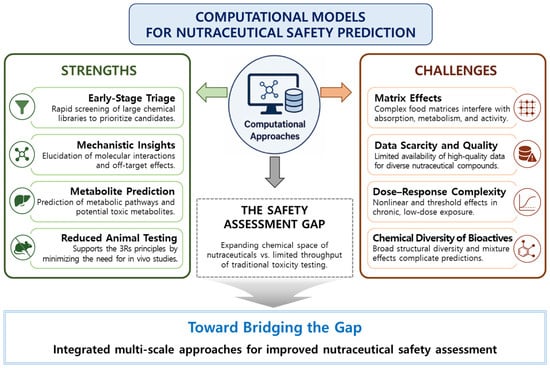
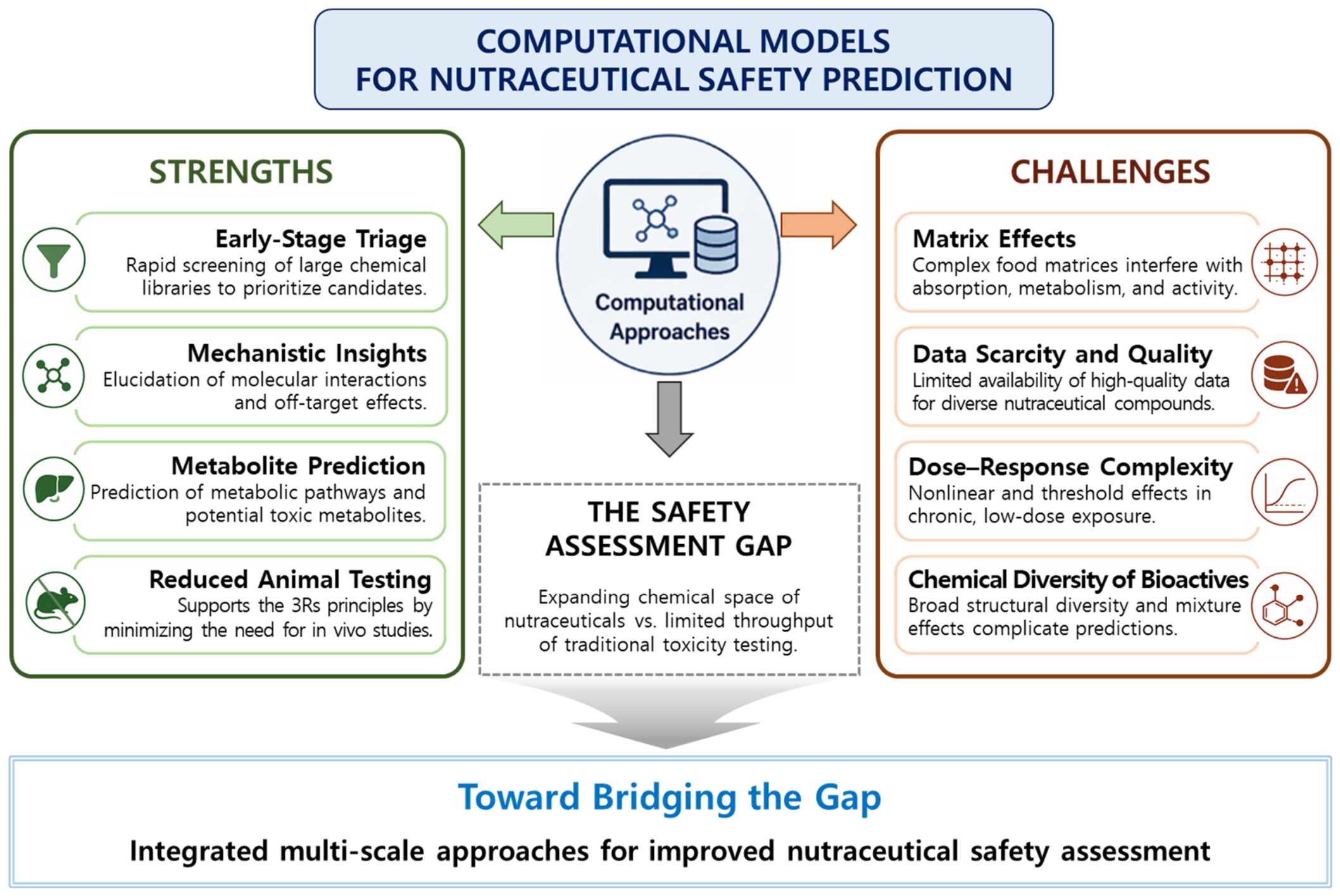
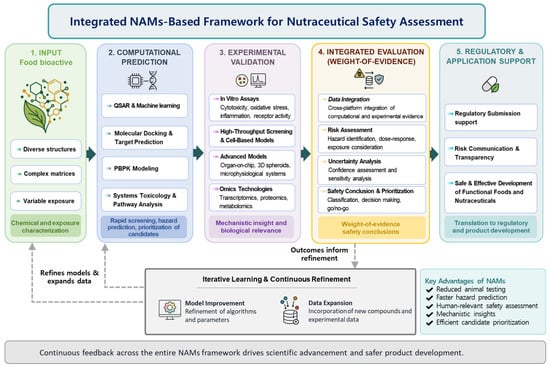
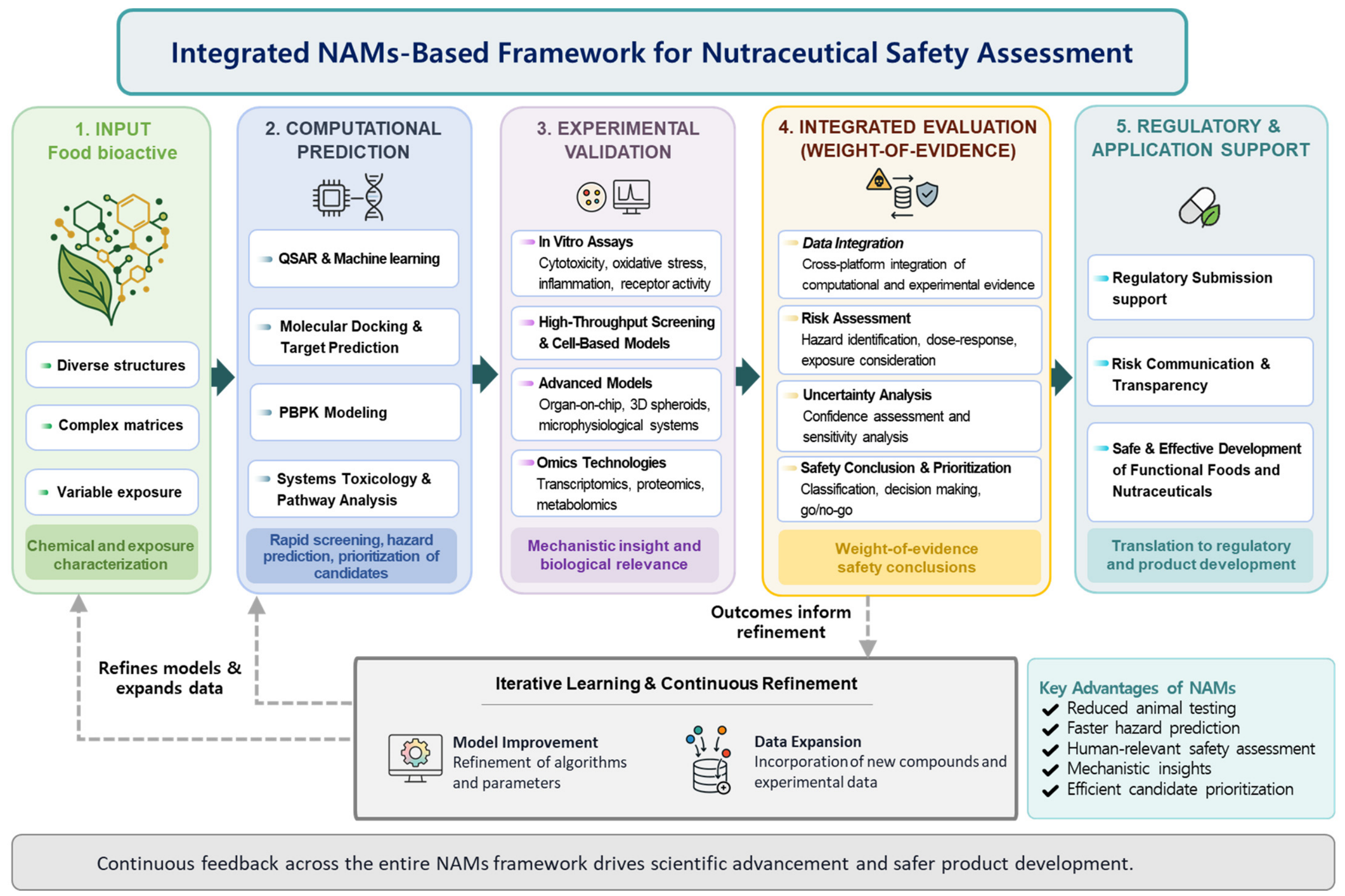

Disclaimer/Publisher’s Note: The statements, opinions and data contained in all publications are solely those of the individual author(s) and contributor(s) and not of MDPI and/or the editor(s). MDPI and/or the editor(s) disclaim responsibility for any injury to people or property resulting from any ideas, methods, instructions or products referred to in the content. |
© 2026 by the authors. Licensee MDPI, Basel, Switzerland. This article is an open access article distributed under the terms and conditions of the Creative Commons Attribution (CC BY) license.