


Highlights
Public health relevance—How does this work relate to a public health issue?
- Sustainability functions as an implicit, background assumption in elderly brain care research rather than an explicit research focus, even as the burden of cognitive decline grows.
- Health-related quality of life recurs across every research theme identified, tying sustainable brain care directly to how older adults live with chronic cognitive conditions.
Public health significance—Why is this work of significance to public health?
- This is the first study to map how research on sustainability and elderly brain care has grown and organized itself as a field, identifying four distinct research themes.
- Most research on this topic comes from high-income countries, even though populations are aging fastest in low- and middle-income settings.
Public health implications—What are the key implications or messages for practitioers, policy makers and/or researchers in public health?
- Clinicians and policymakers can strengthen prevention-focused, community-based brain care and build sustainability into aging policy.
- Researchers can help close the evidence gap by studying regions where aging is fastest and by treating sustainability as a central research question, not a background assumption.
Abstract
Background: Population aging is intensifying the burden of cognitive decline and dementia, while sustainability is becoming central to how health and care systems respond; yet the research at the intersection of these two agendas has not been mapped. Methods: A bibliometric and thematic analysis was conducted on 1100 documents retrieved from the Web of Science Core Collection and Scopus (2000–2026) and analyzed with the bibliometric package, combining performance analysis, science mapping, and an interpretive labelling of the keyword co-occurrence clusters. Results: The literature grew rapidly (19.9% annual growth) and was concentrated in high-income countries, with the United States and the United Kingdom as the leading collaborators. Four themes were identified: multidomain lifestyle prevention of dementia and mental health; the cognitive health continuum; caregiving and sustainable care delivery for the oldest old; and sustainability as a transversal, foundational dimension. Sustainability appeared as a basic, transversal theme rather than an explicit research focus, and quality of life recurred across the themes. Conclusions: Research on elderly brain care rests on a largely implicit foundation of sustainability. Making sustainability explicit, linking brain health to healthy–longevity and brain–capital frameworks, and broadening participation beyond high-income settings are the field’s main priorities.
1. Introduction
The world’s older population is growing faster than at any previous point in recorded history. According to the World Health Organization (WHO), the proportion of people aged 60 years and older is projected to increase from approximately 12% to 22% of the global population between 2015 and 2050, reaching nearly 2.1 billion individuals [1]. This unprecedented demographic transition is occurring most rapidly in low- and middle-income countries, where healthcare systems are often least prepared to respond to the increasing demands associated with population aging [1,2,3,4,5,6]. As life expectancy rises, the prevalence of age-related chronic conditions also increases. Among these conditions, cognitive decline and dementia represent some of the most disabling, costly, and socially significant health challenges facing contemporary societies.
More than 55 million people currently live with dementia worldwide, and this figure is projected to reach 139 million by 2050, imposing an annual global economic burden exceeding US$1.3 trillion [2]. However, the impact of cognitive decline extends far beyond healthcare expenditures and service utilization. Progressive deterioration in cognitive functioning diminishes autonomy, restricts social participation, increases dependence on caregivers, and adversely affects health-related quality of life (HRQoL) long before the advanced stages of disease [2,3,5]. Older adults frequently experience cognitive impairment alongside other chronic conditions, including depression, frailty, pain, cardiovascular diseases, and mobility limitations [7,8,9]. The cumulative effects of these coexisting conditions often result in a greater decline in daily functioning and well-being than would be expected from any single diagnosis alone [10,11,12,13]. Consequently, preserving cognitive health has become increasingly recognized as a central component of healthy aging and a key determinant of quality of life in later life [6].
In response to these challenges, the focus of aging research and practice has gradually shifted from disease-centered models toward broader concepts of brain health [11,12]. Traditional approaches have largely emphasized diagnosis and treatment after the onset of significant cognitive impairment. While these strategies remain important, they often require substantial resources and offer limited opportunities to reverse functional decline. Increasing attention is therefore being directed toward preventive and life-course approaches that seek to maintain cognitive functioning before substantial deterioration occurs [3,12]. Emerging concepts such as brain longevity and brain capital reflect this paradigm shift [4,11]. Brain capital refers to the collective cognitive, emotional, social, and neurological resources that enable individuals and societies to thrive [11]. Protecting and strengthening brain capital through prevention, health promotion, supportive environments, and risk reduction strategies is increasingly viewed as both a public health priority and a societal investment [4,6,11].
Elderly brain care extends beyond dementia management to encompass the promotion, maintenance, and optimization of cognitive functioning, emotional well-being, and functional independence throughout later life. Maintaining brain health is no longer viewed solely as an individual clinical outcome. As populations age, cognitive well-being increasingly influences workforce participation, social engagement, healthcare utilization, caregiving demands, and societal resilience. Consequently, preserving brain health has emerged as a broader sustainability concern that extends beyond medicine and healthcare into public policy, social development, and long-term societal well-being. In this context, the concept of sustainability provides a valuable framework for understanding and addressing these challenges. Defined by the United Nations Brundtland Commission as meeting present needs without compromising the ability of future generations to meet their own needs, sustainability encompasses environmental, social, and economic dimensions [5,6]. Within the context of brain health, sustainability entails implementing strategies that preserve cognitive functioning, reduce future disease burden, promote equitable access to care, and strengthen the long-term resilience of health and social care systems. Thus, sustainable brain care seeks not only to manage disease but also to create conditions that support cognitive well-being throughout the lifespan.
The relationship between sustainability and brain health is multidirectional and increasingly recognized across scientific disciplines. Environmental exposures such as air pollution, climate-related stressors, urban design characteristics, and access to green spaces have been associated with cognitive outcomes and dementia risk [7,8]. Social determinants, including educational attainment, socioeconomic status, social connectedness, and health inequities, further shape cognitive trajectories throughout life. Economic factors also play a critical role, as the growing demand for dementia and cognitive care places substantial pressure on healthcare resources, long-term care systems, and informal caregiving networks. Care models that rely predominantly on late-stage intervention often require extensive financial, logistical, and environmental resources that may be difficult to sustain in rapidly aging societies [9,10]. In contrast, preventive, community-based, and person-centered approaches may offer more sustainable alternatives by reducing disease burden, preserving independence, and supporting healthy aging.
Evidence increasingly suggests that a substantial proportion of dementia cases may be preventable. Findings from the Finnish Geriatric Intervention Study to Prevent Cognitive Impairment and Disability (FINGER) and related multidomain intervention studies indicate that up to 40% of dementia cases may be attributable to modifiable risk factors and could potentially be delayed or prevented through sustained interventions targeting lifestyle behaviors, cardiovascular health, cognitive engagement, and social participation [11,12]. Such approaches not only preserve cognitive functioning and reduce caregiver burden but also contribute directly to several United Nations Sustainable Development Goals (SDGs), particularly those related to good health and well-being (SDG 3), reduced inequalities (SDG 10), and sustainable cities and communities (SDG 11). These developments have stimulated growing scientific interest in understanding how sustainability principles can be integrated into brain health promotion and cognitive care.
A further dimension connects this field to the Special-Issue theme of health-related quality of life (HRQoL) in older adults with chronic disease. Cognitive decline reduces functional capacity, autonomy, and social participation in ways that diminish HRQoL well before the terminal stages of dementia [1,2]. Prevention-oriented, sustainable approaches to brain care therefore serve a dual purpose: they reduce the future disease burden and protect the quality of lived experience for older adults managing cognitive and other chronic conditions [3,5].
As a result, research concerning sustainability and elderly brain health has expanded considerably during the past decade. Contributions now emerge from diverse disciplines, including geriatrics, neurology, psychiatry, nursing, environmental sciences, public health, health economics, and social policy. However, the knowledge generated within these disciplines remains fragmented. Existing studies frequently examine isolated dimensions of the sustainability–brain health nexus, thereby limiting the integration of evidence across disciplinary boundaries [1,2]. Consequently, the intellectual structure, thematic evolution, collaboration patterns, and emerging research priorities of this interdisciplinary field remain insufficiently understood.
Several important gaps further highlight the need for a comprehensive examination of this literature. First, although nursing professionals play a central role in promoting cognitive health through risk assessment, health education, caregiver support, community-based interventions, and person-centered care [3,4], the visibility and influence of nursing science within sustainability-oriented brain health research remain unclear. Second, health-related quality of life appears repeatedly across intervention studies, public health frameworks, policy discussions, and patient-centered care models, yet its role as a unifying theme connecting sustainability and cognitive health has not been systematically explored [5,6]. Third, despite increasing references to sustainable development, little is known about the extent to which existing research aligns with the United Nations Sustainable Development Goals or supports the implementation of sustainable models of cognitive care [7,8].
Although publication activity at the intersection of sustainability and brain health has increased substantially in recent years, no comprehensive mapping study has systematically examined how this body of knowledge has evolved, which themes dominate the field, where scientific collaborations are concentrated, and which areas remain underdeveloped. In emerging interdisciplinary domains, bibliometric analysis provides a powerful approach for examining the intellectual structure, collaboration networks, influential contributions, and thematic development of the scientific literature [9,10]. When combined with thematic analysis, bibliometric methods can reveal not only patterns of scholarly production but also the conceptual relationships and research trajectories that shape the evolution of a field.
Therefore, this study aims to provide a comprehensive bibliometric and thematic analysis of the scientific literature at the intersection of sustainability, brain health, and cognitive care in older adults. Specifically, the objectives are to:
- Examine the temporal evolution and publication trends within the field;
- Map the thematic structure of the literature and identify dominant and emerging research themes;
- Analyze international, institutional, and interdisciplinary collaboration networks;
- Evaluate the extent to which the literature aligns with the United Nations Sustainable Development Goals;
- Identify disciplinary gaps and underrepresented areas, with particular attention to nursing science and implementation-focused care models; and
- Provide an evidence-based knowledge map to guide researchers, healthcare professionals, and policymakers in advancing sustainable approaches to brain health and cognitive care in aging populations.
2. Materials and Methods
2.1. Study Design
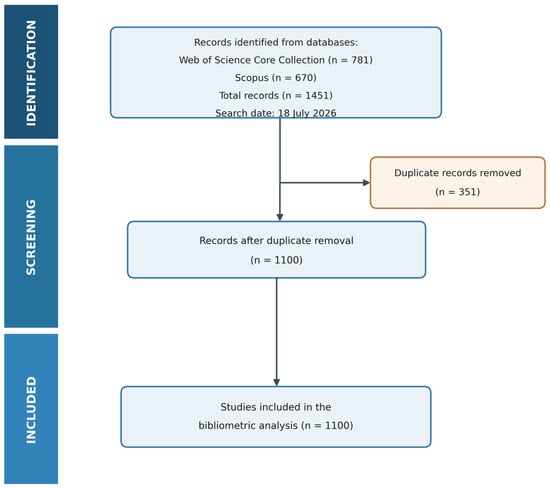
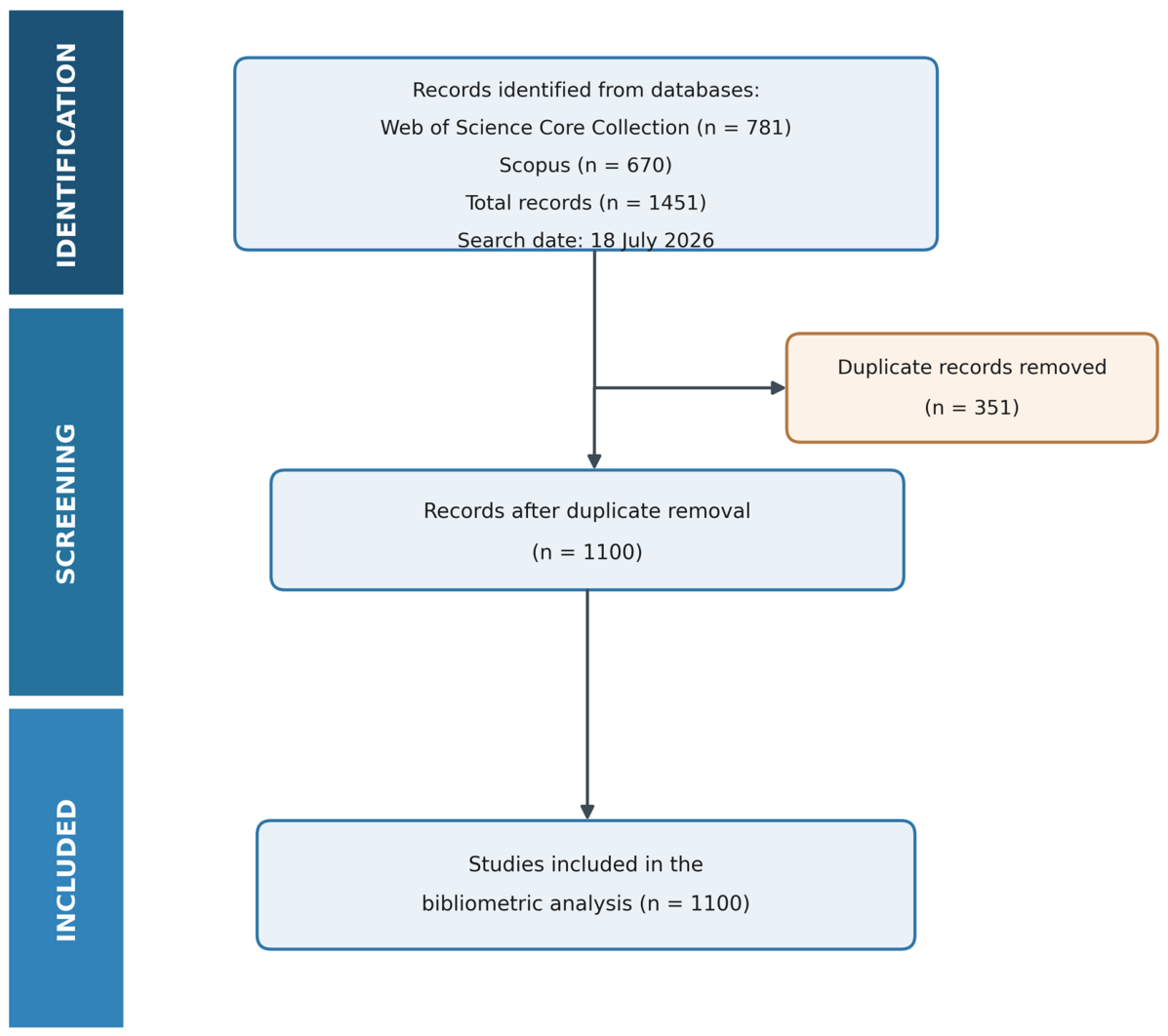
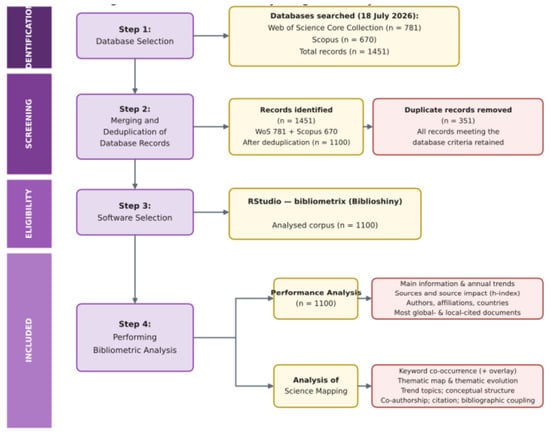
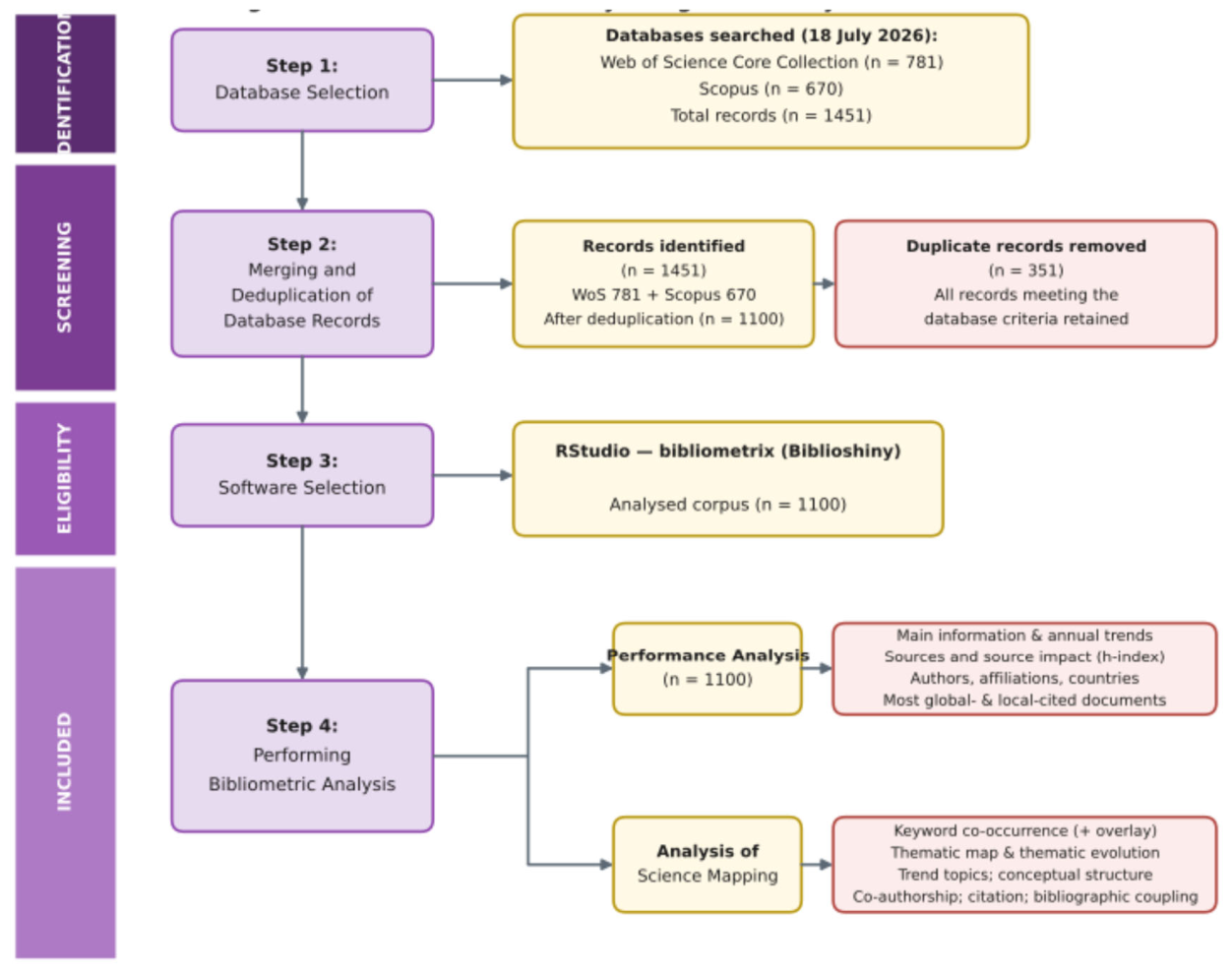
This study is a retrospective bibliometric analysis combined with an interpretive labelling of keyword co-occurrence clusters. It examines the international research literature on the intersection of sustainability and elderly brain and cognitive care. The identification, screening, and inclusion of records followed the PRISMA 2020 statement and its PRISMA-S extension for search reporting, adapted to the requirements of bibliometric research. Figure 1 shows the study selection workflow, and Figure 2 summarises the overall analytical process. Bibliometric analyses are conducted on data already in the public domain and do not involve human participants, biological material, or identifiable personal data; no ethical approval or participant consent was required.
Figure 1.
PRISMA 2020 flow diagram (adapted for bibliometric analysis).
Figure 2.
Overview of the study design and analytical workflow. All counts match Figure 1 (PRISMA): 781 + 670 = 1451 identified; 351 duplicates removed; 1100 analyzed.
2.2. Data Sources
Two bibliographic databases, the Web of Science Core Collection and Scopus, were searched. Web of Science records were retrieved from the Science Citation Index Expanded (SCI-EXPANDED), Social Sciences Citation Index (SSCI), Arts and Humanities Citation Index (A&HCI), and Emerging Sources Citation Index (ESCI). These indexes were selected to ensure coverage across the natural sciences, clinical and health disciplines, social and behavioural sciences, and emerging research fields. Scopus records were restricted to journal publications to enhance comparability with the Web of Science dataset and to exclude conference proceedings, book series, and trade publications. Both databases allow the export of full bibliographic records and cited references, which are required for the citation and co-citation analyses performed in this study. Web of Science is particularly strong in the natural and clinical sciences, whereas Scopus offers broader coverage of nursing, health policy, and social science journals. Combining these databases helps mitigate the coverage bias associated with reliance on a single source and enhances the comprehensiveness of the bibliometric dataset. The final dataset was retrieved on 18 July 2026.
2.3. Search Strategy
The search used the Topic field in Web of Science Core Collection, which covers the title, abstract, author keywords, and Keywords Plus, and the TITLE-ABS-KEY field in Scopus. Filters for document type, source type, publication stage, language, and publication year were embedded in each query so that the full strategy can be reproduced from the string itself. Following the PRISMA-S reporting guidelines, the complete search strings are presented verbatim below to ensure transparency and reproducibility.
2.3.1. Web of Science Core Collection
TS = (sustainab*) AND TS = (elderly OR “older adult*” OR “older people” OR aging OR ageing OR geriatric) AND TS = (“brain care” OR “brain health” OR “cognitive decline” OR “cognitive impairment” OR “cognitive aging” OR “cognitive ageing” OR “cognitive health” OR “cognitive function*” OR dementia OR Alzheimer* OR Parkinson* OR neurodegenerat*) AND DT = (Article OR Review) AND LA = (English) AND PY = (2000–2026).
2.3.2. Scopus
TITLE-ABS-KEY (sustainab*) AND TITLE-ABS-KEY (elderly OR “older adult*” OR “older people” OR aging OR ageing OR geriatric) AND TITLE-ABS-KEY (“brain care” OR “brain health” OR “cognitive decline” OR “cognitive impairment” OR “cognitive aging” OR “cognitive ageing” OR “cognitive health” OR “cognitive function*” OR dementia OR Alzheimer* OR Parkinson* OR neurodegenerat*) AND PUBYEAR > 1999 AND PUBYEAR < 2027 AND (LIMIT-TO (SRCTYPE, “j”)) AND (LIMIT-TO (PUBSTAGE, “final”)) AND (LIMIT-TO (DOCTYPE, “ar”) OR LIMIT-TO (DOCTYPE, “re”)) AND (LIMIT-TO (LANGUAGE, “English”)).
The search string was revised from an earlier version to improve both precision and sensitivity. The broad term cognitive was replaced with more specific phrases, including cognitive decline, cognitive impairment, and cognitive health, to reduce the retrieval of records from unrelated fields. Similarly, the term neurological was replaced with neurodegenerat* to more accurately capture the literature related to neurodegenerative conditions. Additional disease-specific terms, including Alzheimer* and Parkinson*, as well as the phrase brain health, were incorporated to identify relevant records that may have been missed by the initial search strategy.
The sustainability concept was represented using the truncated term sustainab*, which retrieves variations such as sustainability, sustainable, and sustainably within a single query. This approach increases search sensitivity while maintaining a parsimonious search structure. Because the stem sustainab* is highly specific in English and generates few irrelevant matches, its use is unlikely to introduce substantial noise into the dataset.
The lower publication-year limit was set at 2000 because consistent electronic indexing in both databases is considered reliable from that year onward. Although earlier records are available, their indexing is less consistent, which could introduce retrieval artefacts and affect the validity of temporal trend analyses.
2.4. Eligibility Criteria
Records were included if they were journal articles or reviews, written in English, at the final publication stage, and published between 2000 and 2026. Records were excluded if they were conference papers, meeting abstracts, editorials, letters, notes, book chapters, corrigenda, errata, retracted items, or early-access records. These criteria were applied through the database filters embedded in the search strings, so the retrieved records already met them before export. The restriction to English was adopted because English is the dominant publication language of the indexed literature in both databases for this topic, and because the title, abstract, and keyword fields on which bibliometric analyses depend are provided in English only inconsistently for non-English-language articles. The restriction to final-stage records excluded ahead-of-print and accepted-not-yet-published items, whose metadata are often incomplete and whose content may change before formal publication. The document-type filter retained only research articles and reviews because these are the units of scientific output on which citation-based analyses are interpretable; conference proceedings, editorials, and letters follow different citation conventions and would distort co-citation and bibliographic-coupling results if included.
2.5. Study Selection
The initial search retrieved 781 records from Web of Science and 670 from Scopus, giving 1451 records in total. The records were imported into the bibliometrix package and merged into a single dataset. Duplicates were identified by a two-step matching procedure: records sharing an identical Digital Object Identifier were flagged first; among the remaining unmatched records, those sharing identical normalised titles and publication years were flagged in a second pass. This procedure removed 351 duplicates, leaving 1100 unique records. All 1100 records met the predefined eligibility criteria through the database filters applied at the point of retrieval; no additional manual screening for thematic relevance was conducted. This decision is consistent with standard bibliometric practice, in which the search string defines the conceptual scope of the corpus and eligibility is enforced through structured database filters rather than through full-text appraisal. The absence of a manual screening step is reported here as a methodological boundary of the study. Figure 1 presents the full selection workflow using the PRISMA 2020 flow diagram adapted for bibliometric research, and Table 1 reports the descriptive characteristics of the assembled dataset.
Table 1.
Main information about the dataset.
2.6. Classification of Sustainable Development Goals
Publications were mapped to the Sustainable Development Goals (SDGs) using the built-in SDG classification integrated into the Web of Science Core Collection. This system assigns records to one or more of the 17 SDGs on the basis of a curated query set developed by the Aurora Universities Network and periodically updated by Clarivate. Because the classification is performed automatically by matching record content against goal-specific keyword patterns rather than by expert review, it is subject to false-positive and false-negative assignments. Consequently, the SDG distribution reported in this study should be interpreted as an approximation of the field’s engagement with each goal rather than a definitive mapping.
The count for each goal was taken from the Sustainable Development Goals filter in Web of Science and applied to the Web of Science records (781). Because a record can belong to more than one goal, these counts do not add up to the size of the corpus. The search was built around the term sustainab*, so the number of records under each goal partly reflects the search terms as well as the underlying literature, and any gaps in goal coverage are interpreted with this in mind.
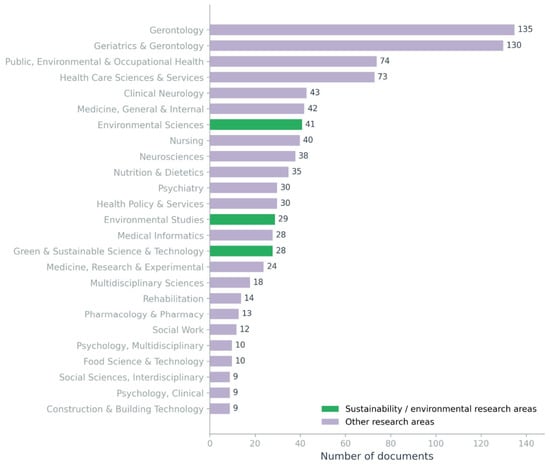
In addition, the distribution of the corpus across research areas was obtained from the Web of Science Categories classification, using the built-in category filter and exporting the counts. Each record is placed in one or more subject categories, so, as with the goal counts, the category counts do not sum to the number of documents. This distribution is used to describe the disciplinary composition of the corpus and to gauge how far it engages sustainability-oriented research areas alongside the dominant geriatric and clinical areas.
2.7. Bibliometric Analysis
All analyses were performed with the bibliometrix package (version Pro 2026) [13]. in R (version 1.07.2026 + 147), accessed through its Biblioshiny web interface. Bibliometrix implements the comprehensive science-mapping workflow described in Aria and Cuccurullo (2017) and provides the analytical functions used for all performance and science-mapping analyses in this study [13,14].
Performance analysis produced the following indicators: annual publication counts and the Annual Growth Rate (CAGR), total and mean citation counts per document, the average number of authors per document, the international co-authorship rate, the total number of source journals, and the h-index of the corpus. The h-index here refers to the corpus-level h-index: the largest value h such that h documents in the corpus have each been cited at least h times in the global literature (global citations). This differs from the author-level h-index and is used as a summary measure of the overall citation impact of the retrieved literature [15,16,17,18].
Global citation counts (GCS) reflect citations received from the entire literature indexed in Web of Science and Scopus and measure a document’s influence in the broader field. Local citation counts (LCS) reflect citations received from within the 1100-document corpus and measure a document’s influence among the papers that constitute this specific dataset. Both counts are reported separately for the most cited documents because they convey different information: a high GCS but low LCS indicates broad disciplinary influence that is not necessarily central to the intersection of sustainability and brain care, whereas a high LCS identifies works that are structurally important within this corpus.
Institutional and country-level productivity counts used full counting, in which each contributing institution and country receives one credit per publication regardless of the number of co-authors or co-institutions from that unit. This convention is standard in bibliometric performance analyses and is consistent with the approach used by the Web of Science and Scopus analytics platforms. Fractional counting, which divides the credit for a publication proportionally among contributing units, was not applied because the primary interest here is in institutional and national output volume rather than in adjusted contribution estimates [15,16,17,18].
Author keywords (DE field in the bibliometrix data frame) are the terms supplied by the authors of each article. Keywords Plus (ID field) are algorithmically generated index terms derived from the titles of the cited references by Clarivate. The two sets behave differently: author keywords reflect the authors’ own conceptual framing of their work, whereas Keywords Plus capture broader thematic context from the reference lists. Both sets were analysed separately in the co-word and thematic analyses described below [19,20,21].
2.8. Science Mapping
Science mapping was carried out entirely within bibliometrix. The following analyses were produced: keyword co-occurrence (co-word) analysis and a word cloud; a thematic map based on co-word clustering; a conceptual structure map obtained by multiple correspondence analysis (MCA); trend-topic analysis; co-authorship (collaboration) networks at the country, institution, and author levels; a country collaboration world map; and a document co-citation network [15,16,17,18].
2.9. Thematic Cluster Interpretation
The thematic structure was read from the co-word clusters of the bibliometrix thematic map rather than from a full qualitative analysis of full texts. Three clusters were identified by the Louvain algorithm, and these were mapped onto the thematic map quadrants defined by Callon centrality and density metrics [14,19,20,21]. Each cluster was examined by two authors independently, who assigned an interpretive label on the basis of the constituent Keywords Plus terms and their betweenness centrality values within the cluster. Disagreements in labelling were resolved through discussion until consensus was reached; no formal inter-rater reliability statistic was calculated because the process was interpretive rather than classificatory. The four themes reported in the Results thus represent an interpretive labelling of bibliometric clusters. Any interpretive statement that extends beyond what the keyword co-occurrence data directly support, for example, connections to specific clinical trials or policy frameworks, is identified as such in the text [19,20,21].
2.10. Validity, Reliability, and Rigor
The search strings, eligibility criteria, and retrieval date were documented so that the study can be repeated. The full search strings and the date of retrieval are reported, and the deduplication was performed within bibliometric using DOI matching, which makes the record-selection step reproducible.
2.11. Ethical Considerations
This study analysed publicly available bibliographic metadata from Web of Science and Scopus. It did not involve human participants, biological specimens, animal subjects, or identifiable personal data, and it did not require access to clinical records or individual-level information. Ethics committee review and informed consent were therefore not applicable. The study was conducted in accordance with the principles of research integrity, including accurate reporting of methods and transparent acknowledgement of limitations.
3. Results
3.1. General Bibliometric Overview
The corpus comprised 1100 documents published in 593 sources between 2000 and 2026. The annual growth rate of 19.9% and the low average document age of 4.72 years indicate that the field has expanded rapidly in recent years. Documents received 27.47 citations on average. The dataset involved 7508 authors, with 8.25 co-authors per document. This high level of co-authorship reflects the presence of large consortium studies and helps explain why citations concentrate in a small number of highly cited works. International co-authorship accounted for 21.09% of the documents. Table 1 summarizes these indicators.
3.2. Most Productive Authors
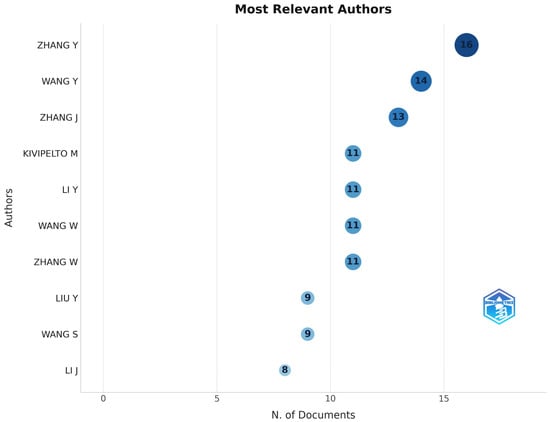
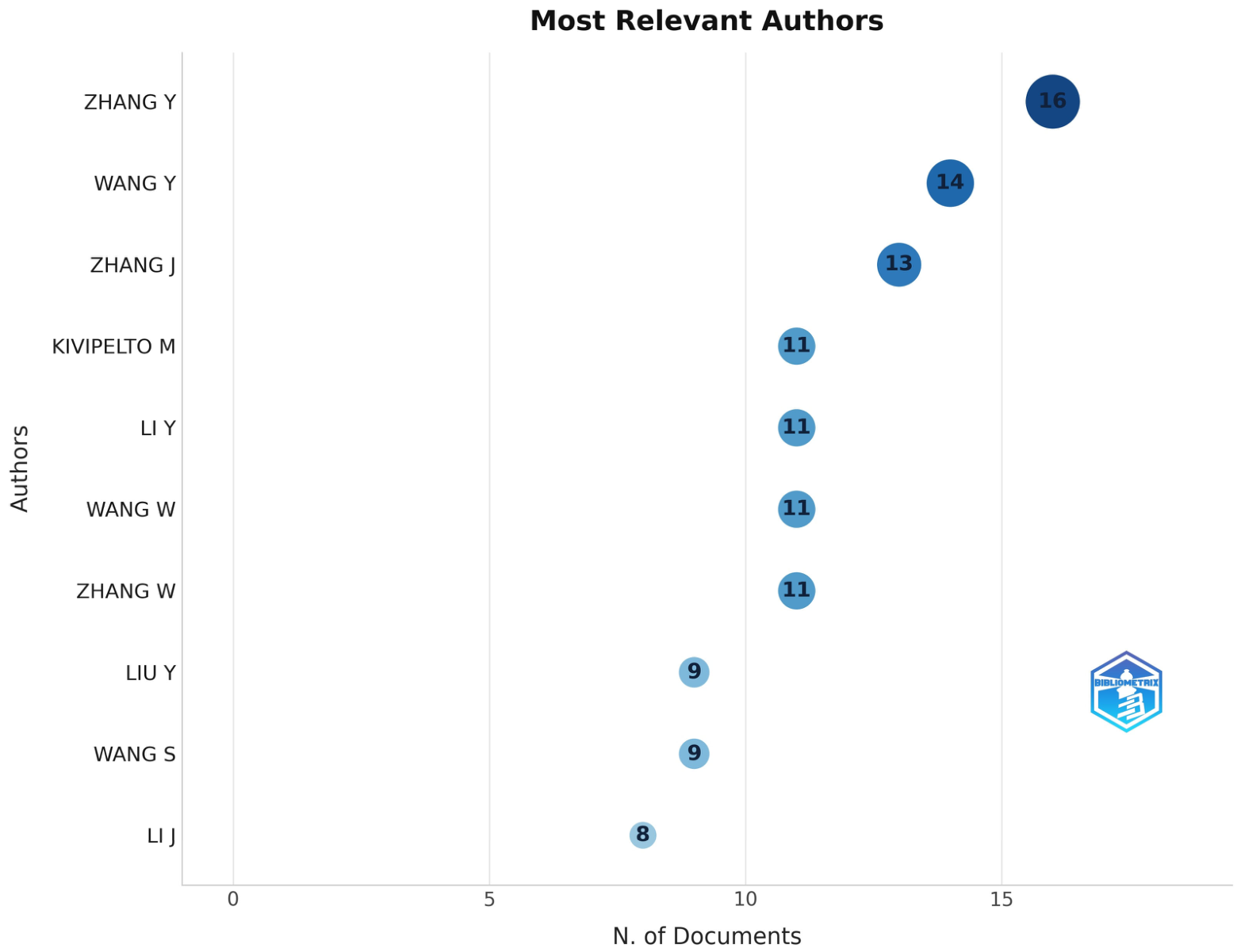
The most productive authors were ranked by number of documents (Table 2, Figure 3). Ranking by raw citation counts alone would be misleading, because large consortium papers with more than a hundred authors assign the full citation count of the paper to every co-author under full counting, which inflates raw citation values. The h-index was therefore used as the impact measure. On this basis, Kivipelto M stands out, with 11 documents and an h-index of 11; Zhang W (h = 10) and Wang Y (h = 9) follow. The possibility that some records under common surnames (for example, Zhang Y or Wang Y) have been merged under one name is a known limitation of bibliometric author disambiguation.
Table 2.
Most productive authors.
Figure 3.
Most productive authors by number of documents.
3.3. Most Productive Affiliations
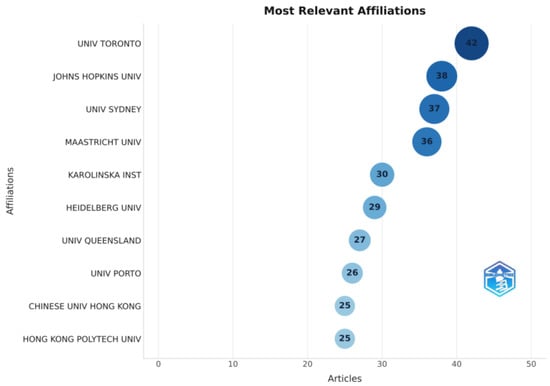
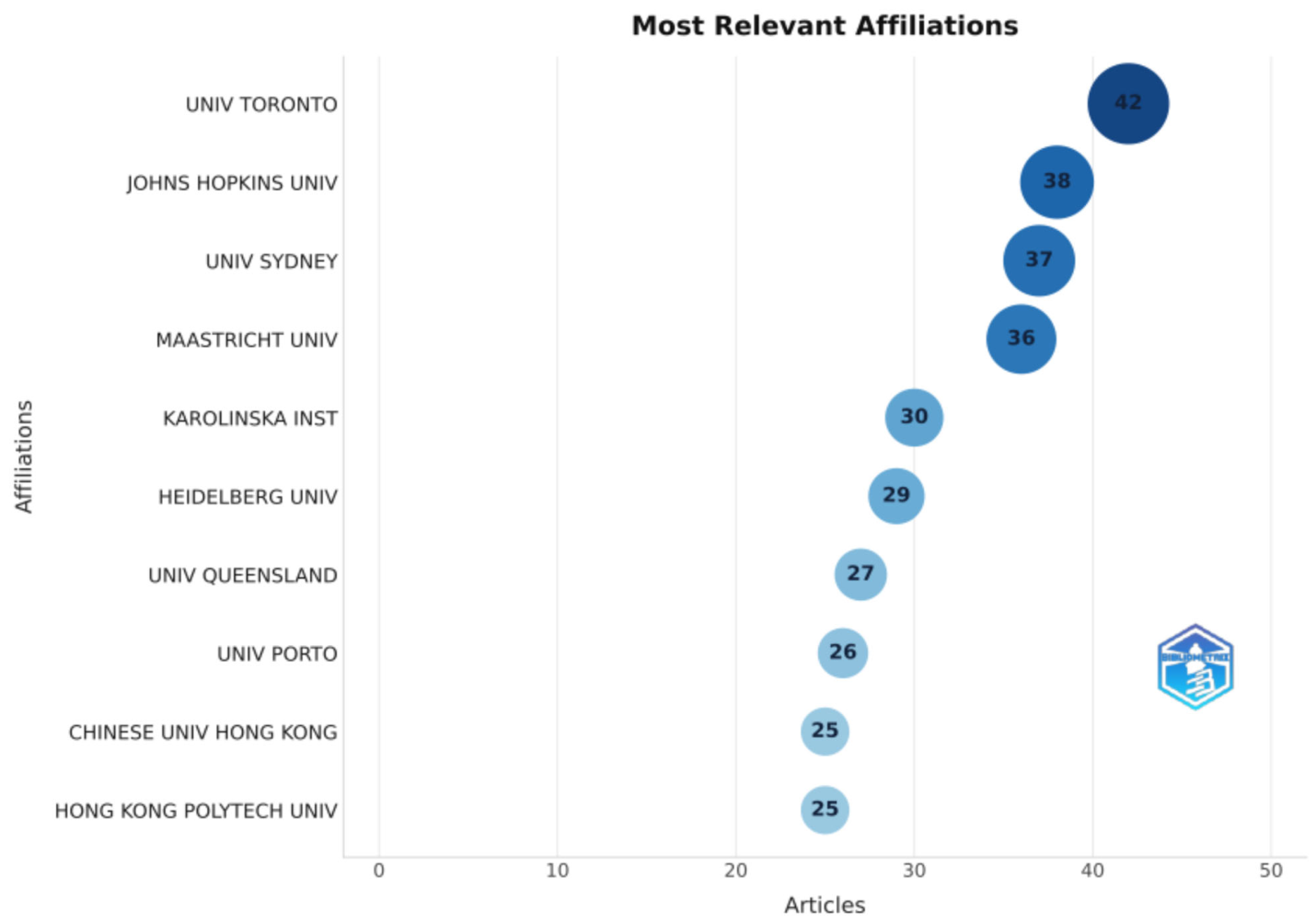
At the institutional level, the University of Toronto ranked first with 42 articles, followed by Johns Hopkins University (38), the University of Sydney (37), and Maastricht University (36) (Figure 4). Every institution in the list is located in a high-income country (Canada, the United States, Australia, the Netherlands, Sweden, Germany, Portugal, and Hong Kong). The absence of institutions from low- and middle-income countries points to a persistent structural imbalance in knowledge production in this field.
Figure 4.
Most productive affiliations by number of articles.
3.4. Most Cited Countries
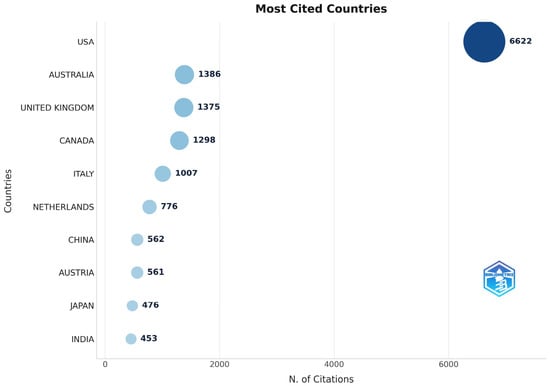
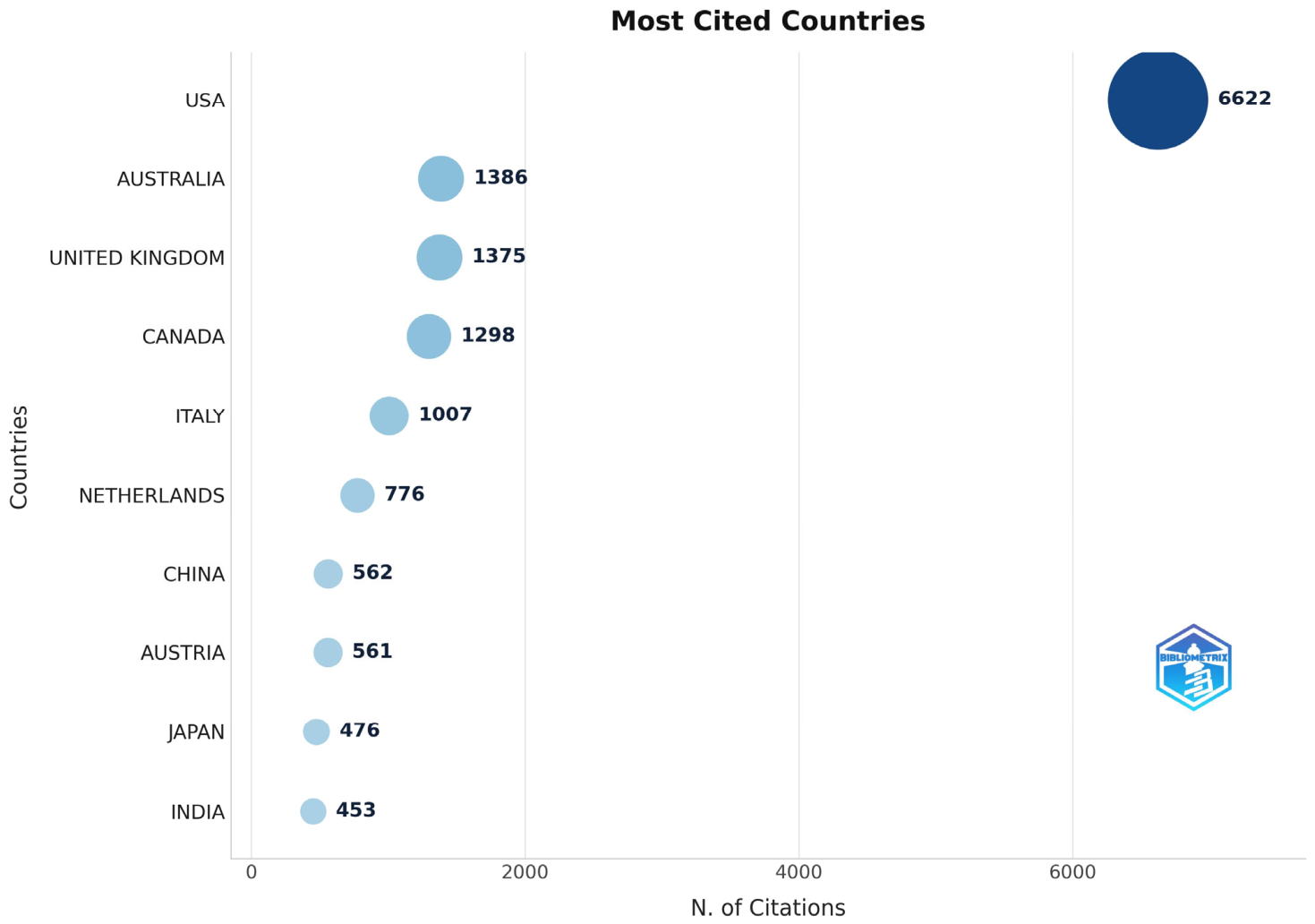
The distribution of citations by country is shown in Figure 5. The United States clearly leads with 6622 citations, followed by Australia (1386), the United Kingdom (1375), and Canada (1298). Because citation totals are partly affected by large multi-author studies, the country ranking should be read as an indicator of geographic concentration rather than of absolute impact.
Figure 5.
Most cited countries by number of citations.
3.5. Most Globally Cited Documents
The most globally cited documents are listed in Table 3. The most cited work is the 2021 Global Burden of Disease study [15], a large multi-author consortium paper; its citation count reflects the scale of that consortium rather than a focus specific to this field, which is consistent with the citation concentration noted in Table 1. A substantial share of the highly cited documents concern nutrition and diet (micronutrient deficiencies, the Mediterranean diet, caloric restriction), reflecting the overlap between the sustainable-nutrition literature captured by the sustainab* search and brain-health research. Others address frailty, long-term care systems, and the relationship between retirement and cognition.
Table 3.
Most globally cited documents.
3.6. Most Influential Sources
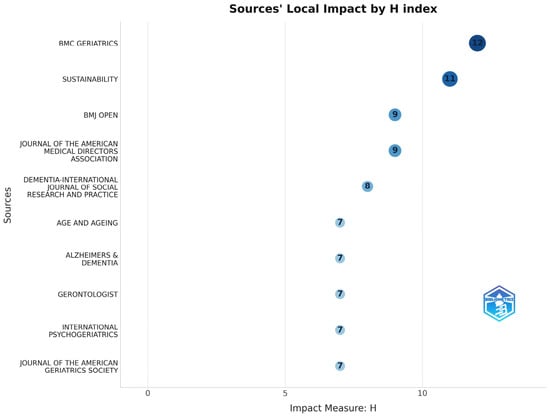
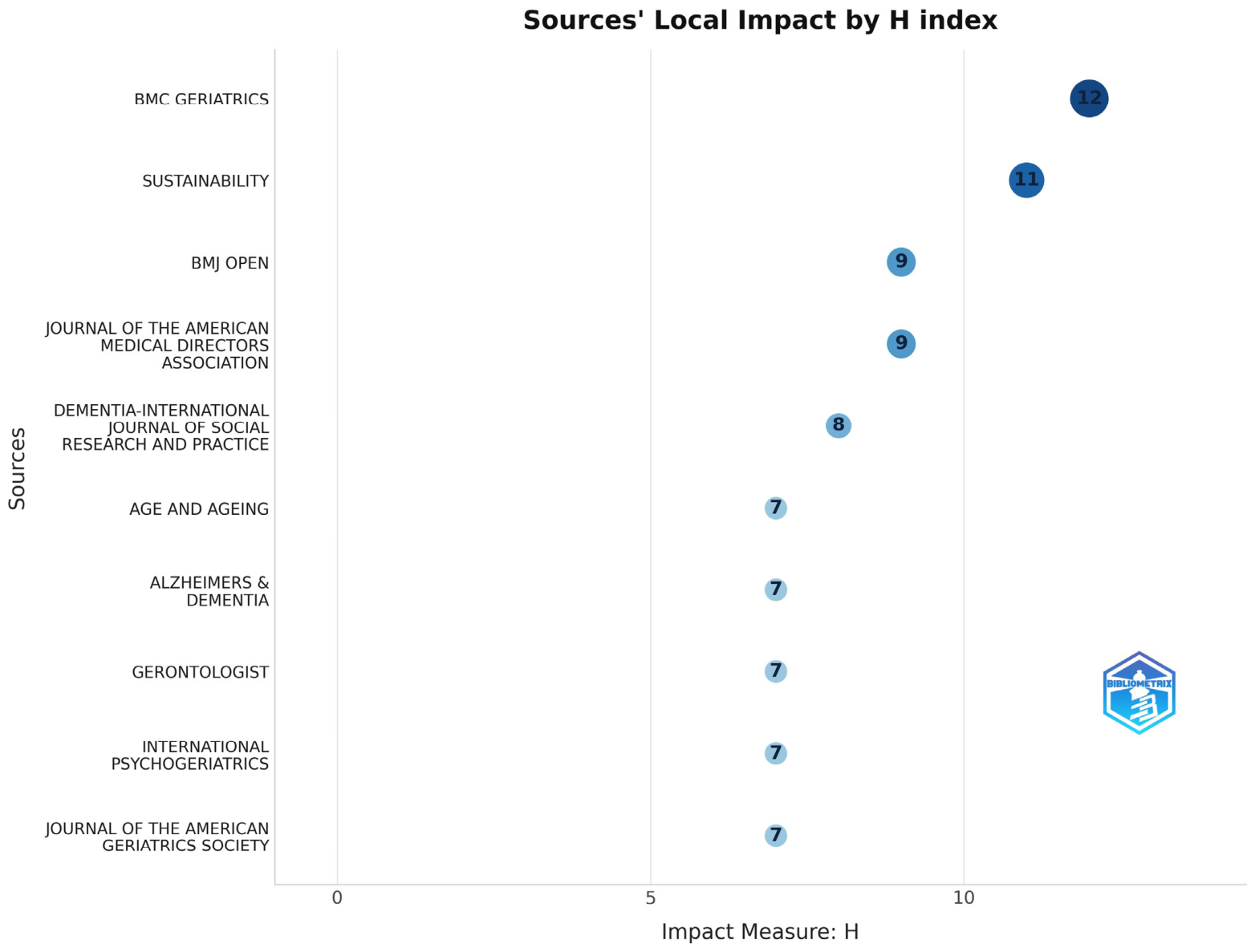
The most influential journals by local h-index are shown in Figure 6. BMC Geriatrics ranks first (H = 12), immediately followed by the journal Sustainability (H = 11). The presence of a sustainability-focused journal in second place shows the field’s connection to sustainability publication venues. The remaining places are occupied by geriatrics, dementia, and psychogeriatrics journals.
Figure 6.
Sources’ local impact by h-index.
3.7. Most Frequent Keywords
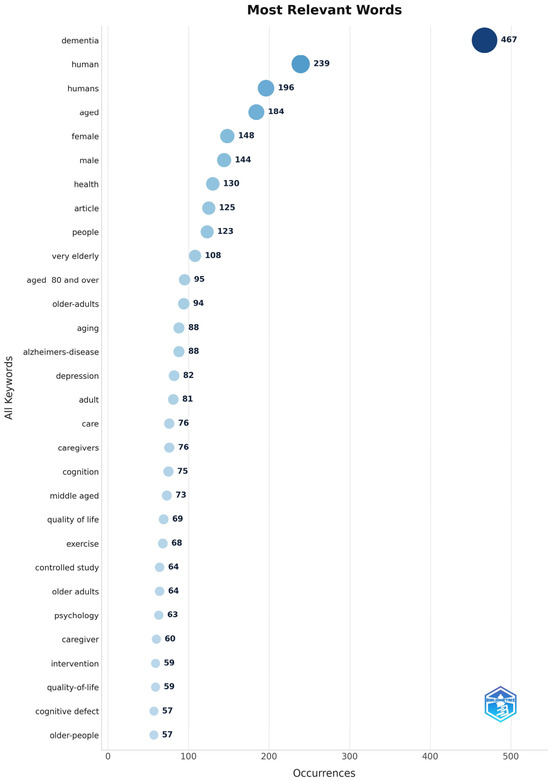
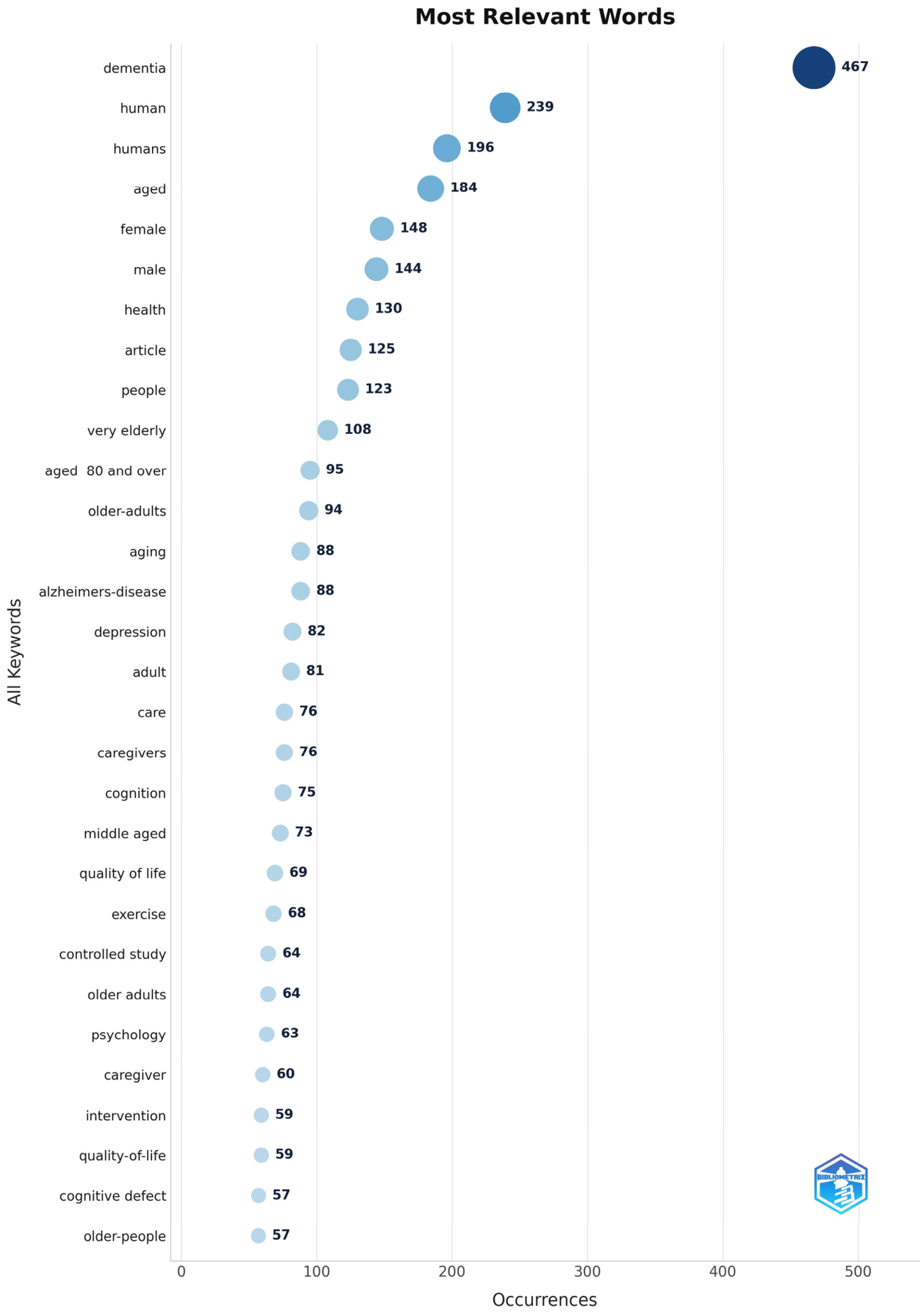
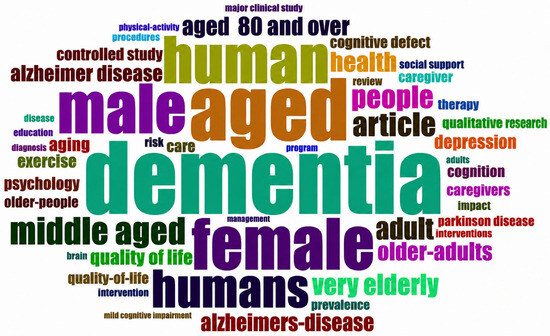
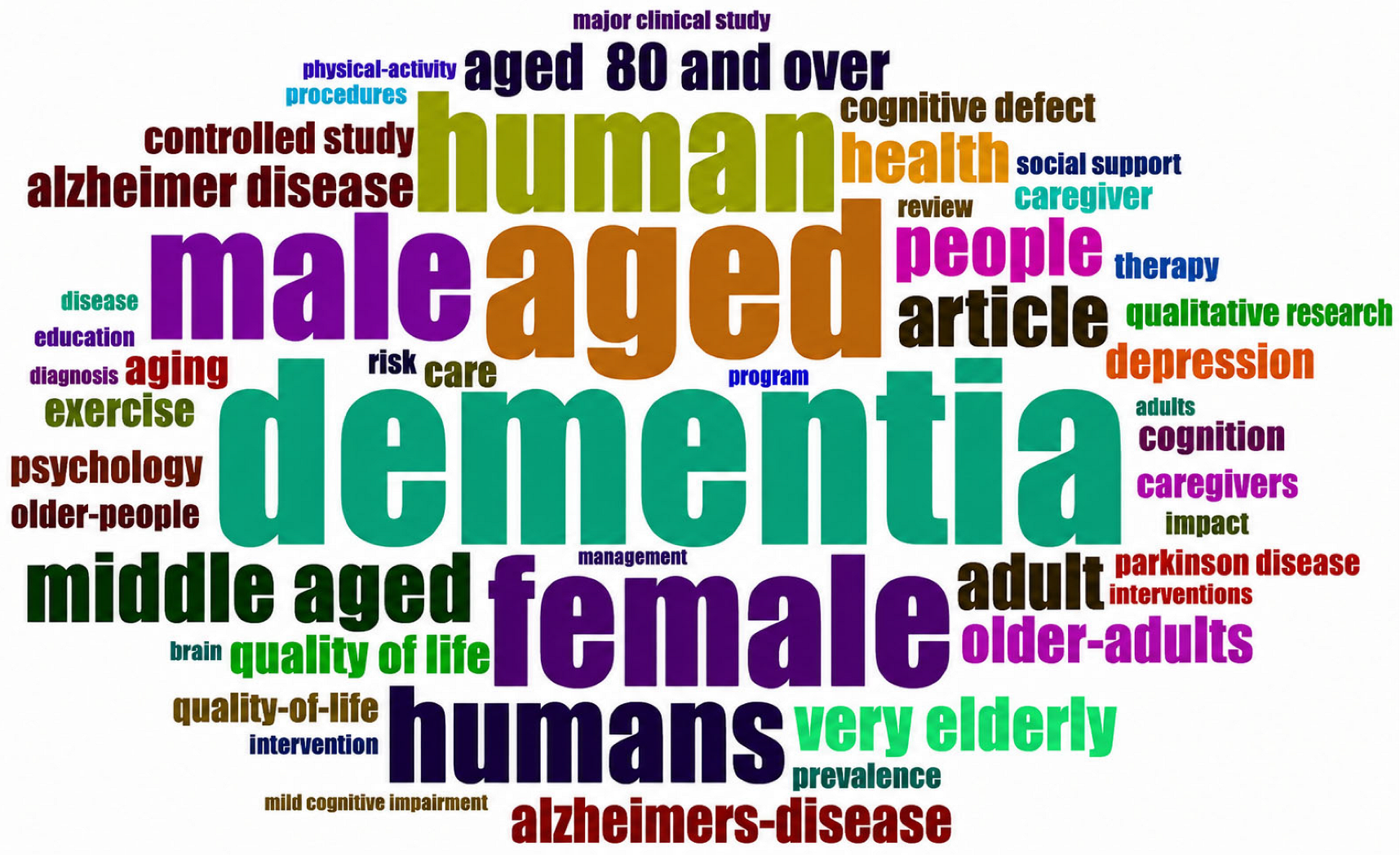
The most frequent terms in the corpus were clinical and aging-related concepts such as dementia (467), aged (184), Alzheimer’s disease (88), cognition (75), caregivers (76), and quality of life (69) (Figure 7; word cloud in Figure 8). Notably, the term “sustainability” does not appear among the roughly thirty most frequent terms. Although the corpus was built around sustainab*, sustainability is not a high-frequency author keyword; as the thematic and conceptual analyses below show, the field addresses sustainability in a transversal and implicit way rather than as an explicit theme. This pattern is one of the study’s central findings and is developed further in the Discussion.
Figure 7.
Most relevant words (all keywords) by number of occurrences.
Figure 8.
Word cloud of the most frequent terms.
3.8. Trend Topics
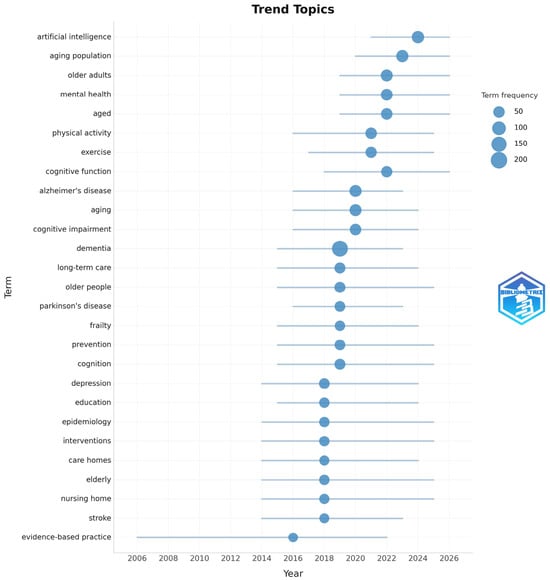
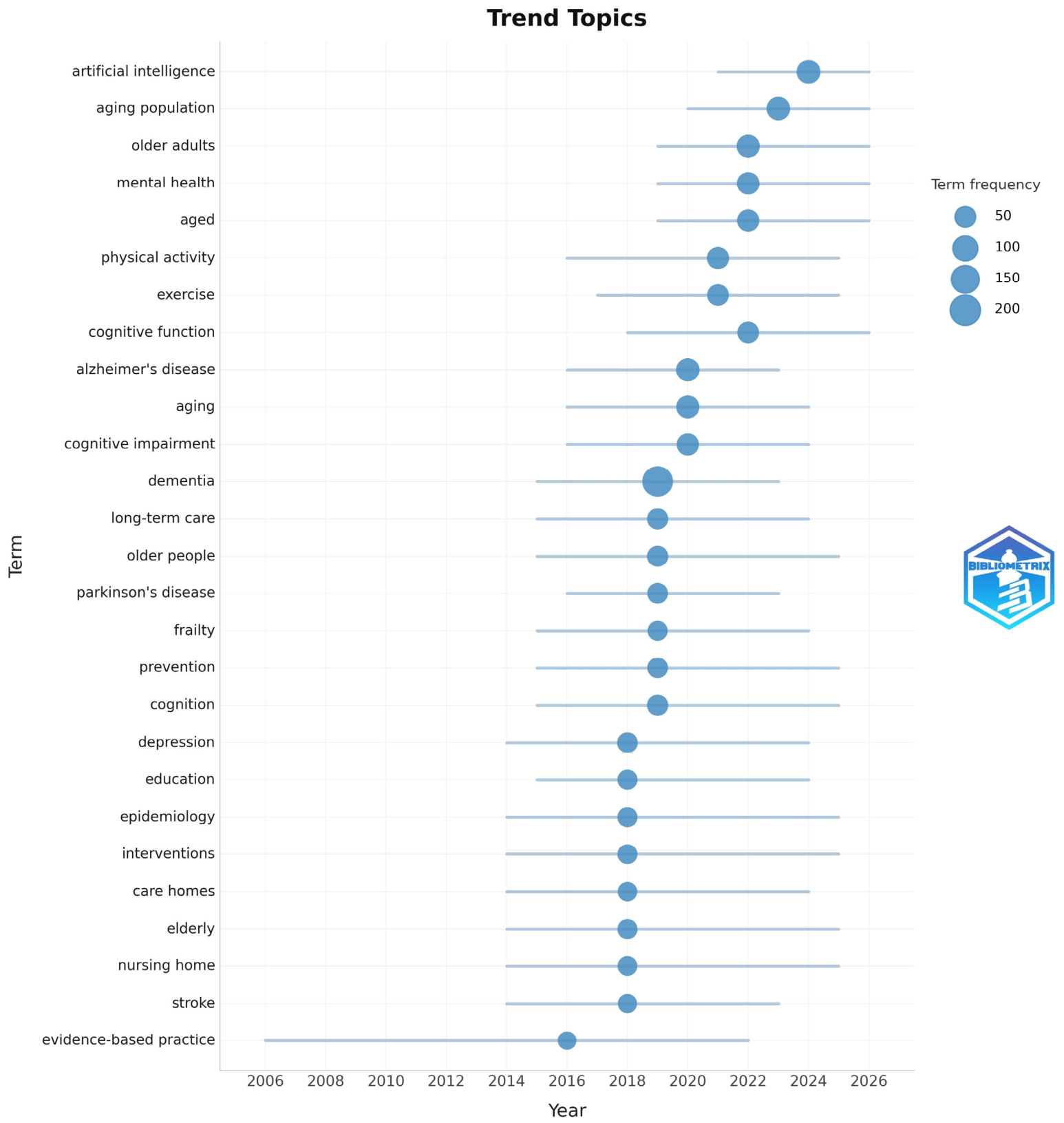
The trend-topic analysis (Figure 9) shows that artificial intelligence, aging population, and mental health have come to the fore in the most recent years (2024–2026), whereas dementia, cognitive impairment, physical activity, and exercise dominated the preceding period. This shift indicates a movement toward prevention and technology-based approaches.
Figure 9.
Trend topics over time.
3.9. Thematic Map
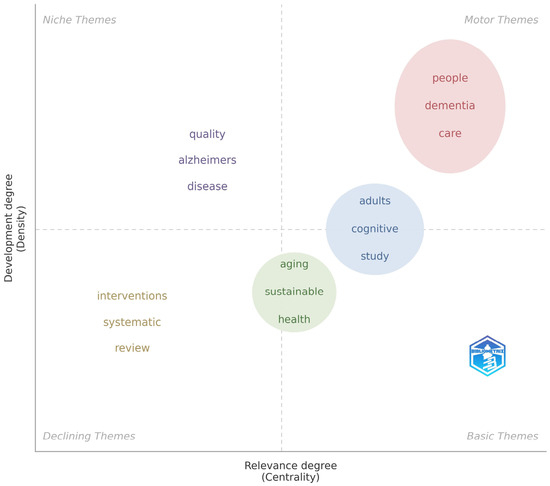
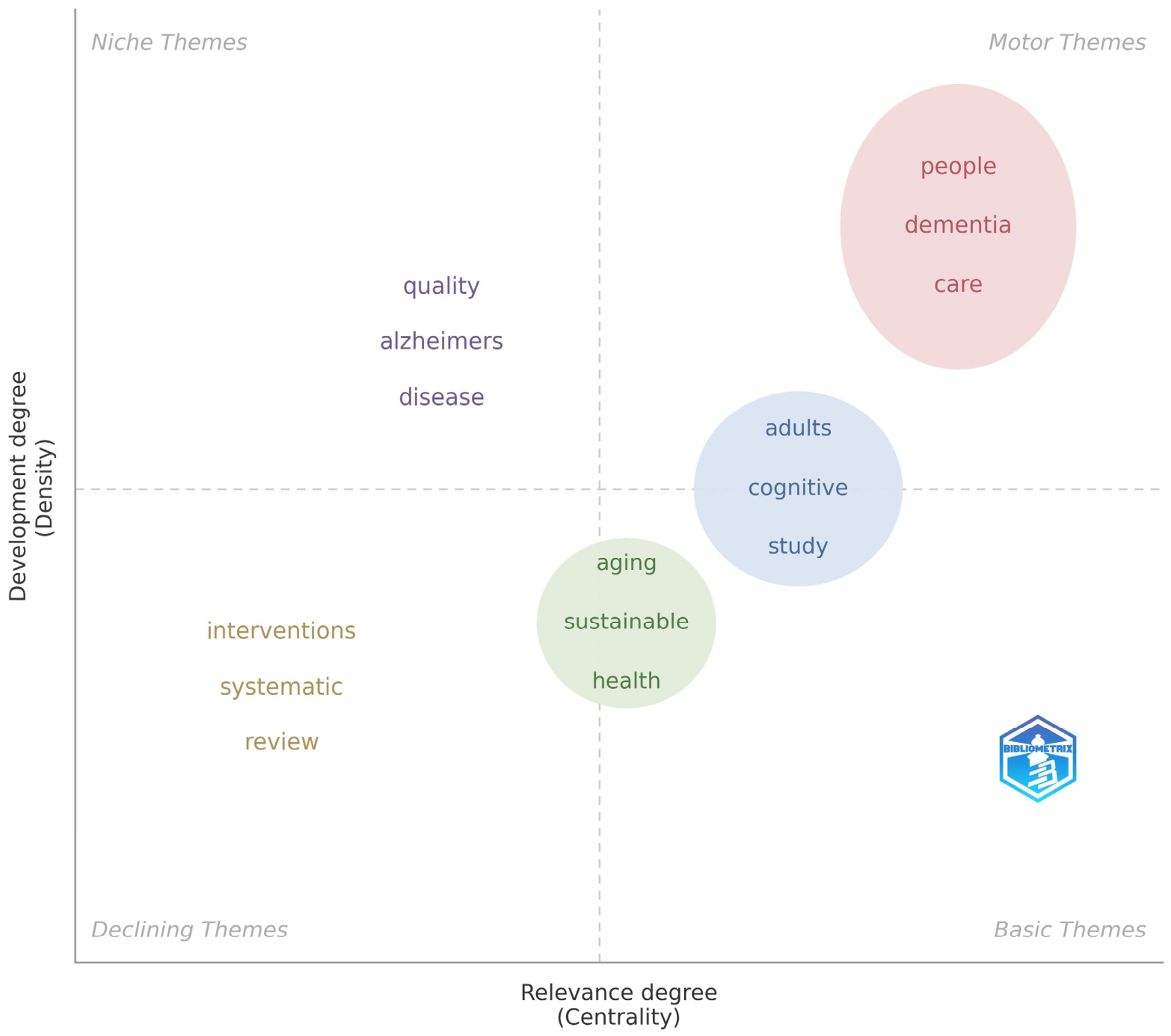
The thematic map, based on co-word analysis, groups the terms by centrality (relevance) and density (development) (Figure 10). Documents were assigned to three main clusters: health (245 documents), care (226), and study (206), with 423 documents not assigned to a distinct cluster. The “care–dementia–people” cluster occupies the motor-theme quadrant (high centrality and high density) and forms the well-developed core of the field. The “health–sustainable–aging” cluster lies in the basic-theme quadrant, with high centrality but lower density. This position indicates that sustainability is a transversal and foundational concern for the field but has not yet developed into a distinct research theme, which directly supports the earlier observation about its implicit position.
Figure 10.
Thematic map (co-word clustering).
3.10. Conceptual Structure (Multiple Correspondence Analysis)
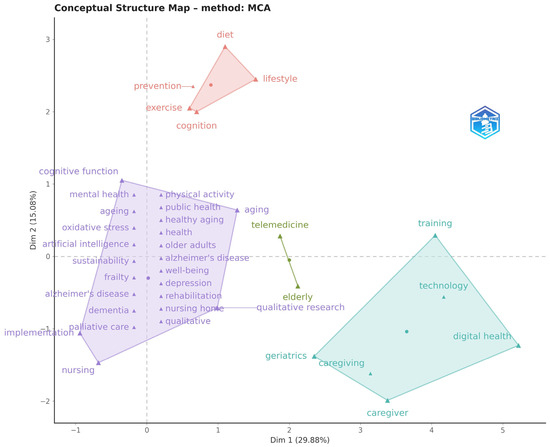
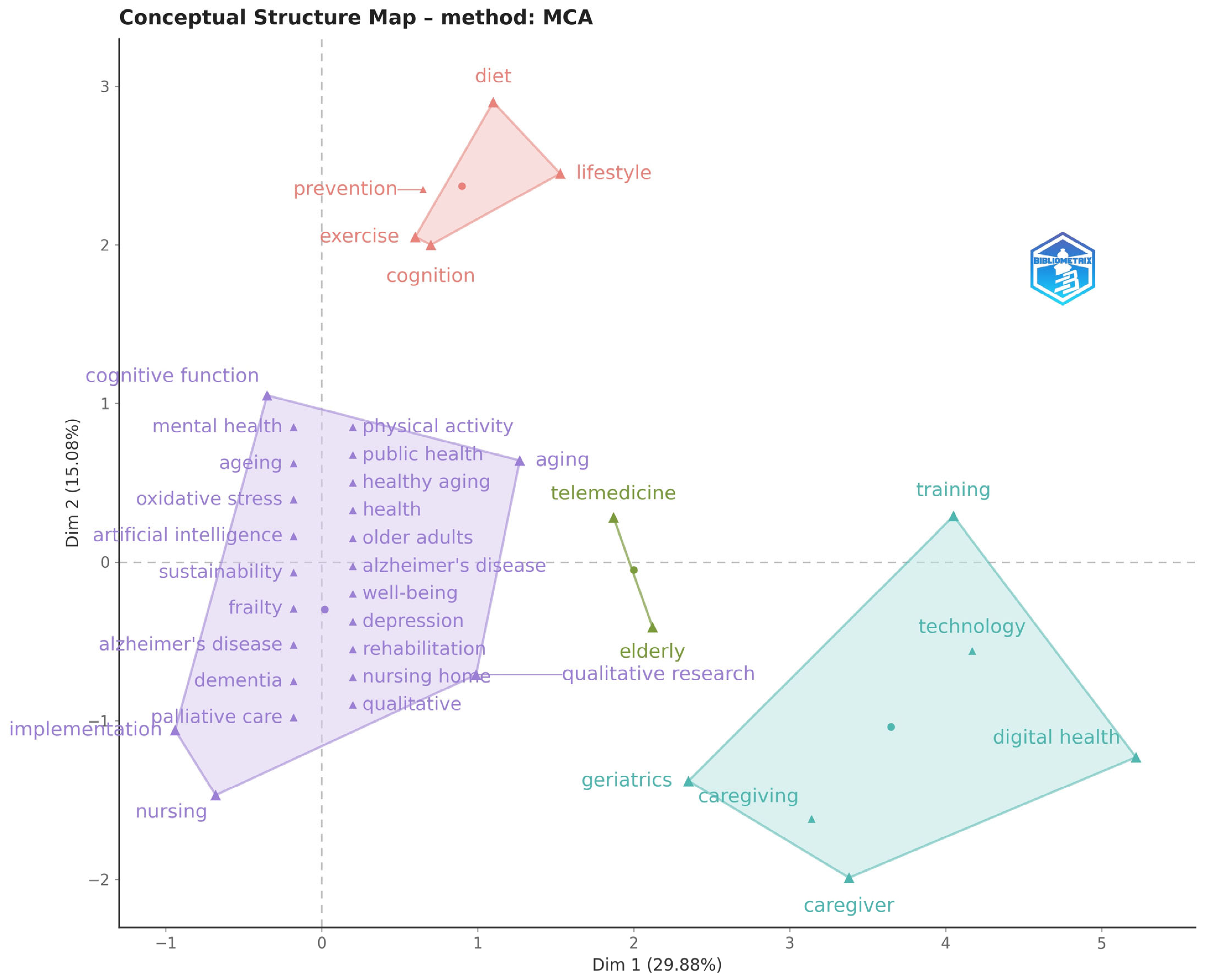
The conceptual structure map obtained by multiple correspondence analysis (MCA) is shown in Figure 11; the first two dimensions explain 44.96% of the total variance (Dimension 1: 29.88%; Dimension 2: 15.08%). The map shows four clusters: a broad clinical/aging core containing cognitive function, mental health, ageing, dementia, nursing, palliative care, artificial intelligence, oxidative stress, and sustainability; a prevention/lifestyle cluster made up of diet, prevention, exercise, and lifestyle; a technology/care cluster made up of telemedicine, training, technology, digital health, geriatrics, and caregiver; and a small bridge linking telemedicine and the elderly. Sustainability appears within the broad clinical core rather than forming a separate axis, which, consistent with the thematic map, indicates that it is a cross-cutting concept rather than a distinct, developed theme.
Figure 11.
Conceptual structure map (MCA).
3.11. Collaboration Networks
The most frequent bilateral collaborations are listed in Table 4. The strongest links connect the United States with the United Kingdom (20 joint publications), the United States with China (17), and Australia with the United Kingdom (15).
Table 4.
Most frequent country collaboration pairs.
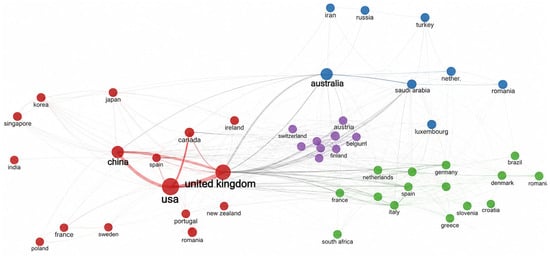
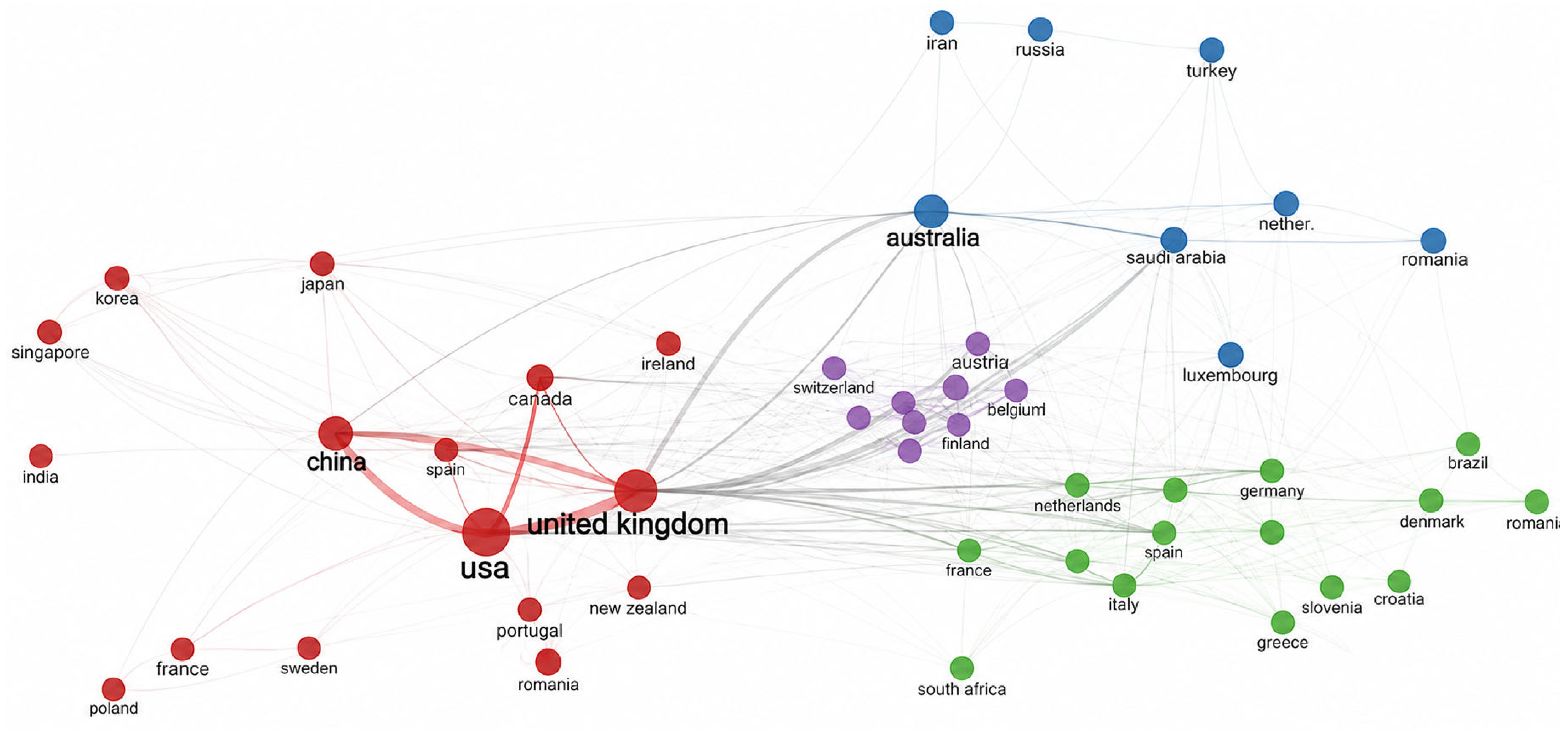
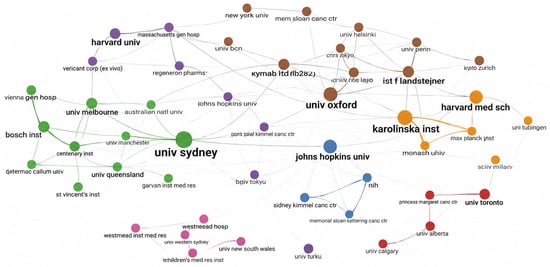
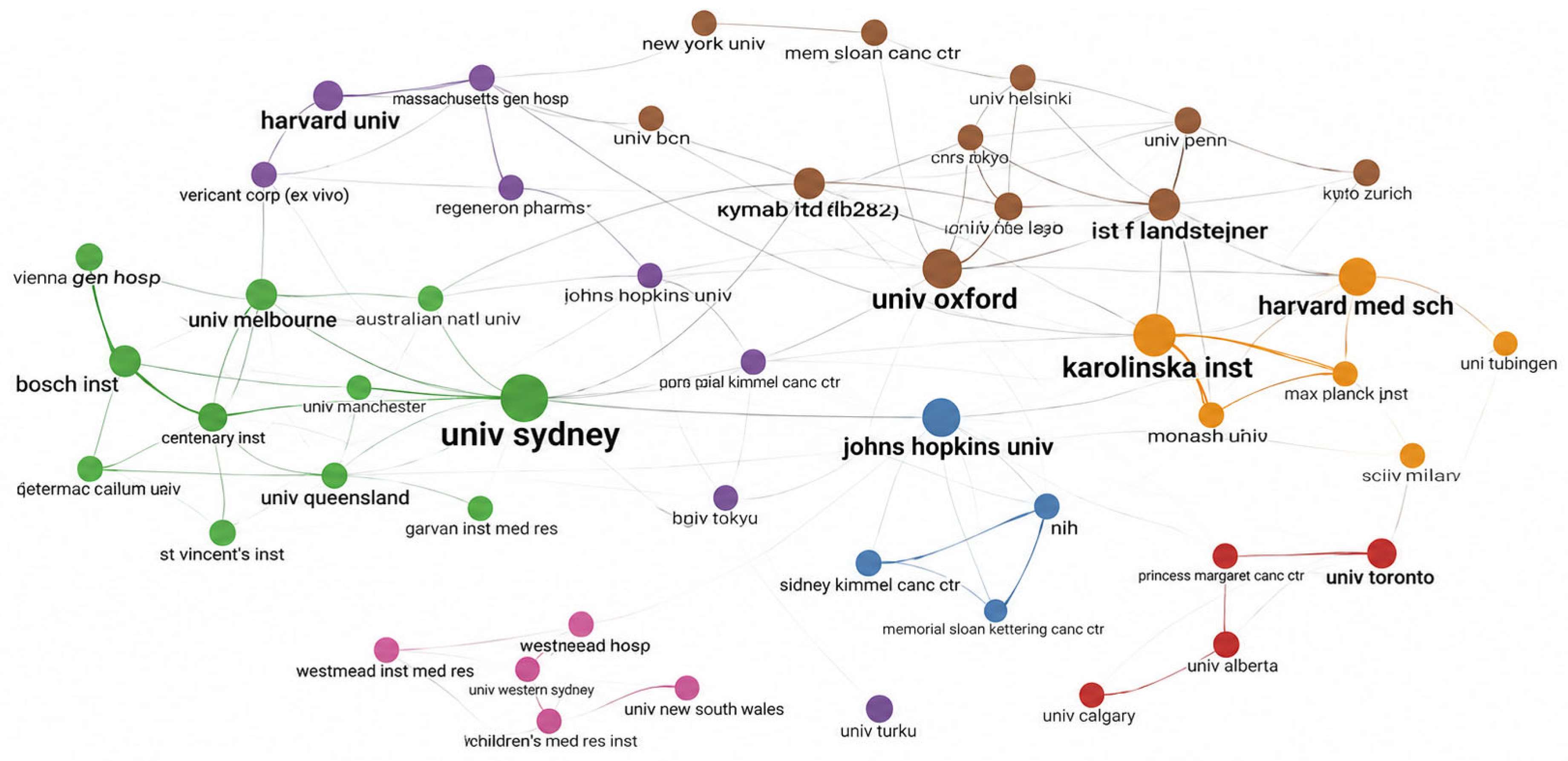
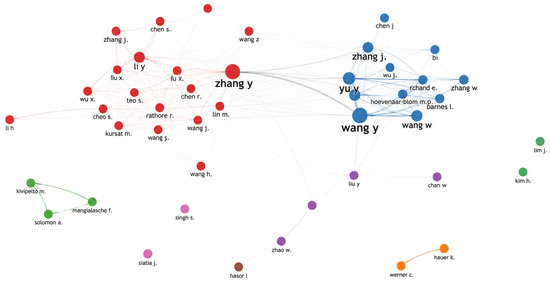
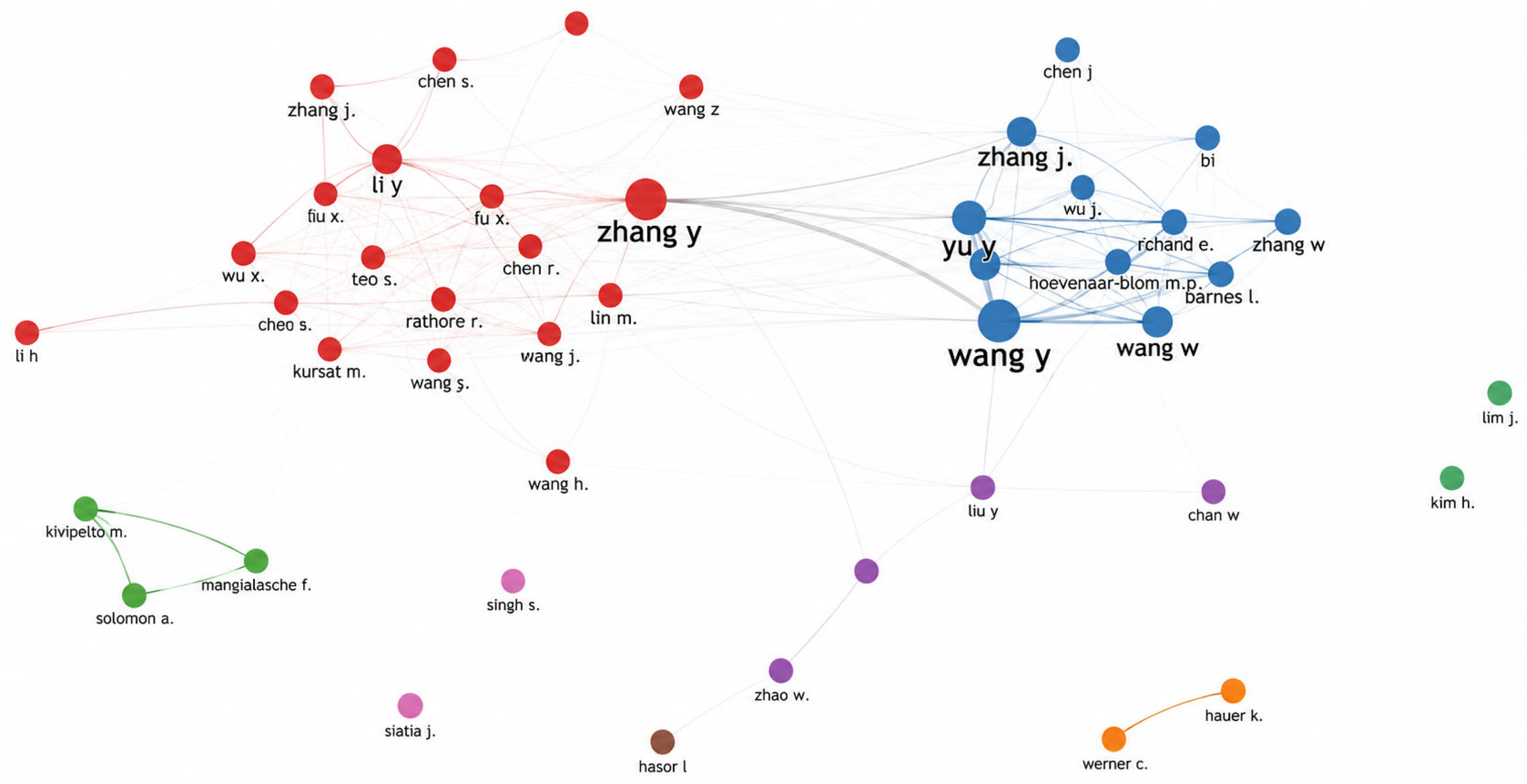
The country collaboration network (Figure 12) reveals four clusters: (1) the United Kingdom, the United States, China, Canada, India, and Japan; (2) Australia, the Netherlands, and Nordic-linked countries; (3) continental European countries such as Spain, Italy, Germany, France, and Switzerland; and (4) Sweden, Finland, and several countries from the global South. By betweenness, the United Kingdom (188.6) and the United States (101.8) are the main bridging countries. The institution network (Figure 13) shows clusters around Australian universities (Sydney, Melbourne, Queensland), a US/Oxford group, a Nordic group (Karolinska, Harvard, Eastern Finland), a Canadian group (Toronto, McMaster), and a Hong Kong/Johns Hopkins group. The author network (Figure 14) is comparatively fragmented, consisting of small, separate groups; among these, the FINGER prevention-trial group (Kivipelto, Solomon, Mangialasche) forms a distinct community. The fragmentation of the networks and the dominance of high-income institutions indicate that collaboration is concentrated and unevenly distributed.
Figure 12.
Country collaboration network.
Figure 13.
Institution collaboration network.
Figure 14.
Author collaboration network.
3.12. Co-Citation Structure
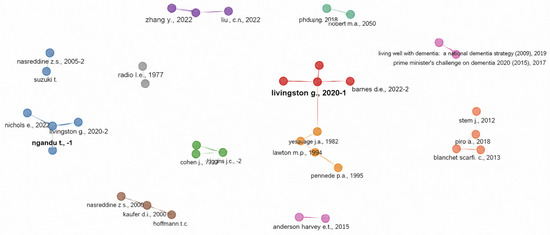
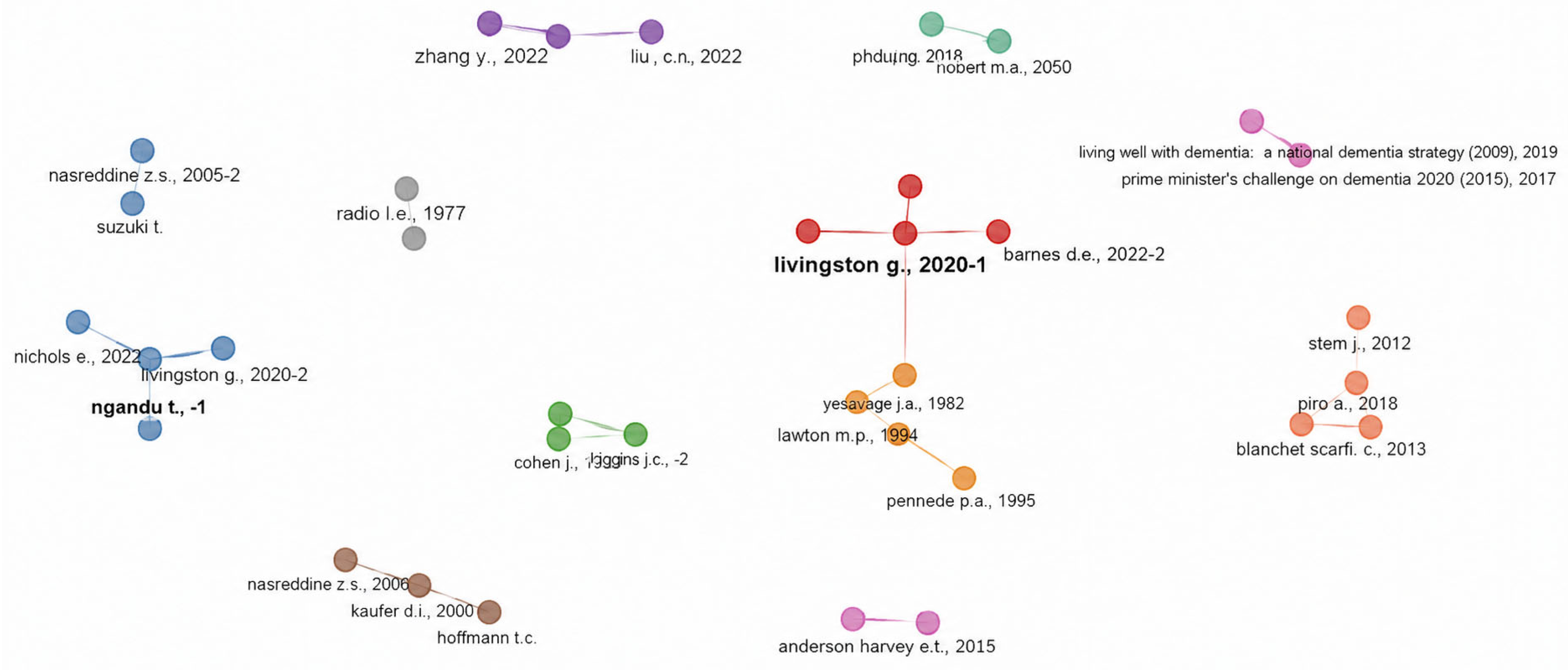
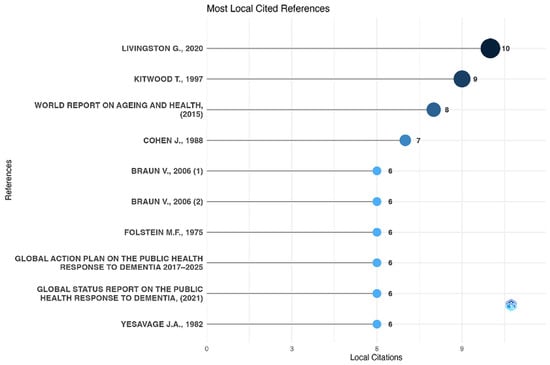
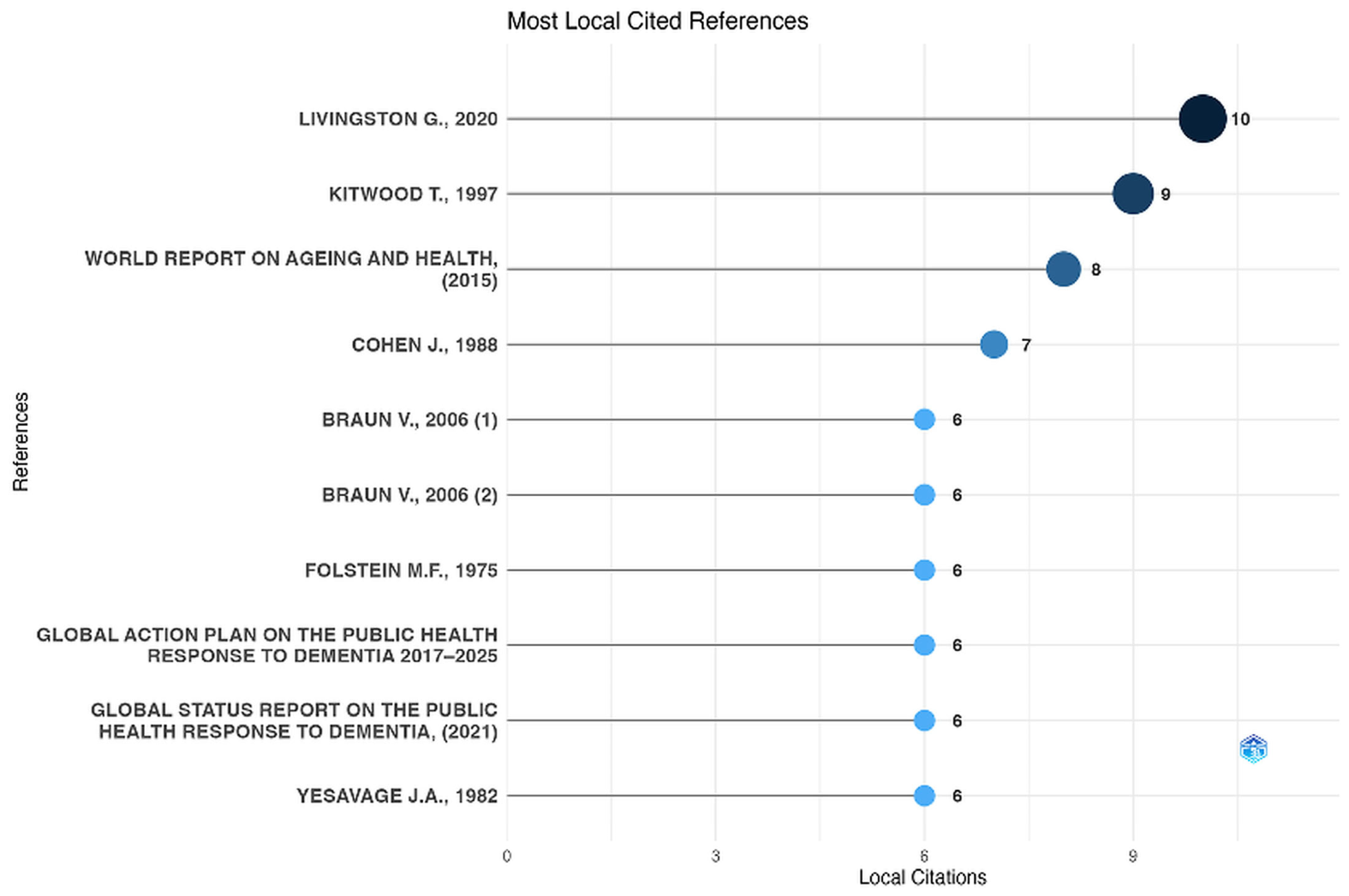
In the document co-citation network (Figure 15), the 2020 Lancet Commission report on dementia prevention [12] is the most central node. It is co-cited with geriatric assessment instruments such as the [31] the Lawton instrumental activities of [32] the [33] and the [34] together with the FINGER trial [28]. At the level of cited authors, Livingston, Prince, Petersen, and Kivipelto are the most central. This structure shows that the intellectual base of the field rests on the dementia-prevention and geriatric-assessment literature. The most locally cited references and authors are shown in Figure 16.
Figure 15.
Document co-citation network.
Figure 16.
Most locally cited references. Each horizontal line connects a reference to its citation count; circle size and color intensity are both proportional to the number of local citations (larger, darker circles indicate more local citations). The exact citation count is displayed next to each circle.
3.13. Research Areas and the Sustainability Dimension
The distribution of the corpus across Web of Science research areas is shown in Figure 17. The corpus is concentrated in aging and clinical fields: Gerontology (135 documents) and Geriatrics & Gerontology (130) dominate, followed by Public, Environmental & Occupational Health (74), Health Care Sciences & Services (73), Clinical Neurology (43), and General & Internal Medicine (42). Alongside these, sustainability-oriented research areas are materially present: Environmental Sciences (41), Environmental Studies (29), and Green & Sustainable Science & Technology (28). The Environmental Sciences category is as prominent as core clinical areas such as Nursing (40) and Neurosciences (38). This distribution shows that the corpus sits at the intersection of sustainability and elderly brain and cognitive care at the disciplinary level, even though sustainability is not a high-frequency author keyword or a distinct developed theme. Taken together with the keyword analysis (Section 3.7) and the thematic map (Section 3.9), the research-area distribution indicates that sustainability enters this literature as a cross-cutting disciplinary lens rather than as an explicitly named research theme.
Figure 17.
Distribution of the corpus across Web of Science research areas, with sustainability and environmental categories highlighted. A document may be assigned to more than one category, so the counts do not sum to the number of documents.
3.14. Thematic Synthesis
By synthesising the co-word clusters with the thematic map (Section 3.9) and the conceptual structure (Section 3.10), four main themes were identified. These themes offer an interpretive labelling of the bibliometric clusters rather than a full qualitative analysis of the articles, with each theme named according to its constituent keywords.
The first and largest theme, “Multidomain Lifestyle Prevention of Dementia and the Mental Health of Older Adults,” focuses on dementia, mental health, and lifestyle-based prevention. It is built around dementia (the most central keyword), depression, exercise, physical activity, care, and quality of life. Positioned within the motor-theme quadrant of the thematic map, it reflects the field’s primary concern with reducing dementia risk through multidomain, lifestyle-based interventions while supporting quality of life.
The second theme, “The Cognitive Health Continuum” (encompassing the cognitive health spectrum and brain aging), clusters terms such as cognition, mild cognitive impairment, Alzheimer’s disease, brain, and aging. It represents the continuum from normal cognitive aging through mild cognitive impairment to dementia, with brain health as the organising concept.
The third theme, “Caregiving and Sustainable Care Delivery for the Oldest Old,” brings together terms including caregiver, therapy, and population-specific index terms (aged, very elderly, aged 80 and over). This theme reflects scholarly focus on both informal and formal caregiving mechanisms, as well as care delivery tailored to the oldest-old demographic.
The fourth theme, “Sustainability as a Transversal and Foundational Dimension of Elderly Brain Care,” addresses sustainability as a cross-cutting concern and is structurally distinct from the others. Rather than forming a dense, self-contained cluster, sustainability appears as a basic theme on the thematic map (combining health, sustainability, and aging), sits within the broad clinical core of the conceptual structure, and is reflected in the research-area distribution through environmental and green categories. Although transversal and foundational, it has not yet fully developed into a distinct research domain. Across all four themes, quality of life recurs as a central thread, situating the overall literature within a shared concern for the health-related quality of life of older adults living with chronic cognitive conditions.
4. Discussion
This analysis of 1100 documents shows that research at the intersection of sustainability and elderly brain and cognitive care has grown quickly, with an annual growth rate close to 20% and a young average document age. The field is dominated by dementia, aging, and clinical care: dementia is by far the most frequent term, and gerontology, geriatrics, and clinical medicine are the leading research areas. This concentration is consistent with the global rise in dementia and the policy attention it has received [1,2,12].
The intellectual base of the field rests on dementia prevention and geriatric assessment. The 2020 Lancet Commission report is the most co-cited work [12], and the FINGER multidomain trial and related lifestyle-prevention research are prominent [3,16,17,35]. This prevention orientation connects the field to the wider shift from treating brain aging to promoting brain health and brain longevity [4,11], and to the idea of brain capital as a resource with long-term, sustainable value [9]. Prevention through diet, physical activity, and lifestyle also links the clinical literature to environmental and food-related research, which helps explain the presence of nutrition and diet studies among the most cited documents.
The clearest finding concerns how the field treats sustainability. Although the corpus was assembled around the term sustainab*, sustainability is not among the most frequent author keywords and does not form a distinct, well-developed theme. In the thematic map, it sits in the basic-themes quadrant, with high centrality but low density, and in the conceptual structure it is embedded within the broad clinical and aging core rather than standing on its own. At the same time, sustainability-oriented research areas such as Environmental Sciences, Environmental Studies, and Green & Sustainable Science & Technology are materially represented. Together these results indicate that sustainability functions as a cross-cutting, foundational lens in this literature rather than as an explicitly named research programme. This reading is in line with broad definitions of sustainability as a transversal principle and with calls to make sustainability an explicit part of health care and nursing rather than an implicit background concern [7,8,26,27,28,29,30,31,32,33,34,35,36,37].
Collaboration and output are concentrated in high-income countries and institutions. Every leading affiliation is based in a high-income country, and the United States, the United Kingdom, Australia, and Canada dominate citations and act as the main bridges in the collaboration network, while low- and middle-income countries are largely absent. This imbalance matters for a field framed around sustainability and healthy aging, because the populations aging most rapidly are increasingly in low- and middle-income settings [1,6]. The gap points to a tension between the field’s stated concern with equitable, sustainable aging and the actual geography of its knowledge production.
Taken together, the four themes describe a field organised around dementia prevention and cognitive health but resting on a foundation of sustainability that stays largely implicit. The prevention theme aligns with the multidomain model established by the FINGER trial and related lifestyle research [18,19] and with the Lancet Commission’s emphasis on modifiable risk [12,27,28,29]. The cognitive-health theme reflects the move from treating disease to protecting brain health across the life course [4,11,30,31,32]. The caregiving theme connects to sustainable models of long-term care for the oldest old, where nursing has a central role [10,34]. The fourth theme is the most consequential for the field’s stated aim: sustainability works as a cross-cutting concern rather than an explicit programme, which fits calls to make sustainability and the Sustainable Development Goals explicit in nursing and health care [26,37,38,39] and to treat brain health as part of a sustainable, equitable future [9].
The trend analysis shows a recent shift toward artificial intelligence, digital health, and technology-supported care alongside continued investment in prevention. These trends carry direct implications for three stakeholder groups. For clinicians and nurses, the findings confirm the central role of multidomain, lifestyle-based prevention in reducing dementia risk and preserving quality of life [16,17]. Nurses are well placed to lead risk assessment, patient and caregiver education, and community-based implementation of prevention programmes, yet nursing science remains underrepresented in this literature [10,40]. Expanding the nursing contribution to sustainability-oriented brain care research would both strengthen the evidence base and improve translation into frontline practice. For health care providers and system planners, the imbalance between reactive, resource-intensive models and preventive approaches points to the need for care pathways that integrate cognitive health monitoring, early intervention, and caregiver support within sustainable, person-centred frameworks [40,41,42]. The prominence of the oldest old in the caregiving theme signals that service planning must account for the specific demands of this group, where informal care networks are most strained and formal care costs are highest. For policymakers, the implicit status of sustainability in the current literature is a governance problem as much as a research one: if sustainability is not named as a goal, it is difficult to fund, measure, or mandate [7,8,40,43]. Making sustainability an explicit criterion in research priority-setting, funding calls, and clinical guideline development would create the conditions for the field to move from foundational to operational.
Several directions for future research follow from these findings. First, interdisciplinary collaboration is the field’s most pressing structural need. The current literature is produced largely within disciplinary silos: geriatrics, neurology, environmental science, nursing, and economics each engage with the sustainability–brain health nexus but rarely converge. Journals, funding bodies, and research consortia that explicitly incentivise cross-disciplinary teams would accelerate progress. The thematic structure of the corpus, in which dementia prevention, cognitive health, and caregiving sit alongside but largely apart from sustainability frameworks, reflects this fragmentation and suggests that integrative, problem-oriented research designs are needed [39,40,43].
Second, the geographic concentration of output in high-income countries is a fundamental equity problem. The populations aging most rapidly are in low- and middle-income countries, yet these settings contribute only marginally to the current evidence base. Future research should prioritise context-adapted studies from low- and middle-income settings, including studies of community-based and resource-appropriate care models, informal caregiver support and the environmental and social determinants of cognitive health in lower-resource environments. International funding mechanisms and capacity-building partnerships are needed to reduce the mismatch between where dementia burden is growing and where knowledge is being produced [40,41].
Third, the alignment between this field and the Sustainable Development Goals remains superficial. SDG 3 (good health and well-being), SDG 10 (reduced inequalities), and SDG 11 (sustainable cities and communities) are the most represented, but SDGs 13 (climate action), 16 (peace, justice, and strong institutions), and 17 (partnerships for the goals) are largely absent. Climate-related exposures, including air pollution, heat stress, and green-space deprivation, are established cognitive risk factors [7,8], yet climate-health integration in brain care research is still nascent. Explicitly aligning research questions with the full SDG framework would both broaden the field’s scope and strengthen its policy relevance. Longitudinal, mixed-methods, and implementation studies that connect brain health outcomes to SDG indicators would be particularly valuable for translating bibliometric insights into actionable governance frameworks [39,43,44,45,46].
To bridge these gaps and operationalize the field’s core findings, the following sections outline the direct practical implications for key stakeholders involved in elderly brain care.
4.1. Practical Implications for Healthcare Professionals and Clinical Practice
The thematic shift toward multidomain prevention and technology-supported care highlights an urgent need to transition from reactive, disease-centered management to proactive, sustainable brain health models:
- Nurse-Led Multidomain Prevention: Clinicians and nurses should take the lead in implementing multidomain lifestyle interventions (integrating physical activity, nutritional counseling, vascular risk management, and cognitive stimulation). Embedding structured cognitive risk screening into routine nursing workflows ensures early detection before irreversible functional decline occurs [3,15,16,33].
- Person-Centered and Caregiver-Inclusive Care: Cognitive decline severely impacts health-related quality of life (HRQoL) and autonomy long before advanced stages. Healthcare providers must incorporate caregiver support, education, and community-based respite care into treatment plans to alleviate informal care burden and prevent early institutionalization [10,34].
- Integration of Digital Health and AI: Digital health tools, wearable devices, and AI-assisted screening should be integrated into primary care to enable continuous, home-based monitoring, particularly for elderly individuals with mobility limitations [11].
4.2. Practical Implications for Policymakers and Health System Planners
The implicit status of sustainability in the current literature represents a governance challenge that requires concrete policy intervention:
- Reallocating Resources Toward Prevention: Health system planners must address the structural imbalance between resource-intensive acute care and cost-effective preventive care. Long-term budget allocation toward community-based lifestyle intervention programs reduces future formal care costs and healthcare utilization [3,12].
- Explicit Sustainability Criteria in Healthcare Governance: Policymakers and funding agencies should establish “sustainability” as an explicit, measurable criterion in clinical practice guidelines, public health grant calls, and health service evaluations [7,8].
- Targeting High-Burden Demographics: Service planning must prioritize the “oldest old” (80+ population), who experience the highest rates of multimorbidity and place the greatest strain on informal care networks [1,10].
4.3. Future Directions and Implications for Researchers
To overcome current structural limitations, future research must address disciplinary silos and global inequities:
- Breaking Disciplinary Silos: Academic institutions and funding bodies should incentivize cross-disciplinary research frameworks that explicitly connect geriatrics, neurology, nursing, environmental health, and health economics [4,9].
- Prioritizing Low and Middle Income Countries (LMICs): Researchers must address the geographical imbalance by developing context-adapted, resource-appropriate, and culturally sensitive community care models tailored to LMICs [1,6].
- Developing Standardized Sustainability Metrics: Future empirical studies should establish unified frameworks that concurrently evaluate clinical outcomes, patient quality of life (HRQoL), and sustainability metrics (e.g., resource efficiency, environmental footprint, long-term cost-effectiveness) [8,24].
5. Conclusions
This bibliometric analysis mapped 1100 documents at the intersection of sustainability and elderly brain and cognitive care. The field is expanding rapidly and is anchored in dementia prevention and geriatric care, with the 2020 Lancet Commission and multidomain prevention trials at its intellectual core [12,14]. Sustainability is present throughout the corpus as a research-area lens and a foundational concern, but it is not yet an explicit, well-developed research theme: it does not appear among the most frequent keywords and sits in the basic-themes quadrant of the thematic map. Output is concentrated in high-income countries and institutions, which is at odds with the global distribution of population aging. Making sustainability explicit, connecting brain health to the healthy-aging and environmental agendas, and broadening participation beyond high-income settings are the main directions the field now needs to pursue. Future work could align research questions directly with the Sustainable Development Goals and give more attention to low- and middle-income contexts.
Limitations
Several limitations should be noted. First, sustainability was operationalised through a defined set of search terms, so the representation of sustainability partly reflects that choice; a different set of terms could yield somewhat different coverage. Second, no additional manual relevance screening was applied: all records meeting the predefined database criteria were retained, so some records may be only tangentially related to elderly brain care, for example, general nutrition or food-science studies. Third, the Sustainable Development Goal and research-area classifications were available only through Web of Science and were therefore applied to the Web of Science records rather than to the whole corpus. Fourth, author-level metrics are affected by the full counting of large multi-author consortium papers, which inflates raw citation counts; the h-index was used to reduce this effect, and common surnames may still be merged during author disambiguation. Finally, the search was limited to two databases, to journal articles and reviews, and to English-language publications, so relevant work in other databases, document types, or languages may have been missed.
Author Contributions
Conceptualization, G.S. and H.M.B.Ü.; Methodology, G.S. and H.M.B.Ü.; Software, H.M.B.Ü.; Validation, G.S. and H.M.B.Ü.; Formal analysis, G.S. and H.M.B.Ü.; Investigation, G.S. and H.M.B.Ü.; Resources, G.S. and H.M.B.Ü.; Data curation, G.S. and H.M.B.Ü.; Writing—original draft, G.S. and H.M.B.Ü.; Writing—review & editing, G.S. and H.M.B.Ü.; Supervision, G.S.; Project administration, G.S. All authors have read and agreed to the published version of the manuscript.
Funding
This research did not receive any specific grant from funding agencies in the public, commercial, or not-for-profit sectors.
Institutional Review Board Statement
Not applicable.
Informed Consent Statement
Not applicable.
Data Availability Statement
Bibliometric data were retrieved from the Web of Science Core Collection (Clarivate Analytics) and Scopus. Raw export files are available from the corresponding author upon reasonable request.
Acknowledgments
The authors have nothing to report.
Conflicts of Interest
The authors declare no conflicts of interest.
References
- World Health Organization. Ageing and Health. WHO Fact Sheet. 2025. Available online: https://www.who.int/news-room/fact-sheets/detail/ageing-and-health (accessed on 20 July 2026).
- World Health Organization. Dementia. WHO Fact Sheet. 2026. Available online: https://www.who.int/news-room/fact-sheets/detail/dementia (accessed on 20 July 2026).
- Wimo, A.; Handels, R.; Antikainen, R.; Eriksdotter, M.; Jönsson, L.; Knapp, M.; Kulmala, J.; Laatikainen, T.; Lehtisalo, J.; Peltonen, M.; et al. Dementia prevention: The potential long-term cost-effectiveness of the FINGER prevention program. Alzheimer’s Dement. 2023, 19, 999–1008. [Google Scholar] [CrossRef] [Scilit]
- Palermo, S. Shifting from brain ageing to brain longevity. Nat. Hum. Behav. 2026, 10, 834–836. [Google Scholar] [CrossRef] [Scilit] [PubMed]
- Alzheimer’s Disease International. World Alzheimer Report 2025: Reimagining Life with Dementia-the Power of Rehabilitation. 2025. Available online: https://www.alzint.org/resource/world-alzheimer-report-2025/ (accessed on 20 July 2026).
- United Nations. United Nations Decade of Healthy Ageing: Plan of Action 2021–2030; United Nations: New York, NY, USA, 2021; Available online: https://cdn.who.int/media/docs/default-source/decade-of-healthy-ageing/decade-proposal-final-apr2020-en.pdf (accessed on 23 April 2026).
- Ruggerio, C.A. Sustainability and sustainable development: A review of principles and definitions. Sci. Total Environ. 2021, 786, 147481. [Google Scholar] [CrossRef] [Scilit] [PubMed]
- Hu, H.; Cohen, G.; Sharma, B.; Yin, H.; McConnell, R. Sustainability in health care. Annu. Rev. Environ. Resour. 2022, 47, 173–196. [Google Scholar] [CrossRef] [Scilit]
- Kjærgård, B.; Land, B.; Bransholm Pedersen, K. Health and sustainability. Health Promot. Int. 2014, 29, 558–568. [Google Scholar] [CrossRef] [Scilit] [PubMed]
- Morgado, B.; Fonseca, C.; Lopes, M.; Pinho, L. Components of care models that influence functionality in people over 65 in the context of long-term care: Integrative literature review. In Gerontechnology III; Lecture Notes in Bioengineering; García-Alonso, J., Fonseca, C., Eds.; Springer: Cham, Switzerland, 2021. [Google Scholar]
- Singh, S.D.; Gutierrez-Martinez, L.; Newhouse, A.; Sonni, A.; Chemali, Z.; Rosand, J. Brain health begins with brain care. Lancet Neurol. 2022, 21, 961–962. [Google Scholar] [CrossRef] [Scilit] [PubMed]
- Livingston, G.; Huntley, J.; Sommerlad, A.; Ames, D.; Ballard, C.; Banerjee, S.; Brayne, C.; Burns, A.; Cohen-Mansfield, J.; Cooper, C.; et al. Dementia prevention, intervention, and care: 2020 report of the Lancet Commission. Lancet 2020, 396, 413–446. [Google Scholar] [CrossRef] [Scilit] [PubMed]
- Aria, M.; Cuccurullo, C. bibliometrix: An R-tool for comprehensive science mapping analysis. J. Informetr. 2017, 11, 959–975. [Google Scholar] [CrossRef] [Scilit]
- Callon, M.; Courtial, J.-P.; Laville, F. Co-word analysis as a tool for describing the network of interactions between basic and technological research: The case of polymer chemistry. Scientometrics 1991, 22, 155–205. [Google Scholar] [CrossRef] [Scilit]
- Donthu, N.; Kumar, S.; Mukherjee, D.; Pandey, N.; Lim, W. How to conduct a bibliometric analysis: An overview and guidelines. J. Bus. Res. 2021, 133, 285–296. [Google Scholar] [CrossRef] [Scilit]
- Lim, W.; Kumar, S. Guidelines for interpreting the results of bibliometrics analysis. Glob. Bus. Organ. Excell. 2023, 43, 17–26. [Google Scholar] [CrossRef] [Scilit]
- Ninkov, A.; Frank, J.; Maggio, L. Bibliometrics: Methods for studying academic publishing. Perspect. Med. Educ. 2021, 11, 173–176. [Google Scholar] [CrossRef] [Scilit] [PubMed]
- Passas, I. Bibliometric analysis: The main steps. Encyclopedia 2024, 4, 1014–1025. [Google Scholar] [CrossRef] [Scilit]
- Lochmiller, C. Conducting thematic analysis with qualitative data. Qual. Rep. 2021, 26, 2029–2044. [Google Scholar] [CrossRef] [Scilit]
- Naeem, M.; Ozuem, W.; Howell, K.; Ranfagni, S. A step-by-step process of thematic analysis to develop a conceptual model in qualitative research. Int. J. Qual. Methods 2023, 22, 1–18. [Google Scholar] [CrossRef] [Scilit]
- Thompson, J. A guide to abductive thematic analysis. Qual. Rep. 2022, 27, 1410–1421. [Google Scholar] [CrossRef] [Scilit]
- Ferrari, A. GBD 2021 Diseases and Injuries Collaborators. Global incidence, prevalence, years lived with disability (YLDs), disability-adjusted life-years (DALYs), and healthy life expectancy (HALE) for 371 diseases and injuries in 204 countries and territories and 811 subnational locations, 1990–2021: A systematic analysis for the Global Burden of Disease Study 2021. Lancet 2024, 403, 2133–2161. [Google Scholar] [CrossRef] [Scilit] [PubMed]
- Bailey, R.L.; West, K.P.; Black, R.E. The epidemiology of global micronutrient deficiencies. Ann. Nutr. Metab. 2015, 66, 22–33. [Google Scholar] [CrossRef] [Scilit] [PubMed]
- Guasch-Ferré, M.; Willett, W.C. The Mediterranean diet and health: A comprehensive overview. J. Intern. Med. 2021, 290, 549–566. [Google Scholar] [CrossRef] [Scilit] [PubMed]
- Cesari, M.; Prince, M.; Thiyagarajan, J.A.; De Carvalho, I.A.; Bernabei, R.; Chan, P.; Gutierrez-Robledo, L.M.; Michel, J.-P.; Morley, J.E.; Ong, P.; et al. Frailty: An emerging public health priority. J. Am. Med. Dir. Assoc. 2016, 17, 188–192. [Google Scholar] [CrossRef] [Scilit] [PubMed]
- Cunnane, S.; Nugent, S.; Roy, M.; Courchesne-Loyer, A.; Croteau, E.; Tremblay, S.; Castellano, A.; Pifferi, F.; Bocti, C.; Paquet, N.; et al. Brain fuel metabolism, aging, and Alzheimer’s disease. Nutrition 2011, 27, 3–20. [Google Scholar] [CrossRef] [Scilit] [PubMed]
- Feng, Z.; Glinskaya, E.; Chen, H.; Gong, S.; Qiu, Y.; Xu, J.; Yip, W. Long-term care system for older adults in China: Policy landscape, challenges, and future prospects. Lancet 2020, 396, 1362–1372. [Google Scholar] [CrossRef] [Scilit] [PubMed]
- Madeo, F.; Carmona-Gutierrez, D.; Hofer, S.J.; Kroemer, G. Caloric restriction mimetics against age-associated disease: Targets, mechanisms, and therapeutic potential. Cell Metab. 2019, 29, 592–610. [Google Scholar] [CrossRef] [Scilit] [PubMed]
- Santos, A.C.; Willumsen, J.; Meheus, F.; Ilbawi, A.; Bull, F.C. The cost of inaction on physical inactivity to public health-care systems: A population-attributable fraction analysis. Lancet Glob. Health 2023, 11, 32–39. [Google Scholar] [CrossRef] [Scilit] [PubMed]
- Bonsang, E.; Adam, S.; Perelman, S. Does retirement affect cognitive functioning? J. Health Econ. 2012, 31, 490–501. [Google Scholar] [CrossRef] [Scilit] [PubMed]
- Yesavage, J.A.; Brink, T.L.; Rose, T.L.; Lum, O.; Huang, V.; Adey, M.; Leirer, V.O. Development and validation of a geriatric depression screening scale: A preliminary report. J. Psychiatr. Res. 1982, 17, 37–49. [Google Scholar] [CrossRef] [Scilit] [PubMed]
- Lawton, M.P.; Brody, E.M. Assessment of older people: Self-maintaining and instrumental activities of daily living. Gerontologist 1969, 9, 179–186. [Google Scholar] [CrossRef] [Scilit]
- Podsiadlo, D.; Richardson, S. The timed “Up & Go”: A test of basic functional mobility for frail elderly persons. J. Am. Geriatr. Soc. 1991, 39, 142–148. [Google Scholar] [CrossRef] [Scilit] [PubMed]
- Nasreddine, Z.S.; Phillips, N.A.; Bédirian, V.; Charbonneau, S.; Whitehead, V.; Collin, I.; Cummings, J.L.; Chertkow, H. The Montreal Cognitive Assessment, MoCA: A brief screening tool for mild cognitive impairment. J. Am. Geriatr. Soc. 2005, 53, 695–699. [Google Scholar] [CrossRef] [Scilit] [PubMed]
- Ngandu, T.; Lehtisalo, J.; Solomon, A.; Levälahti, E.; Ahtiluoto, S.; Antikainen, R.; Bäckman, L.; Hänninen, T.; Jula, A.; Laatikainen, T.; et al. A 2 year multidomain intervention of diet, exercise, cognitive training, and vascular risk monitoring versus control to prevent cognitive decline (FINGER). Lancet 2015, 385, 2255–2263. [Google Scholar] [CrossRef] [Scilit] [PubMed]
- Kivipelto, M.; Mangialasche, F.; Ngandu, T. Lifestyle interventions to prevent cognitive impairment, dementia and Alzheimer disease. Nat. Rev. Neuro. 2018, 14, 653–666. [Google Scholar] [CrossRef] [Scilit] [PubMed]
- Wiles, J.L.; Leibing, A.; Guberman, N.; Reeve, J.; Allen, R.E.S. The meaning of ‘aging in place’ to older people. Gerontologist 2012, 52, 357–366. [Google Scholar] [CrossRef] [Scilit] [PubMed]
- Holmberg, C.; Ahlstrom, L. Nursing research on the United Nations Sustainable Development Goals: A Bibliometric Analysis. J. Adv. Nurs. 2025, 81, 8256–8265. [Google Scholar] [CrossRef] [Scilit] [PubMed]
- Anåker, A.; Elf, M. Sustainability in nursing: Achievements and challenges after 10 years. Scand. J. Caring Sci. 2025, 39, e13315. [Google Scholar] [CrossRef] [Scilit] [PubMed]
- Cano, F.; Alves, E.; João, A.; Oliveira, H.; Pinho, L.G.; Fonseca, C. A rapid literature review on the health-related outcomes of long-term person-centered care models in adults with chronic illness. Front. Public Health 2023, 11, 1213816. [Google Scholar] [CrossRef] [Scilit] [PubMed]
- Cianconi, P.; Betrò, S.; Janiri, L. The impact of climate change on mental health: A systematic descriptive review. Front. Psychiatry 2020, 11, 74. [Google Scholar] [CrossRef] [Scilit] [PubMed]
- Álvarez-Nieto, C.; Richardson, J.; Navarro-Perán, M.Á.; Tutticci, N.; Huss, N.; Elf, M.; Anåker, A.; Aronsson, J.; Baid, H.; López-Medina, I.M. Nursing students’ attitudes towards climate change and sustainability: A cross-sectional multisite study. Nurse Educ. Today 2021, 108, 105185. [Google Scholar] [CrossRef] [Scilit] [PubMed]
- Ross, J.; Speirs, J. Championing a move from sustainability to planetary health in nursing curriculum. Nurse Educ. Today 2024, 139, 106220. [Google Scholar] [CrossRef] [Scilit] [PubMed]
- Beeckman, D.; Serraes, B.; Anrys, C.; Van Tiggelen, H.; Van Hecke, A.; Verhaeghe, S. A multicentre prospective randomised controlled clinical trial comparing the effectiveness and cost of a static air mattress and alternating air pressure mattress to prevent pressure ulcers in nursing home residents. Int. J. Nurs. Stud. 2019, 97, 105–113. [Google Scholar] [CrossRef] [Scilit] [PubMed]
- Pot, A.M.; Rabheru, K.; Chew, M. Person-centred long-term care for older persons: A new Lancet Commission. Lancet 2023, 401, 1754–1755. [Google Scholar] [CrossRef] [Scilit] [PubMed]
- World Health Organization. Optimizing Brain Health Across the Life Course: WHO Position Paper; World Health Organization: Geneva, Switzerland, 2022; Available online: https://www.who.int/publications/i/item/9789240054561 (accessed on 3 August 2026).

Disclaimer/Publisher’s Note: The statements, opinions and data contained in all publications are solely those of the individual author(s) and contributor(s) and not of MDPI and/or the editor(s). MDPI and/or the editor(s) disclaim responsibility for any injury to people or property resulting from any ideas, methods, instructions or products referred to in the content. |
© 2026 by the authors. Licensee MDPI, Basel, Switzerland. This article is an open access article distributed under the terms and conditions of the Creative Commons Attribution (CC BY) license.