


Highlights
Public health relevance—How does this work relate to a public health issue?
- Health behaviors are important determinants of health.
- The transition to parenthood is a critical life event during which health-related behaviors and daily routines often change.
Public health significance—Why is this work of significance to public health?
- This study provides evidence of a decline in healthy lifestyle scores following the transition to parenthood.
- Gendered patterns were observed, with mothers showing larger and more persistent declines in health lifestyle scores than fathers.
Public health implications—What are the key implications or messages for practitioners, policy makers and/or researchers in public health?
- Health promotion should support individuals—particularly mothers—during the transition to parenthood.
Abstract
Parenthood has been linked to changes in health-related behavior, though studies have reported mixed findings on whether these changes are beneficial or harmful. To date, most research has focused on associations between parenthood and individual health behaviors, while research on the association with overall health lifestyles is limited. This study investigates how health lifestyles change following the transition to parenthood based on longitudinal data from the German Socio-Economic Panel (Sozioökonomisches Panel, SOEP) from 2008 to 2019. A Health Lifestyle Index (HLI) was constructed including the health behaviors physical activity, diet, smoking, and sleep. We use longitudinal group trend regression models to account for unobserved heterogeneity between parents and childless individuals. A decline in the HLI following childbirth was found, with the largest reduction observed in physical activity. For women, the decline in HLI scores was more pronounced than for men. Over time, the decline in HLI levels stagnated and did not revert to pre-birth levels during the 5+ years post-birth observed in this study. These results indicate that the transition to parenthood is associated with a shift towards a less healthy lifestyle. Women were disproportionally affected, highlighting gendered inequalities in changes in health lifestyles following the transition to parenthood.
1. Introduction
Health-related behaviors are widely recognized as major risk factors for morbidity and mortality and seen as key drivers of the expansion of non-communicable diseases worldwide [1]. It is increasingly acknowledged that these health-related behaviors are not primarily the result of individual choices, but reflect complex processes shaped by structural factors such as class, gender, and living circumstances [2,3,4]. While some structural factors are relatively stable, others—like living circumstances—change during critical life transitions. This study examines how health behaviors change following the transition to parenthood. Most longitudinal research has focused on single behaviors in isolation [5,6,7], with few exceptions [8,9,10,11], yet the combined effect across behaviors is crucial for health outcomes. Therefore, we analyze how health lifestyles change in women and men following the transition to parenthood, guided by Cockerham’s Health Lifestyle Theory [12]. This framework defines health lifestyles “as collective patterns of health-related behavior based on choices from options available to people according to their life chances” [12]. The theory emphasizes the interplay of structure and agency in shaping health lifestyles, drawing on Bourdieu’s concept of habitus [13] as the disposition to engage in health-related practices.
These class- and gender-shaped dispositions influence tendencies toward certain health-related practices, but do not determine individual behaviors. Living circumstances are also crucial for lifestyle choices. The transition to parenthood can create a challenge for maintaining a healthy lifestyle, because the arrival of a child substantially changes parents’ existing routines and requires additional time as well as energy [14]. Financial pressures might increase as well with the transition to parenthood, especially if a parent takes parental leave or reduces working hours [15]. Moreover, parenthood is tied to strong normative expectations around parenting, which can create stress for new parents [16]. These pressures may be particularly pronounced for mothers, as they still carry most of the caregiving responsibilities [14,17]. At the same time, parenting can also activate new resources and motivations towards a healthy lifestyle. Many (expectant) parents report a heightened sense of purpose and motivation to make healthier decisions as they take on these new responsibilities [18,19].
The association between parenthood and individual health behaviors has already been explored in the existing literature. Most studies have found a decline in physical activity after the birth of the first child, which seems to be pronounced more strongly in mothers compared to fathers [5,20,21]. Research has also shown that new parents, especially during the first weeks postpartum, experience reduced sleep duration and quality, along with increased waking times after initially falling asleep [7,22]. A less clear trend has been observed regarding a change in nutritional behavior following the first birth. Some research implies a trend towards a healthier diet after transitioning to parenthood [23,24], whereas other studies suggest the opposite or no changes at all [24,25]. Research also suggests that, though many smoking mothers quit smoking during pregnancy, they tend to revert to pre-pregnancy smoking behaviors over time after becoming mothers [6,26]. Recent longitudinal studies further reveal differential effects of parenthood on mothers and fathers. Notably, women demonstrate greater and more persistent changes across several health behaviors compared to men [20,27,28].
Thus, overall, the existing research literature suggests that health behaviors may change differently following the transition to parenthood. However, as Cockerham [12] argues, health behaviors typically do not occur in isolation but rather as clustered patterns of practices, forming a health lifestyle. Analyzing changes in said health lifestyles, rather than isolated behaviors, allows the identification of overall changes in health behavior patterns, as individual health behaviors may compensate for or reinforce each other.
Only very few studies have studied the associations between parenthood and combined measures of health behaviors. Of those who did, two studies found a decrease in healthy behaviors [8,10], while one study found no significant effects [9] and one found a slight change towards healthier behaviors [11]. However, these few studies have important limitations. First, the studies focus exclusively on women, while only one study also looked at men [8]. Second, all four studies focus on specific subgroups rather than the general adult population. Bennett et al. compared women with and without Gestational Diabetes Mellitus [10]. Everett’s study focused exclusively on women who identify as lesbian [11]. Grace et al. conducted their study on healthcare workers from three different hospitals [9], and in Frech’s study, 90% of participants were under the age of 18 years at the first survey wave [8]. Consequently, these results cannot be generalized to the overall adult population. Finally, two studies compare parents’ outcomes to those of childless individuals, while the other two use parents’ observations before birth as a reference. However, none of the four studies combine within-person and between-person comparison and thus cannot distinguish changes associated with parenthood from general age-related changes or selection effects.
Given the limited research on the effects of parenthood on composite health behavior measures, along with the variability and methodological limitations of existing studies, this study aims to address this gap. Accordingly, our study addresses the following research question: Is the transition to parenthood systematically associated with changes in health lifestyles, and if so, to what extent do health lifestyles change over time following the onset of parenthood? In addition, we examine whether these trajectories differ between mothers and fathers. Health lifestyles will be measured using a Health Lifestyle Index (HLI) that encompasses physical activity, diet, smoking status, and sleep. Drawing on Cockerham’s Health Lifestyle Theory [12], for theoretical guidance, this work seeks to advance our understanding of these associations, changes over time, and their underlying mechanisms. This study employs longitudinal data from the German Socio-Economic Panel from 2008 to 2019 in a group trend regression model that compares first-time parents’ observations with those of childless individuals and pre-birth parents. Separate models are estimated for mothers and fathers to account for potential gender differences.
2. Theoretical Background
In his Health Lifestyle Theory, Cockerham argues that the interaction of social structures and individual agency produces health lifestyles [12]. He defines health lifestyles as sets of practices regarding health, for example, alcohol consumption or dietary habits. According to Cockerham, structural conditions, such as class, gender, and living conditions, shape individuals’ life chances, which define the probabilities of achieving their needs and desires. Life chances provide the context in which life choices, or individual agency, can take place. Together, structure and agency interact to determine the courses of action regarding health lifestyles through the habitus [12]. Originally conceptualized by Bourdieu, the habitus can be defined as a set of dispositions that determines how an individual perceives and interprets the social world and guides their behavior in daily life [13]. Resulting from these dispositions are the practices that influence health, such as diet, exercise, smoking, and alcohol consumption, which together build an individual’s health lifestyle. Both Bourdieu and Cockerham emphasize that these practices are mostly not part of conscious considerations but embedded in and maintained by the routines of daily life [12,13].
After the transition to parenthood, daily life shifts to accommodate the needs of the new child, especially during the newborn phase, where infants need constant care. Parents, therefore, experience a disruption in the routines that were part of their daily lives before childbirth. Routines, according to Bourdieu and Cockerham, are the main driver of the habitus, and consequently health behaviors, which is why parenthood is expected to affect health lifestyles [12,13].
Beyond the disruption in routine, which destabilizes the habitus, the transition to parenthood also has implications for parents’ life chances. For example, parenthood can create or reinforce financial pressures through child-related expenses or a decrease in income due to parental leave or a reduction in working hours [29]. Additionally, children’s constant need for care and supervision consumes much of the parents’ time and energy, especially during the first years of their lives [30]. Apart from these changes in resources, the role of a parent is tied to norms and expectations that could either motivate healthy decisions or act as a source of financial, emotional, or physical strain [16,31].
However, these effects are not experienced equally by both parents. Research shows that the transition to parenthood is associated with more pronounced and longer-lasting changes in health behaviors for women than for men [5,6,32]. For women, pregnancy, childbirth, and the postpartum period are physically and emotionally challenging [33]. Additionally, they carry most of the responsibility of caring for the child—not only during the postpartum period but also in the following years [17,29]. Consequently, women are still much more likely than men to take parental leave, reduce working hours, or leave employment after transitioning to parenthood [17,29,34], which increases their risk of financial distress. Furthermore, women face higher expectations and social pressures regarding their parenting qualities compared to men [35]. This subjects mothers to greater emotional strain and stress than fathers [30]. According to the Health Lifestyle Theory, these structural constraints shape mothers’ life chances by limiting time, financial resources, and autonomy available for health-promoting behaviors [12]. At the same time, gendered social norms and caregiving expectations become incorporated into the gender habitus, reinforcing patterns in which children’s needs are prioritized over the mother’s own health. For instance, mothers report that taking time to exercise is associated with feelings of guilt [36]. This gendered habitus is also reflected in the distribution of care responsibilities. Mothers often take on a larger share of time-sensitive and inflexible caregiving tasks, which may limit opportunities for health-promoting behaviors. For example, (breast-)feeding may affect sleep, while tasks such as cooking or putting children to bed may reduce the time available for physical activity [37].
Overall, these structural implications of parenthood show how parenthood can influence parents’ health lifestyles by affecting life chances and the routine that upholds the habitus. However, health lifestyles are not only dependent on structure and routine but also on agency, which parenthood might influence as well.
During the transition to parenthood, the parents’ life choices seem to become focused on the child’s wellbeing. Not only during pregnancy but also in later years, parents report avoiding engaging in unhealthy behaviors in the presence of their children [18,38]. They also seem to prioritize health behaviors that are aimed at the health of the family over those that are beneficial solely for their own health [18,39]. Besides ensuring their children’s wellbeing, parents also feel the responsibility of acting as a role model in the development of their children’s health lifestyles [18,19]. These intentions reflect parents’ awareness of their role in the socialization process, which Cockerham [12,40] views as a major contributor to the development of the habitus and health practices.
Overall, these examples demonstrate that parenthood can influence health behaviors in different directions. Both Bourdieu [13] and Cockerham [12] conceptualize (health) lifestyles as internally consistent, suggesting that they gravitate to either healthier or less healthy patterns of behavior. However, this section showed that parenthood may lead to healthier behaviors in some domains and less healthy behaviors in others. It is therefore necessary to examine the overall net effect of parenthood on health lifestyles. It must also be determined whether potential changes in health lifestyles are limited to a certain time after childbirth or if they are more permanent. The former could suggest that changes are mostly the result of a disruption in routine, while the latter could imply a fundamentally changed habitus. Both cases have been observed in previous research [7,32,41].
3. Materials and Methods
3.1. Data
This study uses data from the German Socio-Economic Panel (SOEP, Version 36, [42]), a representative longitudinal study located at the German Institute for Economic Research (DIW Berlin). Since 1984, around 30.000 individuals and 15.000 households have participated in annual questionnaire-based interviews. The main topics covered include demographics, socioeconomics, housing, health, and questions on personal values and attitudes [42].
The harmonized raw dataset included a total of N = 346,771 observations. The observation period for this study was from 2008 to 2019. For the analyses, the sample was restricted to women and men who were at least 18 years old and born between 1960 and 1991, thus representing birth cohorts most likely to become first-time parents during the observation period [43,44]. Parents were only included if they were observed at least once before childbirth so that within-person changes over the course of transitioning into parenthood could be observed. Furthermore, respondents were excluded if they had any missing values in the control variables.
Due to different data collection patterns for each health behavior variable (see Table 1), 2008 was the only year in which all four health behaviors were collected simultaneously, leaving the years 2009–2019 with incomplete data for the computation of the HLI. To still be able to compute the HLI, the years 2009–2010, 2011–2012, 2013–2014, 2015–2016, and 2017–2018 were combined into two-year periods, respectively. Afterwards, a total 15.33% of values were still missing across the four health behavior variables. To eliminate the remaining fraction of missing values, multiple imputation (MI) was conducted, using predictive mean matching and performing m = 20 imputations as proposed by White et al. [45]. The imputation was executed in Stata (version 16.1) using the mi command [46]. Robustness checks revealed no significant differences between the original and imputed data (the results are available upon request from the authors).
Table 1.
Data collection time points for health behavior variables.
In total, the sample included N = 25,692 observations from N = 7049 observed individuals (3287 women and 3762 men), of whom 791 transitioned to parenthood during that time (429 motherhood and 362 fatherhood).
3.2. Health Lifestyle Index Construction
In the existing literature, health lifestyles are commonly measured either by validated health lifestyle questionnaires [47] or by a simple sum score of four to five health behavior variables [48]. As this study uses secondary data, the former approach was not possible. An overview of research using the latter approach is provided in Appendix A. HLIs most often include measures of physical activity, diet, alcohol consumption, smoking behavior, and Body Mass Index (BMI). In this study, alcohol consumption was excluded because it was only measured at two time points during the SOEP data collection since 1984, providing insufficient data for the effect analyses. BMI was not included in the index because research suggests that it has limited explanatory value with respect to a person’s overall health due to its inability to account for factors such as age, ethnicity, and body composition [49]. In addition to physical activity, nutrition, and smoking habits, we also use sleep as a health-related behavior. Current research associates both sleep duration and sleep satisfaction with physical and mental health outcomes [50,51]. Previous work has shown a decline in both measures after the transition to parenthood [7], making sleep an important health behavior in parental health lifestyles.
Thus, the primary measure used in this study is an HLI that we constructed as a composite measure of the four health behaviors: physical activity, diet, smoking, and sleep. Each variable was included with the same weight and therefore recoded into three categories, ranging from 0 for poor healthy behavior to 2 for healthy behavior (see also Appendix B for an overview). Using the imputed data, the values for all four health behaviors were then summed for each participant and wave, constructing the HLI for all 20 imputations. The final HLI ranges from 0 for the least healthy lifestyle to 8 for the healthiest lifestyle, and it was treated as a metric variable for further analyses.
3.3. Health Behavior Variables
For physical activity, participants were asked to state how frequently they participated in sports. The World Health Organization recommends at least 150 min of moderate or 75 min of vigorous physical activity per week for adults [52]. Following these recommendations, the answers were categorized into 0 = ‘never’ [never], 1 = ‘irregularly’ [every month/less frequently], and 2 = ‘regularly’ [every day/every week].
Participants’ diet was measured by asking to what extent they follow a health-conscious diet. Responses were recoded into 0 = ‘not at all’ [not at all], 1 = ‘a little’ [a little], and 2 = ‘strong’ [very strong/strong]. This measure reflects participants’ subjective perception of healthy eating rather than compliance with established dietary guidelines.
For smoking, four survey items were combined to determine participants’ current smoking behavior. First, participants were asked whether they currently smoke [yes/no]. Those who reported being current smokers were then asked to state the number of cigarettes, pipes, and cigars consumed in a typical day. These numbers were then categorized into two categories: 1 = ‘light smokers’ and 2 = ‘heavy smokers’. Cigarette smokers were classified as heavy smokers if they reported smoking at least 20 cigarettes per day. This number equals approximately one pack of cigarettes and is commonly used as a threshold to distinguish between light and heavy smokers in the scientific literature [53,54,55]. The number of pipes and cigars was categorized using cigarette equivalents proposed by the Robert Koch-Institute, Germany’s public health institute [56]. According to their recommendations, on average, one cigarette contains one gram, one cigar contains four grams, and one pipe contains three grams of tobacco [56]. Using these equivalents, the threshold for heavy smokers was set for at least seven pipes or five cigars per day. Smoking behavior was then categorized into the following: 0 = ‘light smoker in at least two categories or heavy smoker in at least one category’, 1 = ‘light smoker in one category and nonsmoker in the other two’, and 2 = ‘nonsmokers’.
For sleep, participants were asked to state their average sleep duration in hours for normal workdays, as well as satisfaction with their sleep on a scale from 0 = ‘completely dissatisfied’ to 10 = ‘completely satisfied’. Sleep duration and sleep satisfaction were combined into a single measure, as previous research has shown that both sleep duration and sleep satisfaction are associated with physical and mental health outcomes [50,51]. In line with scientific evidence for recommended sleep durations in adults [57,58], sleep duration was categorized into ‘sufficient’ [6–9 h] and ‘insufficient’ [<6 or >9 h]. Satisfaction with sleep was categorized into ‘satisfied’, including values from 6 to 10 on the satisfaction scale, and ‘not satisfied’ for values from 0 to 5. The final categorization of the sleep variable was 2 = ‘sufficient and satisfied’, 1 = ‘insufficient or unsatisfied’, and 0 = ‘insufficient and unsatisfied’.
3.4. Parenthood
The central predictor used in this study is the transition to parenthood, meaning the birth of the first child. Parenthood itself was thereby operationalized in two different ways: time-sensitive and time-constant. The time-sensitive parenthood variable indicates the years before and after the transition to parenthood. It was categorized into the following: more than three years before birth (‘BY−3a+’), more than one to three years before birth (‘BY−1–3a’), one year before to one year after birth (‘BY−/+1a’), more than one to three years after birth (‘BY+1–3a’), more than three to five years after birth (‘BY+3–5a’), and more than five years after birth (‘BY+5a+’). The category ‘BY−3a+’ was also used to include individuals who did not report having children during the observation period and was thus used as the reference category in the analyses. The time-constant parenthood variable indicates whether an individual has ever been observed as a parent during the observation period. Its values are (0) for never being observed as a parent and (1) for being observed as a parent at least once. Both parenthood variables were created using birth history data on participants’ children.
3.5. Control Variables
Sociodemographic data used for the control variables included participants’ age, birth cohort (‘1960–1969’/‘1970–1979’/‘1980–1991’), partner status at birth (‘no partner’/‘partner’), migration background (‘none’/‘direct or indirect’), survey years, and education level at birth. Education was measured using the Comparative Analysis of Mobility in Industrial Nations (CASMIN) scale. Education levels were dichotomized into ‘primary/secondary’ and ‘tertiary’.
3.6. Statistical Analysis
This study aims to estimate the effect of parenthood on parents’ health lifestyle (Y). The causal parameter of interest here is the Average Treatment Effect on the Treated (ATT), which compares parents’ observed health lifestyles with the hypothetical health lifestyles they would have experienced had they remained childless [59,60]. The treatment is defined here as an individual’s parenthood status, with X = 1 denoting parenthood and X = 0 denoting childlessness within the observed timeframe. The ATT can be expressed as follows:
The ATT can be split into two components, the first being parents’ HLI using observations on parents across time, controlled for specific control variables Z, while the second mirrors the same HLI values but under the condition of not having become parents. The second part is therefore counterfactual and not observable [60]. Estimating the ATT therefore requires assumptions that allow the missing counterfactual to be estimated using observed data.
The first assumption is that, apart from parenthood, there are no unmeasured differences between parents and childless individuals affecting the outcome. Under this assumption, a regression model with control variables z would yield an unbiased estimate of the ATT. In practice, however, this is unlikely to work as parents and childless individuals may differ in unobserved characteristics such as their physical and mental constitution.
A second assumption is the parallel trend assumption, which expects such differences to exist but requires both groups to follow parallel trends before treatment. This may be captured by adding a time-constant parenthood indicator, which would extend the model to a difference-in-difference approach. However, because parents and childless individuals may already differ in their health lifestyle trajectories before the transition to parenthood, the parallel trend assumption may not hold. Consequently, standard DiD estimates may remain biased.
To address this, the third assumption is that parents’ health lifestyles would have followed their observed pre-birth trend had they not become parents. Under this assumption, any observed deviation from that trend can be interpreted as causal effects of parenthood and thus the ATT. We therefore estimate a pooled OLS group trend model (POLS-GT) by incorporating an interaction term between the time-constant parenthood indicator and age, leading to the following regression formula:
The POLS-GT model therefore accounts for both differing trends in the control variables z and the time-constant differences between parents and childless individuals [61]. If the trend is modelled correctly, the coefficient θ1 can be interpreted as the ATT. We run the model for both the HLI and individual health behavior variables to model the overall trend and to visualize the influence of individual behaviors.
All models were estimated separately for men and women to account for potential gender differences. The analyses were performed using Stata version 16.1 [62]. For all statistical tests, we used a significance level of α = 0.05, which is conventionally used in social and health sciences [63]. We did not apply formal corrections for multiple comparisons, since our outcomes and time points are not measured independently [64]. A correction would risk the inflation of Type-II errors [65,66].
4. Results
4.1. Descriptive Results
This study’s main objective was to find out whether the HLI differs between first-time parents and both their pre-birth observations and childless individuals, indicating an effect of parenthood on individuals’ health lifestyles. Table 2 shows the characteristics of the analysis sample for childless individuals and parents before and after their first birth.
Table 2.
Characteristics of individuals who are always childless, pre-birth parents, and post-birth parents.
The proportions of female respondents were higher in the pre- (54.3%) and post-birth (55.4%) groups compared to the childless group (44.9%). Pre-birth parents had the lowest mean age (28.7 ± 5.4 years), while post-birth parents had the highest mean age (34.8 ± 5.9 years). A notable difference can be seen in educational status. Approximately half of the parents reported tertiary education levels compared to 30.1% among childless individuals. Similarly, partner status shows a strong contrast across groups, with over 97% of parents reporting living with a partner, whereas the majority of childless individuals do not report having a partner (59.9%). Regarding migration background, only minor differences were observed across the groups. The majority of respondents in all three groups were born between 1980 and 1991, with the largest proportion observed in pre-birth parents (69.2%). Only around 3% of both the pre- and post-birth groups were born between 1960 and 1969 compared to 25.4% of childless individuals. Finally, the mean HLI scores are relatively similar across the groups, with the highest value observed among pre-birth parents (6.0 ± 1.5), followed by post-birth parents (5.8 ± 1.5) and then childless individuals (5.7 ± 1.6).
4.2. The Effect of Parenthood on Health Lifestyle
Figure 1 shows the estimated difference in overall HLI score over time for women and men compared to the reference category (BY−3a+) from the pooled OLS group trends model. For women, the HLI is significantly lower following the birth of the first child compared with childless women and mothers more than three years before birth. The largest difference is observed one to three years after birth with −0.8 on the 0–8 HLI scale, representing roughly 10% of the total scale range (b = −0.759, p < 0.01). The estimates in the following years are comparable, suggesting that lower HLI scores among women persist for five years or longer. For men, the observed reduction in HLI is smaller and only significant one to three years after the birth of the child.
Figure 1.
Difference in HLI over time between parents and childless individuals. Source: Own compilation and depiction using SOEP data, N = 25,692 person-years. Point estimates from pooled OLS group trend models stratified by gender, controlling for age, educational level, relationship status, migration status, survey year, birth cohort, and the interaction between the parenthood indicator and age, with 95% confidence intervals based on robust standard errors. The dashed horizontal line shows the zero difference; the dashed vertical line shows the time of the transition to parenthood.
4.3. The Effect of Parenthood on Health Behaviors
Figure 2 shows the differences in the four health behaviors over time between parents and childless individuals compared to the reference category (BY−3a+) from separate pooled OLS group trend models for each behavior. The regression tables for each model can be found in Appendix C.
Figure 2.
Differences in health behaviors over time between parents and childless individuals. Source: Own compilation and depiction using SOEP data (v.36), N = 25,692 person-years. Point estimates from pooled OLS group trend models regressing the individual health behavior variables stratified by gender, controlling for age, educational level, relationship status, migration status, survey year, birth cohort, and the interaction between the parenthood indicator and age, with 95% confidence intervals based on robust standard errors. The dashed horizontal line shows the zero difference; the dashed vertical line shows the time of the transition to parenthood.
For both men and women, physical activity levels were lower following the birth of the first child than in the reference category. For women, this decline is stronger, reaching the maximum difference between mothers and childless women more than one to three years after birth (−0.475, p < 0.01) and recovering slightly afterwards. The effect was significant at every time point. Among men, physical activity levels remained lower over a longer period, although the decline was less pronounced, reaching the maximum difference more than five years after birth (−0.278, p < 0.01). Here, the effects were significant at every time point starting more than one to three years after birth. This represented the largest change among the four health behaviors, suggesting that differences in physical activity account for most of the observed decline in the overall HLI. A slight decline in a healthy diet compared to the reference category can be observed over time in both genders. Women’s diet scores declined almost steadily after birth, reaching the maximum difference more than five years after birth (−0.095, p = 0.171). In men, a similar trend in declining diet scores has been observed, peaking more than five years after birth (b = −0.061, p = 0.467). Although diet scores tended to decline for both women and men after childbirth, the estimated effects were small and non-significant, suggesting only limited evidence for meaningful dietary changes. Regarding smoking behavior, coefficients were generally positive for both women and men, indicating a tendency toward lower smoking propensity following the transition to parenthood. For women, the effect was the highest one year before to one year after birth (0.141, p < 0.01) and declined slightly after that. Apart from this time point, the effects were not significant for women. For men, the effects increased later, peaking more than three to five years after birth (0.143, p < 0.05) and declining slightly after that. The effects were not significant at any other time point. While the coefficients indicate a tendency towards reduced smoking after parenthood, these effects were generally small and statistically inconsistent in both genders. Women had lower sleep scores at every time point after birth, reaching the maximum difference more than one to three years after birth (−0.238, p < 0.01). Afterwards, the differences compared to the reference category become smaller again. The decline in sleep among women was smaller than the decline in physical activity but remained statistically significant across all post-birth periods, suggesting persistently less favorable sleep outcomes among mothers. Men’s sleep is only slightly worse than that of childless men and fathers more than three years before the birth. The maximum decline can be seen more than five years after birth (−0.068, p = 0.164). However, the effects for men were not significant at any time point.
Among the four health behaviors, differences in physical activity accounted for the largest share of the observed decline in the overall HLI, followed by sleep among women. Changes in diet and smoking were comparatively small.
5. Discussion
The aim of this study was to investigate how the transition to parenthood affects parents’ overall health lifestyles. Prior research using composite health indices has been scarce and has shown mixed results [8,9,10,11]. Moreover, existing studies were not representative of a broader adult population and did not address selection effects. This study extended previous research using longitudinal data from the German SOEP and pooled OLS group trend models that address time-constant and time-varying unobserved heterogeneity.
5.1. Main Findings
This study’s findings regarding changes in health behaviors following the transition to parenthood largely align with current research. For example, physical activity levels decreased significantly after the transition to parenthood for both genders, consistent with patterns observed in previous work [5,20,21]. Of all variables included in our analyses, physical activity showed the greatest and most long-lasting change after transitioning to parenthood in both women and men. These results indicate that the transition to parenthood presents a considerable challenge to maintaining physical activity habits.
Healthy diet scores declined slightly in both genders with the transition to parenthood, though not significantly. In current research, there are mixed findings on changes in diet after transitioning to parenthood [24,67]. However, the findings regarding diet in this study may be biased due to the subjective nature of the question assessing the extent to which participants follow a health-conscious diet.
A reduction in smoking propensity was found in both genders after the first birth. For men, the reduction in smoking propensity extended until five years after birth, after which it increased again. For women, smoking propensity was only lower one year before and one year after birth, and it increased again thereafter. However, the time-varying effects were only significant one year before to one year after birth for women and more than three to five years after birth for men. Everett et al. found no significant differences in smoking between mothers and childless women [11]. Other studies found that the majority of women quit smoking during pregnancy [6,26]. In the years after pregnancy, some women resume smoking, while others quit permanently [6,26]. This study’s findings could imply similar patterns, as the category ‘one year before to one year after birth’ covers interviews carried out anytime between pregnancy and one year postpartum. Thus, the observed trend regarding smoking behavior among mothers is consistent with previous findings that many women quit smoking during pregnancy, potentially due to increased health awareness and concerns related to the unborn child, and after birth, over time, some mothers start smoking again. This illustrates that the transition to parenthood may also be accompanied by positive changes in some health behaviors. Increased health awareness and a stronger sense of responsibility for the child’s well-being may motivate parents to adopt health-promoting practices, even if these positive changes are not equally evident across all health behaviors. A cross-sectional study of a large representative German sample found no difference in smoking prevalence between childless individuals and parents of one child but lower smoking prevalence in parents with two or more children [68]. Contrary to our findings, this study further reported higher rates of physical activity in mothers and healthier diets in parents compared to childless individuals. These differences may be due to the study’s cross-sectional design, which does not capture within-individual changes over time [68].
Regarding sleep patterns, this study found a significant decline in sleep duration and satisfaction in women after birth. Sleep levels increase again, starting more than three years after birth. Men’s sleep levels declined slightly over time, though not significantly. Other studies on parents’ sleep show a pronounced decline in sleep duration and satisfaction after birth [7,69]. This effect often seems to be most pronounced in the first weeks postpartum and tends to revert over time, as babies surpass the stage of their life in which they need to be fed and cared for regularly throughout the night [7]. The findings are consistent with the interpretation that changes in sleep duration and quality among parents may be related to infants’ need for frequent care during the first months of their life.
Overall, lower HLI scores were observed following the transition to parenthood, which was the result of a strong and long-lasting decrease in physical activity, a slight and insignificant decrease in healthy diet, a slight decrease in unhealthy smoking behavior, and a decrease in—particularly mothers’—sleep levels. Thus, although some components of the HLI balance each other out, there is an overall decline in health lifestyle scores following the transition to parenthood. However, the observed reduction in smoking behavior demonstrates that the transition to parenthood may also create opportunities for positive health behavior change. This supports the notion that parenthood is not exclusively a period of health decline but rather a complex life transition in which competing demands and new motivations coexist. In our study, however, the observed declines in physical activity and sleep outweighed these positive behavioral changes, resulting in an overall decline in HLI.
The associations between parenthood and almost all health behaviors, as well as overall HLI scores, were more pronounced among women than among men. The largest difference in HLI compared to the reference category was observed more than one to three years after birth for women, with a reduction of almost −0.8 HLI score points. This effect represents more than 0.5 standard deviations of HLI in parents (SD = 1.5), which has been suggested as a benchmark for a relevant difference in health-related quality of life outcomes in the previous literature [70]. Also, women showed longer-lasting changes in overall health lifestyle than men. In the recent literature on gender differences in the effects of parenthood on health behaviors, similar trends have been observed, indicating that women’s health lifestyles appear to change more substantially following the transition to parenthood compared with men’s [5,6,20,27,28,32]. The stronger initial decline in health lifestyle after birth in women may partly reflect the physical and emotional strains associated with childbirth and the postpartum period [33]. Additionally, women still carry the majority of responsibilities concerning care work and housework and face different social expectations than their male partners [29,35]. Beyond the structural mechanisms discussed above, the transition to parenthood also fundamentally changes couple dynamics, which may contribute to changes in health-related behaviors. Parenthood often entails a renegotiation of household and caregiving responsibilities, changes in relationship quality, and increased parenting-related stress [71,72]. These changes may influence health behaviors both directly (e.g., through stress-related changes in sleep or health practices) and indirectly by shaping the support, resources, and opportunities available for maintaining healthy lifestyles. Future research should therefore consider couple-level processes alongside structural determinants to better understand the mechanisms linking parenthood and health lifestyles. Moreover, parenthood may influence additional dimensions of adult health and well-being, including sexual health and intimacy, which are closely related to relationship quality and psychological well-being [73]. While these aspects are beyond the scope of the present study, they represent important topics for future research on parental health.
From the perspective of Cockerham’s Health Lifestyle Theory, the findings suggest that the transition to parenthood constitutes a major life event that is associated with changes in individuals’ life chances and opportunities to engage in health-promoting practices. The observed decline in health lifestyles, particularly among mothers, illustrates how structural constraints such as caregiving responsibilities, reduced time resources, and gendered social expectations may limit individuals’ health-related choices despite existing intentions to maintain healthy behaviors [36]. In line with Bourdieu’s concept of habitus, these structural conditions become embedded in everyday routines and practices, contributing to persistent gender differences in health lifestyles beyond the postpartum period. Thus, the present findings support the assumption that health lifestyles are not solely the result of individual choice but are shaped by broader social and structural circumstances.
5.2. Limitations
While this study provides valuable insights, it is important to consider several limitations that may affect the interpretation of the findings. In particular, potential sources of bias can be seen in the reliance on self-reported health behavior measures, the limited operationalization of socioeconomic status, and the presence of missing data.
First, the variables included in the HLI were not specifically designed for this purpose and thus, in some cases, do not allow for an objective assessment of adherence to established health recommendations. For example, the diet variable (‘How much attention do you pay to maintaining a healthy diet?’) does not refer to specific criteria for a healthy diet. As a result, responses depend on the respondent’s interpretation of healthy eating rather than on scientifically based diet recommendations. Similarly, the physical activity variable does not allow for a detailed comparison of participants’ physical activity levels with recommendations by the WHO, as it does not include the amount and intensity of physical activity. All health behavior variables were also self-reported, which could lead to bias due to false recollection or social desirability. However, despite the limitations of the health-behavior variables for operationalizing a healthy lifestyle, they still provide a reasonable basis for an initial analysis of the parenthood effect in a longitudinal, representative sample.
Second, all health behavior variables were categorized into three groups, distinguishing between healthy, moderately healthy, and unhealthy behaviors. Though this is already a more nuanced distinction than seen in other studies in which health behaviors were dichotomized, it does not account for small-scale changes in health behavior. If, for example, a respondent would go from one cigarette per day to 19 cigarettes per day, the HLI would not be able to depict this change, even though there is a significant increase in daily cigarettes and associated health implications.
Third, this study did not fully account for socioeconomic status. It aimed to examine changes in health lifestyles due to parenthood through the perspective provided by Cockerham’s Health Lifestyle Theory, which builds on Bourdieu’s concept of habitus [12,13]. Both frameworks emphasize the influence of class circumstances in shaping the habitus and, consequently, health-related practices [12,13]. In the present study, however, socioeconomic status was only reflected through participants’ level of education. The reason is that the transition to parenthood often results in changes in employment and earnings, e.g., due to parental leave and part-time work, rendering these variables endogenous to the parenthood effect. Therefore, employment and income were not included as control variables. Although education is a good proxy for socioeconomic status or class position [74], a more comprehensive measure of socioeconomic status could have provided a more differential distinction of socioeconomic groups, especially considering the present theoretical framework.
Furthermore, a considerable limitation of this study lies in the proportions of missing values in the health behavior variables. To address this issue, the waves from 2009 to 2018 were combined into pairs of two years each, which greatly reduced the proportions of missing values from 37.88% to 16.68% among the dependent variables. However, the diet variable contained no observations in the last three waves (2015–2016, 2017–2018, and 2019). The remaining missing values were imputed using MI. The missingness mechanism is best characterized as Missing Completely at Random (MCAR), as the absence of diet data in the 2015–2019 waves resulted solely from the survey design (questions were not administered) and was independent of respondent characteristics or outcomes. Consequently, MI is the recommended strategy in this situation [75]. Robustness checks did not reveal significant differences between the original and imputed data, supporting the plausibility of our estimates.
Finally, the time-sensitive parenthood variable was not implemented as a continuous but as a categorical variable. This specification does not allow for an inspection of trajectories on a yearly basis, for example, between the beginning of pregnancy and after the postpartum period. However, it enables us to test for the parallel trend assumption between parents and childless individuals, even if the time of birth is “only” within a certain time window, which is the central aim of this paper and our model.
5.3. Implications and Future Research
The present findings have important implications for public health policy. They emphasize the need for preventive and health-promoting interventions that support expectant and first-time parents in maintaining and rebuilding healthy routines. The family is a key setting in which health behaviors are formed, making it a vital starting point for health promotion efforts. This is particularly relevant for parents, as health behaviors in midlife are associated with later-life health outcomes while also influencing the children’s developing health behaviors [76,77]. The positive trend observed in the decline of harmful smoking patterns indicates that the transition to parenthood may represent a window of opportunity for positive health behavior changes. This notion is supported by interventional studies targeting positive changes in health behaviors during pregnancy and early parenthood [78,79]. Interventions approaching the health behavior of (expecting) parents should aim at improving parents’ self-regulation skills and strengthening their social support [78,80]. As women showed more pronounced changes in health lifestyles following the transition to parenthood, interventions tend to be more successful for women than for men [78,79]. Nevertheless, these interventions should be carried out at a couple- or family-based level, as the involvement of both partners is an important factor for the interventions’ success [80,81]. In addition, structural measures such as affordable or subsidized childcare and child allowance may positively affect parental health through the reduction in economic burden and financial insecurity associated with parenthood.
These findings suggest that promoting healthy lifestyles during the transition to parenthood requires not only interventions on an individual level but also structural policies that reduce caregiving burdens, challenge existing care norms, and thereby facilitate the maintenance of healthy routines.
Future research should further investigate the association between parenthood and health behavior in women and men and the underlying structural and behavioral mechanisms, especially in longitudinal designs. As this study examined only a limited timeframe after childbirth, future research should explore whether effects persist or change in the longer term. When using an HLI, future studies should ideally include health variables that allow for a more differentiated categorization along evidence-based recommendations. Moreover, the structural conditions of parenthood are constructed by the cultural and institutional characteristics of countries [20]. Therefore, the effects of parenthood on health lifestyles can vary between countries, so future research should examine the effects of parenthood on health lifestyles using longitudinal data from other countries.
6. Conclusions
Overall, the findings highlight the challenges associated with maintaining healthy lifestyle practices during the transition to parenthood and underline the importance of daily routines and broader structural factors in shaping health lifestyles. The findings support Cockerham’s theoretical perspective, in which health lifestyles are not merely the result of autonomous decisions but are practices rooted in structural living conditions upheld by routine [12]. To address these challenges, health-promoting interventions should support (expectant) parents in maintaining healthy routines after childbirth, for example, through family-oriented and socially supportive intervention approaches aimed at improving parents’ self-regulation skills. Additionally, structural measures should aim at reducing parents’ economic burden. Further research is needed for a more differentiated analysis of the longitudinal effects of parenthood on health lifestyles and underlying structural and agentic mechanisms.
Author Contributions
Conceptualization, M.G., P.L. and N.R.; methodology, M.G., P.L. and N.R.; software, M.G. and P.L.; validation, P.L.; formal analysis, M.G.; resources, N.R.; data curation, P.L.; writing—original draft preparation, M.G.; writing—review and editing, N.R., M.G. and P.L.; visualization, P.L. and M.G.; supervision, N.R. and P.L.; project administration, N.R.; funding acquisition, N.R. All authors have read and agreed to the published version of this manuscript.
Funding
This study was funded by the German Research Foundation (Deutsche Forschungsgemeinschaft, DFG), grant number KU 3616/2-1.
Institutional Review Board Statement
Not applicable as this study uses anonymized secondary data.
Informed Consent Statement
Patient consent was waived due to the use of publicly available secondary data.
Data Availability Statement
SOEP data can be obtained via DIW upon reasonable request.
Conflicts of Interest
The authors declare no conflicts of interest.
Abbreviations
The following abbreviations are used in this manuscript:
| ATT | Average treatment effect on the treated; |
| BMI | Body Mass Index; |
| BY+1–3a | More than one to three years after birth; |
| BY+3–5a | More than three to five years after birth; |
| BY+5a+ | More than five years after birth; |
| BY−/+1a | One year before to one year after birth; |
| BY−1-3 | More than one to three years before birth; |
| BY−3a+ | More than three years before birth; |
| CASMIN | Comparative Analysis of Mobility in Industrial Nations; |
| DIW | German Institute for Economic Research; |
| EVS III | Healthy Lifestyle Questionnaire; |
| GDM | Gestational Diabetes Mellitus; |
| GLQ | General Lifestyle Questionnaire; |
| HLI | Health Lifestyle Index; |
| HPLP II | Health-Promoting Lifestyle Profile II; |
| LE8 | Life’s Essential 8; |
| LS7 | Life’s Simple 7; |
| MEDLIFE | Mediterranean Lifestyle Index; |
| MI | Multiple imputation; |
| POLS-GT | Pooled ordinary least squares general trends; |
| Ref. | Reference category; |
| SES | Socioeconomic status; |
| SOEP | Socio-Economic Panel. |
Appendix A
Table A1.
Commonly Used Health Lifestyle Indices.
Appendix B
Table A2.
Categorization of Variables.
Appendix C. Regression Tables
Table A3.
Effect of Parenthood on HLI and Health Behaviors over Time for Women.
Table A4.
Effect of Parenthood on HLI and Health Behaviors over Time for Men.
References
- Institute for Health Metrics and Evaluation. Global Burden of Disease 2021: Findings from the GBD 2021 Study; IHME: Seattle, WA, USA, 2024; pp. 1–24. [Google Scholar]
- Godin, G.; Valois, P.; Lepage, L.; Desharnais, R. Predictors of Smoking Behaviour: An Application of Ajzen’s Theory of Planned Behaviour. Br. J. Addctn. 1992, 87, 1335–1343. [Google Scholar] [CrossRef] [Scilit] [PubMed]
- Hagger, M.; Chatzisarantis, N.L.D.; Biddle, S.J.H. The Influence of Autonomous and Controlling Motives on Physical Activity Intentions within the Theory of Planned Behaviour. Br. J. Health Psychol. 2002, 7, 283–297. [Google Scholar] [CrossRef] [Scilit] [PubMed]
- McDermott, M.S.; Oliver, M.; Simnadis, T.; Beck, E.J.; Coltman, T.; Iverson, D.; Caputi, P.; Sharma, R. The Theory of Planned Behaviour and Dietary Patterns: A Systematic Review and Meta-Analysis. Prev. Med. 2015, 81, 150–156. [Google Scholar] [CrossRef] [Scilit] [PubMed]
- Bellows-Riecken, K.H.; Rhodes, R.E. A Birth of Inactivity? A Review of Physical Activity and Parenthood. Prev. Med. 2008, 46, 99–110. [Google Scholar] [CrossRef] [Scilit] [PubMed]
- Görlitz, K.; Tamm, M. Parenthood and Smoking. Econ. Hum. Biol. 2020, 38, 100874. [Google Scholar] [CrossRef] [Scilit] [PubMed]
- Parsons, L.; Howes, A.; Jones, C.A.; Surtees, A.D.R. Changes in Parental Sleep from Pregnancy to Postpartum: A Meta-Analytic Review of Actigraphy Studies. Sleep Med. Rev. 2023, 68, 101719. [Google Scholar] [CrossRef] [Scilit] [PubMed]
- Frech, A. Pathways to Adulthood and Changes in Health-Promoting Behaviors. Adv. Life Course Res. 2014, 19, 40–49. [Google Scholar] [CrossRef] [Scilit] [PubMed]
- Grace, S.L.; Williams, A.; Stewart, D.E.; Franche, R.-L. Health-Promoting Behaviors Through Pregnancy, Maternity Leave, and Return to Work: Effects of Role Spillover and Other Correlates. Women Health 2006, 43, 51–72. [Google Scholar] [CrossRef] [Scilit] [PubMed]
- Bennett, W.L.; Liu, S.H.; Yeh, H.C.; Nicholson, W.K.; Gunderson, E.P.; Lewis, C.E.; Clark, J.M. Changes in Weight and Health Behaviors After Pregnancies Complicated by Gestational Diabetes Mellitus: The CARDIA Study. Obesity 2013, 21, 1269–1275. [Google Scholar] [CrossRef] [Scilit] [PubMed]
- Everett, B.G.; Bos, H.; Carone, N.; Gartrell, N.; Hughes, T.L. Examining Differences in Alcohol and Smoking Behaviors between Parenting and Nonparenting Lesbian Women. Subst. Use Misuse 2022, 57, 1442–1449. [Google Scholar] [CrossRef] [Scilit] [PubMed]
- Cockerham, W.C. Health Lifestyle Theory and the Convergence of Agency and Structure. J. Health Soc. Behav. 2005, 46, 51–67. [Google Scholar] [CrossRef] [Scilit] [PubMed]
- Bourdieu, P. Die Feinen Unterschiede: Kritik der Gesellschaftlichen Urteilskraft; Suhrkamp: Frankfurt, Germany, 1982. [Google Scholar]
- Kotila, L.E.; Schoppe-Sullivan, S.J.; Kamp Dush, C.M. Time in Parenting Activities in Dual-Earner Families at the Transition to Parenthood. Fam. Relat. 2013, 62, 795–807. [Google Scholar] [CrossRef] [Scilit] [PubMed]
- Zhou, M.; Wang, S. Parenthood and Subjective Financial Well-Being: Reconsidering the Economic Consequences of Parenthood. J. Marriage Fam. 2025, 88, 335–347. [Google Scholar] [CrossRef] [Scilit]
- Hays, S. The Cultural Contradictions of Motherhood; Yale University Press: New Haven, CT, USA, 1996. [Google Scholar]
- Killewald, A.; García-Manglano, J. Tethered Lives: A Couple-Based Perspective on the Consequences of Parenthood for Time Use, Occupation, and Wages. Soc. Sci. Res. 2016, 60, 266–282. [Google Scholar] [CrossRef] [Scilit] [PubMed]
- Edvardsson, K.; Ivarsson, A.; Eurenius, E.; Garvare, R.; Nyström, M.E.; Small, R.; Mogren, I. Giving Offspring a Healthy Start: Parents’ Experiences of Health Promotion and Lifestyle Change during Pregnancy and Early Parenthood. BMC Public Health 2011, 11, 936. [Google Scholar] [CrossRef] [Scilit] [PubMed]
- Mahalik, J.R.; Di Bianca, M.; Sepulveda, J.A. Examining Father Status and Purpose to Understand New Dads’ Healthier Lives. Psychol. Men Masculinity 2020, 21, 570–577. [Google Scholar] [CrossRef] [Scilit]
- Linden, P.; Reibling, N.; Kühhirt, M. The Effect of Parenthood on Weekly Physical Activity in Four OECD Countries—A Longitudinal Analysis. Soc. Sci. Res. 2026, 134, 103305. [Google Scholar] [CrossRef] [Scilit]
- Simpson, R.F.; Hesketh, K.R.; Ellis, K.; Van Sluijs, E.M. What Research Evidence Exists About Physical Activity in Parents? A Systematic Scoping Review. BMJ Open 2022, 12, e054429. [Google Scholar] [CrossRef] [Scilit] [PubMed]
- Richter, D.; Krämer, M.D.; Tang, N.K.Y.; Montgomery-Downs, H.E.; Lemola, S. Long-Term Effects of Pregnancy and Childbirth on Sleep Satisfaction and Duration of First-Time and Experienced Mothers and Fathers. Sleep 2019, 42, zsz015. [Google Scholar] [CrossRef] [Scilit] [PubMed]
- Olson, C.M. Tracking of Food Choices across the Transition to Motherhood. J. Nutr. Educ. Behav. 2005, 37, 129–136. [Google Scholar] [CrossRef] [Scilit] [PubMed]
- Munschek, S.; Linden, P.; Reibling, N. Changes in Fruit and Vegetable Consumption during the Transition to Parenthood: Longitudinal Evidence from Australia and the United Kingdom. Front. Public Health 2026, 13, 1673209. [Google Scholar] [CrossRef] [Scilit] [PubMed]
- Elstgeest, L.E.M.; Mishra, G.D.; Dobson, A.J. Transitions in Living Arrangements Are Associated with Changes in Dietary Patterns in Young Women. J. Nutr. 2012, 142, 1561–1567. [Google Scholar] [CrossRef] [Scilit] [PubMed]
- Liu, W.; Mumford, E.A. Concurrent Trajectories of Female Drinking and Smoking Behaviors throughout Transitions to Pregnancy and Early Parenthood. Prev. Sci. 2017, 18, 416–427. [Google Scholar] [CrossRef] [Scilit] [PubMed]
- Chao, S.-Y.; Perelli-Harris, B.; Berrington, A.; Blom, N. Sleep Hours and Quality before and after Baby: Inequalities by Gender and Partnership. Adv. Life Course Res. 2023, 55, 100518. [Google Scholar] [CrossRef] [Scilit] [PubMed]
- Versele, V.; Stas, L.; Aerenhouts, D.; Deliens, T.; Matthys, C.; Gucciardo, L.; Devlieger, R.; Clarys, P.; Bogaerts, A. Dietary Intake, Physical Activity and Sedentary Behavior and Association with BMI during the Transition to Parenthood: A Prospective Dyadic Study. Front. Public Health 2023, 11, 1092843. [Google Scholar] [CrossRef] [Scilit] [PubMed]
- Kühhirt, M. Childbirth and the Long-Term Division of Labour within Couples: How Do Substitution, Bargaining Power, and Norms Affect Parents’ Time Allocation in West Germany? Eur. Sociol. Rev. 2012, 28, 565–582. [Google Scholar] [CrossRef] [Scilit]
- Musick, K.; Meier, A.; Flood, S. How Parents Fare: Mothers’ and Fathers’ Subjective Well-Being in Time With Children. Am. Sociol. Rev. 2016, 81, 1069–1095. [Google Scholar] [CrossRef] [Scilit]
- Faircloth, C. Intensive Parenting and the Expansion of Parenting. In Parenting Culture Studies; Palgrave Macmillan: Cham, Switzerland, 2023; Volume 49, pp. 33–67. [Google Scholar]
- Borschmann, R.; Becker, D.; Spry, E.; Youssef, G.J.; Olsson, C.A.; Hutchinson, D.M.; Silins, E.; Boden, J.M.; Moreno-Betancur, M.; Najman, J.M.; et al. Alcohol and Parenthood: An Integrative Analysis of the Effects of Transition to Parenthood in Three Australasian Cohorts. Drug Alcohol Depend. 2019, 197, 326–334. [Google Scholar] [CrossRef] [Scilit] [PubMed]
- Schaffir, J.; Kunkler, A.; Lynch, C.D.; Benedict, J.; Soma, L.; Doering, A. Association Between Postpartum Physical Symptoms and Mood. J. Psychosom. Res. 2018, 107, 33–37. [Google Scholar] [CrossRef] [Scilit] [PubMed]
- Blömer, M.; Herold, E.; Lay, M.; Peichl, A.; Rathje, A.C.; Schüle, P.; Steuernagel, A. Labour Market Trends and Income Inequality in Germany, 1983–2020. Fisc. Stud. 2024, 45, 325–342. [Google Scholar] [CrossRef] [Scilit]
- Venard, G.; Zimmermann, G.; Antonietti, J.-P.; Nunes, C.E.; van Petegem, S. Parenting Under Pressure: Associations between Perceived Social Pressure and Parental Involvement among Mothers and Fathers. J. Child Fam. Stud. 2024, 33, 3813–3825. [Google Scholar] [CrossRef] [Scilit] [PubMed]
- Hamilton, K.; White, K.M. Understanding Parental Physical Activity: Meanings, Habits, and Social Role Influence. Psychol. Sport Exerc. 2010, 11, 275–285. [Google Scholar] [CrossRef] [Scilit]
- Doan, T.; Yu, P.; LaBond, C.; Gong, C.; Strazdins, L. Time for Physical Activity: Different, Unequal, Gendered. J. Health Soc. Behav. 2022, 63, 37–54. [Google Scholar] [CrossRef] [Scilit] [PubMed]
- Bagherzadeh, R.; Gharibi, T.; Safavi, B.; Mohammadi, S.Z.; Karami, F.; Keshavarz, S. How Do Pregnant Women’s Perceptions of Obstetric Forceps Change According to Their Demographic Background: A Cross Sectional Study. BMC Pregnancy Childbirth 2021, 21, 371. [Google Scholar] [CrossRef] [Scilit] [PubMed]
- Rigles, B. The Development of Health Lifestyles in Families Experiencing Disability. J. Fam. Issues 2019, 40, 929–953. [Google Scholar] [CrossRef] [Scilit]
- Cockerham, W.C. (Ed.) Bourdieu and an Update of Health Lifestyle Theory. In Medical Sociology on the Move: New Directions in Theory; Springer: Dordrecht, The Netherlands, 2013; pp. 127–154. [Google Scholar]
- Palomäki, S.; Kukko, T.; Kaseva, K.; Salin, K.; Lounassalo, I.; Yang, X.; Rovio, S.; Pahkala, K.; Lehtimäki, T.; Hirvensalo, M.; et al. Parenthood and Changes in Physical Activity From Early Adulthood to Mid-Life Among Finnish Adults. Scand. J. Med. Sci. Sports 2023, 33, 682–692. [Google Scholar] [CrossRef] [Scilit] [PubMed]
- Goebel, J.; Grabka, M.M.; Liebig, S.; Kroh, M.; Richter, D.; Schröder, C.; Schupp, J. The German Socio-Economic Panel (SOEP). Jahrb. Natl. Stat. 2019, 239, 345–360. [Google Scholar] [CrossRef] [Scilit]
- Statistisches Bundesamt (Destatis) Lebendgeborene: Deutschland, Jahre, Alter Des Vaters, Familienstand Des Vaters (12612-0006). Available online: https://genesis.destatis.de/datenbank/online/statistic/12612/table/12612-0006 (accessed on 8 July 2025).
- Statistisches Bundesamt (Destatis) Lebendgeborene: Deutschland, Jahre, Alter Der Mutter, Lebendgeburtenfolge (12612-0005). Available online: https://genesis.destatis.de/datenbank/online/statistic/12612/table/12612-0005 (accessed on 8 July 2025).
- White, I.R.; Carlin, J.B. Bias and Efficiency of Multiple Imputation Compared with Complete-case Analysis for Missing Covariate Values. Stat. Med. 2010, 29, 2920–2931. [Google Scholar] [CrossRef] [Scilit] [PubMed]
- StataCorp. STATA 19 Multiple-Imputation Reference Manual; Stata Press: College Station, TX, USA, 2025. [Google Scholar]
- Walker, S.N.; Sechrist, K.R.; Pender, N.J. The Health-Promoting Lifestyle Profile II; University of Nebraska Medical Center, College of Nursing: Omaha, NE, USA, 1995. [Google Scholar]
- Duan, H.; Zhou, D.; Xu, N.; Yang, T.; Wu, Q.; Wang, Z.; Sun, Y.; Li, Z.; Li, W.; Ma, F.; et al. Association of Unhealthy Lifestyle and Genetic Risk Factors With Mild Cognitive Impairment in Chinese Older Adults + Supplemental Content. JAMA Netw. Open 2023, 6, e2324031. [Google Scholar] [CrossRef] [Scilit] [PubMed]
- Wu, Y.; Li, D.; Vermund, S.H. Advantages and Limitations of the Body Mass Index (BMI) to Assess Adult Obesity. Int. J. Environ. Res. Public Health 2024, 21, 757. [Google Scholar] [CrossRef] [Scilit] [PubMed]
- Buysse, D.J. Sleep Health: Can We Define It? Does It Matter? Sleep 2014, 37, 9–17. [Google Scholar] [CrossRef] [Scilit] [PubMed]
- Knutson, K.L.; Phelan, J.; Paskow, M.J.; Roach, A.; Whiton, K.; Langer, G.; Hillygus, D.S.; Mokrzycki, M.; Broughton, W.A.; Chokroverty, S.; et al. The National Sleep Foundation’s Sleep Health Index. Sleep Health J. Natl. Sleep Found. 2017, 3, 234–240. [Google Scholar] [CrossRef] [Scilit] [PubMed]
- World Health Organization. WHO Guidelines on Physical Activity and Sedentary Behavior; World Health Organization: Geneva, Switzerland, 2020; pp. 1–93. [Google Scholar]
- Hirayama, T. Non-Smoking Wives of Heavy Smokers Have a Higher Risk of Lung Cancer: A Study from Japan. BMJ 1981, 282, 183–185. [Google Scholar] [CrossRef] [Scilit] [PubMed]
- Lampert, T.; Von Der Lippe, E.; Müters, S. Verbreitung Des Rauchens in Der Erwachsenenbevölkerung in Deutschland. Ergebnisse Der Studie Zur Gesundheit Erwachsener in Deutschland (DEGS1). Bundesgesundheitsbl 2013, 56, 802–808. [Google Scholar] [CrossRef] [Scilit] [PubMed]
- Pierce, J.P.; Messer, K.; White, M.M.; Cowling, D.W.; Thomas, D.P. Prevalence of Heavy Smoking in California and the United States, 1965-2007. JAMA 2011, 305, 1106–1112. [Google Scholar] [CrossRef] [Scilit] [PubMed]
- Latza, U.; Hoffman, W.; Terschüren, C.; Chang-Claude, J.; Kreuzer, M.; Schaffrath Rosario, A.; Kropp, S.; Stang, A.; Ahrens, W.; Lampert, T. Erhebung, Quantifizierung Und Analyse Der Rauchexposition in Epidemiologischen Studien; Robert Koch-Institut, Ed.; Robert Koch Institut: Berlin, Germany, 2005. [Google Scholar]
- Chaput, J.P.; Dutil, C.; Featherstone, R.; Ross, R.; Giangregorio, L.; Saunders, T.J.; Janssen, I.; Poitras, V.J.; Kho, M.E.; Ross-White, A.; et al. Sleep Duration and Health in Adults: An Overview of Systematic Reviews. Appl. Physiol. Nutr. Metab. 2020, 45, 218–231. [Google Scholar] [CrossRef] [Scilit] [PubMed]
- Kwok, C.S.; Kontopantelis, E.; Kuligowski, G.; Gray, M.; Muhyaldeen, A.; Gale, C.P.; Peat, G.M.; Cleator, J.; Chew-Graham, C.; Loke, Y.K.; et al. Self-Reported Sleep Duration and Quality and Cardiovascular Disease and Mortality: A Dose-Response Meta-Analysis. J. Am. Heart Assoc. 2018, 7, e008552. [Google Scholar] [CrossRef] [Scilit] [PubMed]
- Rubin, D.B. Estimating Causal Effects of Treatments in Randomized and Nonrandomized Studies. J. Educ. Psychol. 1974, 66, 688–701. [Google Scholar] [CrossRef] [Scilit]
- Wooldridge, J.M. Econometric Analysis of Cross Section and Panel Data; MIT Press: Cambridge, MA, USA, 2010. [Google Scholar]
- Ryan, A.M.; Kontopantelis, E.; Linden, A.; Burgess, J.F. Now Trending: Coping with Non-Parallel Trends in Difference-in-Differences Analysis. Stat. Methods Med. Res. 2019, 28, 3697–3711. [Google Scholar] [CrossRef] [Scilit] [PubMed]
- StataCorp. Stata Base Reference Manual Release 16; Stata Press: College Station, TX, USA, 2019. [Google Scholar]
- Cowles, M.; Davis, C. On the Origins of the .05 Level of Statistical Significance. Am. Psychol. 1982, 37, 553–558. [Google Scholar] [CrossRef]
- Bender, R.; Lange, S. Adjusting for Multiple Testing—When and How? J. Clin. Epidemiol. 2001, 54, 343–349. [Google Scholar] [CrossRef] [Scilit] [PubMed]
- Rothman, K.J. No Adjustments Are Needed for Multiple Comparisons. Epidemiology 1990, 1, 43–46. [Google Scholar] [CrossRef] [Scilit] [PubMed]
- Perneger, T.V. What’s Wrong with Bonferroni Adjustments. BMJ 1998, 316, 1236–1238. [Google Scholar] [CrossRef] [Scilit] [PubMed]
- Nash, N.; Whittle, C.; Whitmarsh, L. Rapid Review of “Moments of Change” & Food-Related Behaviours; Food Standards Agency: Cardiff, UK, 2020; pp. 1–63.
- Von Der Lippe, E.; Rattay, P. Health-Risk Behaviour of Women and Men—Differences According to Partnership and Parenthood. Results of the German Health Update (GEDA) Survey 2009–2010. In A Demographic Perspective on Gender, Family and Health in Europe; Doblhammer, G., Gumà, J., Eds.; Springer International Publishing: Cham, Switzerland, 2018; pp. 233–261. [Google Scholar]
- Da Costa, D.; Lai, J.K.; Zelkowitz, P. A Prospective Study on the Course of Sleep Disturbances in First-Time Fathers during the Transition to Parenthood. Infant Ment. Health J. 2021, 42, 222–232. [Google Scholar] [CrossRef] [Scilit] [PubMed]
- Norman, G.R.; Sloan, J.A.; Wyrwich, K.W. The Truly Remarkable Universality of Half a Standard Deviation: Confirmation through Another Look. Expert Rev. Pharmacoeconomics Outcomes Res. 2004, 4, 581–585. [Google Scholar] [CrossRef] [Scilit] [PubMed]
- Bogdan, I.; Turliuc, M.N.; Candel, O.S. Transition to Parenthood and Marital Satisfaction: A Meta-Analysis. Front. Psychol. 2022, 13, 901362. [Google Scholar] [CrossRef] [Scilit] [PubMed]
- Lessard, I.; Brassard, A.; Gosselin, P.; Brault-Labbé, A.; Lafontaine, M.-F.; Péloquin, K. Attachment, Conflict, and Relationship Satisfaction of Couples Transitioning to Parenthood: The Moderator Role of Intimacy. J. Fam. Psychol. 2025, 39, 336–347. [Google Scholar] [CrossRef] [Scilit] [PubMed]
- Lévesque, S.; Bisson, V.; Fernet, M.; Charton, L. A Study of the Transition to Parenthood: New Parents’ Perspectives on Their Sexual Intimacy during the Perinatal Period. Sex. Relatsh. Ther. 2021, 36, 238–255. [Google Scholar] [CrossRef] [Scilit]
- Nold, D. Sozioökonomischer Status von Schülerinnen und Schülern; Statistisches Bundesamt: Wiesbaden, Germany, 2010; Volume 2, pp. 138–149. [Google Scholar]
- Madley-Dowd, P.; Hughes, R.; Tilling, K.; Heron, J. The Proportion of Missing Data Should Not Be Used to Guide Decisions on Multiple Imputation. J. Clin. Epidemiol. 2019, 110, 63–73. [Google Scholar] [CrossRef] [Scilit] [PubMed]
- Michaelson, V.; Pilato, K.A.; Davison, C.M. Family as a Health Promotion Setting: A Scoping Review of Conceptual Models of the Health-Promoting Family. PLoS ONE 2021, 16, e0249707. [Google Scholar] [CrossRef] [Scilit] [PubMed]
- Sabia, S.; Singh-Manoux, A.; Hagger-Johnson, G.; Cambois, E.; Brunner, E.J.; Kivimaki, M. Influence of Individual and Combined Healthy Behaviours on Successful Aging. CMAJ 2012, 184, 1985–1992. [Google Scholar] [CrossRef] [Scilit] [PubMed]
- Timm, A.; Kragelund Nielsen, K.; Joenck, L.; Husted Jensen, N.; Jensen, D.M.; Norgaard, O.; Terkildsen Maindal, H. Strategies to Promote Health Behaviors in Parents with Small Children—A Systematic Review and Realist Synthesis of Behavioral Interventions. Obes. Rev. 2022, 23, e13359. [Google Scholar] [CrossRef] [Scilit] [PubMed]
- Lumley, J.; Chamberlain, C.; Dowswell, T.; Oliver, S.; Oakley, L.; Watson, L. Interventions for Promoting Smoking Cessation during Pregnancy. Cochrane Database Syst. Rev. 2009, 3, CD001055. [Google Scholar] [CrossRef] [Scilit] [PubMed]
- Versele, V.; Deforche, B.; Aerenhouts, D.; Clarys, P.; Devlieger, R.; Bogaerts, A.; Liel, C.; Löchner, J.; Wolstein, J.; Van Poppel, M.; et al. Recommendations for the Development of Family-Based Interventions Aiming to Prevent Unhealthy Changes in Energy Balance-Related Behavior during the Transition to Parenthood: A Focus Group Study. Nutrients 2022, 14, 2346. [Google Scholar] [CrossRef] [Scilit] [PubMed]
- Versele, V.; Bogaerts, A.; Devlieger, R.; Matthys, C.; Gucciardo, L.; Deliens, T.; Clarys, P.; Aerenhouts, D. Association between Perceived Partner Support and Lifestyle in Mother-Father Dyads Expecting a First Child. Front. Public Health 2022, 10, 912768. [Google Scholar] [CrossRef] [Scilit] [PubMed]
- Batista, M.; Leyton-Román, M.; Jiménez-Castuera, R. Validity and Reliability of the Portuguese Version of the Healthy Lifestyle Questionnaire—EVS III. Int. J. Environ. Res. Public Health 2022, 19, 1612. [Google Scholar] [CrossRef] [Scilit] [PubMed]
- Lloyd-Jones, D.M.; Hong, Y.; Labarthe, D.; Mozaffarian, D.; Appel, L.J.; Van Horn, L.; Greenlund, K.; Daniels, S.; Nichol, G.; Tomaselli, G.F.; et al. Defining and Setting National Goals for Cardiovascular Health Promotion and Disease Reduction: The American Heart Association’s Strategic Impact Goal Through 2020 and Beyond. Circulation 2010, 121, 586–613. [Google Scholar] [CrossRef] [Scilit] [PubMed]
- Ogunmoroti, O.; Allen, N.B.; Cushman, M.; Michos, E.D.; Rundek, T.; Rana, J.S.; Blankstein, R.; Blumenthal, R.S.; Blaha, M.J.; Nasir, K. Association Between Life’s Simple 7 and Noncardiovascular Disease: The Multi-Ethnic Study of Atherosclerosis. J. Am. Heart Assoc. 2016, 5, e003954. [Google Scholar] [CrossRef] [Scilit] [PubMed]
- Lloyd-Jones, D.M.; Allen, N.B.; Anderson, C.A.; Black, T.; Brewer, L.C.; Foraker, R.E.; Grandner, M.A.; Lavretsky, H.; Perak, A.M.; Sharma, G.; et al. Life’s Essential 8: Updating and Enhancing the American Heart Association’s Construct of Cardiovascular Health: A Presidential Advisory From the American Heart. Circulation 2022, 146, 18–43. [Google Scholar] [CrossRef] [Scilit] [PubMed]
- Sotos-Prieto, M.; Moreno-Franco, B.; Ordovás, J.M.; León, M.; Casasnovas, J.A.; Peñalvo, J.L. Design and Development of an Instrument to Measure Overall Lifestyle Habits for Epidemiological Research: The Mediterranean Lifestyle (MEDLIFE) Index. Public Health Nutr. 2015, 18, 959–967. [Google Scholar] [CrossRef] [Scilit] [PubMed]
- Lopez-Fontana, I.; Perrot, A.; Krueger, K.R.; Le Scanff, C.; Bherer, L.; Castanier, C. A Global Lifestyle Assessment: Psychometric Properties of the General Lifestyle Questionnaire. Psychol. Fr. 2020, 65, 311–323. [Google Scholar] [CrossRef] [Scilit]
- Reis, F.; Sá-Moura, B.; Guardado, D.; Couceiro, P.; Catarino, L.; Mota-Pinto, A.; Veríssimo, M.T.; Teixeira, A.M.; Ferreira, P.L.; Lima, M.P.; et al. Development of a Healthy Lifestyle Assessment Toolkit for the General Public. Front. Med. 2019, 6, 134. [Google Scholar] [CrossRef] [Scilit] [PubMed]
- Walker, S.N.; Sechrist, K.R.; Pender, N.J. The Health-Promoting Lifestyle Profile: Development and Psychometric Characteristics. Nurs. Res. 1987, 36, 76–81. [Google Scholar] [CrossRef] [Scilit] [PubMed]
- Rassy, N.; Van Straaten, A.; Carette, C.; Hamer, M.; Rives-Lange, C.; Czernichow, S. Association of Healthy Lifestyle Factors and Obesity-Related Diseases in Adults in the UK. JAMA Netw. Open 2023, 6, 2314741. [Google Scholar] [CrossRef] [Scilit] [PubMed]
- Xie, H.; Li, J.; Zhu, X.; Li, J.; Yin, J.; Ma, T.; Luo, Y.; He, L.; Bai, Y.; Zhang, G.; et al. Association Between Healthy Lifestyle and the Occurrence of Cardiometabolic Multimorbidity in Hypertensive Patients: A Prospective Cohort Study of UK Biobank. Cardiovasc. Diabetol. 2022, 21, 199. [Google Scholar] [CrossRef] [Scilit] [PubMed]
- Yang, G.; Cao, X.; Li, X.; Zhang, J.; Ma, C.; Zhang, N.; Lu, Q.; Crimmins, E.M.; Gill, T.M.; Chen, X.; et al. Association of Unhealthy Lifestyle and Childhood Adversity With Acceleration of Aging Among UK Biobank Participant. JAMA Netw. Open 2022, 5, e2230690. [Google Scholar] [CrossRef] [Scilit] [PubMed]
- Dhana, K.; Franco, O.H.; Ritz, E.M.; Ford, C.N.; Desai, P.; Krueger, K.R.; Holland, T.M.; Dhana, A.; Liu, X.; Aggarwal, N.T.; et al. Healthy Lifestyle and Life Expectancy with and without Alzheimer’s Dementia: Population Based Cohort Study. BMJ 2022, 377, e068390. [Google Scholar] [CrossRef] [Scilit] [PubMed]
- Ding, D.; Rogers, K.; Macniven, R.; Kamalesh, V.; Kritharides, L.; Chalmers, J.; Bauman, A. Revisiting Lifestyle Risk Index Assessment in a Large Australian Sample: Should Sedentary Behavior and Sleep Be Included as Additional Risk Factors? Prev. Med. 2014, 60, 102–106. [Google Scholar] [CrossRef] [Scilit] [PubMed]
- Niu, M.; Chen, J.; Hou, R.; Sun, Y.; Xiao, Q.; Pan, X.; Zhu, X. Emerging Healthy Lifestyle Factors and All-Cause Mortality Among People With Metabolic Syndrome and Metabolic Syndrome-Like Characteristics in NHANES. J. Transl. Med. 2023, 21, 239. [Google Scholar] [CrossRef] [Scilit] [PubMed]
- Arthur, R.; Brasky, T.M.; Crane, T.E.; Felix, A.S.; Kaunitz, A.M.; Shadyab, A.H.; Qi, L.; Wassertheil-Smoller, S.; Rohan, T.E. Associations of a Healthy Lifestyle Index With the Risks of Endometrial and Ovarian Cancer Among Women in the Women’s Health Initiative Study. Am. J. Epidemiol. 2018, 188, 261–273. [Google Scholar] [CrossRef] [Scilit] [PubMed]
- Meer, R.; van de Pol, J.; van den Brandt, P.A.; Schouten, L.J. The Association of Healthy Lifestyle Index Score and the Risk of Renal Cell Cancer in the Netherlands Cohort Study. BMC Cancer 2023, 23, 156. [Google Scholar] [CrossRef] [Scilit] [PubMed]
- Wang, J.; Chen, C.; Zhou, J.; Ye, L.; Li, Y.; Xu, L.; Xu, Z.; Li, X.; Wei, Y.; Liu, J.; et al. Healthy Lifestyle in Late-Life, Longevity Genes, and Life Expectancy Among Older Adults: A 20-Year, Population-Based, Prospective Cohort Study. Lancet Healthy Longev. 2023, 4, 535–578. [Google Scholar] [CrossRef] [Scilit] [PubMed]
- Zhang, Y.B.; Pan, X.F.; Chen, J.; Cao, A.; Xia, L.; Zhang, Y.; Wang, J.; Li, H.; Liu, G.; Pan, A. Combined Lifestyle Factors, All-Cause Mortality and Cardiovascular Disease: A Systematic Review and Meta-Analysis of Prospective Cohort Studies. J. Epidemiol. Community Health 2021, 75, 92–99. [Google Scholar] [CrossRef] [Scilit] [PubMed]
- Socio-Economic Panel (SOEP) Data for Years 1984-2019, SOEP-Core V36, EU Edition 2021. Available online: https://www.diw.de/en/diw_01.c.814095.en/edition/soep-core_v36eu__data_1984-2019__eu_edition.html (accessed on 15 July 2026).
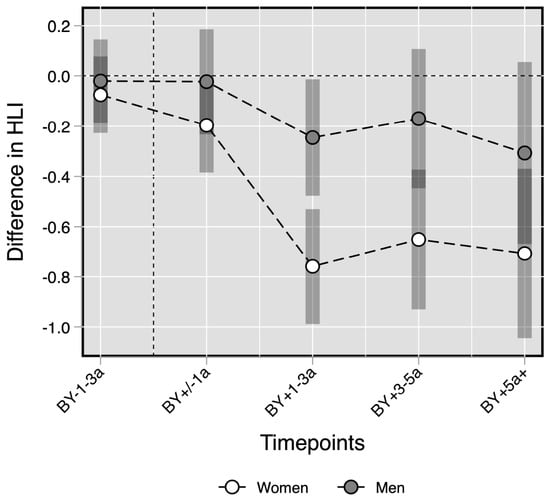
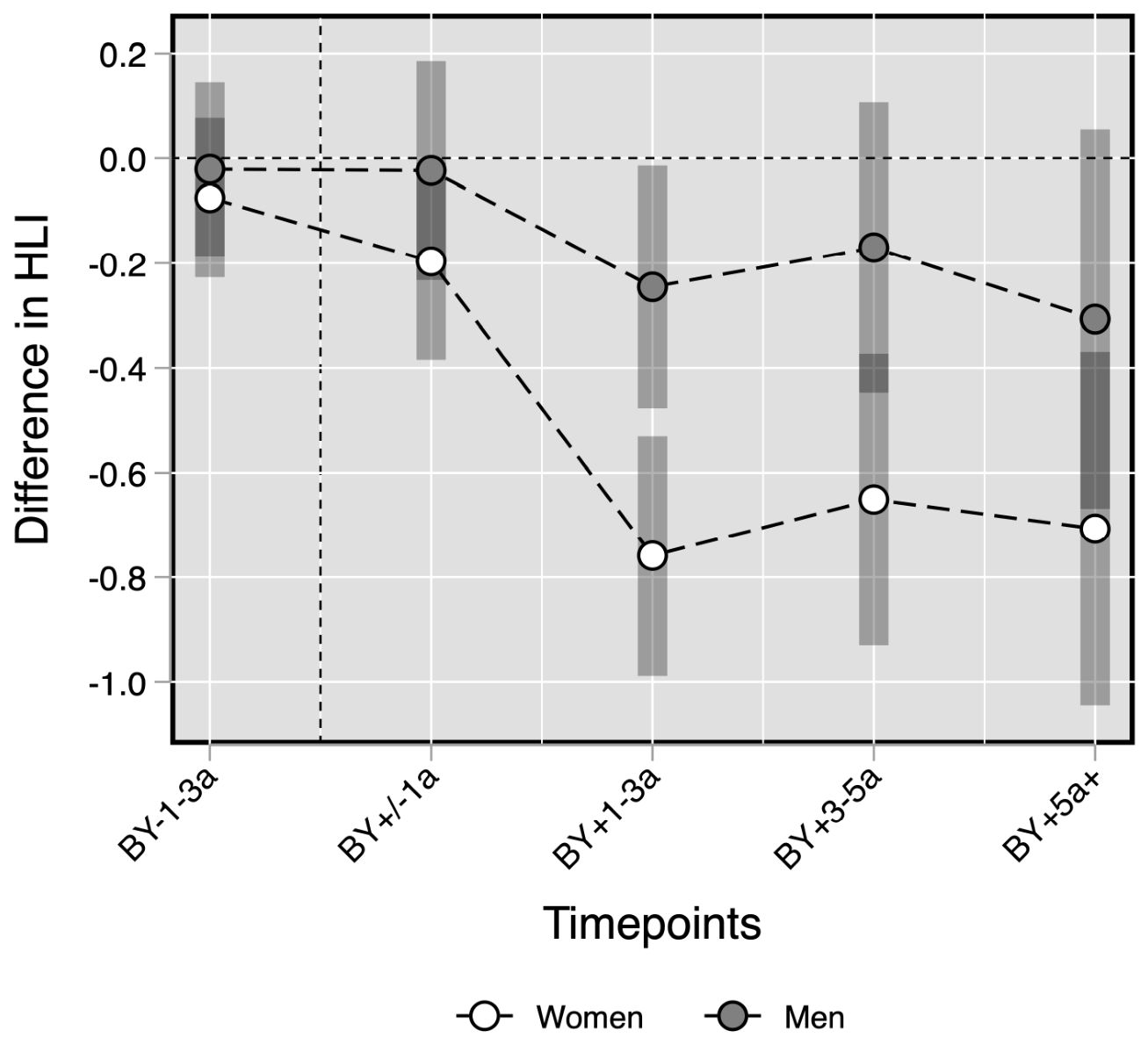
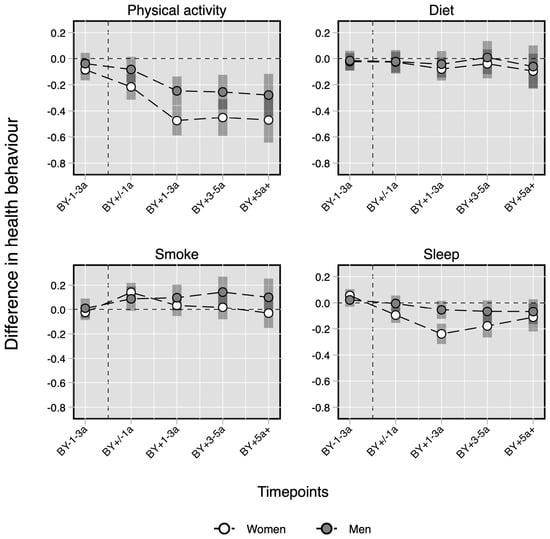
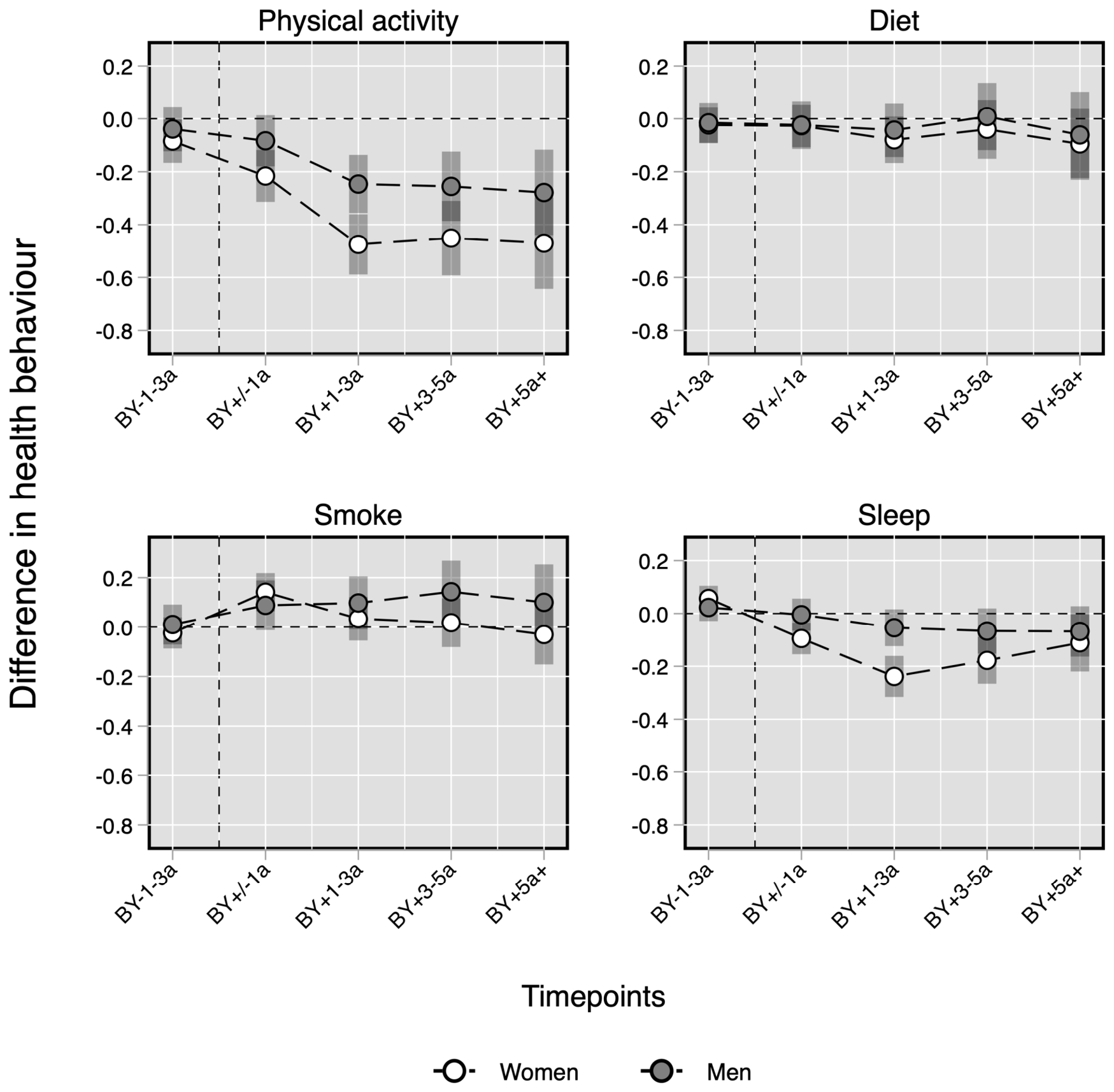

Disclaimer/Publisher’s Note: The statements, opinions and data contained in all publications are solely those of the individual author(s) and contributor(s) and not of MDPI and/or the editor(s). MDPI and/or the editor(s) disclaim responsibility for any injury to people or property resulting from any ideas, methods, instructions or products referred to in the content. |
© 2026 by the authors. Licensee MDPI, Basel, Switzerland. This article is an open access article distributed under the terms and conditions of the Creative Commons Attribution (CC BY) license.