Article

Health of Family Members of Road Transport Workers: Evaluation of Perceived Stress and Family Effectiveness


by
Fernanda Lise
1,2,*,
Mona Shattell
3,
Raquel Pötter Garcia
4,
Wilson Teixeira de Ávila
1,
Flávia Lise Garcia
5 and
Eda Schwartz
1,6
1
Nursing Faculty, Federal University of Pelotas, Pelotas 96077-170, RS, Brazil
2
College of Health, Oregon State University, Corvallis, OR 97331, USA
3
College of Nursing, University of Central Florida, Orlando, FL 32826, USA
4
Anthropology Faculty, Federal University of Pelotas, Pelotas 96010-610, RS, Brazil
5
Nursing Faculty, Federal University of Pampa, Uruguaiana 96413-170, RS, Brazil
6
Nursing Faculty, Federal University of Rio Grande, Rio Grande 90040-060, RS, Brazil
*
Author to whom correspondence should be addressed.
Int. J. Environ. Res. Public Health 2024, 21(10), 1315; https://doi.org/10.3390/ijerph21101315

Submission received: 28 July 2024 / Revised: 9 September 2024 / Accepted: 23 September 2024 / Published: 2 October 2024

Abstract

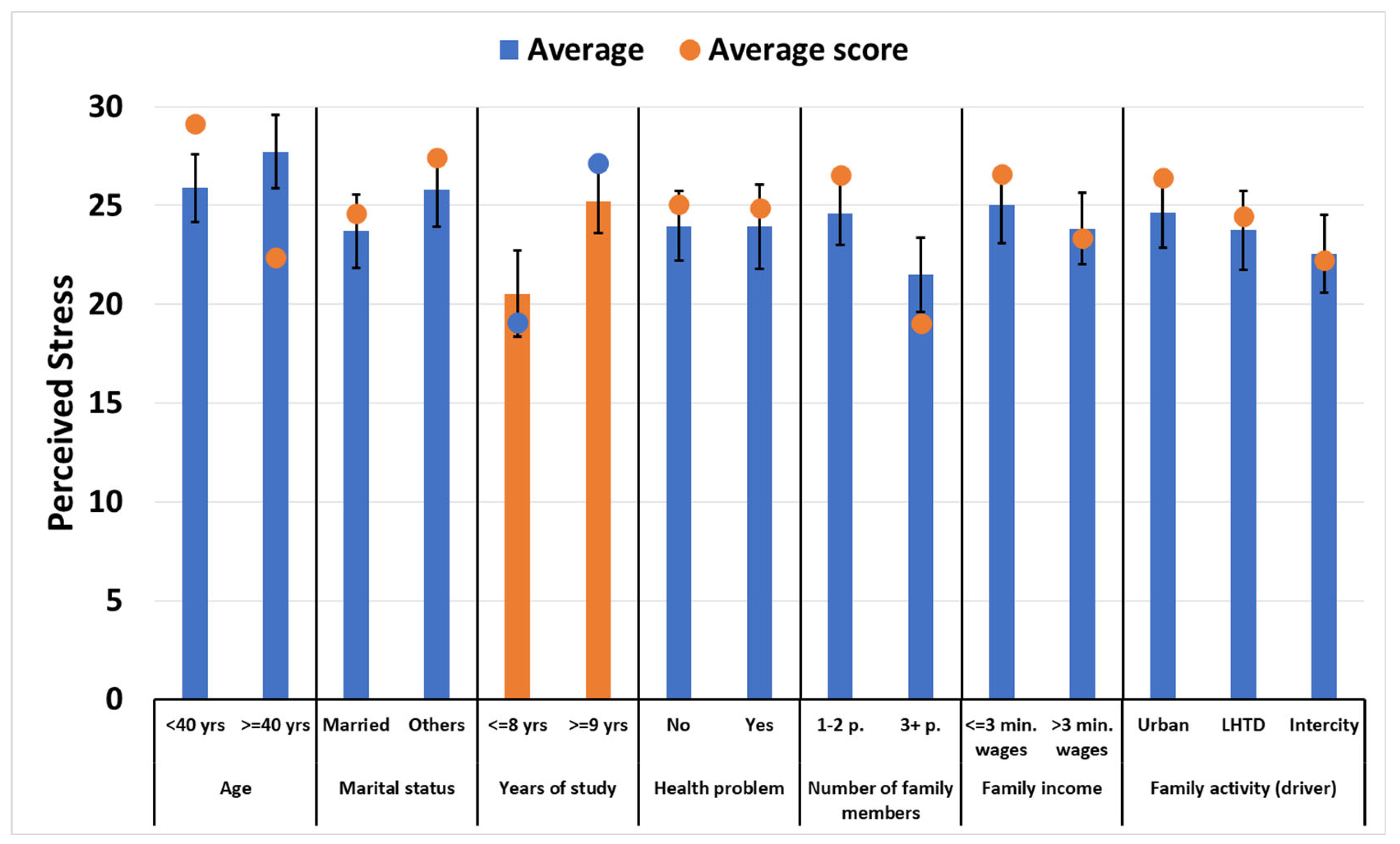
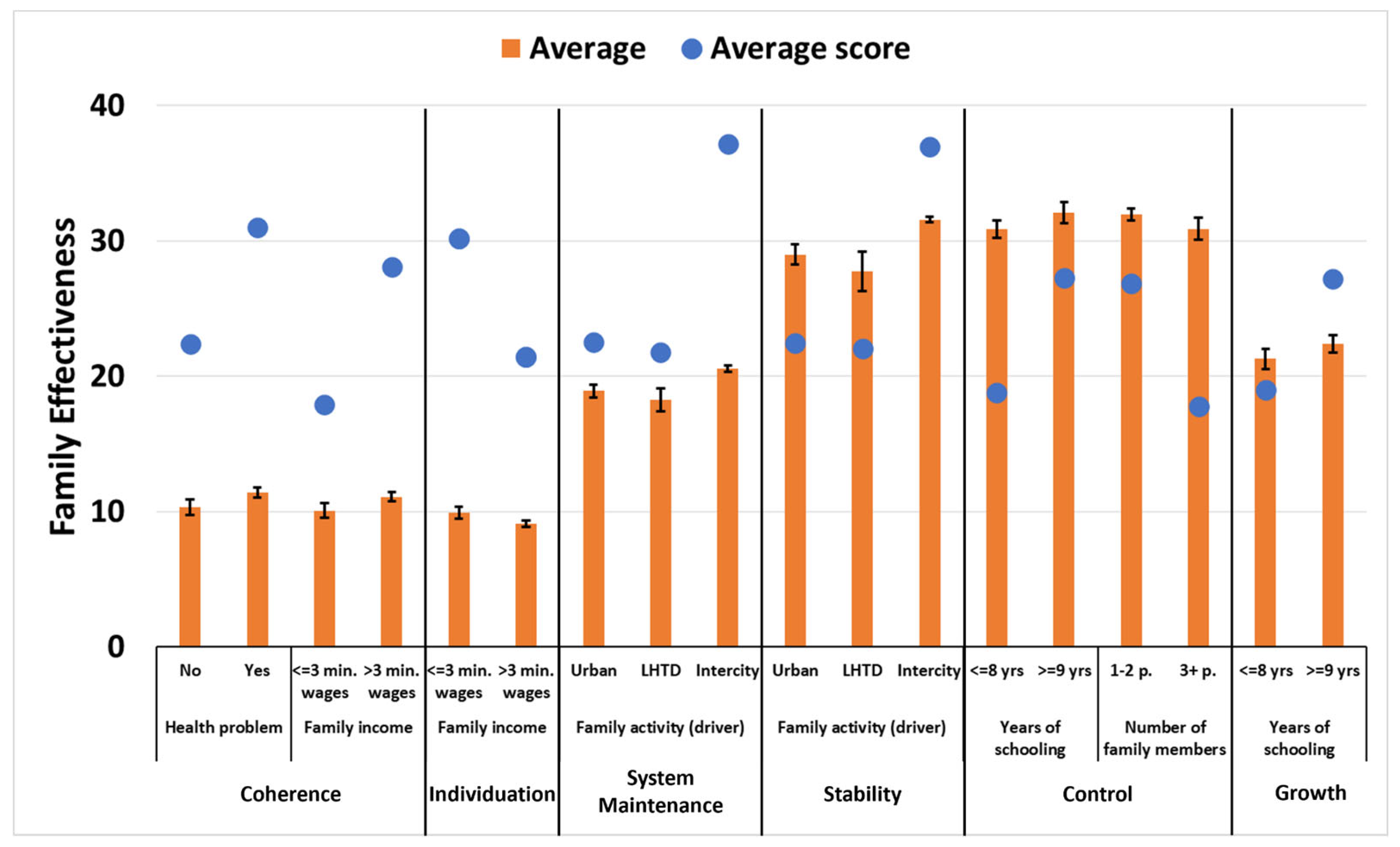
The health of road transport workers is affected by working conditions and life. However, there is a lack of studies on the level of stress and health of the families of these workers. This study aimed to evaluate the perceived stress level and family effectiveness of family members of road transport workers. A quantitative study was carried out with the family members of road transport workers in the southern region of Brazil. For data collection, a sociodemographic form, the Perceived Stress Scale (PSS), and the Evaluation of Family Effectiveness Strategies were used. The data were analyzed by simple frequency, Spearman correlation coefficient (ρ) (p < 0.05), and descriptive analysis from the perspective of Systemic Organization. The sample was composed of 49 family members of road transport workers. Perceived stress was higher in family members who had more than nine years of education (p = 0.0403). Family members who scored higher in Family Effectiveness scored high on the targets of Control (p = 0.0353) (Control aims to reduce anxiety and prevent and eliminate events that threaten family stability) and Growth (p = 0.0360) (represented by attitudes that promote new roles in response to critical situations experienced by families, which require re-adaptation processes and adjustments). The Control target was significant (p = 0.0353) in families that had more than three people. The Coherence dimension (concerning self-esteem, body image, personal identity, self-confidence, and sexual identity) presented positive significance (p = 0.0244) in families with health problems and whose income was less than USD 792.00 per month (p = 0.0072). The Individuation dimension (including functions and responsibilities, where talents are reinforced, as well as initiatives that allow for the incorporation of knowledge to assume behaviors against personal/family and environmental pressures), was significant (p = 0.0138) in families with incomes over USD 792.00. The Maintenance System (strategies for decision-making, problem negotiation, ritual and traditional roles, communication patterns, standards, financial management, and approaches to maintaining family harmony) presented positive significance (p = 0.0151) in families where drivers worked as intercity drivers, as did the Stability target (p = 0.0196) (concerning the continuity of routines, structure, organization, traditions, and values assumed by the family and transmitted from generation to generation, which promote unity and the development of values, attitudes, and beliefs). In conclusion, social factors, such as education, income, diseases, type of worker activity in road transport, and number of people in the family, influenced perceived stress and family effectiveness, which demonstrates the need to increase the promotion of health care for the families of road transport workers.
Keywords: family health; health promotion; nursing; public health; systemic organization; stress; road transport workers; truckers family health; health promotion; nursing; public health; systemic organization; stress; road transport workers; truckers