


Abstract
Targeted work readiness training is an important approach to help people living with HIV (PLHIV) to overcome their unique barriers to work, while addressing social determinants of health needs. This study assesses the psychosocial impacts of a work readiness training and internship program among HIV peer workers in New York City. From 2014 through 2018, 137 PLHIV completed the training program, and 55 individuals completed both the training and the six-month peer internship. Depression, HIV internalized stigma, self-esteem, HIV medication adherence, patient self-advocacy, and safer sex communication apprehension were used as outcome measures. Paired t-tests were performed to determine if significant score changes occurred at the individual level before and after each training. Our results show that participating in the peer worker training program significantly decreased depression and internalized HIV stigma, and significantly increased self-esteem, medication adherence, and patient self-advocacy. The study underscores that peer worker training programs are important tools to improve not only the work readiness of PLHIV, but also psychosocial and health outcomes. Implications for HIV service providers and stakeholders are discussed.
1. Introduction
Due to medical advancements, an HIV diagnosis has changed from a terminal illness to a chronic illness and emergent disability [1,2]. Despite medical conditions, people living with HIV (PLHIV) often experience various social and economic challenges, such as poverty, discrimination, unstable housing, and unemployment/underemployment. These social, economic, and political systems that can impact individual health risks and outcomes are defined as social determinants of health (SDH) [3]. SDH can also be referred to as upstream determinants of health, or can be more proximal indicators such as geographic areas, socioeconomic status, education, access to healthcare, and employment status. A SDH framework has been adopted by the United States Centers for Disease Control and Prevention in addressing health-related disparities [4]. PLHIV have fewer health-related barriers to work than ever before, yet the employment rate among PLHIV in 2019 was estimated at 48.6%, compared to 63.1% in the general population [5,6]. Peer intervention (or peer education) has been identified as an effective approach in various fields, such as mental health, substance abuse, and HIV care [7,8]. Peer workers play an important role in HIV prevention and treatment. Participating in HIV peer worker training not only facilitates vocational development, but also enhances their psychosocial and health-related behaviors. Nevertheless, outcomes related to HIV peer worker training have not yet been studied [8,9].
1.1. HIV Peer Intervention and Peer Worker Training
Peer workers (or peer providers, peer specialists, peer educators) are those who have lived experiences and who work in the healthcare or social service industries [8,10]. Peer workers share similar demographic characteristics (gender, age, race/ethnicity), lived experiences (i.e., men who have sex with men, injection drug use, commercial sex work), health conditions (HIV, diabetes, obesity, mental illness, alcohol and other substance use) and/or community memberships with their clients [8,10]. Peer workers can access communities in different ways than medical and behavioral health professionals; sometimes they are the only people with an ability to gain entry to a community, such as sex workers. Peer workers influence individuals in a unique way, as they have experienced similar challenges and life experiences as a client/patient themselves [11]. Peer interventions have been incorporated into HIV treatment and prevention programs since the inception of the HIV epidemic [9]. HIV peer workers provide a variety of services including health education, psychosocial support, harm reduction, community outreach, navigation to medical appointments, and treatment adherence [12]. Simoni et al. conducted a systemic review of 117 studies of the efficacy of HIV peer intervention and identified positive outcomes, including increased HIV knowledge, decreased sex risk behaviors, and decreased substance use [9]. Other systemic review studies also indicated that peer intervention lead to decreased HIV-related stigma, increased HIV testing rates, medication adherence, retention in care, self-efficacy, and quality of life [13,14].
Over the past two decades, peer interventions have become more structured and the roles of peer workers have become more formalized. State and national certifications have been created. Starting in 2007, states with peer certification processes could bill Medicaid for peer delivered behavioral health services and, in 2014, states could bill for health and wellness services [15]. As a result of the 2015 New York State’s Blueprint for Ending the Epidemic by 2020, a New York State (NYS) peer worker certification was created [16,17]. The purpose of the certification is to professionalize HIV peer work, to increase work opportunities for PLHIV, and to expand the utilization of a professional peer workforce to help achieve the state’s goals of improving linkage and retention in care, increasing rates of viral suppression, and preventing new infections [16]. The process of becoming a peer worker also facilitates work-related skills development and provides work experiences for PLHIV. Research identified that the training of peer workers enables them to obtain competitive employment in the community. Effective peer worker training also enhances program sustainability, as it ensures quality services provided by peer workers [18]. There has been research on the impacts of peer intervention on PLHIV, but limited research focusing on HIV peer workers.
1.2. Employment as a Social Determinant of Health
Employment has been recognized as an important social determinant of health, which has significant associations on the health and wellness of PLHIV. Employment impacts a variety of factors related to financial and life stability, including earned income, access to healthcare, access to housing, and social connectedness; these factors directly or indirectly influence individuals’ health, wellbeing, and quality of life. Maulsby et al. conducted a scoping review study on employment and HIV and found that employment status is associated with HIV continuum of care outcomes, including HIV testing, linkage-to-care, retention-in-care, and medication adherence [19]. Studies have found that employed PLHIV have a higher quality of life than those who are unemployed, even after controlling for CD4 and viral load [20,21,22]. Employed PLHIV have significantly better health and prevention outcomes, such as increased CD4 counts, perceived health and psychological well-being, memory skills, and medication adherence [23,24,25,26,27,28].
Meanwhile, individuals who have undesirable employment outcomes (job loss and underemployment) often experience negative prevention and health outcomes, such as an increased risk for drug and alcohol use, and developing psychological problems. The quality of employment (job security, salaries, and job demands, control, and support) also has an impact on the physical and mental well-being of PLHIV [29]. For example, Reuda et al. found that those who had higher levels of job security reported better mental health outcomes among men living with HIV [30]. Nevertheless, individuals who had high psychological demand and unstable jobs experienced similar depression and quality of life outcomes as the unemployed individuals. Research also identified some predictors of desirable employment outcomes among PLHIV, including demographic characteristics, education, health status, beliefs, and psychosocial factors [19]. Studies show that PLHIV who have poorer HIV health outcomes (CD4 count, viral load, HCV co-infection) and lower mental health functioning are less likely to be employed [21,31]. However, HIV health status is not the only barrier preventing PLHIV from returning to work; other barriers to employment include loss of benefits, reduced housing subsidies, adequate health insurance, stigma, substance use, out-of-date job skills, and large gaps in employment history [32,33,34].
Goldblum and Kohlenberg developed the client-focused considering work model, which is the first model to conceptualize factors and processes associated with considering the work of PLHIV [35]. Conyers revised the model to apply to all individuals with emerging or episodic illnesses [36]. This model integrates the transtheoretical model of change (stages of change model) to address different phases of considering work status: contemplation, preparation, action, or resolution [37]. According to the model, individuals go through these four phases of considering work [35]. The model emphasizes the importance of weighing the impacts of returning to work on the medical, psychosocial, financial/legal, and vocational domains of influence as individuals work through the phases [35]. The model stresses that the decision to work is made by the client; choosing not to work does not suggest failure. For some PLHIV, employment may not be the appropriate outcome and therefore, capturing the impact on employment mediators is critical to assessing program effectiveness. To increase federal and state funding for vocational interventions for PLHIV, and to decrease the large unemployment rates amongst PLHIV, HIV service organizations need to evaluate and publish their vocational development interventions, including peer worker training and peer internship programs.
1.3. Vocational Development and Intervention for People Living with HIV
Vocational development and intervention programs are aimed at helping people re-enter or enter the workforce through structurally based techniques. Conyers and Boomer examined the relationship between the receipt of vocational rehabilitation services and health and prevention outcomes for PLHIV [38]. The study found that receiving vocational rehabilitation services was associated with better health outcomes and lower risky transmission behaviors. Unfortunately, research has also found that PLHIV severely underutilize services from state VR systems [39,40,41]. In 2009, Jung and Bellini found that PLHIV were four to six times less likely to access VR services [40]. One of the possible reasons of the underutilization of VR services is because PLHIV feel more comfortable receiving services at HIV service organizations [42]. HIV-related stigma and use of disability benefits also influence use of VR service among PLHIV. In a mixed-method study, participants not receiving social security benefits (SSI) or social security disability benefits (SSDI) discussed how the anticipated stigma of being a benefits recipient would prevent them from entering the workforce. Nevertheless, those who have received SSI or SSDI experienced the perceived stigma of receiving benefits and expressed anxiety related to losing their benefits when returning to work [43].
Since the introduction of highly active antiretroviral therapy (HAART), a variety of evaluation articles on US-based vocational development programs for PLHIV have been published [42,43,44,45,46,47,48,49,50,51]. The interventions were based on various theoretical frameworks and aim to help PLHIV obtain part-time or full-time employment, as well as assist them with return-to-work efforts such as volunteering, job training, and education. These vocational development programs provided a range of services, including vocational assessments, assistance with the development of employment goals, assistance with job search, resume writing, and interview techniques [42,43,44,45,46,47,48,49,50,51]. HIV peer worker training applies the structured work readiness approach which aims at preparing individuals for the unique challenges of work associated with living with HIV. Work readiness programs often address HIV and disability legal rights, benefits counseling, assistance towards appropriate disclosure, stigma, managing medications and appointments while working, safer sex, nutrition, and patient-physician communication [45,46,47,48,49]. In addition, some programs discussed managing mental health and disabilities and some included sessions aimed at soft skills, such as time management and communication skills [45,47,48,49]. Many vocational development programs utilized supported employment, also known as the place-and-train model [52,53]. These programs aimed to place their participants into competitive employment as soon as possible and provide on-the-job support [50,54,55,56]. Targeted work readiness programs are an important approach to help PLHIV overcome their unique barriers to work, such as the psychosocial impact of years of unemployment/no work experience, adjusting to independence from entitlements, navigating disclosure, confidentiality, properly using leave time, and negotiating reasonable accommodations [52,53]. HIV peer worker training is a unique vocational training model that helps PLHIV gain knowledge and experience to become peer workers, while addressing their unique challenges. To date, there is limited research on this model.
In program development and evaluation, mediators are the variables a program aims to directly impact, which in turn influence the program’s overall projected outcomes [57,58,59]. In the example of vocational development programs for PLHIV, mediators are the various psychological (i.e., self-esteem, self-efficacy, stigma) and job readiness skills (i.e., job seeking skills, soft skills, problem-solving ability) that are assumed to impact whether someone can search, obtain, and sustain employment. The lack of assessment of important employment mediators in vocational development interventions is a large gap in the HIV employment literature. These mediators were components of many of the above programs but were only assessed in three of the interventions [46,47,49]. Vocational development programs need to be examined with a wider lens, enabling a better understanding of how they are shaping PLHIV, as well as if they are helping PLHIV get back to work.
To this end, our research question was: were there any significant changes in participants’ psychosocial outcomes (depression, internalized HIV stigma, self-esteem) and health-related behavioral outcomes (medication adherence, patient self-advocacy, safer sex communication apprehension) between baseline, targeted work readiness peer worker training program completion, and peer internship completion. The authors aimed to understand not only the impact of the peer worker training program, but also the additive effects of participating in both the peer worker training program and the peer internship.
2. Methods
This study involved a retrospective secondary data analysis of an evaluation conducted between 2014 and 2018 of a work readiness HIV peer worker training and peer internship program. The purpose of the study was to examine the psychosocial and health related behavioral outcomes among 259 individuals living with HIV that participated in the peer worker training program. This was the first longitudinal evaluation efforts of this peer worker training program.
2.1. Peer Worker Training Program
This New York City-based peer worker was a comprehensive eight-week training that took place three days a week from 10 am to 4 pm. Training. The training evaluated in this paper was developed by Alliance for Positive Change in the mid-1990s as a foundational peer worker training and later used to help prepare individuals to take state recognized certificate peer trainings, such as NYS HIV peer certification training. The training was called: Peer Recovery Education Program, PREP, and will be entering its 60th cycle of training in 2023. To qualify for the training, individuals must have been diagnosed with HIV, at-risk for HIV, or had close relationships with PLHIV. HIV-positive participants were required to adhere to their HIV medications, compliant with primary care physician appointments, stably housed, and in recovery from drugs and alcohol for at least nine months. The training program focused on work readiness skills necessary to become health educators and patient navigators. Participants learned HIV service skills such as prevention education, presentation skills, treatment techniques, medical advocacy, and outreach and counseling techniques. Participants received training in HIV-related knowledge and its common co-infections, Hepatitis C, STIs, safer sex, substance use, and harm reduction. Participants also learned self-management skills related to, and unrelated to their HIV, such as medication adherence, safer sex skills, medical advocacy, communication skills, and stress management. The following soft skills were learned and applied: getting to work on time, following a set schedule, speaking in a group, getting along with others, and dressing appropriately. Each training cohort involved 25–40 trainees. Lastly, individuals were mandated to participate in weekly support groups.
2.2. Peer Internship Program
After completing the peer worker training, participants were eligible to apply to enter the peer internship program. The peer internship program functioned in six-month cycles, starting each January and July, and employed approximately 125–150 peer interns at any given time. Interns received an internship placement within the agency and participated in mentor guidance and weekly peer support groups. Participants gained work experience and applied skills learned in their foundational training course. Peers were involved in various direct and indirect HIV service positions, such as medical navigation, food and nutrition services, counseling and testing services, and education and support group facilitation. Depending on the peer placement and the type of public benefits received, a peer worked 10–20 hours a week and earned $15 per hour, up to $1300 each month. Approximately ten agency-trained participants and five other agency-trained participants were hired each cycle. New hires were based on current program needs and available positions. This work met the internship requirements for the New York State HIV peer worker certification.
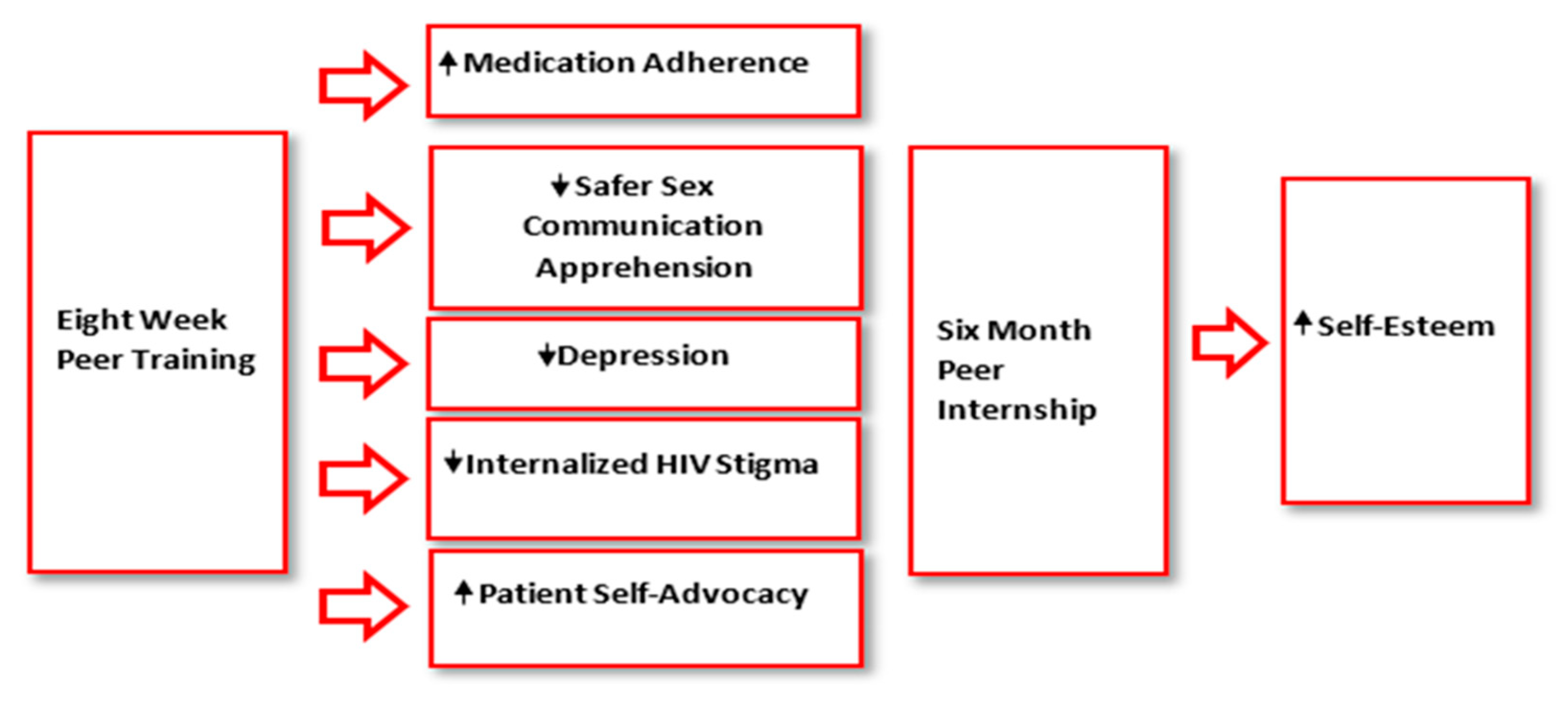
The training curriculum provided participants with self-management skills and experiences aimed at impacting specific types of self-esteem. Morris Rosenberg, the author of the most widely used scale to assess self-esteem (Rosenberg’s Self-Esteem Scale) believes that there are two types of self-esteem: global self-esteem or how a person feels about themselves overall, and specific self-esteem, how someone appraises a specific part of themselves [56]. The program curriculum targets specific self-esteems related to patient self-advocacy, safer sex communication, medication adherence, and internalized HIV stigma. It is assumed that a combination of work experience and raising specific levels of self-esteem would ultimately raise a person’s global self-esteem. The peer worker training program tools and various support mechanisms helped peers gain new skills, as well as feel better about themselves. Figure 1 displays the predicted paths of psychosocial change according to the program’s conceptual model.
Figure 1.
Paths of psychosocial change.
2.3. Procedures
From September 2014 through December 2018, nine cohorts of training participants were followed through the end of their six-month internship. This study evaluated survey results from participants living with HIV. To meet the eligibility criteria, individuals had to be medically adherent, stably housed, and in recovery for at least nine months for the peer worker training program and twelve months for internship. Through an application and interview process, staff at the agency decided who would become part of the peer worker training program and who would continue as a paid peer intern. People who did not reach program milestones (completion of the training program and 6 months of internship) were not followed. The study was part of an ongoing program evaluation of an agency’s peer worker training and peer internship program. A secondary dataset was used. The inventories selected for the agency’s peer psychosocial and health survey were grounded in the program’s logic model. A description of the survey inventories is provided below. Study participants took part in the peer psychosocial and health survey at three different time points: Time 1) baseline (first day of peer worker training); Time 2) training completion (final day of training); and Time 3) peer internship (sixth month of their peer internship). Informed consent was provided with each survey. Participants were informed that the survey would be utilized to evaluate the training and peer program. Participants entered and completed the peer worker training program and internship at different time points. Specific numbers for each cohort is listed in Table 1.
Table 1.
Participants by cohort and survey completion (N = 259).
2.4. Participants
A total of 259 individuals completed a baseline survey. A total of 67 individuals completed a baseline survey only (baseline only group), 137 completed a baseline and training follow-up survey (training group), and 55 individuals completed a baseline, training follow-up, and internship follow-up survey (internship group). Table 1 displays participants by cohort and survey completion.
2.5. Measures
The following domains were measured in this study: (1) sociodemographic characteristics (i.e., age, gender, sexual identity, race/ethnicity, education); (2) time since any form of employment; (3) HIV/AIDS status and health indicators (disease stage, years with diagnosis, self-reported HIV viral load and CD4 count, self-assessment of current health, and number of chronic conditions); (4) public benefits received (housing, cash, food, and medical); (5) psychosocial outcomes (depression, HIV internalized stigma, self-esteem); and (6) health-related behavioral outcomes (medication adherence, patient self-advocacy, and safer sex communication apprehension). The psychosocial outcomes measured were informed by the program’s logic model and specific inventories were identified from the literature; inventory descriptions are found below.
Depression. Two inventories were utilized to measure depression during the data collection period, the Beck’s Depression Inventory was utilized from September 2014 through May 2015 (cohorts 1 and 2) and the Patient Health Questionnaire (PHQ-9) from July 2015 through December 2018 (cohorts 3 through 9) [60]. The research team changed depression inventories in July 2015 in order to shorten the length of the peer health and psychological survey. Both measures have been widely used among HIV populations. The PHQ assesses eight DSM-IV diagnoses, and the PHQ-9 encompasses the nine depression questions [60,61]. The PHQ-9 scores range from 0 to 27. Participants are asked how often they experience specific DSM-IV depression symptoms, responses are “not at all”, “several days”, “more than half the days”, and “nearly every day”.
The Beck’s Depression Inventory (BDI) was used with cohorts one and two; it is a 21-item inventory that measures symptoms and attitudes of depression [61]. Individuals rate items from 0 to 3 and scores range from 0 to 66. The inventory was not used during Time 3 because depression was measured by the PHQ-9.
Internalized HIV Stigma. Internalized HIV stigma refers to negative self-perception of self-image because of one’s HIV status [62]. The Internalized Stigma of HIV/AIDS Tool (ISAT) was used to measure internalized HIV stigma [63]. It is a 10-item scale concerning statements related to HIV/AIDS internalized stigma; participants rated the items on a five-point scale, scores range from 5 to 50.
Self-esteem. Rosenberg’s Self-Esteem Scale is a 10-question measure used widely for people living with HIV [64]. The inventory measures someone’s global self-esteem and uses a four-point Likert scale (1 = strongly disagree, 4 = strongly agree); scores range from 1 to 40. The inventory is widely used among people living with HIV.
HIV Medication Adherence. The AIDS Clinical Trials Group (ACTG) adherence questionnaire is widely used inventory for measuring the adherence of HIV medications [65]. It is a five-item scale assessing: (1) the number of doses missed in the past four days, (2) how closely someone follows specific HIV medication schedules, (3) how closely someone follows specific medication instructions (i.e., must take with food), (4) the last time someone skipped medication, and (5) whether any medications were missed during the last weekend. This study utilized an analysis method described in Reynolds et al., whereby the weekend question is excluded [65]. The researchers created a formula and adherence index normed between 0 and 100, where each question has a different value. For example, missing medication yesterday is a larger part of your score than missing medication four days ago. The inventory’s reliability could not be assessed because each question is not on the same scale.
Safer sex communication apprehension. Safer sex communication apprehension was measured by the safer sex communication apprehension subscale in Elizabeth Babin’s General Sexual Communication Apprehension scale [66]. The subscale contains five statements that are rated on a six-point Likert scale, scores range from 5 to 30.
Patient Self-Advocacy. The Patient Self-advocacy Scale is a 12-item inventory that measures the involvement of people in their healthcare decision making [67]. The inventory uses a five-point Likert scale, scores range from 5 to 60. The scale is widely used within studies involving PLHIV.
Cronbach’s alpha is used to assess internal consistency for each group at Time 1, Time 2, and Time 3 (Table 2).
Table 2.
Internal consistency for each measure.
2.6. Statistical Analysis
Chi-square (p < 0.05) and ANOVA tests (p < 0.05) were used to determine group differences at baseline between those who completed: (1) the baseline only survey, (2) the baseline and training completion survey, and (3) the baseline, training completion, and internship follow-up surveys. Paired t-tests were performed to determine if significant score changes occurred at the individual level between surveys. Independent t-tests were used to assess individual inventory changes at training completion among those who participated in six-months of peer internship and those who did not. Without a control comparison group, paired t-tests were chosen as the most appropriate statistical methodology to help to evaluate results at the individual level before and after each measured programmatic time point.
3. Results
3.1. Sociodemographic, Health, and Job History of Program Participants
Table 3 describes the sociodemographic, health, and job histories of program participants at baseline. We reported the complete survey data only as some participants did not complete the entire survey. At baseline, the average age for all participants was 44.6, and 56.37% of participants identified as male, 37.45% female, and 6.18% as transgender. There were 51.8% of participants who identified as heterosexual/straight and 48.19% as LGBTQ. There were 83.14% of participants who had at least a high school education. In total, 94.51% of participants were persons of color, with the majority being Black/African American (61.57%). Chi-squared tests of independence were calculated to compare demographic characteristics by level of program completion. A significant association was not found for gender, age, education level, or sexual identity, but was found for race. Hispanics were more likely to be part of the internship group (30.91%), as compared to the training group (17.65%) and baseline only group (21.57%). Blacks were more likely to be part of the baseline only (60.94%) and training group (68.38%) than the internship group (45.45%). Mixed race/ethnicity participants were more likely to be part of the internship group (18.18%) than the training group (11.03%) or baseline only group (6.25%). White participants were most likely to be in the baseline only group (10.94%) than the training group (2.94%) or internship group (5.45%).
Table 3.
Baseline sociodemographic characteristics of participants.
At baseline, the majority of participants’ viral loads were undetectable (83.81%) and they were without an AIDS diagnosis (64.57%). Over half were living with HIV for over 15 years (50.6%) and 19.68% for 5 or less years. Most rated their health as good or better (90.22%) and 37.74% were living with two or more other chronic conditions. Many had a mental health diagnosis (46.12%) and/or a substance abuse history (54.86%). According to the participants, 59.8% had last had a job in the past 5 years. Most were receiving medical benefits (85.27%), housing benefits (71.32%), and cash assistance (78.76%). Chi-squared tests of independence were calculated to compare health characteristics and job histories by level of program completion. Overall, participants in each group were similar demographically, similar in their physical and mental health, and had similar work experiences. A significant association was found for a number of chronic conditions. No other significant differences were observed.
3.2. Psychosocial Inventories at Baseline
A one-way between subject ANOVA was conducted to assess if at Time 1 (baseline) there was a statistical difference in psychosocial inventory means between individuals who completed the baseline only survey, the baseline and training completion survey, and those who completed all three. As displayed in Table 4, there was not a significant difference for any of the inventories at the p < 0.05 level.
Table 4.
Psychosocial inventories at baseline by level of program completion.
3.3. Psychosocial and Health-Related Behavioral Outcome Inventories at Training Completion
A paired-samples t-test was conducted to compare each psychosocial inventory by individual at Time 1 (baseline) and at Time 2 (training completion). Table 5 displays paired t-test results for the full group. At the p < 0.05 level, there was a significant score decrease in depression (PHQ-9) and HIV internalized stigma and a significant score increase in self-esteem, patient advocacy, and medication adherence between Time 1 and Time 2. There was no significant difference for the Beck’s Depression Inventory. Safer sex communication apprehension had no significant score changes.
Table 5.
Change in psychosocial inventories for individuals who completed the PREP training, paired t-test.
Table 6 displays the mean inventory scores and the p-value for the paired t-test sorted by level of program participation. Change in the health-related behavioral outcome inventories at the p < 0.05 level differed by those who completed six months of peer internship and those who did not. There was no significant score change in the health-related behavioral outcome inventories for the non-internship participants, but there was a significant score increase at the p < 0.05 level for patient advocacy and HIV medication adherence and a significant score decrease on the safer sex communication apprehension inventory for those who completed six months of a peer internship. Independent t-tests comparing the mean score changes for the training-only participants and the internship and training participants was also conducted. The mean difference for the health-related behavioral outcome inventories differed significantly at the p < 0.05 level for those who completed six months of peer internship and those who did not.
Table 6.
Change in psychosocial inventories scores from baseline to training completion, by level of program participation.
3.4. Psychosocial Inventories for Peer Internship Participants
Internship participants completed surveys at all three time points, Time 1 (baseline), Time 2 (training completion), and Time 3 (6-months of peer internship). Table 7 displays changes in psychosocial inventories between Times 1 and 2; Times 2 and 3; and Times 1 and 3. The behavioral psychosocial inventory for safer sex communication apprehension had a significant score decrease between Times 1 and 2, and Times 1 and 3, but not between Times 2 and 3. Patient self-advocacy had a significant score increase between Times 1 and 2, and 1 and 3, but not between Times 2 and 3. The medication adherence score significantly increased between Times 1 and 2 only. The depression (PHQ-9) and HIV internalized stigma psychosocial inventory scores significantly decreased between Times 1 and 2, and 1 and 3, but not between Times 2 and 3. The self-esteem score significantly increased between Times 1 and 3 only. There was no significant difference for the Beck’s Depression Inventory during any time periods.
Table 7.
Change in psychosocial inventories for internship participants.
4. Discussion
The current study evaluated outcomes among participants in an HIV peer worker training and paid internship program. Results demonstrated positive psychosocial and health-related behavioral outcomes after completing the peer worker training program; these changes were maintained throughout the six-month internship program. We discuss each program outcome, its association with employment, and relevant implications for practitioners and researchers.
4.1. Psychosocial Outcomes of Peer Worker Training
At the beginning of the study, over 40% of the participants reported at least five years of unemployment and many entered the program struggling with their mental health, trauma, and internalized HIV stigma. This is consistent with past studies indicating that depression and HIV stigma are associated with unemployment among PLHIV [33,34,68,69,70].
Depression was significantly decreased in PHQ-9 scores after completing the training program and the internship program. However, there was no significant difference in the BDI scores. Titov et al. compared the psychometrics properties of PHQ-9 and BDI and concluded that BDI captured a greater proportion of individuals with severe depression, compared to PHQ-9 [71]. Therefore, it is possible that the participants in our study had less severe depression and were not captured by BDI. Previous studies also identified an association with employment and decreased depression. Ware found that employment is a protective factor for depression among men living with HIV [72]. Social support has been found as a positive impact on mental health functioning among PLHIV. Participants not only received skills training and support groups during the peer worker training program, but they also formed new peer relationships which increased their social interaction, sense of belonging, and mental health. The quality of employment also has an impact on depression among PLHIV [30]. One study demonstrated that employed PLHIV who had experienced adverse psychosocial work experiences, had similar rates of depression as unemployed individuals [30]. Practitioners may assess individuals’ job security and quality of employment to further understand the impact on their emotional responses. Mental health status is an important HIV prevention and treatment outcome indicator, which has been proven to be connected with health risk behaviors, medication adherence, and retention in care [73]. More research is needed to explore the associations between work and mental health among PLHIV.
Internalized HIV stigma, HIV stigma and discrimination are prevalent among PLHIV [74]. Lightner et al. assessed internalized HIV stigma among PLHIV and found that greater internalized stigma is associated with higher levels of perceived employment barriers [75]. Internalized HIV stigma has been found to be associated with poor physical and mental health, lower levels of quality of life, and poor medication adherence. PLHIV who have experienced internalized stigma are less likely to return to work due to fear, trauma, or expectations of future repercussions from others [62]. Our study showed that internalized HIV stigma was significantly decreased after the training program and the internship. In concordance with this finding, previous research has shown that unemployment and underemployment are both associated with disability internalized stigma, and participation in workforce development activities help reduce internalized stigma [76].
Conyers and Boomer examined the role of vocational rehabilitation (VR) access on the goals and objectives of the National HIV/AIDS Strategy and identified that reduced HIV stigma is a key mediator to accessing VR services [38]. Specifically, they found that job confidence had a direct effect on reduced stigma and an indirect effect on use of VR service. HIV-related stigma reduction interventions for PLHIV, community, and employers would be an important strategy to improve employment outcomes for PLHIV [75]. Some programs offered stigma reduction training, but they were not universally utilized and were not specifically designed for the unique needs of PLHIV. It is recommended that job readiness programs should have components that address internalized HIV stigma.
Self-esteem was significantly increased in the training-only group. While the peer internship group did not have a significant increase in self-esteem between baseline and training completion, this group did have a significant increase between baseline and internship completion. Escovitz and Donegan evaluated a vocational development program for PLHIV and found that program participation boosted participant’s satisfaction with life [51]. Hergenrather et al. found that participants in work readiness programs for PLHIV had significantly higher self-esteem post-intervention, whereas changes in depression were insignificant [47]. Rosenberg’s model charged that changes in specific self-esteem impact global self-esteem [64,77]. The program’s conceptual model assumed a person’s global self-esteem would be mediated through specific types of self-esteem (i.e., patient self-advocacy, safer sex communication, and medication adherence) during the training period and six-months of hands-on peer work experience. Silván-Ferrero found that a longer length of employment strengthens the relationship between perceived discrimination and self-esteem mediated by internalized stigma among people with mental illness [78]. Further mediation analysis related to self-esteem and internalized stigma with a larger sample size are needed to confirm this theory among peer workers.
4.2. Health-Related Behavioral Outcomes of Peer Worker Training
Medication adherence was significantly improved during the training program and maintained after six months of a peer internship. Criteria for entering the program include having an undetectable viral load, so the baseline medication adherence score among participants was already high (with an average of 88.9%). Therefore, most of the participants demonstrated a stable health status upon entering the program and, thus, it was anticipated that change would not be significant after the internship.
Previous research also demonstrated a positive impact of employment on medication adherence. In a meta-analysis of medication adherence and employment, Nachega et al. found that employed PLHIV had 27% higher odds of achieving medication adherence, compared to the unemployed PLHIV [79]. Meanwhile, PLHIV who were not working were less likely to engage in HIV treatment and adhere to medications [80]. Research also indicated that PLHIV who had greater medication adherence are more likely to achieve optimal treatment outcomes and higher levels of health-related quality of life [80]. This may be because individuals who are working have a routine schedule as well as a sense of responsibility.
Self-advocacy was defined in this study as the involvement of people in their healthcare decision making. Self-advocacy skills are important for PLHIV to gain autonomy and self-control in their treatment plan and health outcomes. Our results showed a significant increase in self-advocacy during the training program and are maintained after six months of a peer internship.
Group interventions have been widely used in facilitating self-advocacy skills. Daniels et al. found that role-play is an effective tool to build self-advocacy skills for PLHIV during their HIV treatment because it provides an opportunity for individuals to share their stories and healthcare experiences [81]. Education and client-centered counseling regarding HIV, HAART, and support services are also essential in building self-advocacy skills [82]. More research is needed on the impact of employment and workforce participation on self-advocacy.
Safer sex communication apprehension was significantly increased during the training program and maintained after six months of a peer internship. Safer sex communication related to use of condom, HIV status, sex partner’s HIV risk, and a partner’s reaction to proposing or using condoms. Bond et al. suggested that service providers can facilitate communication strategies that address the cultural norms that influence safer sex practices [83]. In a program outcome study on the effect of peer intervention on partner disclosure, among the participants who agreed to disclose HIV status to their partners, 92.7% of partners who were at risk of HIV transmission were tested, and 96.3% of partners who tested positive were linked to treatment [84]. At baseline, there were no health-related behavioral differences for those whose participation ended at the training and those who became peers. All three behavioral changes happened between baseline and training completion among those who completed both the training program and internship, and there was no significant change for non-internship participants. For people who went on to the internship program, they might have been more ready to work and apply those behavioral changes. Their behaviors could have maintained stable between training program and the internship and that could be the reason why there was no significant change between training completion and internship completion.
Overall, psychosocial changes were mostly associated with participants who continued onto the internship program. There are several possible explanations for this difference. A main purpose of the training was to prepare individuals for a peer internship. HIV service organizations have a long history of utilizing HIV peer workers. Their lived experiences can be advantageous in helping to create behavior change and social support for the individuals they reach through their peer-delivered work [10,12]. Peers in behavioral health settings were expected to “practice what they preach.” Participants who wanted to continue to an internship, may have internalized the behavioral messages of the program more than those who did not want to become an HIV peer worker. Future internship participants may have also been more ready to make the behavioral changes measured in the program. As displayed in Table 3, the psychosocial emotional inventories for internship participants moved in the hypothesized direction during each time point (even though statistical significance was only found for depression and HIV internalized stigma between baseline and training completion, and training completion and internship completion). These findings demonstrate that changes in depression and internalized HIV stigma occur mostly during the training program but are maintained and continue to improve after six months of a peer internship. Some programs measured emotional inventories at baseline, but follow-up measurements were not reported or perhaps not done [44,45]. Hergenrather et al. found their group work readiness participants had significantly higher coping and hope scores between pre- and post-program participation, but changes in anxiety and depression were insignificant [47]. Bedell measured quality of life in their group work readiness intervention and found no significant difference, whereas Escovitz and Donegan found that in their VR plus work placement program, participants’ quality of life had a positive correlation with hours worked [41,49].
On the other hand, behavior change related to HIV self-management was rarely assessed in work readiness literature. A group readiness intervention by Beddell and another by Hergenrather et al. measured the impact of program participation on medication adherence and both found no association [49,51]. Beddell also measured patient self-advocacy and found no effect [49]. Behavior change was probably impacted in this study and not others because participants spent more time in the training and internship programs than the other interventions, and participants were more motivated to make HIV-related behavior changes because of their desire to become peers.
4.3. Limitations
Data collection for this study was part of a program evaluation and was not designed to be a quasi-experimental study. Selection bias is a major threat to the internal validity of the study. The studied agency chose who would become part of the training program and become a paid peer intern. There might be staff bias during the application and interview process. Another potential source of selection bias is the participants themselves. Those who derived the most benefit from the program might have been more likely to complete the training program and to continue on to completing the internship. In addition, people who did not complete program milestones (completion of training program and six months of peer internship) were not part of the program evaluation. Although statistically, all three baseline groups (baseline only, training completers, and internship participants) were similar demographically and had similar baseline psychosocial inventory scores. This study design limitation made it difficult to decipher if participating in the internship program truly provided additional benefits due to lack of appropriate control groups. Without being able to control for why individual participants were chosen to be part of the two programs, it is hard to decipher true program impact. In addition, the sample size was rather small, and participants were only those residing in New York City. Therefore, it might not be necessarily generalizable to other groups of PLHIV. Data collection took place over many years; programmatic changes occurred cycle to cycle, partly contributing to the fluctuating number of valid observations.
Changes included peer pay and changes in requirements of skill sets needed for positions. Furthermore, data collection was self-report. Most participants applied to the training program in the hope of finding employment, and most peer interns hope to retain their peer employment for more than one cycle; it is possible that survey responses were biased due to their employment desires at the agency.
5. Conclusions
People living with HIV are disproportionately impacted by structural social determinants of health, such as racial and ethnic identities, gender and sexual identities, HIV stigma, poverty, substance use, domestic violence, homelessness, incarceration, and unemployment, each contributing to adverse impacts on their physical and psychosocial well-being [85,86,87]. The participants in the study represented the historically marginalized groups in the US based on their race, ethnicity, and gender and sexual identities. Systemic health disparities are globally recognized, with increased rates of mortality and disease progression disproportionately falling upon marginalized populations, primarily low-income communities of color. Stigma toward substance use, mental illness, and HIV, racism, and homophobia are all structural barriers to employment. HIV peer worker training is a strategy to combat these inequities by providing toolkits to employment and enhancing self-esteem and confidence. In addition, the involvement in the HIV workforce provides PLHIV opportunities for future paid employment. Employment and workforce participation are associated with HIV prevention and treatment efforts. Our study identified positive psychosocial and health-related behavioral impacts associated with participating in an HIV peer worker training and peer internship program. Individuals not only developed work skills but also self-management skills. Although the study design has limitations, study findings warrant further exploration of the peer worker training and internship program. To better understand long-term outcomes, such as paid employment and quality of life of the peers, future studies should use a longitudinal approach and include a comparison group.
This study assesses the impact of the foundational peer worker training course and paid internship requirements of the state certification on an individual’s psychosocial outcomes. Due to the possible effects on public benefits and an ability to maintain medical care, returning to work full-time might not be the recommended course of action for everyone living with HIV, and therefore was not the goal for program participants. Individuals’ perception about themselves might have an impact on their HIV treatment adherence and overall quality of life; therefore, the psychosocial impacts of the peer worker training and internship programs would be important indicators to evaluating a work readiness peer program. Topping conducted a meta-analysis of peer intervention and education programs and suggested that program structure, funding, management, supervision, and retention are all related to program outcomes [88]. Future studies may focus on structural factors of HIV service organizations. HIV service organizations and programs may provide work readiness skills and job opportunities for PLHIV, while concurrently improving emotional and behavioral psychosocial outcomes, which are critical investments for PLHIV. Structurally based interventions for PLHIV, such as housing and food assistance, have been federally funded for decades due to their impact on social determinants of health [82,88]. AIDS activists were able to achieve this funding due to the plethora of research positively supporting their impact. Work readiness programs are a viable structural prevention technique for PLHIV because work improves the quality of life for PLHIV.
Investing in work readiness could save the government millions of dollars through helping PLHIV to become independent from benefits. There has been a dearth of the literature measuring the impact of work readiness programs for PLHIV in the US; fewer than a dozen evaluated programs have been published since the introduction of highly active antiretroviral therapy (HAART) [42,43,44,45,46,47,48,49,50,51,54,55,56]. In New York State, the Office of Temporary Disability Assistance (OTDA) authorized a law called “peer income disregard.” This law allows HASA recipients to collect income as a paid peer intern at an AIDS service organization in addition to their benefits with no time limitations [89]. For example, a peer can earn their peer wage and continue to receive housing subsidies, SNAP benefits, and Medicaid. Individuals who choose other types of employment lose parts of their benefits. Individuals receiving SSDI are eligible for Ticket to Work, a time limited program for social security beneficiaries to receive pay and benefits while they transition to work. SSI recipients are not eligible for any of these programs. The OTDA peer income disregard policy in New York allows for peers to have their basic needs met from HASA and the income from peer work increases their financial security [90]. In addition, expanding the peer income disregard to other states, expanding the time for Ticket to Work for SSDI recipients, and creating a similar income disregard allowance for people with SSI is strongly recommended. Research is needed to explore the relationships between the use of these benefits program and employment outcomes.
Author Contributions
Conceptualization, E.M.-P.; methodology, E.M.-P. and C.G.; formal analysis, E.M.-P.; resources, S.I.D.; writing—draft preparation, E.M.-P. and Y.-C.J.C.; writing—review and editing, Y.-C.J.C., C.G., E.K.T. and S.I.D. All authors have read and agreed to the published version of the manuscript.
Funding
This research received no external funding.
Institutional Review Board Statement
IRB review was waived by CUNY for this study as it involved secondary data analysis on de-identified data from a standard program evaluation project within the organization.
Informed Consent Statement
At the time of survey distribution, all the participants signed an informed consent form.
Data Availability Statement
Not applicable.
Acknowledgments
The authors would like to thank the Alliance for Positive Change staff, peers, and training participants for being part of this project. This research never could have happened without the support and encouragement of Alliance staff, especially the training support teams and senior peers (Joyce Myricks, Stephen Williams, Annias Mann), who greatly assisted with the distribution of baseline and follow-up surveys. Thank you to all the participants who took time away from their critical work with clients each cycle to complete their surveys. Lastly, thank you to the many peers and staff who shared their stories and taught us a variety of perspectives on the purpose and meaning of peer work. Your assistance truly guided the development of the program evaluation tools and will hopefully impact peer work in New York and beyond for many years to come.
Conflicts of Interest
The authors declare no conflict of interest.
References
- Siegel, K.; Lekas, H.-M. AIDS as a chronic illness: Psychosocial implications. Aids 2002, 16, S69–S76. [Google Scholar] [CrossRef] [Scilit] [PubMed]
- Conyers, L.M. Expanding Understanding of HIV/AIDS and Employment: Perspectives of Focus Groups. Rehabil. Couns. Bull. 2004, 48, 5–18. [Google Scholar] [CrossRef] [Scilit]
- Work Health Organization (WHO). Social Determinants of Health. Available online: https://www.who.int/health-topics/social-determinants-of-health (accessed on 10 October 2022).
- National Prevention Information Network. Establishing a Holistic Framework to Reduce Inequities in HIV, Viral Hepatitis, STDs, and Tuberculosis in the United States—Connecting Public Health Professionals with Trusted Information and Each Other. Available online: https://npin.cdc.gov/publication/establishing-holistic-framework-reduce-inequities-hiv-viral-hepatitis-stds-and (accessed on 14 November 2022).
- Center for Disease Control and Prevention (CDC). Behavioral and Clinical Characteristics—Persons Living with Diagnosed HIV Infection-Medical Monitoring Project. Available online: https://www.cdc.gov/hiv/library/reports/hiv-surveillance-special-reports/no-28/index.html (accessed on 14 November 2022).
- Bruyère, S.M. Labor and Employment Relations Association Series. Employment and Disability: Issues, Innovations, and Opportunities. Available online: www.leraweb.org (accessed on 28 March 2021).
- Substance Abuse and Mental Health Services Administration. Peer Support Workers for Those in Recovery. Available online: https://www.samhsa.gov/brss-tacs/recovery-support-tools/peers (accessed on 10 November 2022).
- Medley, A.; Kennedy, C.; O’Reilly, K.; Sweat, M. Effectiveness of Peer Education Interventions for HIV Prevention in Developing Countries: A Systematic Review and Meta-Analysis. AIDS Educ. Prev. 2009, 21, 181–206. [Google Scholar] [CrossRef] [Scilit] [PubMed]
- Shiner, M. Defining peer education. J. Adolesc. 1999, 22, 555–566. [Google Scholar] [CrossRef] [Scilit]
- Simoni, J.M.; Nelson, K.M.; Franks, J.C.; Yard, S.S.; Lehavot, K. Are Peer Interventions for HIV Efficacious? A Systematic Review. AIDS Behav. 2011, 15, 1589–1595. [Google Scholar] [CrossRef] [Scilit]
- Simoni, J.M.; Franks, J.C.; Lehavot, K.; Yard, S.S. Peer interventions to promote health: Conceptual considerations. Am. J. Orthopsychiatry 2011, 81, 351–359. [Google Scholar] [CrossRef] [Scilit]
- Genberg, B.L.; Shangani, S.; Sabatino, K.; Rachlis, B.; Wachira, J.; Braitstein, P.; Operario, D. Improving Engagement in the HIV Care Cascade: A Systematic Review of Interventions Involving People Living with HIV/AIDS as Peers. AIDS Behav. 2016, 20, 2452–2463. [Google Scholar] [CrossRef] [Scilit]
- Berg, R.C.; Page, S.; Øgård-Repål, A. The effectiveness of peer-support for people living with HIV: A systematic review and meta-analysis. PLoS ONE 2021, 16, e0252623. [Google Scholar] [CrossRef] [Scilit]
- Han, H.-R.; Kim, K.; Murphy, J.; Cudjoe, J.; Wilson, P.; Sharps, P.; Farley, J.E. Community health worker interventions to promote psychosocial outcomes among people living with HIV—A systematic review. PLoS ONE 2018, 13, e0194928. [Google Scholar] [CrossRef] [Scilit]
- Yocom, C. Medicaid Coverage of Peer Support Services for Adults; United States Government Accountability Office: Washington, DC, USA, 2020; pp. 1–19. Available online: https://www.gao.gov/assets/gao-20-616.pdf (accessed on 14 November 2022).
- New York State Department of Health. NYSDOH 2015 Blueprint on Ending the AIDS Epidemic. Available online: https://www.health.ny.gov/diseases/aids/ending_the_epidemic/docs/blueprint.pdf (accessed on 14 November 2022).
- New York State Department of Health AIDS Institute. Peer Worker Course Catalogue. Available online: https://www.hivtrainingny.org/FAQDocs/PeerCertificationCourseCatalogue.pdf (accessed on 14 November 2022).
- Lambert, S.M.; Debattista, J.; Bodiroza, A.; Martin, J.; Staunton, S.; Walker, R. Effective peer education in HIV: Defining factors that maximise success. Sex. Health 2013, 10, 325–331. [Google Scholar] [CrossRef] [Scilit]
- Maulsby, C.H.; Ratnayake, A.; Hesson, D.; Mugavero, M.J.; Latkin, C.A. A Scoping Review of Employment and HIV. AIDS Behav. 2020, 24, 2942–2955. [Google Scholar] [CrossRef] [Scilit] [PubMed]
- Blalock, A.C.; Mcdaniel, J.S.; Farber, E.W. Effect of Employment on Quality of Life and Psychological Functioning in Patients With HIV/AIDS. Psychosomatics 2002, 43, 400–404. [Google Scholar] [CrossRef] [Scilit] [PubMed]
- Rueda, S.; Raboud, J.; Mustard, C.; Bayoumi, A.; Lavis, J.; Rourke, S.B. Employment status is associated with both physical and mental health quality of life in people living with HIV. AIDS Care 2011, 23, 435–443. [Google Scholar] [CrossRef] [Scilit] [PubMed]
- Worthington, C.; Krentz, H.B. Socio-economic factors and health-related quality of life in adults living with HIV. Int. J. STD AIDS 2005, 16, 608–614. [Google Scholar] [CrossRef] [Scilit] [PubMed]
- Cherrick, R.; Skarupski, K. Concerns regarding workforce participation for people living with HIV/AIDS. J. Forensics Vocat. Anal. 2000, 3, 23–30. [Google Scholar]
- Woods, S.P.; HIV Neurobehavioral Research Programs Group; Weber, E.; Weisz, B.M.; Twamley, E.W.; Grant, I. Prospective memory deficits are associated with unemployment in persons living with HIV infection. Rehabil. Psychol. 2011, 56, 77–84. [Google Scholar] [CrossRef] [Scilit]
- Conover, C.J.; Arno, P.; Weaver, M.; Ang, A.; Ettner, S.L. Income and employment of people living with combined HIV/AIDS, chronic mental illness, and substance abuse disorders. SSRN Electron. J. 2006, 9, 71–86. [Google Scholar]
- Razzano, L.A.; Hamilton, M.M. Health-related barriers to employment among people with HIV/AIDS. J. Vocat. Rehabil. 2005, 22, 179–188. [Google Scholar]
- Torres-Madriz, G.; Lerner, D.; Ruthazer, R.; Rogers, W.H.; Wilson, I.B. Work-related Barriers and Facilitators to Antiretroviral Therapy Adherence in Persons Living with HIV Infection. AIDS Behav. 2010, 15, 1475–1482. [Google Scholar] [CrossRef] [Scilit]
- Chiu, Y.-C.J.; Boomer, K.; Conyers, L.; Wang, Y.; Misrok, M. Examining the Relationships Between Social Determinants of Health and Health-Related Quality of Life Among Individuals Living With HIV. Rehabil. Res. Policy Educ. 2021, 35, 168–184. [Google Scholar] [CrossRef] [Scilit]
- Rueda, S.; Raboud, J.; Rourke, S.B.; Bekele, T.; Bayoumi, A.; Lavis, J.; Cairney, J.; Mustard, C. Influence of employment and job security on physical and mental health in adults living with HIV: Cross-sectional analysis. Open Med. Chem. J. 2012, 6, e118–e126. [Google Scholar]
- Rueda, S.; Smith, P.; Bekele, T.; O’Brien, K.; Husbands, W.; Liza, C.; Jose-Boerbridge, M.; Mittmann, N.; Rachlis, A.; Conyers, L.; et al. Is any job better than no job? Labor market experiences and depressive symptoms in people living with HIV. AIDS Care 2015, 27, 907–915. [Google Scholar] [CrossRef] [Scilit] [PubMed]
- Oliva, J. Labour participation of people living with HIV/AIDS in Spain. Health Econ. 2009, 19, 491–500. [Google Scholar] [CrossRef] [Scilit] [PubMed]
- Brooks, R.A.; Martin, D.J.; Ortiz, D.J.; Veniegas, R.C. Perceived barriers to employment among persons living with HIV/AIDS. AIDS Care 2004, 16, 756–766. [Google Scholar] [CrossRef] [Scilit] [PubMed]
- Maguire, C.P.; McNally, C.J.; Britton, P.J.; Werth, J.L.; Borges, N.J. Challenges of Work. Couns. Psychol. 2008, 36, 42–89. [Google Scholar] [CrossRef] [Scilit]
- Hergenrather, K.C.; Rhodes, S.D.; Clark, G. The Employment Perspectives Study: Identifying Factors Influencing the Job–Seeking Behavior of Persons Living with HIV/AIDS. AIDS Educ. Prev. 2005, 17, 131–142. [Google Scholar] [CrossRef] [Scilit]
- Goldblum, P.; Kohlenberg, B. Vocational counseling for people with HIV: The client-focused considering work model. J. Vocat. Rehabil. 2005, 22, 115–124. [Google Scholar]
- Conyers, L.M. A client-focused considering work model for people with emerging or episodic illnesses. J. Vocat. Rehabil. 2018, 48, 331–343. [Google Scholar] [CrossRef] [Scilit]
- DiClemente, C.C.; Prochaska, J.O. Toward a Comprehensive, Transtheoretical Model of Change: Stages of change and addictive behaviors. In Treating Addictive Behaviors, 2nd ed.; Applied Clinical Psychology; Miller, W., Heather, N., Eds.; Plenum Press: New York, NY, USA, 1998; pp. 3–24. [Google Scholar]
- Conyers, L.; Boomer, K.B. Examining the role of vocational rehabilitation on access to care and public health outcomes for people living with HIV/AIDS. Disabil. Rehabil. 2013, 36, 1203–1210. [Google Scholar] [CrossRef] [Scilit]
- Datti, P.A.; Conyers, L.M. Application of the behavioral model of service utilization to predicting factors associated with vocational rehabilitation use among a sample of Latino men with HIV/AIDS in New York State. J. Vocat. Rehabil. 2010, 33, 15–25. [Google Scholar] [CrossRef] [Scilit]
- Jung, Y.; Bellini, J. Rates of Access to the State/Federal Vocational Rehabilitation Program, Service Provision, Successful Closure, and Reasons for Closure for Persons Living with HIV/AIDS; Center on Human Policy, Law, and Disability Studies: Syracuse, NY, USA, 2009. Available online: https://eric.ed.gov/?id=ED507321 (accessed on 14 November 2022).
- Conyers, L.; Datti, P. The unmet vocational rehabilitation needs of women with HIV/AIDS. Work 2008, 31, 277–290. Available online: https://content.iospress.com/articles/work/wor00782 (accessed on 20 September 2022). [PubMed]
- Conyers, L.M. The impact of vocational services and employment on people with HIV/AIDS. Work 2004, 23, 205–214. [Google Scholar] [PubMed]
- Gómez, W.; Flentje, A.; Schustack, A.; Ramirez-Forcier, J.; Andrews, B.; Dilworth, S.E.; Riley, E.D.; Curotto, A.; Carrico, A.W. Navigating Barriers to Vocational Rehabilitation for HIV-Positive Persons. AIDS Behav. 2015, 20, 1132–1142. [Google Scholar] [CrossRef] [Scilit]
- Martin, D.J.; Arns, P.; Batterham, P.; Afifi, A.; Steckart, J. Workforce reentry for people with HIV/AIDS: Intervention effects and predictors of success. Work 2006, 27, 221–233. [Google Scholar] [PubMed]
- Martin, D.J.; Chernoff, R.A.; Buitron, M.; Comulada, W.S.; Liang, L.-J.; Wong, F.L. Helping people with HIV/AIDS return to work: A randomized clinical trial. Rehabil. Psychol. 2012, 57, 280–289. [Google Scholar] [CrossRef] [Scilit]
- Kohlenberg, B.; Watts, M.W. Considering work for people living with HIV/AIDS: Evaluation of a group employment counseling program. J. Rehabil. 2003, 69, 22–29. [Google Scholar]
- Hergenrather, K.C.; Geishecker, S.; Clark, G.; Rhodes, S.D. A Pilot Test of the HOPE Intervention to Explore Employment and Mental Health Among African American Gay Men Living With HIV/AIDS: Results From a CBPR Study. AIDS Educ. Prev. 2013, 25, 405–422. [Google Scholar] [CrossRef] [Scilit]
- Kielhofner, G.; Braveman, B.; Fogg, L.; Levin, M. A Controlled Study of Services to Enhance Productive Participation Among People With HIV/AIDS. Am. J. Occup. Ther. 2008, 62, 36–45. [Google Scholar] [CrossRef] [Scilit]
- Bedell, G. Balancing health, work, and daily life: Design and evaluation of a pilot intervention for persons with HIV/AIDS. Work 2008, 31, 131–144. [Google Scholar]
- Kielhofner, G.; Braveman, B.; Finlayson, M.; Paul-Ward, A.; Goldbaum, L.; Goldstein, K. Outcomes of a Vocational Program for Persons With AIDS. Am. J. Occup. Ther. 2004, 58, 64–72. [Google Scholar] [CrossRef] [Scilit] [PubMed]
- Escovitz, K.; Donegan, K. Providing effective employment supports for persons living with HIV: The KEEP project. J. Vocat. Rehabil. 2005, 22, 105–114. [Google Scholar]
- Breuer, N.L. Teaching the HIV-positive client how to manage the workplace. J. Vocat. Rehabil. 2005, 22, 163–169. [Google Scholar]
- Conyers, L.M.; Richardson, L.A.; Datti, P.A.; Koch, L.C.; Misrok, M. A Critical Review of Health, Social, and Prevention Outcomes Associated With Employment for People Living With HIV. AIDS Educ. Prev. 2017, 29, 475–490. [Google Scholar] [CrossRef] [Scilit] [PubMed]
- Braveman, B. Development of a community-based return to work program for people with AIDS. Occup. Ther. Health Care 2001, 13, 113–131. [Google Scholar] [CrossRef] [Scilit]
- Martin, D.J.; Chernoff, R.A.; Buitron, M. Tailoring a vocational rehabilitation program to the needs of people with HIV/AIDS: The Harbor-UCLA experience. J. Vocat. Rehabil. 2005, 22, 95–103. [Google Scholar]
- Egan, B.E.; Hoagland, J. In-house work opportunities: Implications for housing organizations serving persons living With HIV/AIDS. Work 2006, 27, 247–253. [Google Scholar]
- Fairchild, A.J.; MacKinnon, D.P. A General Model for Testing Mediation and Moderation Effects. Prev. Sci. 2008, 10, 87–99. [Google Scholar] [CrossRef] [Scilit]
- Selig, J.; Preacher, K.J. Mediation Models for Longitudinal Data in Developmental Research. Res. Hum. Dev. 2009, 6, 144–164. [Google Scholar] [CrossRef] [Scilit]
- Wu, A.D.; Zumbo, B.D. Understanding and Using Mediators and Moderators. Soc. Indic. Res. 2007, 87, 367–392. [Google Scholar] [CrossRef] [Scilit]
- Kroenke, K.; Spitzer, R.L.; Williams, J.B. The PHQ-9: Validity of a brief depression severity measure. J. Gen. Intern. Med. 2011, 16, 606–613. [Google Scholar] [CrossRef] [Scilit]
- Beck, A.T.; Steer, R.A.; Carbin, M.G. Psychometric properties of the Beck Depression Inventory: Twenty-five years of evaluation. Clin. Psychol. Rev. 1988, 8, 77–100. [Google Scholar] [CrossRef] [Scilit]
- Turan, B.; Budhwani, H.; Fazeli, P.L.; Browning, W.R.; Raper, J.L.; Mugavero, M.J.; Turan, J.M. How Does Stigma Affect People Living with HIV? The Mediating Roles of Internalized and Anticipated HIV Stigma in the Effects of Perceived Community Stigma on Health and Psychosocial Outcomes. AIDS Behav. 2016, 21, 283–291. [Google Scholar] [CrossRef] [Scilit] [PubMed]
- Phillips, K.D.; Moneyham, L.; Tavakoli, A. Development of an Instrument to Measure Internalized Stigma in Those with HIV/AIDS. Issues Ment. Health Nurs. 2011, 32, 359–366. [Google Scholar] [CrossRef] [Scilit] [PubMed]
- Rosenberg, M. Society and the Adolescent Self-Image; Princeton University Press: London, UK, 1965. [Google Scholar]
- Reynolds, N.R.; Sun, J.; Nagaraja, H.N.; Gifford, A.L.; Wu, A.W.; A Chesney, M. Optimizing Measurement of Self-Reported Adherence With the ACTG Adherence Questionnaire: A Cross-Protocol Analysis. Am. J. Ther. 2007, 46, 402–409. [Google Scholar] [CrossRef] [Scilit]
- Babin, E.A. An examination of predictors of nonverbal and verbal communication of pleasure during sex and sexual satisfaction. J. Soc. Pers. Relatsh. 2012, 30, 270–292. [Google Scholar] [CrossRef] [Scilit]
- Brashers, D.E.; Haas, S.M.; Neidig, J.L. The Patient Self-Advocacy Scale: Measuring Patient Involvement in Health Care Decision-Making Interactions. Health Commun. 1999, 11, 97–121. [Google Scholar] [CrossRef] [Scilit]
- O’Brien, K.K.; Bayoumi, A.M.; Strike, C.; Young, N.L.; Davis, A.M. Exploring disability from the perspective of adults living with HIV/AIDS: Development of a conceptual framework. Health Qual. Life Outcomes 2008, 6, 76. [Google Scholar] [CrossRef] [Scilit]
- Braveman, B.; Levin, M.; Kielhofner, G.; Finlayson, M. HIV/AIDS and return to work: A literature review one-decade post-introduction of combination therapy (HAART). Work 2006, 27, 295–303. [Google Scholar]
- Burns, S.M.; Young, L.R.L.; Maniss, S. Predictors of employment and disability among people living with HIV/AIDS. Rehabil. Psychol. 2006, 51, 127–134. [Google Scholar] [CrossRef] [Scilit]
- Titov, N.; Dear, B.F.; McMillan, D.; Anderson, T.; Zou, J.; Sunderland, M. Psychometric Comparison of the PHQ-9 and BDI-II for Measuring Response during Treatment of Depression. Cogn. Behav. Ther. 2011, 40, 126–136. [Google Scholar] [CrossRef] [Scilit]
- Ware, D.; Rueda, S.; Plankey, M.; Surkan, P.; Okafor, C.N.; Teplin, L.; Friedman, M.R. The longitudinal impact of employment, retirement and disability status on depressive symptoms among men living with HIV in the Multicenter AIDS Cohort Study. PLoS ONE 2020, 15, e0239291. [Google Scholar] [CrossRef] [Scilit] [PubMed]
- Remien, R.H.; Patel, V.; Chibanda, D.; Abas, M.A. Integrating mental health into HIV prevention and care: A call to action. J. Int. AIDS Soc. 2021, 24, e25748. [Google Scholar] [CrossRef] [Scilit] [PubMed]
- Liu, Y.; Canada, K.; Shi, K.; Corrigan, P. HIV-related stigma acting as predictors of unemployment of people living with HIV/AIDS. AIDS Care 2011, 24, 129–135. [Google Scholar] [CrossRef] [Scilit] [PubMed]
- Lightner, J.S.; Rajabiun, S.; Cabral, H.J.; Flaherty, J.; Shank, J.; Brooks, R. Associations of internalized and anticipated HIV stigma with returning to work for persons living with HIV. PLoS ONE 2021, 16, e0252783. [Google Scholar] [CrossRef] [Scilit]
- Barrington, C.; Acevedo, R.; Donastorg, Y.; Perez, M.; Kerrigan, D. ‘HIV and work don’t go together’: Employment as a social determinant of HIV outcomes among men who have sex with men and transgender women in the Dominican Republic. Glob. Public Health 2016, 12, 1506–1521. [Google Scholar] [CrossRef] [Scilit]
- Rosenberg, M.; Schooler, C.; Schoenbach, C.; Rosenberg, F. Global Self-Esteem and Specific Self-Esteem: Different Concepts, Different Outcomes. Am. Sociol. Rev. 1995, 60, 141. [Google Scholar] [CrossRef] [Scilit]
- Silván-Ferrero, P.; Holgado, P.F.; Jiménez, J.; Pérez-Garín, D. Benefits of employment in people with mental illness: Differential mediating effects of internalized stigma on self-esteem. J. Community Appl. Soc. Psychol. 2021, 32, 119–134. [Google Scholar] [CrossRef] [Scilit]
- Nachega, J.B.; A Uthman, O.; Peltzer, K.; A Richardson, L.; Mills, E.J.; Amekudzi, K.; Ouédraogo, A. Association between antiretroviral therapy adherence and employment status: Systematic review and meta-analysis. Bull. World Health Organ. 2014, 93, 29–41. [Google Scholar] [CrossRef] [Scilit]
- Semvua, S.K.; Orrell, C.; Mmbaga, B.T.; Semvua, H.H.; Bartlett, J.A.; Boulle, A.A. Predictors of non-adherence to antiretroviral therapy among HIV infected patients in northern Tanzania. PLoS ONE 2017, 12, e0189460. [Google Scholar] [CrossRef] [Scilit]
- Daniels, J.; Struthers, H.; Soler, J.; Ricco, E.; Blackmon, J.; Teklehaimanot, S.; McIntyre, J.; Coates, T. Building self-advocacy in HIV care: The use of role-play to examine healthcare access for HIV-positive MSM in rural South Africa. Glob. Health Promot. 2020, 28, 32–40. [Google Scholar] [CrossRef] [Scilit]
- Mutchler, M.G.; Wagner, G.; Cowgill, B.O.; McKay, T.; Risley, B.; Bogart, L.M. Improving HIV/AIDS care through treatment advocacy: Going beyond client education to empowerment by facilitating client–provider relationships. AIDS Care 2011, 23, 79–90. [Google Scholar] [CrossRef] [Scilit] [PubMed]
- Bond, K.T.; Frye, V.; Cupid, M.; Lucy, D.; Koblin, B.A. HIV-Related Communication and Safe Sex Practices among Heterosexual Black Men: A Qualitative Report. J. Black Sex. Relatsh. 2018, 4, 1–23. [Google Scholar] [CrossRef] [Scilit] [PubMed]
- Dawson-Rose, C.; Gutin, S.A.; Mudender, F.; Hunguana, E.; Kevany, S. Effects of a peer educator program for HIV status disclosure and health system strengthening: Findings from a clinic-based disclosure support program in Mozambique. PLoS ONE 2020, 15, e0232347. [Google Scholar] [CrossRef] [Scilit] [PubMed]
- Buot, M.-L.G.; Docena, J.P.; Ratemo, B.K.; Bittner, M.J.; Burlew, J.T.; Nuritdinov, A.R.; Robbins, J.R. Beyond Race and Place: Distal Sociological Determinants of HIV Disparities. PLoS ONE 2014, 9, e91711. [Google Scholar] [CrossRef] [Scilit]
- Oldenburg, C.E.; Perez-Brumer, A.G.; Reisner, S.L. Poverty matters: Contextualizing the syndemic condition of psychological factors and newly diagnosed HIV infection in the United States. Aids 2014, 28, 2763–2769. [Google Scholar] [CrossRef] [Scilit]
- Arns, P.G.; Martin, D.J.; Chernoff, R.A. Psychosocial needs of HIV-positive individuals seeking workforce re-entry. AIDS Care 2004, 16, 377–386. [Google Scholar] [CrossRef] [Scilit]
- Topping, K.J. Peer Education and Peer Counselling for Health and Well-Being: A Review of Reviews. Int. J. Environ. Res. Public Health 2022, 19, 6064. [Google Scholar] [CrossRef] [Scilit]
- Hergenrather, K.C.; Zeglin, R.J.; Conyers, L.; Misrok, M.; Rhodes, S.D. Persons Living With HIV/AIDS: Employment as a Social Determinant of Health. Rehabil. Res. Policy Educ. 2016, 30, 4–31. [Google Scholar] [CrossRef] [Scilit]
- New York State Office of Temporary Disability Assistance. 1994 INF-41 HIV Peer Educator Stipends. Available online: https://otda.ny.gov/policy/directives/1994/INF/94_INF-41.pdf (accessed on 14 November 2022).

Disclaimer/Publisher’s Note: The statements, opinions and data contained in all publications are solely those of the individual author(s) and contributor(s) and not of MDPI and/or the editor(s). MDPI and/or the editor(s) disclaim responsibility for any injury to people or property resulting from any ideas, methods, instructions or products referred to in the content. |
© 2023 by the authors. Licensee MDPI, Basel, Switzerland. This article is an open access article distributed under the terms and conditions of the Creative Commons Attribution (CC BY) license (https://creativecommons.org/licenses/by/4.0/).