


Abstract
Although family physicians (FPs) are community-oriented primary care generalists and should be the entry point for the population’s interaction with the health system, they are underrepresented in research on the climate change, migration, and health(care) nexus (hereafter referred to as the nexus). Similarly, FPs can provide valuable insights into building capacity through integrating health-determining sectors for climate-resilient and migration-inclusive health systems, especially in Sub-Saharan Africa (SSA). Here, we explore FPs’ perceptions on the nexus in SSA and on intersectoral capacity building. Three focus groups conducted during the 2019 WONCA-Africa conference in Uganda were transcribed verbatim and analyzed using an inductive thematic approach. Participants’ perceived interactions related to (1) migration and climate change, (2) migration for better health and healthcare, (3) health impacts of climate change and the role of healthcare, and (4) health impacts of migration and the role of healthcare were studied. We coined these complex and reinforcing interactions as continuous feedback loops intertwined with socio-economic, institutional, and demographic context. Participants identified five intersectoral capacity-building opportunities on micro, meso, macro, and supra (international) levels: multi-dimensional and multi-layered governance structures; improving FP training and primary healthcare working conditions; health advocacy in primary healthcare; collaboration between the health sector and civil society; and more responsibilities for high-income countries. This exploratory study presents a unique and novel perspective on the nexus in SSA which contributes to interdisciplinary research agendas and FP policy responses on national, regional, and global levels.
Keywords:
climate change; migration; family doctors; Sub-Saharan Africa; primary care; healthcare; health 1. Introduction
The climate change, migration, and health nexus has been extensively explored in and beyond the Sub-Saharan Africa (SSA) region [1,2,3,4]. Explanatory frameworks highlighting the linkages together with the feedforward and feedback relationships are useful to inform and guide the formulation of research agendas and policy responses [1,2,3,5].
Although SSA has the lowest share of greenhouse gases compared to that of high-income countries, it is most vulnerable to impacts of anthropogenic climate change [5]. This is partly due to its strong reliance on rainfed agriculture and fisheries/aquaculture [6,7]. Climate disasters in SSA may further affect and exacerbate socio-economic inequities, food insecurity, shelter, access to safe water and sanitation, and increased conflict over scarce resources [1,8,9]. They may also limit access to public health services [10], with potentially increasing disastrous health hazards [1,8,9,10]. This may lead to changing migration patterns, with further health implications and reduced healthcare access [9,11]. Until now, these implications have remained “underexplored and undertheorized” [3] (p. 217).
Public sector health facilities in SSA suffer from understaffing, poor infrastructure, geographical maldistribution, and an inappropriate skill mix [12]. Austerity measures imposed by some international donors, and reduced public health expenditure in many SSA countries, have led to underfinancing, under-resourcing, and donor dependency, compromising the health sectors’ ability to provide effective and equitable healthcare [13,14]. A shift to strengthened, climate-resilient, migration-inclusive health systems may better anticipate, prevent, prepare for, monitor, and manage changing health needs [4,9]. To achieve this, international bodies suggest an “intersectoral capacity-building approach”. This means integrating capacity in health-related sectors such as healthcare itself, disaster management, urban planning, education, water and sanitation, and food production [15,16].
Family physicians (FPs) in SSA are often based in district hospitals and primary care facilities [17]. These facilities may be in the public, faith-based, or private for-profit sectors. As community-oriented primary healthcare (PHC) generalists, they are well placed to oversee health teams engaging with local communities to improve health [17]. PHC is the entry point for the population’s interaction with the health system. It is crucial for strengthening national and community responses to climate change and migration [18,19]. Still, PHC providers are often absent in the debate on how to support and prevent health outcomes related to climate change and migration [20]. Exploring the knowledge, awareness, and insights of PHC providers on the nexus and health system strengthening is needed for public health interventions and climate-resilient and migrant-inclusive health systems, to include their leadership and advocacy [18]. We hypothesize that FPs will reveal a unique and novel set of perceived interactions in and perspectives on the nexus in SSA and on intersectoral capacity-building opportunities.
2. Materials and Methods
2.1. Study Design
The study used a descriptive exploratory qualitative design with focus group discussions (FGDs), conducted during the World Organisation of Family Doctors (WONCA) 2019 regional conference in Kampala, Uganda. FGDs were chosen because their group dynamic stimulates interaction and exploration of the topic. Ghent University Hospital provided ethics approval (reference B670201940365).
2.2. Setting
The WONCA-Africa 2019 regional conference in Kampala brought together FPs, health professionals, and academics from SSA working in PHC. The Primary Care and Family Medicine Network for SSA (https://primafamed.sun.ac.za/, accessed on 10 June 2021) held a pre-conference meeting during which the study was conducted.
2.3. Selection of Participants
Registrants for the Primafamed pre-conference and WONCA conference were invited by e-mail and then in person during the pre-conference to join the FGDs if they met the inclusion criteria. These were: (1) residence in SSA, (2) involvement in PHC, and (3) being English or French speaking. Of all the attendees at these two conferences, 30 self-selected to join the FGDs. Participants gave written informed consent, completed a short demographic questionnaire, and were divided into three FGDs.
2.4. Data Collection
A semi-structured topic guide was developed (Box 1), with topics selected from relevant literature [1,2,3,9] and aligned with the study objectives. The study was introduced by IR, while EB and PD took notes, and CS and JDM facilitated. The FGDs took place non-concurrently in a quiet room, lasted 100–120 min, and were audio recorded. One FGD was conducted with only English speakers; the other two with English and French speakers. The moderator (JDM) translated questions into French and translated answers given in French to English for the other participants.
Box 1. Key topics in the interview guide.
Part I: Health(care) and climate change as drivers of migration
1/ Health(care) as a driver for migration
2/ Climate change as a driver for migration
3/ The indirect impact of climate change on migration through health(care)
4/ What kind of capacity-building would you indicate as most helpful?
Part II: The health(care) impacts of climate change and climate-related migration
5/ Health(care) impact of climate change
6/ Health(care) impact of migration
7/ Healthcare impact of climate-related migration, displacement, and relocation (on host and home community)
8/ What kind of capacity-building would you indicate as most helpful?
2.5. Data Analysis
An inductive thematic approach was used for data analysis. The FGDs were transcribed verbatim. French was translated into English and doublechecked by EB. The Ghent University team initially read through the transcripts to familiarize themselves with the data. They then read through the first transcript independently and identified critical themes of interest. They discussed and agreed upon a coding framework that was used to independently analyze all transcripts. The group added new codes during this process by consensus. Codes were then clustered into groups around similar topics and interpreted for key themes emerging from the coded data. For reflections on trustworthiness, see Box 2.
Box 2. Trustworthiness of the data analysis.
To ensure trustworthiness of the analysis, two authors from the University of Botswana (SR and FM), who were not part of the FGDs or the Ghent University team, conducted separate and independent manual coding of the transcripts for comparison with the primary coding framework. The variations from the original coding and thematic analysis were resolved through further discussion with the full research team to reach consensus. There were several virtual follow-up meetings with all the authors to discuss the analysis and interpretation of the findings. To ensure methodological rigor and creditability of the results and of the study, all the authors were transparent about their own views and opinions and how these related to the interpretation of the findings. The team included researchers of multidisciplinary backgrounds (economics, health sciences, primary care, and bioengineering) who brought diverse perspectives to the data and during the follow-up discussions. In relation to the FGDs, JDM, as a founder member of Primafamed, was well known to the participants while the other facilitators were not known. In relation to the research topic, JDM and PD have expertise in PHC, CS has expertise in climate change and health, while EB and IR have expertise in climate change and migration. SR and FM have expertise in southern African health systems and in health profession education. SR is part of the Primafamed network and has expertise in PHC research and practice.
3. Results
3.1. Participant Characteristics
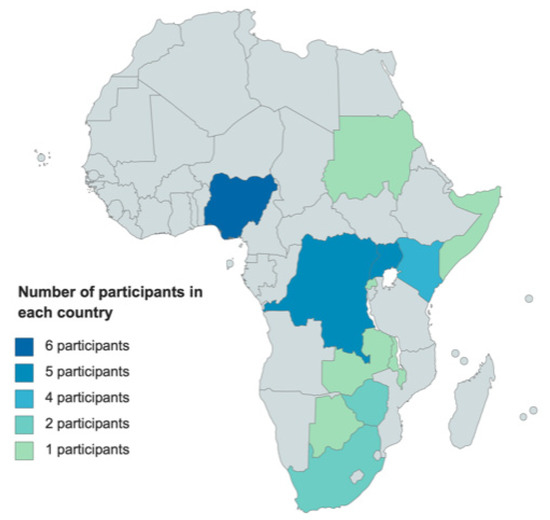
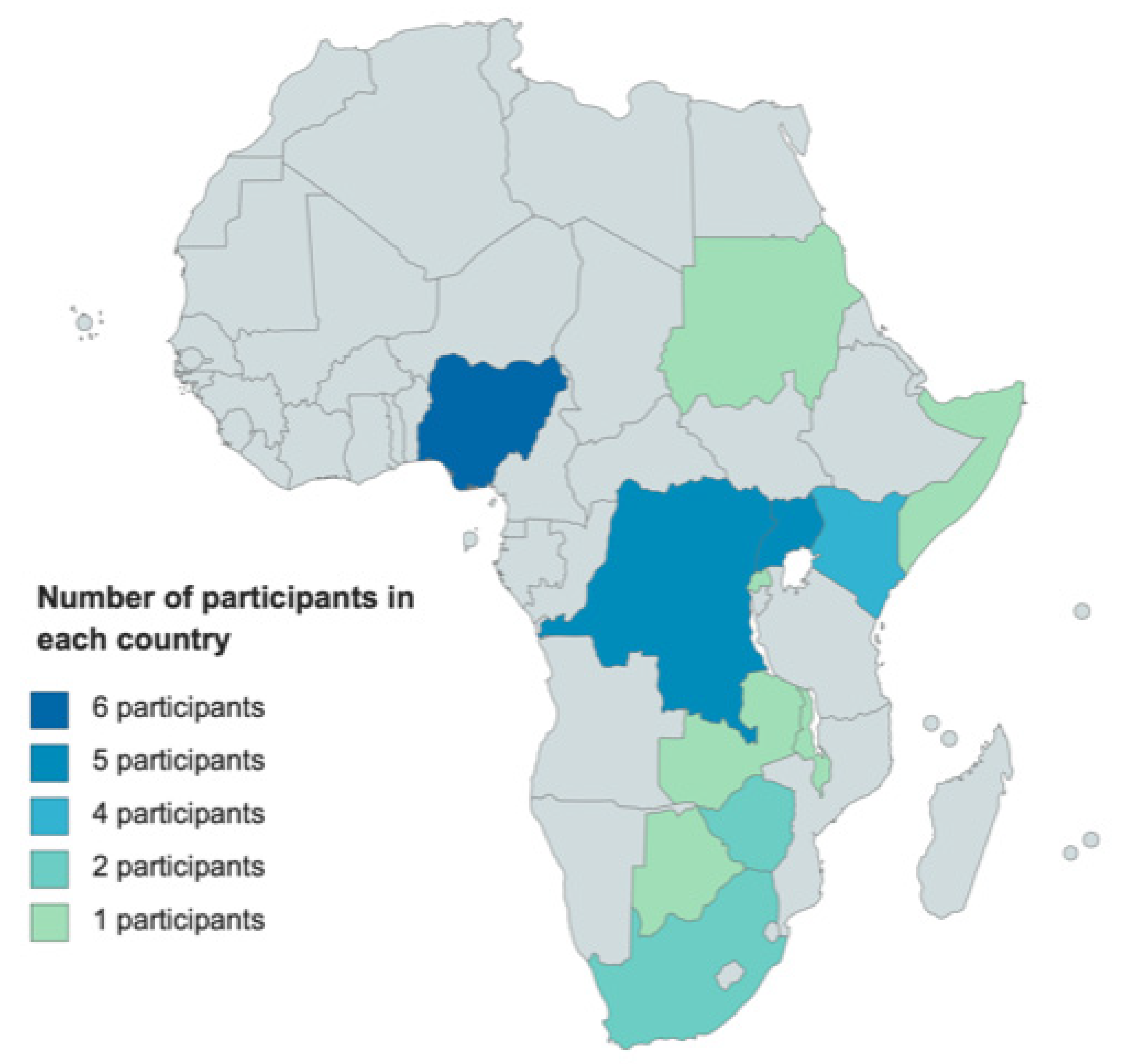
We interviewed 30 participants from twelve countries in SSA (Figure 1). Twenty-three of them were family physicians and four were doctors training to become specialists in family medicine. The remaining three were a medical student and two non-medical persons involved in PHC. Table 1 provides the demographic profile of the participants and Figure 1 the geographical spread. The findings hereunder are presented as a series of themes, with supportive quotations provided in Table 2.
Figure 1.
Geographical distribution of participants’ country of residence. Number of participants in each country: Nigeria (6), Democratic Republic of Congo (5), Uganda (5), Kenya (4), Zimbabwe (2), South Africa (2), Sudan (1), Rwanda (1), Zambia (1), Botswana (1), Malawi (1), Somaliland (1).
Table 1.
Participants’ demographic variables.
Table 2.
Corresponding quotes.
3.2. Perceptions of Migration Related to Climate Change
Participants perceived that slow onset hazards (changed rain and seasonal patterns, droughts, desertification) are impacting subsistence farmers around waterbodies that are drying up. This lowers crop productivity, leads to crop failures and eventually malnutrition and famine. Inability to grow crops for food and income invokes forced (seasonal/temporal) migration for income to survive (quote A). Pastoral communities deviate from their nomadic routes towards game parks in search of better grazing lands for their farm animals. This results in anthrax and foot-and-mouth disease transmission and zoonosis risks. It may also induce interpersonal violence; for example, Nigerian cattle herders occupied fertile farmland and forced farmers to move to cities for their safety (quote B).
Sudden onset hazards such as cyclones and flooding often destroy entire areas. The 2019 Cyclone Idai that hit Beira (Mozambique) exemplifies this. People lost their possessions, homes, and income, and were unable to rebuild their lives, spurring migration. Underlying reasons for moving included a lack of safety nets due to gray economy practices, combined with poor water sanitation systems that were unable to solve contaminated water issues (quote C).
Participants also mentioned soil degradation due to poor agricultural practices. Deforestation for firewood collection and commercial timber production causes landslides after excessive rainfall which, combined with monocultures, degrades the ecosystem through soil erosion and land degradation. All these factors reduce crop productivity and worsen poverty and food insecurity, leading to migration for better access to food and water for household consumption and agricultural use (quote D).
3.3. Perceptions of Migration Related to Seeking Better Health and/or Healthcare
Participants describe temporary relocation due to unavailable or unaffordable healthcare treatments in their own countries (for example, surgery conducted in India). Participant 8 mentioned that Nigerian borders are porous with few constraints for refugees to cross borders in search of better healthcare and food security. When sudden (climatic) events with a certain magnitude occur, such migration may overwhelm refugee centers and local health services. Comprehensive health and social service programs (externally funded or not) including medical treatment, food, shelter, and school fees attract people but often lack the resources to cover increased demands. Strikingly, migrants may purposely infect themselves with HIV to be granted access to comprehensive HIV programs that provide childcare services and healthcare for HIV-positive persons (quote E.1.). Similarly, people cross borders for access to enhanced quality healthcare in Uganda; for example, Sudanese women with obstetric complications seeking better maternal and reproductive health. Sometimes people are reluctant to return to their country of origin once they have experienced improved healthcare facilities abroad. Relocation to settlements near health facilities also results in concentrated populations close to hospitals that may put an unsustainable burden on the habitat and resources (quote E.2.).
Importantly, some participants state that local healers continue to perform their traditional healthcare practices. They are typically more accessible, especially in rural areas where hospitals are often scarce. People often only turn to allopathic medicine when traditional remedies have failed (quote F).
3.4. Perceptions of Health Impacts Related to Climate Change and the Role of Healthcare
Participants mentioned that droughts and changing rain patterns threaten water security which reduces high-quality food crop production. This induces malnutrition, particularly among children (who risk becoming stunted) and the elderly. Similarly, they attribute the rising prevalence of malaria and meningitis to increasing temperatures.
Health facilities in SSA often lack adequate resources to cope with outbreaks of infectious diseases. Climate disasters can damage health facilities and result in delayed medical support for affected individuals. Patients also come to health facilities at more advanced disease stages (quote G). Families with limited access to health services whose livelihoods are disrupted become further impoverished through out-of-pocket expenses, especially for maternal and child health.
Excessive rainfall, floods, and cyclones, often following droughts, flood pit latrines and contaminate shallow wells. This results in water-borne diseases such as typhoid and cholera. Water stagnation in hot conditions, such as in irrigated rice paddies, enhances mosquito breeding and malaria transmission. Water shortages require rationing and reduce hygienic standards, resulting in diarrheal diseases. Continuous overflooding of riverbanks results in waterlogged areas and the river water increases the prevalence of parasite-infested freshwater snails. Children playing in these waterlogged areas get infected with schistosomiasis, which had previously been eliminated to the extent that younger clinicians are not acquainted with the disease. This can delay accurate diagnosis and adequate treatment (quote H).
Infrastructural repairs to health services, which may be damaged by climate events such as floods, take time and often rely on external donor funding. This may create difficulties in accessing medication for people with chronic conditions such as HIV or hypertension. Stress, anxiety, and depression after floods and cyclones were observed when relatives’ bodies could not be retrieved and when communities vanished completely (quote I).
Health workers functioning in affected remote areas often experience stress, and feel unsupported and isolated. Rural recruitment and retention of health workers is difficult, transport is challenging, basic equipment and infrastructure are often missing, and poor education opportunities complicate raising children. Brain drain may occur when climate disasters cause further disruption, leading to health center closures, exacerbating the healthcare deficit, and undermining community recovery after a disaster (quote J).
3.5. Perceptions of Health Impacts Related to Migration and the Role of Healthcare
Rural–urban migration, whether through gradual relocation or precipitated by catastrophes, pressurizes urban health services and infrastructure, as well as safe water supply and sanitation. Health services in the public sector often lack resources to respond to this increased demand. An example is (seasonal) movements of cattle-herders from grazing areas or cattle posts to villages (quote K).
Urban migration or forced displacement into camps leads to overcrowding, poor sanitation, water shortages, over-demanded water infrastructure, and contamination from open sewers to shallow wells, which may cause typhoid and cholera. Rural–urban relocation may expose children to air pollution, which induces respiratory infections and asthma (quote L).
Urban migration not resulting in the anticipated economic opportunities that were often the motivation for moving there has been related to homelessness and eventually substance abuse, and children dropping out of school and risking sexual exploitation. Adolescents from displaced and broken families may look for money to buy food, whereby transactional sex increases the risk of sexually transmitted conditions including HIV, unintended pregnancies, and gender-based violence. Xenophobic attacks present a risk to migrants’ personal security and (mental) health. This may cause them to return home despite the economic disadvantages this could present (quote M).
Relatives may provide resources for migrants or allow migrating families in their city homes. This reliance often induces family crises and desperation, and sometimes depression, increased alcohol abuse, drug abuse, or suicide (quote N).
International and rural–urban health worker brain drain for better clinical facilities, economic opportunities, and education for children or postgraduate training continuously threatens health services. A large influx of migrants can then leave the remaining workforce unable to cope, resulting in frequent sick leave. This reinforces brain drain and healthcare-related migration which puts communities at risk (quote O).
3.6. Complex, Interacting, and Continuous Feedback Loops
Participants perceived the nexus’s interactions as continuous and reinforcing feedback loops, leading to accumulating health risks, migration, and disrupted health services. In Zimbabwe, the 2019 Cyclone Idai impacted health and further weakened the healthcare system, leading to outward migration. This weakened the host countries’ health systems, impacting host communities’ and migrants’ health (quote P).
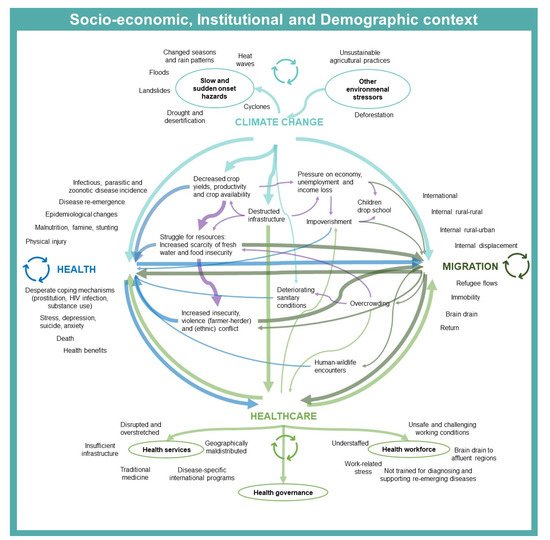
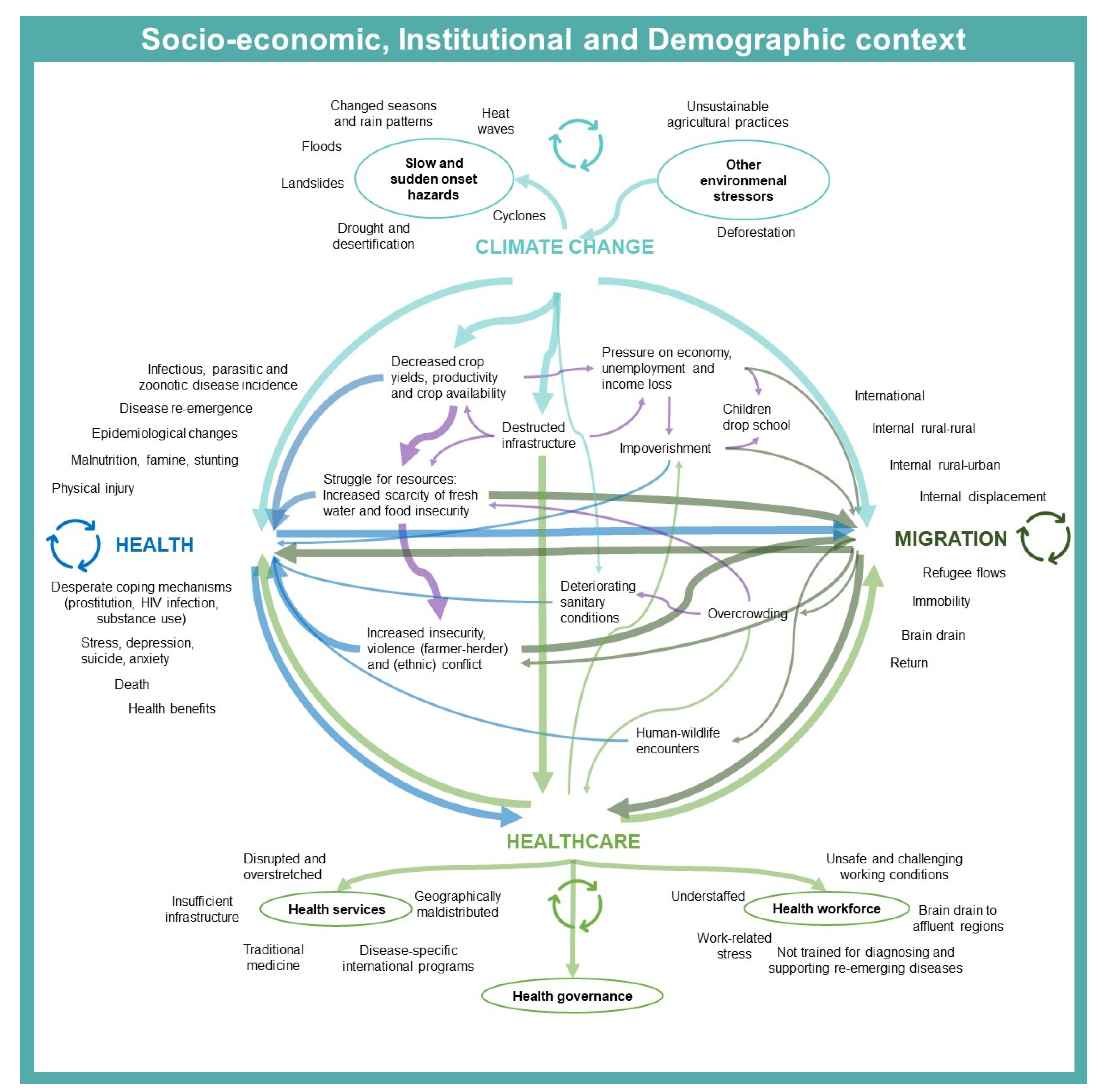
The extent and nature of feedback loops may depend on demographic, socio-economic, and political contexts. Poorer regions with more vulnerable healthcare facilities may experience worse climate-related health impacts. In countries with high unemployment, migrant farmers may have less work opportunities in cities, which increases risks of impoverishment. Furthermore, land degradation, overcrowding, deteriorating sanitation, and climate-related water and food insecurity are socio-economic and ecological determinants of health which interact with the feedback loops (quote C) visualized in Figure 2.
Figure 2.
This diagram presents the authors’ interpretation of the participants’ perceptions regarding the climate change, migration, and health(care) nexus in Sub-Saharan Africa. The arrows in the center of the figure denote the direct and indirect interactions between the dimensions identified by the participants. These interactions reinforce each other, resulting in continuous feedback loops between both the nexus’s dimensions and the context-related determinants of health in the middle of the figure. Each arrow denotes a simple perceived impact and/or feedback loop interaction between two components corresponding to at least one participant statement. A sequence of arrows represents indirect interactions (hence a combination of direct interactions) running between interconnected components. The arrow’s thickness is proportionate to the number of quotes on the interactions, corresponding to at least one participant’s statement. The color represents the four dimensions of the nexus, with purple denoting other factors influencing the nexus. The loops denote feedback loops.
3.7. Perceived Opportunities for Intersectoral Capacity Building
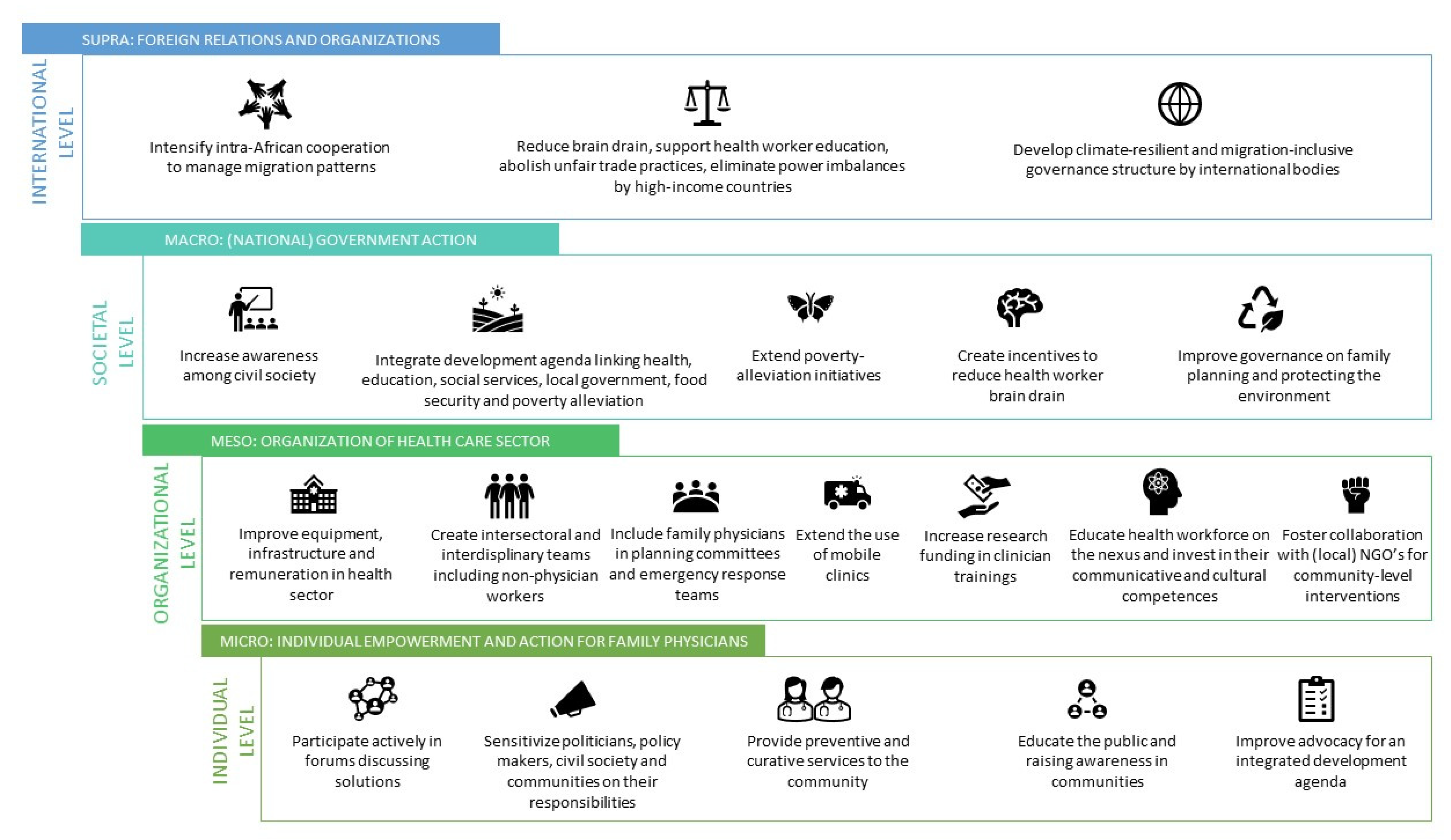
Participants were asked about intersectoral capacity-building opportunities that could create more climate-resilient and migrant-inclusive health systems, and in particular the role of PHC. Figure 3 visualizes a summary of perceived opportunities at individual and family (micro), community/organizational (meso), societal (macro), and international levels (supra).
Figure 3.
Visualizing intersectoral capacity-building opportunities in the Sub-Saharan African context, on micro, meso, macro, and supra levels.
3.7.1. Developing Multi-Dimensional and Multi-Layered Governance Structures
Participants urgently called for multi-dimensional and multi-layered governance structures. An integrated development agenda designed by and in collaboration with international bodies and local and national governments can enable intersectoral teamwork between professionals active in PHC, public health, agriculture, water and sanitation, education, social services, local government, food security, and nutrition. This could strengthen policies on nutrition rehabilitation in refugee camps, incentives to reduce brain drain, extend the use of mobile clinics, and inclusion of FPs in country health committees and emergency response teams (quote Q).
Poverty alleviation is a key multi-dimensional and multi-layered strategy to remove economic incentives for urban relocation. It can be achieved by (i) generating alternative income sources for rural farmers or nomadic herders, (ii) improving small-scale, agroecological agriculture and cattle-ranching methods, and (iii) enhancing vocational training in school education. To promote rural relocation, these strategies should go hand in hand with moving government institutions and infrastructure to rural areas, more equitable resource distribution of land, water, seeds, fertilizers, etc., and improving remuneration and fair prices for raw materials and agricultural products, as well as with microcredit schemes and financing projects, for instance, to provide reliable sources of clean water.
3.7.2. Improving Family Physician Training and Primary Healthcare Working Conditions
Participants called for strengthening FP training as a prerequisite for building PHC capacity. FPs, as generalists, provide a wide range of healthcare services, support the development of quality PHC services, understand the environment in which communities live, and are culturally competent in responding to community concerns. Research capacity in FP training is needed, such as working with public health experts on disease surveillance in populations, investigating underlying causes of changing disease patterns in relation to climate change, and developing pathways to strengthen health systems. Systematic data collection and analysis of the nexus and disseminating analysis results could enhance FPs’ capacity to lead and advocate.
Participants had not always systematically made the connections in the nexus and recognized a need to educate themselves (quote R). This could start with participating in intersectoral forums on health implications for individuals and communities and with brainstorming about FPs’ responsibilities in response to those implications. FP curricula (and PHC in general) should include climate change and migration-related health risks in courses on determinants of health.
Health workforce plans developed by policy makers should address these curricula adaptations, improve FPs’ living and working conditions, and set minimum standards for health infrastructure. PHC workers should receive similar remuneration to other medical specialists, and other incentives such as family accommodation, school fees, and preferential selection for postgraduate programs to encourage them to continue working in rural areas (quote S).
3.7.3. Health Advocacy in Primary Healthcare
Participants perceived that PHC providers could use media to disseminate information on the nexus, to lead by example and educate the people, and to raise awareness by referring to the burden for future generations when addressing climate change. FPs could sensitize politicians, policymakers, civil society, and communities about their responsibilities to protect the environment (quote T). Working as generalists, FPs may be more exposed to the negative effects of climate change and migration and may therefore be trusted voices that can raise awareness and call for action (quote U). Similarly, the wide community health worker (CHW) networks in SSA can cascade prevention strategies for newly emerging diseases resulting from climate change and migration to communities.
Participants suggested to reduce pressure on natural resources by changing cultural beliefs and practices that push women to have many children, through education and stronger family planning programs alongside better maternal and child healthcare. Instead of disease-specific vertical programs, there is a need for proactive, preventive, and curative services provided by FPs and other frontline workers such as CHWs (quote V).
3.7.4. Collaboration between Health Sector and Civil Society
Collaboration between the health sector and NGOs could enhance health responses as local NGOs are in some cases better prepared for and can respond more quickly to health problems (quote W), particularly disaster relief. Such collaboration can also lead to community-level interventions to deal with nexus-related problems. Examples include waste recycling or tree planting to combat desertification (quote X).
3.7.5. More Responsibilities for High-Income Countries in Supporting Intersectoral Capacity Building
Finally, some described SSA as a victim of unbalanced globalization through unfair price regulations and trade agreements with high-income countries. Examples include international timber markets linked with deforestation (quote Y) and health worker intercontinental brain drain resulting from economic migration to high-income countries, constraining SSA health system resilience (quote Z). It was stated that high-income countries should compensate affected countries, support their development, and be held more accountable, especially in how development aid is used to benefit their populations’ livelihoods.
4. Discussion
4.1. Key Findings
This study revealed rich and diversified perceptions of 30 participants on interactions in the climate change, migration, and health(care) nexus, originated from grassroots experiences in PHC in SSA. These perceived interactions were categorized as (1) migration and climate change, (2) migration related to seeking better health and healthcare, (3) health impacts related to climate change and the role of healthcare, and (4) health impacts related to migration and the role of healthcare. These relationships are complex, interacting and reinforcing one another. We visualized them as continuous feedback loops between the nexus’s dimensions, the socio-economic, institutional, and demographic context, and relevant health determinants. Participants also reflected on intersectoral capacity-building opportunities on micro, meso, macro, and supra levels: (1) developing multi-dimensional and multi-layered governance structures, (2) improving FP training and PHC working conditions, (3) health advocacy in primary healthcare, (4) collaboration between the health sector and civil society, and (5) more responsibilities for high-income countries in supporting intersectoral capacity building such as reducing intercontinental brain drain.
4.2. Interpretation of the Results
To our knowledge, this is the first qualitative study exploring perceptions of PHC professionals on the climate, migration, and health(care) nexus in SSA. Participants of this study viewed migration patterns in SSA as a complex phenomenon, predominantly economic and health motivated or conflict related, rather than uniquely triggered by climate change. They recognized that drivers for migration included competition for resources and the search for a dignified life, work opportunities, income, and better healthcare. Climate change impacts such as drought and floods may further catalyze these factors. These results align with previous literature which states that migration depends on local determinants of health as well as the socio-economic, political, and demographic context [1,2,3,8]. McMichael and colleagues suggest that nexus analysis should focus on migration-related health outcomes rather than on climatic events [3]. Participants consistently perceived continuous feedback loops in the nexus, mentioned its complexity and unpredictability, and acknowledged that multiple factors can simultaneously impact populations in multiple ways. Future research and policy development should recognize this complexity and heterogeneity by applying methods specifically designed for analyzing and disentangling complexity [21,22].
While (climate-related) migration may be a health-seeking strategy, participants recognized that it may also result in more health risks, which was also identified by earlier research [2,8]. Economic hardship following urban relocation prompts overcrowding, sanitary problems, poverty, drug use, and prostitution. Host health services struggle to support incoming migrants and are often not well integrated with (internationally supported) refugee health programs [23]. Additionally, health worker brain drain, driven by poor remuneration and inadequate living and working conditions, especially in rural areas, reduces the remaining workforce’s capacity and morale [12,24]. Eventually, this deteriorates health service delivery effectiveness for the entire population [24]. Therefore, climate-resilient and migration-inclusive health systems should strengthen overall PHC service delivery, and not focus solely on support for migrants affected by climate change [16]. This has been emphasized in the Astana declaration on PHC and included in the Global Sustainable Development Goals and universal health coverage [25]. Global-level policy and (low-income) country-level health plans should adopt the indicators of the PHC performance initiative framework [26] to better connect PHC with climate and migration health risks [19].
Participants recommended several intersectoral capacity-building opportunities that have been highlighted in other frameworks and publications. The WHO operational framework for climate-resilient health systems includes an integrated development agenda between local and national governments and international bodies, including multi-layered governance structures with clear strategies and co-responsibilities for health, education, social services, agriculture, food security, and poverty-alleviation sectors [16]. Poverty-alleviation strategies to remove urban migration incentives and improve rural relocation of health workers could be further explored within rural development programs [27,28]. Disaster management principles could be integrated with high-performing PHC for resilient health systems for the entire population [29].
Participants suggested ways that FP training could be expanded to incorporate aspects of the nexus in curricula, for example, the social and environmental determinants of health, or emergency responses to disasters. Authors have identified opportunities for training and research for FPs and primary care providers to strengthen the resilience of communities and to influence policy and research priorities [18,30]. Such public health and emergency medicine functions are still scarce resources in most SSA health districts [19]. FPs as clinician scientists can also document climate change and migration impacts on health (services) [18]. FP and PHC networks such as Primafamed and the African Forum for PHC (AfroPHC.org, accessed on 10 June 2021) could help conceptualize a research agenda and enable research capacity building [31]. Frontline FPs supported by established family medicine or public health researchers can address research problems at the clinical practice level and in communities such as the determinants of changes in health service utilization, the district municipality workforce, and disease outbreaks, and produce evidence on health implications of migration.
Finally, the voice of the PHC sector is a potentially impactful and yet neglected part of the environmental discourse [19]. As PHC providers such as CHWs, midwives, nurses, and FPs are highly trusted by local communities, they can sensitize national governments, private sector actors, and civil society on their responsibilities and raise public awareness on environmental issues [18]. This aligns with Schwerdtle et al. (2020), who suggest adding communications and advocacy as additional elements in the WHO operational framework [4]. PHC teams, in collaboration with NGOs, can support communities in moments of despair and coordinate climate change adaptation activities such as re-forestation, provision of clean sources of water, food security, and shelter [32,33]. Moreover, as PHC teams in different SSA countries are usually composed of people with highly diverse disciplinary backgrounds [17], other PHC disciplines such as nurses, midwives, and pharmacists may be equally well placed to contribute to the abovementioned FP responsibilities.
4.3. Limitations
This study has several limitations. First, recruitment of attendees at the Family Medicine Conference may mean that the study group was not representative of primary care providers or family physicians across SSA. While most participants were male, which reflects the reality of the FP population in SSA, female-specific health risks may have been underrepresented in our data. The study group also had stronger participation from East Africa, as the conference was held in Uganda. Still, our sample included participants from twelve SSA countries which allowed for a diverse representation of the different SSA regions. Second, there may have been some selection bias in that participants self-selected to join the FGDs and may have had more knowledge of or interest in the impact of climate change on migration and health(care). Yet, the aim of this qualitative research was to achieve depth of understanding (information rich) rather than have a sample that was representative of the attendees at the conferences who were working in PHC [34]. Finally, the study was designed by European researchers which may have biased the interpretation towards European views on the nexus. The research team was, nonetheless, quite diverse with scholars from multiple research disciplines, and African researchers were involved in the development of the idea, data analysis, and writing of the article.
5. Conclusions
This exploratory study presented a unique and novel perspective on the climate change, migration, and health(care) nexus in SSA, using perceptions from frontline FPs working in SSA. Their ideas on intersectoral capacity-building opportunities can contribute to interdisciplinary research agendas and (PHC) policy responses on national, regional, and global levels, emphasizing the urgency for and the responsibility of FPs and PHC providers to be actively developing and involved in climate-resilient and migration-inclusive health systems.
Author Contributions
Conceptualization, C.S.; J.D.M.; I.R.; P.D.; and E.B.; methodology, C.S.; E.B.; I.R.; P.D.; S.R.; and F.M.; software, C.S. and E.B.; validation, S.R.; F.M.; J.D.M.; formal analysis, C.S.; E.B.; I.R.; S.R.; and F.M.; investigation, C.S.; E.B.; I.R.; J.D.M.; P.D.; and P.V.D.; resources, J.D.M.; I.R.; and A.D.S.; data curation, E.B.; writing—original draft preparation, C.S.; E.B.; I.R.; S.R.; and F.M.; writing, review and editing, C.S.; E.B.; S.R.; I.R.; F.M.; J.D.M.; A.D.S.; P.D.; W.V.; S.L.; A.E.; B.M.; P.V.D.; visualization, E.B.; C.S.; and I.R.; supervision, I.R.; C.S.; and J.D.M.; project administration, C.S.; I.R.; E.B.; J.D.M.; and A.D.S.; funding acquisition, J.D.M.; A.D.S.; I.R.; P.D.; and C.S. All authors have read and agreed to the published version of the manuscript.
Funding
This research received funding by the Global Minds fund (VLIR-UOS and DGD).
Institutional Review Board Statement
The study was conducted according to the guidelines of the Declaration of Helsinki, and approved by the Ethics Committee of Ghent University (protocol code B670201940365 and April 2019).
Informed Consent Statement
Informed consent was obtained from all subjects involved in the study.
Data Availability Statement
The data that support the findings of this study are available from the corresponding author upon reasonable request.
Acknowledgments
The authors thank the Global Minds fund (VLIR-UOS and DGD) and the International Thematic Network CliMigHealth for financial support, all participants of the focus groups for the valuable data, Primafamed and WONCA-Africa for their logistical support, and Precious Finalesta and Abesigamukama Humphrey for translating the transcripts. This manuscript was edited for language by a native English speaker.
Conflicts of Interest
The authors declare no conflict of interest.
References
- Schütte, S.; Gemenne, F.; Zaman, M.; Flahault, A.; Depoux, A. Connecting planetary health, climate change, and migration. Lancet Planet. Health 2018, 2, e58–e59. [Google Scholar] [CrossRef] [Scilit]
- Mcmichael, C.; Barnett, J.; Mcmichael, A.J. Review an ill wind? Climate change, migration, and health. Environ. Health Perspect. 2012, 120, 646–654. [Google Scholar] [CrossRef] [Scilit]
- McMichael, C. Human mobility, climate change, and health: Unpacking the connections. Lancet Planet. Health 2020, 4, e217–e218. [Google Scholar] [CrossRef] [Scilit]
- Schwerdtle, P.N.; Stockemer, J.; Bowen, K.J.; Sauerborn, R.; McMichael, C.; Danquah, I. A meta-synthesis of policy recommendations regarding human mobility in the context of climate change. Int. J. Environ. Res. Public Health 2020, 17, 9342. [Google Scholar] [CrossRef] [Scilit]
- Kula, N.; Haines, A.; Fryatt, R. Reducing vulnerability to climate change in Sub-Saharan Africa: The need for better evidence. PLoS Med. 2013, 10, e1001374. [Google Scholar] [CrossRef] [Scilit] [PubMed]
- Falco, C.; Donzelli, F.; Olper, A. Climate change, agriculture and migration: A survey. Sustainability 2018, 10, 1405. [Google Scholar] [CrossRef] [Scilit]
- Mastrorillo, M.; Licker, R.; Bohra-Mishra, P.; Fagiolo, G.; Estes, L.D.; Oppenheimer, M. The influence of climate variability on internal migration flows in South Africa. Glob. Environ. Chang. 2016, 39, 155–169. [Google Scholar] [CrossRef] [Scilit]
- Watts, N.; Amann, M.; Arnell, N.; Ayeb-Karlsson, S.; Belesova, K.; Boykoff, M.; Byass, P.; Cai, W.; Campbell-Lendrum, D.; Capstick, S.; et al. The 2019 report of The Lancet Countdown on health and climate change: Ensuring that the health of a child born today is not defined by a changing climate. Lancet 2019, 394, 1836–1878. [Google Scholar] [CrossRef] [Scilit]
- Schwerdtle, P.; Bowen, K.; McMichael, C. The health impacts of climate-related migration. BMC Med. 2018, 16, 1–7. [Google Scholar] [CrossRef] [Scilit]
- Watts, N.; Amann, M.; Arnell, N.; Ayeb-Karlsson, S.; Belesova, K.; Berry, H.; Bouley, T.; Boykoff, M.; Byass, P.; Cai, W.; et al. The 2018 report of the Lancet Countdown on health and climate change: Shaping the health of nations for centuries to come. Lancet 2018, 392, 2479–2514. [Google Scholar] [CrossRef] [Scilit]
- Abubakar, I.; Aldridge, R.W.; Devakumar, D.; Orcutt, M.; Burns, R.; Barreto, M.L.; Dhavan, P.; Fouad, F.M.; Groce, N.; Guo, Y.; et al. The UCL–Lancet Commission on Migration and Health: The health of a world on the move. Lancet 2018, 392, 2606–2654. [Google Scholar] [CrossRef] [Scilit]
- Agyepong, I.A.; Sewankambo, N.; Binagwaho, A.; Coll-Seck, A.M.; Corrah, T.; Ezeh, A.; Fekadu, A.; Kilonzo, N.; Lamptey, P.; Masiye, F.; et al. The path to longer and healthier lives for all Africans by 2030: The Lancet Commission on the future of health in sub-Saharan Africa. Lancet 2017, 390, 2803–2859. [Google Scholar] [CrossRef] [Scilit]
- Marten, M.G.; Sullivan, N. Hospital side hustles: Funding conundrums and perverse incentives in Tanzania’s publicly-funded health sector. Soc. Sci. Med. 2020, 244, 112662. [Google Scholar] [CrossRef] [Scilit] [PubMed]
- Pfeiffer, J.; Gimbel, S.; Chilundo, B.; Gloyd, S.; Chapman, R.; Sherr, K. Austerity and the “sector-wide approach” to health: The Mozambique experience. Soc. Sci. Med. 2017, 187, 208–216. [Google Scholar] [CrossRef] [Scilit]
- Expert Panel on Effective Ways of Investing in Health (EXPH) Expert Panel’s Reflection on Priorities for the Future of Healthcare in the European Union. 2019. Available online: https://ec.europa.eu/health/sites/default/files/expert_panel/docs/2019_brainstorming_en.pdf (accessed on 11 February 2021).
- WHO. Operational Framework for Building Climate Resilient Health Systems. 2019. Available online: http://www.who.int/globalchange/publications/building-climate-resilient-health-systems/en/ (accessed on 1 March 2021).
- Mash, R.; Howe, A.; Olayemi, O.; Makwero, M.; Ray, S.; Zerihun, M.; Gyuse, A.; Goodyear-Smith, F. Reflections on family medicine and primary healthcare in sub-Saharan Africa. BMJ Glob. Health 2018, 3, e000662. [Google Scholar] [CrossRef] [Scilit]
- Xie, E.; de Barros, E.F.; Abelsohn, A.; Stein, A.T.; Haines, A. Challenges and opportunities in planetary health for primary care providers. Lancet Planet. Health 2018, 2, e185–e187. [Google Scholar] [CrossRef] [Scilit]
- Kadandale, S.; Marten, R.; Dalglish, S.L.; Rajan, D.; Hipgrave, D.B. Primary health care and the climate crisis. Bull. World Heal. Organ. 2020, 98, 818–820. [Google Scholar] [CrossRef] [Scilit] [PubMed]
- Chersich, M.F.; Wright, C.Y. Climate change adaptation in South Africa: A case study on the role of the health sector. Glob. Heal. 2019, 15, 1–16. [Google Scholar] [CrossRef] [Scilit]
- Tacoli, C.; Mabala, R. Exploring mobility and migration in the context of rural—urban linkages: Why gender and generation matter. Environ. Urban. 2010, 22, 389–395. [Google Scholar] [CrossRef] [Scilit]
- Holland, J.H. Studying complex adaptive systems. J. Syst. Sci. Complex. 2006, 19, 1–8. [Google Scholar] [CrossRef] [Scilit]
- Orach, C.G.; De Brouwere, V. Integrating refugee and host health services in West Nile districts, Uganda. Health Policy Plan. 2005, 21, 53–64. [Google Scholar] [CrossRef] [Scilit] [PubMed]
- WHO Guidance for Climate Resilient and Environmentally Sustainable Health Care Facilities. Available online: https://www.who.int/publications/i/item/9789240012226 (accessed on 7 March 2021).
- Rasanathan, K.; Evans, T.G. Primary health care, the Declaration of Astana and COVID-19. Bull. World Heal. Organ. 2020, 98, 801–808. [Google Scholar] [CrossRef] [Scilit]
- The PHCPI Conceptual Framework. Available online: https://improvingphc.org/phcpi-conceptual-framework (accessed on 8 March 2021).
- Zadawa, A.N.; Omran, A. Rural development in Africa: Challenges and opportunities. In Sustaining Our Environment for Better Future; Omran, A., Schwarz-Herion, O., Eds.; Springer: Singapore, 2020; pp. 33–42. [Google Scholar] [CrossRef] [Scilit]
- Lafleur, J.; Romero, M. Combining transnational and intersectional approaches to immigrants’ social protection: The case of Andean families’ access to health. Comp. Migr. Stud. 2018, 6, 1–17. [Google Scholar] [CrossRef] [Scilit]
- Jewell, B.L.; Mudimu, E.; Stover, J.; Brink, D.T.; Phillips, A.N.; Smith, A.J.; Martin-Hughes, R.; Teng, Y.; Glaubius, R.; Mahiane, S.G.; et al. Potential effects of disruption to HIV programmes in sub-Saharan Africa caused by COVID-19: Results from multiple mathematical models. Lancet HIV 2020, 7, e629–e640. [Google Scholar] [CrossRef] [Scilit]
- Flinkenflögel, M.; Sethlare, V.; Cubaka, V.K.; Makasa, M.; Guyse, A.; De Maeseneer, J. A scoping review on family medicine in sub-Saharan Africa: Practice, positioning and impact in African health care systems. Hum. Resour. Health 2020, 18, 1–18. [Google Scholar] [CrossRef] [Scilit]
- De Maeseneer, J. Twenty years of primafamed network in Africa: Looking back at the future. Afr. J. Prim. Health Care Fam. Med. 2017, 9, 1–2. [Google Scholar] [CrossRef] [Scilit] [PubMed]
- Olympia, R.P.; Rivera, R.; Heverley, S.; Anyanwu, U.; Gregorits, M. Natural disasters and mass-casualty events affecting children and families: A description of emergency preparedness and the role of the primary care physician. Clin. Pediatr. 2010, 49, 686–698. [Google Scholar] [CrossRef] [Scilit] [PubMed]
- Hogg, W.; Huston, P.; Martin, C.; Soto, E. Enhancing public health response to respiratory epidemics: Are family physicians ready and willing to help? Can. Fam. Physician 2006, 52, 1254–1260. [Google Scholar]
- Patton, M.Q. Qualitative Research and Evaluation Methods, 3rd ed.; Sage Publications: Thousand Oaks, CA, USA, 2002. [Google Scholar]

Publisher’s Note: MDPI stays neutral with regard to jurisdictional claims in published maps and institutional affiliations. |
© 2021 by the authors. Licensee MDPI, Basel, Switzerland. This article is an open access article distributed under the terms and conditions of the Creative Commons Attribution (CC BY) license (https://creativecommons.org/licenses/by/4.0/).