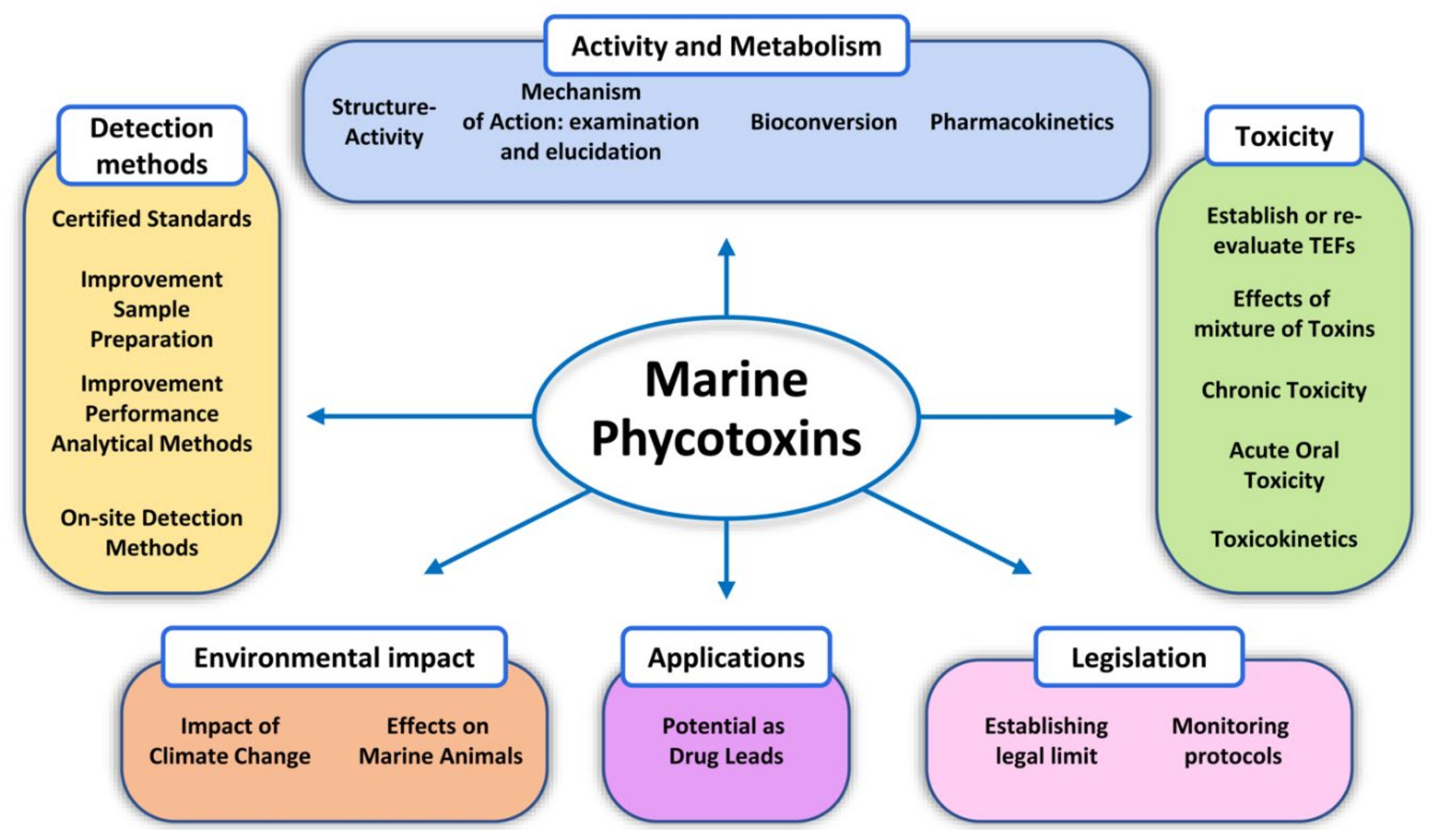

Current Trends and New Challenges in Marine Phycotoxins
 , , , , ,
Abstract
Share and Cite
Louzao, M.C.; Vilariño, N.; Vale, C.; Costas, C.; Cao, A.; Raposo-Garcia, S.; Vieytes, M.R.; Botana, L.M. Current Trends and New Challenges in Marine Phycotoxins. Mar. Drugs 2022, 20, 198. https://doi.org/10.3390/md20030198
Louzao MC, Vilariño N, Vale C, Costas C, Cao A, Raposo-Garcia S, Vieytes MR, Botana LM. Current Trends and New Challenges in Marine Phycotoxins. Marine Drugs. 2022; 20(3):198. https://doi.org/10.3390/md20030198
Chicago/Turabian StyleLouzao, Maria Carmen, Natalia Vilariño, Carmen Vale, Celia Costas, Alejandro Cao, Sandra Raposo-Garcia, Mercedes R. Vieytes, and Luis M. Botana. 2022. "Current Trends and New Challenges in Marine Phycotoxins" Marine Drugs 20, no. 3: 198. https://doi.org/10.3390/md20030198
APA StyleLouzao, M. C., Vilariño, N., Vale, C., Costas, C., Cao, A., Raposo-Garcia, S., Vieytes, M. R., & Botana, L. M. (2022). Current Trends and New Challenges in Marine Phycotoxins. Marine Drugs, 20(3), 198. https://doi.org/10.3390/md20030198