


Abstract
Enteral feeds can be classified as two major types: commercial enteral formulas and blenderized enteral feeds. When deciding the most appropriate type of feed for a patient, several parameters need to be taken into consideration. Benefits associated with the use of blenderized tube feeds include giving a sense of normalcy to patients, having a positive impact on anthropometric indices, allowing for careful control over known food allergens, being associated with improved gastrointestinal tolerance and improved gut microbial composition (mainly in pediatric populations) and being generally less costly compared with commercial formulas. On the other hand, commercial enteral formulas have the advantages of being generally sterile, less likely to cause tube clogging and having a known and consistent nutrition composition. Further studies, specifically well-designed randomized controlled trials including adult populations, that will emphasize the impact of blenderized enteral feeds on various clinical outcomes are warranted. Clinicians need to be conscientious and educated regarding safe food practices for blended food preparation, as well as the characteristics of commercial formula options available to help assist patients in selecting the proper feed for their nutritional needs and clinical condition.
1. Introduction
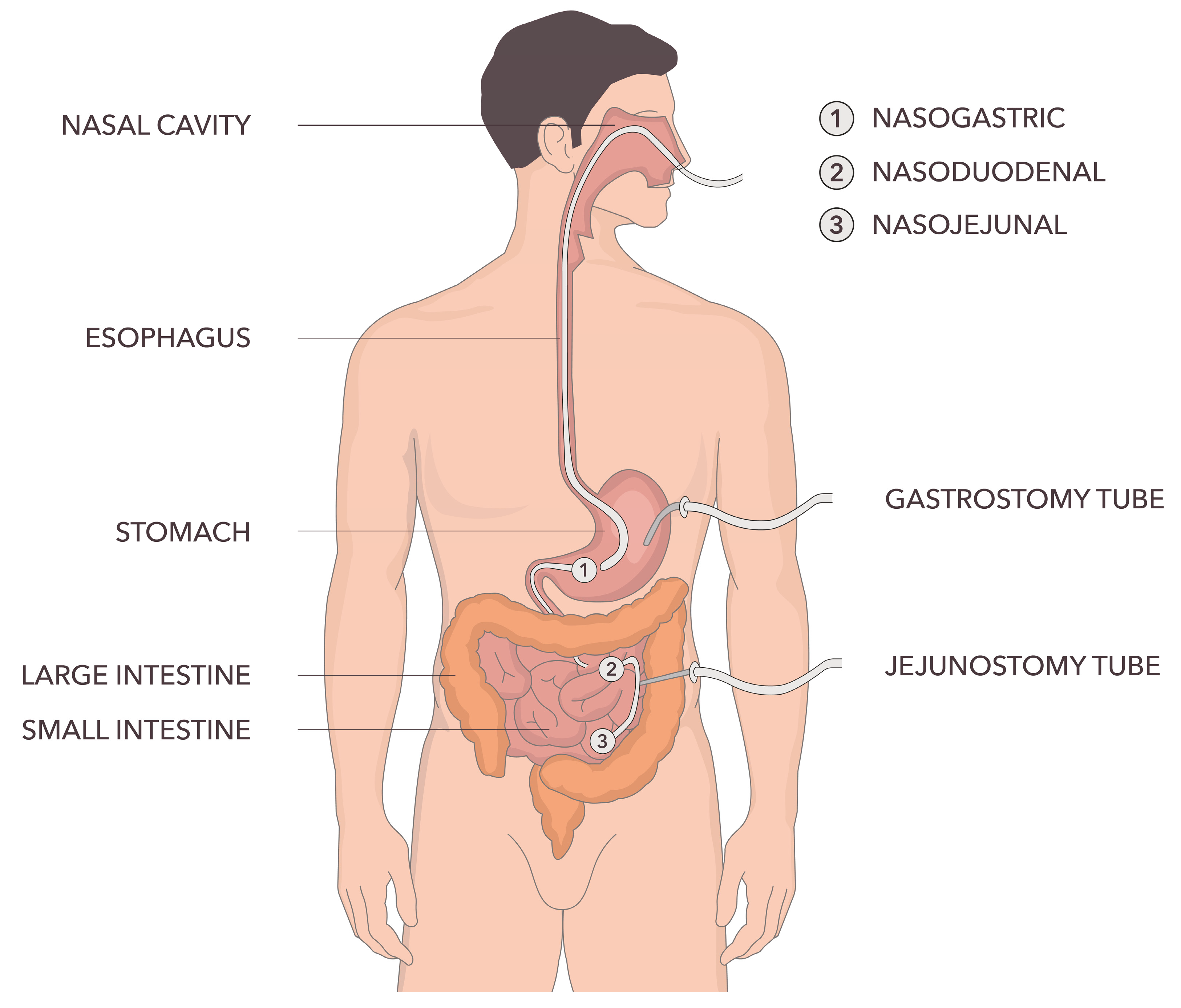
Enteral nutrition (EN) refers to different forms of nutritional support including oral nutritional supplements as well as tube feeding via nasogastric, nasoenteral or percutaneous tubes [1], as outlined in Figure 1. EN is given to patients whose oral intake is inadequate or those who cannot eat normal food as consumed at home or as offered by the catering system of a hospital [2]. Inadequate intake can be caused by a variety of medical or physiological reasons. Some symptoms related to diseases or their treatments such as nausea, taste changes or poor appetite can affect oral intake. Neurological conditions such as motor neuron disease or Parkinson’s disease, as well as dysfunction of the swallowing mechanism as a result of conditions like head and neck cancers or stroke, can often cause dysphagia, which can also affect oral intake [3]. Other patients who often cannot meet their nutritional requirements and might also need artificial nutrition support are those in a diminished state of consciousness or with a markedly changed mental status as a result of respiratory problems, hepatic encephalopathy, dementia or other conditions [4].
Figure 1.
Types of enteral tubes.
Impaired nutritional intake has also been described in patients with gastrointestinal (GI) problems such as short bowel syndrome (SBS) after surgical resections of the bowel, where pathophysiological and absorptive consequences depend on the extent and site of the bowel resection. According to the literature, EN in patients with SBS can help improve postsurgical intestinal adaptation, since after a small bowel resection, the residual gut alters in function and structure (characterized by cellular hyperplasia, villous hypertrophy and alteration of motility), which improves nutrient absorption [5,6].
Other (GI) disorders that might benefit from EN includes inflammatory bowel disease (IBD), which includes Crohn’s disease (CD) and ulcerative colitis (UC), and pancreatitis. There is evidence that exclusive enteral nutrition (EEN) can be very promising in the management of CD, as it is connected with induced remission, and in some cases, EEN has had comparable efficacy to steroid treatment in inducing remission in children and adults with CD but with significantly fewer side effects [7,8,9]. The exact mechanisms underlying the association between exclusive EEN and CD yet remain unclear, although there is evidence that it could modify the composition of the intestinal microbiome, which is essential in the pathogenesis of CD [10]. As far as pancreatitis is concerned, in patients with acute severe pancreatitis, early EN is associated with lower mortality and a decreased risk of infection. EN is found to have a beneficial effect on the structure and function of the intestinal mucosa, luminal nutrients and immune function [11,12].
EN is also indicated for patients who are malnourished or at risk of malnutrition and cannot meet their nutritional requirements orally. Specifically, for hospitalized patients, disease-related malnutrition is described as a complex syndrome resulting from an inadequate intake of nutrients and from a disease-related systemic inflammatory response [13]. Malnutrition can lead to an altered body composition, which can have a negative effect on mental and physical function [2]. It is also worth mentioning that there is a strong correlation between malnutrition and an increased risk of adverse clinical outcomes, which include functional decline, prolonged hospital stays and higher rates of morbidity and mortality [14]. According to the literature, up to one-third of hospital patients have malnutrition or are at risk of it at the time of admission [15,16]. Furthermore, a patient’s nutritional state frequently declines during their hospital stay [17]. Unfortunately, in a hospital setting, adequate nutrition is not often prioritized and medical treatment comes first for medical professionals.
The main objective of this review is to provide a comprehensive overview and discussion of the benefits and drawbacks of blenderized feeds and commercial formulas, regarding the practical, financial, clinical and psychological parameters that are of concern to clinicians, enterally fed patients and their caregivers.
Types of Enteral Feeds
Enteral feeds can be classified into two major types: commercial enteral formulas and blenderized enteral feeds. Commercial enteral formulas are liquid nutritional mixtures providing nutrients from various sources like milk/soy proteins, maltodextrin/corn syrup carbohydrates and vegetable oils such as canola or soybean oil, all formulated for tube feeding [3]. Commercial enteral formulas can be separated into standard (polymeric), semi-elemental/elemental, immune-modulating and disease-specific.
Blended diet is a term used to describe the process of giving liquidized or blended food through the enteral feeding device of patients who are unable to meet their nutritional needs orally, via a tube, catheter or stoma to the GI tract. Such formulas consist of natural, whole-food ingredients that can be either commercially prepared or non-commercially prepared (i.e., homemade). Blenderized formulas can be used either at hospital or at home and have benefits as well as disadvantages.
Food-based blenderized feeds have increased in popularity in recent years since, generally, a segment of the population is shirking away from processed foods. Increased real food in enteral feeds is shown by the number of commercially available food-based formulas entering the market. According to evidence, enteral feeding was first used in ancient Egypt and Greece, where solutions made from milk, wheat and whey were infused as rectal enemas; hence, the concept of a blended diet is not new [18]. Rectal feeding was the artificial feeding method of choice for thousands of years due to the difficulty of accessing the upper gastrointestinal (GI) tract [19].
2. Methodology and Study Selection
A comprehensive literature search was performed using the ScienceDirect, PubMed, Ovid, Google Scholar, and Medline databases to identify all articles related to the subject under investigation published between January 1990 and December 2025. The literature search conducted was not restricted to specific languages. The search concentrated on scientific articles that examined the effect of blenderized and commercial enteral feeds on social, psychological, clinical and financial parameters. The following search terms were used: blenderized tube feeds, commercial enteral formulas, nutritional status, anthropometric indices, food allergies, gastrointestinal tolerance, microbial content, gastrointestinal microbiota, tube clogging, nutritional composition and financial cost. Inclusion criteria included articles on different types of enteral feeds and the advantages and disadvantages connected to them, studies on adult patients, studies on pediatric patients (<18 years of age), observational studies, clinical trials including randomized controlled trials, systematic reviews and meta-analyses, and narrative reviews. More specifically, studies that focused on assessing patient populations requiring enteral nutrition, were randomized into either receiving blenderized feeds or commercial formulas, and examined clinical or practical outcomes were prioritized. Moreover, studies that focused on enterally fed patient populations that transitioned from commercial formulas to a blended diet (cross-over design) were also of high priority. Only full-text articles published in peer-reviewed journals were considered. The exclusion criteria included studies conducted on animal models, studies about other types of artificial nutrition such as parenteral nutrition, case studies, expert opinions, letters to the editor, or conference abstracts without full-text publication. Given the narrative design, formal risk-of-bias tools were not systematically applied. However, emphasis was placed on high-quality evidence, prioritizing well-designed clinical studies, systematic reviews and meta-analyses. The articles included were reviewed and assessed in detail by two independent reviewers.
3. Benefits of a Blenderized Diet
3.1. Social and Psychological Implications
Blenderized feeds can have benefits as well as disadvantages. One of the benefits of food-based blended diets is the sense of normalcy it gives patients (adults or children) and caretakers from the use of regular foods. Patients and caretakers have an increased sense of control over the foods that are used, and this gives a positive sense of normality and de-medicalizes enteral feeding [20]. Blended diets help to normalize the tube experience, and benefits to the emotional wellbeing of the patient and psychosocial interactions of the whole family have been observed [20]. In a study from the United Kingdom, the authors aimed to explore the experiences of patients that were currently or had in the past used a blended diet via gastrostomy [20]. In terms of methodology, the data were collected via semi-structured interviews, in order to allow the participants to express their views. The results showed that a blended diet was associated with a sense of normality (compared with commercial feeds), according to the participants; furthermore, some participants made references to the social involvement associated with using home blended foods, as they felt like they were having the same food as the rest of the family. The authors concluded that both carers and patients reported a positive experience of a blended diet via gastrostomy, with the use of family food giving the feeling of normalizing enteral feeding. In a similar study by Soscia et al., the authors qualitatively assessed the parental experiences and perceptions of blenderized tube feeding for their children [21]. According to the results of the study, parents thought that blended feeding positively affected the experience of tube feeding and described the method as a mechanism to normalize artificial feeding and address some of the psychosocial implications of enteral tube feeding.
3.2. Anthropometric Indices
Common concerns when feeding artificially are meeting nutritional requirements, stabilizing weight and preventing impairment of nutritional status. It has been observed that a patient’s nutritional state often deteriorates during their hospital stay due to an illness-related loss of appetite, fasting for diagnostic tests, drug-related side-effects, diseases that impair the normal functioning of the digestive system and other reasons. In a study where researchers tried to explore the clinical outcomes of blended diets on gastrostomy-fed children, they observed improved growth trends, including weight z-score trends and statistically significant height z-scores, in children who transitioned from commercial enteral formulas (CEFs) to blenderized tube feeds (BTFs) [22]. Another study from the United States of America (USA) that was conducted on pediatric registered dietitians (RDs) yielded interesting results [23]. In this study, a survey instrument was distributed to members of the pediatric nutrition practice group to report their experiences of blenderized food by gastrostomy tube (BFGT) in clinical practice. The majority of the respondents reported positive outcomes with BFGT feeding, including reduced tube feeding intolerance, optimal growth and increased acceptance of oral feeding. In a similar study that was carried out on parents of tube-fed children, data were collected via an electronic survey [24]. The objective of the study was to explore parents’ reported experiences of CEFs and BTFs in their children. The sample was evenly represented by parents using CEFs (50.5%) and BTFs (49.5%). Parents reported fewer symptoms of tube feeding intolerance on BTFs, and their children more frequently met growth goals compared with formula feeding [24]. Moreover, a study by the Oley Foundation, a non-profit USA-based organization providing education and support to enterally and parenterally fed patients and care providers, observed that weight loss was actually significantly less likely to occur in patients using BTFs compared with those using commercial enteral formulas [25]. More specifically, 90% of pediatric patients and 85% of adult patients reported no weight loss when on BTFs, compared with 59% of children and 52% of adult participants reporting no weight loss when using commercial enteral formulas. At this point it is worth noting that some studies have shown that CEFs may be better than BTFs at maintaining weight and anthropometrics in certain patient populations [26,27]. This could be attributed to the significant variabilities in the calorie, macronutrient and some micronutrient compositions/contents of BTFs [28,29,30]. Nevertheless, research has suggested that when designed appropriately by a clinical dietitian, who must evaluate nutrient recommendations for age and medical condition to ensure adequacy, BTFs can actually meet nutrient requirements [31].
3.3. Food Allergies
Food-based BTFs may be an excellent approach for those with various food allergies or sensitivities, as they can avoid ingredients such as eggs, milk, soy and corn that are frequently found in commercially available enteral formulations [32]. BTFs can allow for careful control over known food allergens, as they can be excluded from the feed. It seems that patients and caregivers of those who are on home enteral nutrition generally positively view BTFs, because nutrition can be personalized based on dietary preferences and allergens can be avoided [33]. In a study of 433 caregivers of tube-fed children, participants completed an electronic survey to compare experiences of commercial formulas and blenderized tube feeding [24]. The results showed that one of the main reasons parents chose BTFs was to address food allergies and intolerances. The primary reasons parents did not use BTFs included a lack of knowledge or time constraints. Furthermore, in a study aiming to address enteral and parenteral applications of ketogenic diet therapy, the researchers showed that using a whole-food blenderized formula helped to avoid exposure to milk and soy protein allergens in the case of an epileptic infant [34]. The authors concluded that lactose intolerance and allergies to milk and soy proteins could be an existing concern in both adults and children and that in such cases a dairy and soy-free formula could be designed by blenderizing whole foods.
3.4. Improved Gastrointestinal Tolerance
Emerging scientific data suggest that BTFs are associated with improved gastrointestinal (GI) tolerance (Table 1 summarizes studies in the literature that concentrate on the effect of BTFs on gastrointestinal tolerance). A study from the US, which was conducted on children that had undergone Nissen fundoplication surgery, yielded interesting results [35]. In children with feeding disorders, Nissen fundoplication is often required to reduce the risk of aspiration or prevent gastroesophageal reflux disease (GERD). In such children, gastrostomy tube feeding is sometimes unavoidable and is associated with symptoms such as gagging and retching. In this specific study, the researchers found that after transitioning 33 post-fundoplication children from commercial formulas to a pureed diet by gastrostomy tube, 73% had a >50% reduction in gagging and retching. Moreover, 57% of the participating children made progress in advancing their oral intake. According to the authors of the study, it is unclear exactly how a pureed diet works to reduce retching and gagging. A possible explanation is that the higher viscosity of the feed causes the stomach to empty more slowly, which reduces dumping syndrome. It is also possible that compared with the response from formulas, pureed foods elicit a distinct hormonal response that favorably affects gastrointestinal mobility. In a 2018 study from Canada that was carried out on a chronically ill children population with swallowing difficulties, neurological impairment, and/or developmental delays being fed via a gastrostomy tube, results were comparable [31]. The participants were transitioned from commercial formula to blenderized feeds and were monitored for 6 months for changes in gastrointestinal symptoms, oral feeding and nutrient intake. The results of the study revealed that the percentage of patients vomiting > once a week significantly decreased from 76% to 53%, and the prevalence of gagging and/or retching also decreased considerably from 82% to 47%. In a 2020 Johns Hopkins study on children with neurological disorders being fed via a gastrostomy tube, the findings were also similar [22]. The children that participated in the study (n = 23) were switched from commercial formulas to either homemade blended diets, commercial blended diets or a combination of both. Three months after initiation of the blended diet, 95% of the patients experienced improvements in upper GI symptoms including retching, gagging, emesis, coughing and other concerning symptoms for dysphagia or aspiration. The authors of the study attributed the reduction in GI symptoms to the increased viscosity of blended diets, which resulted in a slower rate of gastric emptying. A possible assumption is that with whole foods, the digested chyme enters the small intestine at a rate that triggers a more regular hormonal response. As a result, it promotes more physiologic motility and lessens symptoms of emesis, diarrhea and retching. Additionally, elements of blended diets, such as complex polysaccharides, are digested more slowly and promote euglycemia. Interesting findings were also obtained from a randomized controlled study conducted in a rehabilitation center in Germany [36]. The study was carried out on 118 patients recovering from neurological damage (e.g., ischemic stroke), requiring enteral nutrition, who were randomized to receive either blenderized feed or commercial formula over a maximum of 30 days. The results showed that tube feeding with natural-based food was associated with a significant reduction in the number of watery stool evacuations and in diarrhea, compared with standard tube feeding. This reduction in watery defecations observed in the natural-based food-feed group could be related to the composition of the fiber mixture that differed between the two groups, in combination with other components from carrots (contained in the blenderized feed) such as pectins and acidic oligosaccharides, for which previous research has demonstrated beneficial effects [37,38]. In another prospective cohort study on children receiving blenderized diets versus conventional formula via feeding tube at the Boston’s children’s hospital, results interestingly showed less nausea, vomiting and abdominal pain in participants who were on blenderized diets [39]. Although, as documented thus far, there is research suggesting that blenderized formulas are associated with improved GI tolerance, future research should focus on large-scale randomized controlled trials, and in order to determine which formula results in better clinical outcomes, the formulas should be nutritionally equivalent in completely meeting the patient’s nutritional needs.
Table 1.
Studies on the effect of blenderized tube feeds on gastrointestinal tolerance.
3.5. Gastrointestinal Microbiota
The relationship between gut microbiota and human health has been the subject of extensive research in recent years. There is significant evidence indicating an actual association between BD and increased intestinal bacterial diversity, which can have a positive impact on gut microbiota [31]. The BLEND study, a prospective study conducted on children being fed via a gastrostomy tube who were transitioned from commercial formulas to blenderized feeds, showed that BTFs were associated with increased bacterial diversity and species richness compared with commercial formulas [31]. In a prospective pilot study that tried to examine the effects of plant-based enteral nutrition on gut microbiota, results showed that plant-based enteral nutrition was well tolerated and improved the health of the microbiota in chronically ill children [40]. The children that participated in the study were on conventional enteral formula and were transitioned to plant-based EN for two months. The authors attributed the results to the higher amount of dietary fiber and other nutritionally dense ingredients of the plant-based EN. In another study that was carried out in Japan, the researchers aimed to evaluate the gut microbial communities in children receiving enteral nutrition with or without homemade BTFs [41]. The study concluded that homemade BTFs increased the gut microbial diversity and altered the gut microbial composition and networks towards a healthy state. Although understanding of the role of the microbiome in disease is still in very early stages, according to findings on the subject, several human diseases have been connected to declines in bacterial richness and diversity [42,43]. The variety of food components often included in BTFs such as dietary fiber and phytonutrients from natural fruit and vegetables and natural prebiotics from legumes could benefit the biodiversity of the microbiota [32,44,45]. The current literature on the effect of BTFs on the gut microbiome is unfortunately still limited, especially in adults, since the available research is mainly focused on pediatric populations. Future research should aim for large scale randomized controlled trials (RCTs) comparing the impact of BTFs and CEFs on outcomes such as gut microbiome changes.
3.6. Financial Cost
Cost can be an important factor when deciding on the most appropriate feeding formula for an individual. BTFs are generally cheaper compared with commercial formulas, avoiding the high costs of manufacturing, sterile packaging, processing, complex nutrient fortification and profit margins that are built into commercial products. Of course, the cost of a BTF prepared at home will vary depending on the ingredients and amount needed to prepare the recipe. Unfortunately, although BTFs cost less, this cost is not covered by insurance, giving an advantage to commercial feeds that under certain circumstances, and depending on each country’s policies, are very often covered by health insurance. Furthermore, in a prospective cohort study that aimed to assess healthcare costs associated with CEFs vs BTFs, results showed that BTF-fed patients had significantly fewer hospital admissions, including fewer admissions for respiratory illness and fewer visits to the emergency department, compared with their CEF-fed peers [39]. The study concluded that blenderized diets were associated with decreased healthcare utilization, giving the potential for significant reductions in health care cost. As far as direct cost is concerned, a study conducted at Cincinnati Children’s Hospital estimated that the average daily cost of blended foods was lower compared with that of commercial formulas for the equivalent calories [35]. On the contrary, the other literature suggest that since BTFs are associated with increased tube clogging, connector pieces of syringes and feeding lines and devices may need to be changed more frequently, making the process technically more challenging and potentially more expensive [25,46]. In addition, blending foods is more labor intense and time consuming for the caregiver, which can be considered an indirect cost [29,47].
4. Drawbacks Associated with a Blenderized Diet
4.1. Microbial Contamination
Concerns have been raised about increased risks of foodborne illness with blenderized feeds, since blended food is not sterile and could consequently result in food poisoning or infections, especially if proper food hygiene and blend storage are not followed [47]. Foodborne illness can result in infection, diarrhea, longer hospital stays and higher mortality rates, especially in critically ill or immunocompromised patients [48,49]. Tube feeds can become contaminated with microorganisms at several time points during preparation, whether in an institution or at home. For instance, the ingredients themselves may be contaminated, the food may not be thoroughly cooked, the person preparing the food may not use suitable hygiene measures, the food may not be properly stored or the blend may not be appropriately handled when put into the feeding system [29,50]. The published literature regarding the microbial content of blenderized feeds is conflicting. In two studies from Iran and the Philippines, where hospital enteral feedings were analyzed for microbial contamination, the results revealed that the microbial quality of the blenderized feeds was not within the acceptable levels for safety [51,52]. In a study conducted in Saudi Arabia, samples of BTFs were collected from three hospitals and were compared with commercial formulas [53]. All samples were analyzed in terms of microbial quality (coliform counts, aerobic plate counts, microorganism growth) and physical characteristics. The results showed that many of the BTF samples had detectable coliform and bacterial counts, whereas no contamination was identified in the commercial formula. On the contrary, in a study from a US hospital, where both CFs and BTFs were analyzed for the growth of aerobic microorganisms, coliforms, Staphylococcus aureus and Escherichia coli, results showed that the total bacterial counts for both feeds were below the acceptable limits and thus, both feeds were found safe for human consumption [54]. On the same line, a study by Baniardalan et al. showed that colony-forming units were significantly higher in CFs compared with BTFs in an intensive care unit patient population at an Iranian teaching hospital [55].
According to the research findings thus far, it seems that methods of enteral feeding preparation and administration, improper food handling and time and temperature violations can influence the microbial load to a greater degree than the type of feed itself [56]. In a study by Milton et al., the authors tried to assess a preparation procedure to minimize the bacterial contamination of BTFs in home settings [56]. The study concluded that established safe food-handling procedures could minimize the bacterial contamination of BTFs and consequently reduce the risk of foodborne infections in home enteral nutrition patients. It is also important to note that no clear data so far show that high microbial loads of BTFs have an effect on patient outcomes. To conclude, emphasis on following good food safety practices such as keeping clean and sanitized kitchen equipment and surfaces, maintaining blenderized formulas at room temperature for no more than two hours and proper refrigeration is of prime importance [57]. Moreover, limiting the hang time of BTFs as much as possible is critical due to the prolonged time the blend is kept at room temperature [57].
4.2. Obstruction of the Feeding Tube
Blenderized feeds usually have a higher or inconsistent viscosity than commercial feeds and this can raise the possibility of clogging the feeding tube. In a cross-sectional survey conducted on 1519 home enteral nutrition (HEN) patients (both pediatric and adult) using different types of feeding formulas, the authors assessed, among others, tube clogging complications [58]. Exploring the relationship between formula type and tube clogging, the results showed that BTF users experienced clogs more frequently. Some food-based feeds may be too viscus for administration via gravity and/or an enteral pump and thus, bolus feeding through a gastrostomy tube is the most recommended and common method to provide food-based BTFs [32]. Using a powerful blender and straining the end product will make the mixture thin enough to minimize the possibility of food particles getting stuck in the feeding tube. In order to reduce the viscosity of the feed, dilution might sometimes be required, although overly diluting the feed may necessitate the delivery of a greater volume of feed, extending the time a patient receives EN and, consequently, possibly impacting feed tolerance and quality of life [59,60]. According to the American Society of Parenteral and Enteral Nutrition (ASPEN)’s safe practices for enteral nutrition therapy, using a feeding tube that is at least 14Fr in size or greater can minimize the risk of clogging when on BTFs [57]. Lastly, flushing the tube with water after every feeding is essential to reduce the risk of clogging [61]. It is also worth pointing out that new-generation feeding pumps are enteral feeding pumps and feeding sets capable of delivering thick formulas with improved delivery accuracy [62].
4.3. Nutrient Supply
BTFs tend to have an inconsistent and unpredictable micronutrient and macronutrient profile, even when prepared in a hospital environment [30,53]. This inconsistency stems from a number of factors, including the lack of standardized recipes, inconsistent recipe implementation and food variability. Parameters such as harvesting, food preparation and food storage conditions can all affect the nutritional content of a blend [29,53]. For example, the levels of some vitamins in fruits and vegetables can vary if they are stored fresh compared with frozen [63]. Furthermore, as mentioned above, trying to make blends thin enough to pass through a feeding tube may require diluting, and hence, this can limit the provision of nutrients to the patient [60,64]. On the other hand, CEFs have a known and consistent nutritional composition and are often designed for specific diseases and clinical conditions. For instance, semi-elemental or elemental formulas are easier to digest as they contain hydrolyzed macronutrients and can be used in patients with malabsorption [3]. Other disease-specific commercial formulas include renal formulas that are typically volume-restricted with lower levels of electrolytes (phosphorus, potassium, sodium) and pulmonary formulas consisting of a high fat, low carbohydrate ratio, aiming to reduce carbon dioxide production and several other categories [65]. Commercially prepared whole-food formulas have entered the market over the recent years in response to a resurgence of interest in real food for tube feeding, offering convenience and similar benefits to homemade versions without the preparation time. Such feeds can offer an alternative to home-prepared feeds as they can be polymeric, semi-elemental and disease-specific; however, they can be more costly [65]. Table 2 summarizes the advantages and disadvantages associated with blenderized feeds and commercial formulas.
Table 2.
Advantages and disadvantages associated with blenderized feeds and commercial formulas.
5. Conclusions
Enteral nutrition is essential for patients whose oral intake is inadequate for a variety of physiological or medical reasons. It is preferred to parenteral nutrition since it helps maintain gut integrity by maintaining normal digestion and absorption, protecting against gut atrophy. Enteral feeds can be classified into two major categories: commercial enteral formulas and blenderized enteral feeds.
There are advantages and disadvantages associated with both categories of enteral feeds. Over the last years, there has been a growing interest in BTFs since a large portion of the population is shifting towards whole, more natural foods that are less processed. Small-scale, limited emerging research mainly focused on children suggest health benefits associated with BTFs, including improved symptom management, particularly as it relates to gastrointestinal symptoms and a positive impact on gut microbiota. On the contrary, BTFs are linked with an increased risk of microbial contamination and tube clogging.
Further studies, specifically well-designed randomized controlled trials including adult populations that will emphasize the impact of BTFs on various clinical outcomes are warranted. Enteral formula selection can be challenging for clinicians and the use of a patient-centered approach, considering the enteral consumer’s individual needs and current health status when choosing the appropriate enteral feed, is required. Moreover, a multidisciplinary approach to tube feeding is recommended as the etiology of feeding disorders is complex and multifactorial, requiring the expertise of providers across several disciplines. Lastly, clinicians need to be conscientious and educated regarding safe food practices for blended food preparation, as well as the characteristics of commercial formula options available, to help assist patients in selecting the proper feed required for their nutritional needs and clinical condition.
Author Contributions
Conceptualization, A.M. and I.M.; methodology, I.M. and M.A.P.K.; formal analysis, A.M., I.M. and C.G.; investigation, S.K.P. and C.G.; resources, S.K.P. and A.K.; writing—original draft preparation, A.M. and I.M.; writing—review and editing, A.M., I.M. and M.A.P.K.; visualization, S.K.P. and C.G.; supervision, A.K. All authors have read and agreed to the published version of the manuscript.
Funding
There was no funding or any other financial support for publishing this scientific paper.
Institutional Review Board Statement
Not applicable.
Informed Consent Statement
Not applicable.
Data Availability Statement
No new data were created or analyzed in this study. Data sharing is not applicable to this article.
Conflicts of Interest
All authors declare no conflicts of interest regarding the writing of this scientific paper.
References
- Lochs, H.; Allison, S.P.; Meier, R.; Pirlich, M.; Kondrup, J.; Schneider, S.; van den Berghe, G.; Pichard, C. Introductory to the ESPEN Guidelines on Enteral Nutrition: Terminology, definitions and general topics. Clin. Nutr. 2006, 25, 180–186. [Google Scholar] [CrossRef] [Scilit]
- Schuetz, P.; Seres, D.; Lobo, D.N.; Gomes, F.; Kaegi-Braun, N.; Stanga, Z. Management of disease-related malnutrition for patients being treated in hospital. Lancet 2021, 398, 1927–1938. [Google Scholar] [CrossRef] [Scilit] [PubMed]
- Doley, J. Enteral Nutrition Overview. Nutrients 2022, 14, 2180. [Google Scholar] [CrossRef] [Scilit] [PubMed]
- Berger, M.M.; Pichard, C. When is parenteral nutrition indicated? J. Intensive Med. 2022, 2, 22–28. [Google Scholar] [CrossRef] [Scilit]
- Lochs, H.; Dejong, C.; Hammarqvist, F.; Hebuterne, X.; Leon-Sanz, M.; Schütz, T.; van Gemert, W.; van Gossum, A.; Valentini, L.; DGEM (German Society for Nutritional Medicine); et al. ESPEN Guidelines on Enteral Nutrition: Gastroenterology. Clin. Nutr. 2006, 25, 260–274. [Google Scholar] [CrossRef] [Scilit]
- Joly, F.; Dray, X.; Corcos, O.; Barbot, L.; Kapel, N.; Messing, B. Tube feeding improves intestinal absorption in short bowel syndrome patients. Gastroenterology 2009, 136, 824–831. [Google Scholar] [CrossRef] [Scilit] [PubMed]
- Bischoff, S.C.; Escher, J.; Hébuterne, X.; Kłęk, S.; Krznaric, Z.; Schneider, S.; Shamir, R.; Stardelova, K.; Wierdsma, N.; Wiskin, A.E.; et al. ESPEN practical guideline: Clinical Nutrition in inflammatory bowel disease. Clin. Nutr. 2020, 39, 632–653. [Google Scholar] [CrossRef] [Scilit]
- Zachos, M.; Tondeur, M.; Griffiths, A.M. Enteral nutritional therapy for induction of remission in Crohn’s disease. Cochrane Database Syst. Rev. 2007, 4, CD000542. [Google Scholar] [CrossRef] [Scilit]
- Critch, J.; Day, A.S.; Otley, A.; King-Moore, C.; Teitelbaum, J.E.; Shashidhar, H.; NASPGHAN IBD Committee. Use of enteral nutrition for the control of intestinal inflammation in pediatric Crohn disease. J. Pediatr. Gastroenterol. Nutr. 2012, 54, 298–305. [Google Scholar] [CrossRef] [Scilit]
- Shah, R.; Kellermayer, R. Microbiome associations of therapeutic enteral nutrition. Nutrients 2014, 6, 5298–5311. [Google Scholar] [CrossRef] [Scilit]
- Crockett, S.D.; Wani, S.; Gardner, T.B.; Falck-Ytter, Y.; Barkun, A.N.; American Gastroenterological Association Institute Clinical Guidelines Committee. American Gastroenterological Association Institute Guideline on Initial Management of Acute Pancreatitis. Gastroenterology 2018, 154, 1096–1101. [Google Scholar] [CrossRef] [Scilit]
- Song, J.; Zhong, Y.; Lu, X.; Kang, X.; Wang, Y.; Guo, W.; Liu, J.; Yang, Y.; Pei, L. Enteral nutrition provided within 48 h after admission in severe acute pancreatitis: A systematic review and meta-analysis. Medicine 2018, 97, e11871. [Google Scholar] [CrossRef] [Scilit] [PubMed]
- Cederholm, T.; Barazzoni, R.; Austin, P.; Ballmer, P.; Biolo, G.; Bischoff, S.C.; Compher, C.; Correia, I.; Higashiguchi, T.; Holst, M.; et al. ESPEN guidelines on definitions and terminology of clinical nutrition. Clin. Nutr. 2017, 36, 49–64. [Google Scholar] [CrossRef] [Scilit] [PubMed]
- Hiura, G.; Lebwohl, B.; Seres, D.S. Malnutrition Diagnosis in Critically Ill Patients Using 2012 Academy of Nutrition and Dietetics/American Society for Parenteral and Enteral Nutrition Standardized Diagnostic Characteristics Is Associated with Longer Hospital and Intensive Care Unit Length of Stay and Increased In-Hospital Mortality. JPEN J. Parenter. Enter. Nutr. 2020, 44, 256–264. [Google Scholar] [CrossRef] [Scilit]
- Imoberdorf, R.; Meier, R.; Krebs, P.; Hangartner, P.J.; Hess, B.; Stäubli, M.; Wegmann, D.; Rühlin, M.; Ballmer, P.E. Prevalence of undernutrition on admission to Swiss hospitals. Clin. Nutr. 2010, 29, 38–41. [Google Scholar] [CrossRef] [Scilit]
- Felder, S.; Lechtenboehmer, C.; Bally, M.; Fehr, R.; Deiss, M.; Faessler, L.; Kutz, A.; Steiner, D.; Rast, A.C.; Laukemann, S.; et al. Association of nutritional risk and adverse medical outcomes across different medical inpatient populations. Nutrition 2015, 31, 1385–1393. [Google Scholar] [CrossRef] [Scilit]
- Hope, K.; Ferguson, M.; Reidlinger, D.P.; Agarwal, E. “I don’t eat when I’m sick”: Older people’s food and mealtime experiences in hospital. Maturitas 2017, 97, 6–13. [Google Scholar] [CrossRef] [Scilit]
- Chernoff, R. An overview of tube feeding: From ancient times to the future. Nutr. Clin. Pract. 2006, 21, 408–410. [Google Scholar] [CrossRef] [Scilit]
- Harkness, L. The history of enteral nutrition therapy: From raw eggs and nasal tubes to purified amino acids and early postoperative jejunal delivery. J. Am. Diet. Assoc. 2002, 102, 399–404. [Google Scholar] [CrossRef] [Scilit]
- Phillips, G. Patient and carer experience of blended diet via gastrostomy: A qualitative study. J. Hum. Nutr. Diet. 2019, 32, 391–399. [Google Scholar] [CrossRef] [Scilit]
- Soscia, J.; Adams, S.; Cohen, E.; Moore, C.; Friedman, J.N.; Gallagher, K.; Marcon, M.; Nicholas, D.; Weiser, N.; Orkin, J. The parental experience and perceptions of blenderized tube feeding for children with medical complexity. Paediatr. Child Health 2021, 26, 462–469. [Google Scholar] [CrossRef] [Scilit]
- Batsis, I.D.; Davis, L.; Prichett, L.; Wu, L.; Shores, D.; Au Yeung, K.; Oliva-Hemker, M. Efficacy and Tolerance of Blended Diets in Children Receiving Gastrostomy Feeds. Nutr. Clin. Pract. 2020, 35, 282–288. [Google Scholar] [CrossRef] [Scilit] [PubMed]
- Johnson, T.W.; Spurlock, A.; Pierce, L. Survey study assessing attitudes and experiences of pediatric registered dietitians regarding blended food by gastrostomy tube feeding. Nutr. Clin. Pract. 2015, 30, 402–405. [Google Scholar] [CrossRef] [Scilit]
- Johnson, T.W.; Spurlock, A.L.; Epp, L.; Hurt, R.T.; Mundi, M.S. Reemergence of Blended Tube Feeding and Parent’s Reported Experiences in Their Tube Fed Children. J. Altern. Complement. Med. 2018, 24, 369–373. [Google Scholar] [CrossRef] [Scilit] [PubMed]
- Epp, L.; Lammert, L.; Vallumsetla, N.; Hurt, R.T.; Mundi, M.S. Use of Blenderized Tube Feeding in Adult and Pediatric Home Enteral Nutrition Patients. Nutr. Clin. Pract. 2017, 32, 201–205. [Google Scholar] [CrossRef] [Scilit] [PubMed]
- Papakostas, P.; Tsaousi, G.; Stavrou, G.; Rachovitsas, D.; Tsiropoulos, G.; Rova, C.; Konstantinidis, I.; Michalopoulos, A.; Grosomanidis, V.; Kotzampassi, K. Percutaneous endoscopic gastrostomy feeding of locally advanced oro-pharygo-laryngeal cancer patients: Blenderized or commercial food? Oral Oncol. 2017, 74, 135–141. [Google Scholar] [CrossRef] [Scilit]
- Hurt, R.T.; Epp, L.M.; Duellman, W.M.; Pattinson, A.K.; Lammert, L.; Baker, M.R.; Miller, L.D.; Kuchkuntla, A.R.; Mundi, M.S. Blenderized Tube Feedings for Adult Patients on Home Enteral Nutrition: A Pilot Study. J. Altern. Complement. Med. 2019, 25, 413–416. [Google Scholar] [CrossRef] [Scilit]
- Brown, T.; Zelig, R.; Radler, D.R. Clinical Outcomes Associated with Commercial and Homemade Blenderized Tube Feedings: A Literature Review. Nutr. Clin. Pract. 2020, 35, 442–453. [Google Scholar] [CrossRef] [Scilit]
- Borghi, R.; Dutra Araujo, T.; Airoldi Vieira, R.I.; Theodoro de Souza, T.; Waitzberg, D.L. ILSI Task Force on enteral nutrition; estimated composition and costs of blenderized diets. Nutr. Hosp. 2013, 28, 2033–2038. [Google Scholar] [PubMed]
- Sullivan, M.M.; Sorreda-Esguerra, P.; Platon, M.B.; Castro, C.G.; Chou, N.R.; Shott, S.; Comer, G.M.; Alarcon, P. Nutritional analysis of blenderized enteral diets in the Philippines. Asia Pac. J. Clin. Nutr. 2004, 13, 385–391. [Google Scholar]
- Gallagher, K.; Flint, A.; Mouzaki, M.; Carpenter, A.; Haliburton, B.; Bannister, L.; Norgrove, H.; Hoffman, L.; Mack, D.; Stintzi, A.; et al. Blenderized Enteral Nutrition Diet Study: Feasibility, Clinical, and Microbiome Outcomes of Providing Blenderized Feeds Through a Gastric Tube in a Medically Complex Pediatric Population. JPEN J. Parenter. Enter. Nutr. 2018, 42, 1046–1060. [Google Scholar] [CrossRef] [Scilit]
- Martin, K.; Gardner, G. Home Enteral Nutrition: Updates, Trends, and Challenges. Nutr. Clin. Pract. 2017, 32, 712–721. [Google Scholar] [CrossRef] [Scilit]
- Weston, S.; Algotar, A.; Karjoo, S.; Gabel, M.; Kruszewski, P.; Duro, D.; Sankararaman, S.; Wendel, D.; Namjoshi, S.S.; Abdelhadi, R.A.; et al. State-of-the-art review of blenderized diets-Status and future directions. J. Pediatr. Gastroenterol. Nutr. 2025, 81, 376–386. [Google Scholar] [CrossRef] [Scilit] [PubMed]
- Zupec-Kania, B.A.; Aldaz, V.; Montgomery, M.E.; Kostas, K.C. Enteral and Parenteral Applications of Ketogenic Diet Therapy: Experiences From Four Centers. ICAN Infant Child Adolesc. Nutr. 2011, 3, 274–281. [Google Scholar] [CrossRef] [Scilit]
- Pentiuk, S.; O’Flaherty, T.; Santoro, K.; Willging, P.; Kaul, A. Pureed by gastrostomy tube diet improves gagging and retching in children with fundoplication. JPEN J. Parenter. Enter. Nutr. 2011, 35, 375–379. [Google Scholar] [CrossRef] [Scilit]
- Schmidt, S.B.; Kulig, W.; Winter, R.; Vasold, A.S.; Knoll, A.E.; Rollnik, J.D. The effect of a natural food based tube feeding in minimizing diarrhea in critically ill neurological patients. Clin. Nutr. 2019, 38, 332–340. [Google Scholar] [CrossRef] [Scilit] [PubMed]
- Kastner, U.; Glasl, S.; Follrich, B.; Guggenbichler, J.P.; Jurenitsch, J. Saure Oligosaccharide als Wirkprinzip von wässrigen Zubereitungen aus der Karotte in der Prophylaxe und Therapie von gastrointestinalen Infektionen [Acid oligosaccharides as the active principle of aqueous carrot extracts for prevention and therapy of gastrointestinal infections]. Wien. Med. Wochenschr. 2002, 152, 379–381. [Google Scholar] [CrossRef] [Scilit] [PubMed]
- Guggenbichler, J.P.; Bettignies-Dutz, A.D.; Meissner, P.; Schellmoser, S.; Jurenitsch, J. Acidic oligosaccharides from natural sources block adherence of Escherichia coli on uroepithelial cells. Pharm. Pharmacol. Lett. 1997, 7, 35–38. Available online: https://www.scienceopen.com/document?vid=da7415cd-6650-429b-a019-3dfe2c6c107c (accessed on 7 March 2026).
- Hron, B.; Fishman, E.; Lurie, M.; Clarke, T.; Chin, Z.; Hester, L.; Burch, E.; Rosen, R. Health Outcomes and Quality of Life Indices of Children Receiving Blenderized Feeds via Enteral Tube. J. Pediatr. 2019, 211, 139–145.e1. [Google Scholar] [CrossRef] [Scilit]
- McClanahan, D.; Yeh, A.; Firek, B.; Zettle, S.; Rogers, M.; Cheek, R.; Nguyen, M.V.L.; Gayer, C.P.; Wendell, S.G.; Mullett, S.J.; et al. Pilot Study of the Effect of Plant-Based Enteral Nutrition on the Gut Microbiota in Chronically Ill Tube-Fed Children. J. Parenter. Enter. Nutr. 2019, 43, 899–911. [Google Scholar] [CrossRef] [Scilit] [PubMed]
- Katagiri, S.; Ohsugi, Y.; Shiba, T.; Yoshimi, K.; Nakagawa, K.; Nagasawa, Y.; Uchida, A.; Liu, A.; Lin, P.; Tsukahara, Y.; et al. Homemade blenderized tube feeding improves gut microbiome communities in children with enteral nutrition. Front. Microbiol. 2023, 14, 1215236. [Google Scholar] [CrossRef] [Scilit]
- Le Chatelier, E.; Nielsen, T.; Qin, J.; Prifti, E.; Hildebrand, F.; Falony, G.; Almeida, M.; Arumugam, M.; Batto, J.M.; Kennedy, S.; et al. Richness of human gut microbiome correlates with metabolic markers. Nature 2013, 500, 541–546. [Google Scholar] [CrossRef] [Scilit] [PubMed]
- Walters, W.A.; Xu, Z.; Knight, R. Meta-analyses of human gut microbes associated with obesity and IBD. FEBS Lett. 2014, 588, 4223–4233. [Google Scholar] [CrossRef] [Scilit] [PubMed]
- Bowyer, R.C.E.; Jackson, M.A.; Pallister, T.; Skinner, J.; Spector, T.D.; Welch, A.A.; Steves, C.J. Use of dietary indices to control for diet in human gut microbiota studies. Microbiome 2018, 6, 77. [Google Scholar] [CrossRef] [Scilit] [PubMed]
- Shanahan, F.; van Sinderen, D.; O’Toole, P.W.; Stanton, C. Feeding the microbiota: Transducer of nutrient signals for the host. Gut 2017, 66, 1709–1717. [Google Scholar] [CrossRef] [Scilit]
- Mundi, M.S.; Epp, L.; Hurt, R.T. Increased Force Required with Proposed Standardized Enteral Feed Connector in Blenderized Tube Feeding. Nutr. Clin. Pract. 2016, 31, 795–798. [Google Scholar] [CrossRef] [Scilit] [PubMed]
- Köglmeier, J.; Assecaira, I.; Banci, E.; De Koning, B.; Haiden, N.; Indrio, F.; Kastelijn, W.; Kennedy, D.; Luque, V.; Norsa, L.; et al. The Use of Blended Diets in Children with Enteral Feeding Tubes: A Joint Position Paper of the ESPGHAN Committees of Allied Health Professionals and Nutrition. J. Pediatr. Gastroenterol. Nutr. 2023, 76, 109–117. [Google Scholar] [CrossRef] [Scilit]
- Malone, A. Enteral formula selection: A review of selected product categories. Pract. Gastroenterol. 2005, 29, 44–74. Available online: https://med.virginia.edu/ginutrition/wp-content/uploads/sites/199/2015/11/MaloneArticle-June-05.pdf (accessed on 22 September 2025).
- Campbell, S. An anthology of advances in enteral tube feeding formulations. Nutr. Clin. Pract. 2006, 21, 411–415. [Google Scholar] [CrossRef] [Scilit]
- Bobo, E. Reemergence of Blenderized Tube Feedings: Exploring the Evidence. Nutr. Clin. Pract. 2016, 31, 730–735. [Google Scholar] [CrossRef] [Scilit]
- Jalali, M.; Sabzghabaee, A.M.; Badri, S.S.; Soltani, H.A.; Maracy, M.R. Bacterial contamination of hospital-prepared enteral tube feeding formulas in Isfahan, Iran. J. Res. Med. Sci. 2009, 14, 149–156. [Google Scholar] [PubMed]
- Sullivan, M.M.; Sorreda-Esguerra, P.; Santos, E.E.; Platon, B.G.; Castro, C.G.; Idrisalman, E.R.; Chen, N.R.; Shott, S.; Comer, G.M. Bacterial contamination of blenderized whole food and commercial enteral tube feedings in the Philippines. J. Hosp. Infect. 2001, 49, 268–273. [Google Scholar] [CrossRef] [Scilit] [PubMed]
- Mokhalalati, J.K.; Druyan, M.E.; Shott, S.B.; Comer, G.M. Microbial, nutritional and physical quality of commercial and hospital prepared tube feedings in Saudi Arabia. Saudi Med. J. 2004, 25, 331–341. [Google Scholar] [CrossRef] [Scilit] [PubMed]
- Johnson, T.W.; Milton, D.L.; Johnson, K.; Carter, H.; Hurt, R.T.; Mundi, M.S.; Epp, L.; Spurlock, A.L. Comparison of Microbial Growth Between Commercial Formula and Blenderized Food for Tube Feeding. Nutr. Clin. Pract. 2019, 34, 257–263. [Google Scholar] [CrossRef] [Scilit]
- Baniardalan, M.; Sabzghabaee, A.M.; Jalali, M.; Badri, S. Bacterial safety of commercial and handmade enteral feeds in an Iranian teaching hospital. Int. J. Prev. Med. 2014, 5, 604–610. [Google Scholar] [PubMed]
- Milton, D.L.; Johnson, T.W.; Johnson, K.; Murphy, B.; Carter, H.; Hurt, R.T.; Mundi, M.S.; Epp, L.; Spurlock, A.Y.; Hussey, J. Accepted Safe Food-Handling Procedures Minimizes Microbial Contamination of Home-Prepared Blenderized Tube-Feeding. Nutr. Clin. Pract. 2020, 35, 479–486. [Google Scholar] [CrossRef] [Scilit]
- Boullata, J.I.; Carrera, A.L.; Harvey, L.; Escuro, A.A.; Hudson, L.; Mays, A.; McGinnis, C.; Wessel, J.J.; Bajpai, S.; Beebe, M.L.; et al. ASPEN Safe Practices for Enteral Nutrition Therapy. J. Parenter. Enter. Nutr. 2017, 41, 15–103. [Google Scholar] [CrossRef] [Scilit]
- Epp, L.M.; Salonen, B.R.; Hurt, R.T.; Mundi, M.S. Cross-sectional Evaluation of Home Enteral Nutrition Practice in the United States in the Context of the New Enteral Connectors. J. Parenter. Enter. Nutr. 2019, 43, 1020–1027. [Google Scholar] [CrossRef] [Scilit]
- Ramuscak, A.V.; Martincevic, I.; Hulst, J.M. A scoping review of the clinical outcomes and use of blenderized tube feeds and commercial food-based formulas in pediatrics. Clin. Nutr. ESPEN 2025, 71, 102845. [Google Scholar] [CrossRef] [Scilit]
- Machado de Sousa, L.R.; Rodrigues Ferreira, S.M.; Madalozzo Schieferdecker, M.E. Physicochemical and nutritional characteristics of handmade enteral diets. Nutr. Hosp. 2014, 29, 568–574. [Google Scholar] [CrossRef] [Scilit] [PubMed]
- Oparaji, J.A.; Sferra, T.; Sankararaman, S. Basics of Blenderized Tube Feeds: A Primer for Pediatric Primary Care Clinicians. Gastroenterol. Res. 2019, 12, 111–114. [Google Scholar] [CrossRef] [Scilit] [PubMed]
- Carter, H.; Walker, S.; Spurlock, A.Y.; Johnson, T.W. Impact of viscosity on tube clogging incidence in straight vs right-angle tube feeding extension sets: An in vitro study. Nutr. Clin. Pract. 2025, preprint. [Google Scholar] [CrossRef] [Scilit]
- Bouzari, A.; Holstege, D.; Barrett, D.M. Vitamin retention in eight fruits and vegetables: A comparison of refrigerated and frozen storage. J. Agric. Food Chem. 2015, 63, 957–962. [Google Scholar] [CrossRef] [Scilit]
- Vieira, M.M.C.; Santos, V.F.N.; Bottoni, A.; Morais, T.B. Nutritional and microbiological quality of commercial and homemade blenderized whole food enteral diets for home-based enteral nutritional therapy in adults. Clin. Nutr. 2018, 37, 177–181. [Google Scholar] [CrossRef] [Scilit]
- Church, A.; Zoeller, S. Enteral nutrition product formulations: A review of available products and indications for use. Nutr. Clin. Pract. 2023, 38, 277–300. [Google Scholar] [CrossRef] [Scilit]
- Borges, J.L.A.; De Souza, I.A.O.; Costa, M.C.V.; Ruotolo, F.; Barbosa, L.M.G.; De Castro, I.; Ribeiro, P.C. Causes of nasoenteral tube obstruction in tertiary hospital patients. Eur. J. Clin. Nutr. 2020, 74, 261–267. [Google Scholar] [CrossRef] [Scilit] [PubMed]

Disclaimer/Publisher’s Note: The statements, opinions and data contained in all publications are solely those of the individual author(s) and contributor(s) and not of MDPI and/or the editor(s). MDPI and/or the editor(s) disclaim responsibility for any injury to people or property resulting from any ideas, methods, instructions or products referred to in the content. |
© 2026 by the authors. Published by MDPI on behalf of the Lithuanian University of Health Sciences. Licensee MDPI, Basel, Switzerland. This article is an open access article distributed under the terms and conditions of the Creative Commons Attribution (CC BY) license.