A Review of the Chemical Properties, Mechanisms of Action, and Structure–Activity Relationships of Jellyfish Toxins


Abstract
1. Introduction


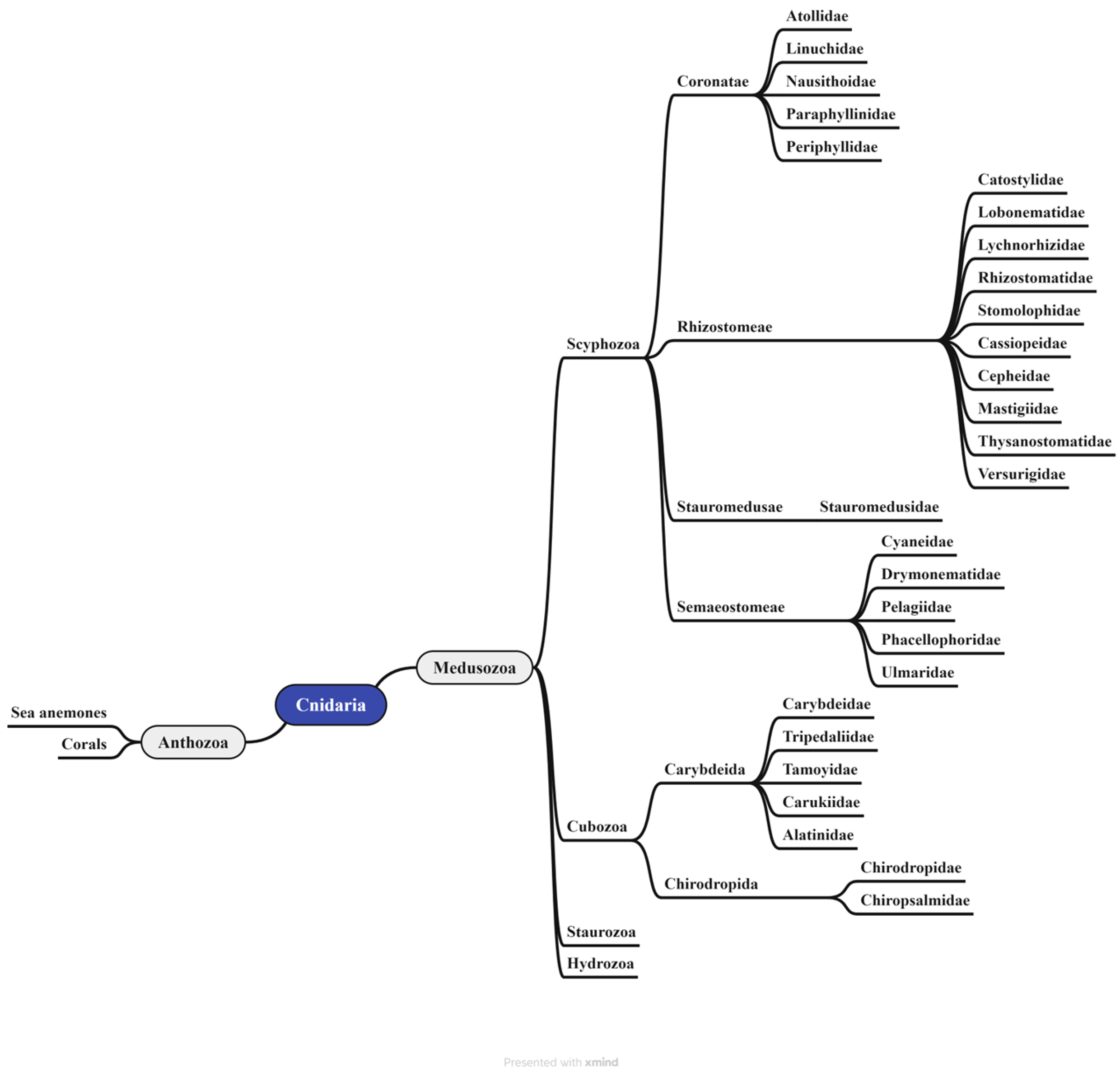
| Genus/Species | Family | Geographical Distribution | Effects | References |
|---|---|---|---|---|
| Physalia physails | Physaliidae | Cosmopolitan, the air-water interface in the pelagic ocean | Painful stings, necrotic, neurotoxic, cardiotoxic effects | [29,30,31] |
| Pelagia noctiluca | Pelagiidae | Cosmopolitan, the euphotic zone, the neritic zone | Redness, immediate pain, itching, urticaria, edema, a burning sensation, vesicles, papules and/or scabs | [32,33,34] |
| Aurelia aurita | Ulmaridae | Global temperate and subtropical shallow coastal waters | A burning pain, oedema, erythema, urticaria, ulceration, necrosis and recurrent cutaneous eruptions | [35,36] |
| Cyanea capillata | Cyaneidae | Temperate marine areas of the North Pacific and North Atlantic Ocean, the euphotic zone | Edema, a burning sensation, erythema, pain, redness, wheals | [37,38,39,40] |
| Alatina alata | Alatinidae | Tropical and subtropical coastal waters, including the region of western Atlantic Ocean and Indo-Pacific | Immediate pain, itching, persistent skin lesions, erythematous dermatitis that may be papulovesicular, hemorrhagic, or necrotic | [41,42,43] |
| Linuche unguiculata | Linuchidae | Tropical and subtropical coastal waters | Stinging or erythematous reaction | [44,45] |
| Chironex yamaguchii | Carybdeidae | Northwestern Pacific Ocean | Severe skin pain, erythema and swelling, and systemic inflammation | [46] |
| Nemopilema nomurai | Coronatae | Northwestern Pacific Ocean | Skin erythema, swelling and pain | [12] |
| Rhopilema nomadica | Rhizostomatidae | Temperate and subtropical shallow marine waters | Mild skin pruritus or erythema and swelling | [47,48] |
| Carybdea rastonii | Cyaneidae | Temperate marine areas of the North Pacific and North Atlantic Oceans | Skin erythema and swelling, severe pain, nausea, and muscle spasms | [33,49] |
| Rhizostoma pulmo | Catostylidae | Warm water regions of the Indo-West Pacific, and the Mediterranean Sea | Skin pruritus and erythema with swelling | [27,50,51] |
| Chironex fleckeri | Carybdeidae | Coastal waters of northern Australia, the lower zone of sandy beaches and estuaries | Immediate pain, line or border erythema, urticaria, edema, wheals, blister, superficial necrosis and wide, ladder-like rash | [52,53,54] |
| Linuche aquila | Linuchidae | Tropical and subtropical coastal waters | Stinging or erythematous reaction of the skin | [25,55] |
2. Physicochemical Characterization of Jellyfish Toxins
2.1. Protein Toxins
2.2. Peptide Toxins
3. Mechanism of Action of Jellyfish Toxin
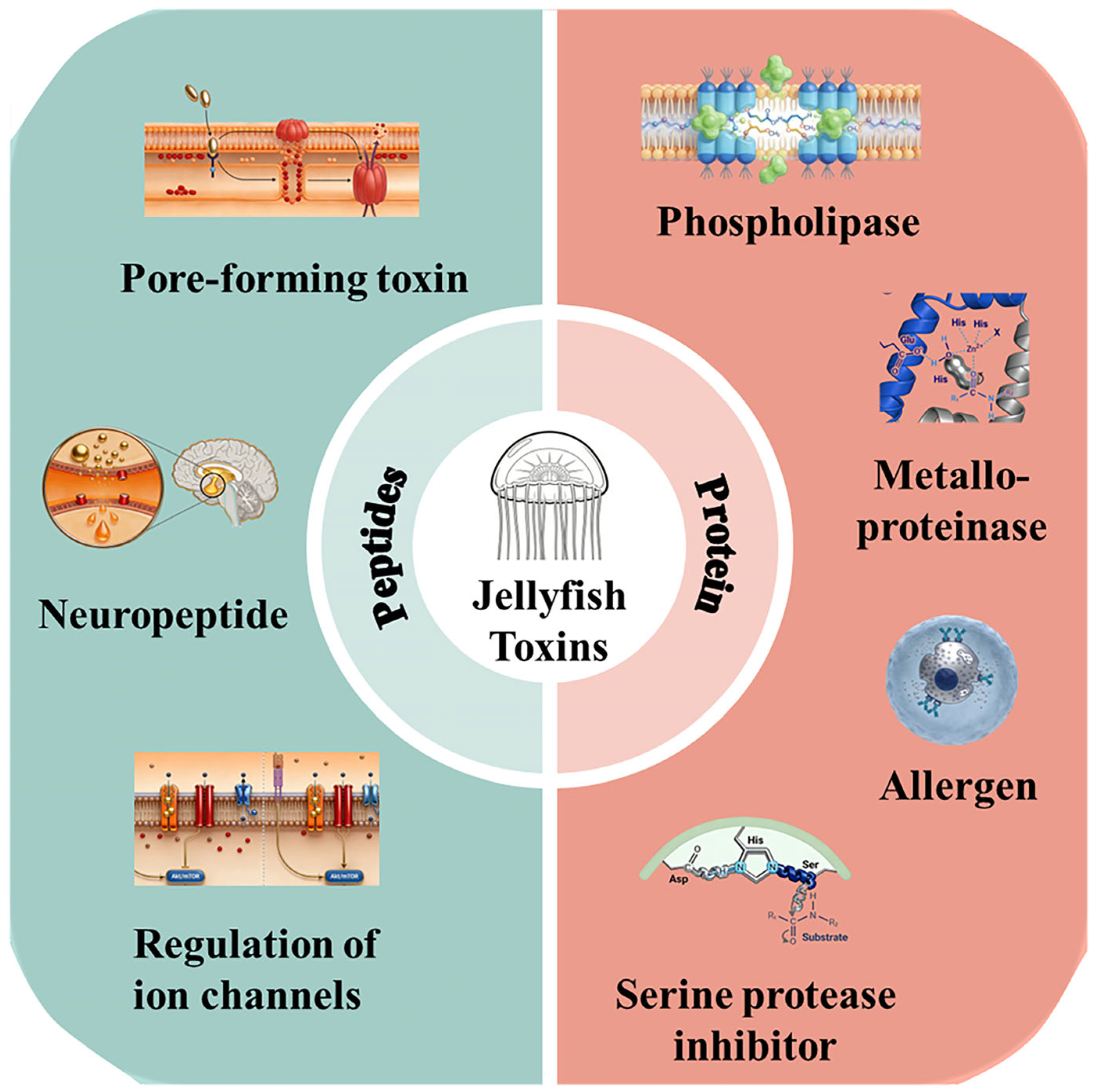
3.1. Pore-Forming Action
| Name | Family | Genus/Species | References |
|---|---|---|---|
| MAC/perforin domain containing | Rhizostomeae | Rhopilema esculentum | [67] |
| CqTX-A | Carybdeidae | Chiropsalmus quadrigatus | [68] |
| CrTX-A | Carybdea rastonii | ||
| TX-1 | Semaeostomeae | Cyanea fuscescens | [22] |
| Chrysaoralin | Pelagiidae | Chrysaora quinquecirrha | |
| TX2 | Ulmaridae | Aurelia aurita | [59] |
| Uncharacterised protein | Hydridae | Hydra vulgaris |
3.2. Enzymatic Activity
| Function | Name | Family | Genus/Species | References |
|---|---|---|---|---|
| Phospholipase | Phospholipase A2 | Rhizostomatidae | Rhopilema esculentum | [17,20] |
| PLA2G12 | Nematostellidae | Nematostella vectensis | ||
| Acidic PLA2 | Hydridae | Hydra vulgaris | [71] | |
| Metalloproteinase | Zinc metalloproteinase | Hydridae | Hydra vulgaris | |
| Endothelinconverting enzyme 1/2-like | ||||
| Carboxypeptidase D-like | Hydridae | Hydra vulgaris | [22] | |
| Aminopeptidase 2 | ||||
| Hyaluronidase | Hyaluronidase | Coronatae | Nemopilema nomurai | [69] |
3.3. Regulation of Ion Channels
3.4. Immunotoxicity
| Function | Name | Family | Genus/Species | References |
|---|---|---|---|---|
| Regulation of ion channels | kappa-stichotoxin-Shd1 a/b | Stichodactylidae | Stichodactyla haddoni | [66] |
| Calmodulin | Rhizostomatidae | Rhizostoma octopus | ||
| Mp-332-1 | Lychnorhiza malayensis | [22] | ||
| Immunotoxicity | Cysteine-rich secretory protein | Semaeostomeae | Chrysaora fuscescens | [59] |
| Cytotoxic toxins | Olindiidae | Craspedacusta sowerbyi | [75] | |
| Cell wall protein | Hydridae | Hydra vulgaris | [59] | |
| Polysaccharide JSP-11 | Rhizostomatidae | Rhopilema esculentum | [76] |
3.5. Enzyme Inhibitory Activity
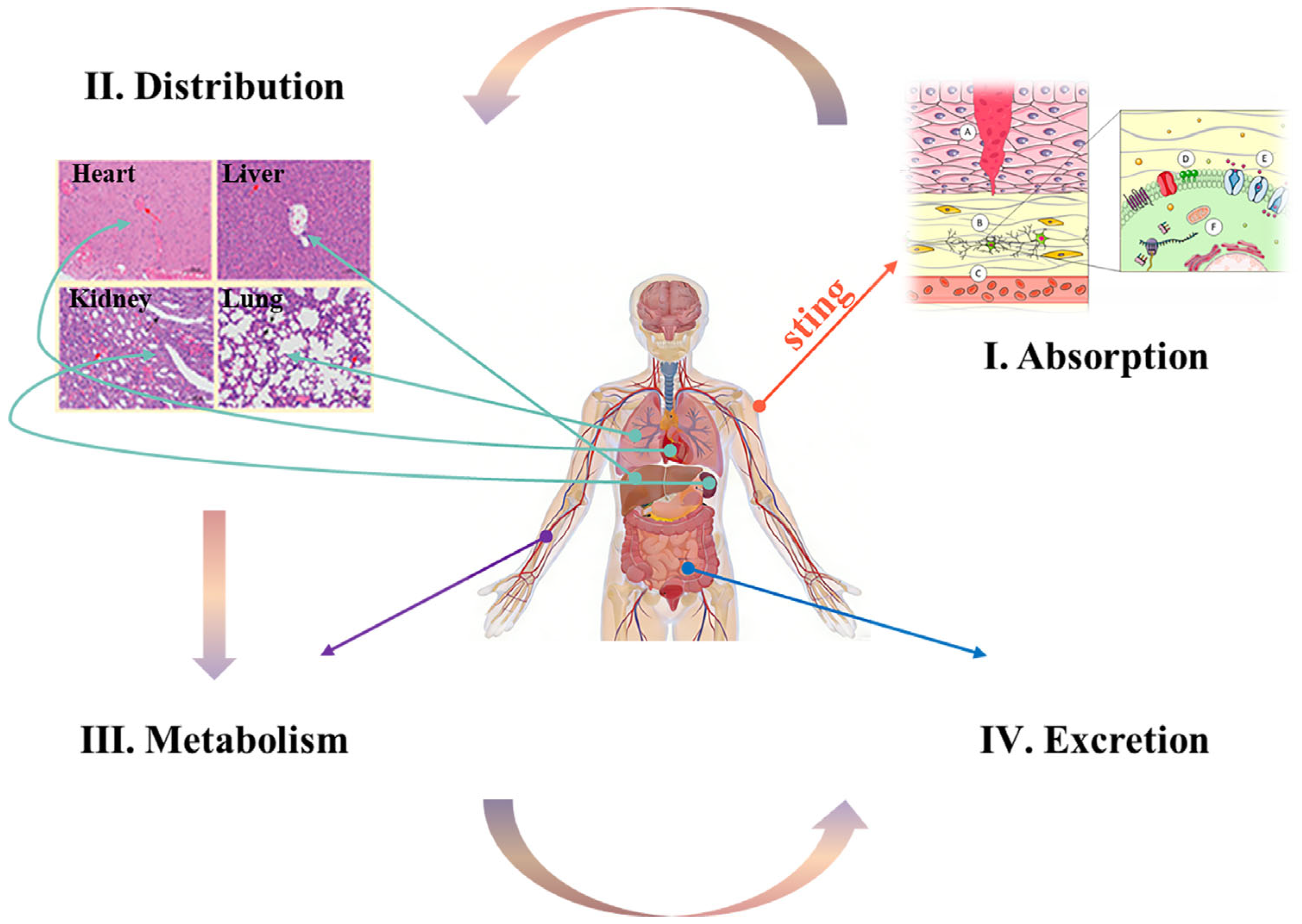
4. Biotransformation of Jellyfish Toxins In Vivo
4.1. Absorption
4.2. Distribution
4.3. Metabolism
4.4. Excretion
5. Structure–Toxicity Relationship
5.1. Primary Structure
5.2. Secondary Structure
5.3. Tertiary Structure
5.4. Quaternary Structure
5.5. Application Value
6. Future Perspectives
6.1. Identification of Novel Toxic Components
6.2. Elucidate the Mechanism of Action
6.3. New Antitoxic Drugs
6.4. Medicinal Value of Toxins
7. Conclusions
Author Contributions
Funding
Institutional Review Board Statement
Informed Consent Statement
Data Availability Statement
Conflicts of Interest
References
- Piontek, M.; Seymour, J.E.; Wong, Y.; Gilstrom, T.; Potriquet, J.; Jennings, E.; Nimmo, A.; Miles, J.J. The pathology of Chironex fleckeri venom and known biological mechanisms. Toxicon X 2020, 6, 100026. [Google Scholar] [CrossRef] [Scilit] [PubMed]
- Dutertre, S. Venomics in Medicinal Chemistry. Future Med. Chem. 2014, 6, 1609–1610. [Google Scholar] [CrossRef] [Scilit] [PubMed]
- Daly, N.L.; Seymour, J.; Wilson, D. Exploring the therapeutic potential of jellyfish venom. Future Med. Chem. 2014, 6, 1715–1724. [Google Scholar] [CrossRef] [Scilit] [PubMed]
- Cunha, S.A.; Dinis-Oliveira, R.J. Raising Awareness on the Clinical and Forensic Aspects of Jellyfish Stings: A Worldwide Increasing Threat. Int. J. Environ. Res. Public Health 2022, 19, 8430. [Google Scholar] [CrossRef] [Scilit]
- Rizman-Idid, M.; Farrah-Azwa, A.B.; Chong, V.C. Preliminary Taxonomic Survey and Molecular Documentation of Jellyfish Species (Cnidaria: Scyphozoa and Cubozoa) in Malaysia. Zool. Stud. 2016, 55, 35. [Google Scholar] [CrossRef] [Scilit]
- Santhanam, R. Biology and Ecology of the Venomous Marine True Jellyfish (Class Scyphozoa). In Biology and Ecology of Venomous Marine Cnidarians; Santhanam, R., Ed.; Springer: Singapore, 2020; pp. 75–132. [Google Scholar]
- Santhanam, R. Biology and Ecology of the Venomous Marine Box Jellyfish (Class Cubozoa). In Biology and Ecology of Venomous Marine Cnidarians; Santhanam, R., Ed.; Springer: Singapore, 2020; pp. 133–168. [Google Scholar]
- Toshino, S.; Miyake, H.; Shibata, H. Meteorona kishinouyei, a new family, genus and species (Cnidaria, Cubozoa, Chirodropida) from Japanese Waters. ZooKeys 2015, 503, 1–21. [Google Scholar] [CrossRef] [Scilit]
- James, T.; Angel, A.Y.; Helen, C.T.; Ken, W. Immunological and Toxinological Responses to Jellyfish Stings. Inflamm. Allergy—Drug Targets (Discontin.) 2011, 10, 438–446. [Google Scholar] [CrossRef] [Scilit]
- Fautin, D.G. Structural diversity, systematics, and evolution of cnidae. Toxicon 2009, 54, 1054–1064. [Google Scholar] [CrossRef] [Scilit]
- Liu, W.; Mo, F.; Jiang, G.; Liang, H.; Ma, C.; Li, T.; Zhang, L.; Xiong, L.; Mariottini, G.L.; Zhang, J.; et al. Stress-Induced Mucus Secretion and Its Composition by a Combination of Proteomics and Metabolomics of the Jellyfish Aurelia coerulea. Mar. Drugs 2018, 16, 341. [Google Scholar] [CrossRef] [Scilit]
- Hwang, D.H.; Koh, P.-O.; Mohan Prakash, R.L.; Chae, J.; Kang, C.; Kim, E. Comparative Study of Toxic Effects and Pathophysiology of Envenomations Induced by Carybdea brevipedalia (Cnidaria: Cubozoa) and Nemopilema nomurai (Cnidaria: Scyphozoa) Jellyfish Venoms. Toxins 2022, 14, 831. [Google Scholar] [CrossRef] [Scilit]
- Hwang, D.H.; Prakash, R.L.M.; Asirvatham, R.D.; Kang, C.; Kim, E. Identification and characterization of toxic components of Carybdea brevipedalia venom: Implications for understanding box jellyfish (Cnidaria: Cubozoa) envenomation. Arch. Toxicol. 2025, 99, 4263–4279. [Google Scholar] [CrossRef] [Scilit] [PubMed]
- Li, R.; Yu, H.; Li, P. Proteomics, transcriptomics and toxicity analysis of venom proteins from jellyfish Cyanea nozakii. Toxicon 2019, 159, S31–S32. [Google Scholar] [CrossRef] [Scilit]
- Yanagihara, A.A.; Giglio, M.L.; Hurwitz, K.; Kadler, R.; Espino, S.S.; Raghuraman, S.; Olivera, B.M. Elucidation of Medusozoan (Jellyfish) Venom Constituent Activities Using Constellation Pharmacology. Toxins 2024, 16, 447. [Google Scholar] [CrossRef] [Scilit] [PubMed]
- Lv, B.; Li, R.; Li, G.; Yu, H.; Liu, S.; Li, R. Purification, characterization and the hemolytic mechanism of the hemolysin NnTX-45 from the jellyfish Nemopilema nomurai. Toxicon 2025, 266, 108537. [Google Scholar] [CrossRef] [Scilit]
- Li, R.; Yu, H.; Yue, Y.; Li, P. Combined Proteome and Toxicology Approach Reveals the Lethality of Venom Toxins from Jellyfish Cyanea nozakii. J. Proteome Res. 2018, 17, 3904–3913. [Google Scholar] [CrossRef] [Scilit]
- Choudhary, I.; Lee, H.; Pyo, M.J.; Heo, Y.; Chae, J.; Yum, S.S.; Kang, C.; Kim, E. Proteomic Investigation to Identify Anticancer Targets of Nemopilema nomurai Jellyfish Venom in Human Hepatocarcinoma HepG2 Cells. Toxins 2018, 10, 194. [Google Scholar] [CrossRef] [Scilit]
- Choudhary, I.; Hwang, D.H.; Lee, H.; Yoon, W.D.; Chae, J.; Han, C.H.; Yum, S.; Kang, C.; Kim, E. Proteomic Analysis of Novel Components of Nemopilema nomurai Jellyfish Venom: Deciphering the Mode of Action. Toxins 2019, 11, 153. [Google Scholar] [CrossRef] [Scilit]
- Li, R.; Yu, H.; Yue, Y.; Liu, S.; Xing, R.; Chen, X.; Li, P. Combined proteomics and transcriptomics identifies sting-related toxins of jellyfish Cyanea nozakii. J. Proteom. 2016, 148, 57–64. [Google Scholar] [CrossRef] [Scilit]
- Edirisinghe, E.A.H.W.; Athukorala, B.N.; Perera, M.; Abeywardana, B.A.S.D.; Sigera, P.S.T.; Eranga, P.; Theekshana, K.D.; Boudjelal, M.; Ali, R.; Peiris, D.C. Jellyfish Venom Peptides Targeting Human Potassium Channels Identified through Ligand Screening: Morphometric and Molecular Identification of the Species and Antibiotic Potential. Mar. Drugs 2024, 22, 333. [Google Scholar] [CrossRef] [Scilit]
- Riyas, A.; Kumar, A.; Chandran, M.; Jaleel, A.; Biju Kumar, A. The venom proteome of three common scyphozoan jellyfishes (Chrysaora caliparea, Cyanea nozakii and Lychnorhiza malayensis) (Cnidaria: Scyphozoa) from the coastal waters of India. Toxicon 2021, 195, 93–103. [Google Scholar] [CrossRef] [Scilit]
- Leung, T.C.N.; Qu, Z.; Nong, W.; Hui, J.H.L.; Ngai, S.M. Proteomic Analysis of the Venom of Jellyfishes Rhopilema esculentum and Sanderia malayensis. Mar. Drugs 2020, 18, 655. [Google Scholar] [CrossRef] [Scilit] [PubMed]
- Li, X.; Ma, X.; Chen, X.; Wang, T.; Liu, Q.; Wang, Y.; Li, Z.; Höfer, J.; Li, F.; Xiao, L.; et al. The medusa of Aurelia coerulea is similar to its polyp in molecular composition and different from the medusa of Stomolophus meleagris in toxicity. Toxicon 2022, 210, 89–99. [Google Scholar] [CrossRef] [Scilit] [PubMed]
- Chuan, C.H.; Venmathi Maran, B.A.; Yap, T.K.; Cheong, K.C.; Syed Hussein, M.A.; Saleh, E. New Records of Cubozoan and Scyphozoan Jellyfish from Sabah Waters, Malaysia. Diversity 2021, 13, 420. [Google Scholar] [CrossRef] [Scilit]
- Yasanga, T.; Wunnapuk, K.; Phuackchantuck, R.; Thaikruea, L.; Achalawitkun, T.; Rungraung, P.; Santidherakul, S. Updated Nematocyst Types in Tentacle of Venomous Box Jellyfish, Chironex indrasaksajiae (Sucharitakul, 2017) and Chiropsoides buitendijki (Horst, 1907) (Cnidaria, Cubozoa) in Thai Waters. Toxins 2025, 17, 44. [Google Scholar] [CrossRef] [Scilit]
- Ballesteros, A.; Marambio, M.; Trullas, C.; Jourdan, E.; Tena-Medialdea, J.; Gili, J.-M. Effect of Rinse Solutions on Rhizostoma pulmo (Cnidaria: Scyphozoa) Stings and the Ineffective Role of Vinegar in Scyphozoan Jellyfish Species. Int. J. Environ. Res. Public Health 2023, 20, 2344. [Google Scholar] [CrossRef] [Scilit]
- Thaikruea, L. Differences in clinical manifestations between cases stung by single-tentacle and multiple-tentacle box jellyfish over two decades. Heliyon 2023, 9, e16374. [Google Scholar] [CrossRef] [Scilit]
- Colaço Martins, L.; Gomes-Pereira, J.N.; Dionísio, G.; Assis, J. Unravelling environmental drivers and patterns of Portuguese man o’ war (Physalia physalis) blooms in two ocean regions: North Atlantic and the Southeast Pacific. Mar. Pollut. Bull. 2024, 209, 117278. [Google Scholar] [CrossRef] [Scilit]
- Wilcox, C.; Headlam, J.; Doyle, T.; Yanagihara, A. Assessing the Efficacy of First-Aid Measures in Physalia sp. Envenomation, Using Solution- and Blood Agarose-Based Models. Toxins 2017, 9, 149. [Google Scholar] [CrossRef] [Scilit]
- Labadie, M.; Aldabe, B.; Ong, N.; Joncquiert-Latarjet, A.; Groult, V.; Poulard, A.; Coudreuse, M.; Cordier, L.; Rolland, P.; Chanseau, P.; et al. Portuguese man-of-war (Physalia physalis) envenomation on the Aquitaine Coast of France: An emerging health risk. Clin. Toxicol. 2012, 50, 567–570. [Google Scholar] [CrossRef] [Scilit]
- Miller, B.J.; von der Heyden, S.; Gibbons, M.J. Significant population genetic structuring of the holoplanktic scyphozoan Pelagia noctiluca in the Atlantic Ocean. Afr. J. Mar. Sci. 2012, 34, 425–430. [Google Scholar] [CrossRef] [Scilit]
- Tibballs, J. Australian venomous jellyfish, envenomation syndromes, toxins and therapy. Toxicon 2006, 48, 830–859. [Google Scholar] [CrossRef] [Scilit] [PubMed]
- Ballesteros, A.; Marambio, M.; Fuentes, V.; Narda, M.; Santín, A.; Gili, J.-M. Differing Effects of Vinegar on Pelagia noctiluca (Cnidaria: Scyphozoa) and Carybdea marsupialis (Cnidaria: Cubozoa) Stings—Implications for First Aid Protocols. Toxins 2021, 13, 509. [Google Scholar] [CrossRef] [Scilit] [PubMed]
- Remigante, A.; Costa, R.; Morabito, R.; La Spada, G.; Marino, A.; Dossena, S. Impact of Scyphozoan Venoms on Human Health and Current First Aid Options for Stings. Toxins 2018, 10, 133. [Google Scholar] [CrossRef] [Scilit] [PubMed]
- Hamner, W.M.; Dawson, M.N. A review and synthesis on the systematics and evolution of jellyfish blooms: Advantageous aggregations and adaptive assemblages. Hydrobiologia 2008, 616, 161–191. [Google Scholar] [CrossRef] [Scilit]
- Doyle, T.; Headlam, J.; Wilcox, C.; MacLoughlin, E.; Yanagihara, A. Evaluation of Cyanea capillata Sting Management Protocols Using Ex Vivo and In Vitro Envenomation Models. Toxins 2017, 9, 215. [Google Scholar] [CrossRef] [Scilit]
- Helmholz, H.; Ruhnau, C.; Schütt, C.; Prange, A. Comparative study on the cell toxicity and enzymatic activity of two northern scyphozoan species Cyanea capillata (L.) and Cyanea lamarckii (Péron & Léslieur). Toxicon 2007, 50, 53–64. [Google Scholar] [CrossRef] [Scilit]
- Cegolon, L.; Heymann, W.; Lange, J.; Mastrangelo, G. Jellyfish Stings and Their Management: A Review. Mar. Drugs 2013, 11, 523–550. [Google Scholar] [CrossRef] [Scilit]
- Badré, S. Bioactive toxins from stinging jellyfish. Toxicon 2014, 91, 114–125. [Google Scholar] [CrossRef] [Scilit]
- Lewis, C.; Bentlage, B.; Yanagihara, A.; Gillan, W.; Blerk, J.V.; Keil, D.P.; Bely, A.E.; Collins, A.G. Redescription of Alatina alata (Reynaud, 1830) (Cnidaria: Cubozoa) from Bonaire, Dutch Caribbean. Zootaxa 2013, 3737, 473–487. [Google Scholar] [CrossRef] [Scilit]
- Lawley, J.W.; Ames, C.L.; Bentlage, B.; Yanagihara, A.; Goodwill, R.; Kayal, E.; Hurwitz, K.; Collins, A.G. Box Jellyfish Alatina alata Has a Circumtropical Distribution. Biol. Bull. 2016, 231, 152–169. [Google Scholar] [CrossRef] [Scilit]
- McGee, R.G.; Webster, A.C.; Lewis, S.R.; Welsford, M. Interventions for the symptoms and signs resulting from jellyfish stings. Cochrane Database Syst. Rev. 2023, 2023, CD009688. [Google Scholar] [CrossRef] [Scilit]
- Rossetto, A.L.; Proença, L.A.d.O. Seabather’s eruption: Report of case in northeast region of Brazil. An. Bras. Dermatol. 2012, 87, 472–474. [Google Scholar] [CrossRef] [Scilit] [PubMed]
- Eyer-Silva, W.d.A.; Pitombo, F.B.; Silva, G.A.R.d. Seabather’s eruption in Ipanema Beach, Rio de Janeiro, Brazil. Rev. Soc. Bras. Med. Trop. 2018, 51, 119. [Google Scholar] [CrossRef] [Scilit] [PubMed]
- Horiike, T.; Nagai, H.; Kitani, S. Identification of Allergens in the Box Jellyfish Chironex yamaguchii That Cause Sting Dermatitis. Int. Arch. Allergy Immunol. 2015, 167, 73–82. [Google Scholar] [CrossRef] [Scilit]
- Giallongo, G.; Douek, J.; Harbuzov, Z.; Galil, B.S.; Rinkevich, B. Long-term changes in population genetic features of a rapidly expanding marine invader: Implication for invasion success. Biol. Invasions 2021, 23, 2541–2552. [Google Scholar] [CrossRef] [Scilit]
- Uri, S.; Marina, G.; Liubov, G. Severe delayed cutaneous reaction due to Mediterranean jellyfish (Rhopilema nomadica) envenomation. Contact Dermat. 2005, 52, 282–283. [Google Scholar] [CrossRef] [Scilit]
- Hammill, E.; Johnson, E.; Atwood, T.B.; Harianto, J.; Hinchliffe, C.; Calosi, P.; Byrne, M. Ocean acidification alters zooplankton communities and increases top-down pressure of a cubozoan predator. Glob. Change Biol. 2017, 24, E128–E138. [Google Scholar] [CrossRef] [Scilit]
- Mariottini, G.L.; Pane, L. Mediterranean Jellyfish Venoms: A Review on Scyphomedusae. Mar. Drugs 2010, 8, 1122–1152. [Google Scholar] [CrossRef] [Scilit]
- Leoni, V.; Bonnet, D.; Ramírez-Romero, E.; Molinero, J.C.; Pandolfi, J. Biogeography and phenology of the jellyfish Rhizostoma pulmo (Cnidaria: Scyphozoa) in southern European seas. Glob. Ecol. Biogeogr. 2021, 30, 622–639. [Google Scholar] [CrossRef] [Scilit]
- Ramasamy, S.; Isbister, G.K.; Seymour, J.E.; Hodgson, W.C. Pharmacologically distinct cardiovascular effects of box jellyfish (Chironex fleckeri) venom and a tentacle-only extract in rats. Toxicol. Lett. 2005, 155, 219–226. [Google Scholar] [CrossRef] [Scilit]
- Winter, K.L.; Isbister, G.K.; McGowan, S.; Konstantakopoulos, N.; Seymour, J.E.; Hodgson, W.C. A pharmacological and biochemical examination of the geographical variation of Chironex fleckeri venom. Toxicol. Lett. 2010, 192, 419–424. [Google Scholar] [CrossRef] [Scilit] [PubMed]
- Auerbach, P.S.; Gupta, D.; Van Hoesen, K.; Zavala, A. Dermatological Progression of a Probable Box Jellyfish Sting. Wilderness Environ. Med. 2019, 30, 310–320. [Google Scholar] [CrossRef] [Scilit] [PubMed]
- Guevara, B.E.K.; Dayrit, J.F.; Haddad, V., Jr. Seabather’s eruption caused by the thimble jellyfish (Linuche aquila) in the Philippines. Clin. Exp. Dermatol. 2017, 42, 808–810. [Google Scholar] [CrossRef] [Scilit] [PubMed]
- Li, Y.; Qiu, Z.; Li, B.; Geng, X.; Yu, X.; Li, Y.; Li, W.; Yang, J. Jellyfish Venom-Induced Cardiotoxicity and Immune Responses: Mechanisms and Potential Therapeutic Strategies. Mar. Drugs 2025, 23, 369. [Google Scholar] [CrossRef] [Scilit]
- Asirvatham, R.D.; Hwang, D.H.; Prakash, R.L.M.; Kang, C.; Kim, E. Pharmacoinformatic Investigation of Silymarin as a Potential Inhibitor against Nemopilema nomurai Jellyfish Metalloproteinase Toxin-like Protein. Int. J. Mol. Sci. 2023, 24, 8972. [Google Scholar] [CrossRef] [Scilit]
- Brinkman, D.L.; Jia, X.; Potriquet, J.; Kumar, D.; Dash, D.; Kvaskoff, D.; Mulvenna, J. Transcriptome and venom proteome of the box jellyfish Chironex fleckeri. BMC Genom. 2015, 16, 407. [Google Scholar] [CrossRef] [Scilit]
- Ponce, D.; Brinkman, D.; Potriquet, J.; Mulvenna, J. Tentacle Transcriptome and Venom Proteome of the Pacific Sea Nettle, Chrysaora fuscescens (Cnidaria: Scyphozoa). Toxins 2016, 8, 102. [Google Scholar] [CrossRef] [Scilit]
- Ponce, D.; Brinkman, D.L.; Luna-Ramírez, K.; Wright, C.E.; Dorantes-Aranda, J.J. Comparative study of the toxic effects of Chrysaora quinquecirrha (Cnidaria: Scyphozoa) and Chironex fleckeri (Cnidaria: Cubozoa) venoms using cell-based assays. Toxicon 2015, 106, 57–67. [Google Scholar] [CrossRef] [Scilit]
- Lakkis, N.A.; Maalouf, G.J.; Mahmassani, D.M. Jellyfish Stings: A Practical Approach. Wilderness Environ. Med. 2015, 26, 422–429. [Google Scholar] [CrossRef] [Scilit]
- Amreen Nisa, S.; Vinu, D.; Krupakar, P.; Govindaraju, K.; Sharma, D.; Vivek, R. Jellyfish venom proteins and their pharmacological potentials: A review. Int. J. Biol. Macromol. 2021, 176, 424–436. [Google Scholar] [CrossRef] [Scilit]
- Shi, M.; McHugh, K.J. Strategies for overcoming protein and peptide instability in biodegradable drug delivery systems. Adv. Drug Deliv. Rev. 2023, 199, 114904. [Google Scholar] [CrossRef] [Scilit] [PubMed]
- Dziubak, D.; Sęk, S. Sparsely tethered bilayer lipid membranes formed by self-assembly of bicelles: Spectroelectrochemical characterization and incorporation of transmembrane protein. Bioelectrochemistry 2023, 153, 108482. [Google Scholar] [CrossRef] [Scilit] [PubMed]
- Cosentino, K.; Ros, U.; García-Sáez, A.J. Assembling the puzzle: Oligomerization of α-pore forming proteins in membranes. Biochim. Biophys. Acta (BBA)—Biomembr. 2016, 1858, 457–466. [Google Scholar] [CrossRef] [Scilit] [PubMed]
- Chong, S.Y.; Naidu, R.; Othman, I.; Zainal Abidin, S.A. Consolidation of venom proteomes from major Cnidarian species (Scyphozoa and Cubozoa) obtained using liquid chromatography-tandem mass spectrometry. Toxicon 2025, 265, 108491. [Google Scholar] [CrossRef] [Scilit]
- Wang, C.; Wang, B.; Wang, B.; Wang, Q.; Liu, G.; Wang, T.; He, Q.; Zhang, L. Unique Diversity of Sting-Related Toxins Based on Transcriptomic and Proteomic Analysis of the Jellyfish Cyanea capillata and Nemopilema nomurai (Cnidaria: Scyphozoa). J. Proteome Res. 2018, 18, 436–448. [Google Scholar] [CrossRef] [Scilit]
- Li, R.; Yu, H.; Li, T.; Li, P. Comprehensive Proteome Reveals the Key Lethal Toxins in the Venom of Jellyfish Nemopilema nomurai. J. Proteome Res. 2020, 19, 2491–2500. [Google Scholar] [CrossRef] [Scilit]
- Lee, H.; Jung, E.-s.; Kang, C.; Yoon, W.D.; Kim, J.-S.; Kim, E. Scyphozoan jellyfish venom metalloproteinases and their role in the cytotoxicity. Toxicon 2011, 58, 277–284. [Google Scholar] [CrossRef] [Scilit]
- Kollet, O.; Das, A.; Karamanos, N.; auf dem Keller, U.; Sagi, I. Redefining metalloproteases specificity through network proteolysis. Trends Mol. Med. 2024, 30, 147–163. [Google Scholar] [CrossRef] [Scilit]
- Singh, G.; Yadav, M.; Ghosh, C.; Rathore, J.S. Bacterial toxin-antitoxin modules: Classification, functions, and association with persistence. Curr. Res. Microb. Sci. 2021, 2, 100047. [Google Scholar] [CrossRef] [Scilit]
- Catterall, W.A.; Cestèle, S.; Yarov-Yarovoy, V.; Yu, F.H.; Konoki, K.; Scheuer, T. Voltage-gated ion channels and gating modifier toxins. Toxicon 2007, 49, 124–141. [Google Scholar] [CrossRef] [Scilit]
- Xiao, L.; He, Q.; Guo, Y.; Zhang, J.; Nie, F.; Li, Y.; Ye, X.; Zhang, L. Cyanea capillata tentacle-only extract as a potential alternative of nematocyst venom: Its cardiovascular toxicity and tolerance to isolation and purification procedures. Toxicon 2009, 53, 146–152. [Google Scholar] [CrossRef] [Scilit] [PubMed]
- Rato, L.D.; Pinto, C.; Duarte, I.M.; Leandro, S.M.; Marques, S.C. Euryhalinity and thermal tolerance of Phyllorhiza punctata (Scyphozoa) scyphostomae: Life history and physiological trade-offs. Mar. Biol. 2021, 168, 158. [Google Scholar] [CrossRef] [Scilit]
- Casafús, M.G.; Gritti, M.A.; Miranda, C.; Guimarães, P.; Montalto, L.; Peichoto, M.E. Freshwater jellyfish in northeastern Argentina: A risk to human health. Trans. R. Soc. Trop. Med. Hyg. 2025, 119, 48–57. [Google Scholar] [CrossRef] [Scilit] [PubMed]
- Li, Q.-M.; Wang, J.-F.; Zha, X.-Q.; Pan, L.-H.; Zhang, H.-L.; Luo, J.-P. Structural characterization and immunomodulatory activity of a new polysaccharide from jellyfish. Carbohydr. Polym. 2017, 159, 188–194. [Google Scholar] [CrossRef] [Scilit]
- Prakash, R.L.M.; Ravi, D.A.; Hwang, D.H.; Kang, C.; Kim, E. Characterization of Novel ACE-Inhibitory Peptides from Nemopilema nomurai Jellyfish Venom Hydrolysate: In Vitro and In Silico Approaches. Mar. Drugs 2025, 23, 267. [Google Scholar] [CrossRef] [Scilit]
- Cole, E.B.; Miller, D.; Rometo, D.; Greenberg, R.M.; Brömme, D.; Çataltepe, S.; Pak, S.C.; Mills, D.R.; Silverman, G.A.; Luke, C.J. Identification and Activity of a Lower Eukaryotic Serine Proteinase Inhibitor (Serpin) from Cyanea capillata: Analysis of a Jellyfish Serpin, Jellypin. Biochemistry 2004, 43, 11750–11759. [Google Scholar] [CrossRef] [Scilit]
- Zhou, Y.; Liu, G.; Cheng, X.; Wang, Q.; Wang, B.; Wang, B.; Zhang, H.; He, Q.; Zhang, L. Antimicrobial activity of a newly identified Kazal-type serine proteinase inhibitor, CcKPI1, from the jellyfish Cyanea capillata. Int. J. Biol. Macromol. 2018, 107, 1945–1955. [Google Scholar] [CrossRef] [Scilit]
- Rivera-de-Torre, E.; Palacios-Ortega, J.; Gavilanes, J.; Martínez-del-Pozo, Á.; García-Linares, S. Pore-Forming Proteins from Cnidarians and Arachnids as Potential Biotechnological Tools. Toxins 2019, 11, 370. [Google Scholar] [CrossRef] [Scilit]
- Have, G.A.M.T.; Engelen, M.P.K.J.; Luiking, Y.C.; Deutz, N.E.P. Absorption Kinetics of Amino Acids, Peptides, and Intact Proteins. Int. J. Sport Nutr. Exerc. Metab. 2007, 17, S23–S36. [Google Scholar] [CrossRef] [Scilit]
- Chmiel, T.; Mieszkowska, A.; Kempińska-Kupczyk, D.; Kot-Wasik, A.; Namieśnik, J.; Mazerska, Z. The impact of lipophilicity on environmental processes, drug delivery and bioavailability of food components. Microchem. J. 2019, 146, 393–406. [Google Scholar] [CrossRef] [Scilit]
- Conner, K.P.; Devanaboyina, S.C.; Thomas, V.A.; Rock, D.A. The biodistribution of therapeutic proteins: Mechanism, implications for pharmacokinetics, and methods of evaluation. Pharmacol. Ther. 2020, 212, 107574. [Google Scholar] [CrossRef] [Scilit] [PubMed]
- Li, M.; Guo, H.; Wang, L.; Tao, R.; Song, G.; Cao, L.; Yan, W.; Wu, Z.; Liu, Q.; Chen, Y.; et al. A plasmid-encoded inactive toxin–antitoxin system MtvT/MtvA regulates plasmid conjugative transfer and bacterial virulence in Pseudomonas aeruginosa. Nucleic Acids Res. 2025, 53, gkaf075. [Google Scholar] [CrossRef] [Scilit] [PubMed]
- Flores-Holguín, N.; Salas-Leiva, J.S.; Núñez-Vázquez, E.J.; Tovar-Ramírez, D.; Glossman-Mitnik, D. Exploring marine toxins: Comparative analysis of chemical reactivity properties and potential for drug discovery. Front. Chem. 2023, 11, 1286804. [Google Scholar] [CrossRef] [Scilit]
- Andreosso, A.; Bansal, P.S.; Smout, M.J.; Wilson, D.; Seymour, J.E.; Daly, N.L. Structural Characterisation of Predicted Helical Regions in the Chironex fleckeri CfTX-1 Toxin. Mar. Drugs 2018, 16, 201. [Google Scholar] [CrossRef] [Scilit]
- Jia, Y.; Cocker, C.; Sampath, J. Insights into Protein Unfolding under pH, Temperature, and Shear Using Molecular Dynamics Simulations. Biomacromolecules 2025, 26, 2095–2105. [Google Scholar] [CrossRef] [Scilit]
- Toldrá, F.; Reig, M.; Aristoy, M.C.; Mora, L. Generation of bioactive peptides during food processing. Food Chem. 2018, 267, 395–404. [Google Scholar] [CrossRef] [Scilit]
- Li, Y.; Ma, J.; Li, Y.; Shen, X.; Xia, X. Microbial community and enzyme activity respond differently to seasonal and edaphic factors in forest and grassland ecosystems. Appl. Soil Ecol. 2024, 194, 105167. [Google Scholar] [CrossRef] [Scilit]
- Danso, B.; Fengling, Y.; Hua, X.; Zhang, J.; Chen, J.; Yao, Y.; Pozzolini, M.; Wang, F.; Xiao, L.; Ruixue, H. Potential inhibitors of metalloproteinases (MMPs) and phospholipases from Nemopilema nomurai jellyfish peptides: An in-silico pharmacokinetics and molecular docking studies. Toxicon 2025, 263, 108421. [Google Scholar] [CrossRef] [Scilit]
- Qiu, S.; Cai, Y.; Yao, H.; Lin, C.; Xie, Y.; Tang, S.; Zhang, A. Small molecule metabolites: Discovery of biomarkers and therapeutic targets. Signal Transduct. Target. Ther. 2023, 8, 132. [Google Scholar] [CrossRef] [Scilit]
- Akinniyi, G.; Akinboye, A.J.; Yang, I.; Lee, J.-G. Plant proteins, peptides, and non-protein amino acids: Toxicity, sources, and analysis. Heliyon 2024, 10, e34890. [Google Scholar] [CrossRef] [Scilit]
- Hofmann, A.F. Biliary secretion and excretion in health and disease: Current concepts. Ann. Hepatol. 2007, 6, 15–27. [Google Scholar] [CrossRef] [Scilit]
- Li, Y.; Li, Y.; Mengist, H.M.; Shi, C.; Zhang, C.; Wang, B.; Li, T.; Huang, Y.; Xu, Y.; Jin, T. Structural Basis of the Pore-Forming Toxin/Membrane Interaction. Toxins 2021, 13, 128. [Google Scholar] [CrossRef] [Scilit]
- Zhao, Z.; Gui, J.; Yao, A.; Le, N.Q.K.; Chua, M.C.H. Improved Prediction Model of Protein and Peptide Toxicity by Integrating Channel Attention into a Convolutional Neural Network and Gated Recurrent Units. ACS Omega 2022, 7, 40569–40577. [Google Scholar] [CrossRef] [Scilit]
- Williams, D.F. Biocompatibility pathways and mechanisms for bioactive materials: The bioactivity zone. Bioact. Mater. 2022, 10, 306–322. [Google Scholar] [CrossRef] [Scilit]
- Lahiani, A.; Yavin, E.; Lazarovici, P. The Molecular Basis of Toxins’ Interactions with Intracellular Signaling via Discrete Portals. Toxins 2017, 9, 107. [Google Scholar] [CrossRef] [Scilit]
- Wang, Y.; Yang, F.; Wang, Y.; Liu, C.; Hua, X.; Wang, L.; Zu, X.; Liu, X.; Pozzolini, M.; Zhu, Y.; et al. Insight of protease and PLA2 activity co-inhibition on jellyfish toxin-induced inflammation and multiple organ dysfunction. Int. J. Biol. Macromol. 2025, 323, 147167. [Google Scholar] [CrossRef] [Scilit]
- Jouiaei, M.; Casewell, N.; Yanagihara, A.; Nouwens, A.; Cribb, B.; Whitehead, D.; Jackson, T.; Ali, S.; Wagstaff, S.; Koludarov, I.; et al. Firing the Sting: Chemically Induced Discharge of Cnidae Reveals Novel Proteins and Peptides from Box Jellyfish (Chironex fleckeri) Venom. Toxins 2015, 7, 936–950. [Google Scholar] [CrossRef] [Scilit]
- Damm, M.; Vilcinskas, A.; Lüddecke, T. Mapping the architecture of animal toxin systems by mass spectrometry imaging. Biotechnol. Adv. 2025, 81, 108548. [Google Scholar] [CrossRef] [Scilit]
- Rosson, E.; Lux, F.; David, L.; Godfrin, Y.; Tillement, O.; Thomas, E. Focus on therapeutic peptides and their delivery. Int. J. Pharm. 2025, 675, 125555. [Google Scholar] [CrossRef] [Scilit]
- Hwang, D.H.; Lee, H.; Choudhary, I.; Kang, C.; Chae, J.; Kim, E. Protective effect of epigallocatechin-3-gallate (EGCG) on toxic metalloproteinases-mediated skin damage induced by Scyphozoan jellyfish envenomation. Sci. Rep. 2020, 10, 18644. [Google Scholar] [CrossRef] [Scilit]


Disclaimer/Publisher’s Note: The statements, opinions and data contained in all publications are solely those of the individual author(s) and contributor(s) and not of MDPI and/or the editor(s). MDPI and/or the editor(s) disclaim responsibility for any injury to people or property resulting from any ideas, methods, instructions or products referred to in the content. |
© 2026 by the authors. Licensee MDPI, Basel, Switzerland. This article is an open access article distributed under the terms and conditions of the Creative Commons Attribution (CC BY) license.
Share and Cite
Wang, P.; Li, L.; Kong, C.; Fu, Z.; Li, Y.; Chi, H. A Review of the Chemical Properties, Mechanisms of Action, and Structure–Activity Relationships of Jellyfish Toxins. Curr. Issues Mol. Biol. 2026, 48, 350. https://doi.org/10.3390/cimb48040350
Wang P, Li L, Kong C, Fu Z, Li Y, Chi H. A Review of the Chemical Properties, Mechanisms of Action, and Structure–Activity Relationships of Jellyfish Toxins. Current Issues in Molecular Biology. 2026; 48(4):350. https://doi.org/10.3390/cimb48040350
Chicago/Turabian StyleWang, Peng, Long Li, Cong Kong, Zhiyu Fu, Yunfeng Li, and Hai Chi. 2026. "A Review of the Chemical Properties, Mechanisms of Action, and Structure–Activity Relationships of Jellyfish Toxins" Current Issues in Molecular Biology 48, no. 4: 350. https://doi.org/10.3390/cimb48040350
APA StyleWang, P., Li, L., Kong, C., Fu, Z., Li, Y., & Chi, H. (2026). A Review of the Chemical Properties, Mechanisms of Action, and Structure–Activity Relationships of Jellyfish Toxins. Current Issues in Molecular Biology, 48(4), 350. https://doi.org/10.3390/cimb48040350