


Abstract
Prostate cancer frequently progresses to lethal, drug-resistant castration-resistant prostate cancer (CRPC), where conventional therapies often fail due to intrinsic and acquired resistance mechanisms. This resistance creates a critical therapeutic impasse, leaving patients with limited options and poor prognoses. Immunotherapy has emerged as a promising strategy to harness the immune system against these treatment-refractory tumors, offering a potential avenue to overcome the immunosuppressive barriers that underlie CRPC drug resistance. This review synthesizes findings from a structured search of PubMed, Web of Science, and Embase (2020–2025), revealing significant clinical progress: 4 vaccine trials, 5 immune checkpoint inhibitor trials, 18 combination therapy trials (≥2 agents), and 6 targeted drug trials have been conducted. Preliminary efficacy was observed in novel approaches like bispecific antibodies (e.g., Xaluritamig achieving 59% PSA50 response), PSMA-CAR-T (P-PSMA-101), and oncolytic viruses (Ad5 PSA/MUC-1/brachyury). Basic research identified four targeted resistance mechanisms (e.g., AR-LLT1, Pygo2, and HnRNP L) and one nanoparticle-mediated triple-combination therapy (CM-AMS@AD NPs integrating photothermal, chemotherapy, and immunotherapy), which enhanced cytotoxic T-cell infiltration and suppressed CRPC growth preclinically. These collective findings suggest the potential of immunotherapy for CRPC in overcoming resistance barriers and improving patient outcomes, with bispecific T cell engagers (Xaluritamig, 59% PSA50) and PSMA-directed CAR-T therapy (P-PSMA-101, >50% PSA reduction) emerging as the most promising near-term candidates and biomarker-stratified combinations (nivolumab plus rucaparib, 84.6% PSA50, in HRR-deficient patients) illustrating the transformative power of precision patient selection; however, these findings require validation in larger, biomarker-stratified trials before definitive conclusions can be drawn. Translating this potential into clinical reality requires optimized patient selection through predictive biomarkers and rigorously validated Phase III trials to confirm durable clinical responses and long-term survival benefits.
1. Introduction
Castration-resistant prostate cancer (CRPC) marks a critical, often fatal stage of progression where tumors develop resistance to initially effective therapies. While standard androgen-deprivation therapy (ADT) [1], chemotherapy (e.g., taxanes) [2], and next-generation androgen receptor (AR) inhibitors (e.g., enzalutamide and abiraterone) [3,4] demonstrate initial clinical benefit, therapeutic efficacy diminishes over time as tumors evolve escape mechanisms. Ultimately, virtually all patients progress to CRPC through androgen-dependent adaptations (AR splice variants [5] or AR overexpression [3]) or androgen-independent pathways (DNA repair defects [6], PI3K/AKT/mTOR [7], or neuroendocrine differentiation) [8]. This universal resistance has created an urgent therapeutic impasse, with metastatic CRPC (mCRPC) remaining the fifth leading cause of cancer death globally [9]. Immunotherapy has emerged as a promising strategy to harness the immune system against treatment-refractory tumors. However, prostate cancer’s immunologically “cold” phenotype—characterized by a low tumor mutational burden, sparse cytotoxic T-cell infiltration [10], and an immunosuppressive microenvironment—has historically limited the efficacy of monotherapies like immune checkpoint inhibitors (ICIs) [11].
Over the past five years (2020–2025), significant progress has been made across clinical and preclinical domains. Clinically, combination strategies have demonstrated enhanced efficacy: ICIs paired with chemotherapy (e.g., pembrolizumab + docetaxel in KEYNOTE-921; median OS: 19.6 months) [12], radiotherapy (e.g., avelumab + stereotactic ablative radiotherapy; rPFS: 8.4 months) [13], or targeted agents (e.g., nivolumab + rucaparib; rPFS: 8.1 months) remodel the tumor microenvironment and improve outcomes [14]. Novel immunotherapies have also shown promise, including bispecific T-cell engagers (e.g., Xaluritamig targeting STEAP1 × CD3 [15]; 59% PSA50 response), PSMA-directed CAR-T cells (P-PSMA-101; >50% PSA reduction) [16], and oncolytic vaccines (e.g., Ad5 PSA/MUC-1/brachyury) [17]. Concurrently, basic research has elucidated resistance mechanisms such as docetaxel-induced suppression of natural killer (NK) cell cytotoxicity via the AR-LLT1 axis [18] and identified key mediators of immune evasion (e.g., chromatin remodeler Pygo2 [19] and splicing factor HnRNP L) [20]. Innovative approaches like multifunctional nanoparticles (CM-AMS@AD), integrating photothermal therapy, chemotherapy (DTX), and immunotherapy (Alisertib), have demonstrated potent antitumor activity in preclinical CRPC models by enhancing T-cell infiltration and dendritic cell maturation [21].
While several reviews have addressed immunotherapy in prostate cancer, the existing literature has notable limitations: earlier reviews (pre-2022) predate the availability of pivotal data from KEYNOTE-921 and Xaluritamig Phase I trials; more recent summaries tend to focus narrowly on either clinical trials or mechanistic research, but rarely integrate both within a unified analytical framework; and no prior review has systematically compared benefit–risk profiles across the full spectrum of immunotherapeutic modalities—vaccines, checkpoint inhibitors, combination regimens, and next-generation targeted agents—within a single 2020–2025 time window. The present review addresses these gaps in three specific ways. First, it provides the most comprehensive synthesis to date of completed immunotherapy trials for CRPC from 2020 to 2025, covering 33 clinical trials across four therapeutic categories, with explicit comparison of efficacy gradients, toxicity profiles, and benefit–risk trade-offs. Second, it uniquely integrates clinical trial findings with concurrent basic research advances in resistance biology (AR-LLT1, Pygo2, and HnRNP L) and therapeutic engineering (CM-AMS@AD nanoparticles), illustrating the mechanistic rationale driving next-generation combination strategies. Third, it moves beyond descriptive enumeration to provide evidence-based, stratified recommendations for therapeutic prioritization—identifying Xaluritamig and P-PSMA-101 as the highest-priority near-term candidates and biomarker-stratified combination therapy as the most clinically validated approach—thereby serving to clarify which directions warrant accelerated clinical investment.
Search Strategy
A structured literature search was conducted across PubMed/MEDLINE, Web of Science, and Embase, supplemented by manual screening of ClinicalTrials.gov for registered trials. The search covered publications from January 2020 to December 2025.
Search terms were applied in Boolean combination: (“castration-resistant prostate cancer” OR “CRPC” OR “mCRPC”) AND (“immunotherapy” OR “immune checkpoint inhibitor” OR “PD-1” OR “PD-L1” OR “CTLA-4” OR “CAR-T” OR “bispecific antibody” OR “cancer vaccine” OR “combination therapy” OR “targeted therapy”).
Inclusion criteria: (1) clinical trials (Phase I–III) or preclinical studies reporting immunotherapeutic interventions for CRPC or mCRPC; (2) studies reporting at least one quantitative efficacy or mechanistic outcome; (3) English-language, peer-reviewed publications from January 2020 to December 2025.
Exclusion criteria: (1) studies on non-immunotherapeutic interventions without an immunotherapy component; (2) case reports, editorials, letters, or conference abstracts without full data; (3) duplicate publications reporting the same trial cohort.
Following screening and duplicate removal, 33 clinical trials and 4 preclinical studies were included in the final synthesis.
2. Clinical Trial Progress
The period 2020–2025 witnessed significant clinical investigation into diverse immunotherapeutic strategies for metastatic castration-resistant prostate cancer (mCRPC). Completed trials explored a broad spectrum of approaches, encompassing vaccine therapy, immune checkpoint inhibitors (ICIs), combination regimens integrating immunotherapies with other modalities, and novel targeted immunotherapies. While monotherapy with ICIs generally demonstrated limited efficacy in unselected mCRPC populations, several combination strategies and next-generation agents showed promising signals of activity, highlighting the evolving landscape of immunotherapy in this disease.
Sipuleucel-T is an active cellular immunotherapy intended to induce a T-cell immune response. To date, it remains the only approved cancer vaccine for asymptomatic or minimally symptomatic patients with metastatic castration-resistant prostate cancer (mCRPC). This therapy consists of autologous peripheral blood mononuclear cells (PBMCs), which are activated ex vivo with a recombinant fusion protein (PA2024) comprising prostate antigen, acid phosphatase, and granulocyte–macrophage colony-stimulating factor (GM-CSF), thereby promoting the expansion of antigen-loaded antigen-presenting cells (APCs). Following 36–44 h of in vitro culture, these cells are reinfused into the patient to sensitize and activate autologous T cells [22]. Relative to placebo, Sipuleucel-T prolonged median overall survival by 4.1–4.5 months [22,23] and reduced the risk of death by 22–33% [24]. In addition, preliminary safety and efficacy data for multiple therapeutic strategies in mCRPC, including vaccines, immune checkpoint inhibitors, combination regimens, and receptor signaling inhibitors, are still emerging. The clinical trial results from 2020 to 2025 are summarized below. (PSA: prostate-specific antigen; EFS: event-free survival; PFS: progression-free survival; OS: overall survival.)
2.1. Vaccinotherapy
Vaccinotherapy harnesses the immune system to target tumor-specific antigens, aiming to induce durable antitumor responses in castration-resistant prostate cancer (CRPC). Recent advances include viral vectors, peptide-based vaccines, and combinatorial approaches with immune checkpoint inhibitors (ICIs). These strategies seek to overcome immune tolerance while minimizing toxicity. Table 1 summarizes completed vaccine clinical trials (2020–2025), highlighting antigen targets, safety profiles, and efficacy outcomes.
Table 1.
Completed vaccine clinical trials for CRPC (2020–2025).
2.2. Immunotherapy with Checkpoint Inhibitors
Immune checkpoint inhibitors (ICIs) restore T-cell-mediated antitumor activity in CRPC by blocking inhibitory signaling pathways, such as PD-1/PD-L1. While monotherapy has shown limited efficacy, biomarkers such as PD-L1 expression and DNA repair defects are being explored to identify responsive subgroups. Current trials focus on optimizing dosing and patient selection. Table 2 details completed ICI trials (2020–2025), including safety data and clinical response rates.
Table 2.
Completed immune checkpoint inhibitor clinical trials for CRPC (2020–2025).
Collectively, the ICI trials summarized in Table 2 reveal a consistent and clinically important pattern: monotherapy PSA50 response rates remain below 11% across unselected mCRPC populations (nivolumab: 10.5%; atezolizumab: 8.6%; pembrolizumab: <10%), reflecting the immunologically “cold” phenotype of CRPC—characterized by a low tumor mutational burden, sparse CD8+ T cell infiltration, and an immunosuppressive tumor microenvironment dominated by myeloid-derived suppressor cells and regulatory T cells. In addition to this “cold” phenotype, prostate cancer-specific stromal and metabolic immunosuppressive mechanisms may further constrain ICI efficacy [31,32]. Prostatic acid phosphatase (PAP), particularly its transmembrane form (TMPAP), may contribute to extracellular adenosine generation and downstream immunosuppressive signaling, thereby attenuating antitumor T-cell activity [31,33]. The Phase III atezolizumab plus enzalutamide trial (NCT03016312) represents the most instructive failure: despite a mechanistically sound rationale for combining androgen receptor blockade with PD-L1 inhibition, the combination produced an inferior OS compared with enzalutamide alone (15.2 vs. 16.6 months) while it introduced treatment-related grade 5 adverse events in 1.9% of patients—a clearly unfavorable benefit–risk profile. Reactive/desmoplastic stroma, including CAF-ECM remodeling and stromal immunoregulatory signaling (e.g., TGF-β-associated programs), may create molecular and physical barriers to T-cell trafficking/infiltration and promote immune exclusion, which may partially explain the limited efficacy of checkpoint blockade in unselected CRPC populations [34,35]. This outcome underscores that overcoming CRPC’s immune evasion requires more than simply adding an ICI to hormonal therapy; rather, it necessitates biomarker-stratified patient selection (e.g., PD-L1 expression, DNA repair defects, and TMB) and mechanism-informed combination strategies to identify the minority of patients with immunologically responsive tumors [31,32].
2.3. Combined Therapy
Combination strategies integrate immunotherapies with chemotherapy, targeted agents, radiotherapy, or hormonal therapies to enhance synergistic effects and overcome resistance in CRPC. Approaches include ICIs with androgen receptor inhibitors, chemotherapy, PARP inhibitors, or vaccine platforms to amplify immune activation and prolong survival. Table 3 outlines key completed combination trials (2020–2025), emphasizing tolerability and survival outcomes.
Table 3.
Completed combined medication clinical trials for CRPC (2020–2025).
Across the combination regimens in Table 3, a meaningful efficacy gradient is discernible. Chemotherapy-based combinations produced the most clinically validated survival data: pembrolizumab plus docetaxel (KEYNOTE-921) achieved a median OS of 19.6 months in a Phase III population, and ADXS31-142 plus pembrolizumab yielded a median OS of 33.7 months in a Phase I/II setting—the longest OS observed among all combination regimens reviewed. In contrast, ICI-ICI combinations (nivolumab plus ipilimumab, CheckMate 650/STARVE-PC) consistently failed to meet primary endpoints, despite high-grade toxicity in 42–53% of patients; the likely explanation is that dual checkpoint blockade cannot overcome CRPC’s fundamentally immunosuppressed microenvironment in unselected patients, and the substantial toxicity burden (four treatment-related deaths in CheckMate 650) renders this approach non-viable without prior biomarker enrichment. A critical toxicity–efficacy trade-off is also evident in the cabozantinib plus atezolizumab cohort (NCT03170960): grade 3–4 adverse events occurred in 55% of patients, yet the objective response rate was only 23%—a modest benefit that must be weighed carefully against the substantial tolerability burden. By contrast, nivolumab plus rucaparib demonstrated a favorable benefit–risk profile specifically in patients with homologous recombination repair (HRR) defects, achieving a PSA50 response rate of 84.6% in the HRR-deficient subgroup, illustrating that biomarker selection fundamentally transforms the therapeutic calculus.
2.4. Targeted Drug Therapy
Novel targeted agents exploit specific molecular features of CRPC, such as PSMA, STEAP1, or CD46 expression, using bispecific antibodies, antibody-drug conjugates (ADCs), and CAR-T cells. These therapies aim to improve tumor specificity while reducing off-target effects. Recent innovations include non-viral CAR-T platforms and T-cell engagers. Table 4 catalogs completed targeted therapy trials (2020–2025), focusing on mechanisms, safety, and response rates.
Table 4.
Completed targeted drug therapy clinical trials for CRPC (2020–2025).
3. The Basic Research Progress of Immunotherapy for Castration-Resistant Prostate Cancer
In recent years, significant strides have been made in understanding the fundamental mechanisms underpinning immunotherapy for castration-resistant prostate cancer (CRPC). Basic research has yielded crucial mechanistic insights into both enhancing intrinsic immune cell activity and overcoming tumor resistance pathways. Key advances include the identification of novel molecular targets within CRPC cells (such as AR-LLT1 signaling [18], PYGO2 [19], and hnRNP L [20]) that modulate interactions with effector immune cells like NK cells and cytotoxic T lymphocytes (CTLs) [19], as well as the development of innovative combinatorial platforms integrating immunotherapy with other treatment modalities. This section highlights foundational discoveries elucidating how targeted disruption of specific oncogenic signals can sensitize CRPC to immune attack and explores the promising preclinical development of multifunctional therapeutic strategies designed to synergistically activate the immune system against CRPC.
3.1. Targeted Therapy
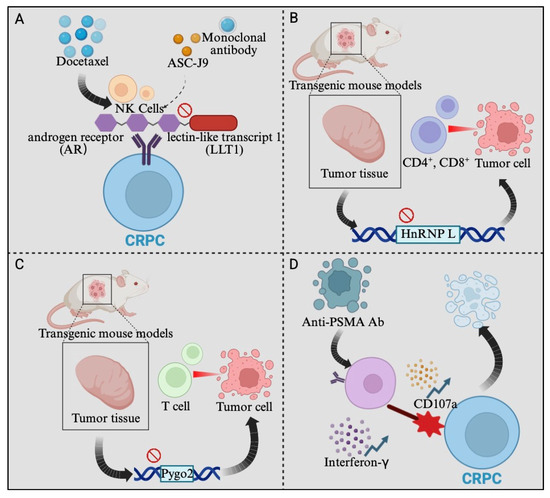
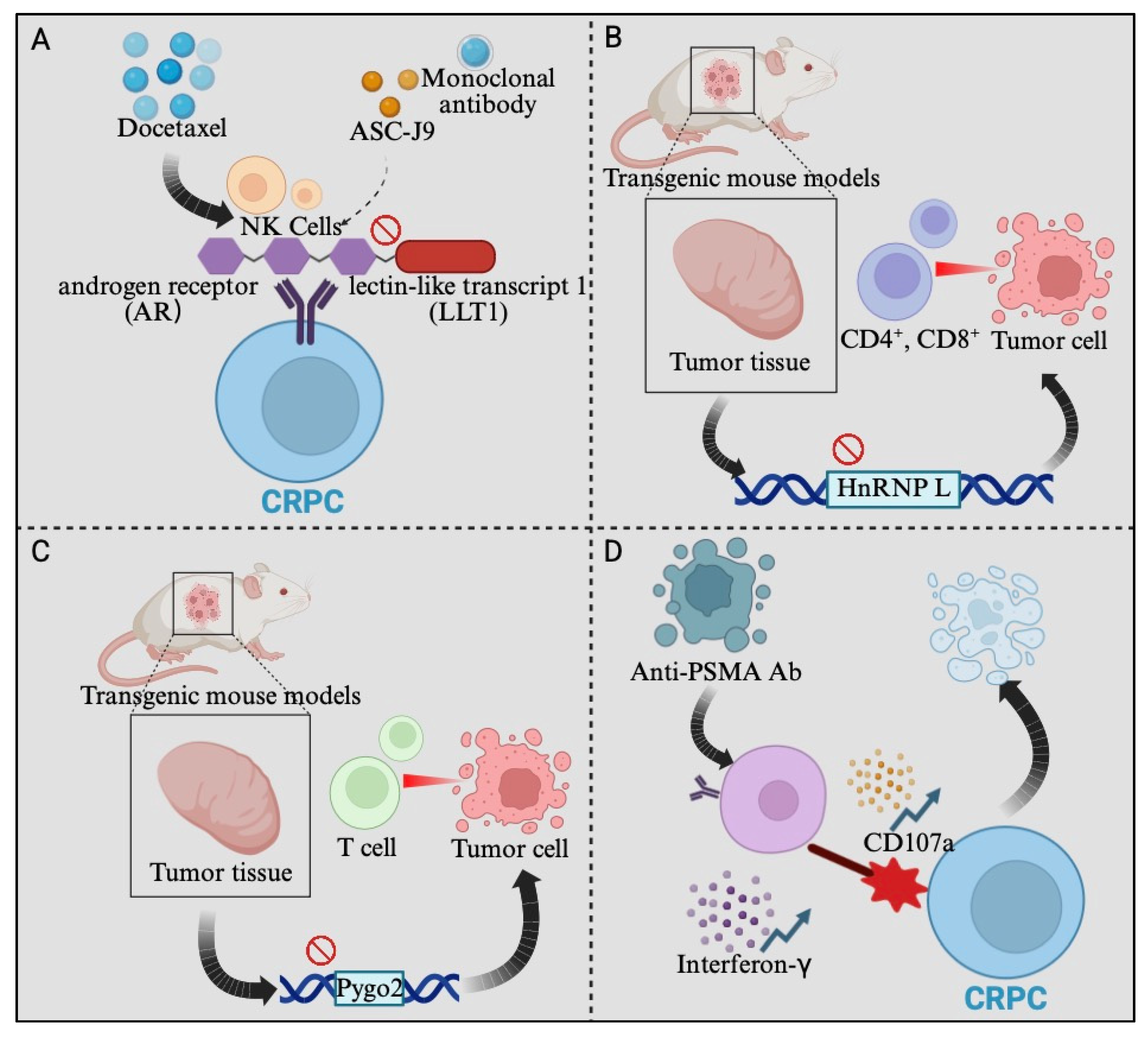
Recent studies have shown that docetaxel may suppress the efficacy of NK cell-mediated immunotherapy against CRPC cells in vitro through androgen receptor (AR)-lectin-like transcript 1 (LLT1) signaling. Mechanistic analysis revealed that docetaxel acts by increasing AR expression, thereby upregulating LLT1 in CRPC cells, ultimately suppressing NK cell-mediated antitumor immunity (Figure 1A) [18]. In addition, Pygopus 2 (PYGO2) has been identified as a driver oncogene within the 1q21.3 amplicon in prostate cancer. Using transgenic mouse models of metastatic prostate adenocarcinoma, researchers found that PYGO2 deletion slowed tumor growth, reduced metastases, and prolonged survival. PYGO2 loss enhanced cytotoxic T lymphocyte (CTL) activation/infiltration and tumor cell sensitivity to T cells. Mechanistically, PYGO2 orchestrates a p53/Sp1/Kit/Ido1 network, creating an immunosuppressive niche. Inhibiting PYGO2 (genetically or pharmacologically) boosted immunotherapy efficacy (ICB, adoptive transfer, and MDSC targeting). Clinically, high PYGO2 correlates with reduced CD8+ T cells and worse ICB outcomes. Targeting PYGO2 may improve immunotherapy for advanced prostate cancer (Figure 1C) [19]; HnRNP L deficiency enhances CD4+/CD8+ T cell infiltration and inhibits tumorigenesis. Mechanistically, HnRNP L boosts c-Myc translation via EIF4G1 alternative splicing, increasing CXCL8 secretion. In vivo, the EIF4G1 inhibitor SBI-0640756 attenuated HnRNP L-driven tumor progression and immunosuppression. Critically, HnRNP L knockdown synergized with anti-PD-1 therapy to suppress prostate cancer xenograft growth (Figure 1B). This reveals HnRNP L’s role in immune regulation and offers a strategy to enhance CRPC immunotherapy [20]. In a castration-resistant prostate cancer (CRPC) model using Myc-CaP cells in immunocompetent mice, granulocytic myeloid-derived suppressor cells (G-MDSCs) increased significantly within the tumor microenvironment during disease progression. Screening multiple immunotherapies revealed that interferon-α (IFNα) was more effective than anti-PD-L1, anti-CTLA-4, anti-4-1BB, IL-2, or IL-9 in suppressing tumor growth. IFNα reduced both the quantity and immunosuppressive function of granulocytic myeloid-derived suppressor cells (G-MDSCs) in the tumor microenvironment (TME)—inhibiting their differentiation in vitro, decreasing their numbers in vivo, and diminishing their suppression of T cell proliferation and activation. These findings establish G-MDSCs as critical immunotherapy targets in CRPC and position IFNα therapy as a promising therapeutic strategy due to its ability to counteract G-MDSC-mediated immunosuppression and restore T cell function [56]. Critically, this G-MDSC-driven immunosuppressive niche provides a mechanistic explanation for the consistent failure of ICI monotherapy in unselected CRPC populations (Table 2): anti-PD-L1 and anti-CTLA-4 agents act on T cell checkpoint pathways but do not address the upstream myeloid barrier that actively depletes and exhausts tumor-infiltrating lymphocytes. The superior efficacy of IFNα over anti-PD-L1, anti-CTLA-4, and other immunotherapies in the Myc-CaP model is therefore not merely a preclinical observation, but a mechanistic argument for why ICI monotherapy is insufficient and why combination strategies targeting both checkpoint inhibition and G-MDSC depletion may be required to achieve durable responses in CRPC. Interferon-γ (IFNγ) consistently upregulated MHC-I (in vitro/vivo) and PD-L1 (in vitro) across diverse prostate cancer subtypes, while reducing E-cadherin expression. This E-cadherin decrease enhanced apoptosis when IFNγ-pretreated mCRPC cells received chemotherapy combined with a death cytokine [57]. The study investigated the USP10/METTL3/CXCR4 axis in CRPC immunotherapy. CXCR4 was upregulated in CRPC tissues/cells, and its knockdown inhibited tumor cell proliferation, migration, and invasion; reduced M2 macrophage polarization/recruitment; and mitigated CD8+ T cell exhaustion. CXCR4 activated the JAK2/STAT3 pathway to promote CCL2 and PD-L1 expression. Furthermore, USP10 regulated CXCR4 expression via METTL3. Pharmacological JAK2 inhibition (AG490) blocked CXCR4-driven oncogenic effects. These findings establish the USP10/METTL3/CXCR4 axis as a significant regulator of the CRPC immune microenvironment and highlight CXCR4 as a promising therapeutic target [58].
Figure 1.
(A) Targeting AR with ASC-J9 or blocking LL1 by anti-human LLT1 monoclonal antibody. (B) Knocking out HnRNP L inhibits the development of tumors. (C) Knocking out Pygo2 inhibits the development of tumors. (D) Anti-PSMA antibody enhances NK cell-mediated cytotoxicity against CRPC cells, evidenced by upregulation of CD107a and increased interferon-γ secretion. Created in BioRender. Xia, X. (2026). BioRender.com/42tex64 (accessed on 10 January 2026).
3.2. Combination Therapy
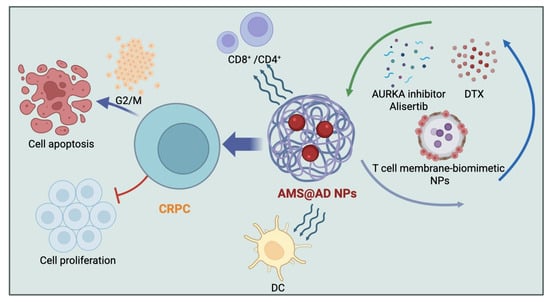
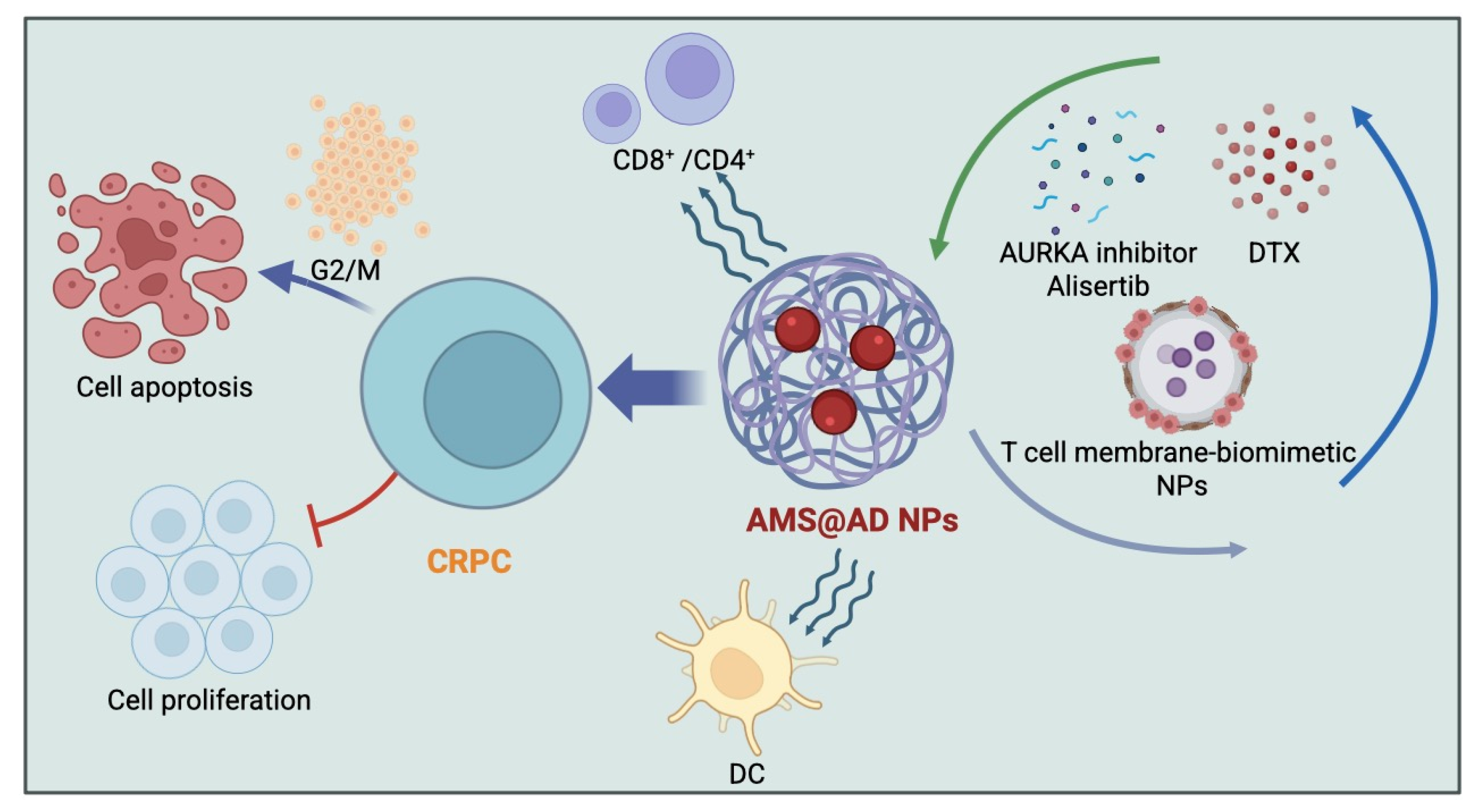
Researchers developed an anti-PSMA antibody by immunizing a llama with human PSMA protein, isolating anti-PSMA camelid heavy-chain antibody variable domain (VHH) clones via phage display, and recombinantly fusing the VHH to a human Fc region. This anti-PSMA Ab significantly enhanced NK cell-mediated cytotoxicity against CRPC cells in vitro, as evidenced by an increased killing rate, upregulation of CD107a, increased interferon-γ secretion, and decreased PSA levels (Figure 1D). The study also demonstrated strong antitumor effects in patient-derived organoid (PDO) and CRPC xenograft mouse models. Combined treatment with anti-PSMA Ab and a high dose of human peripheral blood-derived natural killer (PB-NK) cells improved antitumor efficacy against CRPC and was proposed as a promising clinical strategy for CRPC [57]. Targeting Aurora-A kinase (AURKA) has also shown promise in cancer therapy. One study evaluated ART-T cell membrane-encapsulated AMS@AD (CM-AMS@AD) nanoparticles (NPs) in a photothermal–chemotherapy–immunotherapy combination strategy for CRPC. Bioinformatic analysis of the TCGA-PRAD dataset showed AURKA overexpression in PCa, which was associated with poor clinical outcomes, while single-cell RNA sequencing data from the GEO database showed a significant reduction in immune cells in CRPC. T cell membrane-biomimetic NPs loaded with the AURKA inhibitor Alisertib and DTX were synthesized and characterized by dynamic light scattering and transmission electron microscopy, showing good stability and uniformity (average diameter, 158 nm). In vitro, these NPs inhibited CRPC cell proliferation, increased the G2/M cell population, and promoted apoptosis, as confirmed by γH2AX expression. In vivo, CM-AMS@AD NPs accumulated in tumor tissues, significantly slowed tumor growth, reduced proliferation, increased apoptosis, and improved the immune microenvironment by promoting dendritic cell (DC) maturation and increasing CD8+/CD4+ ratios. These findings suggest that CM-AMS@AD NPs may represent a promising triple-combination strategy for CRPC, integrating photothermal therapy, chemotherapy, and immunotherapy, with potential for future clinical application (Figure 2) [21]. However, clinical translation will require addressing the CMC challenges of this multi-component architecture—including batch-to-batch consistency of membrane coating and dual drug encapsulation—as well as systematic evaluation of potential cumulative toxicity from three simultaneously delivered modalities, which may be underestimated in murine models. Combining enzalutamide and Enhancer of zeste homolog 2 (EZH2) inhibitor GSK-126 synergistically inhibited CRPC growth and neuroendocrine differentiation in mouse models. This antitumor effect required an intact immune system, as activity was lost in immunodeficient mice. The combination enhanced tumor-specific CD8+ T cell cytotoxicity and IFN-γ production. These results support using this combination for CRPC and suggest immunotherapy potential [59]. A pre-modification strategy engineered dendritic cells to produce extracellular vesicles highly expressing XCL1 (DEXXCL1), alongside CCR7 and MHC I. In vitro and in vivo models demonstrated that these DEXXCL1 vesicles enhance dendritic cell uptake, recruit and activate cDC1 cells within tumors, and boost antigen presentation. Combined with cisplatin-induced immunogenic cell death (releasing STEAP1 antigens), this nanovaccine strategy significantly increased CD8+ T cell proliferation and cytotoxicity while reducing regulatory T cells and immunosuppressive factors, effectively reshaping the tumor microenvironment. This synergy potently inhibited prostate tumor growth and prolonged survival in mouse models [60]. Previous studies have discovered a combinatorial strategy for metastatic castration-resistant prostate cancer (mCRPC) using γδ-enriched CAR-T cells targeting PSCA and zoledronate (ZOL). In a bone mCRPC mouse model, these CAR-T cells induced rapid tumor regression, improved survival, and reduced bone disease [61]. We developed a novel approach combining enzalutamide with the EZH2 inhibitor GSK-126 to overcome enzalutamide resistance and enhance antitumor immunity in CRPC. Testing in vitro and in mouse models (subcutaneous and spontaneous) showed that the drugs synergistically reduced tumor growth and prevented neuroendocrine differentiation. This antitumor effect was ineffective in immunodeficient mice, confirming immune dependence. The combination activated tumor-specific CD8+ T cells, boosting their cytotoxic activity and IFN-γ production [59].
Figure 2.
The T cell membrane-encapsulated CM-AMS@AD nanoparticles (loaded with Alisertib and DTX) significantly inhibit CRPC growth and induce apoptosis through a triple-combination approach integrating photothermal therapy, chemotherapy, and immunotherapy, mediated via CD8+/CD4+ T cell activation, dendritic cell stimulation, G2/M cell cycle arrest, and induction of cell apoptosis, while suppressing cell proliferation. Created in BioRender. Xia, X. (2026). BioRender.com/cdk3rwv (accessed on 10 January 2026).
4. Discussion
This comprehensive review synthesizes significant advancements in immunotherapy for castration-resistant prostate cancer (CRPC) from 2020 to 2025. Clinical trial data demonstrate that while monotherapies like immune checkpoint inhibitors (ICIs) exhibit limited efficacy in CRPC (their objective response rates often being <10%) [11], combination strategies show substantial promise. This limited ICI monotherapy efficacy is mechanistically grounded in the G-MDSC-dominated immunosuppressive microenvironment identified in basic research (Section 3.1): PD-1/PD-L1 blockade cannot overcome the upstream myeloid barrier constituted by G-MDSCs, which actively suppress T cell proliferation and activation regardless of checkpoint status. This explains why the most instructive clinical failure—the Phase III atezolizumab plus enzalutamide trial—produced inferior OS despite a mechanistically sound rationale, and it underscores that effective CRPC immunotherapy must simultaneously address both T cell checkpoint exhaustion and myeloid-driven immune exclusion. Key successes include pembrolizumab plus docetaxel (median OS: 19.6 months in KEYNOTE-921) [12], nivolumab plus rucaparib (median rPFS: 8.1 months) [14], and radiotherapy combined with immunotherapies like avelumab or Sipuleucel-T [62]. Novel agents, particularly bispecific antibodies (e.g., Xaluritamig achieving 59% PSA50 response) [15], PSMA-directed CAR-T cells (P-PSMA-101 with >50% PSA reduction) [16], and oncolytic viruses (Ad5 PSA/MUC-1/brachyury), also show encouraging preliminary activity. It should be noted, however, that PSA50 response is a surrogate endpoint and does not invariably predict overall survival benefit in CRPC immunotherapy—as exemplified by Sipuleucel-T, which demonstrated a 4.1-month OS improvement in the IMPACT trial despite minimal PSA changes. Moreover, immune-mediated pseudo-progression, in which transient PSA elevations occur in the context of genuine antitumor activity, may confound PSA-based response classification for CAR-T and bispecific antibody therapies. Confirmation of durable OS benefit in adequately powered Phase II/III trials therefore remains essential before these agents can be considered definitively promising. Basic research identified crucial resistance mechanisms (e.g., docetaxel-induced NK suppression via AR-LLT1 [18] and Pygo2/HnRNP L-mediated T-cell exclusion [19,20]) and developed innovative solutions like the multifunctional nanoparticle CM-AMS@AD [21], which integrates photothermal therapy, chemotherapy (DTX), and immunotherapy (Alisertib), significantly suppressing CRPC growth preclinically by enhancing T-cell infiltration and dendritic cell maturation.
This review has several limitations that warrant acknowledgment. First, our reliance on PubMed-indexed studies may have led to the omission of relevant data from other databases (e.g., Sci-Hub and Web of Science) or ongoing trials (e.g., ClinicalTrials.gov), potentially introducing selection bias. While a structured search strategy with explicit inclusion/exclusion criteria has been documented (Search Strategy Subsection), the absence of formal risk of bias assessment across heterogeneous trials limits the potential for quantitative synthesis (e.g., meta-analysis). Future efforts should adopt the full PRISMA-guided systematic review methodology to enable more rigorous evidence synthesis. Second, while clinical outcomes (PSA response, PFS, and OS) and safety profiles were summarized, deeper critical appraisal of trial failures (e.g., CheckMate 650 and STARVE-PC) and comparative toxicity analyses across regimens were not undertaken. Additionally, several trials reviewed—particularly early-phase targeted therapy trials—relied primarily on PSA50 response as the efficacy endpoint. Given the well-documented dissociation between PSA response and OS in CRPC immunotherapy (as illustrated by the Sipuleucel-T experience) and the potential for pseudo-progression to confound PSA-based assessment, conclusions regarding clinical benefit derived from PSA endpoints alone should be interpreted with caution. Third, biomarker-driven insights remained underdeveloped: predictive biomarkers (e.g., PD-L1, AR-V7, and TMB) and tumor microenvironment features (e.g., spatial immune cell distribution) were not systematically evaluated for their utility in patient stratification. Fourth, translational gaps between preclinical findings (e.g., Pygo2/HnRNP L knockout [19] and nanoparticle therapies) and clinical applicability were inadequately addressed. In particular, the CM-AMS@AD platform faces substantial CMC manufacturing challenges and potential cumulative toxicity risks from its triple-modality design that are not fully capturable in mouse models and must be evaluated in IND-enabling studies prior to clinical translation. Finally, geographical bias toward trials from the USA, Europe, and Japan overlooks potential ethnic/genetic influences on treatment response. Future efforts should adopt PRISMA-guided systematic reviews, integrate multi-omics biomarkers for patient selection, prioritize global trial inclusivity, and rigorously evaluate real-world feasibility of novel approaches (e.g., CAR-T [16] and triple-combination nanotherapies) to bridge these gaps.
Synthesizing the clinical and preclinical evidence reviewed here, a stratified picture of therapeutic promise emerges. Among novel targeted agents, Xaluritamig (STEAP1 × CD3 bispecific antibody) and P-PSMA-101 (PSMA-directed CAR-T) represent the highest-priority candidates for near-term development: their PSA50 response rates of 59% and >50%, respectively, are substantially higher than any ICI monotherapy or combination regimen tested in unselected mCRPC populations, and both demonstrate manageable safety profiles with appropriate risk mitigation (e.g., CRS prophylaxis for Xaluritamig). Importantly, however, PSA50 response should be interpreted as a signal of biological activity rather than a confirmed surrogate for OS benefit; in CRPC immunotherapy, PSA response and overall survival can be dissociated, as Sipuleucel-T’s clinical experience illustrates. Definitive evaluation of these agents must therefore prioritize OS and radiographic progression-free survival as co-primary endpoints in future Phase II/III trials. These agents warrant accelerated progression to biomarker-selected Phase II/III trials. Among combination strategies, nivolumab plus rucaparib stands out as the clearest example of precision-guided combination therapy: the PSA50 response rate increased from 27.3% in unselected patients to 84.6% in the HRR-deficient subgroup, demonstrating that biomarker stratification—not simply adding a second agent—is the mechanism of benefit. Pembrolizumab plus docetaxel (KEYNOTE-921; median OS, 19.6 months) remains the most clinically validated combination option for unselected patients and should be considered the current standard-of-care benchmark for future trials. Conversely, dual ICI combinations (nivolumab plus ipilimumab) and non-biomarker-selected ICI plus hormonal therapy (atezolizumab plus enzalutamide) have demonstrated unfavorable benefit–risk profiles and should not be advanced without robust predictive biomarker strategies. The CM-AMS@AD nanoparticle platform [15], while highly innovative in its triple-combination design, requires clinical translation data before firm development recommendations can be made. Realizing the full potential of CRPC immunotherapy will ultimately depend on three converging priorities: biomarker-stratified trial designs to identify responsive patient subsets, mechanistically informed combination strategies that address CRPC’s immunosuppressive microenvironment, and rigorously conducted Phase III trials to confirm durable survival benefits.
Author Contributions
Methodology, Software, Investigation, Writing: X.X. and Z.X. Conceptualization, Supervision, Validation, Investigation, Supervision, Review and editing, Funding acquisition: L.Y. All authors have read and agreed to the published version of the manuscript.
Funding
This research received no external funding.
Institutional Review Board Statement
Not applicable.
Informed Consent Statement
Not applicable.
Data Availability Statement
No new data were created or analyzed in this study. Data sharing is not applicable to this article.
Conflicts of Interest
The authors declare no conflicts of interest.
References
- Scher, H.I.; Heller, G. Clinical states in prostate cancer: Toward a dynamic model of disease progression. Urology 2000, 55, 323–327. [Google Scholar] [CrossRef] [Scilit]
- Oudard, S.; Fizazi, K.; Sengeløv, L.; Daugaard, G.; Saad, F.; Hansen, S.; Hjälm-Eriksson, M.; Jassem, J.; Thiery-Vuillemin, A.; Caffo, O.; et al. Cabazitaxel Versus Docetaxel As First-Line Therapy for Patients With Metastatic Castration-Resistant Prostate Cancer: A Randomized Phase III Trial-FIRSTANA. J. Clin. Oncol. 2017, 35, 3189–3197. [Google Scholar] [CrossRef] [Scilit]
- Watson, P.A.; Arora, V.K.; Sawyers, C.L. Emerging mechanisms of resistance to androgen receptor inhibitors in prostate cancer. Nat. Rev. Cancer 2015, 15, 701–711. [Google Scholar] [CrossRef] [Scilit]
- Izumi, K.; Shima, T.; Mita, K.; Kato, Y.; Kamiyama, M.; Inoue, S.; Tanaka, N.; Hoshi, S.; Okamura, T.; Yoshio, Y.; et al. Enzalutamide Versus Abiraterone plus Prednisolone Before Chemotherapy for Castration-resistant Prostate Cancer: A Multicenter Randomized Controlled Trial. Eur. Urol. Open Sci. 2022, 41, 16–23. [Google Scholar] [CrossRef] [Scilit]
- Sharp, A.; Coleman, I.; Yuan, W.; Sprenger, C.; Dolling, D.; Rodrigues, D.N.; Russo, J.W.; Figueiredo, I.; Bertan, C.; Seed, G.; et al. Androgen receptor splice variant-7 expression emerges with castration resistance in prostate cancer. J. Clin. Investig. 2019, 129, 192–208. [Google Scholar] [CrossRef] [Scilit]
- Asim, M.; Tarish, F.; Zecchini, H.I.; Sanjiv, K.; Gelali, E.; Massie, C.E.; Baridi, A.; Warren, A.Y.; Zhao, W.; Ogris, C.; et al. Synthetic lethality between androgen receptor signalling and the PARP pathway in prostate cancer. Nat. Commun. 2017, 8, 374. [Google Scholar] [CrossRef] [Scilit] [PubMed]
- Edlind, M.P.; Hsieh, A.C. PI3K-AKT-mTOR signaling in prostate cancer progression and androgen deprivation therapy resistance. Asian J. Androl. 2014, 16, 378–386. [Google Scholar] [CrossRef] [Scilit]
- Beltran, H.; Prandi, D.; Mosquera, J.M.; Benelli, M.; Puca, L.; Cyrta, J.; Marotz, C.; Giannopoulou, E.; Chakravarthi, B.V.; Varambally, S.; et al. Divergent clonal evolution of castration-resistant neuroendocrine prostate cancer. Nat. Med. 2016, 22, 298–305. [Google Scholar] [CrossRef] [Scilit] [PubMed]
- Sung, H.; Ferlay, J.; Siegel, R.L.; Laversanne, M.; Soerjomataram, I.; Jemal, A.; Bray, F. Global Cancer Statistics 2020: GLOBOCAN Estimates of Incidence and Mortality Worldwide for 36 Cancers in 185 Countries. CA Cancer J. Clin. 2021, 71, 209–249. [Google Scholar] [CrossRef] [Scilit]
- Guan, X.; Polesso, F.; Wang, C.; Sehrawat, A.; Hawkins, R.M.; Murray, S.E.; Thomas, G.V.; Caruso, B.; Thompson, R.F.; Wood, M.A.; et al. Androgen receptor activity in T cells limits checkpoint blockade efficacy. Nature 2022, 606, 791–796. [Google Scholar] [CrossRef] [Scilit] [PubMed]
- Zheng, X.; Xu, H.; Yi, X.; Zhang, T.; Wei, Q.; Li, H.; Ai, J. Tumor-antigens and immune landscapes identification for prostate adenocarcinoma mRNA vaccine. Mol. Cancer 2021, 20, 160. [Google Scholar] [CrossRef] [Scilit]
- Petrylak, D.P.; Ratta, R.; Matsubara, N.; Korbenfeld, E.; Gafanov, R.; Mourey, L.; Todenhöfer, T.; Gurney, H.; Kramer, G.; Bergman, A.M.; et al. Pembrolizumab Plus Docetaxel Versus Docetaxel for Previously Treated Metastatic Castration-Resistant Prostate Cancer: The Randomized, Double-Blind, Phase III KEYNOTE-921 Trial. J. Clin. Oncol. 2025, 43, 1638–1649. [Google Scholar] [CrossRef] [Scilit] [PubMed]
- Kwan, E.M.; Spain, L.; Anton, A.; Gan, C.L.; Garrett, L.; Chang, D.; Liow, E.; Bennett, C.; Zheng, T.; Yu, J.; et al. Avelumab Combined with Stereotactic Ablative Body Radiotherapy in Metastatic Castration-resistant Prostate Cancer: The Phase 2 ICE-PAC Clinical Trial. Eur. Urol. 2022, 81, 253–262. [Google Scholar] [CrossRef] [Scilit]
- Fizazi, K.; Retz, M.; Petrylak, D.P.; Goh, J.C.; Perez-Gracia, J.; Lacombe, L.; Zschäbitz, S.; Burotto, M.; Mahammedi, H.; Gravis, G.; et al. Nivolumab plus rucaparib for metastatic castration-resistant prostate cancer: Results from the phase 2 CheckMate 9KD trial. J. Immunother. Cancer 2022, 10, e004761. [Google Scholar] [CrossRef] [Scilit]
- Kelly, W.K.; Danila, D.C.; Lin, C.C.; Lee, J.L.; Matsubara, N.; Ward, P.J.; Armstrong, A.J.; Pook, D.; Kim, M.; Dorff, T.B.; et al. Xaluritamig, a STEAP1 × CD3 XmAb 2+1 Immune Therapy for Metastatic Castration-Resistant Prostate Cancer: Results from Dose Exploration in a First-in-Human Study. Cancer Discov. 2024, 14, 76–89. [Google Scholar] [CrossRef] [Scilit]
- Slovin, S.F.; Dorff, T.B.; Falchook, G.S.; Wei, X.X.; Gao, X.; McKay, R.R.; Oh, D.Y.; Wibmer, A.G.; Spear, M.A.; McCaigue, J.; et al. Phase 1 study of P-PSMA-101 CAR-T cells in patients with metastatic castration-resistant prostate cancer (mCRPC). J. Clin. Oncol. 2022, 40, 98. [Google Scholar] [CrossRef] [Scilit]
- Bilusic, M.; Mcmahon, S.; Madan, R.A.; Karzai, F.; Gulley, J.L. Phase I study of a multitargeted recombinant Ad5 PSA/MUC-1/brachyury-based immunotherapy vaccine in patients with metastatic castration-resistant prostate cancer (mCRPC). J. Immunother. Cancer 2021, 9, e002374. [Google Scholar] [CrossRef] [Scilit] [PubMed]
- Tang, M.; Gao, S.; Zhang, L.; Liu, B.; Li, J.; Wang, Z.; Zhang, W. Docetaxel suppresses immunotherapy efficacy of natural killer cells toward castration-resistant prostate cancer cells via altering androgen receptor-lectin-like transcript 1 signals. Prostate 2020, 80, 742–752. [Google Scholar] [CrossRef] [Scilit]
- Zhu, Y.; Zhao, Y.; Wen, J.; Liu, S.; Huang, T.; Hatial, I.; Peng, X.; Al Janabi, H.; Huang, G.; Mittlesteadt, J.; et al. Targeting the chromatin effector Pygo2 promotes cytotoxic T cell responses and overcomes immunotherapy resistance in prostate cancer. Sci. Immunol. 2023, 8, eade4656. [Google Scholar] [CrossRef] [Scilit]
- Zhou, X.; Cheng, S.; Chen, Z.; Zhang, J.; Wang, J.; Li, Q.; Zhou, X. Inhibiting HnRNP L-mediated alternative splicing of EIF4G1 counteracts immune checkpoint blockade resistance in Castration-resistant prostate Cancer. Neoplasia 2025, 60, 101109. [Google Scholar] [CrossRef] [Scilit]
- Deng, B.; Ke, B.; Tian, Q.; Gao, Y.; Zhai, Q.; Zhang, W. Targeting AURKA with multifunctional nanoparticles in CRPC therapy. J. Nanobiotechnol. 2024, 22, 803. [Google Scholar] [CrossRef] [Scilit]
- Cappuccini, F.; Bryant, R.; Pollock, E.; Carter, L.; Verrill, C.; Hollidge, J.; Poulton, I.; Baker, M.; Mitton, C.; Baines, A.; et al. Safety and immunogenicity of novel 5T4 viral vectored vaccination regimens in early stage prostate cancer: A phase I clinical trial. J. Immunother. Cancer 2020, 8, e000928. [Google Scholar] [CrossRef] [Scilit] [PubMed]
- Noguchi, M.; Arai, G.; Egawa, S.; Ohyama, C.; Naito, S.; Matsumoto, K.; Uemura, H.; Nakagawa, M.; Nasu, Y.; Eto, M.; et al. Mixed 20-peptide cancer vaccine in combination with docetaxel and dexamethasone for castration-resistant prostate cancer: A randomized phase II trial. Cancer Immunol. Immunother. 2020, 69, 847–857. [Google Scholar] [CrossRef] [Scilit]
- Noguchi, M.; Fujimoto, K.; Arai, G.; Uemura, H.; Hashine, K.; Matsumoto, H.; Fukasawa, S.; Kohjimoto, Y.; Nakatsu, H.; Takenaka, A.; et al. A randomized phase III trial of personalized peptide vaccination for castration-resistant prostate cancer progressing after docetaxel. Oncol. Rep. 2021, 45, 159–168. [Google Scholar] [CrossRef] [Scilit]
- Autio, K.A.; Higano, C.S.; Nordquist, L.; Appleman, L.J.; Zhang, T.; Zhu, X.H.; Babiker, H.; Vogelzang, N.J.; Prasad, S.M.; Schweizer, M.T.; et al. First-in-human, phase 1 study of PF-06753512, a vaccine-based immunotherapy regimen (VBIR), in non-metastatic hormone-sensitive biochemical recurrence and metastatic castration-resistant prostate cancer (mCRPC). J. Immunother. Cancer 2023, 11, e005702. [Google Scholar] [CrossRef] [Scilit]
- Haque Chowdhury, H.; Hawlina, S.; Gabrijel, M.; Trkov Bobnar, S.; Kreft, M.; Lenart, G.; Cukjati, M.; Kopitar, A.N.; Kejžar, N.; Ihan, A.; et al. Survival of castration-resistant prostate cancer patients treated with dendritic-tumor cell hybridomas is negatively correlated with changes in peripheral blood CD56(bright) CD16(-) natural killer cells. Clin. Transl. Med. 2021, 11, e505. [Google Scholar] [CrossRef] [Scilit]
- Isaacsson Velho, P.; Bastos, D.A.; Saint’ana, P.T.; Rigatti, B.; da Costa, E.T.; Muniz, D.Q.B.; Andreis, F.; Ferreira, R.D.P.; Giongo Pedrotti, L.; Maistro, S.; et al. Nivolumab in Patients with Metastatic Castration-Resistant Prostate Cancer with and without DNA Repair Defects. Clin. Cancer Res. 2024, 30, 5342–5352. [Google Scholar] [CrossRef] [Scilit] [PubMed]
- Petrylak, D.P.; Loriot, Y.; Shaffer, D.R.; Braiteh, F.; Powderly, J.; Harshman, L.C.; Conkling, P.; Delord, J.P.; Gordon, M.; Kim, J.W.; et al. Safety and Clinical Activity of Atezolizumab in Patients with Metastatic Castration-Resistant Prostate Cancer: A Phase I Study. Clin. Cancer Res. 2021, 27, 3360–3369. [Google Scholar] [CrossRef] [Scilit] [PubMed]
- Antonarakis, E.S.; Piulats, J.M.; Gross-Goupil, M.; Goh, J.; Ojamaa, K.; Hoimes, C.J.; Vaishampayan, U.; Berger, R.; Sezer, A.; Alanko, T.; et al. Pembrolizumab for Treatment-Refractory Metastatic Castration-Resistant Prostate Cancer: Multicohort, Open-Label Phase II KEYNOTE-199 Study. J. Clin. Oncol. 2020, 38, 395–405. [Google Scholar] [CrossRef] [Scilit] [PubMed]
- Stein, M.N.; Fong, L.; Tutrone, R.; Mega, A.; Lam, E.T.; Parsi, M.; Vangala, S.; Gutierrez, A.A.; Haas, N.B. ADXS31142 Immunotherapy ± Pembrolizumab Treatment for Metastatic Castration-Resistant Prostate Cancer: Open-Label Phase I/II KEYNOTE-046 Study. Oncologist 2022, 27, 453–461. [Google Scholar] [CrossRef] [Scilit]
- Stultz, J.; Fong, L. How to turn up the heat on the cold immune microenvironment of metastatic prostate cancer. Prostate Cancer Prostatic Dis. 2021, 24, 697–717. [Google Scholar] [CrossRef] [Scilit]
- Rintu, T.; John Michael, J.; Kimiko, L.K.; Naghmana, A.; David, R.R. The reactive stroma response regulates the immune landscape in prostate cancer. J. Transl. Genet. Genom. 2024, 8, 249–277. [Google Scholar] [CrossRef] [Scilit]
- Kirschenbaum, A.; Cheung, P.; Rajagopalan, V.; Yao, S.; Milgrim, L.; Kyprianou, N.; Levine, A.C. Transmembrane prostatic acid phosphatase: A therapeutic target in advanced prostate cancer. Am. J. Clin. Exp. Urol. 2024, 12, 255–265. [Google Scholar] [CrossRef] [Scilit]
- Xiao, Z.; Todd, L.; Huang, L.; Noguera-Ortega, E.; Lu, Z.; Huang, L.; Kopp, M.; Li, Y.; Pattada, N.; Zhong, W.; et al. Desmoplastic stroma restricts T cell extravasation and mediates immune exclusion and immunosuppression in solid tumors. Nat. Commun. 2023, 14, 5110. [Google Scholar] [CrossRef] [Scilit]
- Hirz, T.; Mei, S.; Sarkar, H.; Kfoury, Y.; Wu, S.; Verhoeven, B.M.; Subtelny, A.O.; Zlatev, D.V.; Wszolek, M.W.; Salari, K.; et al. Dissecting the immune suppressive human prostate tumor microenvironment via integrated single-cell and spatial transcriptomic analyses. Nat. Commun. 2023, 14, 663. [Google Scholar] [CrossRef] [Scilit] [PubMed]
- Vaishampayan, U.N.; Thakur, A.; Chen, W.; Deol, A.; Patel, M.; Dobson, K.; Dickow, B.; Schalk, D.; Schienschang, A.; Whitaker, S.; et al. Phase II Trial of Pembrolizumab and Anti-CD3 x Anti-HER2 Bispecific Antibody-Armed Activated T Cells in Metastatic Castration-Resistant Prostate Cancer. Clin. Cancer Res. 2023, 29, 122–133. [Google Scholar] [CrossRef] [Scilit] [PubMed]
- Thomsen, L.C.V.; Honoré, A.; Reisæter, L.A.R.; Almås, B.; Børretzen, A.; Helle, S.I.; Førde, K.; Kristoffersen, E.K.; Kaada, S.H.; Melve, G.K.; et al. A phase I prospective, non-randomized trial of autologous dendritic cell-based cryoimmunotherapy in patients with metastatic castration-resistant prostate cancer. Cancer Immunol. Immunother. 2023, 72, 2357–2373. [Google Scholar] [CrossRef] [Scilit]
- Rodriguez-Vida, A.; Maroto, P.; Font, A.; Martin, C.; Mellado, B.; Corbera, A.; Orrillo, M.; Reig, O.; Querol, R.; Rios-Hoyo, A.; et al. Safety and efficacy of avelumab plus carboplatin in patients with metastatic castration-resistant prostate cancer in an open-label Phase Ib study. Br. J. Cancer 2023, 128, 21–29. [Google Scholar] [CrossRef] [Scilit]
- Powles, T.; Yuen, K.C.; Gillessen, S.; Kadel, E.E., 3rd; Rathkopf, D.; Matsubara, N.; Drake, C.G.; Fizazi, K.; Piulats, J.M.; Wysocki, P.J.; et al. Atezolizumab with enzalutamide versus enzalutamide alone in metastatic castration-resistant prostate cancer: A randomized phase 3 trial. Nat. Med. 2022, 28, 144–153. [Google Scholar] [CrossRef] [Scilit]
- Heath, E.I.; Chen, W.; Choi, J.E.; Dobson, K.; Smith, M.; Maj, T.; Kryczek, I.; Zou, W.; Chinnaiyan, A.M.; Qiao, Y. Phase II trial of multi-tyrosine kinase inhibitor ESK981 in combination with PD-1 inhibitor nivolumab in patients with metastatic castration-resistant prostate cancer. Investig. New Drugs 2024, 42, 675–684. [Google Scholar] [CrossRef] [Scilit]
- Graff, J.N.; Hoimes, C.J.; Gerritsen, W.R.; Vaishampayan, U.N.; Elliott, T.; Hwang, C.; Ten Tije, A.J.; Omlin, A.; McDermott, R.S.; Fradet, Y.; et al. Pembrolizumab plus enzalutamide for metastatic castration-resistant prostate cancer progressing on enzalutamide: Cohorts 4 and 5 of the phase 2 KEYNOTE-199 study. Prostate Cancer Prostatic Dis. 2025, 28, 411–418. [Google Scholar] [CrossRef] [Scilit]
- Agarwal, N.; McGregor, B.; Maughan, B.L.; Dorff, T.B.; Kelly, W.; Fang, B.; McKay, R.R.; Singh, P.; Pagliaro, L.; Dreicer, R.; et al. Cabozantinib in combination with atezolizumab in patients with metastatic castration-resistant prostate cancer: Results from an expansion cohort of a multicentre, open-label, phase 1b trial (COSMIC-021). Lancet Oncol. 2022, 23, 899–909. [Google Scholar] [CrossRef] [Scilit]
- Shenderov, E.; Boudadi, K.; Fu, W.; Wang, H.; Sullivan, R.; Jordan, A.; Dowling, D.; Harb, R.; Schonhoft, J.; Jendrisak, A.; et al. Nivolumab plus ipilimumab, with or without enzalutamide, in AR-V7-expressing metastatic castration-resistant prostate cancer: A phase-2 nonrandomized clinical trial. Prostate 2021, 81, 326–338. [Google Scholar] [CrossRef] [Scilit]
- Sharma, P.; Pachynski, R.K.; Narayan, V.; Fléchon, A.; Gravis, G.; Galsky, M.D.; Mahammedi, H.; Patnaik, A.; Subudhi, S.K.; Ciprotti, M.; et al. Nivolumab Plus Ipilimumab for Metastatic Castration-Resistant Prostate Cancer: Preliminary Analysis of Patients in the CheckMate 650 Trial. Cancer Cell 2020, 38, 489–499.e3. [Google Scholar] [CrossRef] [Scilit]
- McNeel, D.G.; Eickhoff, J.C.; Wargowski, E.; Johnson, L.E.; Kyriakopoulos, C.E.; Emamekhoo, H.; Lang, J.M.; Brennan, M.J.; Liu, G. Phase 2 trial of T-cell activation using MVI-816 and pembrolizumab in patients with metastatic, castration-resistant prostate cancer (mCRPC). J. Immunother. Cancer 2022, 10, e004198. [Google Scholar] [CrossRef] [Scilit] [PubMed]
- Graff, J.N.; Beer, T.M.; Alumkal, J.J.; Slottke, R.E.; Redmond, W.L.; Thomas, G.V.; Thompson, R.F.; Wood, M.A.; Koguchi, Y.; Chen, Y.; et al. A phase II single-arm study of pembrolizumab with enzalutamide in men with metastatic castration-resistant prostate cancer progressing on enzalutamide alone. J. Immunother. Cancer 2020, 8, e000642. [Google Scholar] [CrossRef] [Scilit] [PubMed]
- Hannan, R.; Dohopolski, M.J.; Pop, L.M.; Mannala, S.; Watumull, L.; Mathews, D.; Gao, A.; Garant, A.; Arriaga, Y.E.; Bowman, I.; et al. Phase II Trial of Sipuleucel-T and Stereotactic Ablative Body Radiation for Patients with Metastatic Castrate-Resistant Prostate Cancer. Biomedicines 2022, 10, 1419. [Google Scholar] [CrossRef] [Scilit]
- Nguyen, C.B.; Reimers, M.A.; Perera, C.; Abida, W.; Chou, J.; Feng, F.Y.; Antonarakis, E.S.; McKay, R.R.; Pachynski, R.K.; Zhang, J.; et al. Evaluating Immune Checkpoint Blockade in Metastatic Castration-Resistant Prostate Cancers with Deleterious CDK12 Alterations in the Phase 2 IMPACT Trial. Clin. Cancer Res. 2024, 30, 3200–3210. [Google Scholar] [CrossRef] [Scilit] [PubMed]
- Dorff, T.; Horvath, L.G.; Autio, K.; Bernard-Tessier, A.; Rettig, M.B.; Machiels, J.P.; Bilen, M.A.; Lolkema, M.P.; Adra, N.; Rottey, S.; et al. A Phase I Study of Acapatamab, a Half-life Extended, PSMA-Targeting Bispecific T-cell Engager for Metastatic Castration-Resistant Prostate Cancer. Clin. Cancer Res. 2024, 30, 1488–1500. [Google Scholar] [CrossRef] [Scilit]
- Calvo, E.; Doger, B.; Carles, J.; Peer, A.; Sarid, D.; Eigl, B.J.; Avadhani, A.; Yao, D.; Lin, V.; Wu, S.; et al. A first-in-human study of JNJ-70218902, a bispecific T-cell-redirecting antibody against TMEFF2 in metastatic castration-resistant prostate cancer. Oncologist 2025, 30, oyae313. [Google Scholar] [CrossRef] [Scilit]
- Aggarwal, R.R.; Vuky, J.; VanderWeele, D.; Rettig, M.; Heath, E.I.; Quigley, D.; Huang, J.; Chumber, A.; Cheung, A.; Foye, A.; et al. Phase I, First-in-Human Study of FOR46 (FG-3246), an Immune-Modulating Antibody-Drug Conjugate Targeting CD46, in Patients With Metastatic Castration-Resistant Prostate Cancer. J. Clin. Oncol. 2025, 43, 1824–1834. [Google Scholar] [CrossRef] [Scilit] [PubMed]
- Drake, C.G.; Pachynski, R.K.; Subudhi, S.K.; McNeel, D.G.; Antonarakis, E.S.; Bauer, T.M.; Lauer, P.; Brockstedt, D.; Patricia, D.; Wade, M.; et al. Safety and preliminary immunogenicity of JNJ-64041809, a live-attenuated, double-deleted Listeria monocytogenes-based immunotherapy, in metastatic castration-resistant prostate cancer. Prostate Cancer Prostatic Dis. 2022, 25, 219–228. [Google Scholar] [CrossRef] [Scilit]
- Lim, E.A.; Schweizer, M.T.; Chi, K.N.; Aggarwal, R.; Agarwal, N.; Gulley, J.; Attiyeh, E.; Greger, J.; Wu, S.; Jaiprasart, P.; et al. Phase 1 Study of Safety and Preliminary Clinical Activity of JNJ-63898081, a PSMA and CD3 Bispecific Antibody, for Metastatic Castration-Resistant Prostate Cancer. Clin. Genitourin. Cancer 2023, 21, 366–375. [Google Scholar] [CrossRef] [Scilit]
- Dorff, T.B.; Blanchard, M.S.; Adkins, L.N.; Luebbert, L.; Leggett, N.; Shishido, S.N.; Macias, A.; Del Real, M.M.; Dhapola, G.; Egelston, C.; et al. PSCA-CAR T cell therapy in metastatic castration-resistant prostate cancer: A phase 1 trial. Nat. Med. 2024, 30, 1636–1644. [Google Scholar] [CrossRef] [Scilit]
- Narayan, V.; Barber-Rotenberg, J.S.; Jung, I.Y.; Lacey, S.F.; Rech, A.J.; Davis, M.M.; Hwang, W.T.; Lal, P.; Carpenter, E.L.; Maude, S.L.; et al. PSMA-targeting TGFβ-insensitive armored CAR T cells in metastatic castration-resistant prostate cancer: A phase 1 trial. Nat. Med. 2022, 28, 724–734. [Google Scholar] [CrossRef] [Scilit]
- Fan, L.; Xu, G.; Cao, J.; Li, M.; Zhang, H.; Li, F.; Qi, X.; Zhang, X.; Li, Z.; Han, P.; et al. Type I Interferon Promotes Antitumor T Cell Response in CRPC by Regulating MDSC. Cancers 2021, 13, 5574. [Google Scholar] [CrossRef] [Scilit]
- Korentzelos, D.; Wells, A.; Clark, A.M. Interferon-γ increases sensitivity to chemotherapy and provides immunotherapy targets in models of metastatic castration-resistant prostate cancer. Sci. Rep. 2022, 12, 6657. [Google Scholar] [CrossRef] [Scilit]
- Chen, W.; Xu, L.; Deng, H.; Zhu, Z.; Yang, D. Role of USP10/METTL3/CXCR4 Axis in Immunotherapy of Castration-Resistant Prostate Cancer. Iran. J. Allergy Asthma Immunol. 2025, 24, 334–346. [Google Scholar] [CrossRef] [Scilit]
- Fischetti, I.; Botti, L.; Sulsenti, R.; Cancila, V.; Enriquez, C.; Ferri, R.; Bregni, M.; Crivelli, F.; Tripodo, C.; Colombo, M.P.; et al. Combined therapy targeting AR and EZH2 curbs castration-resistant prostate cancer enhancing anti-tumor T-cell response. Epigenomics 2024, 16, 653–670. [Google Scholar] [CrossRef] [Scilit]
- Fan, Z.; Wang, Z.; Zhang, H.; Zhang, H.; Zhao, R.; Zhu, S.; Liu, X. Extracellular vesicles derived from mature dendritic cells loaded with cDC1-specific chemokine XCL1 combined with chemotherapy-induced ICD for the treatment of castration-resistant prostate cancer. Cancer Immunol. Immunother. 2025, 74, 242. [Google Scholar] [CrossRef] [Scilit]
- Frieling, J.S.; Tordesillas, L.; Bustos, X.E.; Ramello, M.C.; Bishop, R.T.; Cianne, J.E.; Snedal, S.A.; Li, T.; Lo, C.H.; de la Iglesia, J.; et al. γδ-Enriched CAR-T cell therapy for bone metastatic castrate-resistant prostate cancer. Sci. Adv. 2023, 9, eadf0108. [Google Scholar] [CrossRef] [Scilit] [PubMed]
- Dreicer, R.; Shore, N.; Small, E.; Fröhlich, C.W.; Penson, D.F.; Xu, Y.; Sims, T.B.; Higano, C.S.; Ferrari, B.C.; Redfern, C.H. Sipuleucel-T Immunotherapy for Castration-Resistant Prostate Cancer. N. Engl. J. Med. 2010, 363, 411–422. [Google Scholar]

Disclaimer/Publisher’s Note: The statements, opinions and data contained in all publications are solely those of the individual author(s) and contributor(s) and not of MDPI and/or the editor(s). MDPI and/or the editor(s) disclaim responsibility for any injury to people or property resulting from any ideas, methods, instructions or products referred to in the content. |
© 2026 by the authors. Licensee MDPI, Basel, Switzerland. This article is an open access article distributed under the terms and conditions of the Creative Commons Attribution (CC BY) license.