


Abstract
Background/Objectives: Rituximab has improved outcomes in pemphigus vulgaris (PV), but treatment response remains heterogeneous and no clinically validated biomarker currently supports reliable individual-level prediction. Oral lesions frequently represent the earliest manifestation of PV and contribute substantially to disease burden and longitudinal assessment. This perspective aimed to synthesize candidate biomarkers and organize them within a conceptual, task-specific artificial intelligence (AI) framework for future rituximab outcome modeling. Methods: A structured literature search and narrative synthesis evaluated genetic and pharmacogenomic, immunological and serological, cellular, clinical, and oral phenotypic variables potentially relevant to rituximab response. Variables were considered according to biological rationale, available evidence, temporal availability, and potential use in pretreatment prognosis or post-treatment response monitoring. No patient-level dataset was analyzed, and no model was trained or validated. Results: Candidate pharmacogenomic variables include FCGR3A rs396991, FCGR2A rs1801274, and IL6 rs1800795, although evidence derives mainly from autoimmune diseases other than PV. IL10, TNF, TNFRSF13B, and population-specific HLA variables remain exploratory. Anti-desmoglein autoantibodies, BAFF, cytokine profiles, CD19+ B-cell depletion, CD27+ memory B-cell repopulation, regulatory T-cell dynamics, natural killer cell phenotypes, and clinical and oral phenotypic variables may provide complementary information, but none currently demonstrates sufficient independent predictive validity. The proposed RTX-AI Response Framework distinguishes the Pretreatment Prediction Component from the Post-Treatment Response Monitoring Component and assigns no numerical weights, probabilities, thresholds, or treatment recommendations. Conclusions: The framework should be interpreted exclusively as a conceptual research architecture. Prospective multicenter data collection, standardized biomarker assessment, task-specific model development, calibration, external validation, and evaluation of clinical utility are required before potential clinical implementation.
1. Introduction
Pemphigus vulgaris (PV) is a rare autoimmune blistering disease characterized by the development of mucocutaneous erosions resulting from the loss of intercellular adhesion between keratinocytes. The pathogenic process is primarily mediated by immunoglobulin G (IgG) autoantibodies directed against desmoglein 3 (DSG3) and desmoglein 1 (DSG1), two essential desmosomal cadherins involved in maintaining epithelial integrity [1,2]. Although PV is considered an uncommon disorder, it is associated with substantial morbidity, impaired quality of life, and, in the absence of adequate treatment, potentially life-threatening complications [3].
Oral lesions frequently represent the earliest clinical manifestation of PV and may precede cutaneous involvement by several months. In some patients, oral lesions remain the sole manifestation of the disease for prolonged periods, emphasizing the pivotal role of oral healthcare professionals in the early recognition, diagnosis, and long-term monitoring of affected individuals [4]. Painful erosions, desquamative gingivitis, dysphagia, impaired nutritional intake, and speech difficulties may severely compromise oral function and overall well-being, underscoring the importance of integrating oral medicine into the multidisciplinary management of PV [4,5,6].
For decades, systemic corticosteroids and conventional immunosuppressive agents represented the cornerstone of PV treatment [7]. However, the introduction of rituximab, a chimeric anti-CD20 monoclonal antibody, has fundamentally transformed the therapeutic landscape of this disease. Rituximab induces B-cell depletion through multiple mechanisms, including antibody-dependent cellular cytotoxicity, complement-dependent cytotoxicity, and apoptosis induction [8]. Several clinical studies have demonstrated its superiority over conventional therapeutic approaches in achieving sustained remission while reducing cumulative corticosteroid exposure and treatment-related adverse effects [7,9,10].
Despite these therapeutic advances, treatment outcomes remain highly heterogeneous. While some patients achieve prolonged complete remission following a single treatment cycle, others experience early relapse or exhibit an inadequate clinical response [11,12]. This variability suggests the existence of individual biological determinants influencing treatment efficacy and highlights the need for reliable predictive biomarkers capable of supporting therapeutic decision-making and optimizing targeted interventions [13].
Recent advances in genomic sequencing technologies, multi-omics analytical platforms, and high-throughput immunological profiling have facilitated the identification of an increasing number of biomarkers potentially associated with response to biological therapies. Genetic variants involved in immune regulation and rituximab pharmacodynamics, serological markers reflecting disease activity, and cellular biomarkers associated with immune reconstitution have all emerged as promising candidates [11,13,14]. Nevertheless, most studies have evaluated these biomarkers independently, without integrating information derived from multiple biological domains into a unified predictive framework.
In parallel, artificial intelligence (AI) and machine learning (ML) have emerged as powerful tools for analyzing complex biomedical datasets and identifying clinically relevant patterns that may not be detectable through conventional statistical approaches [15,16]. By integrating genetic, immunological, cellular, clinical, and oral phenotypic information within Electronic Health Record (EHR)-based systems, AI-driven predictive models may facilitate individualized estimates of the probability of response to rituximab and support the implementation of precision medicine strategies in patients with PV [17,18]. Moreover, the incorporation of oral phenotypic characteristics, including lesion severity, distribution, and the presence of desquamative gingivitis, may provide additional predictive value and reinforce the contribution of oral health professionals to multidisciplinary care pathways.
This perspective review critically examines the genetic, immunological, cellular, and clinical biomarkers associated with rituximab response in PV and explores the potential application of artificial intelligence in the development of predictive platforms for precision oral medicine. Furthermore, a conceptual framework integrating multimodal biomarkers through AI-based approaches is proposed, together with the RTX-AI Response Framework, which is intended to support future prospective model-development and validation studies.
From a pharmaceutical perspective, optimizing biological interventions in PV remains a major unmet clinical need. Although rituximab has substantially improved disease outcomes, considerable interindividual variability in therapeutic response persists [7,9,10,11,12,13]. The identification of pharmacogenomic and immunological biomarkers capable of predicting treatment efficacy may facilitate patient stratification, improve the selection of targeted therapies, reduce unnecessary drug exposure, and support the future development of precision oral medicine approaches [13,14,15]. Artificial intelligence-based approaches may further enhance these efforts by integrating multimodal datasets into clinically meaningful predictive frameworks [14,15,16,17].
Literature Search Strategy and Evidence Selection
A structured literature search was conducted to identify publications relevant to pemphigus vulgaris, rituximab response, candidate predictive and monitoring biomarkers, pharmacogenomics, artificial intelligence, machine learning, Electronic Health Records, and precision medicine. PubMed/MEDLINE, Scopus, and Web of Science Core Collection were searched from database inception to 18 May 2026. Targeted supplementary searches and forward citation checking were subsequently conducted through 5 August 2026 to identify newly published studies relevant to the revised manuscript.
The search strategy combined controlled vocabulary, where available, with free-text terms related to the disease, intervention, biomarkers, and computational framework. Core search concepts included: “pemphigus vulgaris”, “pemphigus”, “rituximab”, “anti-CD20”, “treatment response”, “remission”, “relapse”, “biomarker”, “predictor”, “prognostic marker”, “pharmacogenomics”, “FCGR3A”, “FCGR2A”, “BAFF”, “BLyS”, “desmoglein 1”, “desmoglein 3”, “anti-DSG1”, “anti-DSG3”, “CD19”, “CD27”, “B-cell depletion”, “B-cell repopulation”, “cytokine”, “HLA”, “artificial intelligence”, “machine learning”, “Electronic Health Record”, “Digital Twin”, and “precision medicine”. Boolean operators were adapted to the syntax of each database. The complete search strategy is provided in Supplementary Table S1.
Publications were considered for inclusion when they addressed at least one of the following domains: (i) clinical response, remission, relapse, or treatment failure following rituximab therapy in pemphigus vulgaris; (ii) genetic, pharmacogenomic, serological, immunological, cellular, clinical, or oral phenotypic biomarkers potentially associated with rituximab response or disease outcome; (iii) artificial intelligence, machine-learning, EHR, explainable AI, or Digital Twin approaches relevant to predictive modeling or precision medicine; or (iv) methodological principles applicable to the development, validation, calibration, implementation, or continuous updating of clinical prediction models.
Priority was given to systematic reviews, meta-analyses, randomized or prospective clinical studies, observational cohorts, translational biomarker studies, consensus documents, methodological guidance, and landmark publications. Case reports, narrative reviews, and studies conducted in related autoimmune or inflammatory diseases were considered only when they provided mechanistic, methodological, or technological information not yet available specifically for pemphigus vulgaris.
Publications were excluded when they were not relevant to rituximab response, biomarker evaluation, artificial intelligence-based prediction, or precision medicine; when they lacked sufficient methodological or clinical detail; or when they were available only as conference abstracts without an accessible full-text report. No formal risk-of-bias assessment or quantitative evidence synthesis was performed because this article was designed as a perspective rather than a systematic review.
The reference lists of included articles and relevant reviews were manually screened to identify additional eligible publications. Forward citation searching was also performed for selected landmark studies when necessary to identify subsequent validation or methodological publications. The evidence was narratively synthesized according to biomarker domain, temporal availability relative to rituximab initiation, and potential role in pretreatment prediction or post-treatment monitoring.
2. From Individual Biomarkers to Artificial Intelligence-Driven Precision Oral Medicine
2.1. Oral Manifestations of Pemphigus Vulgaris: From Diagnostic Clues to Predictive Biomarkers
Oral manifestations represent one of the most clinically relevant features of PV and frequently constitute the earliest expression of the disease. Oral mucosal lesions may precede cutaneous involvement and, in some patients, may remain the sole clinical manifestation for prolonged periods. However, the reported frequency of initial or isolated oral involvement varies across studies because of differences in study populations, clinical definitions, and methods of assessment [19,20]. Consequently, dental practitioners are often uniquely positioned to recognize the disease at an early stage and initiate appropriate diagnostic investigations.
From a pathogenic perspective, oral involvement is largely explained by the predominant expression of desmoglein 3 within the oral epithelium [21]. IgG autoantibodies directed against this desmosomal cadherin induce acantholysis and disrupt intercellular adhesion between keratinocytes, resulting in the formation of fragile blisters that rapidly rupture and evolve into persistent, painful erosions [1,2].
The most frequently affected sites include the buccal mucosa, soft palate, attached gingiva, ventral surface of the tongue, lips, and floor of the mouth [4,5,19,20,21]. Clinically, patients commonly experience severe oral pain, impaired food intake, dysphagia, speech difficulties, and a substantial reduction in quality of life [6].
Desquamative gingivitis deserves particular attention within dental practice, as it may represent the only clinically detectable sign during the initial stages of the disease [21]. Under these circumstances, distinguishing PV from other immune-mediated disorders affecting the oral mucosa, such as mucous membrane pemphigoid or erosive oral lichen planus, is of paramount importance [5,22].
Within the emerging framework of precision oral medicine, the oral phenotype may provide valuable prognostic and predictive information. Variables such as the severity of oral involvement, the number of affected anatomical sites, the presence of desquamative gingivitis, the persistence of erosive lesions, and the response of oral manifestations to treatment may complement genetic, immunological, and cellular biomarkers in the development of integrated predictive models [12,13].
Furthermore, advances in digital imaging technologies and automated image analysis algorithms open new avenues for the objective monitoring of oral lesions. Standardized intraoral photographs analyzed through artificial intelligence-based approaches may facilitate disease severity quantification and early relapse detection, thereby supporting individualized therapeutic strategies [23,24].
The integration of oral clinical data into EHR systems and Digital Twin models may ultimately transform oral manifestations from simple diagnostic indicators into digital biomarkers with predictive value for biological treatment outcomes [25,26]. Within the proposed AI platform, these features are collectively incorporated under the concept of the oral phenotype, encompassing lesion severity, anatomical distribution, the presence of desquamative gingivitis, and the functional burden imposed by the disease.
2.2. Rituximab as a Targeted Drug Intervention in Pemphigus Vulgaris
Rituximab, a chimeric anti-CD20 monoclonal antibody, has emerged as a cornerstone in the management of PV. Through antibody-dependent cellular cytotoxicity, complement-dependent cytotoxicity, and apoptosis induction, rituximab effectively depletes CD20-positive B cells involved in autoantibody production [8]. Clinical trials have demonstrated superior efficacy compared with conventional immunosuppressive regimens, resulting in higher remission rates and reduced cumulative corticosteroid exposure [7,9,10]. Consequently, rituximab is currently recommended as a first-line treatment option for moderate-to-severe PV [7,27].
Despite these advances, therapeutic outcomes remain heterogeneous. While some patients achieve prolonged remission following a single treatment cycle, others experience early relapse or incomplete responses [11,12]. Several factors may contribute to this variability, including disease duration, baseline immunological status, concomitant therapies, and genetic determinants influencing rituximab pharmacodynamics [13,28].
Rituximab exposure is influenced not only by patient-related biological factors but also by the administered induction regimen. Regimens used in pemphigus include the rheumatoid arthritis protocol, generally consisting of two 1000 mg infusions administered 2 weeks apart; the lymphoma-derived protocol of 375 mg/m2 weekly for four consecutive weeks; and several immunologically guided or fixed low-dose approaches. Although comparative studies have not established a universally optimal regimen for all patients with PV, differences in cumulative dose, infusion schedule, concomitant corticosteroid exposure, disease burden, and retreatment strategy may affect the depth and duration of B-cell depletion and may therefore confound associations between candidate biomarkers and clinical outcomes. Future pharmacogenomic and AI-based studies should consequently record the exact rituximab regimen, cumulative administered dose, body-surface-area-adjusted exposure, concomitant immunosuppression, retreatment schedule, and treatment adherence as mandatory covariates rather than attributing outcome variability primarily to genetic factors [29,30,31].
Direct pharmacological markers may also provide clinically relevant information. Serum rituximab concentrations, pharmacokinetic exposure, and the development of anti-rituximab antibodies, including human anti-chimeric antibodies, have been associated with altered drug clearance, incomplete B-cell depletion, and reduced or lost therapeutic response in several rituximab-treated immune-mediated diseases [32,33,34]. Evidence in PV remains limited, and standardized thresholds have not been established; nevertheless, serum drug levels and anti-drug antibody status should be considered candidate post-treatment pharmacological variables in future prospective studies, particularly in patients with incomplete depletion or secondary non-response. Because these variables become available only after treatment initiation, they would belong exclusively to the Post-Treatment Response Monitoring Component [32,33,34].
The biological effect of rituximab may additionally depend on target and effector-pathway characteristics beyond single-nucleotide variants. Potential research variables include the density of CD20 expression on circulating or tissue B-cell subsets, genetic or transcript-level variation in MS4A1 encoding CD20, FCGR3A copy-number variation, natural-killer-cell abundance and functional state, and the relative contribution of antibody-dependent cellular cytotoxicity, antibody-dependent cellular phagocytosis, and complement-dependent cytotoxicity. These factors remain insufficiently studied in PV and should be regarded as mechanistic candidates rather than established predictors [8,35,36].
The identification of biomarkers associated with treatment efficacy may therefore facilitate the optimization of rituximab intervention strategies. Pharmacogenomic profiling, together with serological and cellular biomarkers, may contribute to individualized treatment selection, support decisions regarding retreatment timing, and minimize unnecessary exposure to costly biological therapies [11,12,13]. Such approaches align with the principles of precision medicine and represent a promising direction for future drug intervention strategies in oral health-related diseases [14,15].
Rituximab should also be considered within an evolving therapeutic landscape rather than as the only targeted intervention under investigation for PV. Emerging approaches include inhibition of the neonatal Fc receptor with efgartigimod, Bruton tyrosine kinase inhibition with rilzabrutinib, and antigen-specific cellular strategies such as desmoglein 3-directed chimeric autoantibody receptor T cells [37,38,39]. These therapies act through mechanisms that differ substantially from CD20-mediated B-cell depletion and may require distinct predictive and monitoring biomarkers. Nevertheless, the task-specific principles proposed in the present framework—including explicit index times, temporally eligible predictors, harmonized outcomes, calibration, external validation, and assessment of clinical utility—could be adapted to future outcome models developed for these agents. Agent-specific frameworks would still be required, and biomarkers proposed for rituximab should not be assumed to generalize automatically to other targeted therapies [39,40].
Several genetic variants have been investigated as potential modifiers of rituximab response in autoimmune diseases, although direct evidence in pemphigus vulgaris remains extremely limited [28,41]. Accordingly, the variants summarized in Table 1 are presented as mechanistically plausible candidates for future PV-specific evaluation rather than as validated pharmacogenomic biomarkers. The principal candidate variants and their biological rationale are summarized in Table 1.
Table 1.
Candidate pharmacogenomic variants, biological rationale, and current evidence relevant to future rituximab response modeling in pemphigus vulgaris.
2.3. Candidate Pharmacogenomic Variants and Their Mechanistic Relationship to Rituximab Response
Rituximab is a chimeric immunoglobulin G1 monoclonal antibody directed against CD20 expressed on pre-B and mature B lymphocytes. Its therapeutic activity involves antibody-dependent cellular cytotoxicity, complement-dependent cytotoxicity, antibody-dependent cellular phagocytosis, and direct induction of cell death. Genetic variants affecting Fcγ-receptor affinity, inflammatory cytokine production, and B-cell survival signaling may therefore represent biologically plausible modifiers of rituximab pharmacodynamics [8,28,41].
Among the candidate Fcγ-receptor variants, FCGR3A rs396991 is mechanistically plausible but should not be presented as an established predictor of rituximab response in PV. This nonsynonymous variant produces a phenylalanine-to-valine substitution at amino acid position 158, commonly described as FCGR3A F158V or V158F. The 158V allotype has higher affinity for the Fc portion of immunoglobulin G1 and may enhance the interaction of rituximab-opsonized B cells with natural killer cells and other FcγRIIIa-expressing effector cells. Nevertheless, associations between the V allele and clinical response have been inconsistent across autoimmune diseases and treatment settings and may be influenced by treatment regimen, pharmacokinetic exposure, concomitant therapy, disease context, and the depth of B-cell depletion. To our knowledge, no PV-specific association study has established FCGR3A rs396991 as a pretreatment predictor of rituximab response. It should therefore be retained only as an exploratory candidate requiring prospective PV-specific evaluation [28,35].
FCGR2A rs1801274 is another nonsynonymous variant, producing a histidine-to-arginine substitution at position 131, described as FCGR2A H131R or R131H. FCγRIIa is expressed on myeloid effector cells and participates in immune-complex binding and antibody-dependent phagocytosis. The H131 and R131 variants differ in immunoglobulin-binding affinity and could therefore modify the clearance of rituximab-opsonized B cells. However, evidence linking FCGR2A rs1801274 to rituximab response is inconsistent, and meta-analytic data from autoimmune diseases have not demonstrated a robust overall association [28].
IL6 rs1800795 is a functional promoter variant located at -174G>C. Interleukin-6 contributes to B-cell differentiation, plasma-cell survival, inflammatory signaling, and autoantibody production. The CC genotype has been associated with reduced rituximab efficacy in rheumatoid arthritis and in mixed cohorts of systemic autoimmune diseases [41]. This evidence provides a biological rationale for evaluating IL6 rs1800795 in PV, but no PV-specific predictive validation is currently available.
Common IL10 promoter variants include rs1800896 (-1082A>G), rs1800871 (-819C>T), and rs1800872 (-592C>A). These variants may influence IL-10 transcription and immunoregulatory activity. IL-10 can support B-cell survival and antibody production while also exerting anti-inflammatory effects, making its relationship with rituximab response biologically complex. Evidence regarding IL10 variants has primarily been derived from other autoimmune diseases, inflammatory disorders, or responses to non-rituximab biological therapies. Consequently, IL10 variants should presently be regarded as exploratory immune-regulatory candidates rather than established pharmacogenomic markers of rituximab response in PV [42,43].
TNF rs1800629 (-308G>A) is a promoter variant associated with altered TNF transcription and inflammatory activity. Although it has been investigated in relation to disease severity and therapeutic response in immune-mediated diseases, available evidence does not establish it as a predictor of rituximab efficacy in PV. Its inclusion in future models would therefore require a prespecified mechanistic hypothesis and independent empirical evaluation [43].
TNFRSF13B encodes the transmembrane activator and calcium-modulator and cyclophilin ligand interactor (TACI), a receptor involved in BAFF- and APRIL-mediated B-cell maturation, immunoglobulin class switching, plasma-cell differentiation, and immune homeostasis. Functional variants such as p.Cys104Arg and p.Ala181Glu have been described mainly in common variable immunodeficiency and related immune dysregulation phenotypes. At present, there is insufficient evidence to support a specific TNFRSF13B polymorphism as a predictor of rituximab response in PV. TNFRSF13B should therefore be presented as a mechanistically plausible research candidate rather than as a selected predictor ready for AI-model implementation [44].
HLA class II alleles require population-specific interpretation because allele frequencies, haplotype structures, and PV-associated effects vary across ancestral and geographical populations. HLA-DRB1*04:02 and HLA-DQB1*05:03 are among the most consistently reported PV susceptibility alleles, but they should not be regarded as universally applicable predictors of rituximab outcomes. Any future model incorporating HLA variables must define its target population and undergo population-specific calibration and external validation before application to other groups. Accordingly, the present conceptual framework has not been validated for any specific ancestral or geographical population, and any future population-specific application will require dedicated model development, calibration, and external validation [45,46].
Importantly, none of these genetic variants has been prospectively validated as a pretreatment predictor of rituximab response in PV. Their inclusion in the proposed framework reflects biological plausibility and evidence derived mainly from other autoimmune diseases. Future PV-specific studies should genotype prespecified variants, define response outcomes prospectively, account for population ancestry and treatment-related covariates, and evaluate whether genetic information adds predictive value beyond clinical, serological, and cellular variables.
2.4. Limitations of Individual Biomarkers in Predicting Rituximab Response
Despite their biological relevance, no individual genetic, serological, cellular, clinical, or oral phenotypic biomarker has demonstrated sufficient predictive performance to support independent use in routine clinical practice [11,12,13,28,41,42,43,44,47,48,49]. For example, FCGR3A V158F may influence rituximab-mediated antibody-dependent cellular cytotoxicity, but its association with clinical response has not been consistent across diseases and treatment settings [28]. Similarly, changes in anti-DSG3 autoantibody levels may reflect disease activity and relapse risk, although persistent seropositivity can coexist with remission and clinical outcomes cannot be inferred reliably from a single serological measurement [11,12,13].
Comparable limitations apply to BAFF concentrations, CD19+ B-cell depletion, and CD27+ memory B-cell repopulation, which provide complementary information regarding B-cell depletion and immune reconstitution but have not been validated as independent predictors of rituximab outcome [47,48,49]. Clinical severity indices and oral phenotypic characteristics may further contribute to disease characterization, but their independent predictive value remains insufficiently established [11,12,13,19,20,21]. The principal value of these variables may therefore lie in their task-specific integration within multimodal models rather than in isolated interpretation. This limitation provides the rationale for evaluating artificial intelligence and machine-learning methods capable of combining heterogeneous biological and clinical information in future rituximab outcome models [14,15].
Evidence from other oral inflammatory and resorptive disorders further supports the mechanistic relevance of cytokine networks and host genetic variation, including IL1A, IL1B, and IL1RN polymorphisms; however, these findings are context-specific and should not be extrapolated to rituximab response in PV without dedicated disease- and treatment-specific validation [50,51].
2.5. Intended Prediction Tasks and Clinical Use Cases
The proposed framework distinguishes between pretreatment prognosis and post-treatment dynamic monitoring. These tasks involve different index times, eligible predictor sets, outcome definitions, prediction horizons, and potential clinical actions and should therefore not be combined within a single undifferentiated model. In particular, post-treatment pharmacodynamic variables cannot be used in a model intended to generate predictions before rituximab administration.
Pretreatment prognostic task. For baseline prognostic modeling, the index time is defined as the clinical assessment immediately before the first infusion of a rituximab treatment cycle. Only variables available at or before this time are eligible as predictors. Candidate baseline variables may include age, sex, disease duration, previous treatments, baseline systemic corticosteroid exposure, previous relapse history, comorbidities, baseline PDAI, standardized oral disease characteristics, anti-DSG1 and anti-DSG3 antibody levels, baseline peripheral B-cell counts, prespecified genetic variables, and the planned rituximab regimen and dose schedule.
The proposed primary outcome for this task is complete remission off therapy at 12 months after the first rituximab infusion. In accordance with the international consensus definitions for pemphigus, complete remission off therapy is defined as the absence of new or established lesions while the patient has received no systemic therapy for at least 2 months [52]. Complete remission on minimal therapy at 12 months may be evaluated as a secondary outcome and is defined as the absence of new or established lesions while the patient is receiving minimal therapy for at least 2 months [52]. Minimal therapy comprises prednisone or an equivalent corticosteroid dose of no more than 10 mg/day and/or minimal adjuvant therapy.
The intended clinical use of the pretreatment model is prognostic stratification to support patient counseling, planning of follow-up intensity, and prospective research stratification. The model is not intended to determine eligibility for rituximab, justify withholding an effective treatment, select a rituximab dosing regimen, or generate an automatic therapeutic recommendation.
Early-treatment dynamic monitoring task. A separate dynamic model may be defined using a 3-month landmark after the first rituximab infusion. The eligible predictor set may include baseline variables together with information obtained during the interval from baseline to the 3-month landmark, including changes in PDAI and oral disease burden, anti-DSG1 and anti-DSG3 antibody trajectories, cumulative rituximab exposure, systemic corticosteroid exposure, treatment adherence, adverse events, serum rituximab concentration, anti-rituximab antibodies, and the extent of peripheral CD19+ B-cell depletion.
For patients who have achieved disease control by the 3-month landmark, the proposed outcome is relapse between months 3 and 12 after rituximab initiation. Relapse is defined according to the international consensus as the appearance of at least three new lesions within 1 month that do not heal spontaneously within 1 week, or the extension of established lesions, in a patient who has previously achieved disease control [52]. The prediction horizon therefore extends from the 3-month landmark to 12 months after treatment initiation. A longer horizon, such as relapse by 24 months, may be evaluated in future studies as a separate outcome and should not be pooled with the 12-month endpoint.
The intended clinical use of the dynamic monitoring model is to identify patients who may benefit from closer clinical and serological surveillance and structured multidisciplinary reassessment. A model-generated estimate should not directly trigger retreatment, treatment escalation, or modification of the rituximab regimen without clinical evaluation.
Inadequate therapeutic response. Inadequate response is not retained as a third, independent prediction task in the present framework because the term has been used inconsistently and may overlap with failure to achieve remission, delayed response, or treatment failure. Where this outcome is investigated in future studies, it must be prespecified using an explicit time point and a consensus-based clinical definition. For example, failure to achieve complete remission on minimal therapy by 12 months could be evaluated as the complementary outcome of the baseline remission model. It should not be combined with relapse, because relapse requires previous achievement of disease control and represents a clinically distinct event.
Each prediction task should therefore be developed and validated separately. Separate analyses are required for baseline remission prognosis and post-treatment relapse monitoring, with task-specific eligibility criteria, predictor time windows, outcome definitions, prediction horizons, and clinical-use statements. The intended tasks and clinical use cases are summarized in Table 2.
Table 2.
Proposed prediction tasks and clinical use cases for future rituximab outcome models in pemphigus vulgaris.
2.6. Conceptual Architecture and Candidate Data Domains of the Proposed AI Platform
The proposed framework is conceptualized as a task-specific, multilayered architecture for integrating multimodal information relevant to future rituximab outcome modeling in pemphigus vulgaris. Rather than assigning predefined weights or generating clinical recommendations, the framework organizes candidate variables according to their biological domain, temporal availability, and potential role in either pretreatment prognosis or post-treatment response monitoring [14,15,53,54].
The proposed data domains include genetic and pharmacogenomic variables, immunological and serological biomarkers, cellular parameters, clinical characteristics, and oral phenotypic features. Candidate genetic variables include FCGR3A rs396991, FCGR2A rs1801274, IL6 rs1800795, and selected exploratory immune-regulatory or population-specific variants, none of which has been validated specifically for rituximab response prediction in PV [28,41,42,43,44,45,46]. Immunological and serological variables include anti-DSG1 and anti-DSG3 autoantibodies, BAFF concentrations, and cytokine profiles, whereas cellular parameters include CD19+ B-cell depletion, CD27+ memory B-cell repopulation, regulatory T-cell dynamics, and natural killer cell phenotypes [11,13,47,48,49,55]. Clinical and oral phenotypic variables include disease severity, treatment history, previous relapse, comorbidities, oral lesion severity and distribution, desquamative gingivitis, and functional impairment [5,6,19,20,21].
The eligibility of each variable depends on the predefined prediction task and the time at which the information becomes available. Baseline variables may be evaluated within the Pretreatment Prediction Component, whereas variables measured after rituximab initiation are eligible only for the Post-Treatment Response Monitoring Component. The candidate data domains are summarized in Table 3.
Table 3.
Candidate data domains for future AI-based rituximab outcome modeling in pemphigus vulgaris.
Figure 1 illustrates the conceptual organization of these candidate data domains within a task-specific analytical framework. The eligibility of each variable depends on its temporal availability and on whether it is evaluated within the Pretreatment Prediction Component or the Post-Treatment Response Monitoring Component. Detailed requirements for EHR-based data acquisition, preprocessing, harmonization, model development, validation, and potential updating are presented separately in Section 2.7.
Figure 1.
Conceptual architecture of the proposed artificial intelligence-based platform for predicting rituximab response in pemphigus vulgaris. Longitudinal patient information collected within an EHR system is organized into genetic and pharmacogenomic, immunological and serological, cellular, and clinical domains, including the oral phenotype. These data may be integrated within a task-specific artificial intelligence analytical engine to generate an illustrative relative response profile. The potential future clinical uses shown in the figure, including enhanced monitoring, structured reassessment, and multidisciplinary treatment reassessment, would require prospective model development, calibration, external validation, and independent clinical evaluation. The figure is conceptual; no numerical probabilities, decision thresholds, or treatment recommendations have been derived from patient-level data. Abbreviations: AI, artificial intelligence; BAFF, B-cell activating factor; BLyS, B-lymphocyte stimulator; DSG, desmoglein; EHR, Electronic Health Record; HLA, human leukocyte antigen; IL, interleukin; PDAI, Pemphigus Disease Area Index; TNF, tumor necrosis factor.
2.7. EHR-Based Data Infrastructure and Analytical Workflow
The future development of artificial intelligence-based rituximab outcome models in pemphigus vulgaris requires standardized and longitudinal data-collection infrastructures. Electronic Health Record systems may support the structured acquisition of diagnostic, clinical, oral phenotypic, laboratory, treatment-related, and follow-up information generated throughout the patient’s clinical course [56,57,58].
Within the proposed framework, candidate data domains include demographic and disease-history variables, baseline disease severity, oral lesion characteristics, anti-DSG1 and anti-DSG3 autoantibody levels, circulating cytokines, BAFF concentrations, flow cytometric parameters, and prespecified genetic and pharmacogenomic variables [5,20,28,42,47,48,49]. The integration of these domains into harmonized multicenter registries may increase cohort size, improve population representativeness, and provide the standardized datasets required for future model development and external validation [57,58,59,60,61].
Before analysis, the collected data would require cleaning, standardization, normalization, anonymization, interoperability assessment, and prespecified management of missing values. Separate task-specific analytical datasets should be created for pretreatment prognosis and post-treatment response monitoring. Predictor eligibility must be determined according to the predefined index time, ensuring that variables measured after rituximab initiation are not incorporated into the Pretreatment Prediction Component [62].
Appropriately selected statistical or machine-learning methods may subsequently be evaluated using these harmonized datasets. However, any future model development, updating, or continuous-learning procedure would require internal validation, calibration assessment, external validation, prospective performance monitoring, periodic recalibration, and appropriate governance before clinical implementation could be considered [63,64].
The proposed EHR–AI analytical workflow is illustrated in Figure 2.
Figure 2.
Proposed Electronic Health Record–artificial intelligence workflow for task-specific rituximab outcome modeling in pemphigus vulgaris. Clinical and oral phenotypic data, prespecified genetic and pharmacogenomic variables, immunological and serological biomarkers, flow cytometry findings, and treatment-related longitudinal information are collected within a structured EHR system. Following data cleaning, standardization, normalization, anonymization, and missing-data management, the integrated dataset may be analyzed using appropriately selected and validated statistical or machine-learning methods. Separate future models are proposed for pretreatment prognosis of complete remission off therapy at 12 months and post-treatment monitoring of relapse between months 3 and 12. Any future model updating would require prospective validation, performance monitoring, recalibration, and appropriate governance. The workflow is conceptual and does not generate numerical predictions, calibrated risk estimates, or clinical recommendations at the present stage. Abbreviations: AI, artificial intelligence; BAFF, B-cell activating factor; CD, cluster of differentiation; DSG, desmoglein; EHR, Electronic Health Record; HLA, human leukocyte antigen; IL, interleukin; PDAI, Pemphigus Disease Area Index; TNF, tumor necrosis factor.
3. RTX-AI Response Framework: A Conceptual Architecture for Pretreatment Prediction and Longitudinal Monitoring
3.1. Rationale for Developing an Integrative Response Framework
Integrative clinical prediction models may combine multiple patient-level variables to estimate the probability of future outcomes and support individualized decision-making. However, the development of such models requires empirical derivation, assessment of predictive performance, calibration, and validation before numerical outputs or clinical thresholds can be interpreted or applied [56,65].
In PV, treatment response to rituximab remains highly heterogeneous, ranging from prolonged complete remission to early relapse or inadequate therapeutic benefit [11,13]. Although numerous genetic, immunological, serological, cellular, and clinical biomarkers have been associated with treatment outcomes, most have been investigated individually, limiting their predictive utility in routine practice [28,47,49,66]. At present, no validated instrument exists to estimate the individual probability of response to rituximab in patients with PV.
Given the complexity of the biological mechanisms underlying treatment response, there is a growing need for integrative approaches capable of combining information derived from multiple domains into clinically meaningful predictive frameworks. In this context, the development of an integrative response framework may represent a promising strategy for translating multimodal biomarker data into practical decision-support tools aligned with the principles of precision medicine [67].
Accordingly, the RTX-AI Response Framework is presented as a conceptual research architecture illustrating how multimodal candidate variables could be evaluated in future task-specific model-development studies. It should not be interpreted as a validated prediction model, clinical scoring system, or decision-support tool.
3.2. Structure of the RTX-AI Response Framework
To illustrate how multimodal biomarkers may be translated into a clinically interpretable framework, we propose a two-stage conceptual model termed the RTX-AI Response Framework. The framework distinguishes between pretreatment response prediction and post-treatment response monitoring according to the time at which the candidate variables become available. This distinction is necessary because baseline predictors and treatment-emergent pharmacodynamic variables address different clinical questions and should not be combined indiscriminately within the same prediction model.
The first stage consists of a Pretreatment Prediction Component designed to integrate candidate variables available before the first administration of rituximab. These variables may derive from genetic, immunological, serological, clinical, and disease-history domains previously associated with rituximab response or disease outcome in PV [28,47,48,49,66]. The second stage consists of a Post-Treatment Response Monitoring Component incorporating pharmacodynamic, serological, cellular, and clinical variables obtained only after treatment initiation.
Unlike approaches based on isolated biomarkers, the RTX-AI Response Framework is intended to capture the combined contribution of multiple determinants of disease activity and therapeutic response. This integrative strategy reflects the principles of precision medicine, according to which clinical outcomes may result from interactions among genetic susceptibility, immune dysregulation, baseline disease burden, previous treatment exposure, and treatment-induced biological changes [53,67].
Pretreatment prediction and post-treatment monitoring represent two distinct analytical tasks. The baseline prediction component aims to estimate the probability of complete remission off therapy at 12 months using only information available at the time of treatment selection. By contrast, the Post-Treatment Response Monitoring Component evaluates the early biological and clinical effects of rituximab after treatment initiation and may be used to update the estimated risk of relapse within the prespecified post-treatment monitoring horizon.
The conceptual architecture of the revised RTX-AI Response Framework is illustrated in Figure 3. The Pretreatment Prediction Component incorporates six major domains: (i) a genetic component represented by FCGR3A polymorphisms; (ii) an immunological component based on baseline BAFF concentrations; (iii) a serological component based on baseline anti-DSG3 autoantibody levels; (iv) a disease-history component incorporating disease duration and previous treatment exposure; (v) a clinical component based on baseline disease severity assessed using the Pemphigus Disease Area Index (PDAI); and (vi) an oral phenotypic component incorporating baseline oral lesion severity and anatomical distribution [5,6,19,20,21,68,69].
Figure 3.
Two-stage RTX-AI Response Framework for pretreatment prediction and post-treatment response monitoring in pemphigus vulgaris. The Pretreatment Prediction Component includes variables available before rituximab initiation, such as prespecified genetic variables, baseline BAFF concentration, baseline anti-DSG3 autoantibody level, disease duration, previous treatment exposure, baseline PDAI, and baseline oral lesion severity and distribution. The Post-Treatment Response Monitoring Component includes treatment-emergent variables, such as changes in anti-DSG3 autoantibody levels, CD19+ B-cell depletion, early PDAI changes, oral lesion improvement, and B-cell repopulation dynamics. The temporal separation of these components is intended to prevent target leakage and to distinguish baseline prognosis from longitudinal monitoring. No numerical score, variable weight, probability estimate, monitoring threshold, or clinical decision rule has been derived or validated. Abbreviations: AI, artificial intelligence; BAFF, B-cell activating factor; CD, cluster of differentiation; DSG3, desmoglein 3; PDAI, Pemphigus Disease Area Index; RTX, rituximab.
Post-treatment variables, including percentage reduction in anti-DSG3 autoantibody levels, the extent of CD19+ B-cell depletion, early changes in PDAI, improvement in oral lesions, and subsequent B-cell repopulation dynamics, are not included in the baseline prediction component. These variables become available only after rituximab administration and are therefore incorporated separately within the Post-Treatment Response Monitoring Component. They should be interpreted as indicators of early pharmacodynamic or clinical response rather than as pretreatment predictors [11,13,47,48,49].
This temporal separation is intended to prevent target leakage and preserve the clinical interpretability of the proposed framework. In future model-development studies, the prediction time point should be prespecified, and model inputs should be restricted to variables available at or before that time point. Variables collected after treatment initiation should be evaluated separately using landmark analyses, longitudinal models, or dynamic prediction approaches designed to update response estimates during follow-up [56,70].
An illustrative set of baseline candidate variables for the Pretreatment Prediction Component is presented in Table 4. These variables are included solely to demonstrate the domains that may be considered in future model-development studies and should not be interpreted as components of a clinically validated algorithm.
Table 4.
Illustrative baseline candidate variables for the Pretreatment Prediction Component of the RTX-AI Response Framework in pemphigus vulgaris.
By restricting the Pretreatment Prediction Component to variables available before rituximab initiation, the revised framework avoids incorporating early treatment effects into the initial prediction task. The proposed pretreatment component therefore represents a conceptual framework for future model development, whereas treatment-emergent variables are evaluated separately within the longitudinal monitoring component.
The Post-Treatment Response Monitoring Component incorporates variables measured after rituximab administration, including percentage reduction in anti-DSG3 autoantibody levels, complete or partial CD19+ B-cell depletion, early changes in PDAI, improvement in oral lesion severity, corticosteroid dose reduction, and subsequent B-cell repopulation. These variables provide information regarding the pharmacodynamic and clinical effects of rituximab and may be evaluated for updating the estimated risk of relapse within the prespecified post-treatment monitoring horizon [11,13,47,48,49].
These post-treatment variables should not be interpreted as pretreatment predictors. Their additional value should be evaluated at prespecified follow-up time points and compared with the performance of the baseline model alone. Future studies should determine whether dynamic integration of early treatment-response variables improves discrimination, calibration, and clinical utility beyond baseline characteristics [56,70].
3.3. Future Model Development, Calibration, and Clinical Interpretation
The RTX-AI Response Framework is not intended to define a predefined numerical score or to establish a priori probability categories. At the current stage, no patient-level dataset has been used to estimate regression coefficients, machine-learning feature weights, absolute response probabilities, or clinically meaningful decision thresholds. Accordingly, no numerical score ranges or probability cutoffs are proposed.
Future development of the pretreatment prediction component should follow established principles for clinical prediction-model research. Candidate variables should be selected and evaluated using appropriately sized, prospectively collected patient cohorts, with careful attention to missing data, nonlinear associations, interactions, overfitting, and the temporal availability of predictors. Model performance should be assessed using measures of discrimination and calibration, together with internal validation procedures such as bootstrapping or cross-validation [65,71,72,73].
The development and reporting of future models should follow contemporary guidance for clinical prediction research. TRIPOD+AI should be used to ensure transparent reporting of regression- and machine-learning-based prediction models, whereas PROBAST+AI should inform structured assessment of risk of bias and applicability during model development and external validation. If a model progresses to prospective testing within clinical workflows, early-stage evaluation should be aligned with DECIDE-AI principles, including assessment of human–AI interaction, workflow integration, usability, safety, and unintended consequences. These standards address different stages of translation and should therefore be considered complementary rather than interchangeable [65,74,75].
Because discrimination alone does not establish the reliability of predicted probabilities, calibration should be evaluated using calibration plots, calibration-in-the-large, and calibration slope estimates. External validation in independent multicenter cohorts will subsequently be required to evaluate model transportability and generalizability across different populations, treatment protocols, and clinical settings [71,76].
Any future risk categories or clinical decision thresholds should be derived only after the model has demonstrated adequate predictive performance and calibration. Their potential clinical value should then be evaluated using methods such as decision-curve analysis and should incorporate clinical consequences, patient preferences, treatment-related risks, and expert multidisciplinary judgment. Until these steps have been completed, the RTX-AI Response Framework should be interpreted exclusively as a conceptual architecture for future research and not as a clinical scoring system or decision-support instrument [65,76,77].
3.4. Limitations of the RTX-AI Response Framework
The RTX-AI Response Framework remains a conceptual research architecture and has not been developed, trained, calibrated, or validated using patient-level data. Accordingly, the independent and incremental predictive value of the proposed variables, their optimal combination, and the achievable model performance and clinical utility remain unknown. The principal methodological, technological, ethical, and implementation-related limitations relevant to the future development of the framework are discussed comprehensively in Section 5.
4. Digital Twin as a Future Research Extension
A Digital Twin is a dynamic virtual representation of an individual patient that can be updated longitudinally as new biological and clinical information becomes available [78,79,80]. In pemphigus vulgaris, future Digital Twin systems could integrate Electronic Health Record data, genomic and immunological information, serological and cellular biomarkers, oral phenotypic characteristics, treatment-related variables, and longitudinal follow-up data to explore hypothetical disease trajectories and therapeutic scenarios [25,78,79,80,81,82,83,84].
At present, this application remains conceptual. No patient-specific Digital Twin has been developed or validated for pemphigus vulgaris, and the proposed framework does not generate calibrated probabilities, treatment recommendations, or patient-specific therapeutic decisions. Future development would require standardized longitudinal datasets, transparent model-updating procedures, calibration assessment, external validation, and appropriate ethical and data-governance safeguards before any clinical application could be considered.
The proposed Digital Twin research environment is illustrated in Figure 4.
Figure 4.
Conceptual future Digital Twin research environment for pemphigus vulgaris. Multimodal patient information, including genomic, immunological, serological, oral phenotypic, clinical, treatment-related, follow-up, and EHR data, may contribute to the future development of a dynamic virtual representation of an individual patient. Such a research environment could support the exploration of hypothetical disease trajectories, therapeutic scenarios, and longitudinal biological and clinical patterns. Continuous incorporation of new data could enable model refinement in future validated systems. The Digital Twin concept presented here is intended exclusively for research and hypothesis generation; no probabilities, calibrated risk estimates, treatment recommendations, or patient-specific therapeutic decisions have been derived. Abbreviations: EHR, Electronic Health Record; HLA, human leukocyte antigen.
5. Challenges, Limitations, and Ethical Considerations in AI Implementation
The principal challenges affecting the future development and validation of the RTX-AI Response Framework include limited and heterogeneous patient cohorts, variability in rituximab protocols and biomarker-assessment procedures, incomplete longitudinal data, limited EHR interoperability, risks of model overfitting and bias, interpretability requirements, and ethical, data-protection, and regulatory considerations. These issues are addressed in the following subsections.
5.1. Limited Patient Cohort Sizes
One of the major challenges associated with the development of artificial intelligence-based predictive models in PV relates to the rarity of the disease. Compared with common chronic conditions such as rheumatoid arthritis, diabetes mellitus, or cardiovascular disorders, the number of patients eligible for prospective studies remains substantially lower [85,86].
This limitation directly affects the performance of machine learning algorithms, which generally require large and diverse datasets for robust training and validation [71,72,85,86,87]. Furthermore, the marked clinical heterogeneity of PV contributes to the additional fragmentation of available cohorts, potentially limiting the ability of predictive models to identify reproducible patterns associated with therapeutic outcomes.
Consequently, the development and validation of reliable AI-driven predictive platforms will require multicenter and international collaborations, together with the harmonization of procedures for the collection, storage, and analysis of biological and clinical data [88,89,90].
Beyond cohort size alone, the choice of analytical approach should be explicitly justified in relation to the expected characteristics of PV datasets. Random Forest and XGBoost are ensemble tree-based methods capable of modeling nonlinear relationships and variable interactions and may be feasible in modest-sized datasets when model complexity is carefully constrained. Missing data should be handled using prespecified methods appropriate to the selected algorithm. Both approaches remain vulnerable to overfitting in small, high-dimensional cohorts and should be compared with simpler penalized regression models using nested cross-validation, calibration assessment, and optimism correction [73].
Outcome class imbalance should be evaluated separately for each task. Discrimination metrics should not be interpreted in isolation when one outcome is uncommon; sensitivity, specificity, positive and negative predictive values, precision–recall curves, and calibration across clinically relevant risk ranges should also be reported. Resampling or class-weighting strategies may be explored within the training data, but they must be applied exclusively within resampling folds to avoid information leakage and should not replace evaluation in cohorts reflecting the natural outcome prevalence.
By contrast, artificial neural networks typically require substantially larger training datasets to achieve stable and generalizable performance and are therefore considered a longer-term objective rather than an immediate modeling strategy. Their inclusion in the proposed framework reflects an anticipated future stage, contingent on the availability of pooled multicenter or federated datasets of sufficient size, consistent with broader methodological strategies proposed for machine learning in small, heterogeneous rare-disease cohorts, including data augmentation and synthetic data generation approaches [91].
Given the longitudinal nature of the candidate variables described in this framework, future model development should also consider methods explicitly designed for repeated-measures or time-to-event data, such as landmark modeling or dynamic prediction approaches, rather than applying standard cross-sectional machine learning algorithms to longitudinal observations without adaptation [70]. Until such comparative evaluations are performed in PV-specific cohorts, the algorithms named throughout this manuscript should be regarded as candidate methods rather than as a validated analytical pipeline.
Sample-size planning should be performed separately for each prediction task and should not rely exclusively on a fixed events-per-variable rule. For illustration, a model evaluating approximately 15 candidate predictor parameters would require substantially more than a single-center cohort of a few dozen patients. Even under a simplified heuristic of 15–20 outcome events per candidate parameter, approximately 225–300 outcome events would be required. If complete remission off therapy at 12 months occurred in approximately 40–60% of participants, the corresponding development cohort could therefore require roughly 375–750 patients before accounting for loss to follow-up, missing data, nonlinear terms, interaction effects, and the need for separate external validation. These figures are illustrative rather than prescriptive; the final sample size should be calculated using prediction-model-specific methods based on the anticipated outcome proportion, number of predictor parameters, expected model performance, and acceptable degree of overfitting [92].
5.2. Biomarker Standardization
Another important challenge concerns the lack of methodological standardization in biomarker assessment across different institutions. Variability may arise from the enzyme-linked immunosorbent assay (ELISA) techniques used to quantify anti-DSG1 and anti-DSG3 autoantibodies, the analytical platforms employed for BAFF measurement, differences in flow cytometry protocols, or the genotyping and sequencing technologies adopted by individual research centers [47,48,56,58].
Such methodological discrepancies may introduce systematic bias, reduce the comparability of results, and ultimately influence the predictive performance of artificial intelligence algorithms. Therefore, the development of internationally standardized protocols for biomarker assessment represents a prerequisite for improving reproducibility, external validity, and the clinical applicability of future predictive models [56,58].
5.3. Explainability of Artificial Intelligence Models
Many artificial intelligence algorithms operate as “black-box” systems, generating predictions without providing transparent explanations regarding the factors underlying their outputs. In clinical settings, this lack of interpretability may limit physician confidence and represent a significant barrier to the adoption of AI-driven decision-support tools [93,94].
For this reason, the development of Explainable Artificial Intelligence (XAI) has emerged as a priority in biomedical research. Unlike conventional black-box approaches, XAI methodologies enable the identification and quantification of the contribution of individual variables to a given prediction. Techniques such as Shapley Additive Explanations (SHAP) can illustrate how specific biomarkers influence the probability of treatment response, thereby increasing the transparency of algorithmic decisions [94,95].
As illustrated in Figure 5, XAI approaches may facilitate the interpretation of complex predictive models by highlighting the relative impact of genetic, immunological, cellular, and clinical variables on the estimated probability of remission. After future model development and validation, XAI methods could be used to identify the variables contributing most strongly to individual model outputs and to support clinically interpretable, independently reviewed assessments [93,94,96].
Figure 5.
Conceptual illustration of explainable artificial intelligence for future rituximab response modeling in pemphigus vulgaris. Candidate pretreatment variables and post-treatment monitoring variables are shown separately to preserve temporal validity and prevent target leakage. After future model development and validation, interpretation methods such as Shapley Additive Explanations, feature-importance displays, or other post hoc approaches could be used to visualize the relative contribution of individual variables to a model-generated prediction. The bars and contribution categories are schematic and do not represent measured feature importance, established directions of association, numerical effect estimates, probability values, or validated clinical recommendations. Abbreviations: AI, artificial intelligence; BAFF, B-cell activating factor; CD, cluster of differentiation; DSG3, desmoglein 3; PDAI, Pemphigus Disease Area Index; SHAP, Shapley Additive Explanations; XAI, explainable artificial intelligence.
5.4. Ethical Considerations and Data Protection
Artificial intelligence platforms rely on large volumes of sensitive medical information, including genetic data, laboratory findings, clinical records, and treatment histories. Consequently, ensuring data privacy and information security should constitute a fundamental priority in the development and implementation of AI-driven healthcare systems [97,98].
Any platform intended for clinical use must comply with the requirements established by the General Data Protection Regulation (GDPR), the ethical principles governing biomedical research, and internationally recognized standards for the secure management of healthcare data. Data anonymization, database encryption, and rigorous access control procedures represent essential safeguards for the responsible use of artificial intelligence in medical practice [97,99].
Equally important is the need to address issues related to algorithmic fairness, transparency, and accountability. Predictive models trained on unrepresentative datasets may inadvertently perpetuate existing biases or generate inequitable recommendations affecting specific patient populations. Accordingly, efforts aimed at minimizing algorithmic bias and ensuring equitable model performance across diverse populations should be incorporated into the design and validation of future AI systems [100,101].
Despite these challenges, the rapid evolution of multi-omics technologies, the expansion of digital registries, and ongoing advances in artificial intelligence continue to create promising opportunities for the implementation of precision medicine strategies in PV.
6. Future Research and Translational Roadmap
Future research should prioritize the establishment of standardized multicenter cohorts and harmonized EHR-based data infrastructures for the prospective evaluation of prespecified clinical, oral phenotypic, serological, cellular, and genetic variables. Given the rarity of pemphigus vulgaris, national and international collaboration will be essential to obtain sufficiently large, diverse, and longitudinal datasets for model development and external validation [56,57,58,59,71,72,85,86,89]. Future extensions may also evaluate genomic, transcriptomic, epigenomic, proteomic, and microbiomic variables when adequate cohort sizes, standardized analytical procedures, and longitudinal data become available [53,54,102,103,104].
Evidence from related clinical domains provides methodological precedents for multimodal biomarker integration, machine-learning-based clinical decision support, and prediction of treatment response during biological therapy [103,104,105,106,107,108,109,110]. Regulatory approaches to biomarker-guided patient selection and statistical methods for identifying treatment-effect heterogeneity may further inform future model specification and evaluation [111,112].
Model development should follow a task-specific sequence that preserves the distinction between pretreatment prognosis and post-treatment response monitoring. The required stages include candidate-variable appraisal, harmonized data collection, explicit definition of target populations, predictor windows, outcomes, and prediction horizons, comparative model development, internal validation and calibration assessment, external validation, evaluation of clinical utility, and prospective assessment of potential implementation under appropriate ethical and data-governance procedures [14,15,58,59,60]. These proposed stages are summarized in Table 5.
Table 5.
Proposed research roadmap for the development and evaluation of AI-based rituximab outcome models in pemphigus vulgaris.
A schematic representation of this proposed research pathway is presented in Figure 6.
Figure 6.
Proposed research roadmap for the development and evaluation of AI-based rituximab outcome models in pemphigus vulgaris. The roadmap includes candidate biomarker identification and mechanistic appraisal, standardized multicenter data collection and harmonized EHR integration, definition of prediction tasks and outcomes, task-specific model development, internal validation and calibration assessment, external validation and evaluation of clinical utility, and subsequent assessment of potential clinical implementation. Any future model updating should be governed by continuous performance monitoring, recalibration, ethical oversight, and data-protection requirements. Clinical implementation should be considered only after adequate predictive performance, calibration, generalizability, and evidence of clinical benefit have been demonstrated. Abbreviations: AI, artificial intelligence; EHR, Electronic Health Record.
7. Conclusions
Pemphigus vulgaris represents a clinically relevant setting for investigating precision oral medicine approaches to rituximab therapy. Although rituximab has substantially improved therapeutic outcomes, considerable heterogeneity in treatment response remains an important clinical challenge, while oral manifestations contribute substantially to disease burden and longitudinal assessment. Candidate pharmacogenomic, immunological, serological, cellular, clinical, and oral phenotypic variables may provide complementary information; however, none currently supports reliable individual-level prediction when evaluated in isolation.
The proposed RTX-AI Response Framework organizes these variables within two distinct research components: the Pretreatment Prediction Component and the Post-Treatment Response Monitoring Component. It should be interpreted exclusively as a conceptual research architecture rather than as a validated prediction model, clinical scoring system, or decision-support tool. No numerical weights, probability thresholds, or treatment recommendations have been derived from patient-level data.
Future research should therefore focus on prospective multicenter data collection, standardized biomarker assessment, harmonized outcome definitions, task-specific model development, rigorous internal validation, calibration assessment, external validation, and evaluation of clinical utility. Only after adequate predictive performance, calibration, generalizability, safety, fairness, and clinical benefit have been demonstrated should potential clinical implementation be considered.
Supplementary Materials
The following supporting information can be downloaded at https://www.mdpi.com/article/10.3390/ph19081292/s1, Supplementary Table S1: Structured database-search strategies and supplementary evidence-identification procedures used for the perspective article.
Author Contributions
Conceptualization, E.-A.R., R.I. and C.-C.A.; methodology, E.-A.R., R.I. and C.-C.A.; literature investigation, E.-A.R., R.I., L.G.P., A.S.D., S.P., C.G. and C.-C.A.; writing—original draft preparation, E.-A.R.; writing—review and editing, R.I., L.G.P., A.S.D., S.P., C.G. and C.-C.A.; visualization, E.-A.R. and R.I.; supervision, C.G., R.I. and C.-C.A.; project administration, E.-A.R. and C.-C.A. All authors have read and agreed to the published version of the manuscript.
Funding
This research received no external funding.
Institutional Review Board Statement
Not applicable.
Informed Consent Statement
Not applicable.
Data Availability Statement
No new data were created or analyzed in this study. Data sharing is not applicable to this article.
Conflicts of Interest
The authors declare no conflicts of interest.
Abbreviations
| ADCC | Antibody-dependent cellular cytotoxicity |
| ADCP | Antibody-Dependent Cellular Phagocytosis |
| AI | Artificial intelligence |
| APRIL | A Proliferation-Inducing Ligand |
| BAFF | B-cell activating factor |
| CD | Cluster of differentiation |
| DSG1 | Desmoglein 1 |
| DSG3 | Desmoglein 3 |
| EHR | Electronic Health Record |
| ELISA | Enzyme-linked immunosorbent assay |
| FCGR2A | Fc gamma receptor IIa |
| FCGR3A | Fc gamma receptor IIIa |
| FcγR | Fc gamma receptor |
| GDPR | General Data Protection Regulation |
| IgG | Immunoglobulin G |
| HLA | Human leukocyte antigen |
| IL | Interleukin |
| ML | Machine learning |
| NK | Natural killer |
| PDAI | Pemphigus Disease Area Index |
| PV | Pemphigus vulgaris |
| RTX-AI | Rituximab–Artificial Intelligence |
| SHAP | Shapley Additive Explanations |
| SNV | Single-Nucleotide Variant |
| TACI | Transmembrane activator and CAML interactor |
| Teff | Effector T cells |
| TNF | Tumor necrosis factor |
| TNFRSF13B | Tumor necrosis factor receptor superfamily member 13B |
| Treg | Regulatory T cells |
| XAI | Explainable Artificial Intelligence |
| XGBoost | Extreme Gradient Boosting |
References
- Rehman, A.; Huang, Y.; Wan, H. Evolving mechanisms in the pathophysiology of pemphigus vulgaris: A review emphasizing the role of desmoglein 3 in regulating p53 and the yes-associated protein. Life 2021, 11, 621. [Google Scholar] [CrossRef] [Scilit] [PubMed]
- Rahimi, S.; Hariton, W.V.J.; Khalaj, F.; Ludwig, R.J.; Borradori, L.; Müller, E.J. Desmoglein-driven dynamic signaling in pemphigus vulgaris: A systematic review of pathogenic pathways. npj Regen. Med. 2025, 10, 39. [Google Scholar] [CrossRef] [Scilit] [PubMed]
- Yamagami, J. Recent advances in the understanding and treatment of pemphigus and pemphigoid. F1000Research 2018, 7, F1000 Faculty Rev-1360. [Google Scholar] [CrossRef] [Scilit] [PubMed][Green Version]
- Choi, S.Y.; Ok, S.M.; Jeong, S.H.; Ahn, Y.W.; Ju, H.M. Early diagnosis and management of oral pemphigus vulgaris lesions of various presentations. J. Oral Med. Pain 2023, 48, 174–180. [Google Scholar] [CrossRef] [Scilit]
- Sciuca, A.M.; Toader, M.P.; Stelea, C.G.; Maftei, G.A.; Ciurcanu, O.E.; Stefanescu, O.M.; Onofrei, B.A.; Popa, C. Desquamative gingivitis in the context of autoimmune bullous dermatoses and lichen planus: Challenges in the diagnosis and treatment. Diagnostics 2022, 12, 1754. [Google Scholar] [CrossRef] [Scilit] [PubMed]
- Russu, E.-A.; Popa, L.G.; Păunică, S.; Bubulac, L.; Giurcăneanu, C.; Albu, C.-C. Patient-Reported Outcomes on Quality of Life in Older Adults with Oral Pemphigus. Healthcare 2025, 13, 2843. [Google Scholar] [CrossRef] [Scilit] [PubMed]
- Joly, P.; Horvath, B.; Patsatsi, A.; Uzun, S.; Bech, R.; Beissert, S.; Bergman, R.; Bernard, P.; Borradori, L.; Caproni, M.; et al. Updated S2K guidelines on the management of pemphigus vulgaris and foliaceus initiated by the European Academy of Dermatology and Venereology (EADV). J. Eur. Acad. Dermatol. Venereol. 2020, 34, 1900–1913. [Google Scholar] [CrossRef] [Scilit] [PubMed]
- Khandelwal, K.; Jajoo, V.; Bajpai, K.; Madke, B.; Prasad, R.; Wanjari, M.B.; Munjewar, P.K.; Taksande, A.B. Rituximab in pemphigus vulgaris: A review of monoclonal antibody therapy in dermatology. Cureus 2023, 15, e40734. [Google Scholar] [CrossRef] [Scilit] [PubMed]
- Cao, S.; Yang, B.; Wang, Z.; Liu, T.; Sun, Y.; Zhang, Z.; Pan, F.; Yang, Q.; Geng, H.; Zhao, Q.; et al. Efficacy, safety, and B-cell depletion capacity of three rituximab dosing regimens in the treatment of moderate-to-severe pemphigus vulgaris and pemphigus foliaceus: A 52-week clinical trial. J. Am. Acad. Dermatol. 2025, 93, 634–643. [Google Scholar] [CrossRef] [Scilit] [PubMed]
- Chen, D.M.; Odueyungbo, A.; Csinady, E.; Gearhart, L.; Lehane, P.; Cheu, M.; Maho-Vaillant, M.; Prost-Squarcioni, C.; Hebert, V.; Houivet, E.; et al. Rituximab is an effective treatment in patients with pemphigus vulgaris and demonstrates a steroid-sparing effect. Br. J. Dermatol. 2020, 182, 1111–1119. [Google Scholar] [CrossRef] [Scilit] [PubMed]
- Albers, L.N.; Liu, Y.; Bo, N.; Swerlick, R.A.; Feldman, R.J. Developing biomarkers for predicting clinical relapse in pemphigus patients treated with rituximab. J. Am. Acad. Dermatol. 2017, 77, 1074–1082. [Google Scholar] [CrossRef] [Scilit] [PubMed]
- Ahuja, R.; Imran, S.; Tembhre, M.K.; Vishwanathan, G.K.; Das, S.K.; Sindhuja, T.; Khandpur, S.; Gupta, V. Longitudinal trends in immunological biomarkers, and predictors of relapse in pemphigus treated with rituximab: A prospective cohort study. Indian J. Dermatol. Venereol. Leprol. 2026, 92, 443–450. [Google Scholar] [CrossRef] [Scilit] [PubMed]
- Tovanabutra, N.; Bax, C.E.; Feng, R.; Kushner, C.J.; Payne, A.S. Temporal outcomes after rituximab therapy for pemphigus vulgaris. J. Investig. Dermatol. 2022, 142, 1058–1064.e7. [Google Scholar] [CrossRef] [Scilit] [PubMed]
- Danieli, M.G.; Brunetto, S.; Gammeri, L.; Palmeri, D.; Claudi, I.; Shoenfeld, Y.; Gangemi, S. Machine learning application in autoimmune diseases: State of art and future prospectives. Autoimmun. Rev. 2024, 23, 103496. [Google Scholar] [CrossRef] [Scilit] [PubMed]
- Yang, Y.; Liu, Y.; Chen, Y.; Luo, D.; Xu, K.; Zhang, L. Artificial intelligence for predicting treatment responses in autoimmune rheumatic diseases: Advancements, challenges, and future perspectives. Front. Immunol. 2024, 15, 1477130. [Google Scholar] [CrossRef] [Scilit] [PubMed]
- Forrest, I.S.; Petrazzini, B.O.; Duffy, Á.; Park, J.K.; O’Neal, A.J.; Jordan, D.M.; Rocheleau, G.; Nadkarni, G.N.; Cho, J.H.; Blazer, A.D.; et al. A machine learning model identifies patients in need of autoimmune disease testing using electronic health records. Nat. Commun. 2023, 14, 2385. [Google Scholar] [CrossRef] [Scilit] [PubMed]
- Norgeot, B.; Glicksberg, B.S.; Trupin, L.; Lituiev, D.; Gianfrancesco, M.; Oskotsky, B.; Schmajuk, G.; Yazdany, J.; Butte, A.J. Assessment of a deep learning model based on electronic health record data to forecast clinical outcomes in patients with rheumatoid arthritis. JAMA Netw. Open 2019, 2, e190606. [Google Scholar] [CrossRef] [Scilit] [PubMed]
- Ayoub, I.; Wolf, B.J.; Geng, L.; Song, H.; Khatiwada, A.; Tsao, B.P.; Oates, J.C.; Rovin, B.H. Prediction models of treatment response in lupus nephritis. Kidney Int. 2022, 101, 379–389. [Google Scholar] [CrossRef] [Scilit] [PubMed]
- Suliman, N.M.; Åstrøm, A.N.; Ali, R.W.; Salman, H.; Johannessen, A.C. Clinical and histological characterization of oral pemphigus lesions in patients with skin diseases: A cross-sectional study from Sudan. BMC Oral Health 2013, 13, 66. [Google Scholar] [CrossRef] [Scilit] [PubMed]
- Batistella, E.Â.; Sabino da Silva, R.; Rivero, E.R.C.; Silva, C.A.B. Prevalence of oral mucosal lesions in patients with pemphigus vulgaris: A systematic review and meta-analysis. J. Oral Pathol. Med. 2021, 50, 750–757. [Google Scholar] [CrossRef] [Scilit] [PubMed]
- Endo, H.; Rees, T.D.; Niwa, H.; Kuyama, K.; Oshima, M.; Serizawa, T.; Tanaka, S.; Komiya, M.; Ito, T. Acantholysis may precede elevation of circulating anti-desmoglein 3 antibody levels in pemphigus vulgaris presenting with desquamative gingivitis. Clin. Exp. Dent. Res. 2019, 5, 219–224. [Google Scholar] [CrossRef] [Scilit] [PubMed]
- Nicolae, C.L.; Coculescu, E.C.; Tanase, M.; Ion, G.; Coculescu, B.-I. Familial oral lichen planus—A review of the literature and a case series report. Rom. J. Oral Rehabil. 2024, 16, 542–548. [Google Scholar] [CrossRef] [Scilit]
- Dinesh, Y.; Ramalingam, K.; Ramani, P.; Mohan Deepak, R. Machine learning in the detection of oral lesions with clinical intraoral images. Cureus 2023, 15, e44018. [Google Scholar] [CrossRef] [Scilit] [PubMed]
- Mutawa, A.M.; Altarakemah, Y.Y.; Thirupathy, K. Deep learning applications for dental-disease classification using intraoral photographic images: Current status and future perspectives. AI 2026, 7, 85. [Google Scholar] [CrossRef] [Scilit]
- Katsoulakis, E.; Wang, Q.; Wu, H.; Shahriyari, L.; Fletcher, R.; Liu, J.; Achenie, L.; Liu, H.; Jackson, P.; Xiao, Y.; et al. Digital twins for health: A scoping review. npj Digit. Med. 2024, 7, 77. [Google Scholar] [CrossRef] [Scilit] [PubMed]
- Ringeval, M.; Etindele Sosso, F.A.; Cousineau, M.; Paré, G. Advancing health care with digital twins: Meta-review of applications and implementation challenges. J. Med. Internet Res. 2025, 27, e69544. [Google Scholar] [CrossRef] [Scilit] [PubMed]
- Joly, P.; Maho-Vaillant, M.; Prost-Squarcioni, C.; Hebert, V.; Houivet, E.; Calbo, S.; Caillot, F.; Golinski, M.L.; Labeille, B.; Picard-Dahan, C.; et al. First-line rituximab combined with short-term prednisone versus prednisone alone for the treatment of pemphigus (Ritux 3): A prospective, multicentre, parallel-group, open-label randomised trial. Lancet 2017, 389, 2031–2040. [Google Scholar] [CrossRef] [Scilit] [PubMed]
- Lee, Y.H.; Song, G.G. Association between functional FCGR3A F158V and FCGR2A R131H polymorphisms and responsiveness to rituximab in patients with autoimmune diseases: A meta-analysis. Pharmacogenom. J. 2023, 23, 210–216. [Google Scholar] [CrossRef] [Scilit] [PubMed]
- Singh, N.; Handa, S.; Mahajan, R.; Sachdeva, N.; De, D. Comparison of the efficacy and cost-effectiveness of an immunologically targeted low-dose rituximab protocol with the conventional rheumatoid arthritis protocol in severe pemphigus. Clin. Exp. Dermatol. 2022, 47, 1508–1516. [Google Scholar] [CrossRef] [Scilit] [PubMed]
- Wang, Y.; Wang, L.; Jiang, Y. Comparative outcomes across rituximab induction doses in pemphigus: A real-world single-center study. JAAD Int. 2025, 24, 268–270. [Google Scholar] [CrossRef] [Scilit] [PubMed]
- Ciolfi, C.; Tartaglia, J.; Alaibac, M. Is It Time to Reconsider Rituximab Dosing Regimens for Pemphigus Vulgaris? Antibodies 2024, 13, 4. [Google Scholar] [CrossRef] [Scilit] [PubMed]
- Boyer-Suavet, S.; Andreani, M.; Lateb, M.; Savenkoff, B.; Brglez, V.; Benzaken, S.; Bernard, G.; Nachman, P.H.; Esnault, V.; Seitz-Polski, B. Neutralizing anti-rituximab antibodies and relapse in membranous nephropathy treated with rituximab. Front. Immunol. 2020, 10, 3069. [Google Scholar] [CrossRef] [Scilit] [PubMed]
- Zhenyan, B.; Huang, L.; Lu, J.; Chen, Z.; Jiang, Z.; Zeng, L.; Tao, Y.; Zhang, L. The pharmacokinetics and its covariates of rituximab in different clinical populations: A systematic review and narrative synthesis. Eur. J. Clin. Pharmacol. 2026, 82, 197. [Google Scholar] [CrossRef] [Scilit] [PubMed]
- Pizano-Martinez, O.; Mendieta-Condado, E.; Vázquez-Del Mercado, M.; Martínez-García, E.A.; Chavarria-Avila, E.; Ortuño-Sahagún, D.; Márquez-Aguirre, A.L. Anti-drug antibodies in the biological therapy of autoimmune rheumatic diseases. J. Clin. Med. 2023, 12, 3271. [Google Scholar] [CrossRef] [Scilit] [PubMed]
- Robinson, J.I.; Md Yusof, M.Y.; Davies, V.; Wild, D.; Morgan, M.; Taylor, J.C.; El-Sherbiny, Y.; Morris, D.L.; Liu, L.; Rawstron, A.C.; et al. Comprehensive genetic and functional analyses of Fc gamma receptors influence on response to rituximab therapy for autoimmunity. EBioMedicine 2022, 86, 104343. [Google Scholar] [CrossRef] [Scilit] [PubMed]
- Ang, Z.; Paruzzo, L.; Hayer, K.E.; Schmidt, C.; Torres Diz, M.; Xu, F.; Zankharia, U.; Zhang, Y.; Soldan, S.; Zheng, S.; et al. Alternative splicing of its 5′-UTR limits CD20 mRNA translation and enables resistance to CD20-directed immunotherapies. Blood 2023, 142, 1724–1739. [Google Scholar] [CrossRef] [Scilit] [PubMed]
- Goebeler, M.; Bata-Csörgő, Z.; De Simone, C.; Didona, B.; Remenyik, E.; Reznichenko, N.; Stoevesandt, J.; Ward, E.S.; Parys, W.; de Haard, H.; et al. Treatment of pemphigus vulgaris and foliaceus with efgartigimod, a neonatal Fc receptor inhibitor: A phase II multicentre, open-label feasibility trial. Br. J. Dermatol. 2022, 186, 429–439. [Google Scholar] [CrossRef] [Scilit] [PubMed]
- Murrell, D.F.; Caux, F.; Patsatsi, A.; Hagino, O.; Rudnicka, L.; Vassileva, S.; Uzun, S.; Ye, J.; Yen, K.; Arora, P.; et al. Efficacy and safety of rilzabrutinib in pemphigus: PEGASUS phase 3 randomized study. J. Investig. Dermatol. 2024, 144, 1762–1771.e6. [Google Scholar] [CrossRef] [Scilit] [PubMed]
- Yuan, H.; Pan, M.; Chen, H.; Mao, X. Immunotherapy for pemphigus: Present and future. Front. Med. 2022, 9, 901239. [Google Scholar] [CrossRef] [Scilit] [PubMed]
- Abulikemu, K.; Hu, F.; Liang, J.; Kang, X. Targeting therapy in pemphigus: Where are we now and where are we going? Heliyon 2023, 9, e16679. [Google Scholar] [CrossRef] [Scilit] [PubMed]
- Fabris, M.; Quartuccio, L.; Lombardi, S.; Saracco, M.; Atzeni, F.; Carletto, A.; Cimmino, M.; Fabro, C.; Pontarini, E.; Pellerito, R.; et al. The CC homozygosis of the -174G>C IL-6 polymorphism predicts a lower efficacy of rituximab therapy in rheumatoid arthritis. Autoimmun. Rev. 2012, 11, 315–320. [Google Scholar] [CrossRef] [Scilit] [PubMed]
- De Benedittis, G.; Latini, A.; Ciccacci, C.; Conigliaro, P.; Triggianese, P.; Fatica, M.; Novelli, L.; Chimenti, M.S.; Borgiani, P. Impact of TRAF3IP2, IL10 and HCP5 genetic polymorphisms in the response to TNF-i treatment in patients with psoriatic arthritis. J. Pers. Med. 2022, 12, 1094. [Google Scholar] [CrossRef] [Scilit] [PubMed]
- Babiker-Mohamed, M.H.; Bhandari, S.; Ranganathan, P. Pharmacogenetics of therapies in rheumatoid arthritis: An update. Best Pract. Res. Clin. Rheumatol. 2024, 38, 101974. [Google Scholar] [CrossRef] [Scilit] [PubMed]
- Abolhassani, H.; Caballero-Oteyza, A.; Yang, M.; Proietti, M.; Delavari, S.; Maffucci, P.; Schäffer, A.A.; Boisson, B.; Casanova, J.-L.; Rezaei, N.; et al. Re-evaluation of the contribution of TNFRSF13B variants to antibody deficiency. J. Hum. Immun. 2025, 1, e20250016. [Google Scholar] [CrossRef] [Scilit] [PubMed]
- Svecova, D.; Parnicka, Z.; Pastyrikova, L.; Urbancek, S.; Luha, J.; Buc, M. HLA DRB1* and DQB1* alleles are associated with disease severity in patients with pemphigus vulgaris. Int. J. Dermatol. 2015, 54, 168–173. [Google Scholar] [CrossRef] [Scilit] [PubMed]
- Lakoš Jukić, I.; Mokos, M.; Marinović, B. HLA class II antigens in Croatian patients with pemphigus vulgaris and their correlation with anti-desmoglein antibodies. Front. Immunol. 2023, 14, 1200992. [Google Scholar] [CrossRef] [Scilit] [PubMed]
- Daneshvar, E.; Tavakolpour, S.; Mahmoudi, H.; Daneshpazhooh, M.; Teimourpour, A.; Aslani, S.; Balighi, K. Elevated serum level of B-cell activating factor (BAFF) after rituximab therapy in pemphigus vulgaris patients suggests a possible therapeutic efficacy of B-cell depletion therapies combined with anti-BAFF agents. Int. J. Dermatol. 2023, 62, 567–574. [Google Scholar] [CrossRef] [Scilit] [PubMed]
- Boch, K.; Langan, E.A.; Schmidt, E.; Zillikens, D.; Ludwig, R.J.; Bieber, K.; Hammers, C.M. Sustained CD19+CD27+ memory B cell depletion after rituximab treatment in patients with pemphigus vulgaris. Acta Derm. Venereol. 2022, 102, adv00679. [Google Scholar] [CrossRef] [Scilit] [PubMed]
- Hébert, V.; Maho-Vaillant, M.; Golinski, M.L.; Petit, M.; Riou, G.; Boyer, O.; Musette, P.; Calbo, S.; Joly, P. Modifications of the BAFF/BAFF-receptor axis in patients with pemphigus treated with rituximab versus standard corticosteroid regimen. Front. Immunol. 2021, 12, 666022. [Google Scholar] [CrossRef] [Scilit] [PubMed]
- Pavlovici, R.-C.; Albu, C.-C.; Bogdan-Andreescu, C.F.; Tudor, V.; Bubulac, L.; Gheorghe, I.-R.; Spînu, A.D.; Cadar, E.; Slăvescu, D.A.; Păcurar, M. Cytokines as Key Drivers of Pathological Root Resorption: Integrating Molecular Mechanisms, Genetic Determinants, and Biomarker-Based Insights. Biomedicines 2026, 14, 1256. [Google Scholar] [CrossRef] [Scilit] [PubMed]
- Albu, Ș.-D.; Dragomirescu, A.-O.; Albu, C.-C.; Suciu, I.; Ionescu, E. Genetic polymorphisms of interleukins IL-1A, IL-1B, and IL-1RN in patients with periodontal disease and dento-maxillary anomalies. Rom. J. Oral Rehabil. 2024, 16, 253–266. [Google Scholar] [CrossRef] [Scilit]
- Murrell, D.F.; Dick, S.; Ahmed, A.R.; Amagai, M.; Barnadas, M.A.; Borradori, L.; Bystryn, J.C.; Cianchini, G.; Diaz, L.; Fivenson, D.; et al. Consensus statement on definitions of disease, end points, and therapeutic response for pemphigus. J. Am. Acad. Dermatol. 2008, 58, 1043–1046. [Google Scholar] [CrossRef] [Scilit] [PubMed]
- Vivas, A.J.; Boumediene, S.; Tobón, G.J. Predicting autoimmune diseases: A comprehensive review of classic biomarkers and advances in artificial intelligence. Autoimmun. Rev. 2024, 23, 103611. [Google Scholar] [CrossRef] [Scilit] [PubMed]
- Picard, M.; Scott-Boyer, M.P.; Bodein, A.; Périn, O.; Droit, A. Integration strategies of multi-omics data for machine learning analysis. Comput. Struct. Biotechnol. J. 2021, 19, 3735–3746. [Google Scholar] [CrossRef] [Scilit] [PubMed]
- Mulhearn, B.; Barton, A.; Viatte, S. Using the immunophenotype to predict response to biologic drugs in rheumatoid arthritis. J. Pers. Med. 2019, 9, 46. [Google Scholar] [CrossRef] [Scilit] [PubMed]
- Albu, E.; Gao, S.; Stijnen, P.; Rademakers, F.E.; van Bussel, B.C.; Collyer, T.; Hernandez-Boussard, T.; Wynants, L.; Van Calster, B. Challenges and recommendations for electronic health records data extraction and preparation for dynamic prediction modeling in hospitalized patients: Practical guide and tutorial. J. Med. Internet Res. 2025, 27, e73987. [Google Scholar] [CrossRef] [Scilit] [PubMed]
- Amar, F.; April, A.; Abran, A. Electronic health record and semantic issues using Fast Healthcare Interoperability Resources: Systematic mapping review. J. Med. Internet Res. 2024, 26, e45209. [Google Scholar] [CrossRef] [Scilit] [PubMed]
- Abaza, H.; Kadioglu, D.; Martin, S.; Papadopoulou, A.; Dos Santos Vieira, B.; Schaefer, F.; Storf, H. Domain-specific common data elements for rare disease registration: Conceptual approach of a European joint initiative toward semantic interoperability in rare disease research. JMIR Med. Inform. 2022, 10, e32158. [Google Scholar] [CrossRef] [Scilit] [PubMed]
- Hageman, I.C.; van Rooij, I.A.L.M.; de Blaauw, I.; Trajanovska, M.; King, S.K. A systematic overview of rare disease patient registries: Challenges in design, quality management, and maintenance. Orphanet J. Rare Dis. 2023, 18, 106. [Google Scholar] [CrossRef] [Scilit] [PubMed]
- Feng, J.; Phillips, R.V.; Malenica, I.; Bishara, A.; Hubbard, A.E.; Celi, L.A.; Pirracchio, R. Clinical artificial intelligence quality improvement: Towards continual monitoring and updating of AI algorithms in healthcare. npj Digit. Med. 2022, 5, 66. [Google Scholar] [CrossRef] [Scilit] [PubMed]
- Amrollahi, F.; Shashikumar, S.P.; Holder, A.L.; Nemati, S. Leveraging clinical data across healthcare institutions for continual learning of predictive risk models. Sci. Rep. 2022, 12, 8380. [Google Scholar] [CrossRef] [Scilit] [PubMed]
- Jarmakovica, A. Machine learning-based strategies for improving healthcare data quality: An evaluation of accuracy, completeness, and reusability. Front. Artif. Intell. 2025, 8, 1621514. [Google Scholar] [CrossRef] [Scilit] [PubMed]
- Lee-St John, T.J.; Kanwar, O.; Abidi, E.; El Nekidy, W.; Piechowski-Jozwiak, B. Towards artificial intelligence-based disease prediction algorithms that comprehensively leverage and continuously learn from real-world clinical tabular data systems. PLoS Digit. Health 2024, 3, e0000589. [Google Scholar] [CrossRef] [Scilit] [PubMed]
- Wang, J.; Luo, J.; Ye, M.; Wang, X.; Zhong, Y.; Chang, A.; Huang, G.; Yin, Z.; Xiao, C.; Sun, J.; et al. Recent advances in predictive modeling with electronic health records. In Proceedings of the Thirty-Third International Joint Conference on Artificial Intelligence (IJCAI 2024); International Joint Conferences on Artificial Intelligence Organization: San Francisco, CA, USA, 2024; pp. 8272–8280. [Google Scholar] [CrossRef] [Scilit] [PubMed]
- Collins, G.S.; Moons, K.G.M.; Dhiman, P.; Riley, R.D.; Beam, A.L.; Van Calster, B.; Ghassemi, M.; Liu, X.; Reitsma, J.B.; van Smeden, M.; et al. TRIPOD+AI statement: Updated guidance for reporting clinical prediction models that use regression or machine learning methods. BMJ 2024, 385, e078378. [Google Scholar] [CrossRef] [Scilit] [PubMed]
- Tan, I.J.; Podwojniak, A.; Parikh, A.; Cohen, B.A. Precision dermatology: A review of molecular biomarkers and personalized therapies. Curr. Issues Mol. Biol. 2024, 46, 2975–2990. [Google Scholar] [CrossRef] [Scilit] [PubMed]
- Young, A.T.; Xiong, M.; Pfau, J.; Keiser, M.J.; Wei, M.L. Artificial intelligence in dermatology: A primer. J. Investig. Dermatol. 2020, 140, 1504–1512. [Google Scholar] [CrossRef] [Scilit] [PubMed]
- Rosenbach, M.; Murrell, D.F.; Bystryn, J.-C.; Dulay, S.; Dick, S.; Fakharzadeh, S.; Hall, R.; Korman, N.J.; Lin, J.; Okawa, J.; et al. Reliability and convergent validity of two outcome instruments for pemphigus. J. Investig. Dermatol. 2009, 129, 2404–2410. [Google Scholar] [CrossRef] [Scilit] [PubMed]
- Boulard, C.; Duvert Lehembre, S.; Picard-Dahan, C.; Kern, J.S.; Zambruno, G.; Feliciani, C.; Marinovic, B.; Vabres, P.; Borradori, L.; Prost-Squarcioni, C.; et al. Calculation of cut-off values based on the Autoimmune Bullous Skin Disorder Intensity Score (ABSIS) and Pemphigus Disease Area Index (PDAI) pemphigus scoring systems for defining moderate, significant and extensive types of pemphigus. Br. J. Dermatol. 2016, 175, 142–149. [Google Scholar] [CrossRef] [Scilit] [PubMed]
- Putter, H.; van Houwelingen, H.C. Landmarking 2.0: Bridging the gap between joint models and landmarking. Stat. Med. 2022, 41, 1901–1917. [Google Scholar] [CrossRef] [Scilit] [PubMed]
- Riley, R.D.; Debray, T.P.A.; Collins, G.S.; Archer, L.; Ensor, J.; van Smeden, M.; Snell, K.I.E. Minimum sample size for external validation of a clinical prediction model with a binary outcome. Stat. Med. 2021, 40, 4230–4251. [Google Scholar] [CrossRef] [Scilit] [PubMed]
- Goldenholz, D.M.; Sun, H.; Ganglberger, W.; Westover, M.B. Sample size analysis for machine learning clinical validation studies. Biomedicines 2023, 11, 685. [Google Scholar] [CrossRef] [Scilit] [PubMed]
- Barreñada, L.; Dhiman, P.; Timmerman, D.; Boulesteix, A.-L.; Van Calster, B. Understanding overfitting in random forest for probability estimation: A visualization and simulation study. Diagn. Progn. Res. 2024, 8, 14. [Google Scholar] [CrossRef] [Scilit] [PubMed]
- Moons, K.G.M.; Damen, J.A.A.; Kaul, T.; Hooft, L.; Andaur Navarro, C.; Dhiman, P.; Beam, A.L.; Van Calster, B.; Celi, L.A.; Denaxas, S.; et al. PROBAST+AI: An updated quality, risk of bias, and applicability assessment tool for prediction models using regression or artificial intelligence methods. BMJ 2025, 388, e082505. [Google Scholar] [CrossRef] [Scilit] [PubMed]
- Vasey, B.; Nagendran, M.; Campbell, B.; Clifton, D.A.; Collins, G.S.; Denaxas, S.; Denniston, A.K.; Faes, L.; Geerts, B.; Ibrahim, M.; et al. Reporting guideline for the early-stage clinical evaluation of decision support systems driven by artificial intelligence: DECIDE-AI. Nat. Med. 2022, 28, 924–933. [Google Scholar] [CrossRef] [PubMed]
- Van Calster, B.; Collins, G.S.; Vickers, A.J.; Wynants, L.; Kerr, K.F.; Barreñada, L.; Varoquaux, G.; Singh, K.; Moons, K.G.M.; Hernandez-Boussard, T.; et al. Evaluation of performance measures in predictive artificial intelligence models to support medical decisions: Overview and guidance. Lancet Digit. Health 2025, 7, 100916. [Google Scholar] [CrossRef] [Scilit] [PubMed]
- Zhao, L.; Leng, Y.; Hu, Y.; Xiao, J.; Li, Q.; Liu, C.; Mao, Y. Understanding decision curve analysis in clinical prediction model research. Postgrad. Med. J. 2024, 100, 512–515. [Google Scholar] [CrossRef] [Scilit] [PubMed]
- Xu, Q.; Xie, W.; Liao, B.; Hu, C.; Qin, L.; Yang, Z.; Xiong, H.; Lyu, Y.; Zhou, Y.; Luo, A. Interpretability of clinical decision support systems based on artificial intelligence from technological and medical perspectives: A systematic review. J. Healthc. Eng. 2023, 2023, 9919269. [Google Scholar] [CrossRef] [Scilit] [PubMed]
- Sun, T.; He, X.; Li, Z. Digital twin in healthcare: Recent updates and challenges. Digit. Health 2023, 9, 20552076221149651. [Google Scholar] [CrossRef] [Scilit] [PubMed]
- Vallée, A. Digital twins for personalized medicine require epidemiological data and mathematical modeling: Viewpoint. J. Med. Internet Res. 2025, 27, e72411. [Google Scholar] [CrossRef] [Scilit] [PubMed]
- Kamel Boulos, M.N.; Zhang, P. Digital twins: From personalised medicine to precision public health. J. Pers. Med. 2021, 11, 745. [Google Scholar] [CrossRef] [Scilit] [PubMed]
- Saratkar, S.Y.; Langote, M.; Kumar, P.; Gote, P.; Weerarathna, I.N.; Mishra, G.V. Digital twin for personalized medicine development. Front. Digit. Health 2025, 7, 1583466. [Google Scholar] [CrossRef] [Scilit] [PubMed]
- MacEachern, S.J.; Forkert, N.D. Machine learning for precision medicine. Genome 2021, 64, 416–425. [Google Scholar] [CrossRef] [Scilit] [PubMed]
- De Domenico, M.; Allegri, L.; Caldarelli, G.; d’Andrea, V.; Di Camillo, B.; Rocha, L.M.; Rozum, J.; Sbarbati, R.; Zambelli, F. Challenges and opportunities for digital twins in precision medicine from a complex systems perspective. npj Digit. Med. 2025, 8, 37. [Google Scholar] [CrossRef] [Scilit] [PubMed]
- Banerjee, J.; Taroni, J.N.; Allaway, R.J.; Prasad, D.V.; Guinney, J.; Greene, C. Machine learning in rare disease. Nat. Methods 2023, 20, 803–814. [Google Scholar] [CrossRef] [Scilit] [PubMed]
- Al-Hussaini, I.; White, B.; Varmeziar, A.; Mehra, N.; Sanchez, M.; Lee, J.; DeGroote, N.P.; Miller, T.P.; Mitchell, C.S. An interpretable machine learning framework for rare disease: A case study to stratify infection risk in pediatric leukemia. J. Clin. Med. 2024, 13, 1788. [Google Scholar] [CrossRef] [Scilit] [PubMed]
- Alzubaidi, L.; Bai, J.; Al-Sabaawi, A.; Santamaría, J.; Albahri, A.S.; Al-dabbagh, B.S.N.; Fadhel, M.A.; Manoufali, M.; Zhang, J.; Al-Timemy, A.H.; et al. A survey on deep learning tools dealing with data scarcity: Definitions, challenges, solutions, tips, and applications. J. Big Data 2023, 10, 46. [Google Scholar] [CrossRef] [Scilit]
- Chen, B.; Chen, T.; Zeng, X.; Zhang, W.; Lu, Q.; Hou, Z.; Zhou, J.; Helal, S. DFML: Dynamic federated meta-learning for rare disease prediction. IEEE/ACM Trans. Comput. Biol. Bioinform. 2024, 21, 880–889. [Google Scholar] [CrossRef] [Scilit] [PubMed]
- Pati, S.; Baid, U.; Edwards, B.; Sheller, M.; Wang, S.H.; Reina, G.A.; Foley, P.; Gruzdev, A.; Karkada, D.; Davatzikos, C.; et al. Federated learning enables big data for rare cancer boundary detection. Nat. Commun. 2022, 13, 7346. [Google Scholar] [CrossRef] [Scilit] [PubMed]
- Wang, J.; Ma, F. Federated learning for rare disease detection: A survey. Rare Dis. Orphan Drugs J. 2023, 2, 22. [Google Scholar] [CrossRef] [Scilit]
- Finetti, R.; Roncaglia, B.; Visibelli, A.; Spiga, O.; Santucci, A. Data augmentation and synthetic data generation in rare disease research: A scoping review. Med. Sci. 2025, 13, 260. [Google Scholar] [CrossRef] [Scilit] [PubMed]
- Riley, R.D.; Ensor, J.; Snell, K.I.E.; Harrell, F.E.; Martin, G.P.; Reitsma, J.B.; Moons, K.G.M.; Collins, G.S.; van Smeden, M. Calculating the sample size required for developing a clinical prediction model. BMJ 2020, 368, m441. [Google Scholar] [CrossRef] [Scilit] [PubMed]
- Abgrall, G.; Holder, A.L.; Chelly Dagdia, Z.; Zeitouni, K.; Monnet, X. Should AI models be explainable to clinicians? Crit. Care 2024, 28, 301. [Google Scholar] [CrossRef] [Scilit] [PubMed]
- Noor, A.A.; Manzoor, A.; Mazhar Qureshi, M.D.; Qureshi, M.A.; Rashwan, W. Unveiling explainable AI in healthcare: Current trends, challenges, and future directions. WIREs Data Min. Knowl. Discov. 2025, 15, e70018. [Google Scholar] [CrossRef] [Scilit]
- Ghasemi, A.; Hashtarkhani, S.; Schwartz, D.L.; Shaban-Nejad, A. Explainable artificial intelligence in breast cancer detection and risk prediction: A systematic scoping review. Cancer Innov. 2024, 3, e136. [Google Scholar] [CrossRef] [Scilit] [PubMed]
- Li, X.; Zhou, Y.; Dvornek, N.C.; Gu, Y.; Ventola, P.; Duncan, J.S. Efficient Shapley explanation for feature importance estimation under uncertainty. In Medical Image Computing and Computer Assisted Intervention—MICCAI 2020; Martel, A.L., Abolmaesumi, P., Stoyanov, D., Mateus, D., Zuluaga, M.A., Zhou, S.K., Racoceanu, D., Joskowicz, L., Eds.; Lecture Notes in Computer Science; Springer: Cham, Switzerland, 2020; Volume 12261, pp. 792–801. [Google Scholar] [CrossRef] [Scilit] [PubMed]
- Ahmed, M.M.; Okesanya, O.J.; Oweidat, M.; Othman, Z.K.; Musa, S.S.; Lucero-Prisno, D.E., III. The ethics of data mining in healthcare: Challenges, frameworks, and future directions. BioData Min. 2025, 18, 47. [Google Scholar] [CrossRef] [Scilit] [PubMed]
- Carey, S.; Pang, A.; Kamps, M. Fairness in AI for healthcare. Future Healthc. J. 2024, 11, 100177. [Google Scholar] [CrossRef] [Scilit] [PubMed]
- Bailo, P.; Nittari, G.; Pesel, G.; Basello, E.; Spasari, T.; Ricci, G. Governing healthcare AI in the real world: How fairness, transparency, and human oversight can coexist: A narrative review. Sci 2026, 8, 36. [Google Scholar] [CrossRef] [Scilit]
- Panch, T.; Mattie, H.; Atun, R. Artificial intelligence and algorithmic bias: Implications for health systems. J. Glob. Health 2019, 9, 010318. [Google Scholar] [CrossRef] [Scilit] [PubMed]
- Bouderhem, R. Shaping the future of AI in healthcare through ethics and governance. Humanit. Soc. Sci. Commun. 2024, 11, 416. [Google Scholar] [CrossRef] [Scilit]
- Lewis, M.J.; Çubuk, C.; Surace, A.E.A.; Sciacca, E.; Lau, R.; Goldmann, K.; Giorli, G.; Fossati-Jimack, L.; Nerviani, A.; Rivellese, F.; et al. Deep molecular profiling of synovial biopsies in the STRAP trial identifies signatures predictive of treatment response to biologic therapies in rheumatoid arthritis. Nat. Commun. 2025, 16, 5374. [Google Scholar] [CrossRef] [Scilit] [PubMed]
- Yoosuf, N.; Maciejewski, M.; Ziemek, D.; Jelinsky, S.A.; Folkersen, L.; Müller, M.; Sahlström, P.; Vivar, N.; Catrina, A.; Berg, L.; et al. Early prediction of clinical response to anti-TNF treatment using multi-omics and machine learning in rheumatoid arthritis. Rheumatology 2022, 61, 1680–1689. [Google Scholar] [CrossRef] [Scilit] [PubMed]
- Alsaber, A.R.; Al-Herz, A.; Alawadhi, B.; Doush, I.A.; Setiya, P.; Al-Sultan, A.T.; Saleh, K.; Al-Awadhi, A.; Hasan, E.; Al-Kandari, W.; et al. Machine learning-based remission prediction in rheumatoid arthritis patients treated with biologic disease-modifying anti-rheumatic drugs: Findings from the Kuwait rheumatic disease registry. Front. Big Data 2024, 7, 1406365. [Google Scholar] [CrossRef] [Scilit] [PubMed]
- Bubulac, L.; Georgescu, T.; Zivari, M.; Popescu-Spineni, D.-M.; Albu, C.-C.; Bobu, A.; Nemeth, S.T.; Bogdan-Andreescu, C.-F.; Gurghean, A.; Alecu, A.A. An Integrative Review of Computational Methods Applied to Biomarkers, Psychological Metrics, and Behavioral Signals for Early Cancer Risk Detection. Bioengineering 2025, 12, 1259. [Google Scholar] [CrossRef] [Scilit] [PubMed]
- Çubukçu, H.C.; Topcu, D.İ.; Yenice, S. Machine learning-based clinical decision support using laboratory data. Clin. Chem. Lab. Med. 2024, 62, 793–823. [Google Scholar] [CrossRef] [Scilit] [PubMed]
- Khosravi, M.; Zare, Z.; Mojtabaeian, S.M.; Izadi, R. Artificial intelligence and decision-making in healthcare: A thematic analysis of a systematic review of reviews. Health Serv. Res. Manag. Epidemiol. 2024, 11, 23333928241234863. [Google Scholar] [CrossRef] [Scilit] [PubMed]
- Choi, A.; Choi, S.Y.; Chung, K.; Chung, H.S.; Song, T.; Choi, B.; Kim, J.H. Development of a machine learning-based clinical decision support system to predict clinical deterioration in patients visiting the emergency department. Sci. Rep. 2023, 13, 8561. [Google Scholar] [CrossRef] [Scilit] [PubMed]
- Mosavi, N.S.; Santos, M.F. Enhancing clinical decision support for precision medicine: A data-driven approach. Informatics 2024, 11, 68. [Google Scholar] [CrossRef] [Scilit]
- Salehi, F.; Lopera Gonzalez, L.I.; Bayat, S.; Kleyer, A.; Zanca, D.; Brost, A.; Schett, G.; Eskofier, B.M. Machine learning prediction of treatment response to biological disease-modifying antirheumatic drugs in rheumatoid arthritis. J. Clin. Med. 2024, 13, 3890. [Google Scholar] [CrossRef] [Scilit] [PubMed]
- Bakker, E.; Starokozhko, V.; Kraaijvanger, J.W.M.; Heerspink, H.J.L.; Mol, P.G.M. Precision medicine in regulatory decision making: Biomarkers used for patient selection in European Public Assessment Reports from 2018 to 2020. Clin. Transl. Sci. 2023, 16, 2394–2412. [Google Scholar] [CrossRef] [Scilit] [PubMed]
- Maleyeff, L.; Golchi, S.; Moodie, E.E.M. fkbma: An R package for detecting tailoring variables with free-knot B-splines and Bayesian model averaging. J. Stat. Comput. Simul. 2026, 96, 1439–1458. [Google Scholar] [CrossRef] [Scilit]
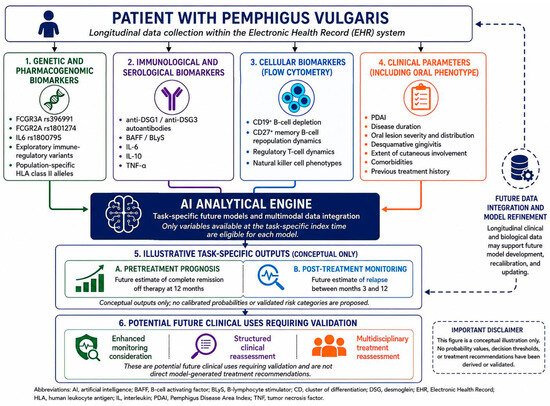
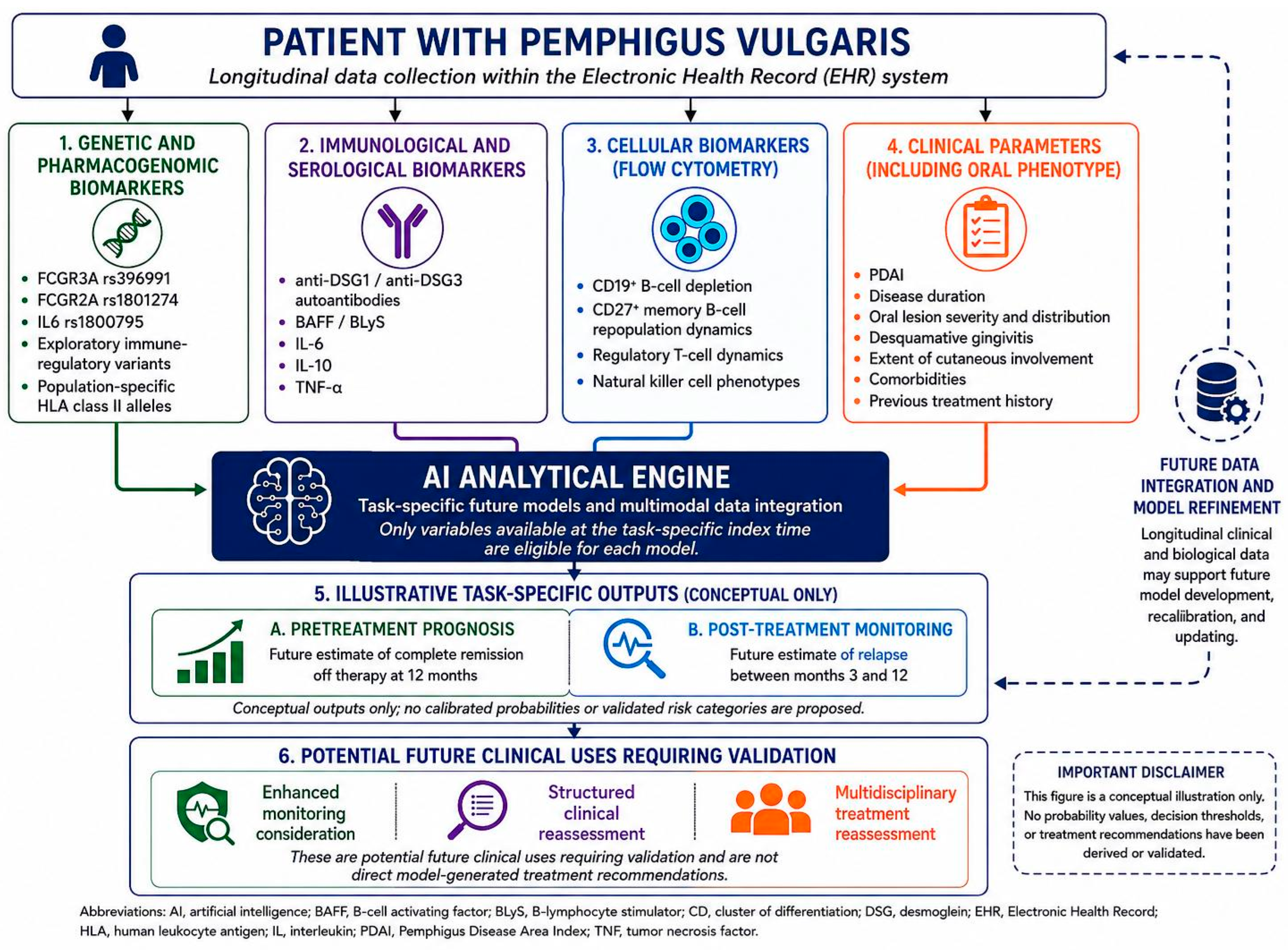
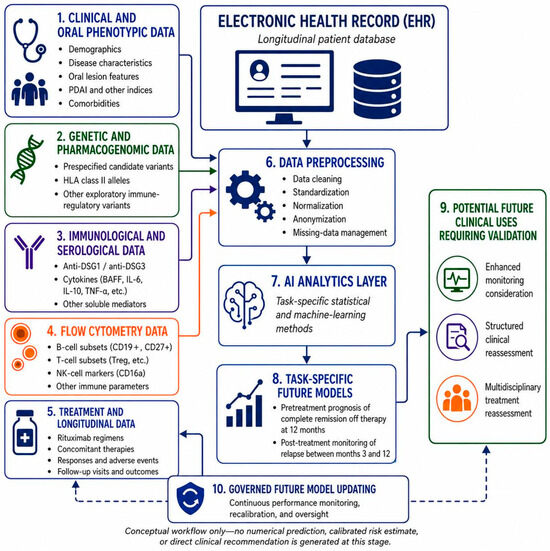
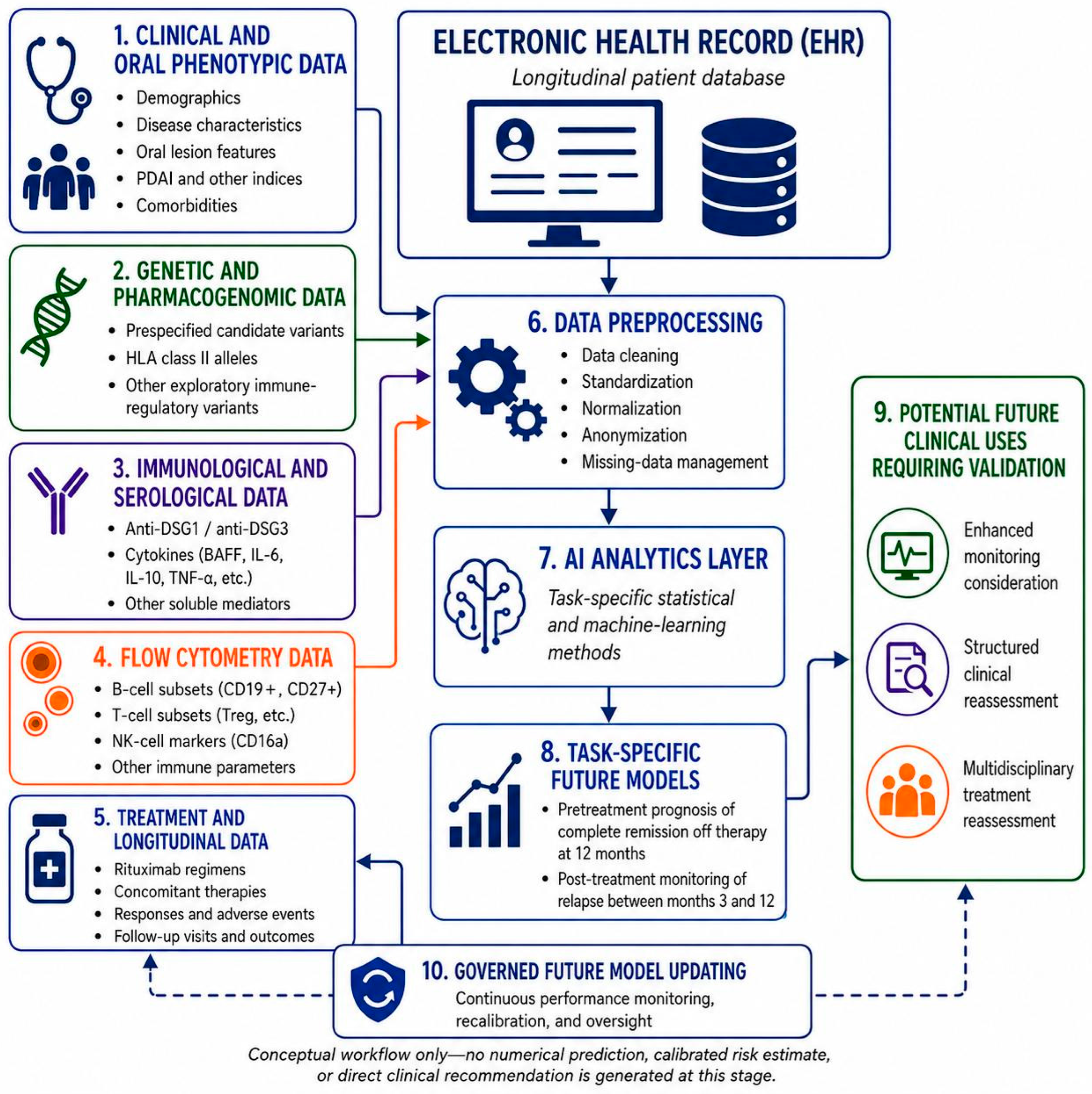
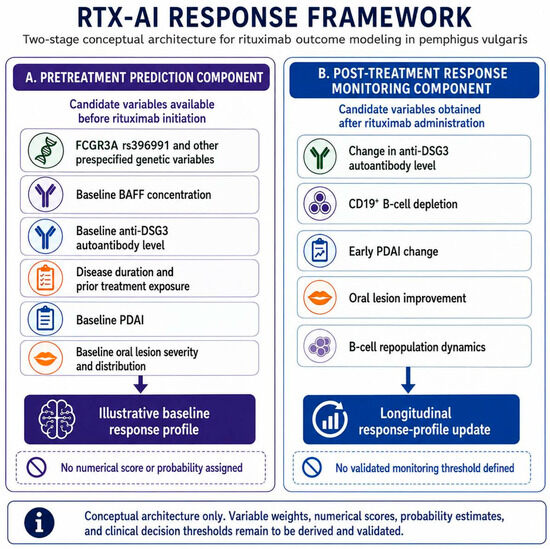
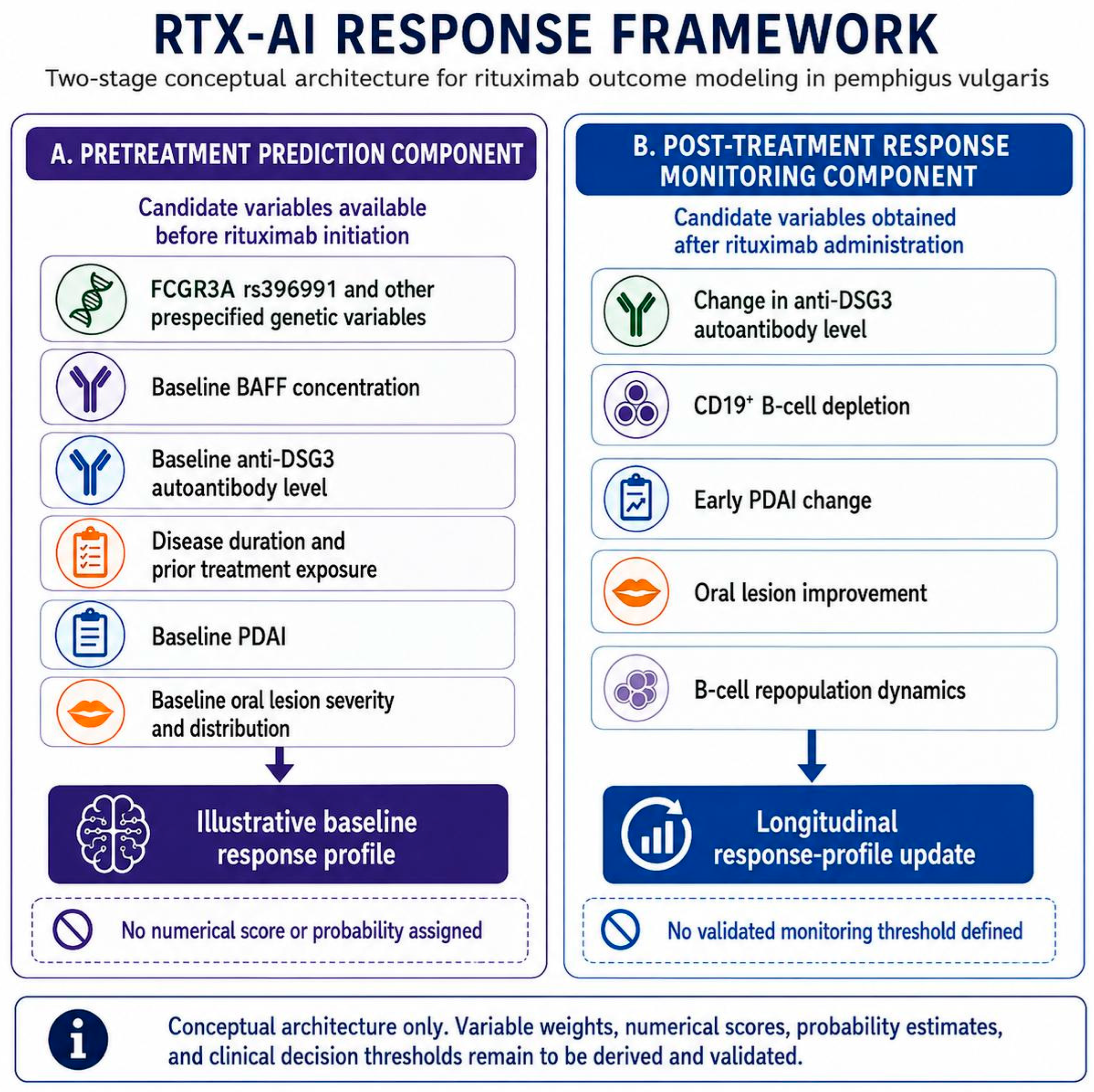
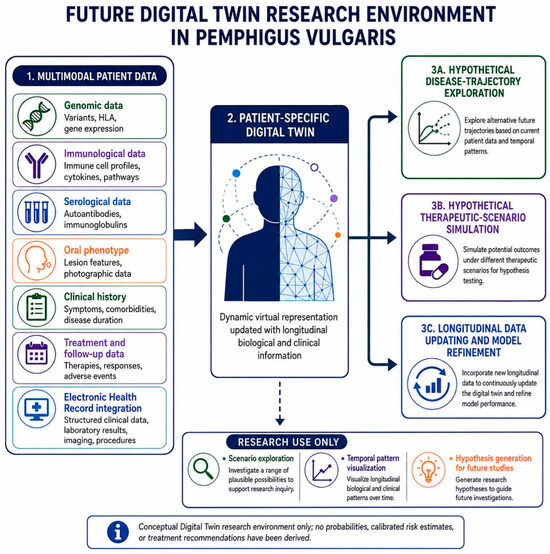
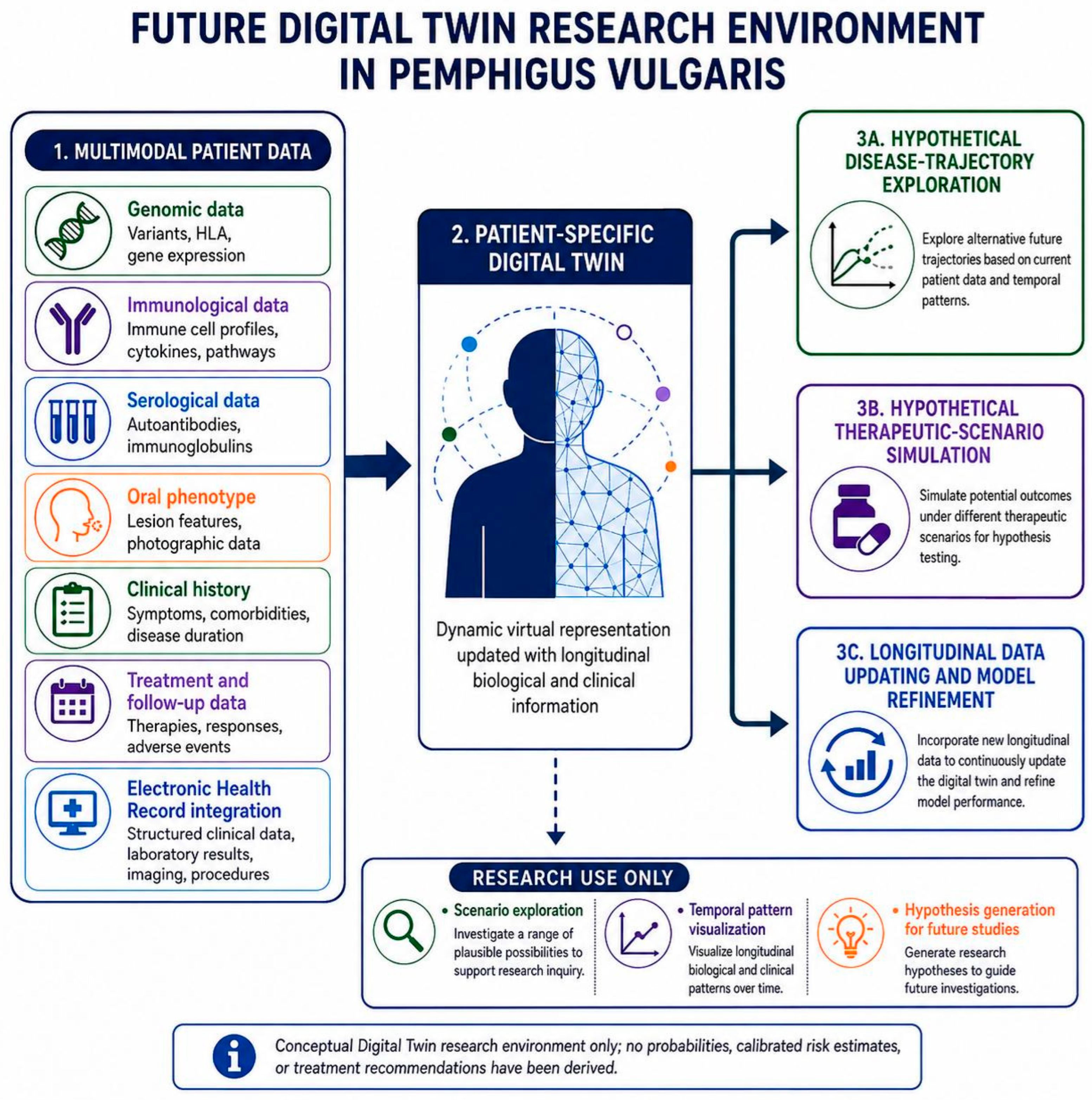
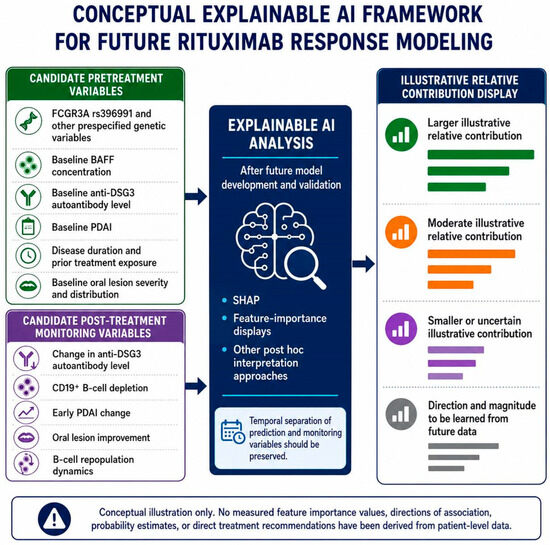
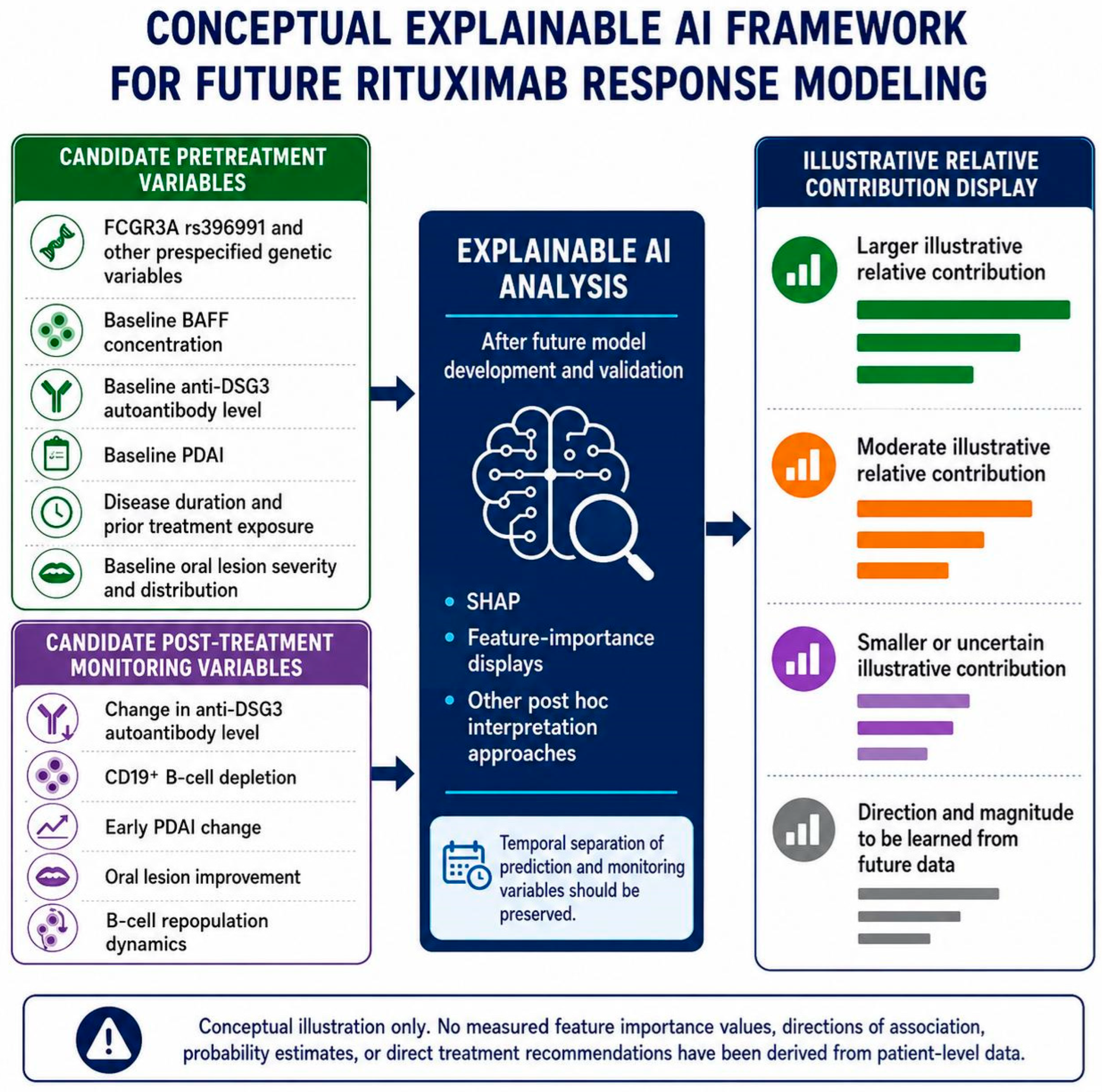
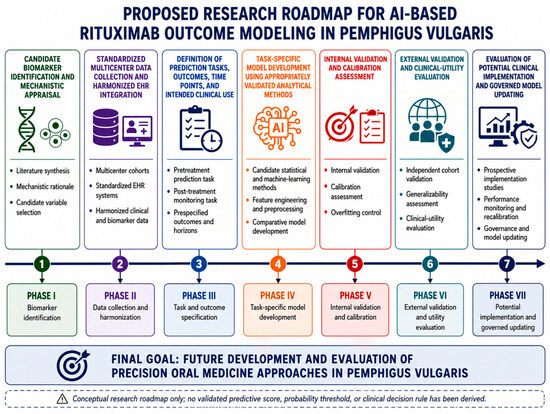
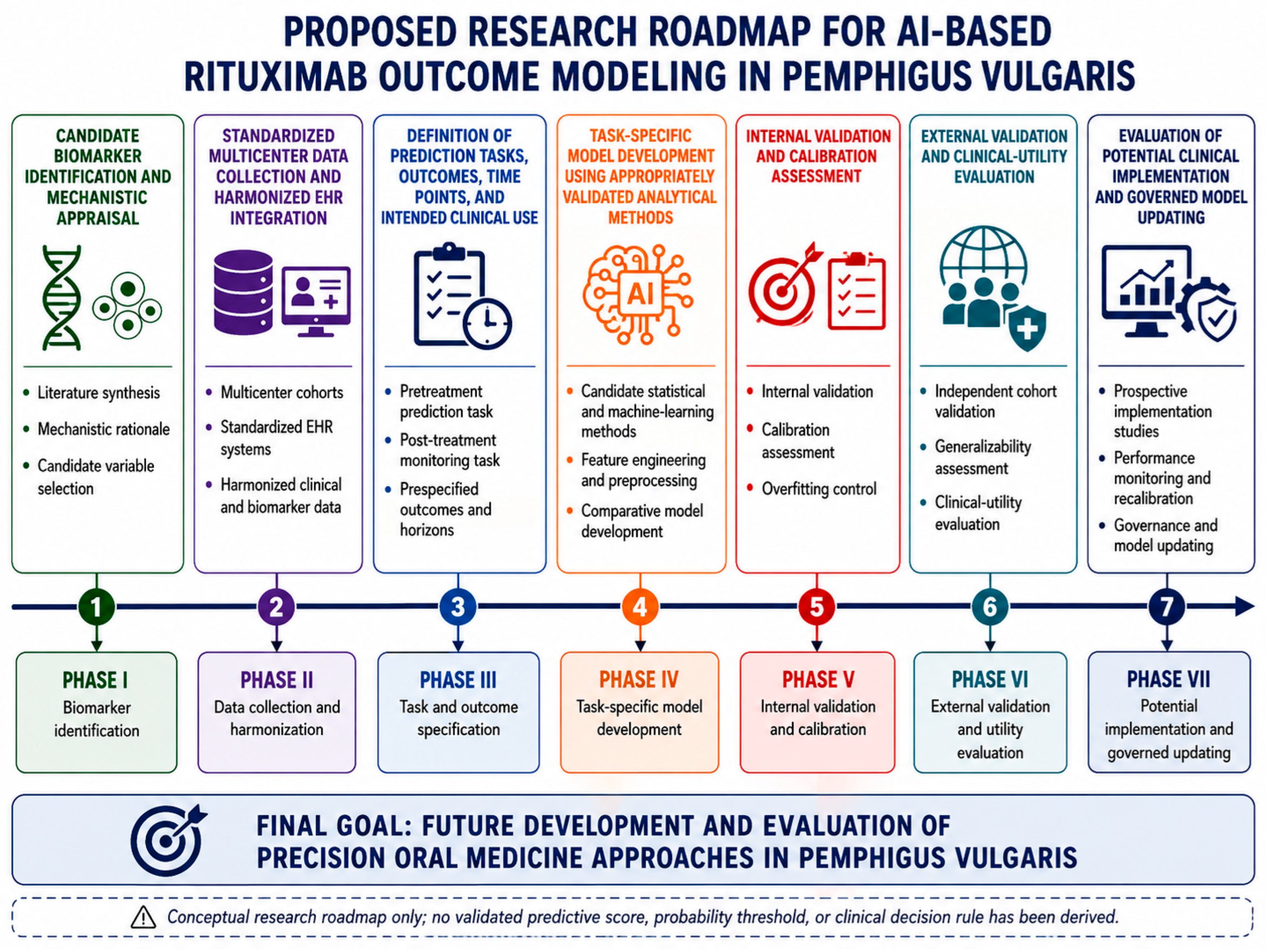

Disclaimer/Publisher’s Note: The statements, opinions and data contained in all publications are solely those of the individual author(s) and contributor(s) and not of MDPI and/or the editor(s). MDPI and/or the editor(s) disclaim responsibility for any injury to people or property resulting from any ideas, methods, instructions or products referred to in the content. |
© 2026 by the authors. Licensee MDPI, Basel, Switzerland. This article is an open access article distributed under the terms and conditions of the Creative Commons Attribution (CC BY) license.