


Abstract
Acne is a prevalent dermatological condition occurring globally and influenced by a variety of endogenous and exogenous factors. The microbiome and its contribution to skin disease have been increasingly explored, along with the influence of the exposome and host immune responses on this complex microbial system. Nine experts from different countries in Africa, America, Asia, and Europe gathered to harmonise definitions, identify key pathogenic and protective microbial strains, and prioritise the factors that most significantly impact the skin’s microbiome in the context of acne. Opportunity areas on the role of the microbiome in the prevention, treatment, recurrence, and sequelae avoidance in acne were identified. The relationships between current treatments and the diversity of the microbiome were described. Current microbiome-targeted strategies were assessed, including practical considerations of innovative future perspectives. The panel discussions emphasise the urgent need for universally adaptable guidelines encompassing alternatives to oral antibiotic therapies, in light of increasing antimicrobial resistance and the significant burden of treatment-related adverse events.
1. Introduction
Acne vulgaris remains one of the most common dermatological conditions worldwide, affecting individuals across diverse age groups and contributing significantly to psychosocial morbidities such as anxiety, depression, and even suicidal behaviour [1]. Although acne has been recognised since ancient times, the pathogenic role of bacteria was first suggested by Unna in 1896, with Sabouraud subsequently isolating and naming Bacillus acnes. Later, Bacillus acnes was renamed Propionibacterium acnes in the 1940s and, following further taxonomic refinement in 2016, was reclassified as Cutibacterium acnes; nevertheless, the term Propionibacterium acnes continues to be used and remains taxonomically valid [2,3]. In recent years, advances in metagenomics and immunology have illuminated the complex interplay between the skin microbiome and host physiology. The exposome and the immune response are now recognised as key factors influencing this microbiome, which is unique to each individual and varies according to body site [4,5]. In this context, eubiosis refers to a balanced mutualism between the host and its microbiota. However, dysbiosis, disrupting this homeostasis, may trigger or exacerbate inflammatory skin diseases [6]. Recent research has expanded the traditional understanding of acne pathogenesis by demonstrating that alterations in the lipid environment, disruption of skin commensals, and changes in the distribution of C. acnes strains contribute to epidermal barrier impairment, characterizing the dysbiosis observed in the disease [7,8]. A systematic review has underscored the intricate role of microbes in acne and highlighted the necessity for personalised, microbiome-based strategies [9]. The imbalance between beneficial and harmful bacterial strains appears to be more critical in acne pathogenesis than the mere overgrowth of specific microbes [10], and it is increasingly recognised that conventional treatments may either support or hinder the restoration of a healthy microbial composition [11].
1.1. Delphi Consensus Process and Methodological Approach
A modified Delphi methodology [12] was employed to achieve structured expert consensus on the role of the skin microbiome in acne pathogenesis, prevention, and treatment. This approach was chosen to systematically integrate current scientific evidence with expert clinical judgment in an area where high-level evidence remains limited. The literature search strategy included PubMed and Embase databases using combinations of the following keywords: “acne”, “skin microbiome”, “Cutibacterium acnes”, “exposome”, “skin barrier”, “probiotics”, “prebiotics”, “postbiotics”, and “gut–skin axis”. Studies published in English within the last 10–15 years were prioritized. Both clinical and mechanistic studies were considered. Exclusion criteria included non-peer-reviewed sources, studies lacking methodological clarity, and publications not directly related to acne or microbiome interactions.
An international panel of nine dermatologists with recognized expertise in acne and microbiome research was convened, representing diverse geographic regions (Brazil, Germany, Italy, Mexico, South Africa, Thailand, and the United Kingdom). The process was conducted between May and September 2024 and consisted of iterative rounds of evidence review, structured surveys, and group discussions.
Initially, a targeted narrative literature review was performed using PubMed and Embase databases to identify relevant studies on acne, the skin microbiome, the exposome, and microbiome-targeted interventions. Based on this review, a preliminary set of statements was developed by the coordinating author and refined collaboratively by the panel.
The Delphi process consisted of two formal electronic survey rounds, complemented by live discussions (virtual and in-person). In each survey round:
- Panelists independently rated their level of agreement with each statement using a structured scale.
- Responses were collected anonymously to minimize the influence of dominant opinions and reduce group bias.
- Statements not reaching consensus were revised based on aggregated feedback and redistributed in subsequent rounds.
Consensus was predefined as ≥75% agreement, consistent with commonly accepted thresholds in Delphi-based research. Statements reaching this threshold were retained, while those below the threshold were either reformulated or excluded after discussion.
The first round focused on foundational concepts (e.g., microbiome contribution to acne pathogenesis, influence of skincare and exposome), while subsequent rounds addressed emerging and more controversial topics, such as microbiome-targeted prevention strategies, pre/pro/postbiotic interventions, and the gut–skin axis.
Importantly, the panel explicitly differentiated between:
- Statements supported by robust clinical or mechanistic evidence;
- Statements reflecting expert consensus in areas of limited or evolving evidence.
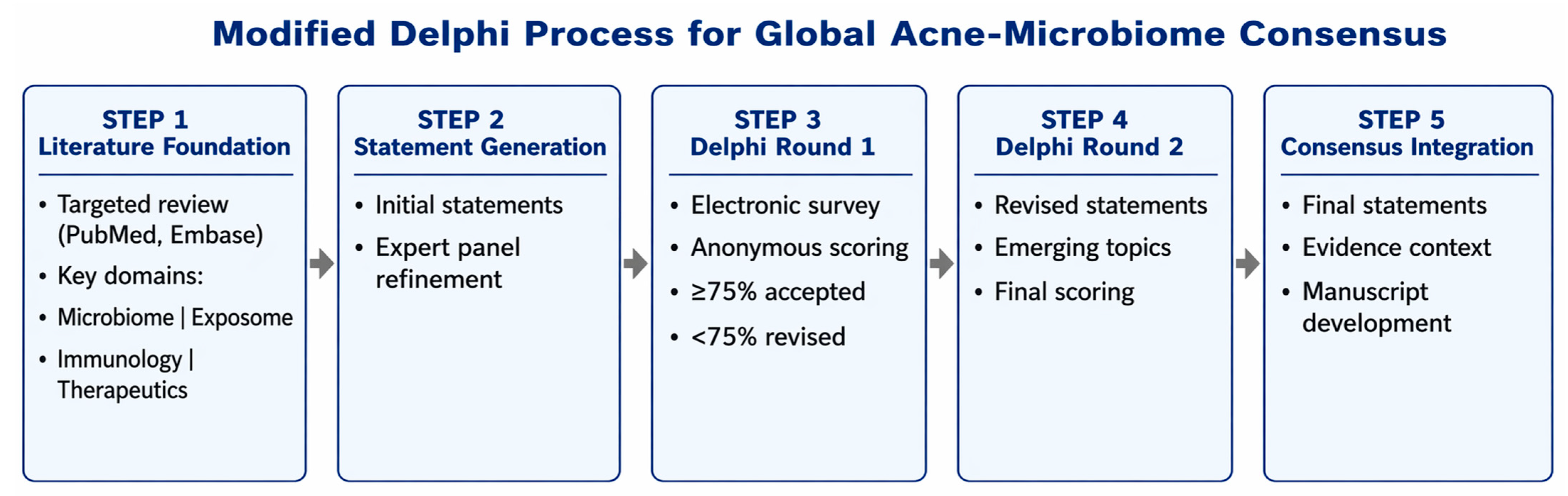
The wording of the consensus statements was preserved as generated during the Delphi process and was not modified after consensus was reached. Therefore, agreement levels reflect expert opinion and should not be interpreted as a direct measure of the strength of evidence. A summary of the process, including statement selection and progression across rounds, is presented in Figure 1.
Figure 1.
Modified Delphi process used to develop the global consensus on acne and the microbiome. A structured, multi-step approach was employed, beginning with a targeted narrative (non-systematic) literature review intended to support statement development rather than provide a comprehensive systematic synthesis. Initial statements were generated and refined by an international panel of experts. Two rounds of anonymous electronic surveys were conducted, interspersed with virtual and in-person discussions. Consensus was predefined as ≥75% agreement. Statements not reaching consensus were revised and re-evaluated in subsequent rounds. The final set of statements represents a synthesis of current evidence and expert interpretation, highlighting both well-established concepts and emerging areas of research. This structured approach enhances methodological transparency and aligns with established recommendations for Delphi-based consensus research. It is important to emphasize that consensus reflects expert agreement and should not be interpreted as a surrogate for high-level evidence. Statements related to emerging concepts, such as microbiome-targeted prevention strategies, should be considered hypothesis-generating and require further validation.
1.2. Pathogenesis: The Role of the Microbiome in Acne
The skin microbiome is composed of a diverse community of resident microorganisms—including bacteria, fungi, viruses, and mites—that coexist in a delicate balance with the host. In healthy individuals, the core microbiome is represented by 19 phyla, with the majority of commensal bacteria belonging to Actinobacteria (51.8%), Firmicutes (24.4%), Proteobacteria (16.5%), and Bacteroidetes (6.3%) [13]. In addition to bacterial populations, the skin microbiome also includes fungi (e.g., Malassezia spp.), viruses (including bacteriophages), and mites, all of which may contribute to the dynamic ecosystem of the skin. Although their role in acne is less well characterized, emerging evidence suggests that inter-kingdom interactions may influence inflammation, microbial competition, and barrier function. The distribution of these microorganisms varies according to skin region and microenvironment; for instance, Cutibacterium spp. thrive in lipid-rich, anaerobic conditions, while drier regions exhibit a mixture of phyla and moist areas favour the proliferation of Staphylococcus spp. and Corynebacterium spp. [14] Numerous studies have shown that both increases and decreases in the abundance of specific microbial communities can negatively impact skin health and facilitate the development of various dermatological conditions [15]. Traditional culture-based methods have underestimated this diversity; however, advances in amplicon and shotgun metagenomic sequencing now enable a more precise characterisation of these communities and their functional roles [16,17].
In the context of acne, quantitative differences in C. acnes between affected and healthy skin are not consistently observed; qualitative differences—specifically, variations in the strain composition and genetic characteristics—are critical. Certain strains of C. acnes contribute to skin health by producing short-chain fatty acids and bacteriocins that inhibit pathogens, whereas others, such as C. acnes type IA1, are associated with heightened inflammation and increased biofilm formation, and can induce the release of proinflammatory cytokines such as IL-1β, IL-6, IL-8, TNF-α, IL-12, and IL-23, contributing to both innate and adaptive immune responses in acne [2,18,19]. Importantly, these findings should be interpreted within the broader context of microbial community interactions, where C. acnes acts as a key—but not isolated—component of a complex ecological network. The use of antimicrobial agents may inadvertently promote more virulent strains (IA1 and IA2) and contribute to the emergence of antibiotic resistance through mutations in the 16S and 23S rRNA genes, as well as enhanced biofilm production [14,15,20,21]. Conversely, strains such as C. acnes type IB are not linked with acne, and type III has been found to possess the highest pro-inflammatory potential via upregulation of proteinase-activated receptor-2 (PAR-2), tumour necrosis factor-alpha (TNF-α), matrix metalloproteases (MMPs), and tissue inhibitors of metalloproteases (TIMPs) [19,22,23,24,25]. According to Dagnelie et al., patients with severe acne exhibit a predominance of IA1 strains and a reduction in overall strain diversity. This shift may trigger an innate immune response and inflammation [26]. In vitro studies further support that restoring microbial diversity can suppress inflammation by downregulating innate immune pathways. [27] Comparative genomic analysis of 82 C. acnes strains revealed lineage-specific genetic elements that may explain its dual role as a skin commensal and a pathogen, highlighting the importance of strain-level microbiome analysis for personalized acne therapies [28]. Moreover, cutaneous and gut microbes are now recognised as critical factors in maintaining skin health or exacerbating disease, opening avenues for novel therapeutic interventions [29].
1.3. Relationship Between the Microbiome and the Skin Barrier
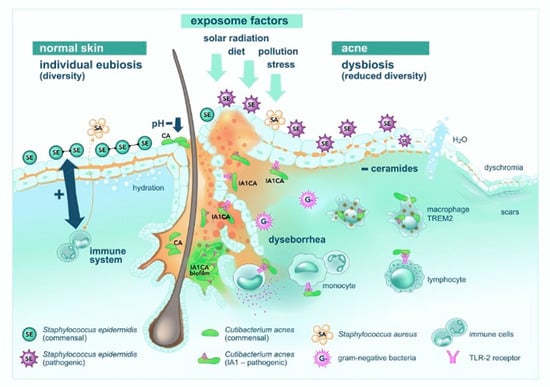
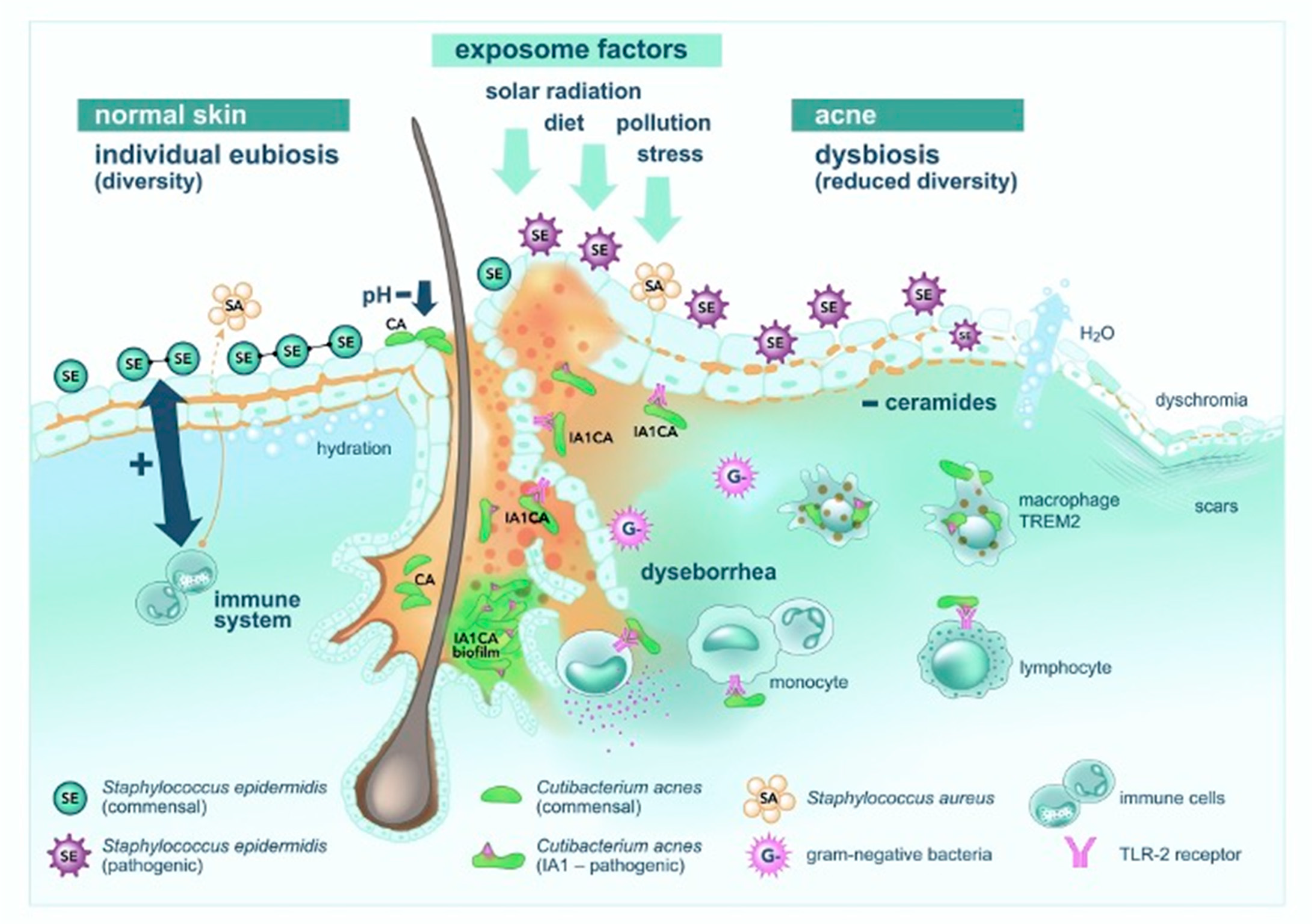
Alterations in the skin barrier have been directly associated with dysbiosis, a common feature of inflammatory skin disorders. In acne, barrier dysfunction may contribute to the predominance of C. acnes phylotypes IA and II, which exhibit enhanced biofilm formation, whereas phylotypes IB and III are more typically associated with healthy skin [8,30,31]. Biofilms enable C. acnes to persist and confer resistance to antibiotic therapy, suggesting that anti-biofilm agents might play a role in restoring microbial balance. Furthermore, acne patients often exhibit intrinsic alterations in the skin barrier, such as increased filaggrin expression and reduced ceramide levels, which in turn affect transepidermal water loss and overall permeability [25]. Restorative interventions using moisturisers or cosmetics enriched with probiotics have been shown to improve barrier function, further supporting the potential of microbiome-targeted therapies in acne management [32,33,34,35] (Figure 2). From a clinical perspective, strategies aimed at restoring the skin barrier—such as the use of ceramide-containing moisturizers, non-irritating cleansers, and microbiome-supportive dermocosmetics—may help reduce inflammation, improve treatment tolerability, and potentially enhance therapeutic outcomes in acne patients.
Figure 2.
The progression from eubiosis to dysbiosis and the detrimental effects on acne development. From left to right: Commensal Staphylococcus epidermidis and Cutibacterium acnes strains promote immune synergy, pH homeostasis, balanced sebaceous activity, and an intact epidermal barrier. Progressing toward the right: cumulative exposomal and intrinsic factors disrupt this equilibrium, precipitating dysseborrhea alongside compromised barrier integrity, pathogenic colonisation, and biofilm formation. Pathogenic Cutibacterium acnes (IA1) further activates immune pathways, heightening intercellular signalling and fostering follicular disarray, microcomedone formation, and clinical lesion development. This pathological cascade predisposes tissue to subsequent scarring and dyschromia. This figure represents a conceptual model based on current evidence and expert interpretation rather than a direct representation of a single dataset.
1.4. The Microbiome and Acne Severity
Multiple factors influence acne severity, including the predominance of more virulent C. acnes phylogroups, altered diversity of Staphylococcus epidermidis, and shifts in overall microbial diversity. Increased alpha diversity and higher proportions of Gram-negative bacteria such as Faecalibacterium, Klebsiella, Odoribacter, and Bacteroides have also been associated with more severe forms of acne. These observations underscore the complexity of host–microbe interactions and highlight the need for further studies to elucidate the precise mechanisms by which microbial dysbiosis influences disease severity. Recent studies using metagenomic approaches have further demonstrated that decreased microbial diversity and dominance of specific virulent strains correlate with increased inflammatory lesion counts, supporting a quantitative relationship between dysbiosis and acne severity [36].
1.5. The Microbiome in Acne-Induced Hyperpigmentation (AIH) and Scarring
Although certain C. acnes strains with heightened inflammatory potential are known to contribute to lesion formation, the mechanistic links between microbial dysbiosis, sustained immune activation, and the development of acne-induced hyperpigmentation and scarring remain insufficiently elucidated, highlighting a critical gap in our understanding of how microbiome alterations influence long-term tissue remodeling [37,38]. The dyschromic consequence is particularly prevalent in individuals with skin of color, and current consensus guidelines recommend early intervention with treatments such as hydroquinone, azelaic acid, chemical peels, or antioxidants to mitigate its development [39,40]. More recently, isobutylamido-thiazolyl-resorcinol (Thiamidol), a potent inhibitor of human tyrosinase, has emerged as a promising agent for addressing acne-induced hyperpigmentation [41].
1.6. Impact of Conventional Acne Treatments on the Skin Microbiome
Traditional acne treatments—including topical benzoyl peroxide (BPO), systemic isotretinoin, and both oral and topical antibiotics—effectively reduce lesion counts, yet they can also impact the skin microbiome. BPO exerts a bactericidal effect that reduces both antibiotic-sensitive and resistant strains of C. acnes [42]. Oral isotretinoin reduces sebum production, leading to a secondary decrease in C. acnes, and has been associated with significant increases in both alpha- and beta-diversity of the skin microbiome, changes that correlate with clinical improvement [43]. However, the widespread use of antibiotics raises concerns regarding the promotion of antibiotic-resistant strains, gastrointestinal side effects, and potential associations with inflammatory bowel diseases [23,44,45]. In addition, antibiotics may alter non-cutaneous microbial populations and have even been hypothesised to trigger upper respiratory tract infections, although conclusive evidence is still lacking [45]. Notably, the persistence of virulent C. acnes strains may not depend solely on microbial resistance; lipid components of sebum, such as oxidized squalene—abundant in acne lesions—can modulate keratinocyte gene expression and innate immune responses, potentially perpetuating inflammation even in the presence of antimicrobial therapy [46,47].
1.7. Positive Interventions and Cosmetic Adjuncts
While it may seem counterintuitive to moisturise oily skin, the use of non-comedogenic moisturisers—especially those containing anti-inflammatory agents such as ceramides and niacinamide—is recommended as an adjunct to conventional acne treatments to prevent irritation and transepidermal water loss [33,48]. Although high-quality randomized controlled trials remain limited, emerging evidence and expert consensus suggest that these interventions may provide clinical benefits as adjunctive or maintenance strategies [34,38].
1.8. Lifestyle Practices, the Exposome, and the Gut–Skin Axis
External and internal factors, collectively called the exposome, influence the skin microbiome. They include sun radiation, air pollution, tobacco smoke, nutrition, and even cosmetic products [49,50]. Similarly, the gut microbiome, which is affected by ageing, diet, illness, antibiotic use, and travel, plays a significant role in overall health. A complex, bidirectional relationship exists between the gut and skin microbiomes, mediated by systemic immune and inflammatory pathways [29,51,52,53,54,55]. Dietary components and probiotics have been shown to influence the gut microbiome [56,57,58,59], which can affect the skin microbiome and potentially modulate acne [60]. Although the role of specific dietary factors in acne remains controversial—with dairy products, chocolate, and saturated fats often implicated—the evidence is conflicting due to diverse diet compositions and cultural differences [61]. Epidemiological studies support that high-glycaemic load diets and increased dairy protein consumption, common in Western diets, may exacerbate acne [61,62], although definitive validation of these associations is elusive. Additionally, cleansing practices and the use of moisturisers can alter the skin’s microbiome and biophysical properties; excessive scrubbing may disrupt the skin barrier and activate innate immunity, leading to acne aggravation [63,64]. Therefore, cleansers should be formulated to be non-comedogenic, non-acnegenic, non-irritating, and non-allergenic, with a preference for non-ionic, fragrance-free products that rinse easily [65]. Moisturisers designed for acne often contain anti-inflammatory ingredients. They may include active anti-acne agents like salicylic acid alongside components such as dimethicone or glycerine, and occasionally botanical extracts with anti-inflammatory properties [32].
1.9. Results of the Global Delphi Process
Overall, the Delphi process demonstrated a strong and consistent consensus regarding the central role of the microbiome in acne pathogenesis, as well as the significant influence of skincare practices and exposome-related factors on this complex ecosystem. Emerging concepts, including microbiome-targeted prevention and maintenance strategies, also achieved moderate to high levels of agreement, reflecting growing scientific and clinical interest despite the current limitations in high-level evidence.
This structured process culminated in a series of consensus statements, summarized in Table 1. In the first electronic survey, several key statements reached a high level of agreement (≥75%), including the recognition of the microbiome as a crucial contributor to acne pathogenesis (100%), the impact of skincare practices on microbiome composition (100%), and the direct influence of the exposome—encompassing lifestyle, climate, diet, and pollution—on the skin microbiome (100%).
Table 1.
Statements selected after the literature review and discussion group.
Furthermore, the panel unanimously agreed that microbiome-targeted treatments should be adopted for acne management (100%). Moreover, other statements regarding the influence of the microbiome on acne severity (89%), the direct impact of the gut–skin axis (89%), the potential benefits of probiotics (89%), and the inclusion of prebiotics, probiotics, and postbiotics in acne therapy (89%) also reached high consensus. Newer strategies were similarly debated, such as microbiome-targeted approaches for primary prevention (78%) and maintenance to avoid acne relapses (75%). In a subsequent survey round, additional statements reached consensus: the microbiome’s role in acne-induced hyperpigmentation (100%), the positive influence of topical prebiotics in acne treatment (100%), the impact of the microbiome on acne-induced scarring (89%), and the influence of high-glycaemic dietary habits on the composition of the skin microbiome and acne pathogenesis [62].
1.10. Practical Considerations and Innovative Future Perspectives
Future research should prioritize the generation of high-quality evidence through well-designed randomized controlled trials evaluating microbiome-targeted interventions. In parallel, efforts should focus on the standardization of microbiome assessment methods, the identification of clinically relevant microbial signatures, and the evaluation of the long-term safety and efficacy of emerging therapies. Within this context, and considering the limitations and potential drawbacks of conventional acne treatments, the panel explored innovative microbiome-targeted strategies as both adjunctive approaches and potential avenues for primary prevention. The experts discussed the promise of interventions aimed at modulating the cutaneous microbial ecosystem—approaches that could selectively target pathogenic strains while preserving beneficial microorganisms [66,67]. In light of emerging evidence on the gut–brain–skin axis [51,53,55], strategies that include oral and topical prebiotics, probiotics, and postbiotics are being investigated to restore microbial balance and attenuate early inflammatory responses. Although the statement that “microbiome-targeted strategies should be adopted as primary prevention of acne” achieved strong consensus, the underlying mechanisms and clinical applicability of such strategies remain an area of active research and may represent a promising approach for primary prevention, although current evidence remains limited [68]. Detailed discussions centred on the potential of topical formulations containing prebiotics to enhance skin barrier function and suppress pathogenic biofilm formation despite the relatively limited supporting data (100% consensus).
Additional innovative approaches discussed include bacteriotherapy and phage therapy. Topical bacteriotherapy—using live beneficial bacteria to correct dysbiosis—has demonstrated feasibility in preliminary studies, while oral and topical pre-, pro-, and postbiotics may act through the gut–skin axis to offer systemic benefits [6,69,70,71]. As our understanding of the complex roles of different C. acnes strains evolves, further efforts in microbiome manipulation, including bacterial transplantation, are anticipated to expand therapeutic options [72,73]. Although early open-label studies using donor microbiome mixtures have shown potential benefits, robust randomised controlled trials are necessary to validate these findings [74,75].
Phage therapy represents another promising avenue by selectively targeting pathogenic C. acnes strains with lytic phages, thereby reducing inflammation and biofilm formation while preserving the commensal flora. Despite its advantages, challenges remain regarding phage delivery to follicular structures, the potential for resistance, and the inflammatory response elicited by lysed bacteria [69,71]. Vaccine development targeting specific virulence factors of C. acnes, such as the CAMP factor, has been pursued for decades, and recent advances—including an mRNA vaccine trial initiated in 2024—offer hope for long-term modulation of the host–microbiome interaction without disturbing microbial homeostasis [76,77,78]. However, these approaches remain experimental, and significant challenges persist, including variability in host response, delivery mechanisms, long-term safety, and regulatory considerations, which currently limit their translation into routine clinical practice.
2. Discussion
Given the involvement of industry-supported research in this field, interpretations of microbiome-targeted strategies should be approached with caution. The present consensus aims to balance current evidence with expert interpretation, acknowledging potential limitations and areas of uncertainty.
This global Delphi consensus brings together international clinical expertise and contemporary scientific insights to provide a comprehensive framework for understanding the multifaceted role of the skin microbiome in acne. The perspectives presented herein reflect expert agreement in areas where the evidence base remains heterogeneous or is still evolving, and should therefore be interpreted within the context of current scientific knowledge rather than as definitive evidence-based recommendations. By structuring the manuscript around an iterative Delphi process, the panel not only reaffirms well-established concepts but also highlights emerging and innovative strategies, particularly those related to microbiome modulation as a potential avenue for primary prevention.
Importantly, the role of the microbiome in acne cannot be fully understood in isolation, but rather within the broader context of the follicular immune microenvironment. The infundibulum serves as a critical interface between the hair follicle and the external environment, where resident Langerhans cells regulate immune surveillance and antigen recognition [79,80]. Continuous exposure to microbial communities within this niche may dynamically influence local immune responses, reinforcing the concept of acne as a disorder arising from complex host–microbe interactions.
In parallel, recent advances highlight the relevance of hair follicle stem cells (HFSCs) and sebaceous gland dynamics in linking inflammation and tissue repair. Upper HFSC populations and sebaceous gland progenitor cells contribute to sebocyte differentiation and wound healing processes [81], suggesting that acne-related inflammation may share biological pathways with regenerative responses. This integrated perspective—connecting microbiome composition, immune regulation, and follicular biology—provides a more comprehensive framework for understanding acne pathogenesis, as well as its variability in progression, resolution, and sequelae.
While several foundational aspects of microbiome involvement in acne are well established, many of the proposed therapeutic strategies remain in early stages of development. Interventions such as topical prebiotics, bacteriotherapy, phage therapy, and vaccine-based approaches are promising, yet require validation through robust, well-designed clinical trials.
Future research should therefore prioritize the generation of high-quality evidence to clarify the efficacy and safety of these strategies, enabling their appropriate integration into clinical practice. Such advances have the potential to meaningfully refine acne management while preserving the integrity and functional balance of the cutaneous ecosystem.
Despite promising advances, several aspects of microbiome-targeted interventions remain insufficiently understood, including long-term effects, patient variability, and reproducibility across populations. Conflicting findings in the literature further highlight the need for cautious interpretation.
Author Contributions
M.R., L.F.-A., A.L., E.M., V.B., T.D., P.R., R.N. and N.D. contributed to the conception of the article, participated in the discussion panels, and were involved in the critical review process. M.R. additionally developed the manuscript text and created the figure. All authors have read and agreed to the published version of the manuscript.
Funding
This work was supported by Beiersdorf-Eucerin (Germany), which provided financial support for the organization of online meetings and one in-person meeting of the international expert group. The sponsor had no role in the development of the consensus, data interpretation, manuscript preparation, or decision to publish.
Data Availability Statement
No new data were created or analyzed in this study. Data sharing is not applicable to this article.
Acknowledgments
We extend our gratitude to Beiersdorf-Eucerin for their unrestricted support, SPRIM PRO for providing logistics and DELPHI process assistance, and Thor Nissen for his contributions to medical writing.
Conflicts of Interest
Marco A. Rocha, honoraria for speaker services from NAOS, Eucerin, Hypera, Johnson&Johnson, Galderma, support for attending meetings from Galderma, participation in an advisory board for Eucerin; Leonel Fierro-Arias, Speaker, consultant, and researcher for Pierre-Fabre, Beiersdorf/Eucerin, NAOS/Bioderma and Galderma; Alison Layton, acne-related grants funded by Galderma, consultant for Alliance, Almirall, L’Oreal, Beiersdorf, La Roche Posay, Galderma pharma, Eligo, Novartis, educational talks for Almirall, Beiersdorf, Galderma Pharma, Leo, L’Oreal, La Roche Posay, sponsorship to attend meetings by Alliance & L’oreal, participation in advisory boards for Beiersdorf, L’Oreal, Galderma pharma, Novartis, Director of private skin company AMLSKINCARE LTD; Eirini Merika, honoraria for lectures from Eucerin, L’oreal, support for attending meetings from AbbVie; Vincenzo Bettoli, grants from Beiersdorf, consulting fees from Baiersdorf, Galderma, Novartis, UCB, Cantabria, Ganassini, LaRoche Posay, Sanofi, honoraria for lectures from Galderma, Novartis, UCB, Cantabria, Ganassini, Baiersdorf, LaRoche Posay, Sanofi, payment for expert testimony from Galderma, Novartis, UCB, Ganassini, Sanofi, support for attending meetings from Galderma, Novartis, UCB, Cantabria, Ganassini, LaRoche Posay, Baiersdorf, Sanofi, participation in advisory boards for Baiersdorf, Novartis, UCB, Galderma, Sanofi; Thomas Dirschka, grants from Galderma, Viatris, consulting fees, support for attending meetings, honoraria for lectures from Unna-Academy, Galderma, Viatris, participation on advisory boards for Beiersdorf, Viatris, Galderma; Pawinee Rerknimitr, grants, consulting fees, honoraria for lectures, support for attending meetings from Beiersdorf; Rakesh Newaj, no conflicts of interest declared; Ncoza Dlova, consulting fees, honoraria for lectures and support for attending meetings from Beiersdorf.
References
- Gupta, N.; Gupta, M. The Controversies Surrounding Acne and Suicide: Essential Knowledge for Clinicians. Cureus 2023, 15, e43867. [Google Scholar] [CrossRef] [Scilit]
- Scholz, C.F.P.; Kilian, M. The natural history of cutaneous propionibacteria, and reclassification of selected species within the genus Propionibacterium to the proposed novel genera Acidipropionibacterium gen. nov., Cutibacterium gen. nov. and Pseudopropionibacterium gen. nov. Int. J. Syst. Evol. Microbiol. 2016, 66, 4422–4432. [Google Scholar] [CrossRef] [Scilit]
- Alexeyev, O.A.; Dekio, I.; Layton, A.M.; Li, H.; Hughes, H.; Morris, T.; Zouboulis, C.C.; Patrick, S. Why we continue to use the name Propionibacterium acnes. Br. J. Dermatol. 2018, 179, 1227. [Google Scholar] [CrossRef] [Scilit] [PubMed]
- Aggarwal, N.; Kitano, S.; Puah, G.R.Y.; Kittelmann, S.; Hwang, I.Y.; Chang, M.W. Microbiome and Human Health: Current Understanding, Engineering, and Enabling Technologies. Chem. Rev. 2023, 123, 31–72. [Google Scholar] [CrossRef] [Scilit]
- Gilbert, J.A.; Blaser, M.J.; Caporaso, J.G.; Jansson, J.K.; Lynch, S.V.; Knight, R. Current understanding of the human microbiome. Nat. Med. 2018, 24, 392–400. [Google Scholar] [CrossRef] [Scilit]
- Dewi, D.A.R.; Perdiyana, A.; Wiliantari, N.M.; Nadhira, F.; Arkania, N.; A Salsabila, C.; Allun, C.V.; Allatib, A.; Dewantara, K. Managing the Skin Microbiome as a New Bacteriotherapy for Inflammatory Atopic Dermatitis. Cureus 2023, 15, e48803. [Google Scholar] [CrossRef] [Scilit] [PubMed]
- Knox, S.; O’Boyle, N.M. Skin lipids in health and disease: A review. Chem. Phys. Lipids 2021, 236, 105055. [Google Scholar] [CrossRef] [Scilit]
- Zhou, L.; Liu, X.; Li, X.; He, X.; Xiong, X.; Lai, J. Epidermal Barrier Integrity is Associated with Both Skin Microbiome Diversity and Composition in Patients with Acne Vulgaris. Clin. Cosmet. Investig. Dermatol. 2022, 15, 2065–2075. [Google Scholar] [CrossRef] [Scilit]
- Podwojniak, A.; Tan, I.J.; Sauer, J.; Neubauer, Z.; Rothenberg, H.; Ghani, H.; Parikh, A.K.; Cohen, B. Acne and the cutaneous microbiome: A systematic review of mechanisms and implications for treatments. J. Eur. Acad. Dermatol. Venereol. 2024, 39, 793–805. [Google Scholar] [CrossRef] [Scilit]
- Coughlin, C.C.; Swink, S.M.; Horwinski, J.; Sfyroera, G.; Bugayev, J.; Grice, E.A.; Yan, A.C. The preadolescent acne microbiome: A prospective, randomized, pilot study investigating characterization and effects of acne therapy. Pediatr. Dermatol. 2017, 34, 661–664. [Google Scholar] [CrossRef] [Scilit] [PubMed]
- Whiting, C.; Abdel Azim, S.; Friedman, A. The Skin Microbiome and its Significance for Dermatologists. Am. J. Clin. Dermatol. 2024, 25, 169–177. [Google Scholar] [CrossRef] [Scilit]
- Trevelyan, E.G.; Robinson, P.N. Delphi methodology in health research: How to do it? Eur. J. Integr. Med. 2015, 7, 423–428. [Google Scholar] [CrossRef] [Scilit]
- Schommer, N.N.; Gallo, R.L. Structure and function of the human skin microbiome. Trends Microbiol. 2013, 21, 660–668. [Google Scholar] [CrossRef] [Scilit]
- Rodrigues Hoffmann, A. The cutaneous ecosystem: The roles of the skin microbiome in health and its association with inflammatory skin conditions in humans and animals. Vet. Dermatol. 2017, 28, 60. [Google Scholar] [CrossRef] [Scilit]
- Olunoiki, E.; Rehner, J.; Bischoff, M.; Koshel, E.; Vogt, T.; Reichrath, J.; Becker, S.L. Characteristics of the Skin Microbiome in Selected Dermatological Conditions: A Narrative Review. Life 2022, 12, 1420. [Google Scholar] [CrossRef] [Scilit] [PubMed]
- Dulanto Chiang, A.; Dekker, J.P. From the Pipeline to the Bedside: Advances and Challenges in Clinical Metagenomics. J. Infect. Dis. 2020, 221, S331–S340. [Google Scholar] [CrossRef] [Scilit] [PubMed]
- Lema, N.K.; Gemeda, M.T.; Woldesemayat, A.A. Recent Advances in Metagenomic Approaches, Applications, and Challenges. Curr. Microbiol. 2023, 80, 347. [Google Scholar] [CrossRef] [Scilit]
- Fitz-Gibbon, S.; Tomida, S.; Chiu, B.H.; Nguyen, L.; Du, C.; Liu, M.; Elashoff, D.; Erfe, M.C.; Loncaric, A.; Kim, J.; et al. Propionibacterium acnes Strain Populations in the Human Skin Microbiome Associated with Acne. J. Investig. Dermatol. 2013, 133, 2152–2160. [Google Scholar] [CrossRef] [Scilit]
- McLaughlin, J.; Watterson, S.; Layton, A.M.; Bjourson, A.J.; Barnard, E.; McDowell, A. Propionibacterium acnes and Acne Vulgaris: New Insights from the Integration of Population Genetic, Multi-Omic, Biochemical and Host-Microbe Studies. Microorganisms 2019, 7, 128. [Google Scholar] [CrossRef] [Scilit]
- Byrd, A.L.; Belkaid, Y.; Segre, J.A. The human skin microbiome. Nat. Rev. Microbiol. 2018, 16, 143–155. [Google Scholar] [CrossRef] [Scilit]
- Mayslich, C.; Grange, P.A.; Dupin, N. Cutibacterium acnes as an Opportunistic Pathogen: An Update of Its Virulence-Associated Factors. Microorganisms 2021, 9, 303. [Google Scholar] [CrossRef] [Scilit]
- Nakase, K.; Hayashi, N.; Akiyama, Y.; Aoki, S.; Noguchi, N. Antimicrobial susceptibility and phylogenetic analysis of Propionibacterium acnes isolated from acne patients in Japan between 2013 and 2015. J. Dermatol. 2017, 44, 1248–1254. [Google Scholar] [CrossRef] [Scilit] [PubMed]
- Lomholt, H.; Kilian, M. Clonality and Anatomic Distribution on the Skin of Antibiotic Resistant and Sensitive Propionibacterium acnes. Acta Derm. Venereol. 2014, 94, 534–538. [Google Scholar] [CrossRef] [Scilit]
- Beirne, C.; McCann, E.; McDowell, A.; Miliotis, G. Genetic determinants of antimicrobial resistance in three multi-drug resistant strains of Cutibacterium acnes isolated from patients with acne: A predictive in silico study. Access Microbiol. 2022, 4, 000404. [Google Scholar] [CrossRef] [Scilit] [PubMed]
- Coenye, T.; Spittaels, K.J.; Achermann, Y. The role of biofilm formation in the pathogenesis and antimicrobial susceptibility of Cutibacterium acnes. Biofilm 2022, 4, 100063. [Google Scholar] [CrossRef] [Scilit]
- Dagnelie, M.-A.; Corvec, S.; Saint-Jean, M.; Nguyen, J.-M.; Khammari, A.; Dréno, B. Cutibacterium acnes phylotypes diversity loss: A trigger for skin inflammatory process. J. Eur. Acad. Dermatol. Venereol. 2019, 33, 2340–2348. [Google Scholar] [CrossRef] [Scilit]
- Scholz, C.F.P.; Jensen, A.; Lomholt, H.B.; Brüggemann, H.; Kilian, M. A Novel High-Resolution Single Locus Sequence Typing Scheme for Mixed Populations of Propionibacterium acnes In Vivo. PLoS ONE 2014, 9, e104199. [Google Scholar] [CrossRef] [Scilit] [PubMed]
- Tomida, S.; Nguyen, L.; Chiu, B.H.; Liu, J.; Sodergren, E.; Weinstock, G.M.; Li, H. Pan-Genome and Comparative Genome Analyses of Propionibacterium acnes Reveal Its Genomic Diversity in the Healthy and Diseased Human Skin Microbiome. mBio 2013, 4, e00003-13. [Google Scholar] [CrossRef] [Scilit]
- Siddiqui, R.; Makhlouf, Z.; Khan, N.A. The increasing importance of the gut microbiome in acne vulgaris. Folia Microbiol. 2022, 67, 825–835. [Google Scholar] [CrossRef] [Scilit]
- Lee, H.J.; Kim, M. Skin Barrier Function and the Microbiome. Int. J. Mol. Sci. 2022, 23, 13071. [Google Scholar] [CrossRef] [Scilit]
- Rocha, M.A.; Bagatin, E. Skin barrier and microbiome in acne. Arch. Dermatol. Res. 2018, 310, 181–185. [Google Scholar] [CrossRef] [Scilit]
- Chularojanamontri, L.; Tuchinda, P.; Kulthanan, K.; Pongparit, K. Moisturizers for Acne: What are their Constituents? J. Clin. Aesthetic Dermatol. 2014, 7, 36–44. [Google Scholar]
- Tempark, T.; Shem, A.; Lueangarun, S. Efficacy of ceramides and niacinamide-containing moisturizer versus hydrophilic cream in combination with topical anti-acne treatment in mild to moderate acne vulgaris: A split face, double-blinded, randomized controlled trial. J. Cosmet. Dermatol. 2024, 23, 1758–1765. [Google Scholar] [CrossRef] [Scilit]
- Thiboutot, D.; Layton, A.M.; Traore, I.; Gontijo, G.; Troielli, P.; Ju, Q.; Kurokawa, I.; Dreno, B. International expert consensus recommendations for the use of dermocosmetics in acne. J. Eur. Acad. Dermatol. Venereol. 2024, 39, 952–966. [Google Scholar] [CrossRef] [Scilit] [PubMed]
- Zdrada, J.; Odrzywołek, W.; Stolecka-Warzecha, A.; Wilczyński, S.; Błońska-Fajfrowska, B. The influence of cosmetics dedicated to oily and acne-prone skin on skin parameters. J. Cosmet. Dermatol. 2022, 21, 6092–6099. [Google Scholar] [CrossRef] [Scilit]
- Huang, C.; Zhuo, F.; Han, B.; Li, W.; Jiang, B.; Zhang, K.; Jian, X.; Chen, Z.; Li, H.; Huang, H.; et al. The updates and implications of cutaneous microbiota in acne. Cell. Biosci. 2023, 13, 113. [Google Scholar] [CrossRef] [Scilit]
- Xu, W.; Sinaki, D.G.; Tang, Y.; Chen, Y.; Zhang, Y.; Zhang, Z. Acne-induced pathological scars: Pathophysiology and current treatments. Burn. Trauma 2024, 12, tkad060. [Google Scholar] [CrossRef] [Scilit]
- Jennings, T.; Duffy, R.; McLarney, M.; Renzi, M.; Heymann, W.R.; Decker, A.; Lawrence, N. Acne scarring—Pathophysiology, diagnosis, prevention and education: Part I. J. Am. Acad. Dermatol. 2024, 90, 1123–1134. [Google Scholar] [CrossRef] [Scilit]
- Elbuluk, N.; Grimes, P.; Chien, A.; Hamzavi, I.; Alexis, A.; Taylor, S.; Gonzalez, N.; Weiss, J.; Desai, S.R.; Kang, S. The Pathogenesis and Management of Acne-Induced Post-inflammatory Hyperpigmentation. Am. J. Clin. Dermatol. 2021, 22, 829–836. [Google Scholar] [CrossRef] [Scilit]
- Taylor, S.; Elbuluk, N.; Grimes, P.; Chien, A.; Hamzavi, I.; Alexis, A.; Gonzalez, N.; Weiss, J.; Kang, S.; Desai, S.R. Treatment recommendations for acne-associated hyperpigmentation: Results of the Delphi consensus process and a literature review. J. Am. Acad. Dermatol. 2023, 89, 316–323. [Google Scholar] [CrossRef] [Scilit] [PubMed]
- Roggenkamp, D.; Dlova, N.; Mann, T.; Batzer, J.; Riedel, J.; Kausch, M.; Zoric, I.; Kolbe, L. Effective reduction of post-inflammatory hyperpigmentation with the tyrosinase inhibitor isobutylamido-thiazolyl-resorcinol (Thiamidol). Int. J. Cosmet. Sci. 2021, 43, 292–301. [Google Scholar] [CrossRef] [Scilit]
- Bojar, R.A.; Cunliffe, W.J.; Holland, K.T. The short-term treatment of acne vulgaris with benzoyl peroxide: Effects on the surface and follicular cutaneous microflora. Br. J. Dermatol. 2006, 132, 204–208. [Google Scholar] [CrossRef] [Scilit]
- McCoy, W.H.; Otchere, E.; Rosa, B.A.; Martin, J.; Mann, C.M.; Mitreva, M. Skin Ecology during Sebaceous Drought—How Skin Microbes Respond to Isotretinoin. J. Investig. Dermatol. 2019, 139, 732–735. [Google Scholar] [CrossRef] [Scilit] [PubMed]
- Dessinioti, C.; Katsambas, A. Antibiotics and Antimicrobial Resistance in Acne: Epidemiological Trends and Clinical Practice Considerations. Yale J. Biol. Med. 2022, 95, 429–443. [Google Scholar] [PubMed]
- Margolis, D.J.; Bowe, W.P.; Hoffstad, O.; Berlin, J.A. Antibiotic Treatment of Acne May Be Associated With Upper Respiratory Tract Infections. Arch. Dermatol. 2005, 141, 1132–1136. [Google Scholar] [CrossRef] [Scilit] [PubMed]
- Del Rosso, J.Q.; Kircik, L. The primary role of sebum in the pathophysiology of acne vulgaris and its therapeutic relevance in acne management. J. Dermatol. Treat. 2024, 35, 2296855. [Google Scholar] [CrossRef] [Scilit]
- Do, T.H.; Ma, F.; Andrade, P.R.; Teles, R.; Silva, B.J.d.A.; Hu, C.; Espinoza, A.; Hsu, J.-E.; Cho, C.-S.; Kim, M.; et al. TREM2 macrophages induced by human lipids drive inflammation in acne lesions. Sci. Immunol. 2022, 7, eabo2787. [Google Scholar] [CrossRef] [Scilit]
- Schachner, L.A.; Alexis, A.F.; Andriessen, A.; Berson, D.; Gold, M.; Goldberg, D.J.; Hu, S.; Keri, J.; Kircik, L.; Woolery-Lloyd, H. Insights into acne and the skin barrier: Optimizing treatment regimens with ceramide-containing skincare. J. Cosmet. Dermatol. 2023, 22, 2902–2909. [Google Scholar] [CrossRef] [Scilit]
- Dréno, B.; Bettoli, V.; Araviiskaia, E.; Sanchez Viera, M.; Bouloc, A. The influence of exposome on acne. J. Eur. Acad. Dermatol. Venereol. 2018, 32, 812–819. [Google Scholar] [CrossRef] [Scilit]
- Dreno, B.; Shourick, J.; Kerob, D.; Bouloc, A.; Taïeb, C. The role of exposome in acne: Results from an international patient survey. J. Eur. Acad. Dermatol. Venereol. 2020, 34, 1057–1064. [Google Scholar] [CrossRef] [Scilit]
- Bowe, W.; Patel, N.B.; Logan, A.C. Acne vulgaris, probiotics and the gut-brain-skin axis: From anecdote to translational medicine. Benef. Microbes 2014, 5, 185–199. [Google Scholar] [CrossRef] [Scilit]
- De Pessemier, B.; Grine, L.; Debaere, M.; Maes, A.; Paetzold, B.; Callewaert, C. Gut–Skin Axis: Current Knowledge of the Interrelationship between Microbial Dysbiosis and Skin Conditions. Microorganisms 2021, 9, 353. [Google Scholar] [CrossRef] [Scilit]
- Salem, I.; Ramser, A.; Isham, N.; Ghannoum, M.A. The Gut Microbiome as a Major Regulator of the Gut-Skin Axis. Front. Microbiol. 2018, 9, 1459. [Google Scholar] [CrossRef] [Scilit]
- Sánchez-Pellicer, P.; Navarro-Moratalla, L.; Núñez-Delegido, E.; Ruzafa-Costas, B.; Agüera-Santos, J.; Navarro-López, V. Acne, Microbiome, and Probiotics: The Gut–Skin Axis. Microorganisms 2022, 10, 1303. [Google Scholar] [CrossRef] [Scilit]
- Sinha, S.; Lin, G.; Ferenczi, K. The skin microbiome and the gut-skin axis. Clin. Dermatol. 2021, 39, 829–839. [Google Scholar] [CrossRef] [Scilit]
- Holscher, H.D. Dietary fiber and prebiotics and the gastrointestinal microbiota. Gut Microbes 2017, 8, 172–184. [Google Scholar] [CrossRef] [Scilit] [PubMed]
- Baldwin, H.; Tan, J. Effects of Diet on Acne and Its Response to Treatment. Am. J. Clin. Dermatol. 2021, 22, 55–65. [Google Scholar] [CrossRef] [Scilit]
- Meixiong, J.; Ricco, C.; Vasavda, C.; Ho, B.K. Diet and acne: A systematic review. JAAD Int. 2022, 7, 95–112. [Google Scholar] [CrossRef] [Scilit]
- Ryguła, I.; Pikiewicz, W.; Kaminiów, K. Impact of Diet and Nutrition in Patients with Acne Vulgaris. Nutrients 2024, 16, 1476. [Google Scholar] [CrossRef] [Scilit] [PubMed]
- González-Mondragón, E.A.; Ganoza-Granados, L.D.C.; Toledo-Bahena, M.E.; Valencia-Herrera, A.M.; Duarte-Abdala, M.R.; Camargo-Sánchez, K.A.; Mena-Cedillos, C.A. Acne and diet: A review of pathogenic mechanisms. Bol. Méd. Hosp. Infant. Méx. 2022, 79, 6956. [Google Scholar] [CrossRef] [Scilit] [PubMed]
- Melnik, B. Dietary intervention in acne: Attenuation of increased mTORC1 signaling promoted by Western diet. Dermatoendocrinol 2012, 4, 20–32. [Google Scholar] [CrossRef] [Scilit]
- Rękas, B.; Stradczuk, M.; Mazurek, W.; Mazurek, Ł.; Piętak, M.; Kruczyk, B.; Gniot, M. How eating sweets affects the skin—The impact of high glycemic index diet on acne formation: A review. J. Educ. Health Sport 2024, 68, 50884. [Google Scholar] [CrossRef] [Scilit]
- Zhao, J.; Wang, Y.; Jiang, L.; Mu, Y. The application of skin care product in acne treatment. Dermatol. Ther. 2020, 33, e14287. [Google Scholar] [CrossRef] [Scilit] [PubMed]
- Adamski, Z.; Gornowicz-Porowska, J.; Sobkowska, D.; Kaszuba, K.; Czajkowski, R. Acne—Therapeutic challenges to the cooperationbetween a dermatologist and a cosmetologist. Adv. Dermatol. Allergol. 2021, 38, 21–31. [Google Scholar] [CrossRef] [Scilit] [PubMed]
- Mukhopadhyay, P. Cleansers and their role in various dermatological disorders. Indian J. Dermatol. 2011, 56, 2. [Google Scholar] [CrossRef] [Scilit] [PubMed]
- Lebeer, S.; Oerlemans, E.F.M.; Claes, I.; Henkens, T.; Delanghe, L.; Wuyts, S.; Spacova, I.; Broek, M.F.v.D.; Tuyaerts, I.; Wittouck, S.; et al. Selective targeting of skin pathobionts and inflammation with topically applied lactobacilli. Cell Rep. Med. 2022, 3, 100521. [Google Scholar] [CrossRef] [Scilit]
- Dreno, B.; Dekio, I.; Baldwin, H.; Demessant, A.L.; Dagnelie, M.; Khammari, A.; Corvec, S. Acne microbiome: From phyla to phylotypes. J. Eur. Acad. Dermatol. Venereol. 2024, 38, 657–664. [Google Scholar] [CrossRef] [Scilit]
- AL-Smadi, K.; Leite-Silva, V.R.; Filho, N.A.; Lopes, P.S.; Mohammed, Y. Innovative Approaches for Maintaining and Enhancing Skin Health and Managing Skin Diseases through Microbiome-Targeted Strategies. Antibiotics 2023, 12, 1698. [Google Scholar] [CrossRef] [Scilit]
- Castillo, D.E.; Nanda, S.; Keri, J.E. Propionibacterium (Cutibacterium) acnes Bacteriophage Therapy in Acne: Current Evidence and Future Perspectives. Dermatol. Ther. 2019, 9, 19–31. [Google Scholar] [CrossRef] [Scilit]
- Farfán, J.; Gonzalez, J.M.; Vives, M. The immunomodulatory potential of phage therapy to treat acne: A review on bacterial lysis and immunomodulation. PeerJ 2022, 10, e13553. [Google Scholar] [CrossRef] [Scilit]
- Golembo, M.; Puttagunta, S.; Rappo, U.; Weinstock, E.; Engelstein, R.; Gahali-Sass, I.; Moses, A.; Kario, E.; Cohen, E.B.-D.; Nicenboim, J.; et al. Development of a topical bacteriophage gel targeting Cutibacterium acnes for acne prone skin and results of a phase 1 cosmetic randomized clinical trial. Ski. Health Dis. 2022, 2, e93. [Google Scholar] [CrossRef] [Scilit]
- Callewaert, C.; Knödlseder, N.; Karoglan, A.; Güell, M.; Paetzold, B. Skin microbiome transplantation and manipulation: Current state of the art. Comput. Struct. Biotechnol. J. 2021, 19, 624–631. [Google Scholar] [CrossRef] [Scilit]
- Junca, H.; Pieper, D.H.; Medina, E. The emerging potential of microbiome transplantation on human health interventions. Comput. Struct. Biotechnol. J. 2022, 20, 615–627. [Google Scholar] [CrossRef] [Scilit]
- Rozas, M.; Hart De Ruijter, A.; Fabrega, M.J.; Zorgani, A.; Guell, M.; Paetzold, B.; Brillet, F. From Dysbiosis to Healthy Skin: Major Contributions of Cutibacterium acnes to Skin Homeostasis. Microorganisms 2021, 9, 628. [Google Scholar] [CrossRef] [Scilit] [PubMed]
- Karoglan, A.; Paetzold, B.; Lima, J.; Brüggemann, H.; Tüting, T.; Schanze, D.; Güell, M.; Gollnick, H. Safety and Efficacy of Topically Applied Selected Cutibacterium acnes Strains over Five Weeks in Patients with Acne Vulgaris: An Open-label, Pilot Study. Acta Derm. Venereol. 2019, 99, 1253–1257. [Google Scholar] [CrossRef] [Scilit] [PubMed]
- Wang, Y.; Hata, T.R.; Tong, Y.L.; Kao, M.-S.; Zouboulis, C.C.; Gallo, R.L.; Huang, C.-M. The Anti-Inflammatory Activities of Propionibacterium acnes CAMP Factor-Targeted Acne Vaccines. J. Investig. Dermatol. 2018, 138, 2355–2364. [Google Scholar] [CrossRef] [Scilit] [PubMed]
- Keshari, S.; Kumar, M.; Balasubramaniam, A.; Chang, T.W.; Tong, Y.; Huang, C.M. Prospects of acne vaccines targeting secreted virulence factors of Cutibacterium acnes. Expert Rev. Vaccines 2019, 18, 433–437. [Google Scholar] [CrossRef] [Scilit]
- Study to Evaluate Safety, Efficacy and Immunogenicity of Acne mRNA Vaccine in Adults with Moderate to Severe Acne. Version 4: 2024-06-06. Available online: https://clinicaltrials.gov/study/NCT06316297?a=4 (accessed on 21 August 2024).
- Moresi, J.M.; Horn, T.D. Distribution of Langerhans cells in human hair follicle. J. Cutan. Pathol. 1997, 24, 636–640. [Google Scholar] [CrossRef] [Scilit]
- Jaworsky, C.; Kligman, A.M.; Murphy, G.F. Characterization of inflammatory infiltrates in male pattern alopecia: Implications for pathogenesis. Br. J. Dermatol. 1992, 127, 239–246. [Google Scholar] [CrossRef] [Scilit]
- Han, J.; Lin, K.; Choo, H.; Chen, Y.; Zhang, X.; Xu, R.H.; Wang, X.; Wu, Y. Distinct bulge stem cell populations maintain the pilosebaceous unit in a β-catenin-dependent manner. iScience 2022, 26, 105805. [Google Scholar] [CrossRef] [Scilit]

Disclaimer/Publisher’s Note: The statements, opinions and data contained in all publications are solely those of the individual author(s) and contributor(s) and not of MDPI and/or the editor(s). MDPI and/or the editor(s) disclaim responsibility for any injury to people or property resulting from any ideas, methods, instructions or products referred to in the content. |
© 2026 by the authors. Licensee MDPI, Basel, Switzerland. This article is an open access article distributed under the terms and conditions of the Creative Commons Attribution (CC BY) license.