Article

Self-Sensing with Hollow Cylindrical Transducers for Histotripsy-Enhanced Aspiration Mechanical Thrombectomy Applications


1
Department of Medical Biophysics, University of Toronto, Toronto, ON M5G 1L7, Canada
2
Physical Sciences Platform, Sunnybrook Research Institute, Toronto, ON M4N 3M5, Canada
3
Institute of Biomedical Engineering, University of Toronto, Toronto, ON M5S 3G9, Canada
*
Authors to whom correspondence should be addressed.
Sensors 2025, 25(17), 5417; https://doi.org/10.3390/s25175417
Submission received: 1 July 2025 / Revised: 2 August 2025 / Accepted: 13 August 2025 / Published: 2 September 2025
(This article belongs to the Special Issue Multi-sensor Fusion in Medical Imaging, Diagnosis and Therapy)

Abstract

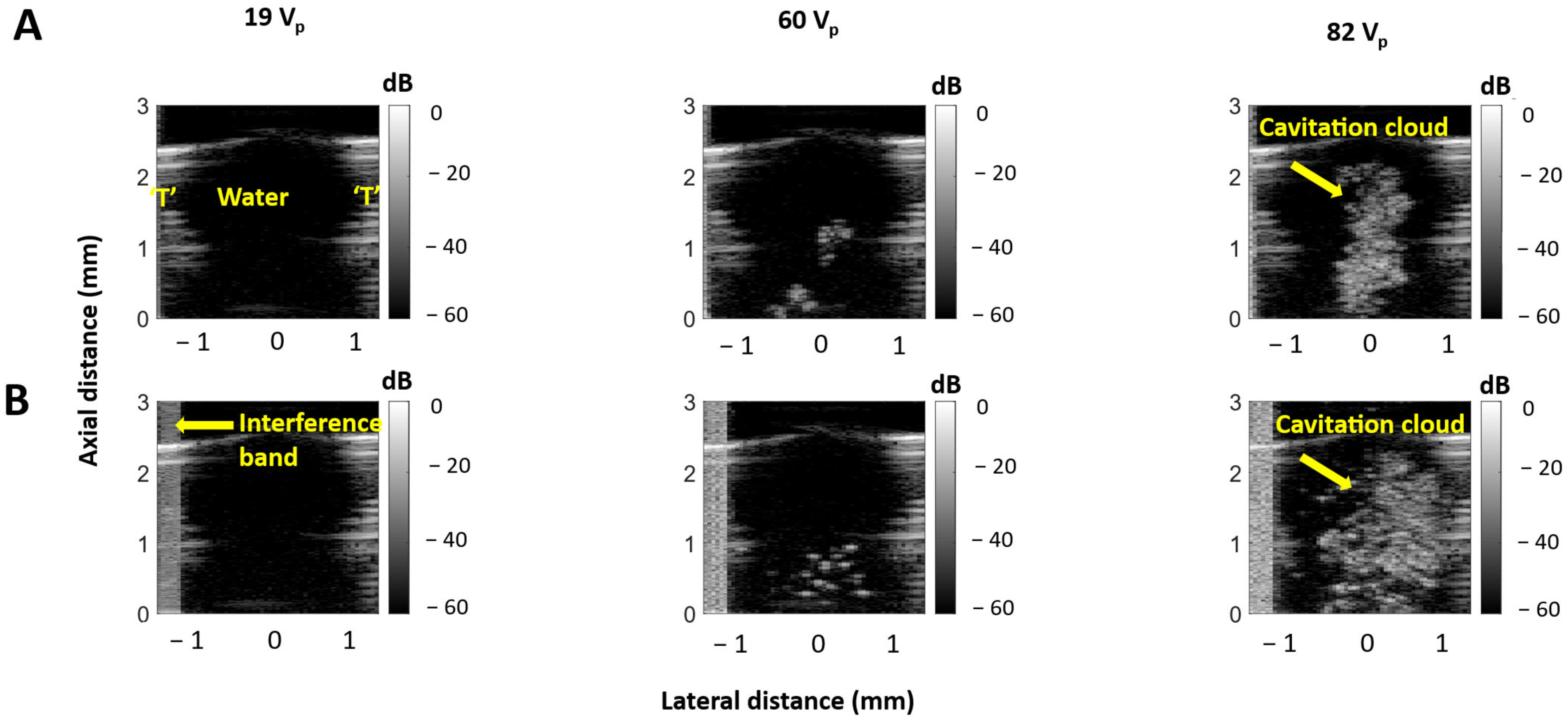
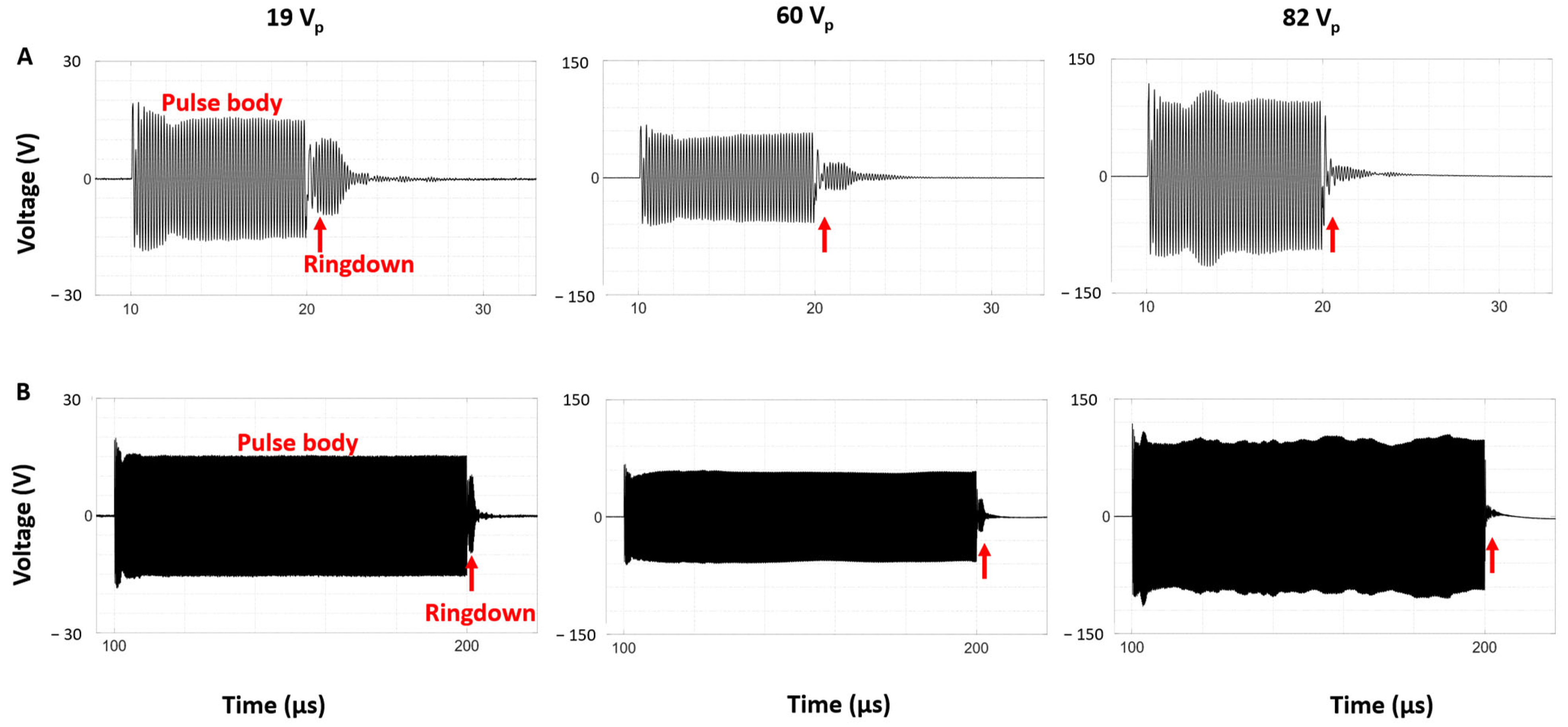
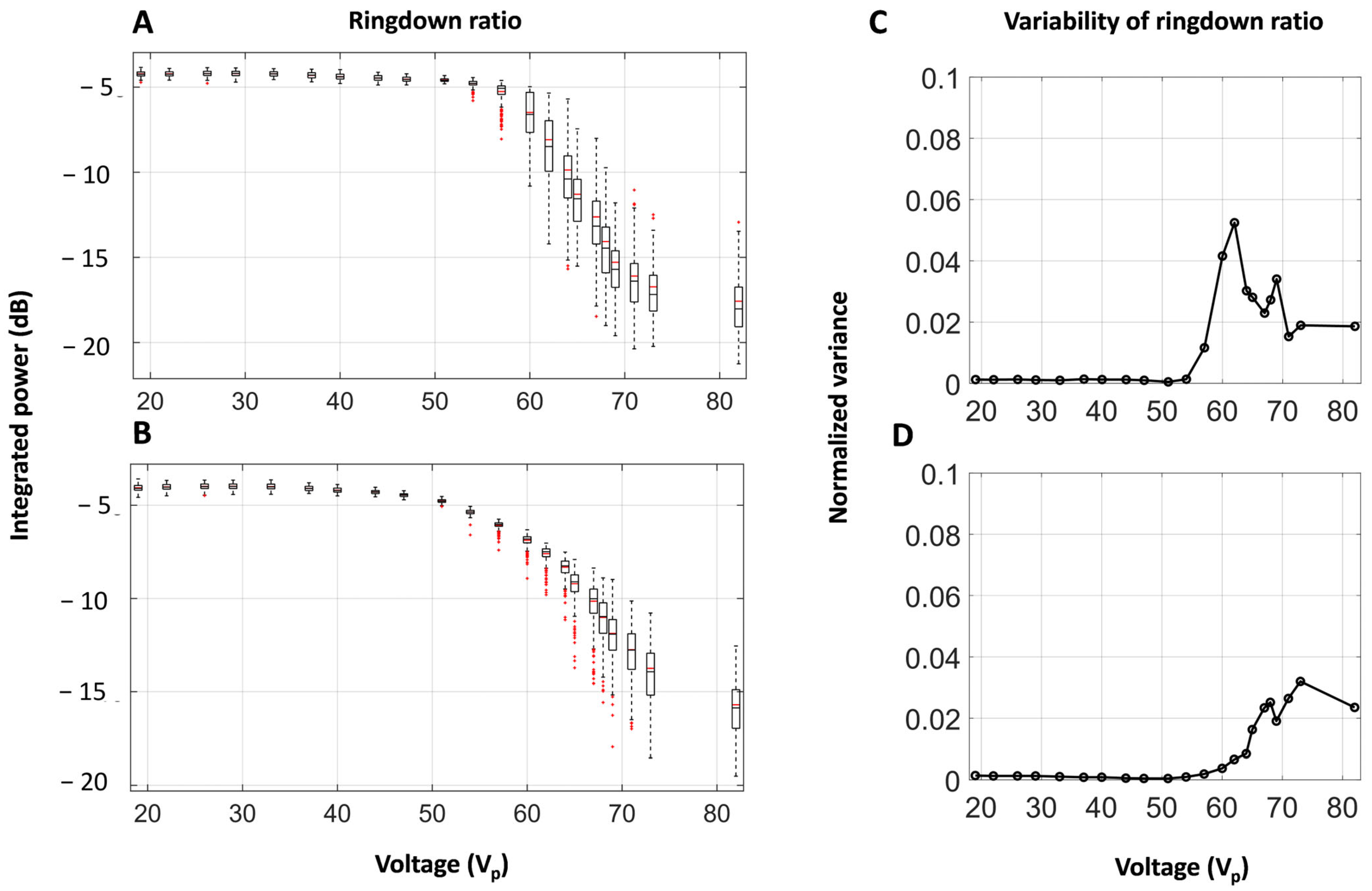
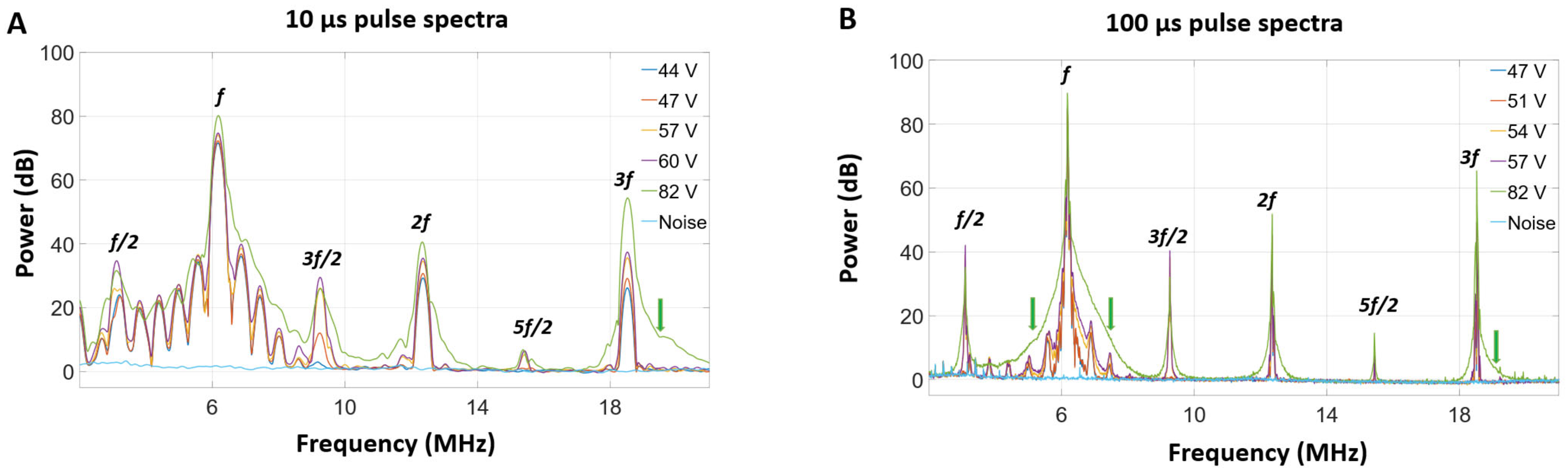
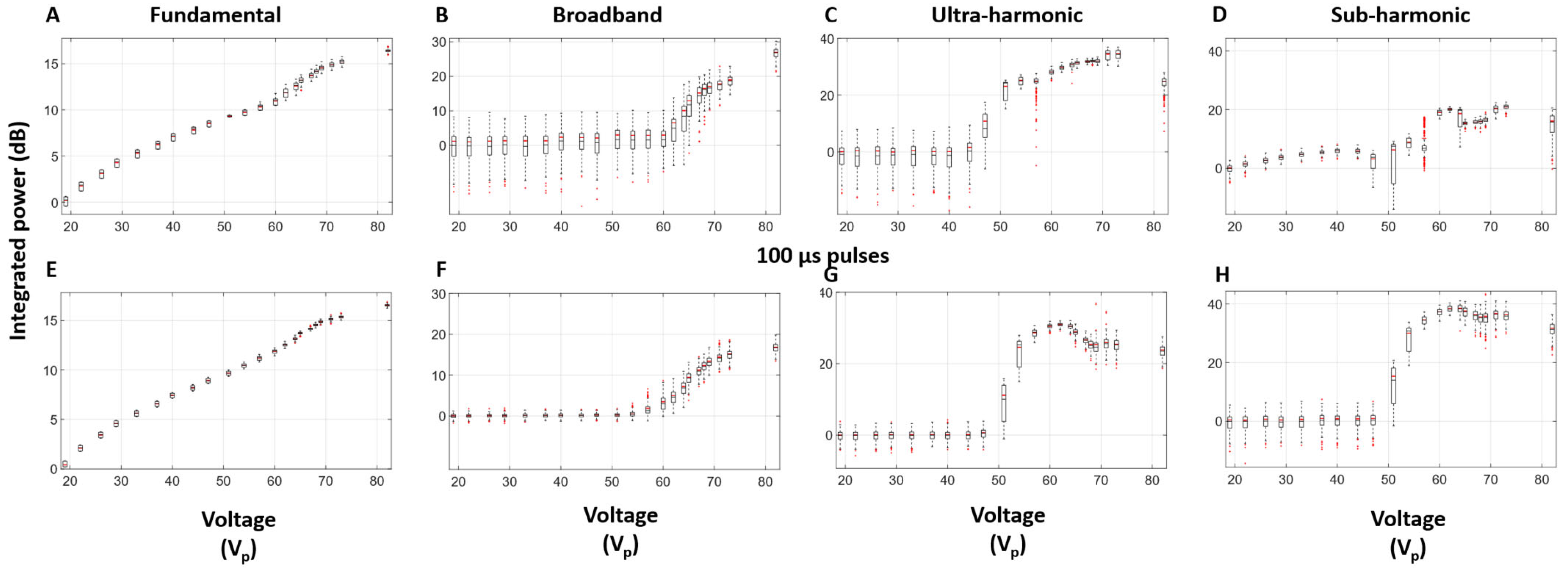
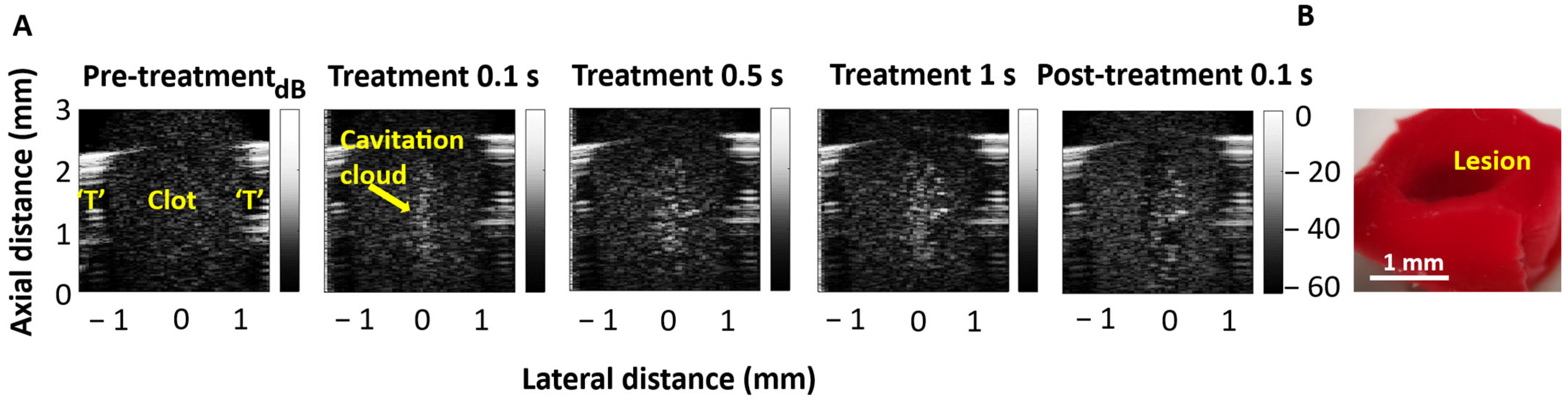
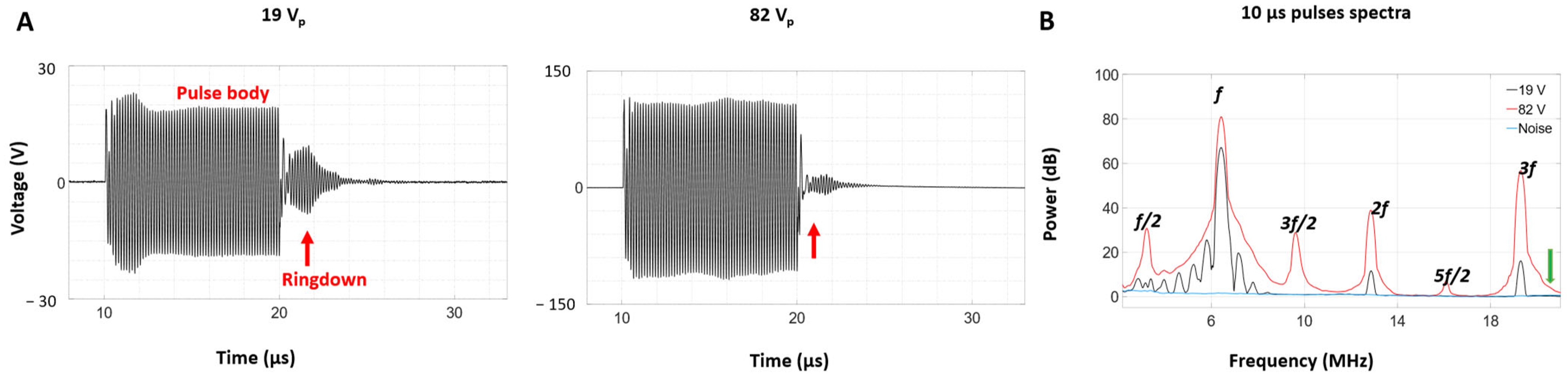
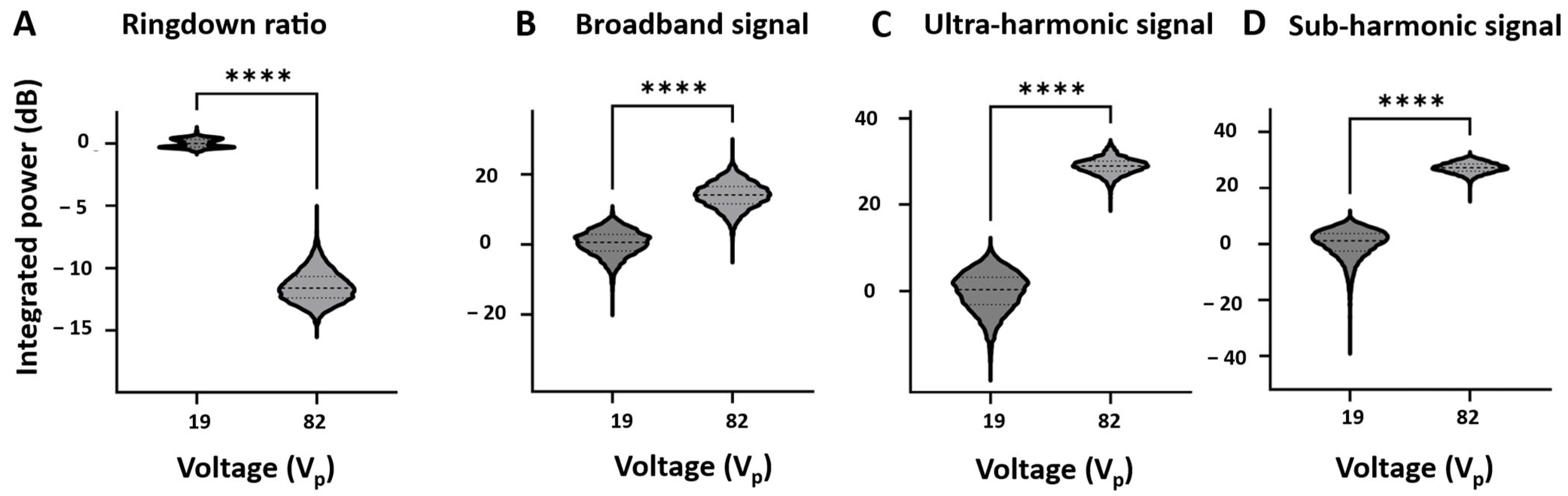
Intravascular aspiration thrombectomy catheters are widely used to treat stroke, pulmonary embolism, and deep venous thrombosis. However, their performance is frequently compromised by clot material becoming lodged within the catheter tip. To address this, we develop a novel ultrasound-enhanced aspiration catheter approach that generates cavitation within the tip to mechanically degrade clots, with a view to facilitate extraction. The design employs hollow cylindrical transducers that produce inwardly propagating cylindrical waves to generate sufficiently high pressures to perform histotripsy. This study investigates the feasibility of self-sensing cavitation detection by analyzing voltage signals across the transducer during treatment. Experiments were conducted for two transmit pulse lengths at varying driving voltages with water or clot in the lumen. Cavitation clouds within the lumen were assessed using 40 MHz ultrasound imaging. Changes in the signal envelope during the pulse body and ringdown phases occurred above the cavitation threshold, the latter being associated with more rapid wave damping in the presence of bubble clouds within the lumen. In the frequency domain, voltage-dependent cavitation signals—subharmonics, ultra-harmonics, and broadband—emerged alongside transmit pulses. This work demonstrates a highly sensitive, sensor-free method for detecting cavitation within the lumen, enabling feedback control to further improve histotripsy-assisted aspiration.
Keywords: histotripsy; sonothrombolysis; cavitation; aspiration thrombectomy; ultrasound; transducer histotripsy; sonothrombolysis; cavitation; aspiration thrombectomy; ultrasound; transducer