Article

Deep Learning-Based Technique for Remote Sensing Image Enhancement Using Multiscale Feature Fusion


School of Computer Science, Yangtze University, Jingzhou 434023, China
*
Author to whom correspondence should be addressed.
Sensors 2024, 24(2), 673; https://doi.org/10.3390/s24020673
Submission received: 15 December 2023 / Revised: 10 January 2024 / Accepted: 17 January 2024 / Published: 21 January 2024
(This article belongs to the Topic Applications in Image Analysis and Pattern Recognition)

Abstract

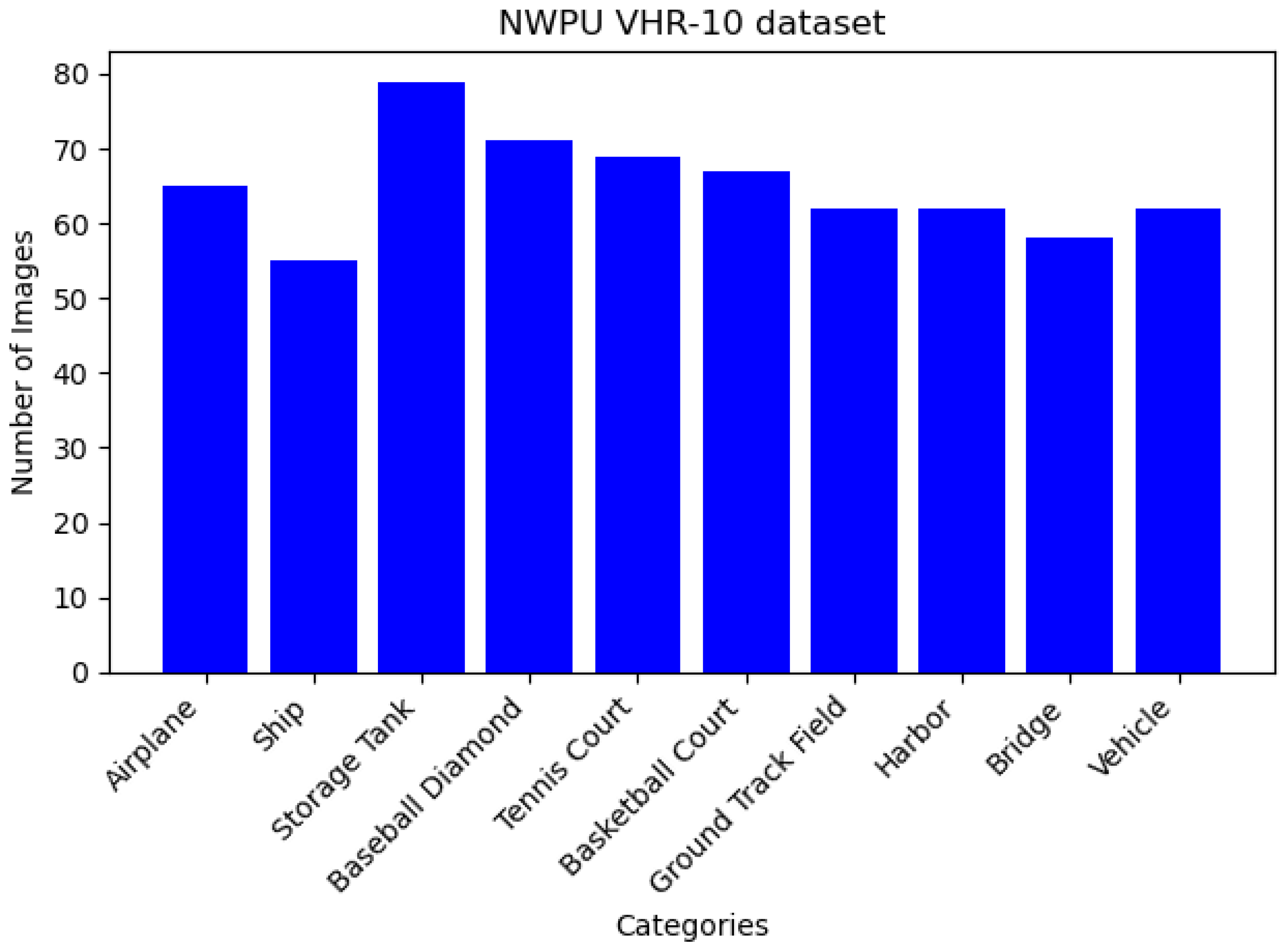
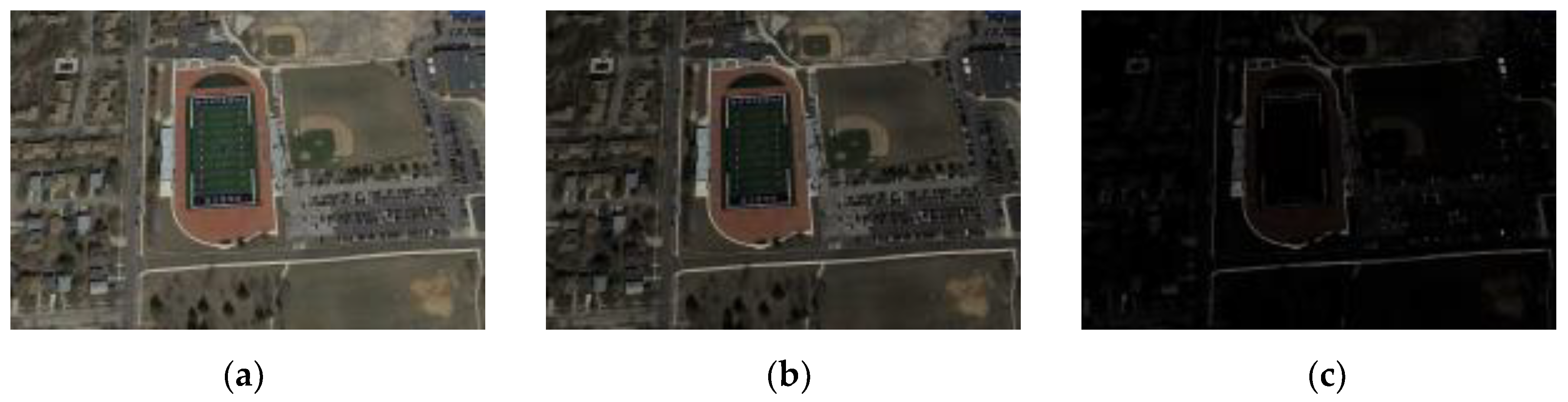
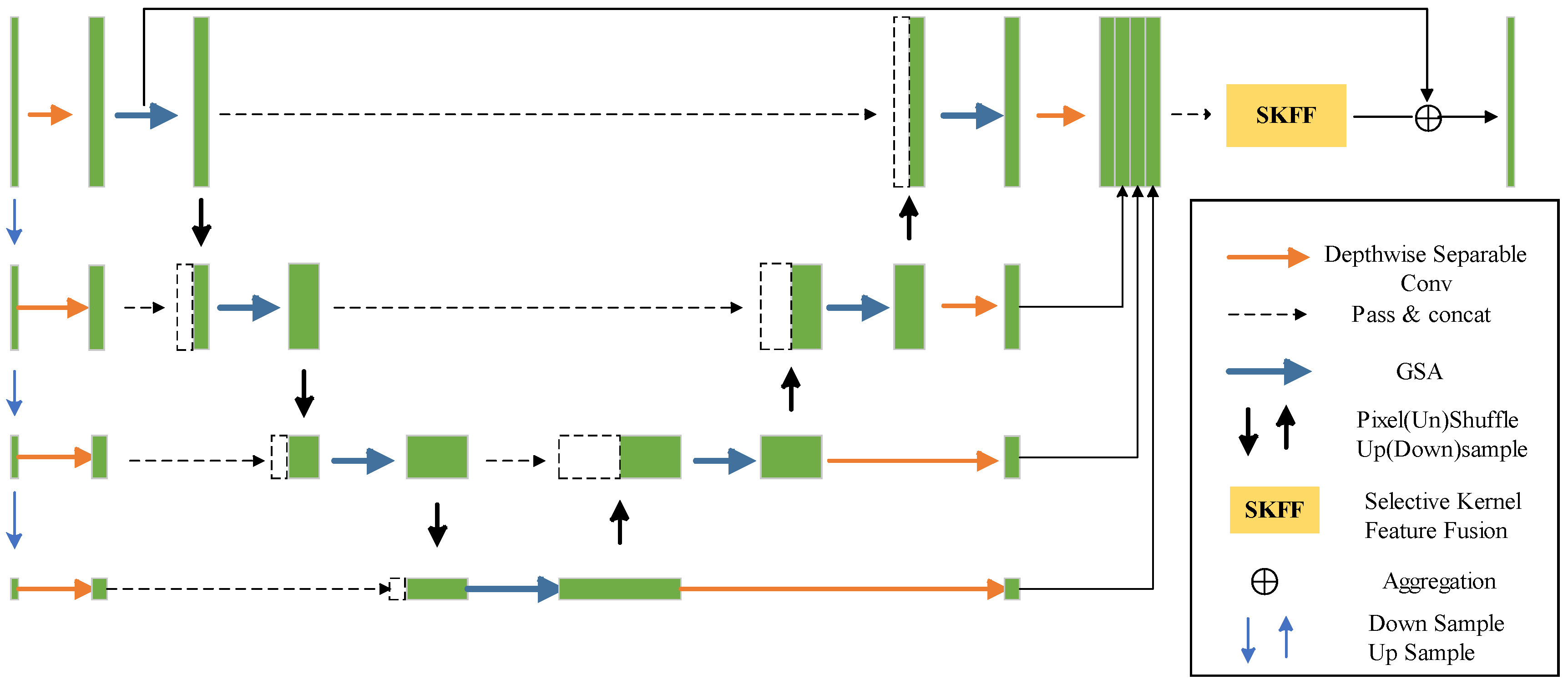
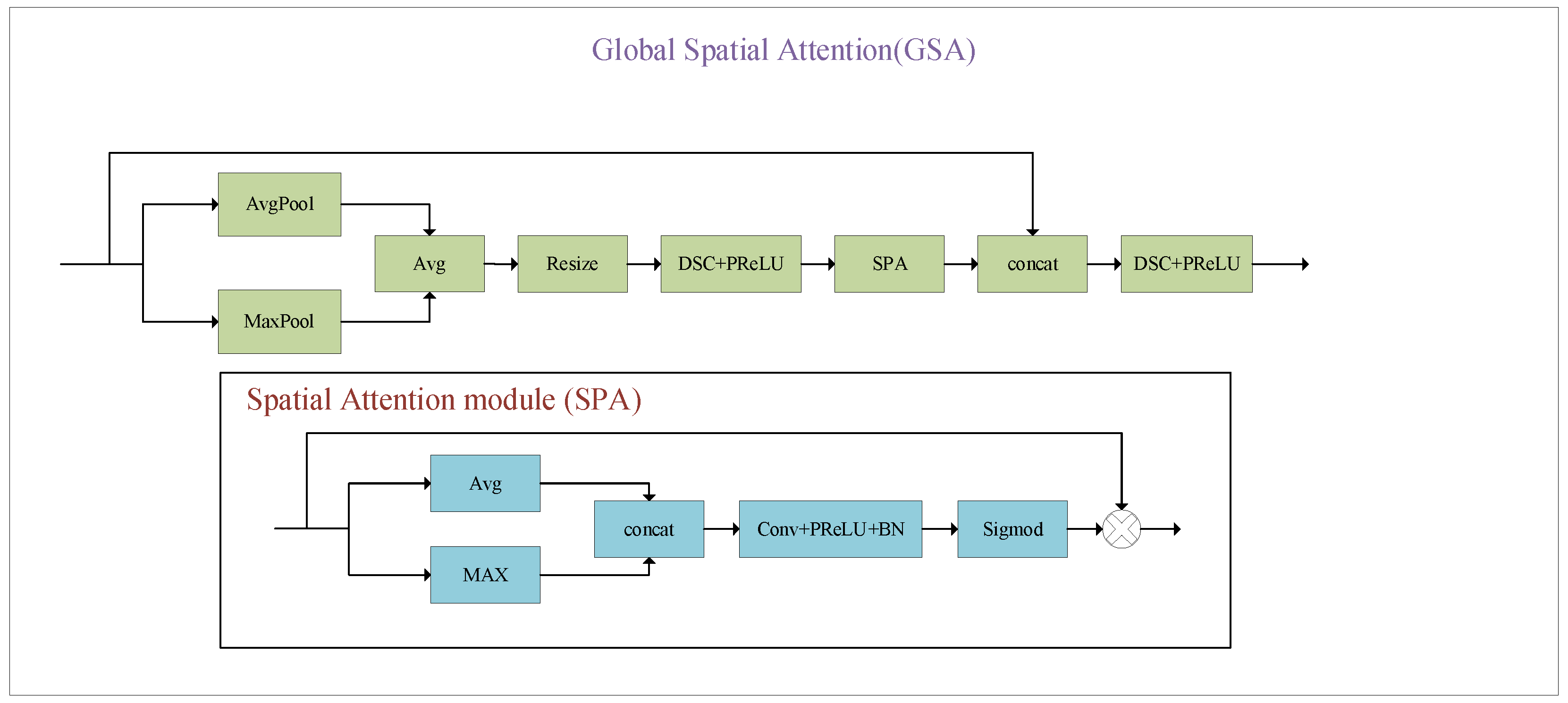
The present study proposes a novel deep-learning model for remote sensing image enhancement. It maintains image details while enhancing brightness in the feature extraction module. An improved hierarchical model named Global Spatial Attention Network (GSA-Net), based on U-Net for image enhancement, is proposed to improve the model’s performance. To circumvent the issue of insufficient sample data, gamma correction is applied to create low-light images, which are then used as training examples. A loss function is constructed using the Structural Similarity (SSIM) and Peak Signal-to-Noise Ratio (PSNR) indices. The GSA-Net network and loss function are utilized to restore images obtained via low-light remote sensing. This proposed method was tested on the Northwestern Polytechnical University Very-High-Resolution 10 (NWPU VHR-10) dataset, and its overall superiority was demonstrated in comparison with other state-of-the-art algorithms using various objective assessment indicators, such as PSNR, SSIM, and Learned Perceptual Image Patch Similarity (LPIPS). Furthermore, in high-level visual tasks such as object detection, this novel method provides better remote sensing images with distinct details and higher contrast than the competing methods.
Keywords: remote sensing image enhancement; global spatial attention mechanism; feature extraction; feature fusion; model compression remote sensing image enhancement; global spatial attention mechanism; feature extraction; feature fusion; model compression