Article

Tai Chi Movement Recognition and Precise Intervention for the Elderly Based on Inertial Measurement Units and Temporal Convolutional Neural Networks

1
School of Physical Education and Sports, Beijing Normal University, Beijing 100875, China
2
Department of Physical Education, Xinzhou Normal University, Xinzhou 034000, China
3
College of Physical Educantion, Jinggangshan University, Ji’an 343009, China
*
Author to whom correspondence should be addressed.
Sensors 2024, 24(13), 4208; https://doi.org/10.3390/s24134208
Submission received: 27 May 2024 / Revised: 17 June 2024 / Accepted: 24 June 2024 / Published: 28 June 2024
(This article belongs to the Special Issue Inertial Sensing System for Motion Monitoring)

Abstract

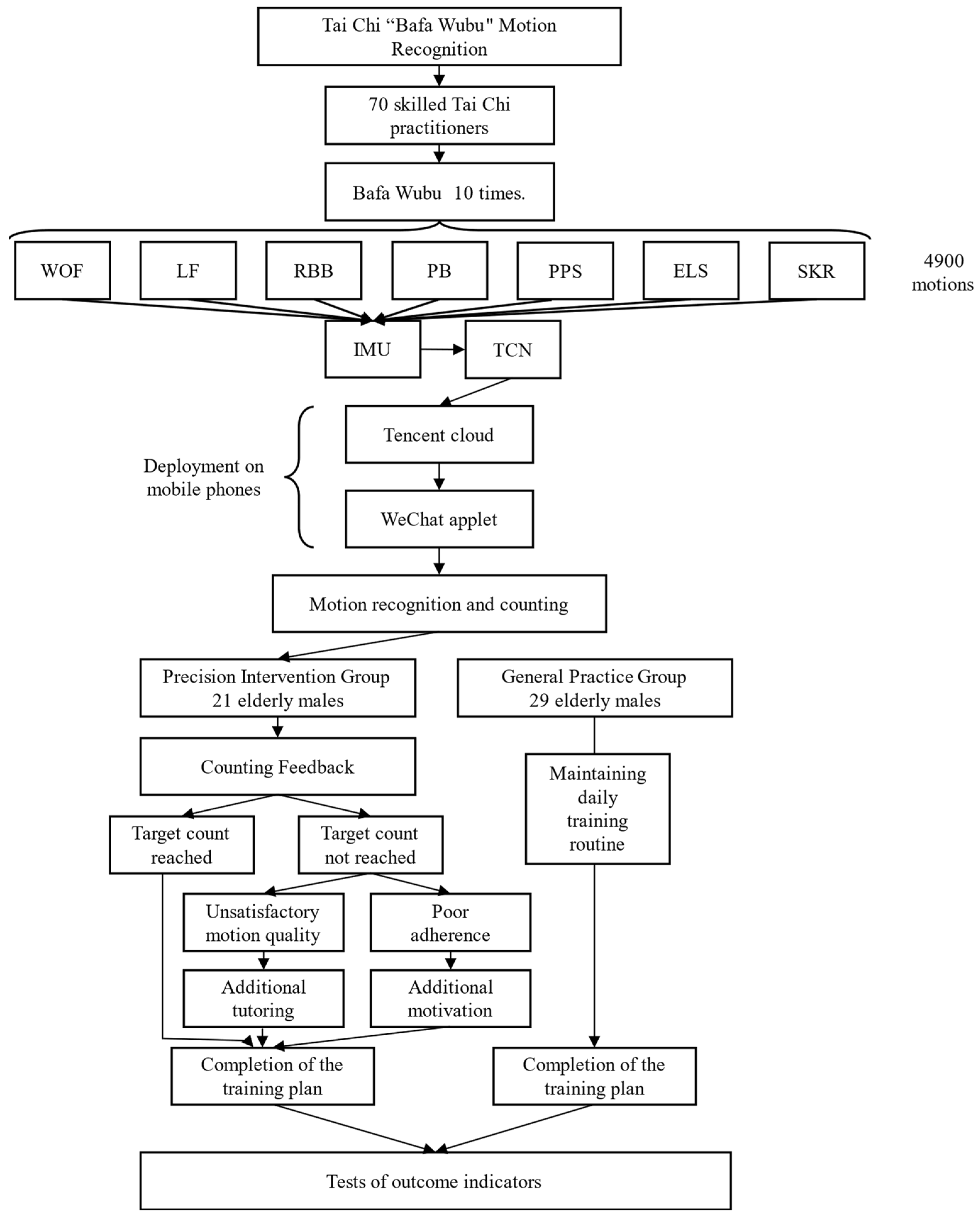
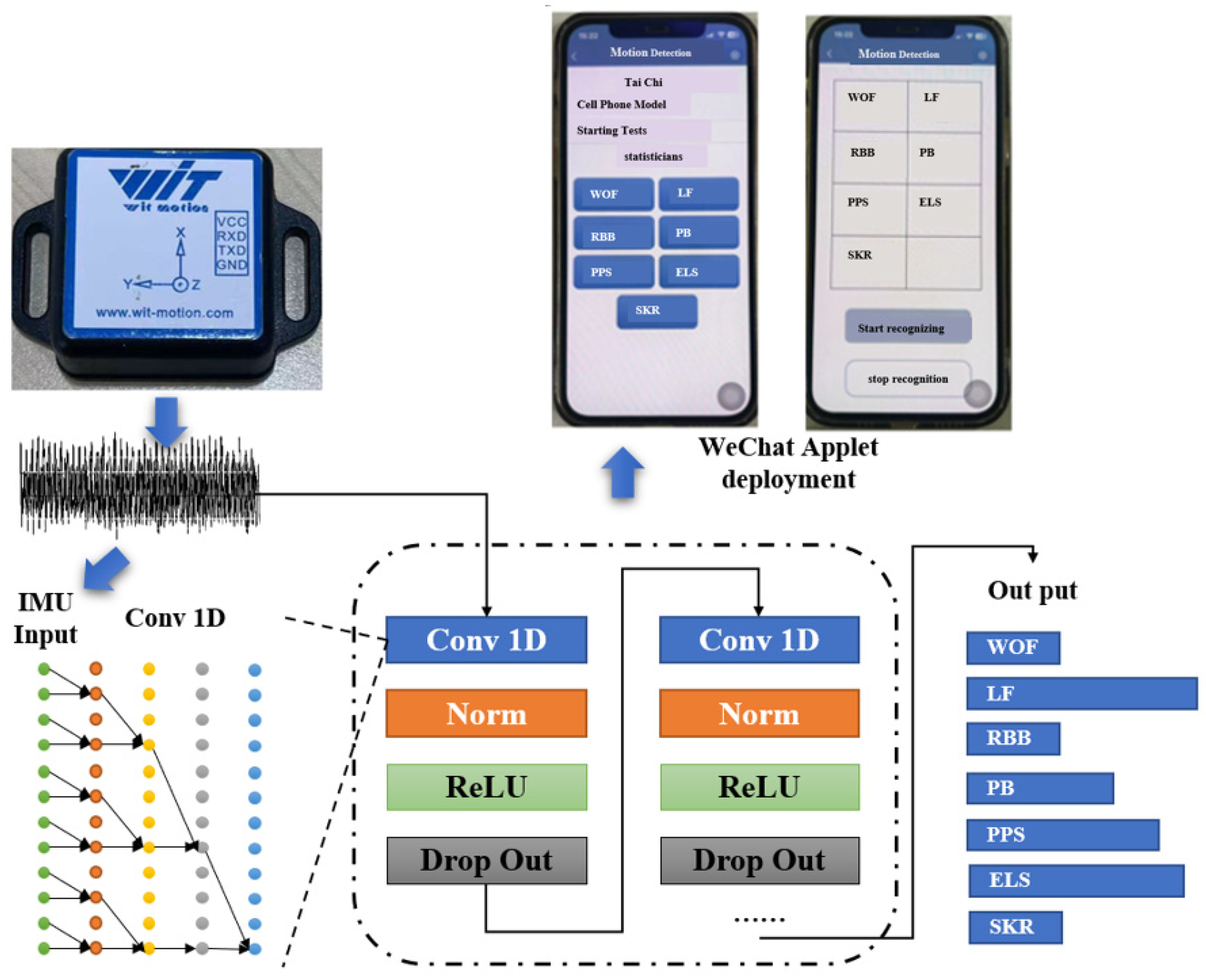
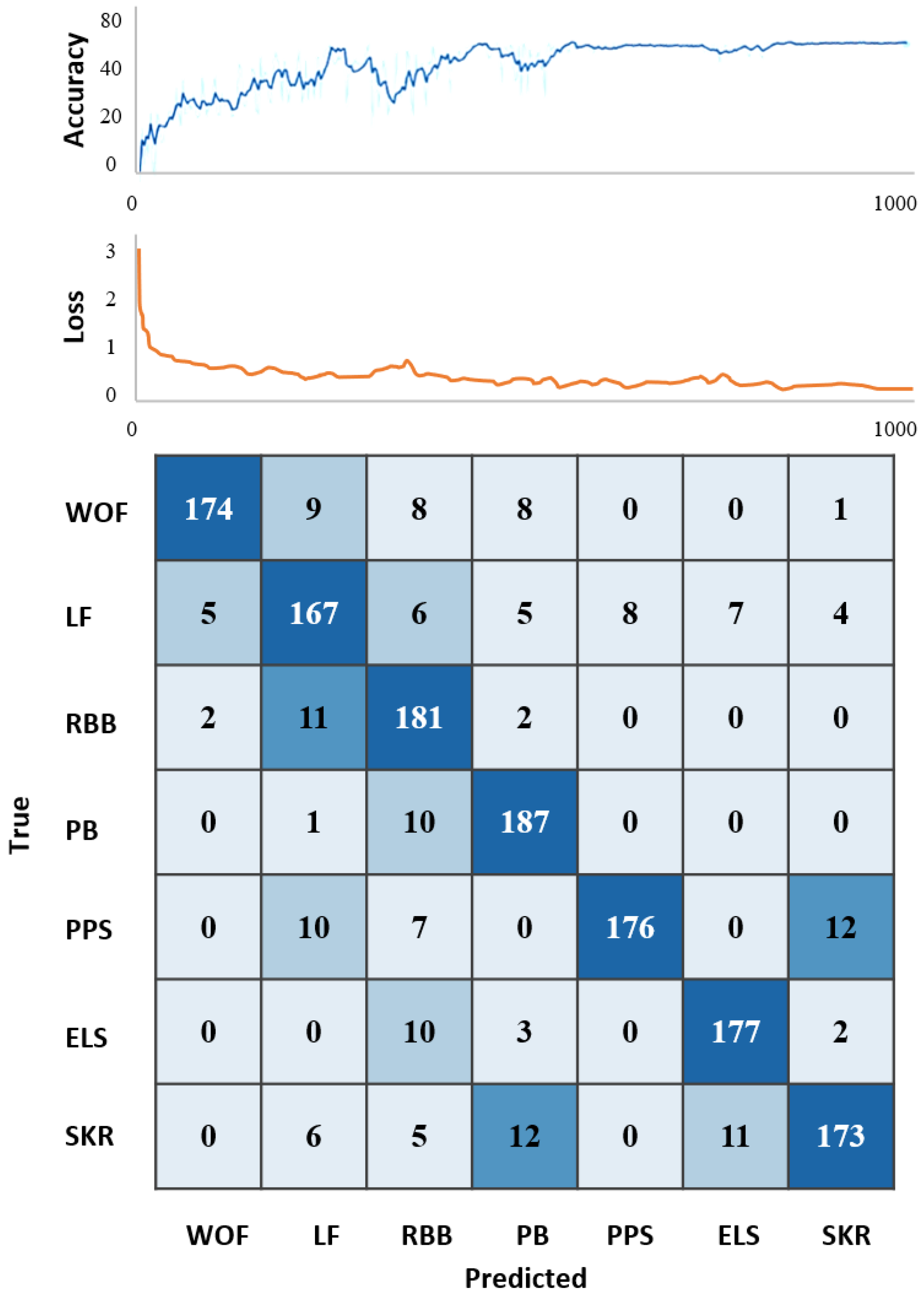
(1) Background: The objective of this study was to recognize tai chi movements using inertial measurement units (IMUs) and temporal convolutional neural networks (TCNs) and to provide precise interventions for elderly people. (2) Methods: This study consisted of two parts: firstly, 70 skilled tai chi practitioners were used for movement recognition; secondly, 60 elderly males were used for an intervention study. IMU data were collected from skilled tai chi practitioners performing Bafa Wubu, and TCN models were constructed and trained to classify these movements. Elderly participants were divided into a precision intervention group and a standard intervention group, with the former receiving weekly real-time IMU feedback. Outcomes measured included balance, grip strength, quality of life, and depression. (3) Results: The TCN model demonstrated high accuracy in identifying tai chi movements, with percentages ranging from 82.6% to 94.4%. After eight weeks of intervention, both groups showed significant improvements in grip strength, quality of life, and depression. However, only the precision intervention group showed a significant increase in balance and higher post-intervention scores compared to the standard intervention group. (4) Conclusions: This study successfully employed IMU and TCN to identify Tai Chi movements and provide targeted feedback to older participants. Real-time IMU feedback can enhance health outcome indicators in elderly males.
Keywords: tai chi; movement recognition; inertial measurement units; temporal convolutional neural networks; elderly intervention tai chi; movement recognition; inertial measurement units; temporal convolutional neural networks; elderly intervention