Article

Improved Point-Line Feature Based Visual SLAM Method for Complex Environments
1
College of Communication and Information Engineering, Chongqing University of Posts and Telecommunications, Chongqing 400065, China
2
Intelligent Terminal Key Laboratory of Sichuan Province, Yibin 644000, China
*
Author to whom correspondence should be addressed.
Sensors 2021, 21(13), 4604; https://doi.org/10.3390/s21134604
Submission received: 18 May 2021 / Revised: 23 June 2021 / Accepted: 2 July 2021 / Published: 5 July 2021
(This article belongs to the Section Sensing and Imaging)

Abstract

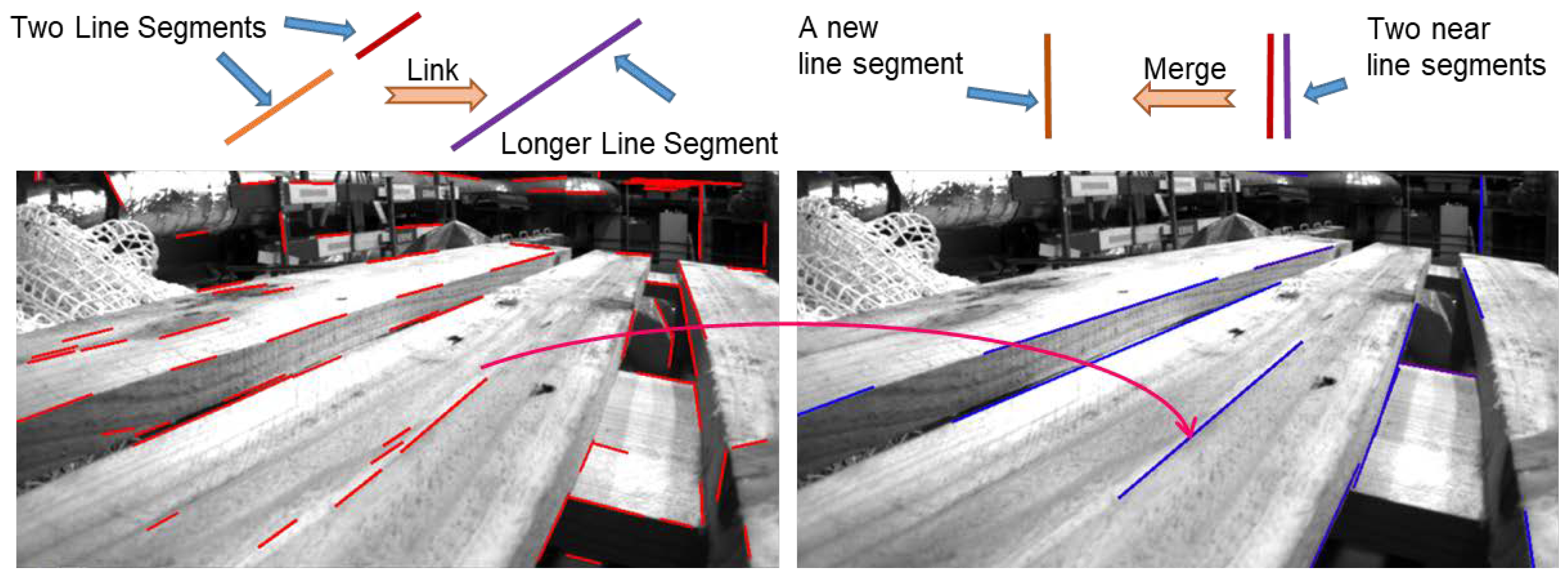
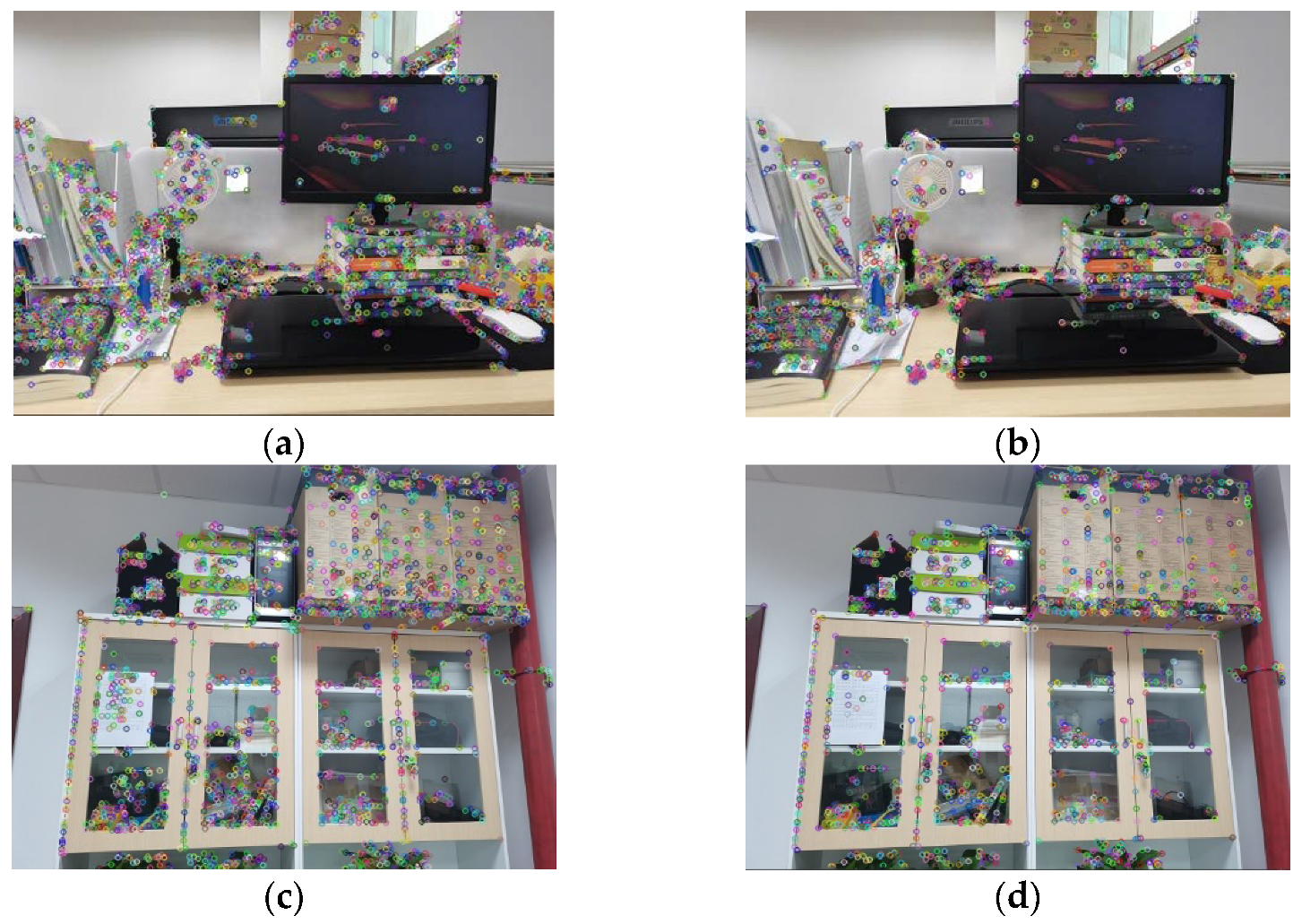
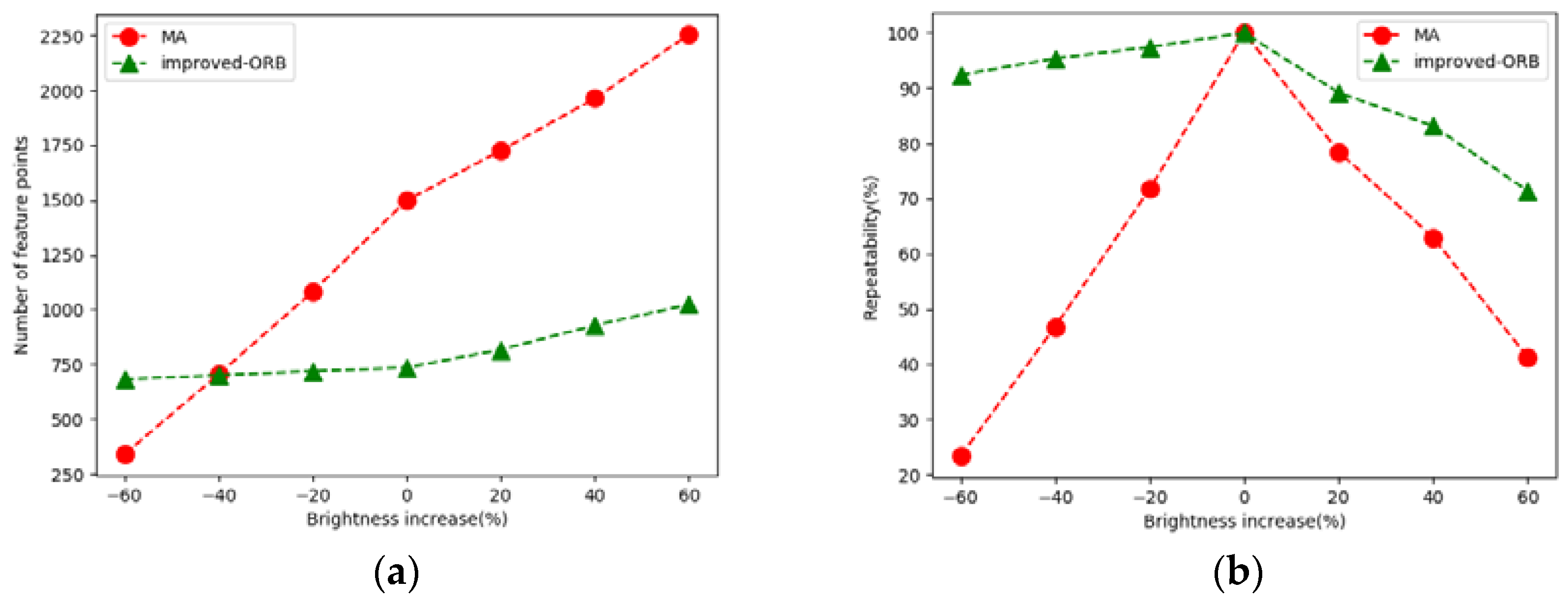
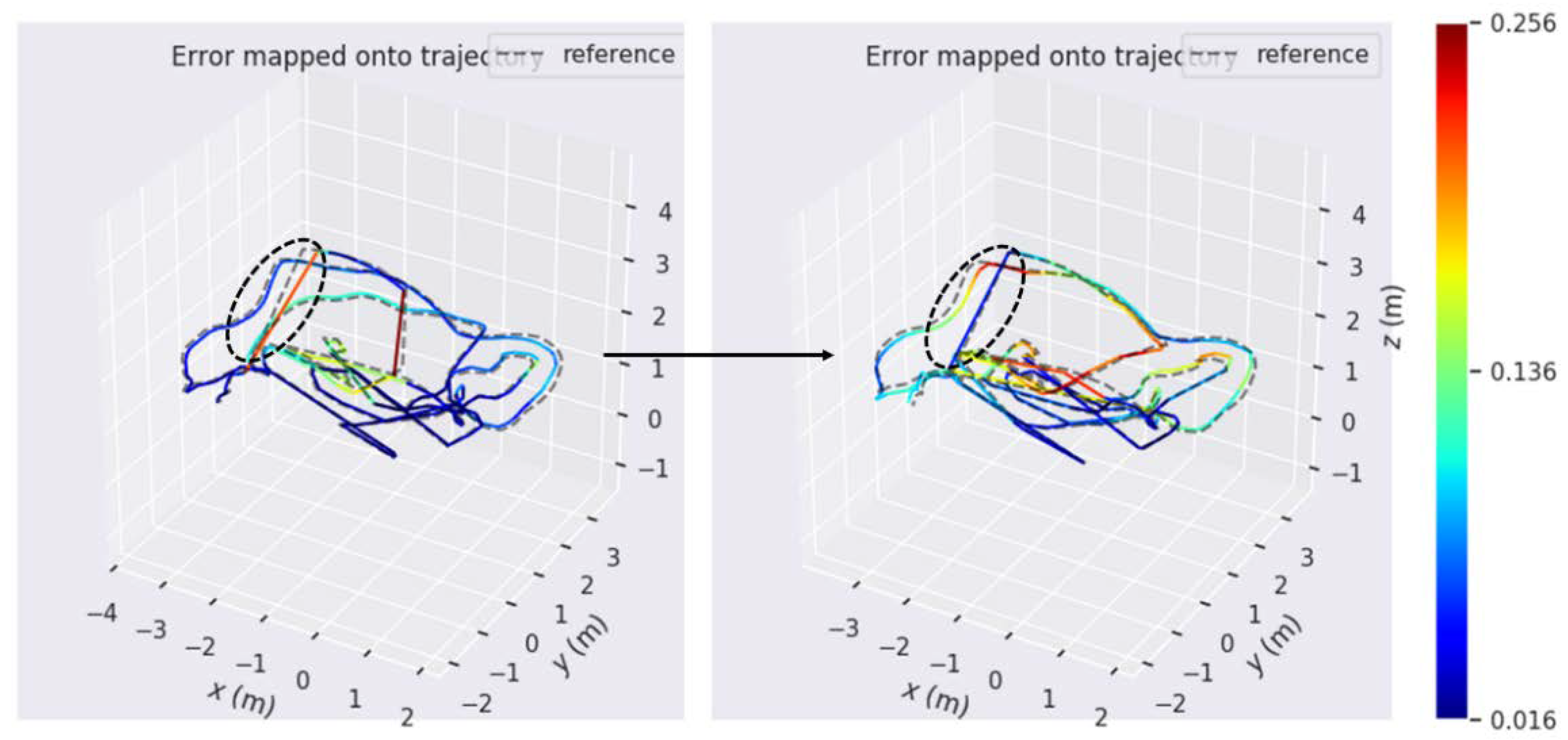
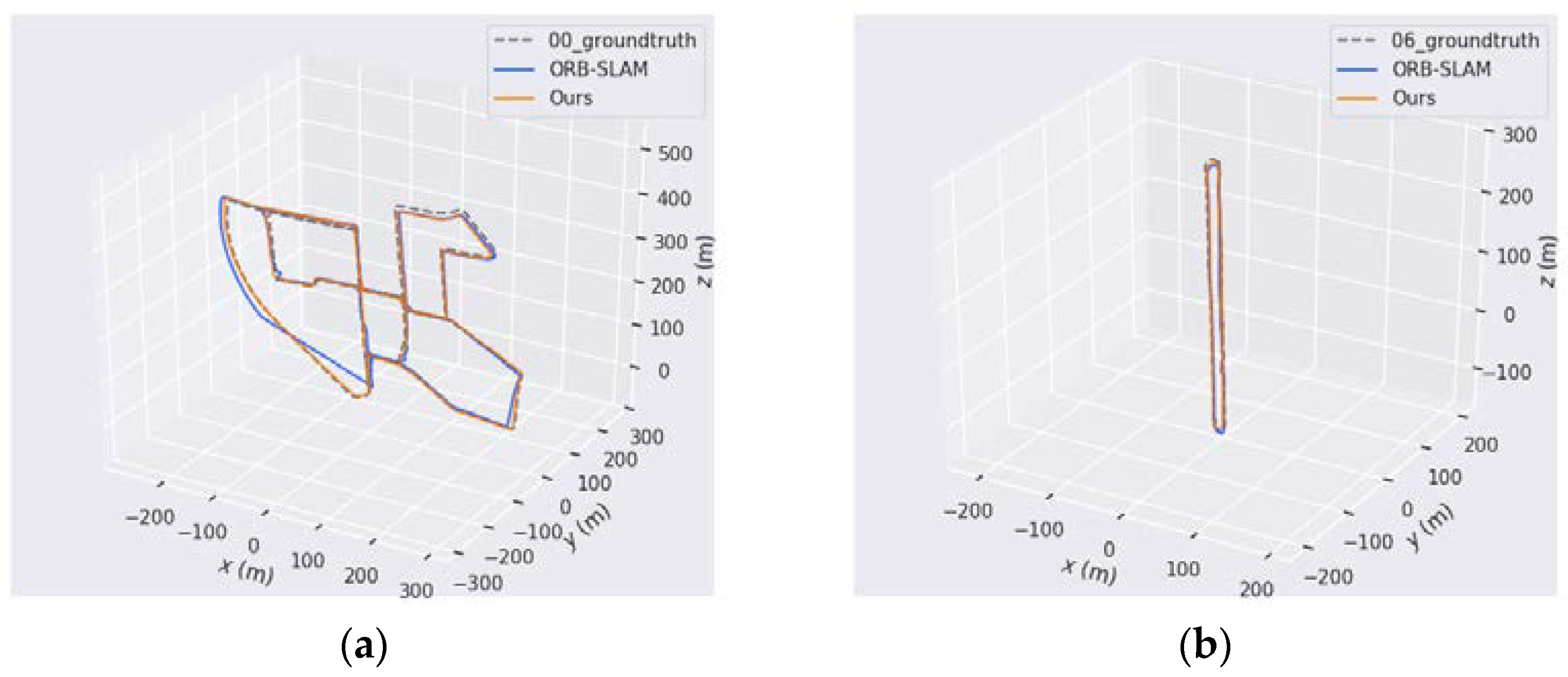
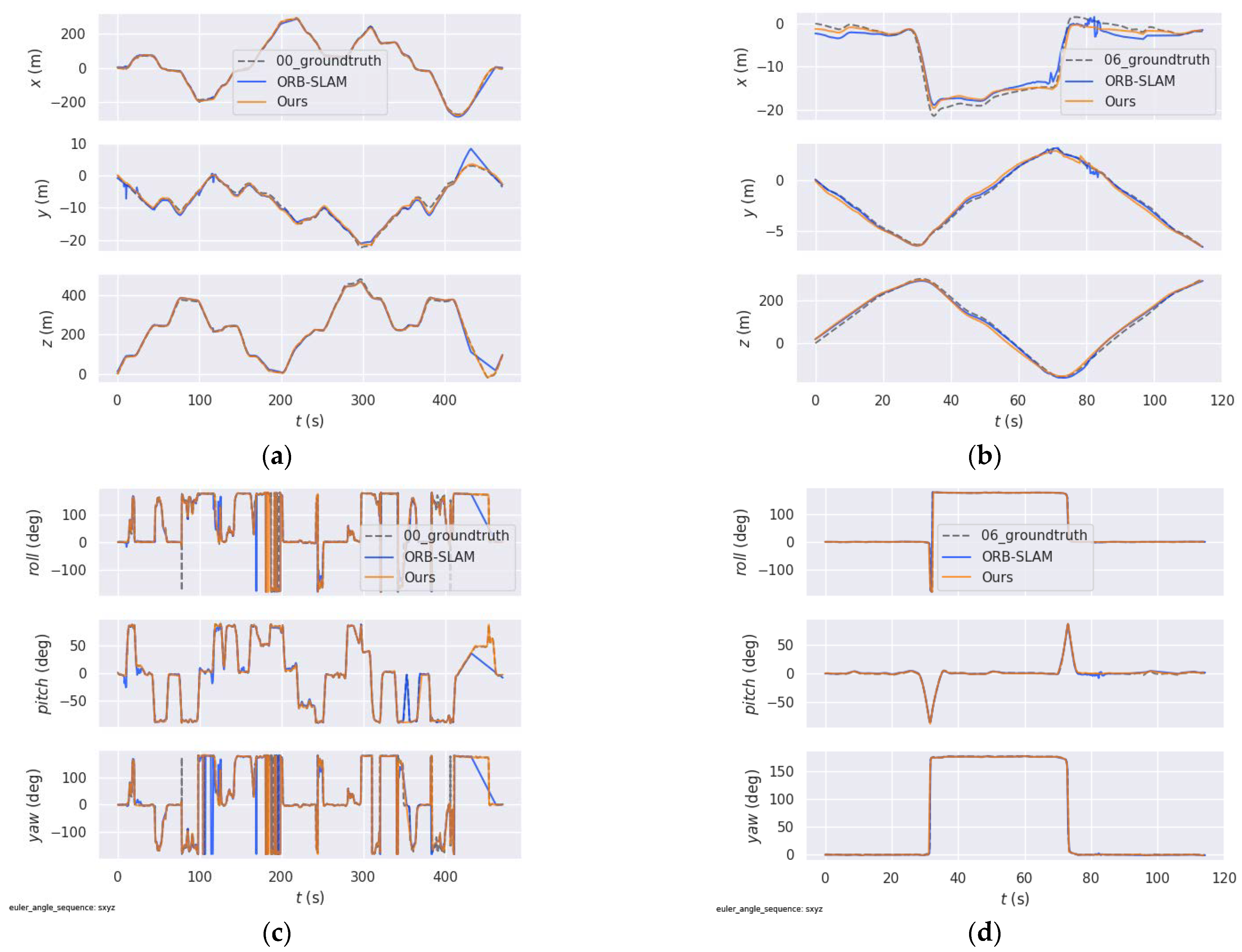
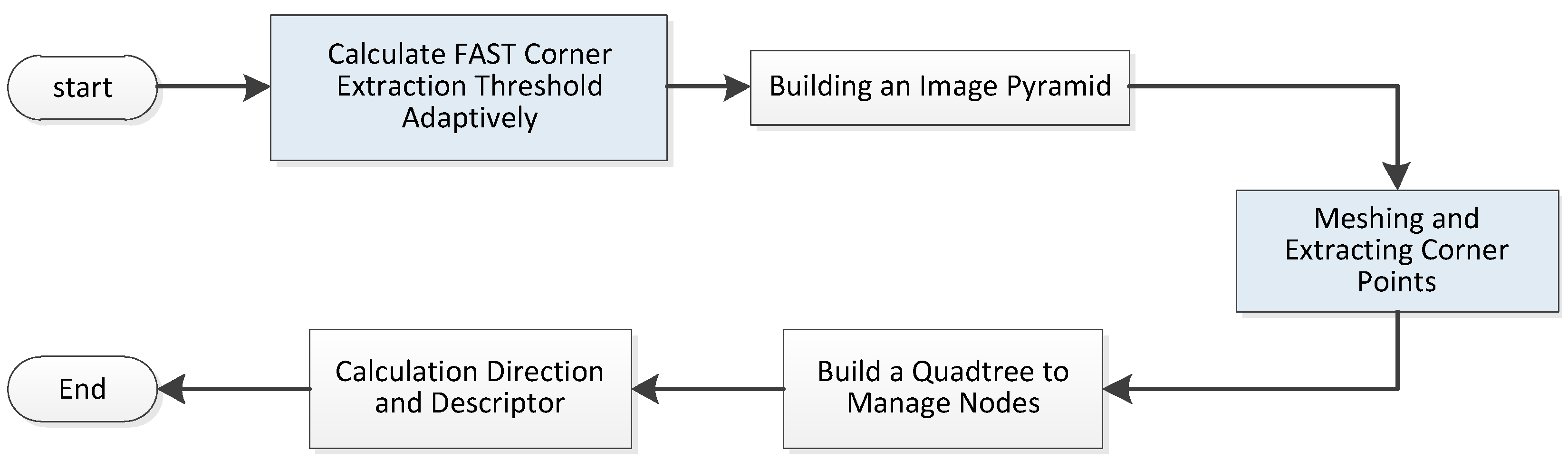
Traditional visual simultaneous localization and mapping (SLAM) systems rely on point features to estimate camera trajectories. However, feature-based systems are usually not robust in complex environments such as weak textures or obvious brightness changes. To solve this problem, we used more environmental structure information by introducing line segments features and designed a monocular visual SLAM system. This system combines points and line segments to effectively make up for the shortcomings of traditional positioning based only on point features. First, ORB algorithm based on local adaptive threshold was proposed. Subsequently, we not only optimized the extracted line features, but also added a screening step before the traditional descriptor matching to combine the point features matching results with the line features matching. Finally, the weighting idea was introduced. When constructing the optimized cost function, we allocated weights reasonably according to the richness and dispersion of features. Our evaluation on publicly available datasets demonstrated that the improved point-line feature method is competitive with the state-of-the-art methods. In addition, the trajectory graph significantly reduced drift and loss, which proves that our system increases the robustness of SLAM.
Keywords: visual SLAM; point and line feature; adaptive ORB; data association; LSD feature extraction; reprojection error visual SLAM; point and line feature; adaptive ORB; data association; LSD feature extraction; reprojection error