Article

A Novel Approach to the Job Shop Scheduling Problem Based on the Deep Q-Network in a Cooperative Multi-Access Edge Computing Ecosystem †

Department of Smart Factory Convergence, Sungkyunkwan University, 2066 Seobu-ro, Jangan-gu, Suwon 16419, Korea
*
Author to whom correspondence should be addressed.
This paper is an extended version of our paper published in Moon, J.; Jeong, J. Smart Manufacturing Scheduling System: DQN based on Cooperative Edge Computing. In Proceedings of the 2021 15th International Conference on Ubiquitous Information Management and Communication (IMCOM), Seoul, Korea, 4–6 January 2021.
Sensors 2021, 21(13), 4553; https://doi.org/10.3390/s21134553
Submission received: 31 May 2021 / Revised: 26 June 2021 / Accepted: 30 June 2021 / Published: 2 July 2021
(This article belongs to the Special Issue Challenges in Energy Perspective on Mobile Sensor Networks)

Abstract

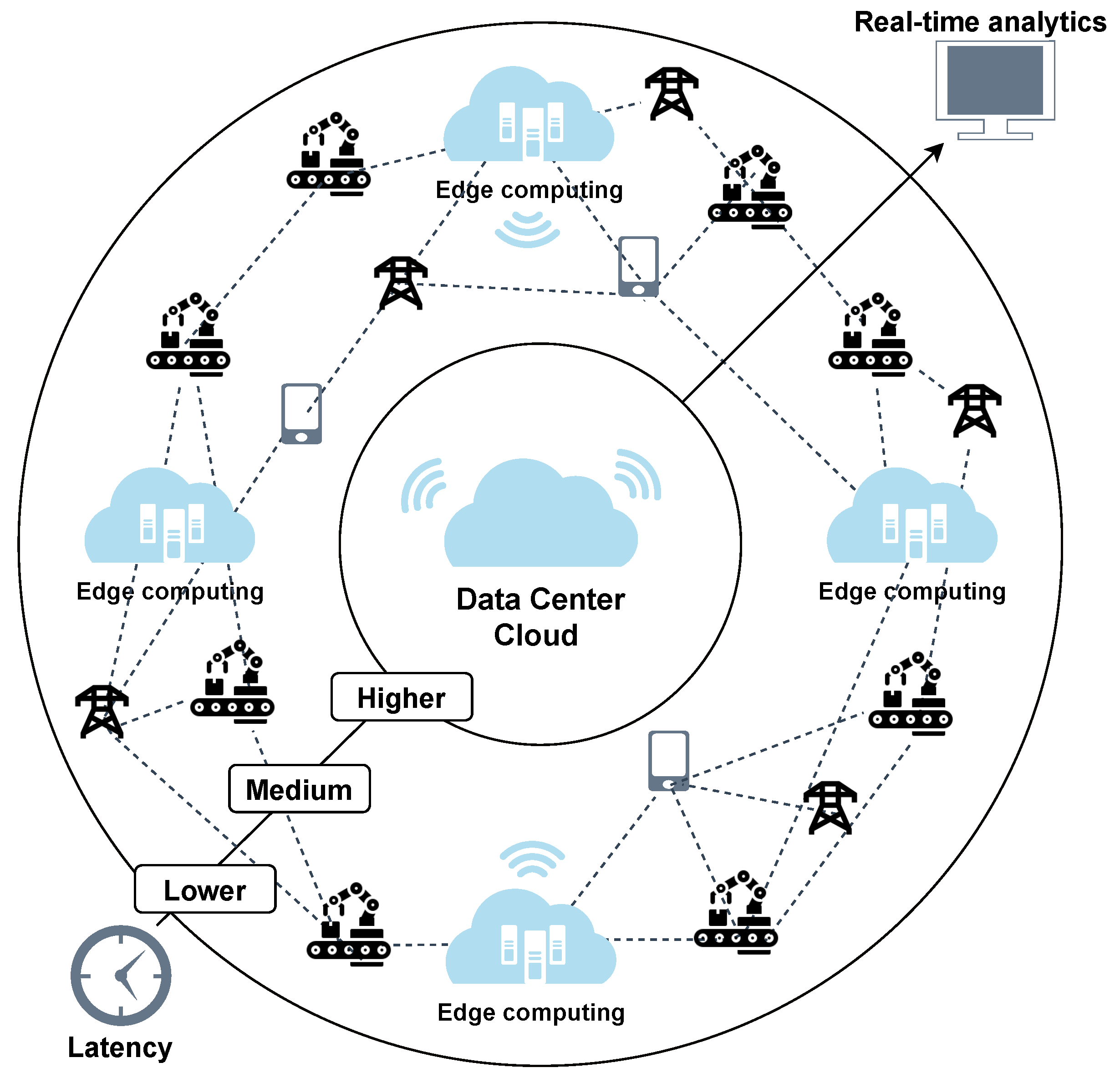
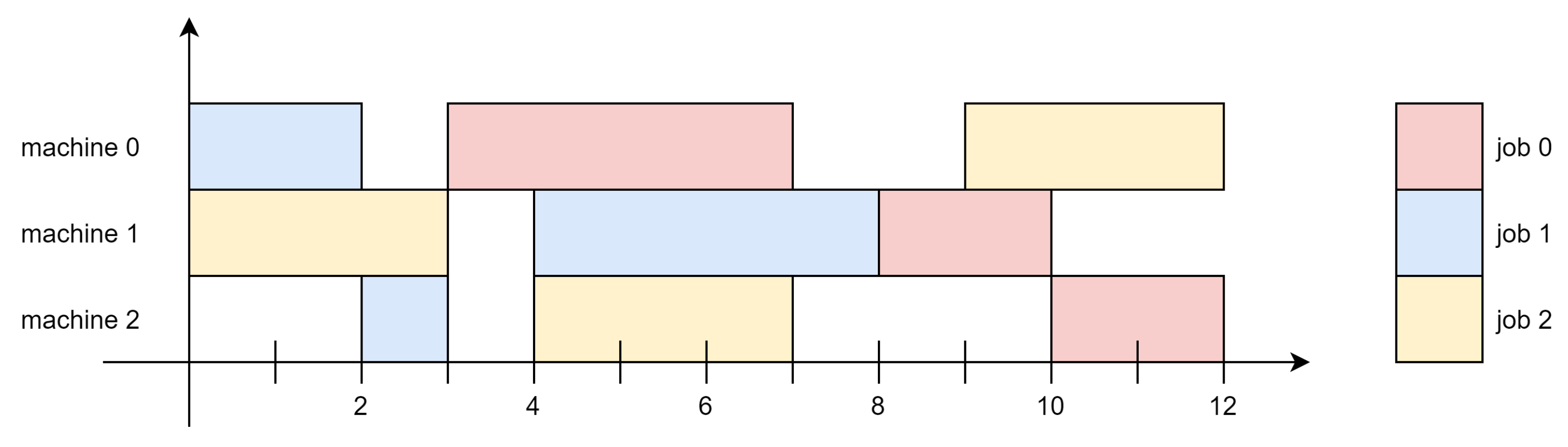
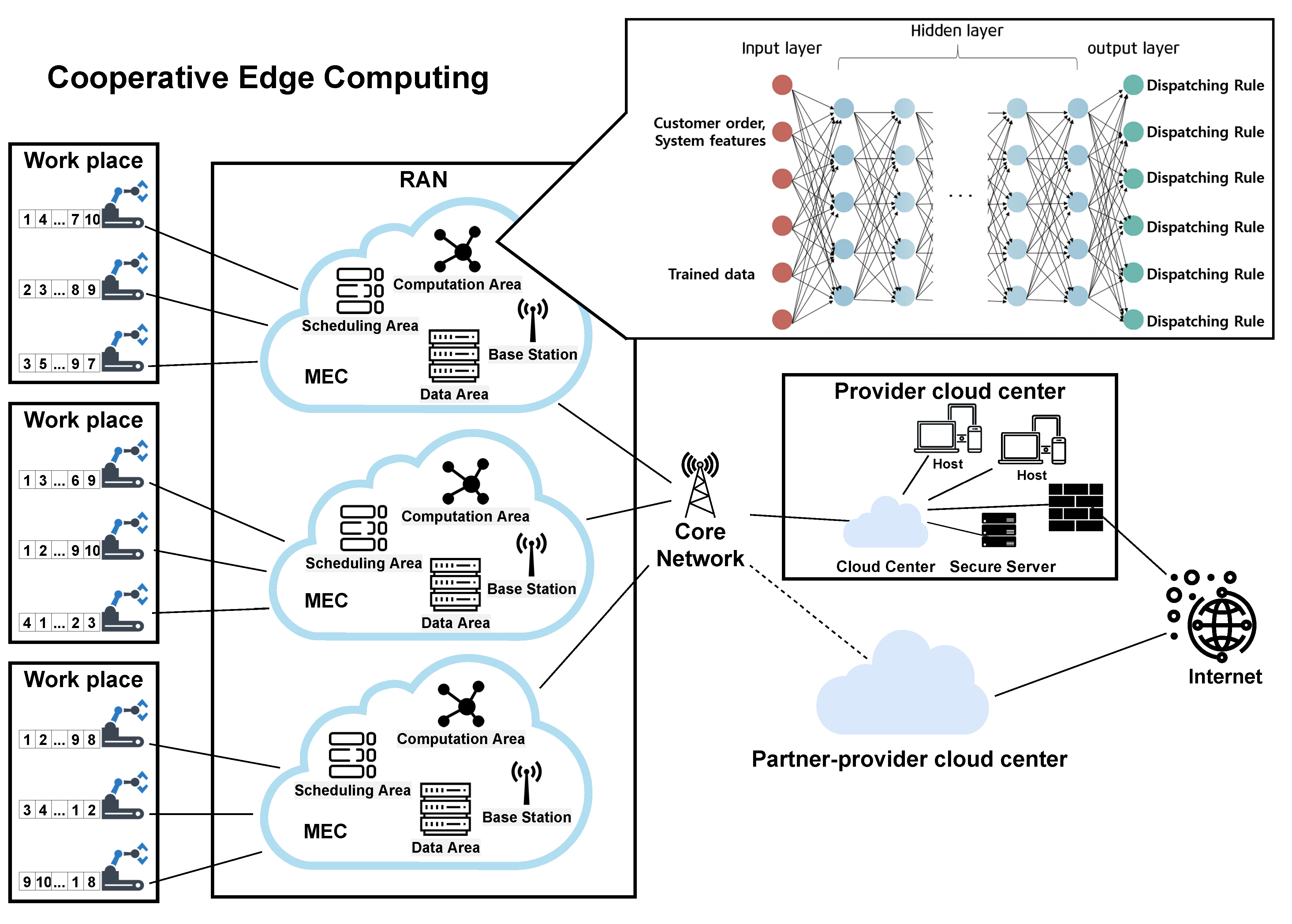
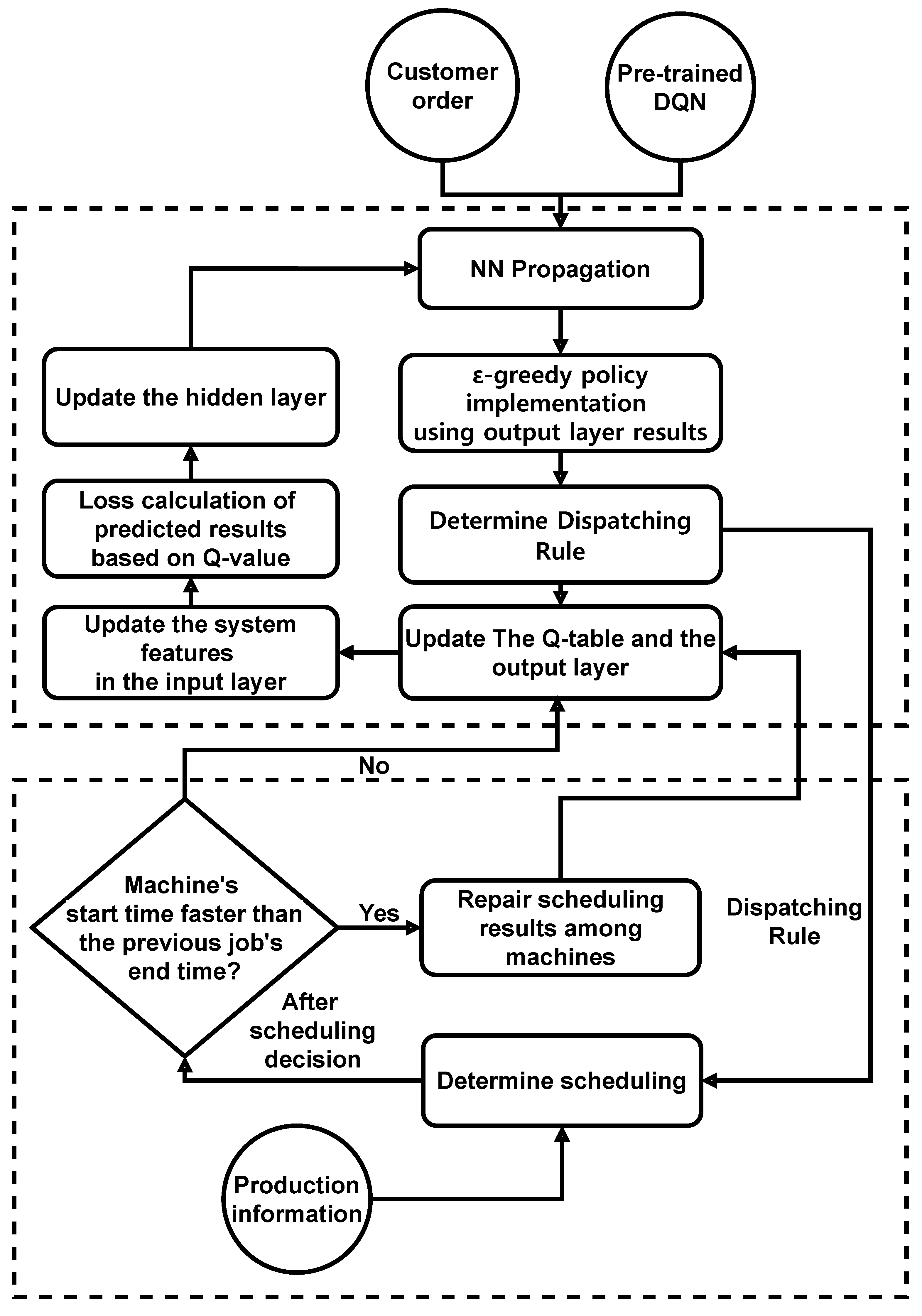
In this study, based on multi-access edge computing (MEC), we provided the possibility of cooperating manufacturing processes. We tried to solve the job shop scheduling problem by applying DQN (deep Q-network), a reinforcement learning model, to this method. Here, to alleviate the overload of computing resources, an efficient DQN was used for the experiments using transfer learning data. Additionally, we conducted scheduling studies in the edge computing ecosystem of our manufacturing processes without the help of cloud centers. Cloud computing, an environment in which scheduling processing is performed, has issues sensitive to the manufacturing process in general, such as security issues and communication delay time, and research is being conducted in various fields, such as the introduction of an edge computing system that can replace them. We proposed a method of independently performing scheduling at the edge of the network through cooperative scheduling between edge devices within a multi-access edge computing structure. The proposed framework was evaluated, analyzed, and compared with existing frameworks in terms of providing solutions and services.
Keywords: manufacturing process; cooperative scheduling system; job shop scheduling problem; deep Q-network; multi-access edge computing manufacturing process; cooperative scheduling system; job shop scheduling problem; deep Q-network; multi-access edge computing